
Trip Experiences of our 11 Day Biblical Egypt Tour, with Nile Cruise
February 21 – March 3, 2026

"Life transforming Israel tours & teaching in the context of the land of the Bible"
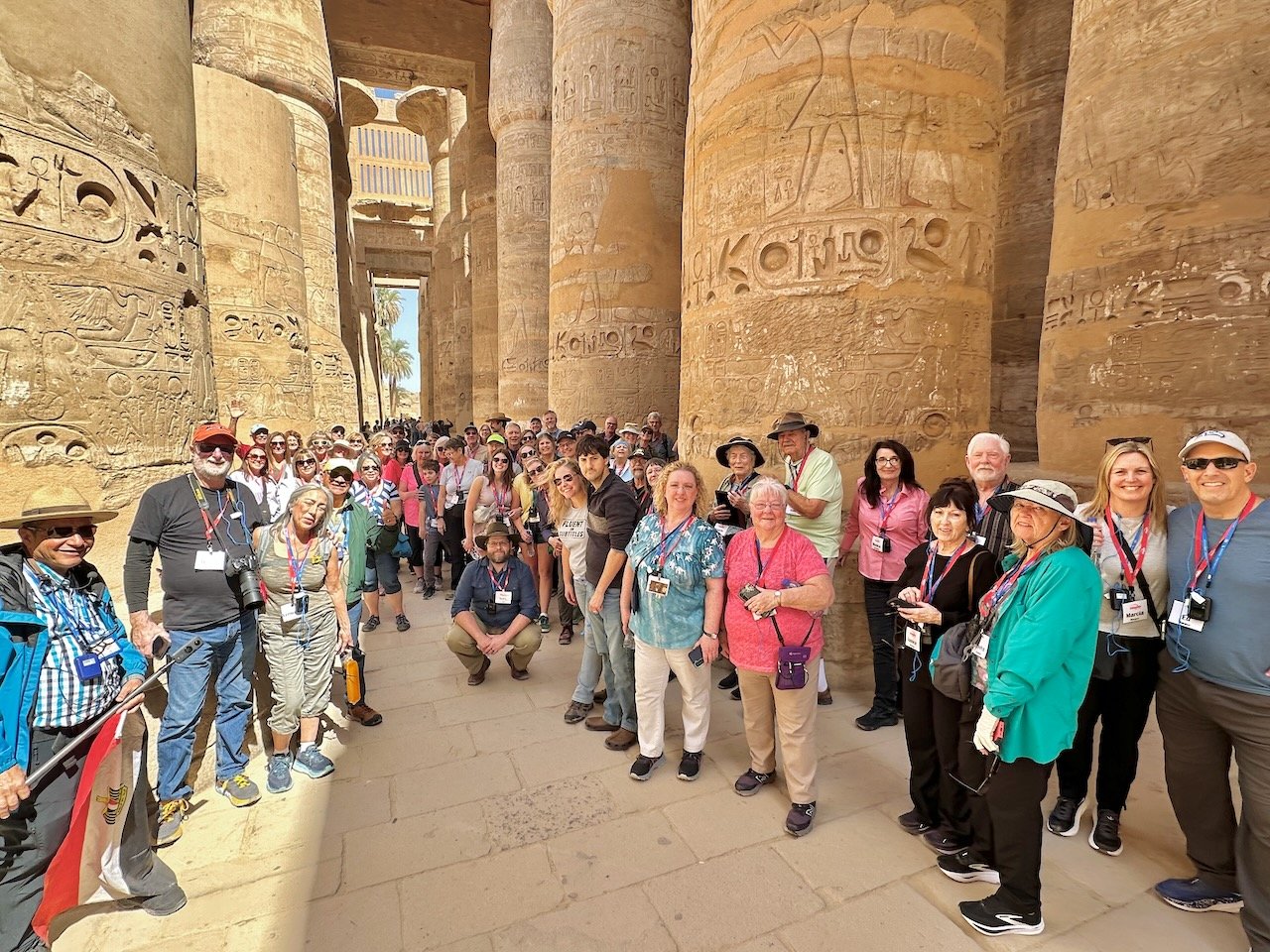
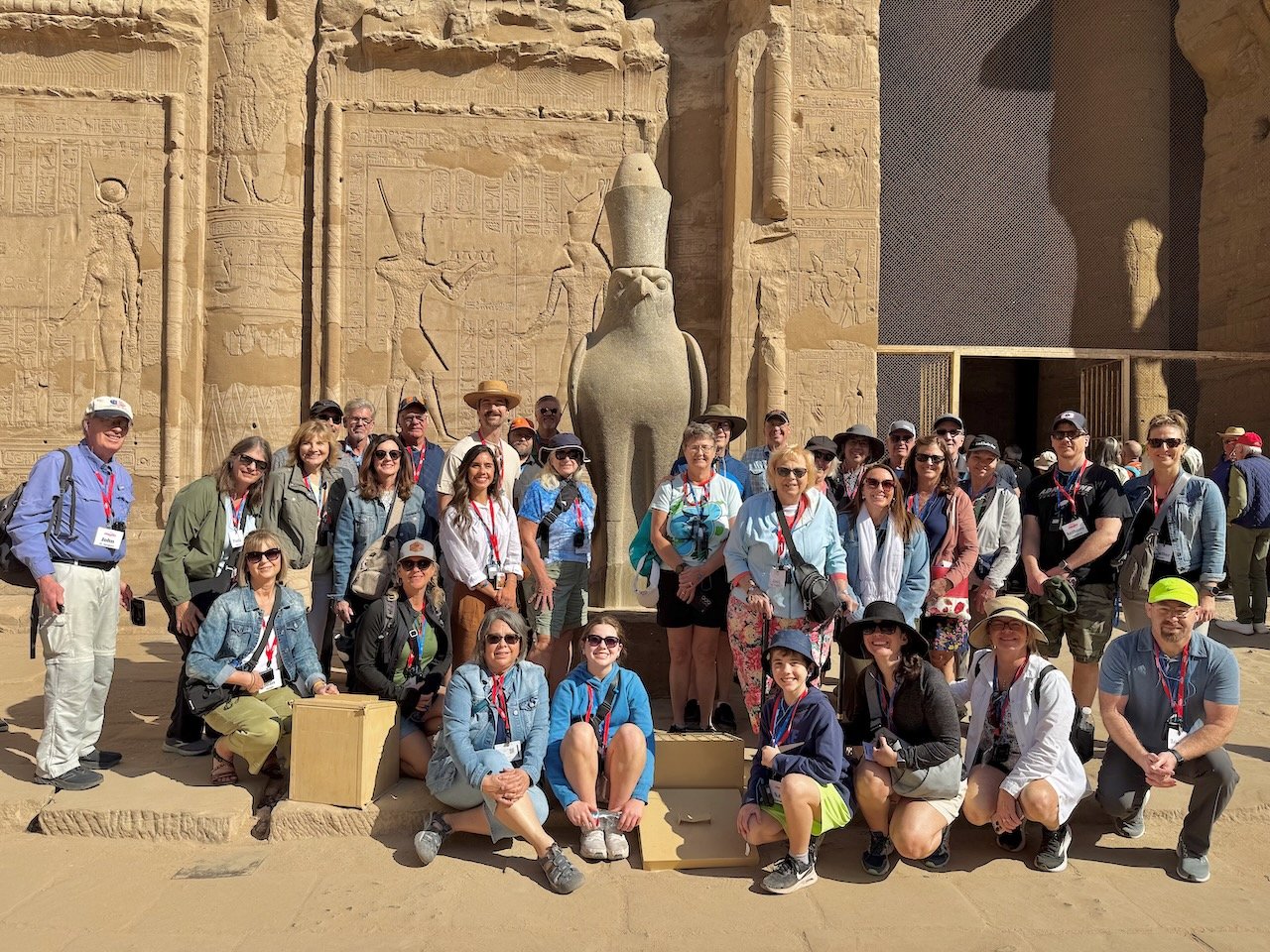
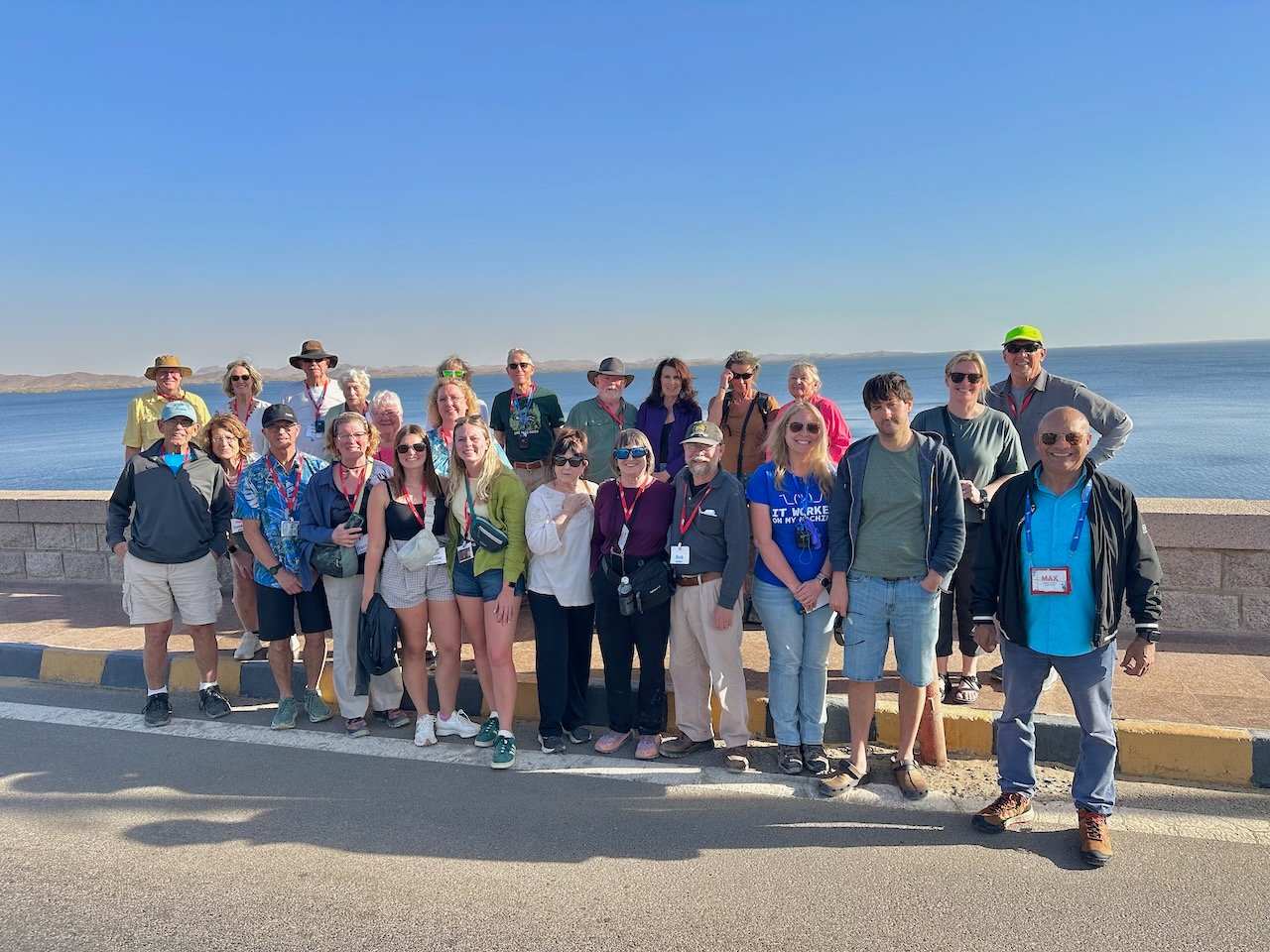
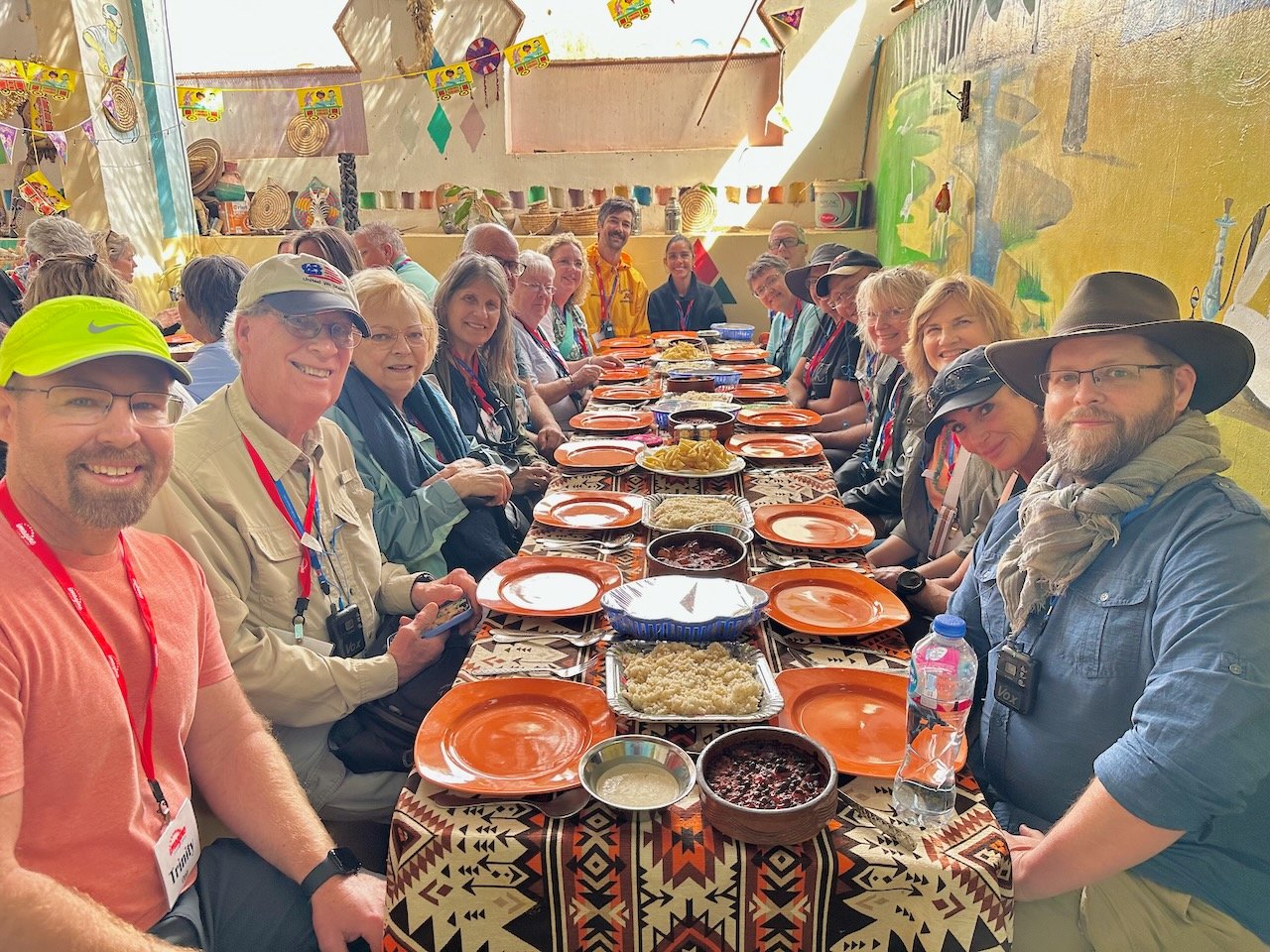
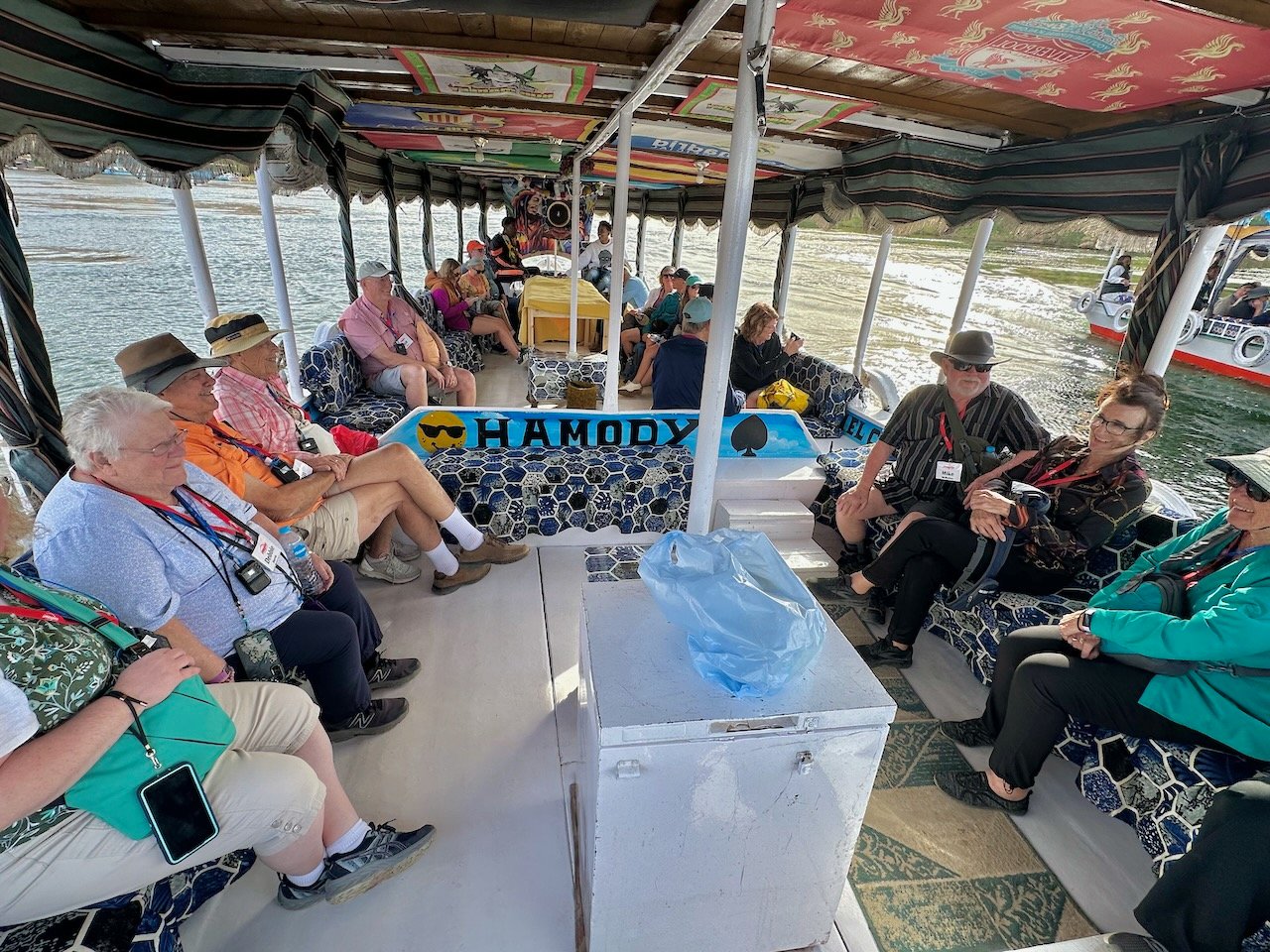
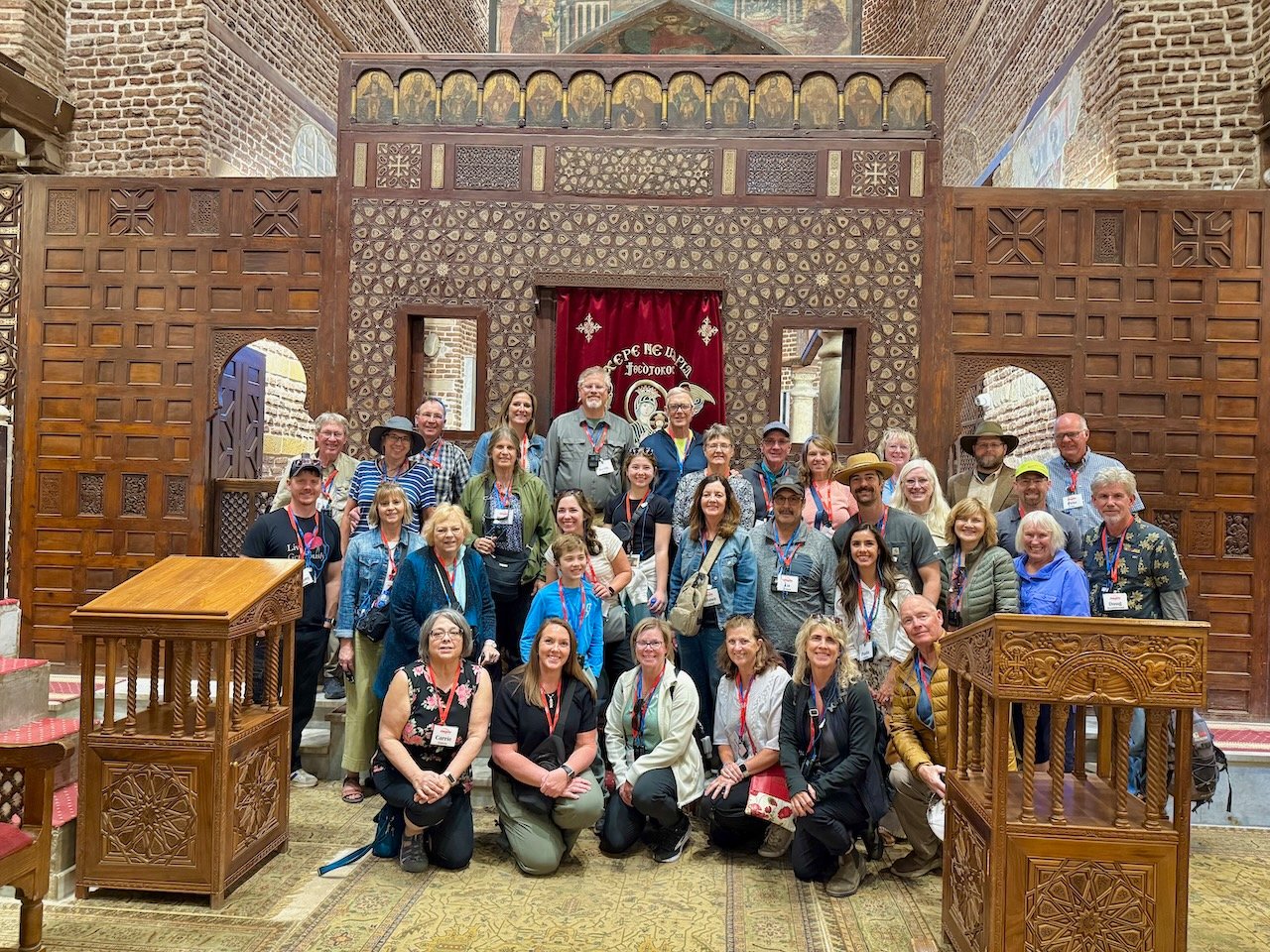
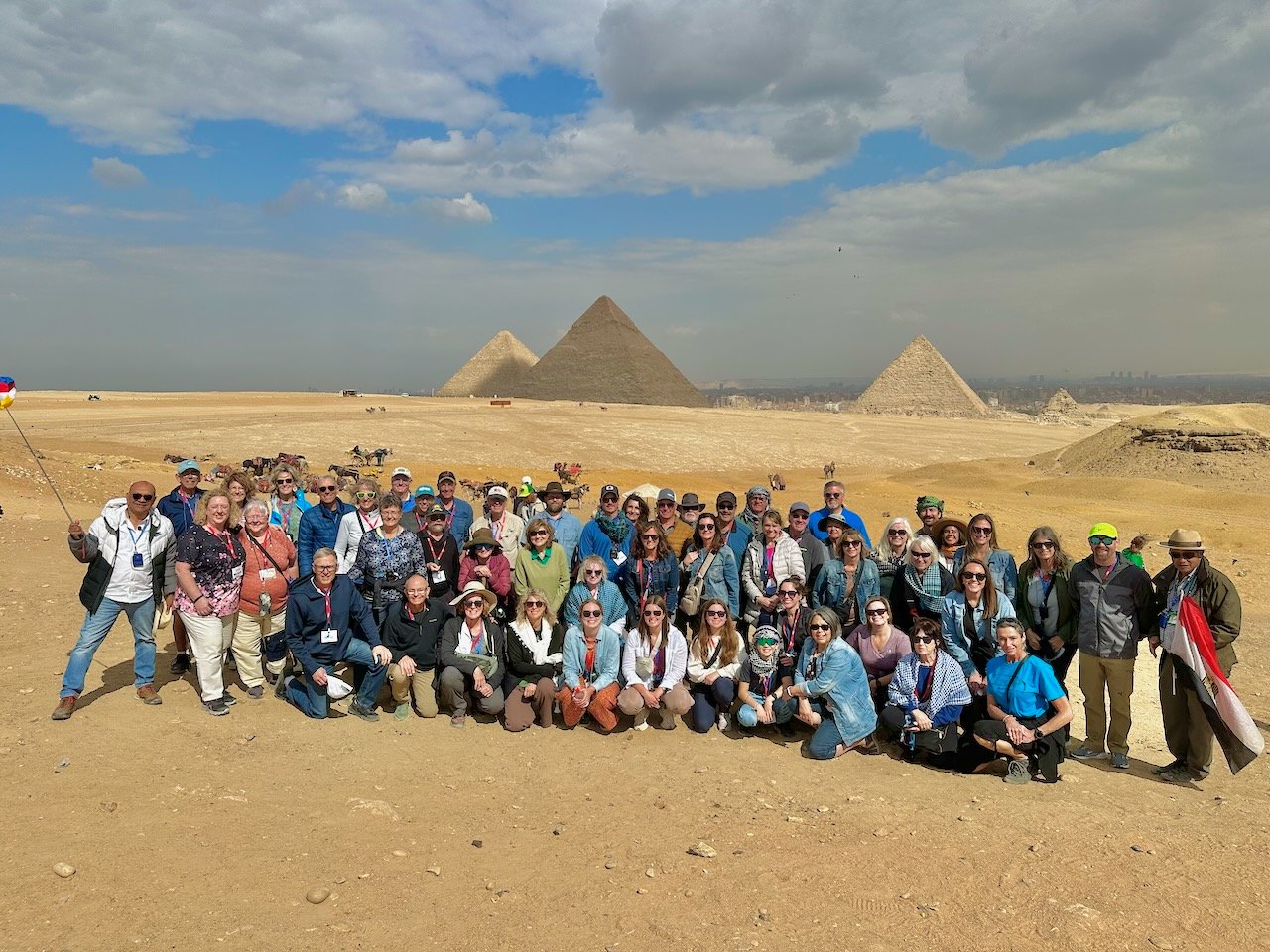
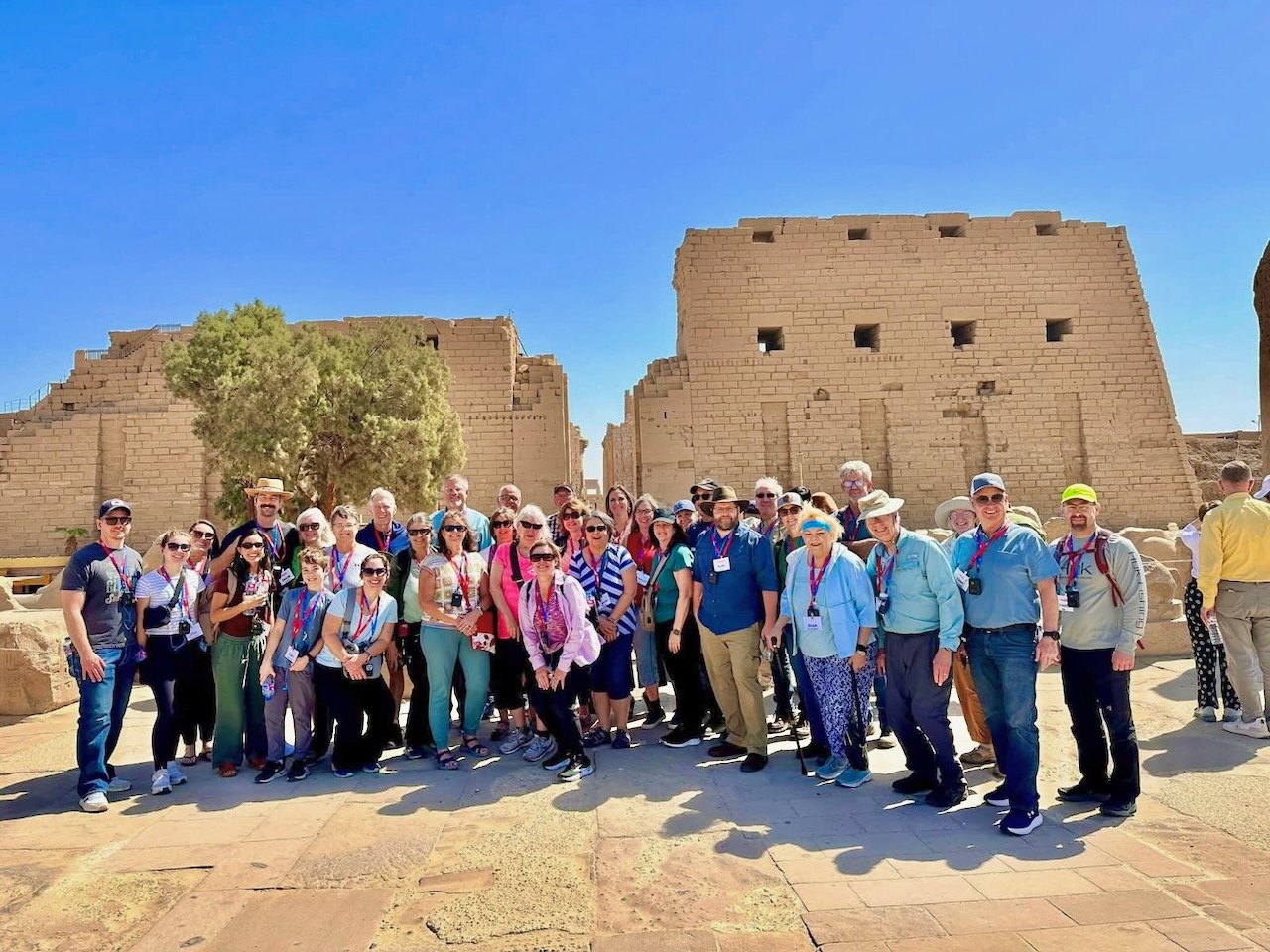
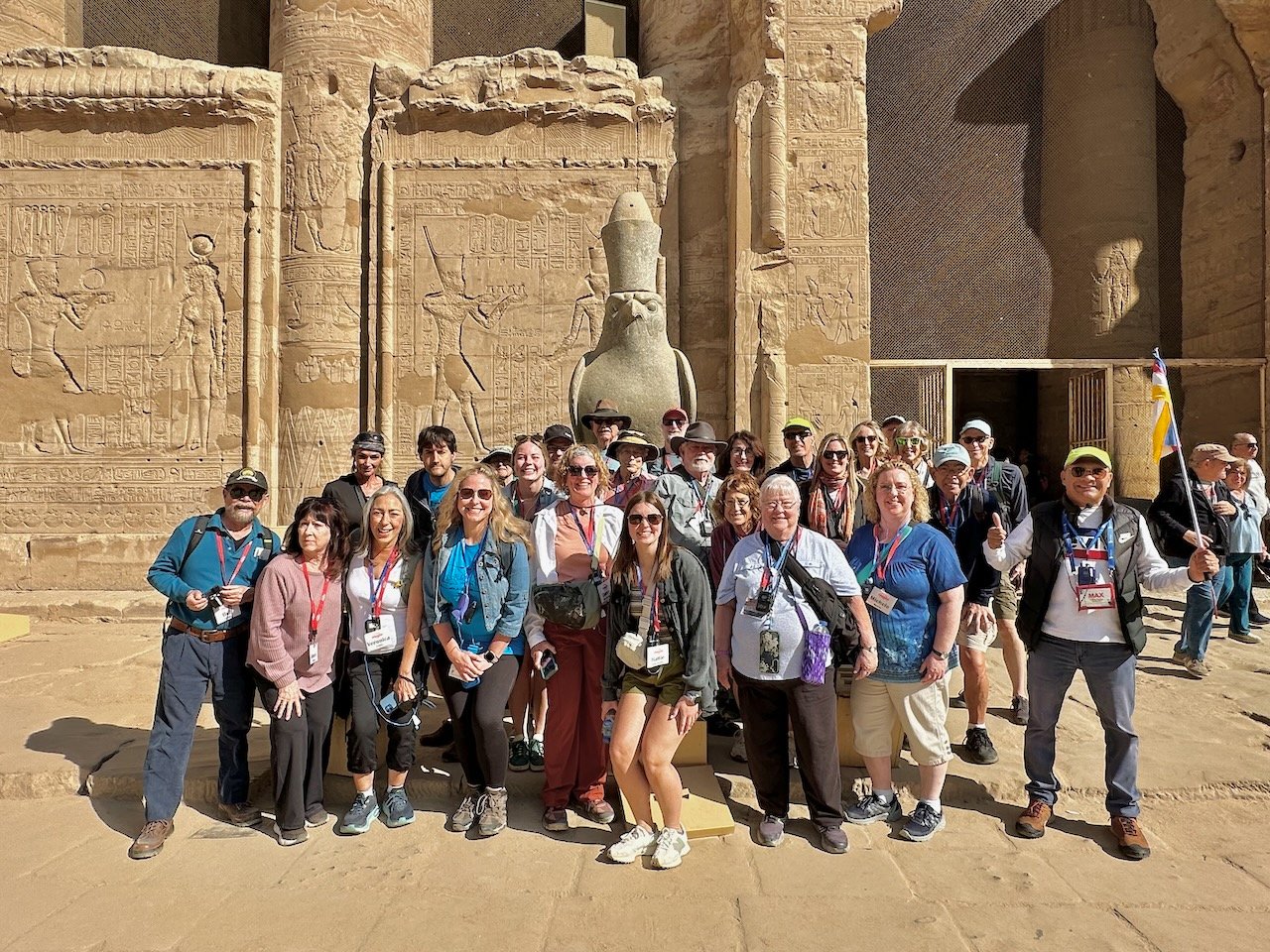
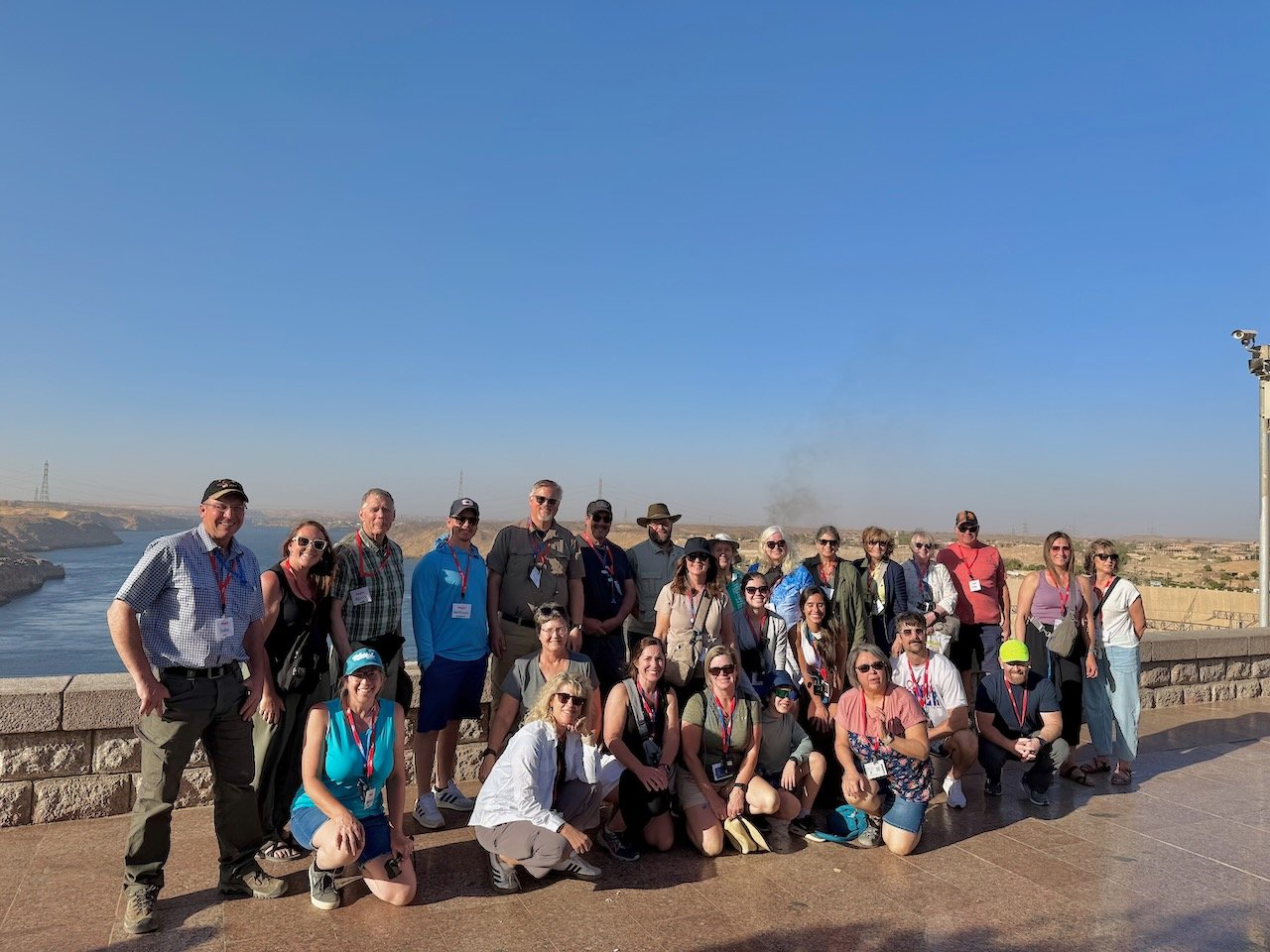
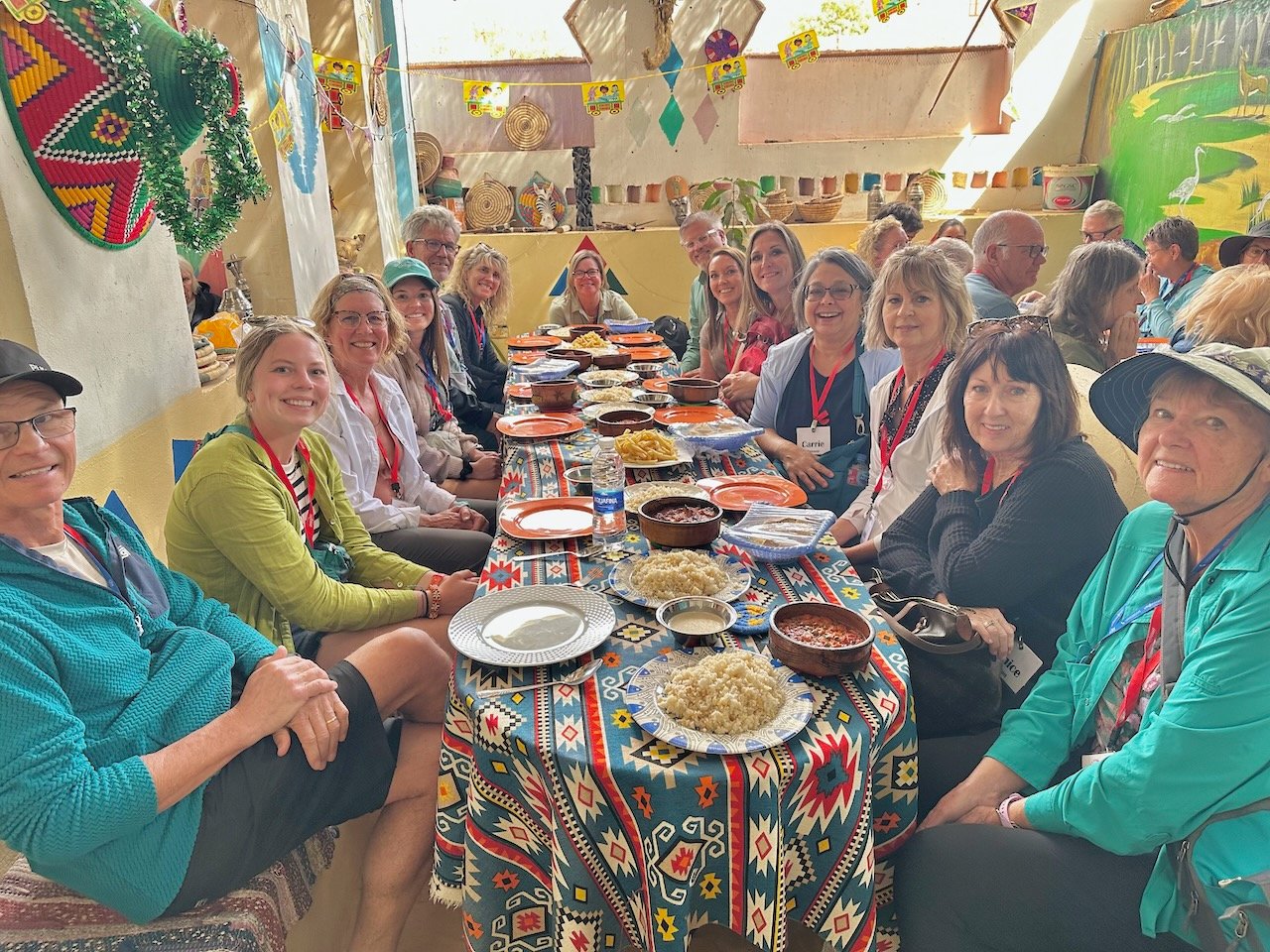
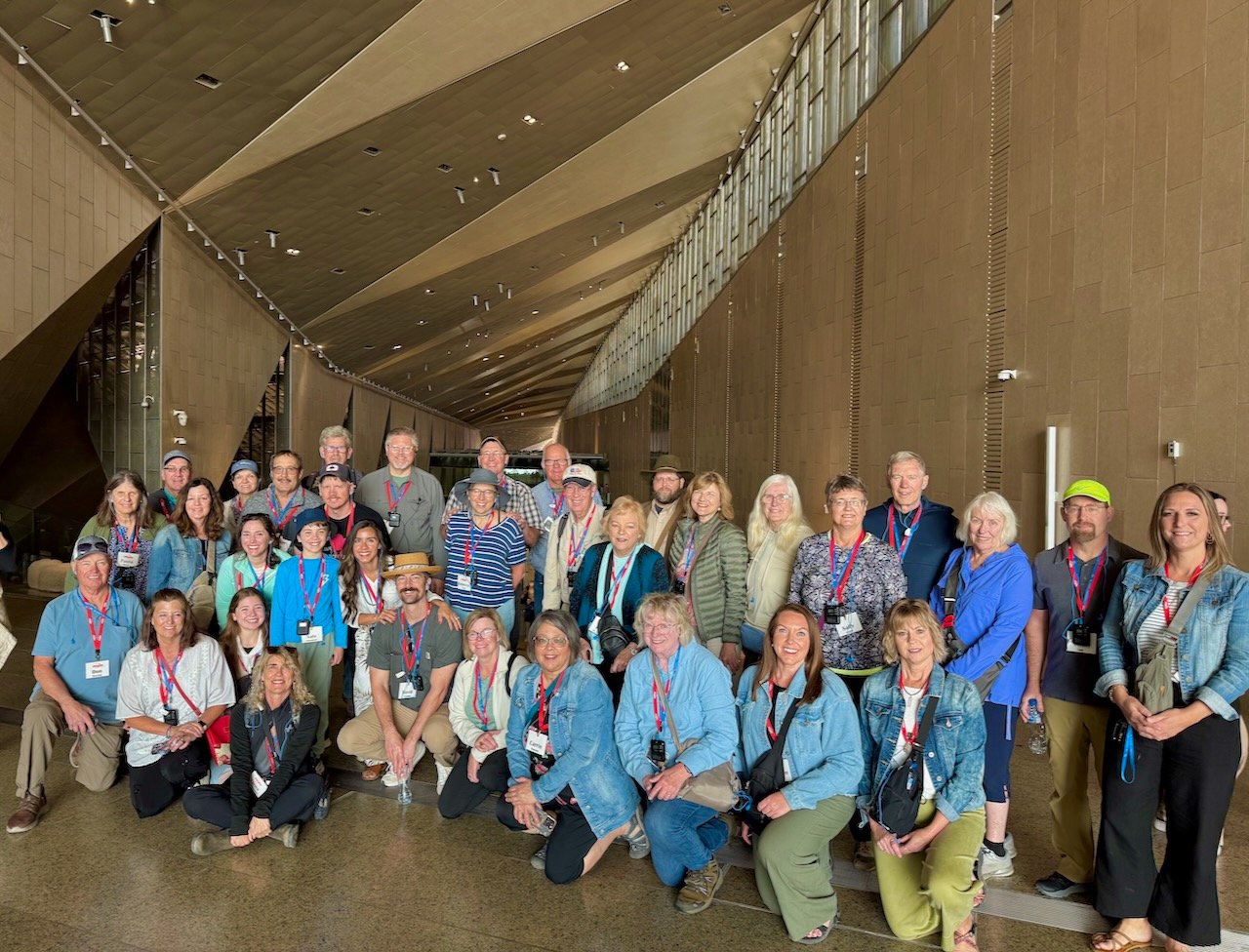
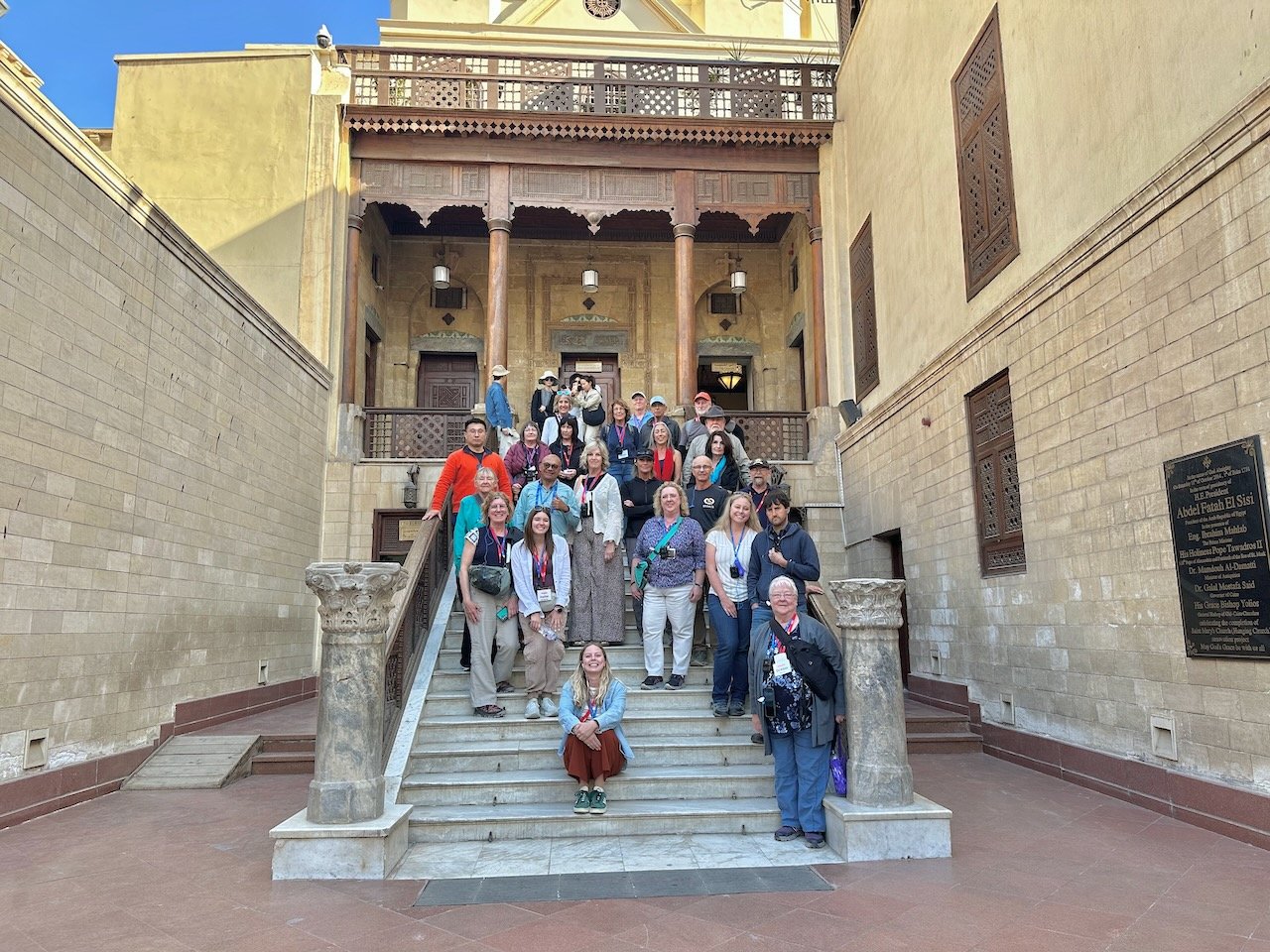
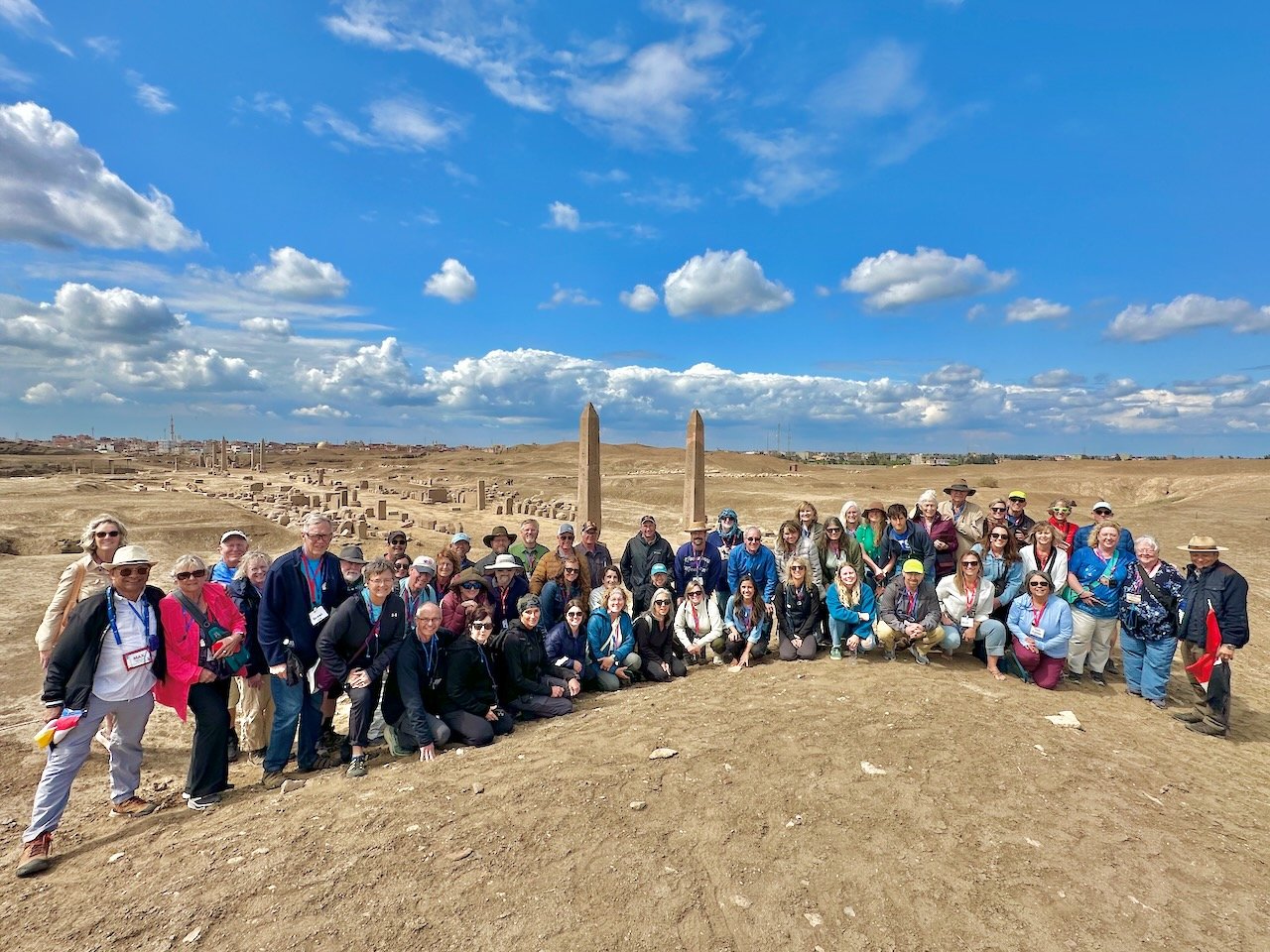
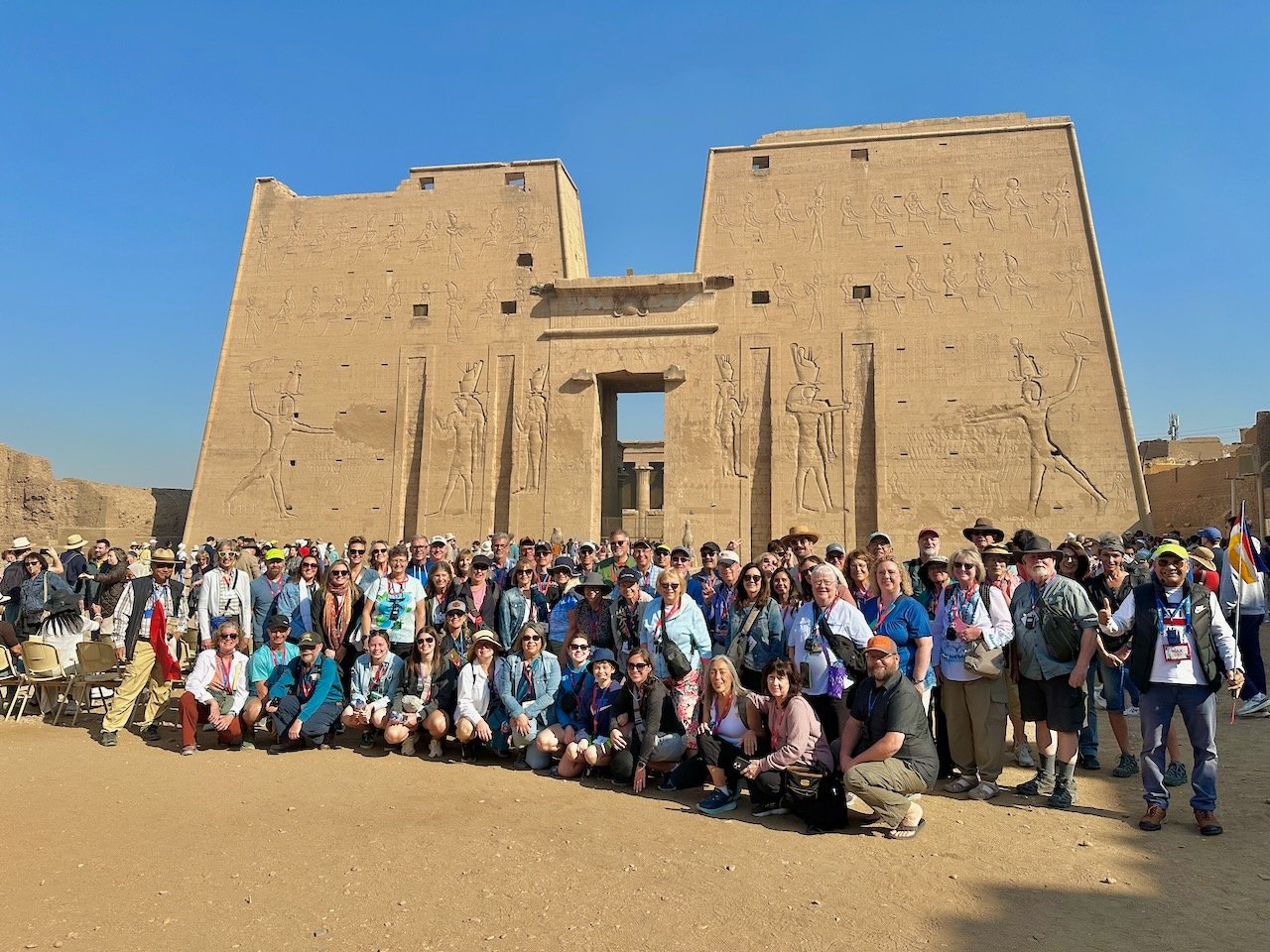
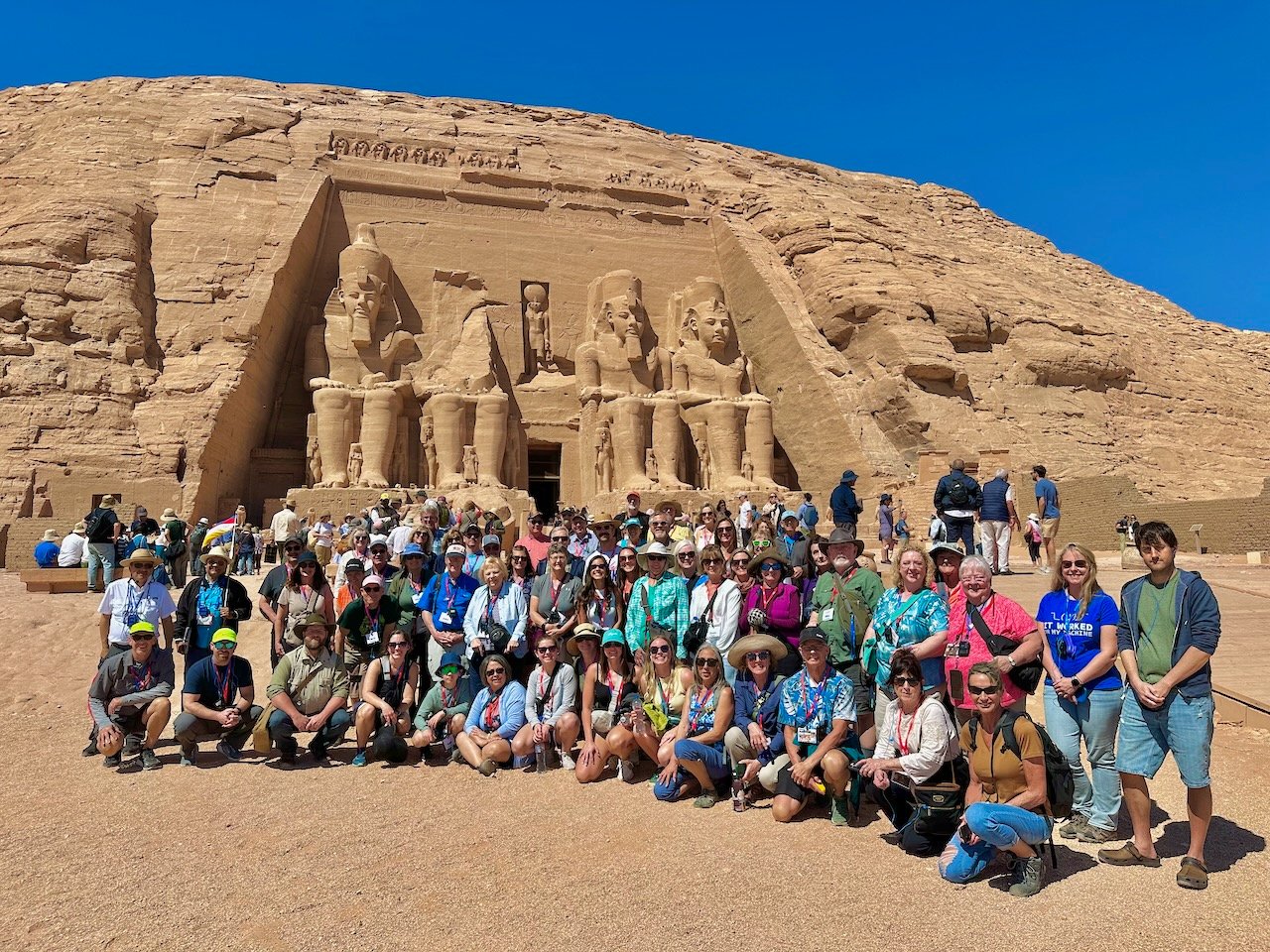
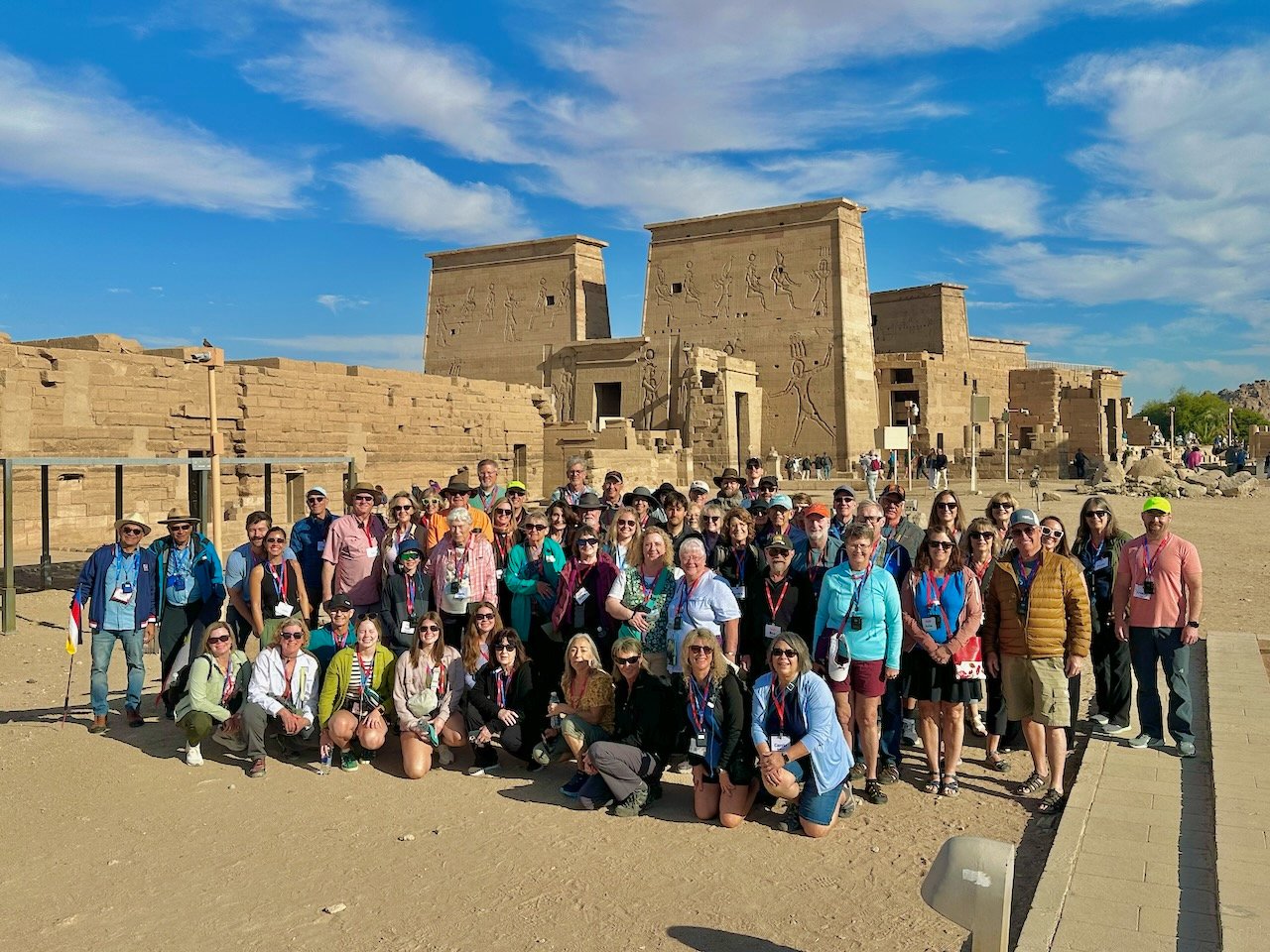
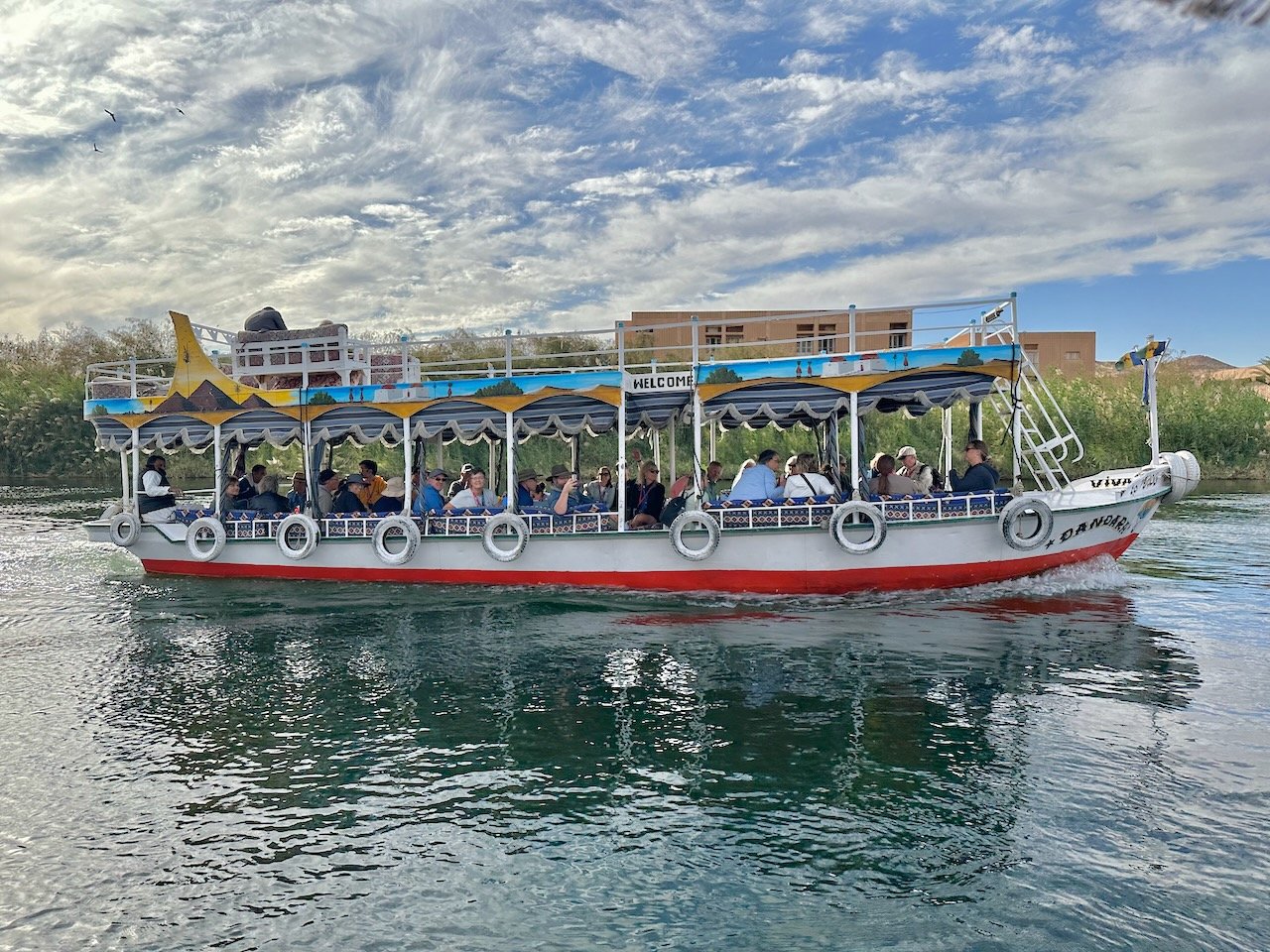
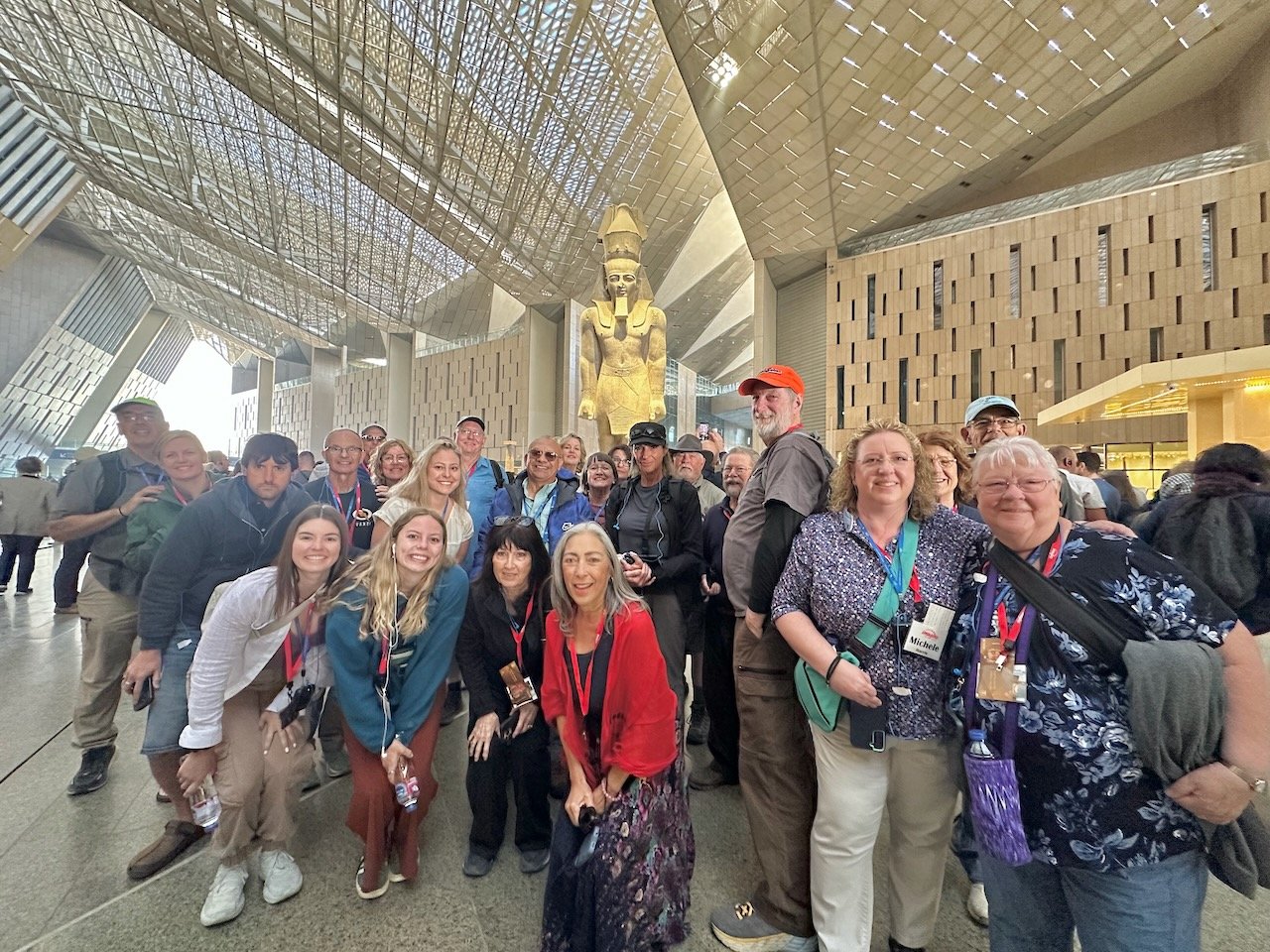
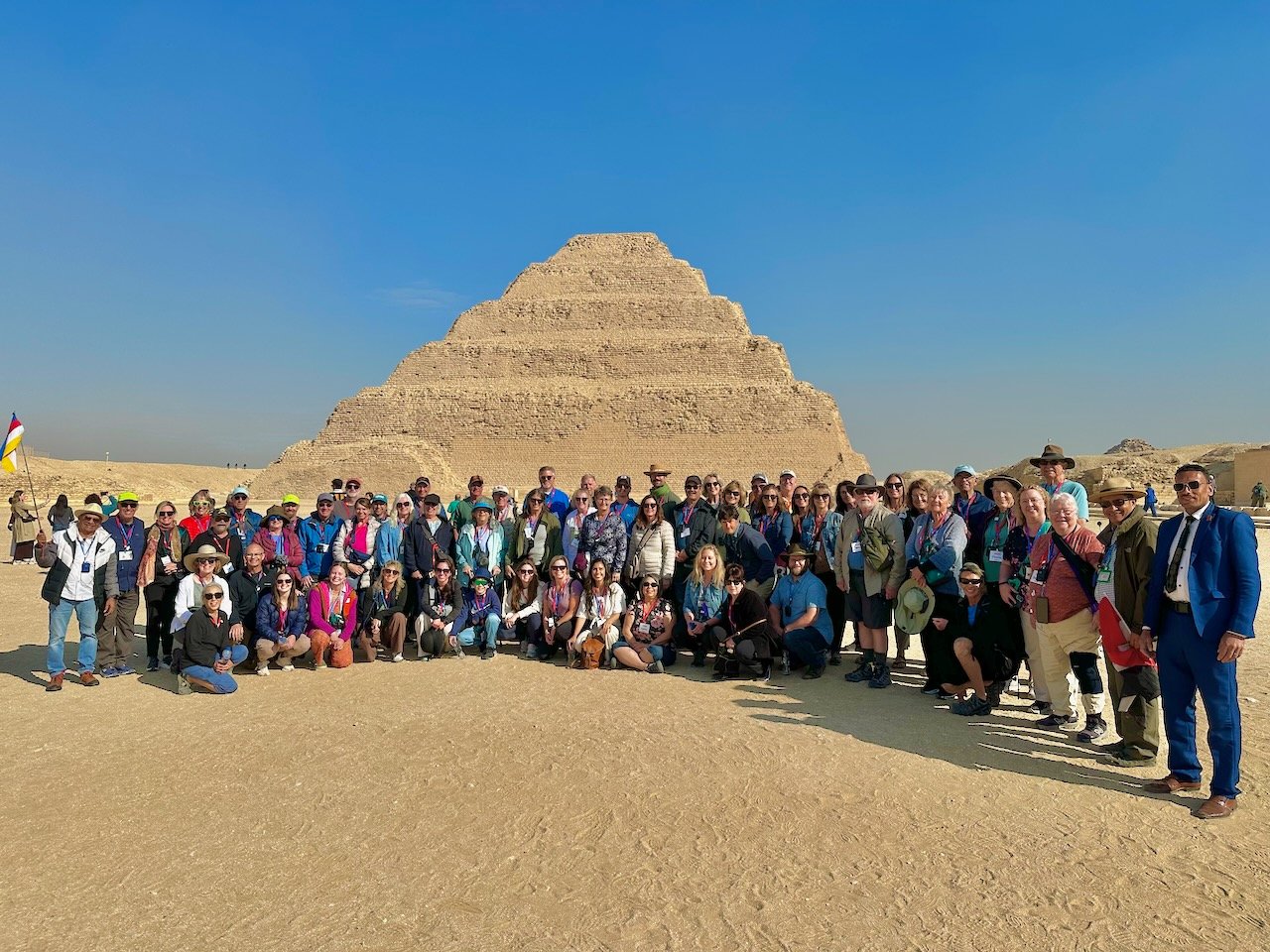
Group Photos
360 Photos
Days 1 & 2 – Saturday-Sunday, February 21-22: Depart U.S. / Arrival in Cairo
Our day of departure finally came. God brought together a total of 62 (unfortunately it was supposed to be 65, but three had medical issues and had to cancel) for this 11 Day biblical tour of Egypt. Besides those who signed up through BIMT, we welcome Pastor Trinity Opp and the Alexandria Covenant Church from MN as well as Nate Loper (Director of Canyon Ministries) and his group.
Using a few different airlines, we all made it to Cairo today (Sunday) except one (unfortunately her flight was delayed in the States and she missed her connection). Cairo is a city of about 22 million people, with the entire population of Egypt around 110 million.
Cairo
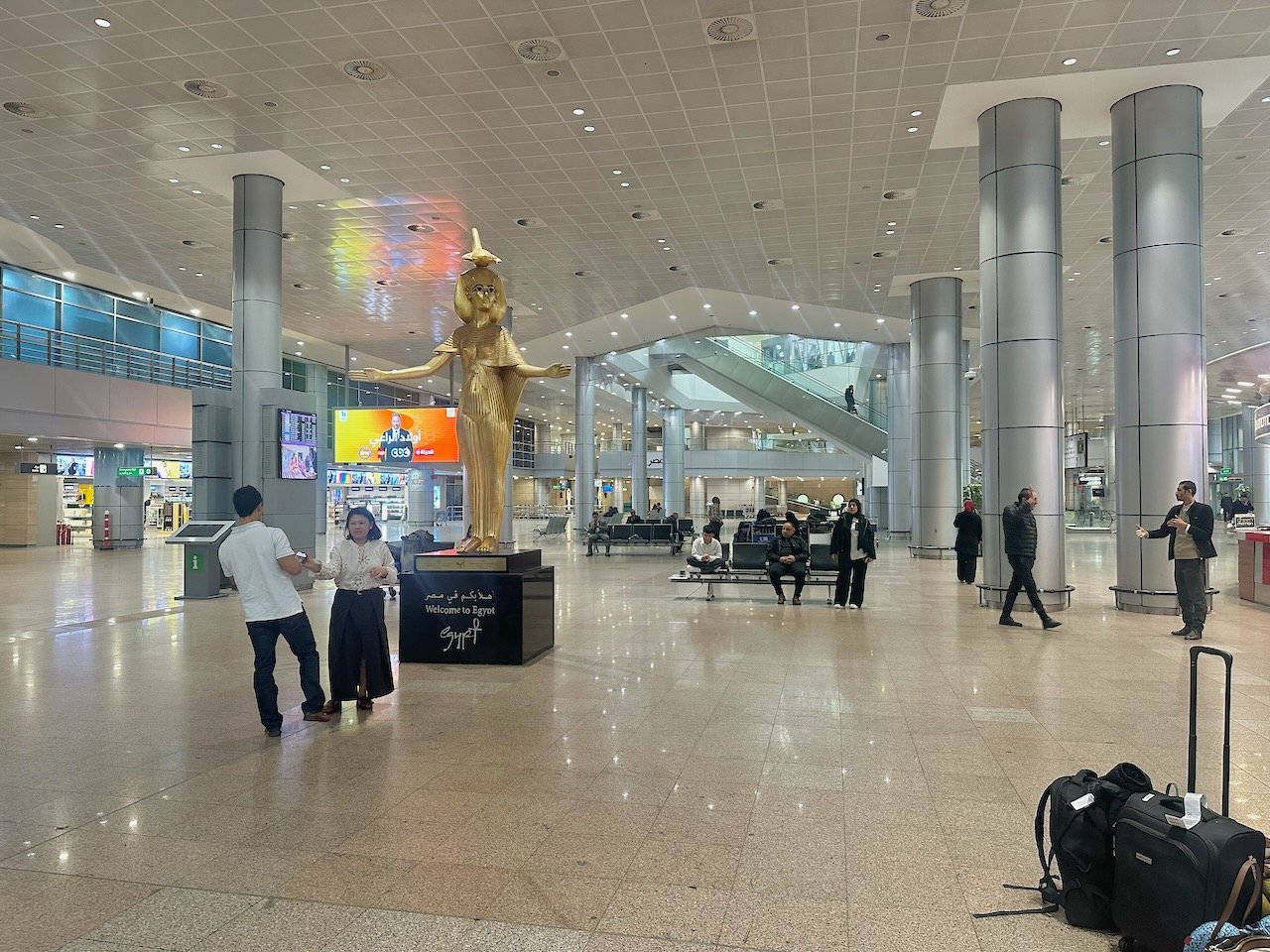
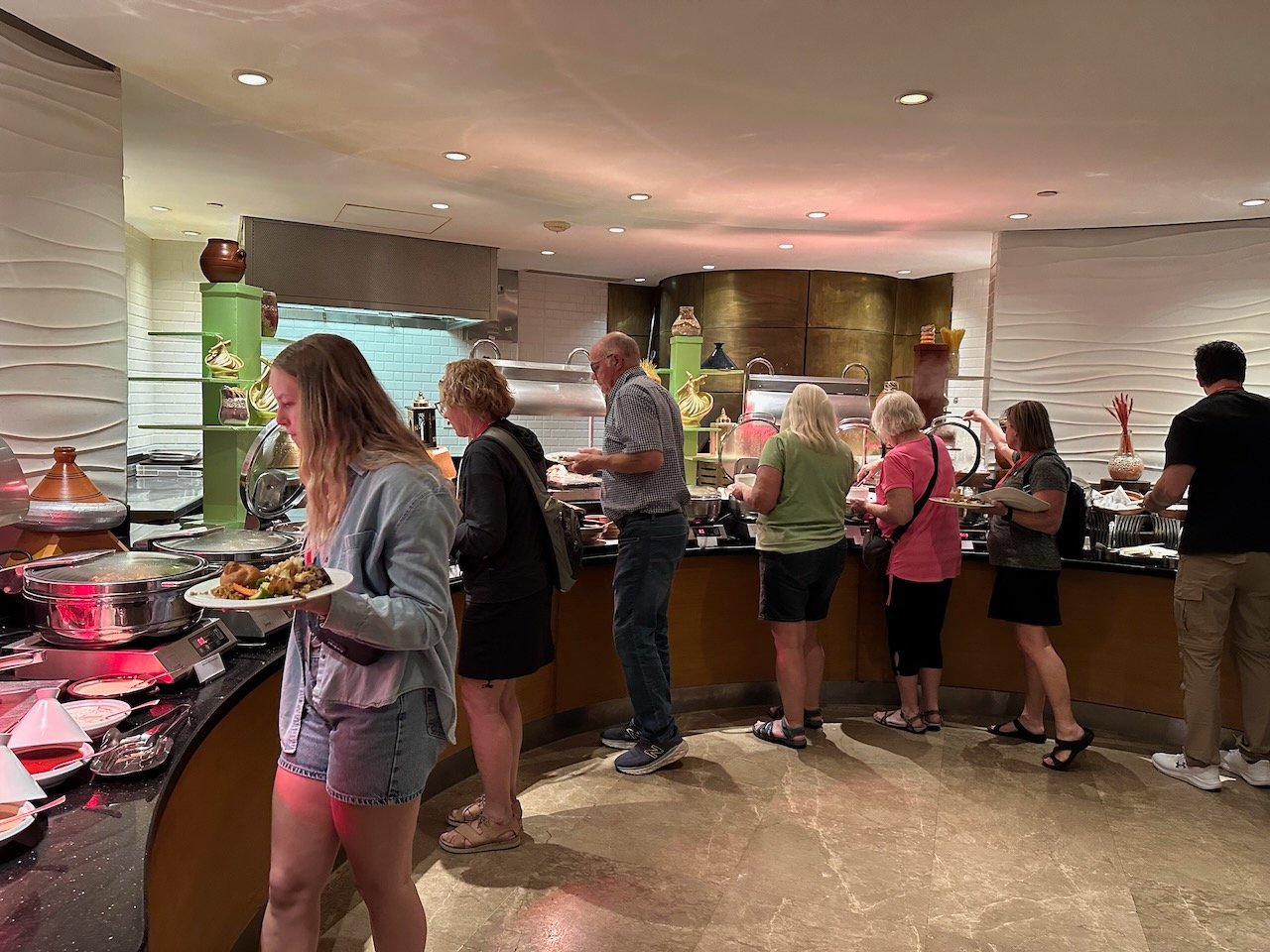
When we arrived at the Cairo Airport, we went through the customary Passport & Visa procedures. Our Meryland Tours agents, Yady and Mahab, helped us through the process as we arrived. We enjoyed dinner together at the airport hotel (the Meridian… very nice). We are all looking forward to this trip of biblical proportions that begins with a nine a.m. flight to Luxor tomorrow (about 480 miles south). We are blessed have Dr. Moses and Max, our Egyptologists/guides for our entire trip here in Egypt.
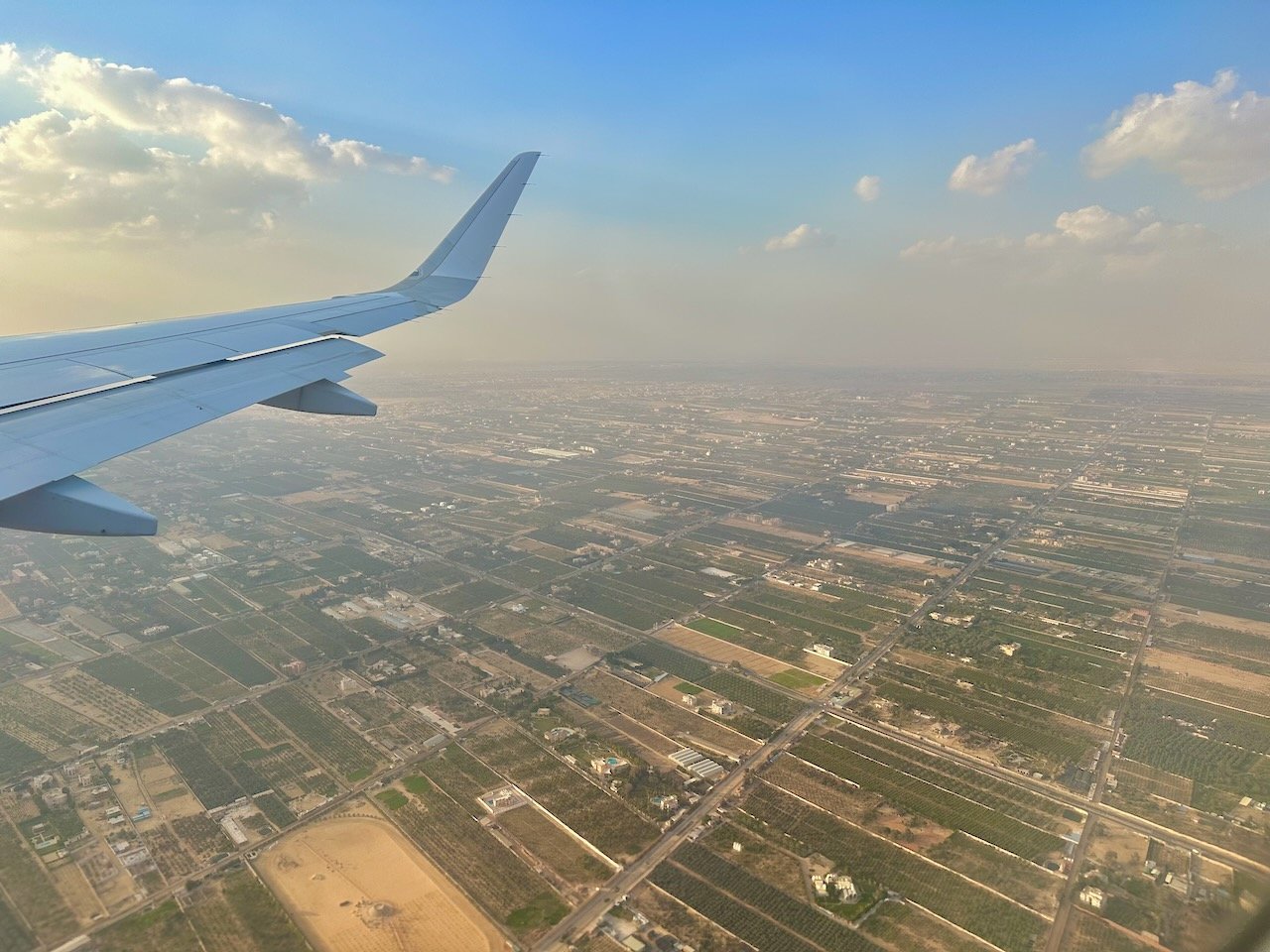
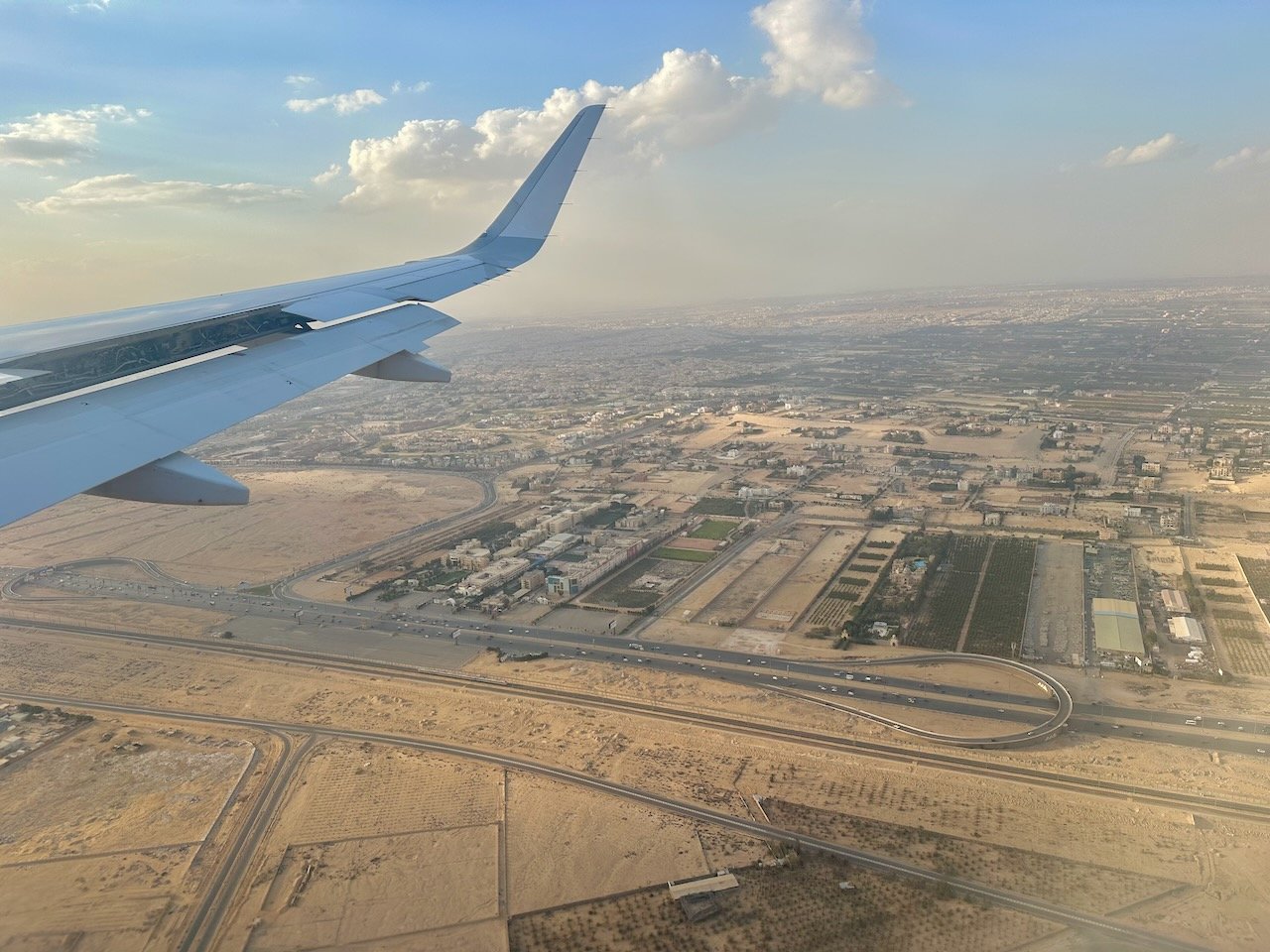
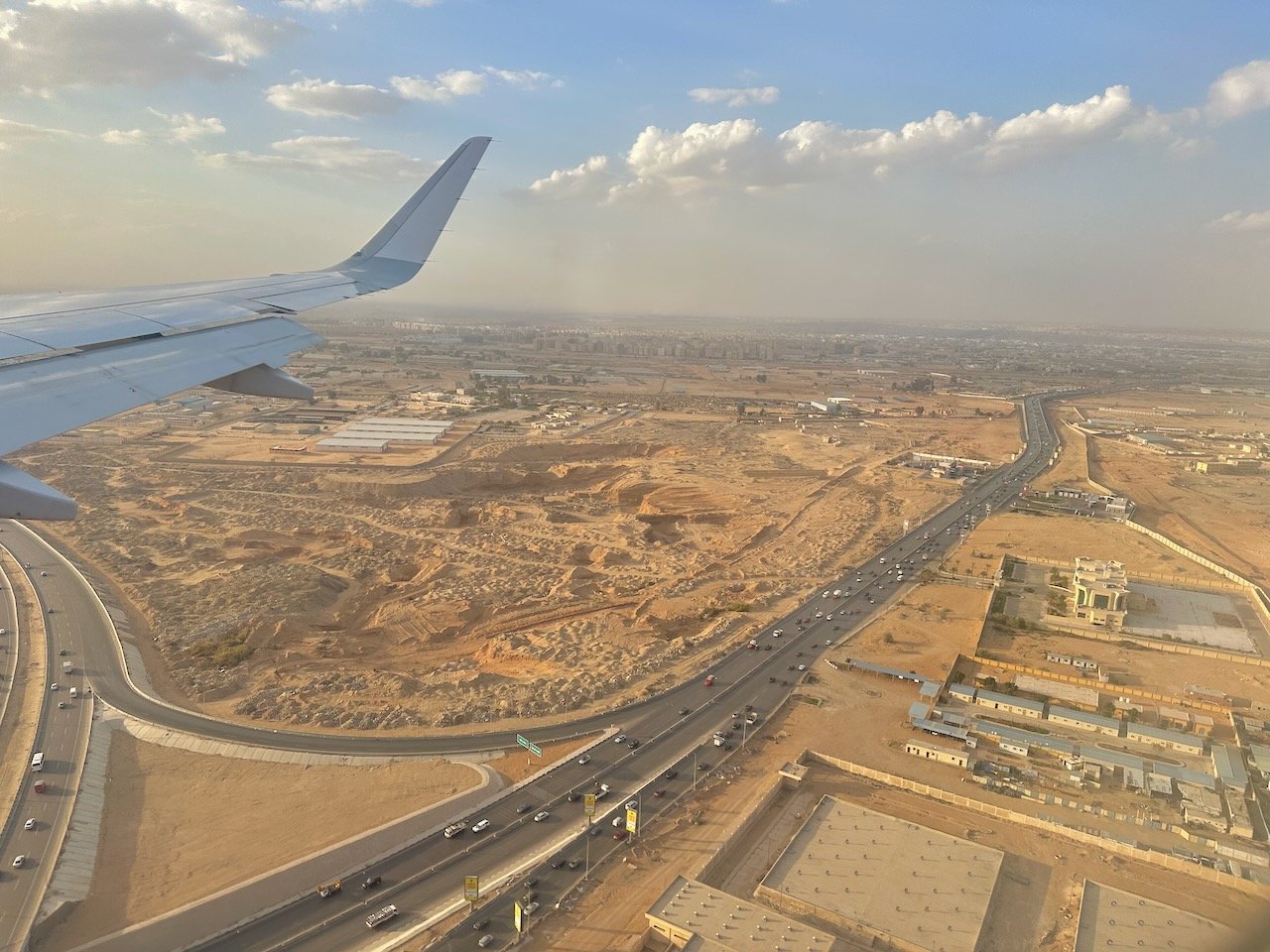
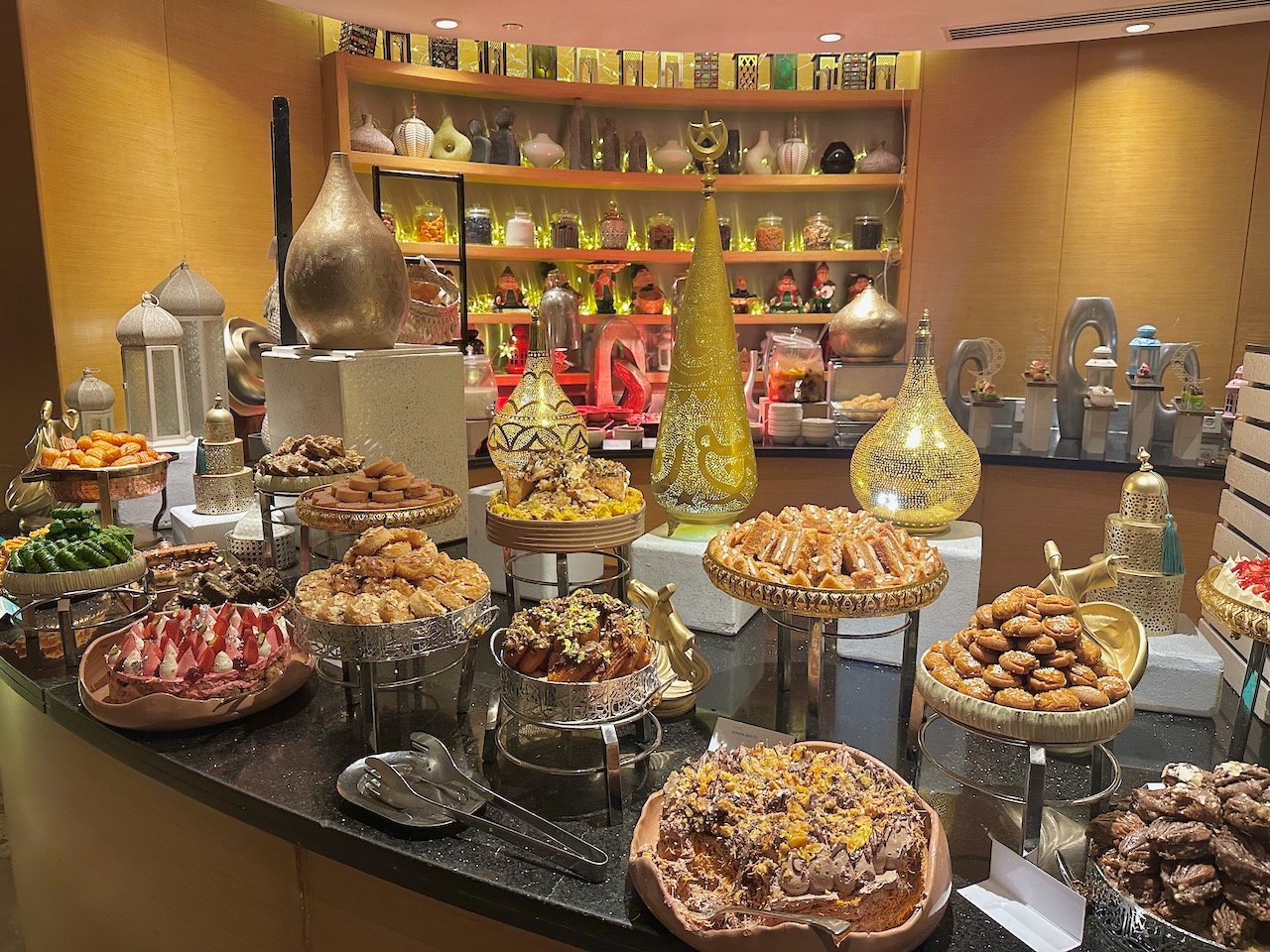
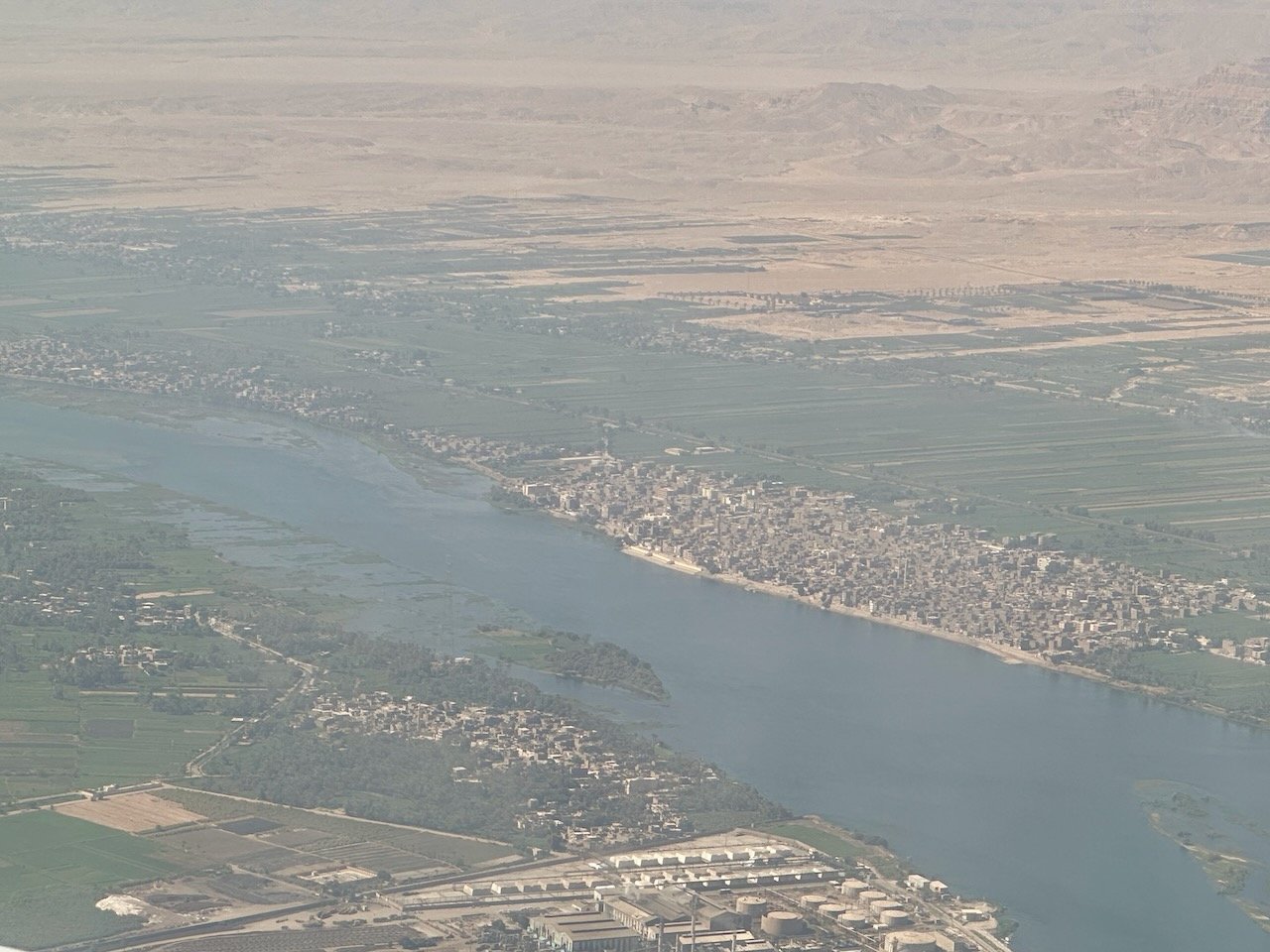
(Note: the few photos posted are from a previous trip flying into Cairo)
Day 3 – Monday, February 23: Morning Flight to Luxor, East Bank of Nile River: Karnak Temple, Luxor Temple
Today was our first full day, and it began with an early 5:30 a.m. wakeup, 6 a.m. breakfast and an early flight to Luxor. The 9 a.m. flight was only a little over an hour long. When we arrived we gathered our luggage and border our two buses. The weather in Luxor was perfect, with sunny skies and temps in the low 70s in the afternoon. Wha a great first day seeing ancient Egypt at its best!
Temple of Karnak
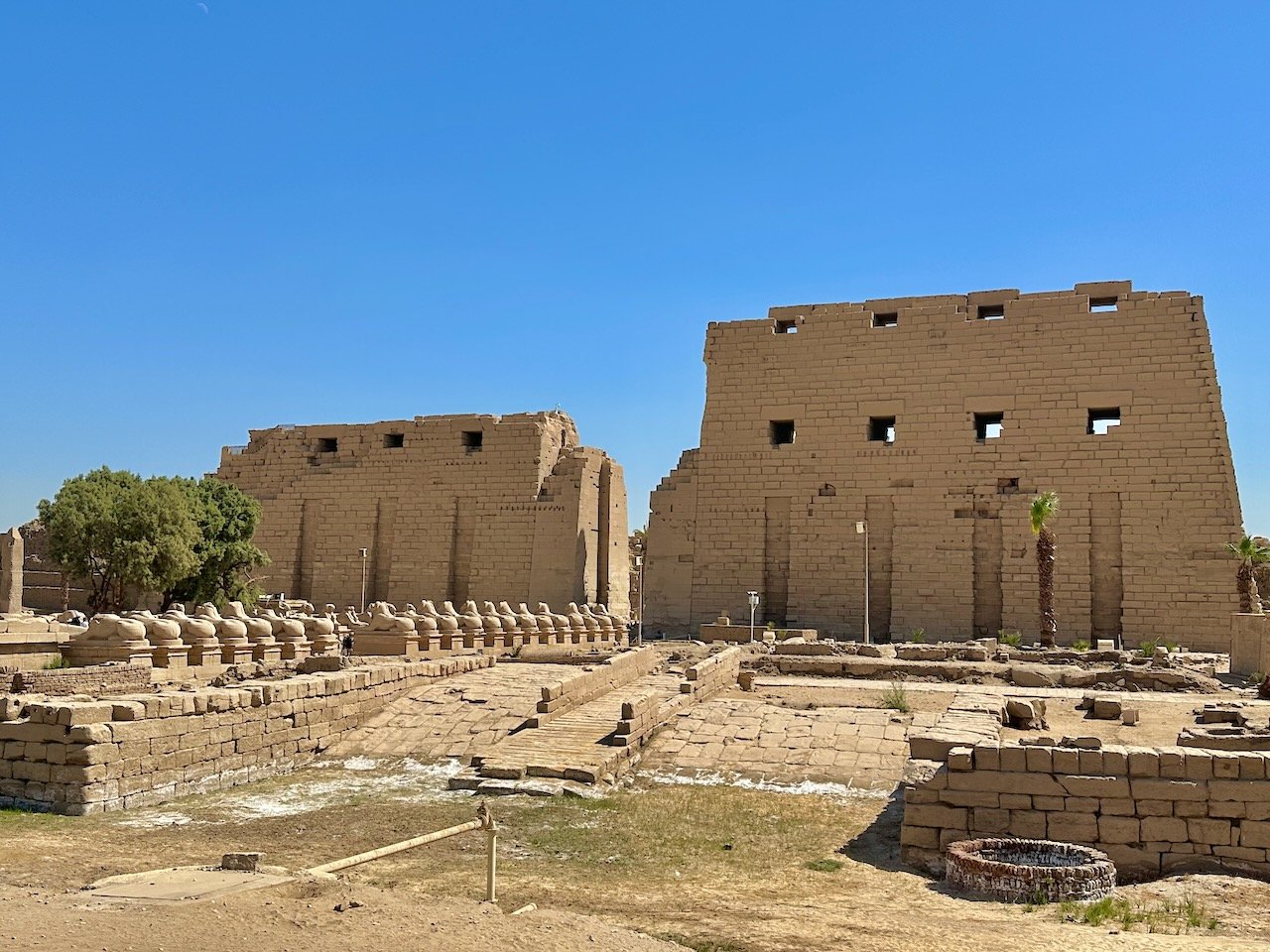
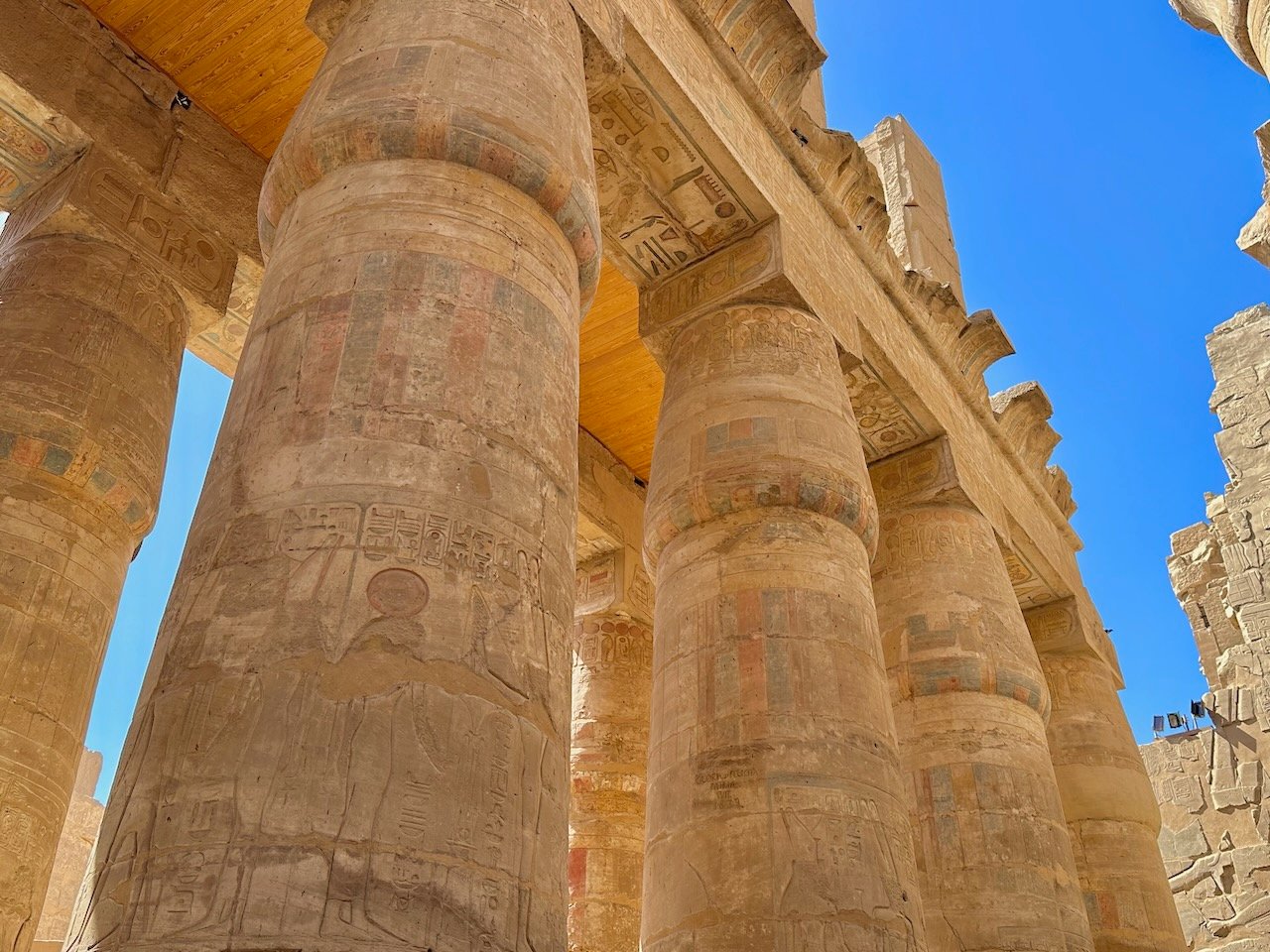
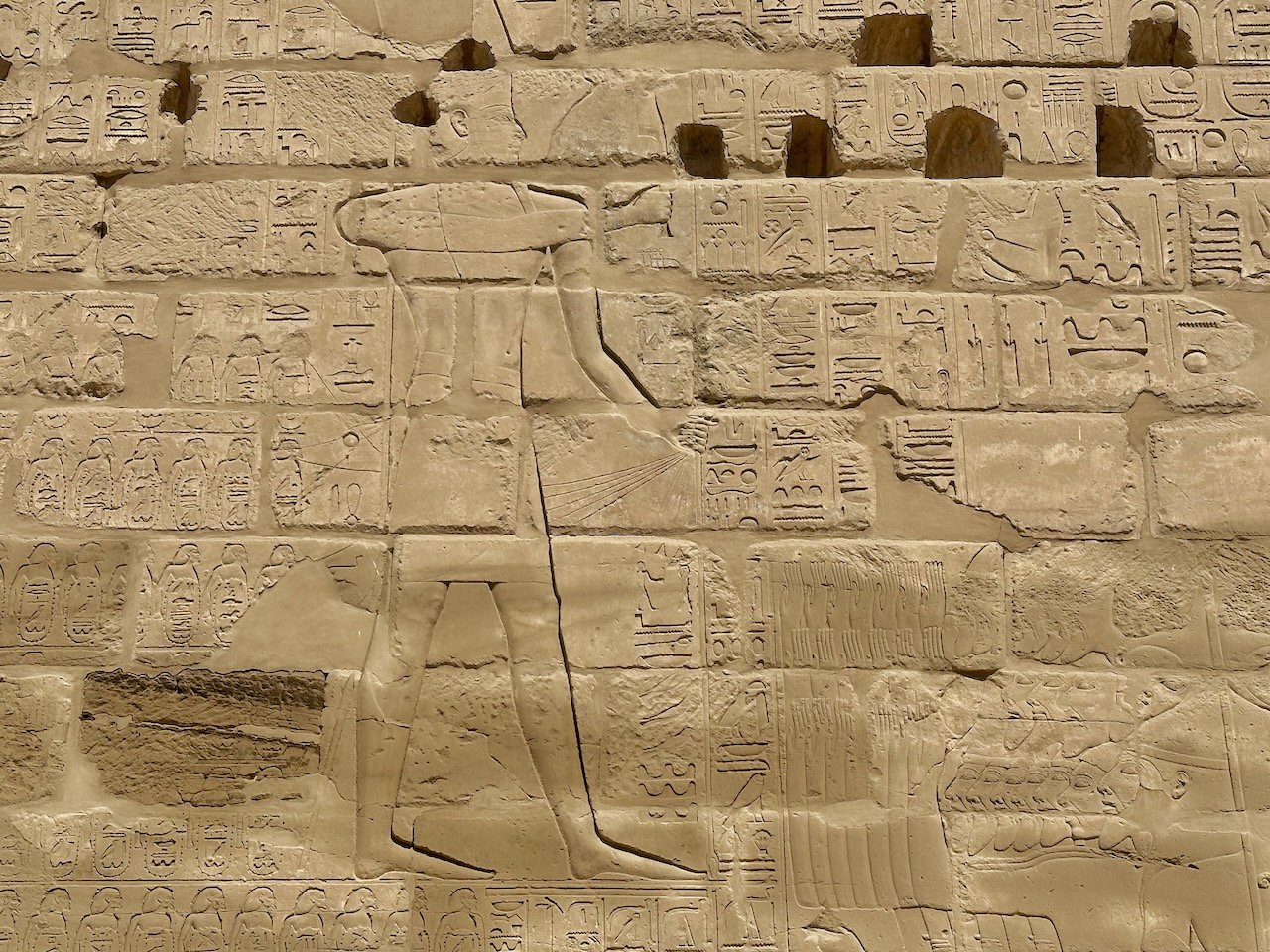
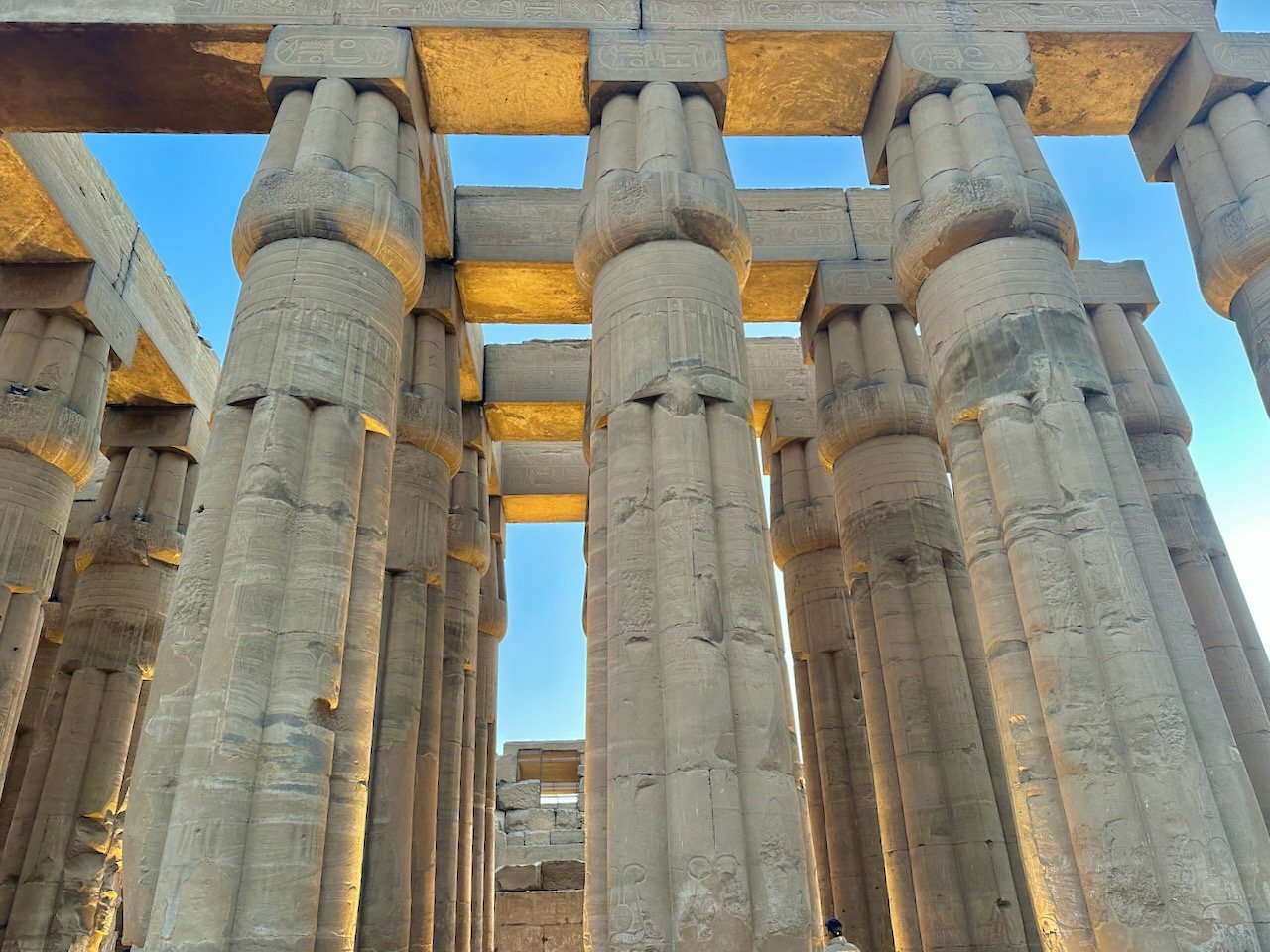
It took only 10 minutes from the airport to arrive at the Karnak Temple. It is really a massive complex of five temples. This temple was first built around 2100 BC (conventional dating). Many Pharaohs are honored here, including Thutmose III (who had 18 military victorious campaigns and took Megiddo in Israel), Seti I, Ramses II (who reigned 67 years and lived until 91 years of age). We also saw the many pylons, the Hypostyle Hall (built by Seti I, later refined by Ramses II, It consists of 134 columns), the obelisk of Hatshepsut (the largest one), the Sacred Lake, and the relief of Shoshenk. Most suggest he was one in the same as the Pharoah called “Shishak” in the Bible (I Kings 14:25-28, 2 Chronicles 12:3-9, although New/Revised Chronology would suggest Ramses III was the “Shiskak” in the biblical text). The tour of Karnak was incredible given the grandeur of this temple! What a great start!
Nile River Cruise Ship
Following our visit of Karnak, we bussed to our cruise ship for the next four days (the Sonesta Moon). First we enjoyed lunch no board before getting our room keys and enjoying a little rest time before leaving for the Luxor Temple.
Temple of Luxor at Dusk
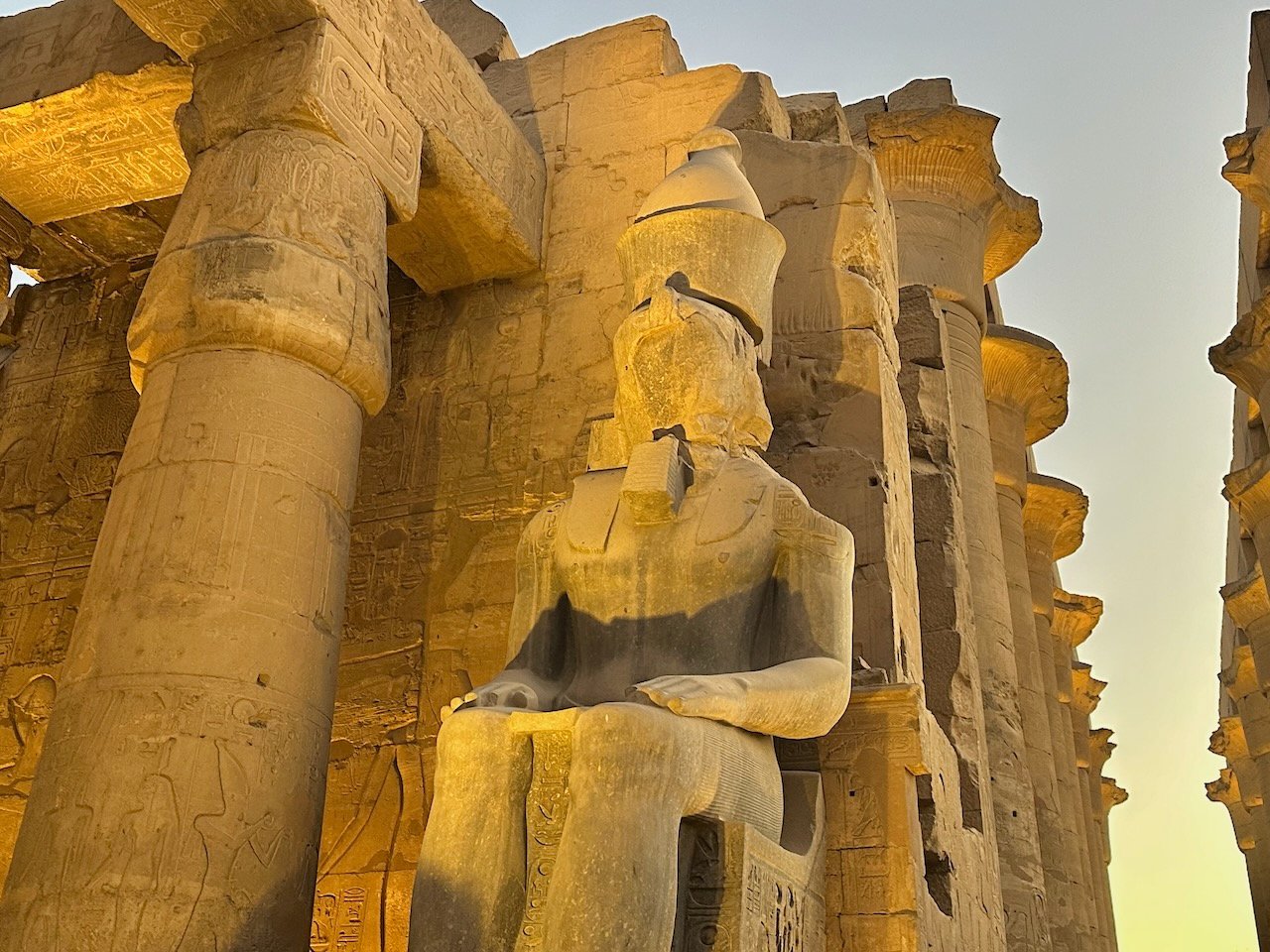
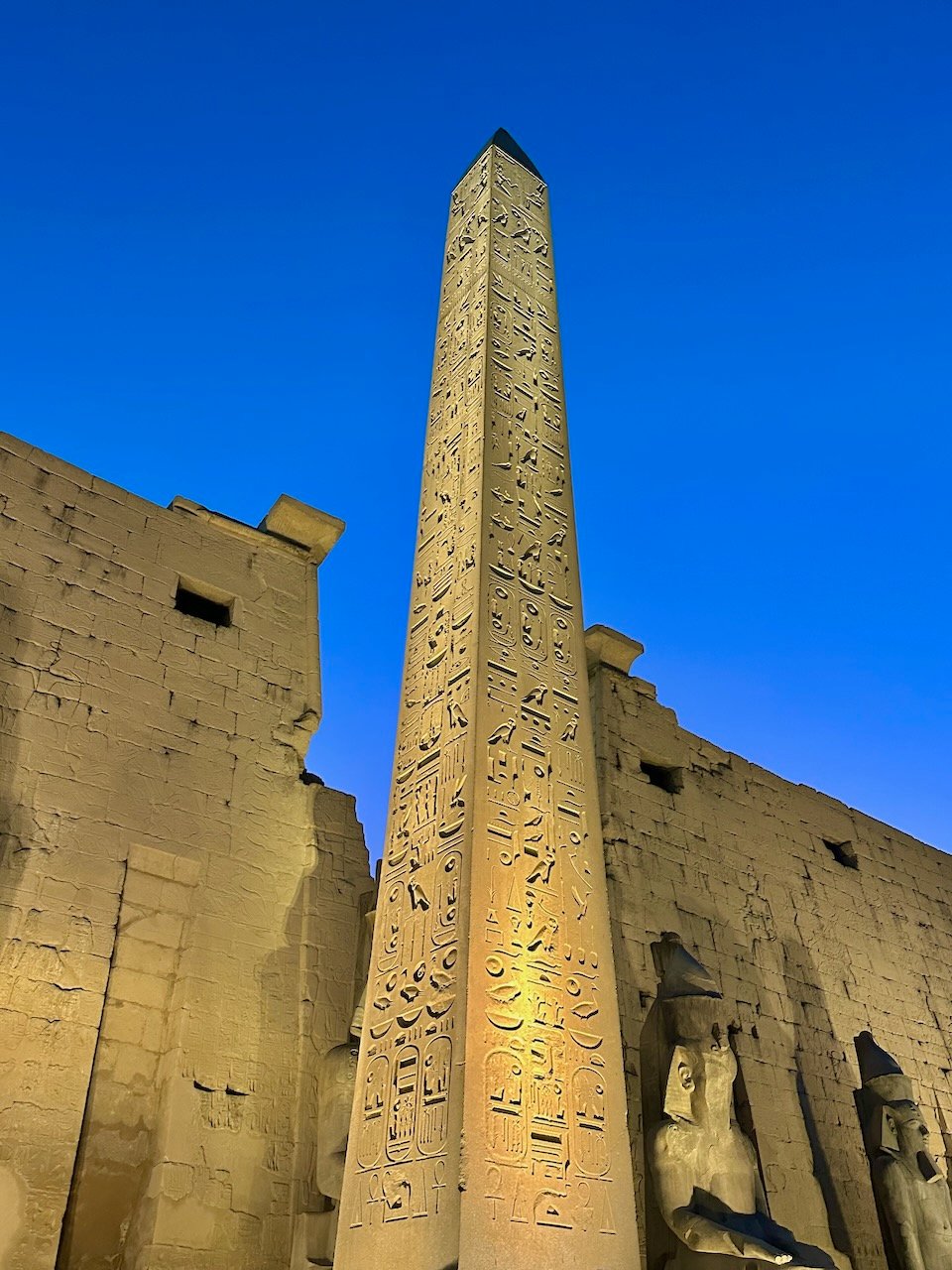
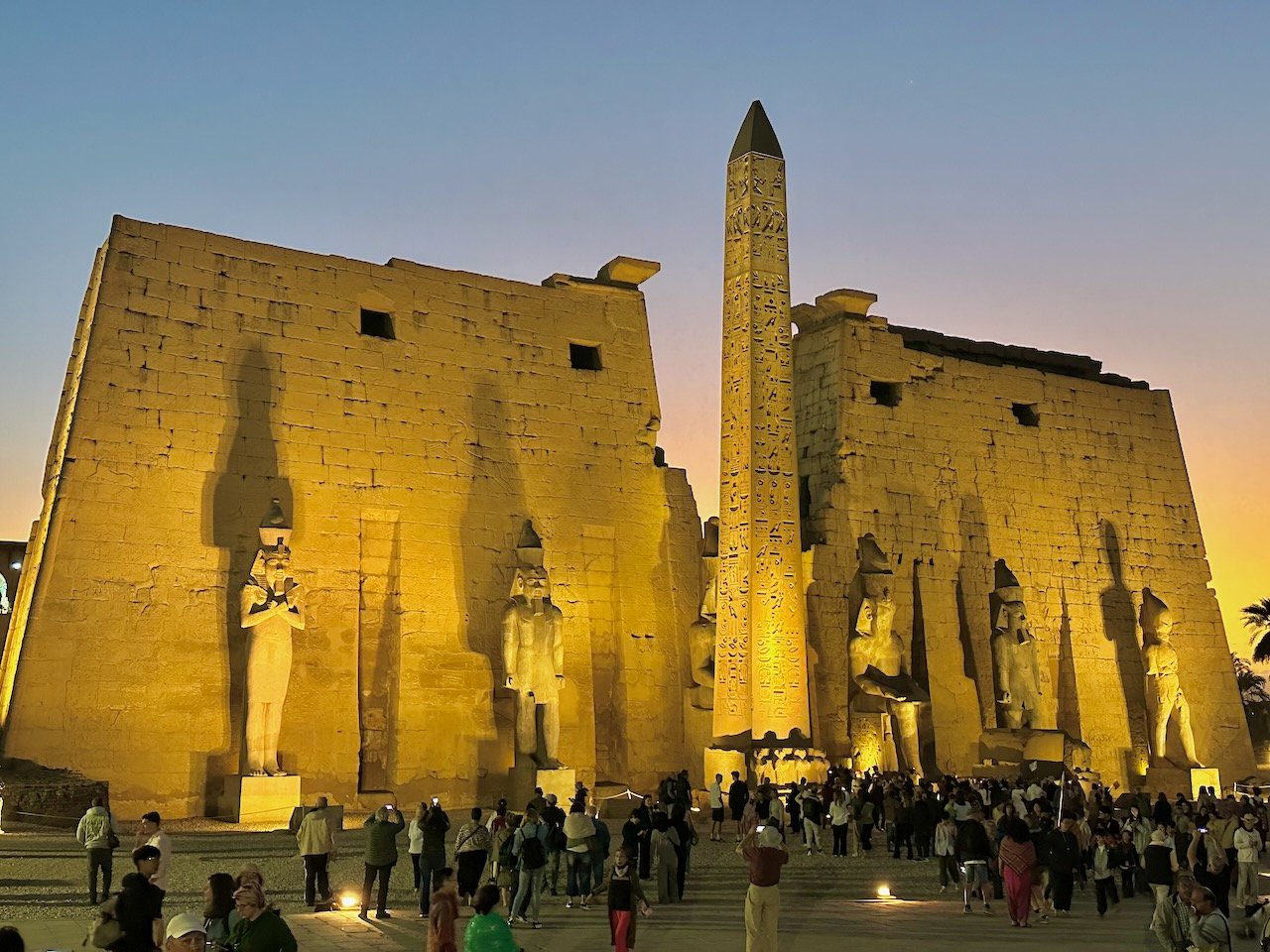
We ended the day with an late afternoon visit to the Luxor Temple. This temple is primarily in honor of Ramses II, although built before him by Amenhotep III. Ramses II, one of the most famous of them all, was the great Egyptian pharaoh of the 13th century BC (1280s-1220s, conventional dating). To see this temple eliminated with lights at dusk was spectacular.
Before we drove back to our hotel, we stopped in at a local papyrus store. The ancient Egyptians made papyrus the same way! Once we returned to the boat, some enjoyed watching some Egyptian dancing (“whirling dervish”) before dinner at 8 p.m. It was a cultural experience!
Unfortunately we received word this evening that the western winds will not allow the hot-air balloon ride to take place. These winds have caused the balloon rides to be canceled for the last five days. 52 in the group were planning on doing it.

Day 4 – Tuesday, February 24: West Bank of Luxor, Valley of the Kings, Temples of Hatsephsut and Medinet Habu, Embark on Nile River Cruise
We explored ancient Egypt today on the west bank of the Nile River. Every site we visit had its own unique and spectacular features, making the day to impressive in every way. The weather was perfect, with full sun and highs in the mid 70s. While it was very crowded everywhere (except the last site), what we saw was right of of the National Geographic! We read from Exodus 2 (about the birth of Moses) as we left the hotel at 7 a.m.
Luxor: Valley of the Kings
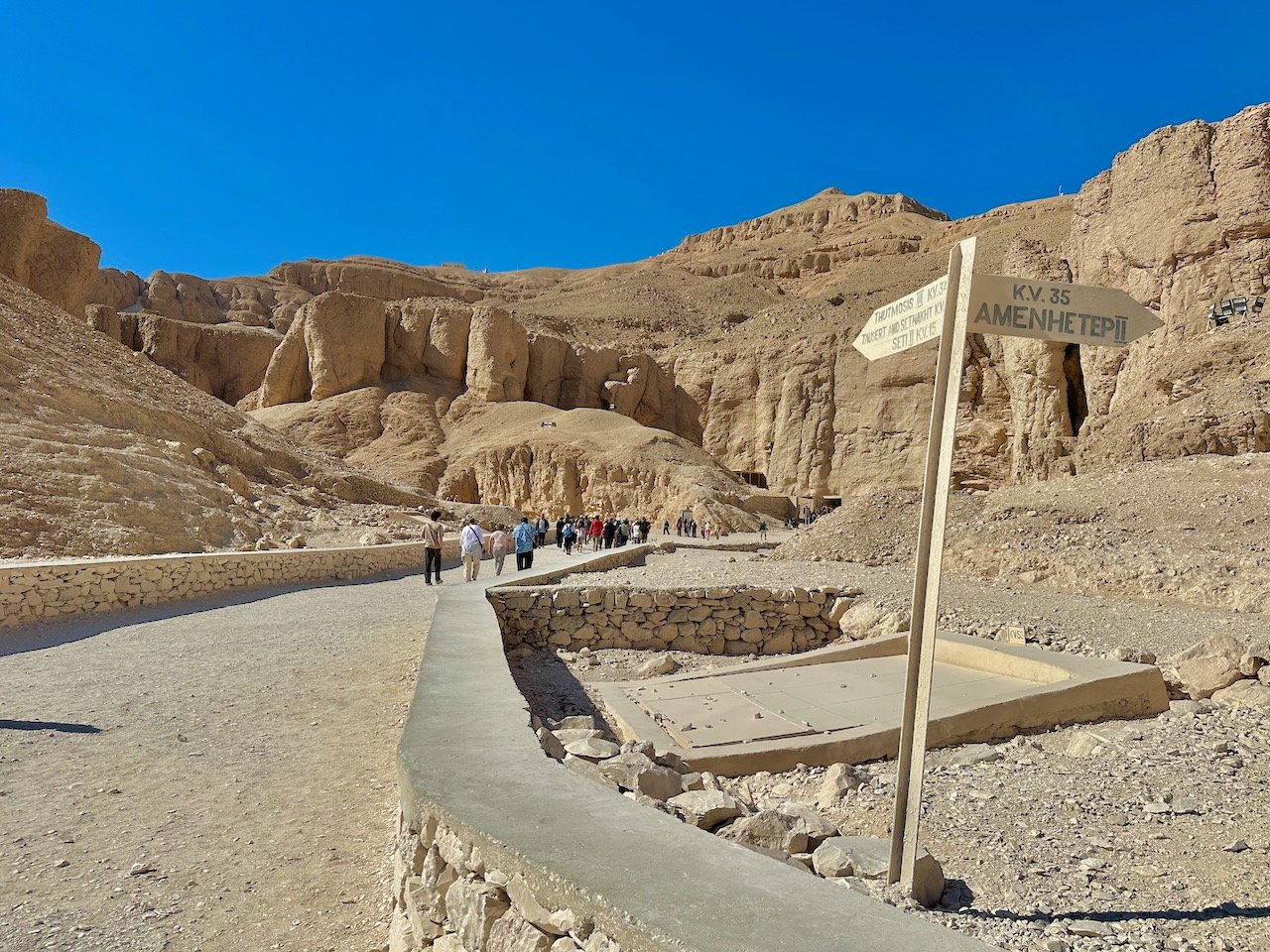
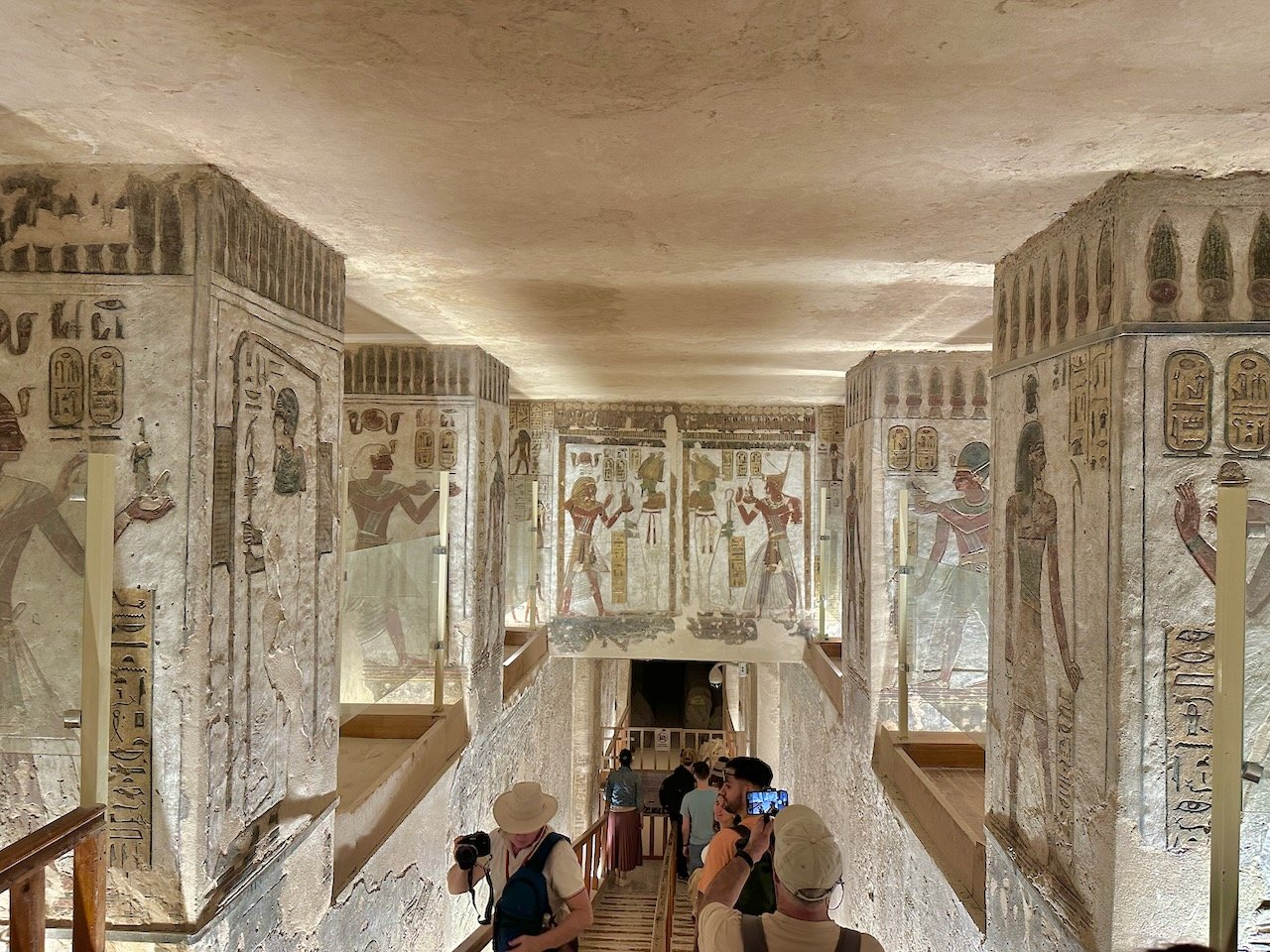
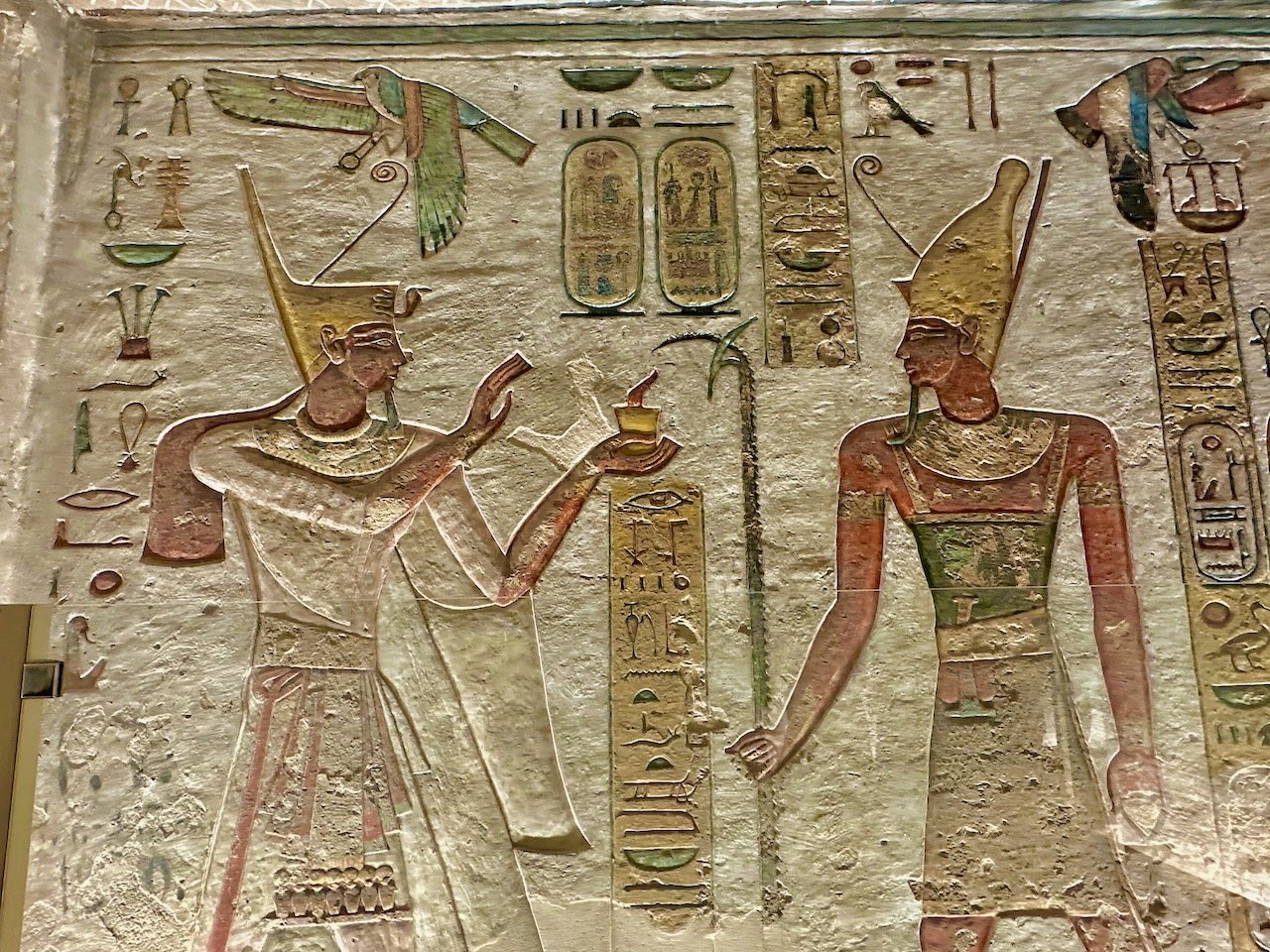
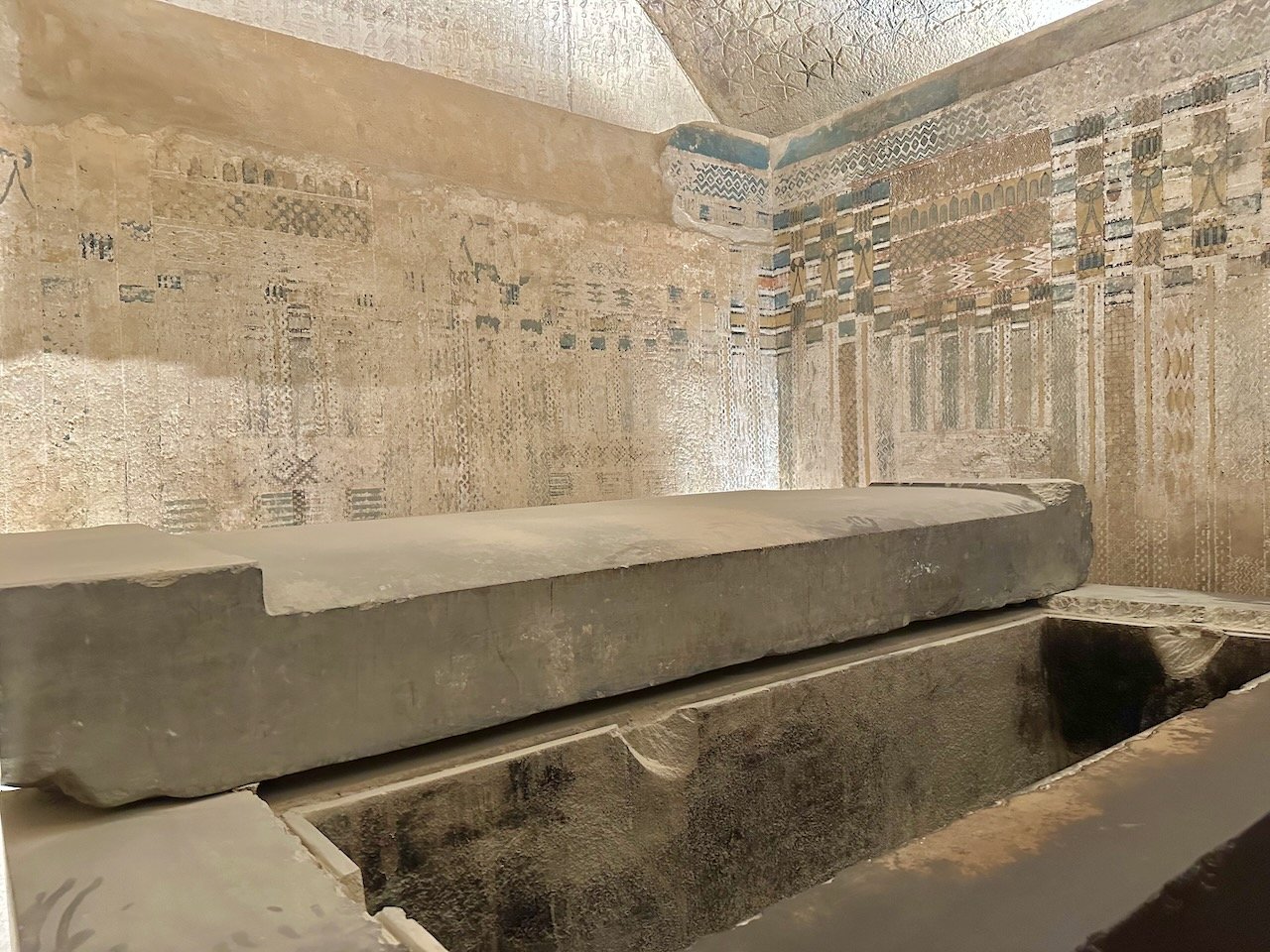
We boarded the bus and drove directly to the Valley of the Kings. 63 pharaohs have been buried here since the start of the New Kingdom. Each of us went into three ancient tombs: among the two buses we visited the tomb of Ramses IV (a Pharoah of the 20th Dynasty), the tomb of Ramses III (the one who defeated the Sea Peoples), the dual tomb for Tausert-Setnakht, and the tomb of Siptah. About half in the group also purchased an extra ticket ($15) to see the tomb of the famous King Tut’s (his tomb is included in the photos below). His actually mummy is on display here as well as his sarcophagus. The well-preserved colors in all the tombs of the wall reliefs were stunning to see. The religious focus within the Egyptian belief system upon the after-life is plain to see in all these tombs! It took between six months and three years to build these tombs, some even more time because of their complex. They began building these tombs once the Pharoah became king.
Alabaster Shop/Store
Close by are many alabaster shops. We went to one whose owner and his workers were quite the comedian. It was interesting to see how some of the vessels are made. The final products made from stone and onyx were impressive.
Temple of Hatshepsut
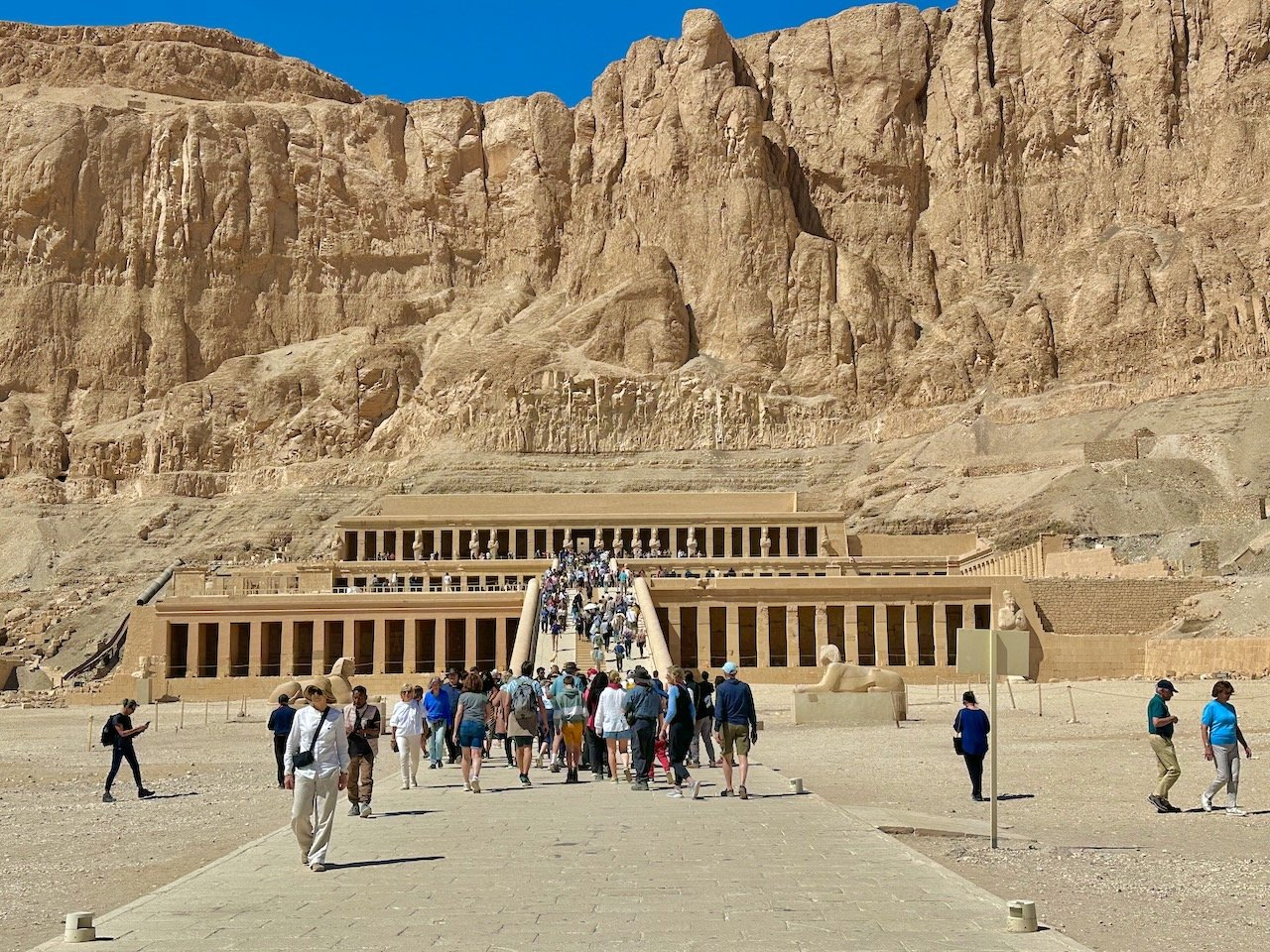
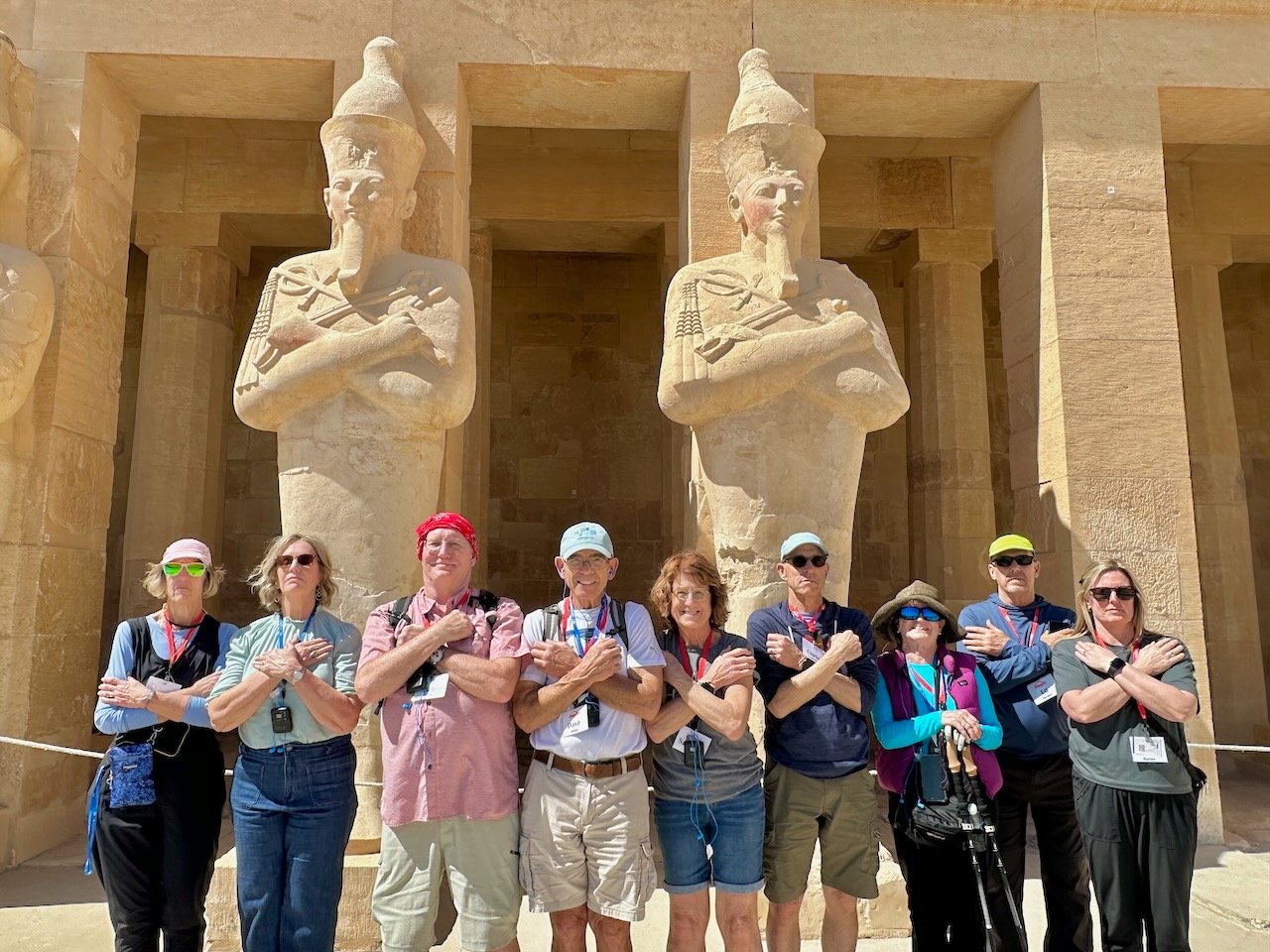
On the opposite side of the cliff of the Valley of the Kings is the Temple of Hatshepsut. The temple was built in 1470 BC (conventional dating). Based on an early conventional dating for the Exodus and Conquest (1446), it is suggested Hatshepsut was the Pharaoh’s daughter who rescued Moses (Exodus 2). She was the daughter of Thutmose I and reigned for over 20 years. She was despised by those who succeeded her, with her image and cartouches eliminated and/or scratched away (perhaps both Thutmose III and Amenhotep II did this?).
Temple of Medinet Habu
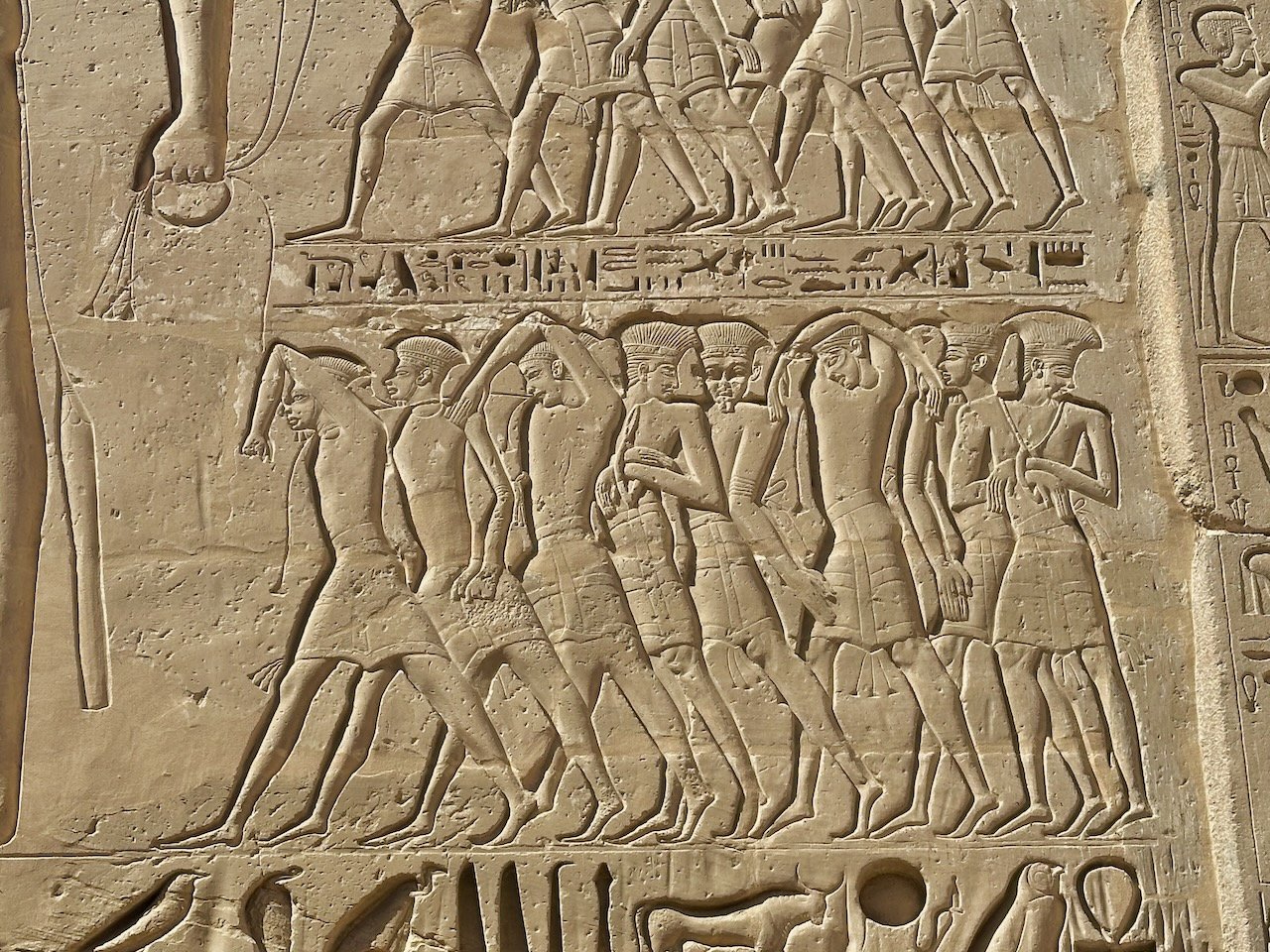
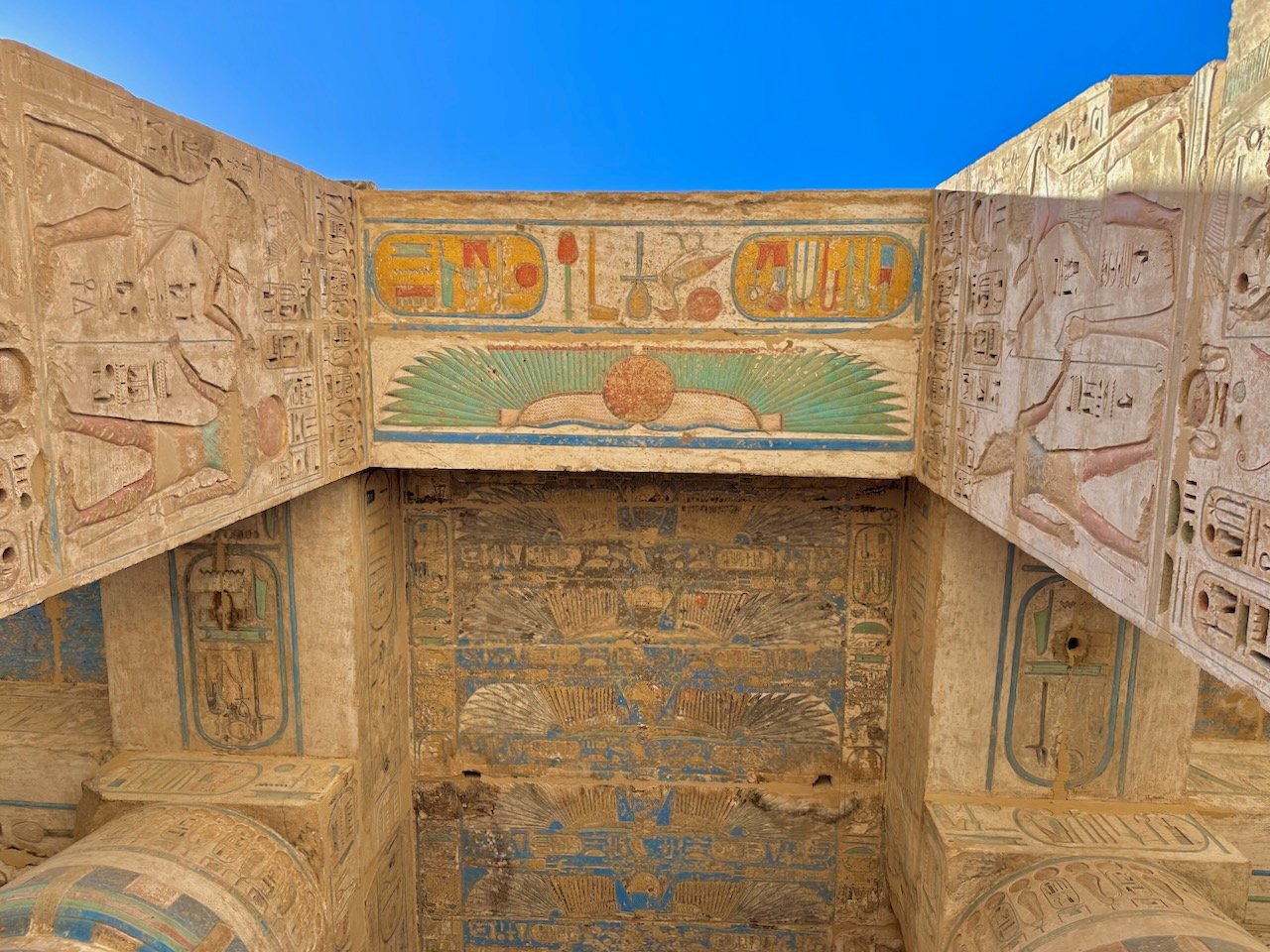
Before we re-boarded the ship, the last temple on the western side we saw was the Medinet Habu. This was a dedicatory temple built in honor of Ramses III. Depicted on the pylons is the defeat of his enemies, including the Nubians and the “Sea Peoples” (i.e. the Philistines of the Bible). Ramses defeated the Sea Peoples in 1177 BC (conventional dating, 10th century New Chronology). The wall reliefs show Ramses holding the heads of his defeated enemies by the hair. He also cut off their hands and men’s “private part” to humiliate them.
Cruise Boat Ride on Nile River
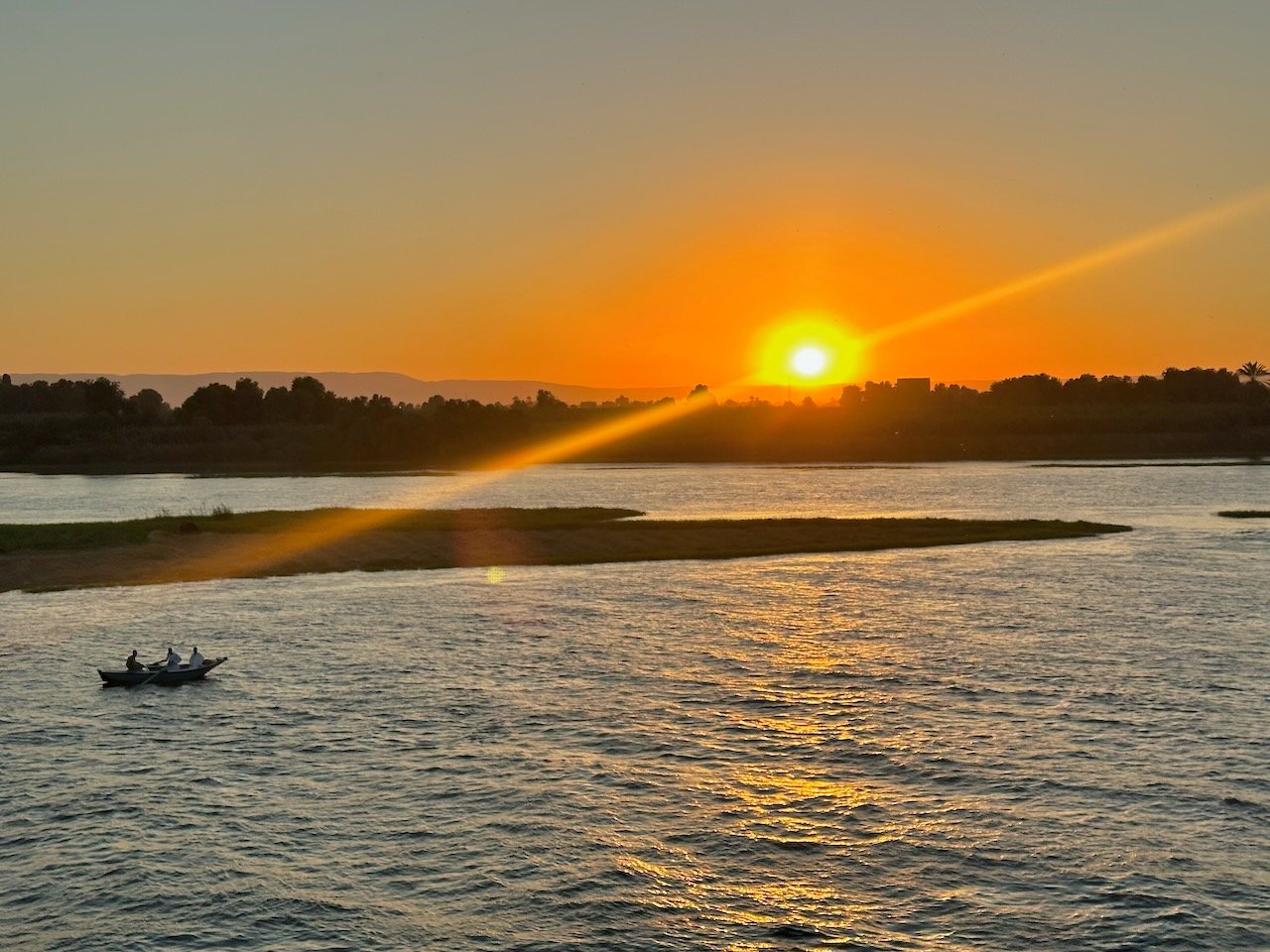
Shortly after 2 p.m., both buses re-crossed to Nile River (to the eastern side) and re-boarded the cruise ship. We first enjoyed lunch, followed by rest/nap time (in our rooms), coffee and tea on the top deck, a spectacular sunset, a short talk (by Nate), and dinner (at 7:30 p.m.). It was another fantastic day!

Day 5 – Wednesday, February 25: Temples of Horus at Edfu, Temple of Sobek & Horus at Kom Ombo
Today was a day on there Nile River while making stops at two Egyptian temples. Following another great breakfast (at 7 a.m.), we departed for the first temple (the Temple of Horus at Edfu) at 8 a.m. The weather was perfect, with morning temps in the mid 50s, and afternoon highs around 80, with full sun (it never rains here year-around).
Temple of Horus at Edfu
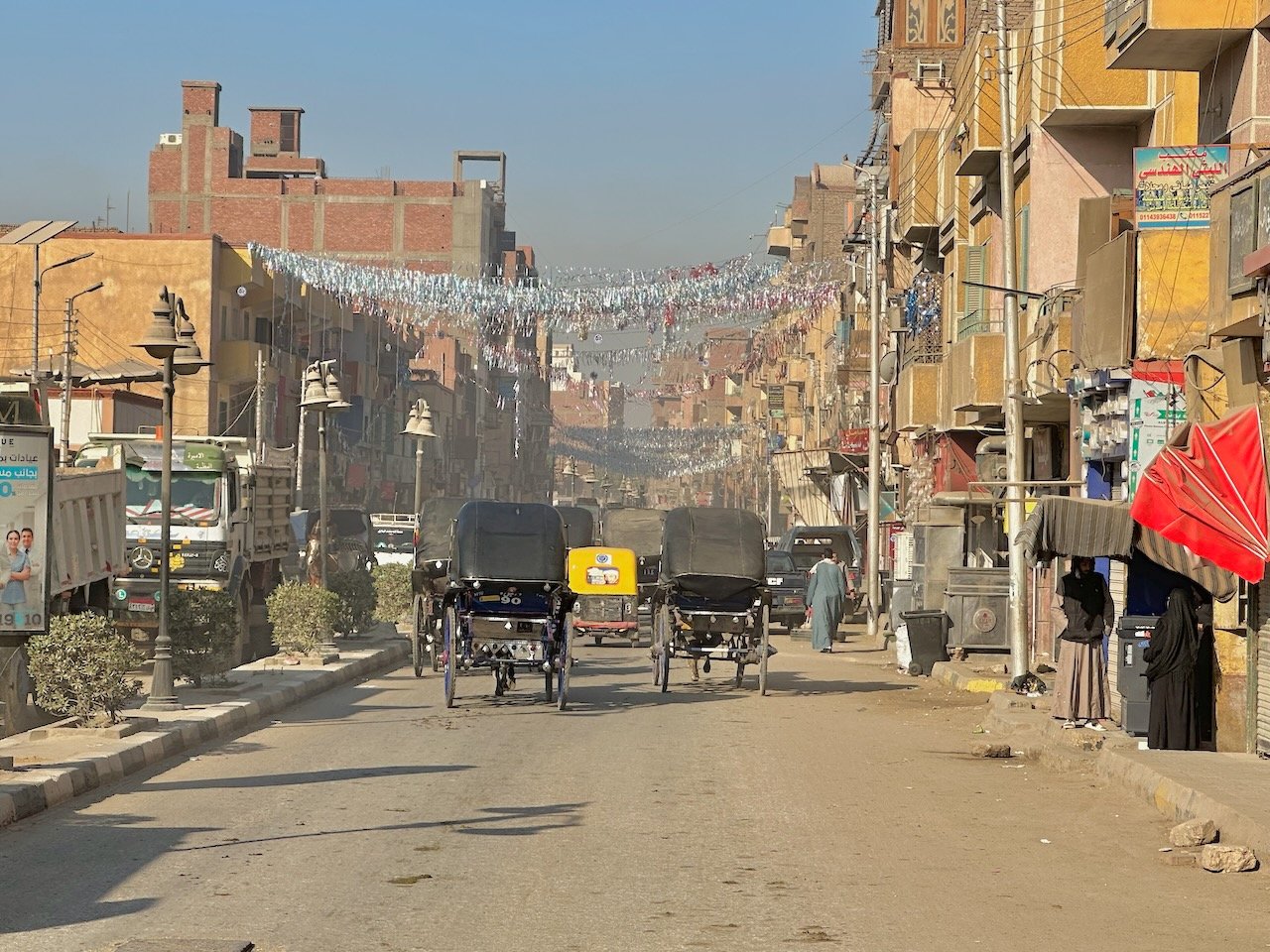
Directly leaving the boat, we boarded on horse-drawn carriages en route to the Temple of Edfu. This was both a fun and “cultural” experience as we rode with hundreds of other carriages to Edfu.
Once we arrived at Edfu, we gathered together to read from Exodus 6, a passage that reminded us that the Lord is God above all the Egyptian gods represented within the pagan religious system an ancient Egypt. It is the God of Abraham, Isaac, and Jacob who trumps all other gods, even Horus, the god of “kingship” and the “sky,” honored in this temple!
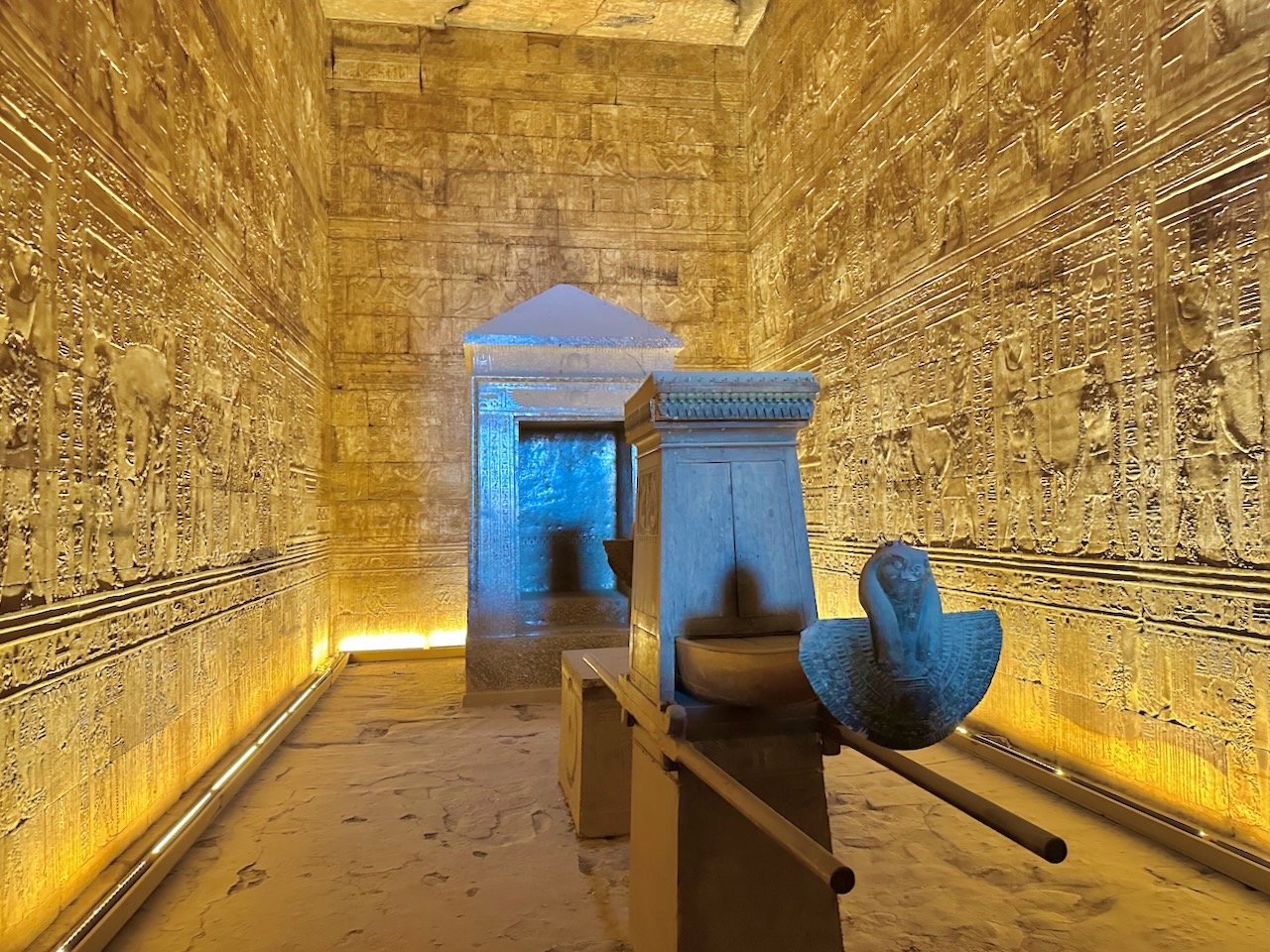
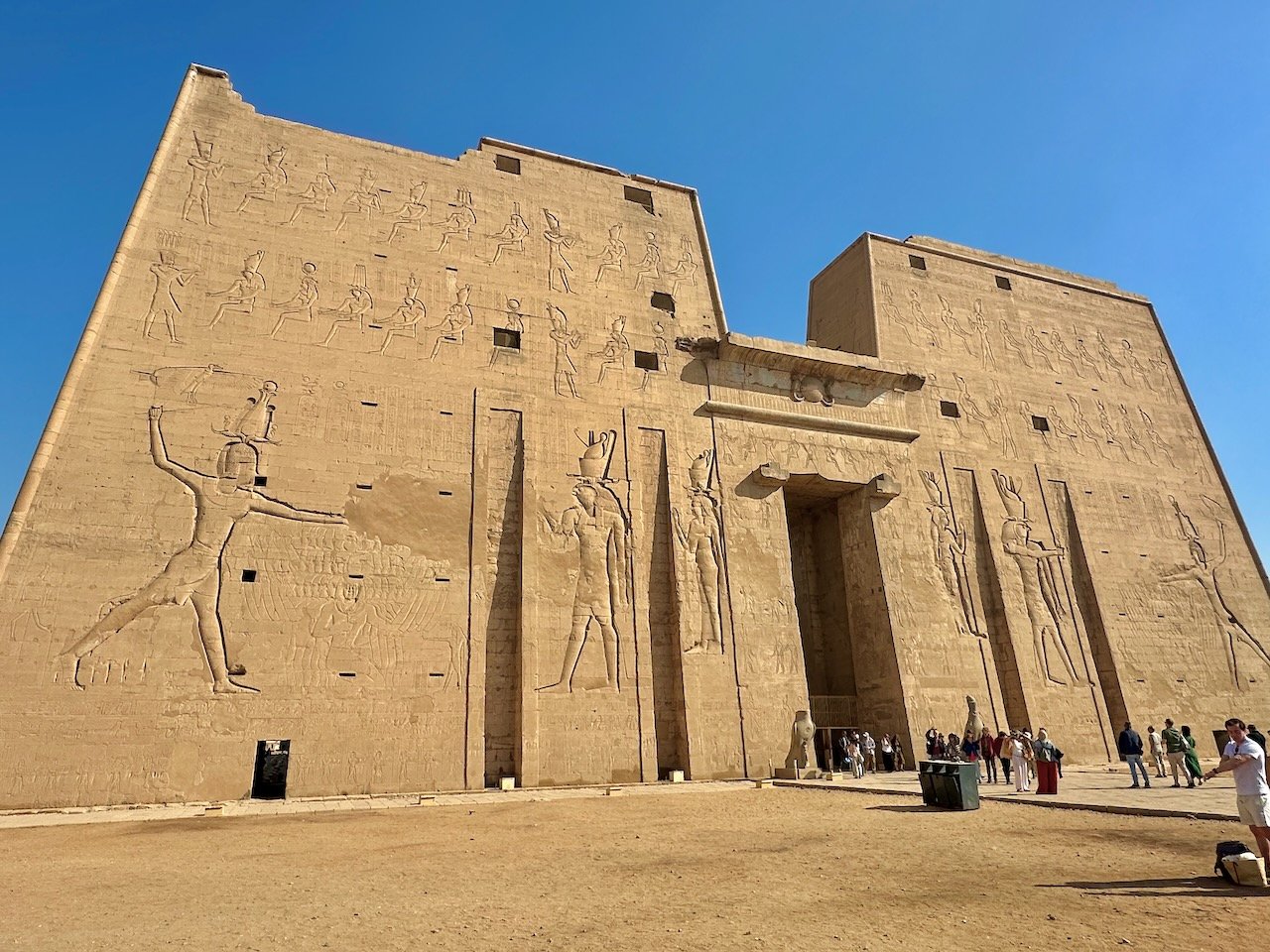
The temple of Edfu is best example of Ptolemaic temple buildings in all of Egypt. The Temple was dedicated to Horus, the falcon god of the Egyptians. Although there are mentions of a first sanctuary at Edfu since at least the Third Dynasty, the Temple of Horus, as it currently stands, was started much later by Ptolemy III Euergetes I in 237 BCE. It was continued by Ptolemy VIII who (95 years later in 142 BCE) inaugurated the temple. Ptolemy XII Neos Dionysos finalized the work on the enclosure wall, the main courtyard, and the pylon. He then inaugurated the temple for the second and last time in 70 BC.
The temple was officially finished in 57 BC with the installation of the main entrance wooden doors between the two pylons. In total, it took 180 years to complete the building and decoration of the Temple of Horus at Edfu.
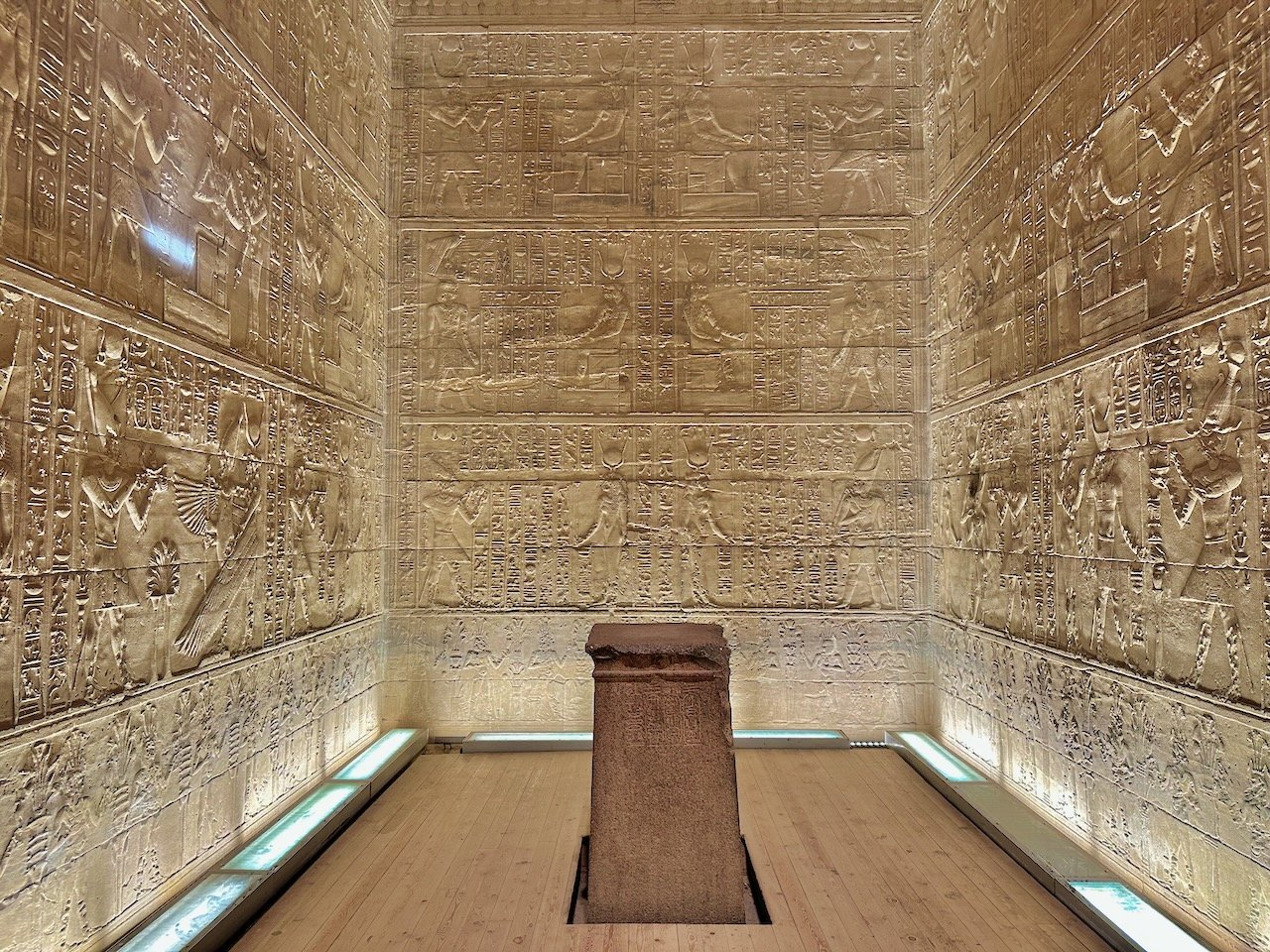
At Edfu, we saw many pylon and wall reliefs, hieroglyphs, and pillars in there shape of papyrus. The deepest of the inner courts (called the “sanctuary”) served as what we would call the “Holy of holies.” It is an interesting topic about the structure orientation of all of these Egyptian temples (i.e. outer courtyard, inner chambers, and a “Sanctuary”) with the structural dimensions of the portable Mishkan (i.e. Tabernacle) and later the First Temple in Jerusalem built by Solomon in 967 BC. “Who borrowed from whom?” – this is the question. It seems as though God’s instructions to Moses was to build the Tabernacle in the Sinai Desert in similar fashion, with the major difference being this – the presence of the Only True God resided in this Tabernacle vs. the many gods honored at various pagan Egyptian temples.
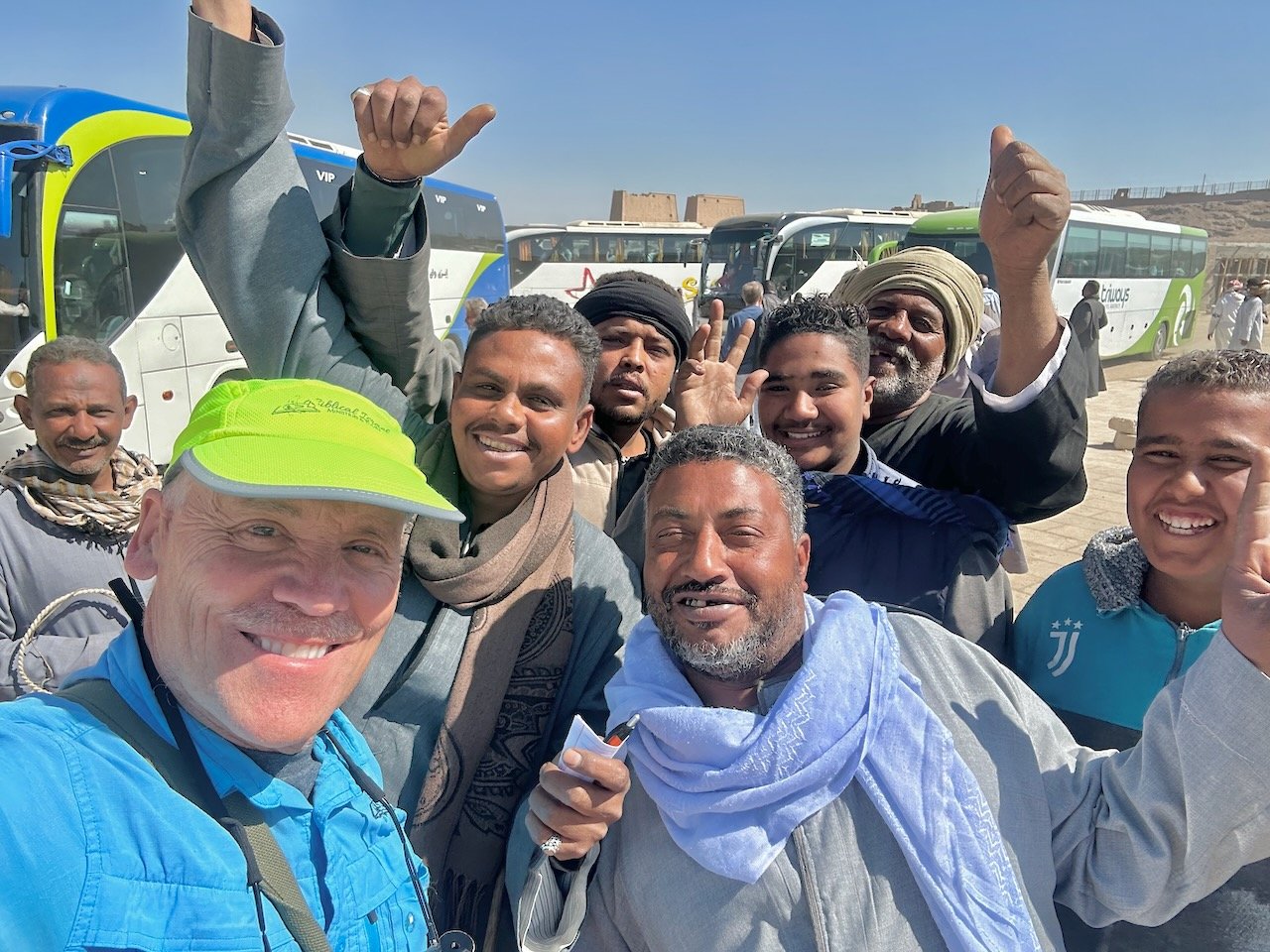
Following the visit of the temple, we road back to the ship in the same horse-drawn carriages. Despite all the chaos and confusion at the “buggy station,” we all made it back to the ship with smiles on our faces. (Ha). Upon our return to the boat, we enjoyed a marvelous lunch on the top deck as we continued to sail south to the next temple.
Temple of Sobek and Horus at Kom Ombo
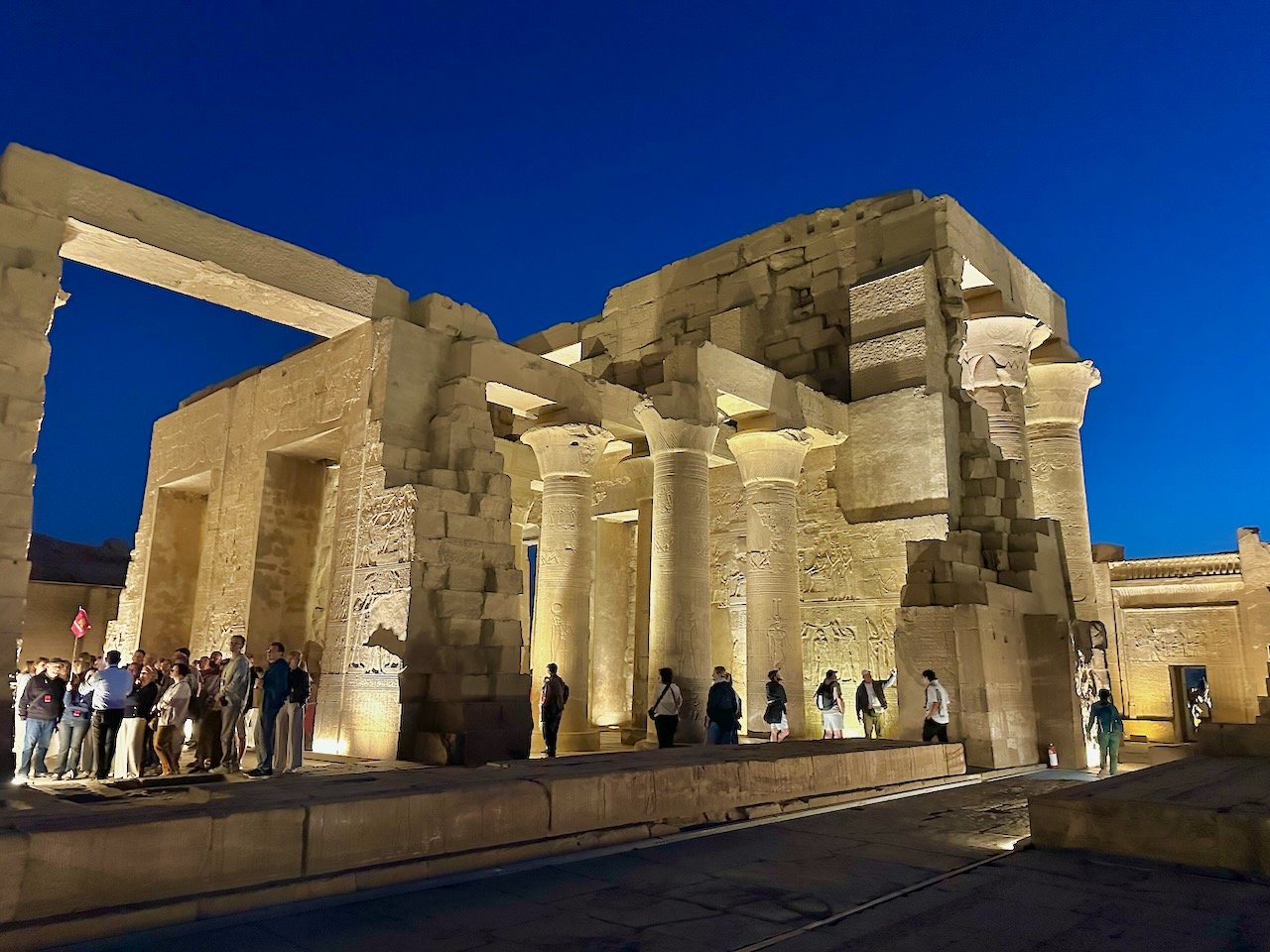
As we continued our “sail” up the Nile (the river flows south to north), we docked by the the Temple of Sobek at Kom Ombo. Here, no “buggies” were needed since we could walk right to the ship to the temple.
This temple is located about 30 miles north of Aswan and was built during the later Ptolemaic Period/Graeco-Roman period (332 BC AD 395). An earlier structure from the 18th dynasty exists, but only fragments remain.
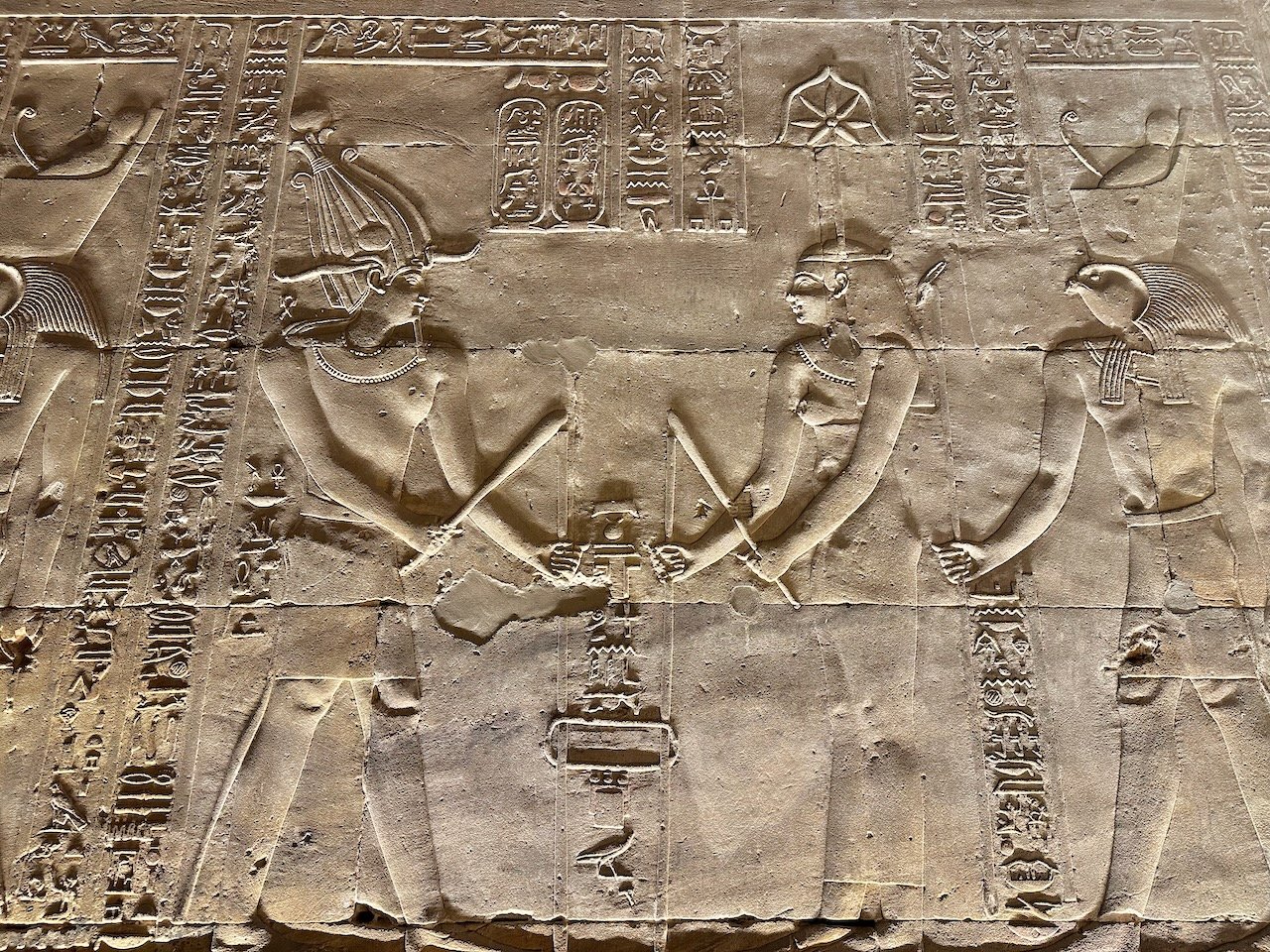
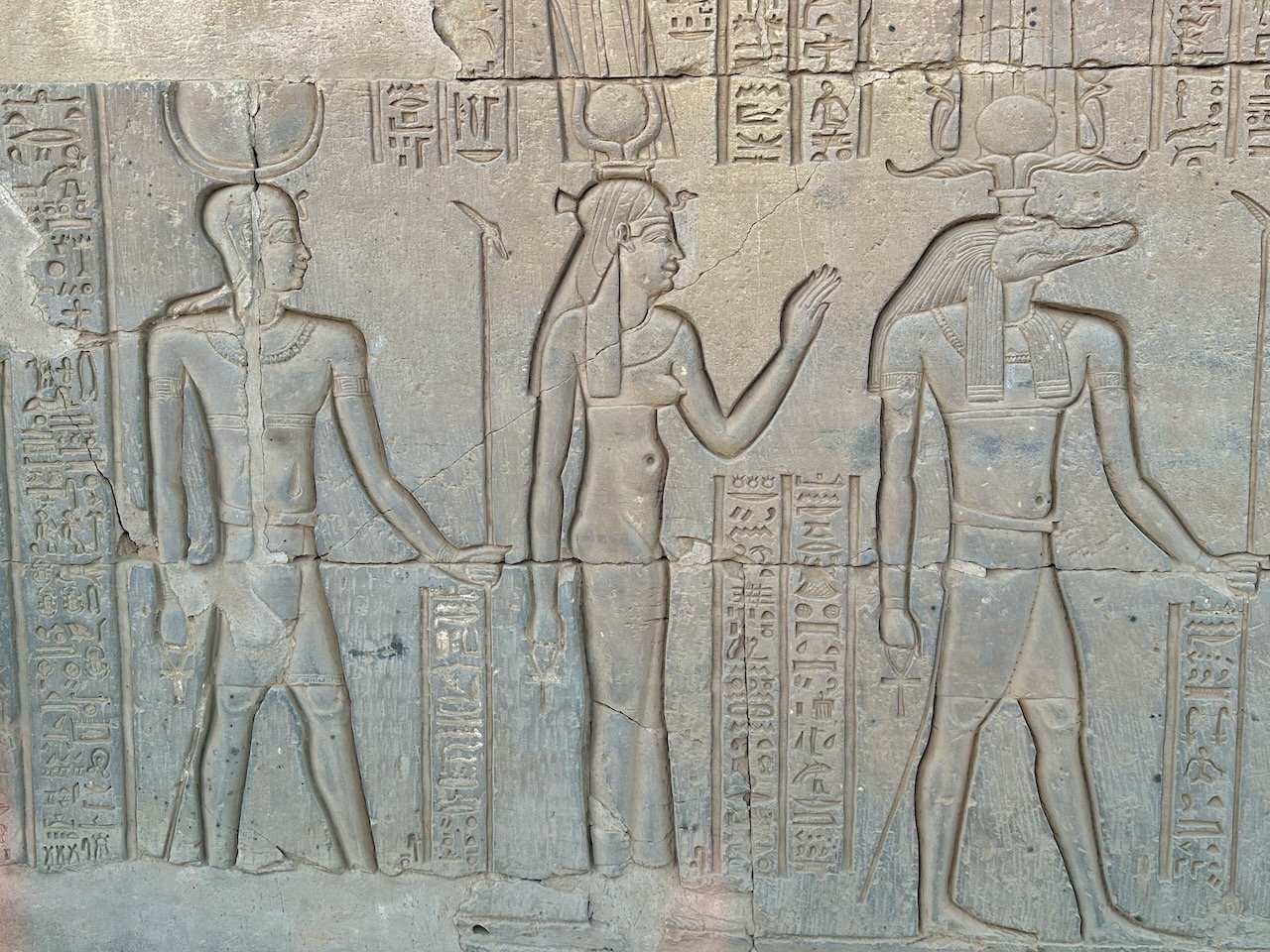
The temple is unique because it is in fact a double temple, dedicated primarily to Sobek the crocodile god, but also to Horus the falcon-headed god. The layout combines two temples in one with each side having its own gateways and chapels.
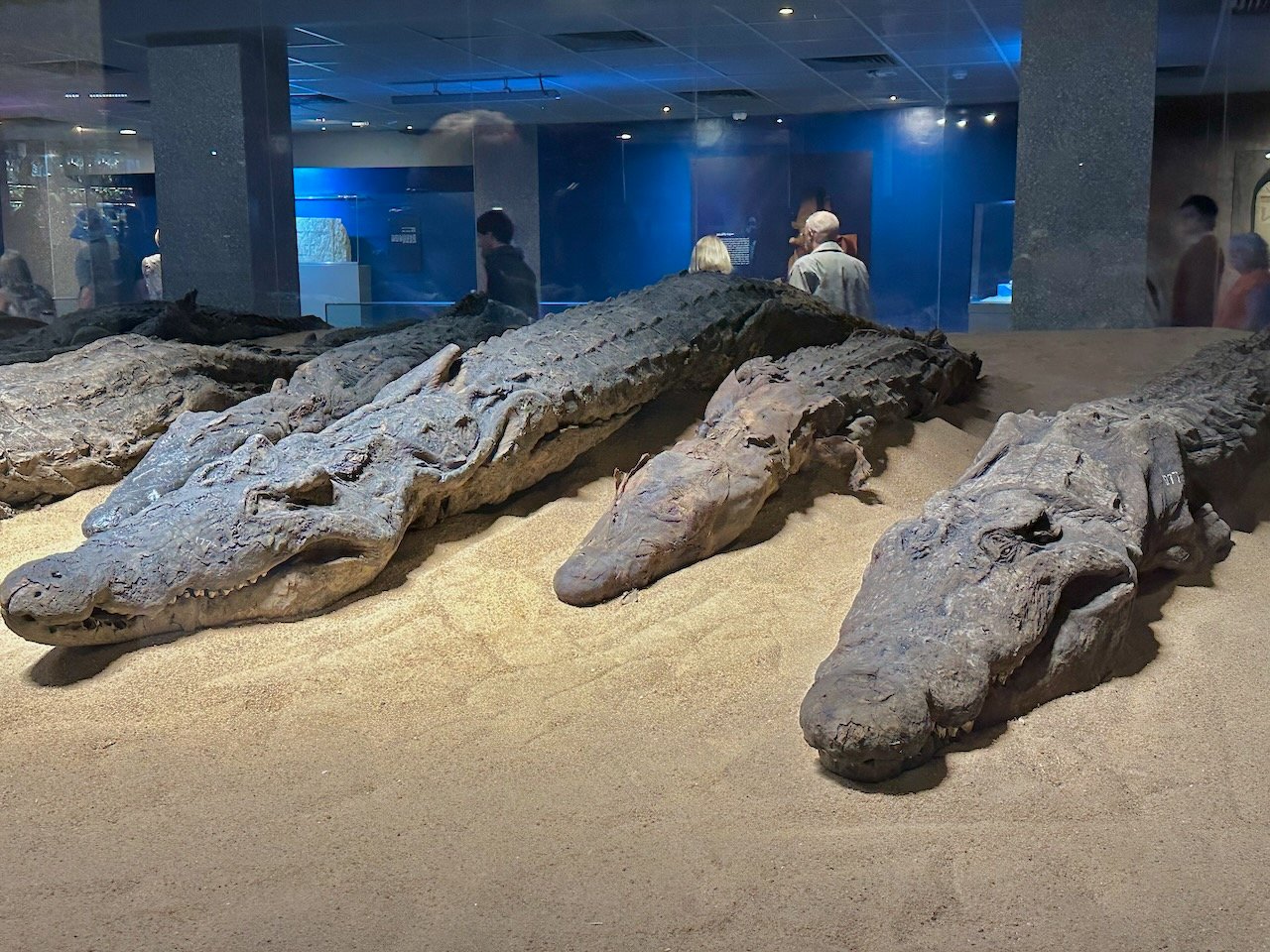
Kom Ombo housed Sobek’s primary sanctuary, which was once teeming with an abundance of crocodiles. Until recent times the Egyptian Nile was infested with crocodiles, who would lie on the riverbank and devour animals and humans alike.
The ancient Egyptians believed, however, that the crocodile was to be an object of worship so that they would not attack them. Captured crocodiles were kept within the temple and many mummified crocodiles have been found in cemeteries, some of which can be seen in the temple sanctuary today.
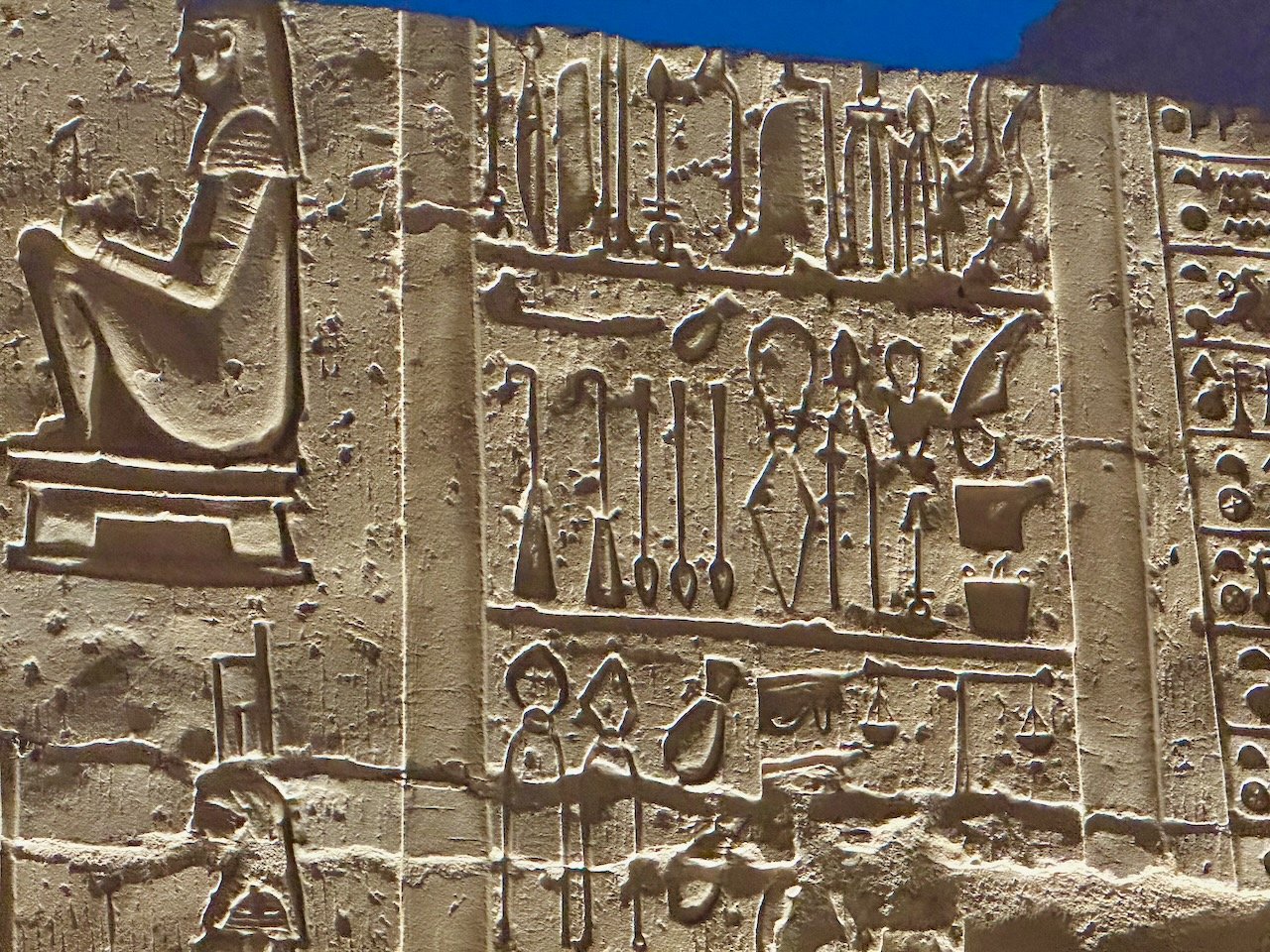
Within the temple we saw interesting hieroglyphs and images depicting the ancient calendar as well as medical themes. This included the “eye” of Horus (the originality of the latter Latin “RX” pharmaceutic symbol), the medical instrumentation. Before leaving we saw the “Nileometer” and a number of mummified crocodiles.
We returned back to the ship around 7 p.m., with dinner at 7:30 followed by a restful evening. The view from the top deck while sailing down the Nile River at night is unique.
Day 6 – Thursday, February 26: Abu Simbel, Aswan Dam
We arrived in Aswan during last night, ending our Nile cruise. So today was a bus/travel day, with a long drive (about 170 miles or 3 hours each way) south to Abu Simbel. It was well worth the drive! We began our drive at 7:10, following breakfast. Again, the predictable weather provided full sun, with highs about 80. We read from Exodus 12 as we began the journey.
This morning on the way, we also heard talks about the Egyptian gods and goddesses, the 10 plagues, the Ipuwer Papyrus, the Exodus route and Mt. Sinai locations. There are over a dozen suggested locations for this mountain with Moses received the Law. About halfway into our drive we made a brief rest stop for bathrooms and coffee.
Temple of Abu Simbel (Ramses) and Nefetari’s Temple
About 10:30 we arrived to our destination. The first thing we could see was Lake Nasser Lake, an artificial lake created as a result of the creation of the Aswan Dam. The lake extends about 300 miles south well into Sudan.
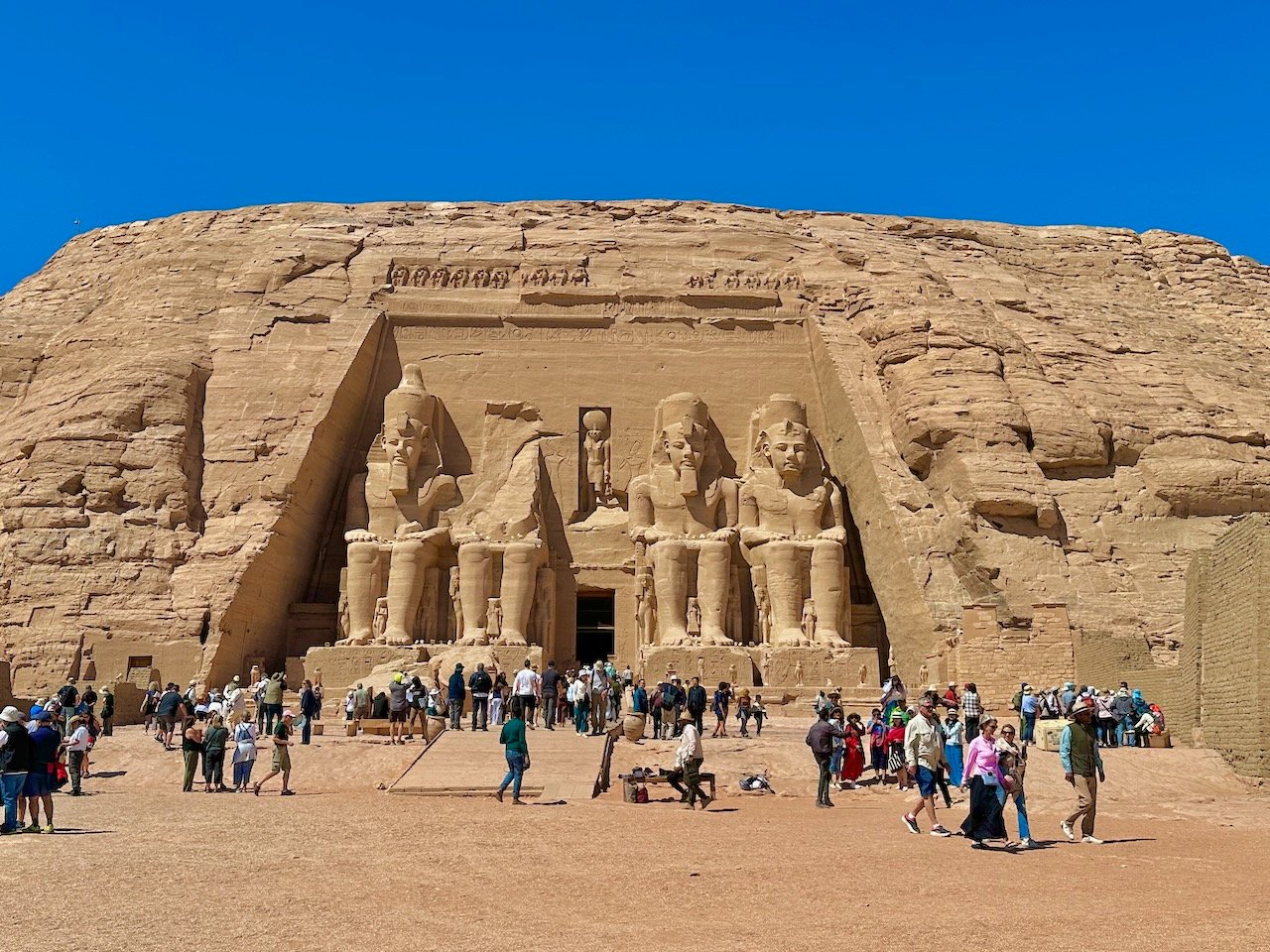
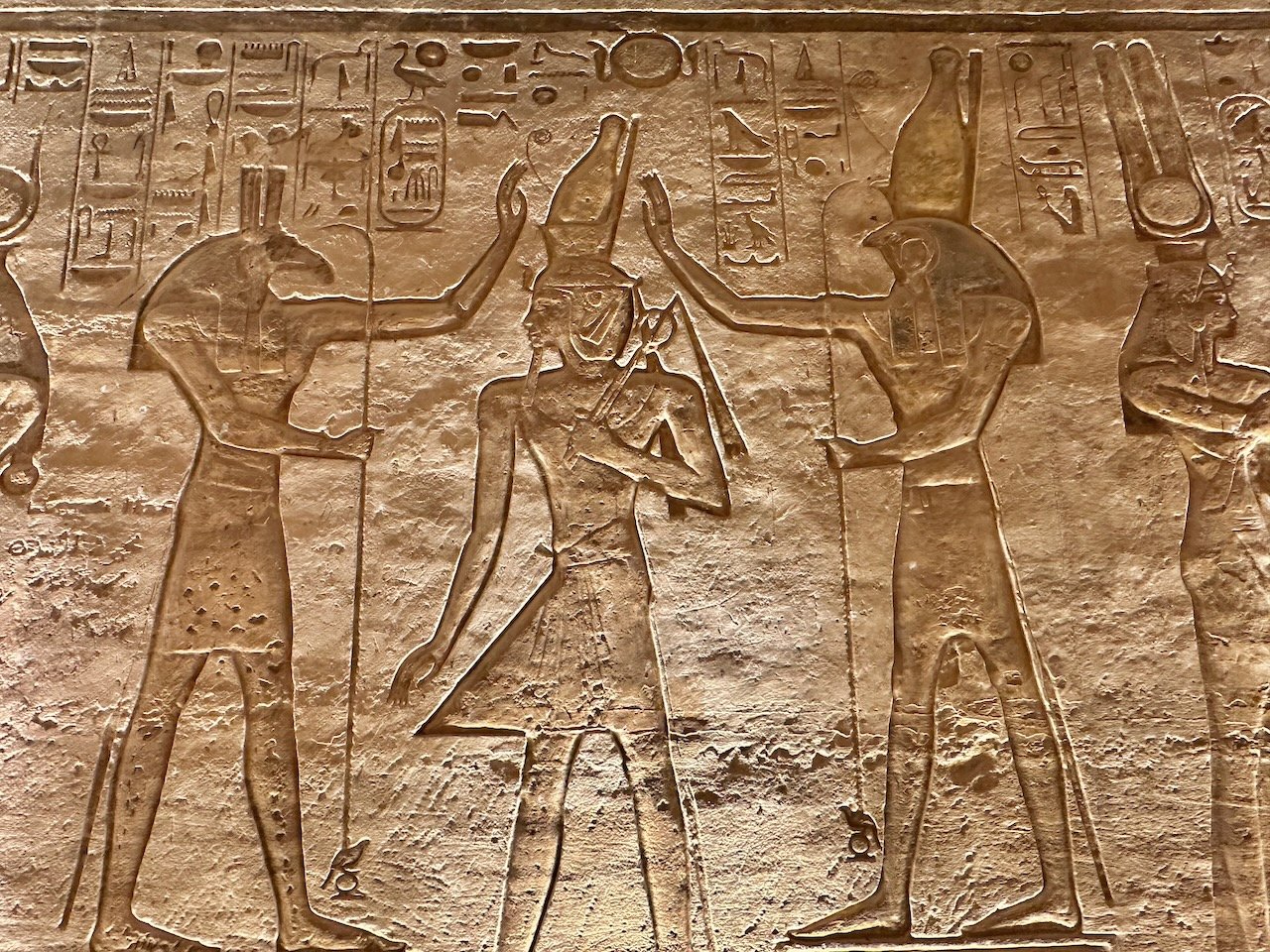
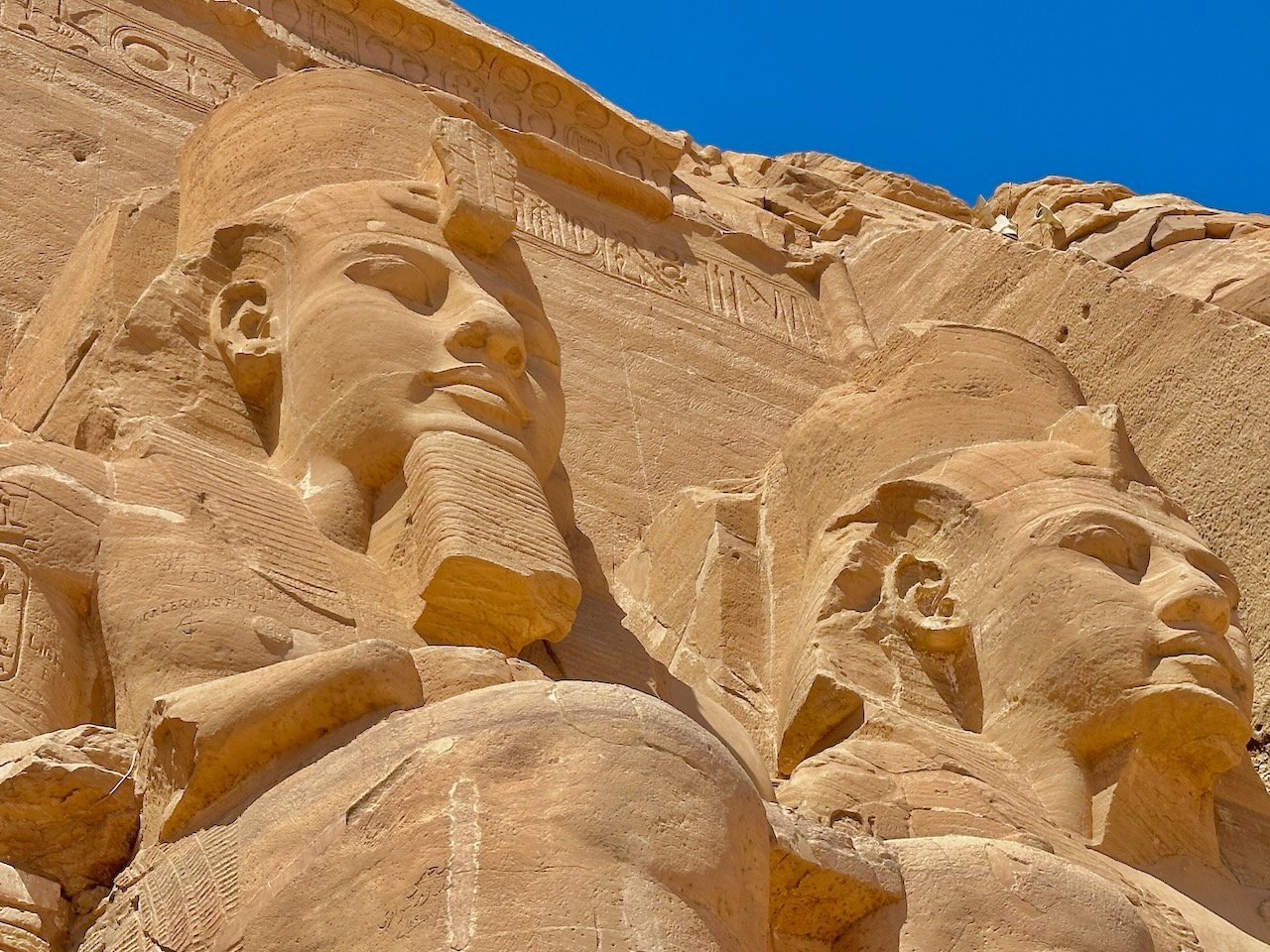
Then a round the corner, one of the most incredible temples of all came into view, the Abu Simbel Temple of Ramses II! The temple is most well known for being completely rebuilt (in 1968) on higher ground (raised 185 feet from where they originally discovered it in the early 1817) after the new Aswan Dam created the large lake. Over 40 countries participated in the preservation and rebuilding of this temple. Abu Simbel was one of 33 other temples (Philae was one of them too, we will see this tomorrow) that was rescued from being submerged under water. Only the baboon figures on the top of the temple were originally exposed. It was then a Nubian nomad who was given for discovering what was below. His name was Abu Simbel.
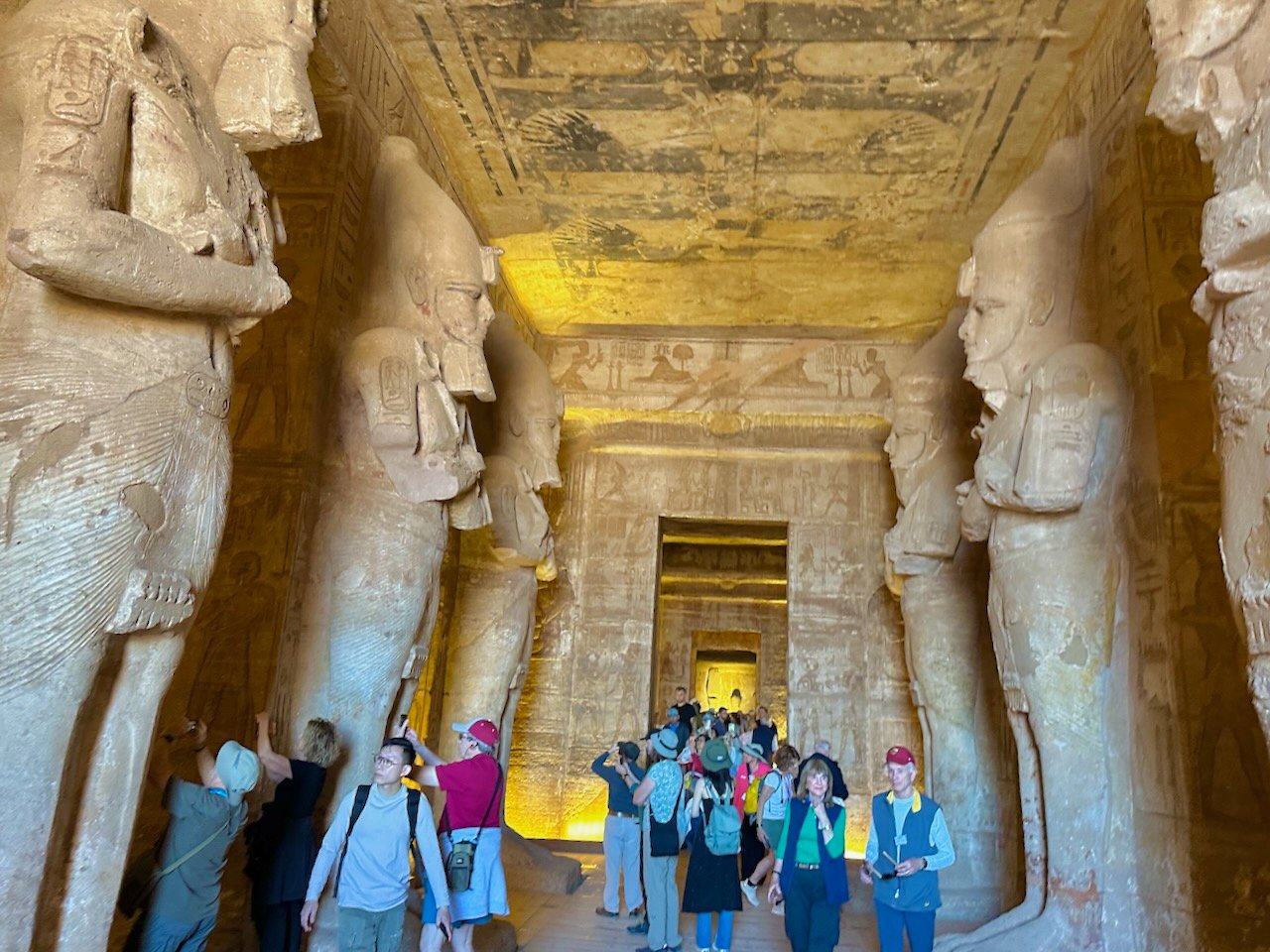
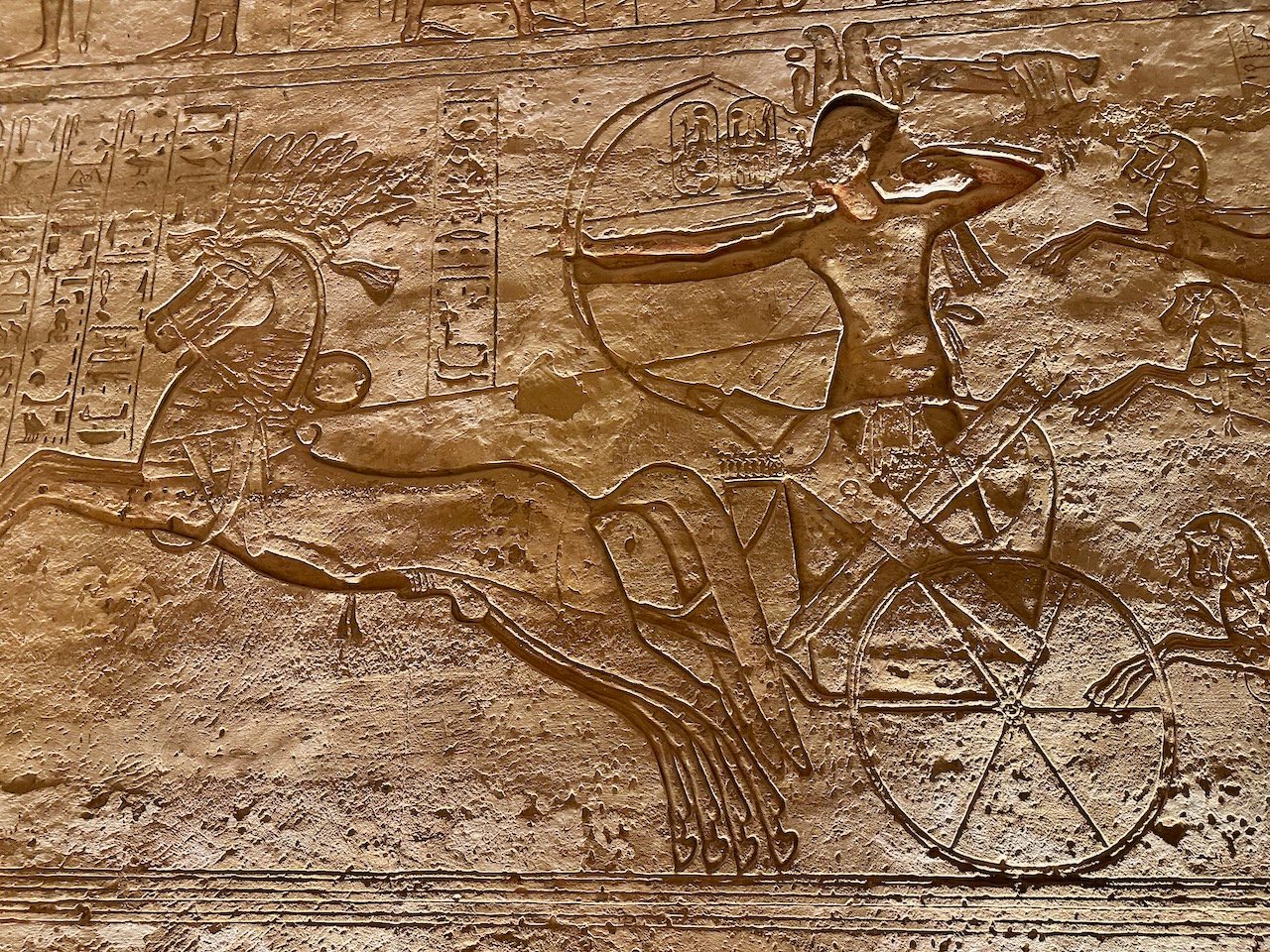
Ramses II lived for 91 years. He reigned for 76 years. He fought many battles, including the most famous confrontation against the Hittites at Kadesh. These battles scenes are displayed on the wall reliefs inside the temple itself behind the hypostyle-like hall featuring the statues of Ramses.
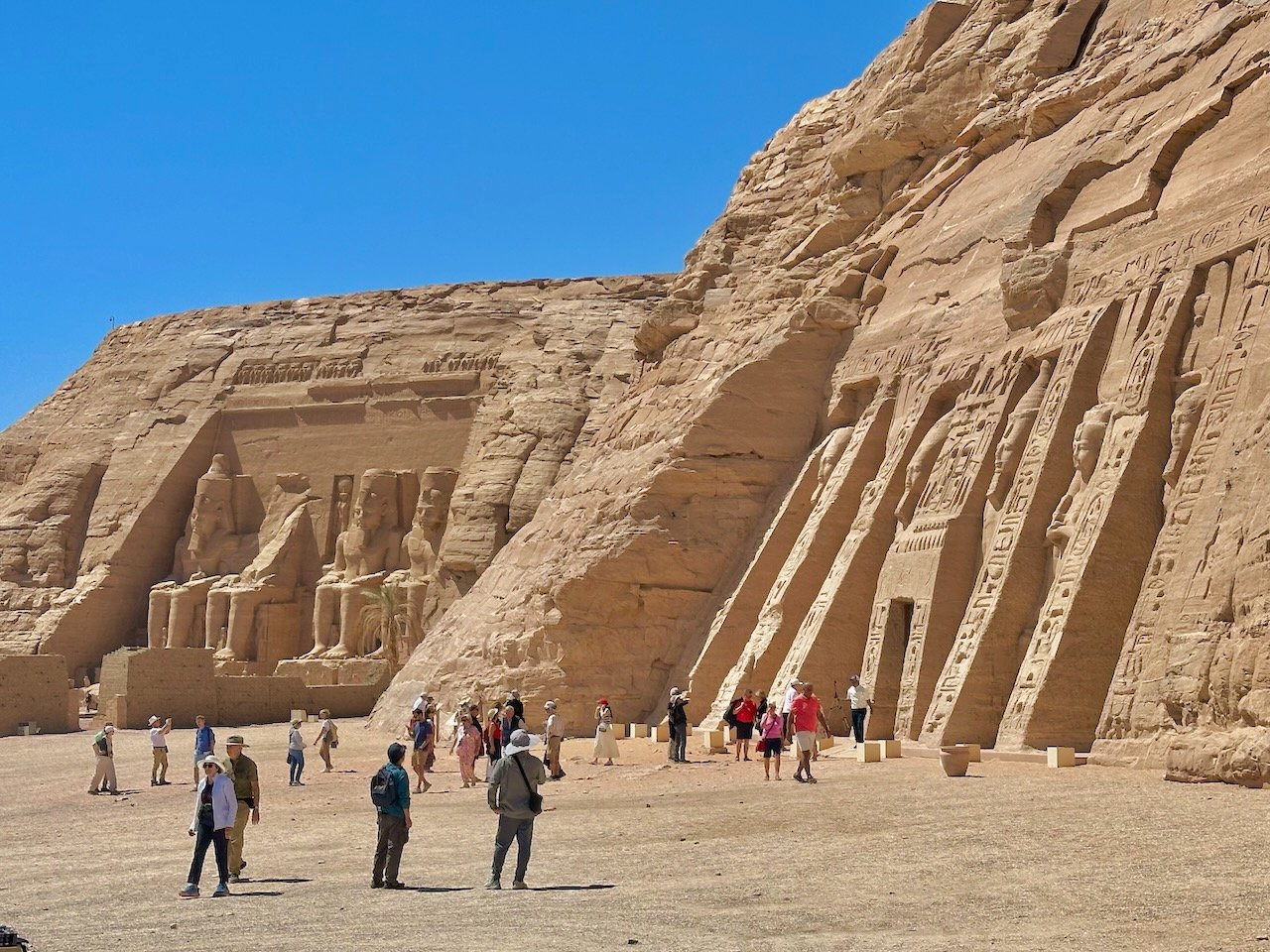
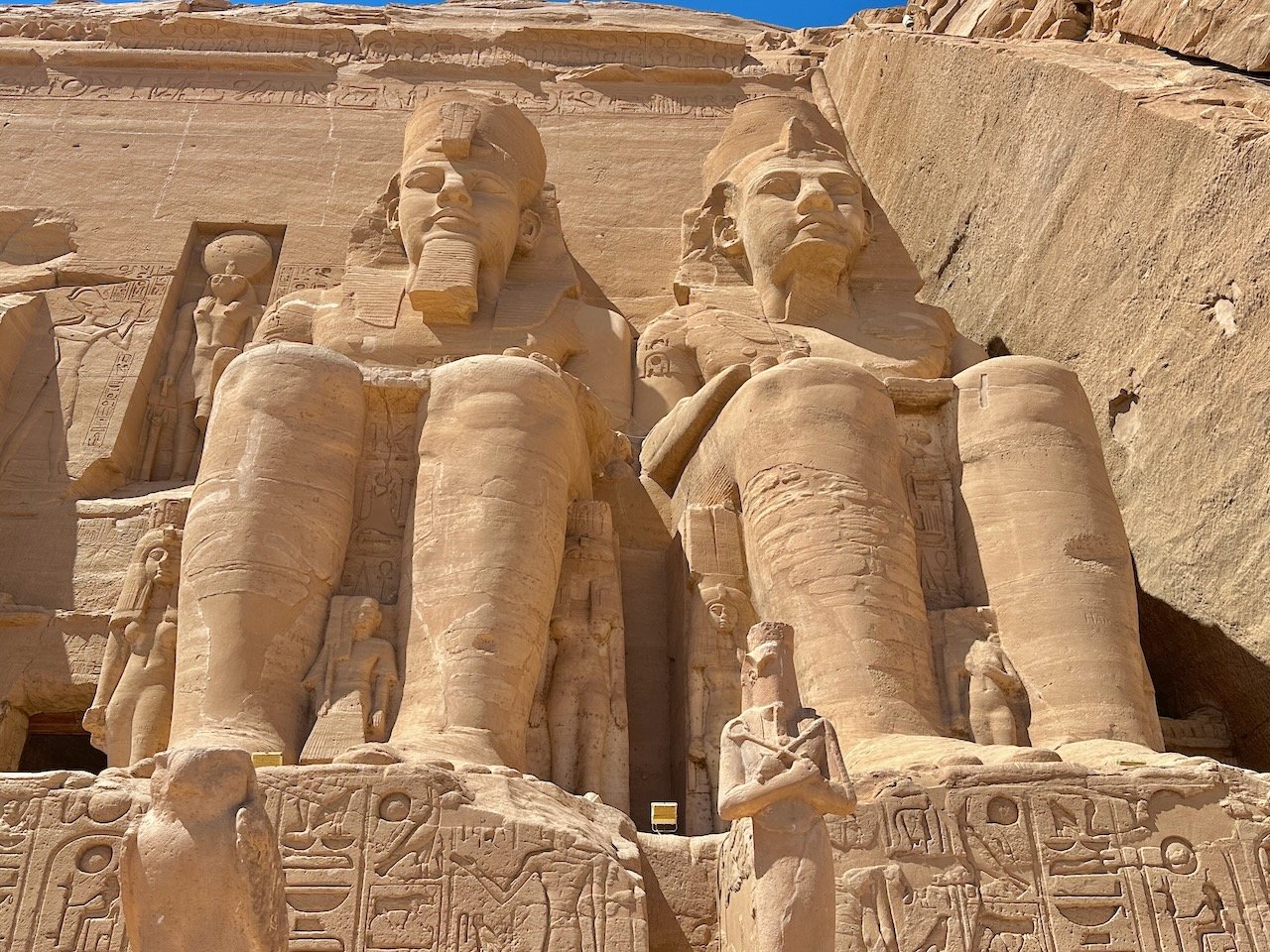
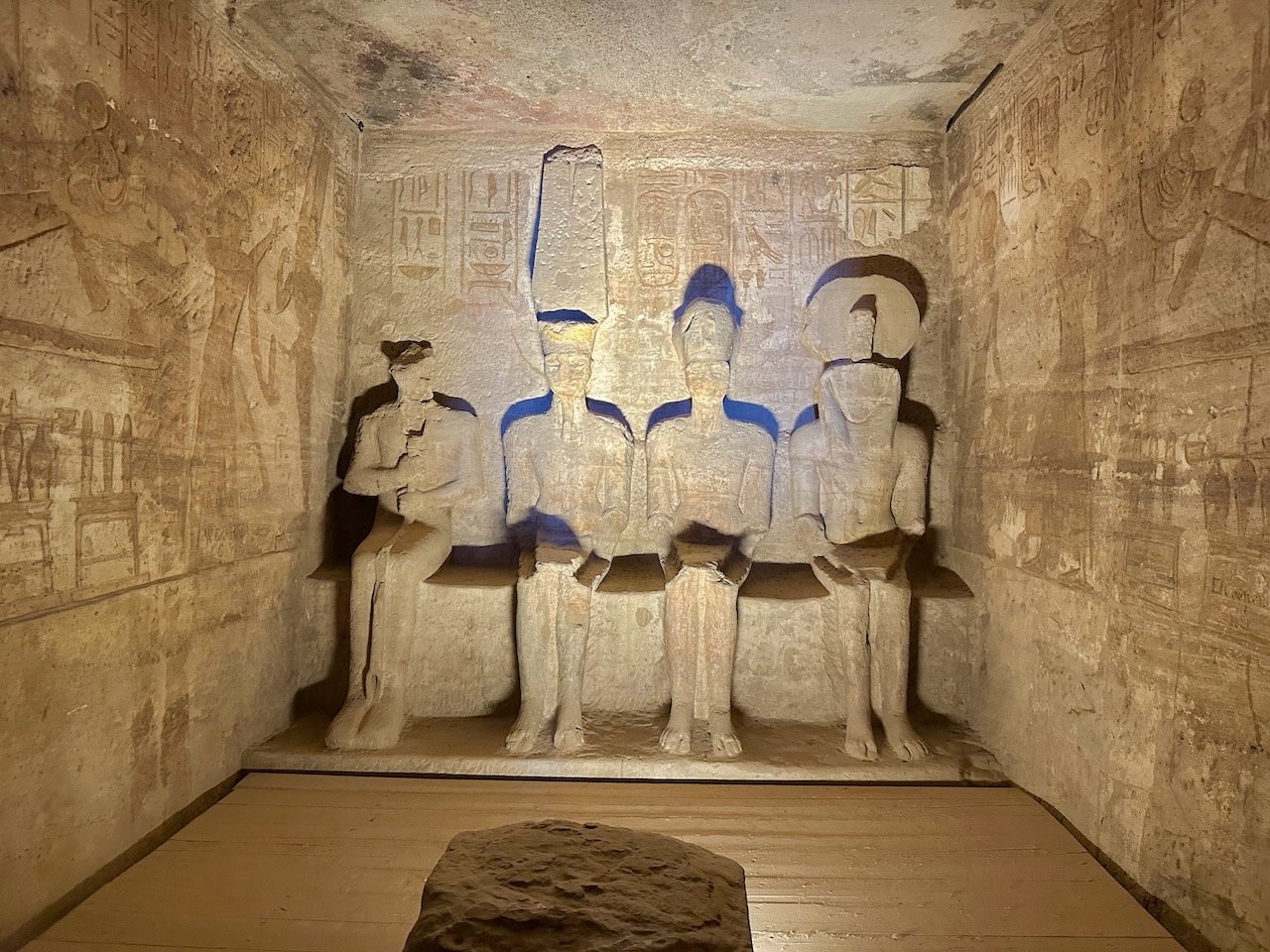
The facade of the temple is impressive. Four large statues of Ramses stand 65 feet high. In the middle of these four statues is Ra, the sun god. Along with Horus, he was also seen as the god of the horizon. In the most inner room (the “Sanctuary”) are four imposing seated colossal deity statues: Ra, Amun Ra, Ptah, and a deified version of Rameses II. The temple was built with such precision that on two days a year (February 22 and October 22), the sun’s rays enter the temple, cross the main hall, and illuminate the innermost statues. In the original temple, this happened on the 21st of these two months.
Located next to the Abu Simbel temple of Ramses II is Nefetari’s temple. This temple is not as tall and impressive as Ramses’ temple. Nefetari was one of the many wives of Ramses. Inside this temple is a similar hypostyle-like hall featuring Hathor, the cow-goddess of fertility.
Following our visits of these two temples, we boarded back on the bus for our drive back north.
Aswan Dam
Before heading back to the ship, we made a stop on the Great Aswan High Dam. This dam represents an engineering accomplishment of the modern Egyptians. After work began in January, 1960, it was completed in July, 1970 and officially opened in January, 1971. Anwar Sadat dedicated it then since Nassar died before the dam was finished. The dam is about three miles long and 300 feet high.
In addition, the water flowing through the dam produces hydroelectric power thanks to the construction of a power station next to the gigantic engineering work. In addition to using clean and therefore non-polluting energy, it has allowed Egypt to cover more than half of its electricity needs.
After stopping at a perfume and spice store, we returned to the boat for a Nubian presentation followed by dinner. This is the last night on the boat since tomorrow we fly back to Cairo tomorrow evening at 6:45.
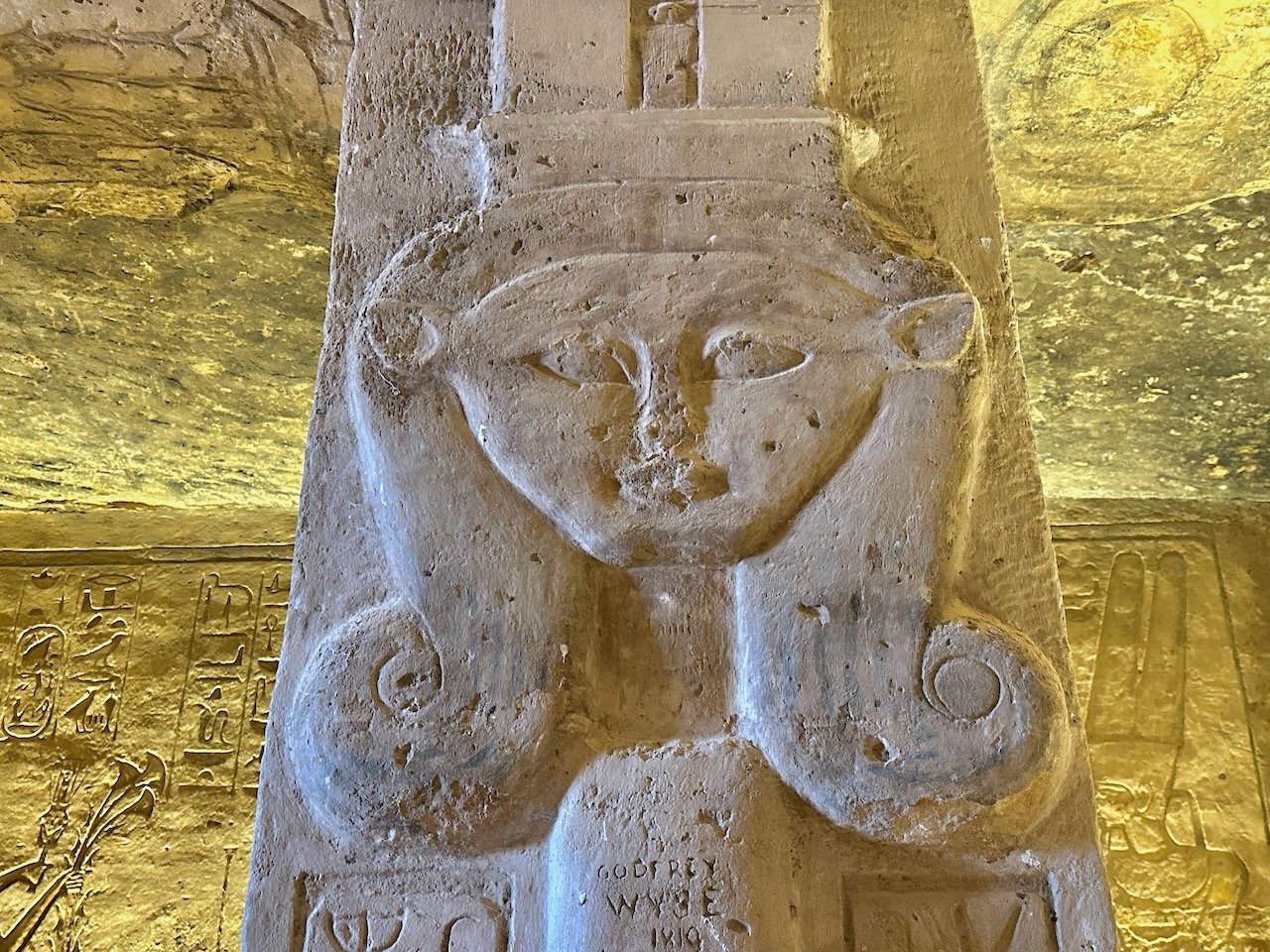
Day 7 – Friday, February 27: Aswan: Temple of Philae, Nubian Village, Unfinished Obelisk/Granite Quarry, Flight to Cairo
Today was our last day here in southern Egypt. It was a great last day here as we blended sites of antiquity in the morning with a cultural experience in the afternoon. The weather was perfectly sunny again, with a cool start (50s) in the morning, with highs around 80. We read from Psalm 20 (that interestingly is similar to the Hymn to Horus (from Papyrus Amherst 63).
Temple of Philae
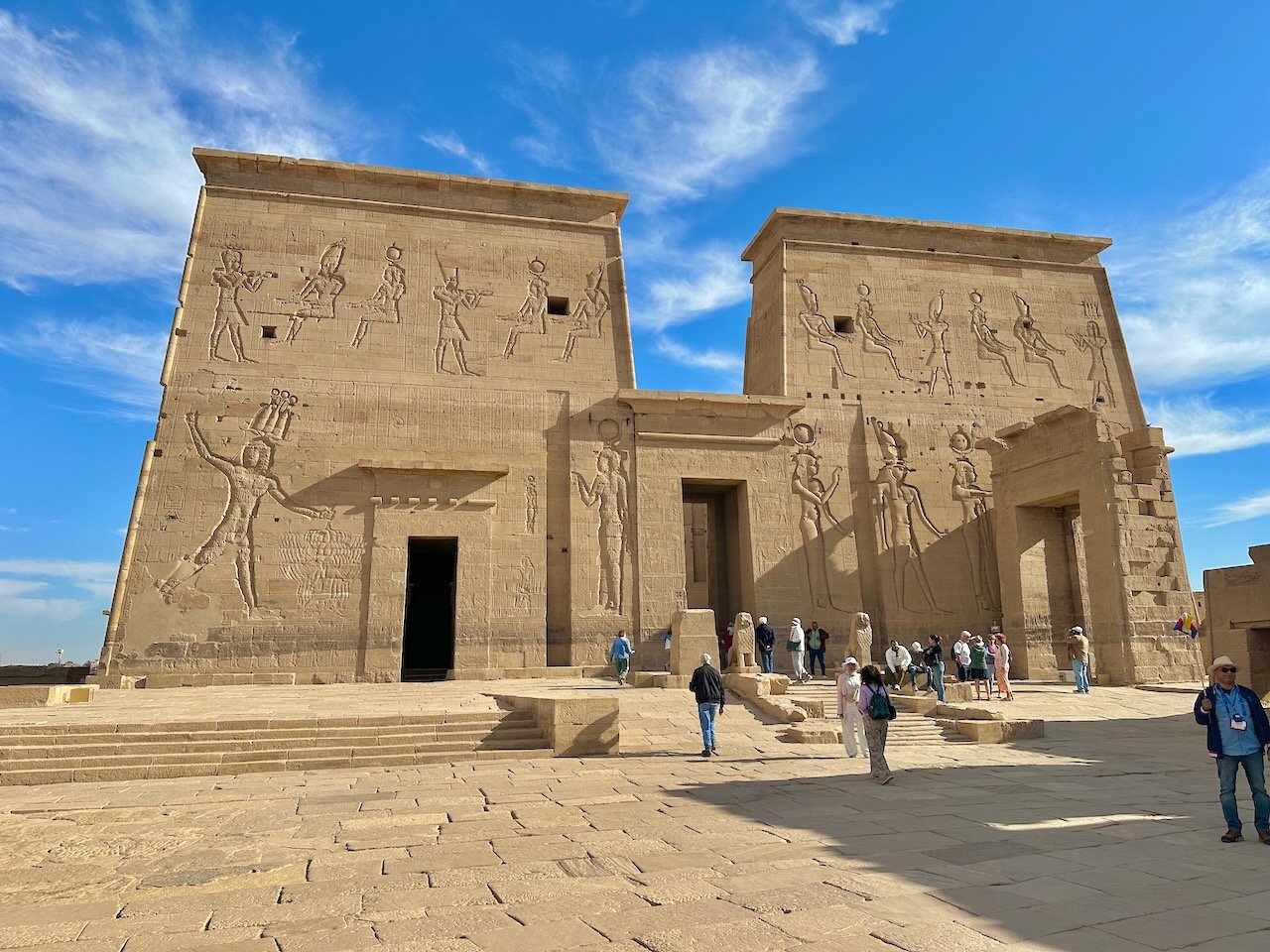
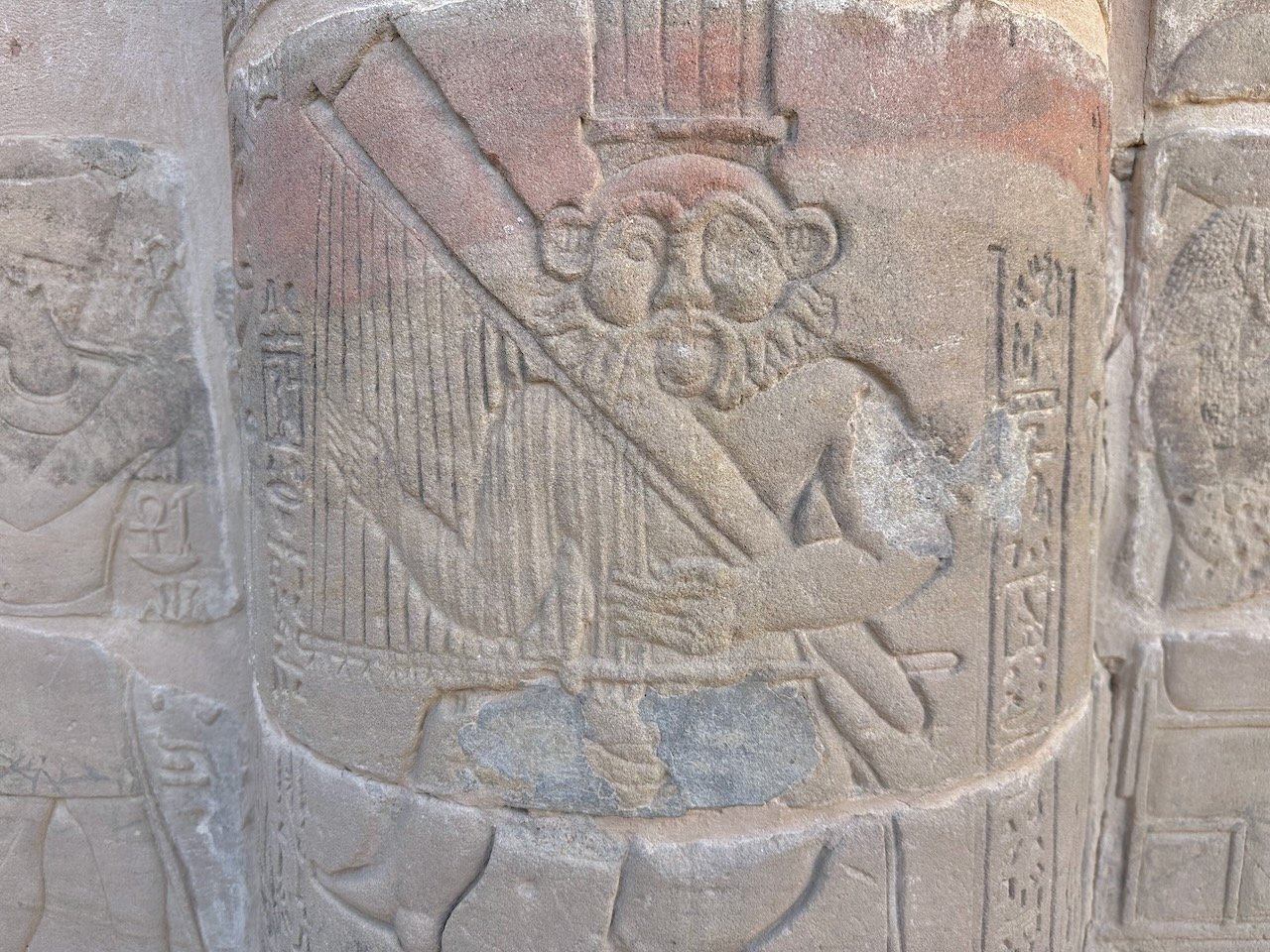
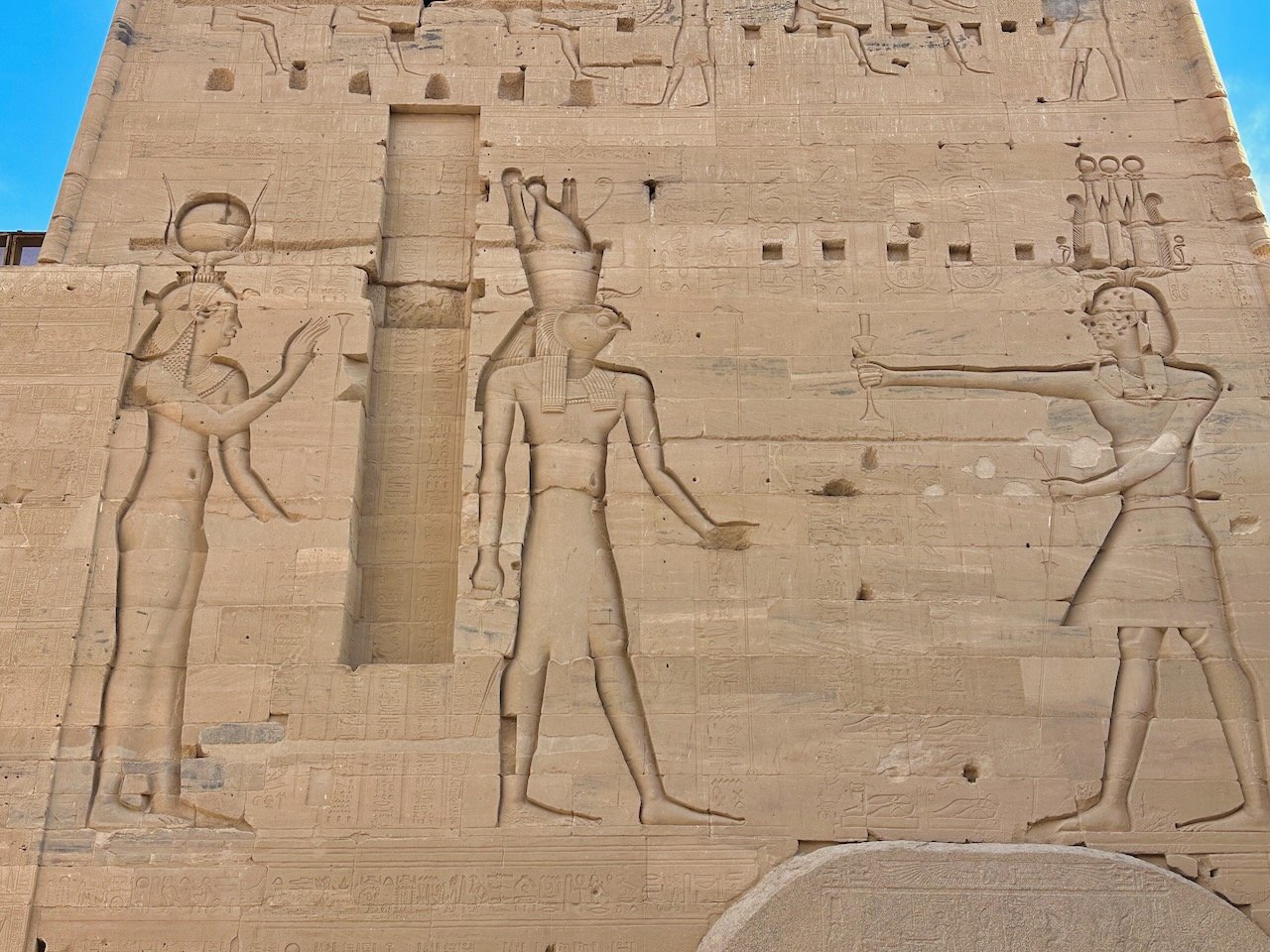
Our first stop of the day required taking small boats to reach the Temple of Philae. It is located on an island on Lake Nasser. The monuments of this temple include many structures dating predominantly to the Ptolemaic Period (332–30 BC). The most prominent of these is a temple begun by Ptolemy II Philadelphus (285–246 BC), which he dedicated to Isis, the mother of Horus, the god of kingship. Horus and Osiris were also honored here. Between 1970 and 1974, the temple was rescued from being submerged under water on Philae and rebuilt on the island of Agilika.
The temple of Isis was one of the last ancient Egyptian temples to remain active, as it continued to function until the reign of the Byzantine Emperor Justinian I (527–565 AD), who ordered the foreclosure of all pagan temples. The temple was converted into a Christian church and many inscriptions were deliberately destroyed.
Nearby, there also is a temple dedicated to Hathor built by Ptolemy VI (180–145 BC) and Augustus, the first emperor of Rome (30 BC–14 AD). The Kiosk of Trajan (98–117 AD), which used to front the temple complex of Philae, still stands strong, despite its roof having disappeared. Even Hadrian is mentioned on one of the walls of the temple. This Roman emperor reigned in Israel around 130’s AD. He was the one who built a platform over the quarry most likely over the location of there tomb of Jesus in order erect a temple and statue to Aphrodite. Here at Philae, Isis is once again central to this cult, as the emperor is shown making offerings to her, her consort Osiris, and their son Horus. We took the boats back to Aswan.
Granite Quarry of Aswan
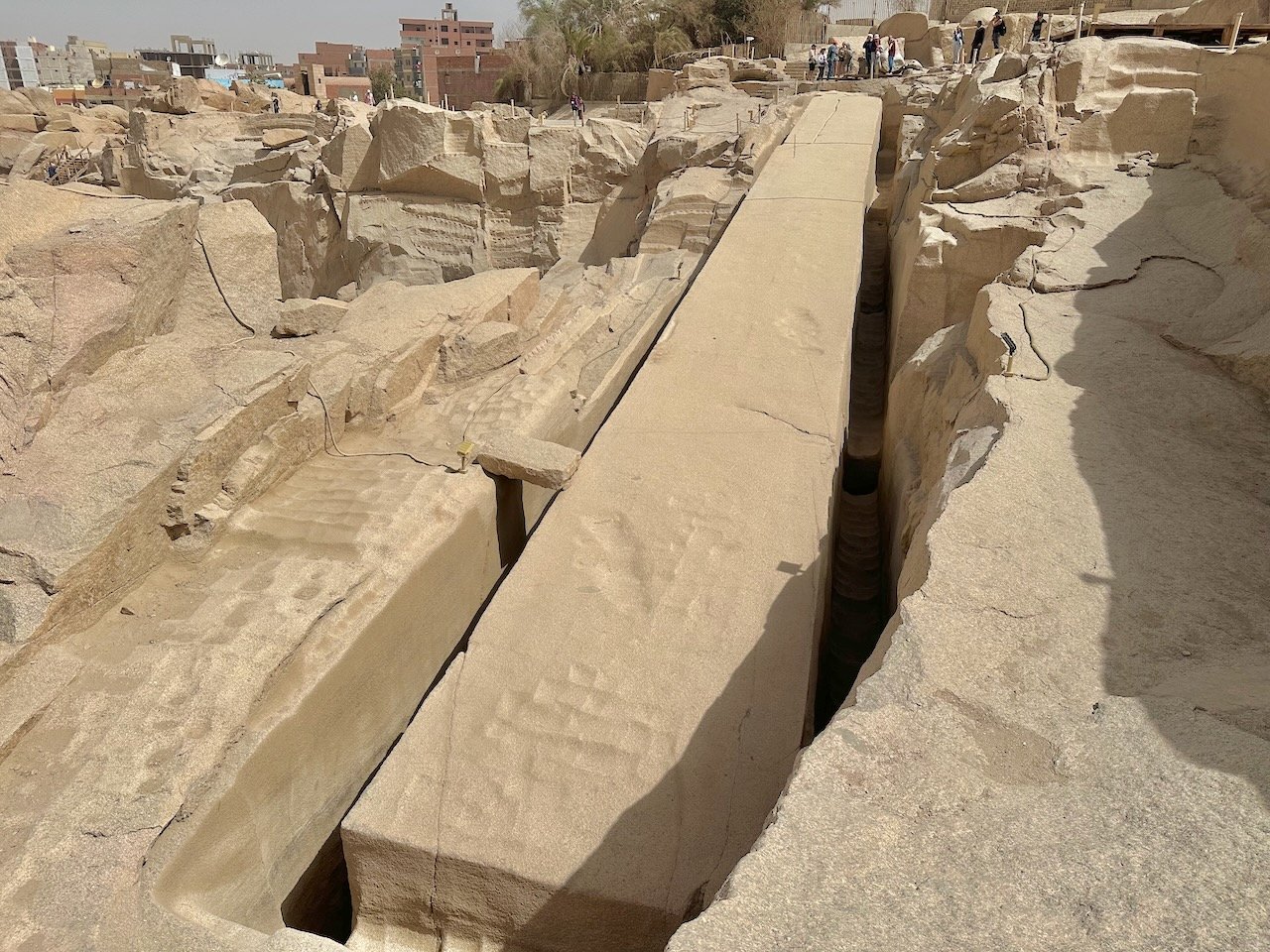
Close by is a quite impressive Granite Quarry in Aswan. This was where obelisks were made and then transported throughout Egypt in ancient times. Displayed there is the unfinished obelisk. The size if it is incredible! If finished it would have measured around 137 feet and would have weighed nearly 1,168 tons. Today, about 12 obelisks stand in Rome, three in Istanbul, three in Paris, and two in London.
Nubian Village
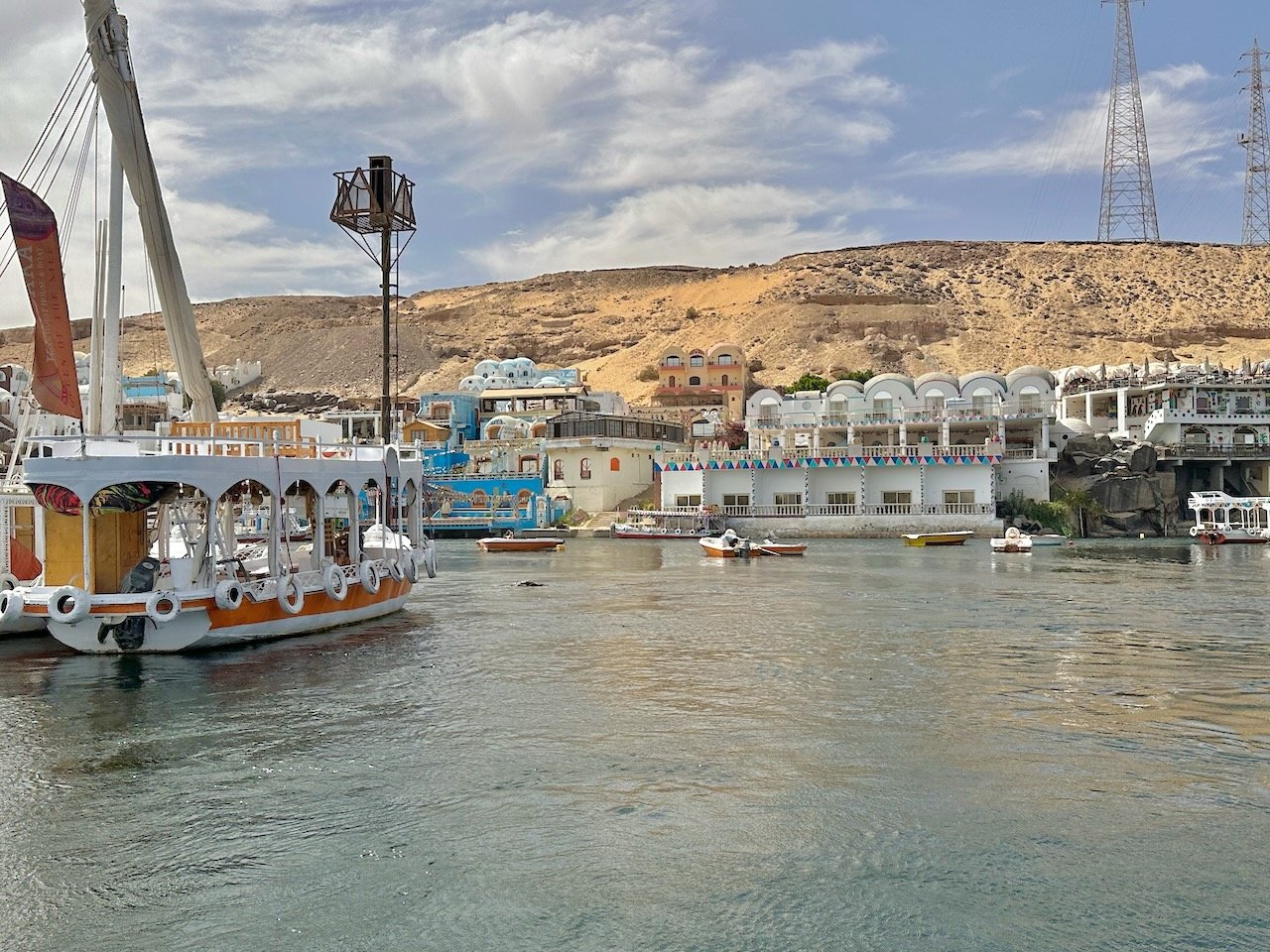
In the afternoon we left the world of antiquity behind us for a moment as we visited the Nubian Village. Again, we boarded boats on the Nile to get there. We passed by Elephantine Island where there was a Jewish community living following the Exile.
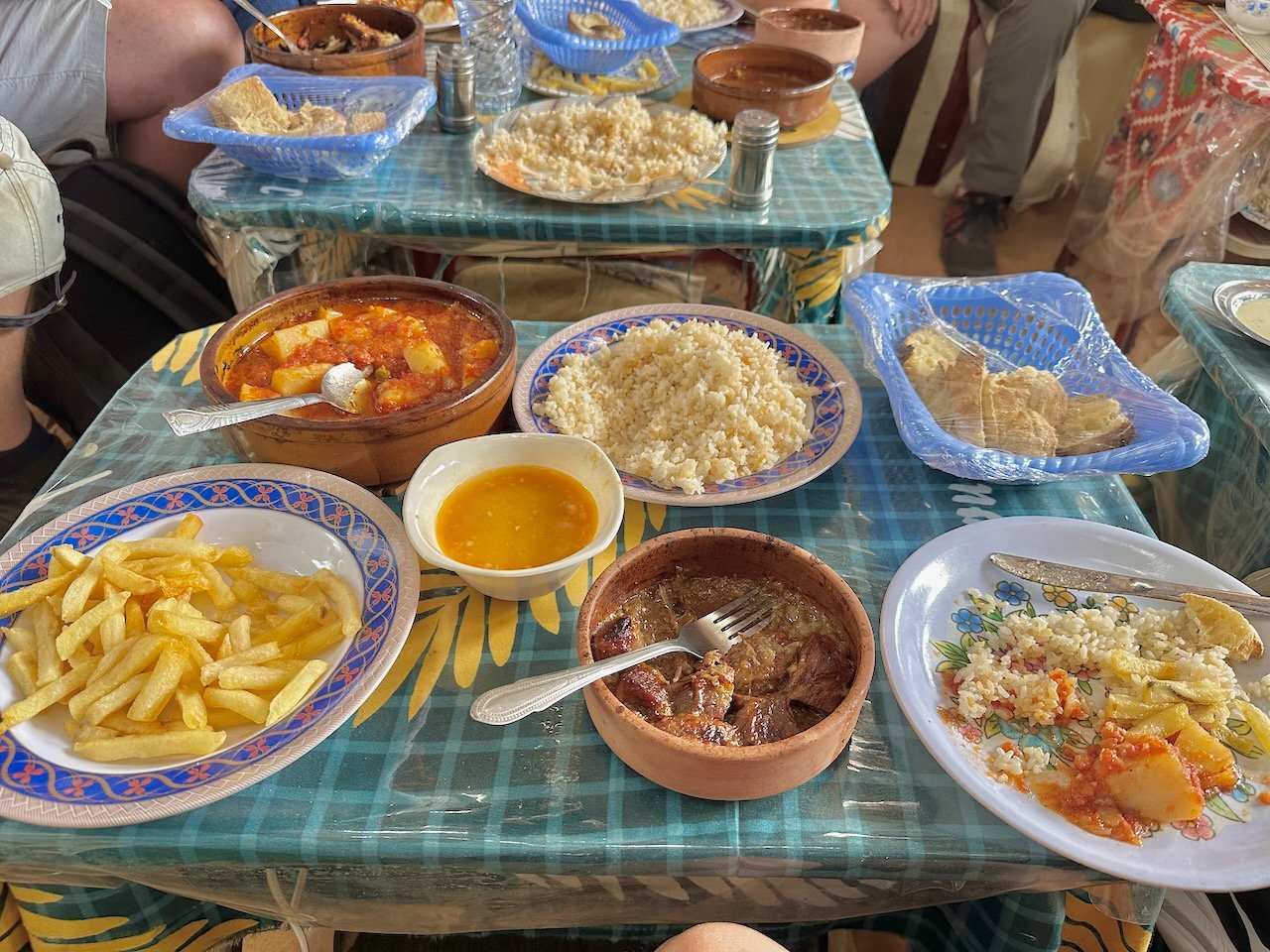
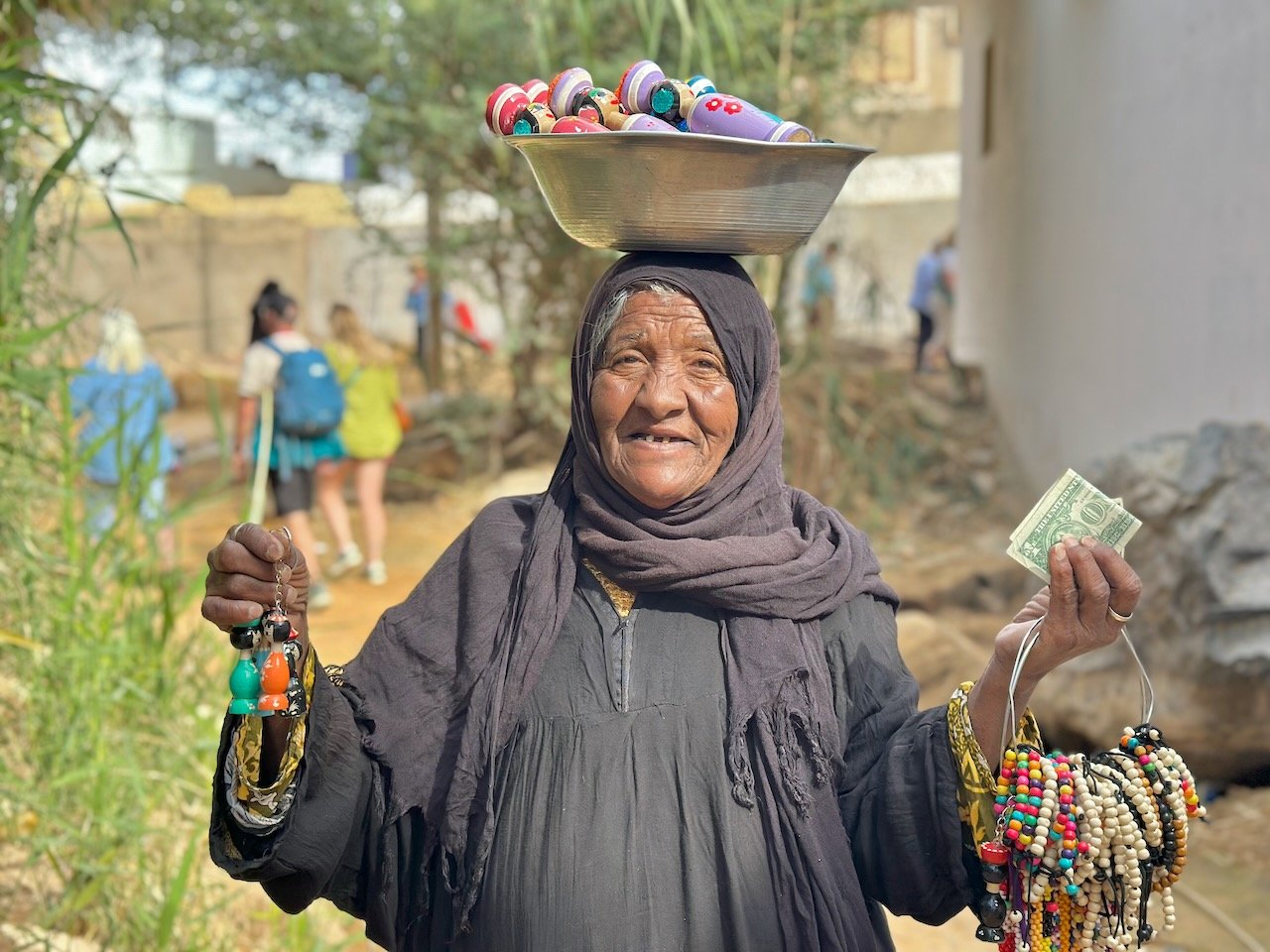
The experience was rich. First we enjoyed a wonderful lunch, followed by some entertainment, We all held a crocodile too. We also saw the Nubian school where we all returned to the “classroom.”
We returned to Aswan by boat in order to drive to the airport to catch our flight back to Cairo. Once landing in Cairo, we enjoyed a quick dinner at the Meridian Hotel before bussing to downtown Cairo to our hotel. It was a late night (arriving at the hotel at 11:30), but we are here for the next four nights.
Day 8 – Saturday, February 28: Old Cairo, Grand Egyptian Museum
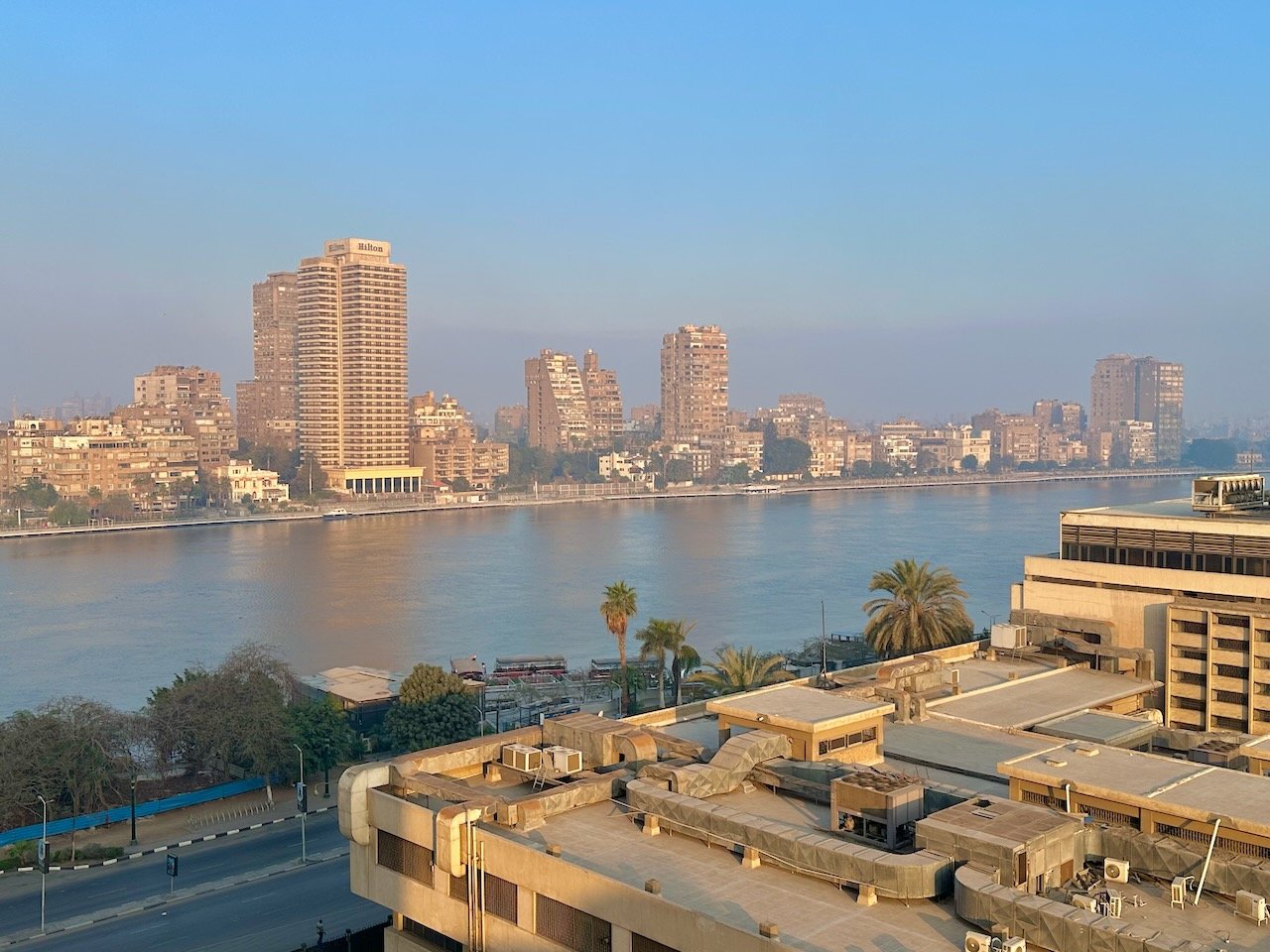
We enjoyed our first full day here in Cairo today! The view of the Nile River from our hotel balconies was incredible! All morning was at the Grand Egyptian Museum, and the afternoon in Old Cairo. The weather was unseasonably cool in the morning (40s), with highs rebounding with the warmer sunny skies to the mid 60s in the afternoon.
Grand Egyptian Museum
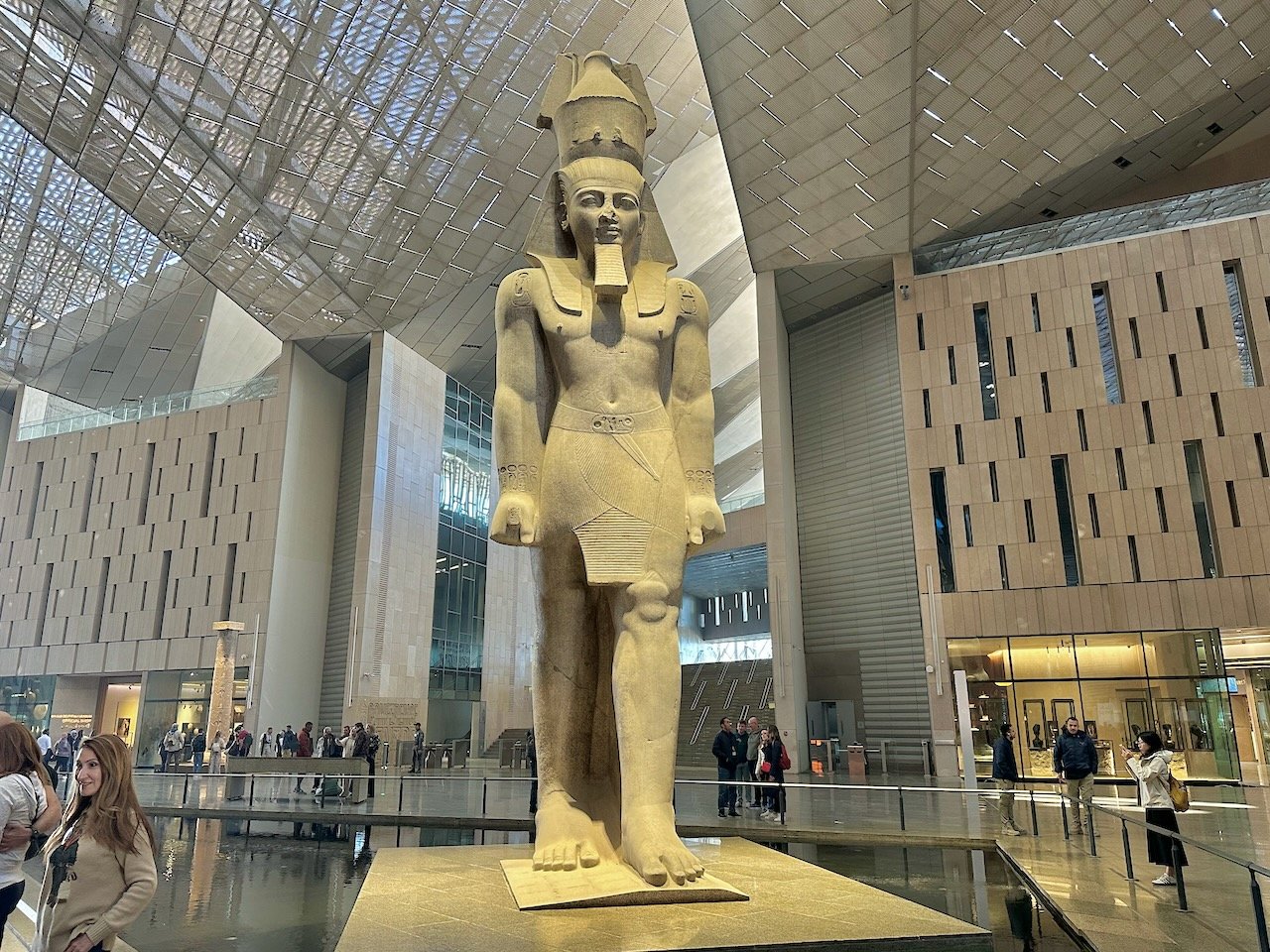
Shortly after 8 a.m. we drove to Giza (a southern suburb of this 23 million people city!) to the Grand Egyptian Museum. We spent over three hours there (until 12 noon). The museum cost $1.2 Billion and took 23 years to plan and build it.
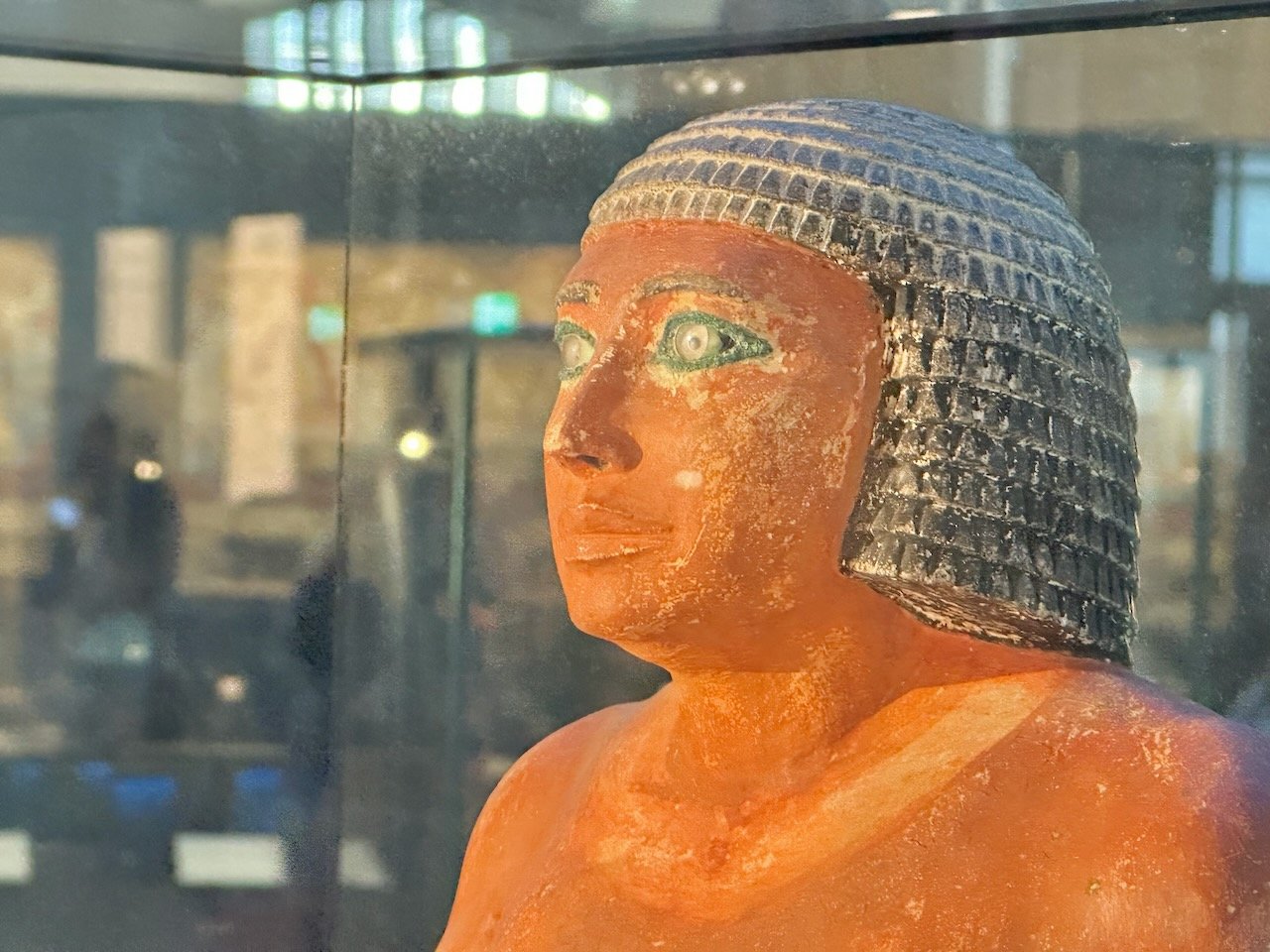
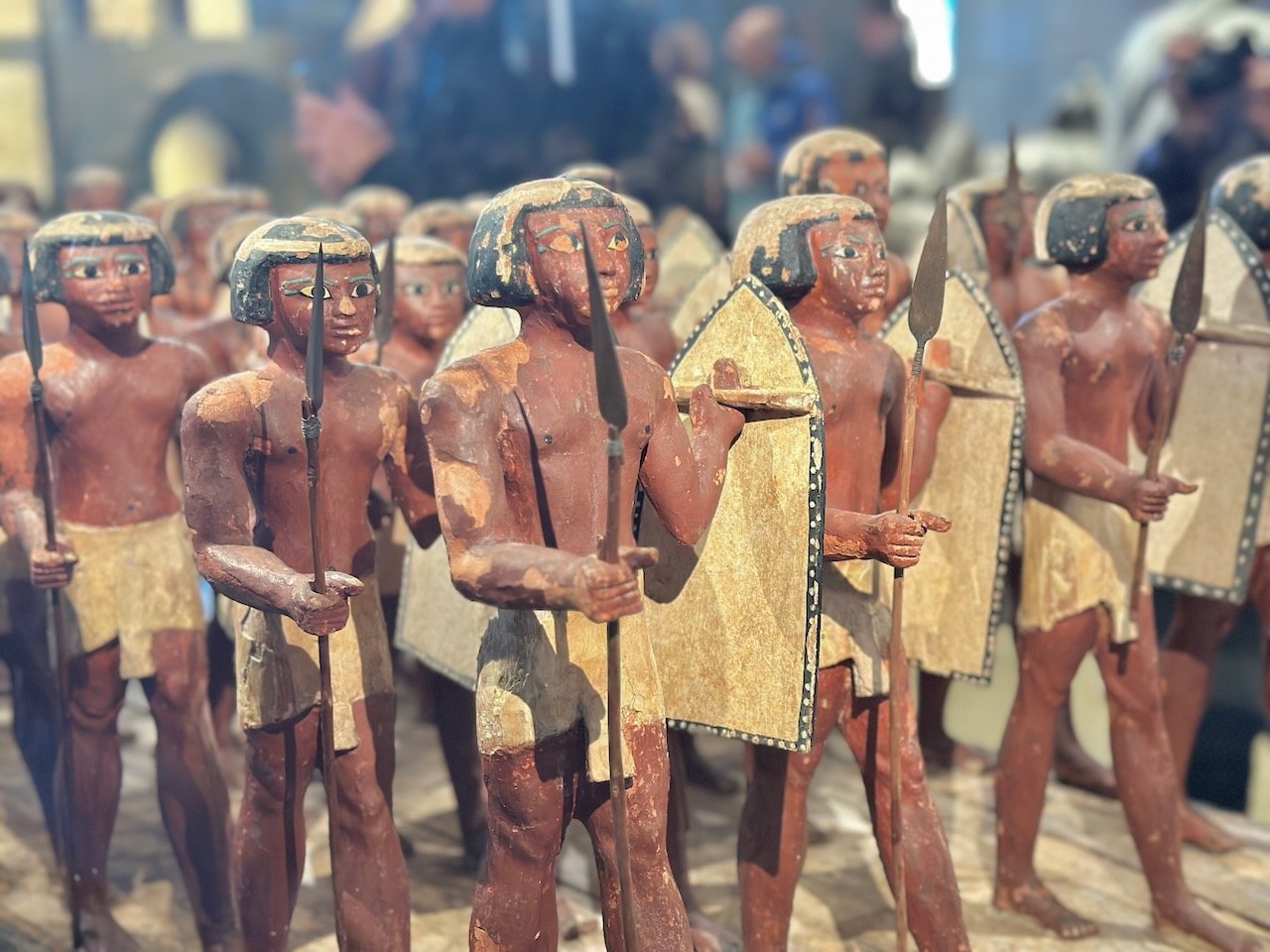
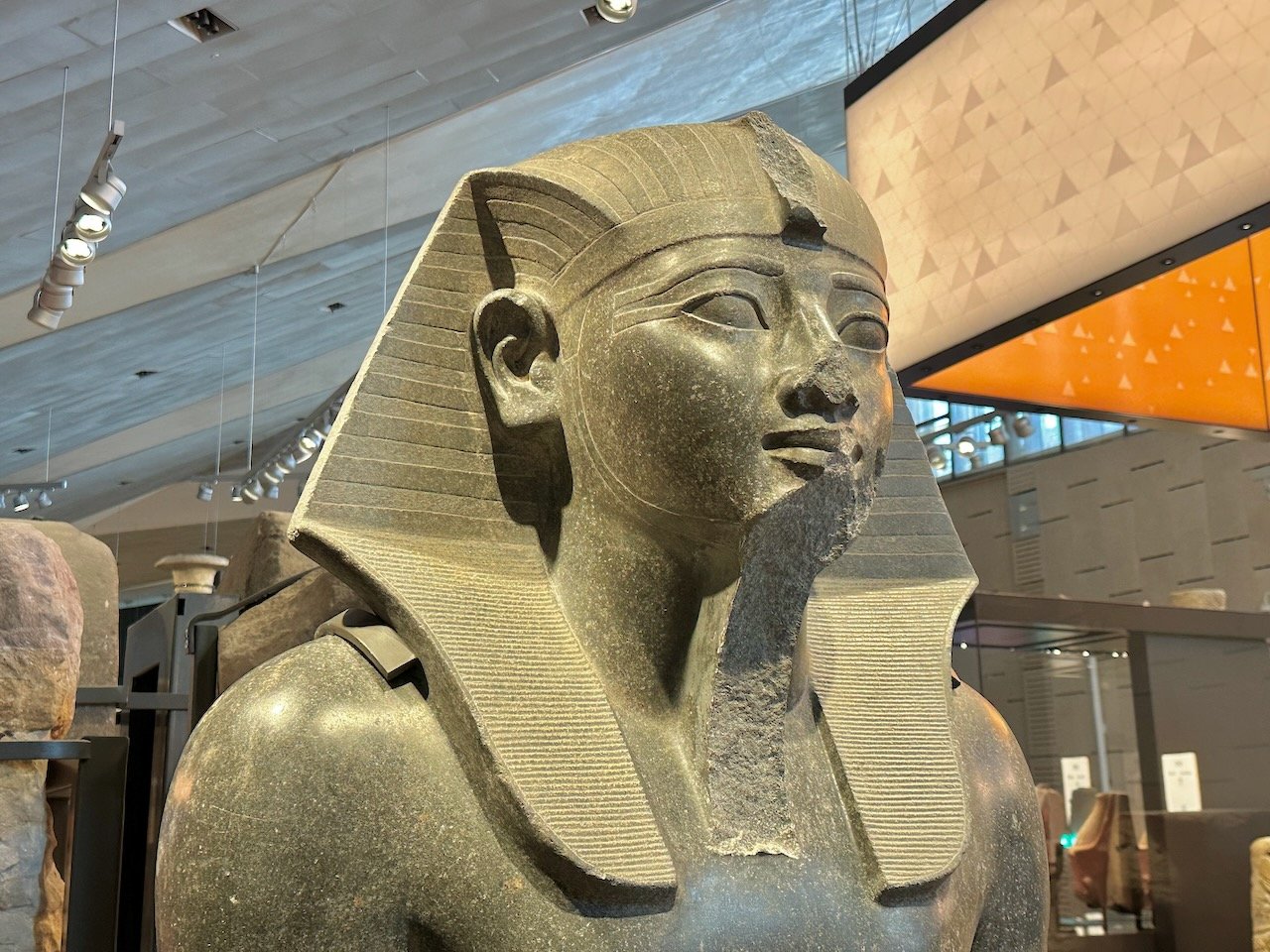
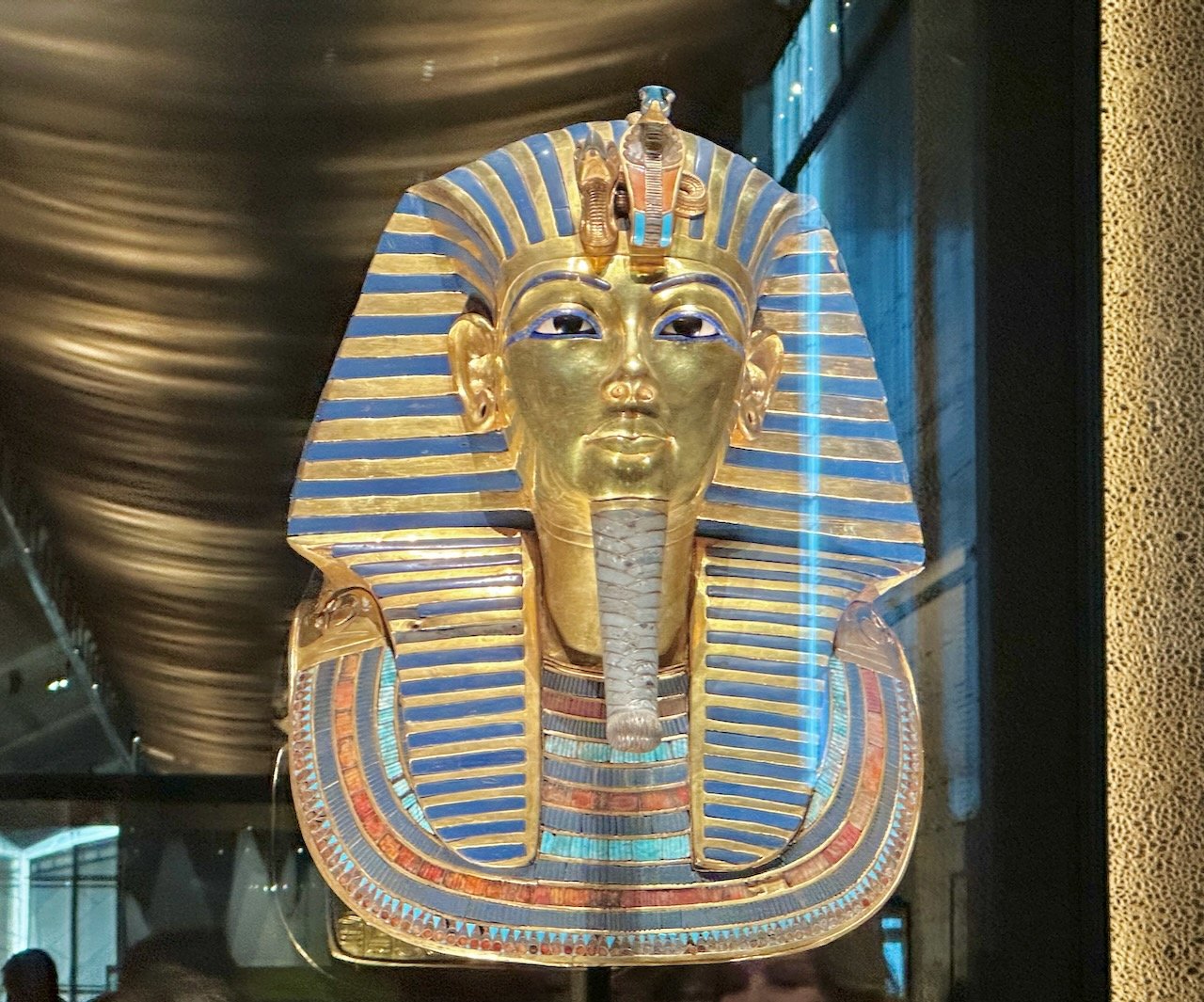
While some of the artifacts are still in the Old Museum (i.e. the Merneptah Stele and the Amarna Letters), there are about 55,00 items displayed. We first followed our guides (Moses and Max) around this newly-designed museum before having some free time to explore on our own. We saw artifacts from the Old, Middle, and New Kingdoms! We made many biblical connections too. We saw statutes of Ramses II, Amenhotep II (the likely pharaoh of the Exodus based on conventional dating), Thutmose III, the head and sphinx of Hatshepsut, colorful jewelry, to name just a few. The colors of some of the artifacts (e.g. the “sitting scribe”) were astonishing! The grand display featured the collection (5,400 items) of all of King Tutankhamen, including his pure gold coffins and mask. It was incredible. The museum is one of the best in the world! We could have spent all day there exploring!
Old Cairo
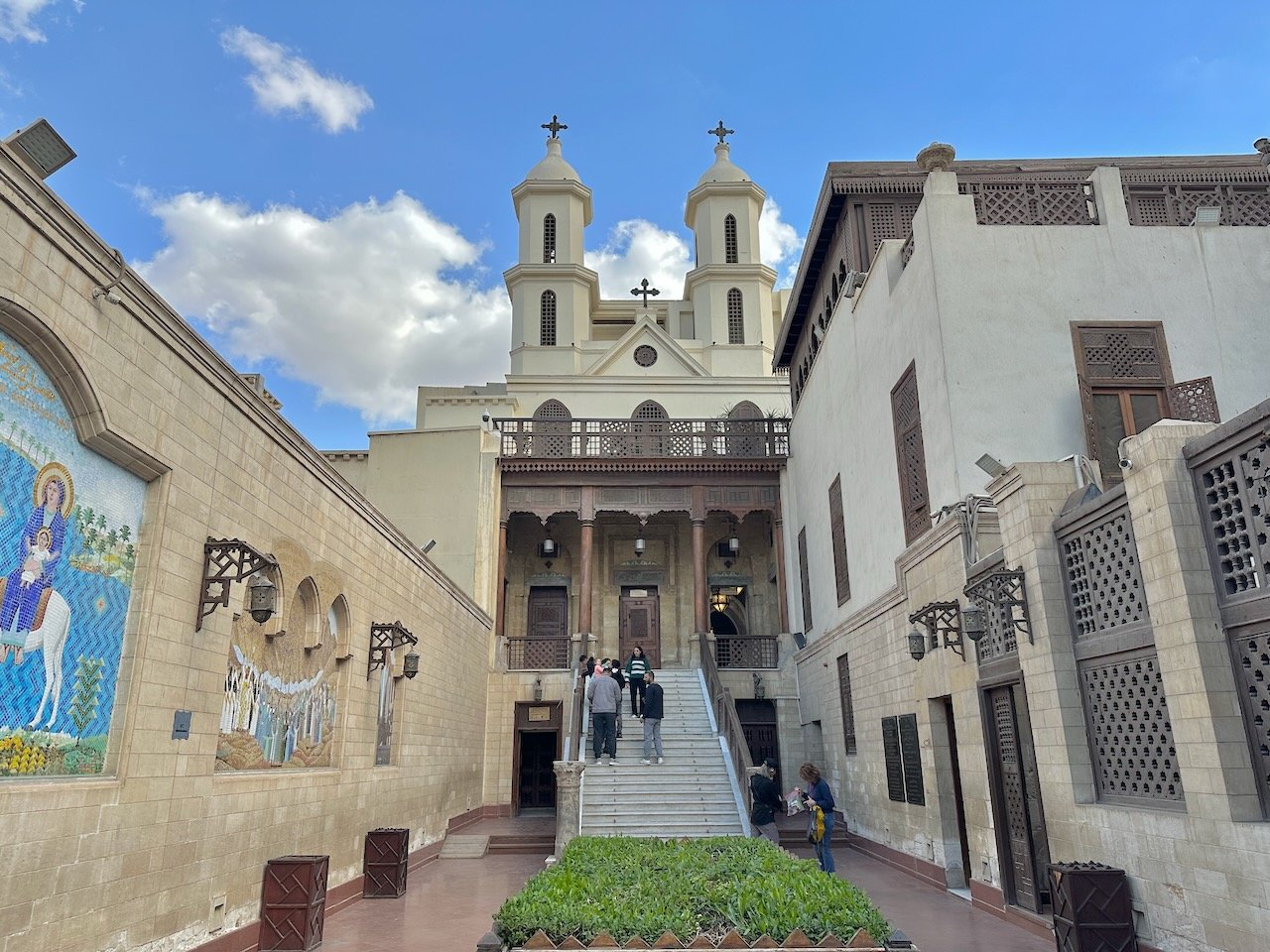
Following a visit to an Egyptian cotton store (many bought 1600-count sheet sets, shirts, scarfs, etc…), this afternoon we bussed into the area known today as Old Cairo. This is where three of the world’s great religions coexist in remarkable harmony. Within minutes, you can visit a 4th-5th century church, a 9th-century synagogue, and a 7th-century mosque. Old Cairo doesn’t just tell Egypt’s story—it tells humanity’s story of faith, culture, and civilization.
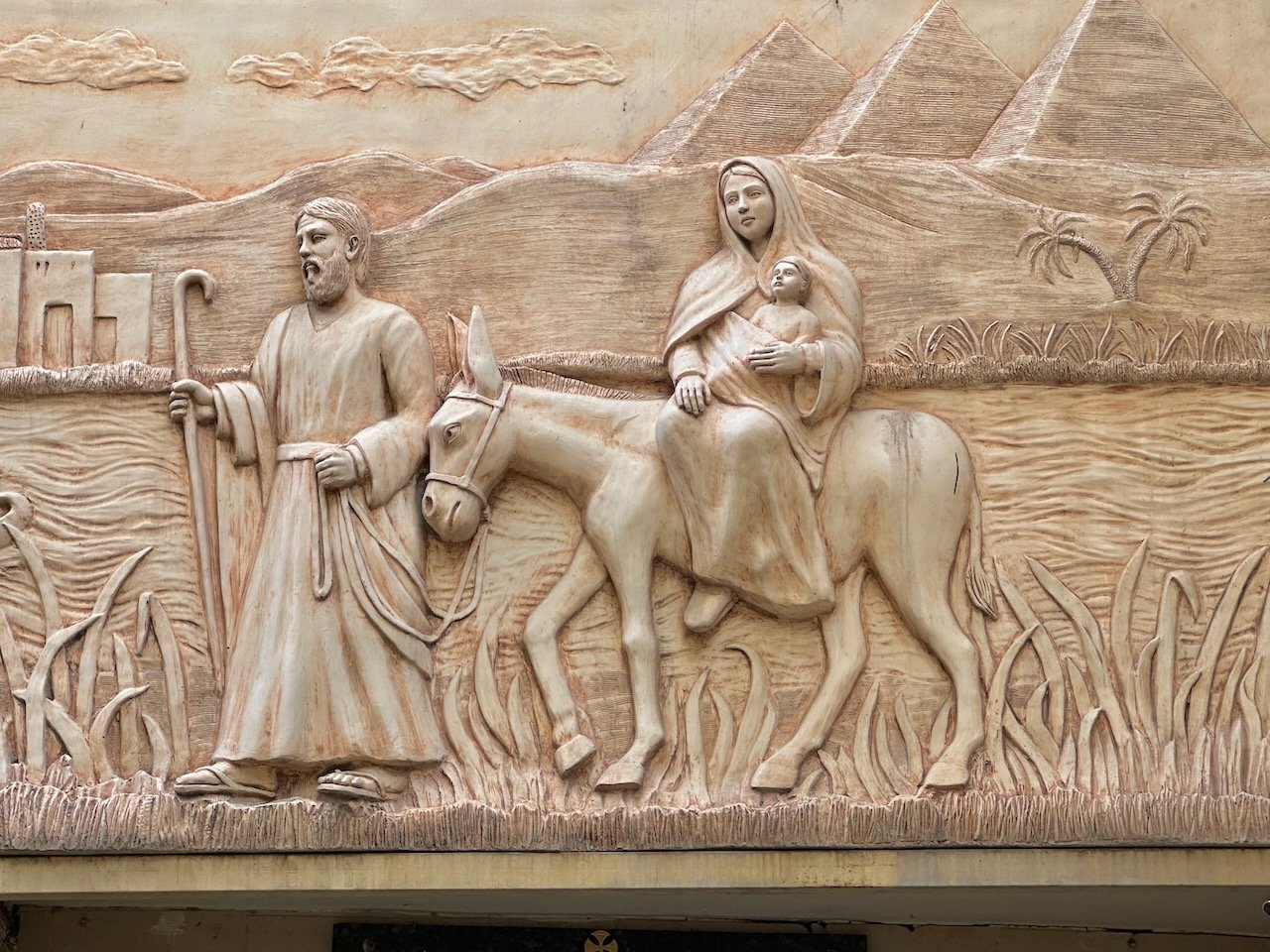
According to Christian tradition, the “Holy Family” (Joseph, Mary, and baby Jesus) fled to Egypt here as they escaped King Herod’s persecution. Several Old Cairo sites commemorate their alleged journey. We visited the Cavern Church of St, Sergious and Bacchus (also known as Abu Sera) and the Church of Holy Mary. The Holy Family (Joseph, Mary, Jesus, see Matthew 2) are remembered here as coming from Bethlehem and spending time herein Egypt. In reality, they probably were only in the Delta and Alexandria areas, but we can’t be sure.
Ben Ezra Synagogue
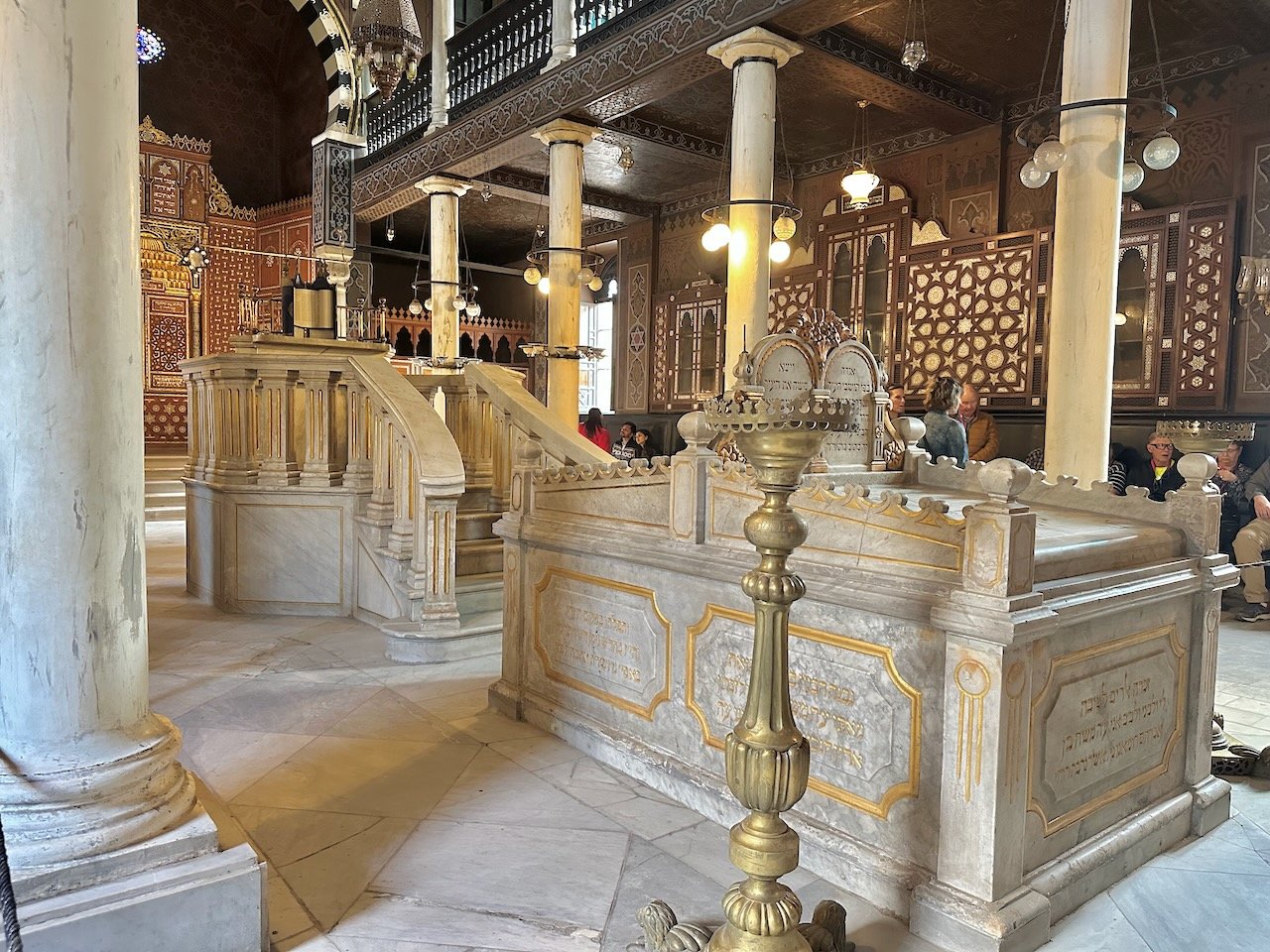
We also saw the Ben Ezra Synagogue. While its date is uncertain, there is good evidence from documents found in the geniza (container that keeps the Hebrew scrolls) that it predates 882 AD and is probably pre-Islamic. This would make the synagogue the oldest in Egypt.
The synagogue is named after Abraham ibn ‘Ezra, the Jewish religious scholar and philosopher. Ben ‘Ezra contains all the main features of a synagogue. The bimah, or pulpit, from which prayers were read is in its center. The Ten Commandments are inscribed on it in Hebrew. The synagogue was once the center of many celebrations, congregations and prayers, but is no longer in use today.
We returned earlier than normal (4:00 p.m.) back to our hotel for a time of rest before another amazing dinner at 6 p.m. We are all looking forward to seeing the pyramids and Sphinx tomorrow!
NOTE: Today Israel, with the support of the U.S. bombed Iran. There has been a steady stream of retaliation by Iran upon Israel. As for us in Cairo, we are far from this danger, and we are safe. We pray for the peace and safety of Israel and for freedom for peace-seeking Iranians who seek liberty out from under this present regime.
Day 9 – Sunday, March 1: Sakkara, Carpet School, Giza Pyramids, Sphinx
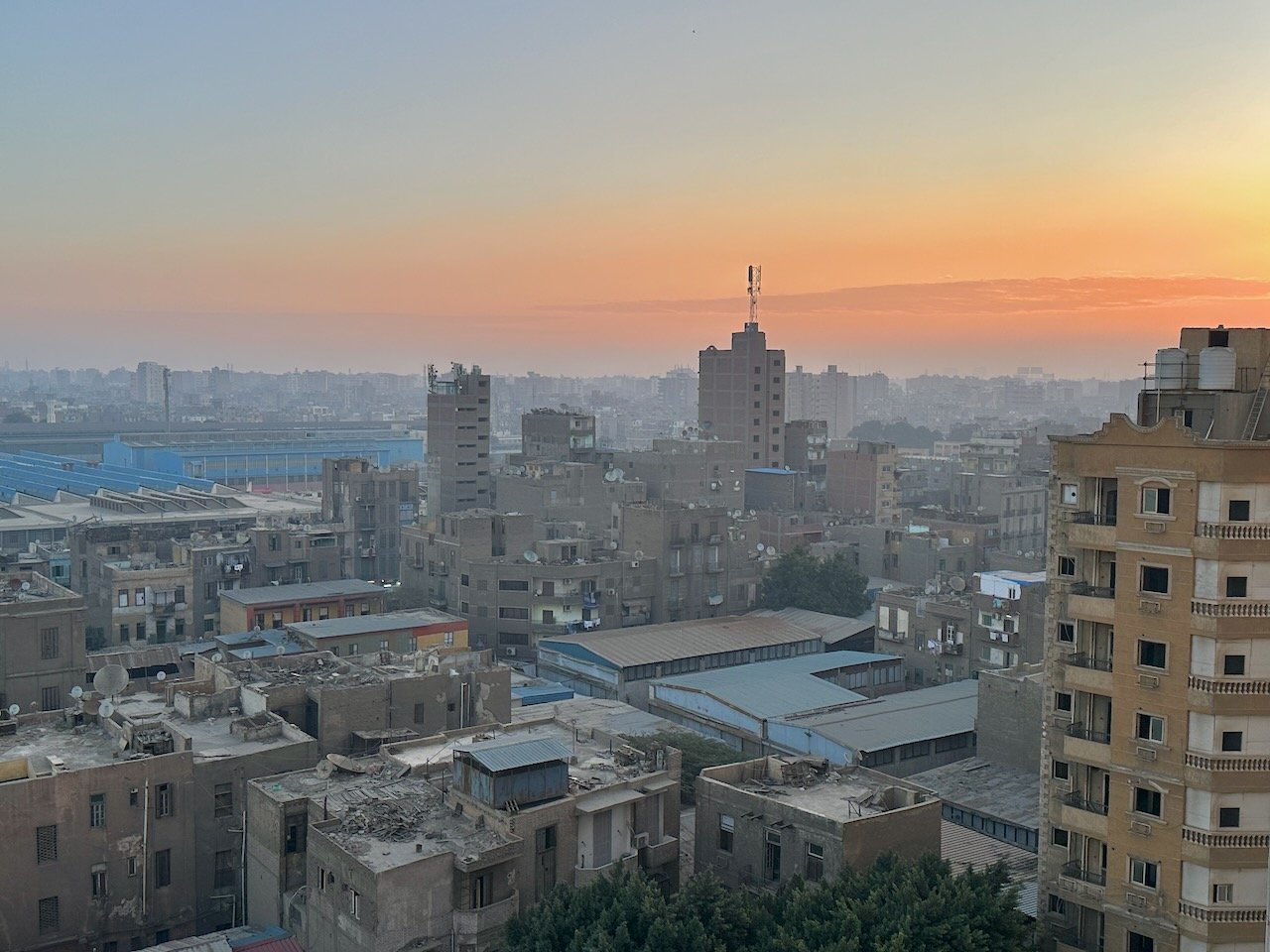
Today was a day of awe on this “pyramid day” as we saw a bunch of them here in there Cairo/Giza/Sakkara area! It was also our second last day of the trip. We enjoyed mostly sunny skies, with pleasant highs around 65 again.
Sakkara
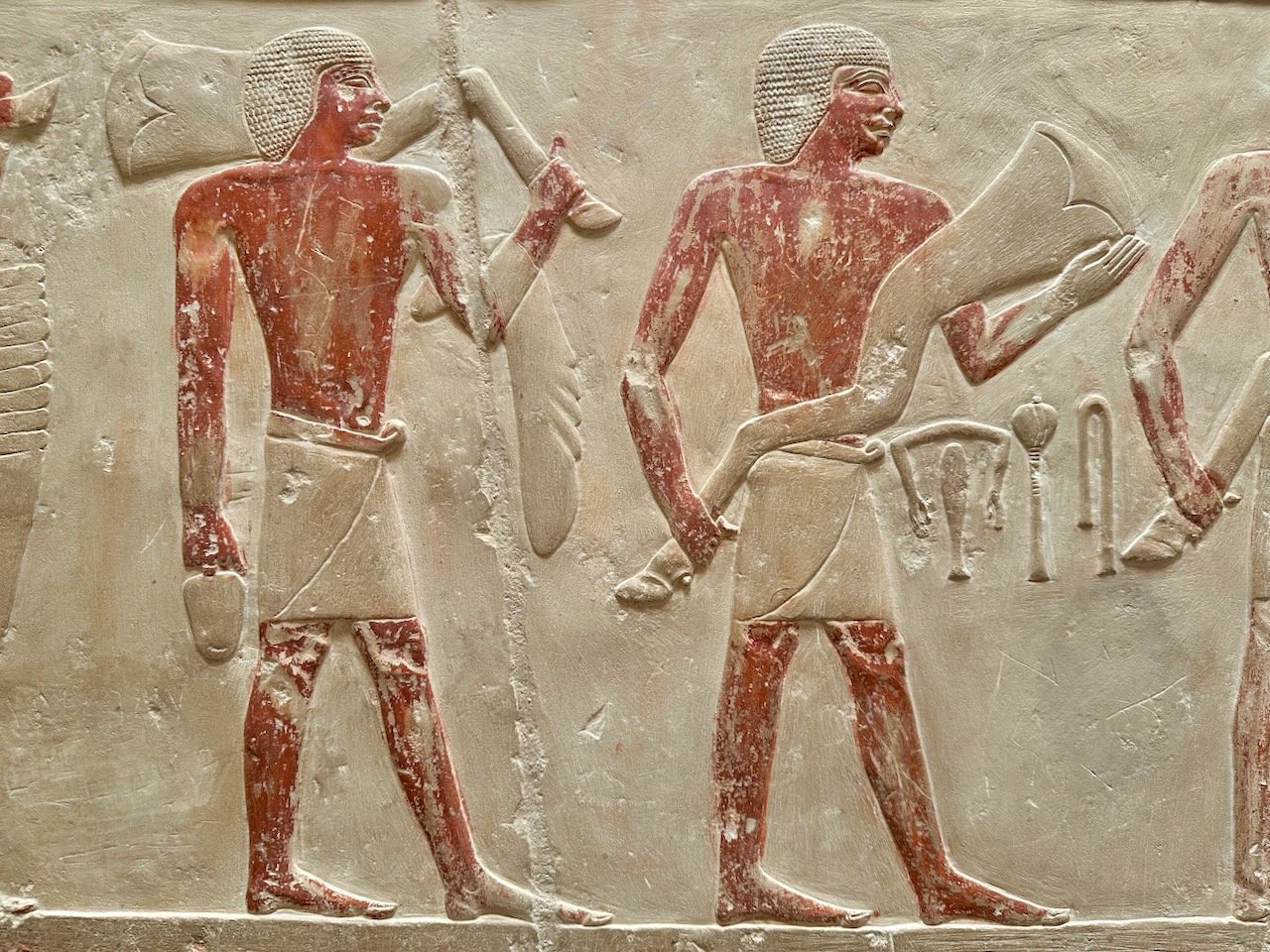
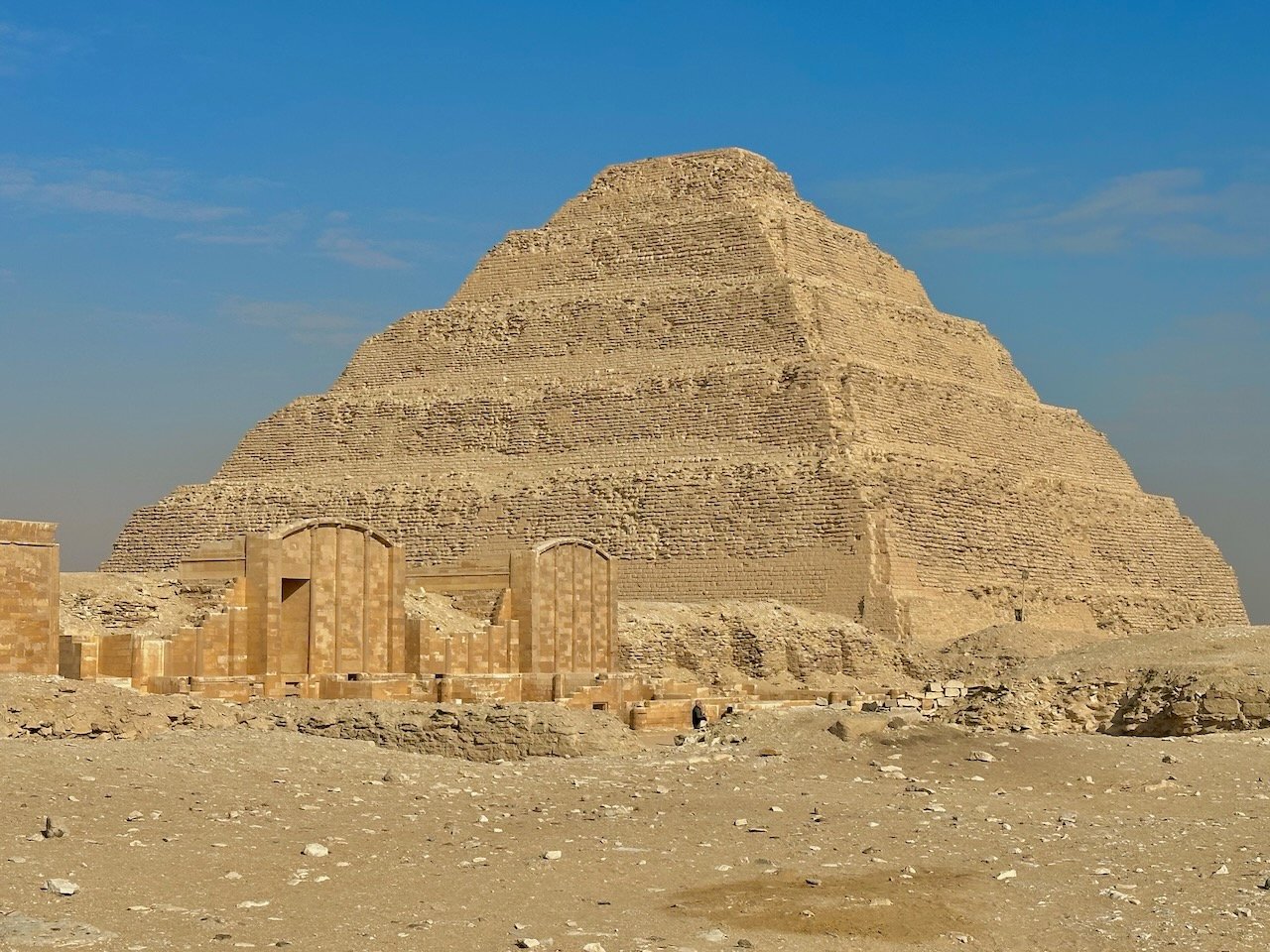
We beat most of the morning Cairo traffic this morning as we drove directly to Sakkara, the ancient necropolis of the Old Kingdom capital of Memphis. Here we saw the impressive Stepped Pyramid of Djoser (or Zoser). It dates to around 2,700 BC (conventional dating). It is the oldest of all pyramids (now totally 127, although some say 134). This pyramid predates Abraham by about 650- 700 years! After seeing the Stepped Pyramid, we entered a small pyramid for Unas from the 5th Dynasty (about 2350 BC). We also entered a mastaba (the tomb of Seshseshet Idut, c. 2345-2323 BC). Leaving Sakkara, we made an interesting stop at a local carpet school en route to the new museum.
Great Pyramids of Giza / Camel Ride, Great Sphinx
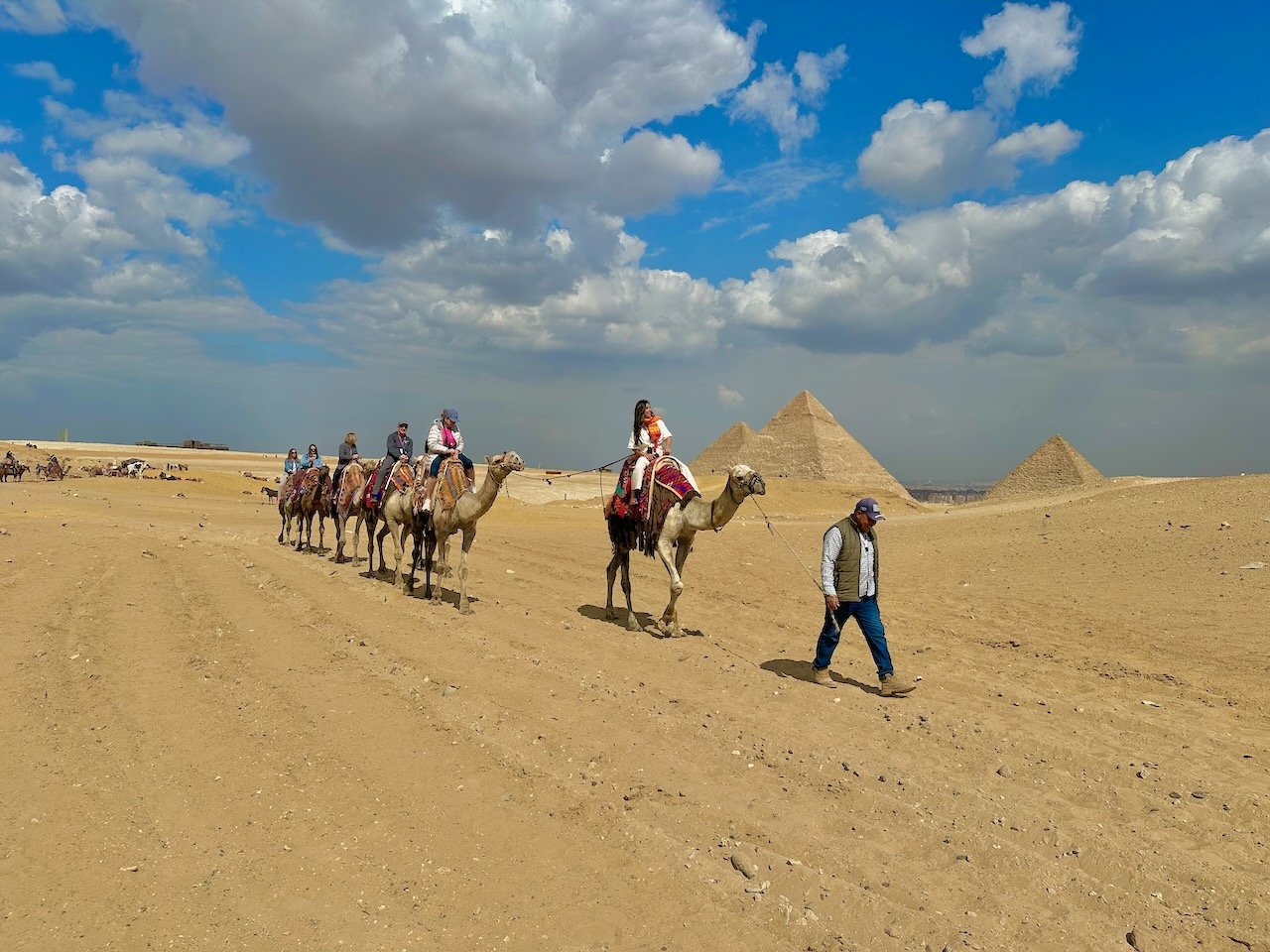
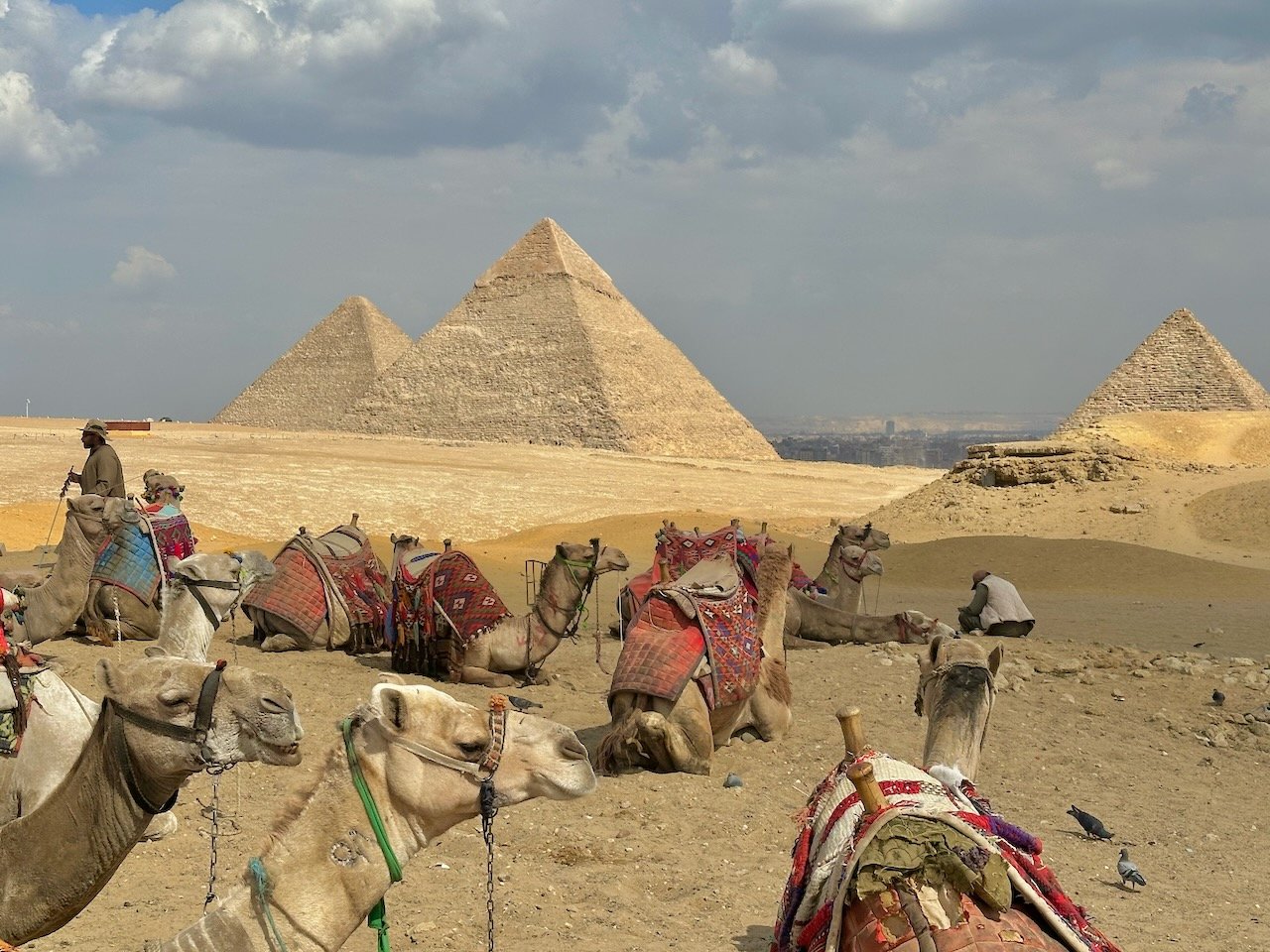
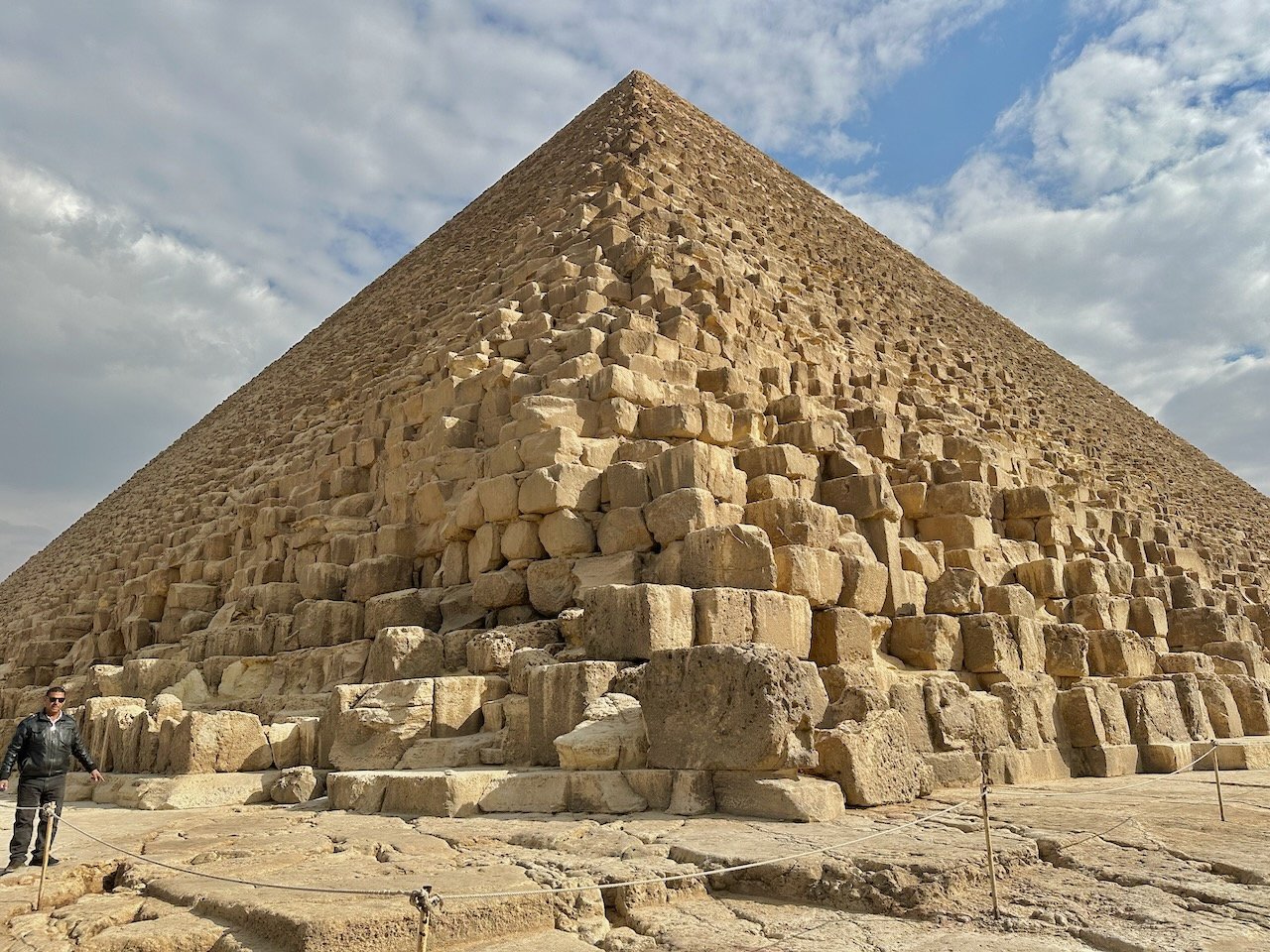
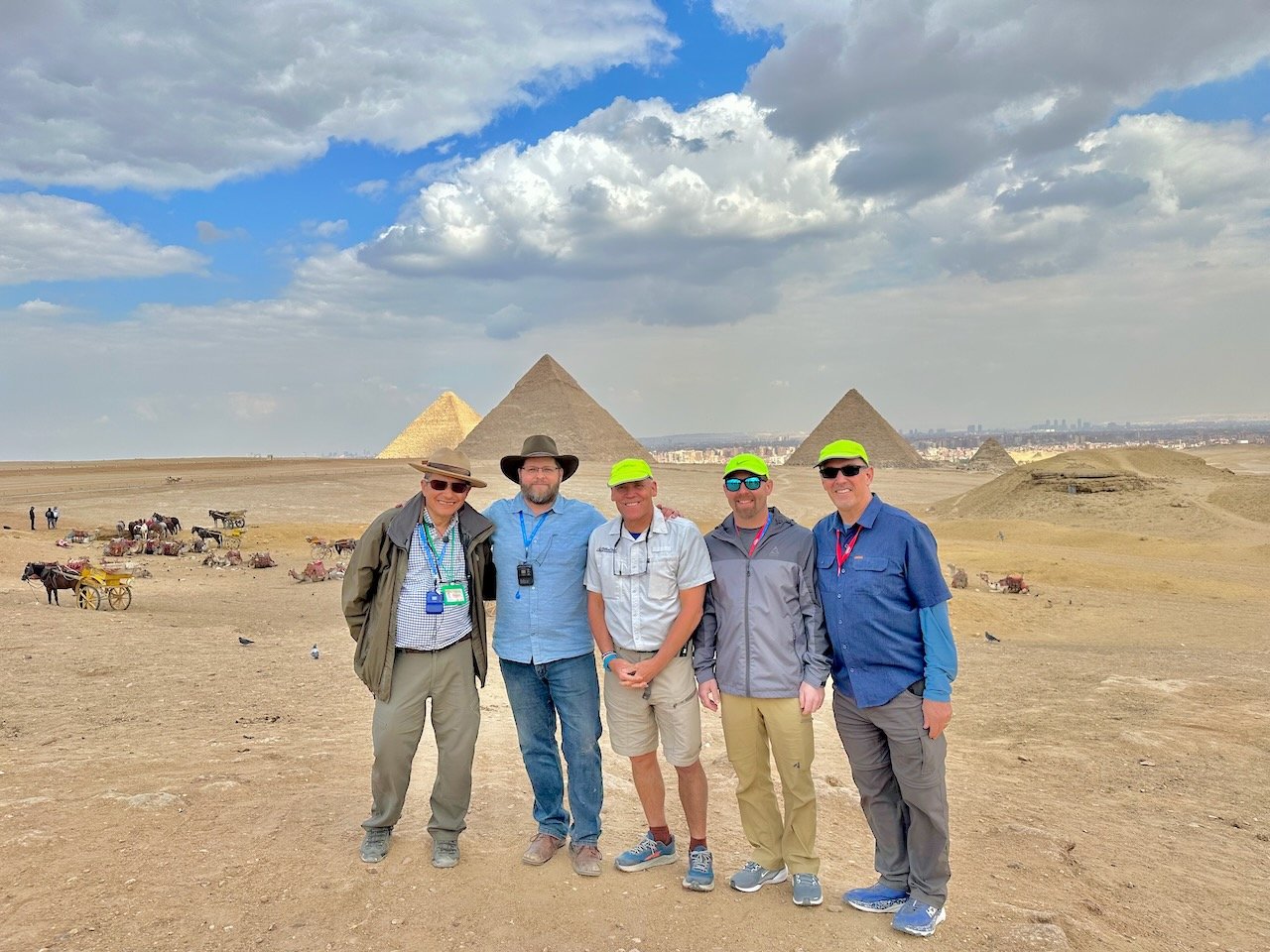
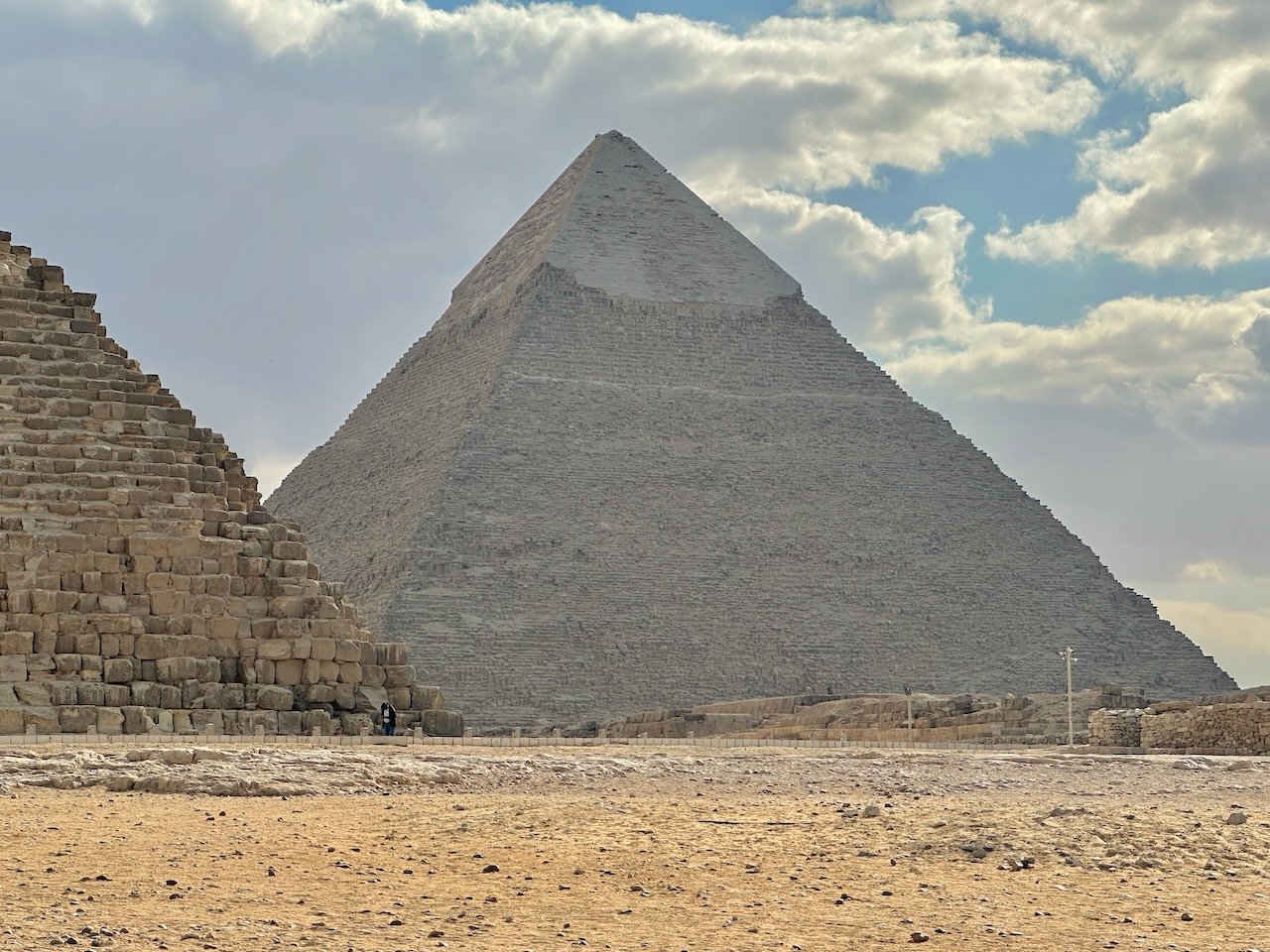
Next, we drove to the Great Pyramid (also known as the Pyramid of Cheops or Khufu and constructed around 2,600 BC), with the Pyramid of Khafre (or Chephren) and the Pyramid of Menkaure built shortly after. Two of them stand nearly 500 feet high. Most likely it took 100,000 men 20 years to build. The Great Pyramid was built with 2.2 million stones, with the average weight of each stone around two-three tons (the stones weigh between one and 60 tons).
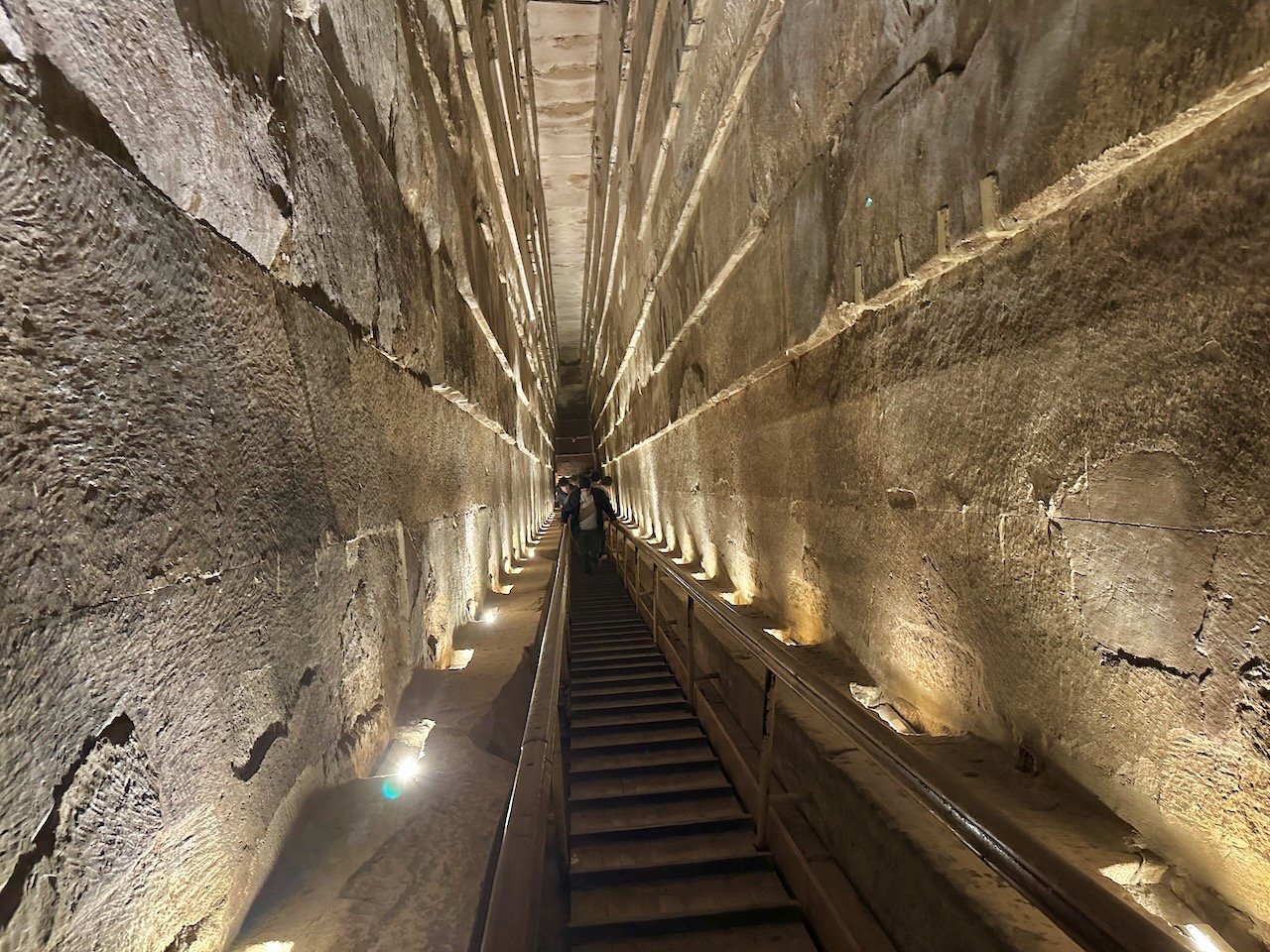
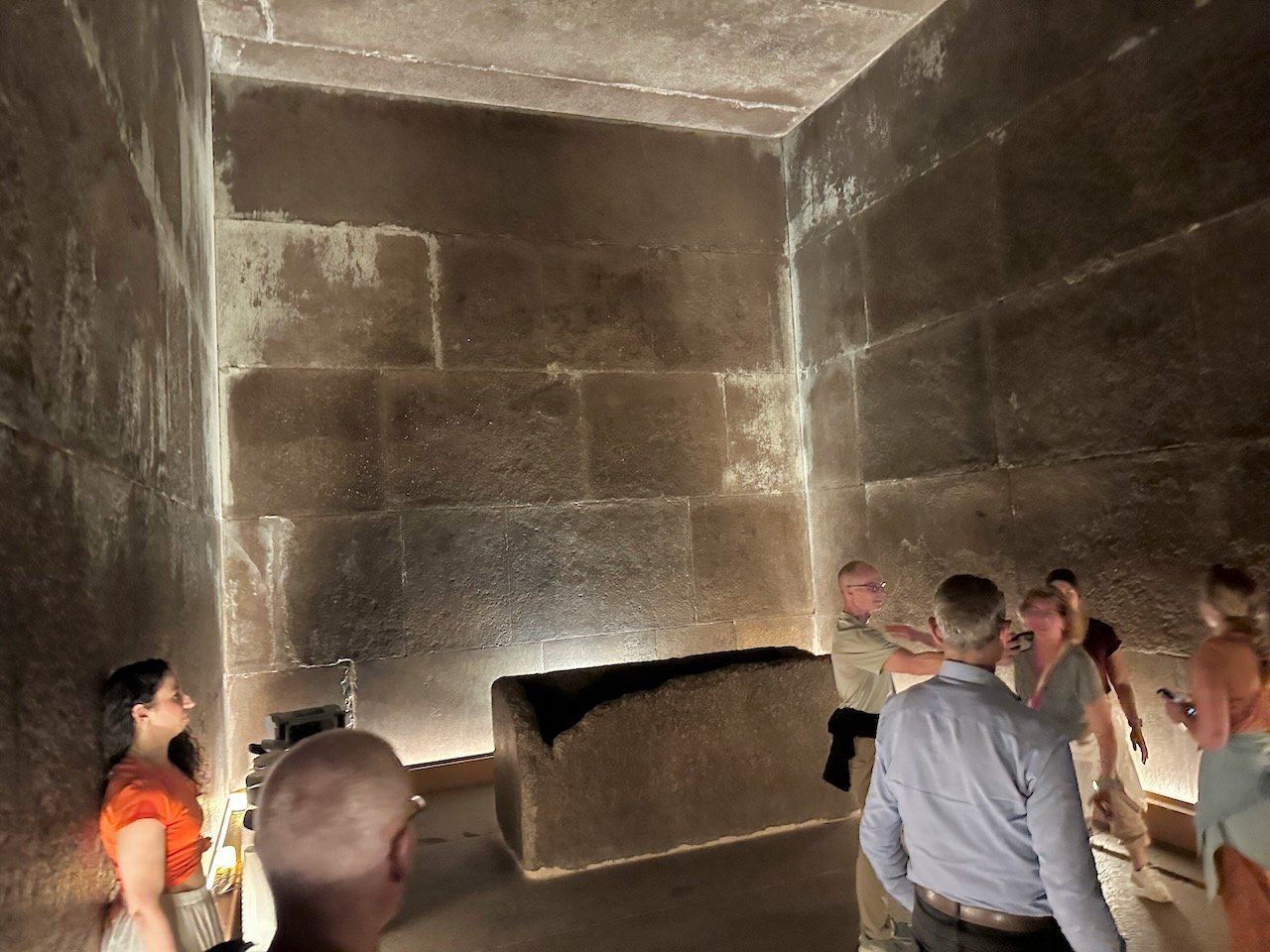
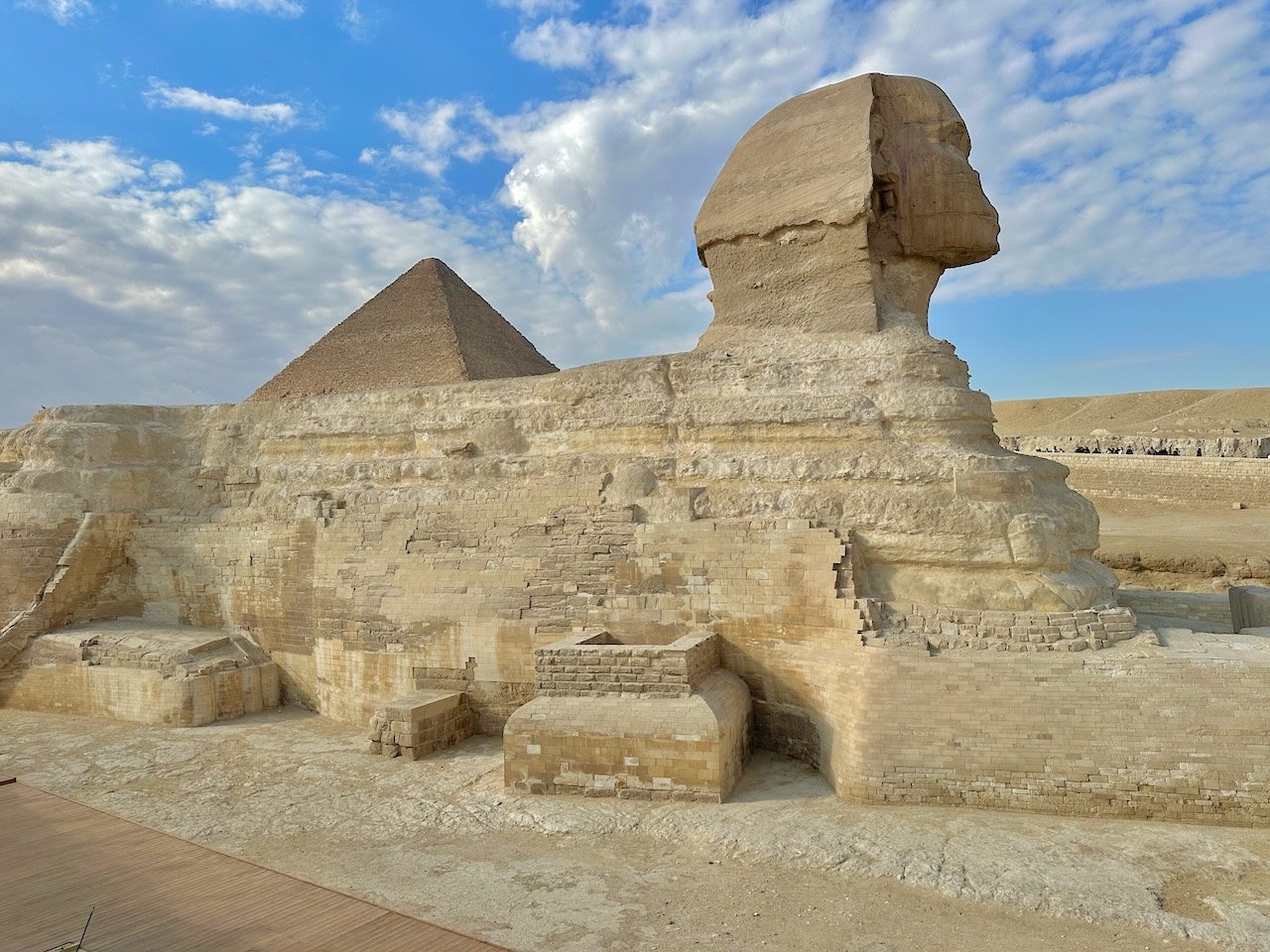
First, we enjoyed a panoramic view of the pyramids as well as a fun camel ride. Most did the camel ride, and no one fell off! Then we drove down to get a closer look at the Khufu pyramid. Many in the group walked inside and up to the center of the Great Pyramid to the “King’s Chamber” while others walked around the pyramid (each base is 750 feet long). Slightly below the pyramids is the Great Sphinx. It is 240 feet in length and almost 70 feet high. A stele (called the Dream Stele) was erected in front of it by Thutmose IV (the son of Amenhotep II). It still stands there today!
We returned to the hotel for dinner at 6 p.m. again (it’s nice to eat early!), with a free evening. We have one day to our trip, and tomorrow we have a longer but interesting drive to eh region called Goshen.
Note: Once again, we are all safe, with no worries that the Israel-Iran war will reach us. We are well south of this conflict.
Day 10 – Monday, March 2: Land of Goshen – Tanis/Zoan, Cairo
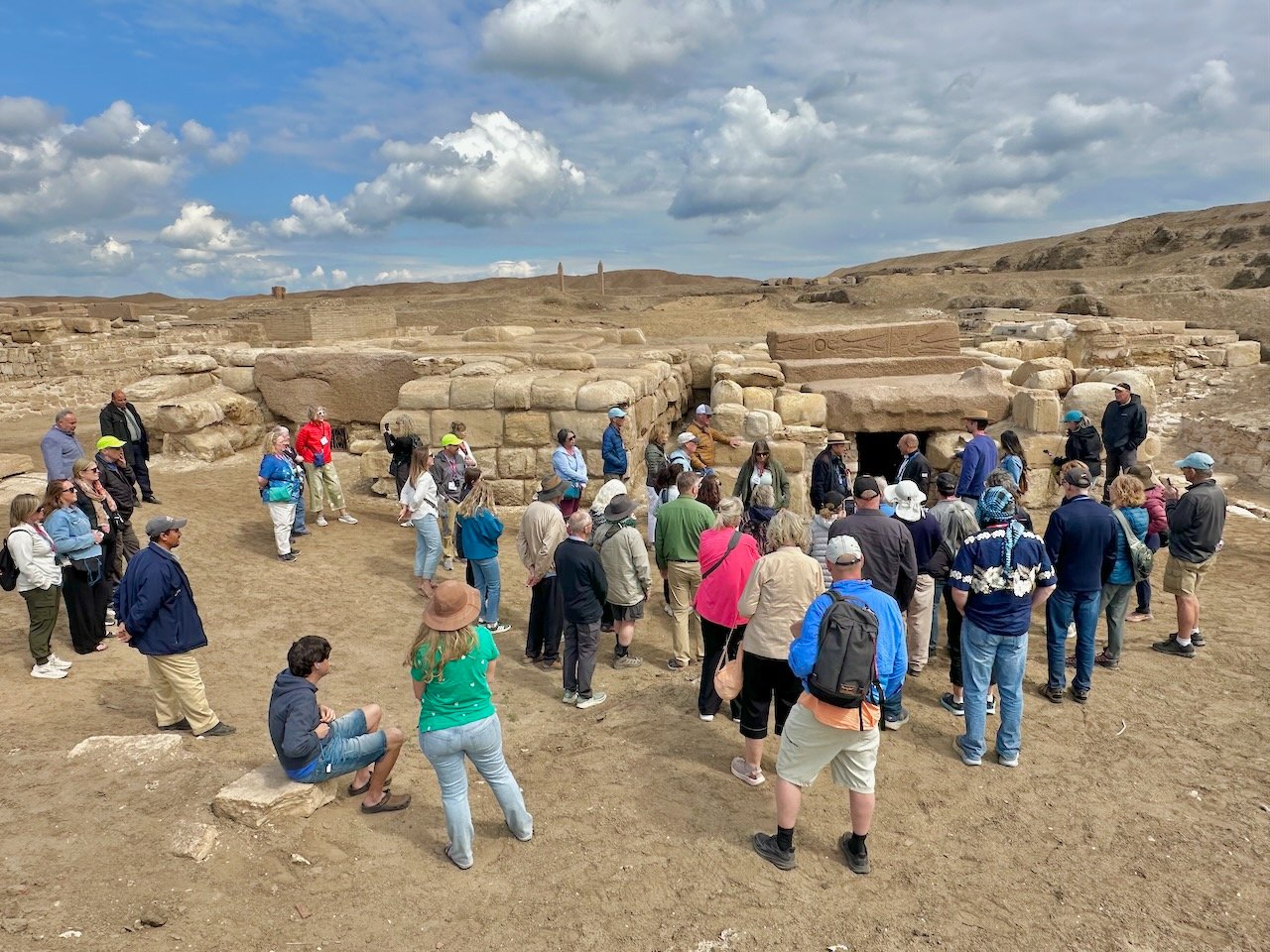
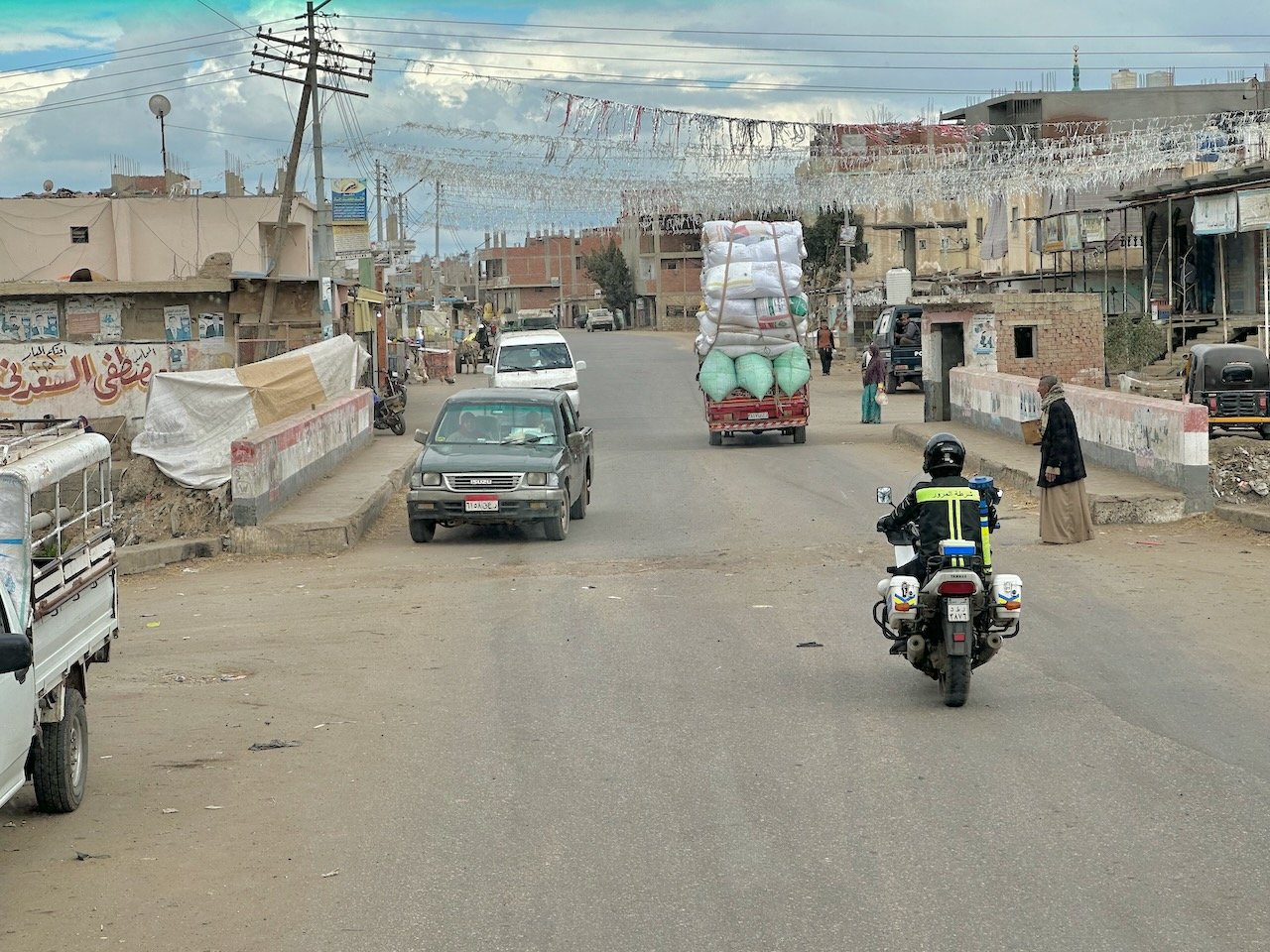
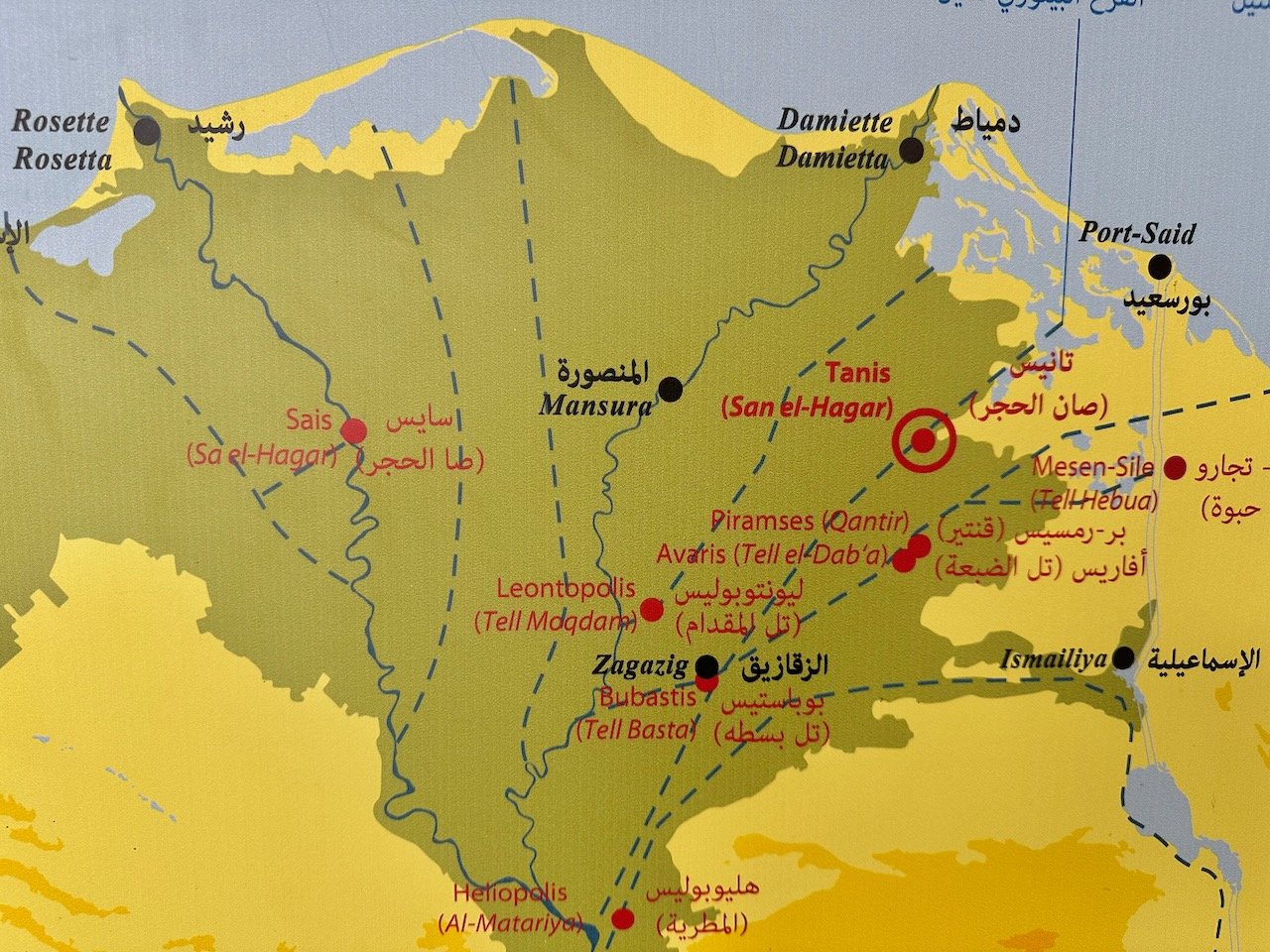
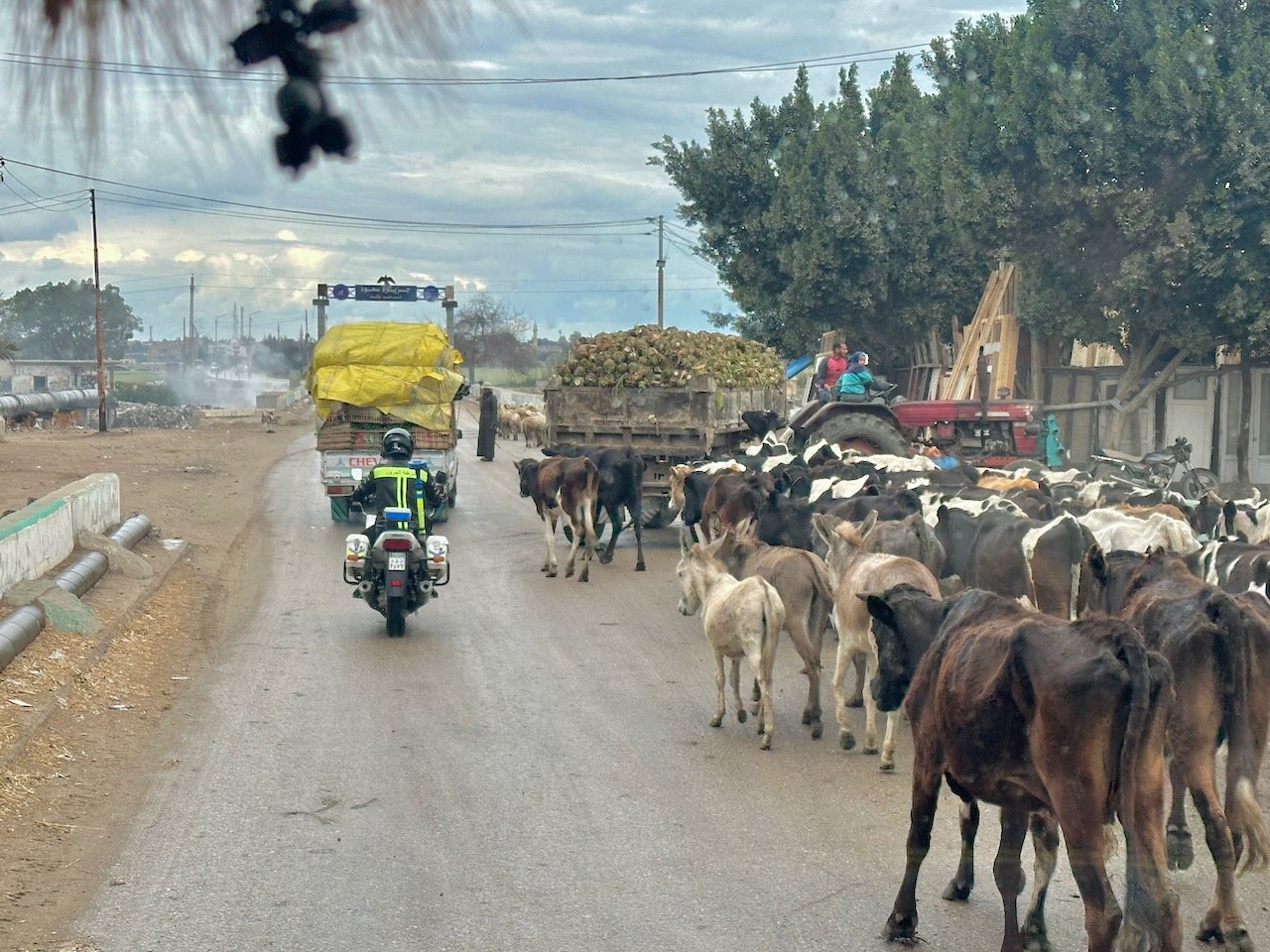
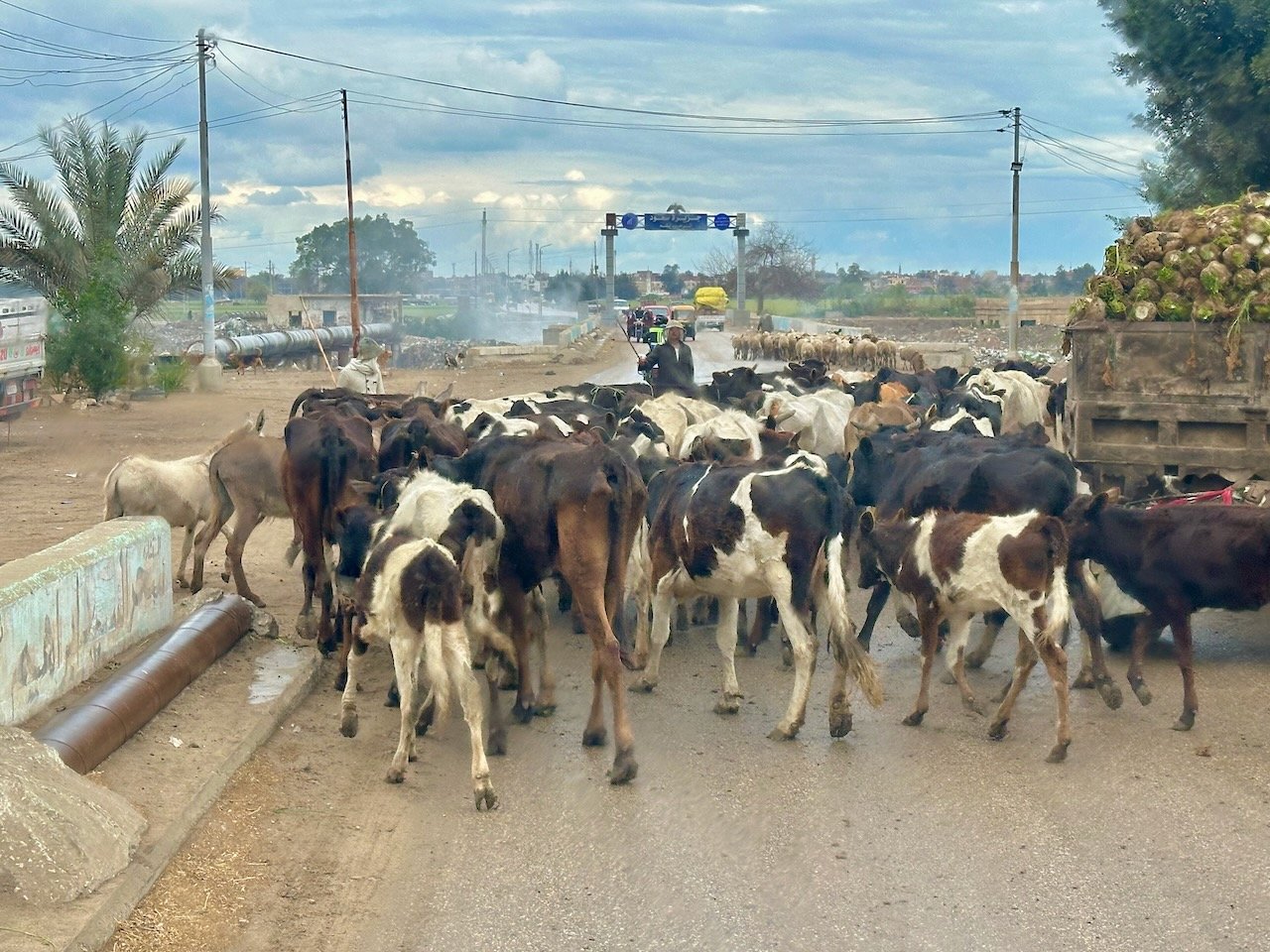
Today was day 10 and the last full day of this 11 day biblical Egypt tour. We traveled by bus to the NE corner of the Delta and to the “land of Goshen.” We visited a site not visited by many groups at all! We even had a police escort (in front and in back) as we bussed through small villages and past the fields of Goshen. We actually had a few sprinkles of rain on the way, but it all dried out once we arrived. The temps were again in the 60s. We read from Psalm 78 (that mentions Zoan, the biblical name for Tanis) as we left at 7:10 a.m.
Tanis & the Land of Goshen
The traffic going north out of Cairo wasn’t too bad this morning. With a motorcycle policeman leading the way, we went through small villages once we got off the main highway that goes further north to Alexandria. This was the “land of Goshen” in biblical times. Joseph was brought close to here (to a site only about 12 miles south of Tanis called Avaris). He became the vizier (“prime minister” status) in Egypt. For the next 225 years or so, the Israelites lived in this region. Oppression began with the “pharaoh who did not know Joseph.” This led the way to the birth of Moses, and his upbringing during the New Kingdom. It was Moses who led the Exodus through the Yam Suph in Hebrew (“Sea of Reeds”) and into the desert of the the Sinai. The crossing most likely took place east and south of Tanis (i.e. the northern tip of the Gulf of Suez today), although others may suggest a different location for the crossing and desert wanderings.
In the Bible, Tanis (the Greek name) is mentioned as “Zoan.” Not only does Zoan appear in Psalm 78:12, but also Numbers 13:22 (which interestingly tells us that “Hebron was built only seven years before Joan in Egypt.”). Isaiah 19:11 also mentions Zoan. In this passage the “pharaoh’s wise counselors” are defined by being “fools.”
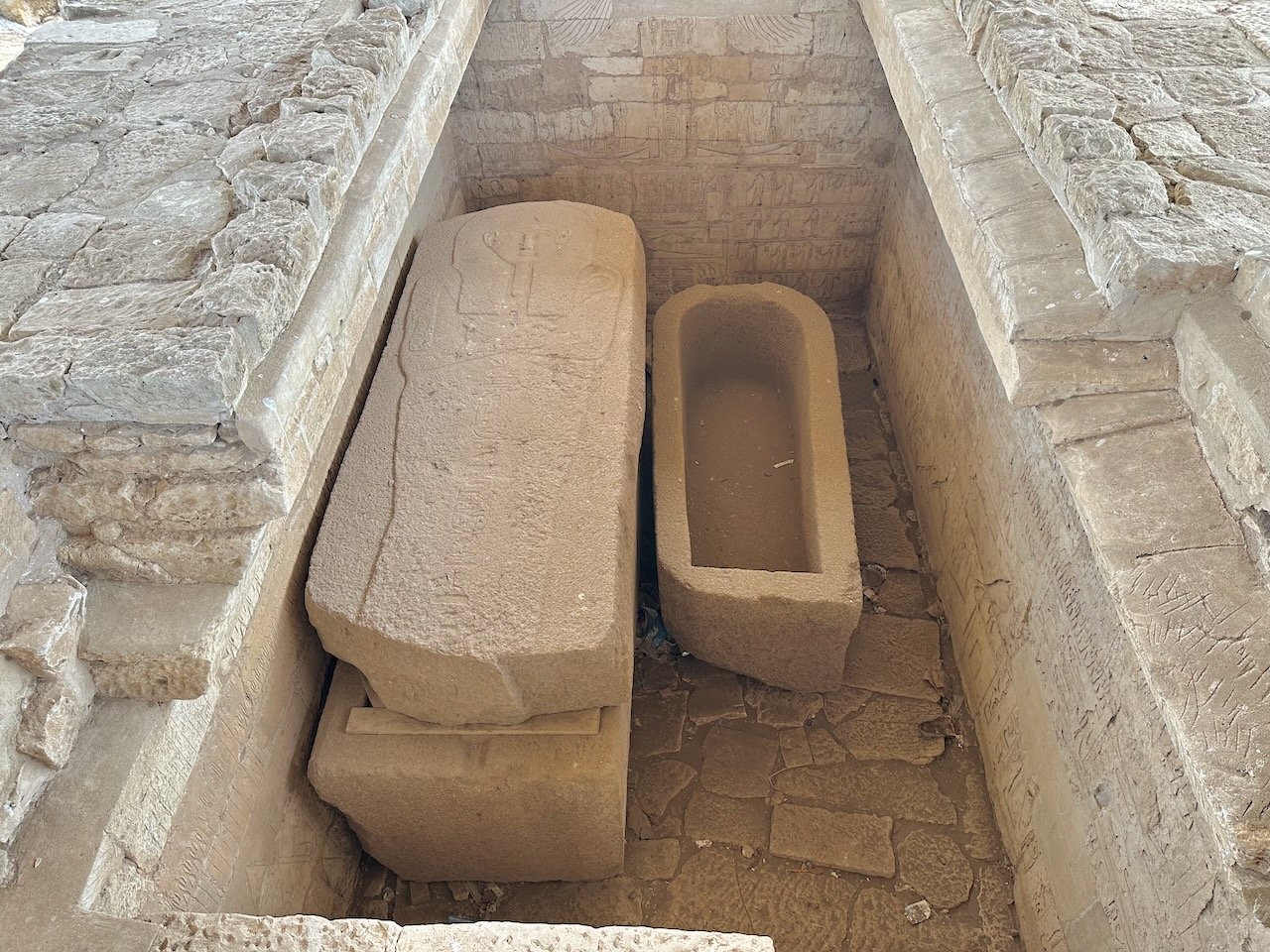
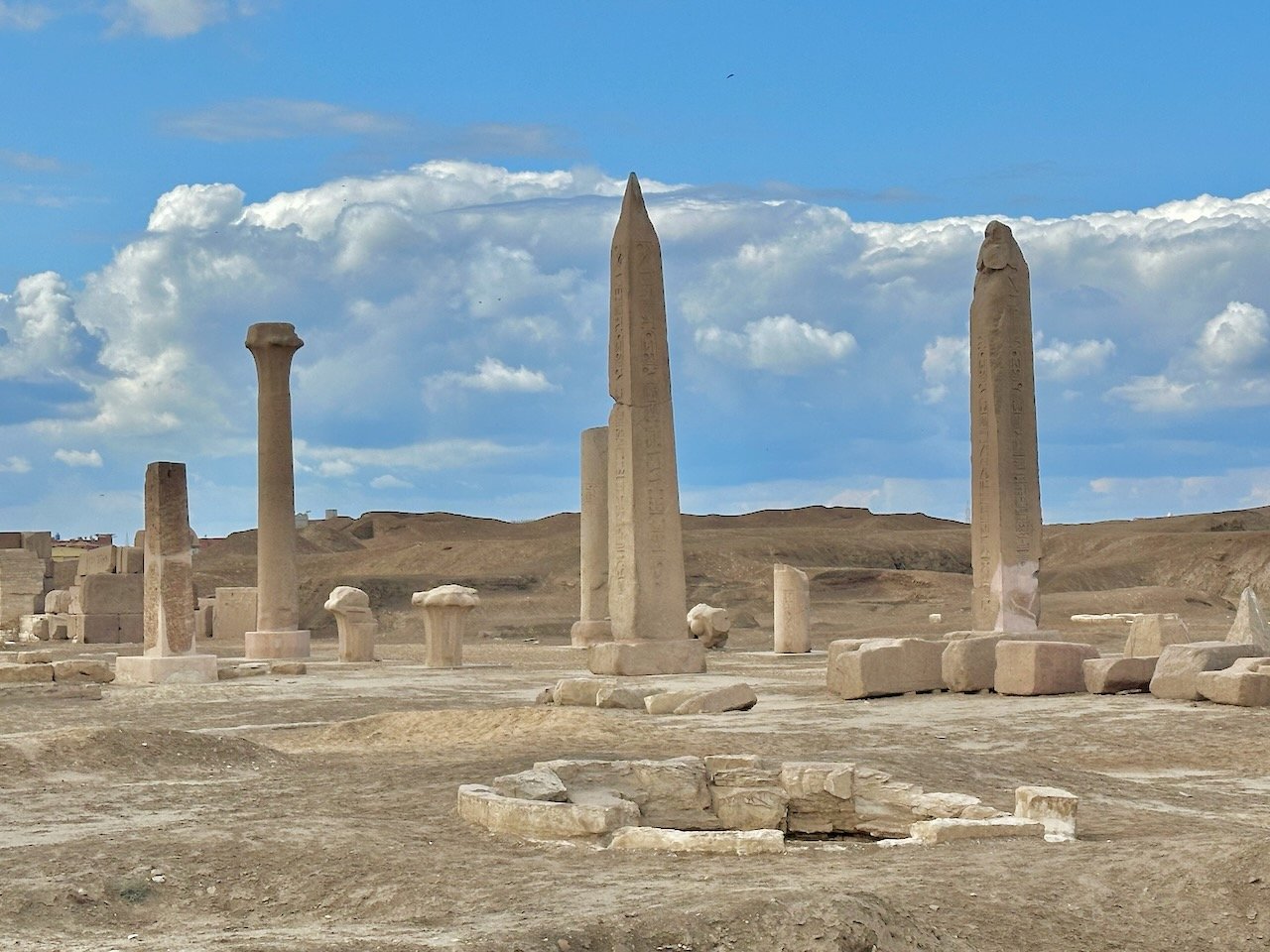
The archaeological site of Tanis provided us a great opportunity to connect on this last day with the biblical history between Joseph and Moses. However, there are other connections too (with Osorkon mentioned in 2 Kings 17:3-4 and Hosea 7:11. He is mentioned as simply “So” in the Bible, and is probably Osorkon III). Also the tomb of Shoshenq III is here at Tanis. It has been suggested the Soshenq I may have been the “Shishak” of the Bible.
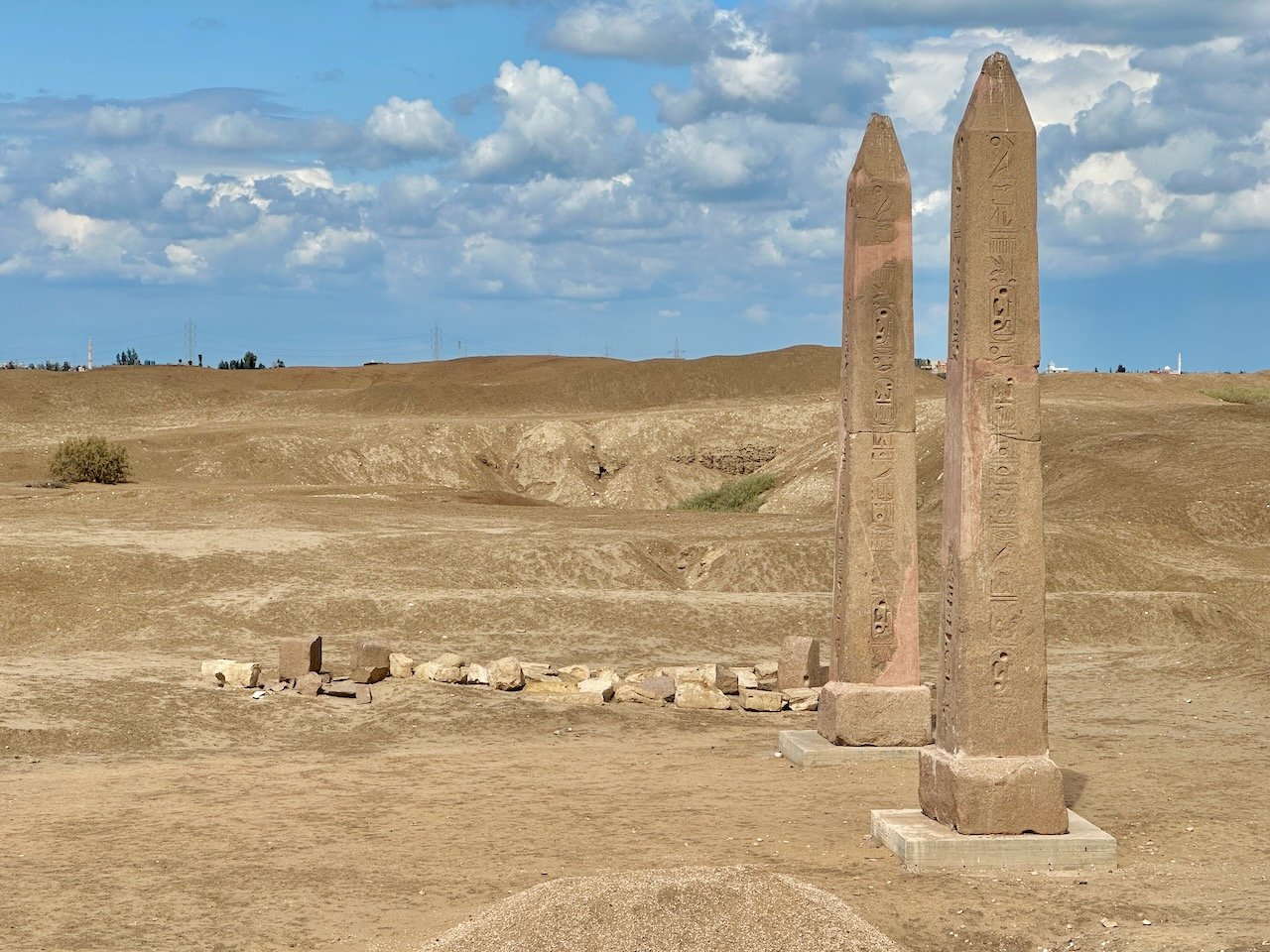
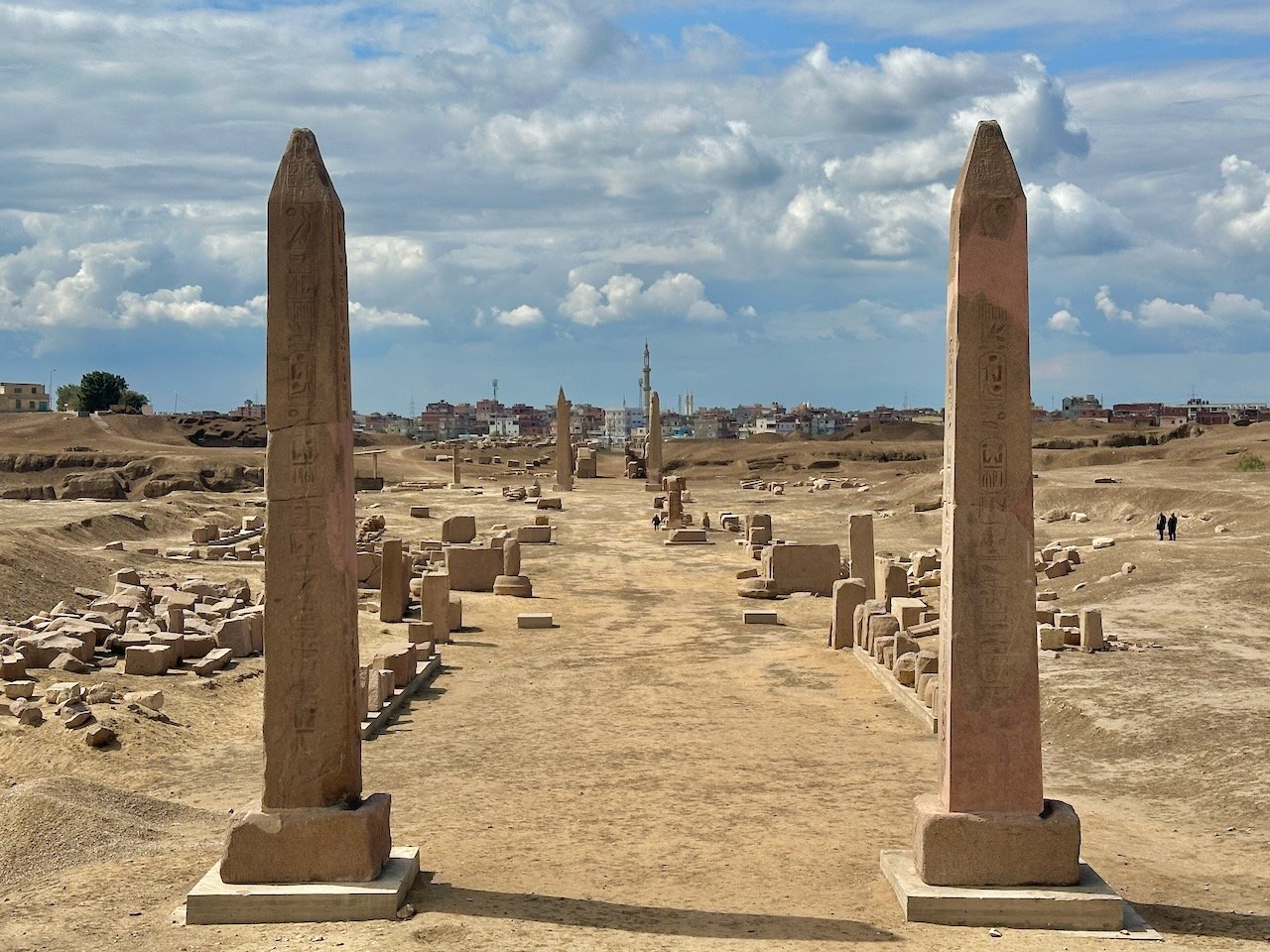
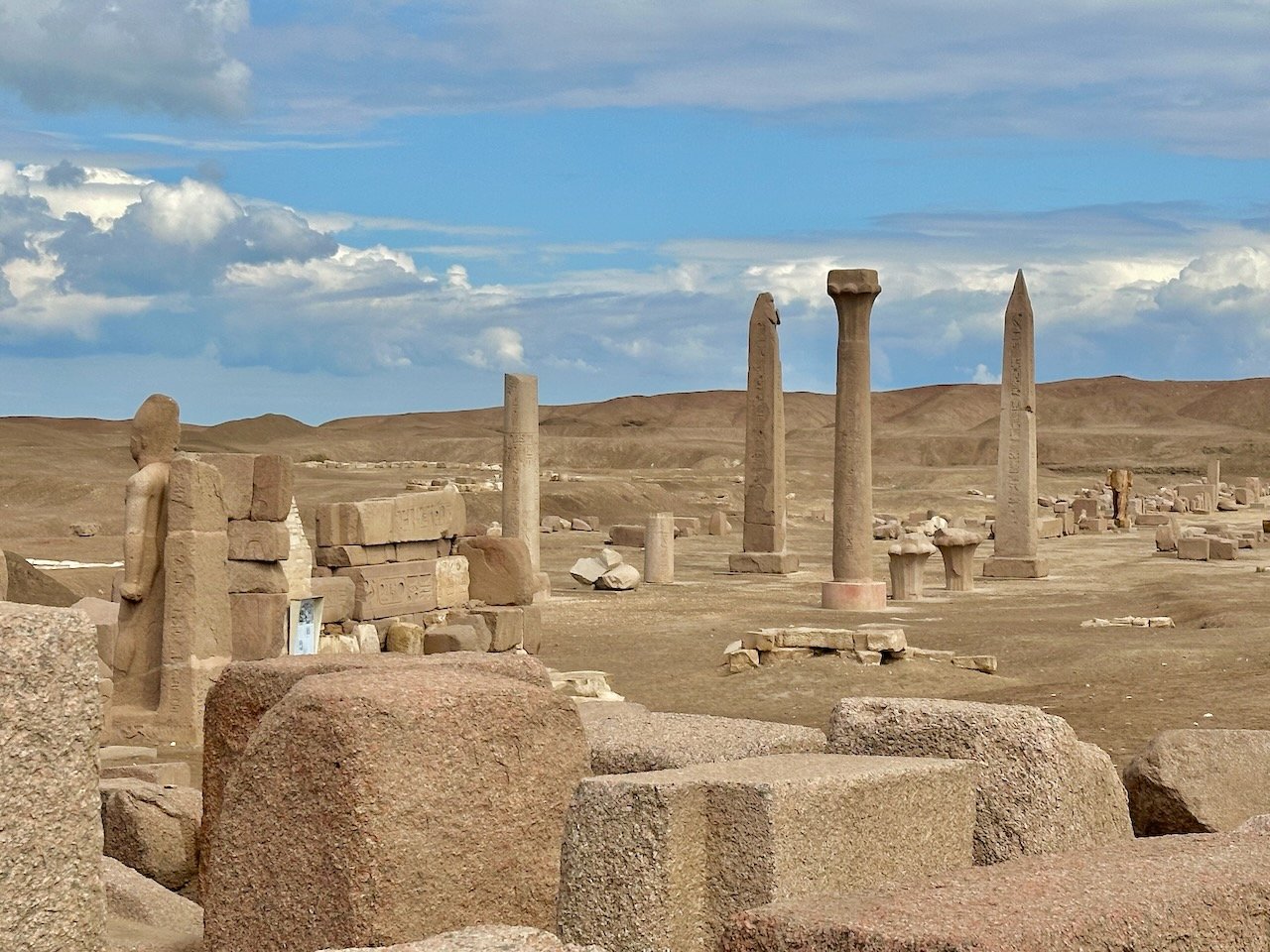
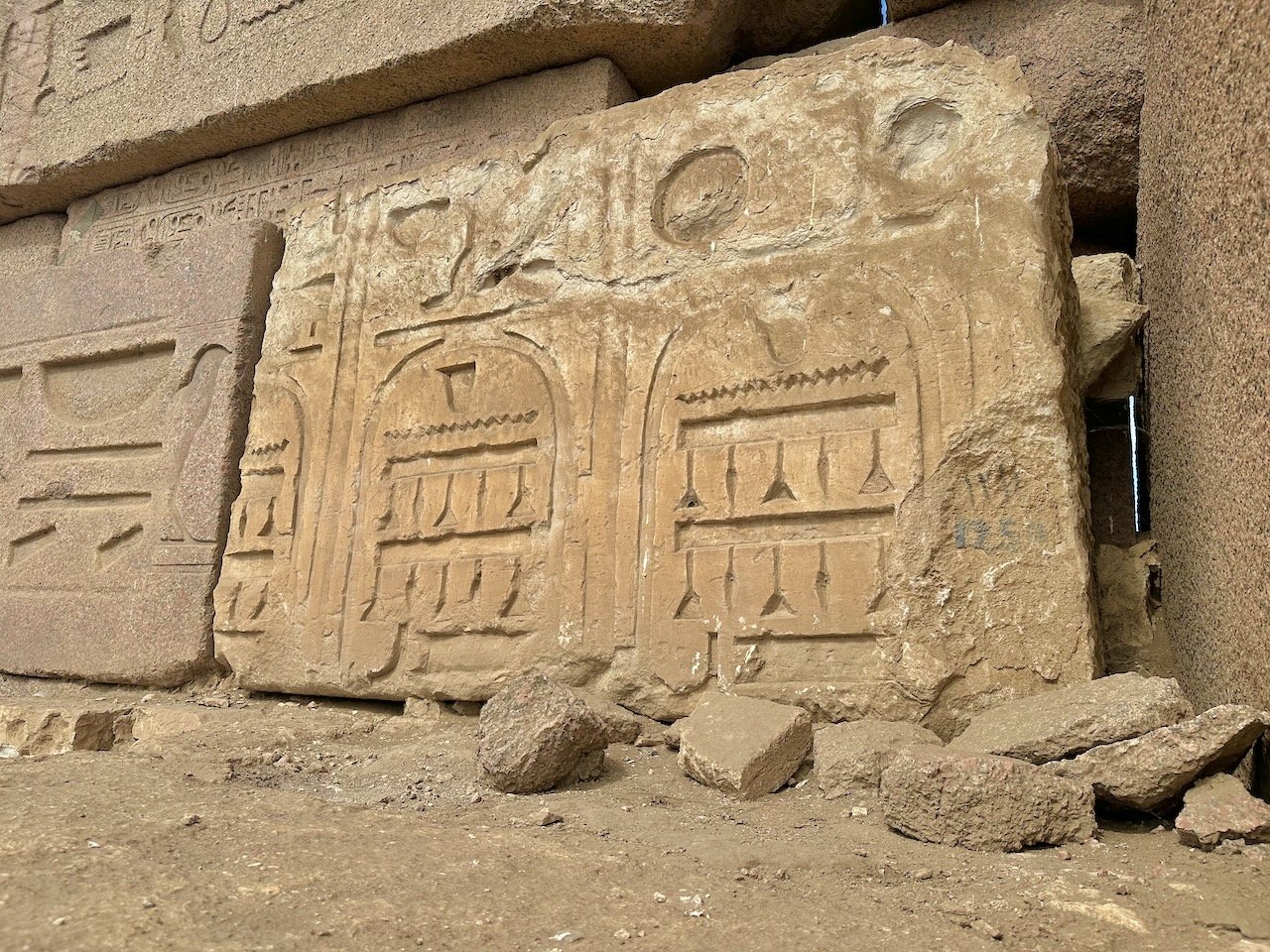
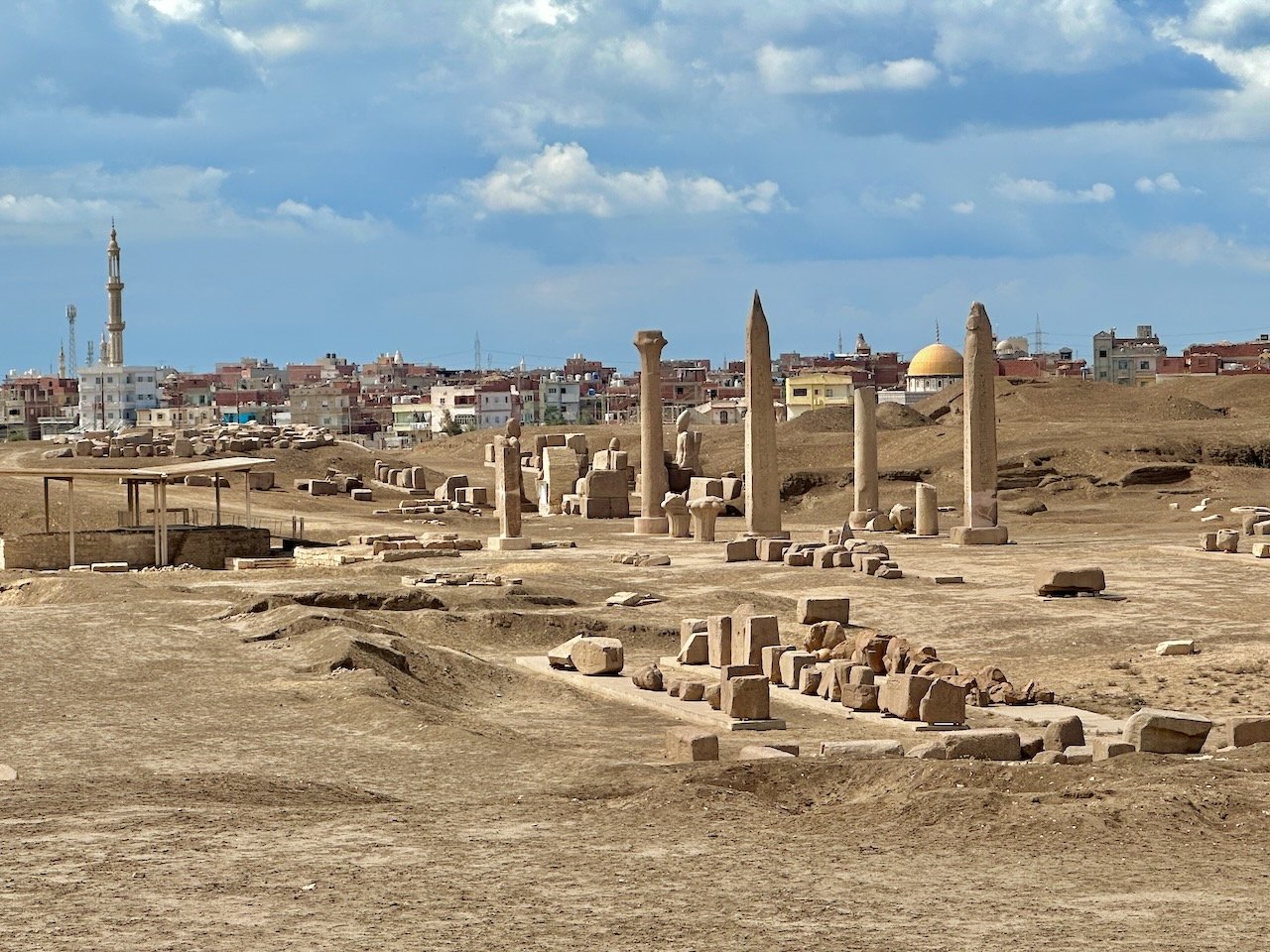
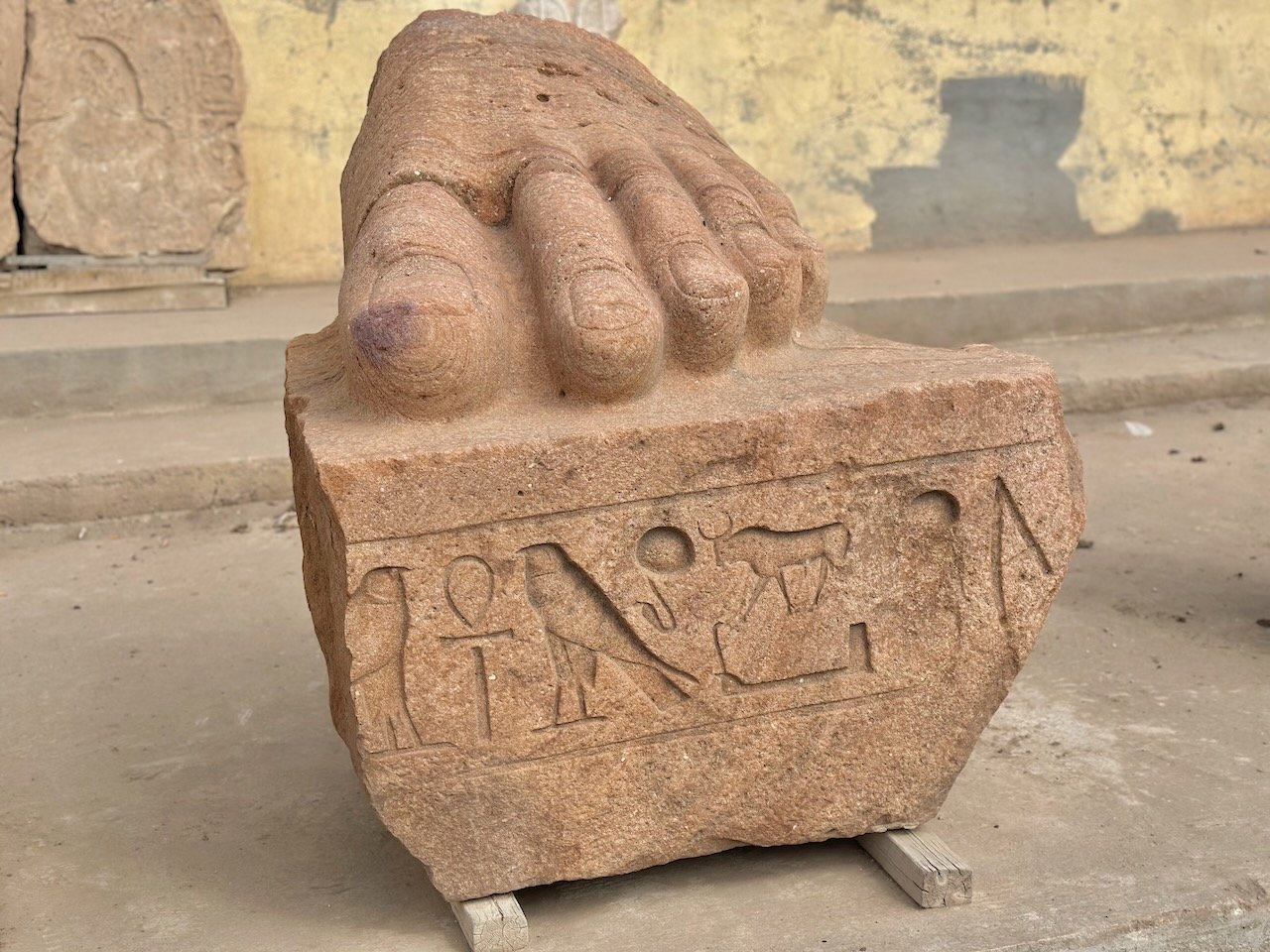
It took about an hour to visit the site. We saw standing obelisks, hieroglyphics that mention the names of pharaohs like Shoshenq and Siamun (according to conventional chronology, it has been suggested that he was the pharaoh who conquered Gezer and then gave it to his daughter, Solomon’s wife (see 1 Kings 9). There is pottery all over, mud bricks, and massive cut stones on the surface. There was even a relief of Egyptian god Seth here.
Only a tiny fraction of the site has been touched archaeologically! The site is about 200 hectares in size (each hectare is about 2.5 acres, so the size is about 500 acres, give or take!).
After our visit, we drove straight back to our hotel in Cairo. Let’s just say the traffic was amazingly slow in some places. However, our drivers did a great job maneuvering! We enjoyed our last dinner together at 6 p.m. Many fly home in the early morning hours tomorrow.
What a great group God brought together. Special thanks to Pastor Trinity and Nate and their groups. We blended so well together, with new bonding friendships over these last 10 days! Praise God for His provision.
One last word to conclude this day and this entire tour, and perhaps a “life lesson” from Egypt to remember:
It is God who is the only true God. All the gods and goddesses that we learned about are just pagan figures and images. God is the Lord of all! As the ancient Israelites witnessed the miraculous and providing hand of God throughout their history here in Egypt (some of it very difficult), we do ourselves still today! As God instructed Moses to say to his fellow Israelites, “I am the Lord, and I will bring you out from under the yoke of the Egyptians…” (Exodus 6), we are thankful that God’s redemptive history pushed forward through the Passover and on to Jesus Christ who fulfilled the Passover and make salvation available to us all! Jesus went to the cross as our Passover Lamb, allowing us to “make exodus” from our bondage to sin, and freeing us through the forgiveness of our sins! Everything we saw and experience here in Egypt ultimately points us to Christ, our Lord and Savior! Amen!
This word closes out what was a wonderful tour with an amazing group! Praise God!
Day 11 – Tuesday, March 3: Departure Back to the U.S.
Today most of us (there were a few exceptions) flew home back to States. Others will also make their flights home. It was a great trip, with God’s favor behind us the entire time. While the only disappointment was that the wind was from the wrong direction to allow us to enjoy the hot-air balloon ride in Luxor, everything else went well. Only a few experienced sickness (no doubt from food that didn’t sit well). Praise God for the great trip!
Egypt’s Tombs of the Pharaohs
A highlight of this trip will be to walk into some of the Tombs of the Pharaohs in the Valley of the Kings. This tomb belonged to Ramses III. The colors and details are so well preserved!
This video is in 360 format too! So you can move it around and look at in any direction you want! All of ancient Egypt is a marvel to see!