
Trip Experiences for our 11 Day Israel Tour – June 2024 (& Shiloh Dig option)
June 6-16, 2024
Downloads:

"Life transforming Israel tours & teaching in the context of the land of the Bible"
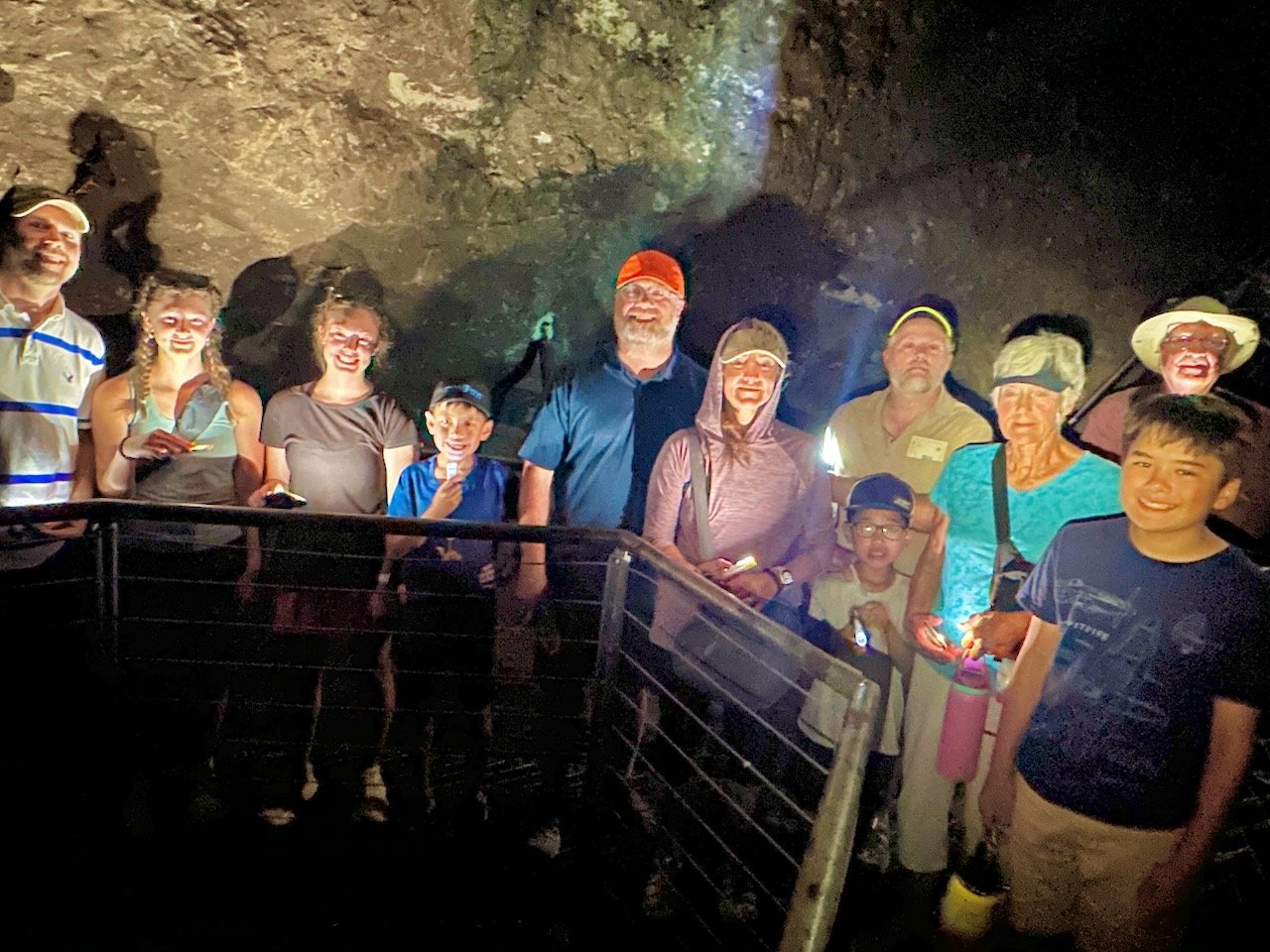
Group Photos




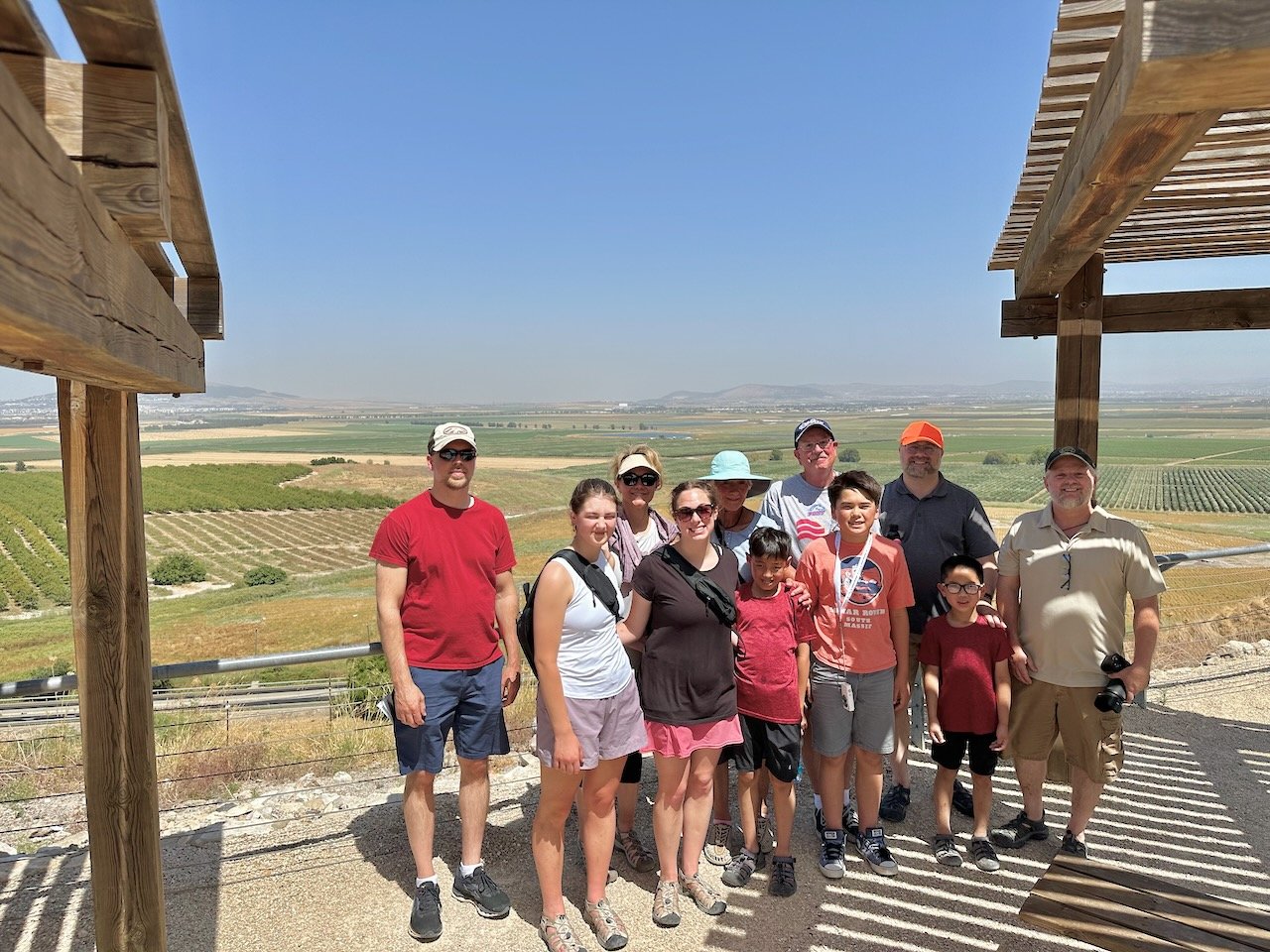
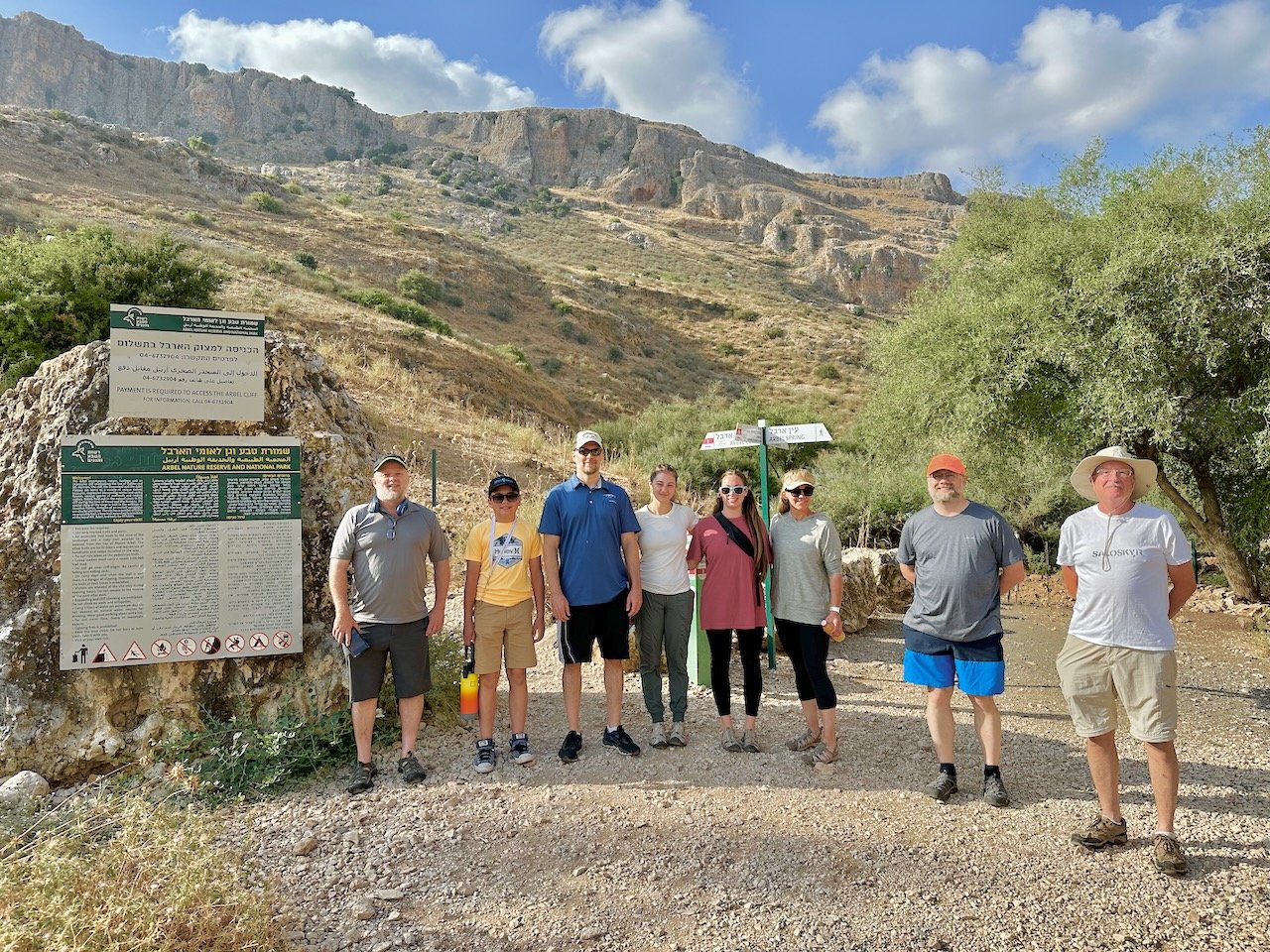
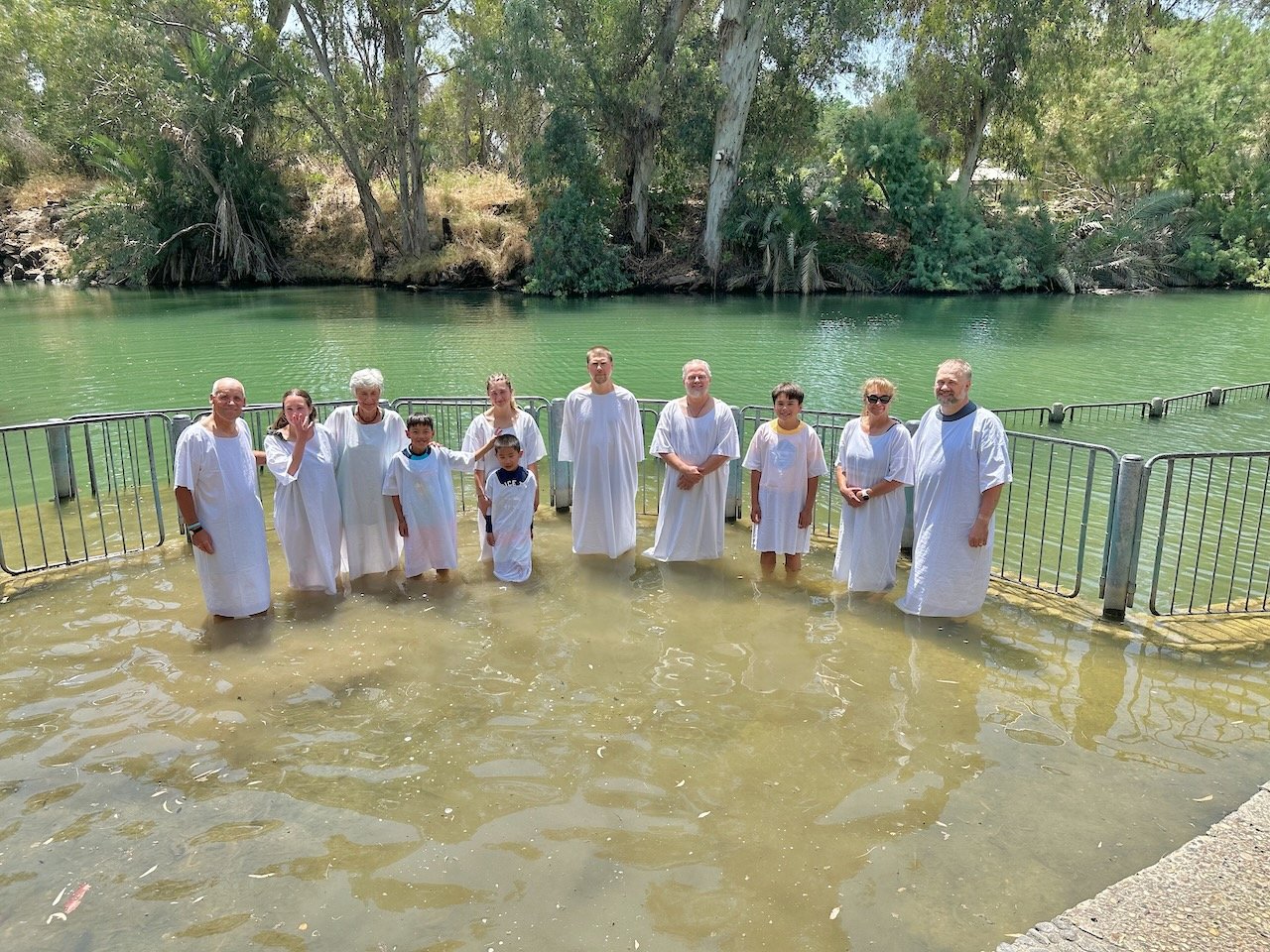
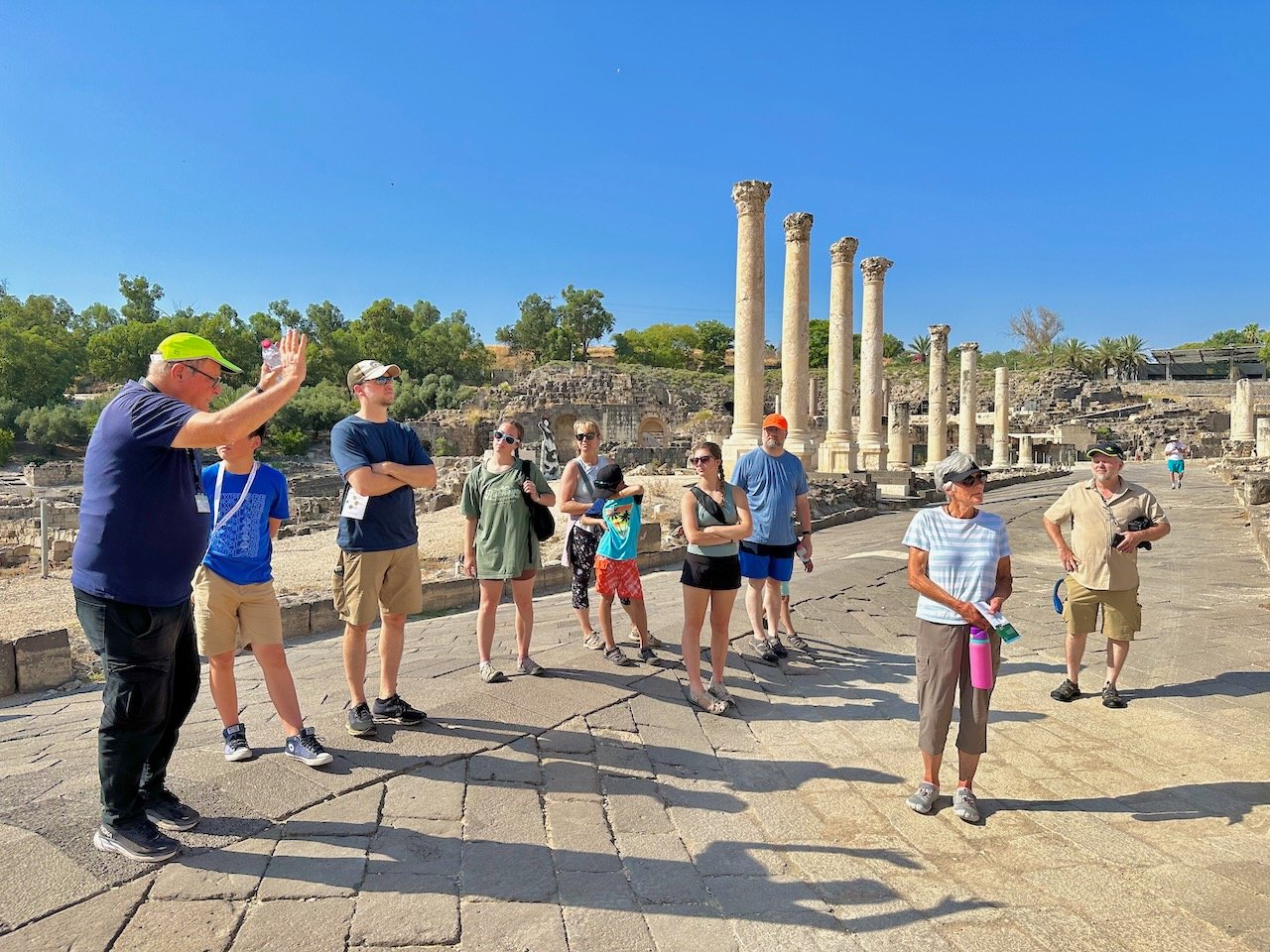


360 Photos
Israel Tour Program:
Dig Days 1-5 (Monday – Friday, June 3-7)
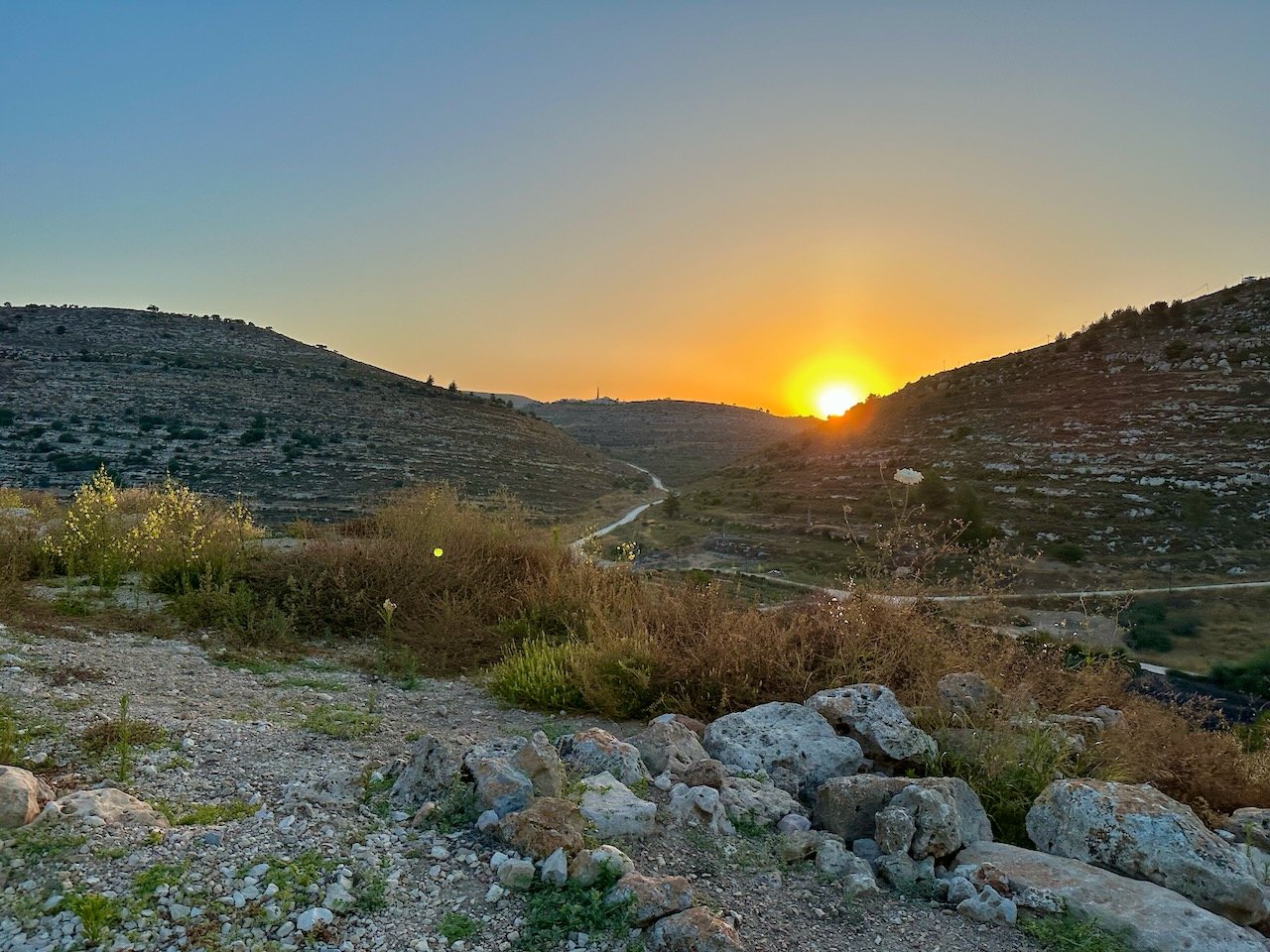
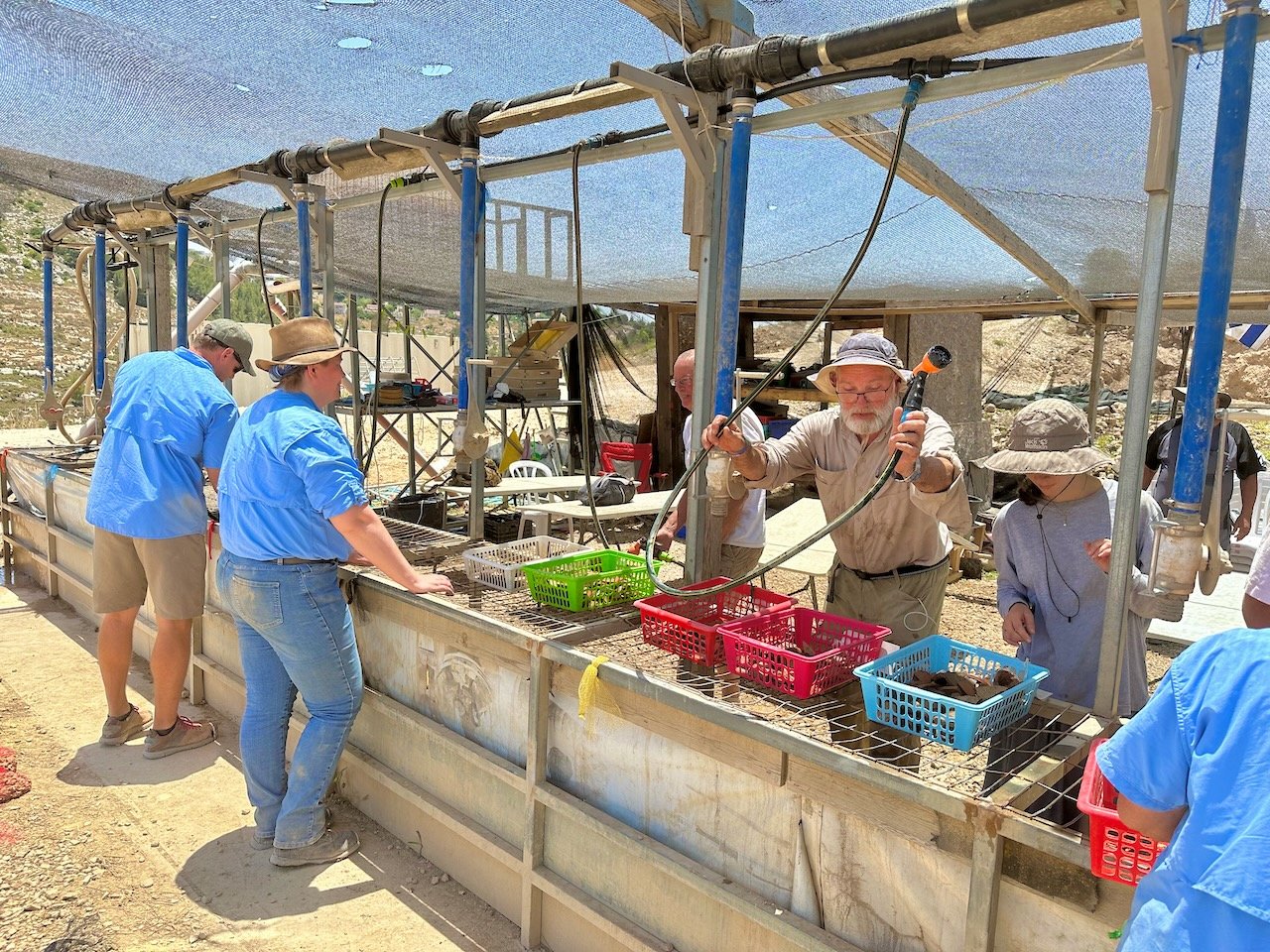
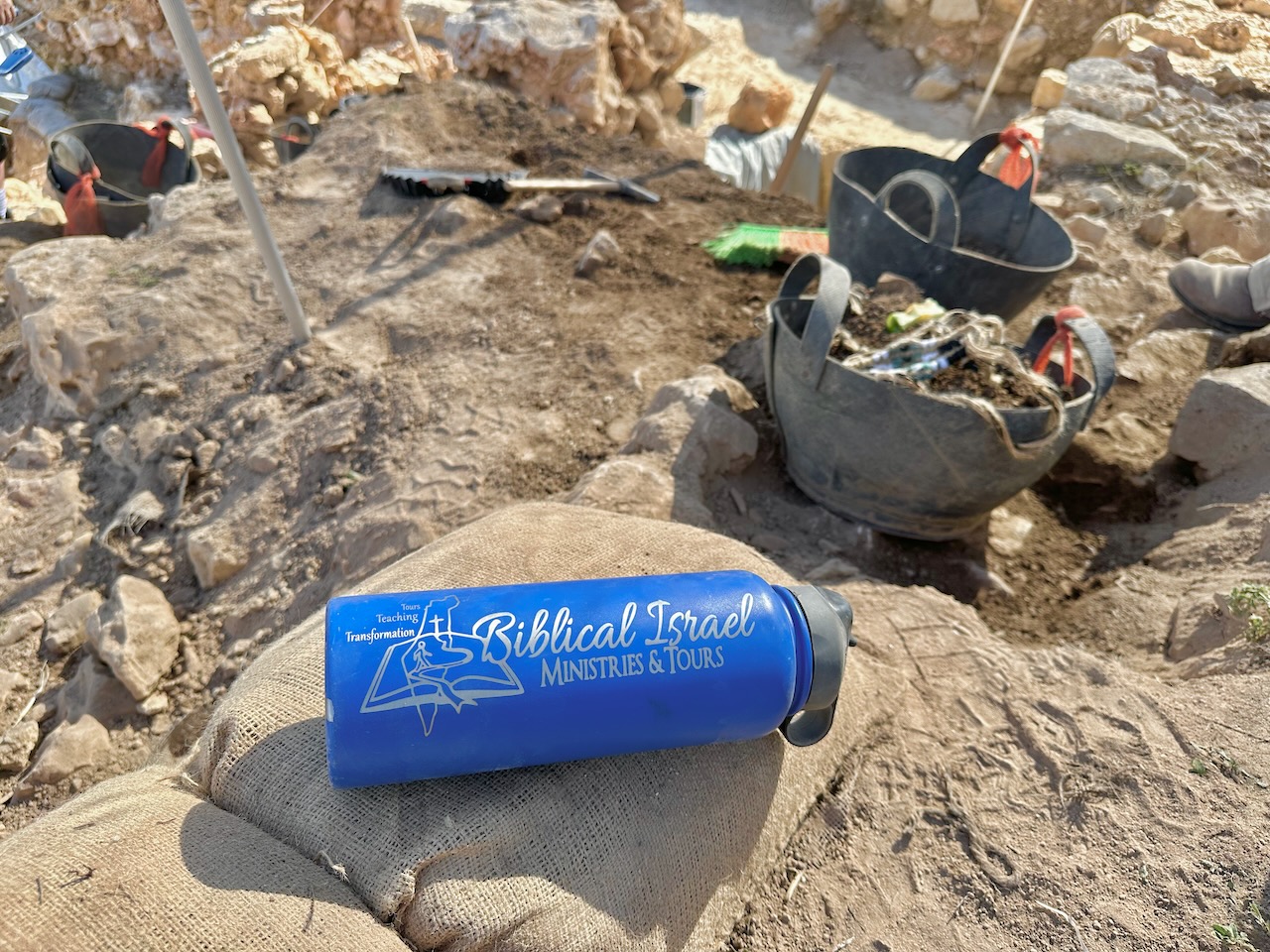
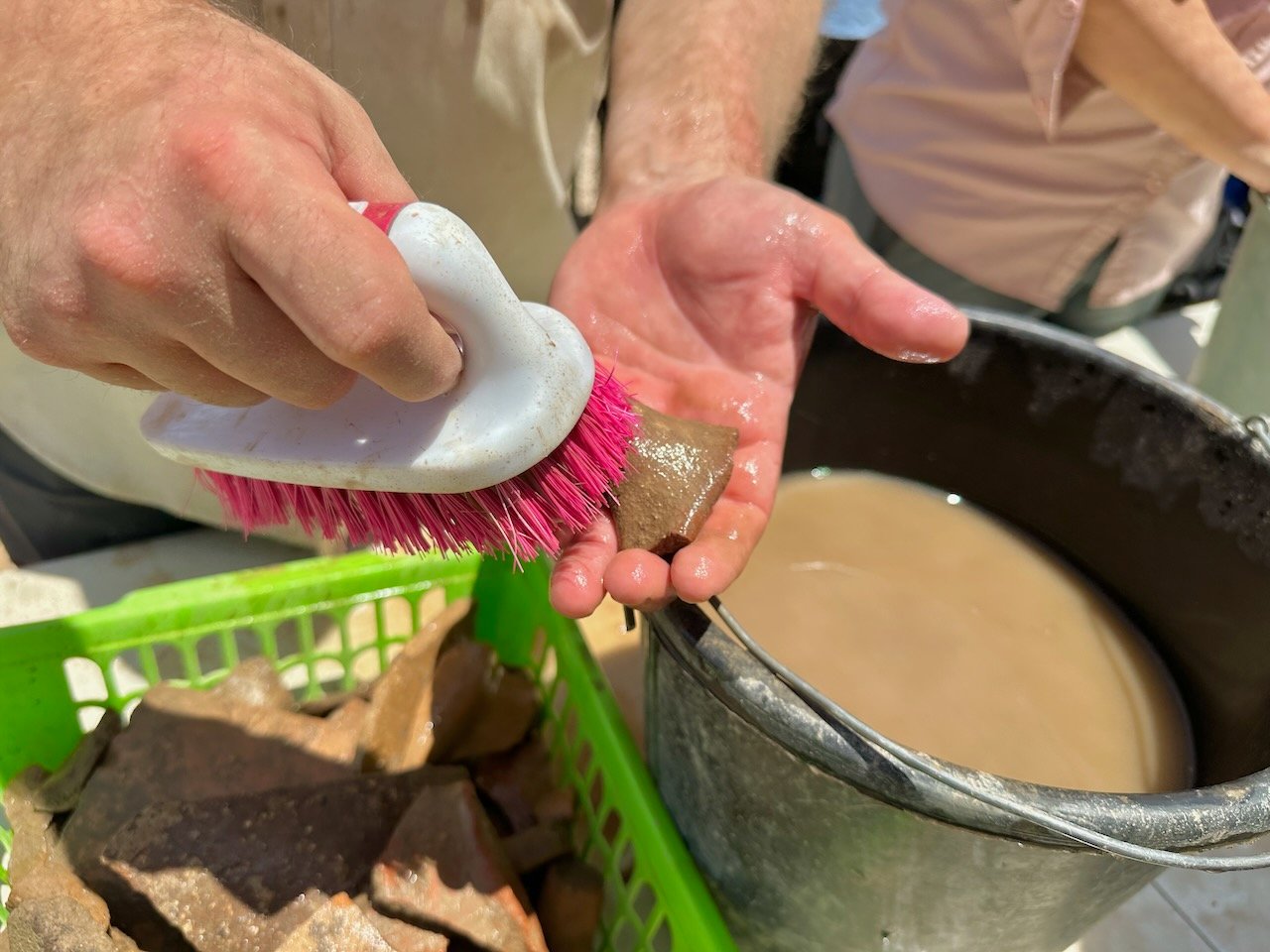
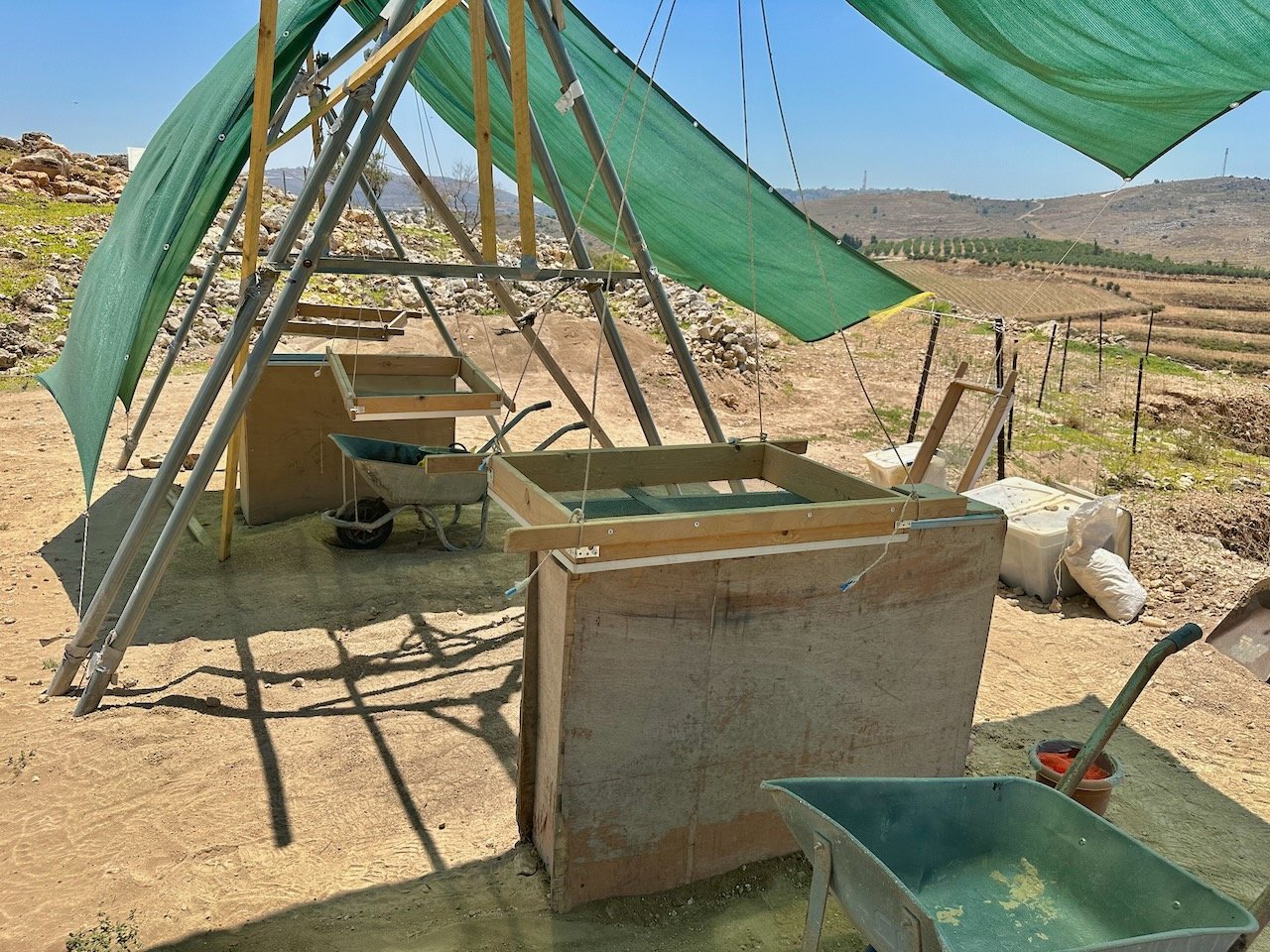
Three of us (Dr. John, Paul, and Erik) enjoyed a week of digging at Shiloh. It was a great experience with a great team. We dug from Monday through Friday. Each morning we left the hotel at 5 a.m., and returned between 1:30 and 2:45, depending on the day. Shiloh was an ancient site where the Tabernacle once stood for over 300 years. It was exciting to be part of uncovering this important biblical city.
Days 1 & 2 – Thursday – Friday, June 6-7: Depart U.S., Arrive in Israel, Tel Aviv, Netanya
For most in the group, today was departure day for Israel. The flight was long, but everyone arrived at the Ben Gurion Airport in Tel Aviv just fine. We were met by Shlomo (our guide) and David (our driver). Also, the three who dug at Shiloh (Dr. John, Erik, and Paul) were waiting at the airport as well (they came directly from the dig Friday afternoon).
We drove to our hotel in Netanya. After checking in, we enjoyed an amazing Shabbat Dinner. Following this great meal, many walked down to the beach of the Mediterranean Sea. We are all looking forward to our first full day tomorrow.


Day 3 – Saturday, June 8: Caesarea, Megiddo, Beth Shean, Mt. Gilboa, Precipice of Nazareth, Tiberias
Today was our first full day here in Israel and a great start to our trip. Our group size is only a total of 12, making it ideal for traveling. We already enjoyed new friendships! Already on this first full day, we have made many biblical connections all day long. We had a bright and hot sun all day long, with high temps around 100.. It really wasn’t that bad in the shade! We read from Psalm 44 and 106 as we left the hotel at 7:30.
Caesarea
Our first stop here in the Sharon Plain was Caesarea. This was an impressive coastal city built by Herod the Great over a 12 year period (22-10 BC). In the theater we read from Acts 8 (Phillip), 9 (Paul), 10 (Peter), Acts 12 (Agrippa 1), Acts 21 (Philip), and Acts 26 (Paul). From here we walked across the city to see the palace, hippodrome, the location of the grand harbor, and the Crusader gate, wall, and mote. We also saw an impressive porphyry (purple) statue, probably that of Hadrian. Before we left the site, we saw the aqueduct that brought water into the city.
Mt. Carmel
Our second destination of the day was to Mt. Carmel, a mountain range overlooking the Jezreel Valley on one side and the Mediterranean Sea on the other. Here we visited a Carmelite chapel called Muhraha. We enjoyed a wonderful view of there Jezreel Valley below. Here we could see Mt. Gilboa (1 Samuel 31), the Hill of Moreh (Judges 6-7, 2 Kings 4), Mt. Tabor (Judges 4-5), and Nazareth (Luke 1,4). We read passages such as Isaiah 35, Amos 1 & 9, 2 Kings 4, Songs of Songs 7, and 1 Kings 18 that reference Mt. Carmel. This last narrative captures the confrontation that took place between Elijah and the prophets of Baal! Nearby we ate lunch at a Druze restaurant.
Megiddo
Located along the edge of the Jezreel Valley is Megiddo. This archaeological site was about 25 layers of occupation spanning a period of about 2,500 years! It was a Canaanite and Israelite city. Pharaohs like Thutmose III conquered it in 1468 BC. Climbing the site, we saw 3 series of city gates, Solomon’s stables and palace, a sacrificial altar from the Early Bronze Period, and a grain silo. We also had a great view of the Jezreel Valley referred to as the Valley of Armageddon in Revelation 16. In the end, God wins when Jesus returns! Lastly, we walked to the top of the water system that was engineered to bring water safely inside the walls of the city. Unfortunately it was closed because of safety concerns for rock slides.
Tel Jezreel & Mt. Gilboa
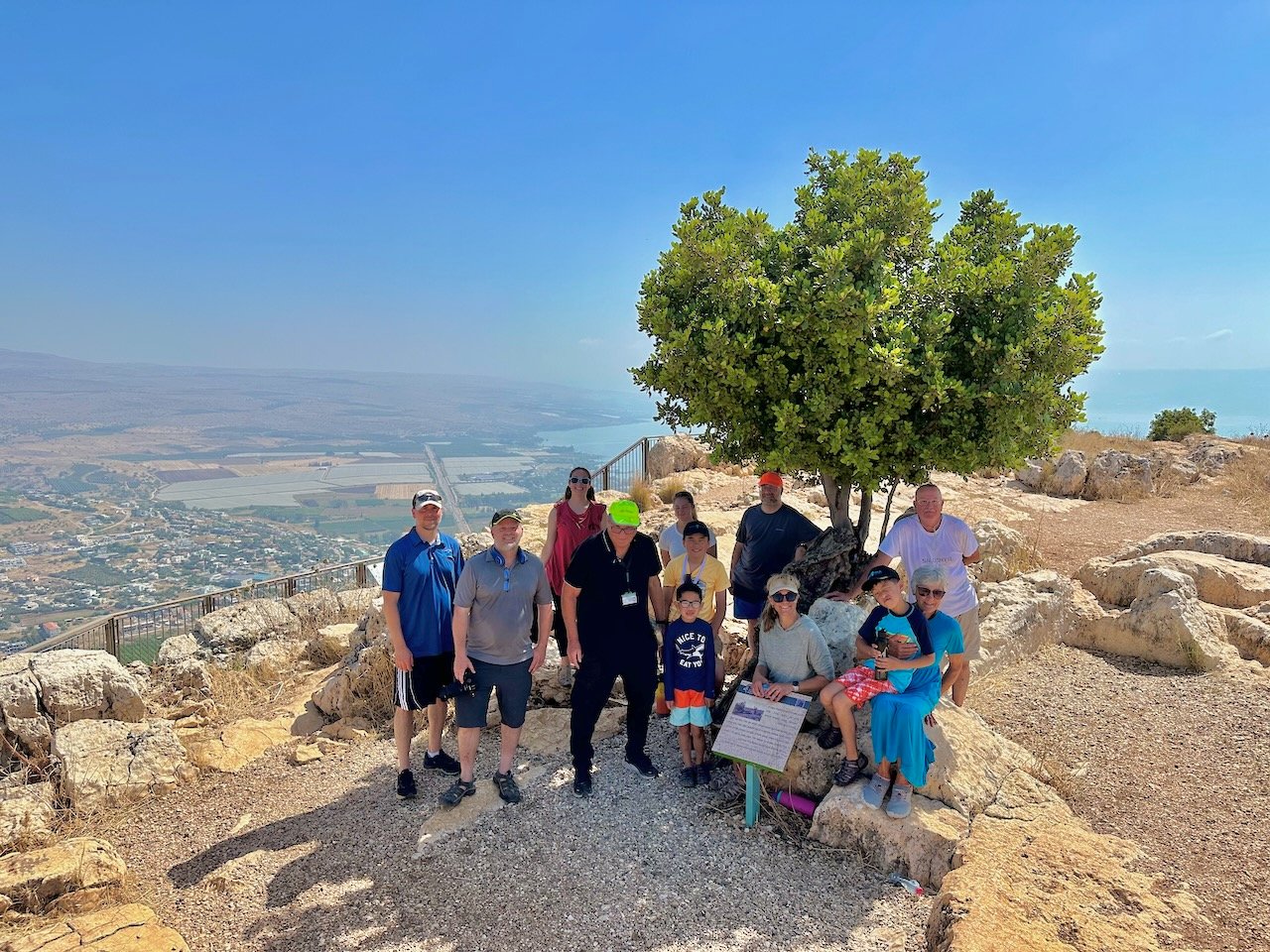
Further east is Tel Jezreel. Since there is really not much to see archaeologically here, we simply passed by the site as we referenced 1 Kings 21 and 2 Kings 8-9. These stories reference Naboth (who had a vineyard), Joram, Jehu, and Jezebel. High up on the slopes of the Gilboa Range nearby we walked to a wonderful view of the Harod Valley. Looking east we could see Beth Shean. We read from 1 Chronicles 10 about Saul and his three sons dying on Gilboa. Their bodies were hung on the walls of the town square at Beth Shean.
Precipice of Nazareth
To end the day we drove north across this broad part of the Jezreel Valley to get to the Precipice of Nazareth. The visibility from here of Mt. Tabor, the Hill or Moreh, Gilboa, and Mt. Carmel to the west was impressive! To the east we could see the Hills of Gilead across the Jordan Valley (in Jordan today). We considered the life of Jesus as read from Luke 4 and John 1.
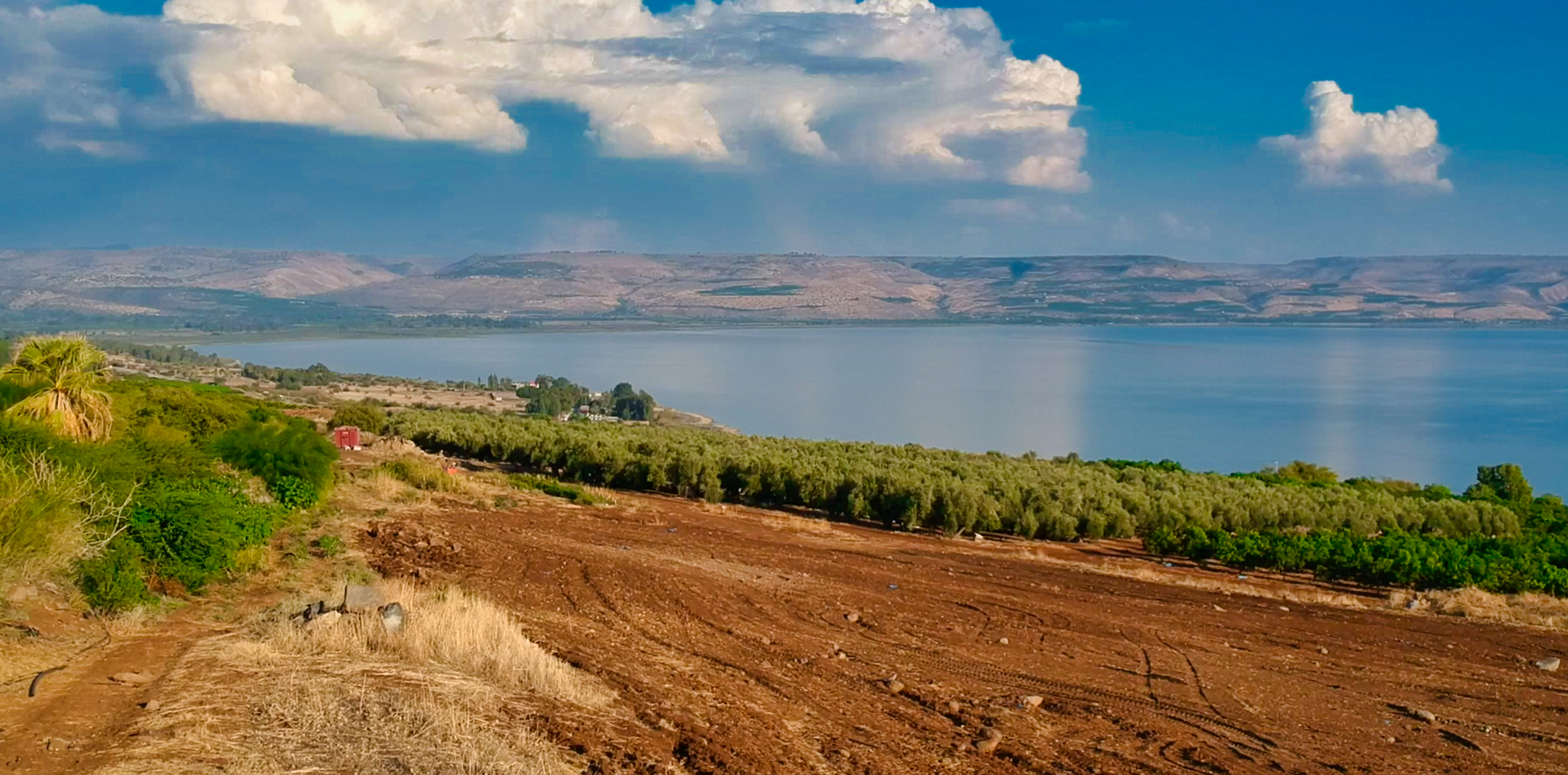
From here we drove to our hotel on the southeastern shores of the Sea of Galilee (Ein Gev). Upon arriving, we enjoyed dinner, a wonderful sunset, and a free rest of the evening. What a great first full day!


Day 4 – Sunday, June 9: Gamla, Qatzrin, Hippos/Sussita, Khirbet Cana
Today was a southern Golan Heights day. Because of the northern conflict with Hezbollah in Lebanon, we could not travel any further than Katzrin for safety reasons. But we substituted other sites for the ones we were not able to see. It was another great day. We even ended the day with an adventurous experience to Cana! The weather was predictably sunny again, with afternoon high temps around 95. We read from Matthew 4 as we left the hotel at 7:30.
Gamla
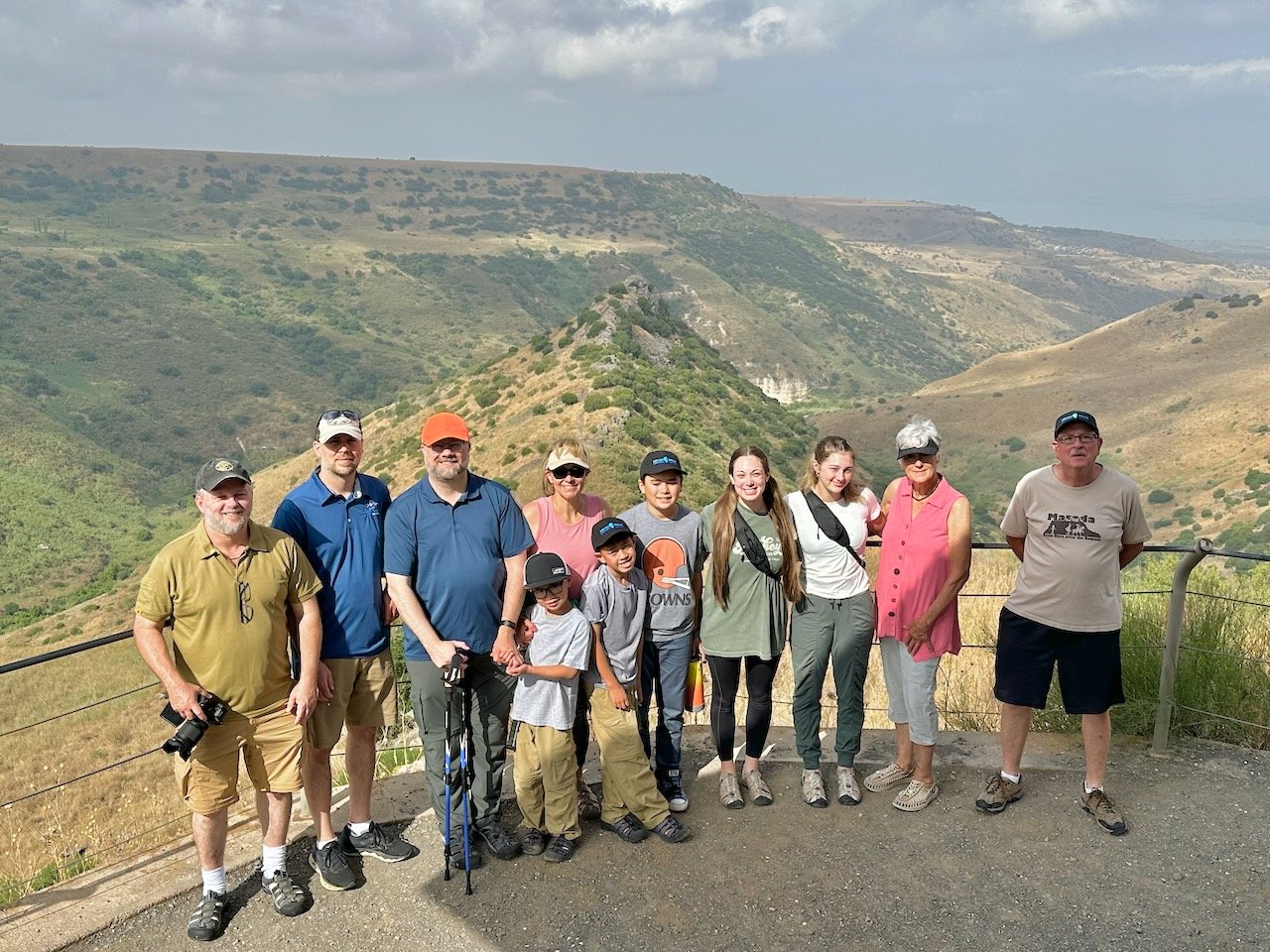
We started the day by driving north on this eastern side of the lake. We ascended into theGolan Heightsand stopped for an overlook of the northern end of the lake and the area of Bethsaida. We read from Mark 8 and Luke 9 about the Feeding of the 5,000 that happened right below us.
We then continuedto Gamla, our first site of the day. Gamla was a Jewish city that played a significant role in the First Revolt (66-67 AD). The Romans came here and defeated the city run 67 AD. Almost everyone in the group walked down (and then back up) the difficult trail to the excavations. We entered the 1st century synagogue where we read from Matthew 9. Even though Gamla is not mentioned in the Gospels, there is a high probability that Jesus taught from this rectangular synagogue!
Katzrin
Following our hike back up Gamla, we drove further north to Katzrin. Here is an ancient Talmudic Village that dates from the 3rd-7th centuries AD. Among the ruins we saw the synagogue and house structures, including a partially-restored house. However, in the completely reconstructed stone house we gathered to hear the story of Mark 2. We could see the story unfolding before our very eyes! Before leaving Katzrin we enjoyed an “extra” stop at the olive oil factory. There has only been a few groups in the last seven months.
Hippos/Sussita
We then turned south on the east side towards Hippos/Sussita. On the way we made a brief stop to see the cliffs mentioned in Mark 5. It is a transformational story of the demoniac. The demon-possessed boar (pigs) ran down this cliff. At the site of Hippos (a Decapolis city), we saw many Roman ruins. During the Byzantine Period (4th-6th centuries AD), there were no less than a half a dozen churches were built here.
Khirbet Cana (Biblical Cana)
To end the day, we drove west towards the Lower Galilee. We then made our way through the Arab city of Arrabe to get us to the northern side of the Beit Netofa Valley. We then took a dirt road to get to Khirbet Cana. When we arrived, we climbed up to the top of this very “off the beaten path” archaeological site. While standing in what was possibly a 1st century synagogue, we remembered the story from John 2 about Jesus turning water into wine here and the story from John 4. We were only the fourth “DeLancey group” to ever to come here. No doubt no other groups come here let alone know where this true site of Cana is located. It was quite an adventure!
About 6 p.m., we began our drive back to our hotel where another great dinner was awaiting for us. We got back at 7:15 p.m. We enjoyed a free evening and a good night’s sleep!


Day 5 – Monday, June 10: Arbel, Yardenit, Magdala, Capernaum, Sea of Galilee Boat Ride
Today was a day of focusing upon the life and ministry of Jesus around (and on) the Sea of Galilee. It was another day full of sun, with high temps in the mid 90s. We read from Matthew 13 (the parable of the kingdom) as we left the hotel following a wonderful breakfast at 7:15 this morning.
Mt. Arbel
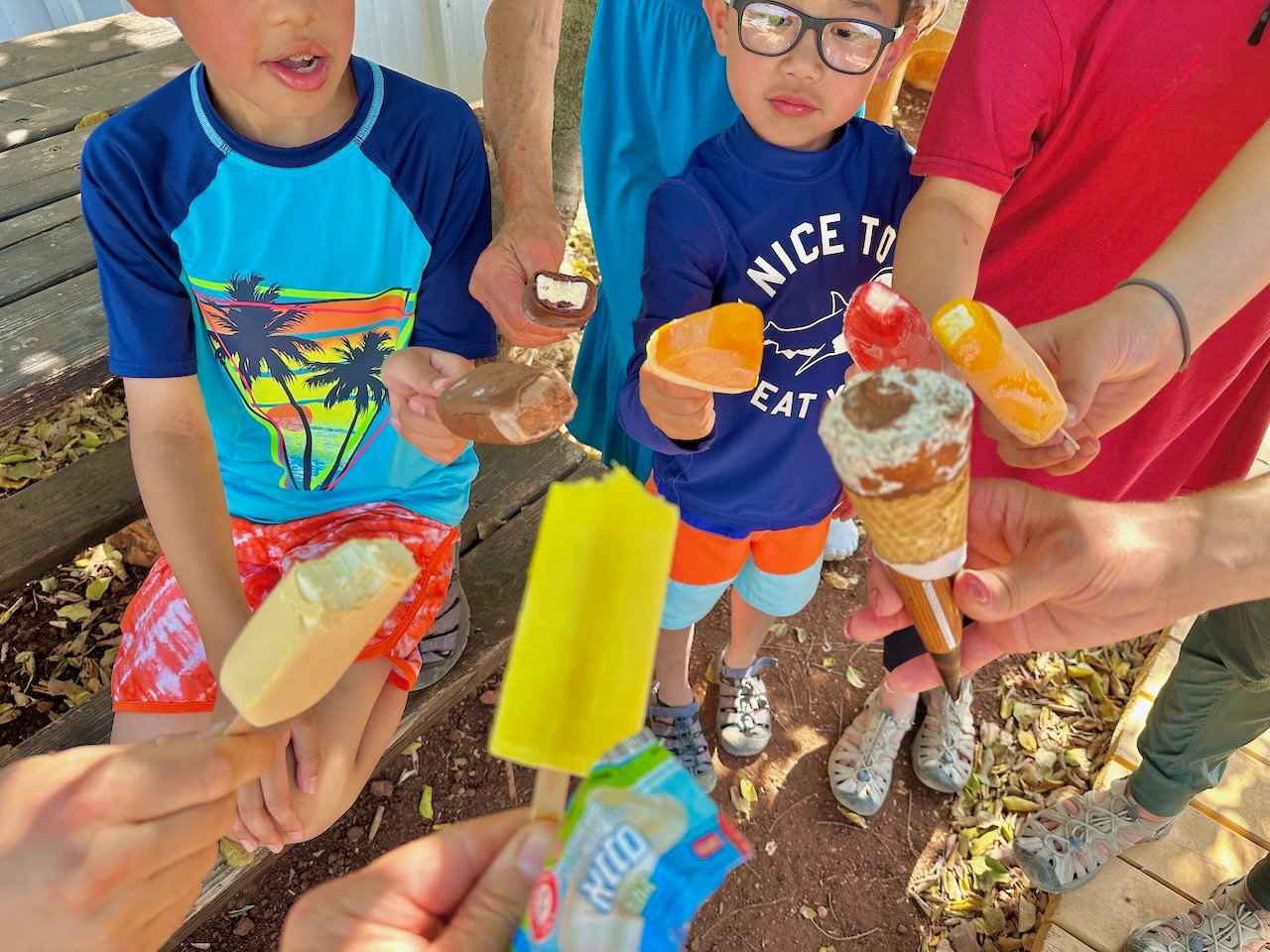
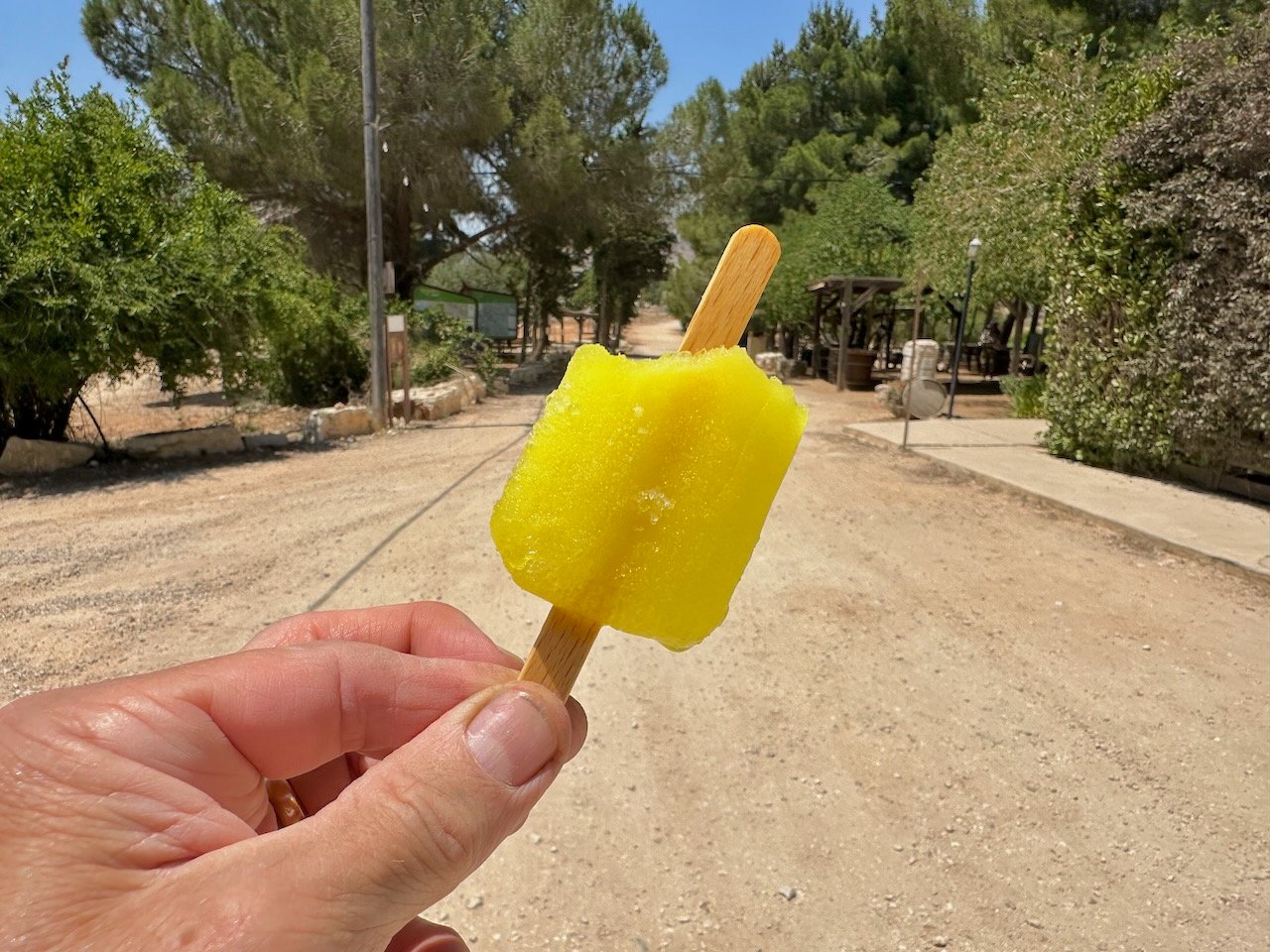
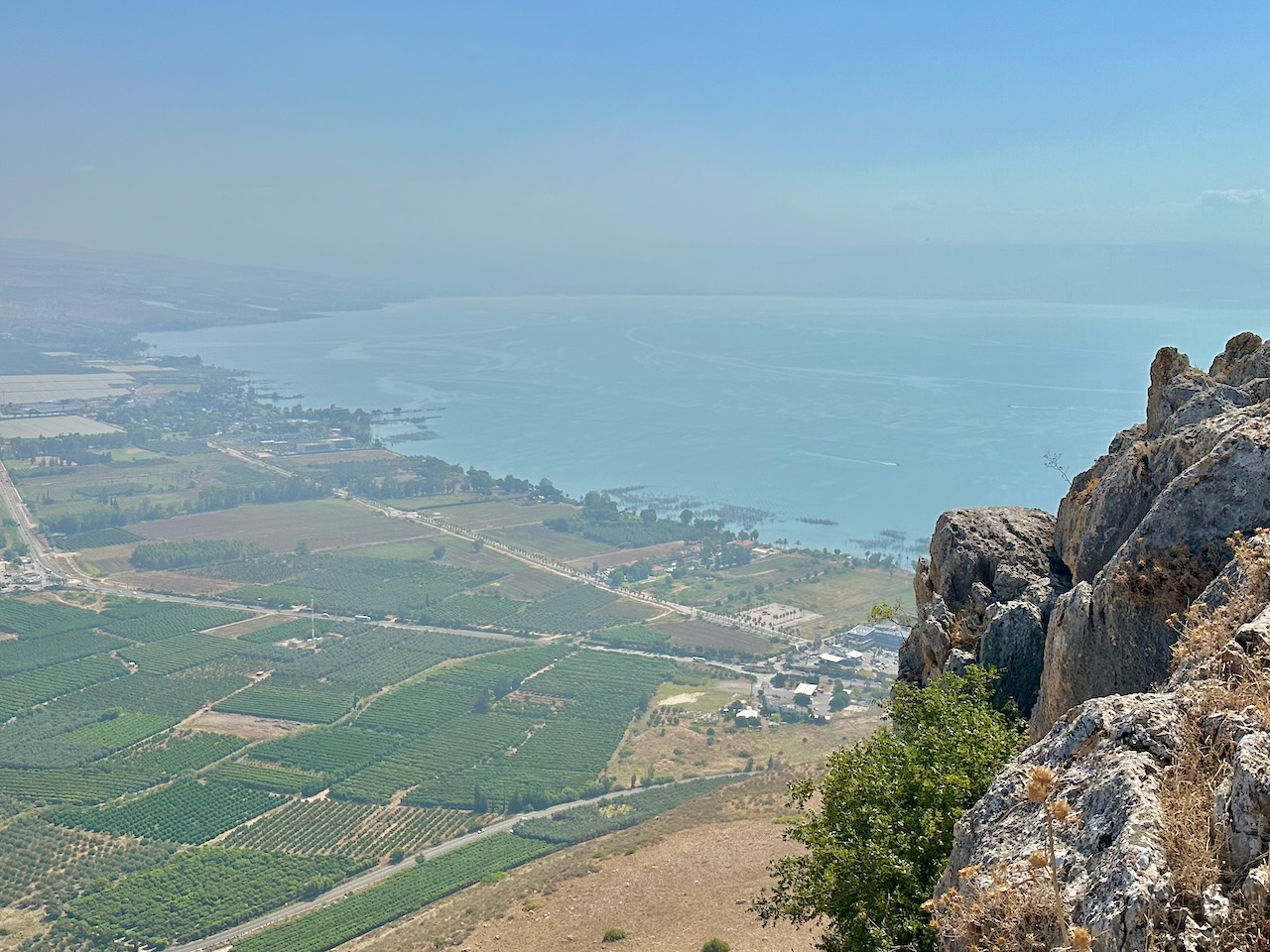
We drove around the north end of the lake to get us to the western side in order to get to the trailhead of our Mt. Arbel hike. Nine in the group made the hike, while three others bused with Shlomo and David through Tiberias to the visitor center. They ascended to the top from there. Despite the summer haze, the view from on top was still amazing. While we cannot be sure (since Arbel is not mentioned in the Gospels, although Josephus mentions Arbela in Antiquities 14.415), maybe this was where the Jesus’ Transfiguration took place (Mt. 17), or where he taught (perhaps on the lower northern slopes) the Sermon on the Mount (Mt. 5-7). It is also very possible that on top of Arbel was where Jesus met His disciples following His resurrection and shared the Great Commission (Mt. 28). Before we ended our gathering on top, Shlomo read the first portion of Matthew 5 (the Beatitudes from the Sermon on the Mount) in Hebrew for us. Back at the visitor center, we were treated to Magnum bars (complements of Amiel, our travel company here in Israel). Thank you Amiel!
Yardenit/Jordan River
From here, we drove directly to the southern end of the lake to Yardenit. A total of 10 in the grouper baptized in the Jordan River. For two of them, this was their first baptism in proclaiming their faith in Christ. The water was warm (unlike the cold water in the winter months). It was a special time for everyone, setting ourselves apart for service in God’s kingdom.
Kinneret Cemetery
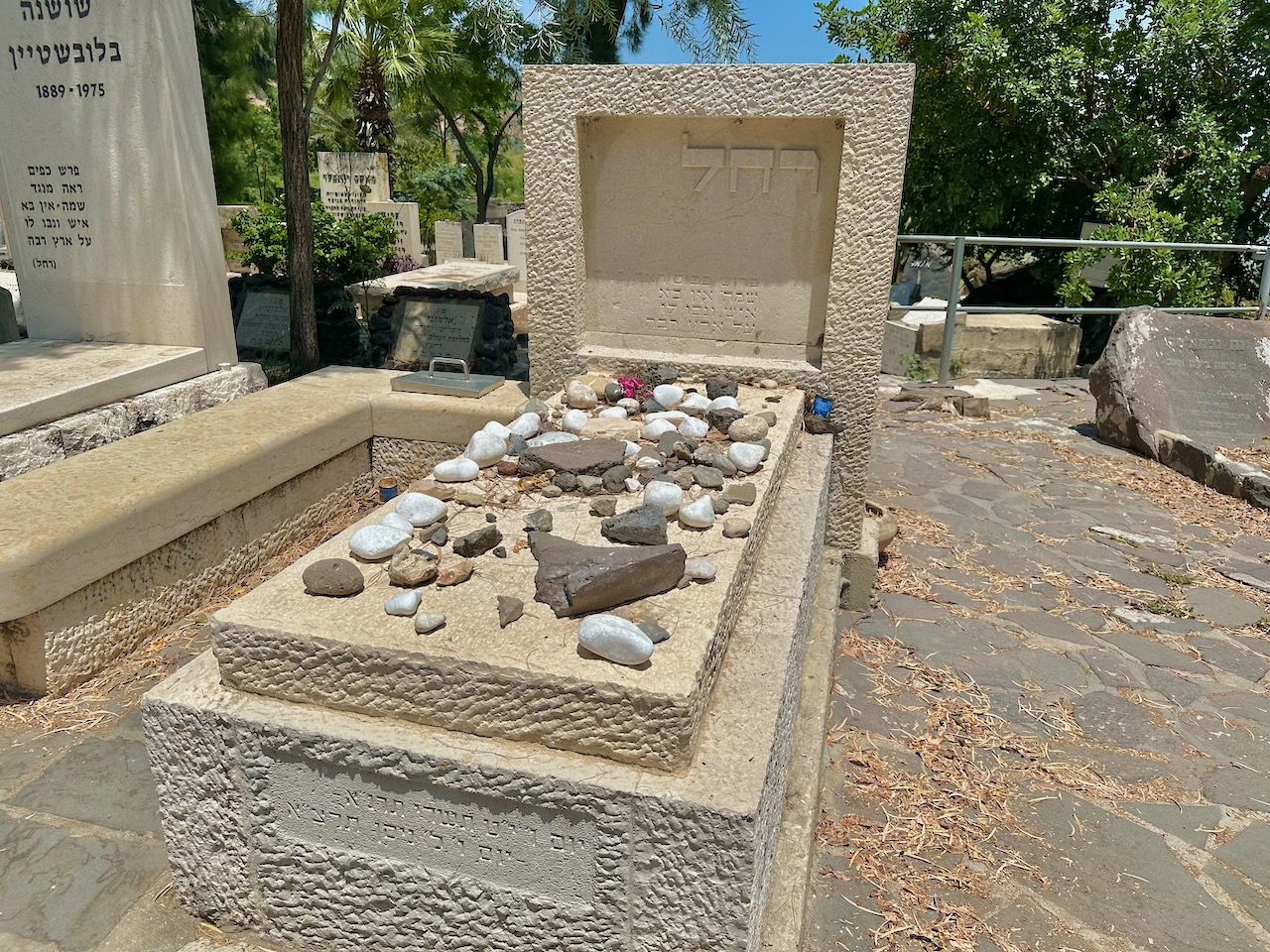
From the southern end of the lake we now drove back north along the southwestern shoreline of the lake. We included an extra stop at the Kinneret Cemetery. This is where an early Jewish pioneer woman named “Rachel” is buried. Shlomo shared about her life. She was an Ukrainian Jew who wrote poems, some of which were put to songs. Rachel was born in 1890 and died in 1931.
Magdala
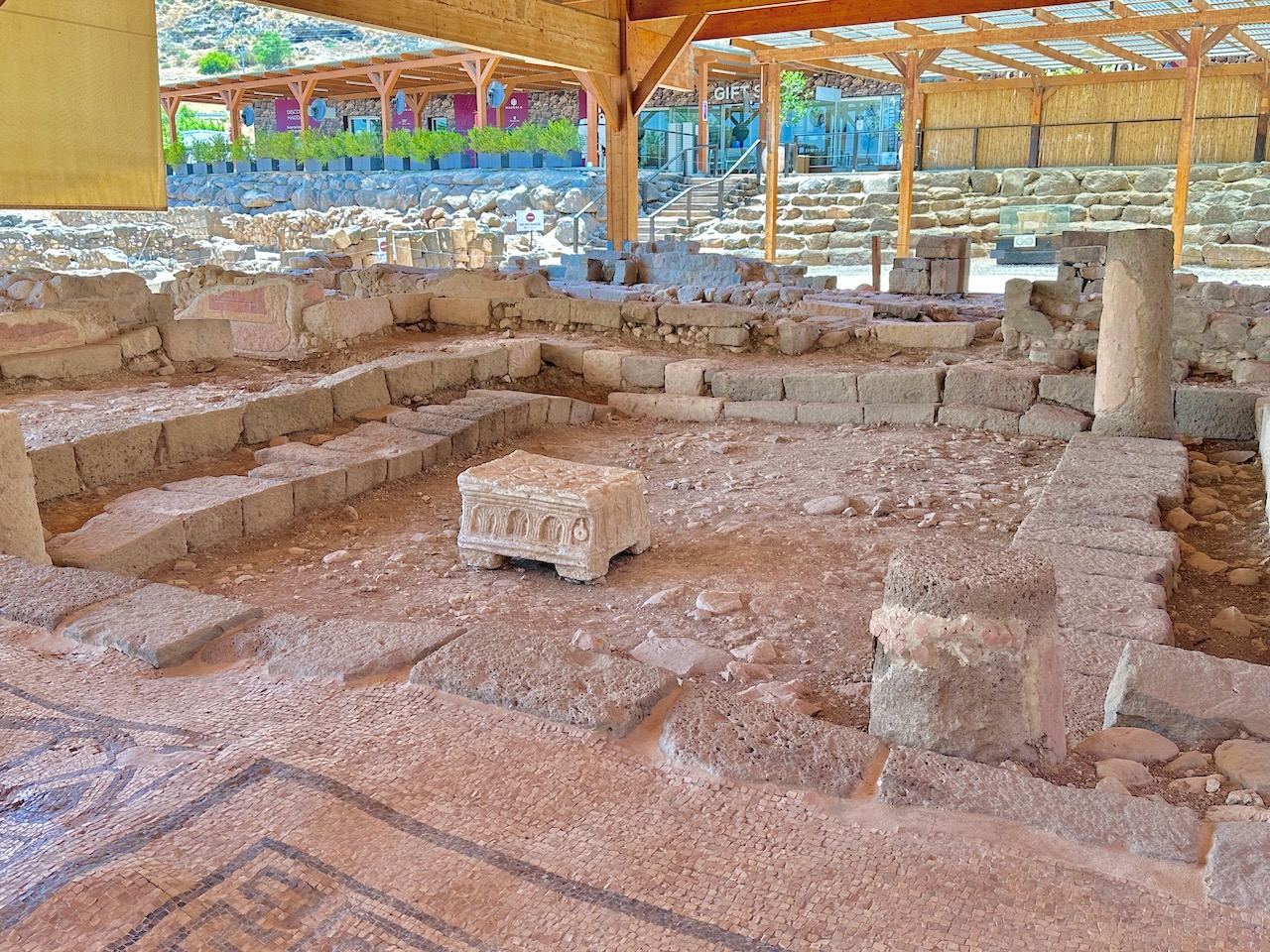
From here we drove through Tiberias to the Plain of Genesseret and to the ancient city of Magdala. This was a large Jewish city in the days of Jesus. We saw a modest 1st century synagogue here. Although the city is only mentioned once (Matthew 15 when Jesus sails into “Magadan”), Jesus must have taught here! We saw a few more ritual baths as well. Archaeologists suggest that a second 1st century synagogue was discovered a few years ago on the other side of the road.
Capernaum
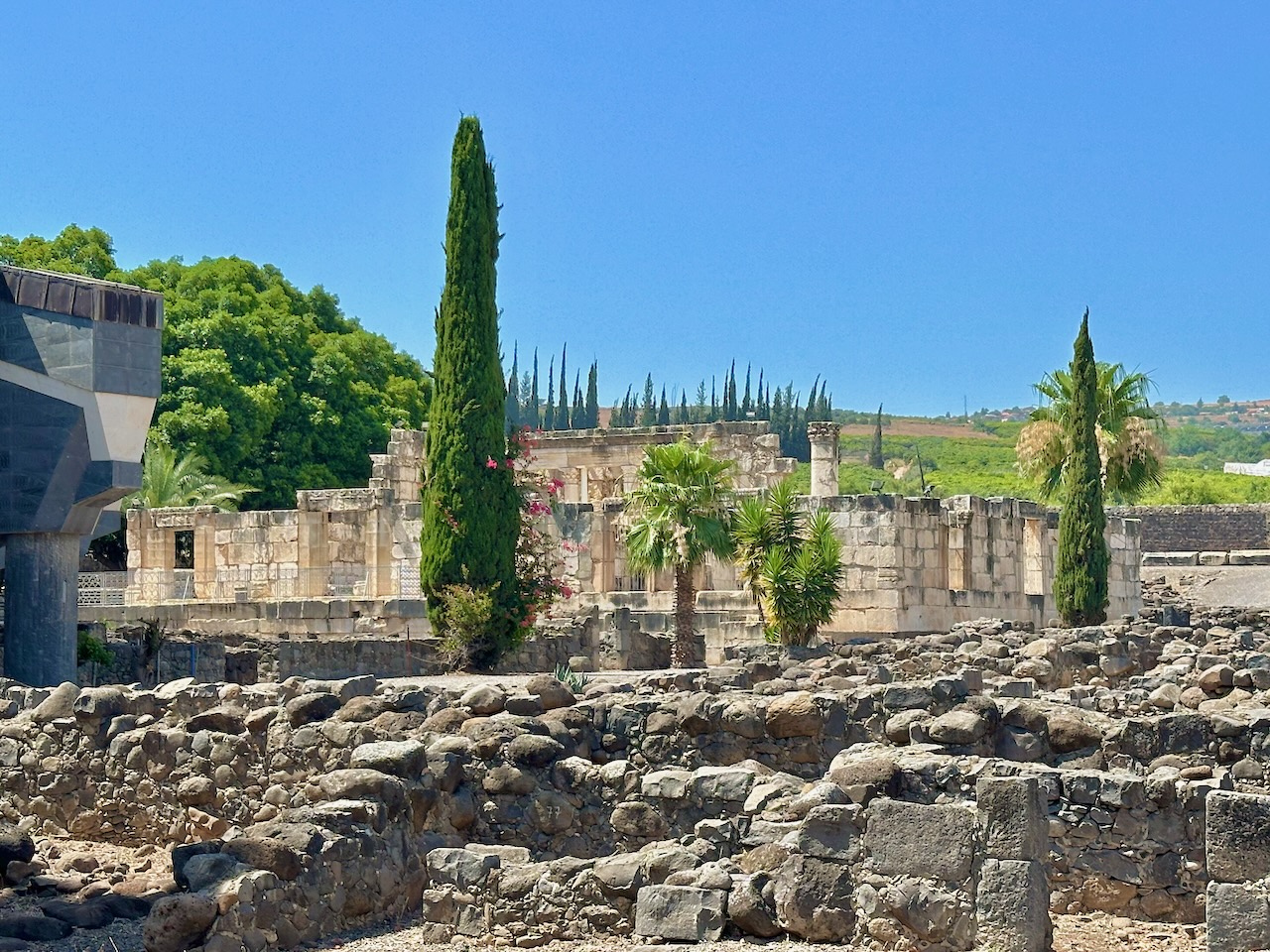
Next, we drove to Capernaum, located on the NW corner of the lake. This Jewish town served as Jesus’ “home base” for His Galilean ministry. In the late 4th/early 5th century synagogue, we read from Mark 1, 2; Luke 7, 8; and John 6. We also saw the Byzantine church, octagonal in shape, that dates to about the same time period. This ancient church surrounds a 1st century house structure suggested, by tradition and archaeology, to be Peter’s house. Down on the lakeshore, we read from Mark 9. Serving in Christ’s kingdom requires a heart of humility and servanthood.
Ancient Boat / Boat Ride
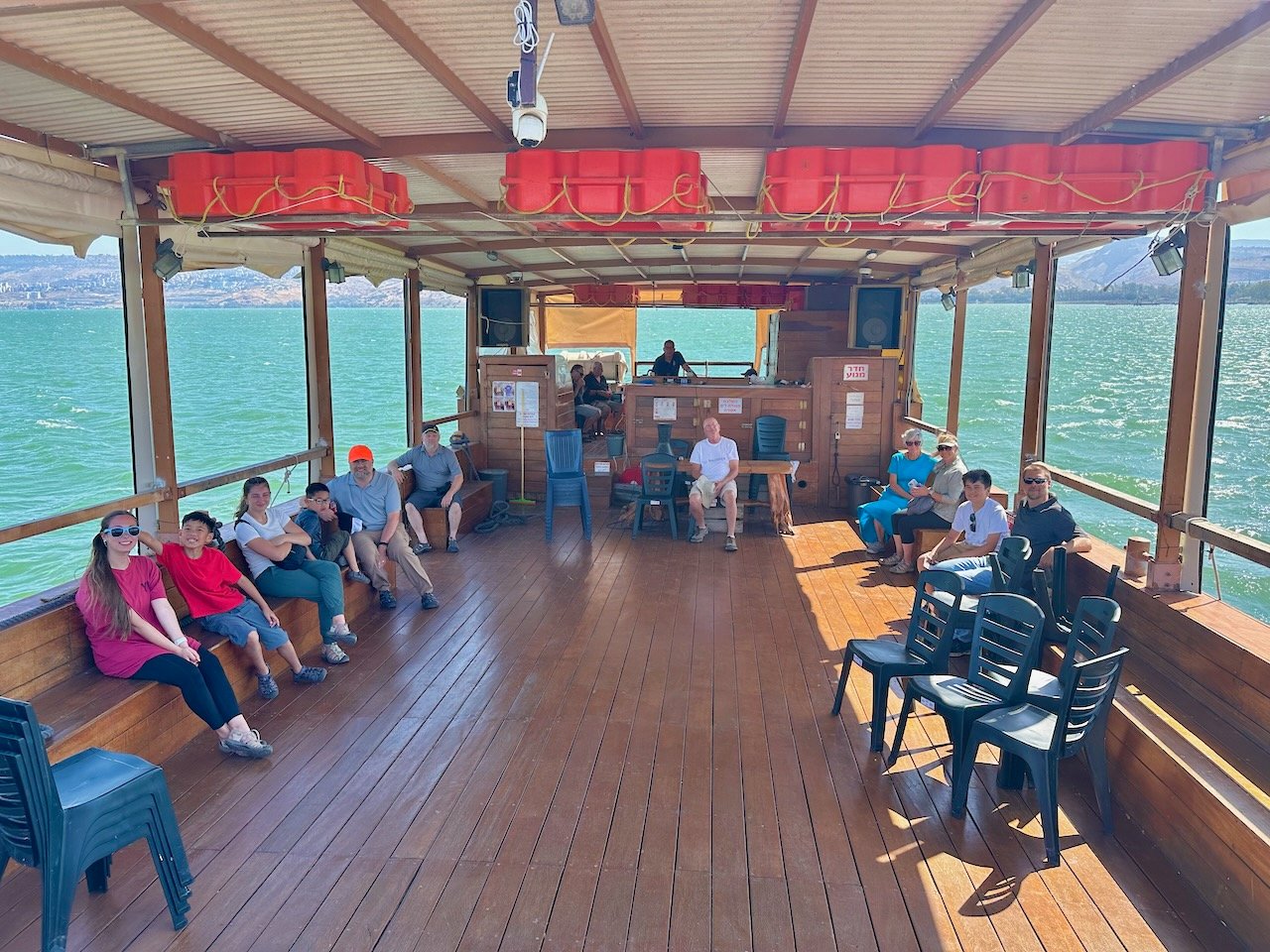
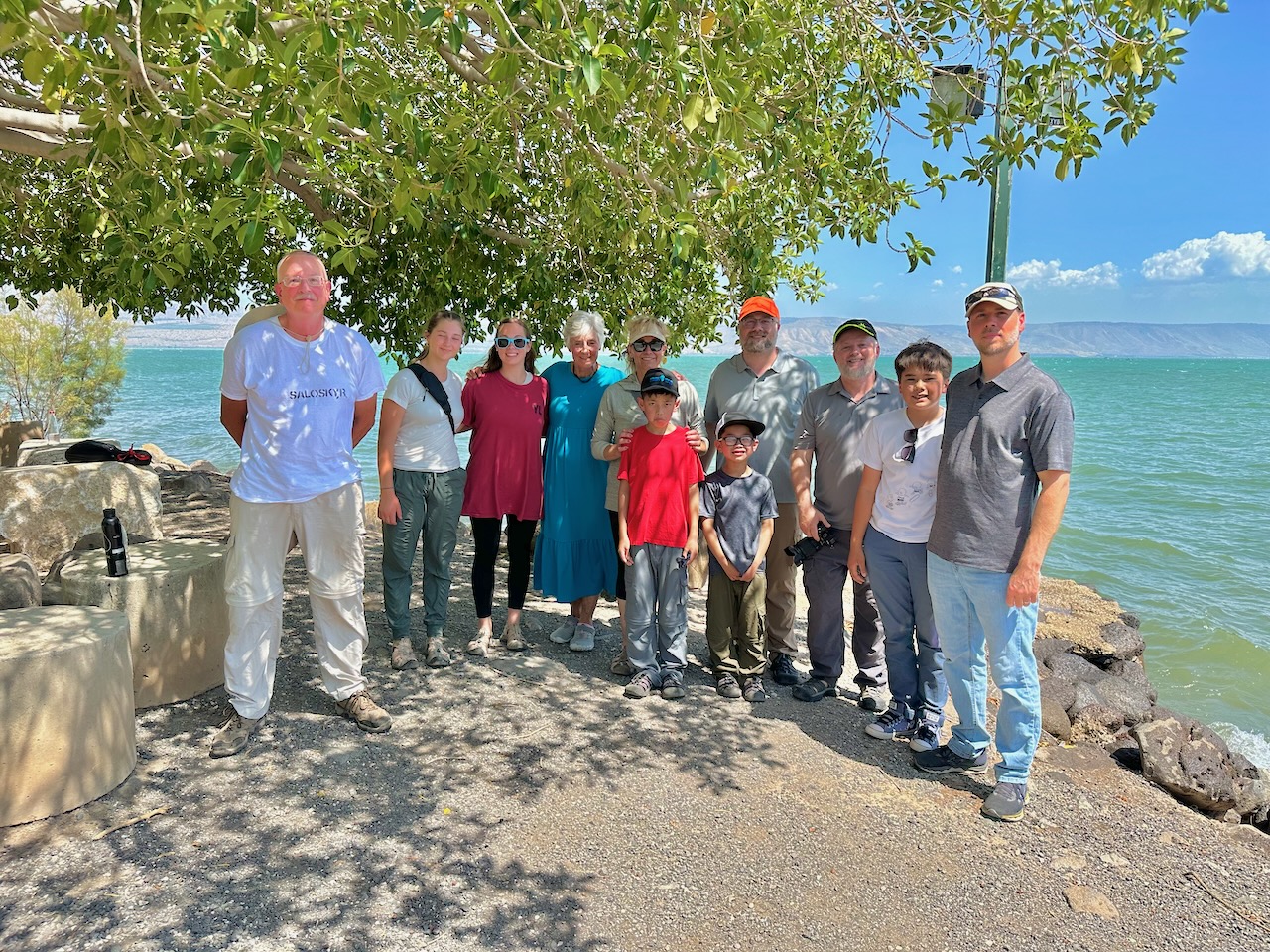
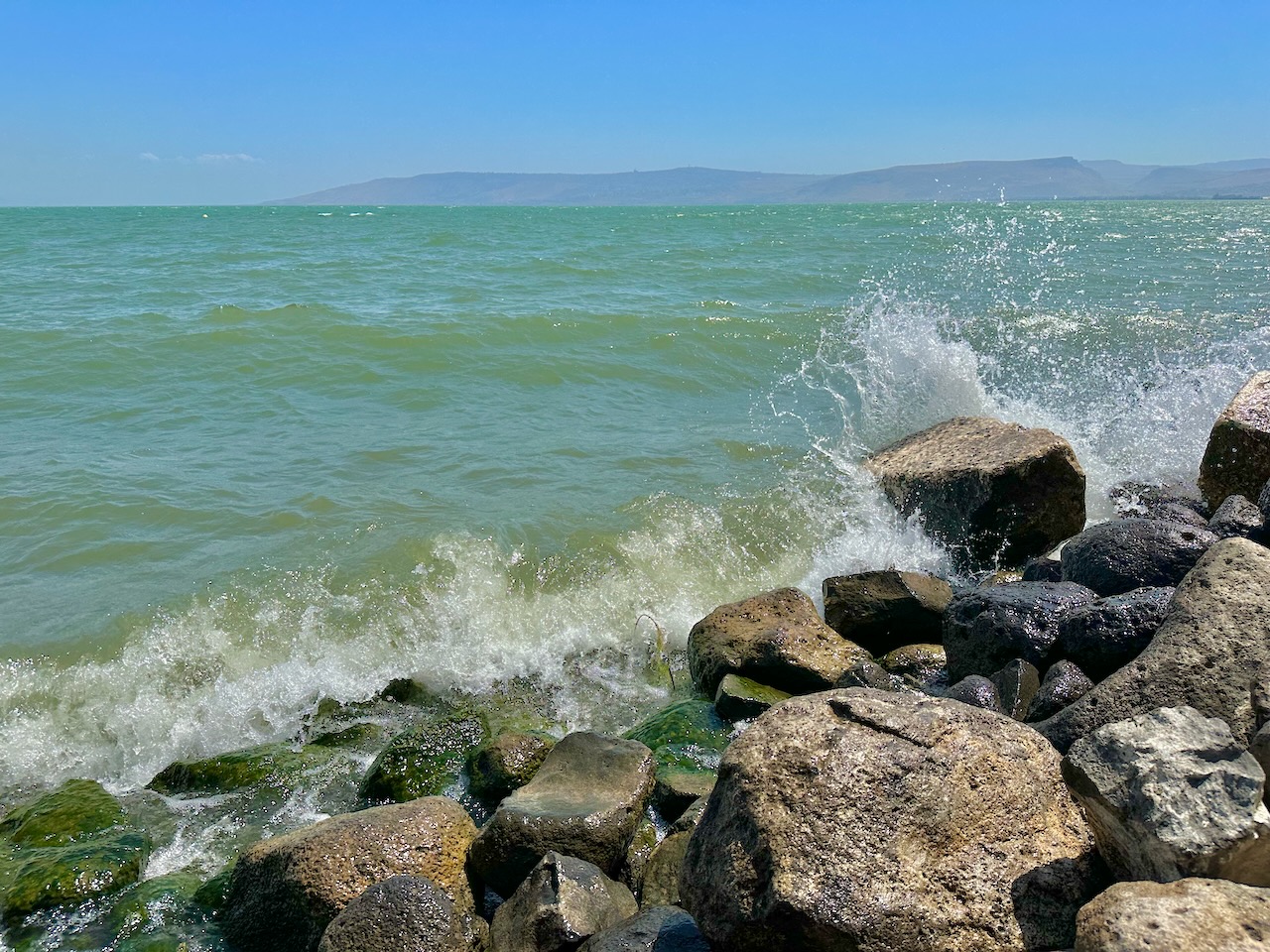
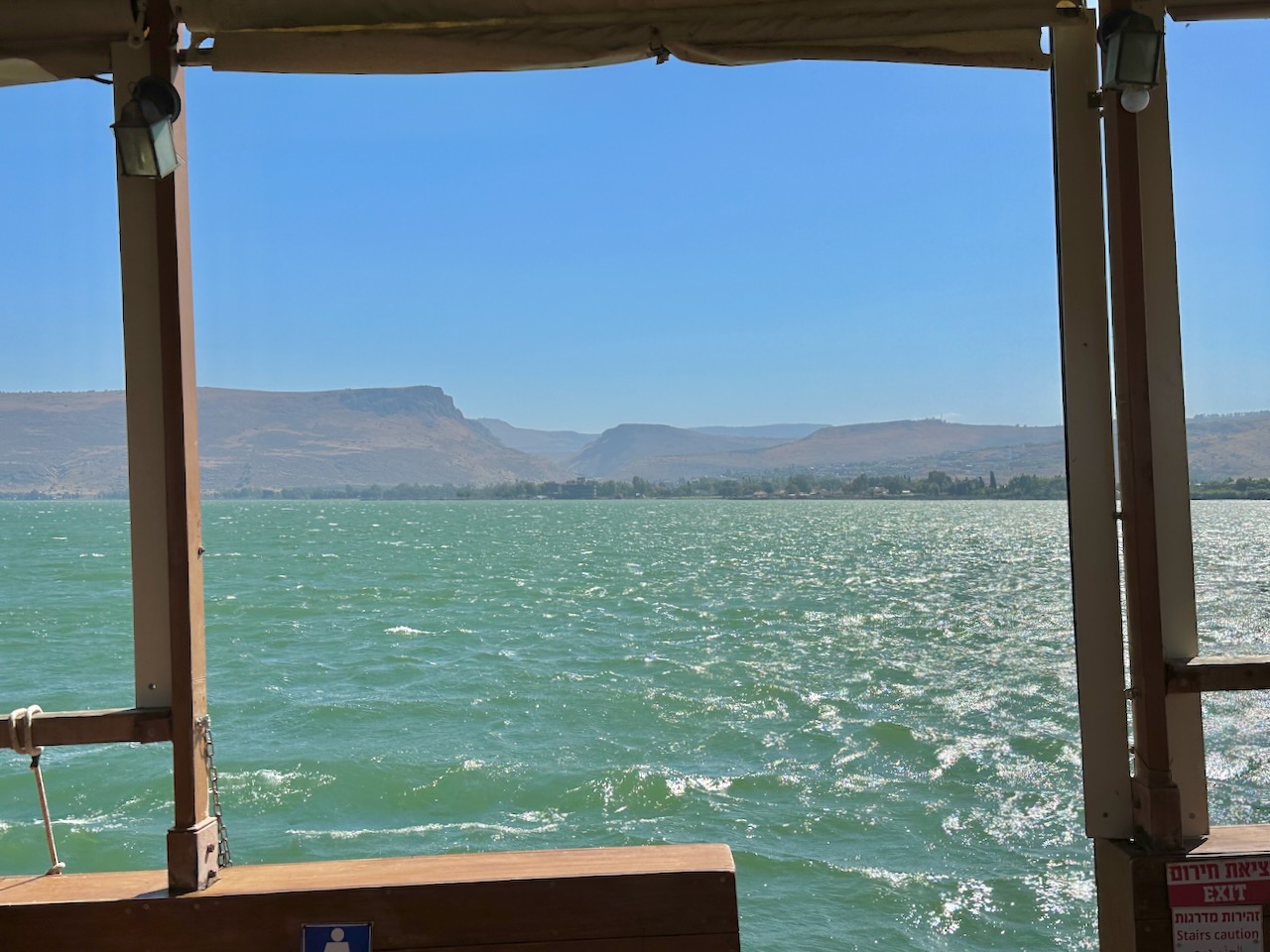
We ended the day by driving to Nof Ginnosar on the western side of the lake. In the museum here we saw an ancient 1st century wooden boat that was discovered in 1986. We then walked out to the dock for our own boat ride. We enjoyed about an hour of sailing. We also read Mark 4 and Matthew 14 (the two storm narratives). We were inspired to keep our eyes on Jesus! He is the One who brings peace to our lives!
We drove back to our hotel at En Gev following our boat ride. We enjoyed dinner followed by a free evening. What a great day re-tracing Jesus’ footsteps! We check out of our hotel tomorrow morning and begin our travel south in the Jordan Valley and onto Jerusalem for our first night there!
Day 6 – Tuesday, June 11: Beth Shean, Sahne, Jericho, Dead Sea, Jerusalem: Mt. of Olives, Western Wall (Shavuot Eve)
Today we drove south. We had the chance to get wet two times today! Our end-of-day destination was Jerusalem, just in time for the eve of Shavuot (Pentecost!). Once again, we made many biblical connections with the sites we visited. The weather was on the hot side, with full sun and highs around 100 by the time we got to Jericho. We read from Matthew 5-7 after we loaded the bus and departed the hotel at 7:30.
Beth Shean
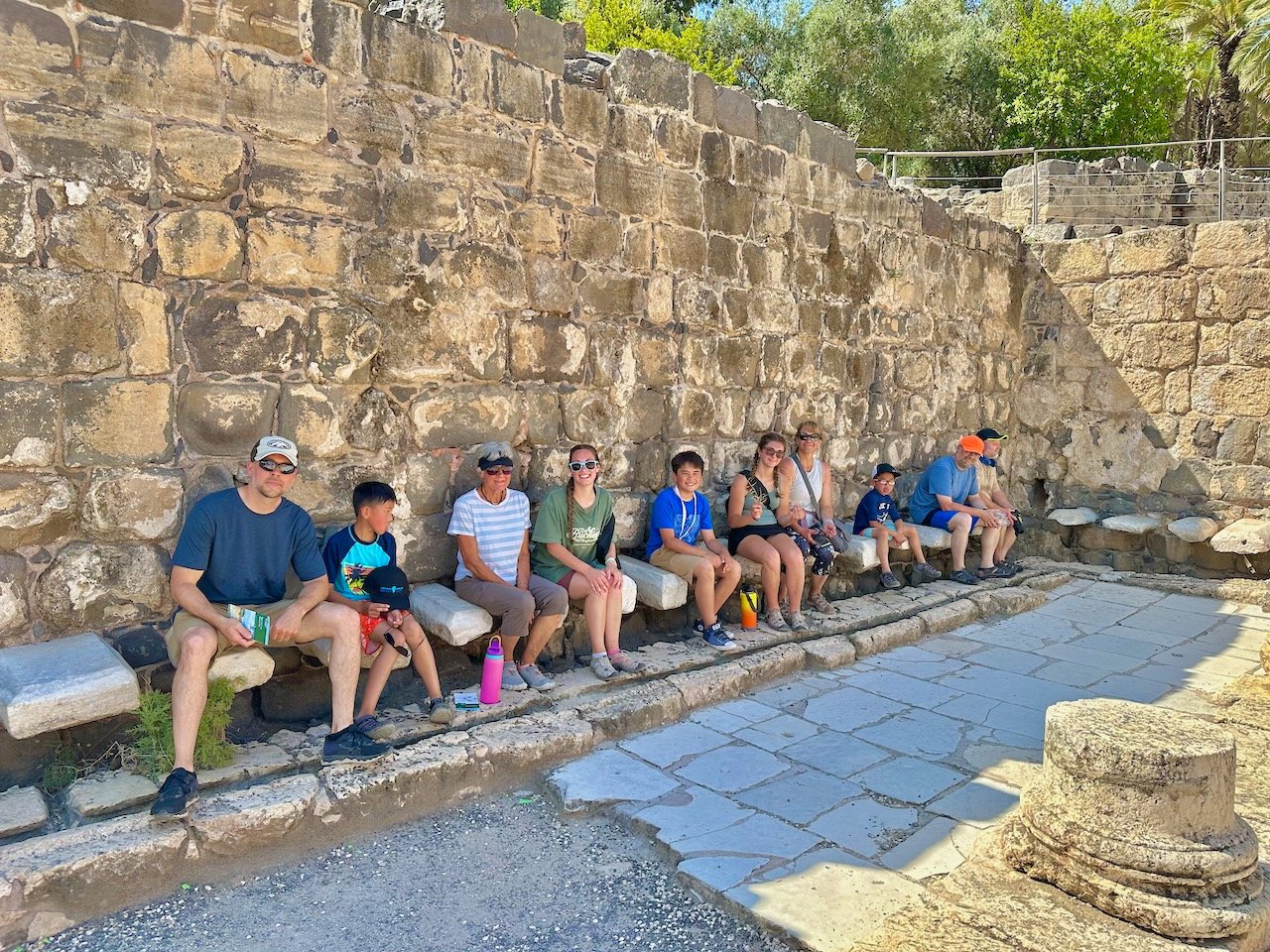
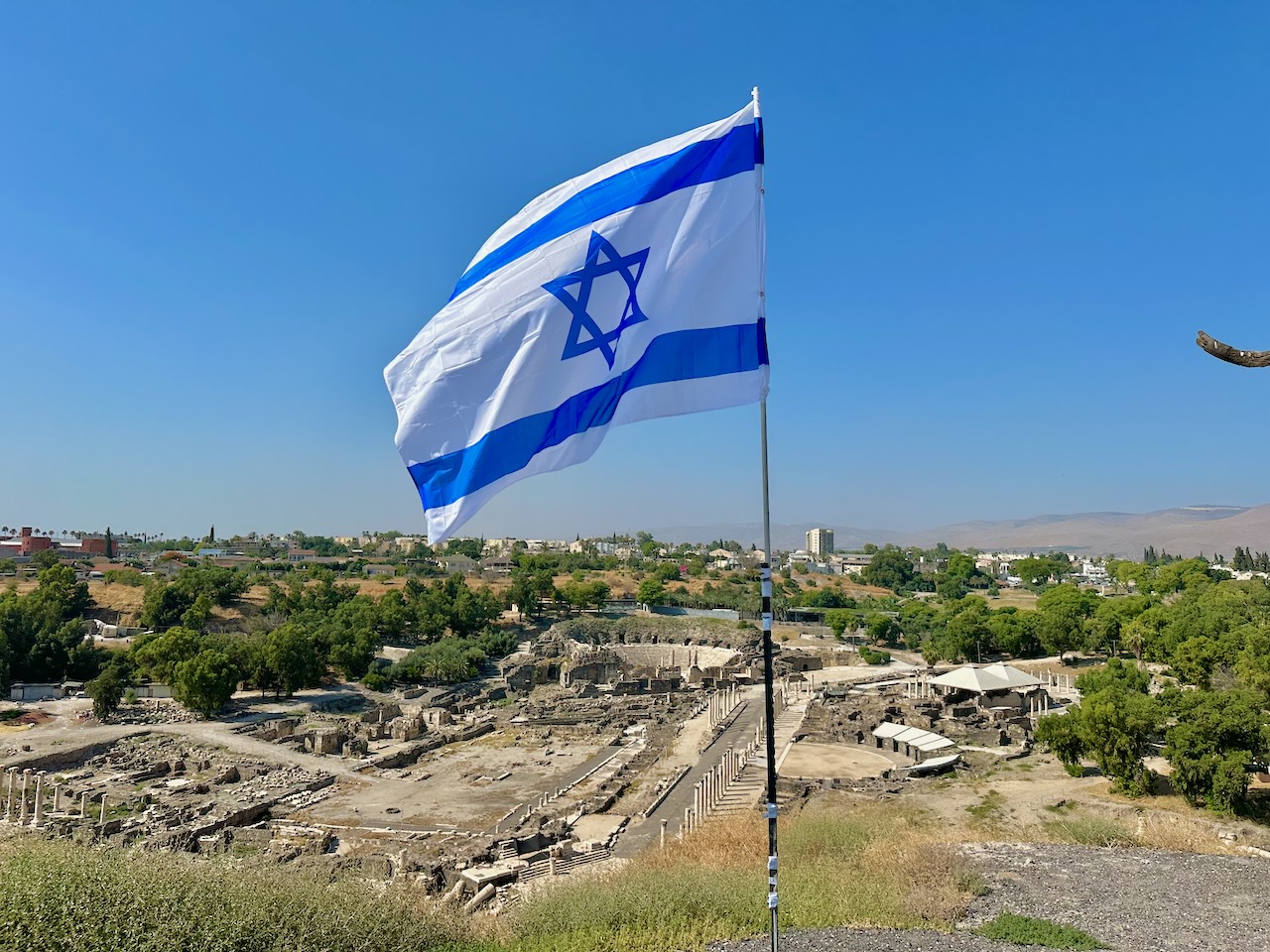
Leaving Ein Gev, we traveled south of the Sea of Galilee nearly 20 miles through the Jordan Valley to Beth Shean. This ancient site is an incredibly large site, with many ruins from the Roman Period. We saw colonnaded streets, the bathhouse, agora, public latrenes, and the theater. Some in the group climbed to the top of the OT site. According to 1 Samuel 31 (and 1 Chronicles 10), the body of Saul was hung on the walls of the town square after he died on near by Mt. Gilboa. The men from Jabesh Gilead (located on the east side of the Jordan Valley), came at night to rescue the body of Saul.
Sahne
Nearby to Beth Shean, we added an extra site to cool off and have fun in the water! This national park is called Sahne (Gan HaShlosha). This natural pool is fed by the Harod Spring at the base of Mt. Gilboa (the same spring mentioned in the Gideon story (Judges 6-7). We had a great time swimming and getting under the water falls. We spent about an hour here.
Jericho
From Sahne we drove due south down the Jordan Valley. We arrived at Jericho for a late lunch. Following lunch, we visited Tel es-Sultan, or Old Testament Jericho. We first looked east and could see the Jordan Valley, with Mt. Nebo on the ridge on the horizon (Dt. 34). Elijah was taken to heaven in the area across the river (2 Kings 2). Jesus was baptized in the Jordan River at “Bethany Beyond the Jordan” (John 1). Looking south we could see the area of NT Jericho (where Zacchaeus and Bartimeaus lived, and where Herod the Great died in 4 BC). We then turned our attention to the ancient OT site of Jericho. The archaeology of this ancient site of Jericho supports and confirms the Bible’s historicity. Besides seeing the oldest structure (a round tower) in Israel, on the southern end we saw the double retaining walls of this Canaanite city taken my Joshua (Joshua 6). A mud brick wall once stood on top of these stone walls. They came tumblin down. We even blew the shofar that we had with us.
Dead Sea
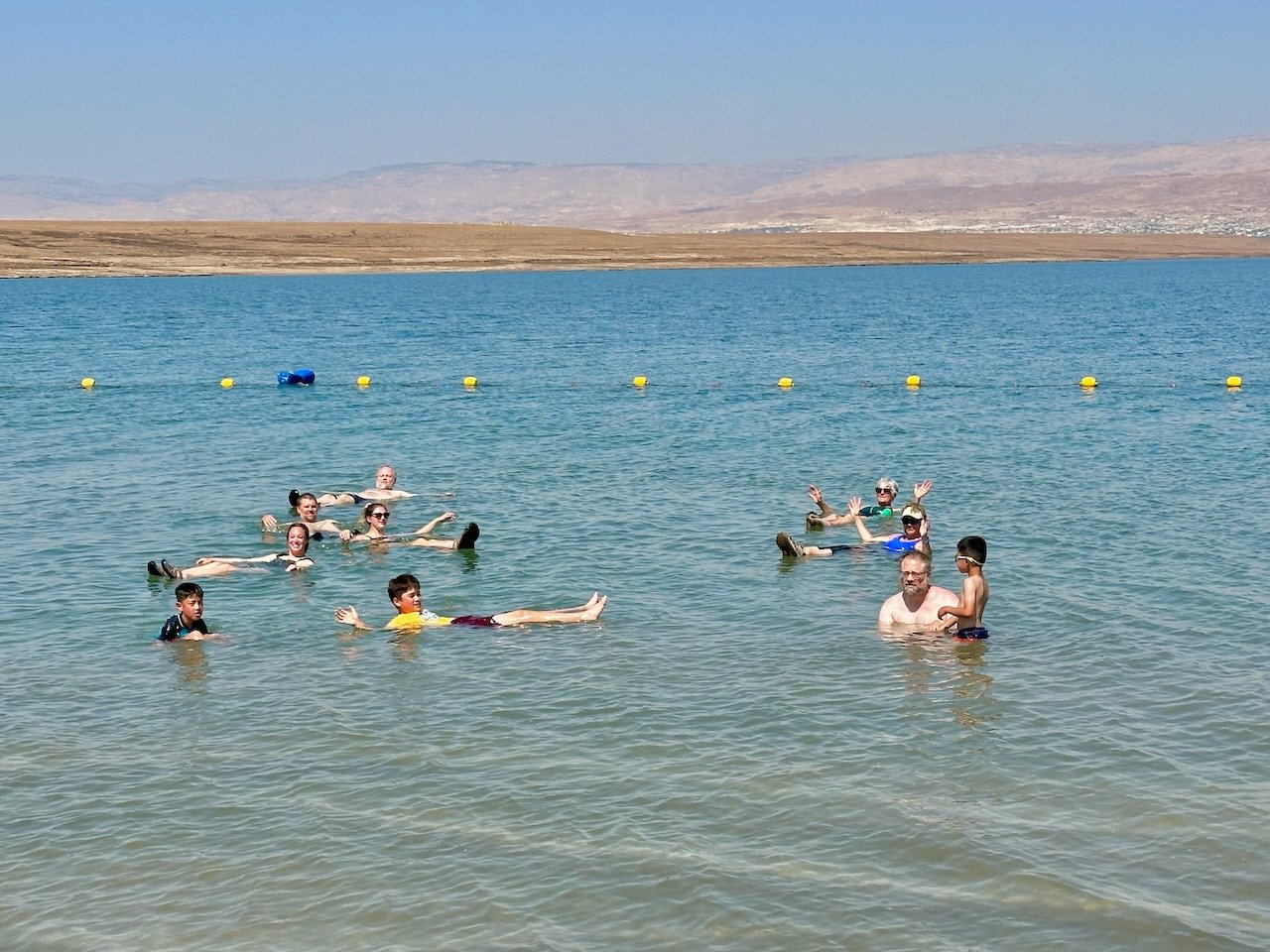
A little further south than Jericho is the Dead Sea. After changing into our swimming suits again, we enjoyed floating on this unique body of water (33% salt and minerals). It was a unique experience. The temperature of the water was about 90, while the air temp was 102. It was a dry heat and with the breeze was tolerable!
Jerusalem
After showering and cleaning up, we drove west to Jerusalem. The drive “up” to Jerusalem was special. Your first view of the Old City and Temple Mount was spectacular! We checked into our hotel (a small Botique one called St. Andrews Scottish Guest House). Following dinner, we walked to the Western Wall for Shavuot (Pentecost). It was packed with Orthodox Jews. It was incredible to be part of this!




Day 7 – Wednesday, June 12: Masada, Dead Sea, Ein Gedi, Qumran, Qelt Desert
This morning we returned to the Judean Desert. We drove east to Jericho and then south to Masada (our first stop). Predictably, it was sunny and a dry heat of about 100+ once again. The water at Ein Gedi, however, was refreshing. We read from Psalm 18:1-2 (fortress = “metzada”) as we left the hotel at 7:30 a.m.
Masada
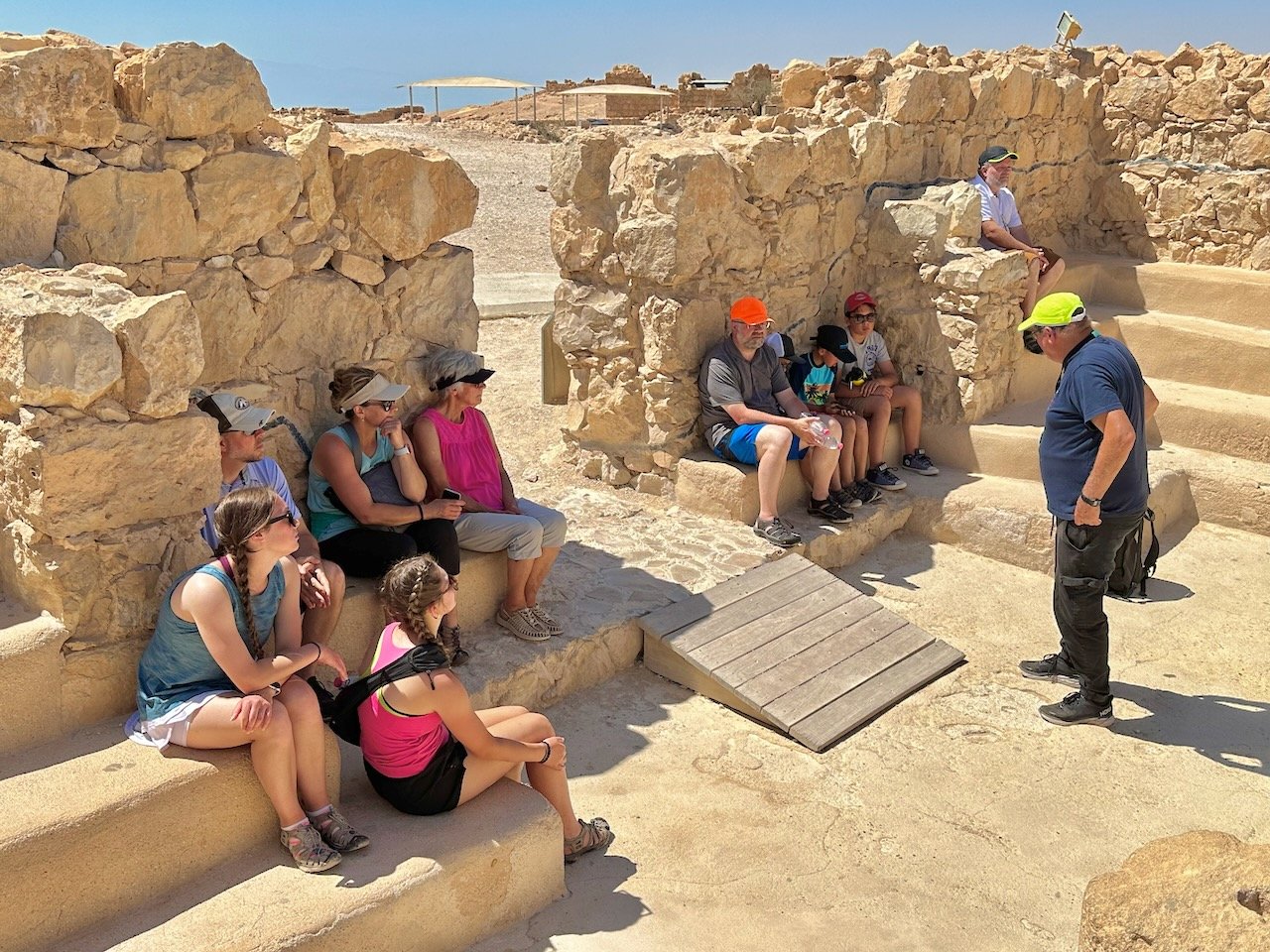
We drove north about 15 minutes to get to the eastern side of Masada, a palace-fortress built by King Herod in the 30s BC. We all took the cable car to the top. Among the ruins we saw the casemate wall, huge cisterns, the synagogue, the northern palace, storehouses, and the bathhouse. The courageous story of Masada (with 967 using the site as a place of refuge) is both incredible and inspiring! We all took the cable car down (since the Snake Path was already closed due to the heat) and loaded in our bus.
Ein Gedi
From here we drove further north along the western shoreline of the Dead Sea to Ein Gedi. Together we walked into the canyon (Wadi David) where we stopped to read from Song of Songs 1 (mentioning the henna blossoms), 2 Chronicles 20 (mentioning the Ascent of Ziz), and 1 Samuel 24 (the David and Saul “cave encounter”). Everyone in the group walked back to the far water falls. We also enjoyed getting wet under a few sets of waterfalls, especially the kids. It was an amazingly refreshing experience!
Qumran
About a 25 minute drive further north took us to where the most significant discovery in all of Israel were found in 1947, the Dead Sea Scrolls at Qumran. We first hiked up to see Cave 6 (one of 12 caves in which fragment of scrolls were found) and the unique aqueduct tunnel. Then we walked back down and visited the site itself where we saw many miqvot (plural for mikve, or ritual baths), cisterns, and the scriptorium. In front of Cave 4 (and 5 & 10), we read from Psalm 19 and “151,” an extra psalm found here. We also remembered 2 Timothy 3:16 about God’s inspired Word. Thanks be to God for the preservation of His Word and the joy, instruction, direction, and hope it provides us!
Wadi Qelt
On our way to Jerusalem we made a brief stop to overlook a portion of the Wadi Qelt/Judean Desert. We heard the words of Isaiah 40. Shlomo also sang Psalm 23 in Hebrew. Even though the desert is such an arid place, the view was beautiful!
Jerusalem
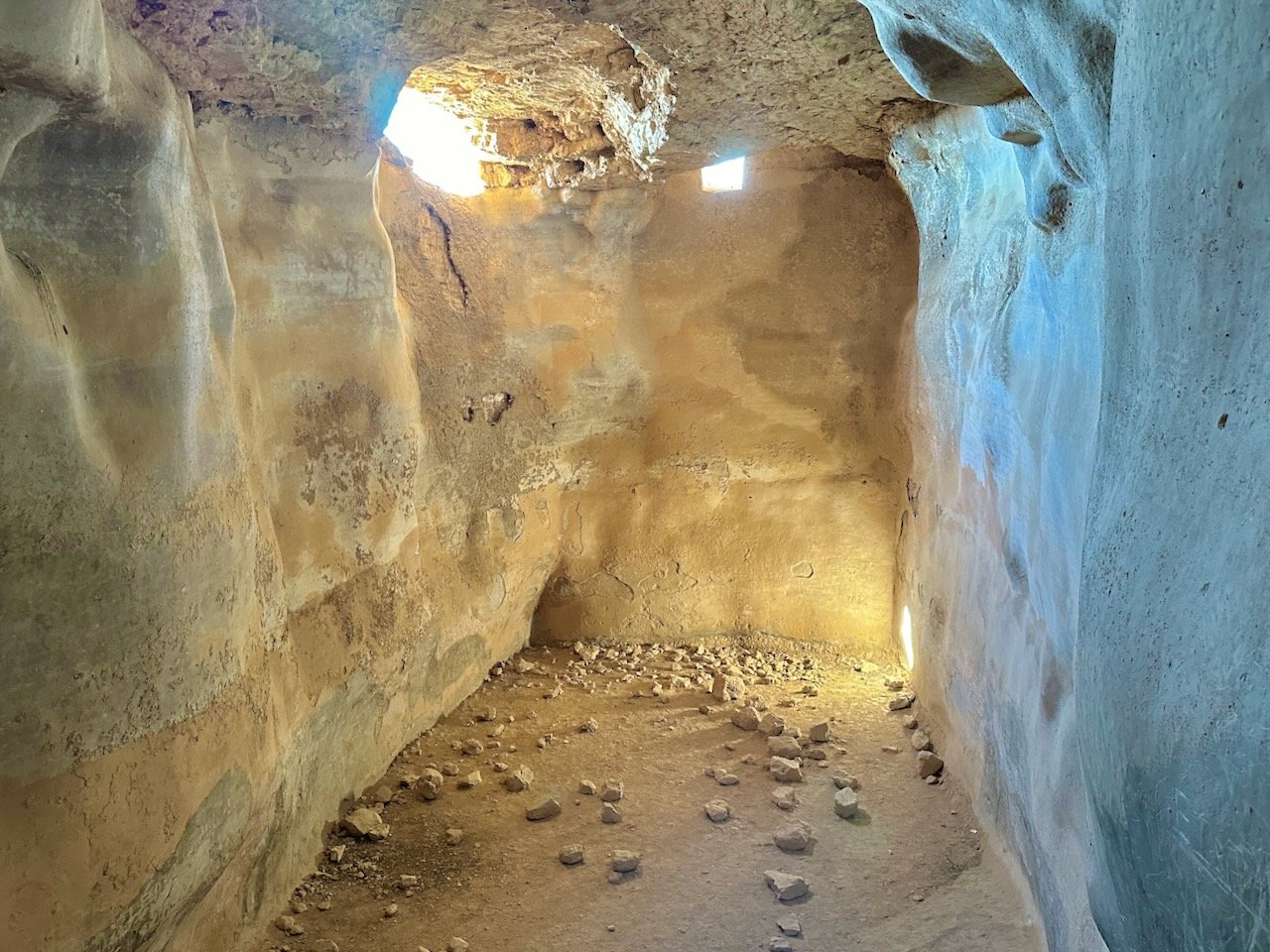
Continuing our drive west to the Hill Country of Judah, we arrived back to our hotel in Jerusalem. Upon arriving we visited the Ketef Hinnom Tombs literally right below our hotel. They were discovered in the late 1970s. We had fun time “laying out” on the tomb benches. 🙂 After dinner, some in the group walked back over to walls of the Old City to see the place where Jesus was most likely presented for crucifixion outside Herod’s palace and before the religious leaders.




Day 8 – Thursday, June 13: Yad Vashem (Zoo for the kids), Israeli Museum, City of David, Hezekiah’s Tunnel, Southern Wall Excavations
We spent the entire day in Jerusalem today. It was warmer than usual in Jerusalem for June, with highs in the high 90s. The day included a solemn start at Israel’s Holocaust Museum, and with an adventurous walk through Hezekiah’s Tunnel! It was a great day!
Yad Vashem
Our first stop in the morning required us to drive to West Jerusalem. Here we visited the Israel’s Holocaust Museum & Memorial. It is called Yad Vashem, named after a verse in Isaiah 56:5 that mentions the “memorial and a name.” John took Benjamin and Joseph to the Biblical Zoo during this time. We first heard the personal story from Shlomo about his family during this tragic event. He lost 12 family members in Vilna, Poland (pictured). We then walked through the Children’s Memorial and the museum itself. It was a somber experience recalling the horrors of the Holocaust and the loss of six million Jews.
Israel Museum
Just a short distance away (still in Western Jerusalem) is the Israel Museum. Here, we saw a 1:50 scale model of 2nd Temple Jerusalem. We retraced the ministry of Jesus in Jerusalem and in the Temple. Next, we visited the archaeological museum and saw the highlights with biblical connections. Before leaving the museum, we grabbed a quick bite to eat for lunch.
City of David
This afternoon we got back on the bus and drove to the southern side of the Old City where we entered the City of David. After gathering on the observation tower, we walked down through the excavations (“Area G”). We saw David’s palace, city walls, and 7th-6th BC house structures (one of them was excavated/uncovered by Dr. John in June-July, 1982). We all continued through Warren’s Shaft (2 Samuel 5). The upper part of this discovery was probably used by David but not the vertical 52 foot shaft.
Finally, we descended down to the Canaanite/Jebusite pool to the Gihon Spring. Following seeing a new movie about the tunnel, everyone in the group braved the waters of the 1,710 foot-long Hezekiah’s Tunnel (2 Kings 20, 2 Chronicles 32). At the Pool of Siloam is where we recalled the story of John 9 (the blind man healed by Jesus). The excavation of the Pool of Siloam continues to expose more and more of the original steps.
Southern Wall Excavations
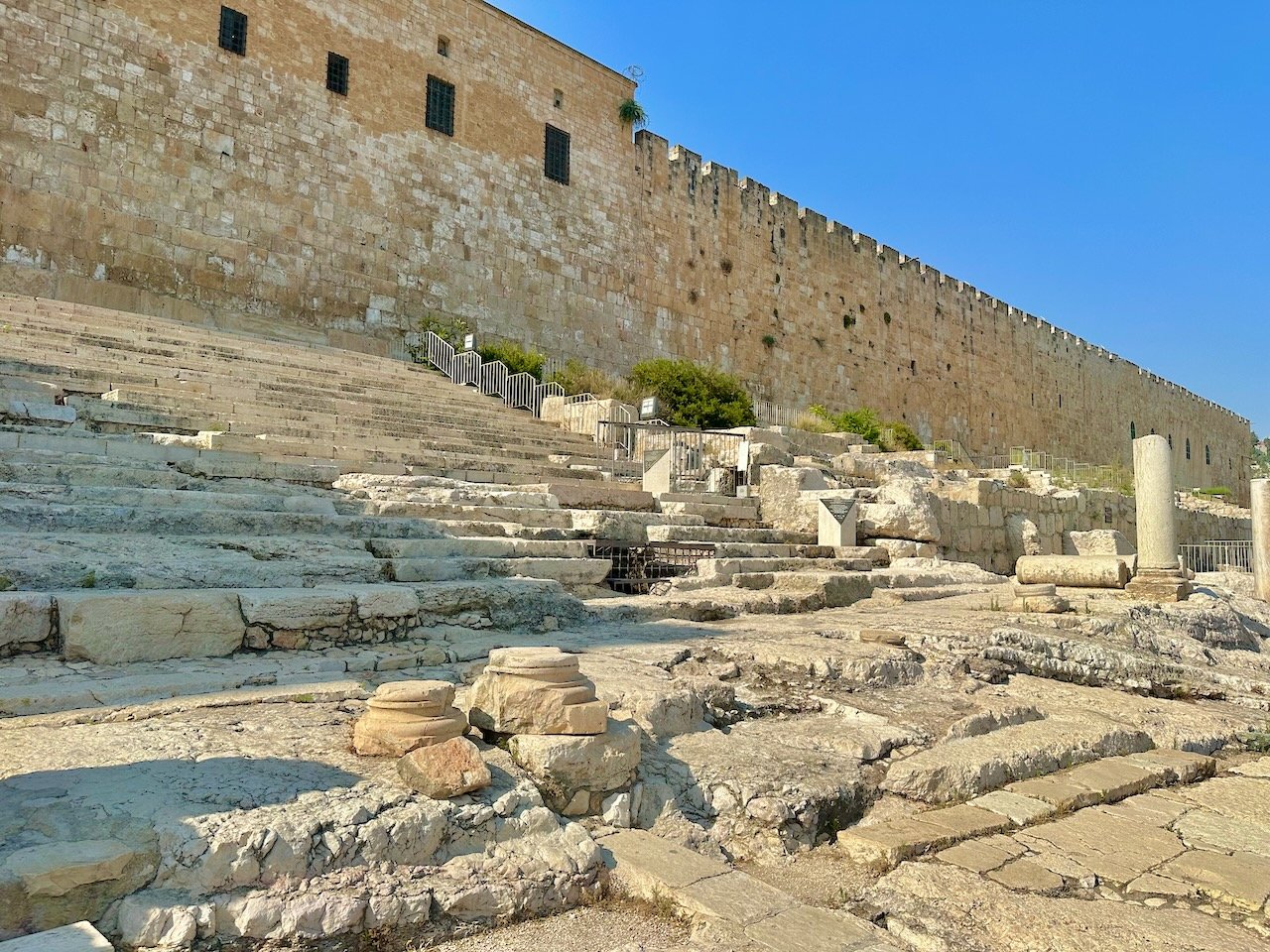
From here, we all walked through the stone “Drainage Tunnel” underneath the pavement that dates to 30 AD. Others short a taxi to the SW corner of the Temple. Here, we walked on the Herodian pavement underneath what is left of an archway discovered by Edward Robinson in 1838. This SW corner of the Temple may have been the pinnacle of the Temple where Jesus was tempted (Mt. 4). We walked up the southern steps used by commoners in Jesus’ day. Jesus Himself would have used these steps to enter the Temple. We recalled the many mentioned in the NT who used these steps (Luke 2, 18; John 2; Mark 13; and Acts 2, etc…). Before leaving the steps, we considered how God wants us to be His spiritual temple (2 Corinthians 3).
Jewish Quarter / Shorashim
We ended the day by walking up into the Jewish Quarter. Here, we visited Shorashim, a store owned by two brothers, Moshe and Dov. Moshe shared with us about his Jewish faith and practices.
We walked out of the Zion’s Gate where David picked us up to take us back to our Guesthouse. We enjoyed dinner and a free evening.


Day 9 – Friday, June 14: Mt. of Olives, Herodium, Bethlehem, Shephelah/Lowlands of Judah: Azekah & Gezer
Today was another great day. The heat wave continued, however, with a high of 100 once again. We began the day in Jerusalem, and ended the day in the Shephelah (lowlands) of Judah.
Mt. of Olives
Our first stop of the day was the Mt. of Olives. We drove around the north side of the Old City, passing the Damascus and Herod Gates on the way. Cresting the Mt. of Olives we drove to a spectacular view across the Kidron Valley of the Old City and Temple Mount below. We remembered the events of Jesus’ and and ministry: Luke 19 (Palm Sunday), Luke 22 (Gethsemane), Acts 1 (Christ’s ascension), and Zechariah 14 (about the return of Christ).
Herodium
Next, we drove south on the Bethlehem-Hebron road until we turned east to Herodium. This was a palace-fortress built by Herod the Great. He was also buried in 4 BC. The site was incredible, with many new renovations and displays. Inside the well-preserved official’s chamber where we saw a wonderful presentation. We then walked up through the royal arches to the top where we saw the bathhouse, synagogue, impressive frescoes, and a great view of Jerusalem. We left the site by carefully walking down through the cistern system.
Bethlehem
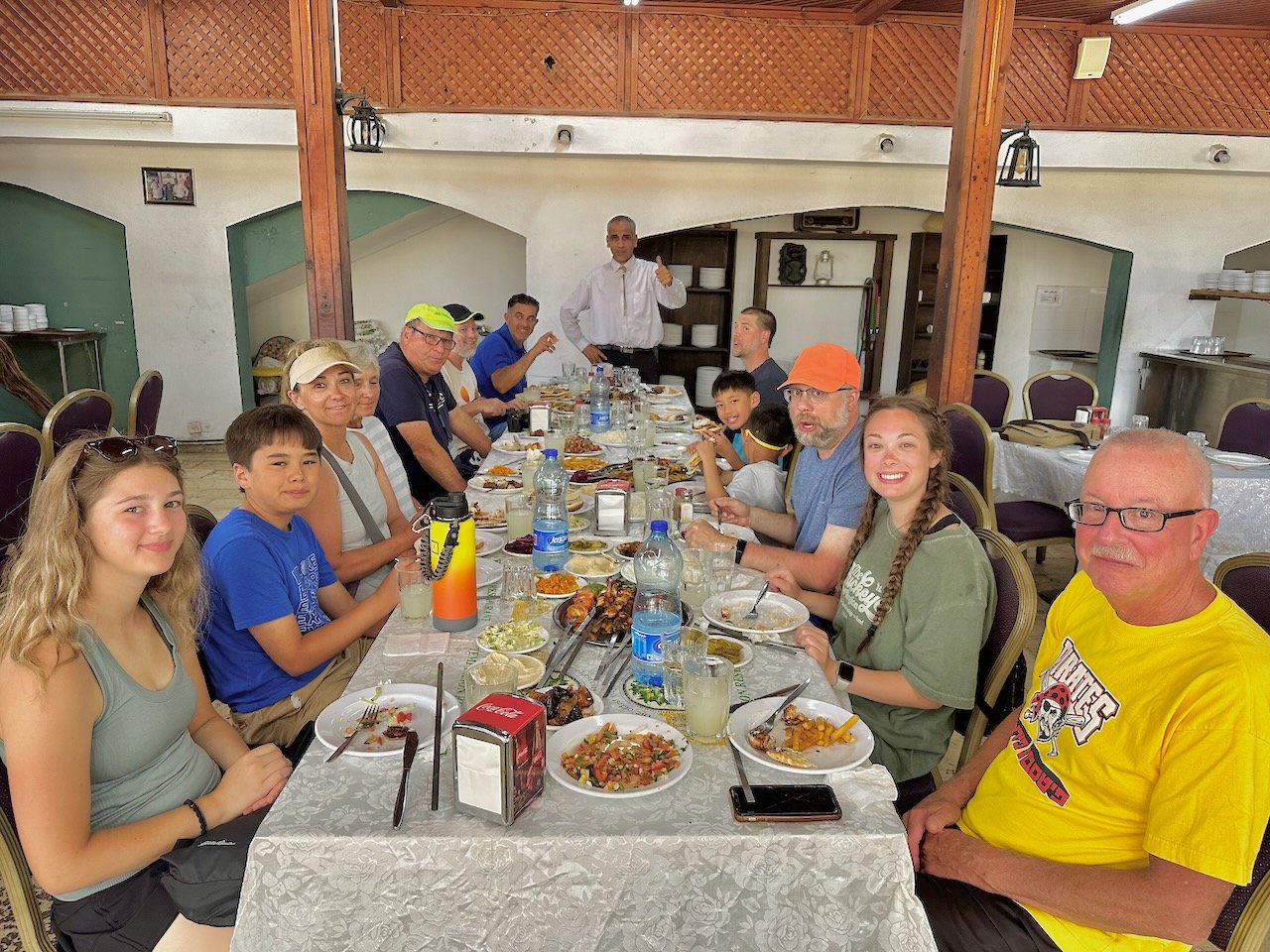
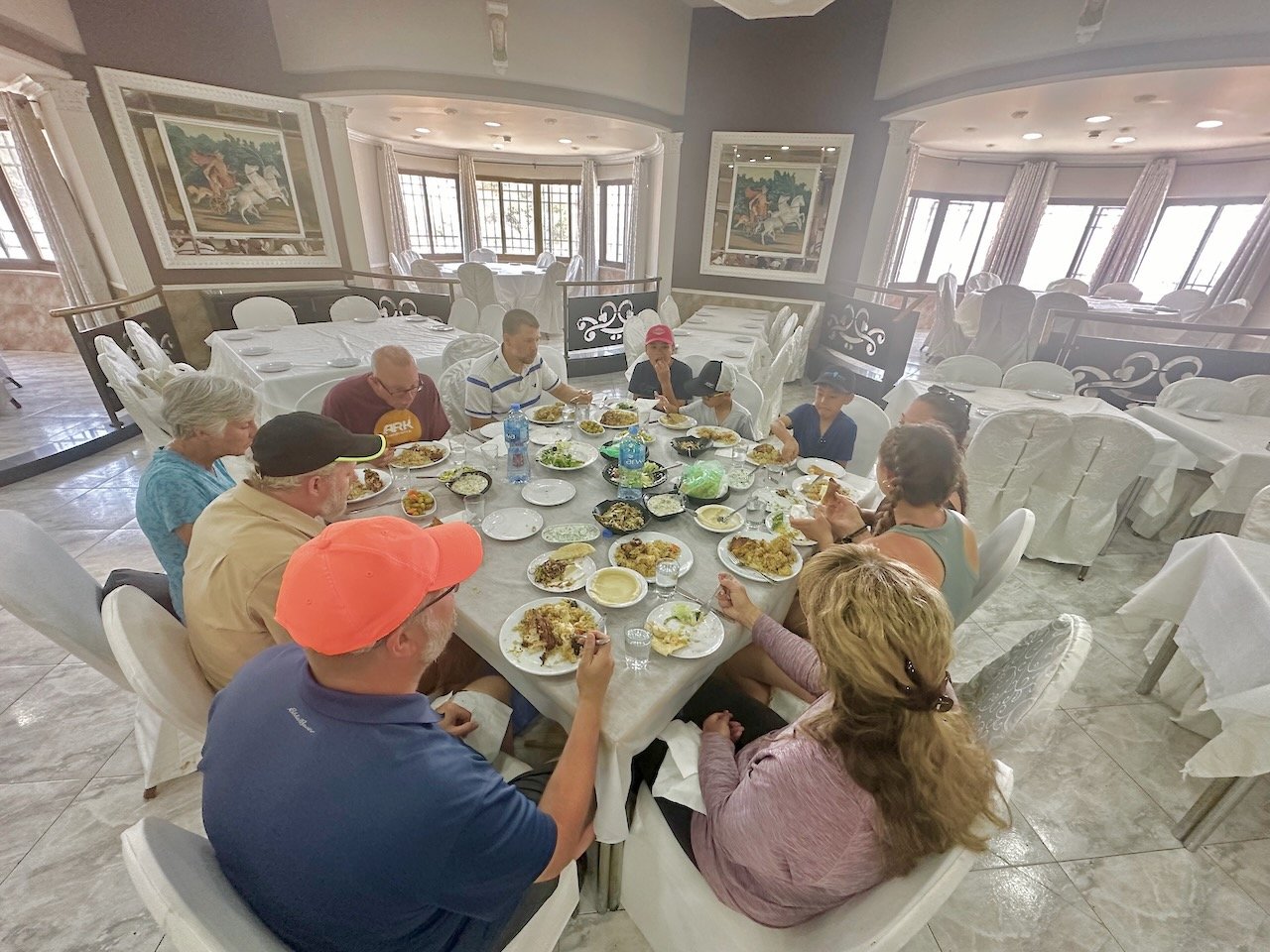
From Herodium we drove into Bethlehem. We recalled the story of Luke 2 about the birth of Jesus. It was “just at the right time God sent His Son” (Galatians 4:4). We also enjoyed a stop at an olive wood factory and story (Nissan Brothers). These olive wood products were impressive and so well crafted. We also enjoyed an amazing lunch here (thanks imagine Tours & Travel).
Shlomo’s Community
Following lunch we drove westward to the Shephelah (lowlands) of Judah. On the way, we made a brief stop at Shlomo’s community. It was fun to see where he lived. The view of Jerusalem was spectacular too.
Azekah
Our first site in the Shephelah was Azekah. We climbed the “tel” for a great view of the Elah Valley, one of five primary valleys in the lowlands. This ancient city located along the heart of the Elah Valley is mentioned in the story of 1 Samuel 17 (the Philistines camped on the ride between Azekah and Socoh). It was in the narrow part of the valley where David battled Goliath. David faced the battle with this giant in the confidence of the Lord! We can face our battles with the same confidence! Note: we even tried our slings here!
Gezer
The last stop of the day was to Tel Gezer. We passed by Beth Shemesh. Located along the Sorek Valley, the Ark of the Covenant was returned here (1 Samuel 6). I t was also where the battle between Amaziah and Joash took place (2 Chronicles 25). Nearby (in Zorah) was the home of Samson (Judges 13-16). His first wife was from Timnah.
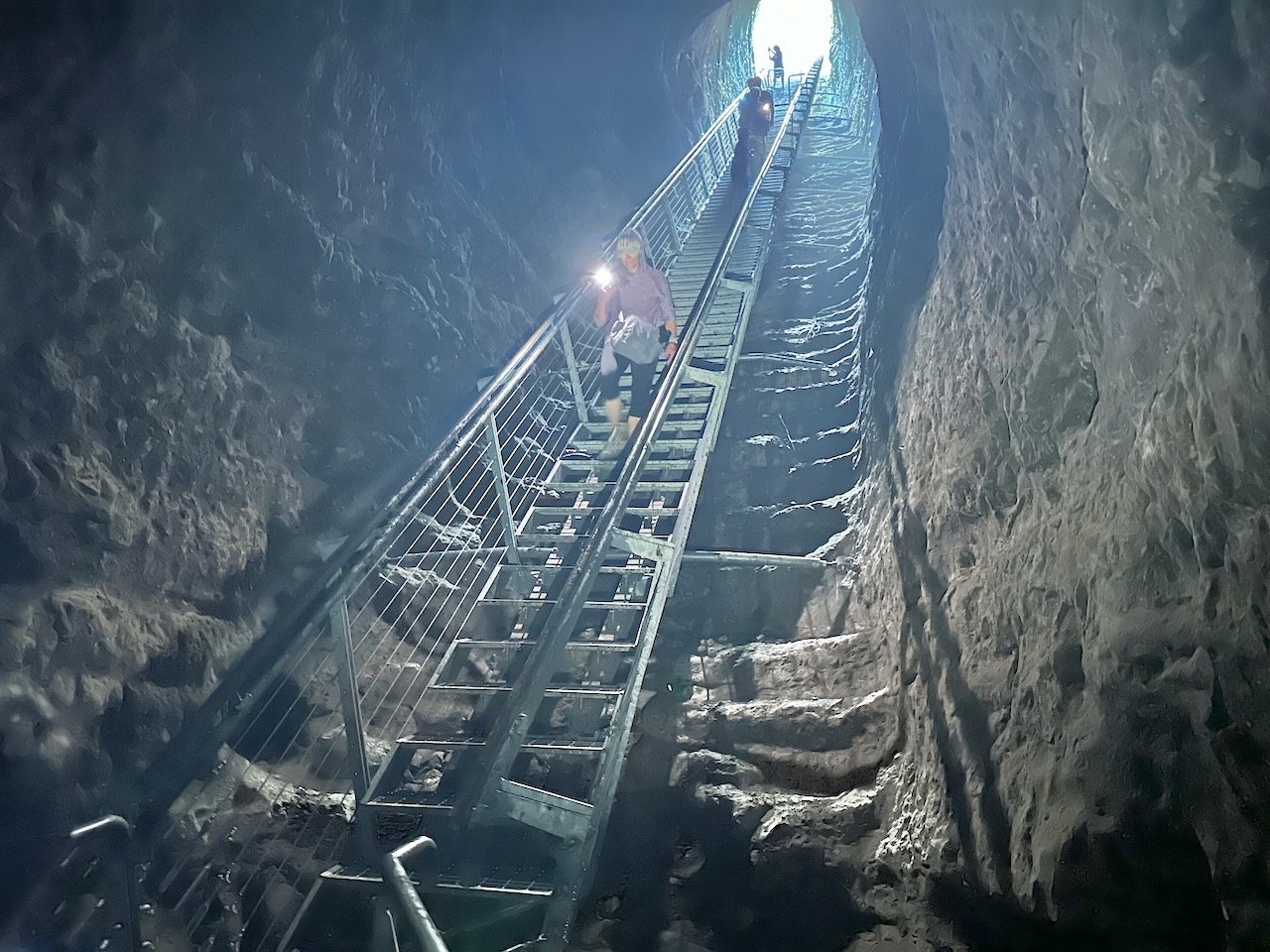
Gezer is located on the Aijalon Valley north of the Sorek Valley. It was both a Canaanite and Israelite city, full of walls, towers, and gates. We saw the replica of the “Gezer Calendar.” We also read from Ecclesiastes 3 about the “seasons of life.” From the observation mound we saw the Aijalon Valley mentioned in Joshua 10. Among the Middle Bronze ruins many of us used the new steel stairway down to the bottom of the water system (175 steps down). This water system was originally used by Canaanites. We then left these Canaanite ruins and continued to the Israelite (Iron Age) area to see ancient house structures and a chambered gate dating to Solomon (1 Kings 9).
At 6 p.m., we drove back to Jerusalem for dinner at 7 p.m. followed by an optional walk to the Promenade.




Day 10 – Saturday, June 15: Garden Tomb, Old City, Rampart Walk, Holy Sepulcher Church, Redeemer Church
Today was our last full day here in Israel. This morning we started with a Communion Service at the Garden Tomb. The afternoon was free for us to explore the Old City on our own. The sun was full once again but with the temperature a bit closer to normal, with highs in the mid 90s
Garden Tomb
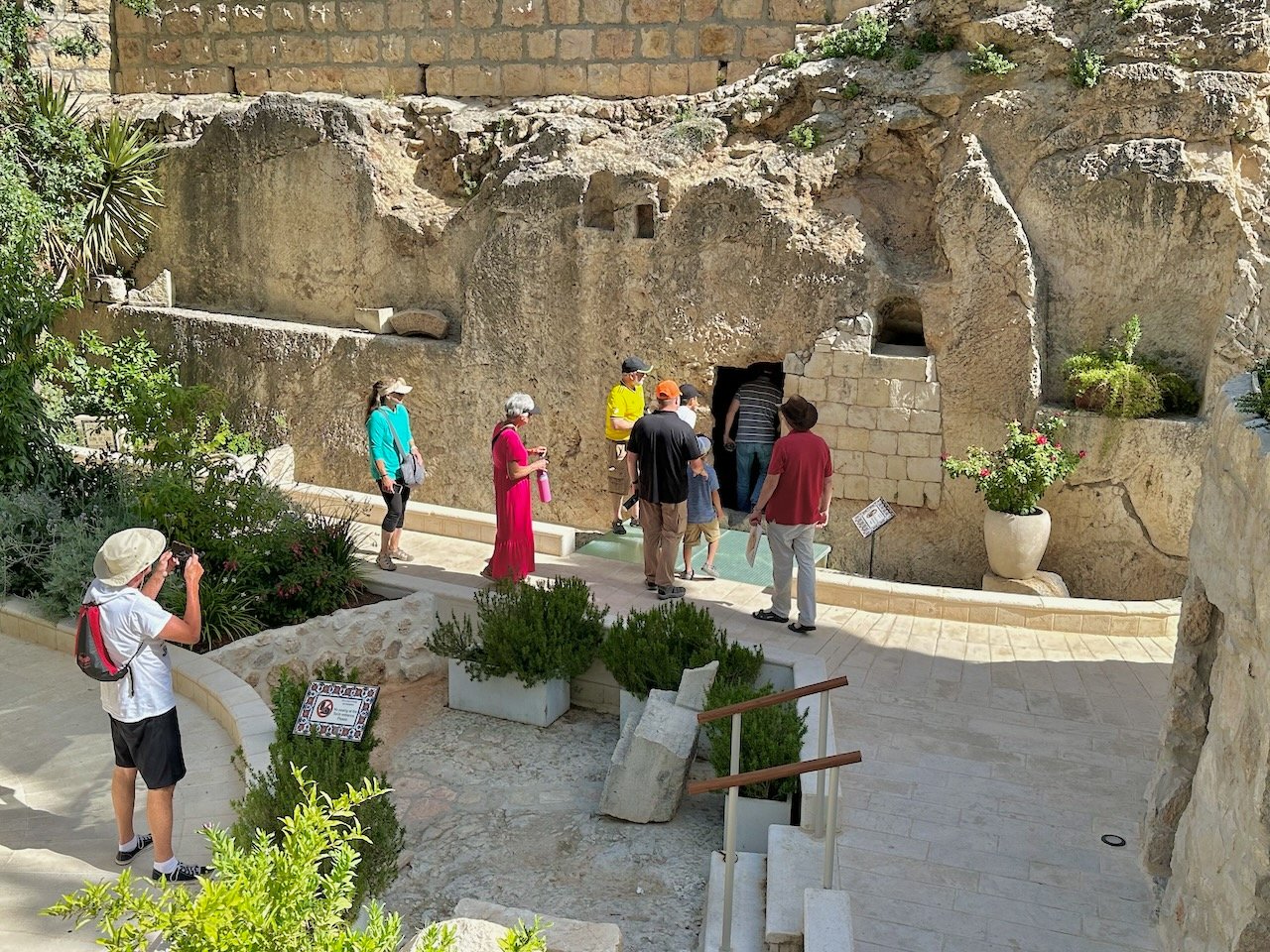
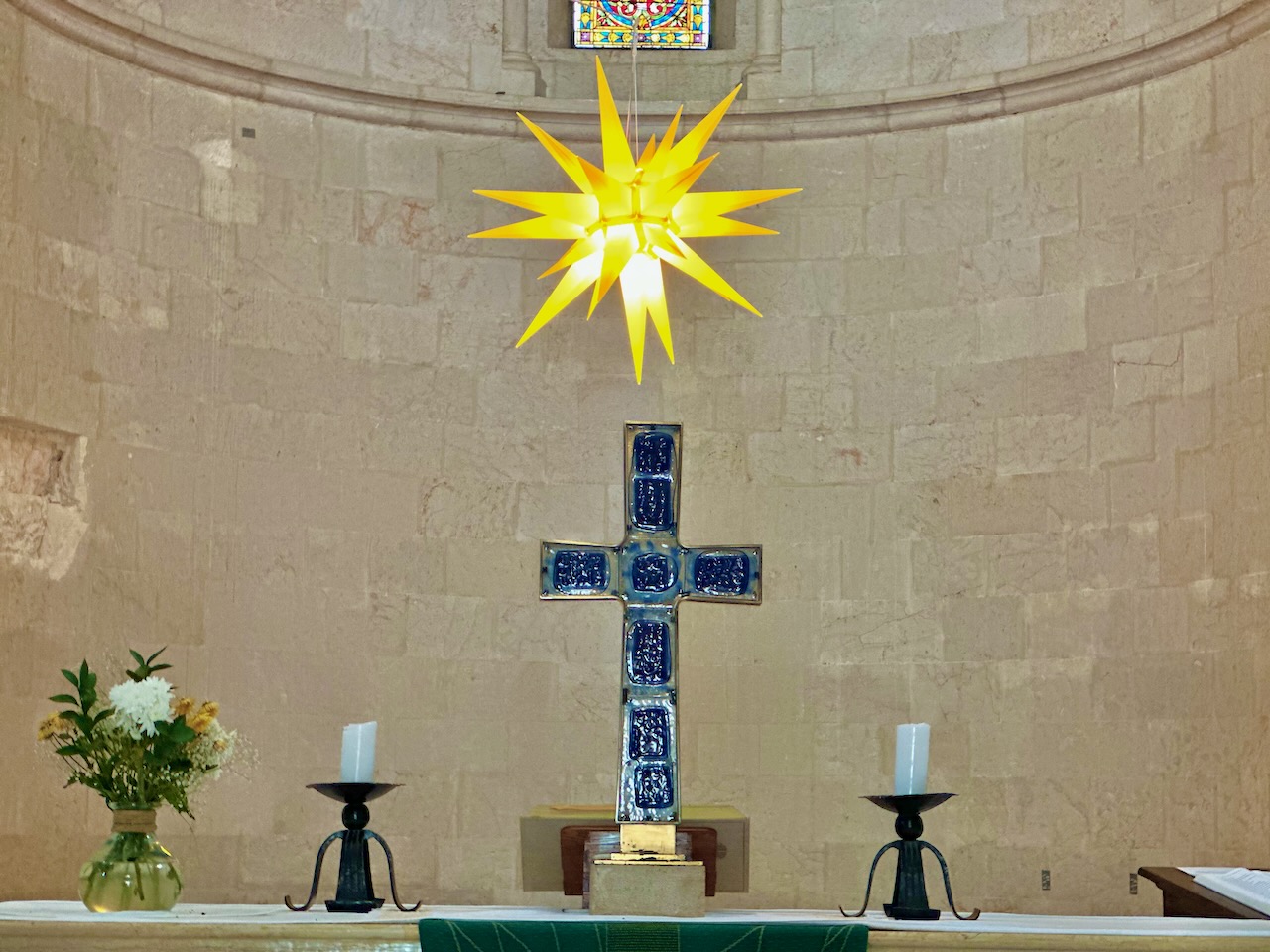
We began the day with a late leisurely breakfast and a departing time of 8:45 a.m. David drove us around the north side of the Old City to the Garden Tomb. Located north of the Damascus Gate, the Garden Tomb was discovered in the last 1800s and served an alternative “Protestant” location for the crucifixion and burial site of Jesus (vs. the Holy Sepulcher Church) . We saw the rocky scarp (Golgotha) and the proposed tomb. A special time of worship and Communion followed. We worship the Person, not the place.
Rampart Wall Walk
We were then picked up and taken to the Jaffa Gate where we got our tickets for the Rampart Wall Walk. We hopped on and walked on the high Ottoman/Turkish walls from the area of the Jaffa Gate (the location of Herod’s Palace) all the way to Zion’s Gate overlooking the Jewish Quarter. The walk provided a unique perceptive of the Old City below.
Holy Sepulcher Church / Redeemer Church
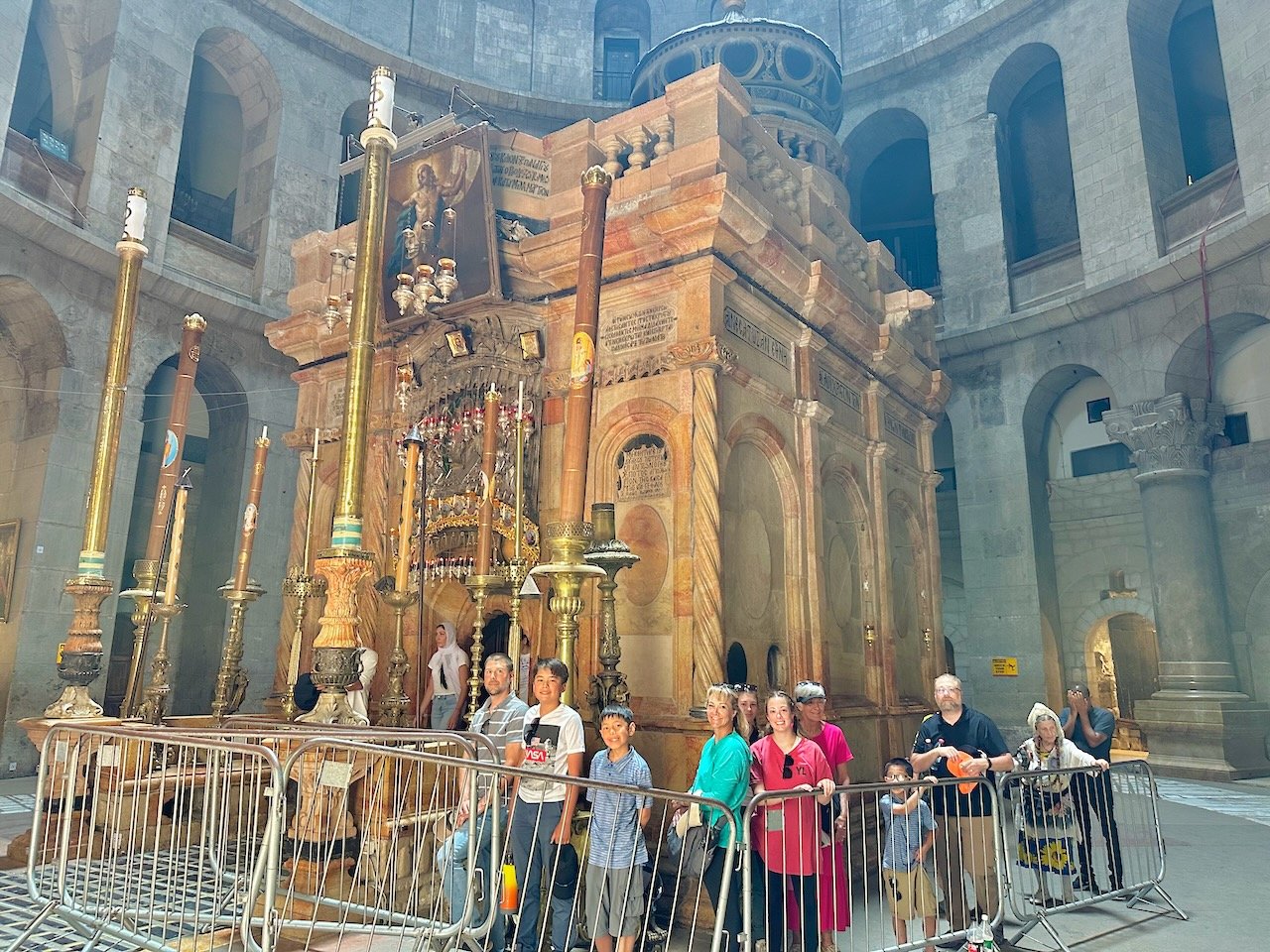
Following a brief time at the Western Wall, we all walked into the Christian Quarter of the Old City. After grabbing a quick bite to eat, we enjoyed a visit to the Holy Sepulcher Church. Built in 325 AD, this is the traditional location for the death and burial place of Jesus. The archaeological and historical records favor this site over the Garden Tomb. We not only saw the Edicule that has enclosed the suggested tomb of Christ for now nearly 1600 years, but we even went inside this suggested tomb of Christ.
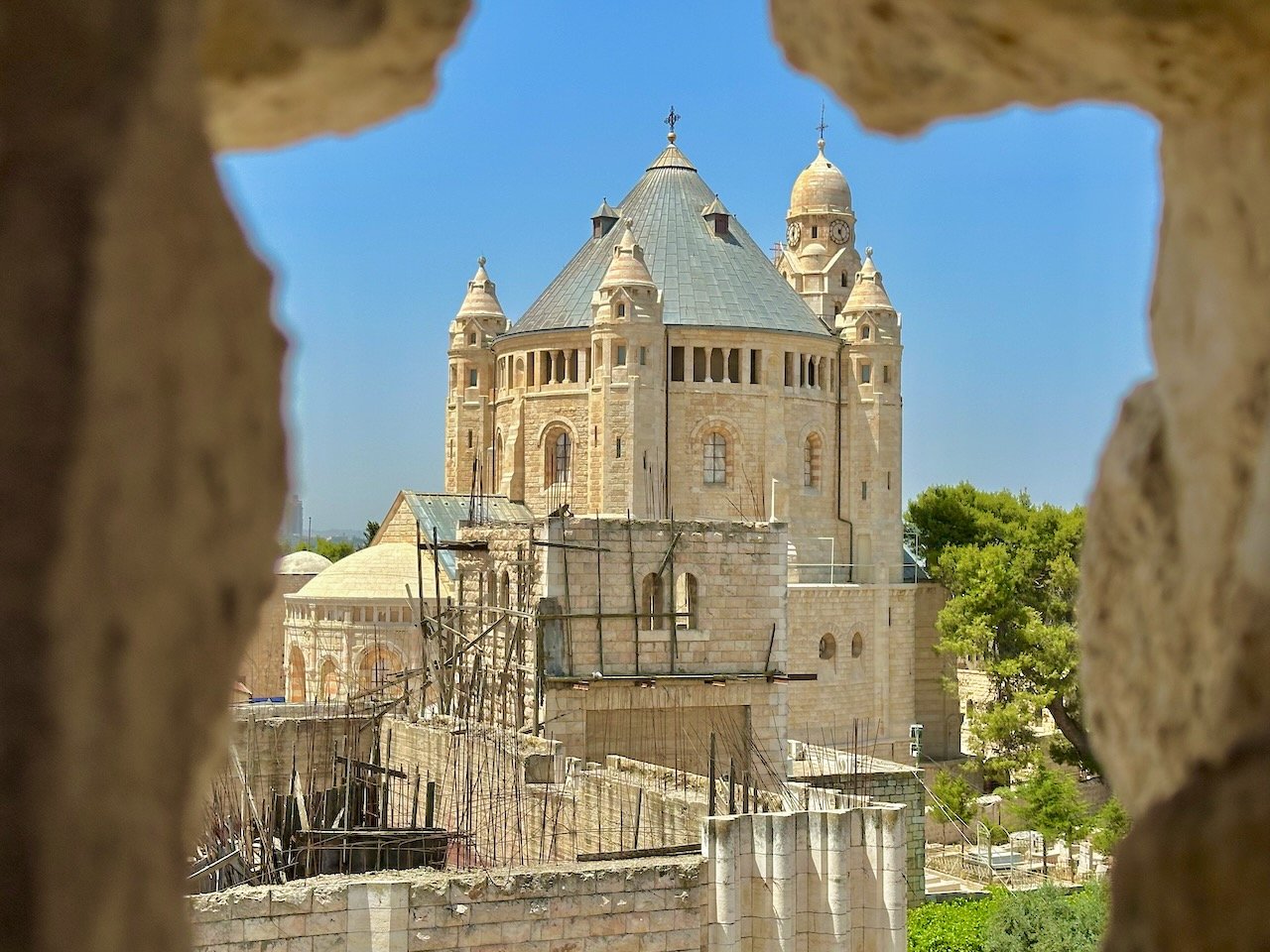
Next, we all walked up the narrow circular steps (185 of them) of the Redeemer Lutheran Church in the heart of the Christian Quarter. The panoramic view in all directions of the Old City was incredible. In the mid afternoon, we returned to our Guest House. Upon arrival, we said goodbye to Shlomo our guide.
Our “last supper” together was at 5 p.m. It was fun sharing our trip experiences with each other. Nine in the group will wake up at 2 a.m. tomorrow for the 6 a.m. flight back home. Three of us will spend another day here in Jerusalem until our flight on Monday morning.





Day 11 – Sunday, June 16: Flight Back to the U.S., Arrival Home
Hike Up Arbel
One of our optional hikes is to the top of Mt. Arbel. Located on the NW corner of the Sea of Galilee, the hike offers a wonderful view of the region. We ascend 800 feet to the top (for those not inclined to hike the bus takes people to the top from the other side).
The cliffs of Arbel has historical significance too. Jews during both the 1st century BC and later in 66 AD found refuge in these caves.