
Tour Experiences of our 12 Day Biblical Israel Tour, with Jordan & Southern Israel Extension
November 7-18, 2026
(The trip is now updated through Day 11, TUESDAY, November 17)
Downloads:
"Life transforming Israel tours & teaching in the context of the land of the Bible"
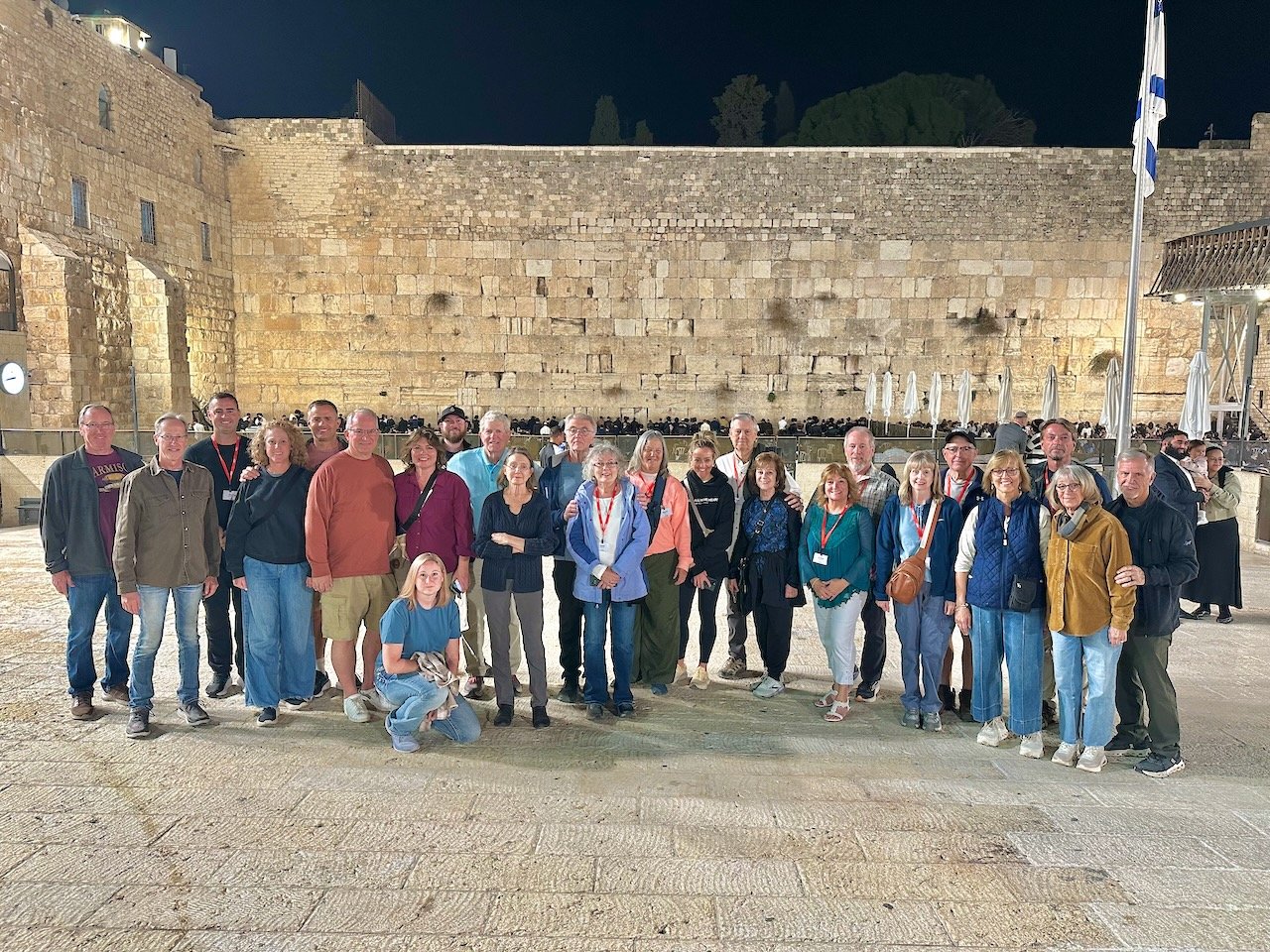
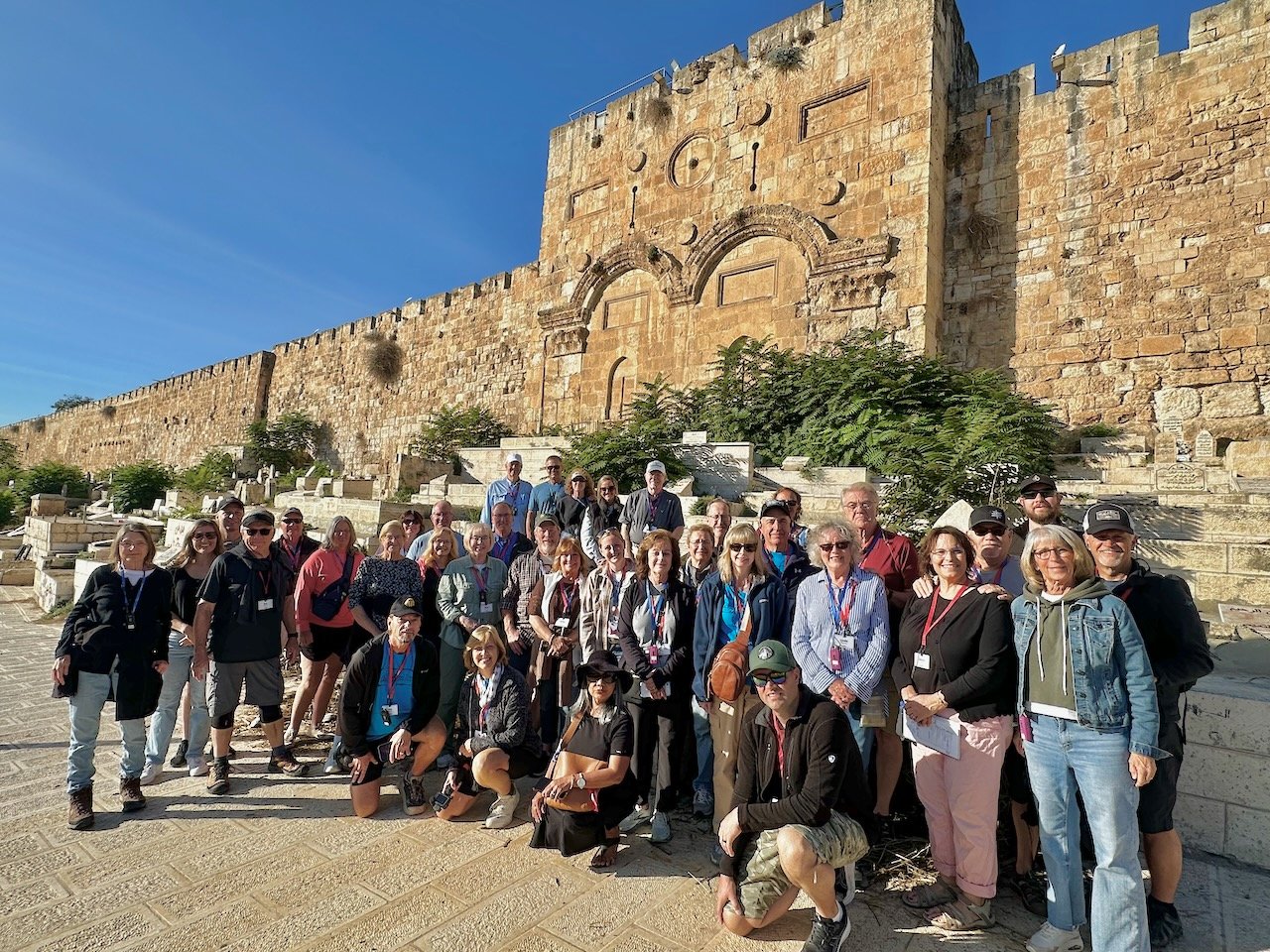
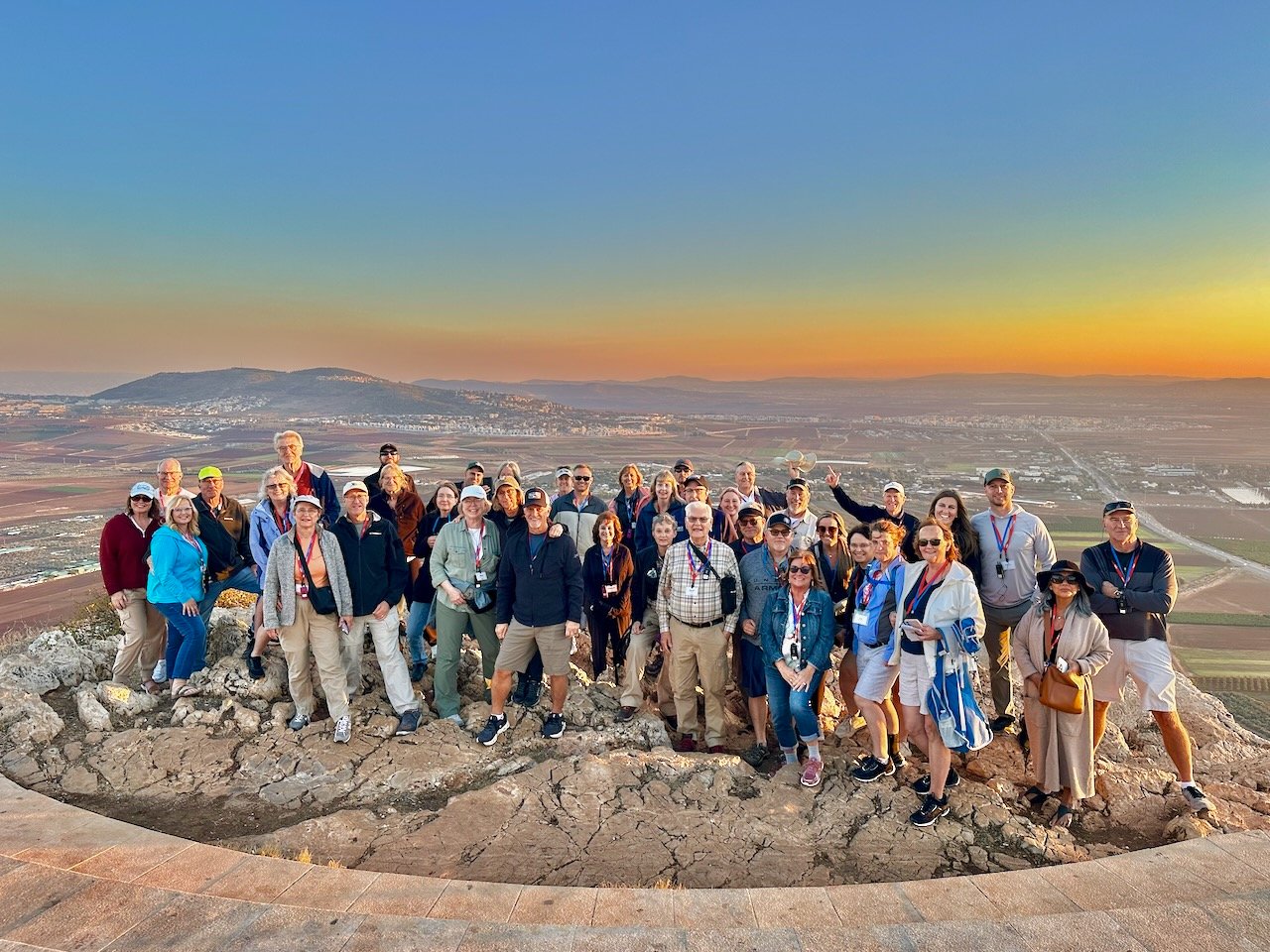
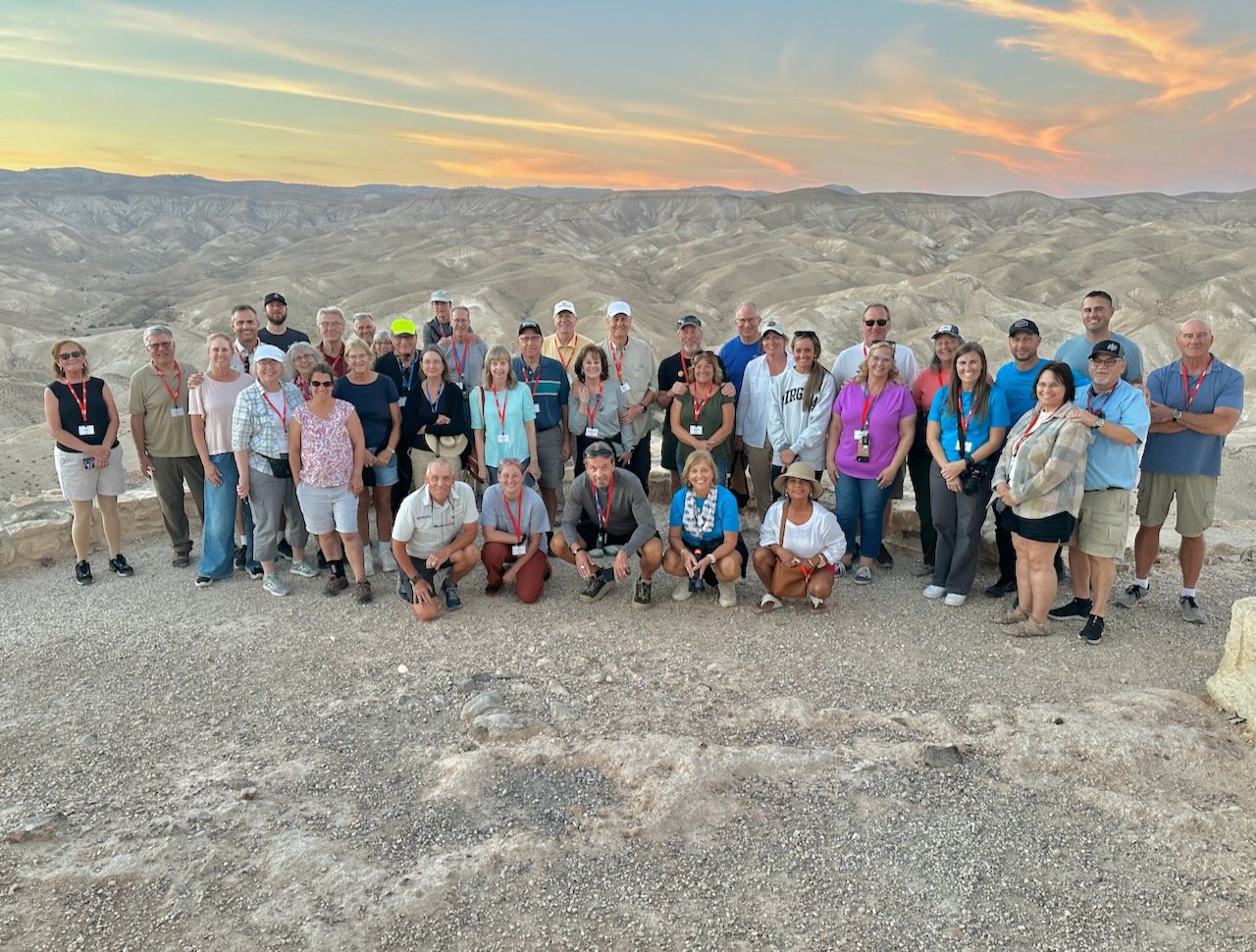
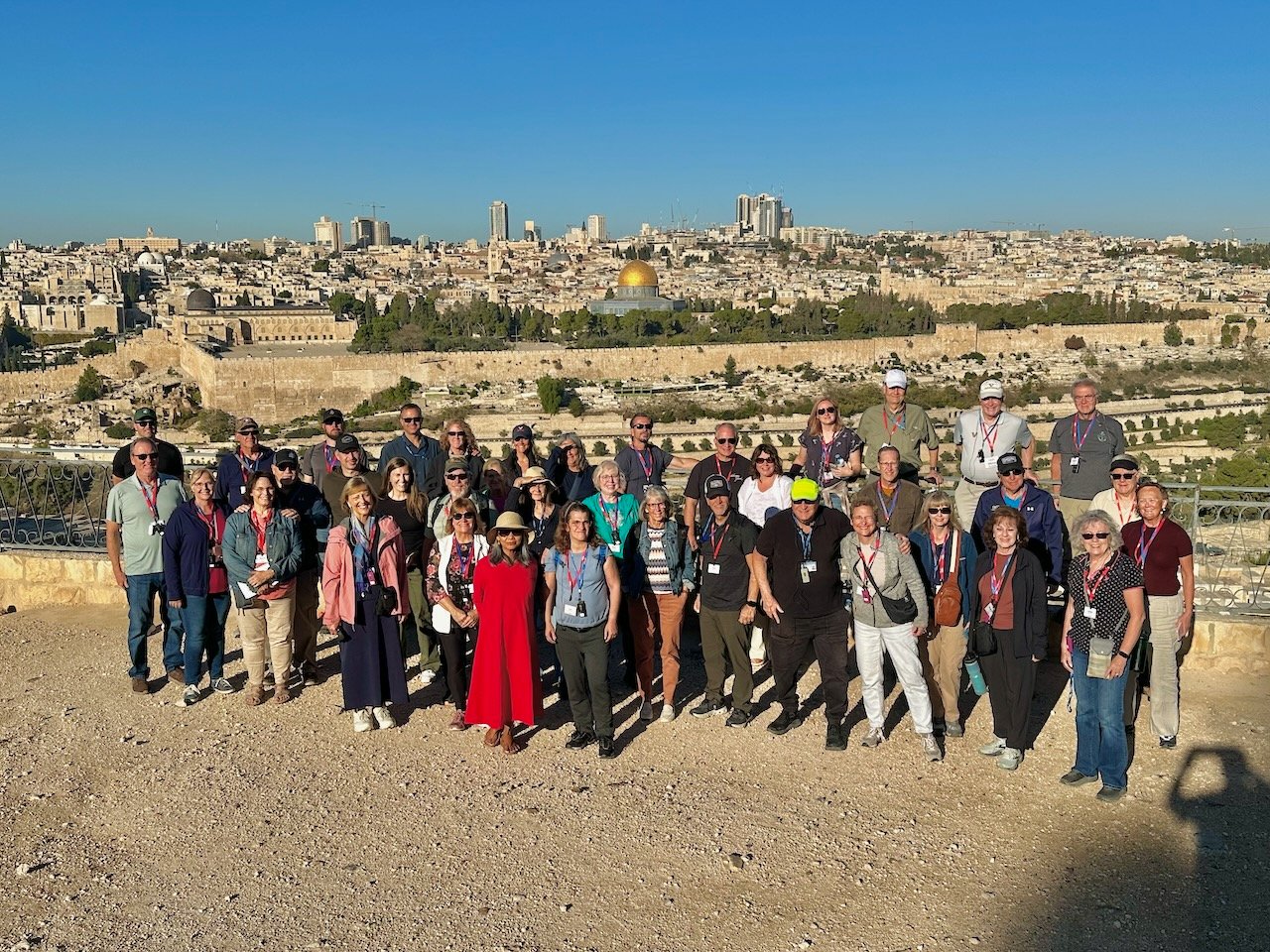
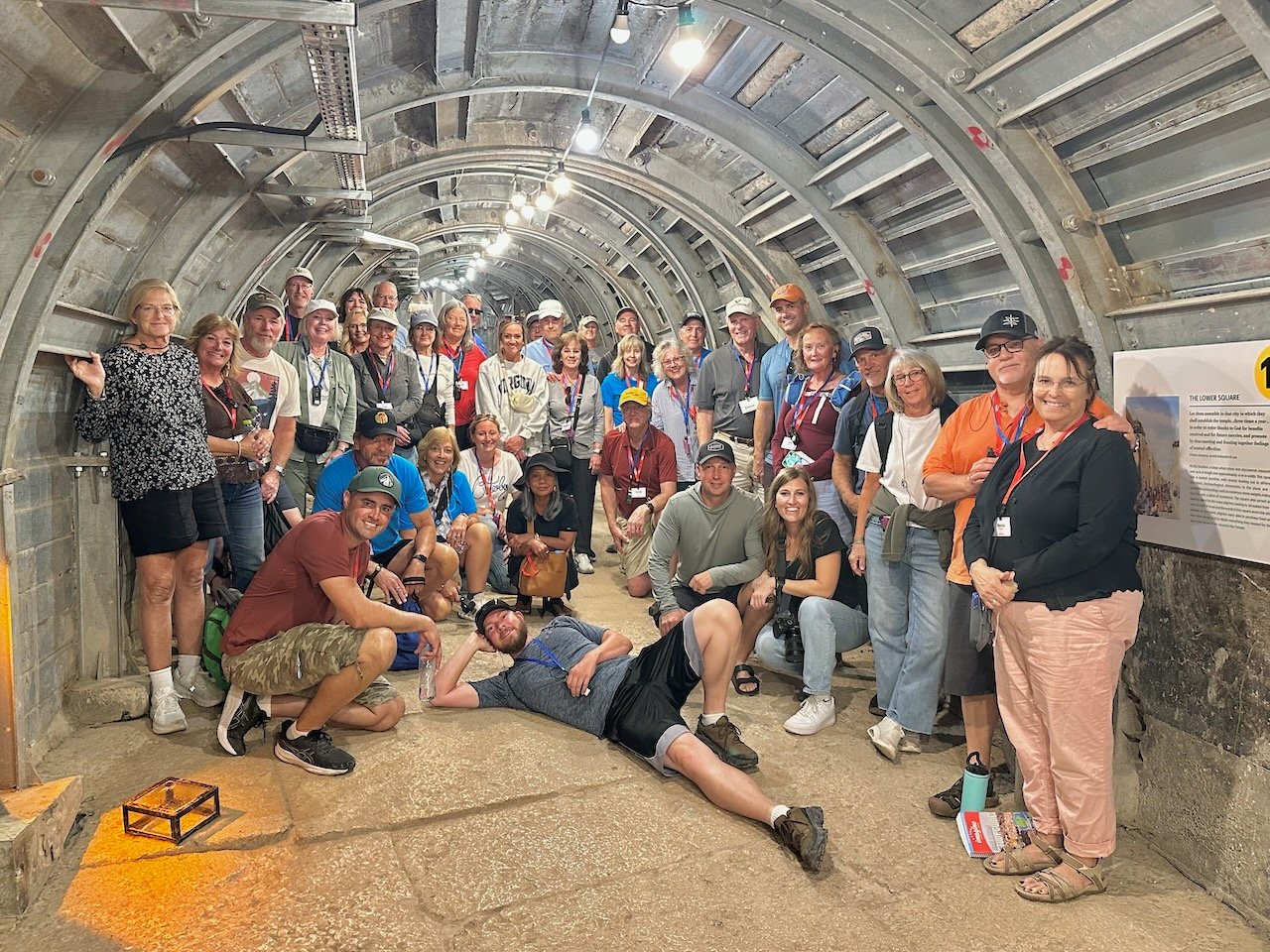
GROUP PHOTOS
360 PHOTOS
The Israel Tour Itinerary:
Days 1 & 2 – Saturday-Sunday, November 7-8: Departure Day, Arrival in Tel Aviv, Netanya
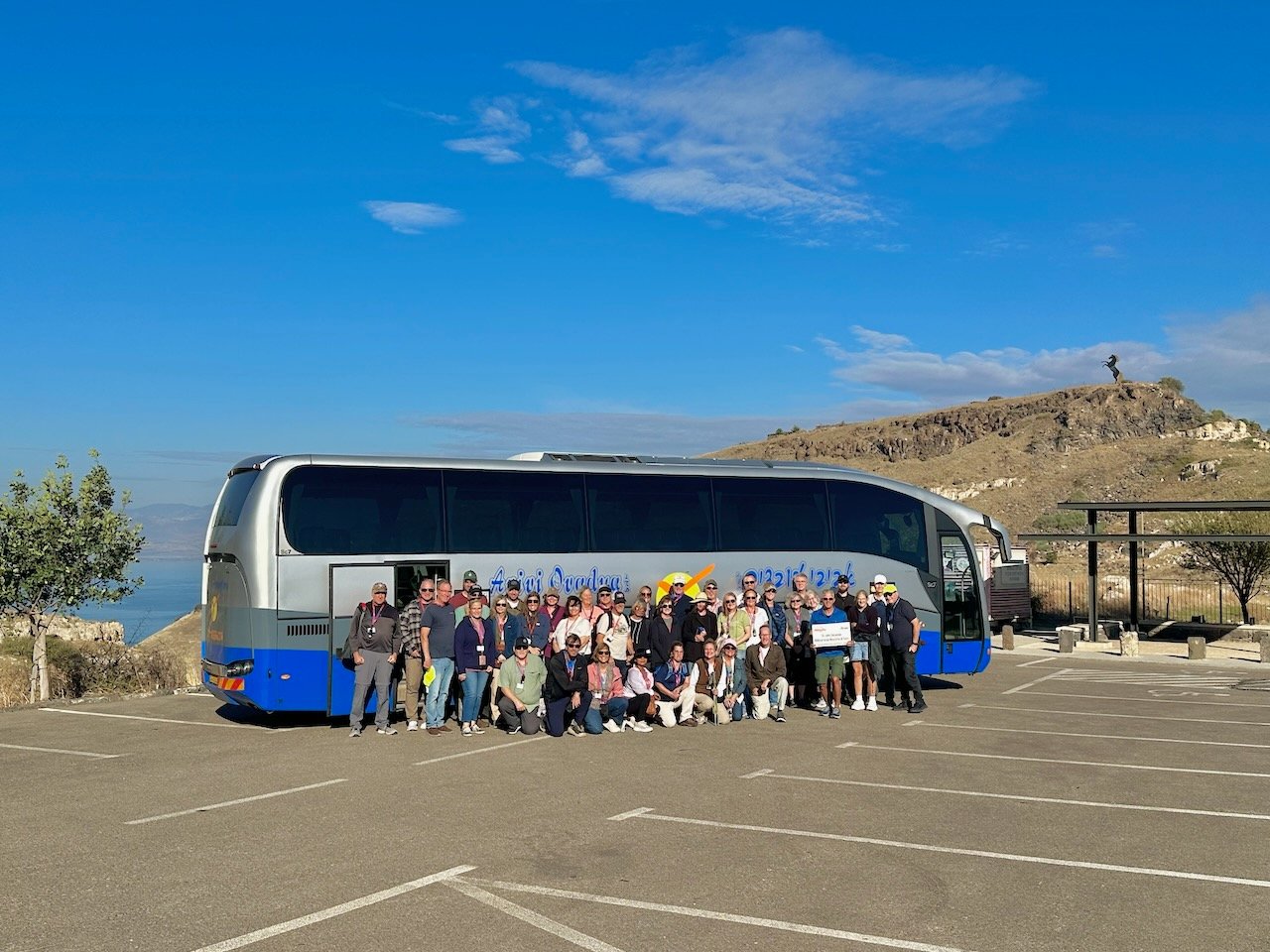
The day finally arrived… we are heading to Israel and Jordan! God brought a total of 41 of us together for this group. For many in the group, this is the 3rd or 4th attempt in getting here (due to postponements because of the war). We used several different flights in order to arrive at the Ben Gurion Airport. At the time of this posting, all but one made it (she arrives latter tonight).
Ben Gurion Airport
We were met by our Israeli agent who assisted us through the airport. Following gathering our luggage, the majority of the group (27 of us) drove with David (our driver) and Shlomo (our Israeli guide) to Netanya. Others in the group already arrived earlier.
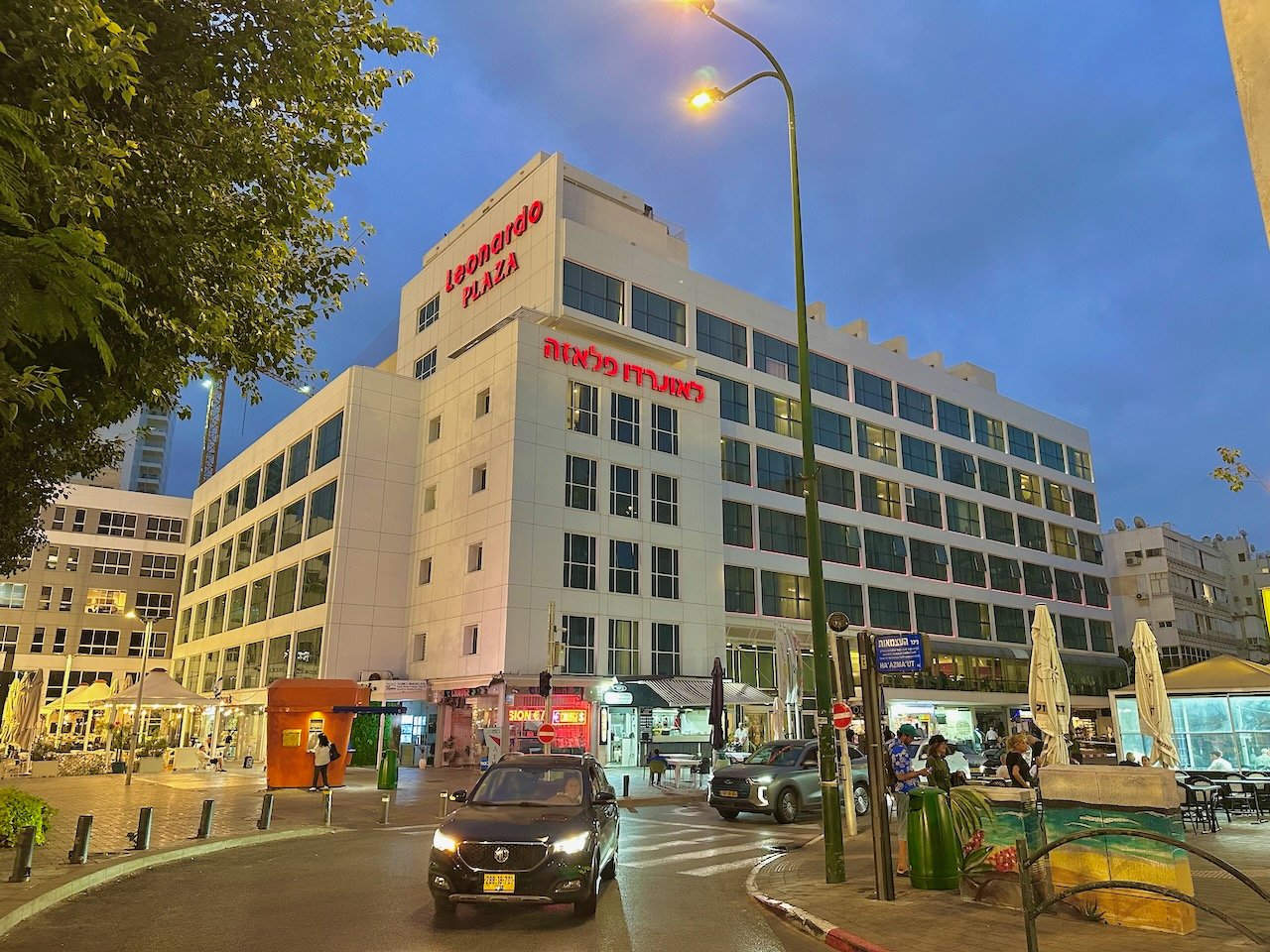
Once we arrived at the hotel, we enjoyed an amazing buffet dinner together. This won’t be too hard to get used to (HA)! A number in the group also added an optional stroll down to the shoreline of the Mediterranean Sea after (some will enjoy the beach tomorrow morning).
We are all looking forward to our first full day tomorrow here in Israel!
NOTE: Photos are from another previous trip when the view of the coastline of Tel Aviv was optimal!



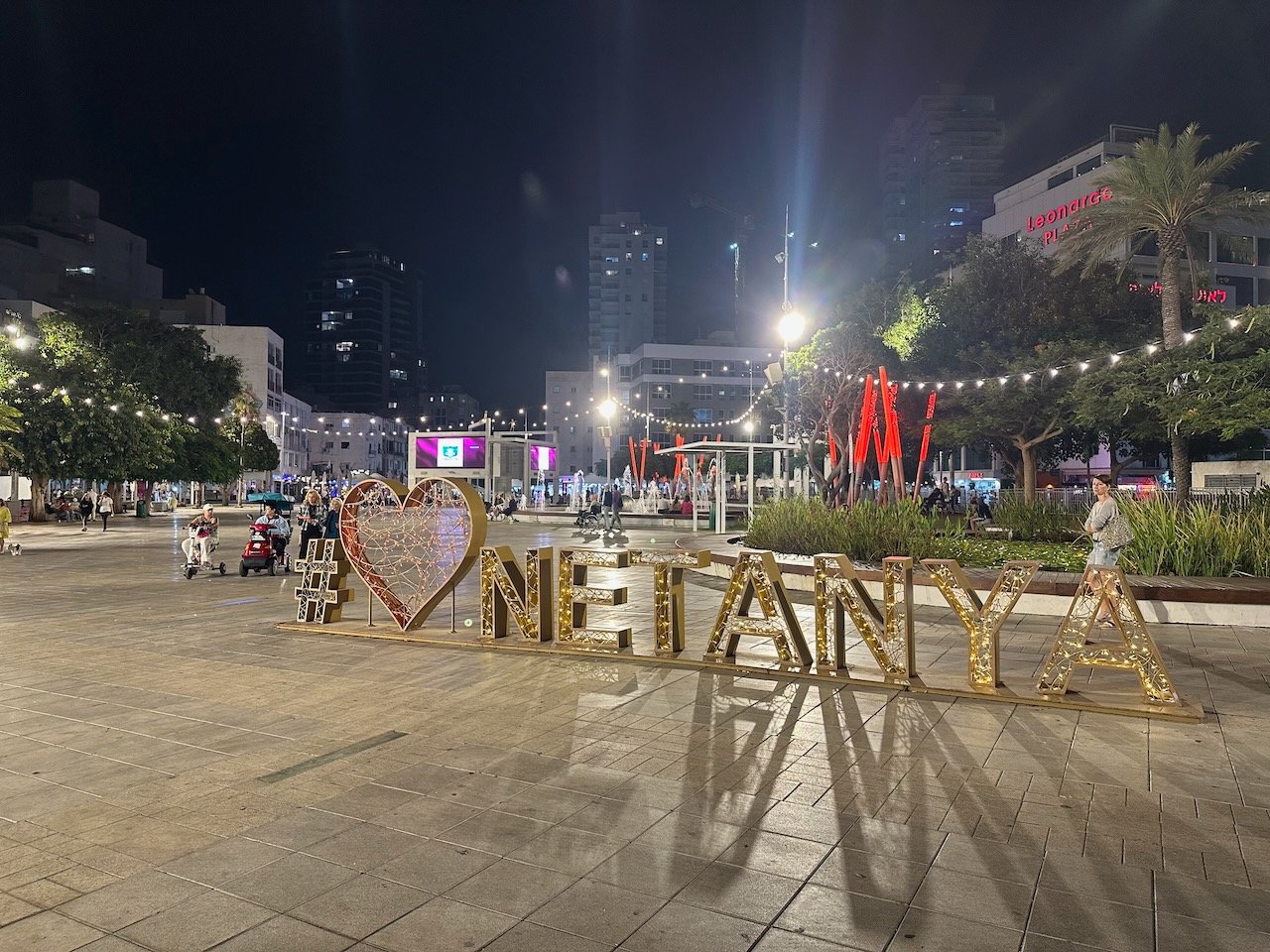
Day 3 – Monday, November 9: Caesarea, Carmel, Megiddo, Precipice of Nazareth, Tiberias
Today was our first full day here in Israel. We are all excited to engage with the Bible and the primary land where biblical events took place. The day’s weather was perfect, with a mild start to the day and a warm afternoon. We had full sun and highs in the 70s. We are glad that the heavy rains (and floods) of the last two days have not moved out of the region! After a wonderful full breakfast, we loaded the bus and left about 7:35. We read Psalm 100 and were introduced to the “Oh, the Sun’s Coming Up…” song. 🙂 as we drove north to our first site.
Caesarea Maritima
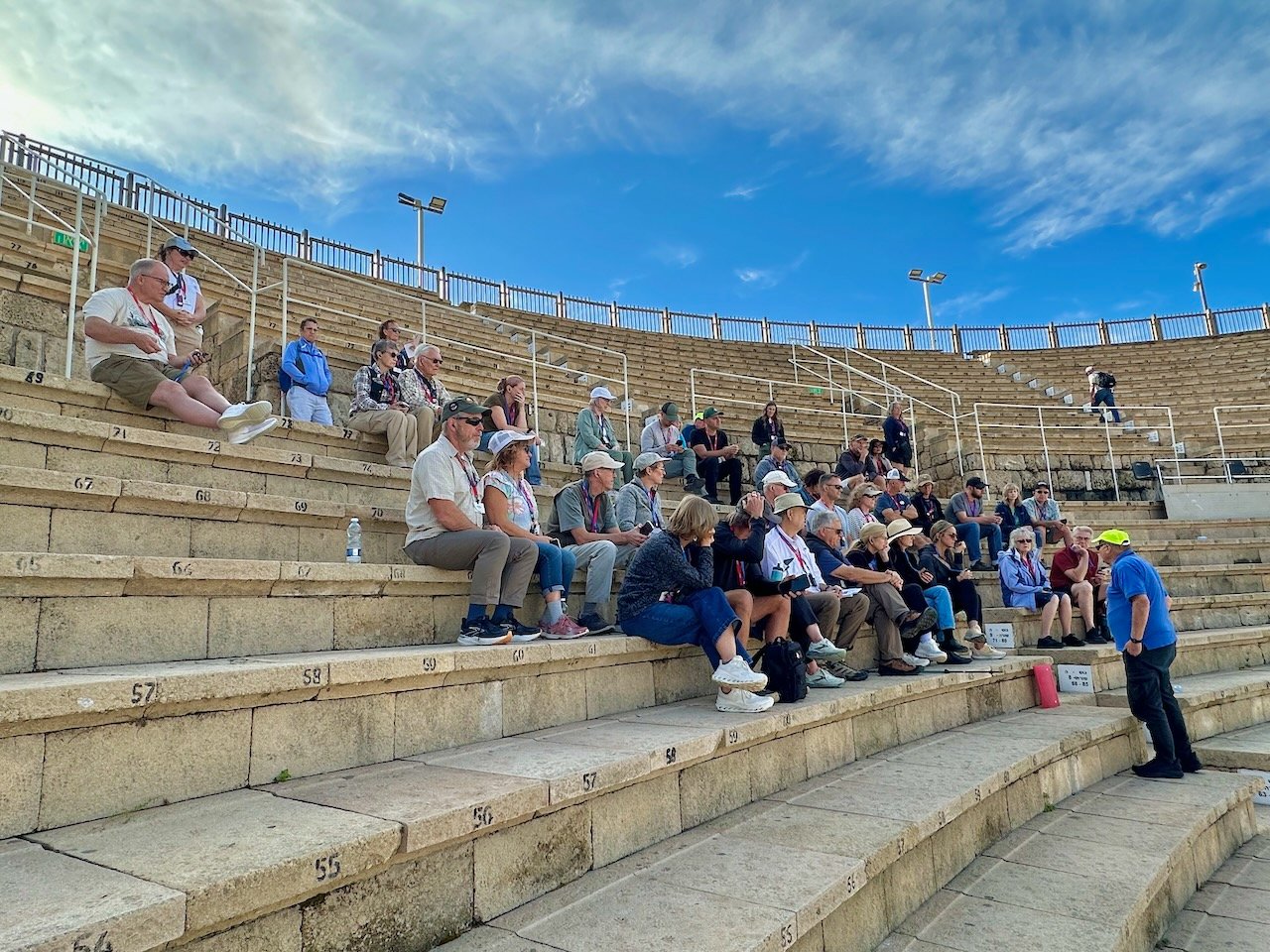
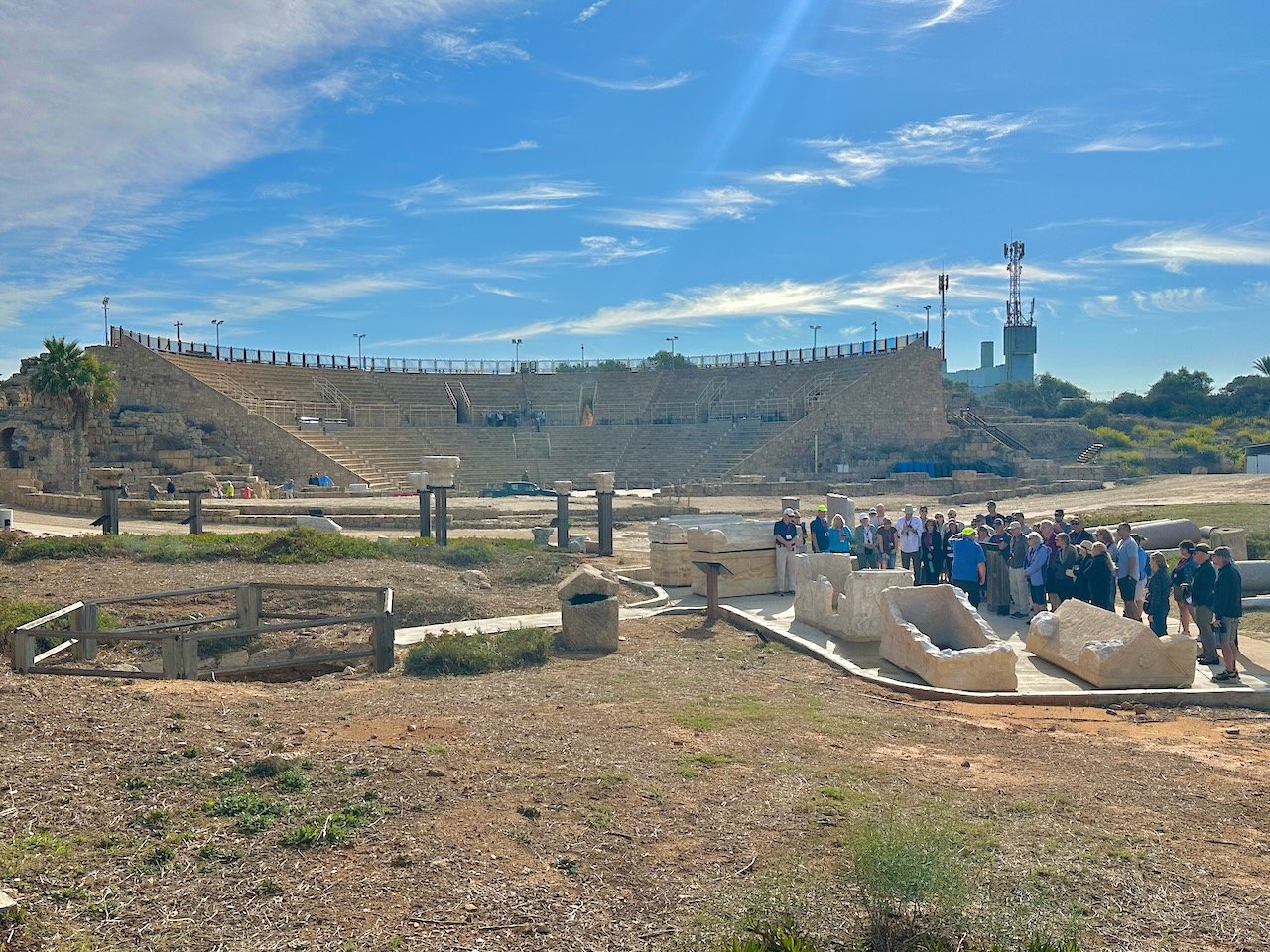
We drove north in the Sharon Plain to get to our first site, Caesarea Maritima. It was a city built between 22-10 BC by Herod the Great.We started the the theater where we read portions of Acts 8, 9, 10, 12, 21, and 26. Peter, Phillip, and Paul were all here sharing their faith in Christ. Among the ruins the praetorium (palace, where we saw a replica of the Pilate Inscription found in 1961 in secondary use), hippodrome, and the area of the harbor. We then entered the Crusader part of the city. We saw a short 10 minute movie about Herod and Caesarea (after the power came back on). Before leaving the site, we also saw the aqueduct that brought fresh water into Caesarea from the Carmel Range.
Carmel Range
Leaving Caesarea, we drove through the Carmel Range (or Mt. Carmel). This range separates the Sharon Plain with the Jezreel Valley. We first enjoyed a early but wonderful buffet lunch at a Druze restaurant owned by a dear and wonderful family. Some of us even had a magnum ice cream bar for desert. 🙂
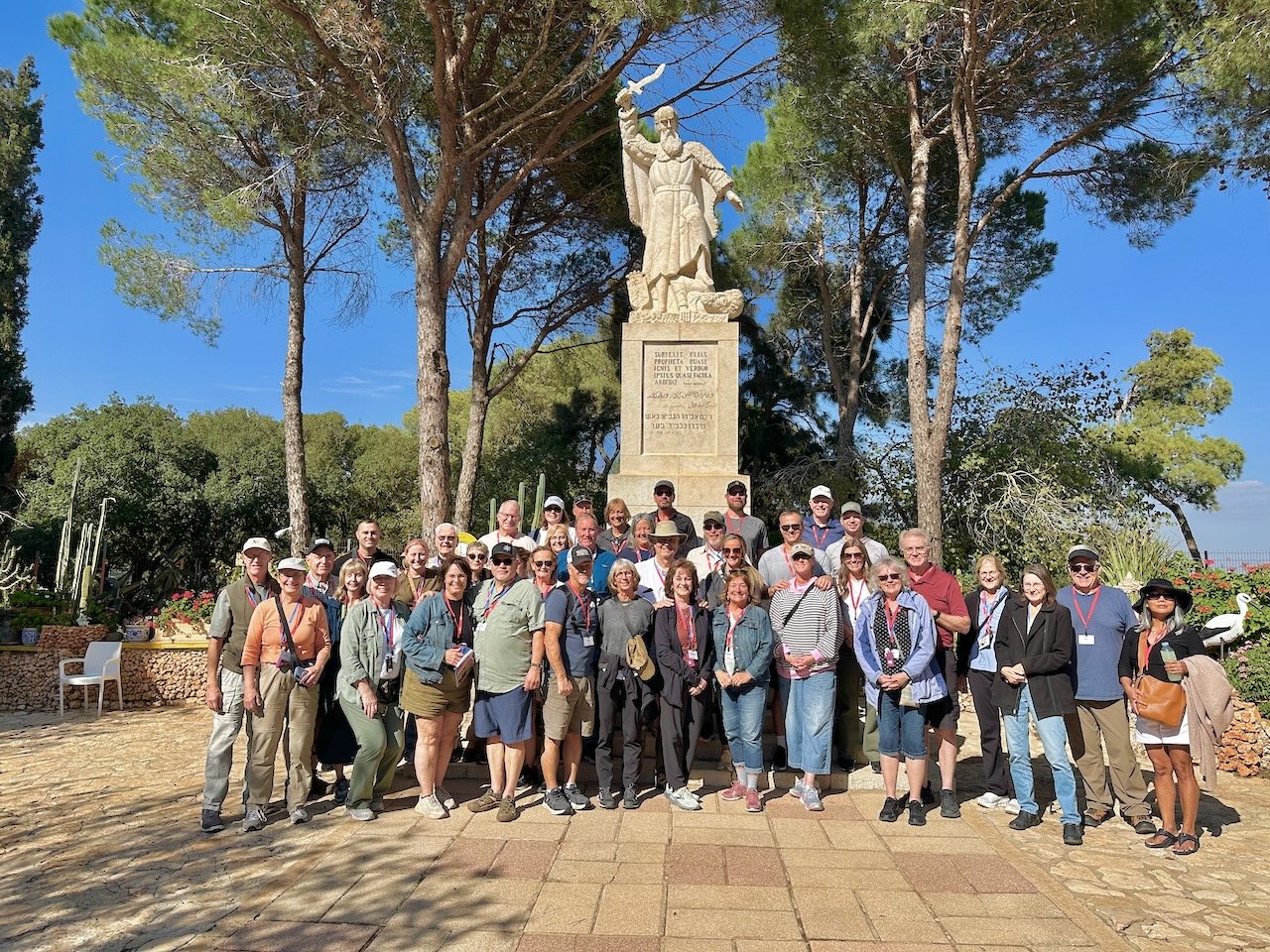
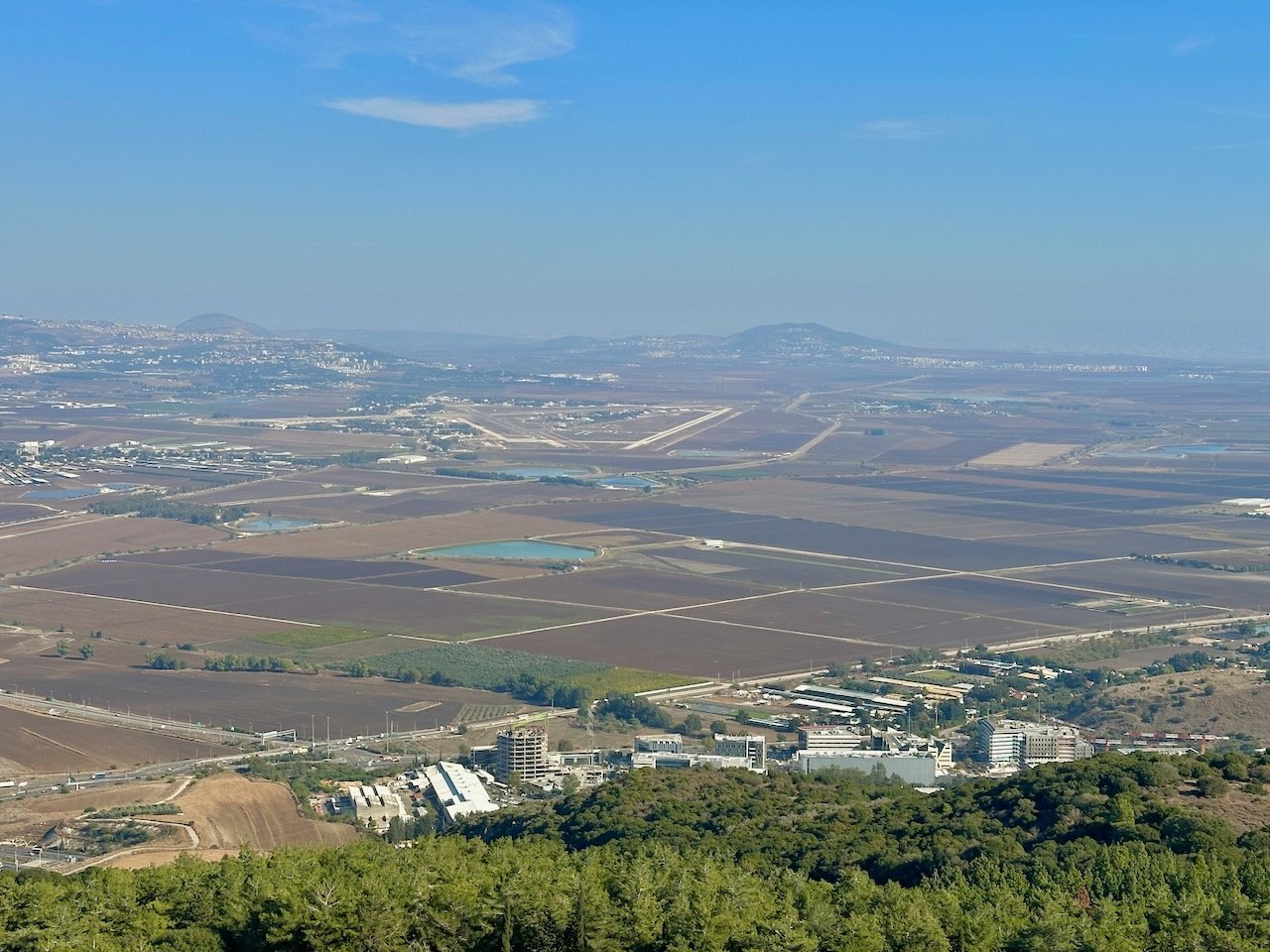
We then drove to the top of this range called Muhraha (“Burnt Offering” in Arabic). In the Carmelite Chapel we gathered were we read from Isaiah 35, Amos 1 and 9, and Song of Songs 7, all passages that mention the Carmel. We also read portions of the primary story that happened here from 1 Kings 18. This involved Elijah confronting the 450 prophets of Baal. From the roof of the chapel we enjoyed our first view of the Jezebel Valley below. It was a 8.5 view with great visibility of the valley, Mt. Tabor, Hill of Moreh, and Mt. Gilboa.
Megiddo
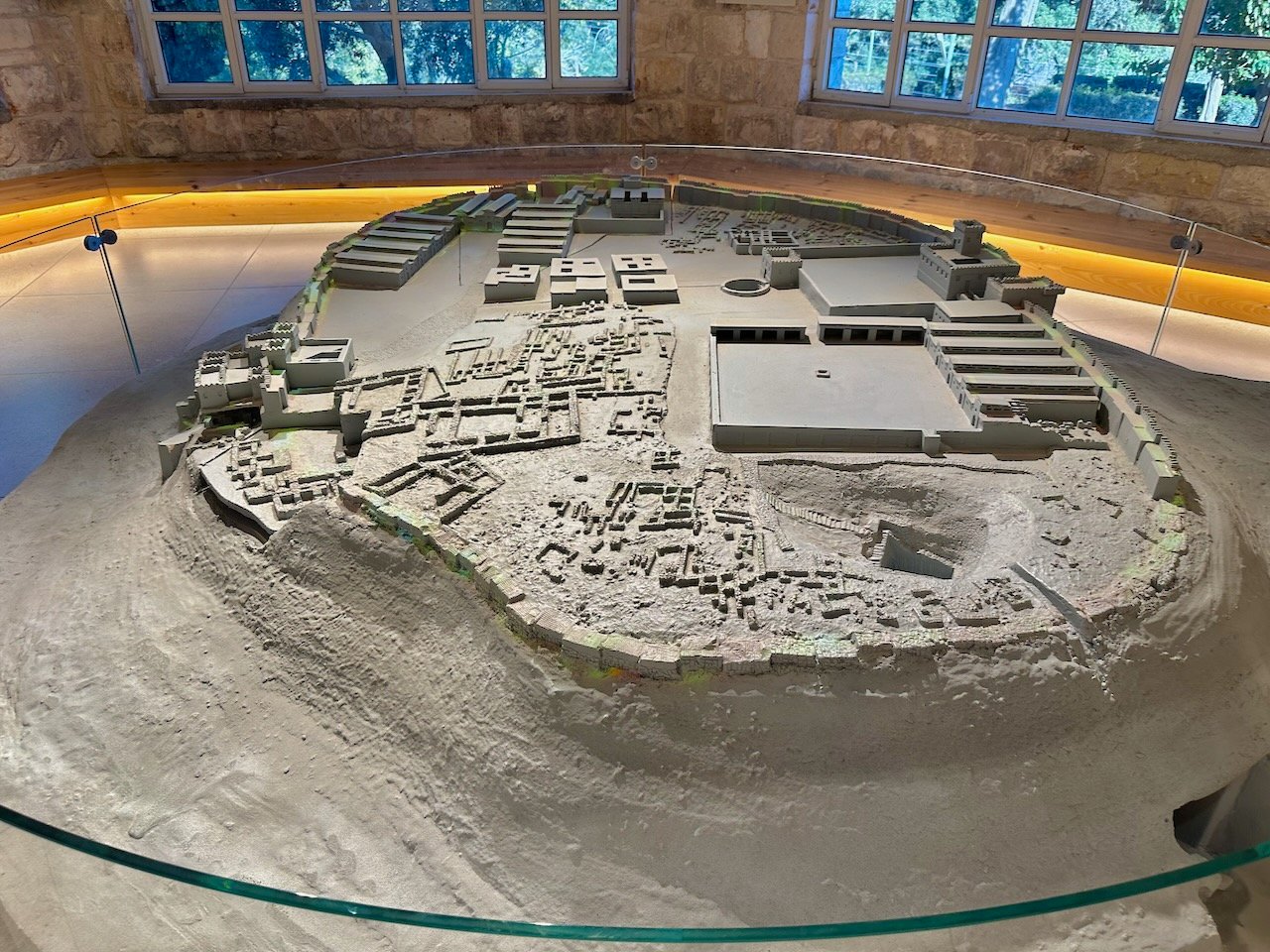
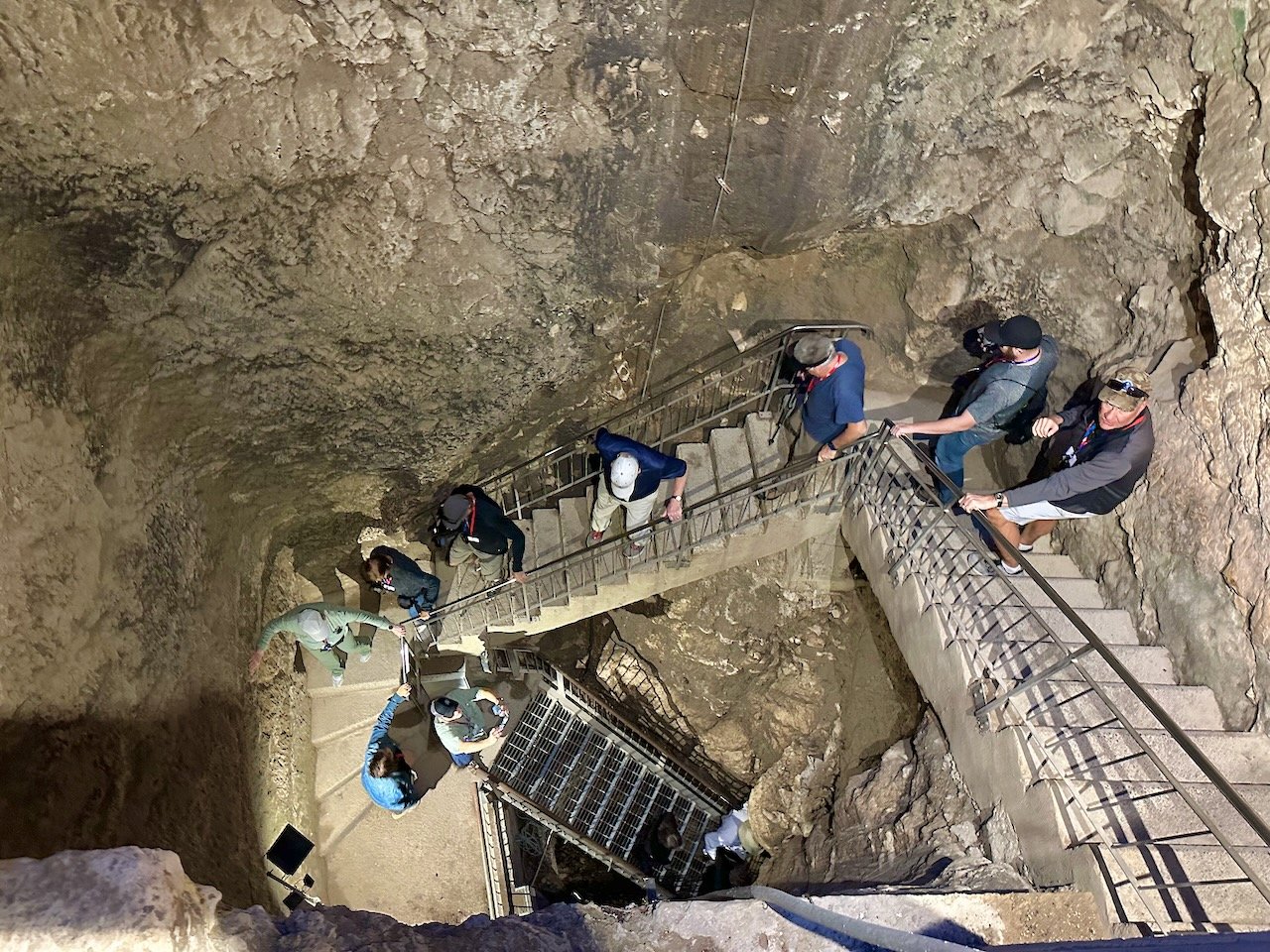
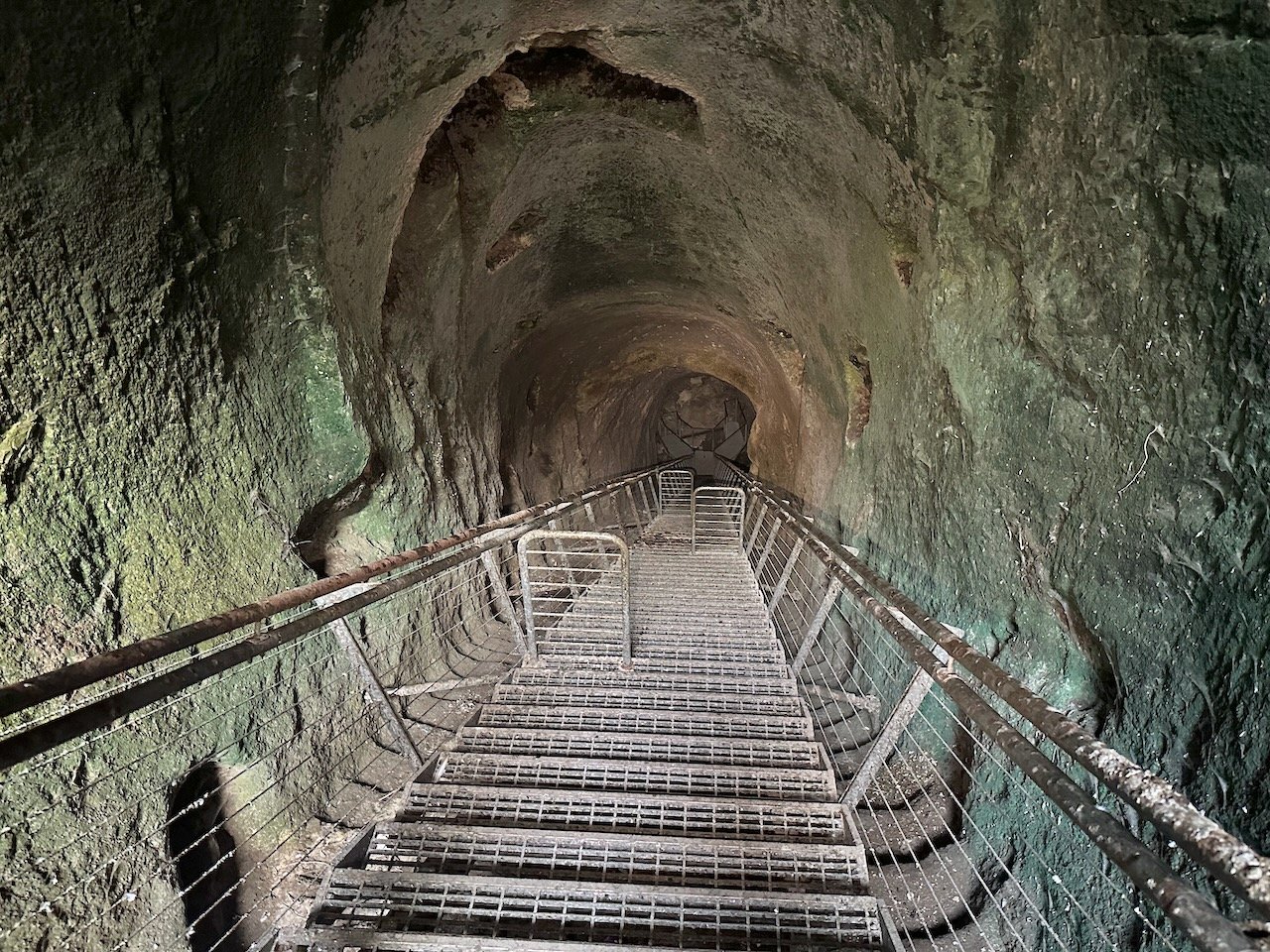
As we drove along the edge of the Jezreel Valley arrived at Megiddo, an archaeological site that has about 25 levels of occupation that span 2,500 years! After seeing a model of the tel (ancient mound), we walked to the top of this Canaanite/Israelite site. We saw two Canaanite gate complexes, the gate, stables and palace area of Solomon (1 Kings 9:15), a sacrificial altar (Canaanite), and a grain silo. The also enjoyed a great view of the surrounding hills from here and the valley itself (Revelation 16:16). We left the site by descending 180 steps down through the impressive water system that was designed and engineered to safely bring water into the city. It was remarkable to experience this amazing engineering project.
Precipice of Nazareth
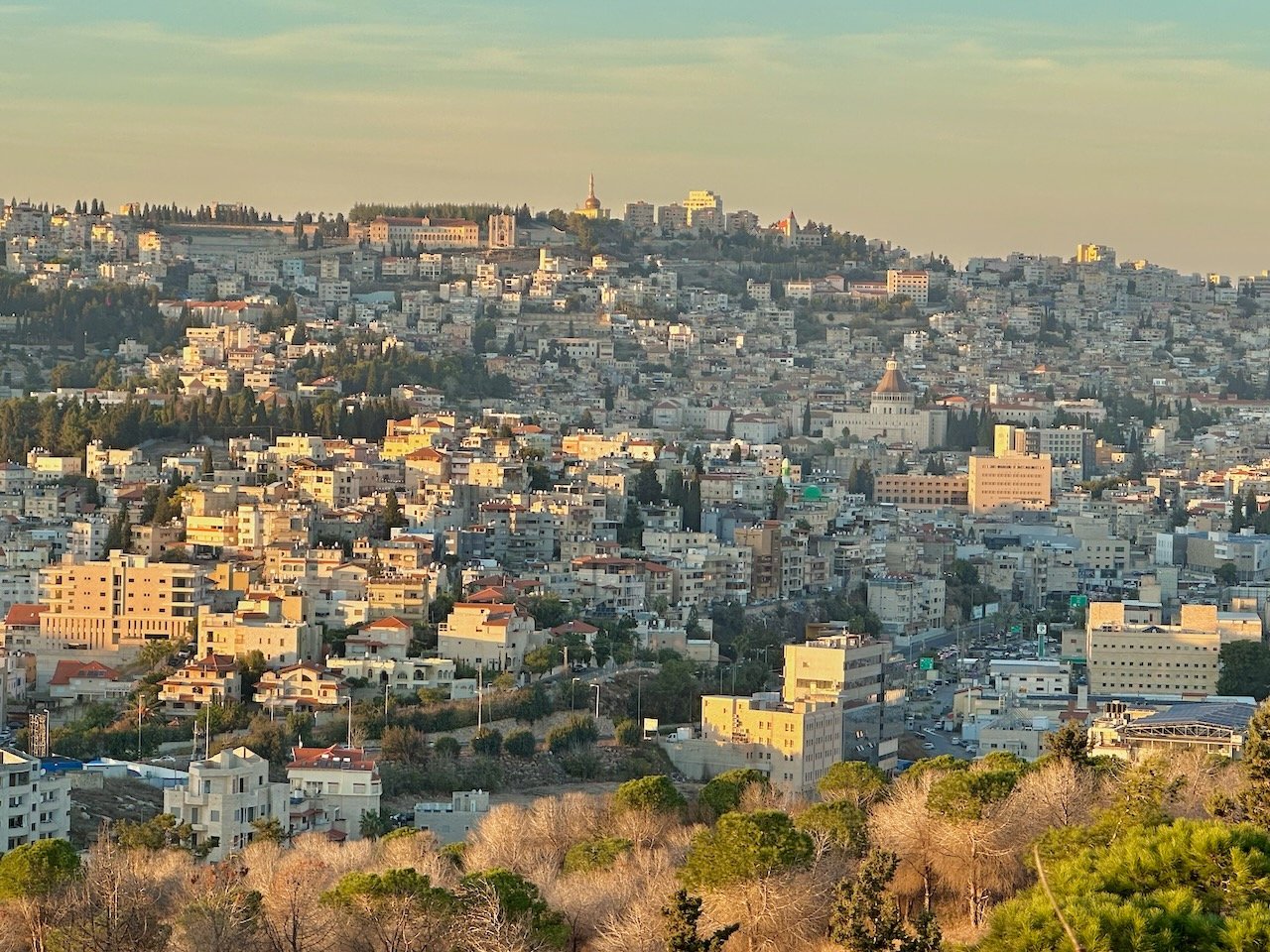
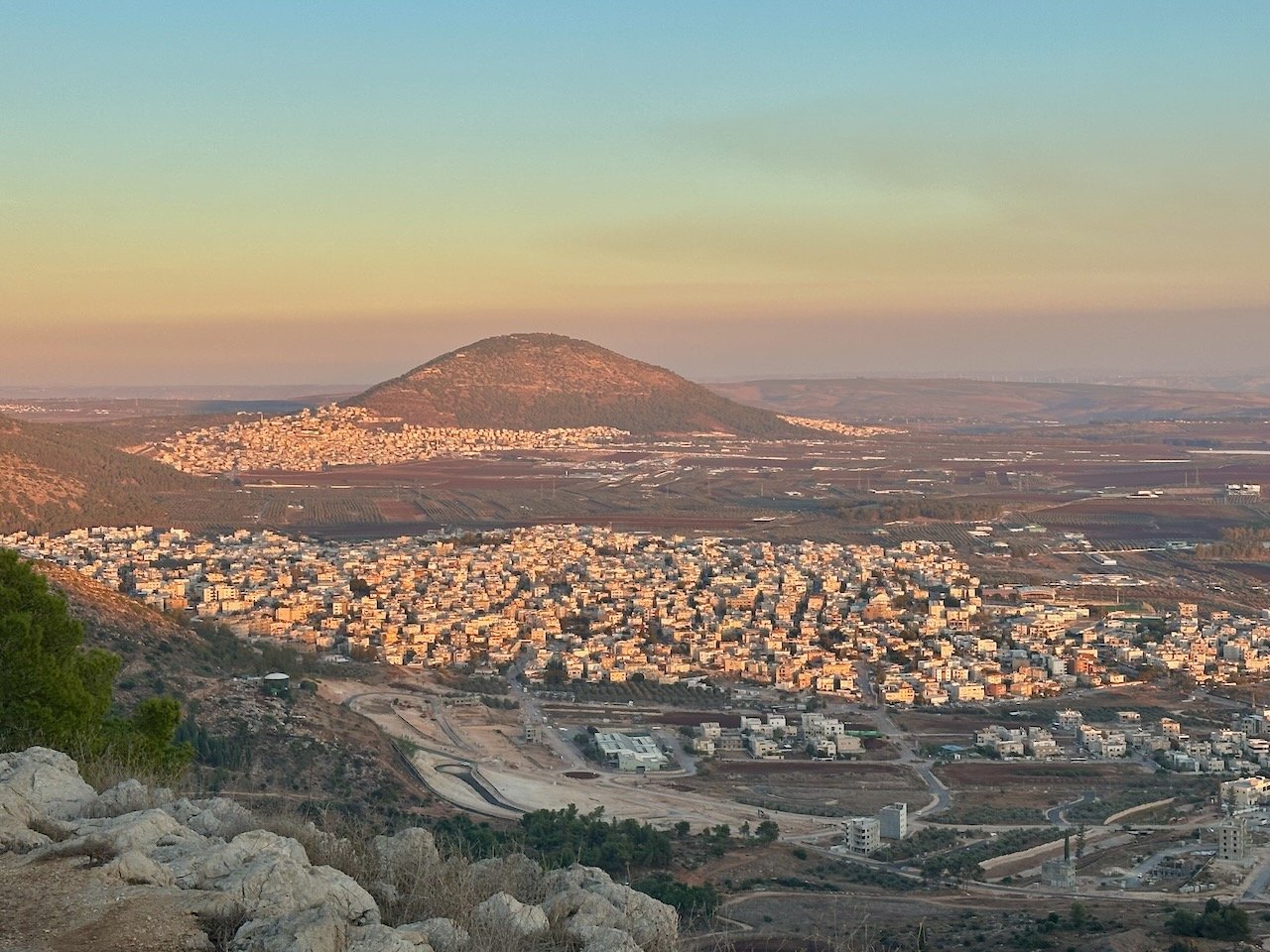
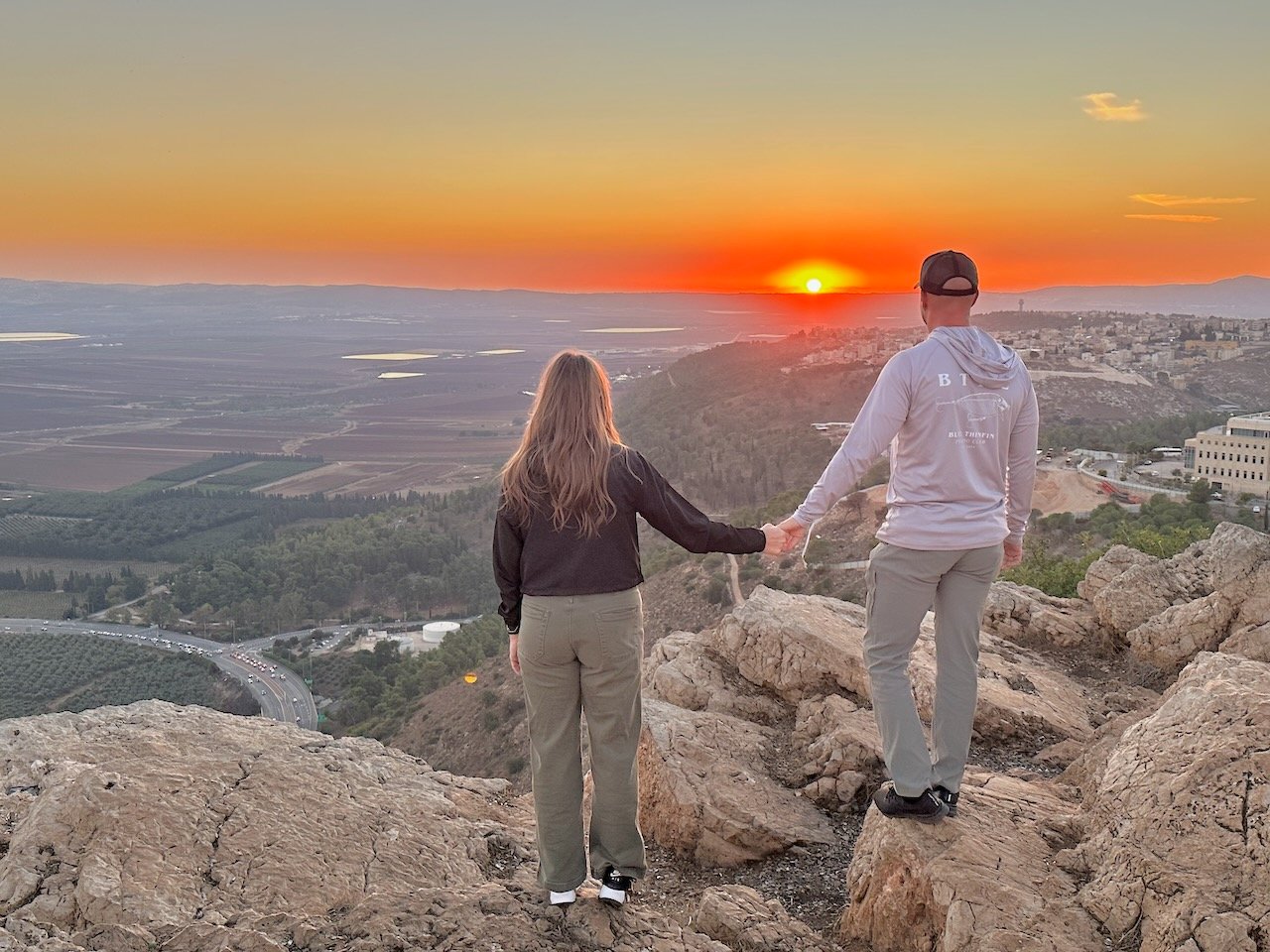
To end the day we drove north across this broad part of the Jezreel Valley to get to the Precipice of Nazareth. The view from here of Mt. Tabor (Judges 4-5), the Hill of Moreh (Judges 6-7, 2 Kings 4), Gilboa (1 Samuel 31), and even Mt. Carmel (1 Kings 18) to the west was impressive. The sunset was spectacular as well as it set beyond the Carmel Range to the est. We considered the life of Jesus as we read from Luke 4 and John 1.
Tiberias/Sea of Galilee
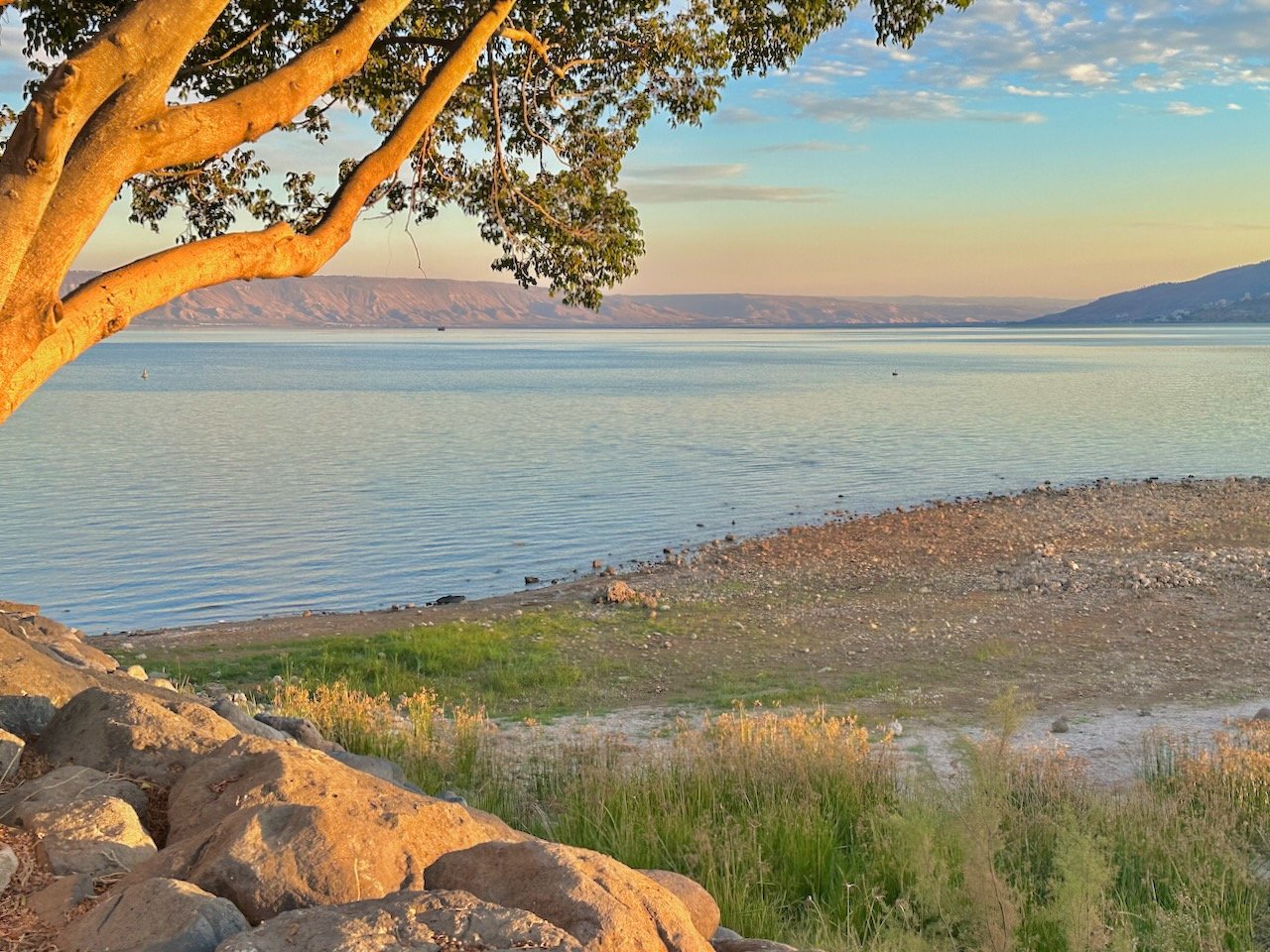
It took about an hour (driving past the modern Arab town of Cana, John 2 and 4) to arrive at our “kibbutz-hotel” north of Tiberias (Nof Ginnosar). It is located along the western coastline of the Sea of Galilee. After checking into our newly-renovated rooms, we enjoyed a wonderful dinner. Following eating together, we walked down to the water’s edge for a “Sea of Galilee” orientation. It was quite beautiful to see the shoreline and Tiberias all lit up. We retired to our rooms for a good nights rest. It was a great first full day!

Day 4 – Tuesday, November 10: Gamla, Katzrin, Syrian Border, Caesarea Philippi, Dan, Misgav Am/Lebanon Border
Today we traveled north to the Golan Heights. It was another perfect weather day, with cooler morning temps, incredible visibilities, and high afternoon temps near 70. Everywhere we went today we had every site to ourselves. We left the hotel at 7:35. We are all saddened to hear the doctor’s report that Ellen fractured two bones in her ankle last night on our walk to the water’s edge. She and David will be flying home later tonight, with surgery scheduled as soon as possible. We will miss them and we pray for their safe arrival back home tomorrow.
Gamla
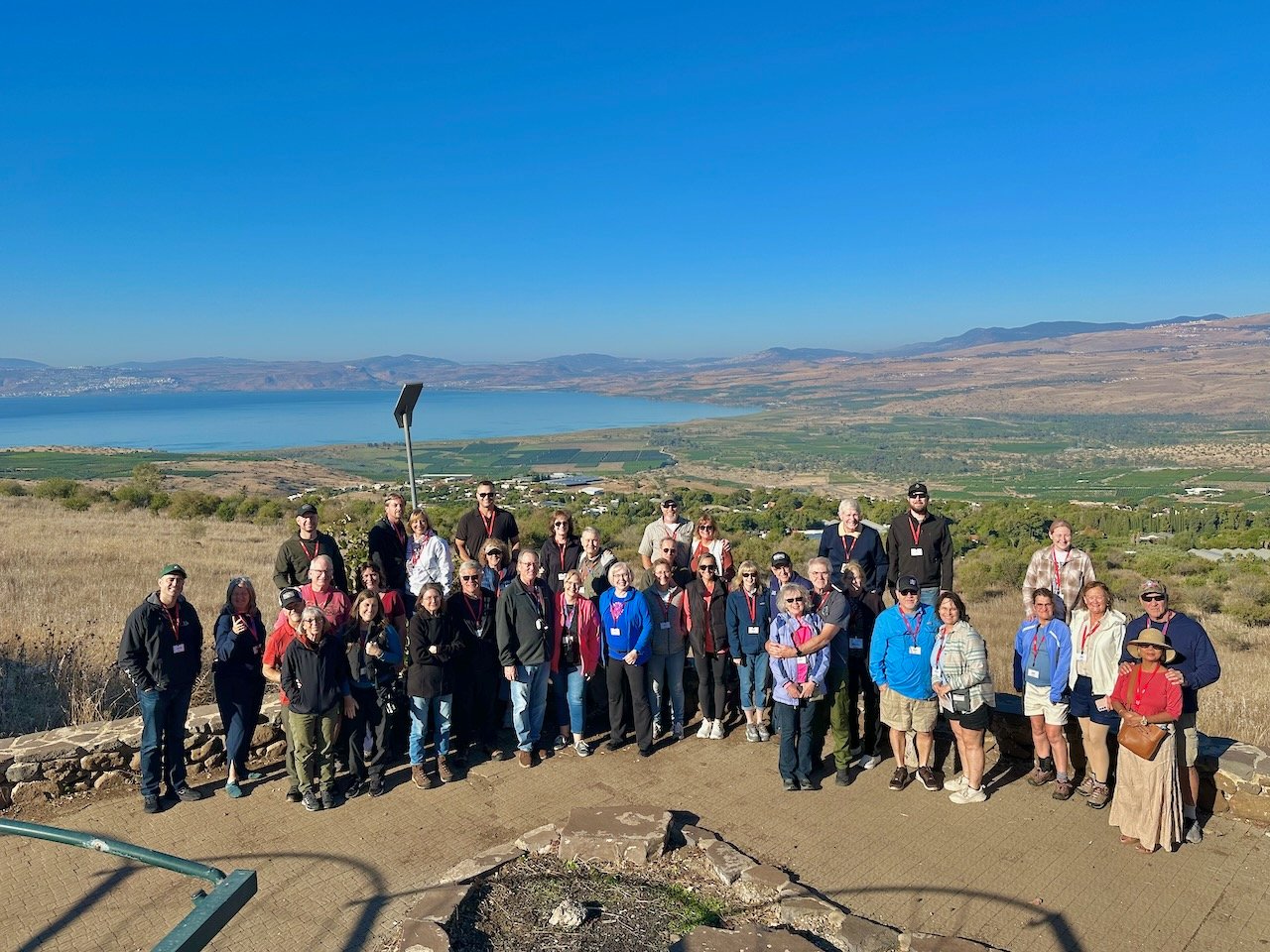
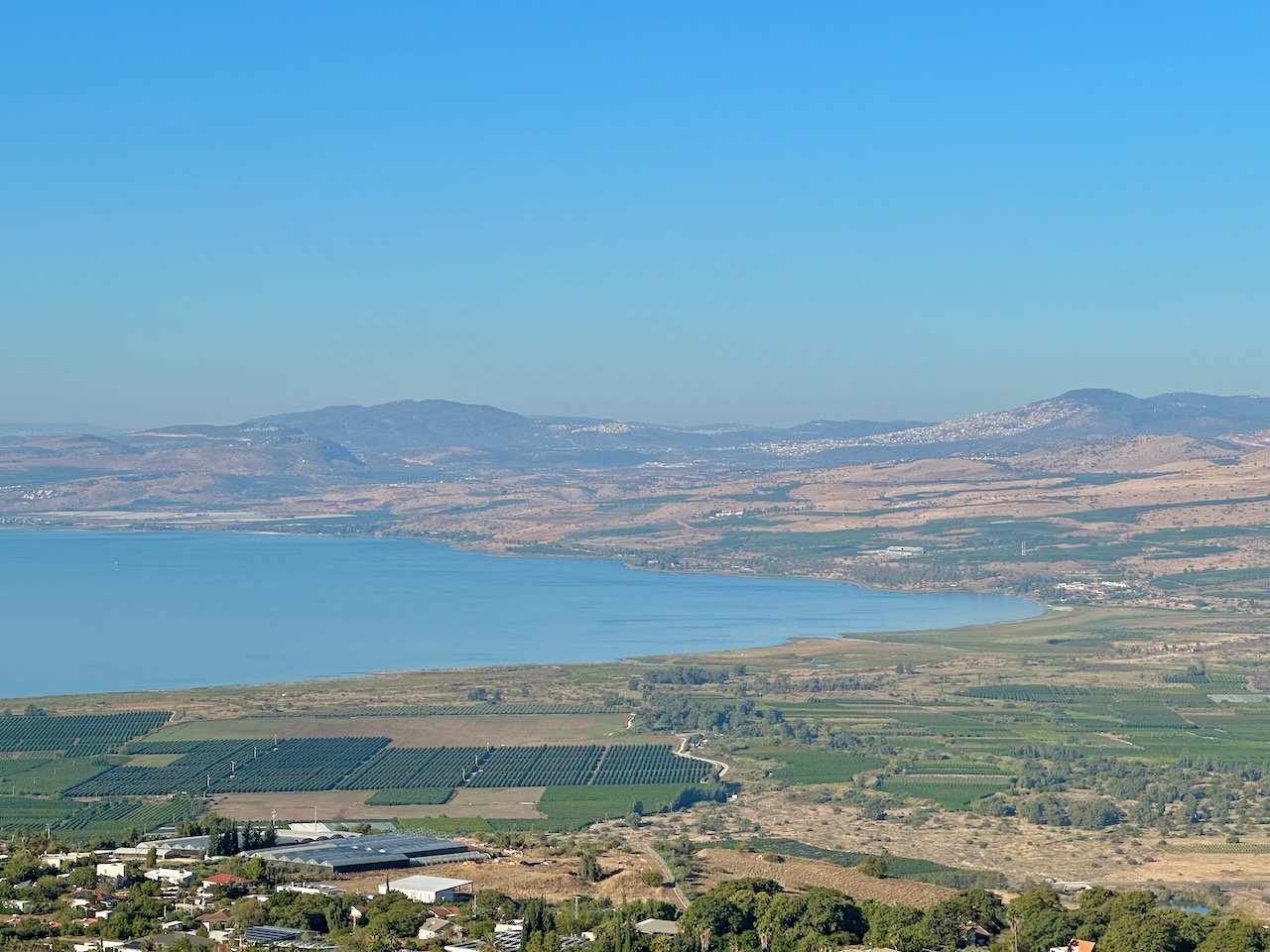
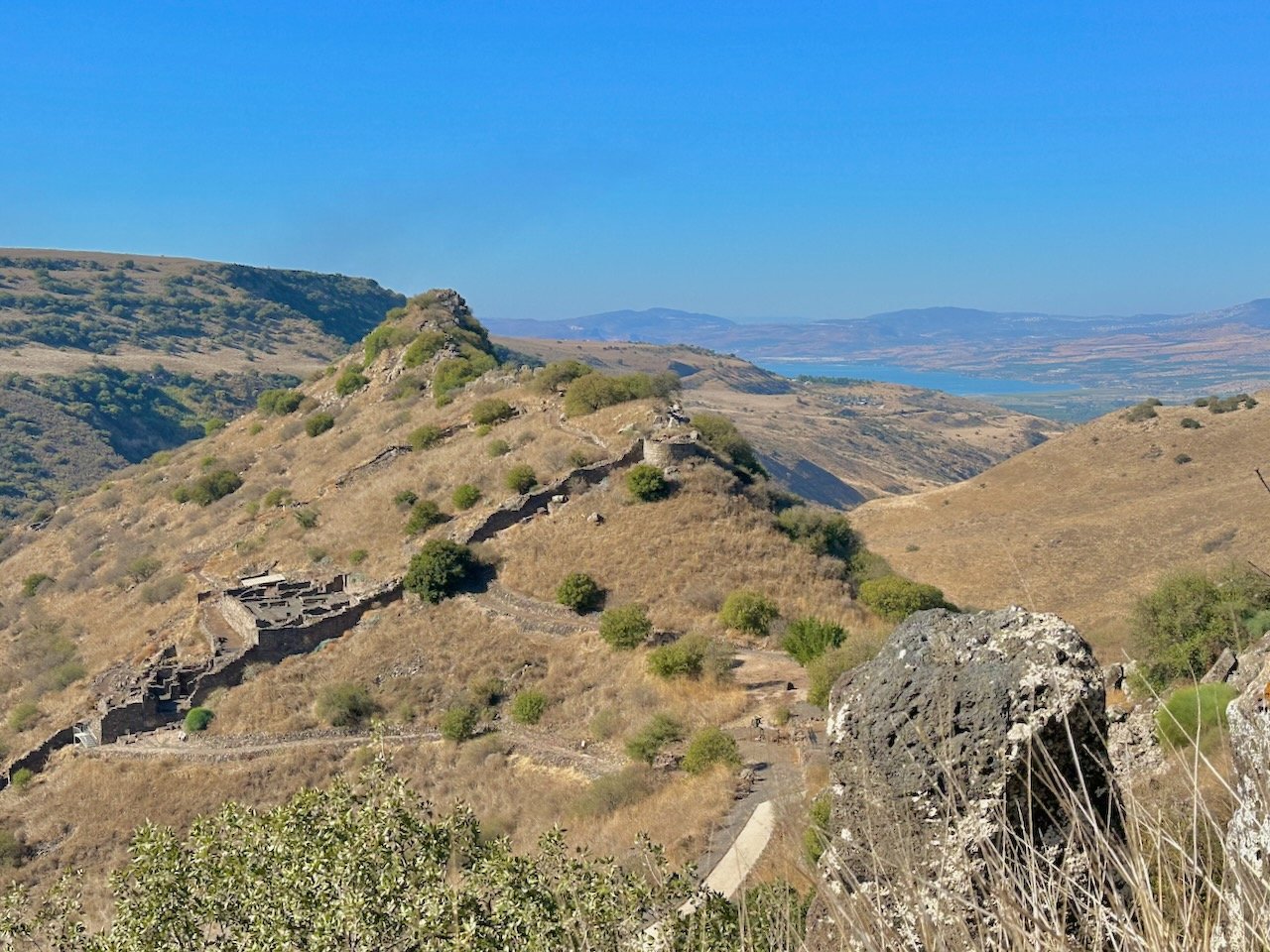
We began the day by driving around the northern part of the lake, passing by Bethsaida (the home of Peter, Andrew, and Philip, John 1) on there way. We then began our ascent to the Golan Heights. As we climbed we stopped briefly to look down to the Plain of Bethsaida where the Feeding of the 5,000 took place (Luke 9). The view was was remarkable! We could see Mt. Hermon to the north, the mountain of Lebanon, Mt. Meron and the Upper Galilee, the entire western shoreline of the lake, and Mt. Tabor in the Jezreel Valley! We also recalled the story of Mark 8 (the Bethsaida blind man healed by Jesus)
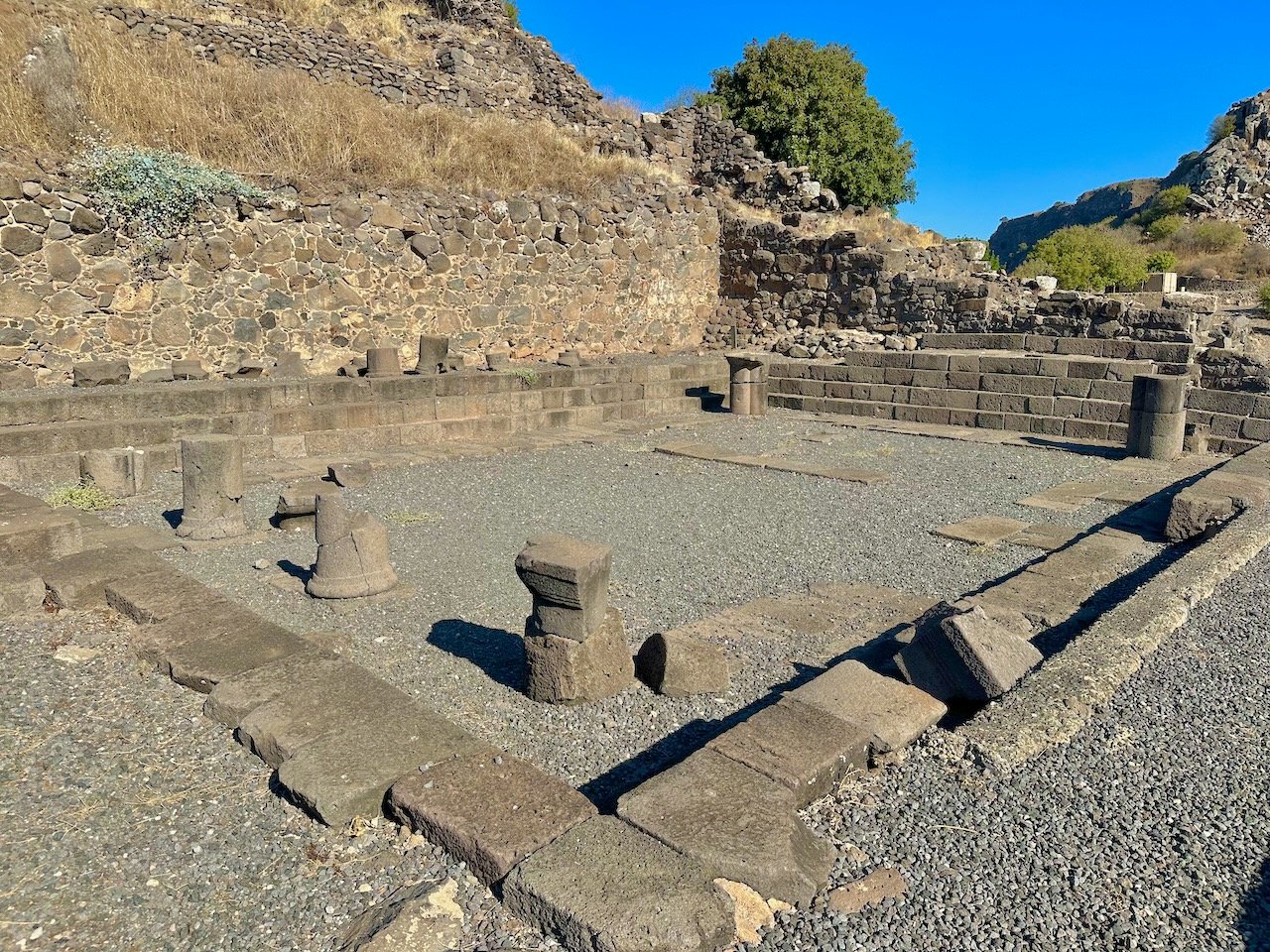
Once we arrived at Gamla, we walked to the overlook of this camel-hump shaped city. The great visibility still allowed us to clearly see the northern end of the lake! Many in the group hiked down the steep trail to the 1st century synagogue.There is a high probability that Jesus taught here (Matthew 4 & 9). This was a city that was destroyed in 67 AD in the 1st Revolt against the Romans.
Katzrin
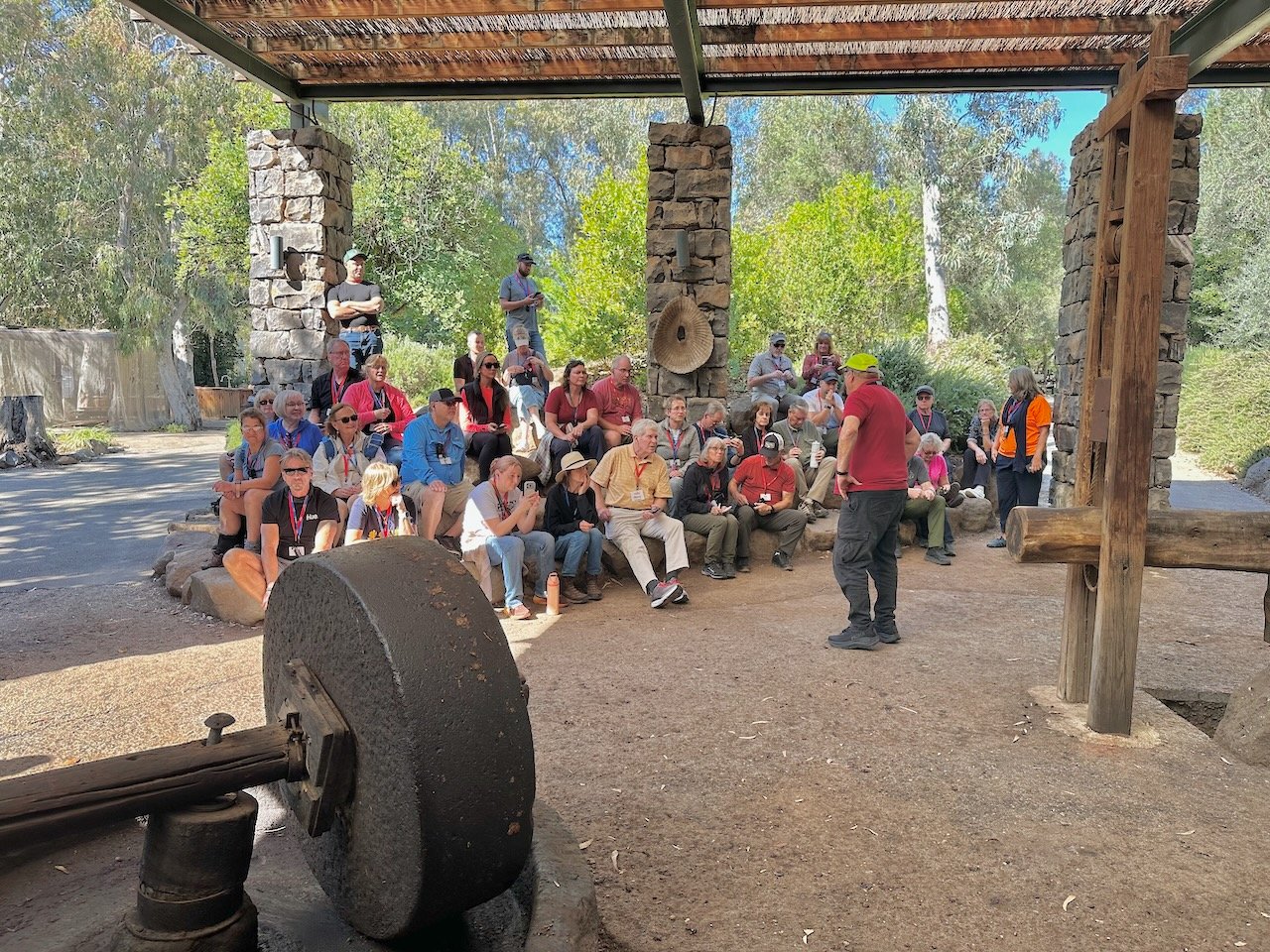
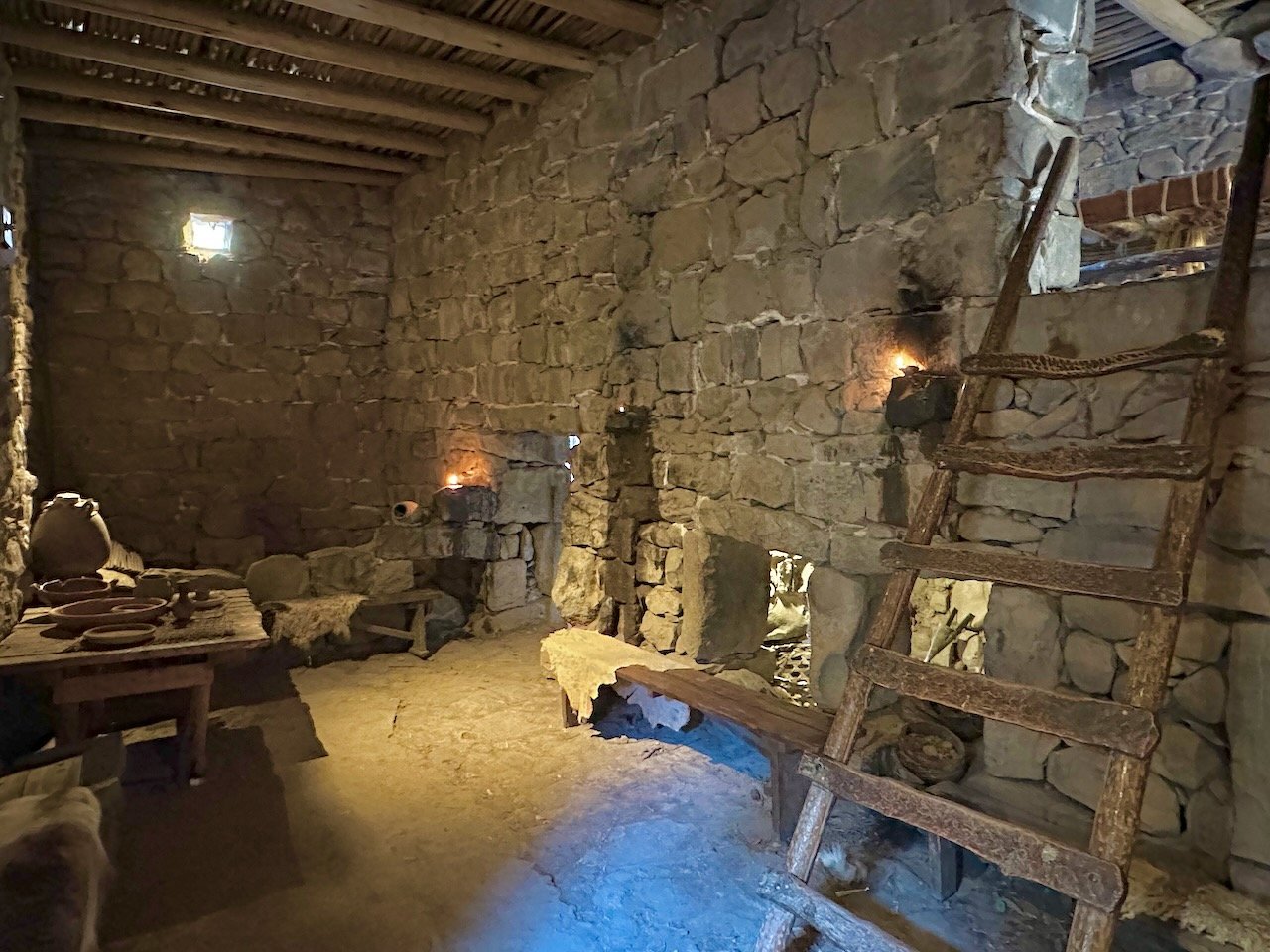
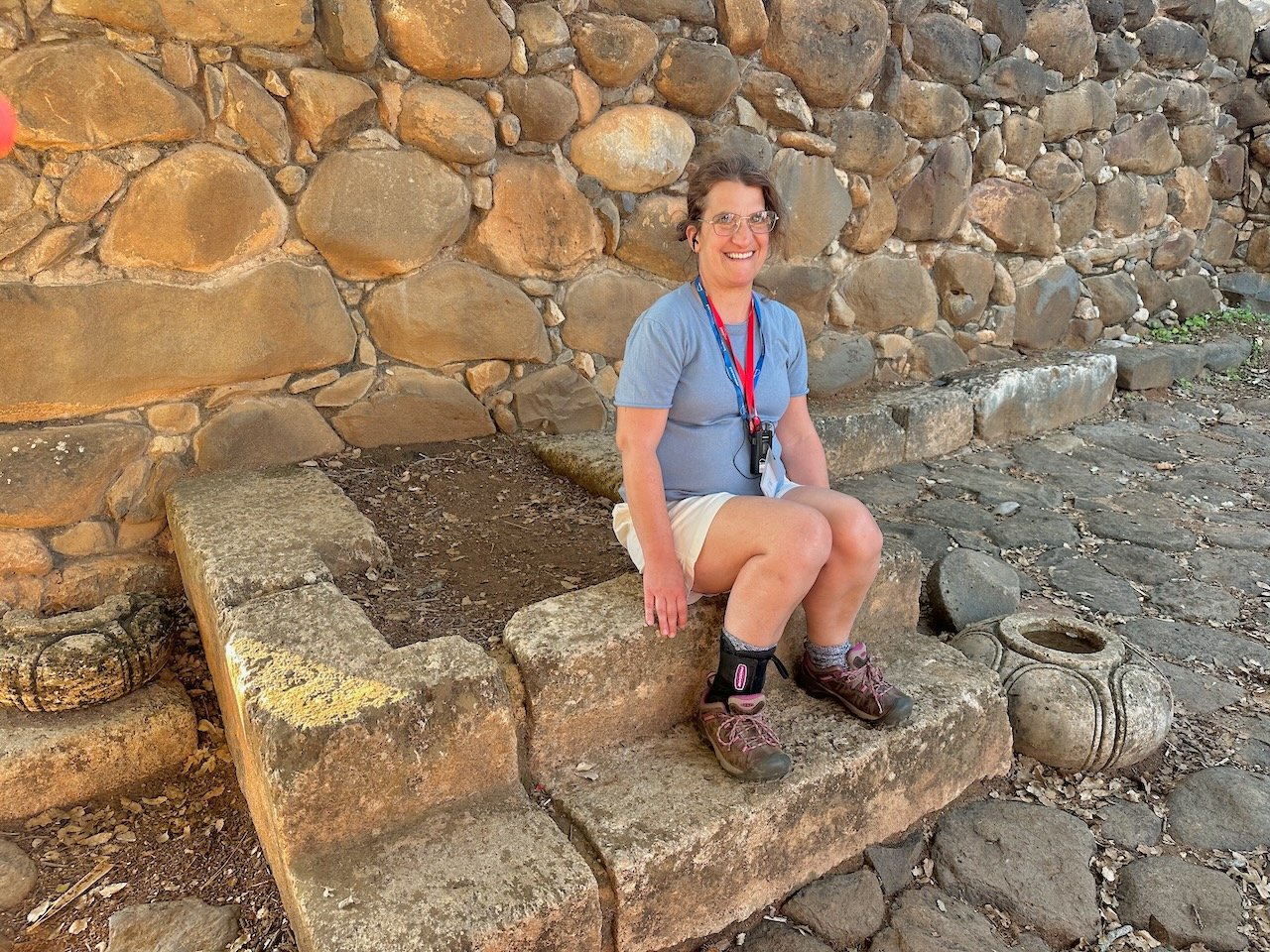
Next, we drove further north to Katzrin, the largest city in the Golan Heights. We visited the Talmudic Village that is here (from about the 3rd-7th centuries AD). We saw good examples of olive presses, the synagogue, and other house structures. We then gathered in a completely-restored stone house where we read from Mark 2. We could see the story unfolding before our eyes! Jesus demonstrated His authority (s’mekah) in not only healing the man, but also forgiving His sins!
Syrian Border/Qunetra
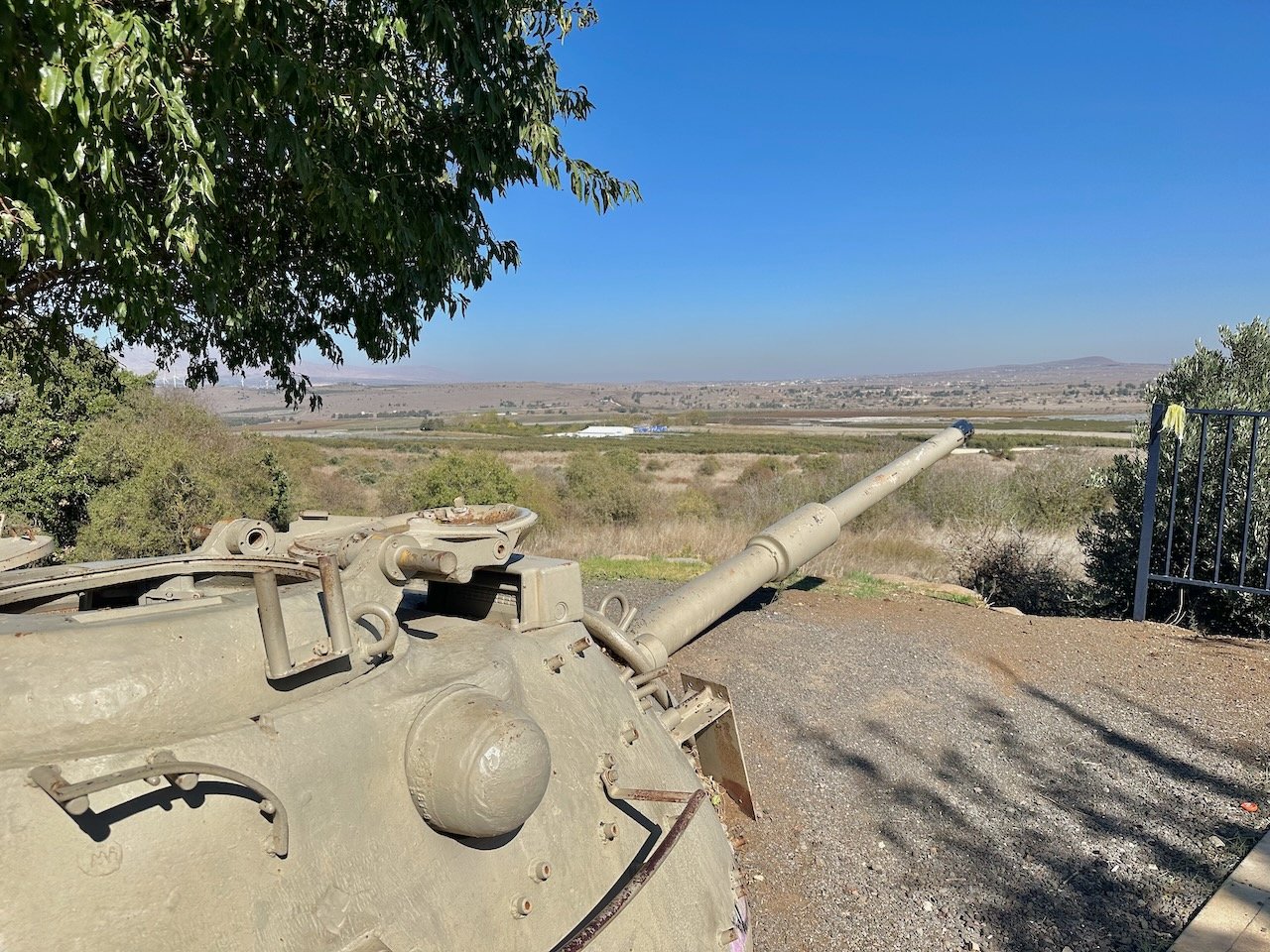
Next, we drove to the base of a IDF military establishment located on the border with Syria. Here, Shlomo shared with us some of the modern history between Israel and Syria (ie. 1967 and 1973 wars). We looked across to see Qunetra, once a Syrian town. Since the recent wars, Israel has maintained partial control of the areas across the border within Syria.
Caesarea Philippi/Banias
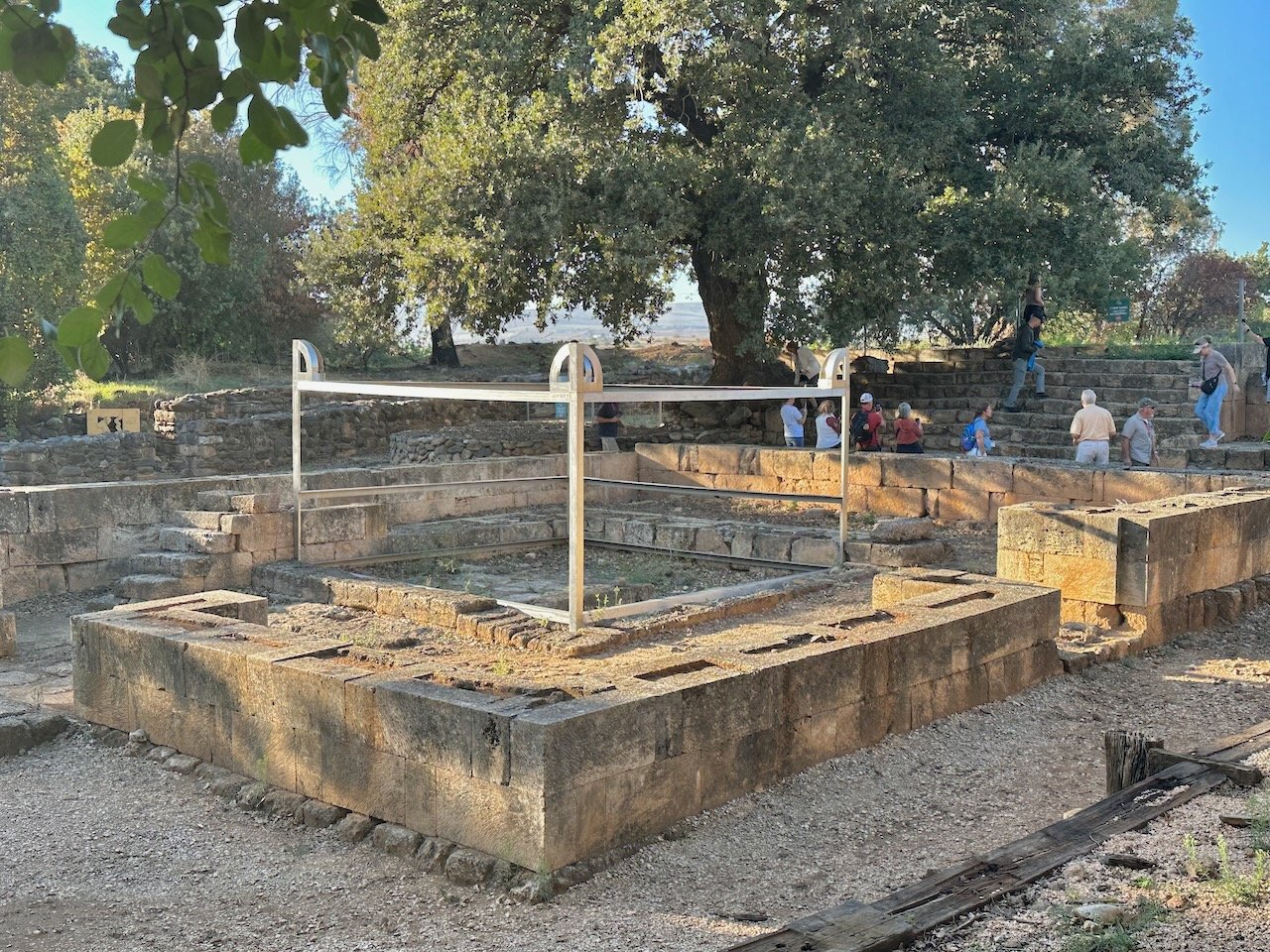
Driving through a few Druze towns and passing by the newly snow-capped mountain called Mt. Hermon, we then descended down off the Golan Heights to Caesarea Philippi. This was a very pagan city in the days of Jesus and through the Roman Period. The city enjoyed the waters of the Banias Spring, one of the three tributaries of the Jordan. We read from Matthew 16 where Jesus asked His disciples the “final exam” question, “Who do you say I am?” Among the ruins at the Grotto once stood the Temples of Augustus, Zeus/Jupiter, Nemesis, the Shrine of the Dancing Goats, and the niches dedicated to Pan, the promiscuous shepherding god of the Greeks and Romans. Jesus promised the unstoppable force and forward advancement of the kingdom (i.e. “and the Gates of Hades will not prevail…”) as the message of the kingdom would eventually reach even people living in Gentile cities! Six days later, Jesus was transfigured (perhaps somewhere on the lower slopes of Mt. Hermon (Matthew 17).
Dan Nature Preserve & Archaeological Site
Nearby a short distance to the west is the Nature Preserve and archaeological site of Tel Dan. The Dan Spring served this ancient city originally called Laish. We walked along the river before the trail detoured us to another trail. This trail was very nice as it led us to the ruins to the cultic area of the altar and high place. We read from Judges 18 and 1 Kings 12 about the patterns of disobedience displayed here, starting with the Danites and continuing through Jereboam until Israel’s end in 722 BC. In the area of the cultic place, we looked into Lebanon, only a few miles to the north.
We continued our walk to the mud-brick Middle Bronze gate. However, this gate was probably used only as a ceremonial gate and dates seemingly too late (1700 BC) to be a gate used by Abraham (even though the sign mentions Genesis 14:14). Before leaving the site, we saw the impressive Iron Age/9th century BC Israelite wall and gate complex where the famous Dan Inscription was found in July, 1993.
Misgav Am / Lebanon Border
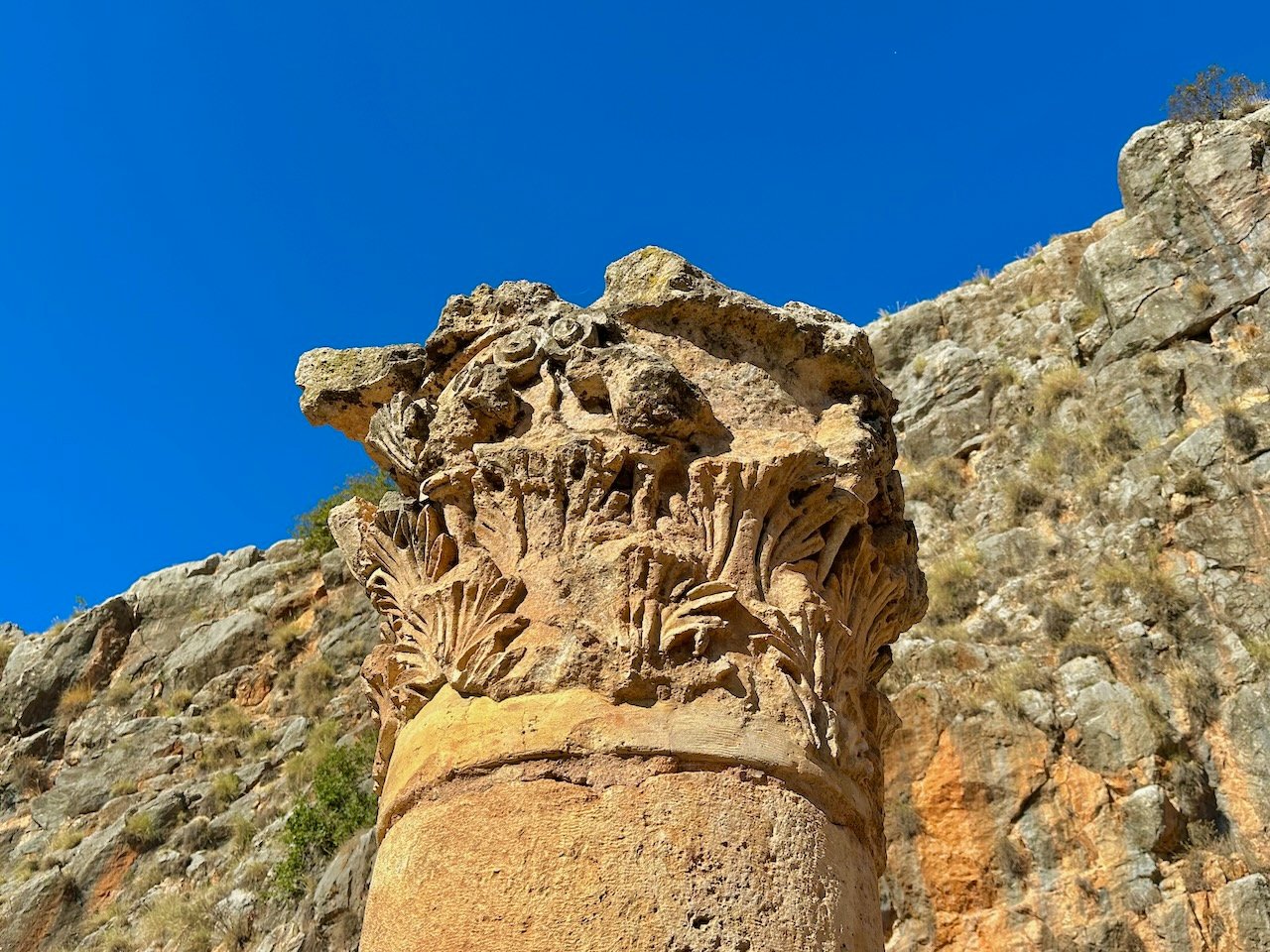
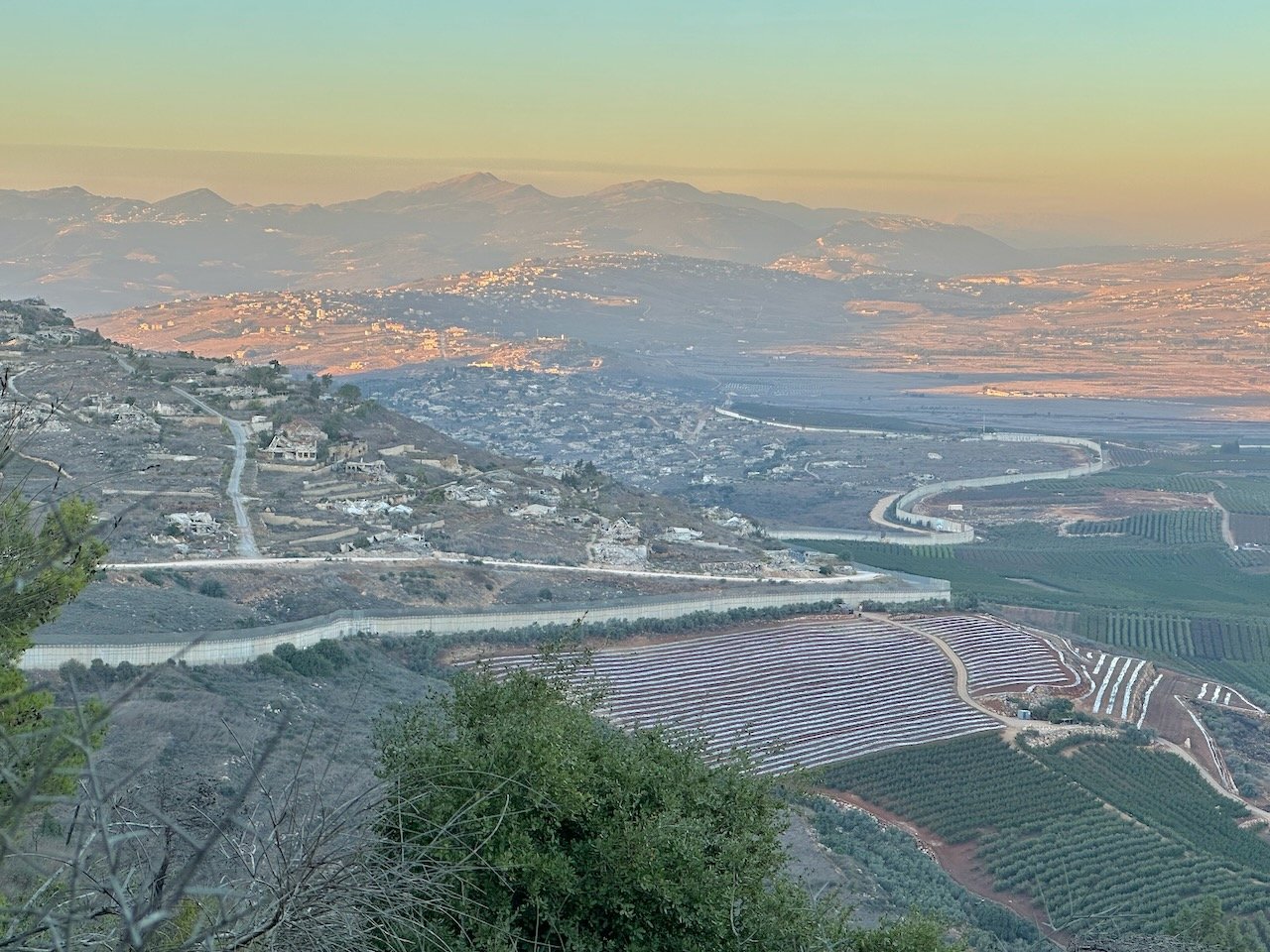
On our way back towards Tiberias, we added an extra stop to Misgav Am, a kibbutz located on the Lebanon border. It is located high on the hills of the Naphtali range and it looks over not the border with Lebanon but also the furthest Israeli city, Metula. Before Shlomo shared about Lebanon, we read from 2 Samuel 20. We could see the site (Abel Beit Macaah) below us at the northern edge of the Huleh Valley. Shlomo then shared the past history and current situation with Lebanon as the sun began to set. Again, the clear view of this region was amazing!
We drove back to our hotel, passing the Canaanite city of Hazor on the way (Joshua 11). At 6:45, we gathered around Ellen and David for a time of prayer before they took an ambulance to the airport for their night flight. Again, we extend our prayers for them both!
Day 5 – Wednesday, November 11: Arbel, Jordan River (Optional Baptism), Magdala, Capernaum, Sea of Galilee Boat Ride
Today was a day of focusing primarily on the life and ministry of Jesus! We spent the entire around (and on) the Sea of Galilee. The weather was once again perfect…sunny and warm, with afternoon temps in the low 70s. We left the hotel this morning at 7:35. We read from Mathew 4 as drove to Arbel.
Mt. Arbel
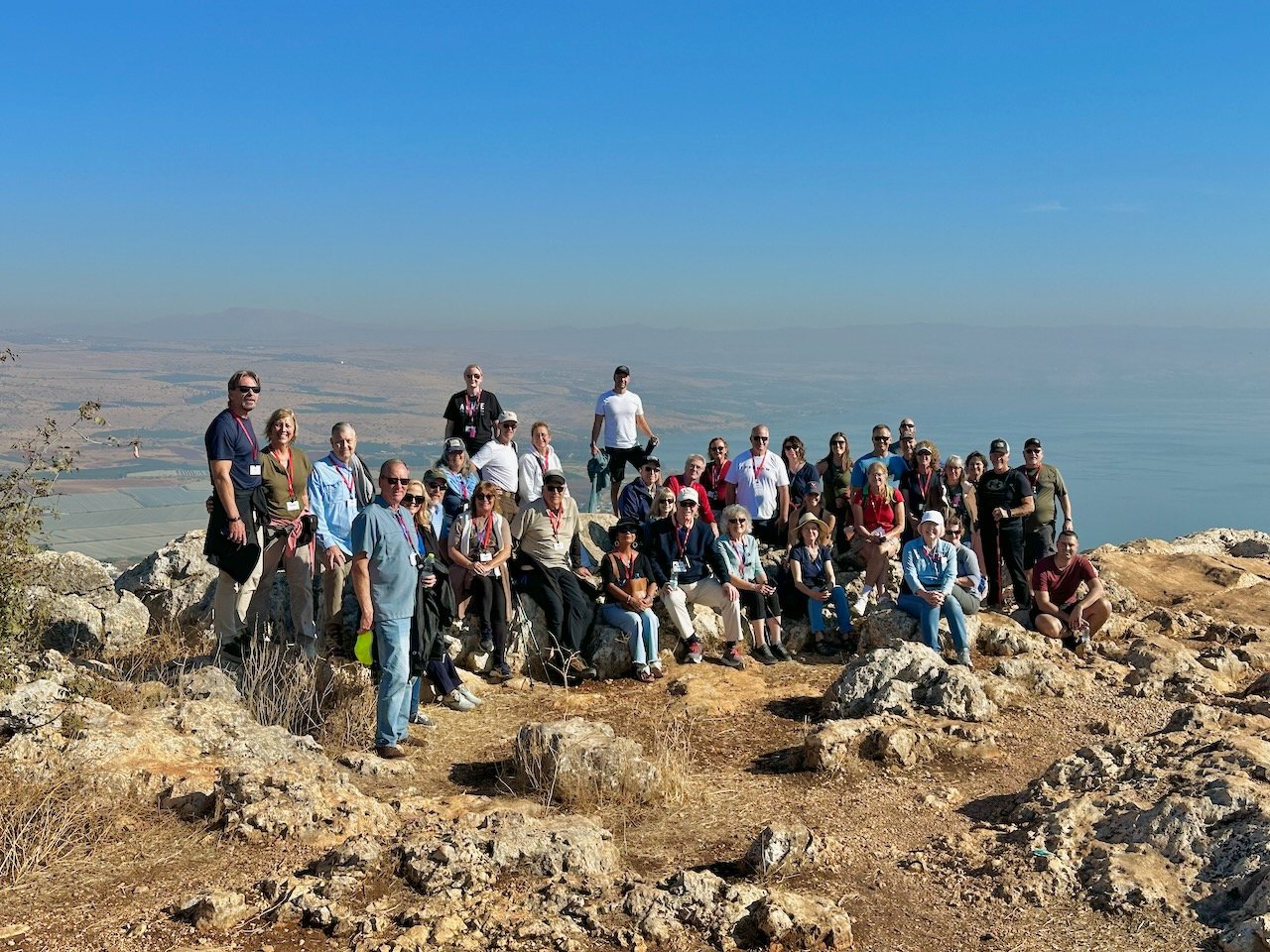
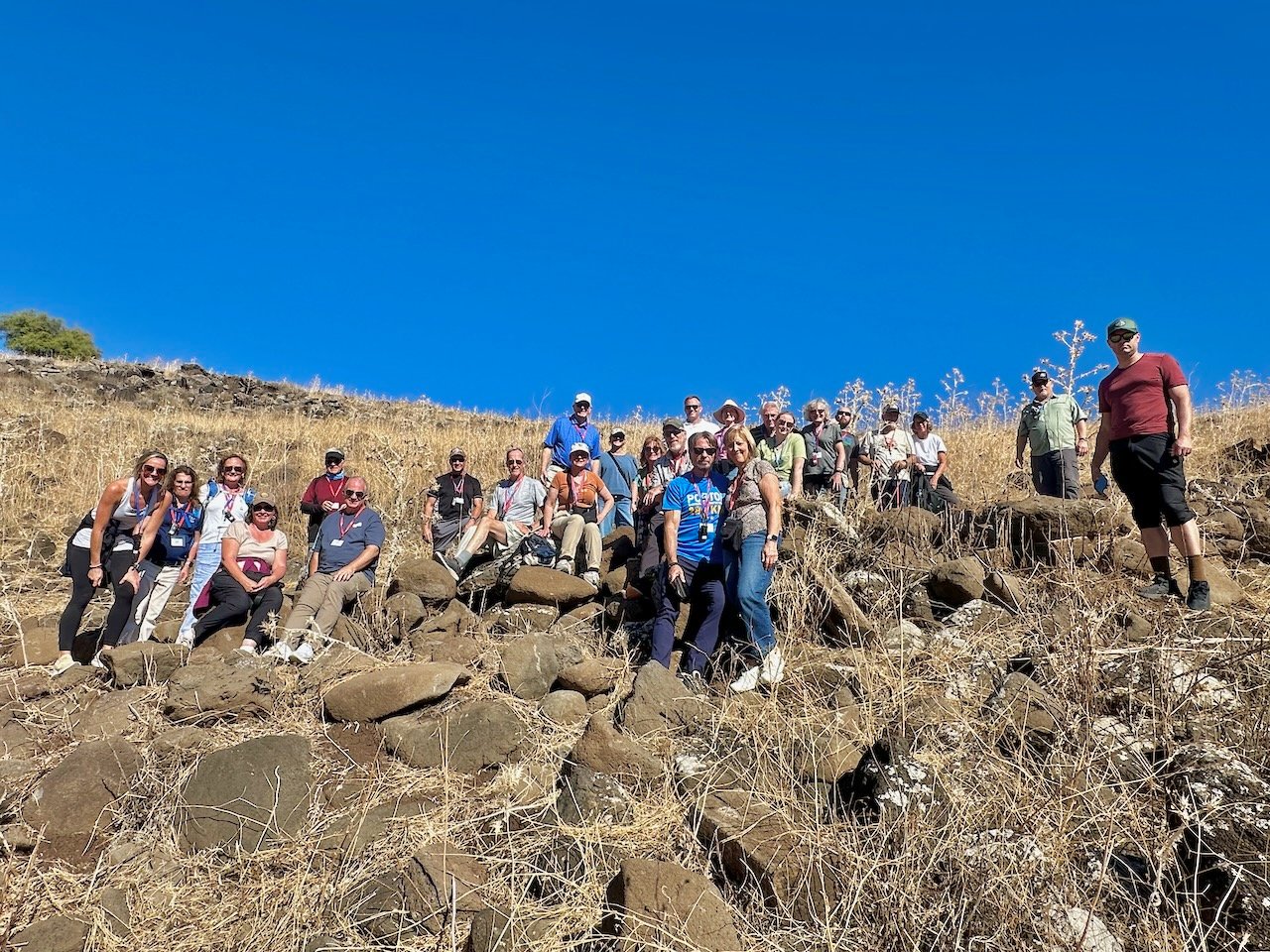
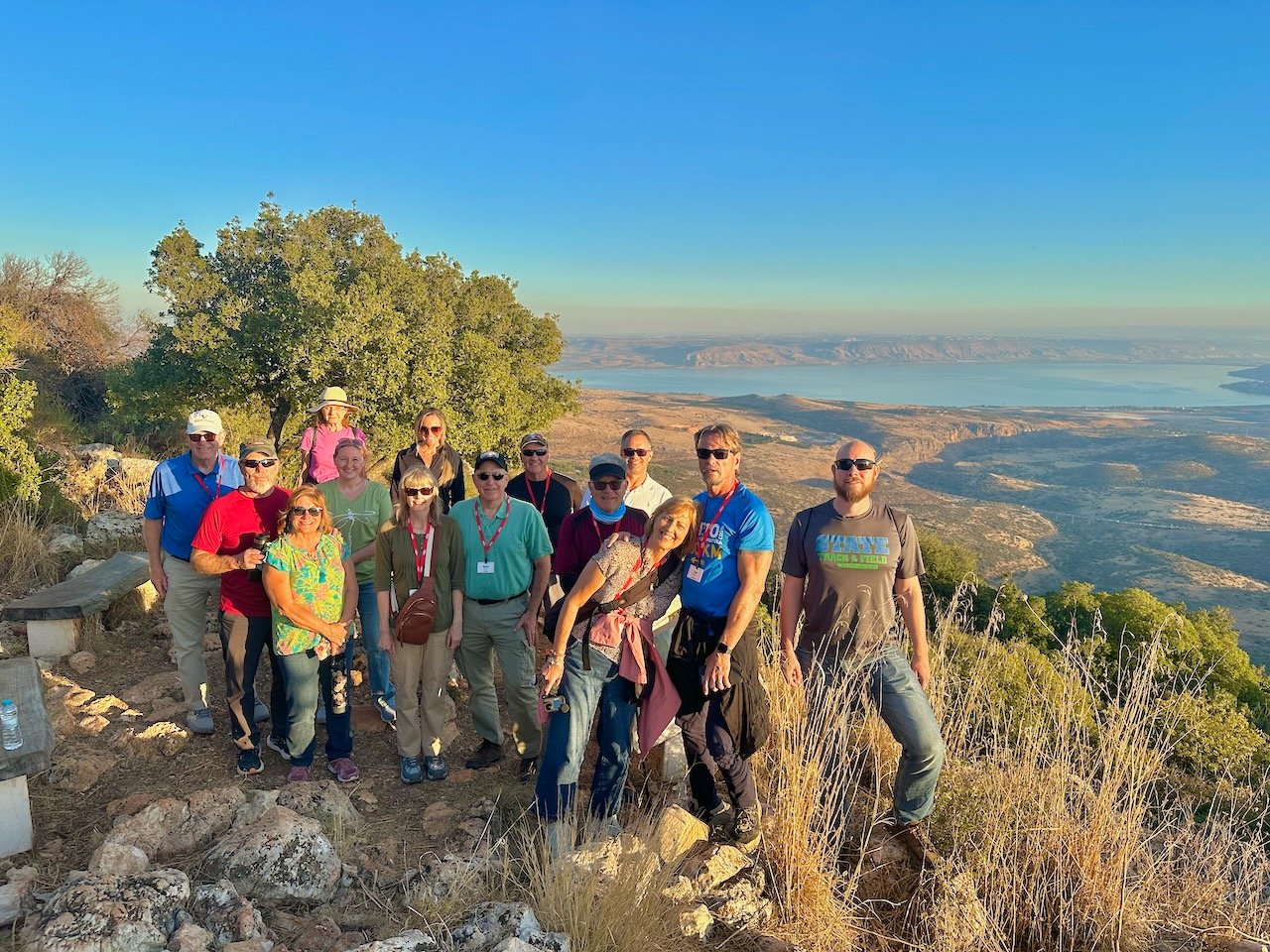
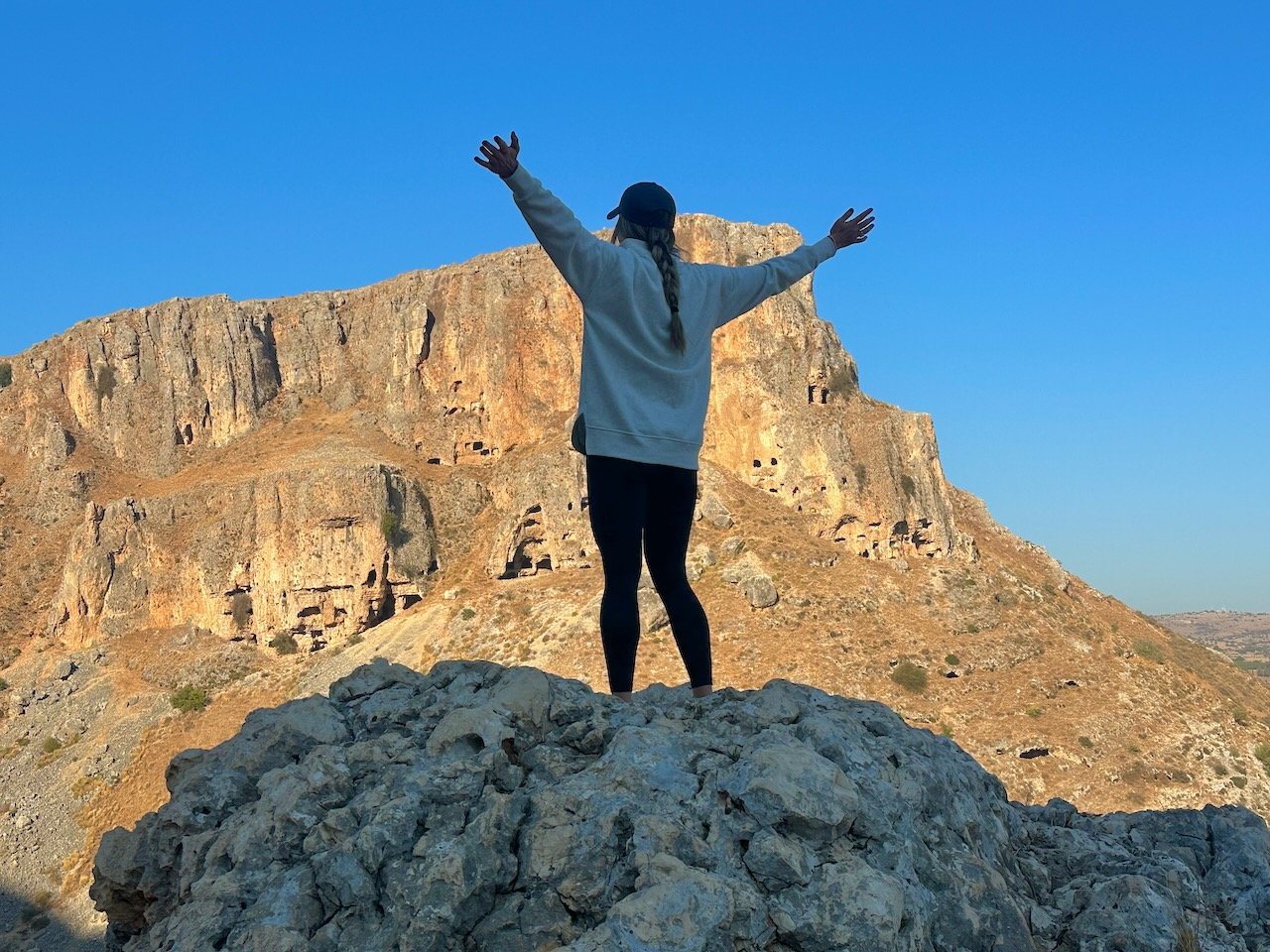
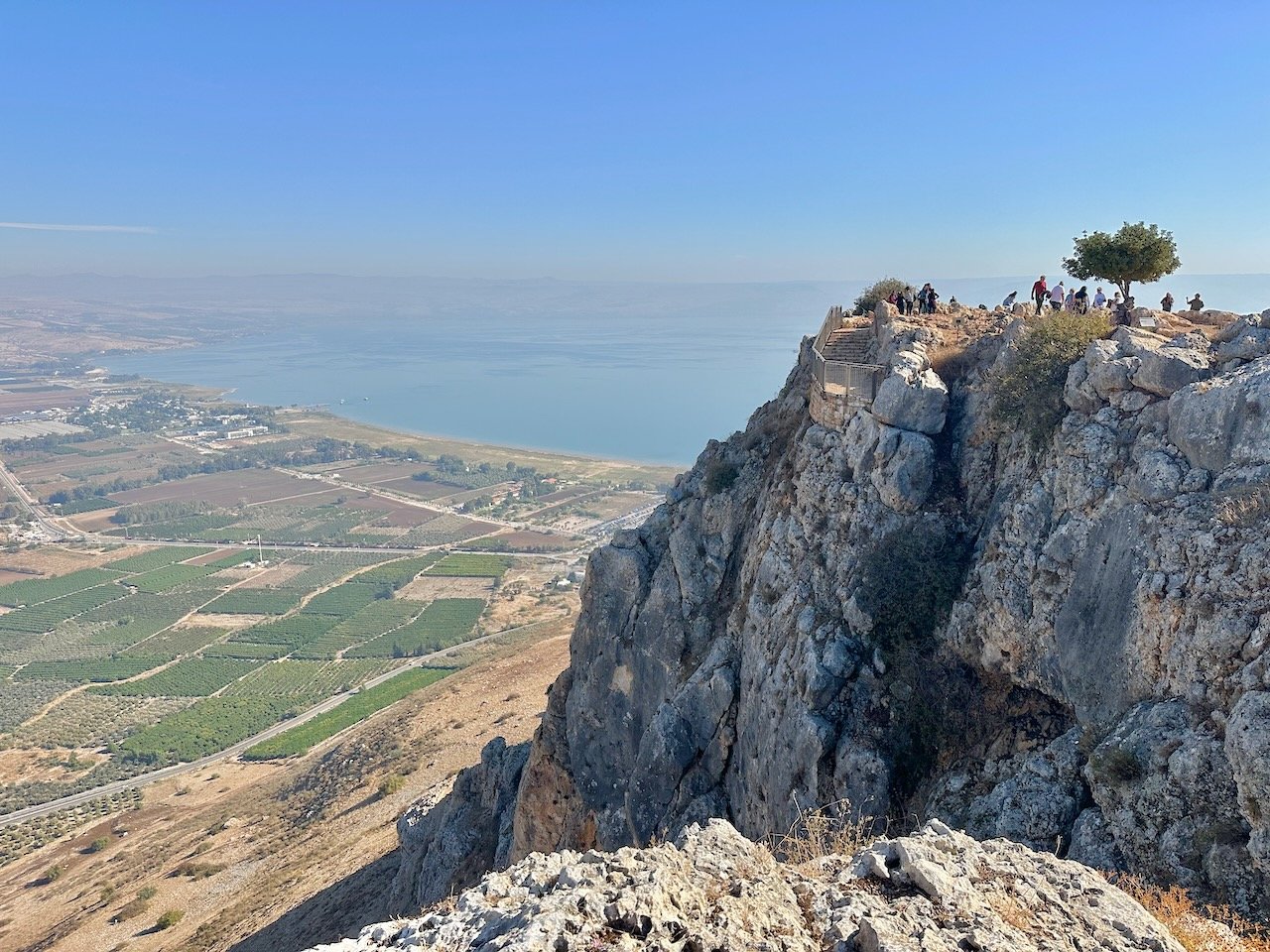
The drive to the trailhead that leads to the top of Mt. Arbel was a short one, only 5 minutes. Arbel is a mountain on the west side of the Sea of Galilee. Fourteen (14) in the group choose to hike the challenging trail that ascended to the top (up 1,100 feet in elevation), while the others drove around the back side and walked to the top from the visitor center. Even though it was a little hazy today (in comparison to yesterday), the view of the lake from the top was spectacular. As we all gathered on top, we read from Matthew 5 (the “Beatitudes”). While there is a traditional Catholic location for the Mt. of Beatitudes, perhaps the lower slopes of Arbel served as the location where Jesus about the kingdom. The kingdom proclamation of Jesus was His “go-to” message throughout His ministry! We also learned about “Beit Sepher,” “Beit Talmud,” and “Beit Madrash” – the three stages of Hebrew learning. Jesus would extend the same invitation to His disciples as other rabbis would have – in Hebrew: “Lech Acharai!” (“Come, follow me”). Additionally, while we can’t know for sure, it could have been the top of this cliff where Jesus met His disciples after His resurrection and shared the “Great Commission” (Matthew 28).
Yardenit/Jordan River Baptism
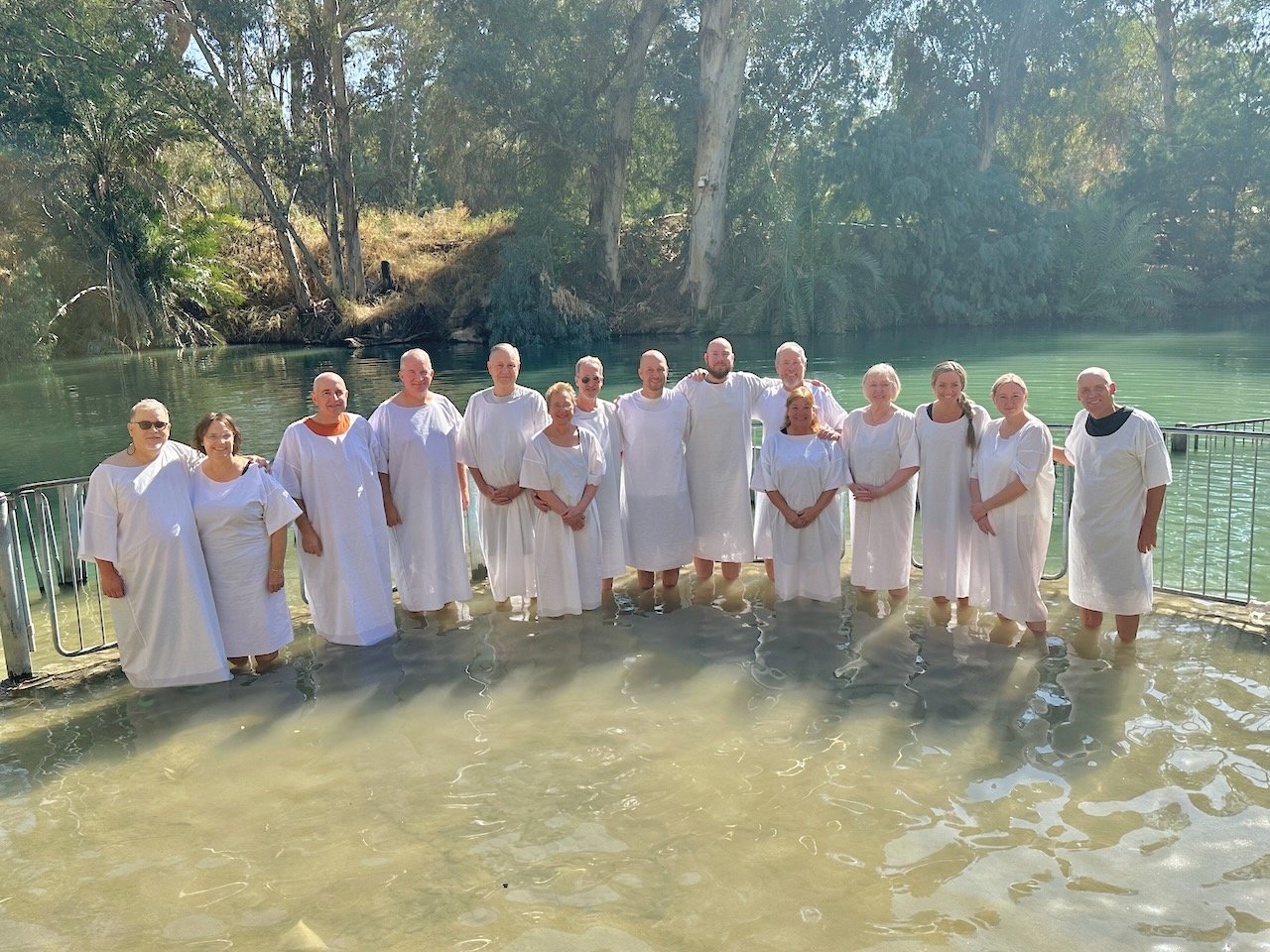
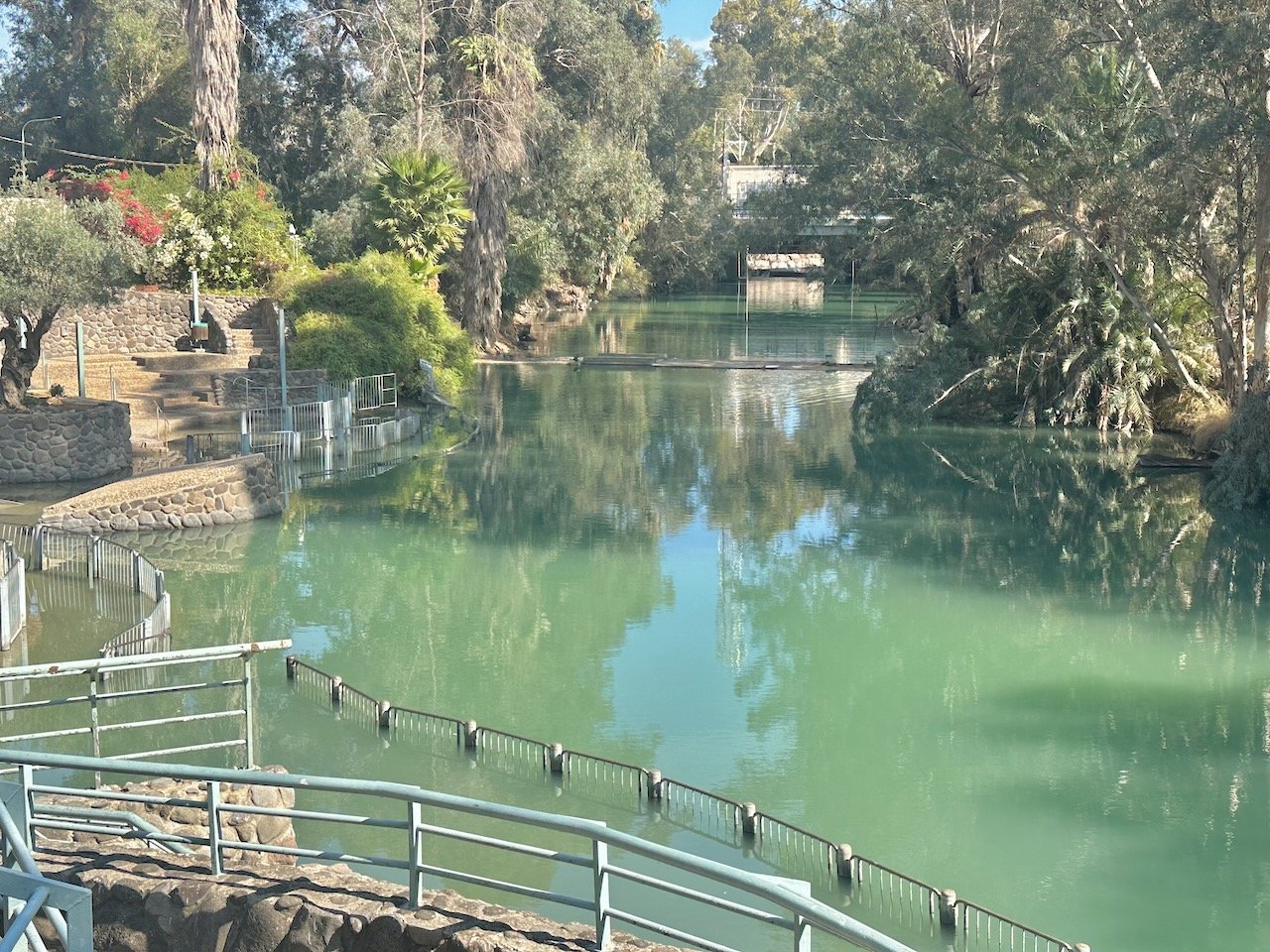
Next, we drove to the southern end of the lake where the Lower Jordan begins. Here, thirteen in the group reaffirmed their faith in baptism in the Jordan River at a place called Yardenit. Pastors Corey and John officiated the baptism. Jesus Himself was baptized at Bethany Beyond the Jordan located further south across from Jericho (John 1). The experience was special for all of us! While the water level was back to normal (since the summer).
Kinneret Cemetery
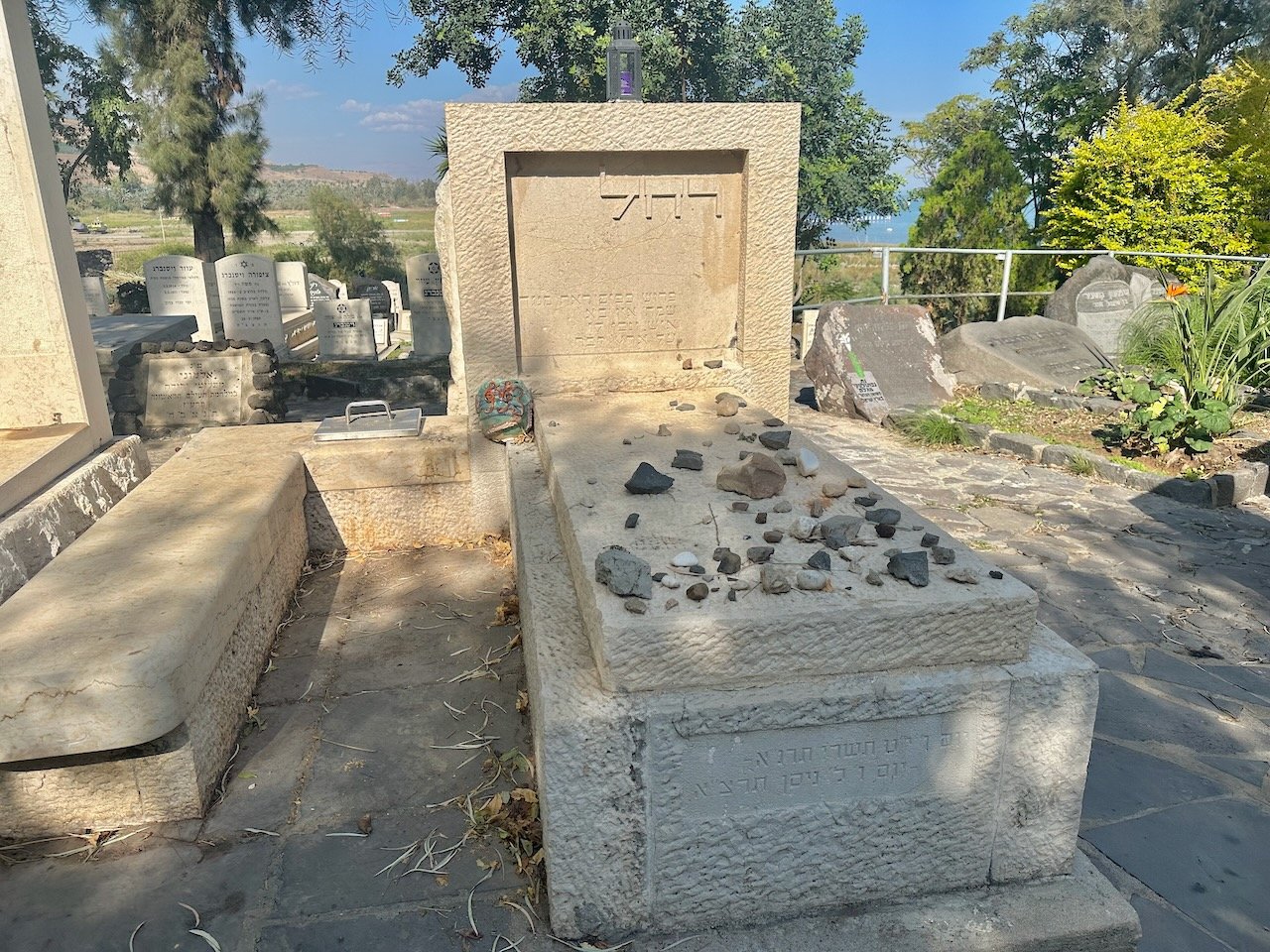
From the southern end of the lake we now drove north along the southwestern shoreline of the lake. We included an extra stop at the Kinneret Cemetery. This is where an early Jewish pioneer woman named “Rachel” is buried. Shlomo shared about her life. She was an Ukrainian Jew who wrote poems, some of which were put to songs. She died in 1931. He photo is on the front of today’s 20 shekel bill.
Magdala
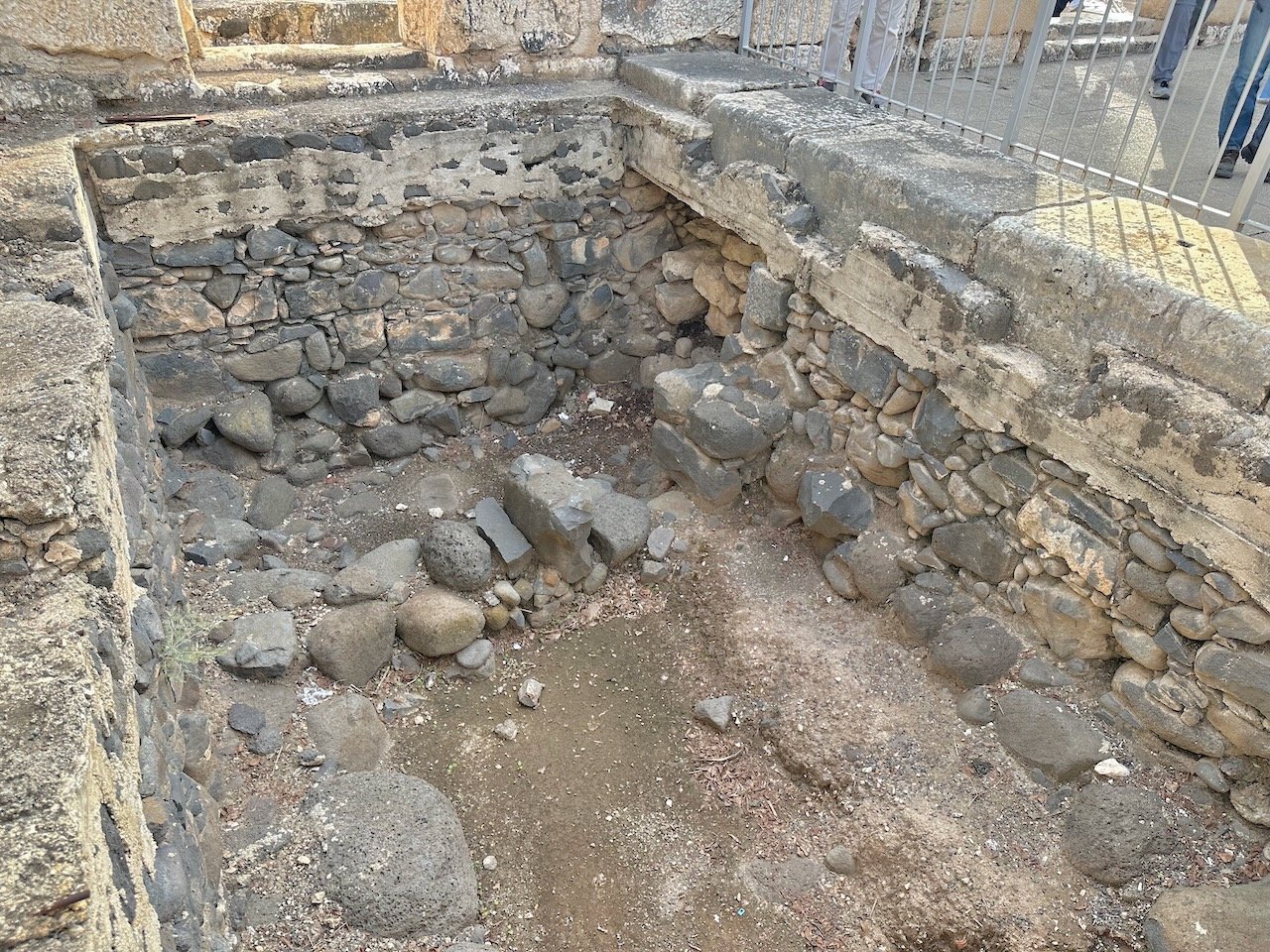
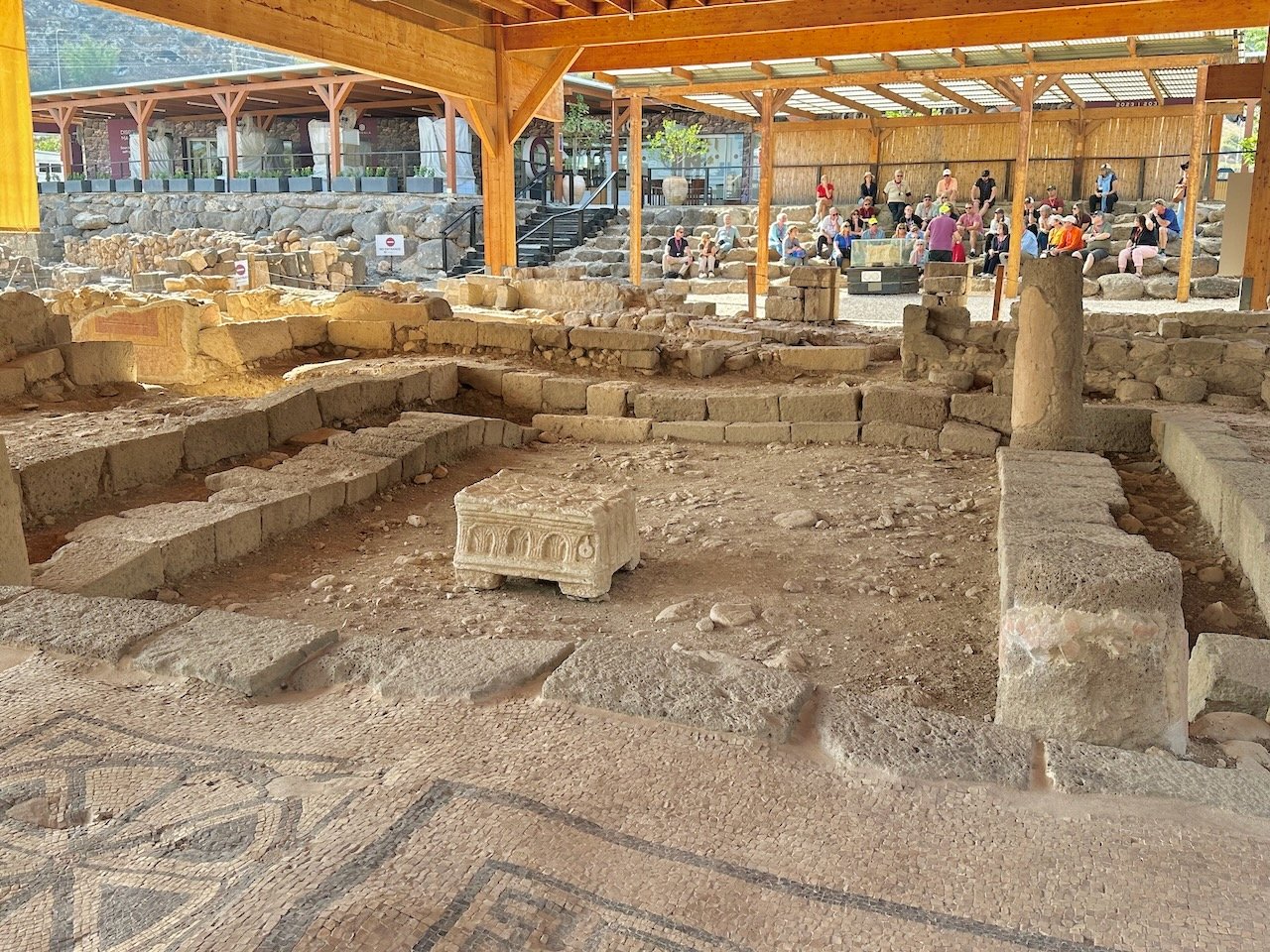
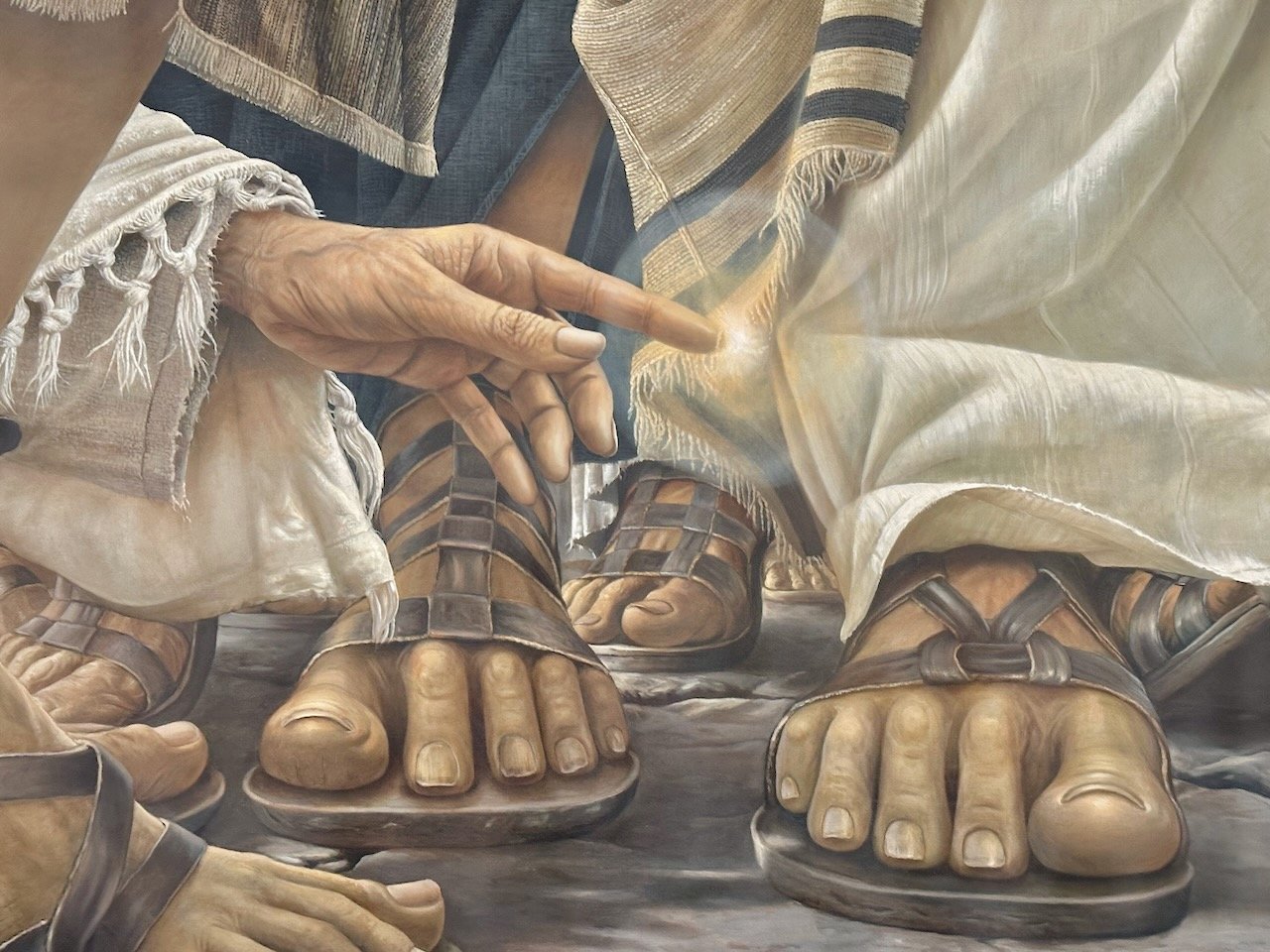
From here we drove north of Tiberias to the Plain of Genesseret where we visited the ancient city of Magdala. This was a large Jewish city in the days of Jesus. We saw a modest 1st century synagogue here. Although the city is only mentioned once (the end of Matthew 15), Jesus must have taught here. We also saw a few mikvot (ritual baths) in another area of the excavations. We then visited the chapel here on the grounds of Magdala. Here, we saw the mural depicting the the healing of the woman with a bleeding issue (Luke 8), and other paintings of the four of the miracles Jesus did. We also enjoyed singing a few songs together under the great-acoustical rounded ceiling. We sounded like a heaven choir!
Capernaum
Our last archaeological site of the day, Capernaum, is located on the NW corner of the lake. This Jewish town served as Jesus’ “home base” for His Galilean ministry. In the late 4th/early 5th century synagogue we recalled the stories from Mark 1, 2; Luke 7,8; and John 6. We also saw the Byzantine church, octagonal in shape, that dates to about the same time period. This ancient church surrounds a 1st century house structure suggested, by tradition and archaeology, to be Peter’s house. Down on the lakeshore, we ended with Mark 9. Serving in Christ’s kingdom requires a heart of humility and servanthood.
Ancient Boat / Sea of Galilee Boat Ride
Our last stop of the day was back to Nof Ginnosar where we embarked on our boat ride. Before our hour-long sailing, we saw the ancient boat from the 1st century that was discovered in 1986 in the shallow waters of the Sea of Galilee.
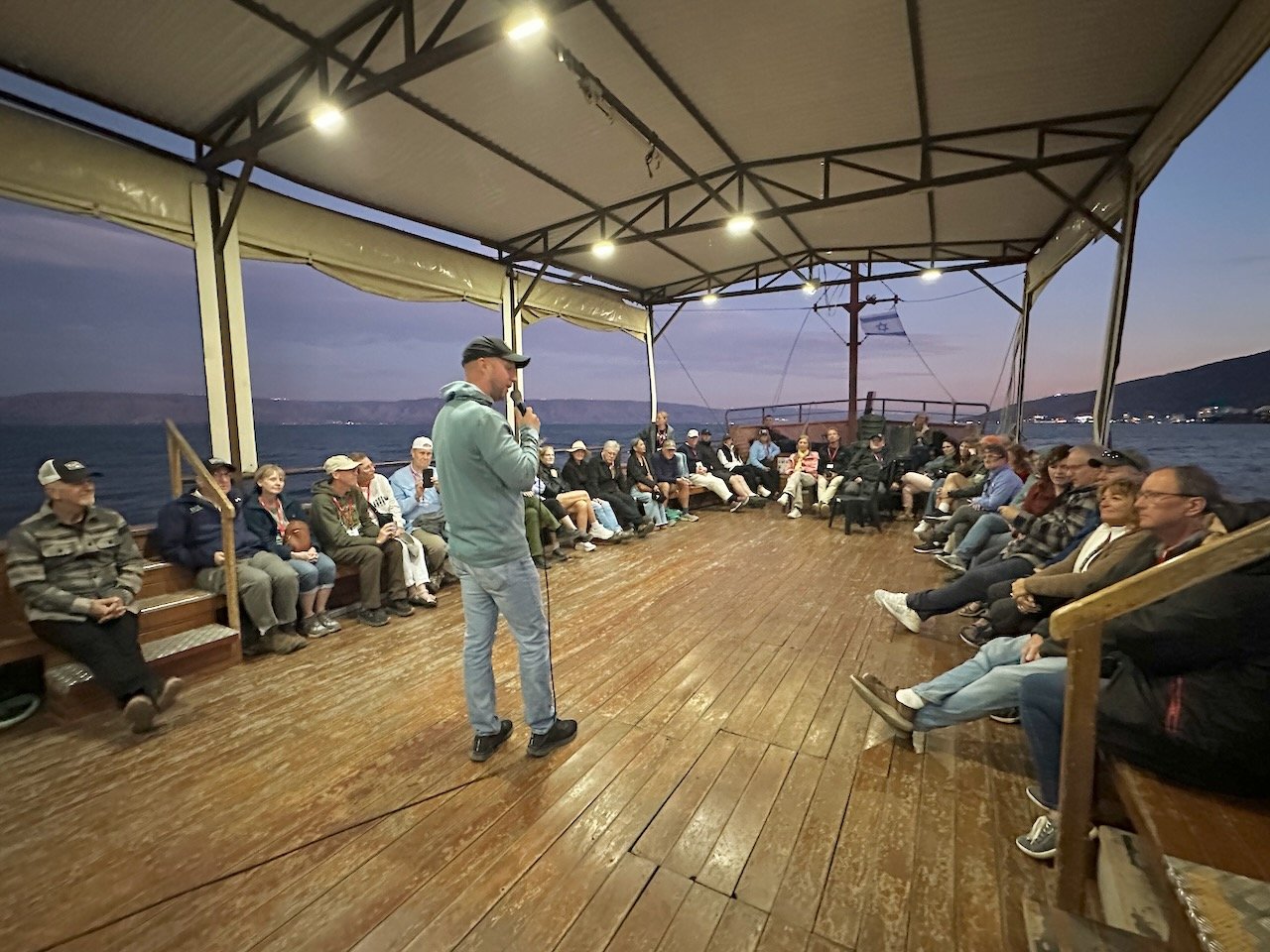
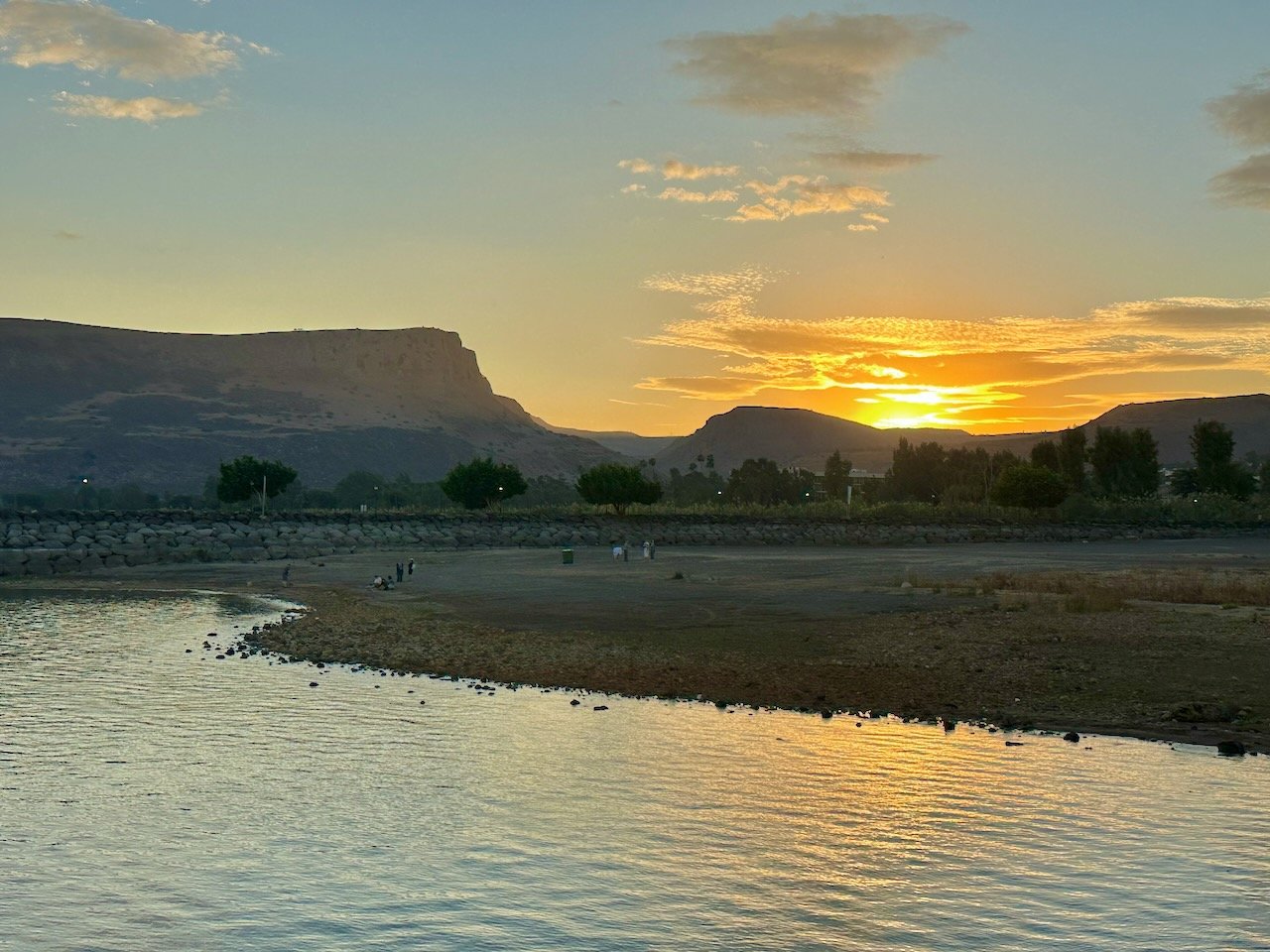
Being out on the water in our own boat was inspirational! We enjoyed singing along to a few worship songs. The storm from the Gospels (Mark 4, Mathew 14) were shared. Jesus cares for us, especially when we encounter the “storms” of life. Sailing to Tiberias at dusk (with a nice sunset) was beautiful! David picked us up as we docked, driving us back to our hotel. It was a great day of focusing upon Jesus!
Day 6 – Thursday, November 12: Hippos/Sussita, Chorazim (with trail walk), Upper Galilee & “Hill 713”
Today was another beautiful day. We enjoyed sunny skies again, with highs in the 70s. It was another day of a focus on Yeshua/Jesus as we spent time on both sides of the lake. We even enjoyed a brand new partial walk from Chorazim to Capernaum. We read from Mark 2 (the calling of Levi) as we left the hotel at 7:30.
Hippos/Sussita
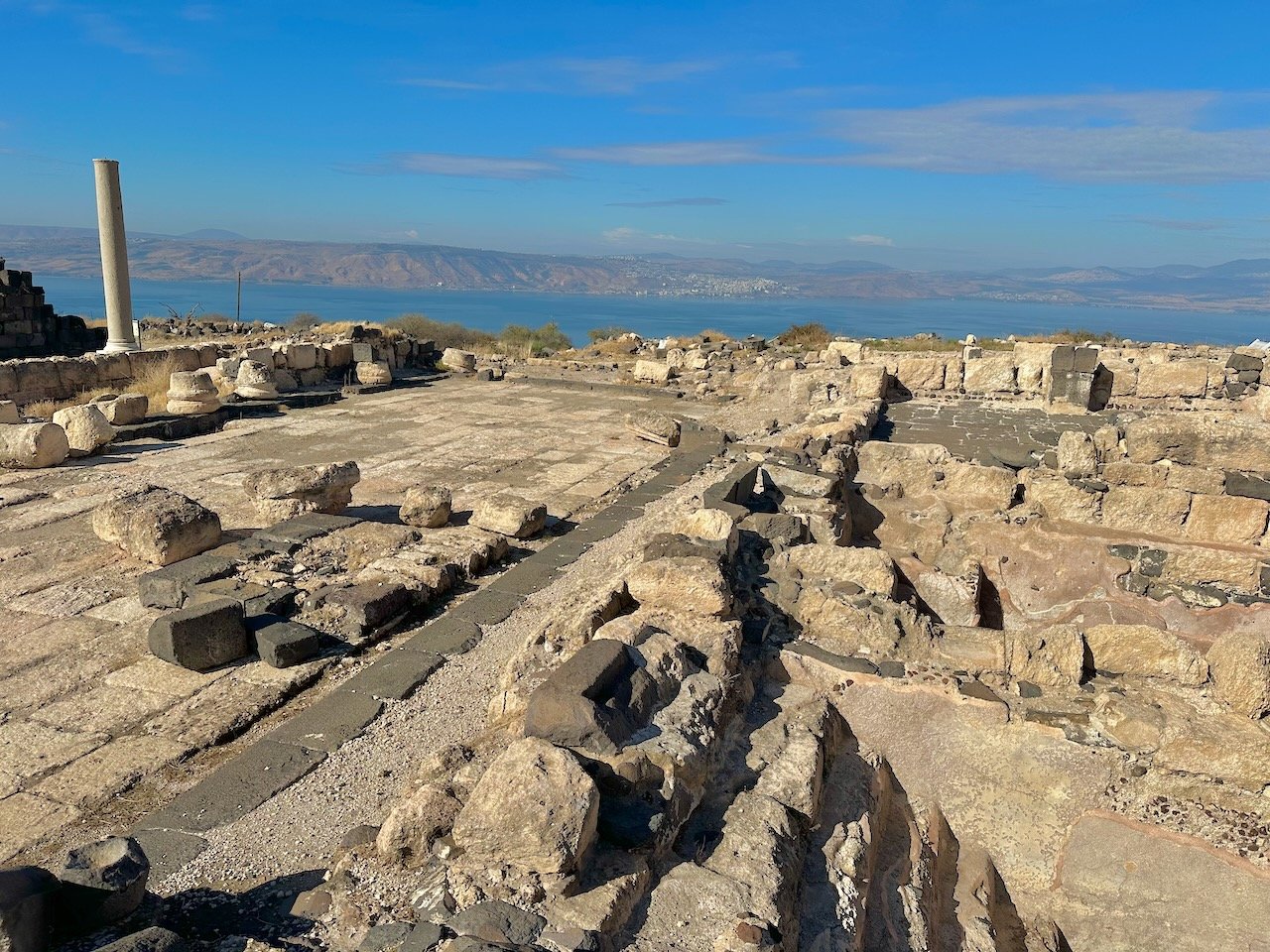
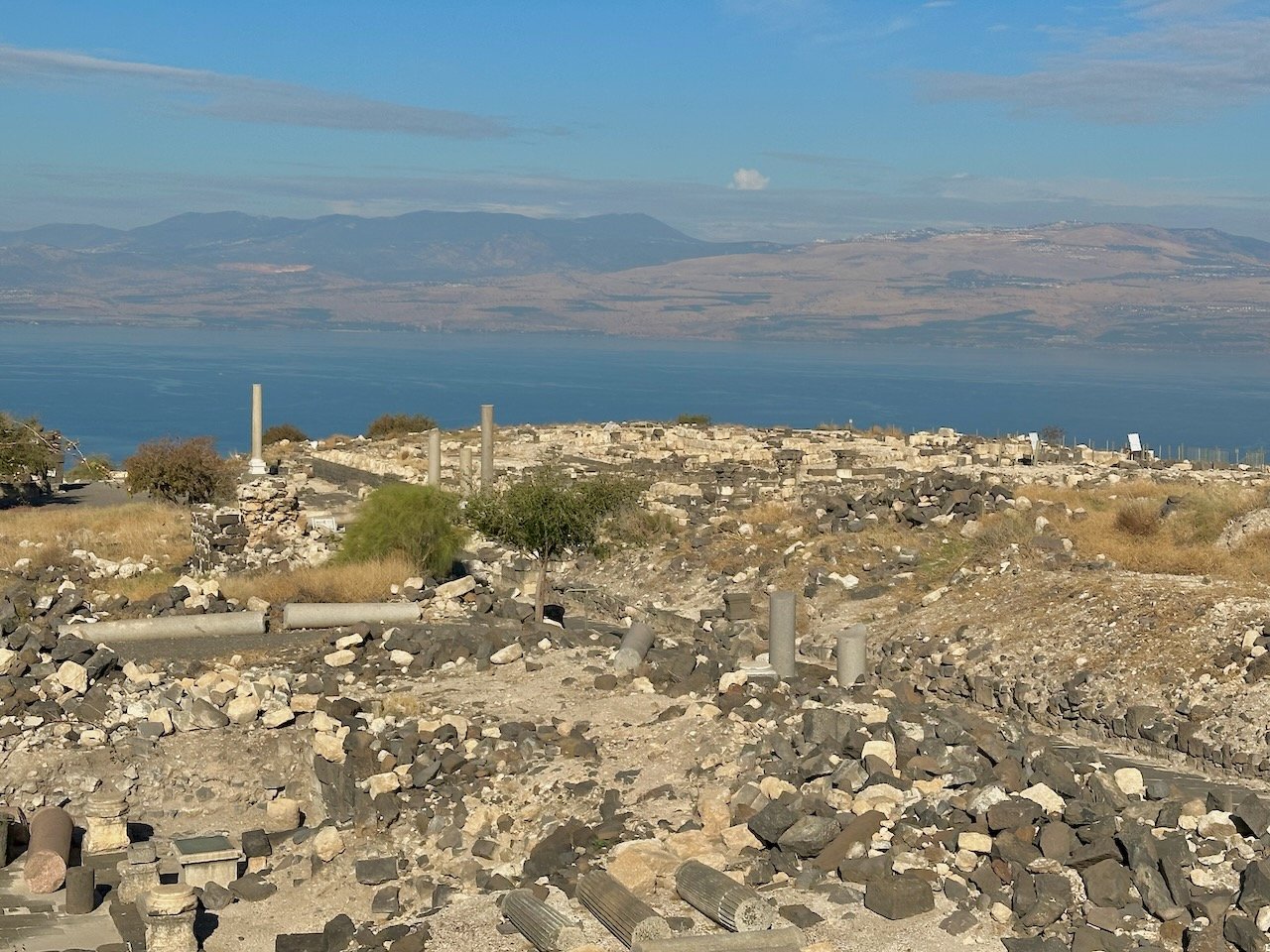
We first traveled north to the northern end of the lake, passing by once again the location of Bethsaida, the home of Peter, Andrew, and Philip (John 1). We then turned south as we drove on the east side of the lake. We made a brief stop at the only “cliff” area on this side. No doubt this is where Mark 5 took place. We continued to Hippos/Sussita. Here at Hippos (a Decapolis city), we saw many Roman ruins. During the Byzantine Period (4th-6th centuries AD), there were no less than a half a dozen churches were built here. With a great view of the lake, we read the transformational story of the demoniac from Mark 5 (which most likely happened down near the lakeshore). The view across to the west side of the lake was really good!
Chorazin
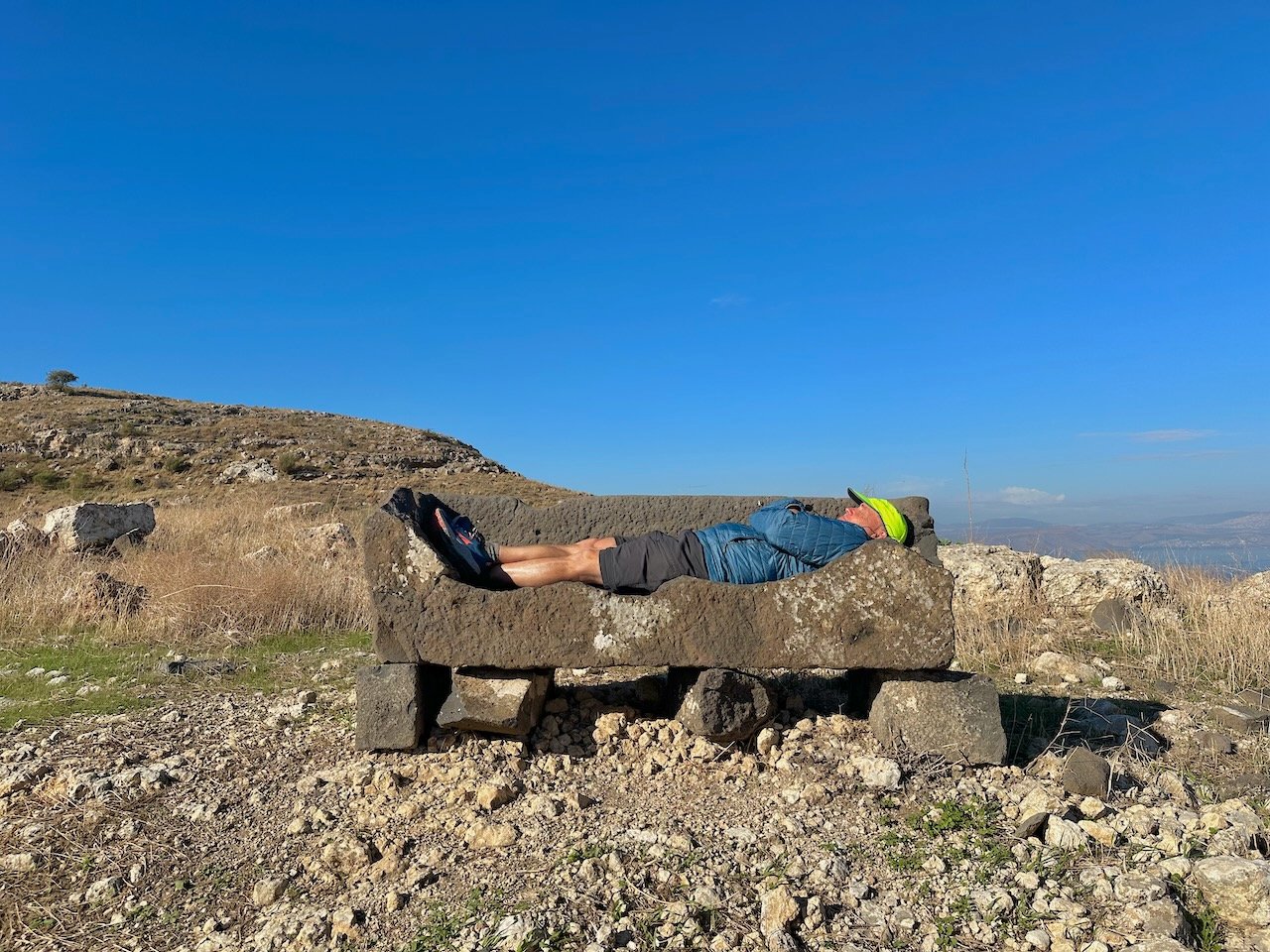
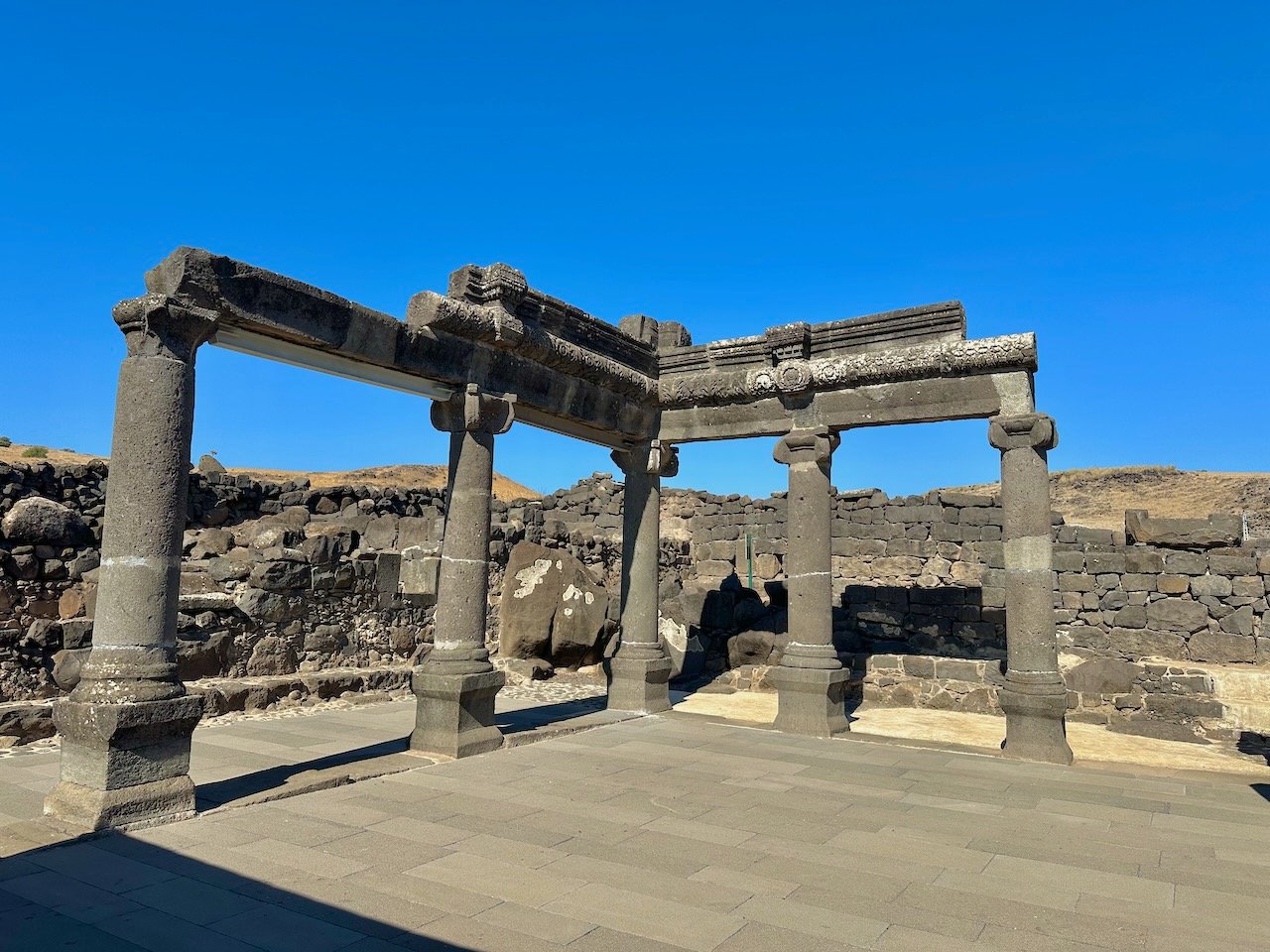
Driving back to the northwest corner of the lake and located up on a hill is Chorazin. The visible ruins from this archaeological site are primarily from a 3rd century AD. We saw a wine press as well as the synagogue. During Covid, archaeologists excavated below the 3rd century level of the synagogue and exposed most likely the 1st century level. Chorazin was one of three cities condemned by Jesus because of their unbelief (Matthew 11). We also read from Matthew 23:2 about the Moses Seat found here about 75 years ago.
Chorazin-Capernaum Trail Hike
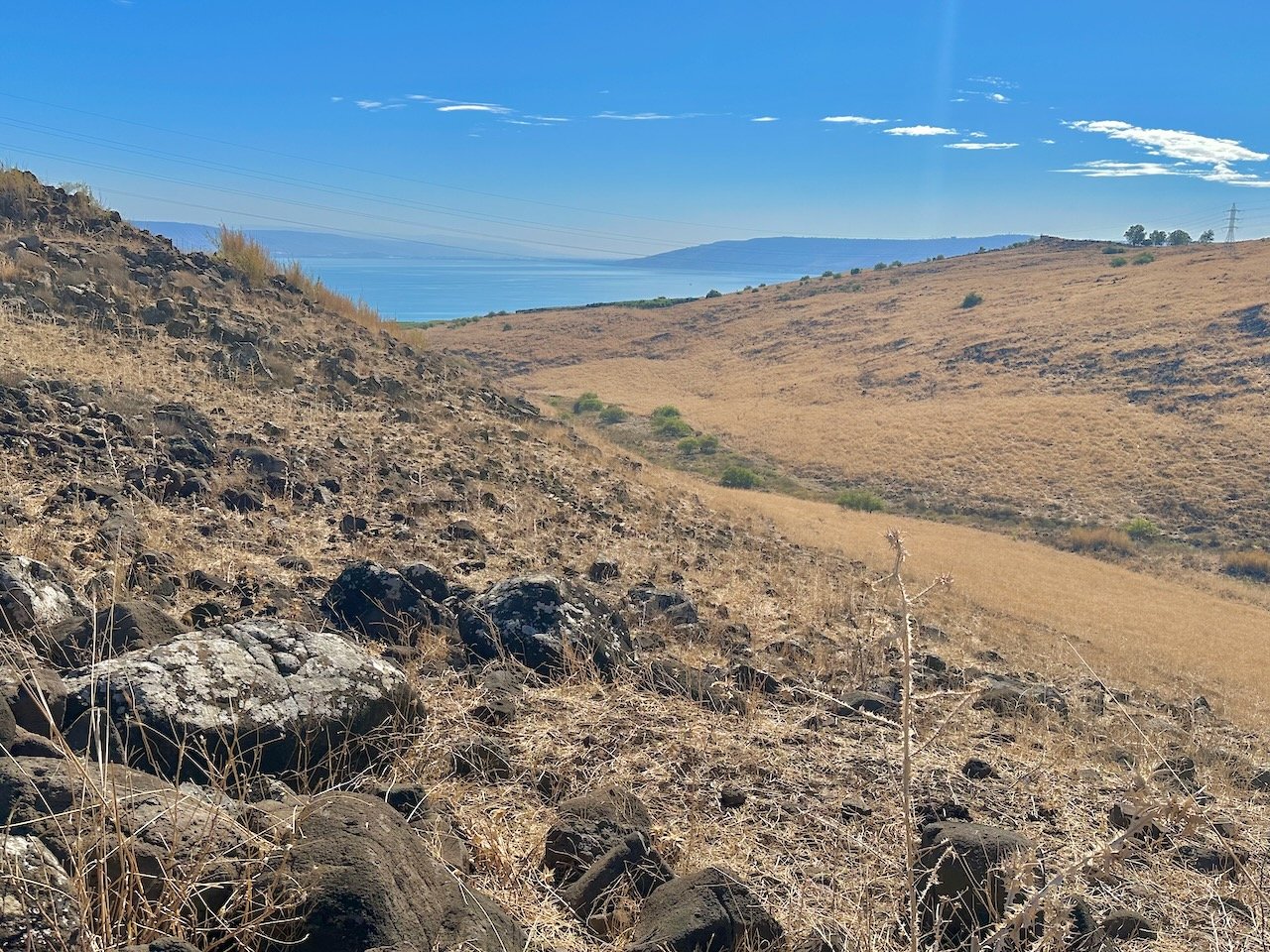
Since last year, a brand new trail that connects Chorazin with Capernaum was made. After seeing the site of Chorazin, this new trail led us to a turnstile where the trail begins. Many in the group continued on the trail. We descended down a steeper hill where we gathered together to read the rest of Matthew 23. We could see where the trail continues all the way to the shoreline. However, because of the trail being marked with many thistles, and due to time, we returned back to the site of Chorazin. It was amazing, however, to be on this trail, no doubt the same route everyone used 2000 years ago inn the days of Jesus.
“Hill 713” (Mitzpe Ha-Yammim)
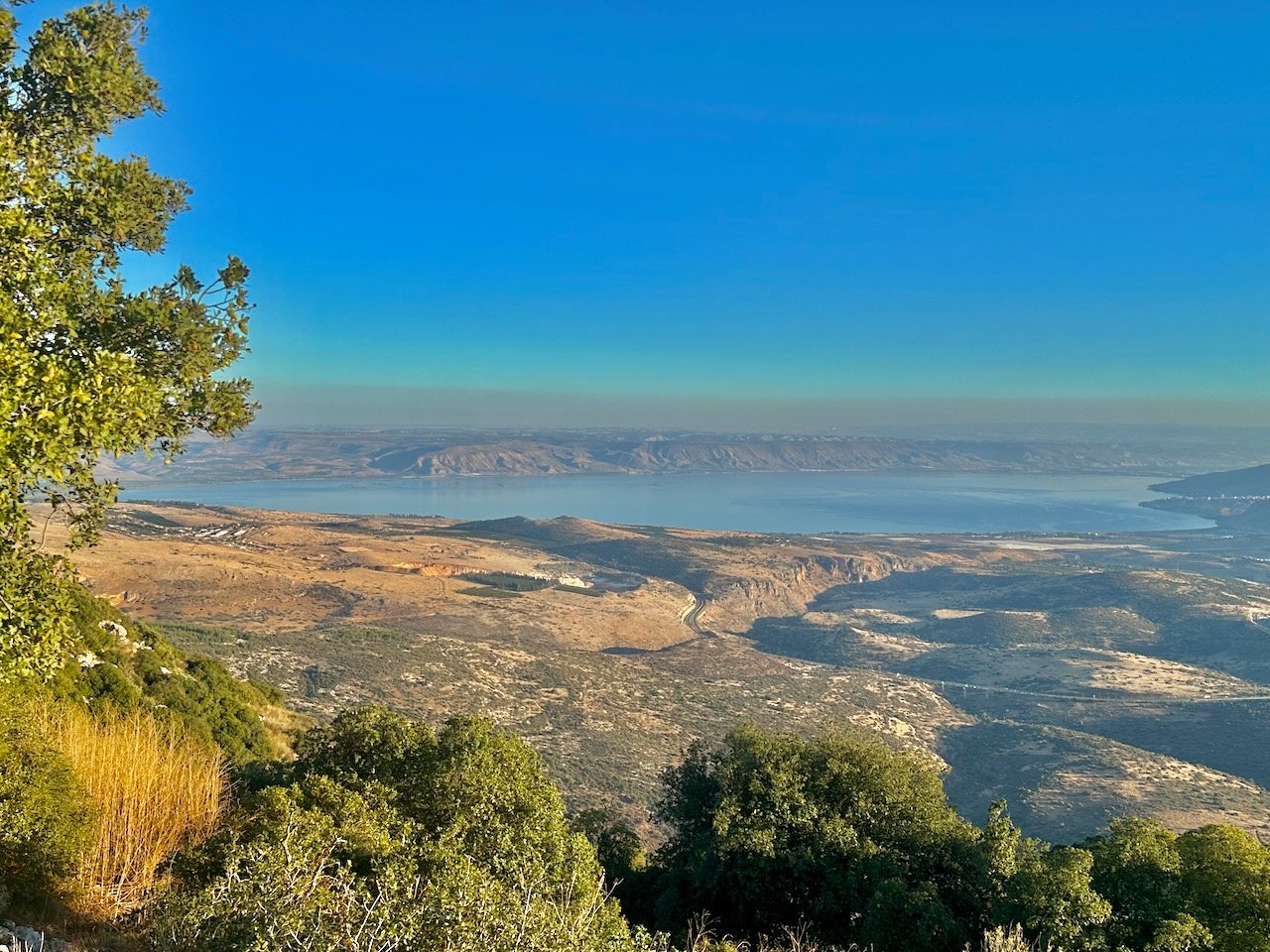
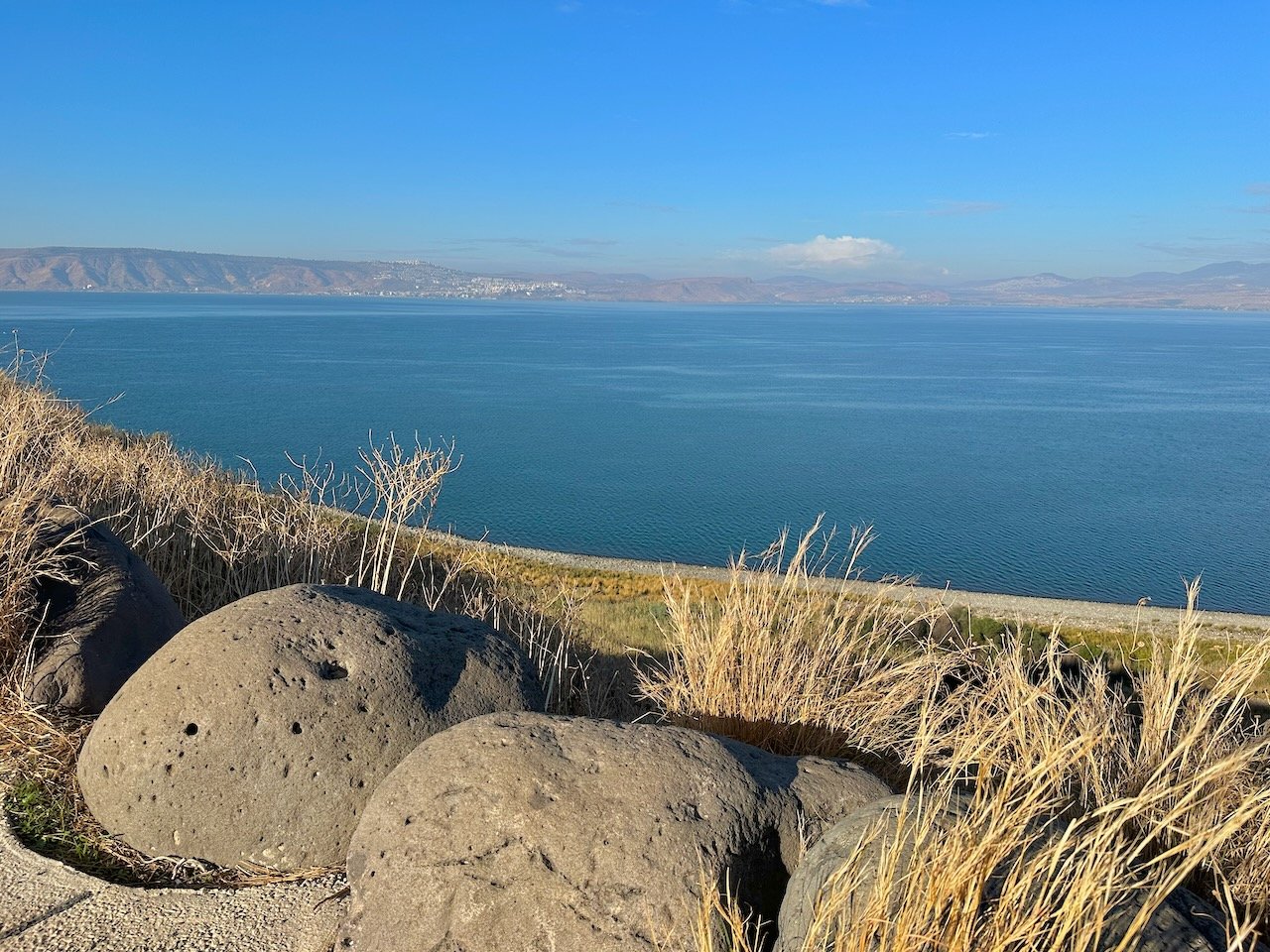
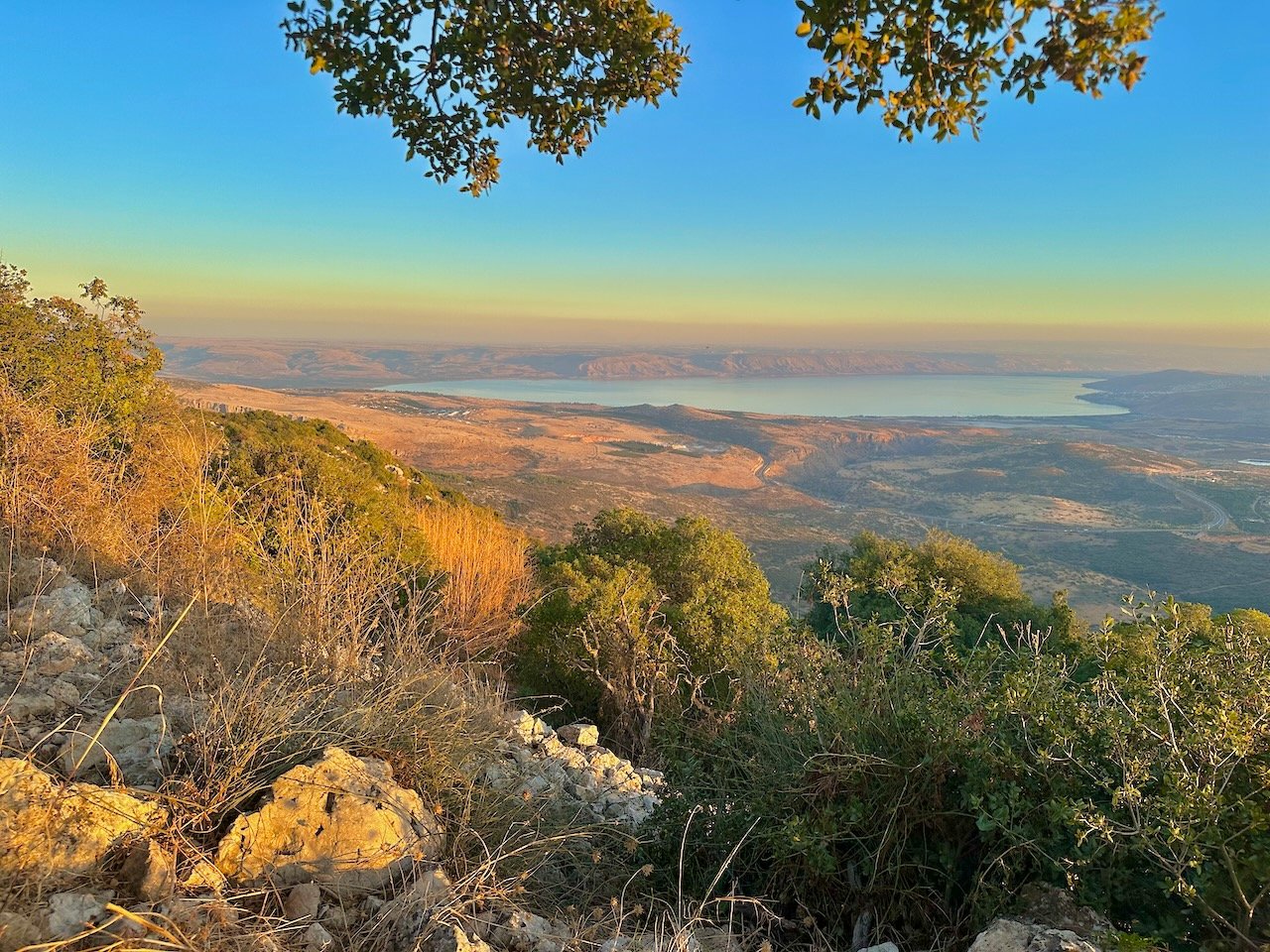
We returned to Magdala for an incredible fish lunch. It was very good! To end the day we dropped off some of there group at the hotel for some free time and a relaxing afternoon, while 15 of us stayed on the bus and drove to the Upper Galilee. Specifically we hiked to what Pastor John calls “Hill 713” (named this by Jim Monson, John’s historical-geography professor from his Jerusalem days. In Hebrew the viewpoint is called Mitzpe Ha-Yammim, meaning the “view of two seas”). We arrived at the trailhead at about 3:25 p.m. The hike (.8 miles in length) took us to a stunning view about 25 minutes later. Located on part of the Meron Range, this viewpoint provides the very best view of the entire Sea of Galilee, the Golan Heights, Tiberias, the Lower Galilee areas, Mt. Tabor, the Hills of Samaria, the Carmel Range and even the Mediterranean Sea!! In other words, the entire width of Israel can be seen from here! Visibility was about 8.5-9 (scale of 10)!
We hiked back to the bus for the drive back to Nof Ginnosar. We arrived at 5:30 p.m., in plenty of time for 6:30 dinner. This was our last day here in the north! We travel south to the Dead Sea tomorrow!
Day 7 – Friday, November 13: Beth Shean, Shiloh, Jericho, Judean Desert/Wadi Qelt
We checked out of our hotel in Tiberias today. It’s been a great three full days and four nights here in the north end of the country. Following breakfast, we loaded the bus at 7:05 and departed at about 7:20. We read portions of Matthew 5-7 and 13 as we departed. The weather was about the same as the last few days, with full sun and highs around 75 again.
Beth Shean
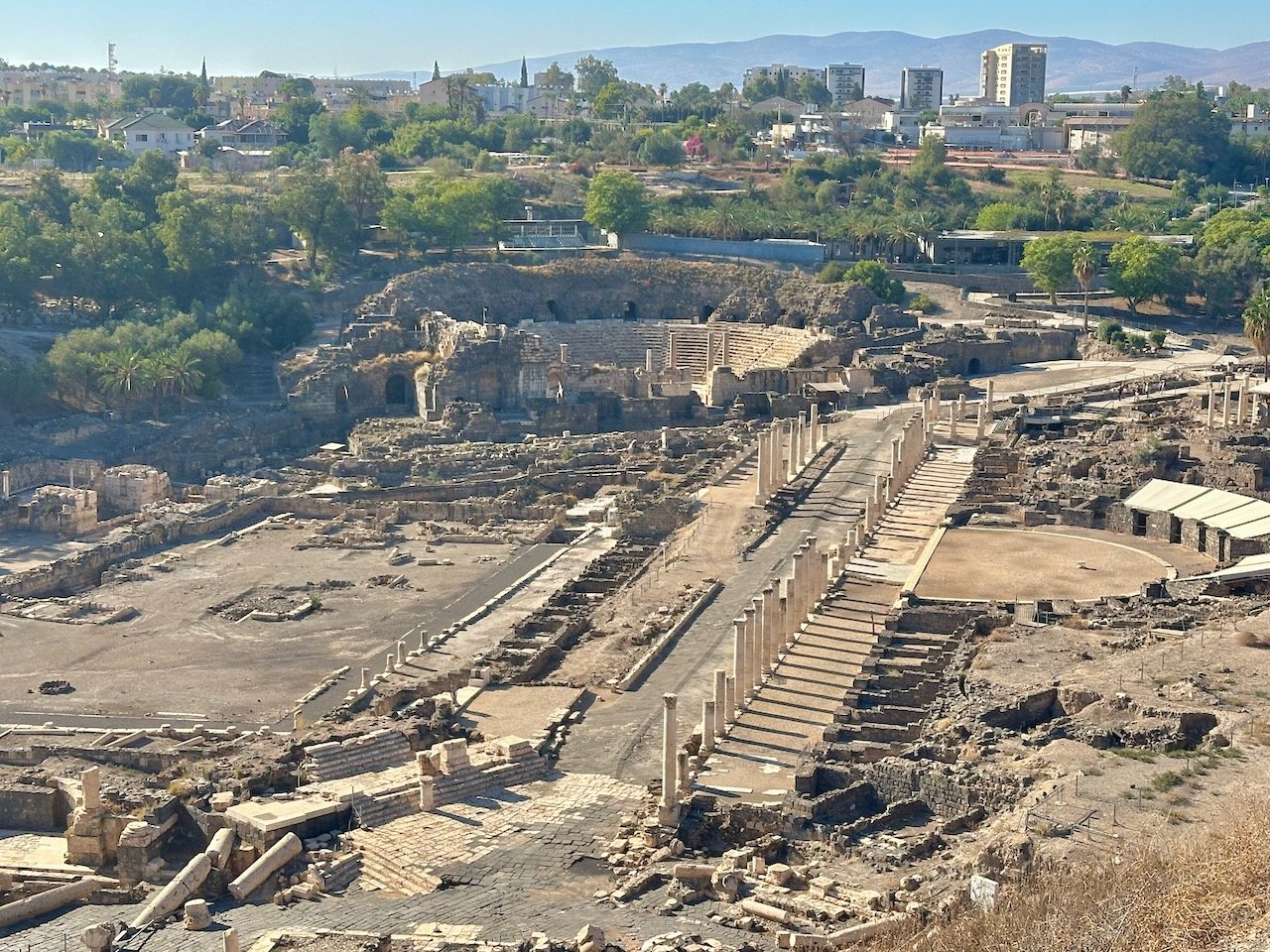
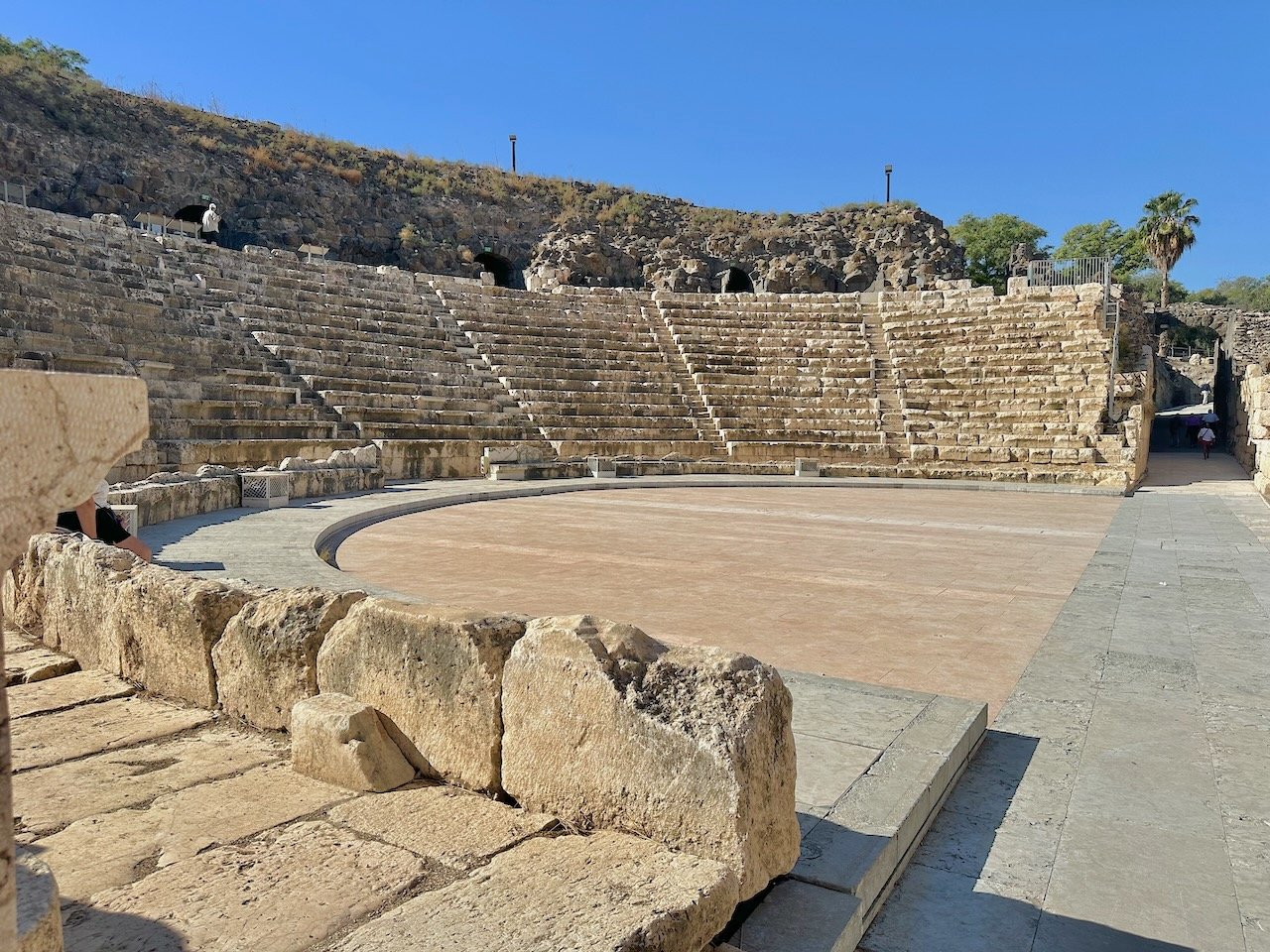
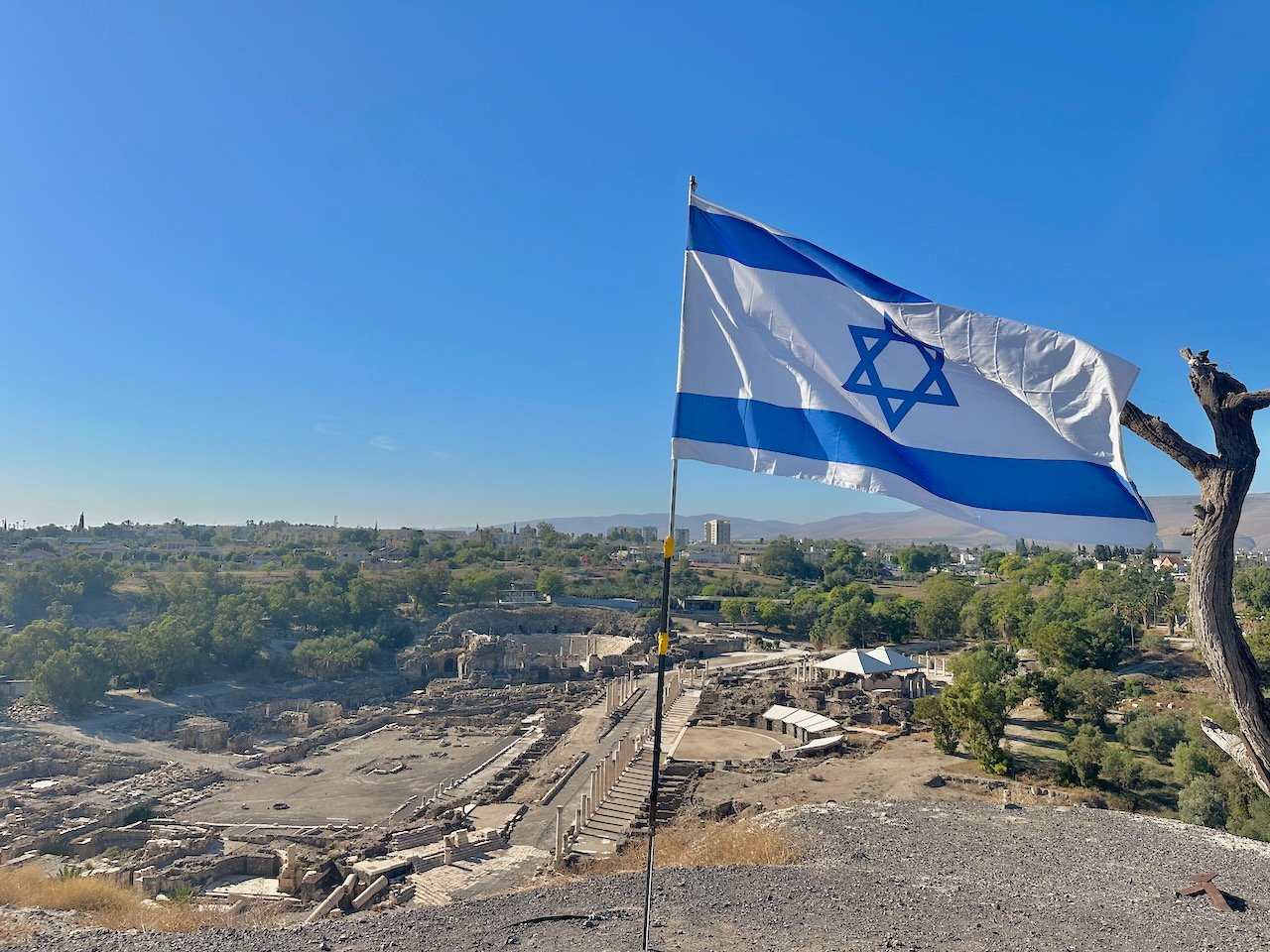
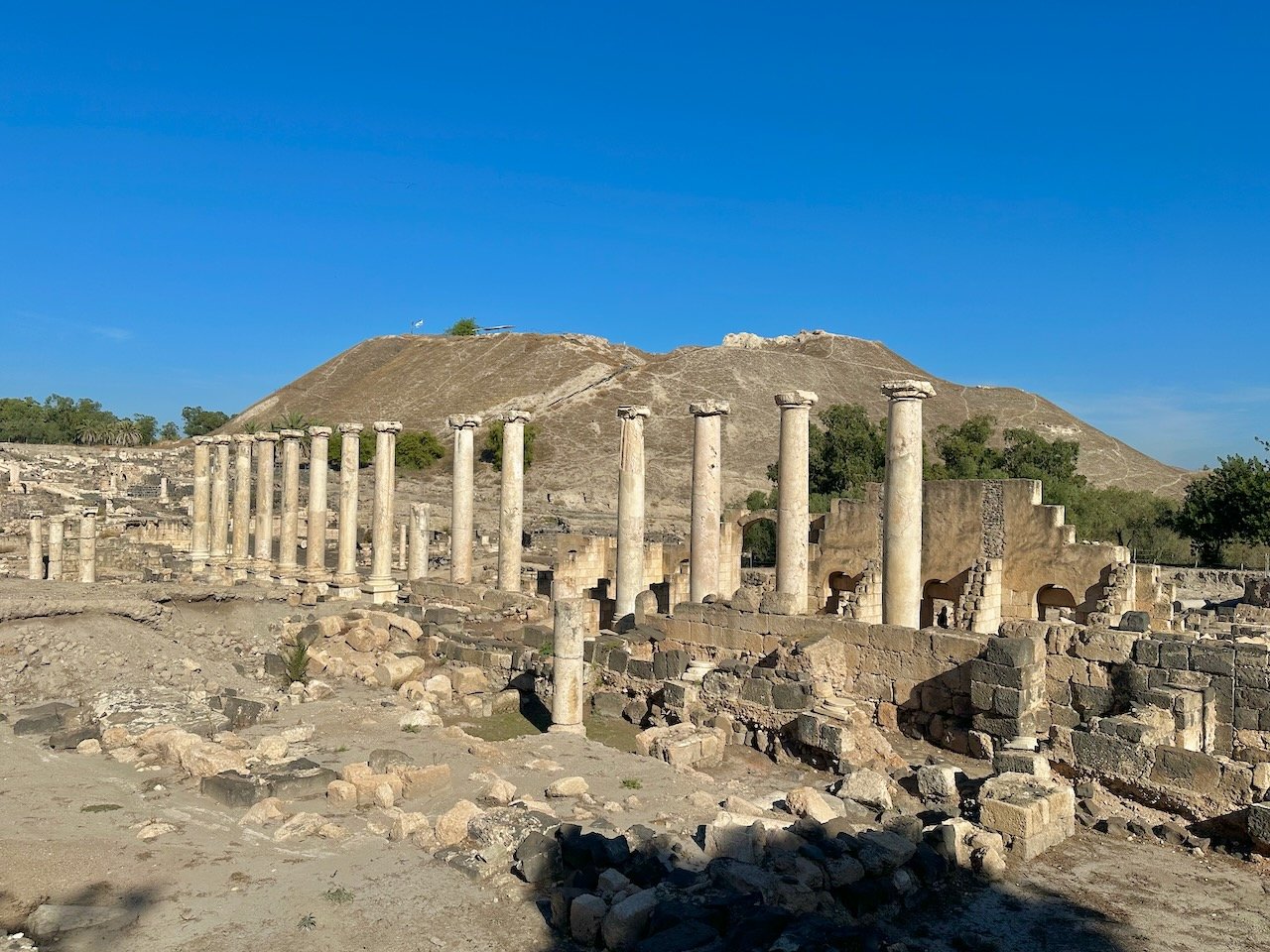
We drove south out of Tiberias and continued through the Jordan Valley about 20 miles to Beth Shean, the only city of the Decapolis on the west side of the Jordan. Beth Shean is a massive archaeological site, primarily Roman. Since we were limited with time, Pastor John first took many in the group up to the top of the OT tel. There are about 190 steps (in total) to the top of this Old Testament site where Saul’s body was hung on the walls of the town square (1 Samuel 31, 1 Chronicles 10). The view from on top of the Roman city below was amazing.
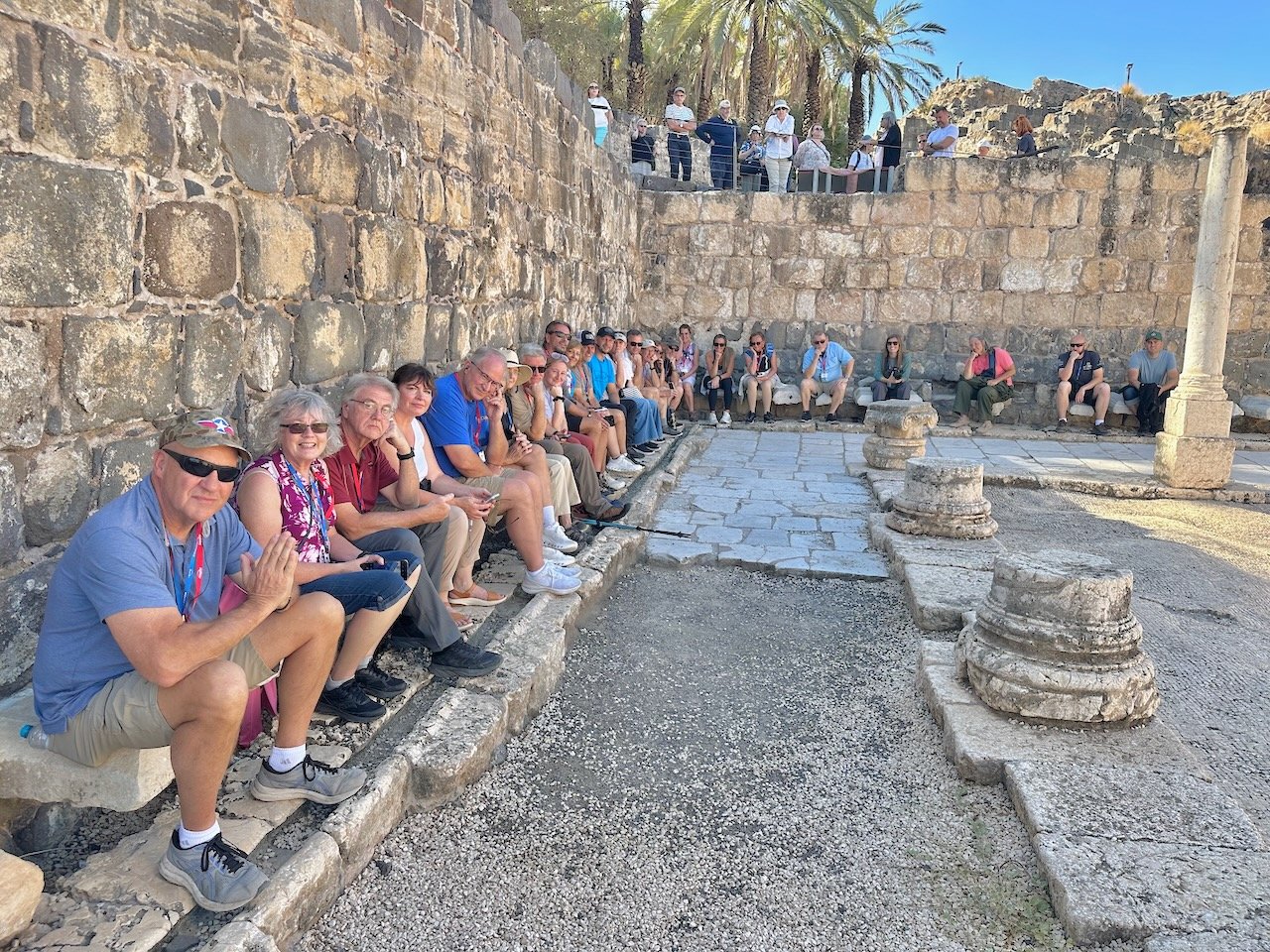
Meanwhile, Shlomo took the rest around the Roman site. Among the Roman ruins, we all we saw the Roman bathhouse, the colonnaded street, and public latrines, and the impressive theater! Beth Shean is Israel’s most impressive site. Most of the Roman city was excavated in the 90s, with the help of putting to work about 250 unemployed people!
Shiloh
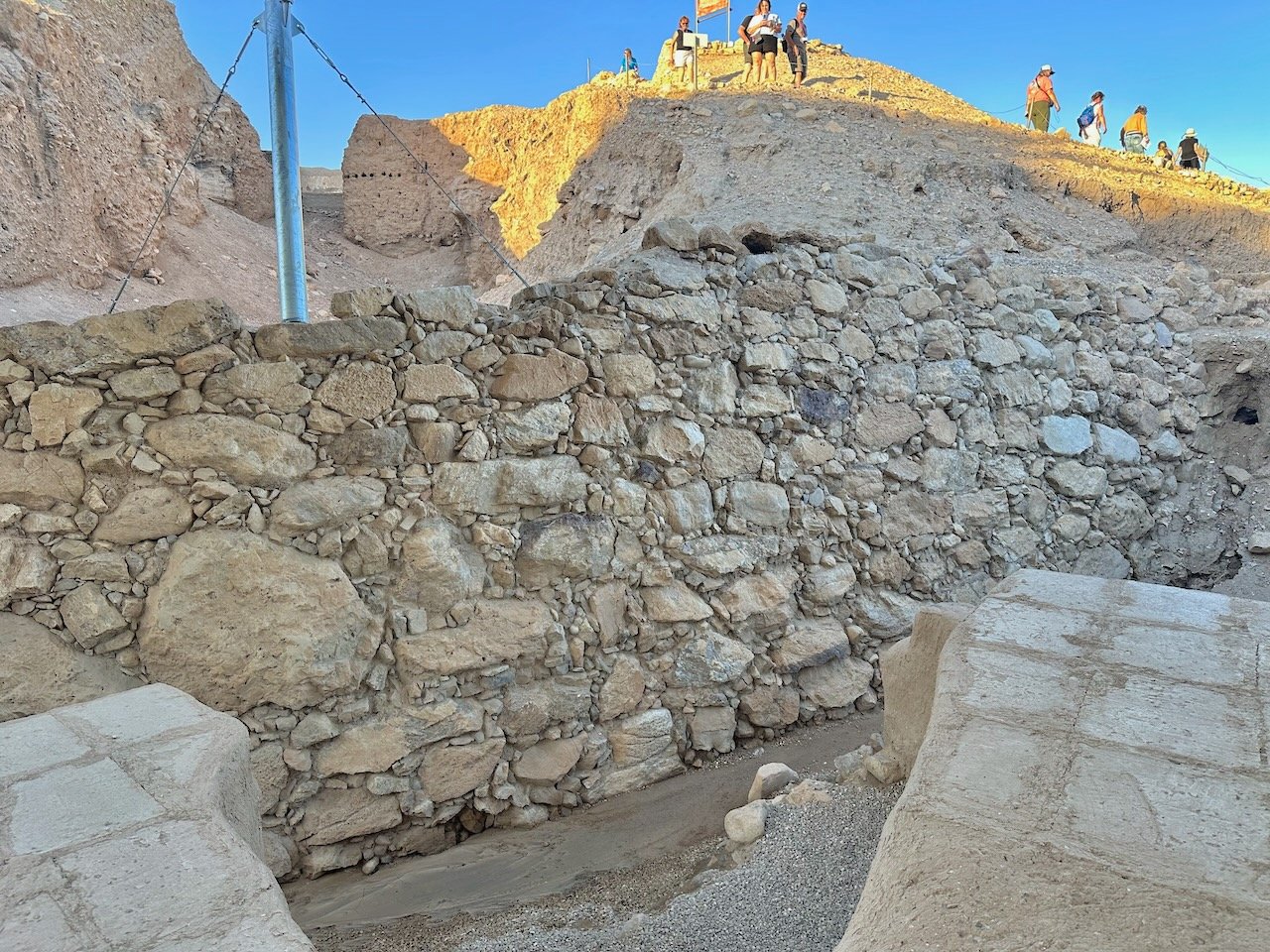
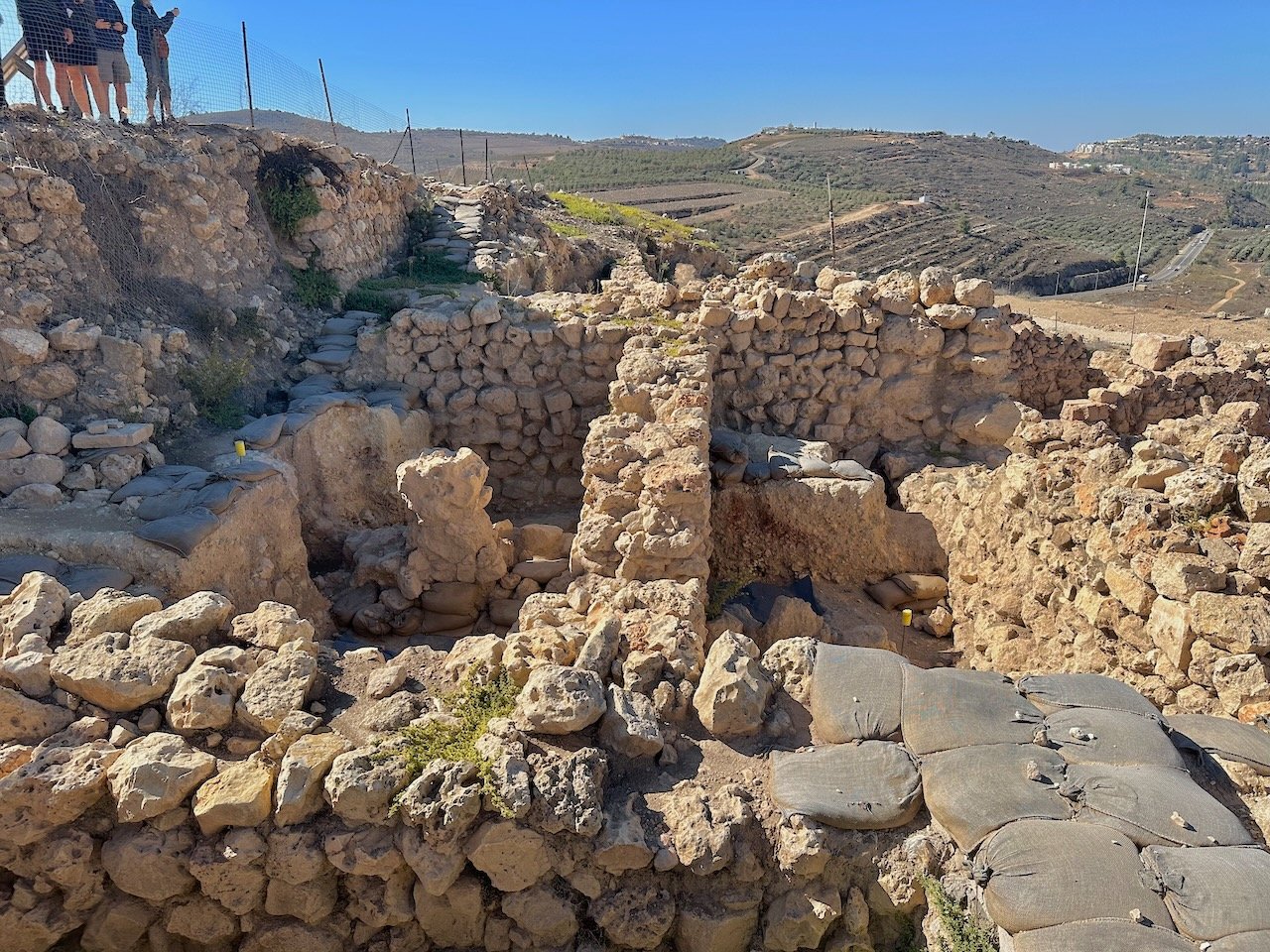
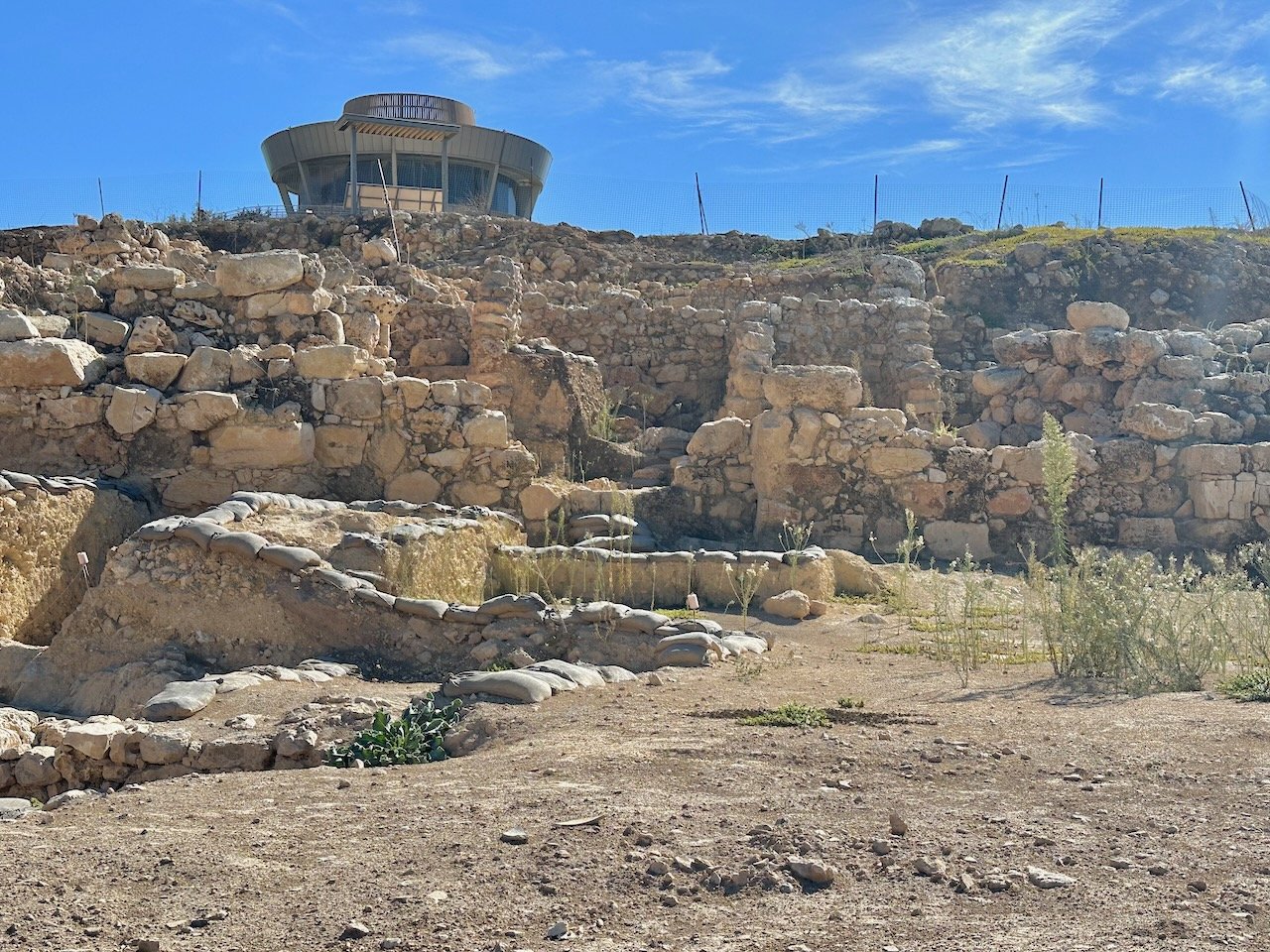
Next, we drove into the Hill Country of Ephraim to Shiloh. On the way, we drove through the Desert and Hill Country of Samaria. We first watched a short hologram about the Mishkan (Tabernacle) before we walked our way up to this ancient site where the Tabernacle once stood here for over 300 years. It was destroyed by the Philistines (1 Samuel 4) in about 1080 BC. We also read from 1 Samuel 3 (the call of Samuel) and Jeremiah 7. Among the ruins we saw a massive Middle Bronze wall that was incorporated into the Israelite site. Other structures, including perhaps the Holy of Holies area (as proposed by archaeologist Dr. Scott Stripling) could also be seen. It was young Samuel who said, “Hineni” (“Here I am!”) when God called Him into service. We left the site about 1 p.m. when the site closed (because of being a Friday of Shabbat).
Jericho
The next part of the drive from Shiloh was again unique. We drove past Ai (Joshua 7-8) and Mishmash (1 Samuel 13-14) on our way through the Parat Desert (Jeremiah 13). This is in the heart of the Judean Desert. We finally arrived at Jericho at the southern end of the Jordan Valley and enjoyed maqluba, an Arab dish of chicken and rice cooked upside-down. The salads and desert were also wonderful! We then climbed the site of ancient Jericho (called Tel es-Sultan). We first looked east across the Jordan to recall a few biblical connections (e.g. Moses, Mt. Nebo, Dt. 31; Joshua crossing the river (Joshua 3), Elijah & Elisha (2 Kings 2), and Jesus’ baptism (Matthew 3). We then saw an old stone tower that predates even Abraham and a small portion of the city wall on the southern end. Mud-bricks and a burn level could also be seen in a few places. We recalled the Joshua 6 story how the city was defeated (and burned) by the Israelites. Praise God for the historicity of the Bible as it happened just as recorded and confirmed by archaeology!
Judean Desert / Wadi Qelt
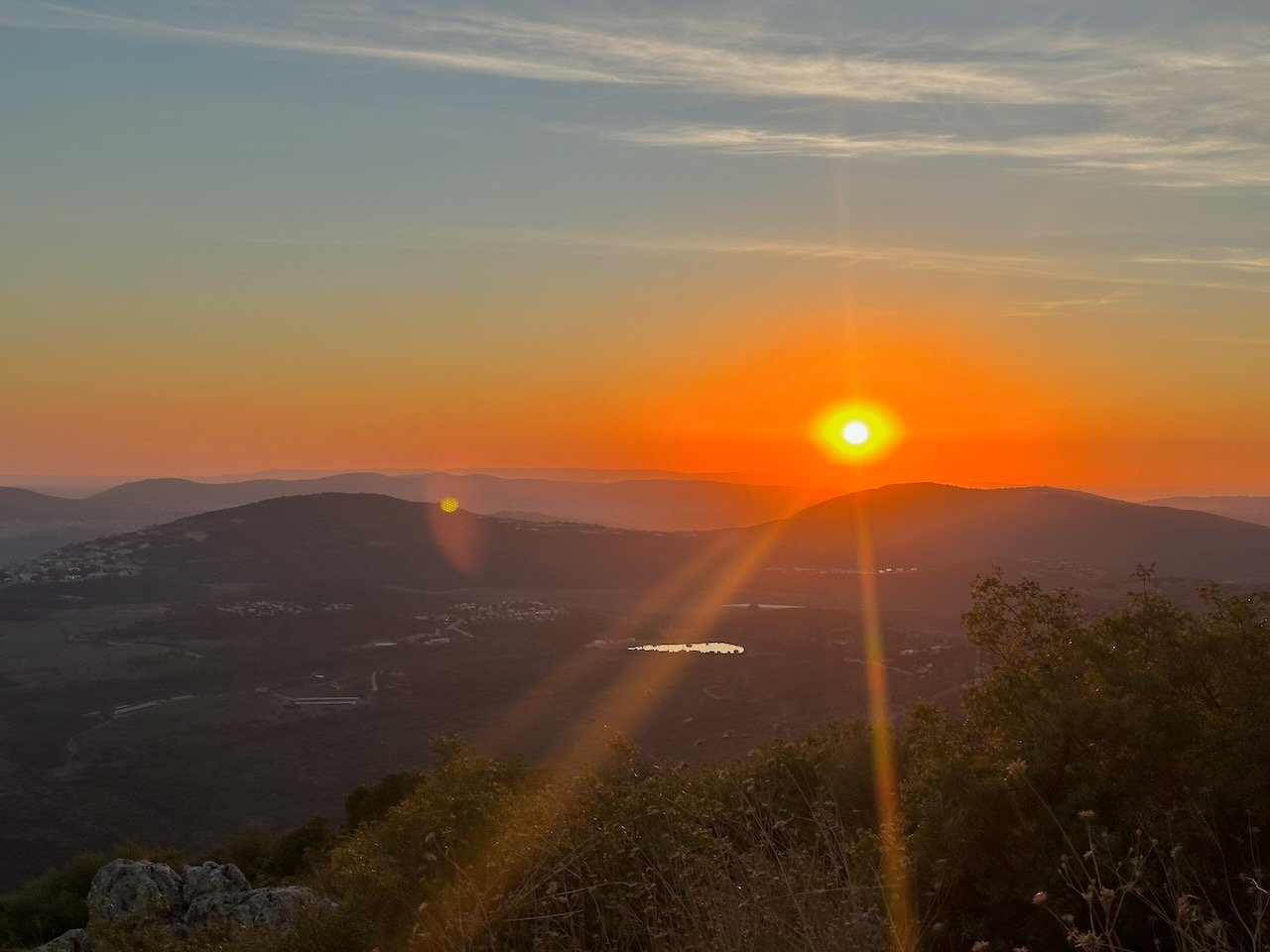
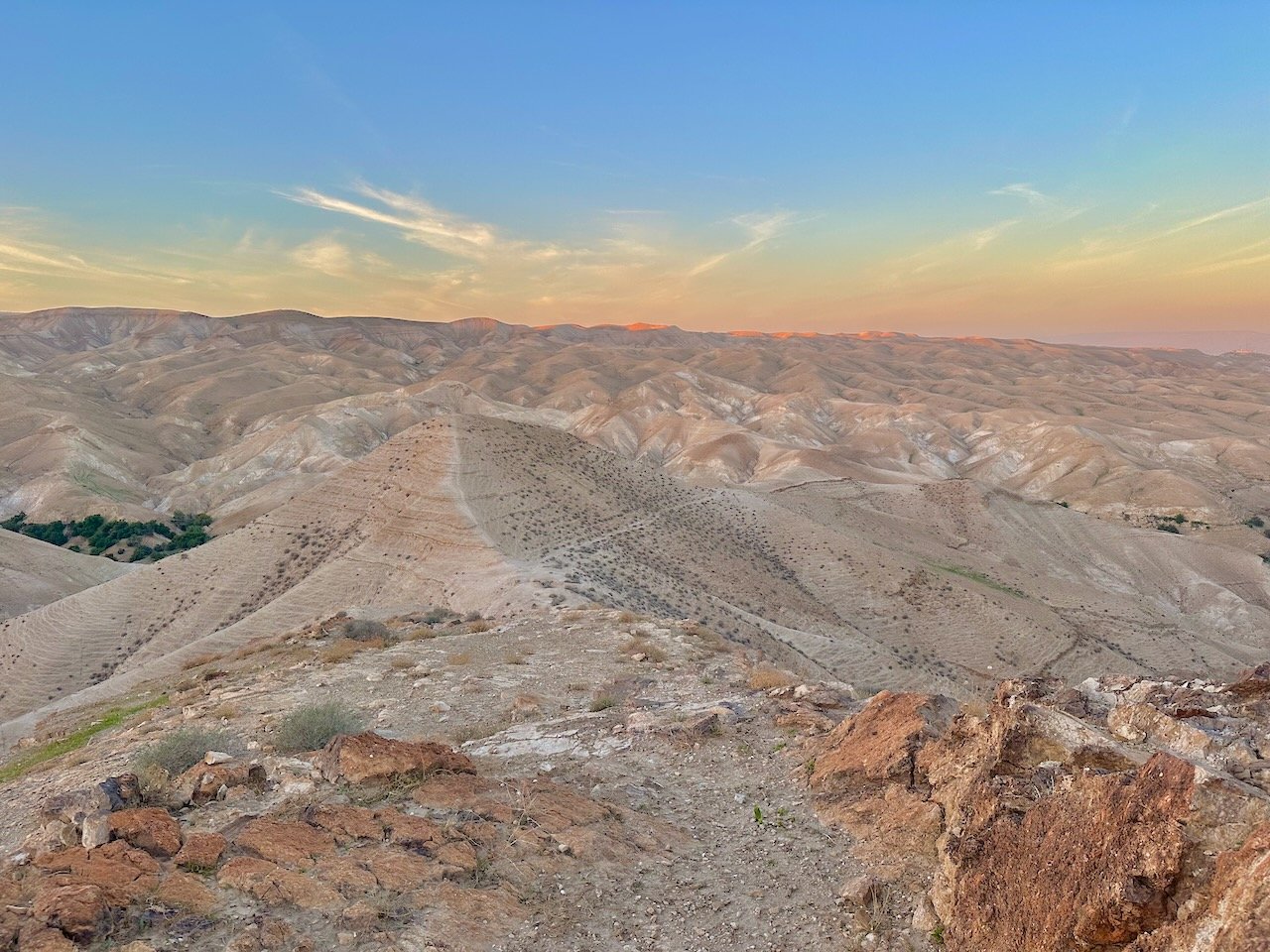
As we drove out of Jericho and before we arriving at our “kibbutz-hotel” for the evening, we enjoyed a sunset overlooking the Wadi Qelt! What a spectacular view of this part of the Judean Desert! First we heard the voice of “Isaiah” (dressed in his garment and beard HA) as he shared the words given to him by God as recorded in Isaiah 40. Then Shlomo sang Psalm 23 for us, a fitting setting for this psalm. The experience here was special.
Kalya Kibbutz
We returned back to the area of the Dead Sea and to Kalya, our “kibbutz-hotel” for the night. It is located right at the site of Qumran (which we will visit tomorrow afternoon). After checking in, we enjoyed dinner (at 7:00 p.m.) and then retired for the night.
Day 8 – Saturday, November 14: Masada, Ein Gedi, Qumran, Dead Sea, Jerusalem, Western Wall
We left the hotel just about 7:40 a.m. this morning (following a 7 a.m. breakfast). Today was “desert day” here in the Judean Desert. The weather was sunny and warmer (to be expected here), with highs in the low 80s. We read Psalm 18:1-2 as we left the hotel, focusing on the word the Hebrew word metzada (“fortress”).
Masada
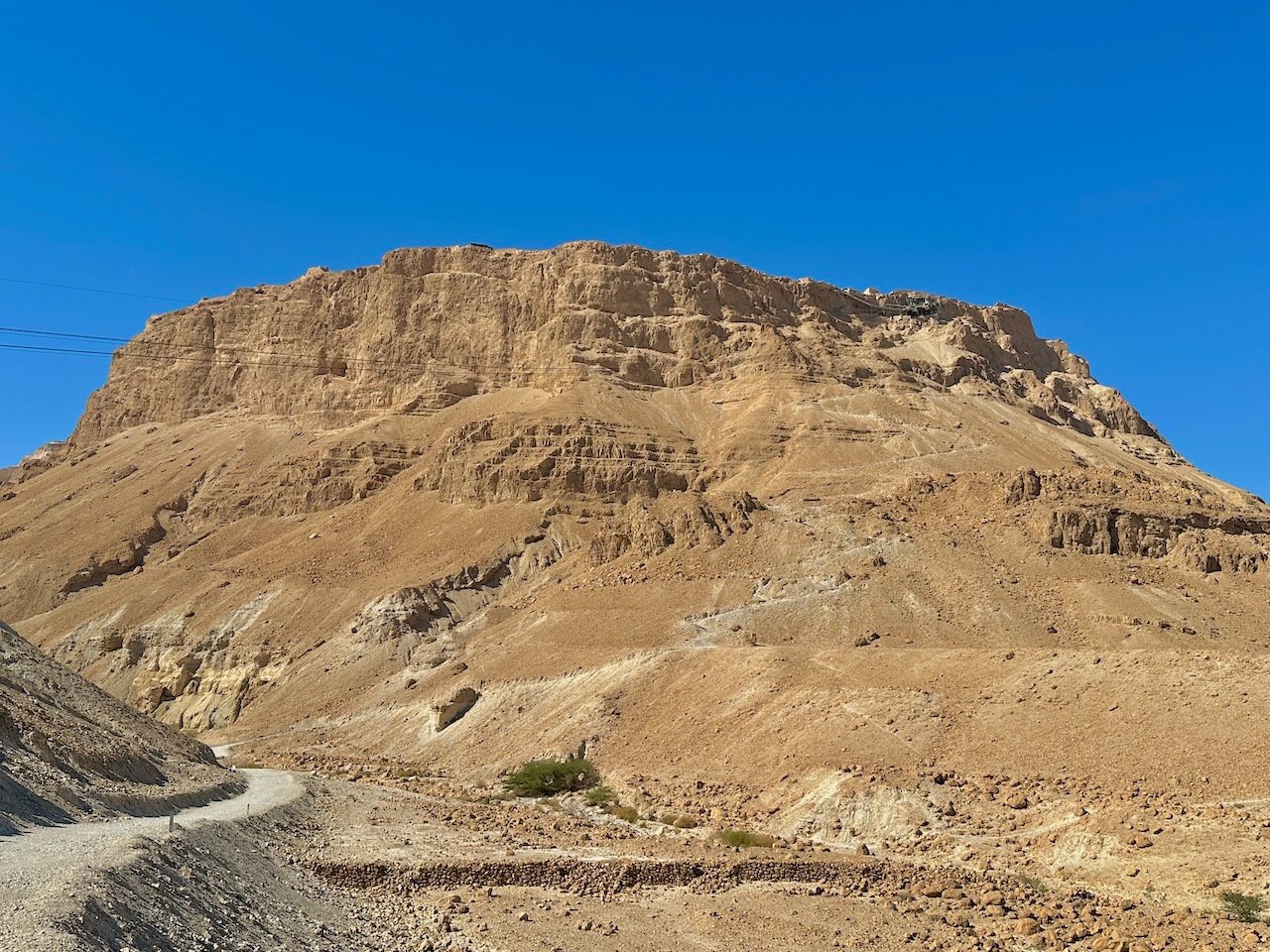
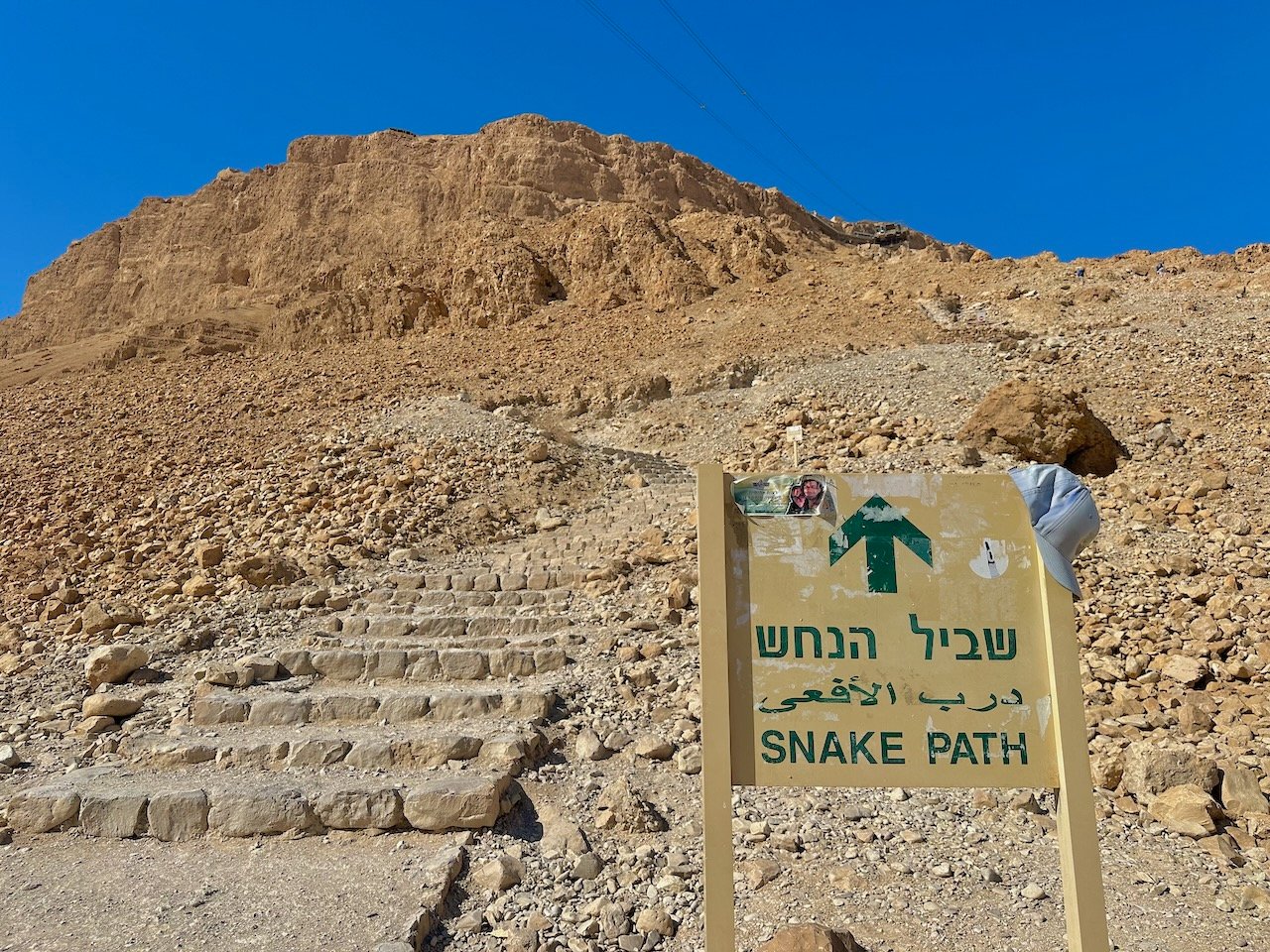
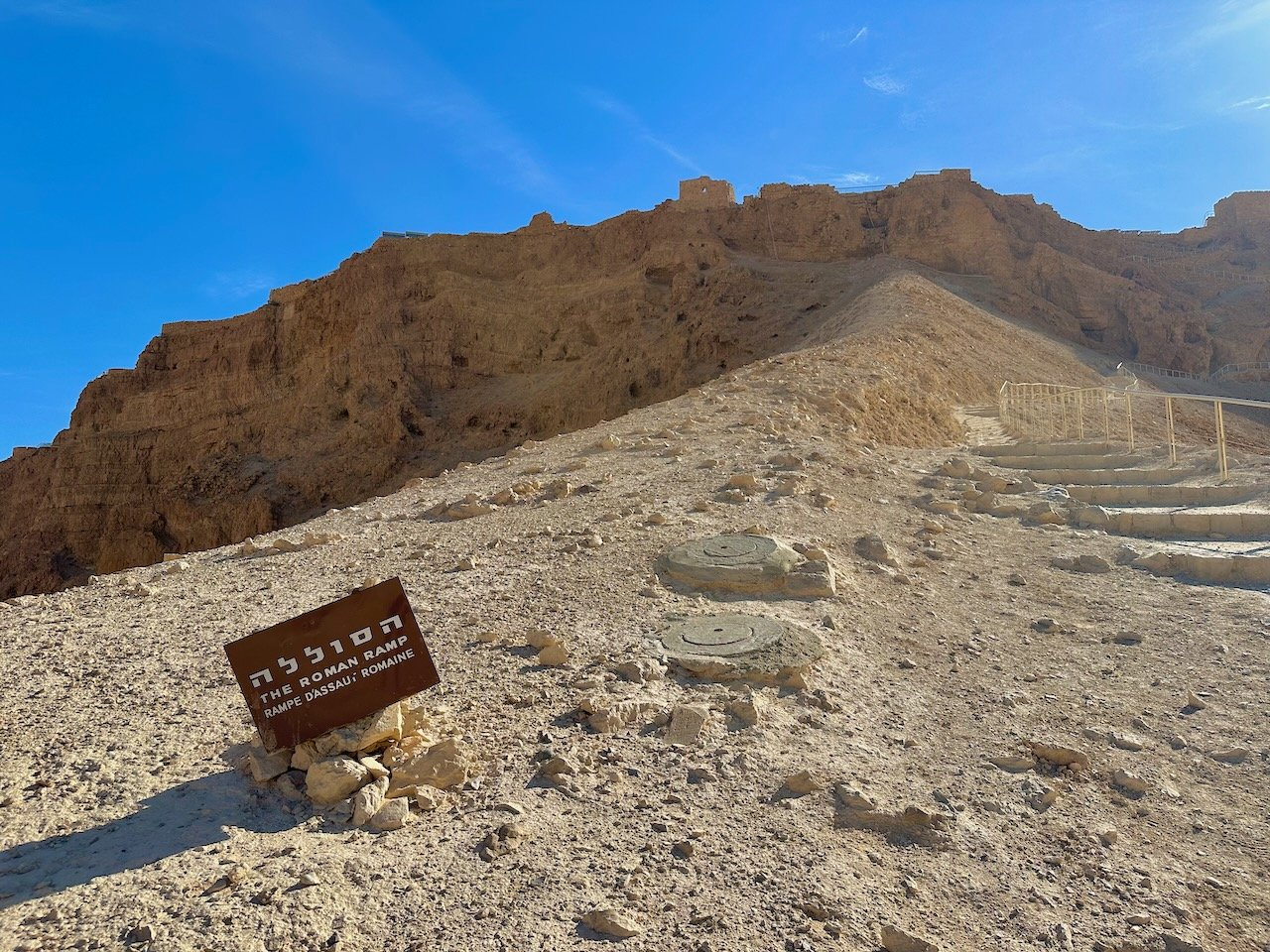
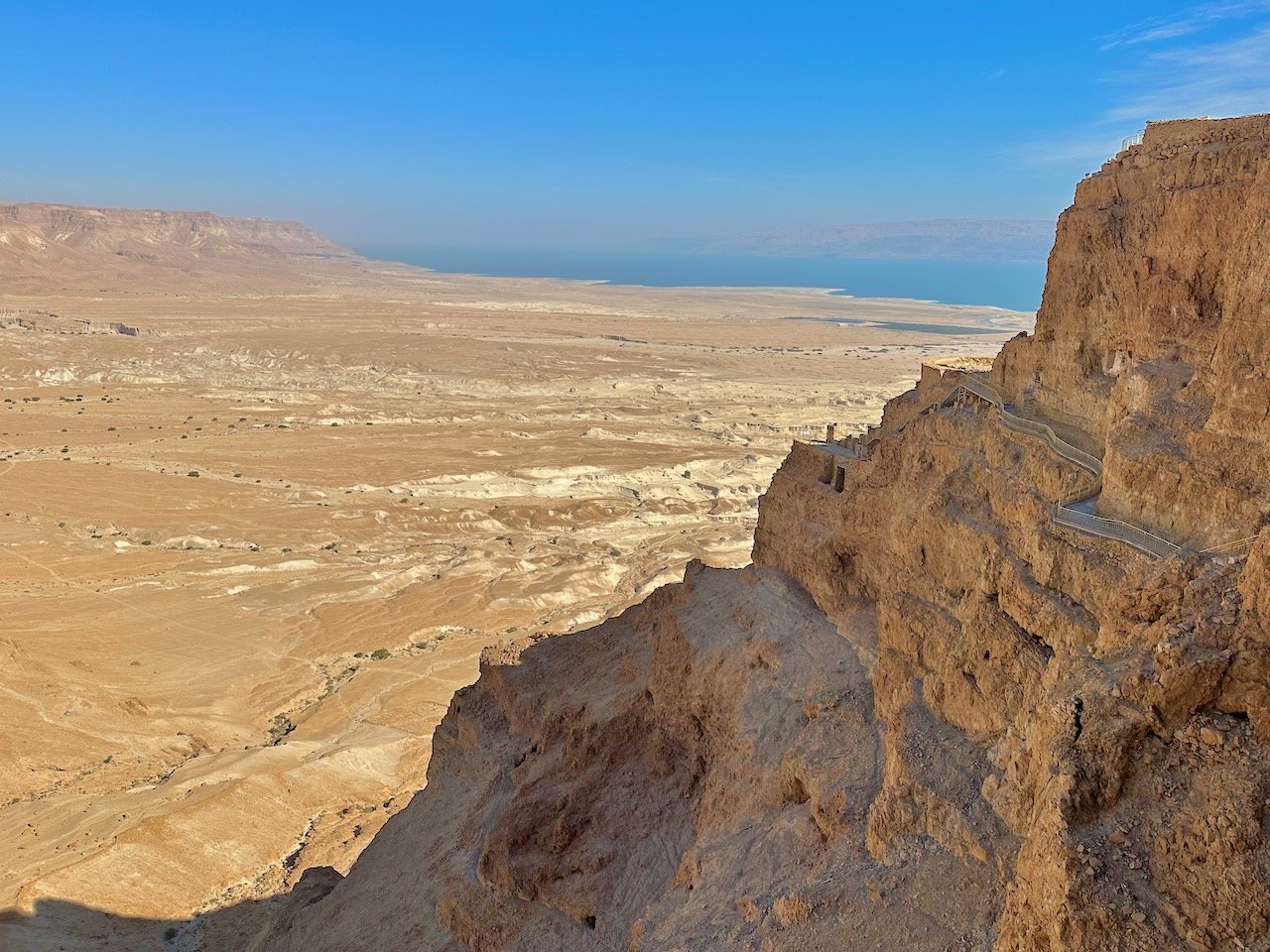
From Kalya, we drove south along the western shoreline of the Dead Sea. The site of Masada (metzada, in Hebrew) was our first site. This was built in the early 30s BC as a palace-fortress (he built numerous others) by Herod the Great. We took the cable car to the top and began seeing the ruins from the 1st century. We saw huge cisterns, the western and northern palaces, the Roman Ramp, the synagogue, and the bathhouse. In 70 AD, this was the location where 967 Jews (according to Joseph’s) found refuge from the Romans following the destruction of the Temple. The holdout lasted about three years until all by five of these Jews (a few women and children) took their own lives. It is a story of bravery and courage! A good number in the group walked down the Snake Path. It took between 30-40 minutes.
Ein Gedi
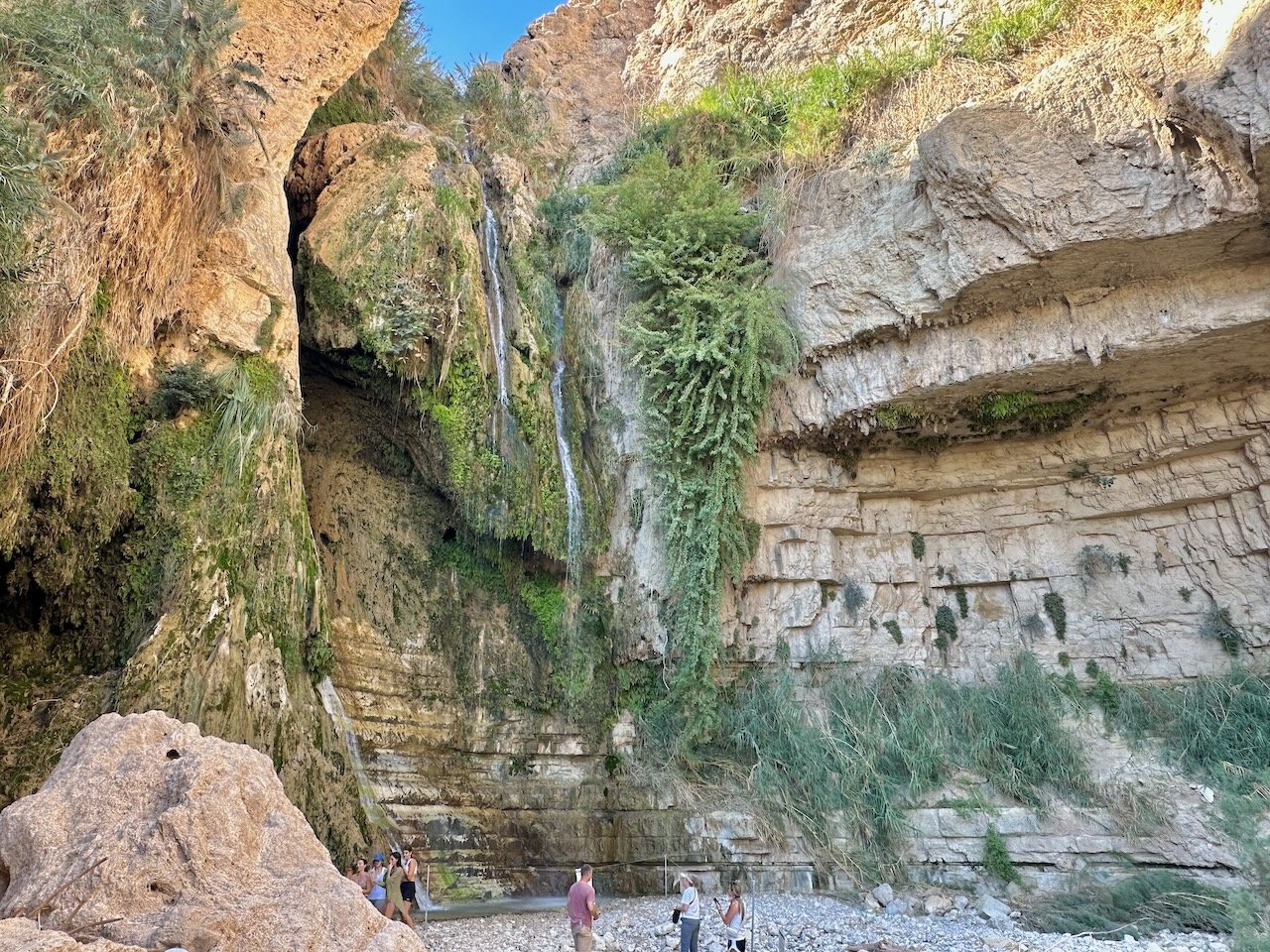
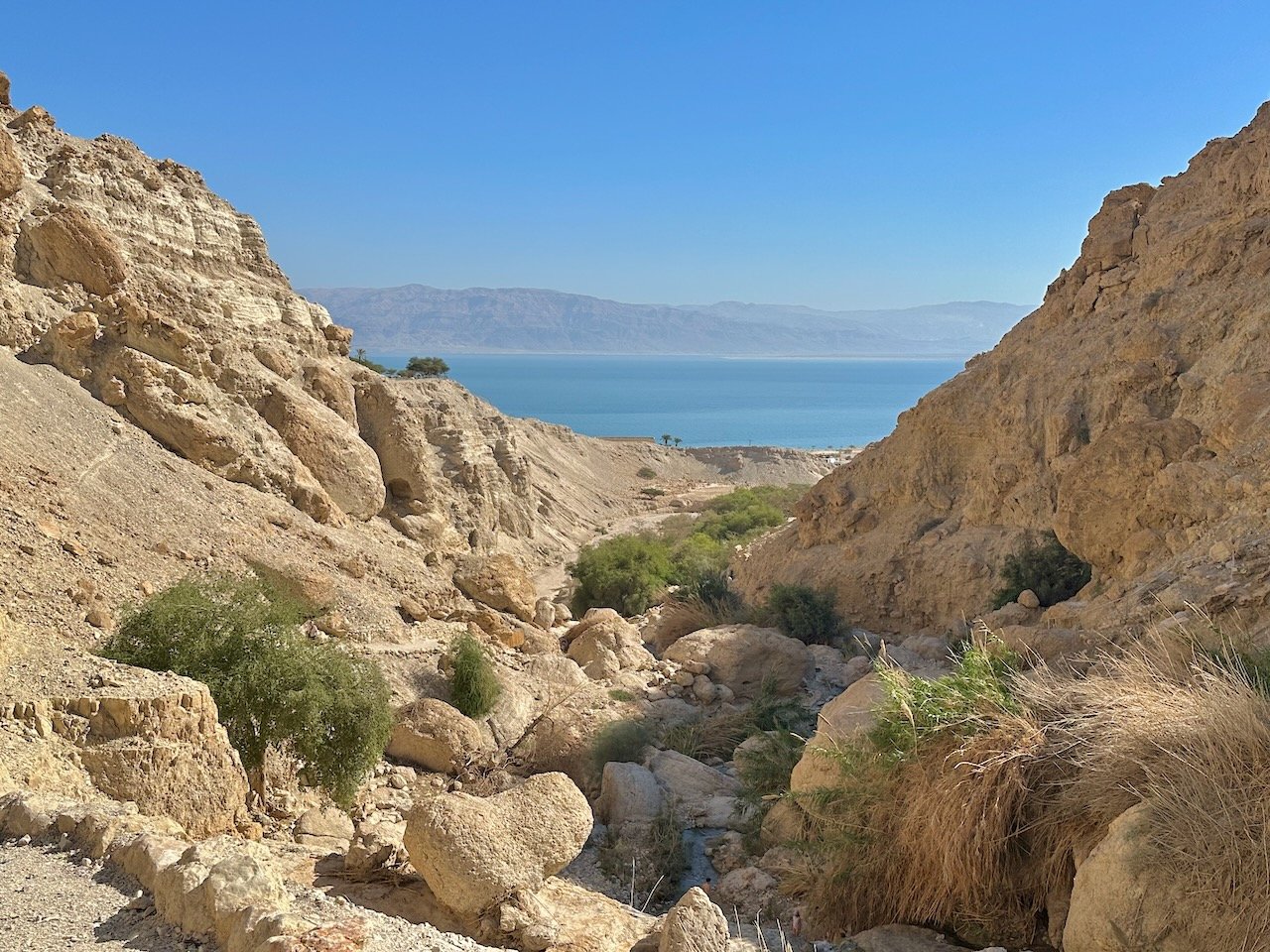
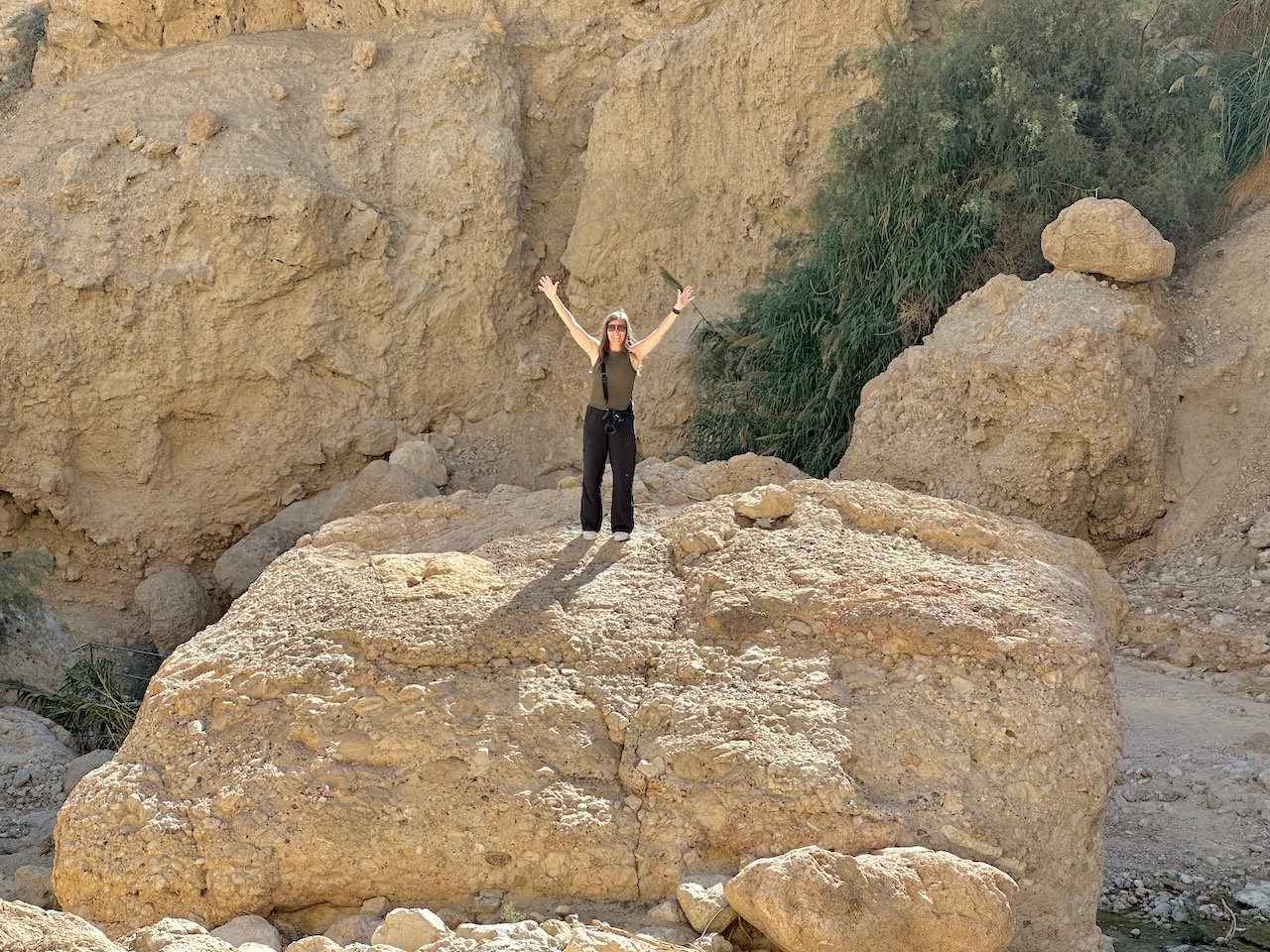
From here we drove about 20 minutes north of Masada to get to Ein Gedi, one of only a few oasis here in the edge of the Judean Desert. We read from Song of Songs 1, 2 Chronicles 20 (the “Ascent of Ziz”) and 1 Samuel 24 (David hid from Saul here). Because of the repairs to the trail due to flash floods earlier this year, the entire trail back to the last water falls was open! It was wonderful to see this incredible canyon.
Qumran
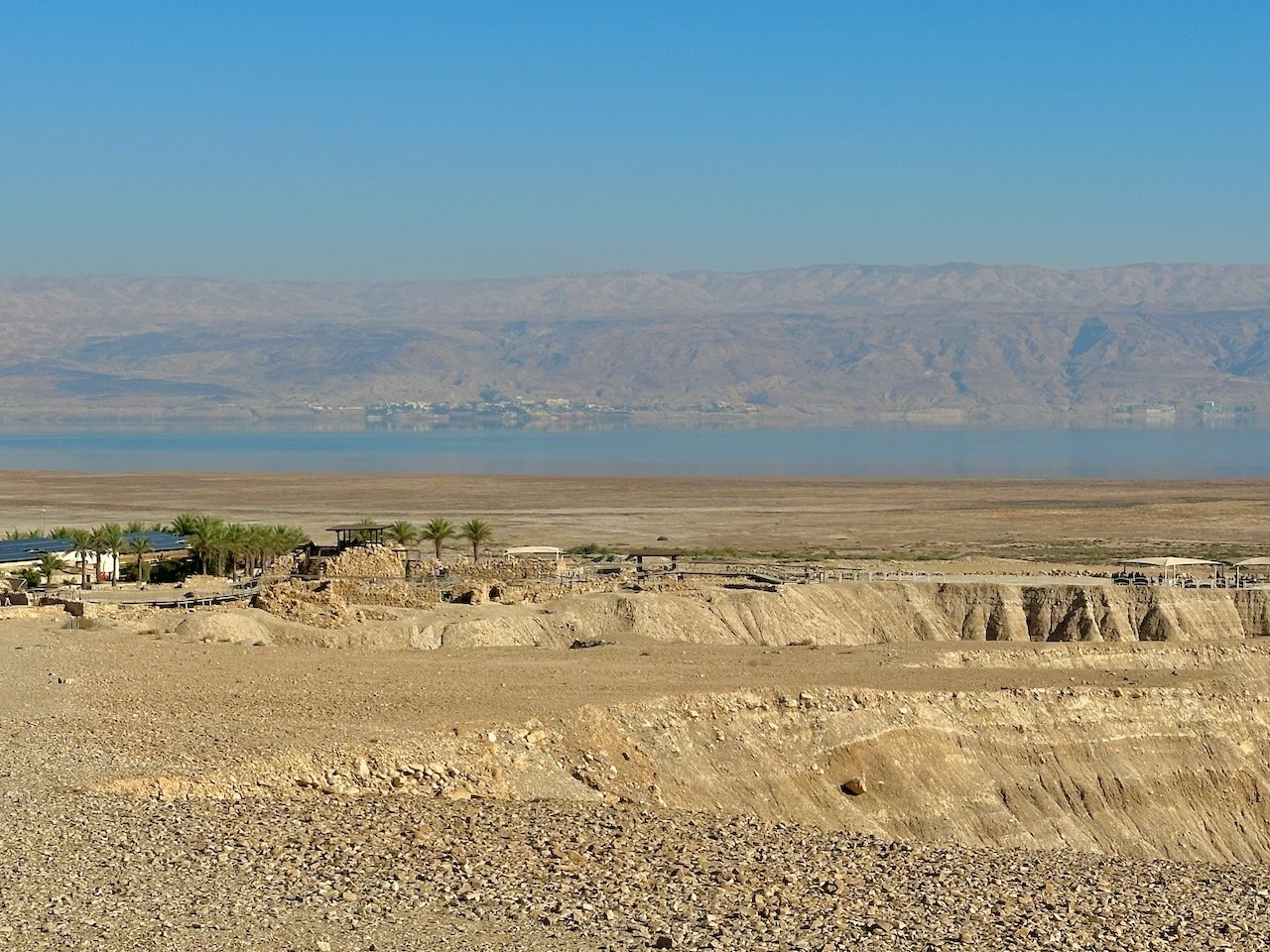
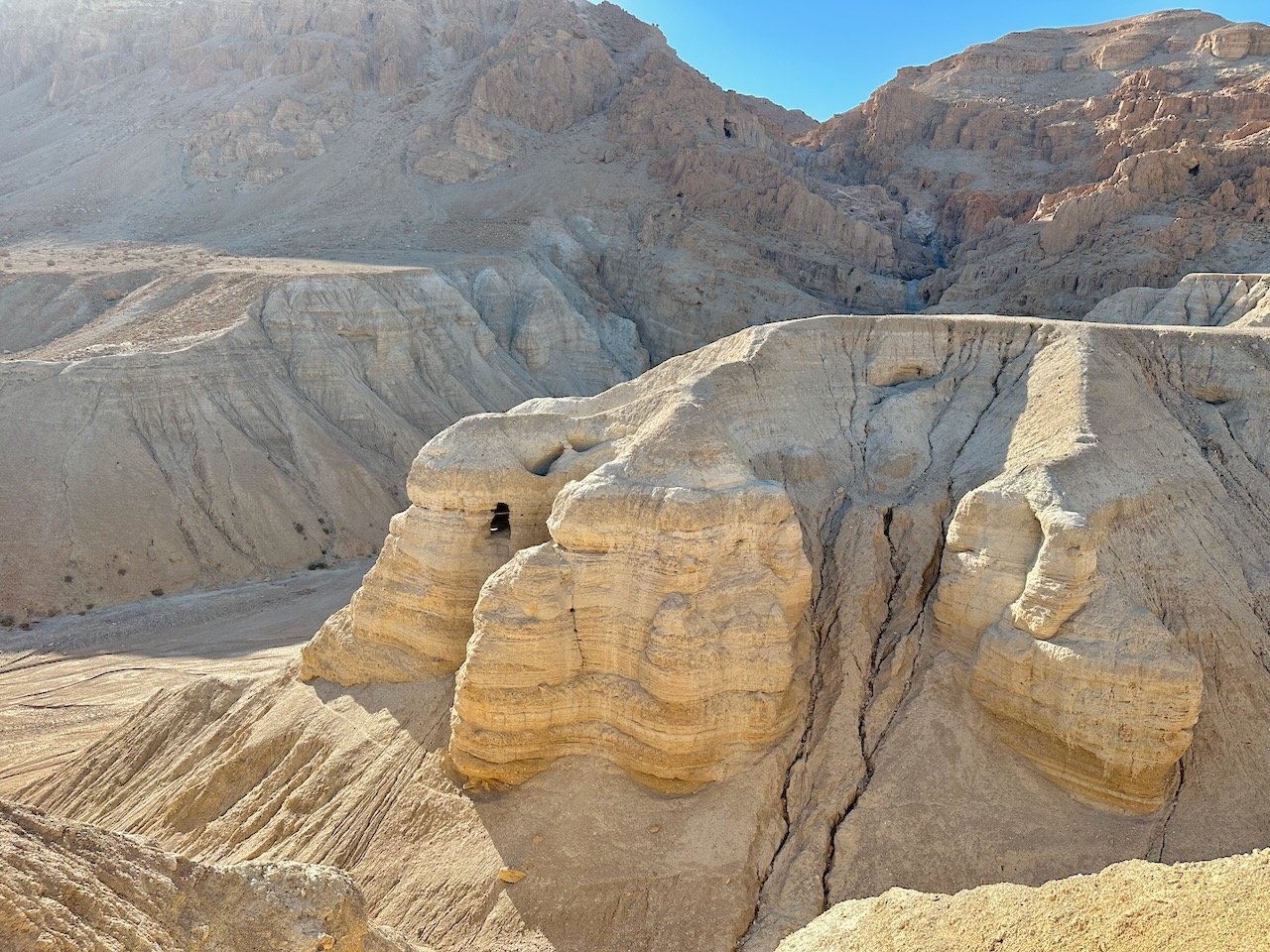
Qumran is the most important site in Israel because of what was discovered here! When we arrived following our drive from Ein Gedi, we walked directly to the cliff area of the desert to get a glimpse of Cave 6 (one of 12 caves in which fragments of ancient scrolls were discovered). We also saw the beginning of the aqueduct system that brought rain/flood water into the site.
It was here at Qumran where the Dead Sea Scrolls were found! The discovery began in 1947, while the excavation took place through 1956. We walked through the limited ruins where a small community of Essenes lived (or retreated here from Jerusalem, as a new theory suggests). To date, about 930 scrolls and fragments of texts scrolls have been discovered. The scrolls/texts date primarily from the late 3rd century BC – 1st century AD. At the small archaeological site we saw cisterns, ritual baths (mikvot), and the scriptorium. We read from the Essenes’ “Nine Beatitudes” text (“Blessed are you …” it sounds very similar to Jesus’ “Nine Beatitudes.” In front of “Cave 4” (where the majority of texts were found), we read from “Psalm 151,” and Psalm 19. We celebrated the perseverance of God’s Word! We were invited to take joy in God’s Word.
Dead Sea
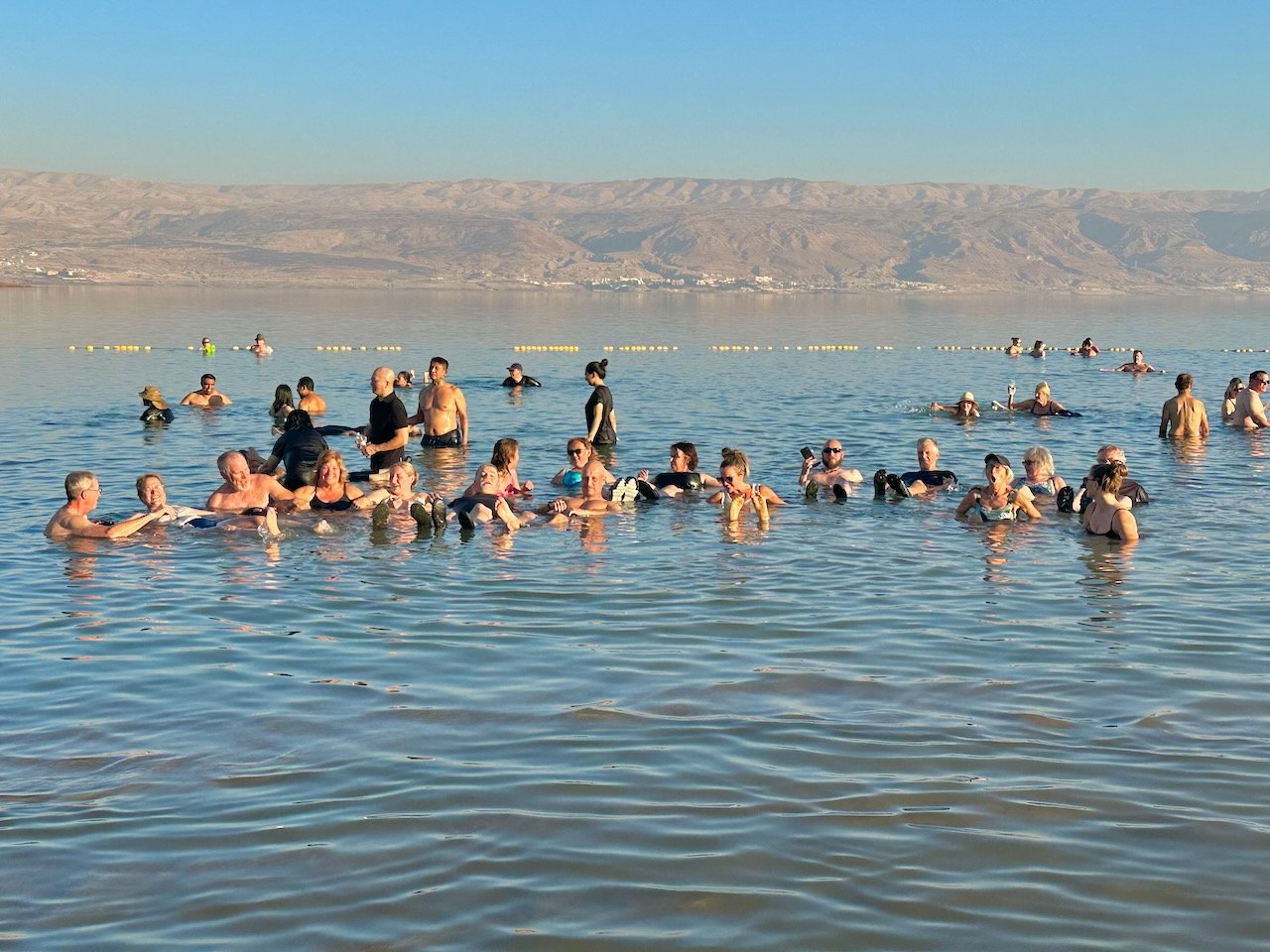
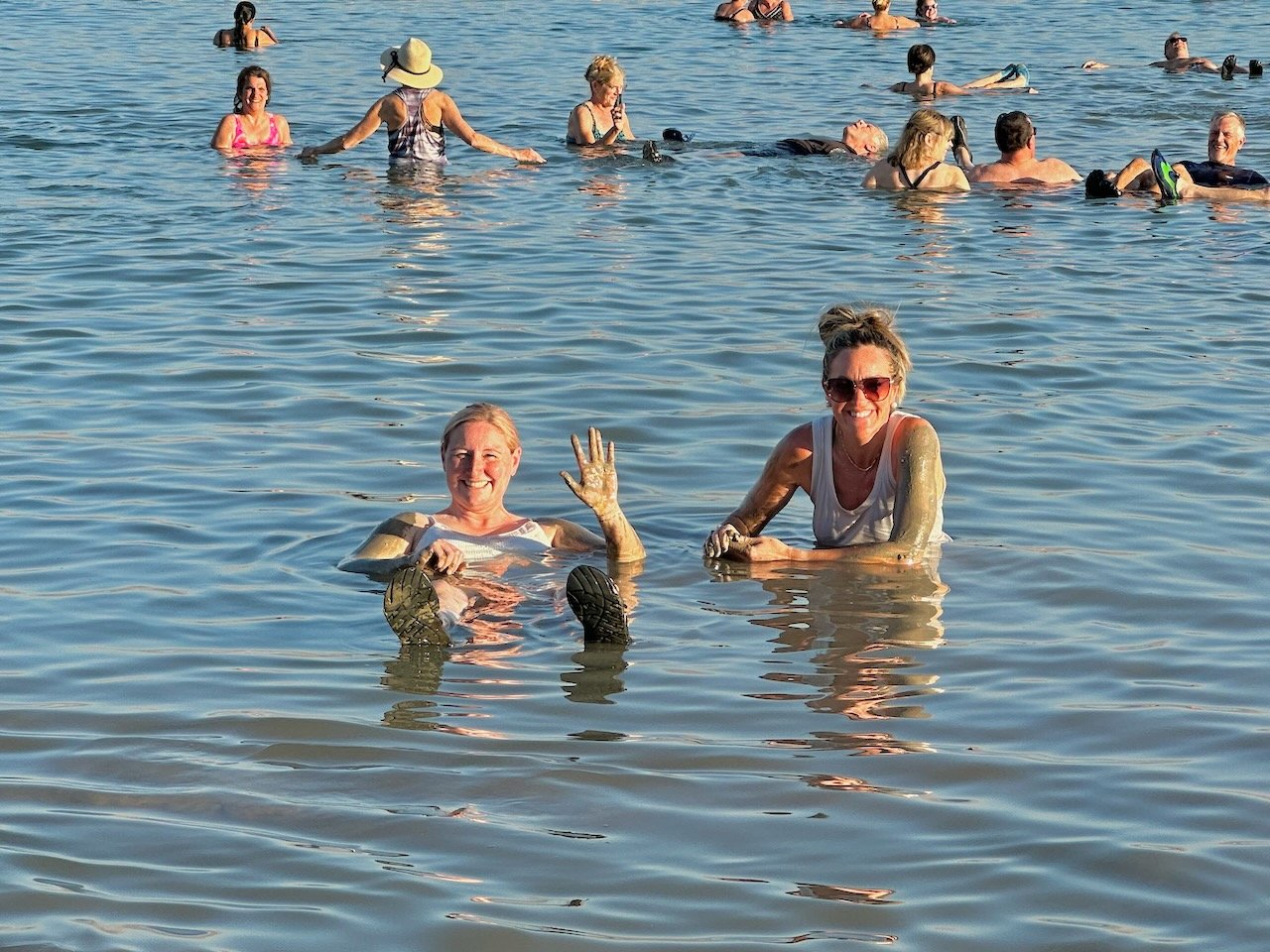
To end the day, we used a public beach to experience the unique sensation of floating in the waters of the Dead Sea. This water is about 33% salt and minerals, making it impossible to sink! After our “float” we rinsed off, changed clothes, and boarded back onto the bus for our final drive to Jerusalem!
Jerusalem/Western Wall
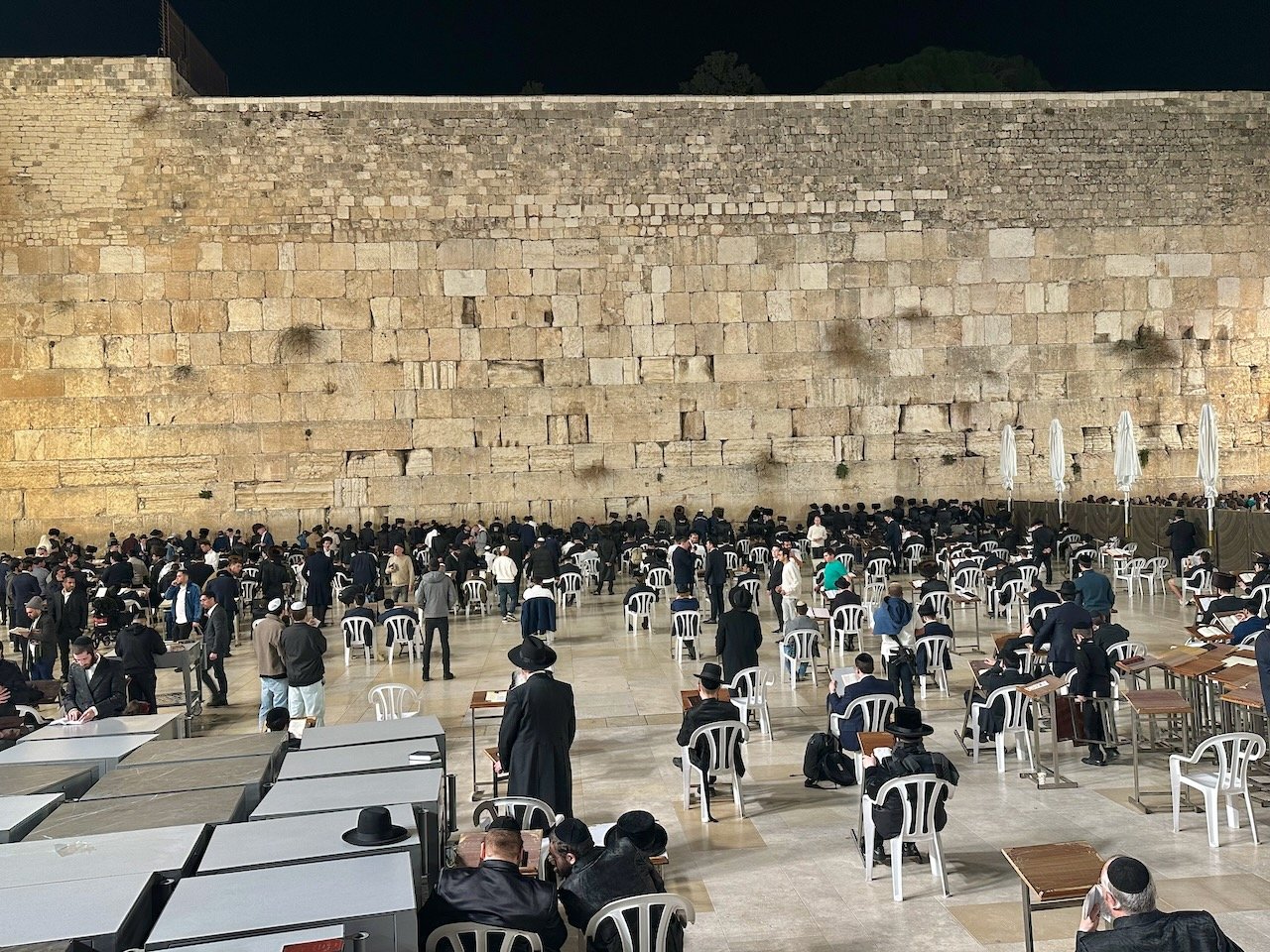
From this Dead Sea area to Jerusalem, it is an ascent of about 4,000 feet! We entered this magnificent city and saw our first glimpse of the Old City (all lit up now since it was dark). We checked into our hotel (the Dan Botique) and enjoyed dinner together. Following dinner, most in the group walked to the Western Wall, the most holy place for Jews today! We are looking forward to our first full day in Jerusalem tomorrow, Israel’s capital!
Day 9 – Sunday, November 15: Mt. of Olives, Garden of Gethsemane, Herodium, Bethlehem
Today was our first full day in Jerusalem. This is the first of three full days here in Jerusalem’s ancient and modern capital. We began on the Mt. of Olives, and ended in Bethlehem. The weather was again perfect today, with sunny skies and highs in the around 70. We read from Psalm 125 as we began at 7:30.
Mt. of Olives/Gethsemane
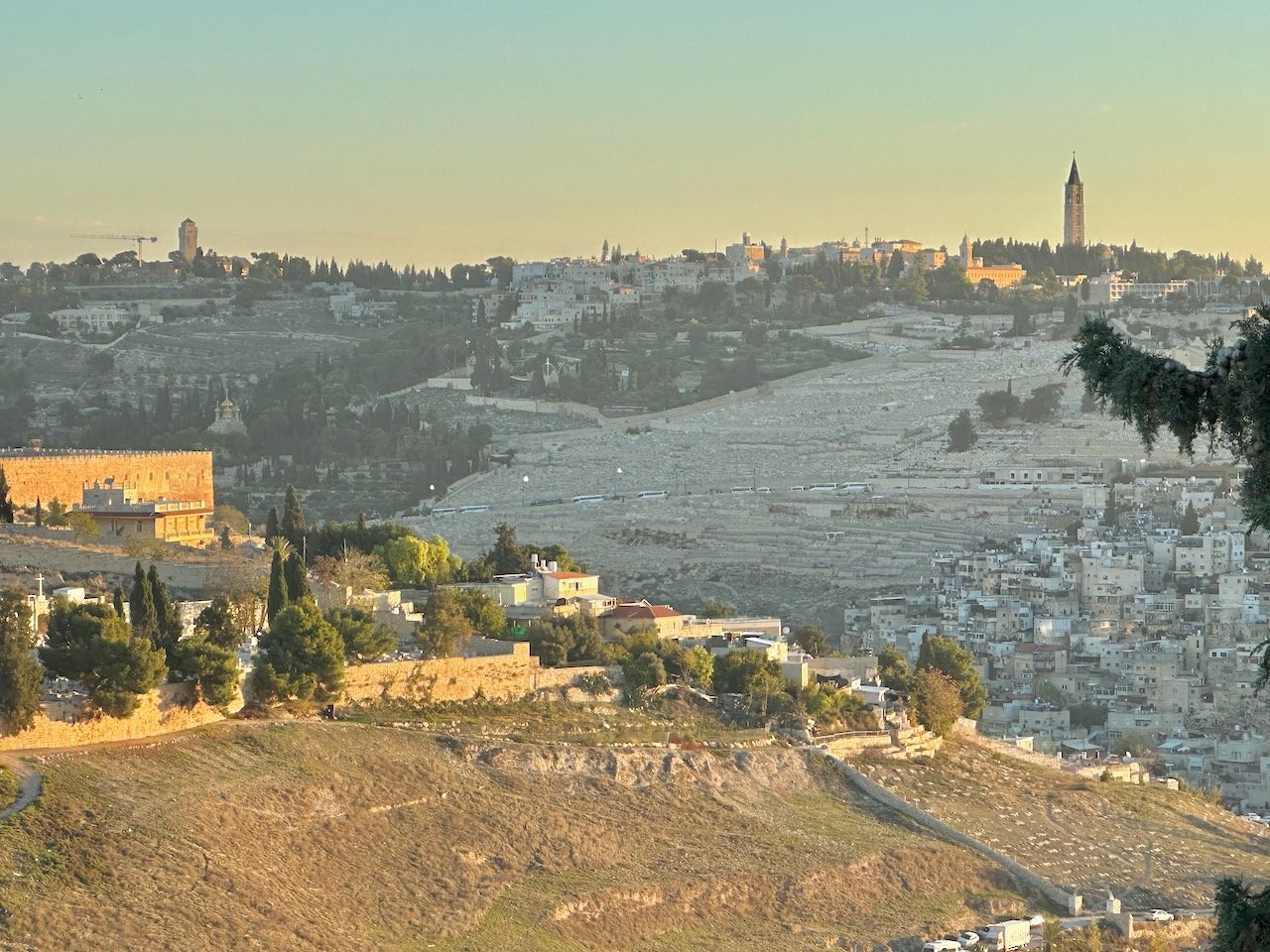
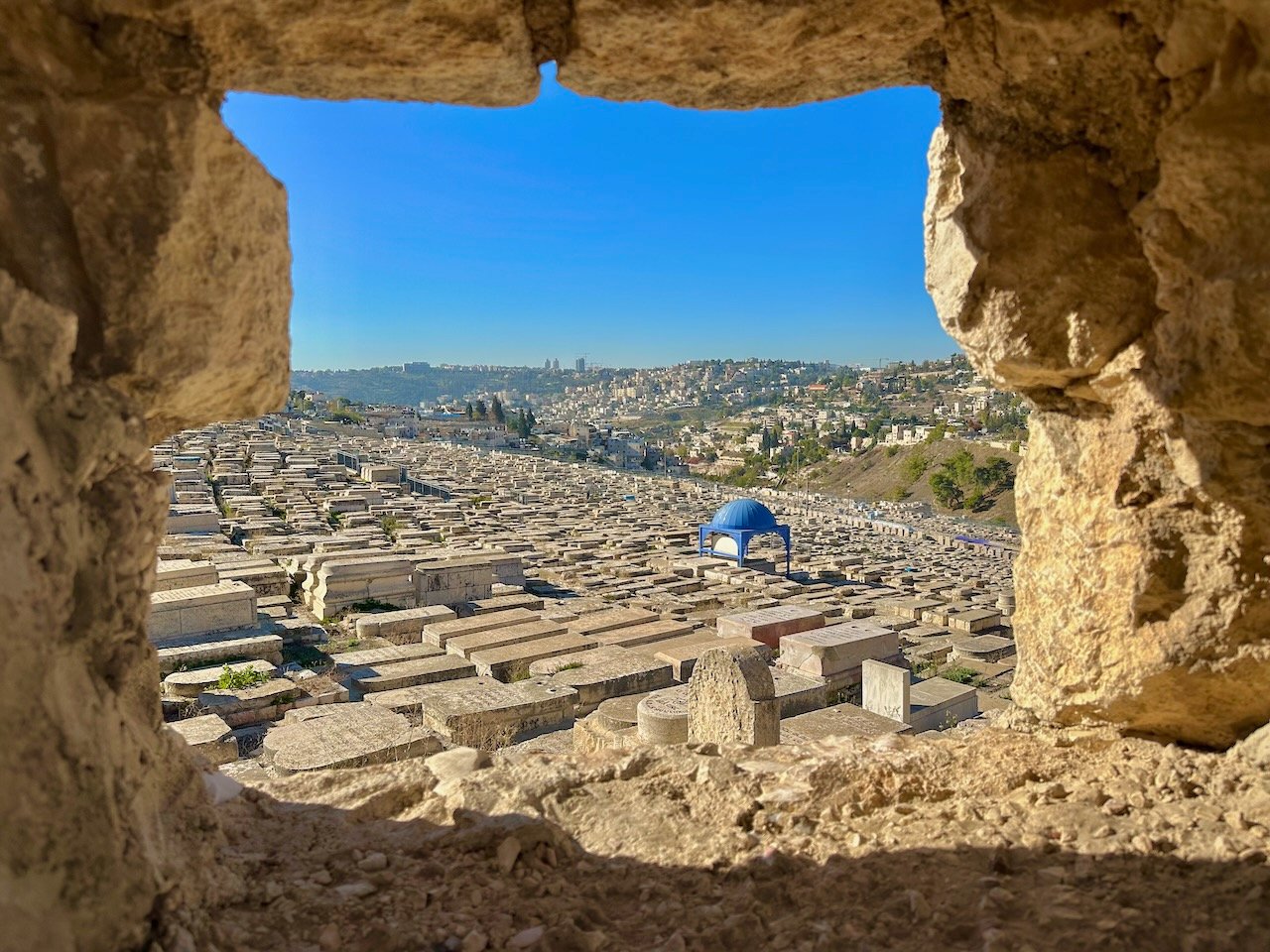
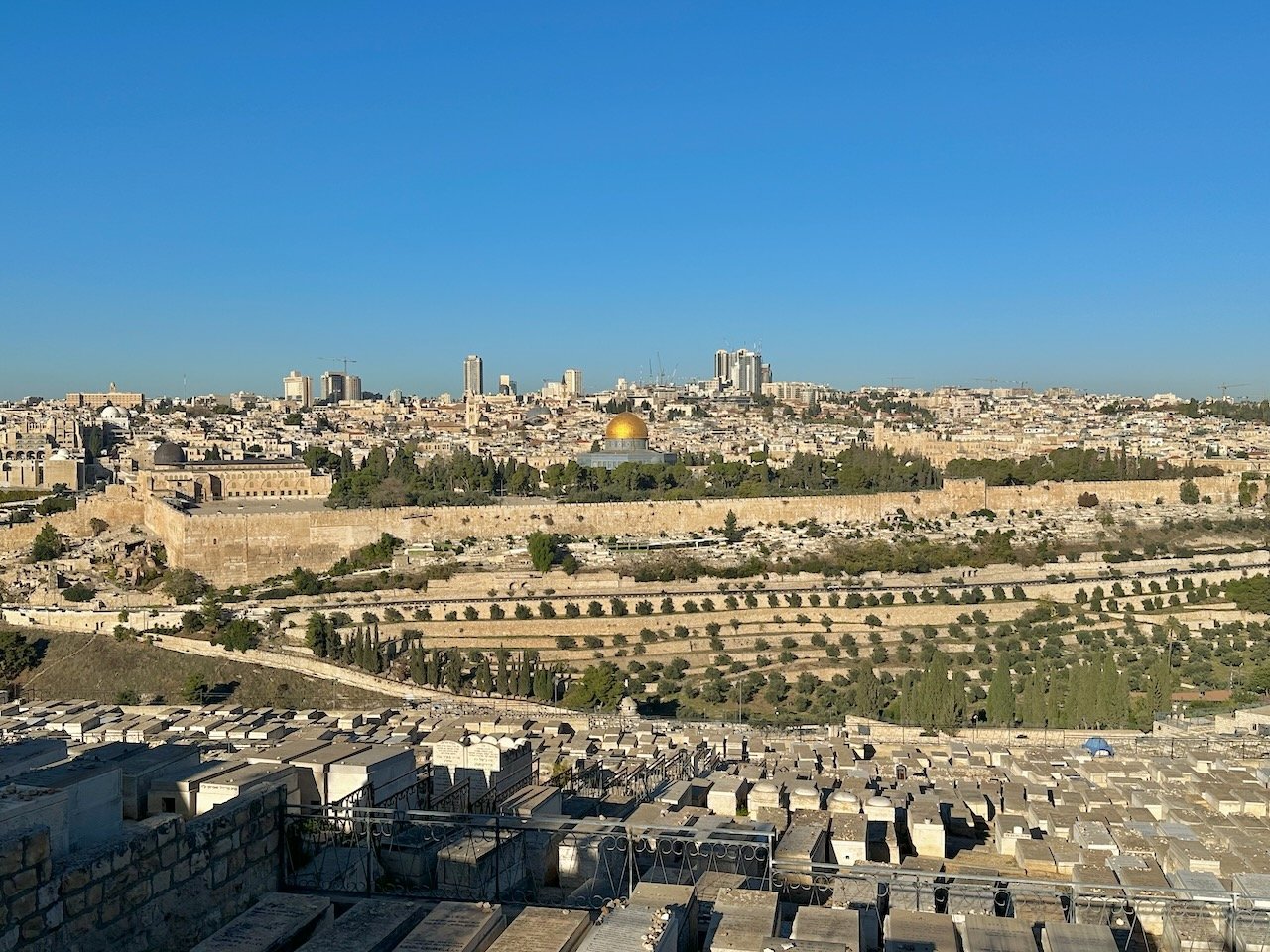
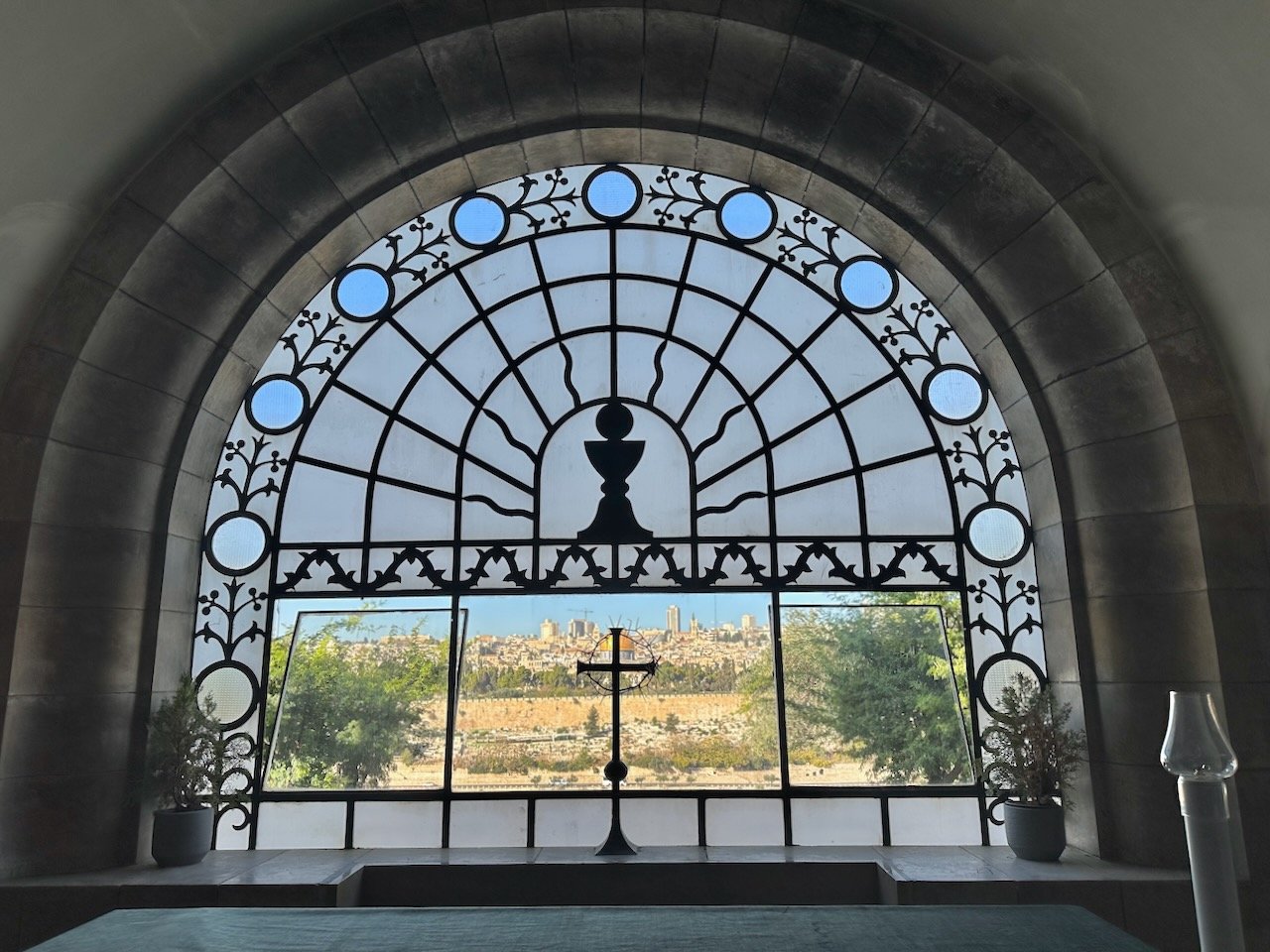
From our hotel we drove around the northern end of the Old City to the Mt. of Olives. Cresting the Mt. of Olives we drove to a spectacular view across the Kidron Valley of the Old City and Temple Mount below. From here we walked down to Dominus Flavet, a small chapel where we enjoyed singing a chorus together. Here we celebrated Christ’s kingship as we remembered Luke 19 (Palm Sunday), Acts 1 (Christ’s ascension), and Zechariah 14 (about the return of Christ). Continuing down the slope and then up to a private garden where we considered the passion of Jesus in Gethsemane (Luke 22). From here we walked down to the Church of All Nations (the traditional Garden of Gethsemane) where we saw olive trees hundreds of years old!
Herodium
From here we drove a few miles further to the southeast to Herodium. This was a palace-fortress built by Herod the Great. He was also buried in 4 BC (although other biblical scholarship suggests he died in 1 BC. This means that Jesus may not have been born in 5 BC, but rather oneither September 11, 2 BC or September 20-21, 3 BC).
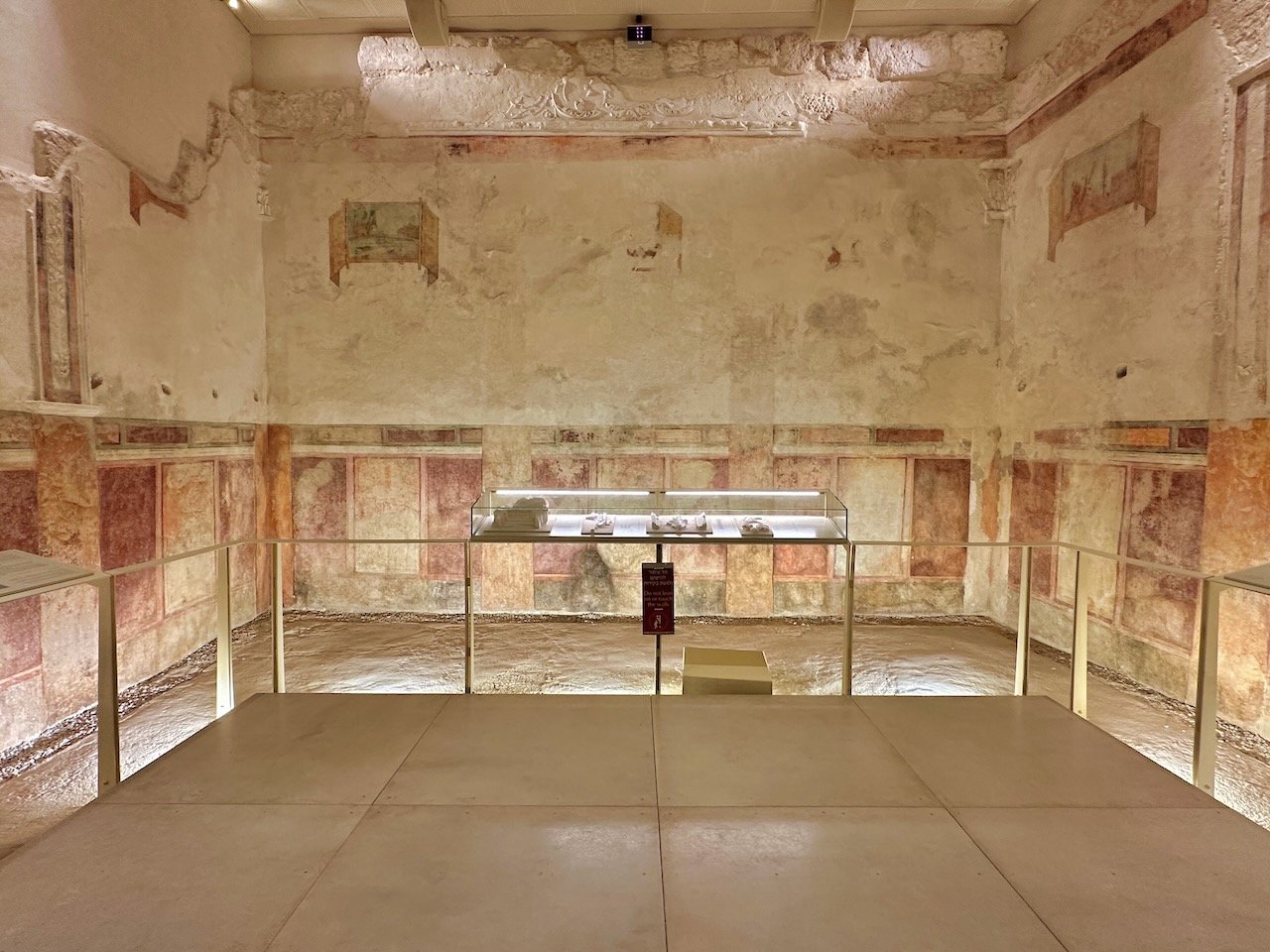
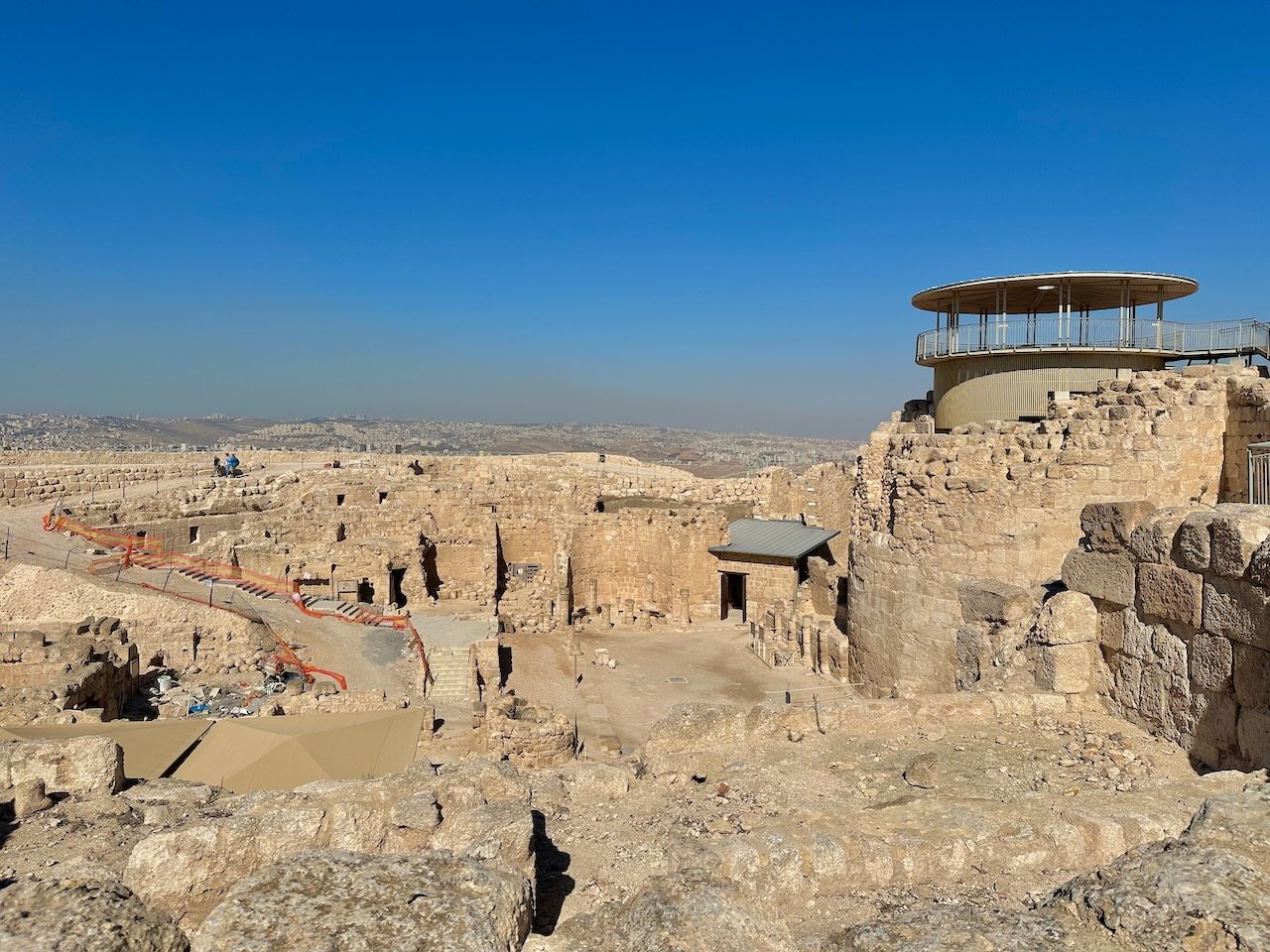
The site of Herodium is impressive, with many new renovations and displays. Inside the well-preserved official’s chamber (i.e. reception hall) we saw a wonderful presentation. Then most in the group walked up 150 steps through the royal arches to the top where we saw the bathhouse, synagogue, impressive frescoes, and a great view of Jerusalem from the highest of the four towers. We left the site by walked down through the cistern system.
Shepherds’ Fields
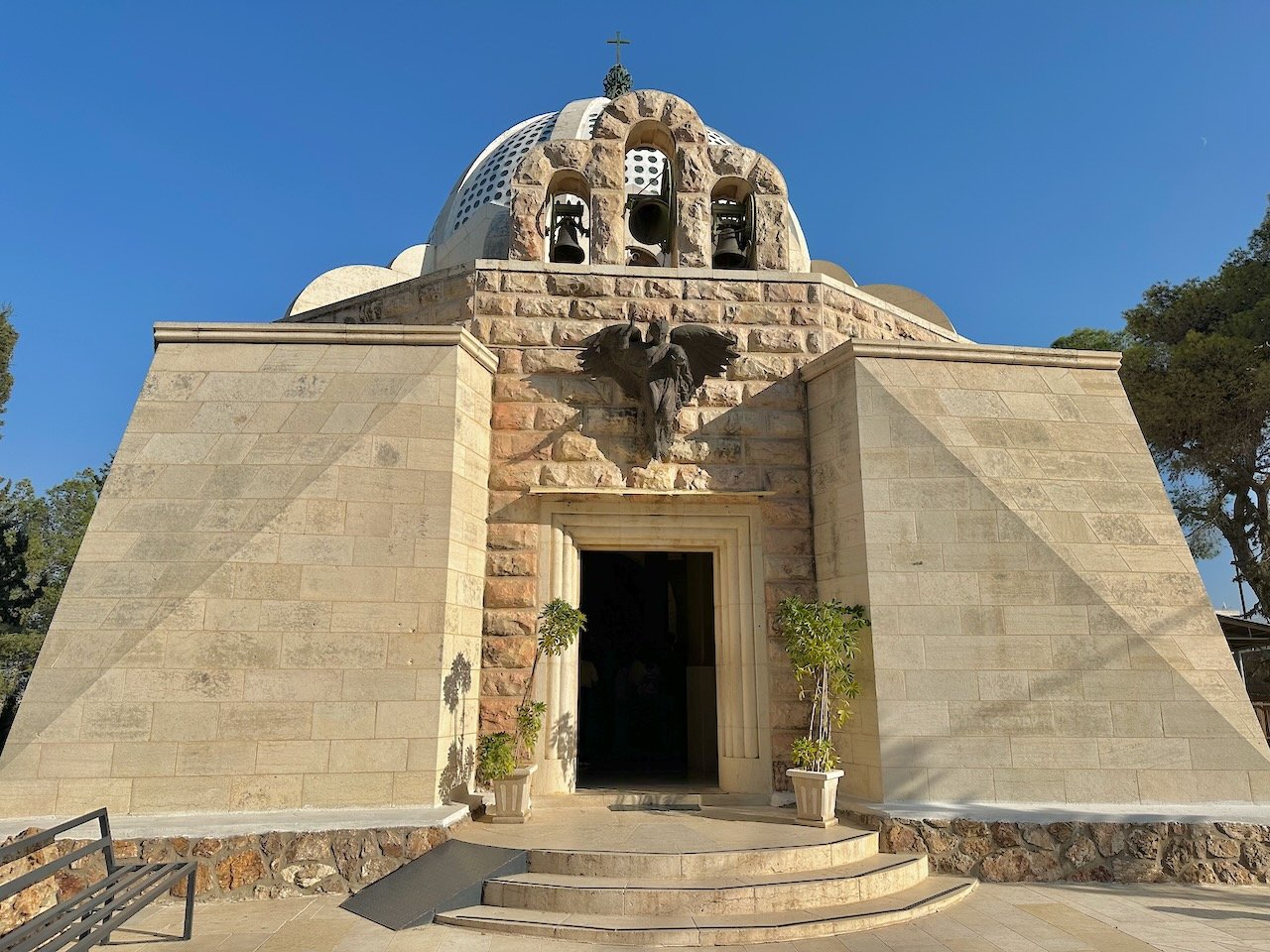
From Herodium we drove towards Bethlehem. On the way, we stopped in Beit Sahour (the east of Bethlehem) for a tasty lunch. Following lunch we walked across the street into the “Shepherds’ Fields.” We recalled the brith narrative from Luke 2 as we celebrated that it was “just at the right time that God sent His Son” (Galatians 4:4). The shepherds were probably tending their sheep at Migdal Eder (between Bethlehem and Jerusalem, Micah 4) before the angelic host informed them of the birth of Jesus as prophesied (Micah 5). We enjoyed singing a few Christmas carols both in the cave as well as in the Chapel of the Shepherds.
Bethlehem
We ended the day by driving into Bethlehem where we visited an olive wood factory and story. These olive wood products were impressively made. The store is owned by a Christian family. The population today is only about 15-20% Christian vs. Muslim. It was the other way around 30 years ago!
Har Gilo – Shlomo’s House
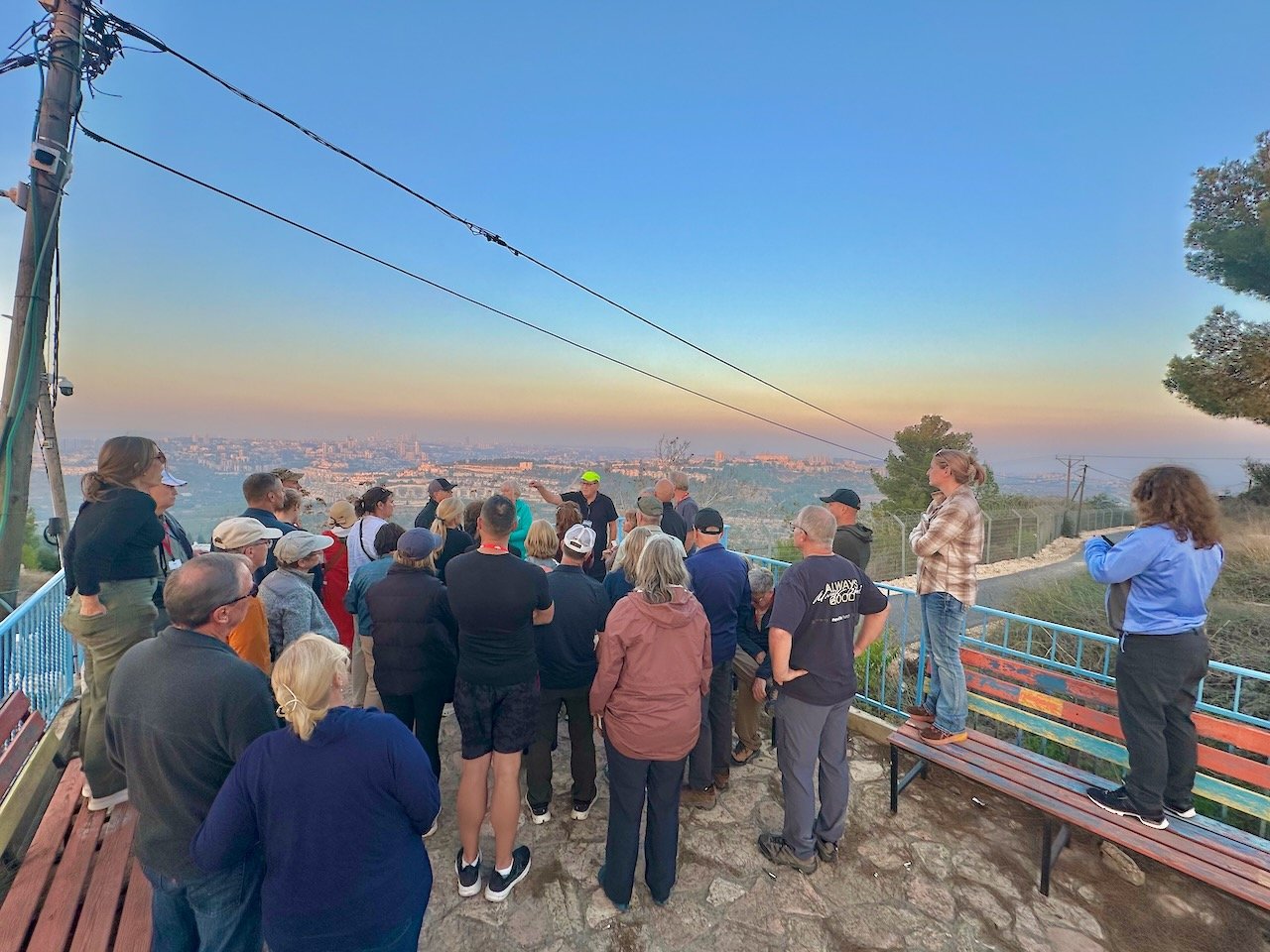
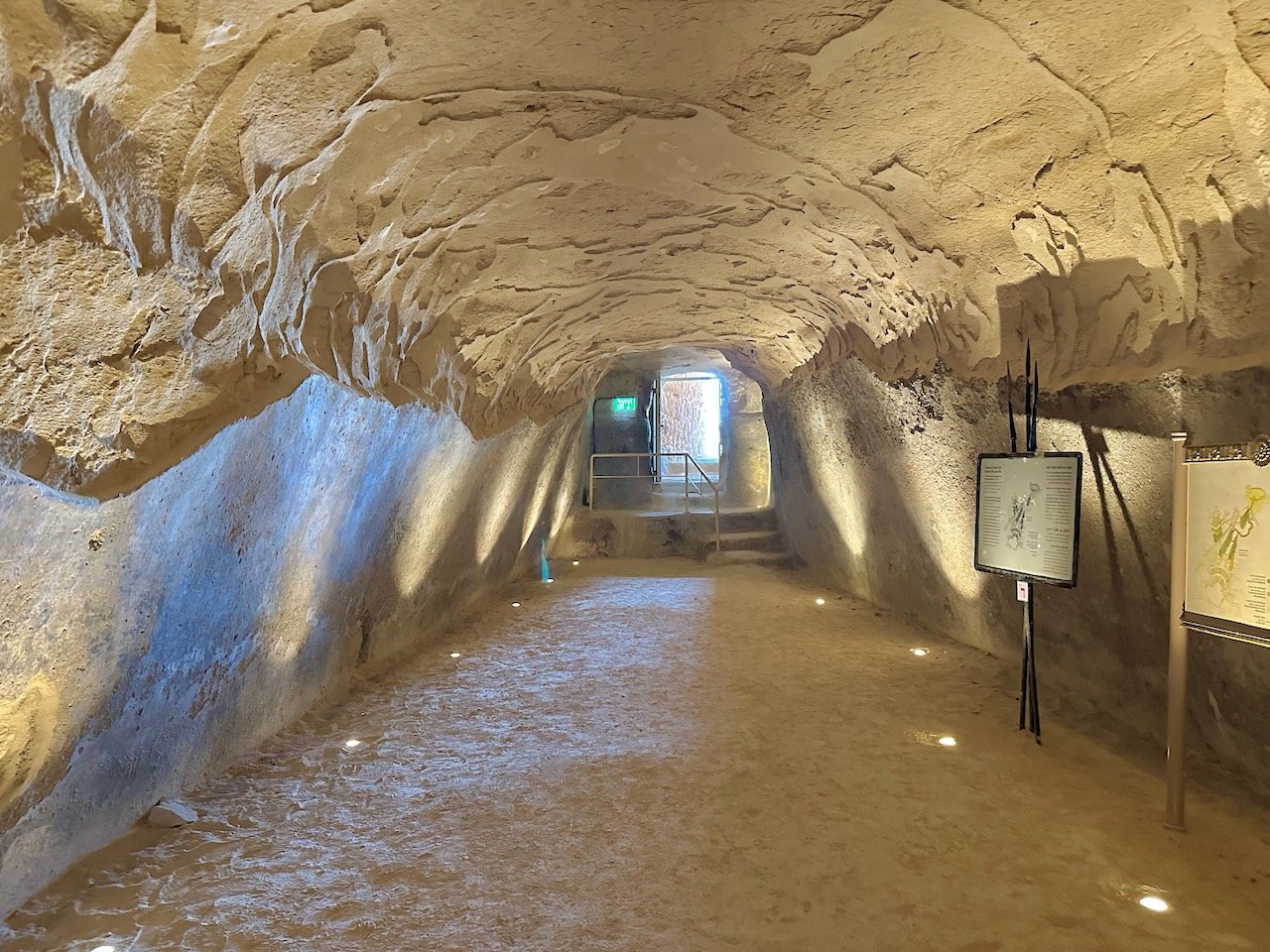
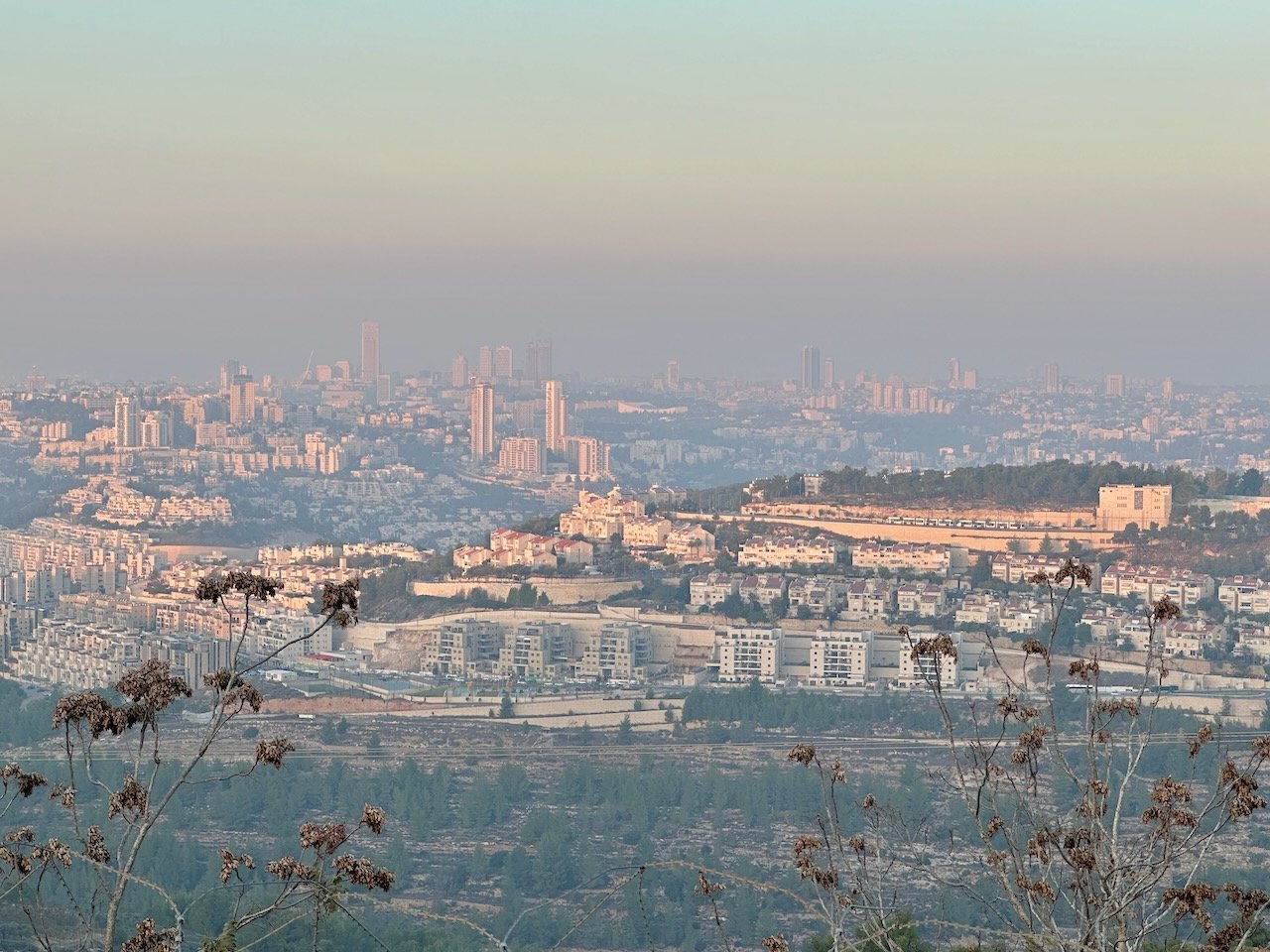
Before returning back to the hotel, we made a extra special stop to Shlomo’s community called Har Gilo. It is located just west of Beit Jala, a suburb of Bethlehem. We drove up to the highest place of the community for a wonderful view of the entire city of Jerusalem! We also saw his house too!
We then drove back to the hotel for dinner together and a free evening.
Day 10 – Monday, November 16: Yad Vashem, Israel Museum, The “Shephelah” (Lowlands) of Judah: Gezer, Beth Shemesh, Azekah
Today we spent the morning in Jerusalem, while in the afternoon we drove to the Shephelah (lowlands) of Judah to visit three Old Testament sites. The weather was once again perfect, with sun and temps in the low 70s. We read from Psalm 137 ( a somber plasma about remembering Jerusalem!) as we left the hotel at 7:30 once again.
Yad Vashem
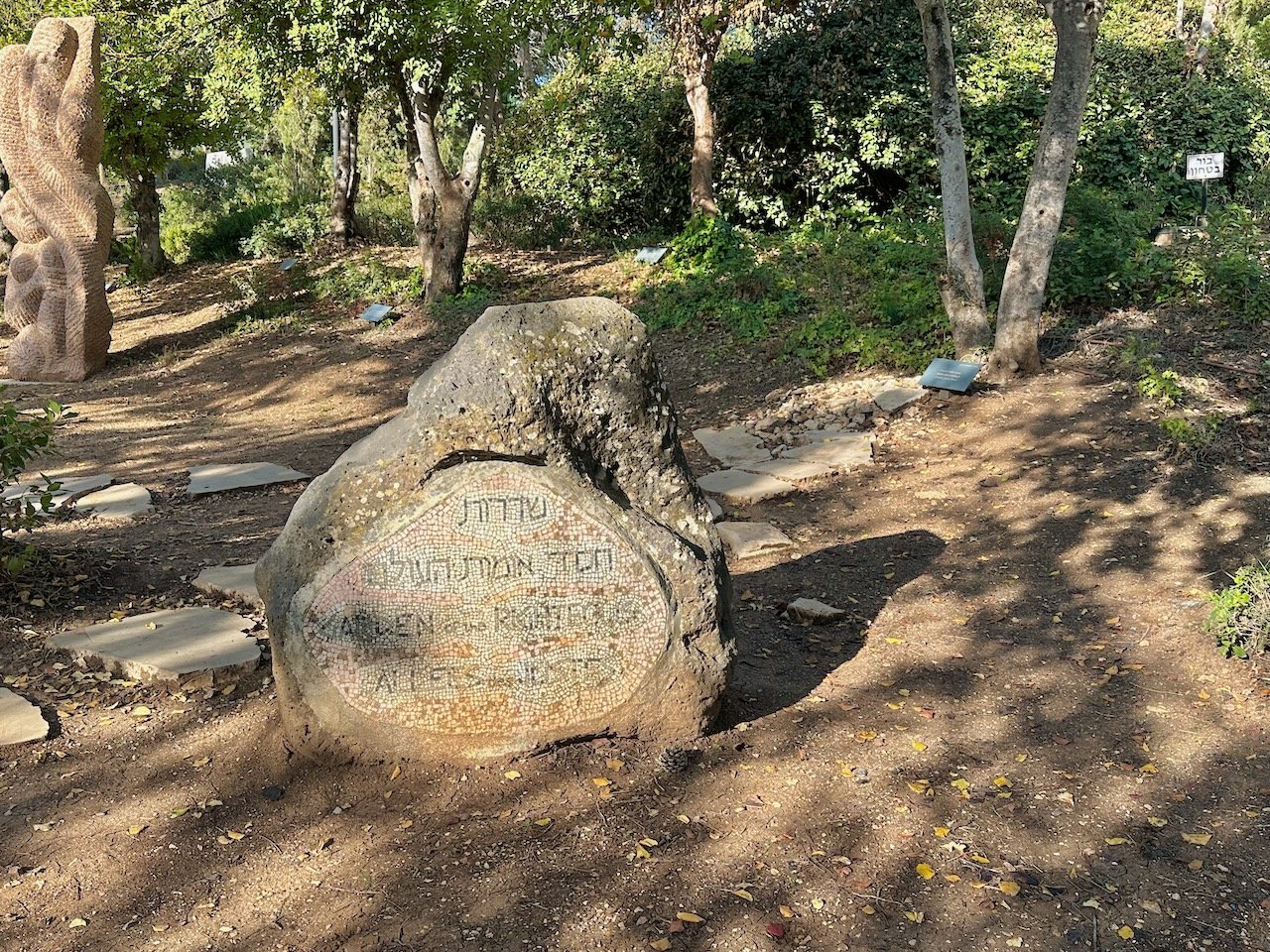
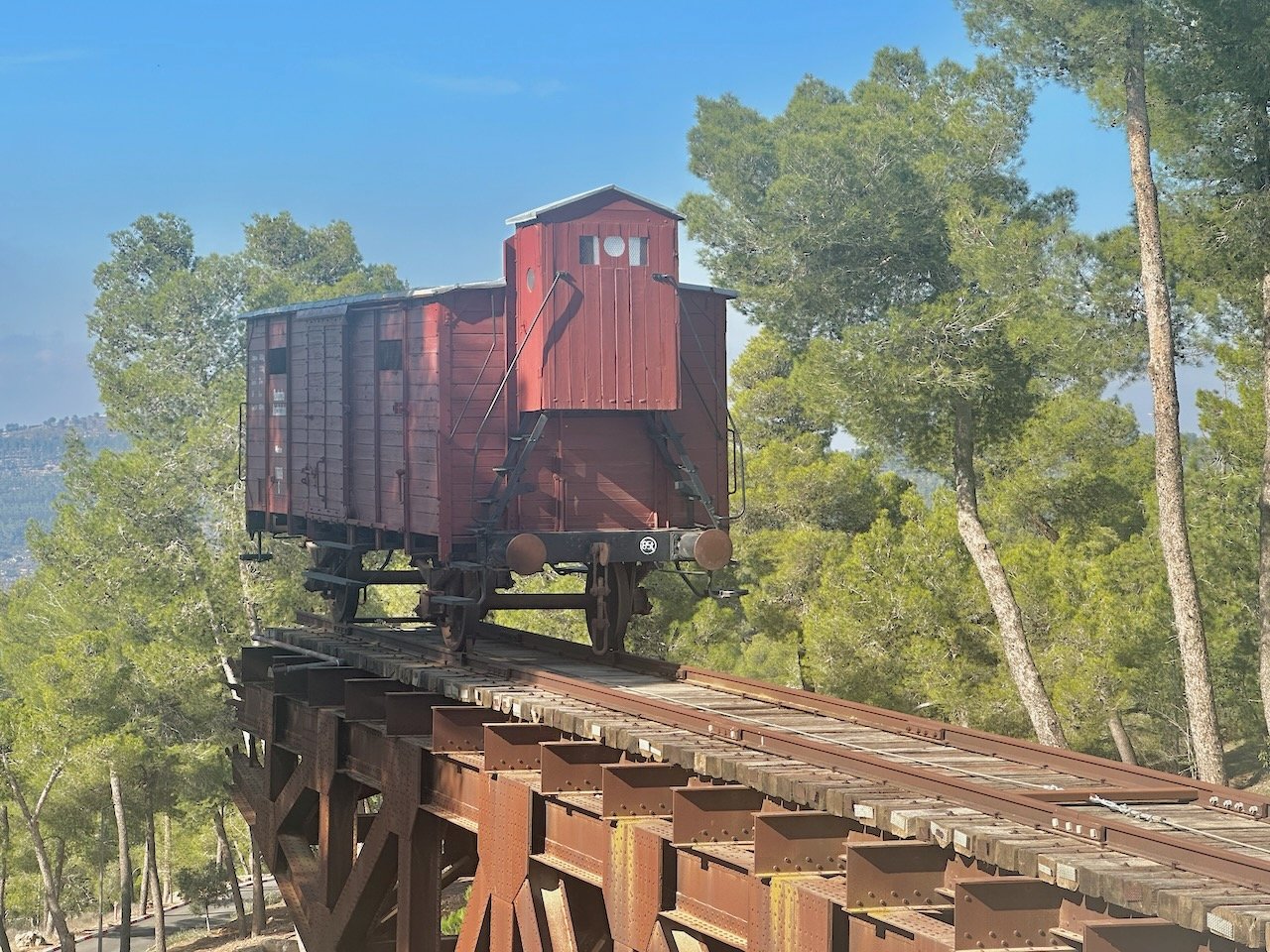
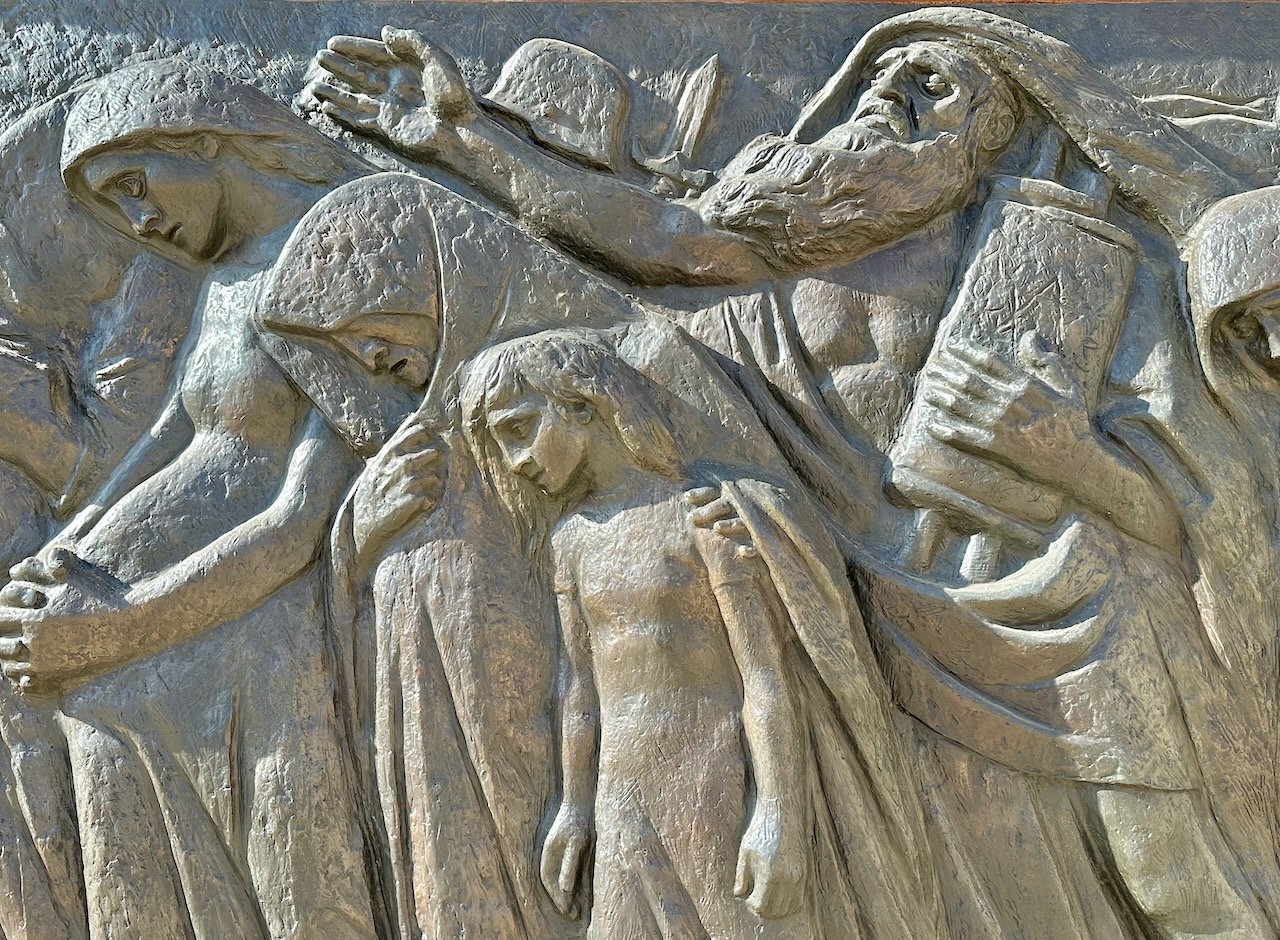
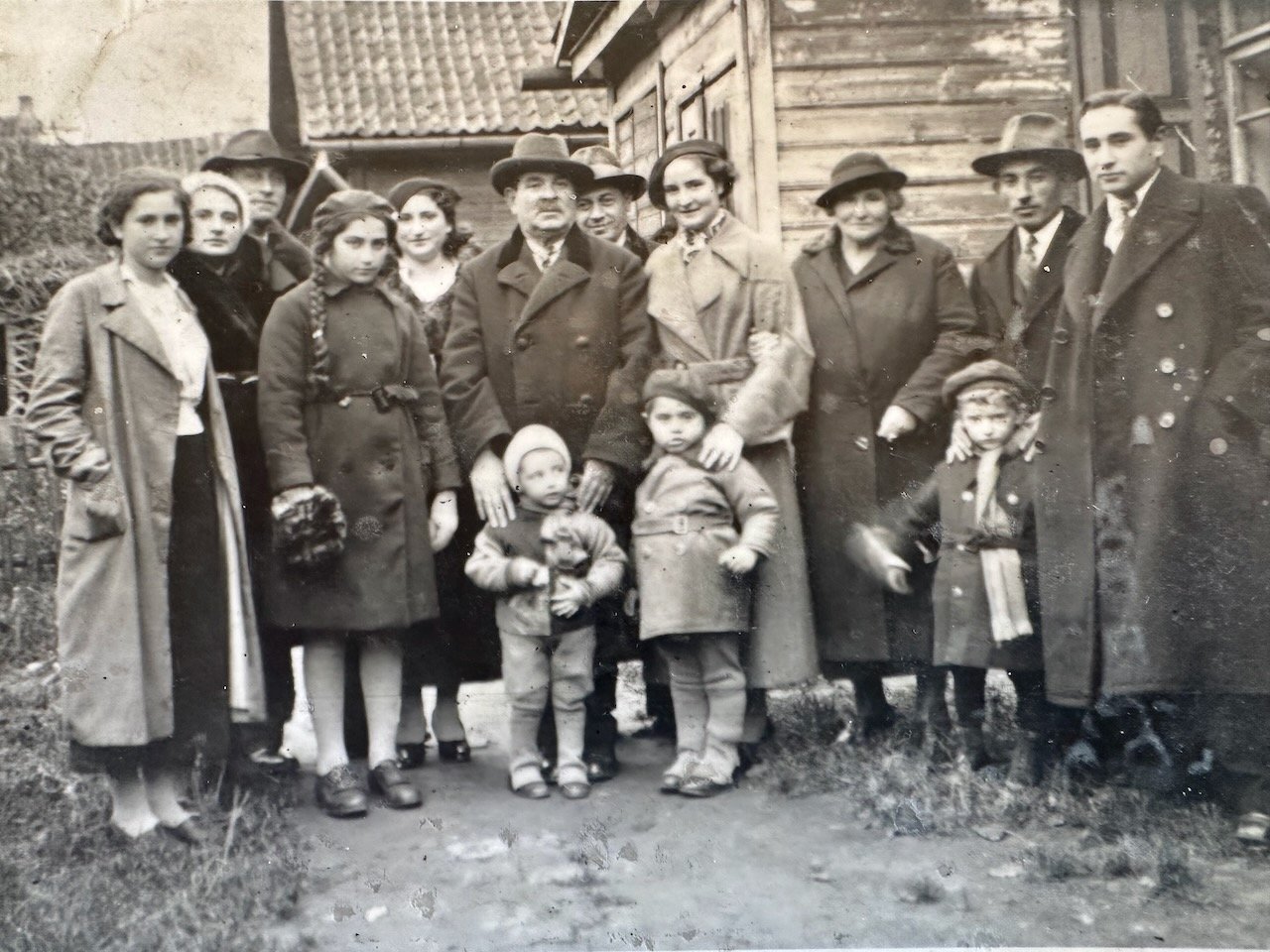
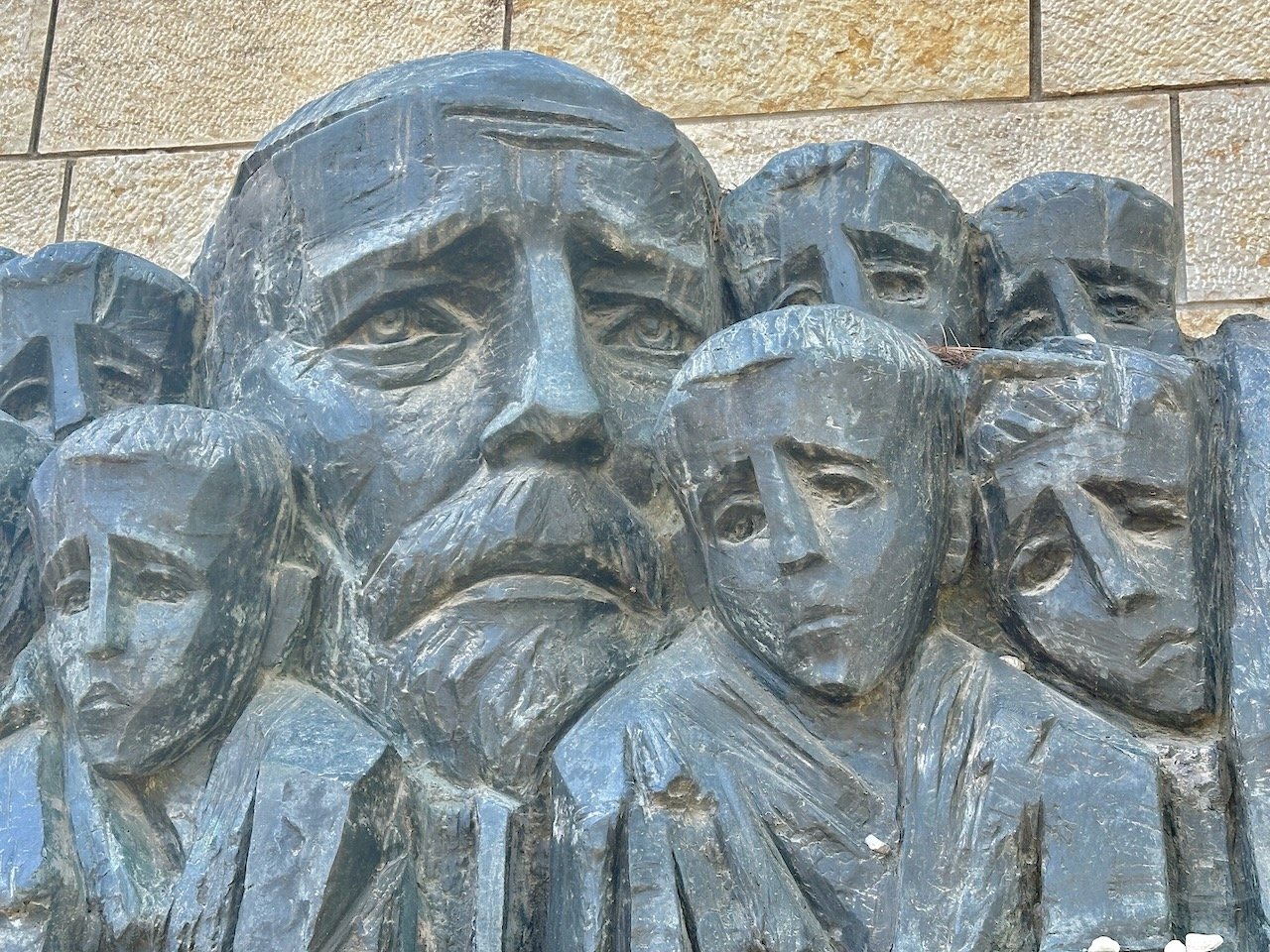
We departed the hotel and drove to West Jerusalem, specifically to Israel’s Holocaust Museum & Memorial. It is called Yad Vashem, named after a verse in Isaiah 56 that mentions the “memorial and a name.” Before the museum opened, we gathered among the “Avenue of the Righteous.” This “avenue is actually includes 1000s of trees dedicated to righteous gentiles who saved Jews during WW II. This incudes trees dedicated to people like Oscar Schindler and Corrie ten Boom. Shlomo introduced to us some of the history of the Holocaust. He also shared his personal story about his family during this tragic event. He lost 12 family members in Vilna, Poland. It was also a somber experience walking through the Children’s Memorial before walking through the main museum on our own, We were reminded of the horrors and atrocities of the Holocaust and the loss of six million Jews.
Israel Museum
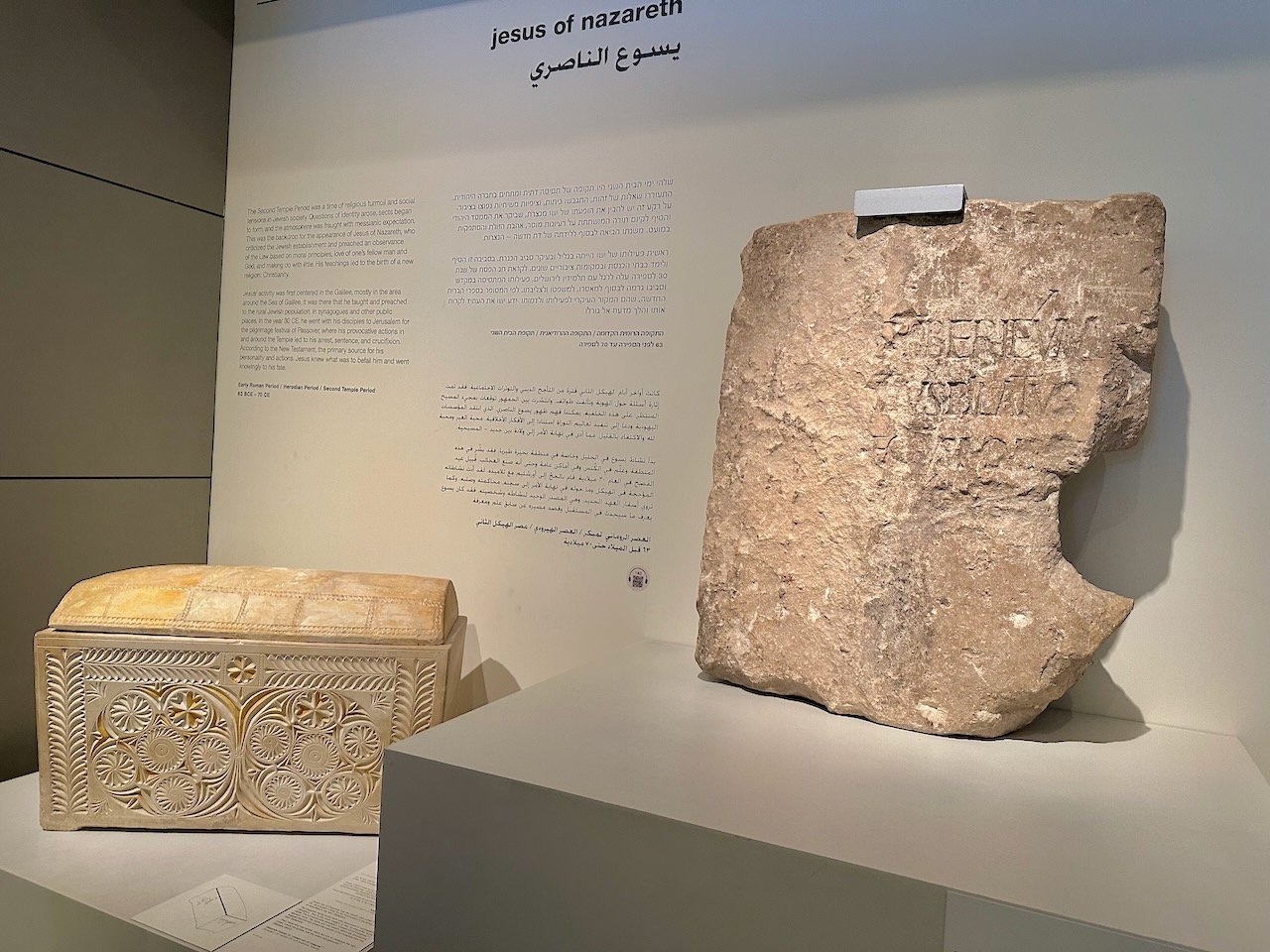
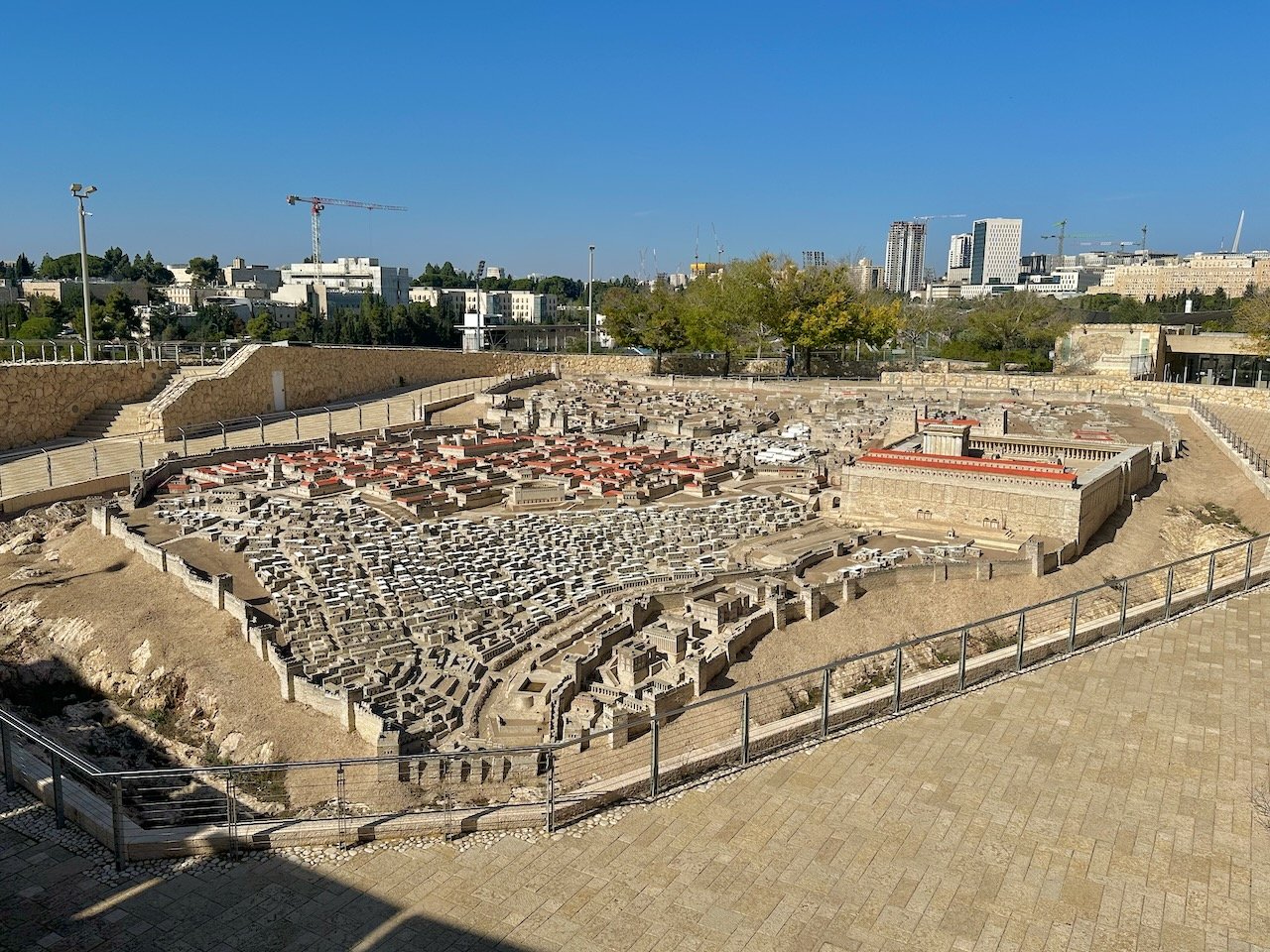
From here we drove to the area of the Knesset, Israel’s parliamentary building. Across the street is the Israel Museum. Here we saw three things. First, a 1:50 scale model of 2nd Temple Jerusalem. The model gives us a good idea of what Jerusalem looked liked during the time of Jesus. Next, we briefly walked through the Shrine of the Book where some of the Dead Sea Scrolls are on display. Lastly, we saw the highlights within the archaeological wing of the museum. Among the many things we saw, this included such artifacts like the Cabin figurine (from Hazor), the Arad “Holy of Holies,” Small idols of Baal and Asherah, the Dan and Pilate Inscriptions, Lachish Letter #4, the Ketaf Hinnom inscription (Numbers 6), Herod’s sarcophagus, the “Temple Warning” inscription, and finally the “pie plate” from the 2nd century AD. 🙂
Tel Gezer
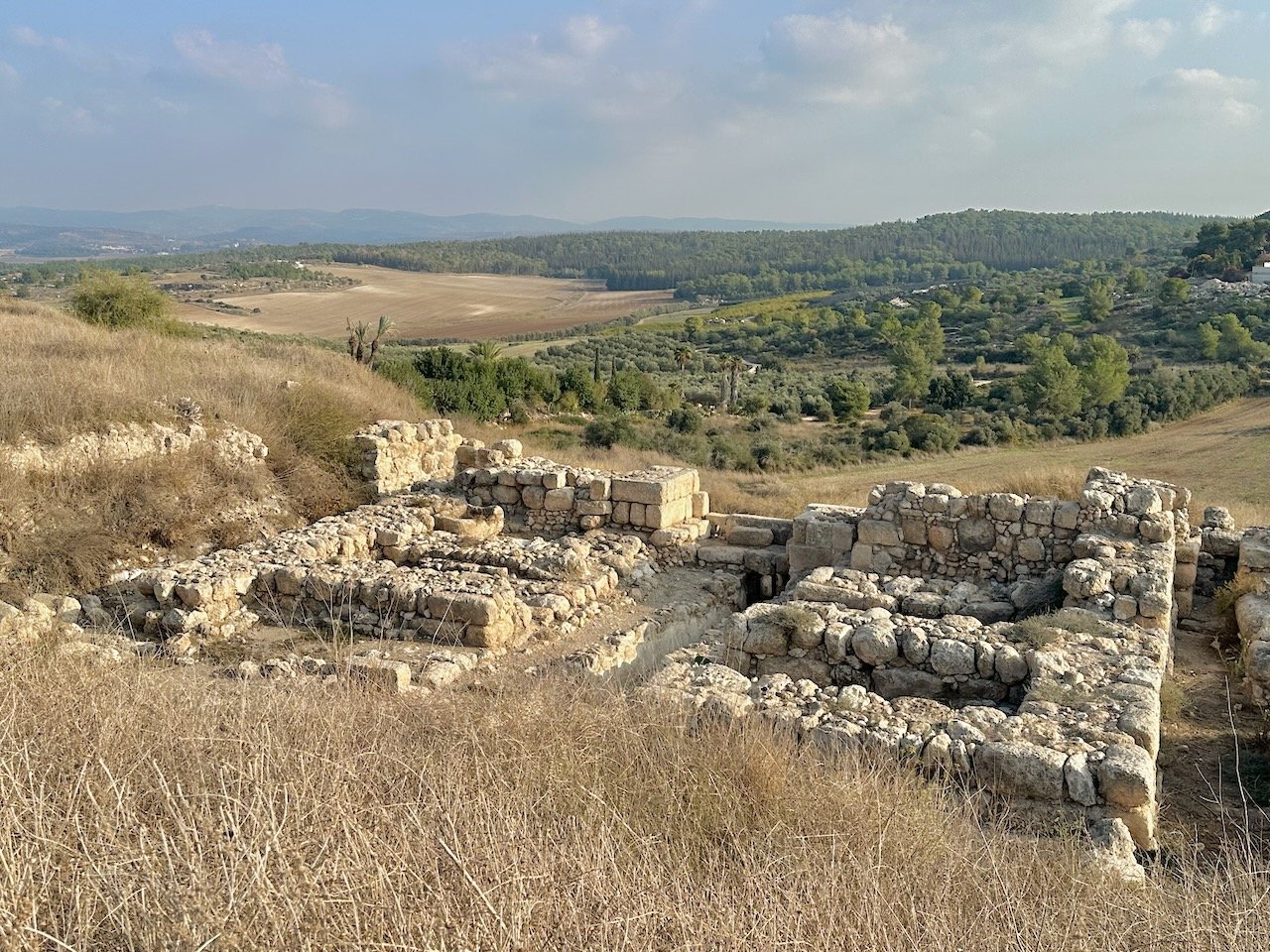
In the early afternoon we drove westward into the “Lowlands” (Shephelah) of Judah. Our first stop was Tel Gezer. This off-the-beaten-path site located along the Aijalon Valley was both a Canaanite and Israelite city, full of walls, towers, and gates. We saw the replica of the “Gezer Calendar.” We also recalled Solomon’s reference to the “seasons of life” from Ecclesiastes 3. From the observation mound we saw the Aijalon Valley mentioned in Joshua 10. Among the Middle Bronze ruins most of us used the steel stairway to see the water system (170 steps down). This water system was originally used by Canaanites (dating to around 1600 BC). We then left these Canaanite ruins and continued to the Israelite (Iron Age) area to see ancient house structures and a chambered gate dating to Solomon (1 Kings 9). Walking back to the bus we saw the Canaanite high place and standing stones.
Beth Shemesh
From here we continued south to visit the site ofBeth Shemesh. Located along the Sorek Valley, Beth Shemesh was a prominent Israelite town known for their many water cisterns. Across the valley is Zorah, the hometown of Samson. Further west down the valley was the Philistine city of Timnah where Samson’s first wife was from (only 4 miles away). We also read the narrative of 1 Samuel 6 about the Ark of the Covenant being returned to Israel by the Philistines living in Ekron. We could see the story unfold right before our very eyes! We also referred to the story of 2 Kings 14 about Amaziah and Jehoash battling here.
Tel Azekah
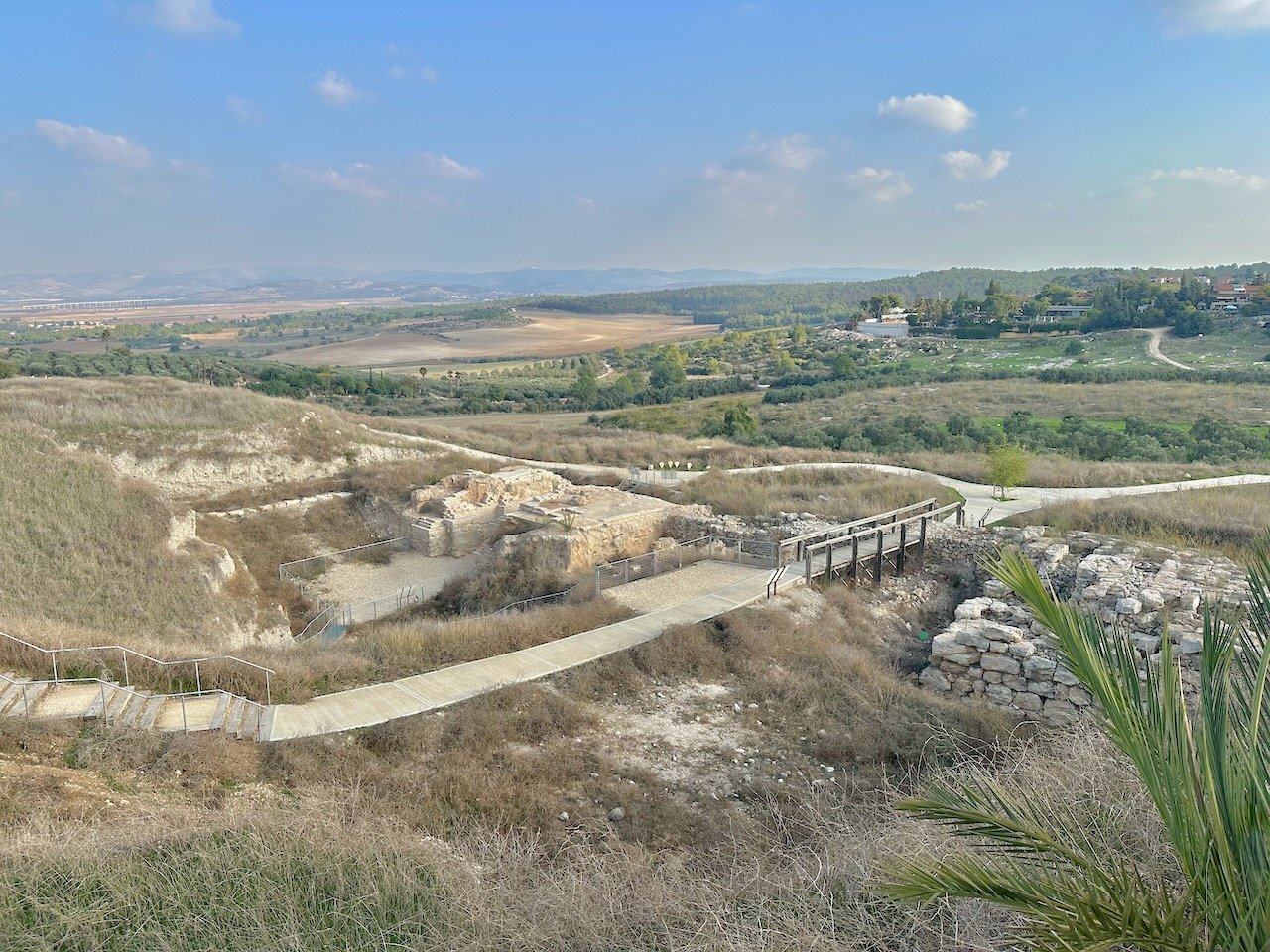
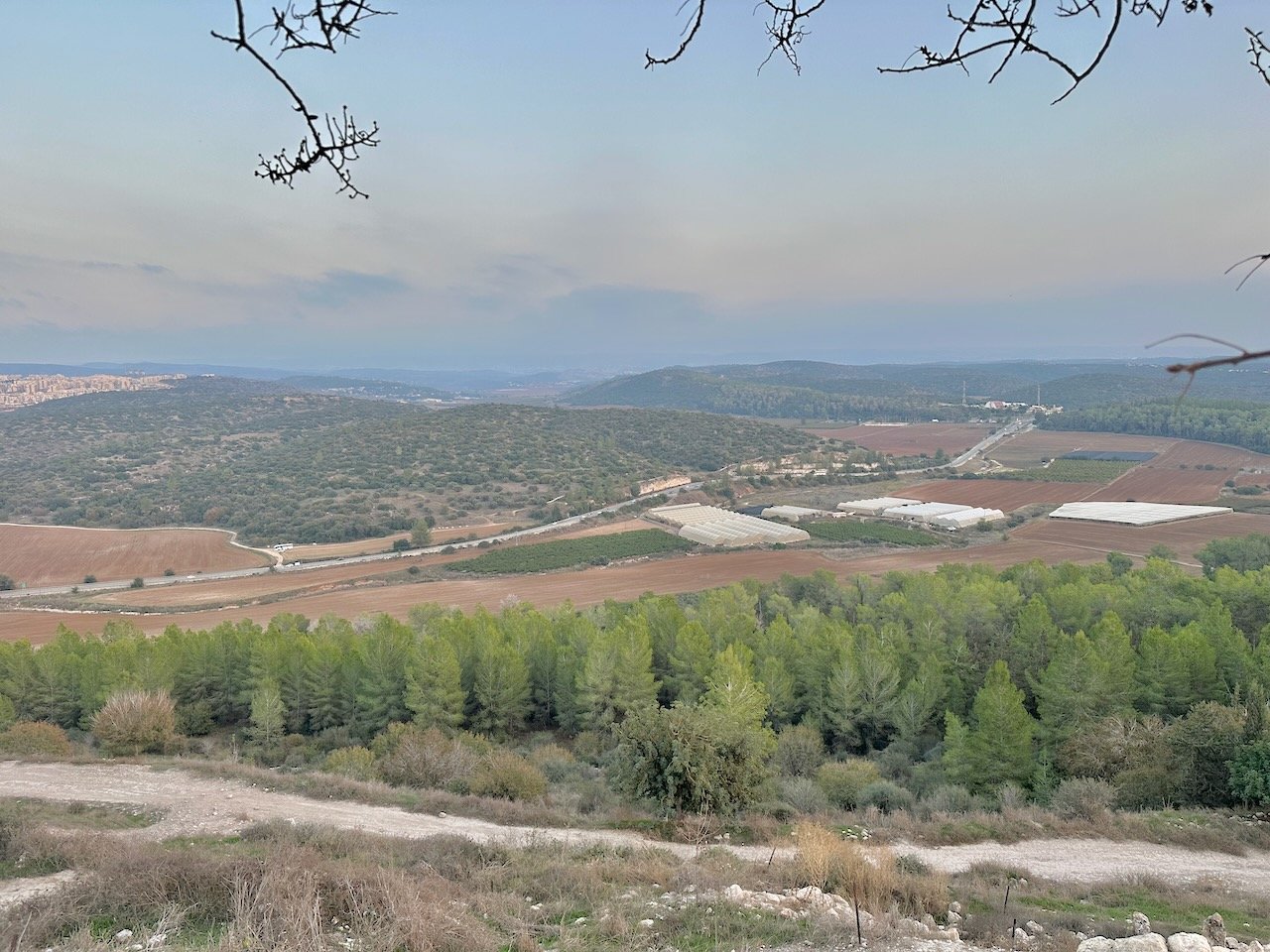
Continuing south to our last site of the day (and battling the setting of the sun), we climbed the site of Azekah. On the drive to the top, we could see biblical Gath (the hometown of Goliath) to the west only about 6 miles away. This ancient city that has been excavated in recent years is located along the Elah Valley. Azekah is mentioned in the story of 1 Samuel 17 (the Philistines camped on the ride between Azekah and Socoh further east. It was in the narrow part of the valley (“gai” in Hebrew) where David battled Goliath. David faced the battle with this giant in the confidence of the Lord!
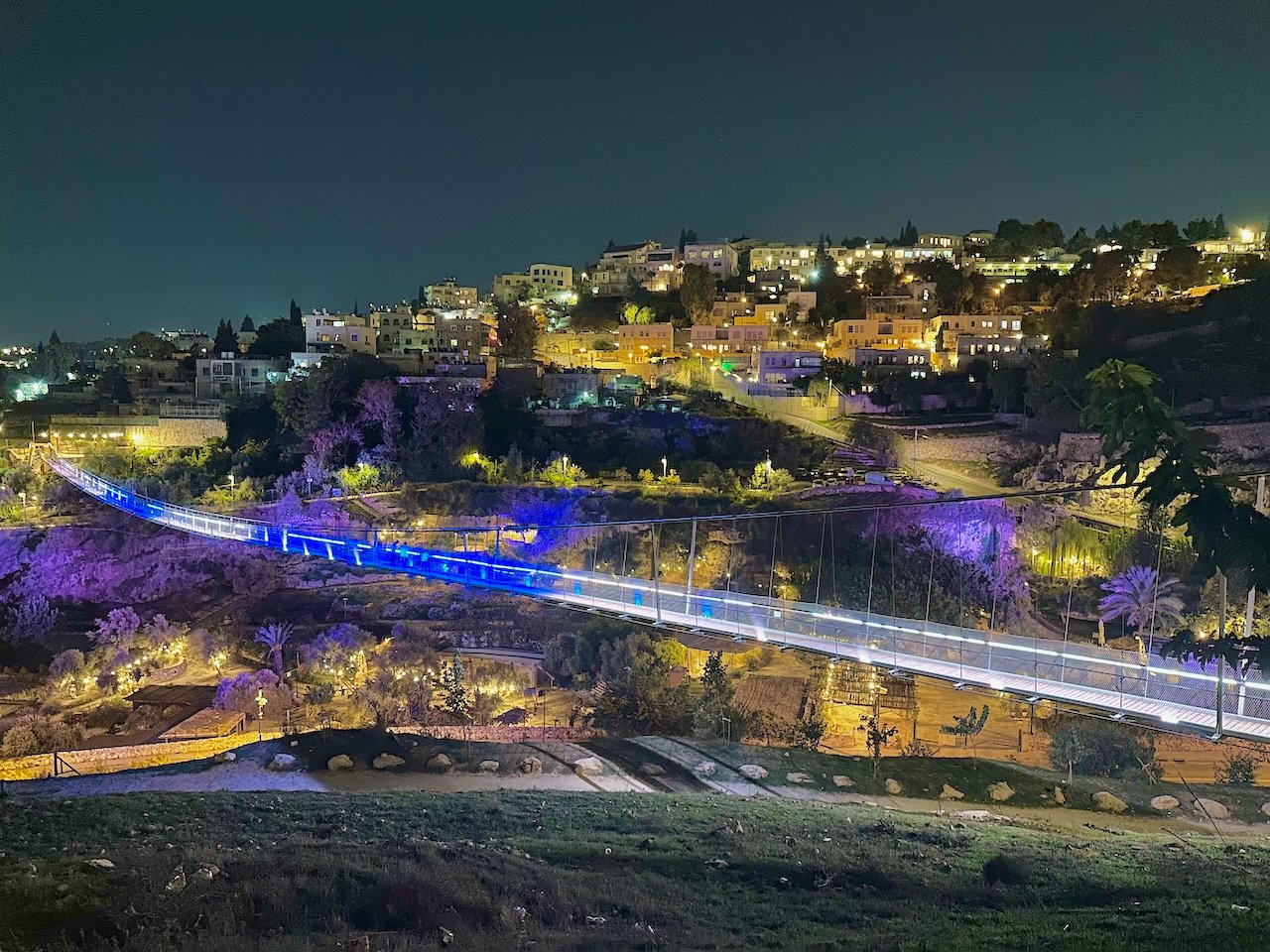
From here we returned to our hotel in Jerusalem where we enjoyed another great dinner and an optional walk to the Promenade of Jerusalem to gain a very nice southern perspective of the Old City and Temple Mount. We have one more full day of the Israel portion of the tour here in Jerusalem!

Day 11 – Tuesday, November 17: Eastern Gate, St. Anne’s Church, Pools of Bethesda, Garden Tomb, City of David, Hezekiah’s Tunnel, Southern Wall Excavations, Western Wall, Holy Sepulcher Church
Today was our last full day of the Israel portion of the trip. It was another beautiful partly sunny day, with highs in the high 60s. We visited both possible sites for the burial tomb of Jesus, visited the the City of David, and walked up the southern steps of the Temple, among other things! We left the hotel at 7:30, reading Psalm 48 as we departed the hotel.
Eastern Gate / St. Anne’s Church – Pools of Bethesda
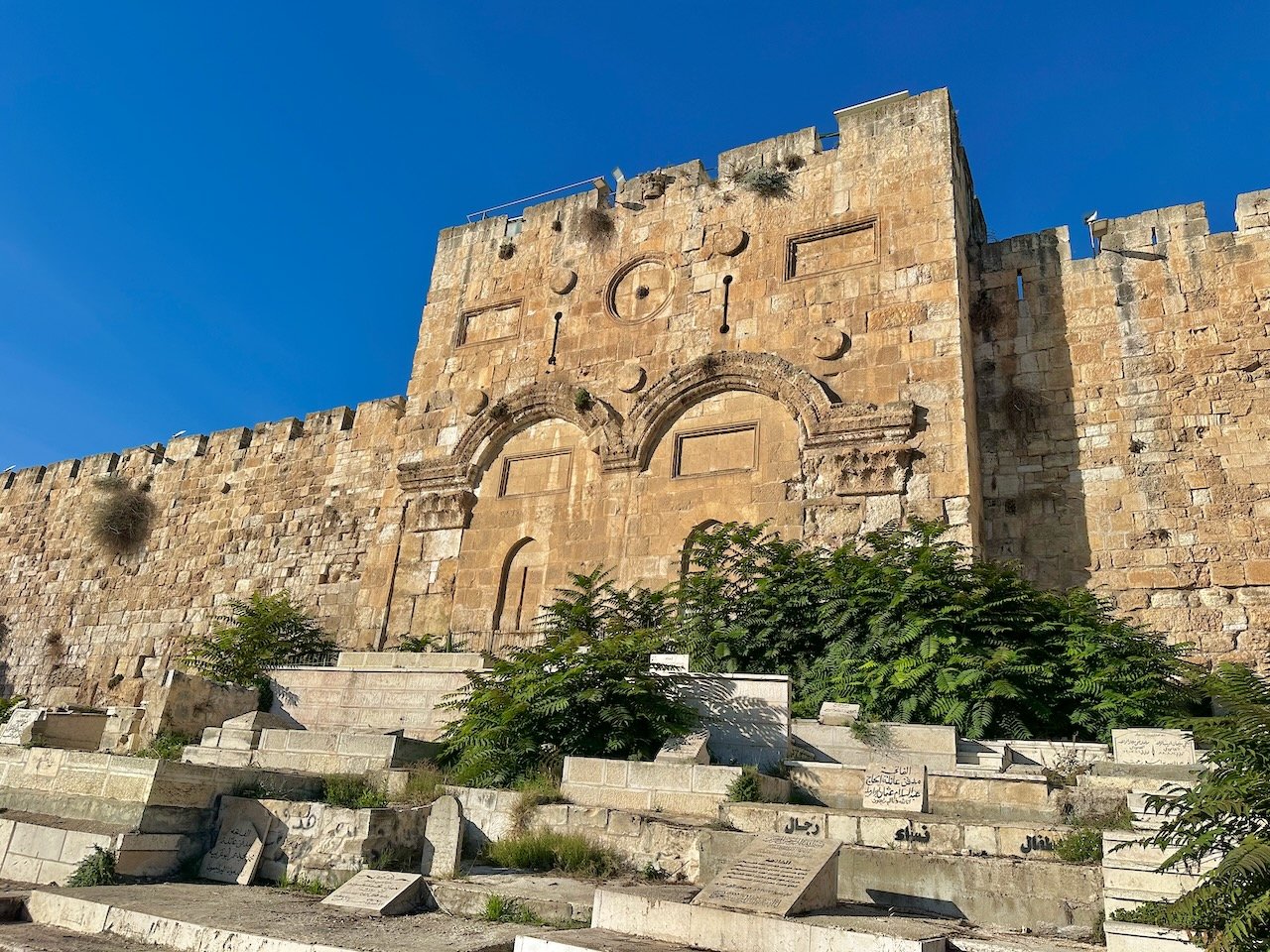
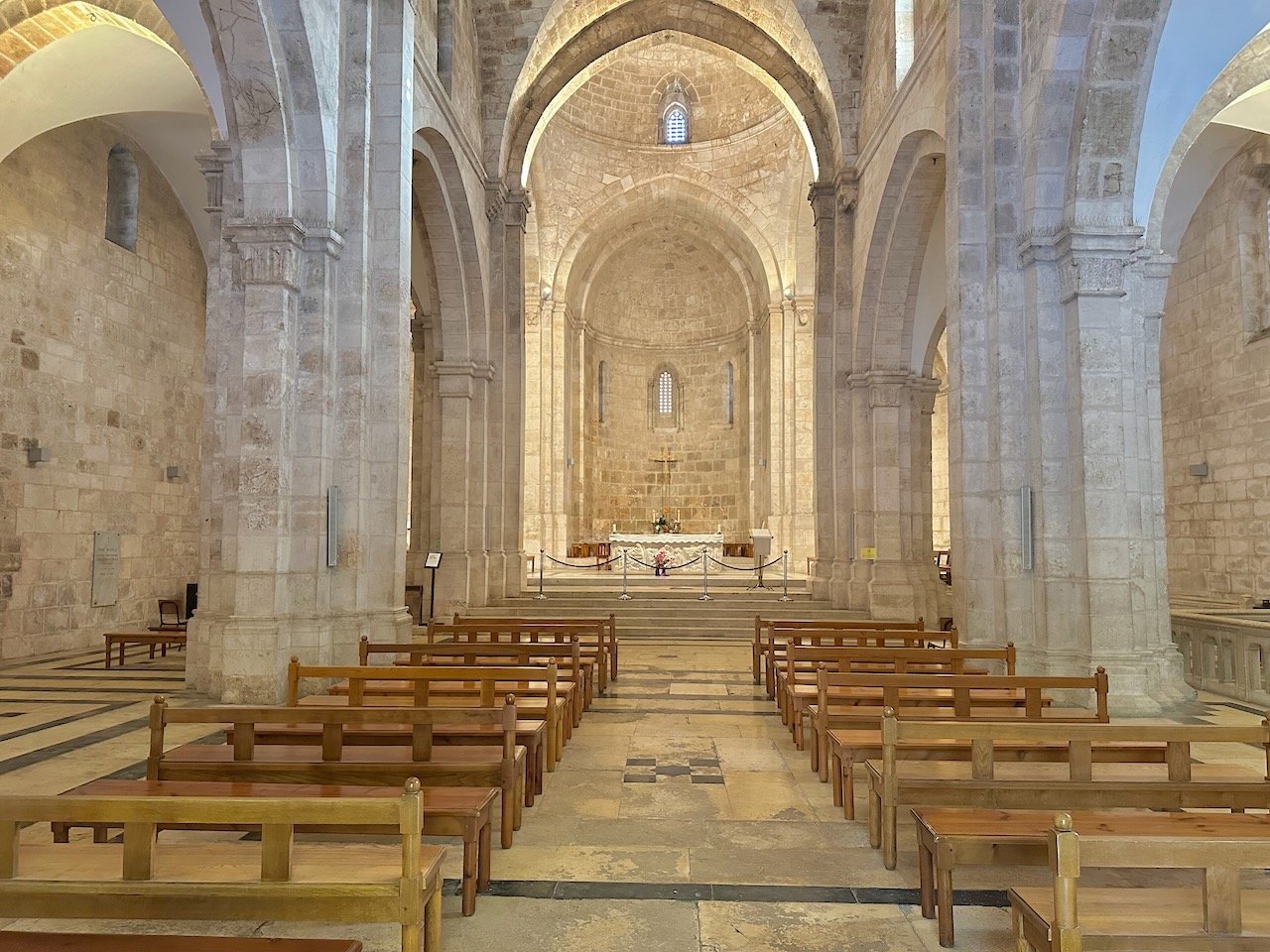
We first drove to the NE corner of the Old City and walked from there to the Eastern Gate. This is also called the Golden Gate. It has been closed since 810 AD. We then walked into the Old city through the St. Stephen’s Gate (also called Lion’s Gate and Jericho Gate). We first visited St. Anne’s Church, a Crusader Church with an eight-second echo! We sang a few songs and we sounded like an angelic choir! Nearby are the Pools of Bethesda. We saw the lower pool (most likely used as a ritual bath) where the paralytic was healed by Jesus (John 5).
Garden Tomb
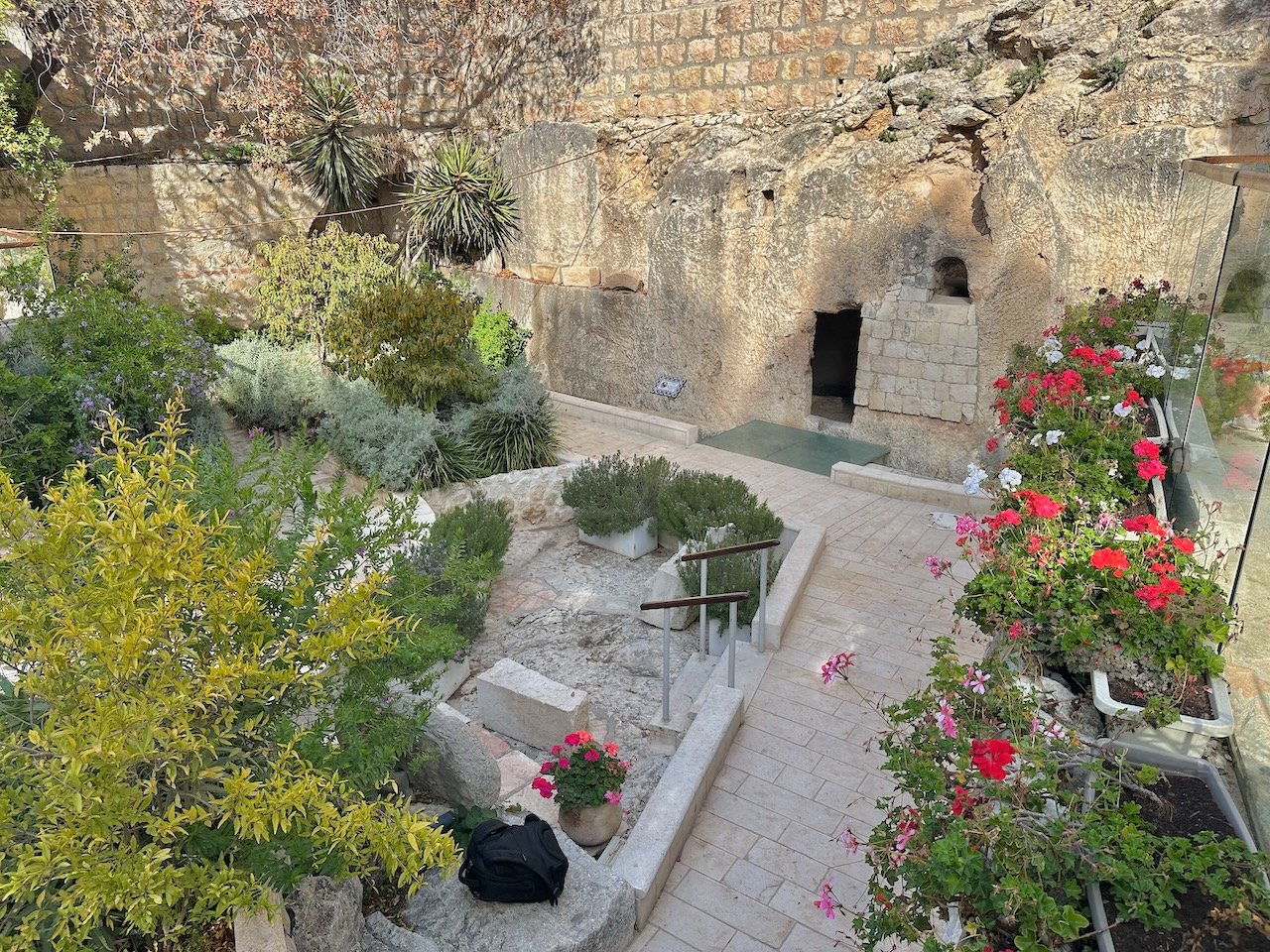
From here we walked through the Old City (on a part of the Via Dolorosa) before turning through the Damascus Gate. We exited the Old City here, walking another few hundred yards north to the Garden Tomb. Located on the north side of the Old City, this is an alternative (“Protestant”) location found in the late 1800s for the crucifixion and burial site of Jesus. We saw the suggested rocky scarp (Golgotha) where Jesus was crucified, followed by the proposed tomb. A special time of worship and Communion followed. We worship the Person, not the place. What a great place to consider the redemptive purpose of Jesus’ coming!
City of David
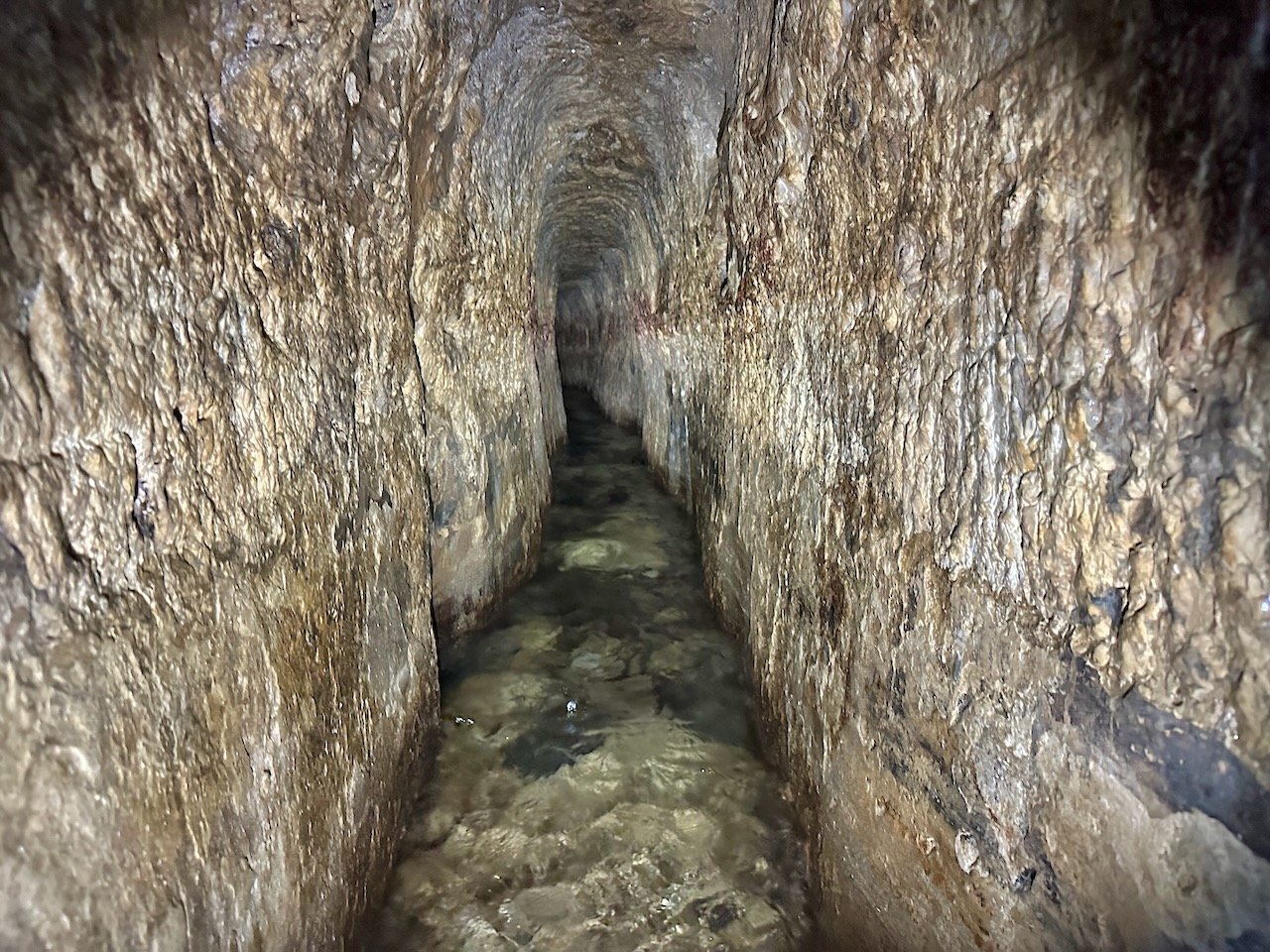
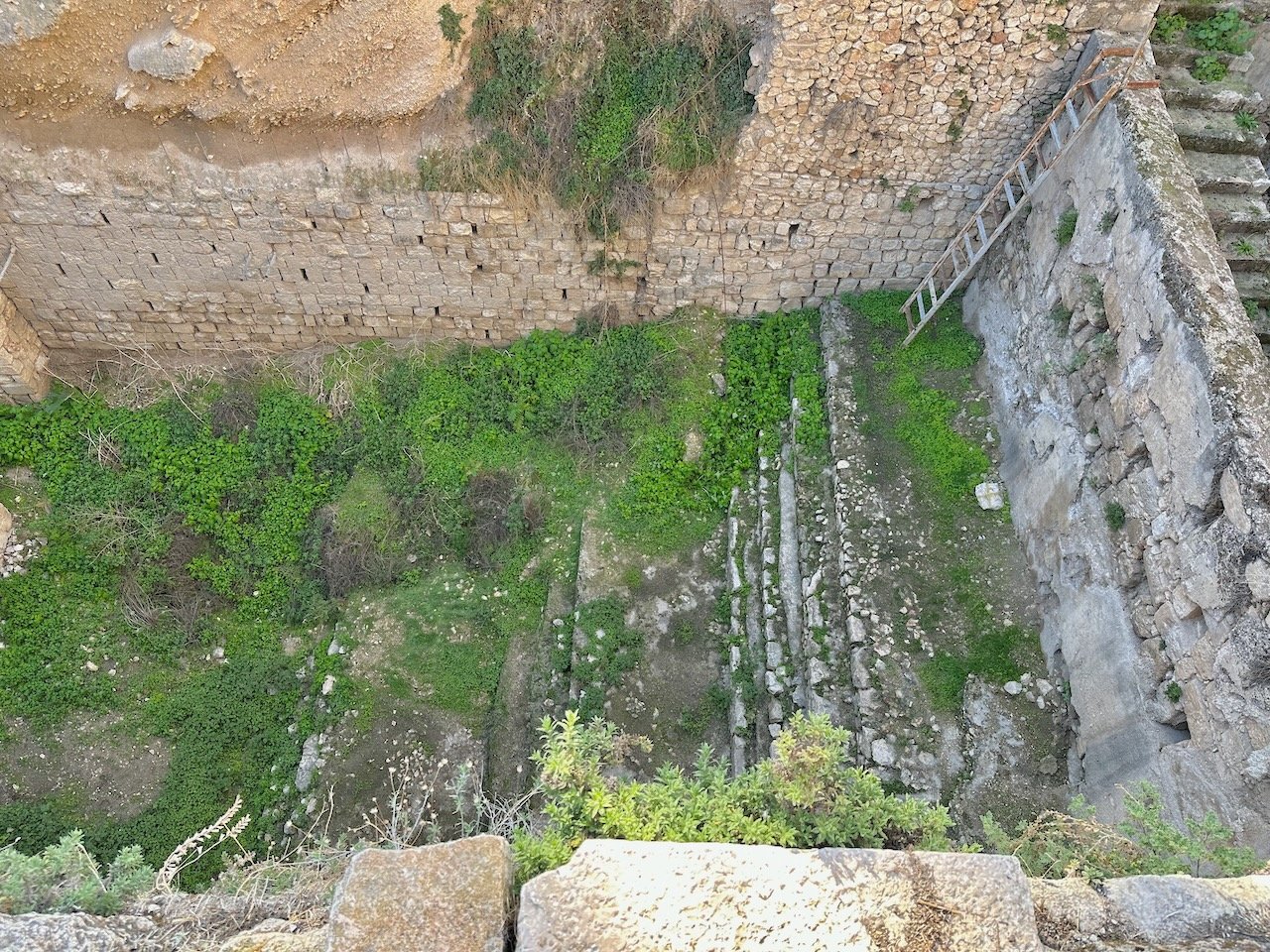
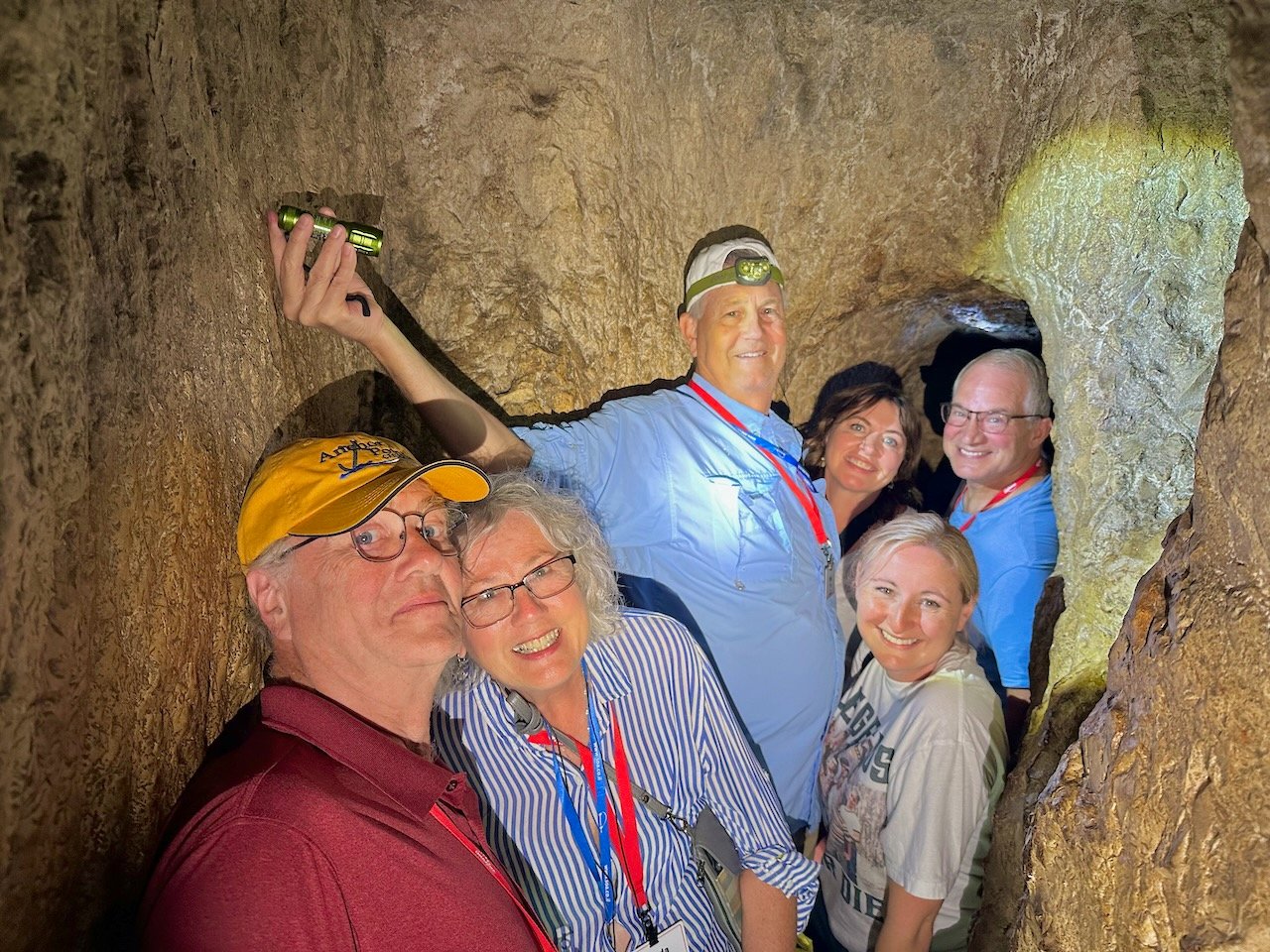
Next, we loaded back on the bus and drove down around the Old City to the City of David. The City of David is located south of (and outside) the Old City today. We first got a great view of the area from the observation tower before we walked down through the excavations of Area G (where Dr. John dug for a month in 1982) and Warren’s Shaft. At the Gihon Spring is where most in the group accessed the entrance to Hezekiah’s Tunnel, a 1,710-foot tunnel chiseled in 701 BC. We walked in water through this amazing discovery mentioned in 2 Kings 20, 2 Chronicles 32, and Isaiah 8:6. Others walked through the “dry” Canaanite tunnel. Both groups converged at the Pool of Siloam where we recalled the John 9 story (the longest of the miracle narratives).
Pilgrim Road
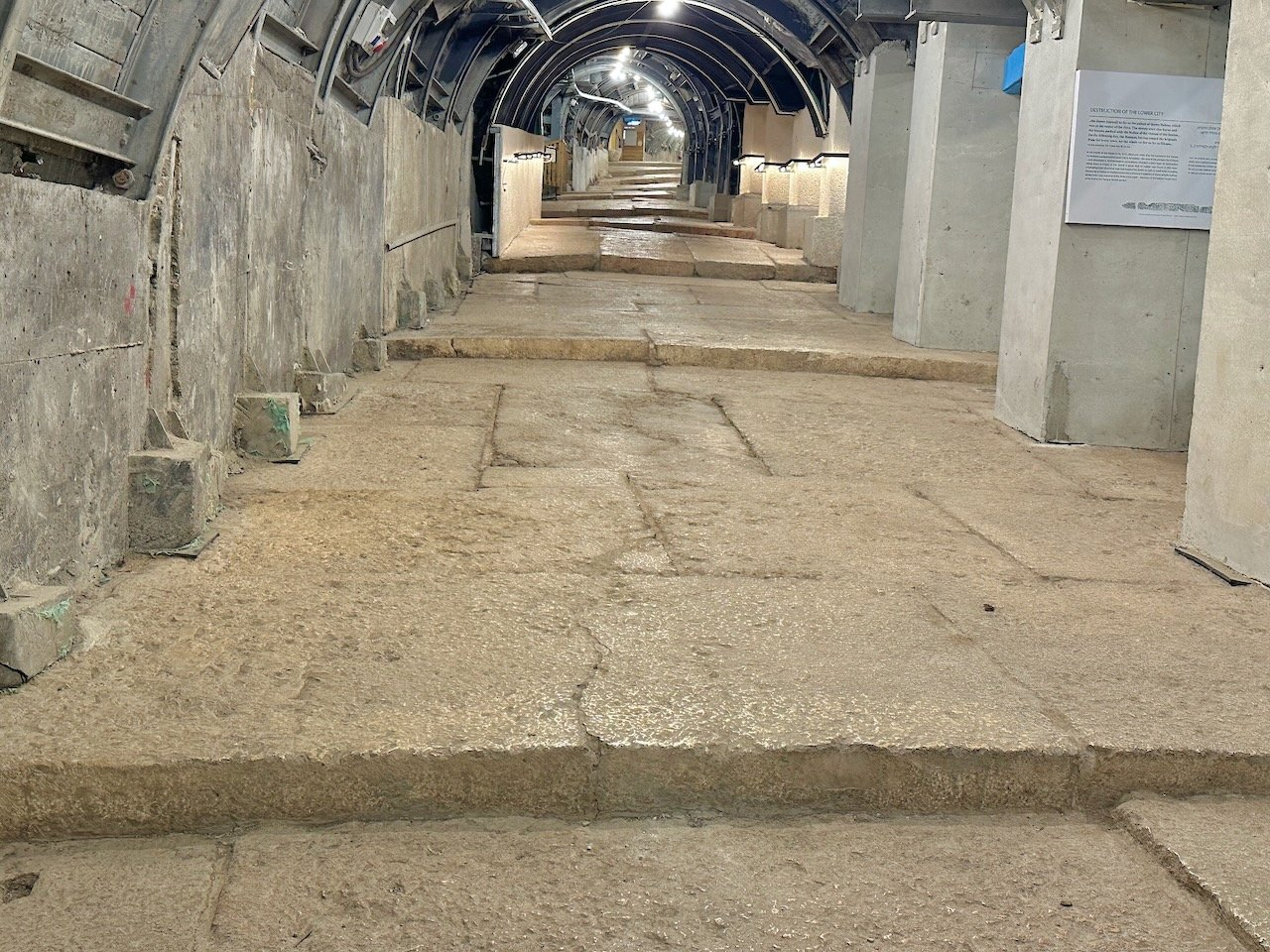
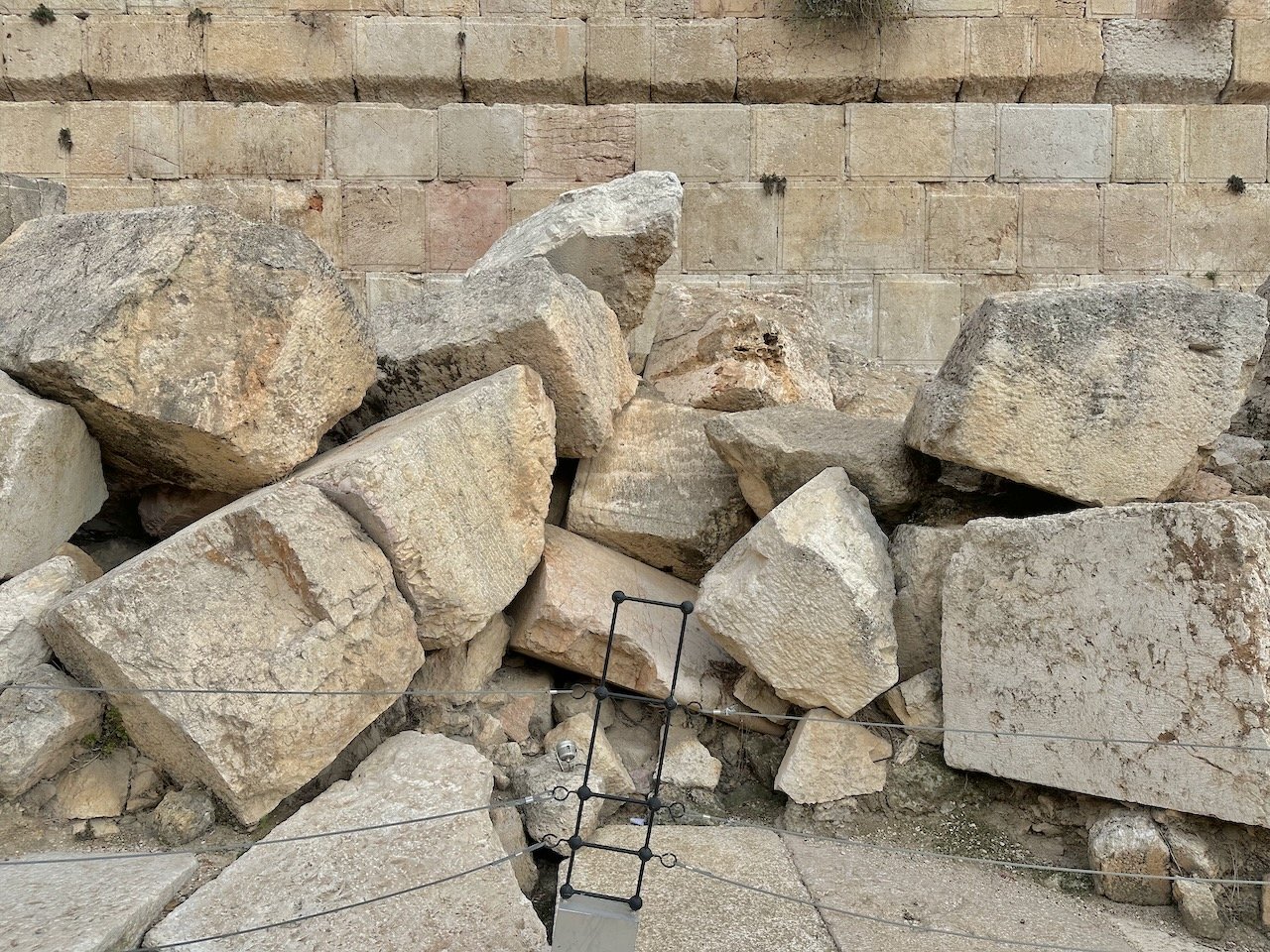
From this southern end of the City of David is where we accessed the Pilgrim Road. This is a stone pavement that dates to 30 AD (perhaps even financed by Pilate!). We slowly walked up this ancient road to the SW corner of the Temple. This entire walk made us feel like we were literally walking in the footsteps of Jesus! Here at this corner of the Temple was the most likely location for Jesus’ temptation (i.e. pinnacle). We also saw massive stones and what is left of a right-angle gate (called today Robinson’s Arch, discovered in 1838).
Southern Excavations / Western Wall
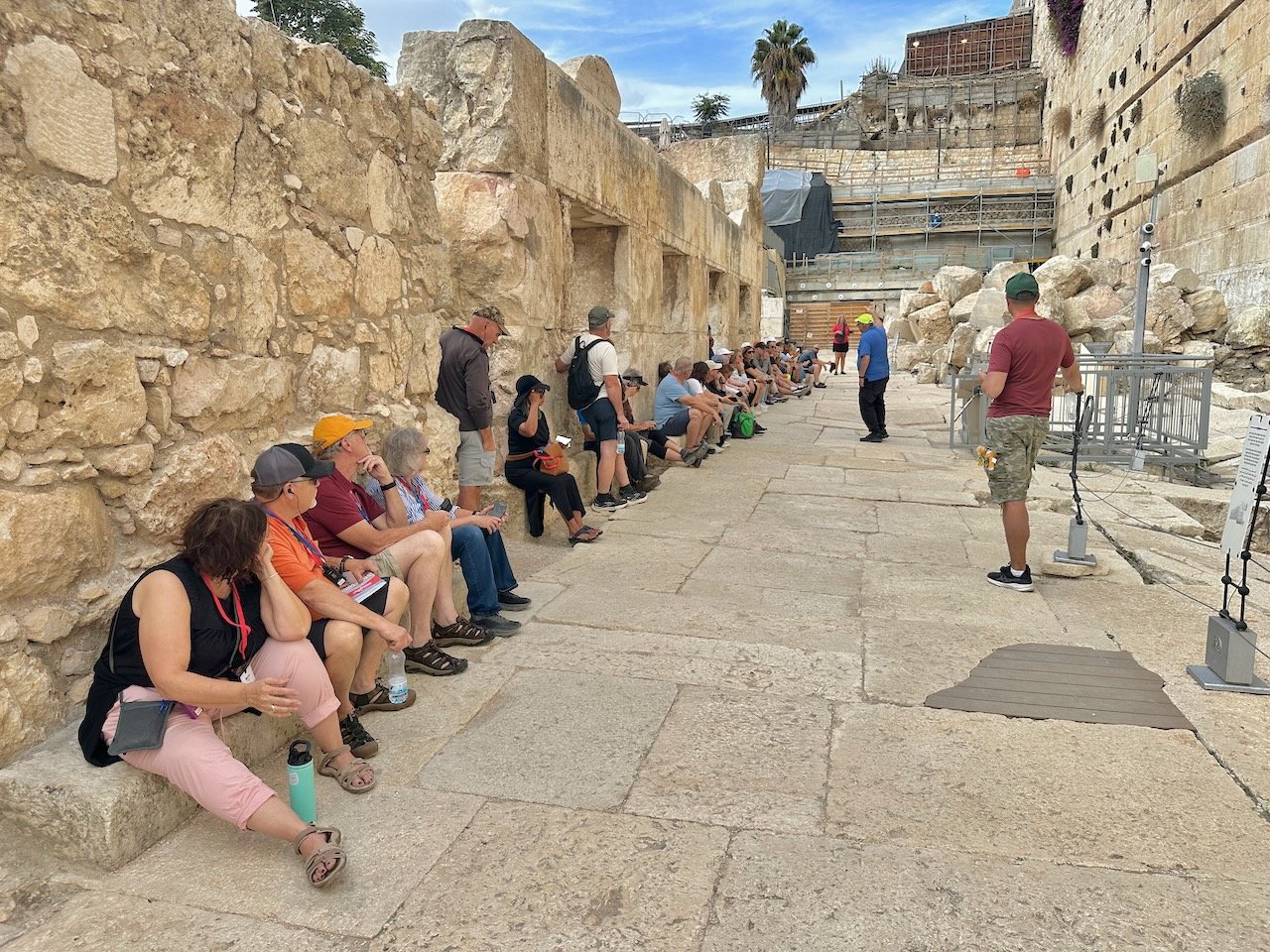
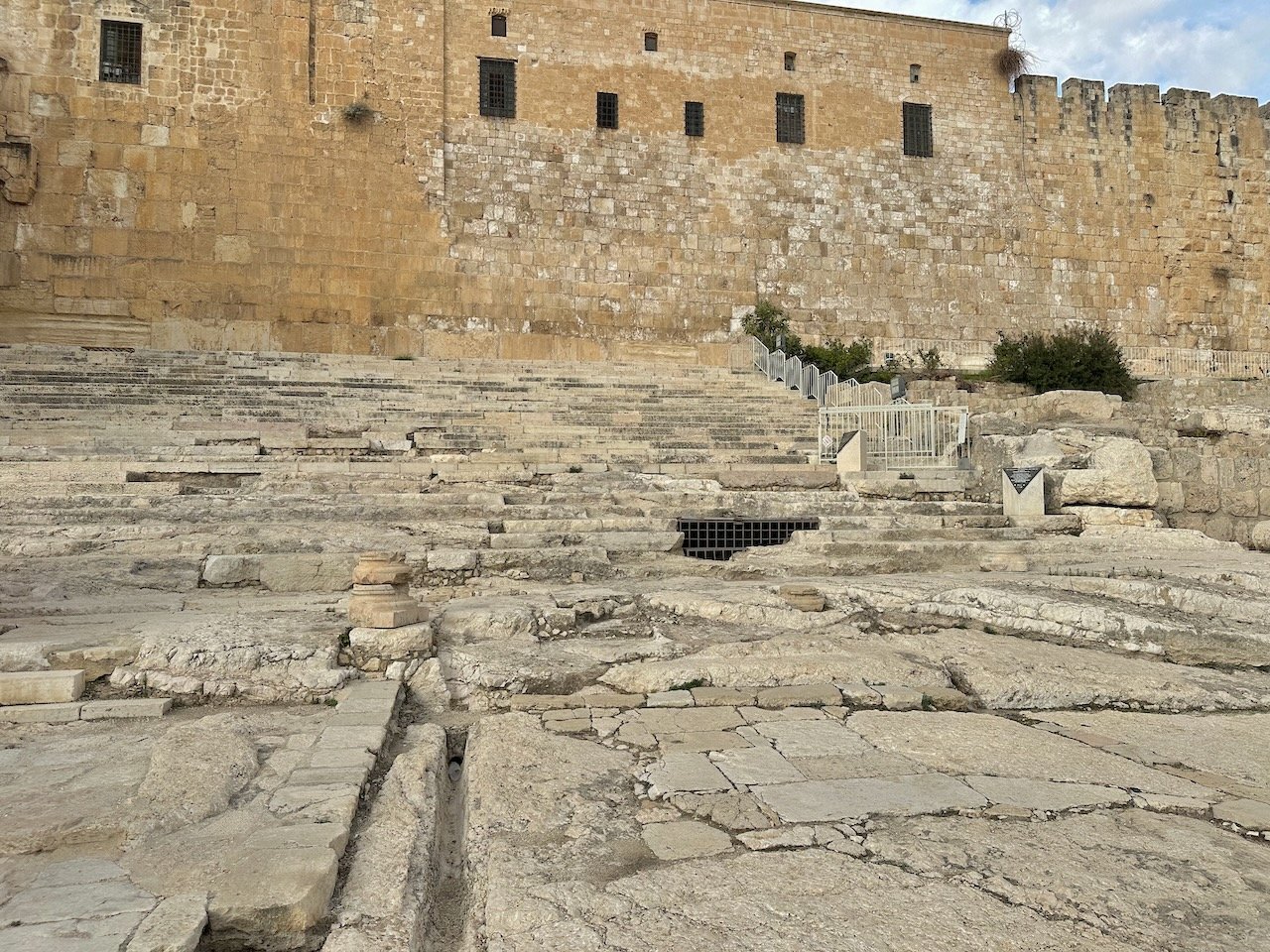
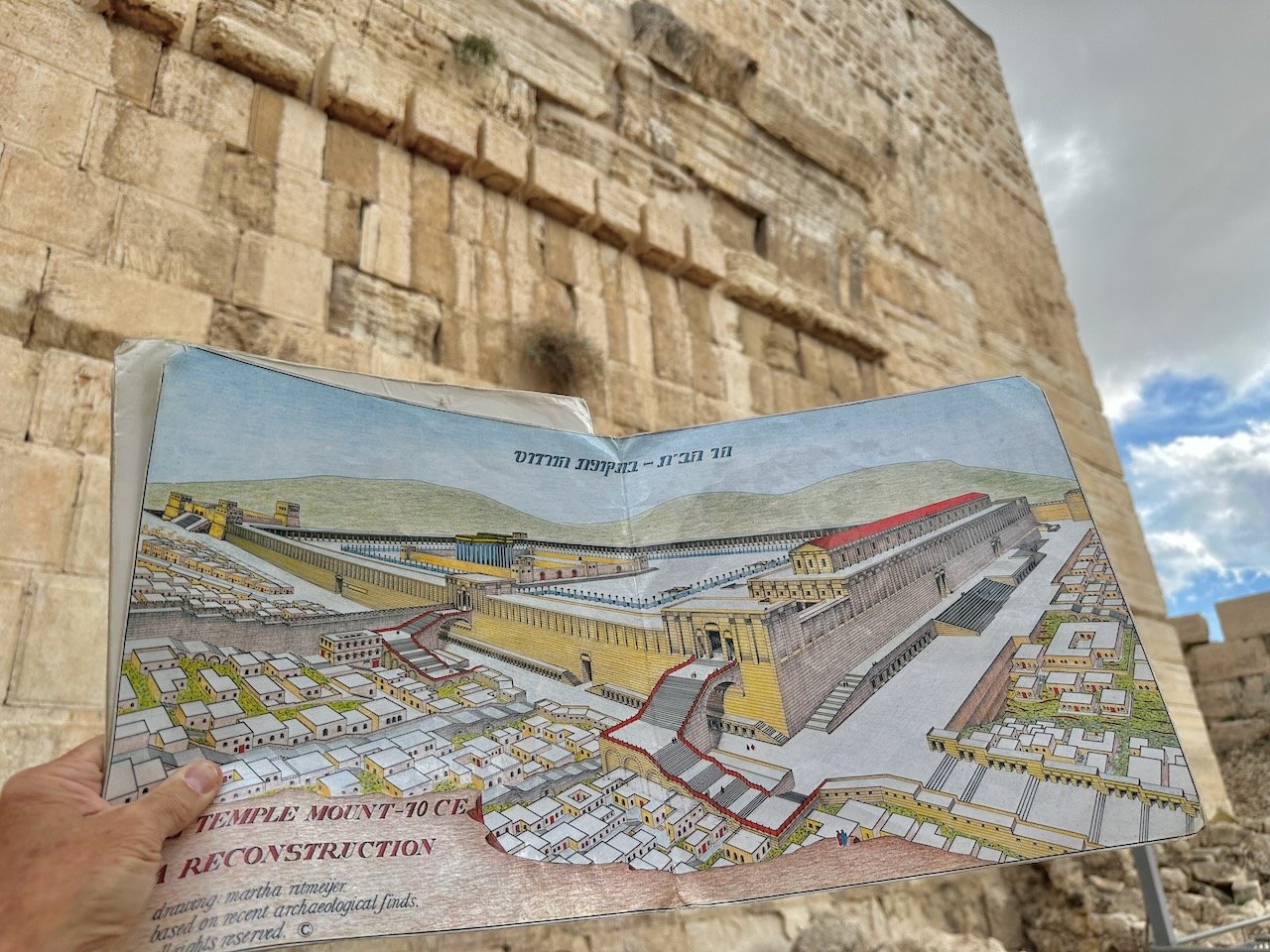
Next, we walked to the Southern Excavations of the Temple. While sitting on the actual steps leading into the Temple, we recalled the many times Jesus and the disciples (and Paul) used these steps! Again, this was humbling! Whereas the Temple was a magnificent building (Mark 13:1-2), we are to be the Temple (1 Corinthians 3)!
Before leaving this area, we also visited the Western Wall, the most holy place for Jews today (because of its proximity to the Temple Mount). Within the cracks of the Wall (between each Herodian stone) are written prayers left by people who visit here. This Western Wall served as one of the four retaining walls that allowed Herod to double the size of the Temple platform high above! It was fun being here because 100s of newly-inducted IDF soldiers from foreign lands (from Ukraine, France, Russia, Americans, etc…) were also at the Wall in celebration of completing their Hebrew course. We were able to talk to some of them, celebrating with them their new life in the IDF.
Rampart Walk / Holy Sepulcher Church
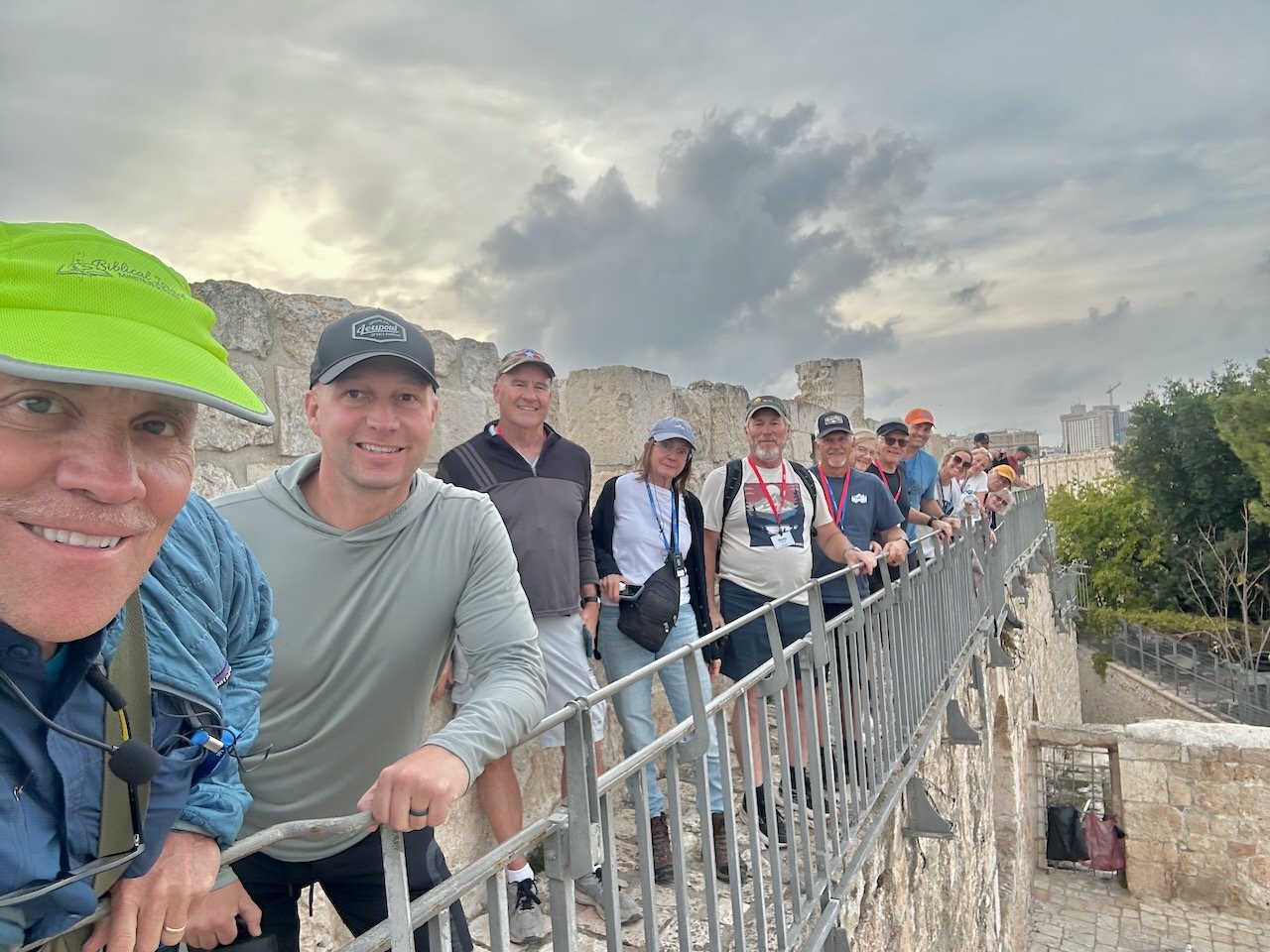
Leaving the Dung Gate, we drove directly to the Jaffa Gate where we entered the Old City. Some in the group enjoyed walking on the Rampart Walls (Turkish Old City walls from 1537-44 AD). Others joined Shlomo for a shorter walk, coffee, and shopping in the Christian Quarter. We all then joined together to walk a short distance to the Holy Sepulcher Church.
Built in 325 AD, this historic church serves as the traditional location for the death and burial place of Jesus. It very well could be that Hadrian, the 2nd century AD Roman emperor “tipped us off” where he thought the tomb of Jesus was! The archaeological and historical records strongly favors this site over the Garden Tomb (not a 2nd Temple Tomb but rather a classic Iron Age tomb). Because there wasn’t any line, many of us entered the Ediculae (enclosing the suggested tomb of Jesus). We also walked down to the lower sections of the church.
We walked back out of the Jaffa Gate where David picked us up to drive us back to the hotel. Following dinner, already some in the group had night flights back home, while 25 of us continue to Jordan tomorrow morning. It was a great Israel trip, with a great group!

Day 12 – Wednesday, November 18: Arrive Home / Cross into Jordan: Mt. Nebo, Machaerus, Medeba, Petra
A Hike up Arbel (overlooking the Sea of Galilee)
Hike up Mt. Arbel, with Biblical Israel Ministries & Tours. The hike up Mt. Arbel ascends about 800 feet above the NW corner of the Sea of Galilee. While the climb is strenuous, to get to the top is rewarding. No doubt Jesus walked past Arbel (and even climbed it) from time to time. Today, the hike is part of the “Jesus Trail” from Nazareth to Capernaum.
The view from the top of the Sea of Galilee below is one of the best! Enjoy the hike and view!