
Trip Experiences for the 12 Day Biblical Greece Tour (with 3 Day extension to Rome)
September 15-26, 2026
Downloads:

"Life transforming Israel tours & teaching in the context of the land of the Bible"
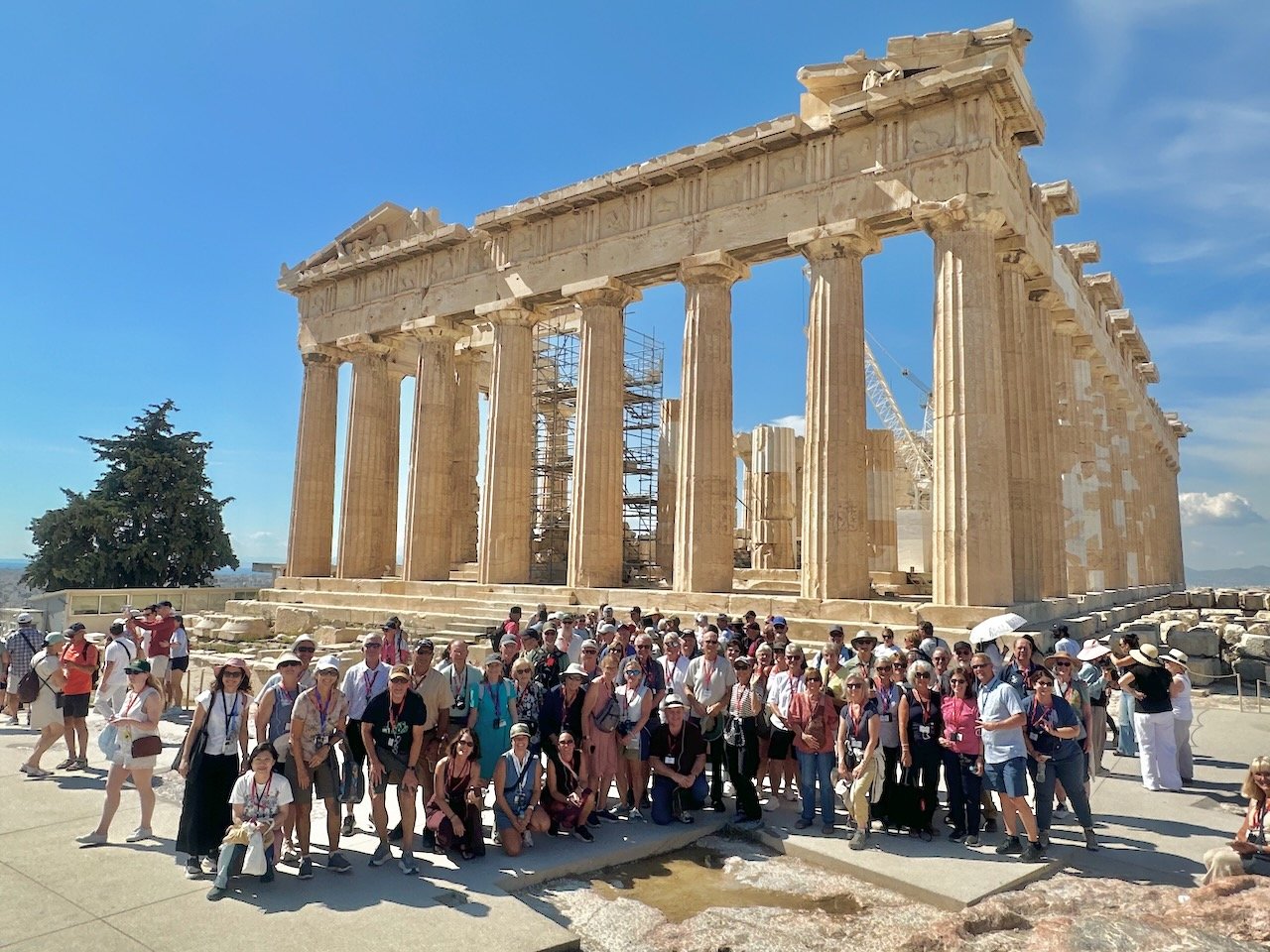
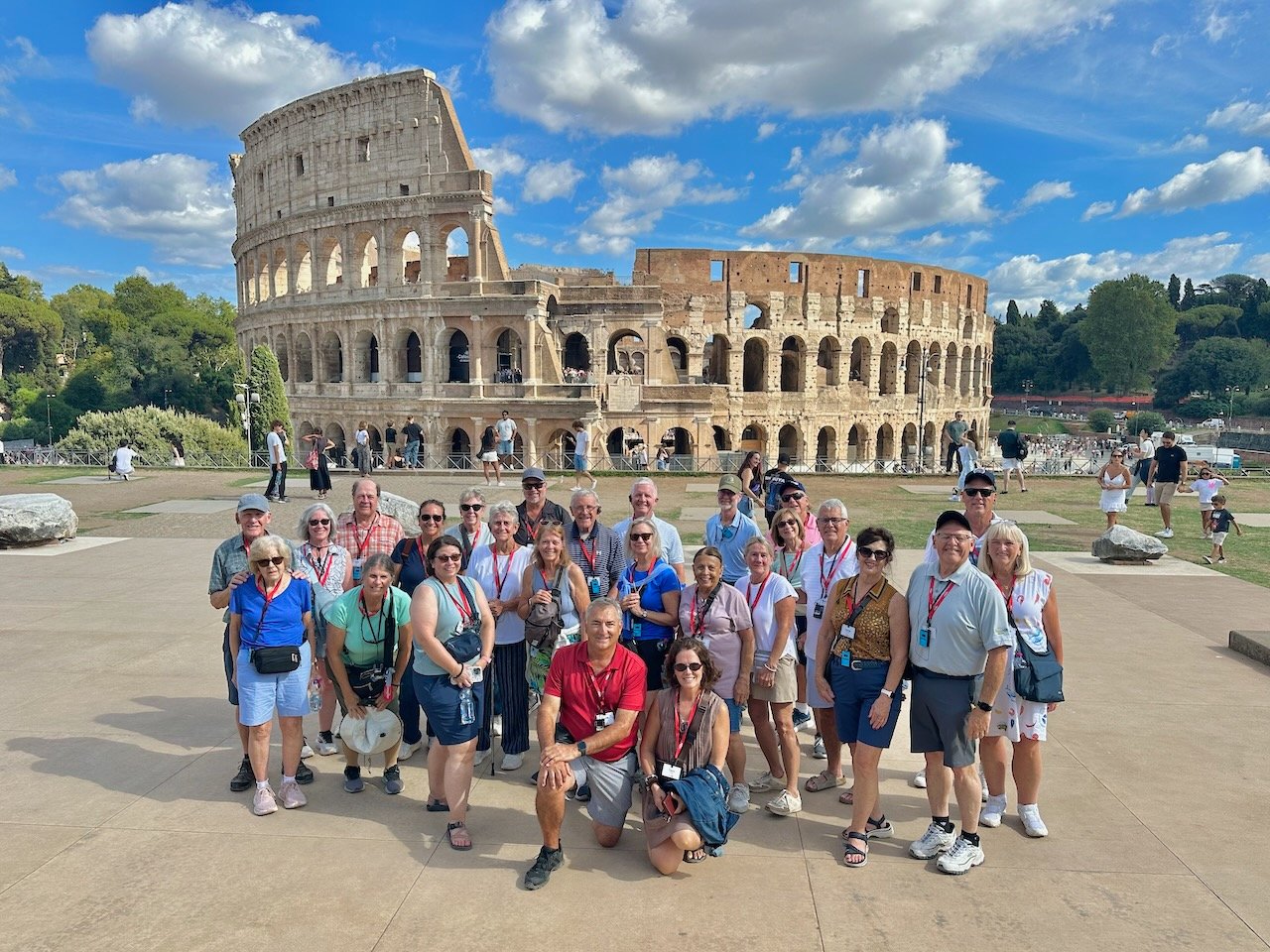
Group Photos
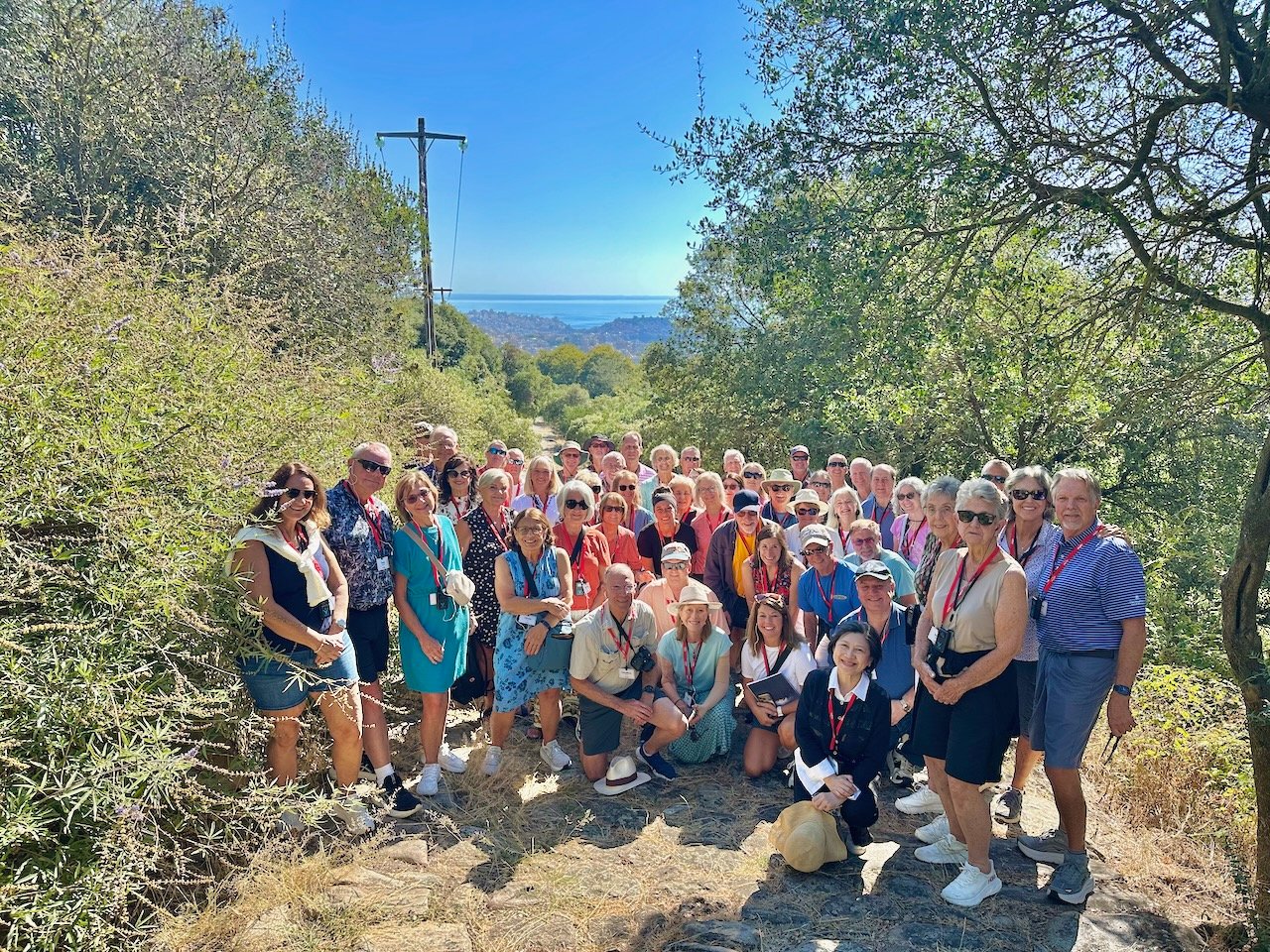
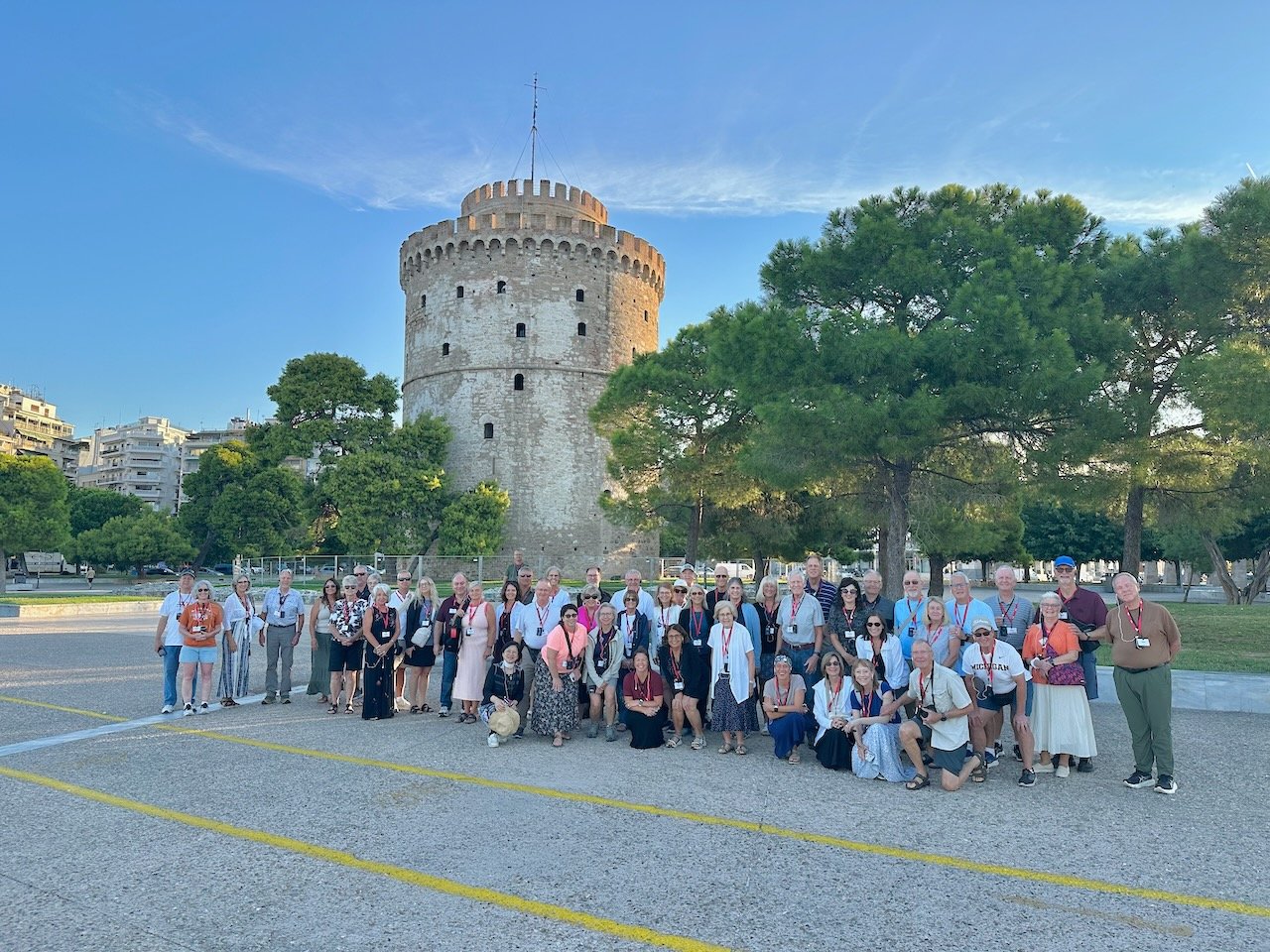
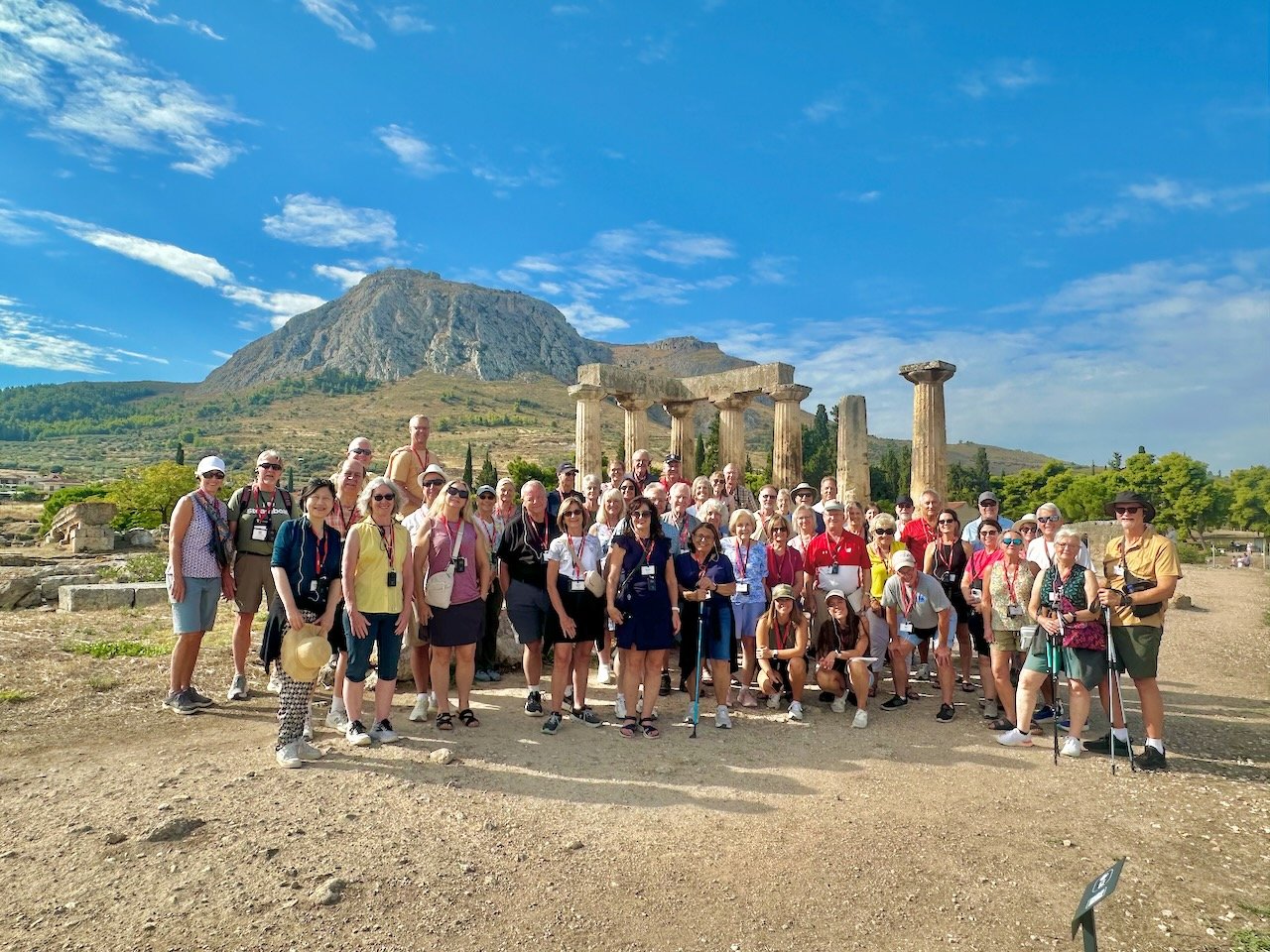
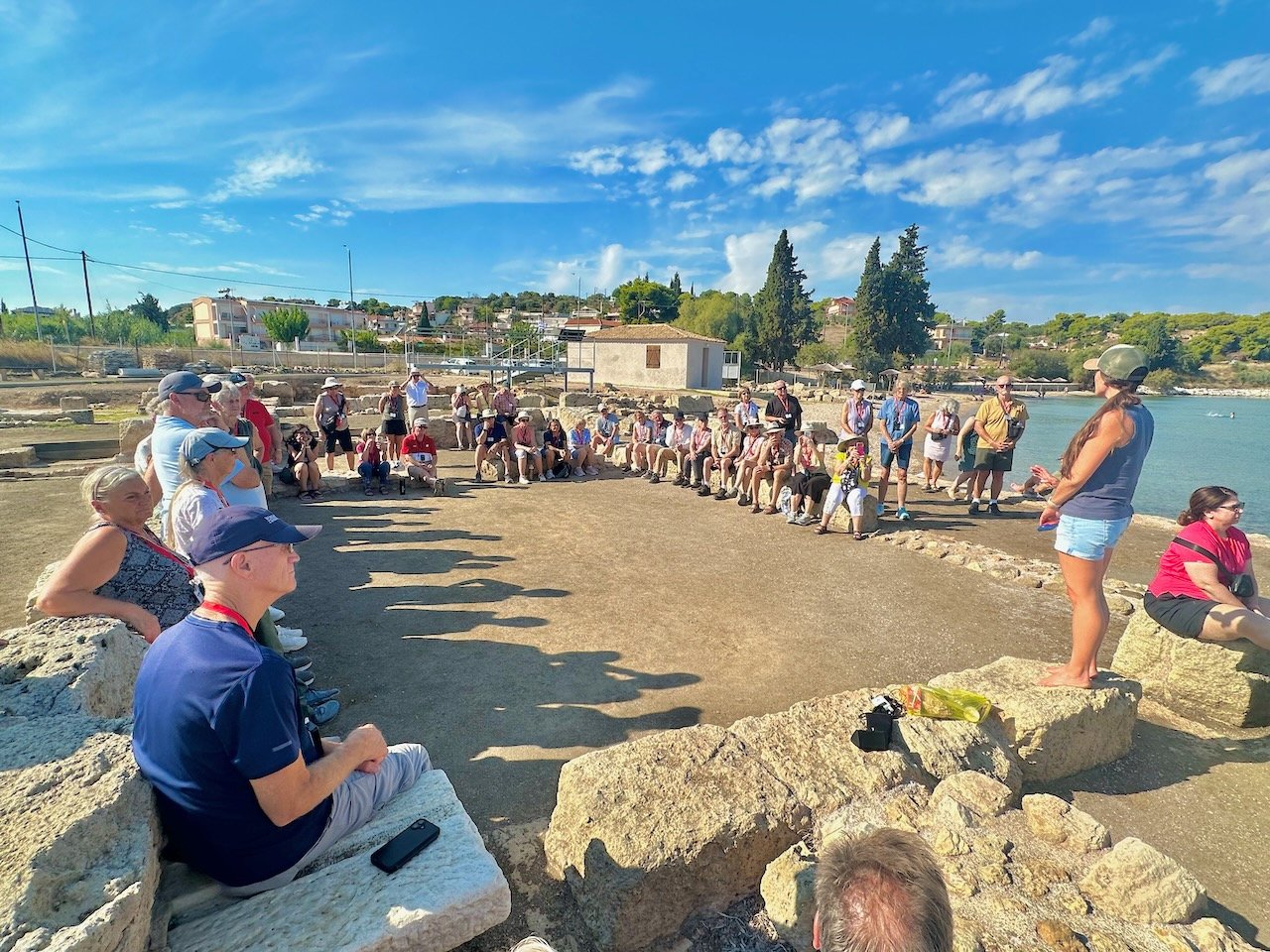
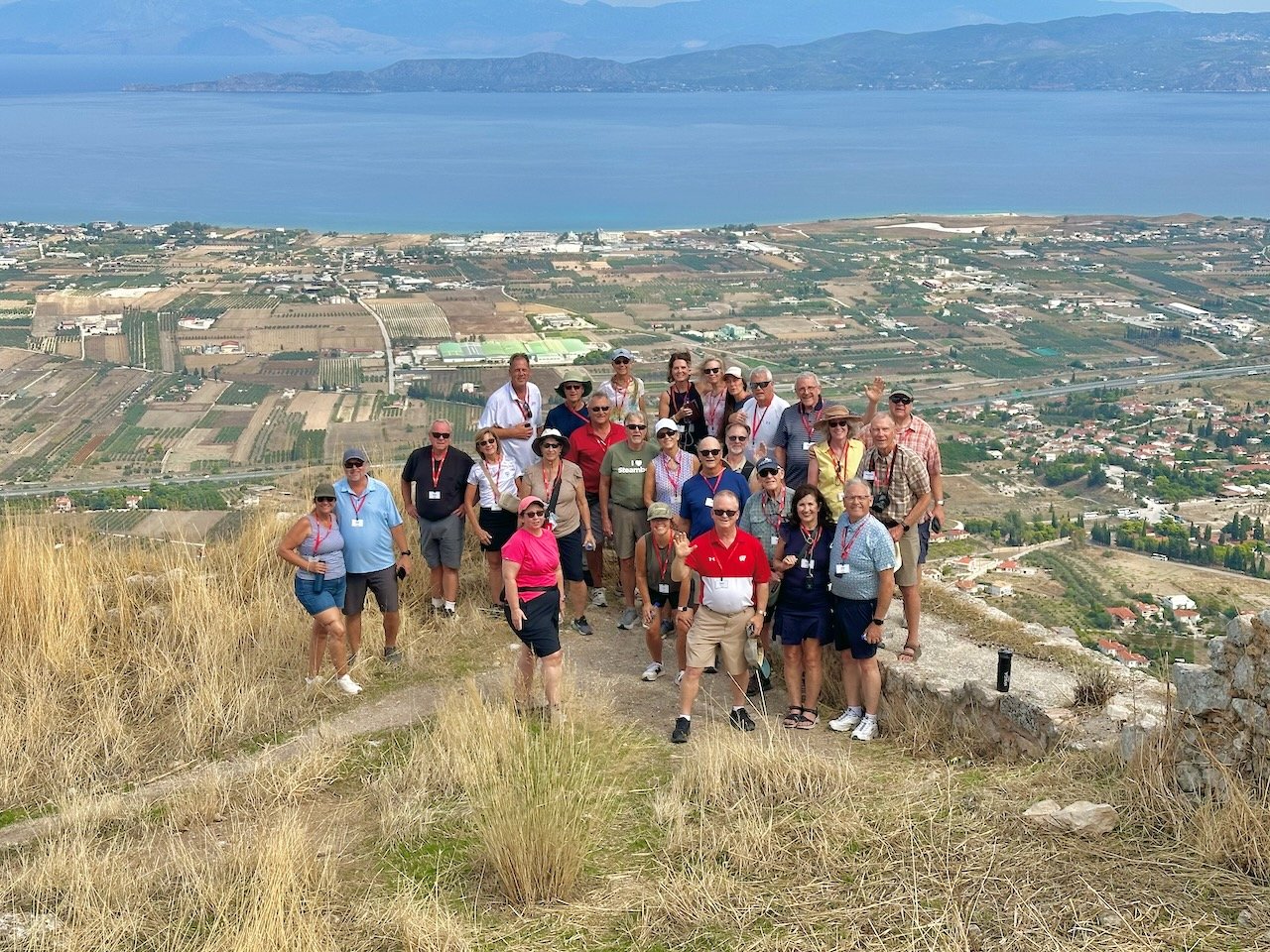
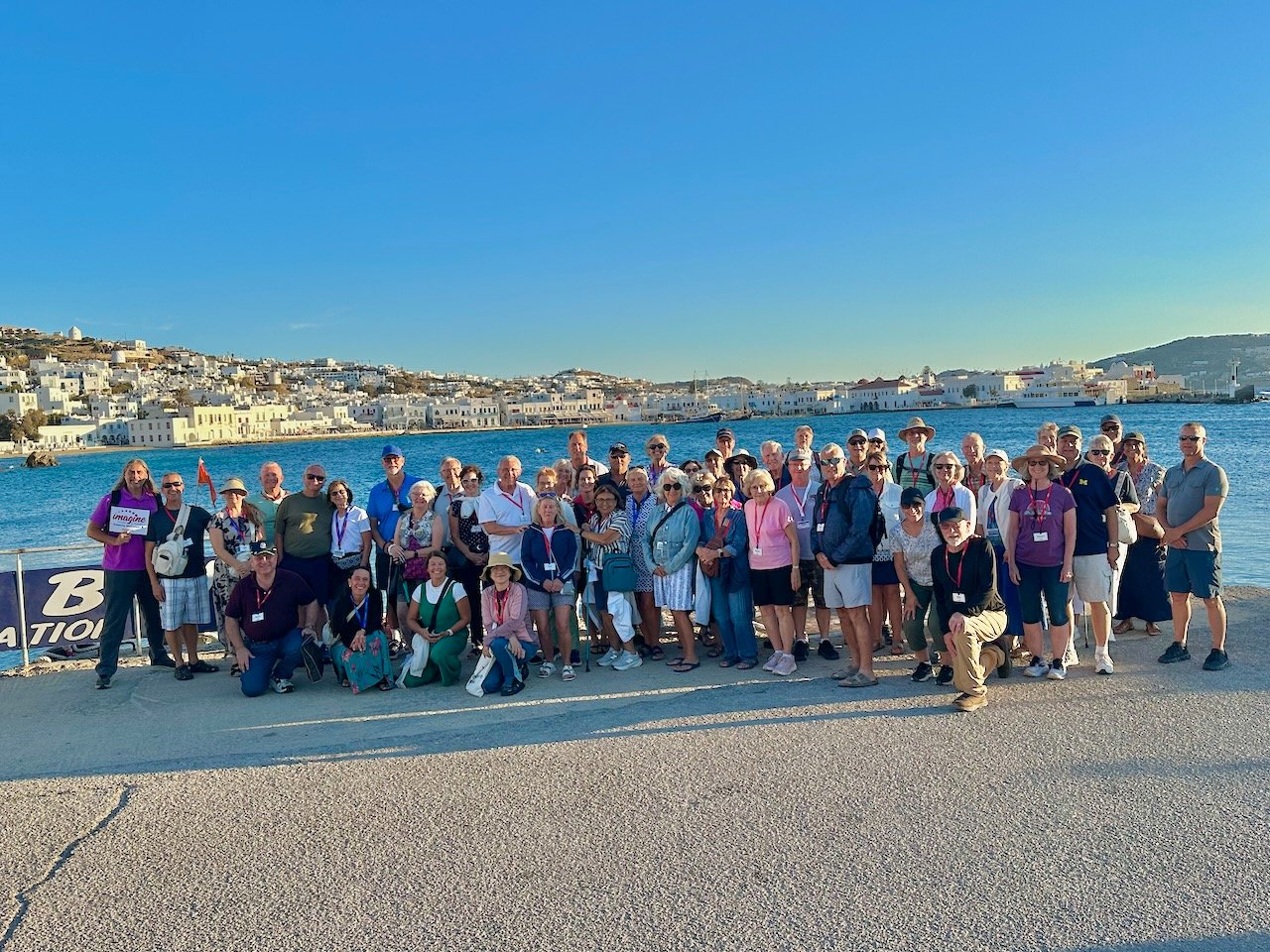
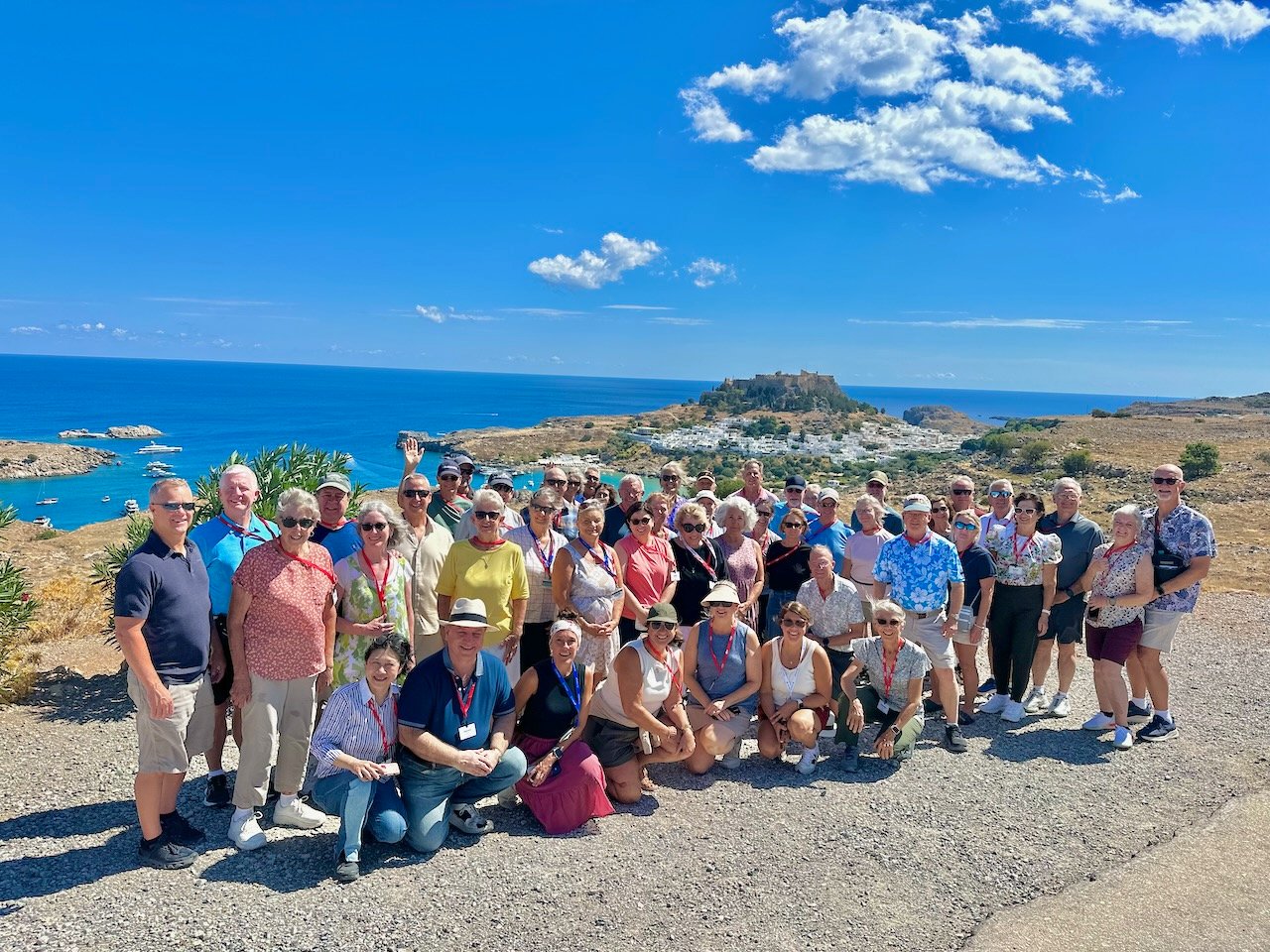
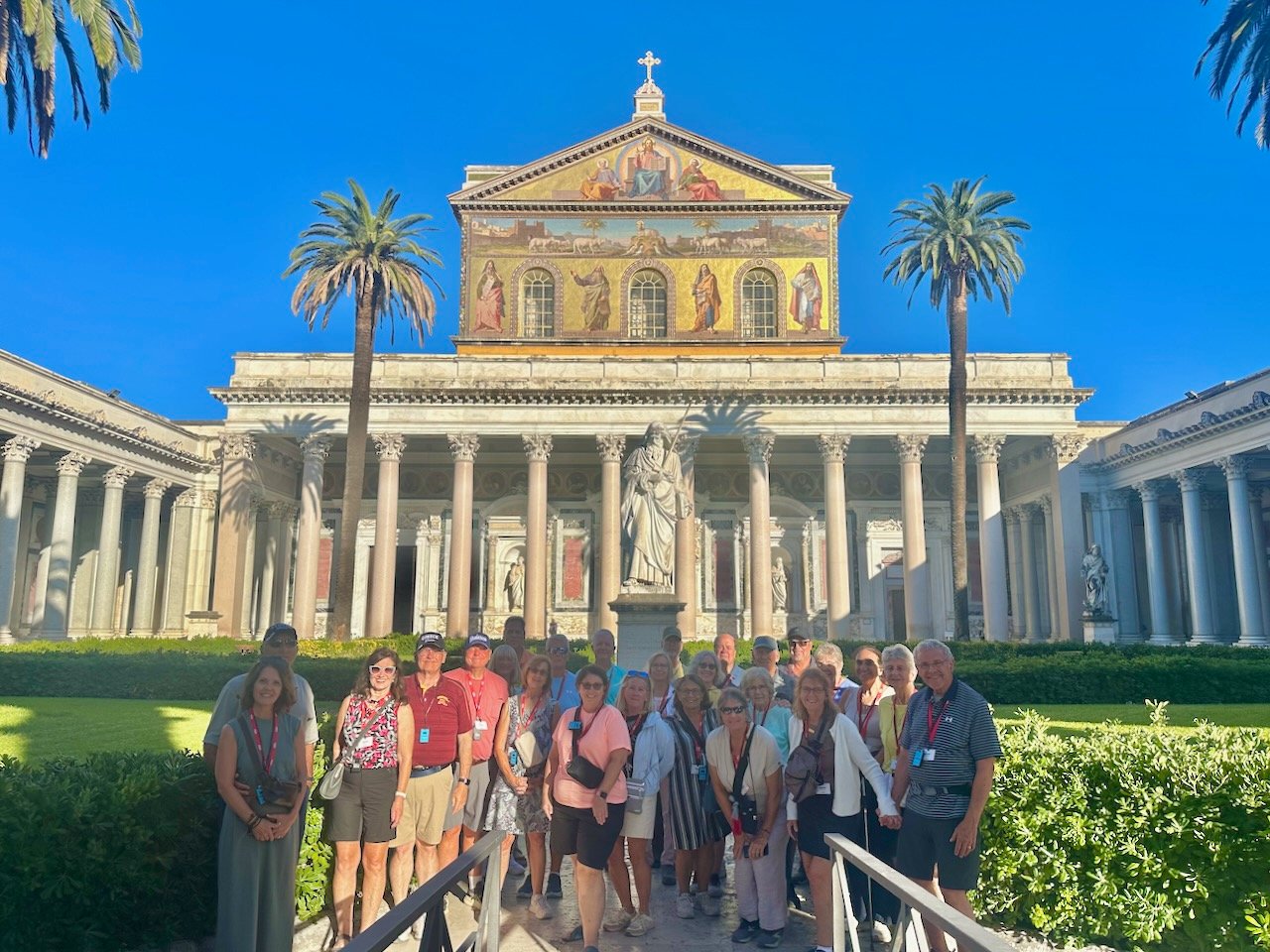
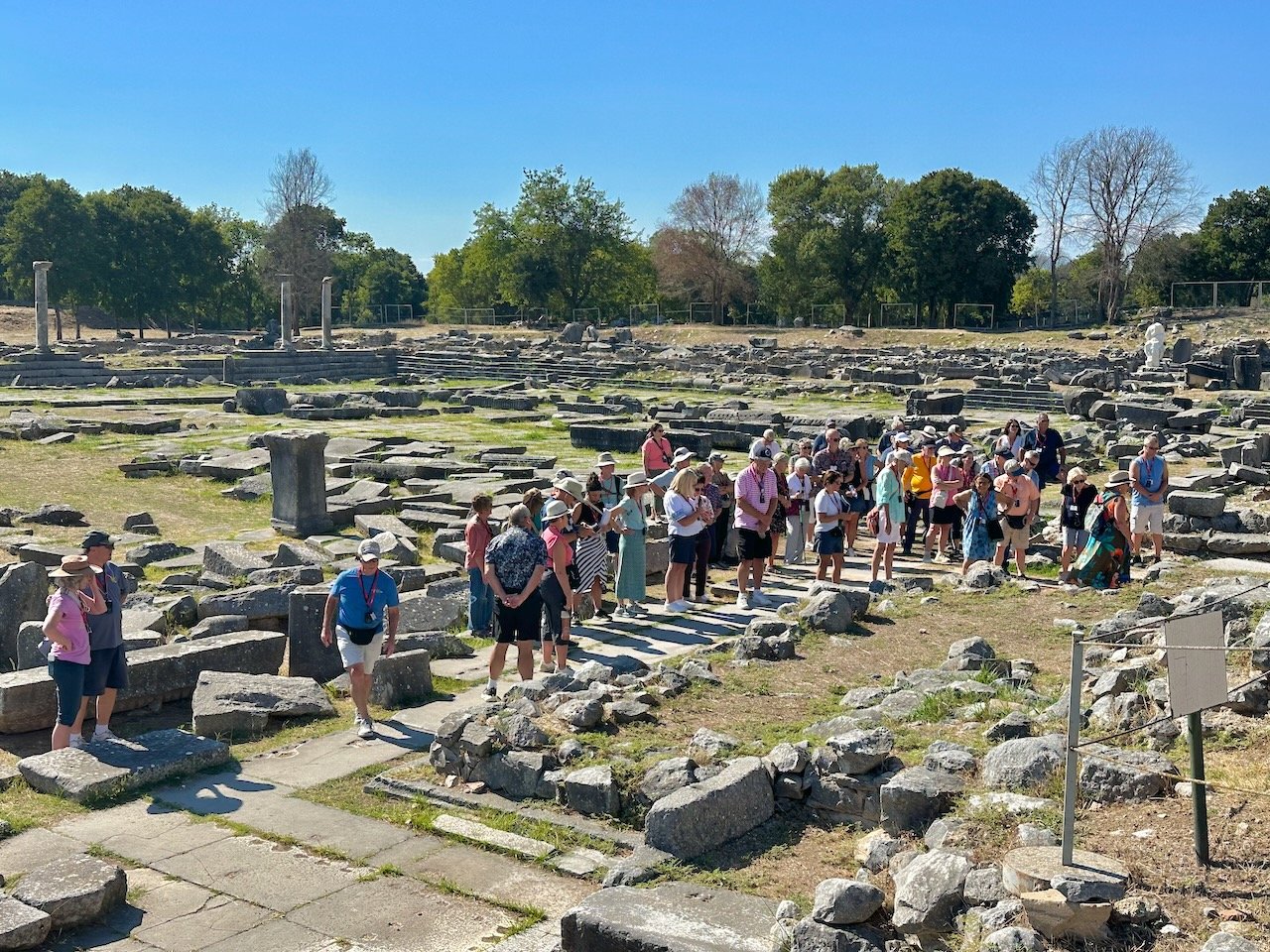
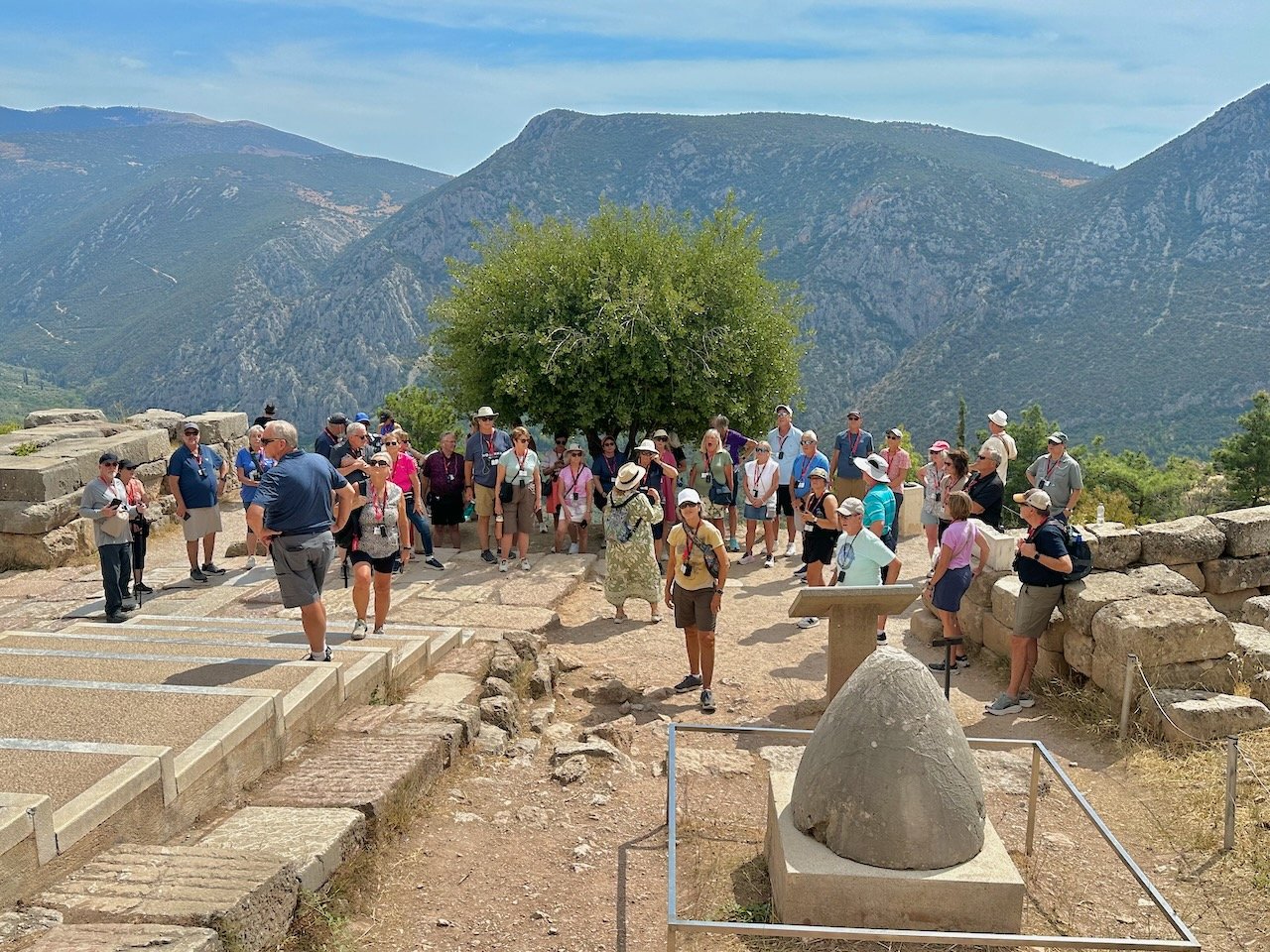
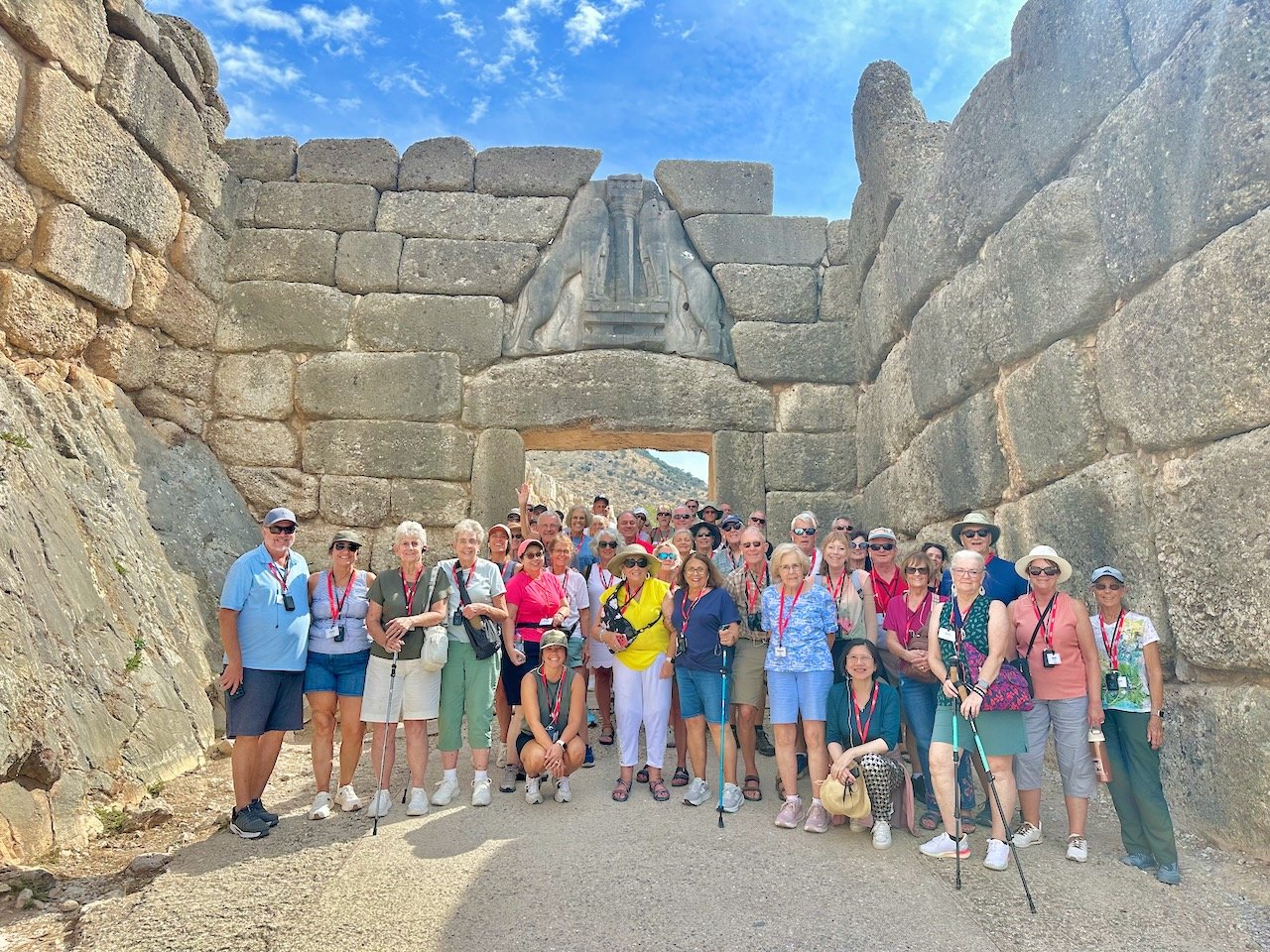
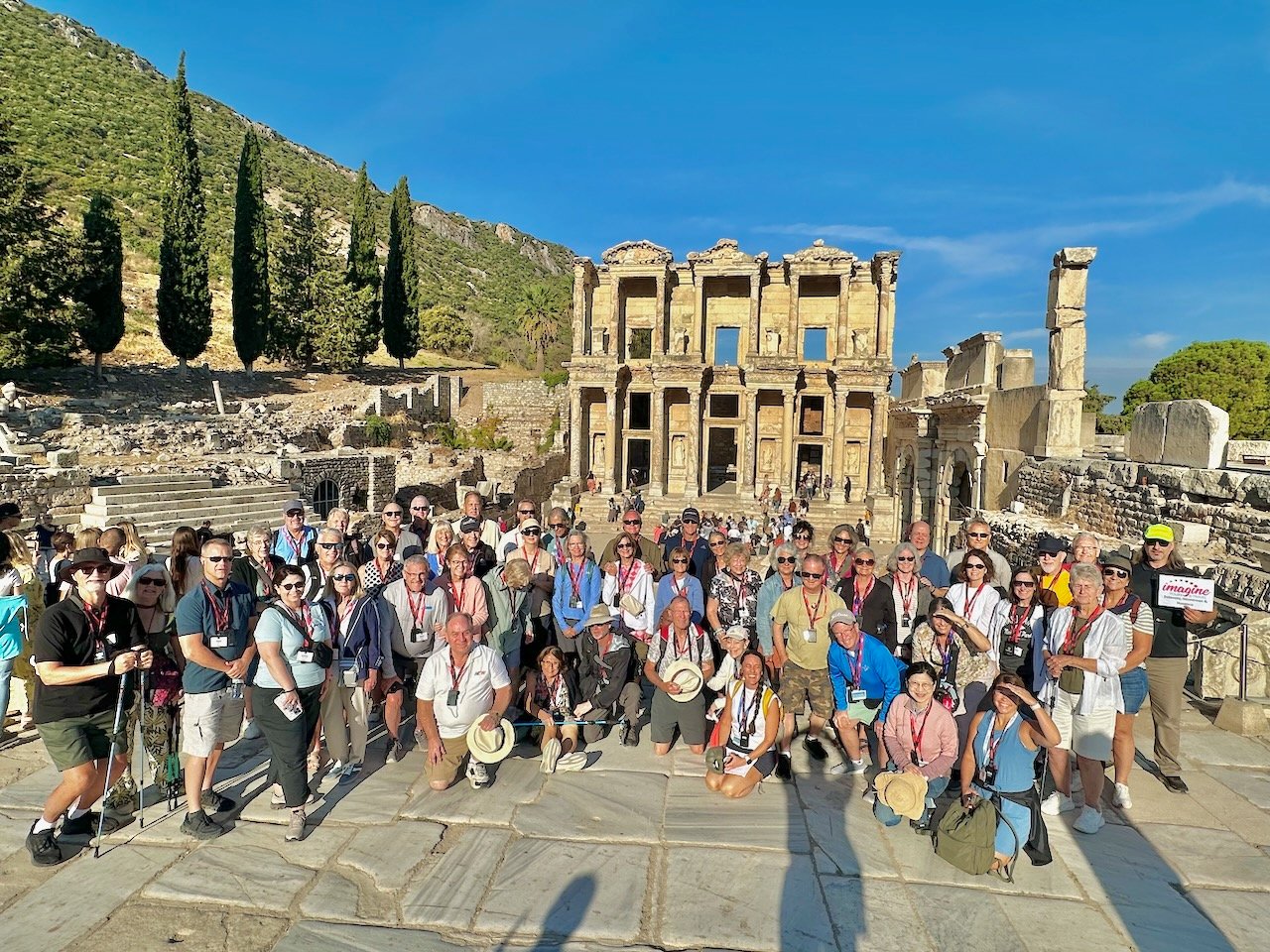
360 Photos
GREECE TOUR EXPERIENCES:
Days 1 & 2 – Tuesday-Wednesday, September 15-16: Depart U.S. / Arrival in Thessaloniki
The day of departure finally came! God inspired a total of 53 for this “Footsteps of Paul” Biblical journey in Greece trip (with an optional extension to Rome) to be part of this group. Using various flights, most of us experienced on-time flights to Greece, and eventually to our final destination of Thessaloniki (ancient Thessalonica). We could see the coastline of the Aegean Sea as we approached the airport, with Mt. Olympus somewhat visible (note; the pics are from other trips). We arrived at different times. We are thankful that although we incurred a few delayed flights, everyone made it to Greece today/tonight, and with all our luggage!
Thessaloniki
Thessaloniki is Greece’s second largest city (besides Athens). The wider population of the city is about one million. For these first two nights, we are staying here at the very nice Porto Palace Hotel. Some of us enjoyed a buffet dinner at 7 p.m., while others arriving later had dinner when they arrived from the airport.
We are looking forward to our first full day here in Greece tomorrow as we travel north in the footsteps of the Apostle Paul!


Day 3 – Thursday, September 17: Amphipolis, Philippi, Kavala, Thessaloniki
Today was our first full day here in Greece and all of us are excited to be traveling together. Already new friendships are being made among the group. Our fellowship is sweet! Today’s weather perfect, with full sun and highs around 80. We left the hotel shortly after 7:45 a.m. following a great breakfast. We read from portions of Philippians 1 and 2 as we headed north and east for the day towards Philippi.
Kavala/Neopolis
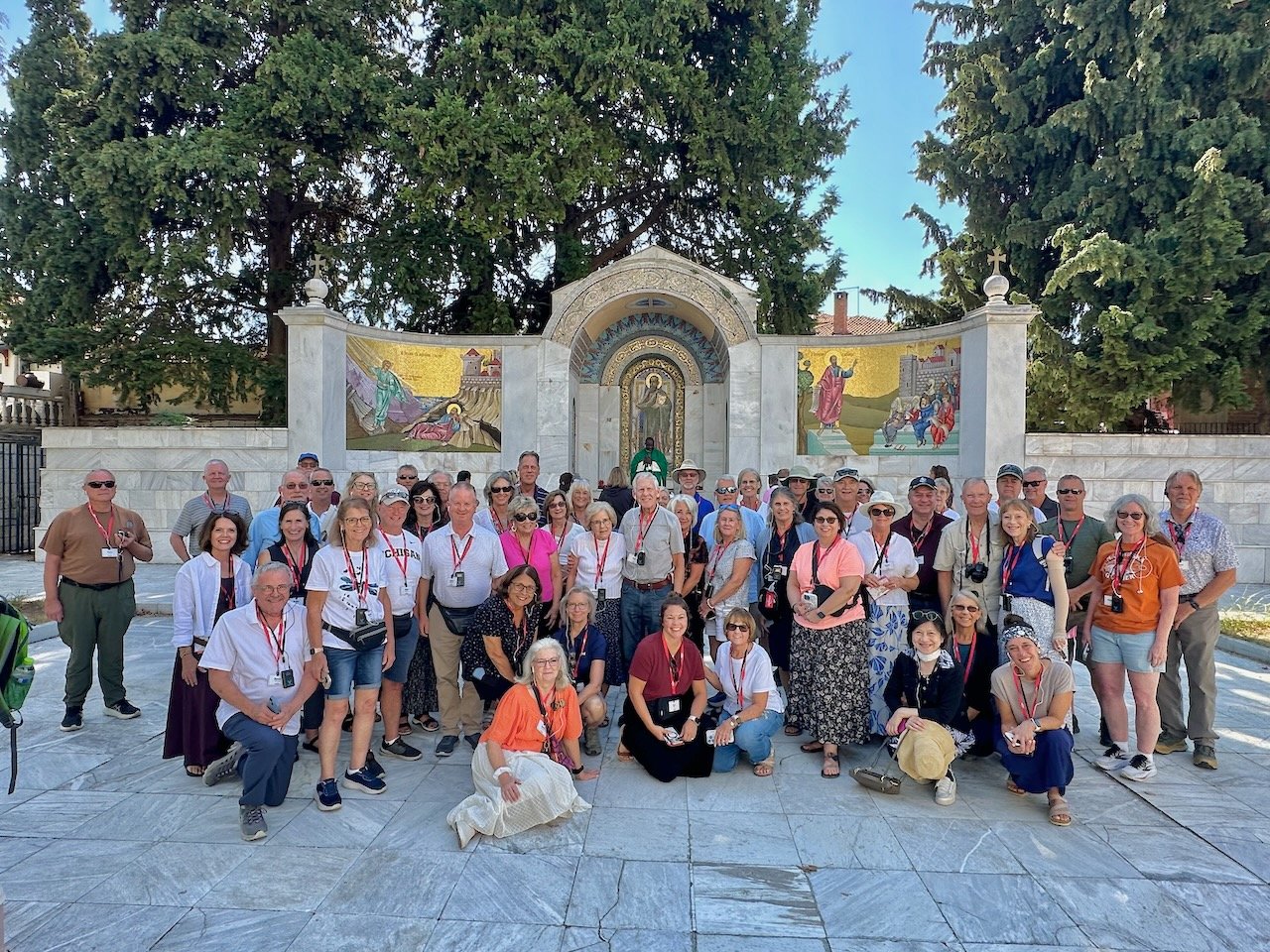
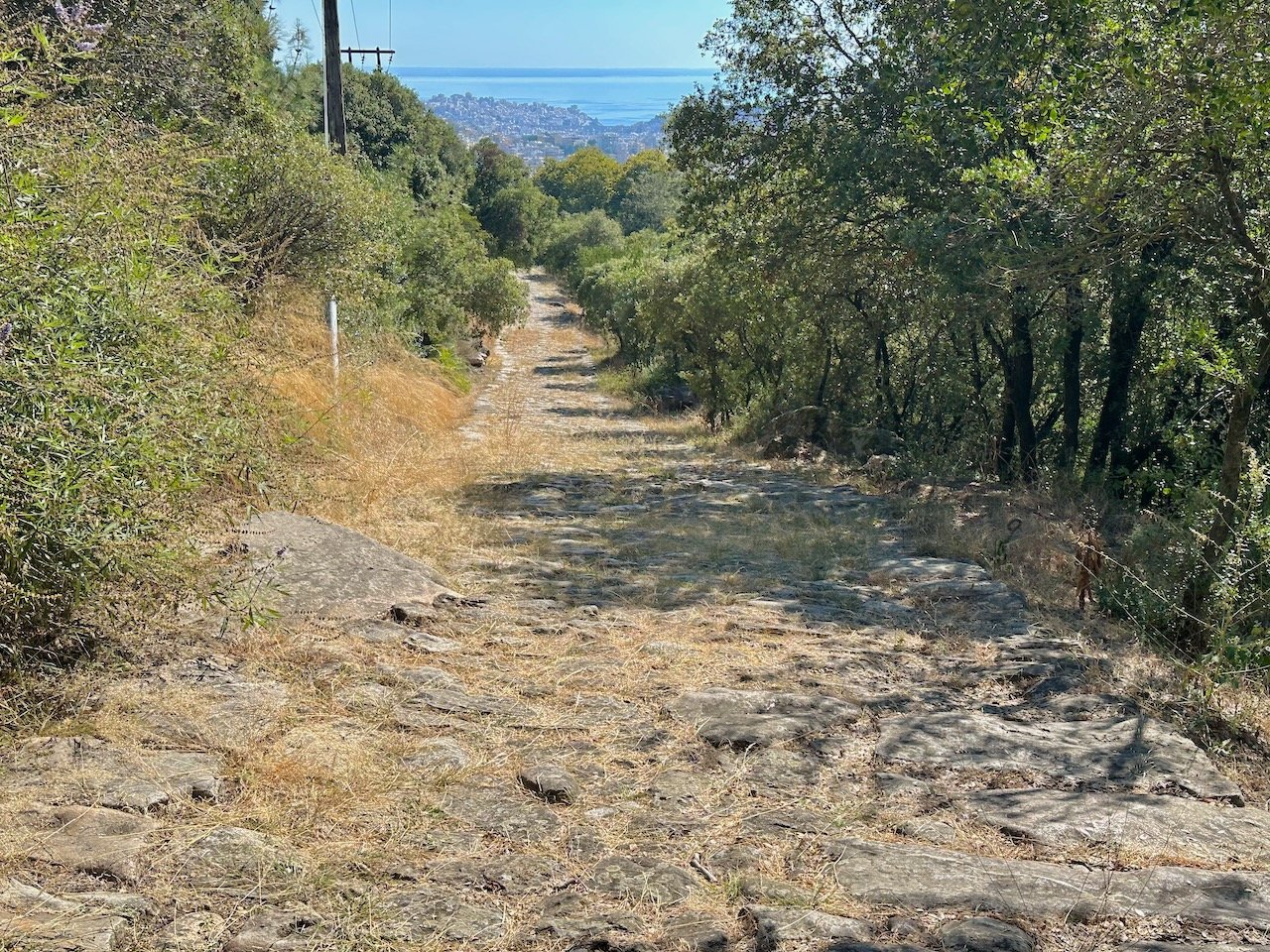
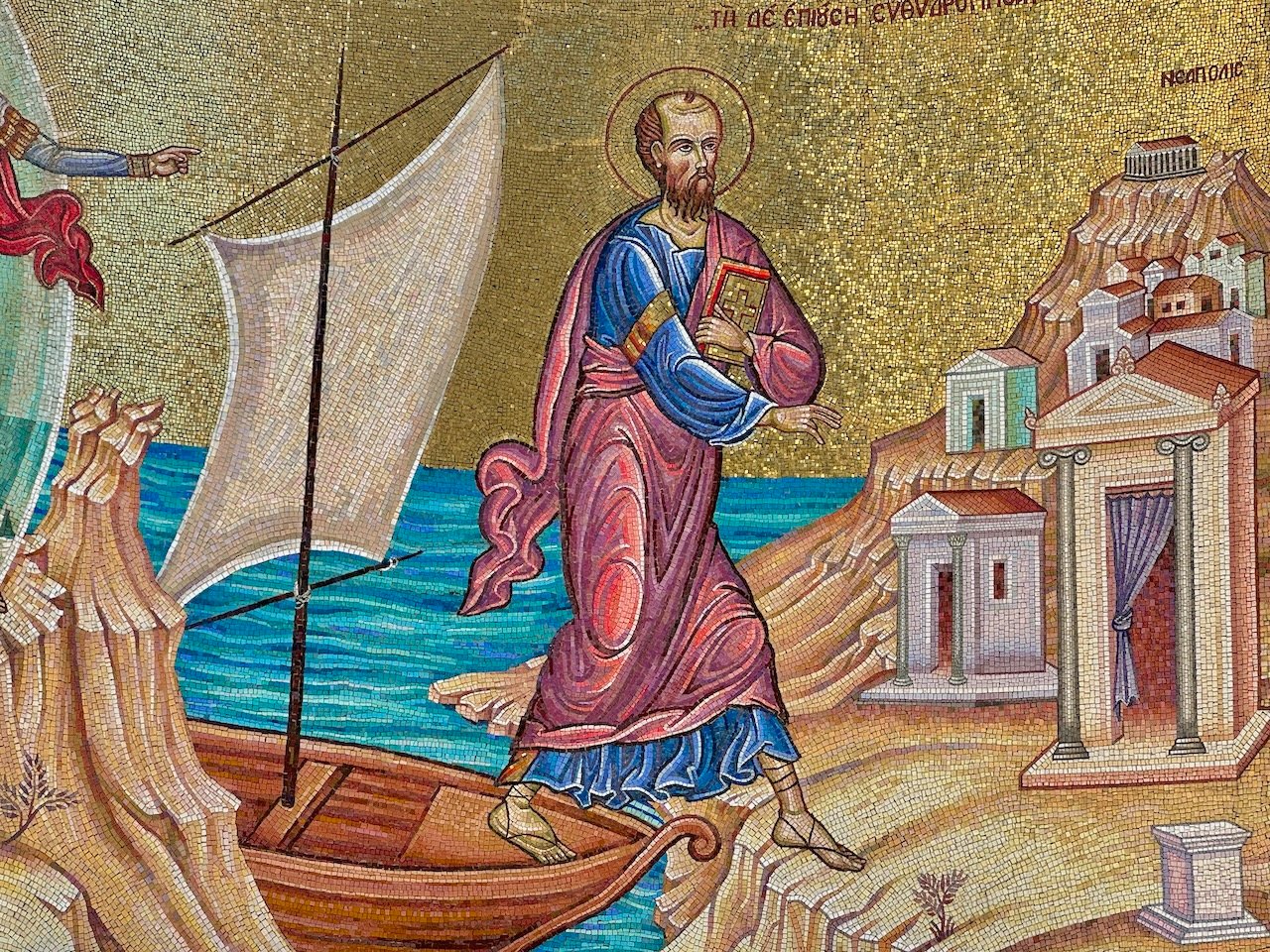
Using the ring road around Thessaloniki, we drove north and east on one of Greece’s many great highways. Our first stop of the day was Kavala. This was called Neopolis in Paul’s day. In the upper part of the city we got off the bus to walk on the Via Egnatia road. This is a section of a 700-mile pavement probably used by Paul. We then drove to the harbor of Kavala. Paul sailed into this port following his Macedonian vision at Troas (Acts 16). Today, only the Byzantine (and later Turkish-Ottoman) aqueduct and fortress can been seen archaeologically. Outside a Greek Orthodox Church a modern monument is erected honoring Paul’s journey here as he stepped into “Europe” for the first time for the sake of the kingdom!
Philippi
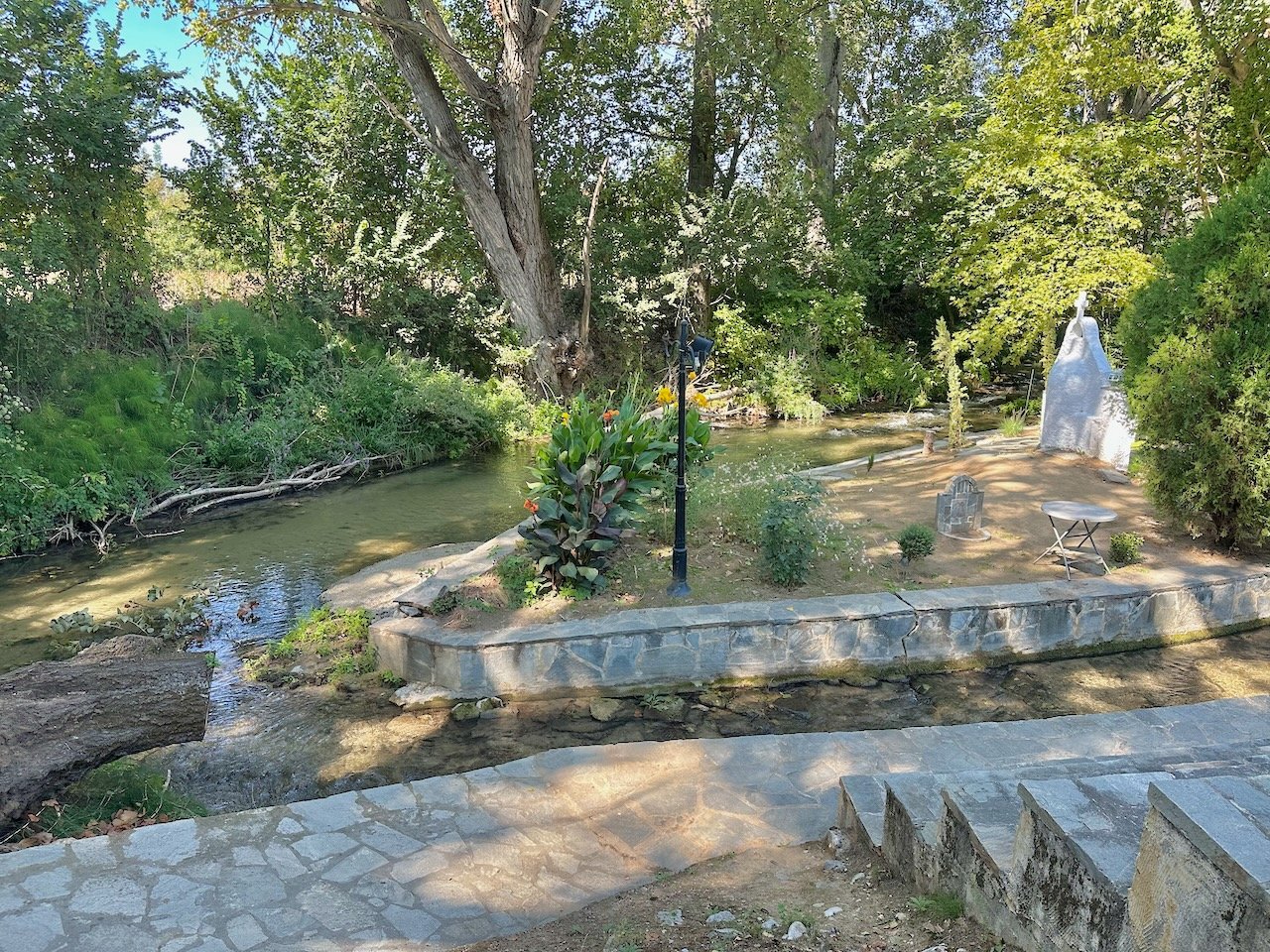
Next, we drove about nine miles to the Plain of Philippi. Outside of the site of ancient Philippi we first visited the Zygotes River. It was somewhere along this river is where Lydia (from Thyatira) heard and received the kingdom message of Christ from Paul and Silas (Acts 16). She and her household also received Christ and were baptized. Paul also confronted a Pythia, or fortune teller. She may have been one who gave oracles at Delphi (we will visit this site in two days). We also celebrated the faith of many who came forward to reaffirmation their baptism using the water of this river. Pastor Jennifer led this special experience!
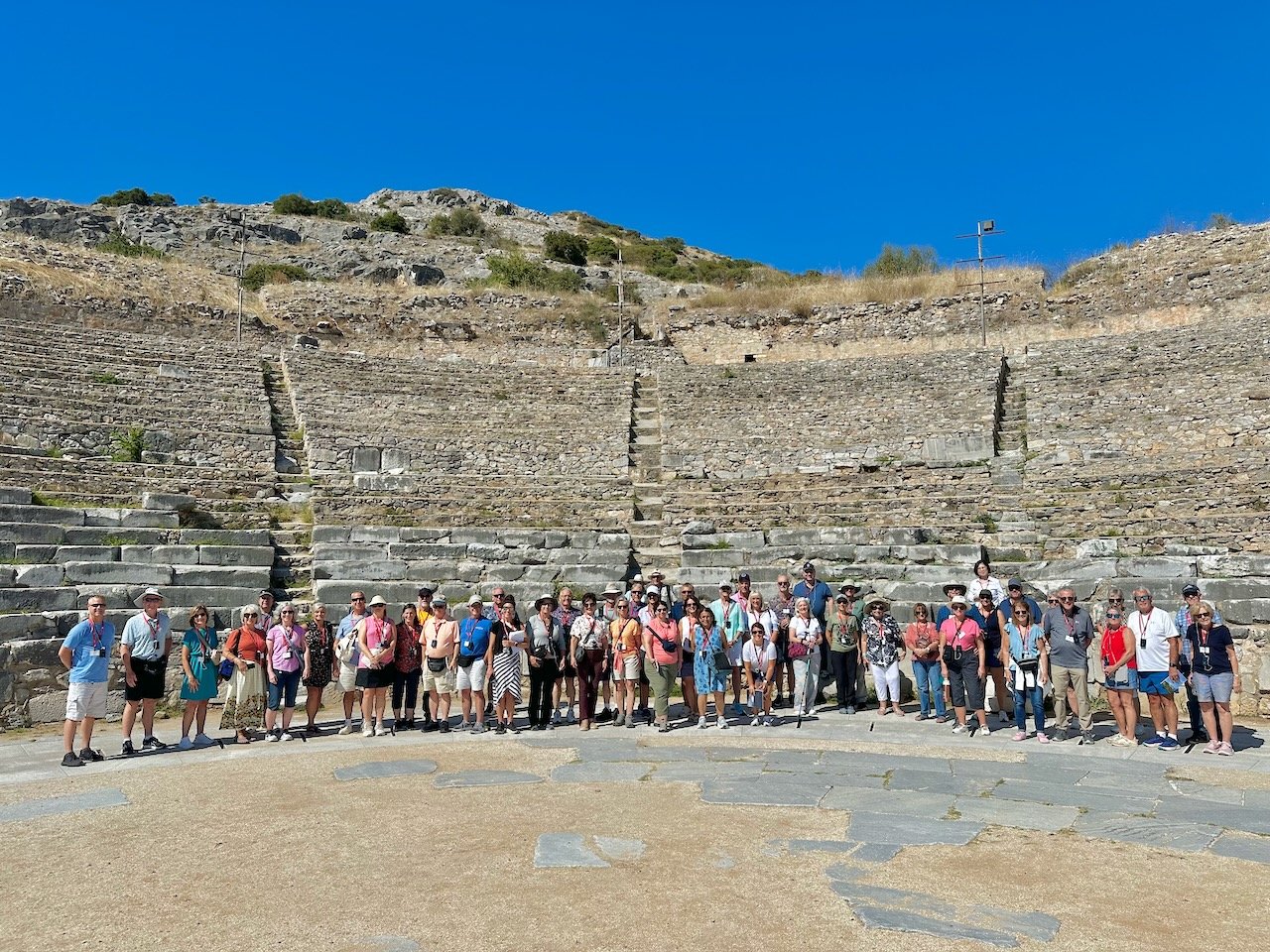
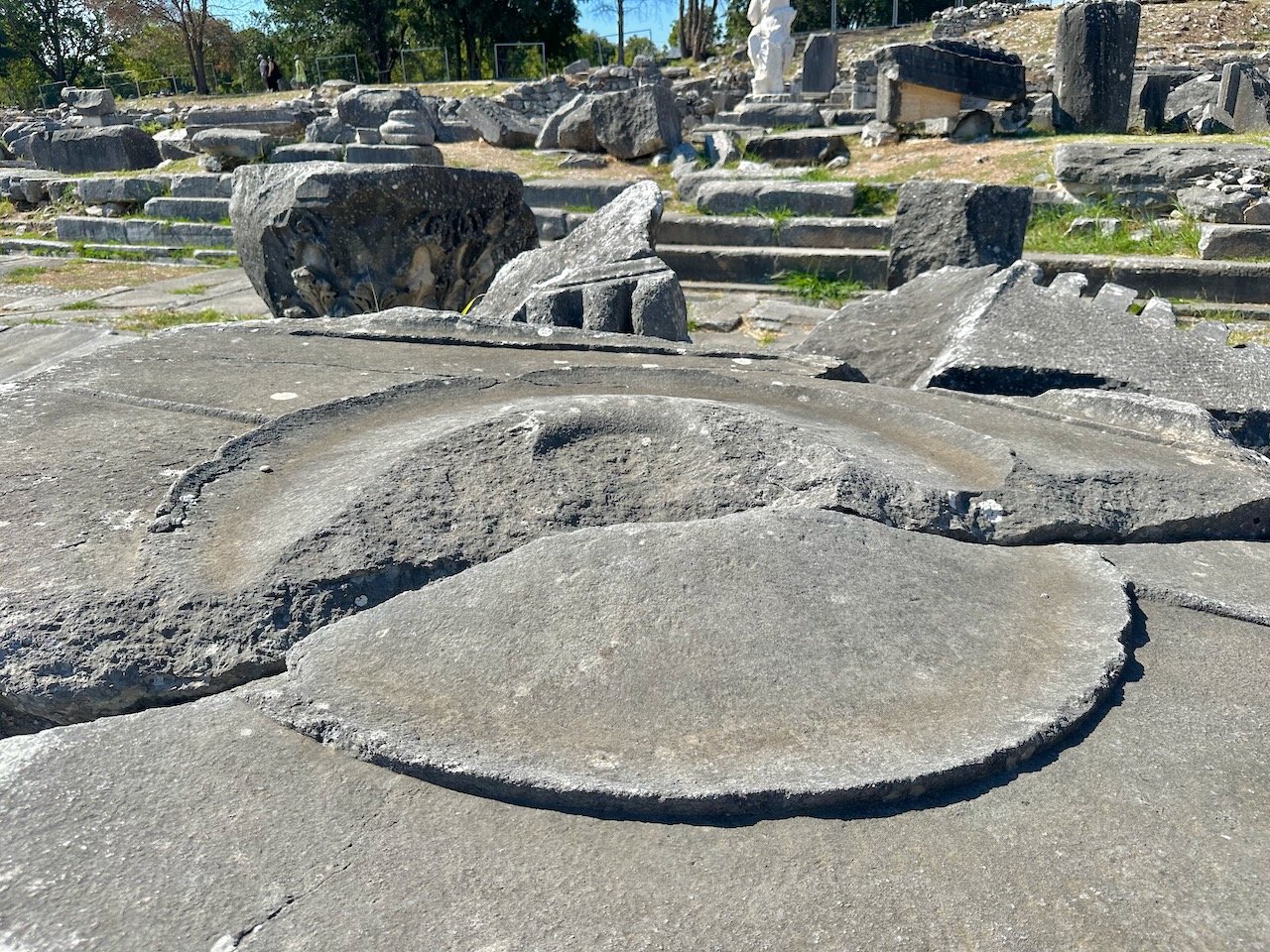
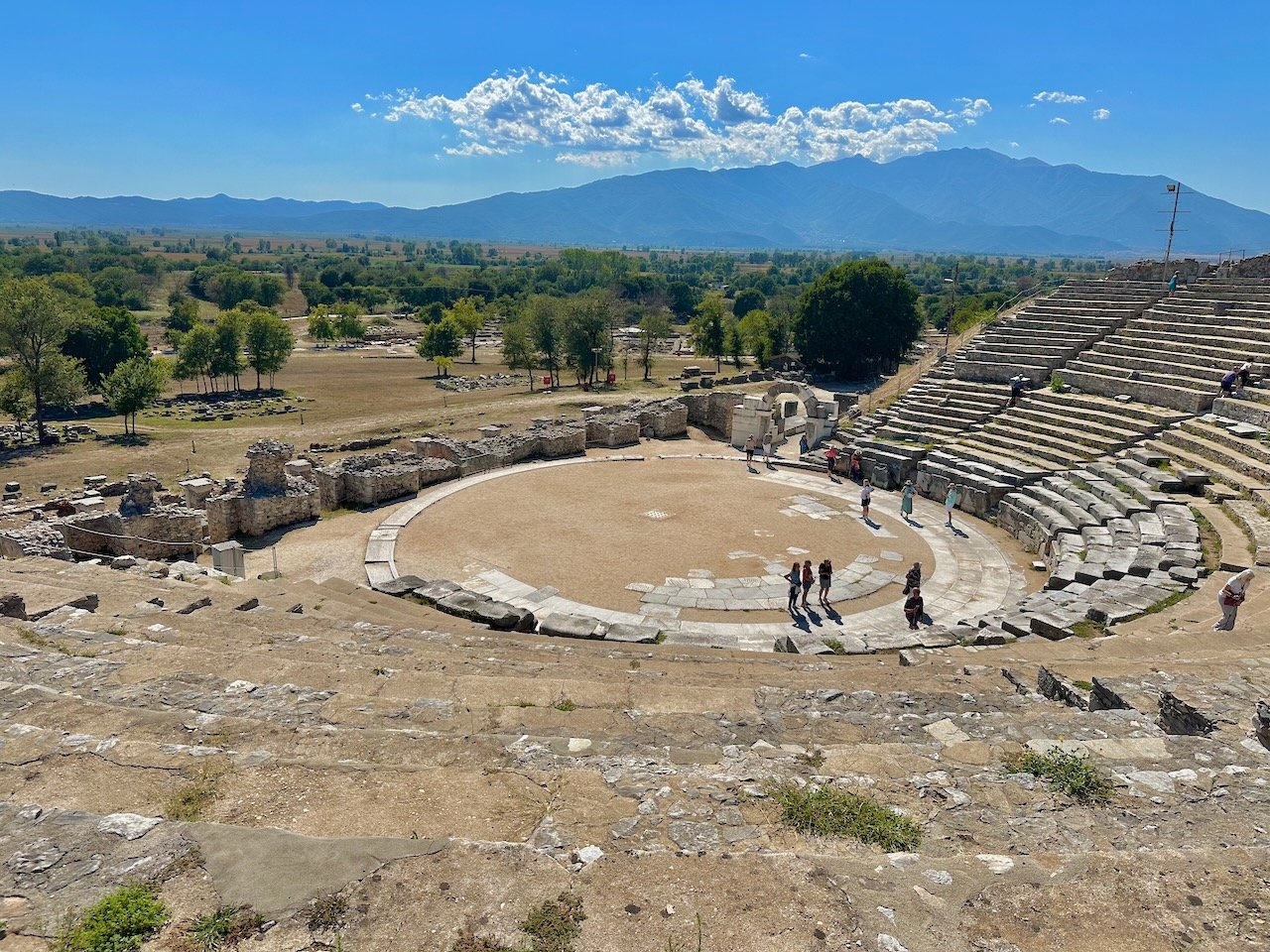
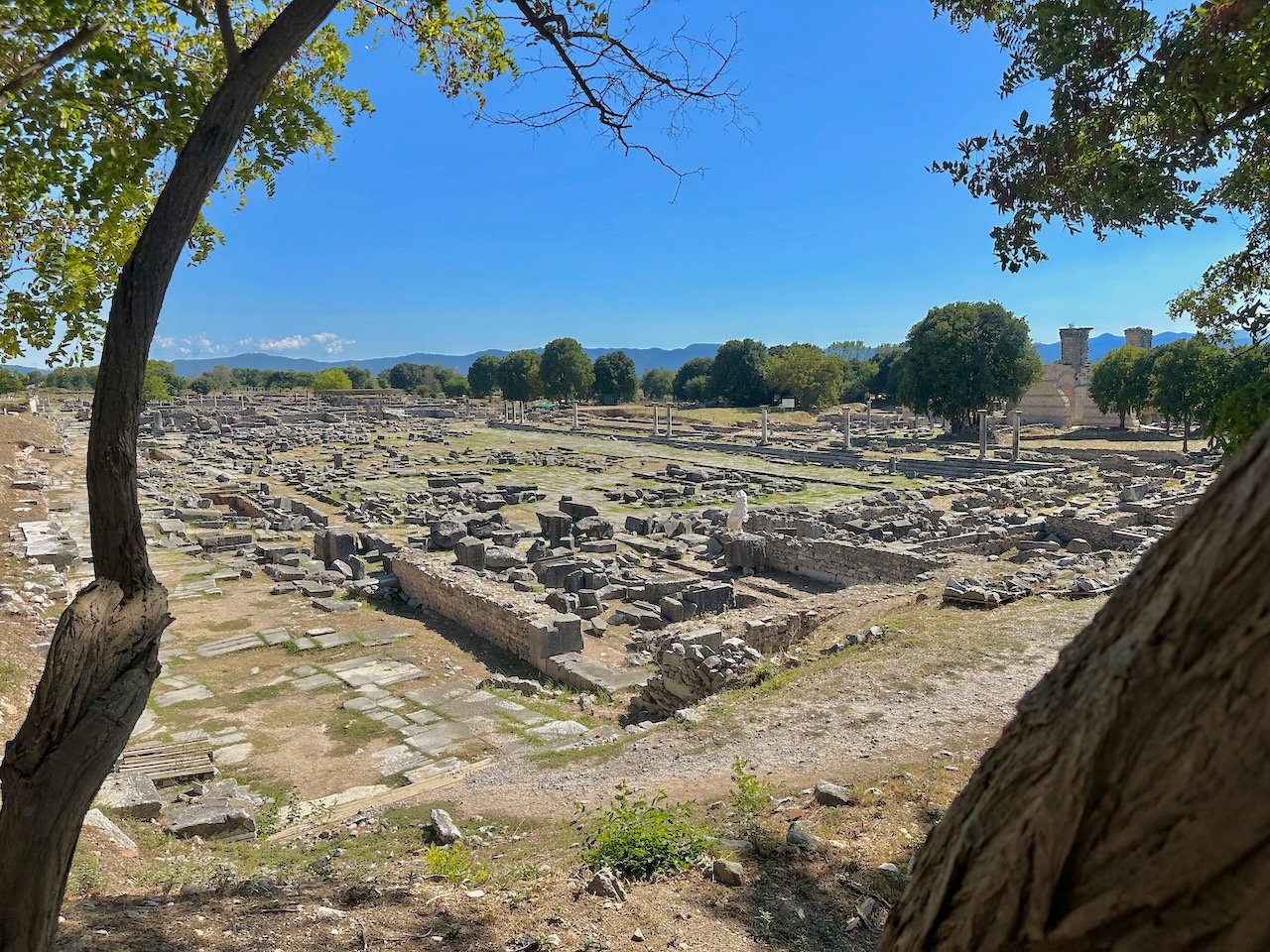
After a wonderful lunch outside the archaeological site of Philippi, we visited the ruins of the city connected with Paul. We saw the theater (the oldest structure here, dating to 356 BC and built by Philip II), the Late Roman basilicas, the agora/forum (marketplace), and the Praetorium – Bouleuteriun. This area located at the end of the forum served as the seat of the magistrates, the location of the judgement hall, and most likely the place of Paul and Silas’ imprisonment. Pastor Greg read from Acts 16 about God’s miraculous intervention on behalf of Paul and Silas. The jailor placed his faith in Christ that night too. The so-called “traditional prison” of Paul is most likely a later 2nd century structure and used only as a cistern.
Amphipolis
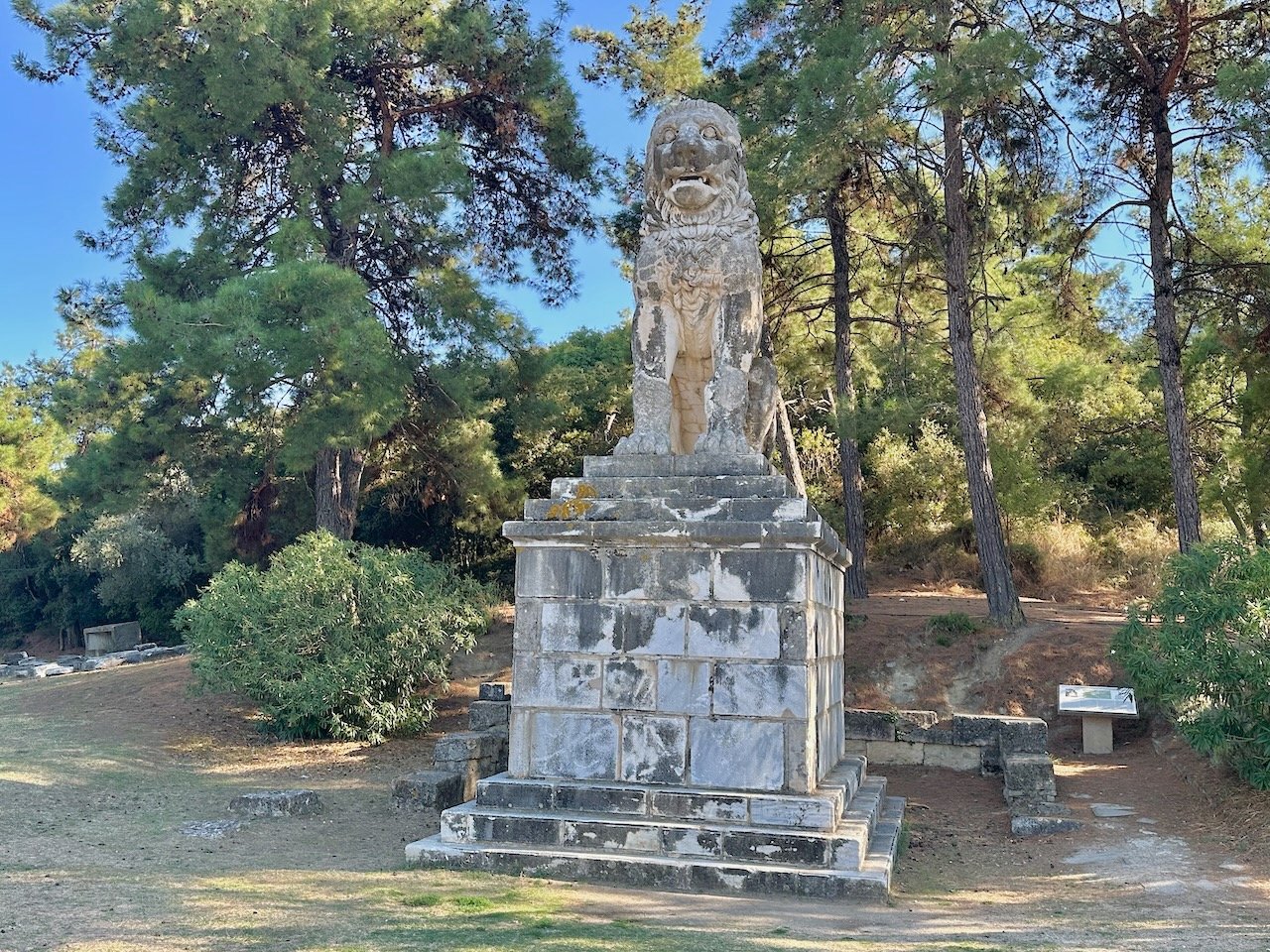
On our way back towards Thessaloniki, we made a brief stop in Amphipolis. The city was established in the 4th century BC and was visited by Paul (Acts 17). Here we saw the famous lion statue here from the 4th century BC.
Downtown Thessaloniki
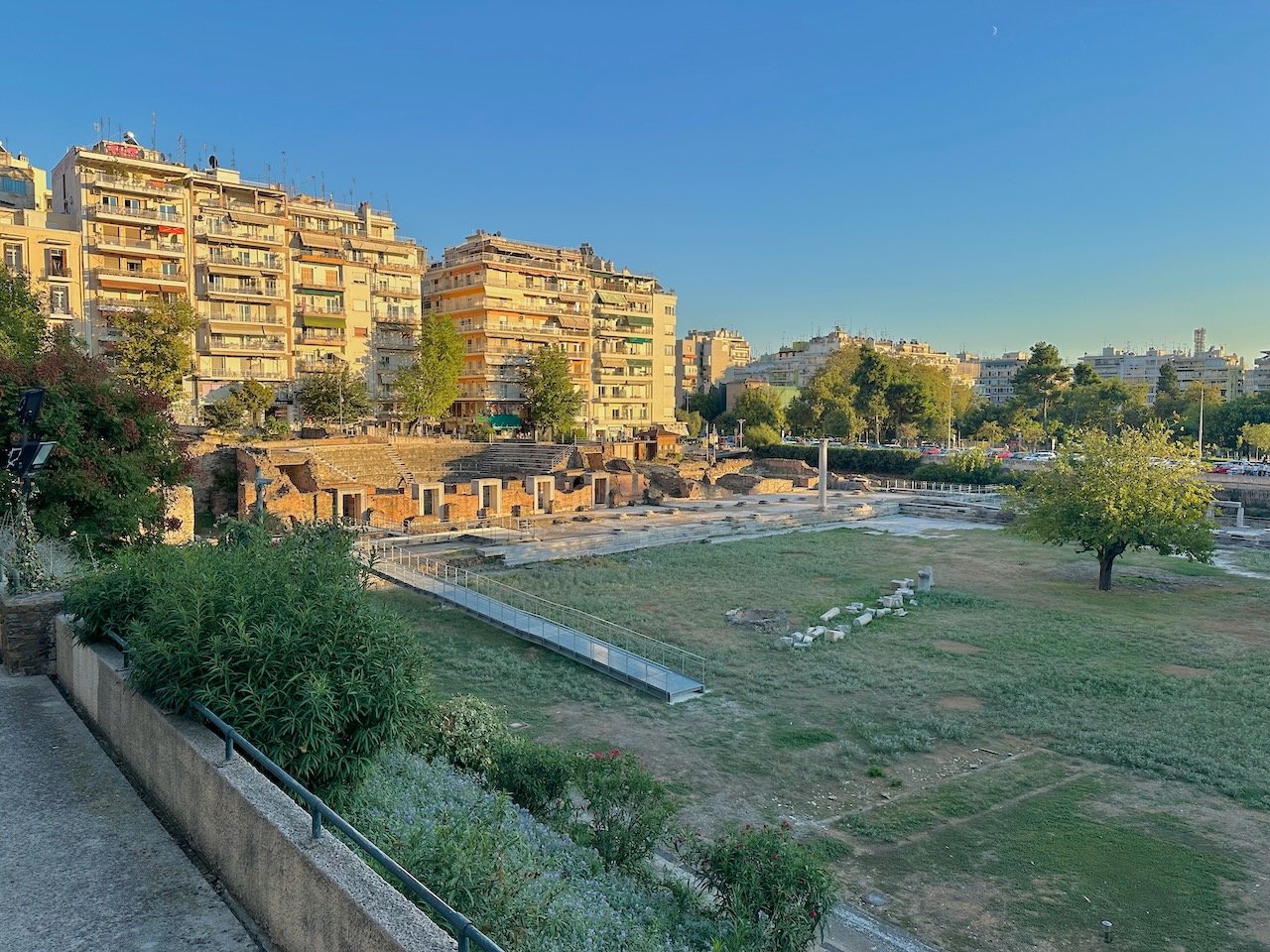
About 6:30 we arrived back back to Thessaloniki. Before returning back at the hotel, we drove to the Roman Forum (Agora, marketplace) in the heart of the city. This was the marketplace mentioned in Acts 17 where Paul was. The text mentions a man named Jason who helped Paul and Silas. The text also mentioned the “city officials” (in Greek, Politarchs, as found on an inscription discovered here from the 2nd century AD). We also remembered certain believers mentioned by name (Aristarchus and Secundus) who were from this city (Acts 20:4, Romans 16). They served as later companion travelers with Paul. About one block away we made a brief stop to the Church of St. Demetrius. This was an ancient church dedicated after Demetrius, a martyr who died in 303 AD. Today this well-used Greek Orthodox Church is a landmark in the city.
We returned to our hotel nearby for a late dinner (7:35) and a good night’s rest. It was a blessed first day!
Day 4 – Friday, September 18: Berea, Vergina, Meteora, Kalambaka
Today was our second full day. We enjoyed another great breakfast before we checked out of our hotel and loaded our bus at 7:35. We left at 7:45 as we welcomed another cooler morning before it warmed up again to about 80, with sunny skies the whole day.
Thessaloniki
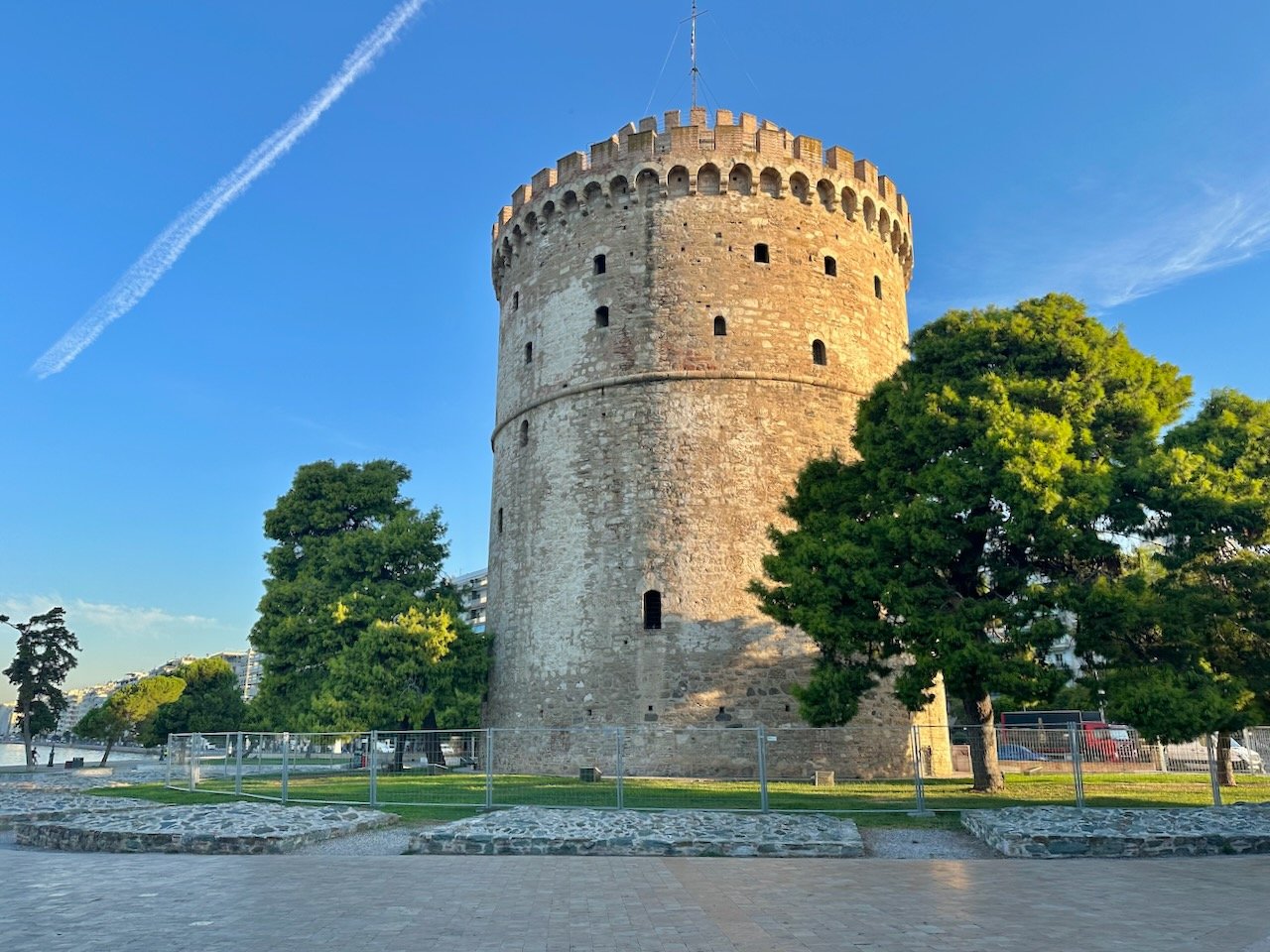
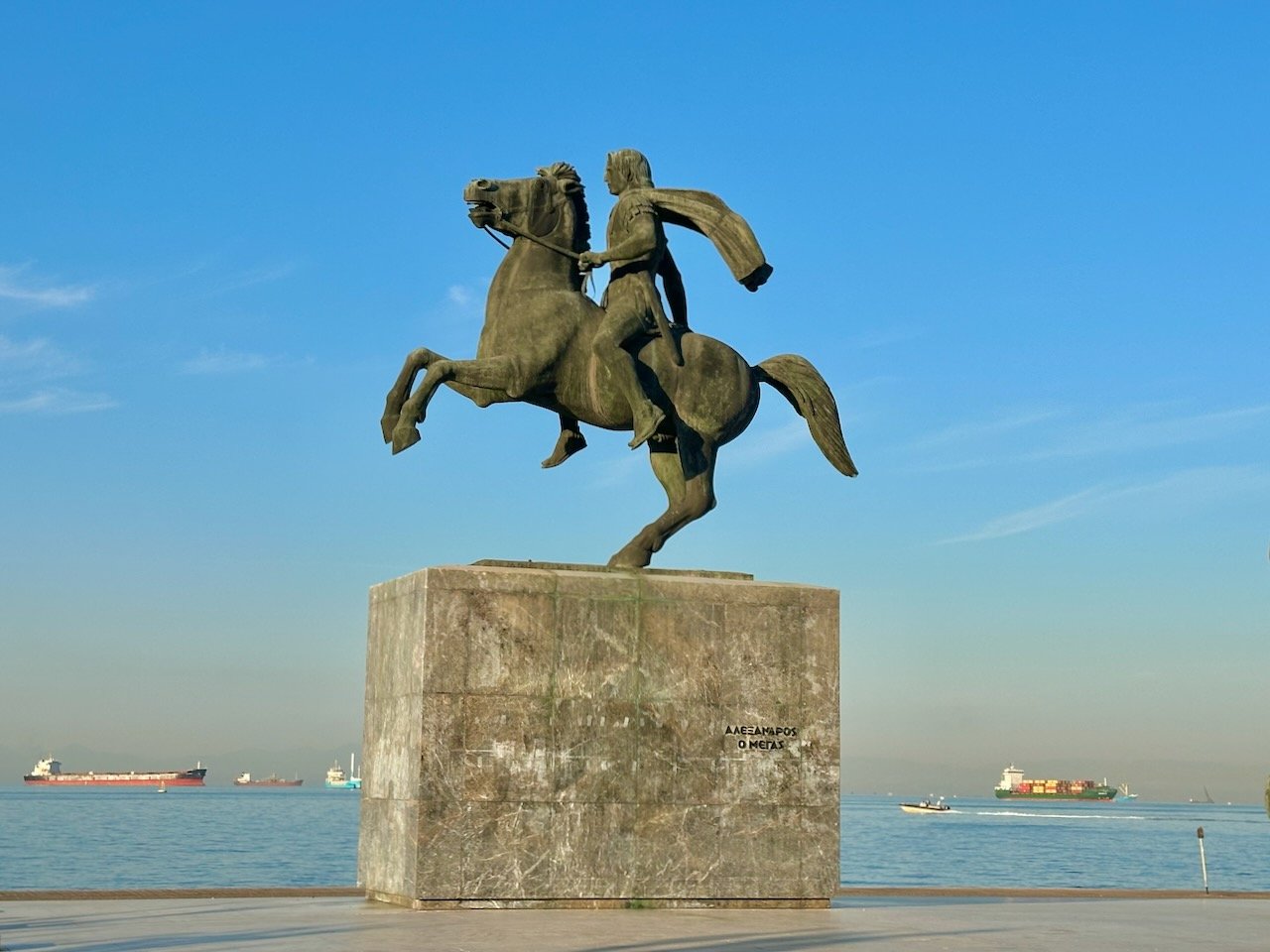
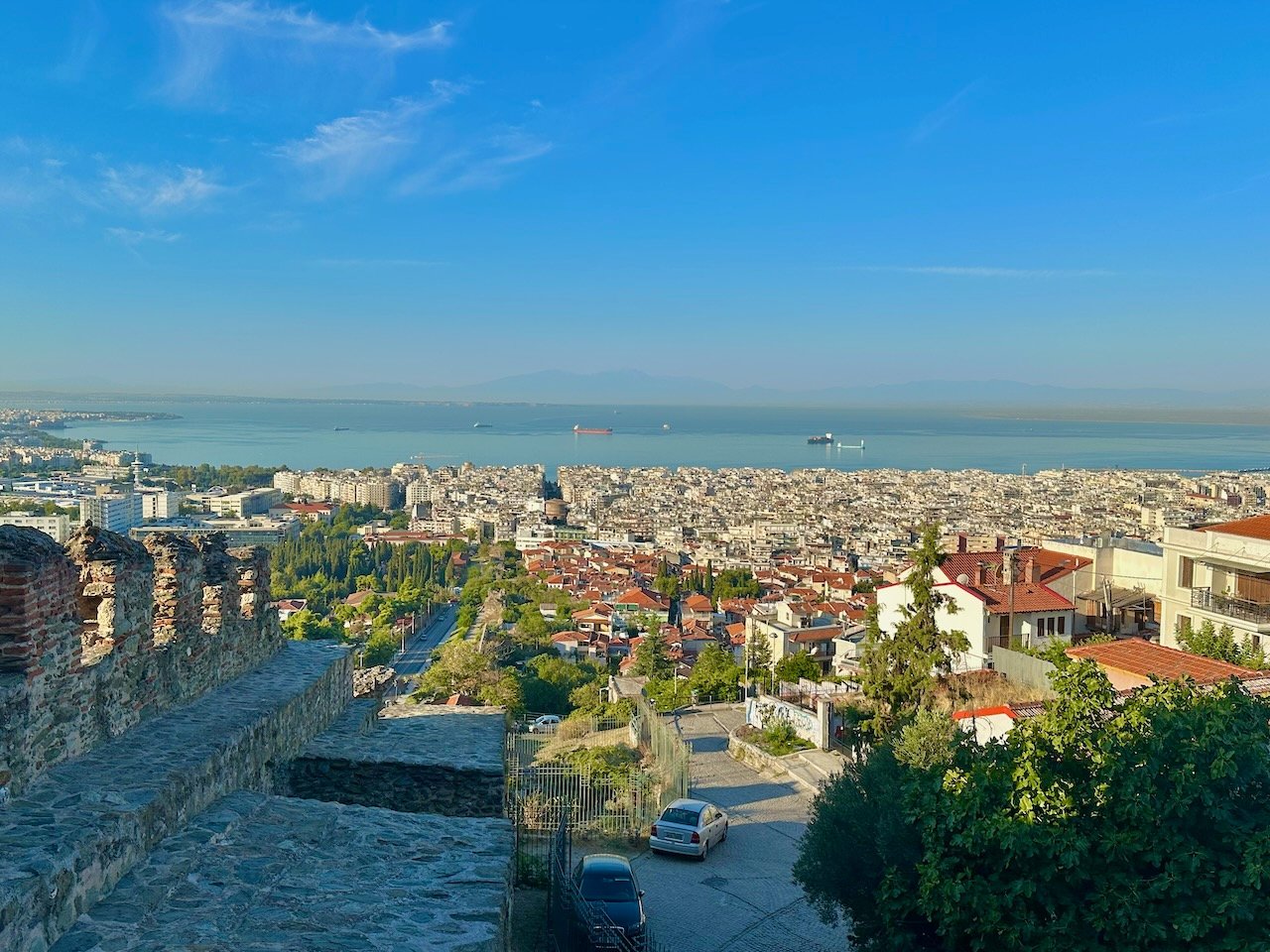
Before leaving Thessaloniki, we started the morning by driving along the shoreline of the city and to the the White Tower, a 15th century structure (although previously built during the earlier Byzantine Period). This structure was used as a prison during there Ottoman/Turkish period. We also saw an impressive statue of Alexander the Great is also in this area of the coastline of the city. From here, we drove up the hill to see the ancient Late Roman fortress walls at the Acropolis of the city. The view was incredible of the city below, the second largest city in Greece today (1.2 million). We read from 1 Thessalonians 4 about the return of Jesus as King!
Berea
Driving about 50 minutes south across the agricultural plain from Thessaloniki, we headed towards Berea. We read from portions of 1 Thessalonians 1, 2, 3 and 2 Thessalonians 1 and 4 on the way. We then arrived to the town of Berea (called Verea in Greek). While there is no archaeology here to see dating to the time of Paul, we read the Acts 17 passage in front of a small modern monument constructed in the heart of this city. We recalled about how the believers here “searched the Scriptures diligently.” Sopater, a believer from the city of Berea (as well as Aristarchus and Secundus from nearby Thessalonica) was a new believer who eventually became traveling companion with Paul as well towards the end of his third missionary journey (see Acts 20:4 again). God transformed and called others to join Paul in ministry!
Vergina (Aigai)
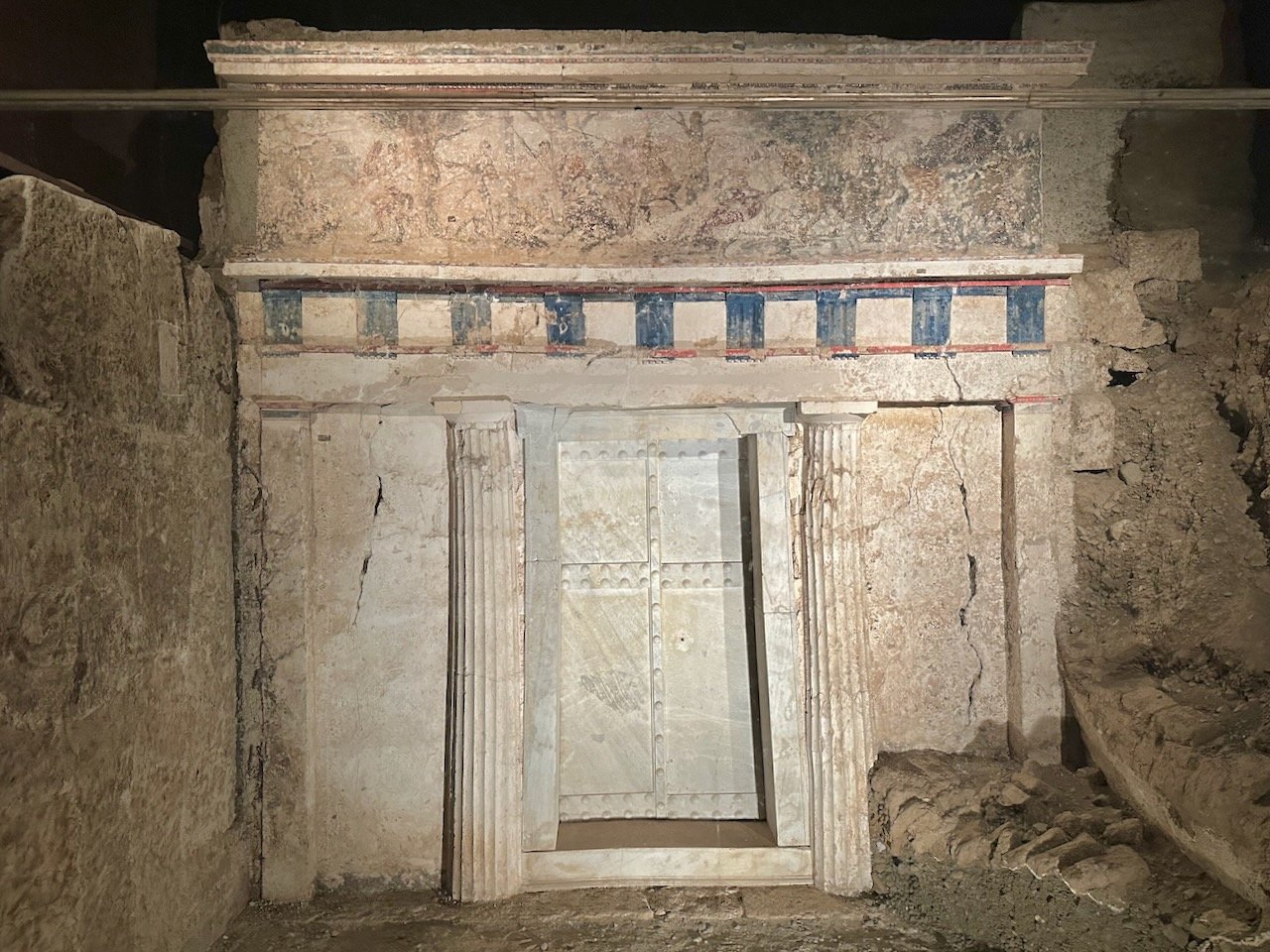
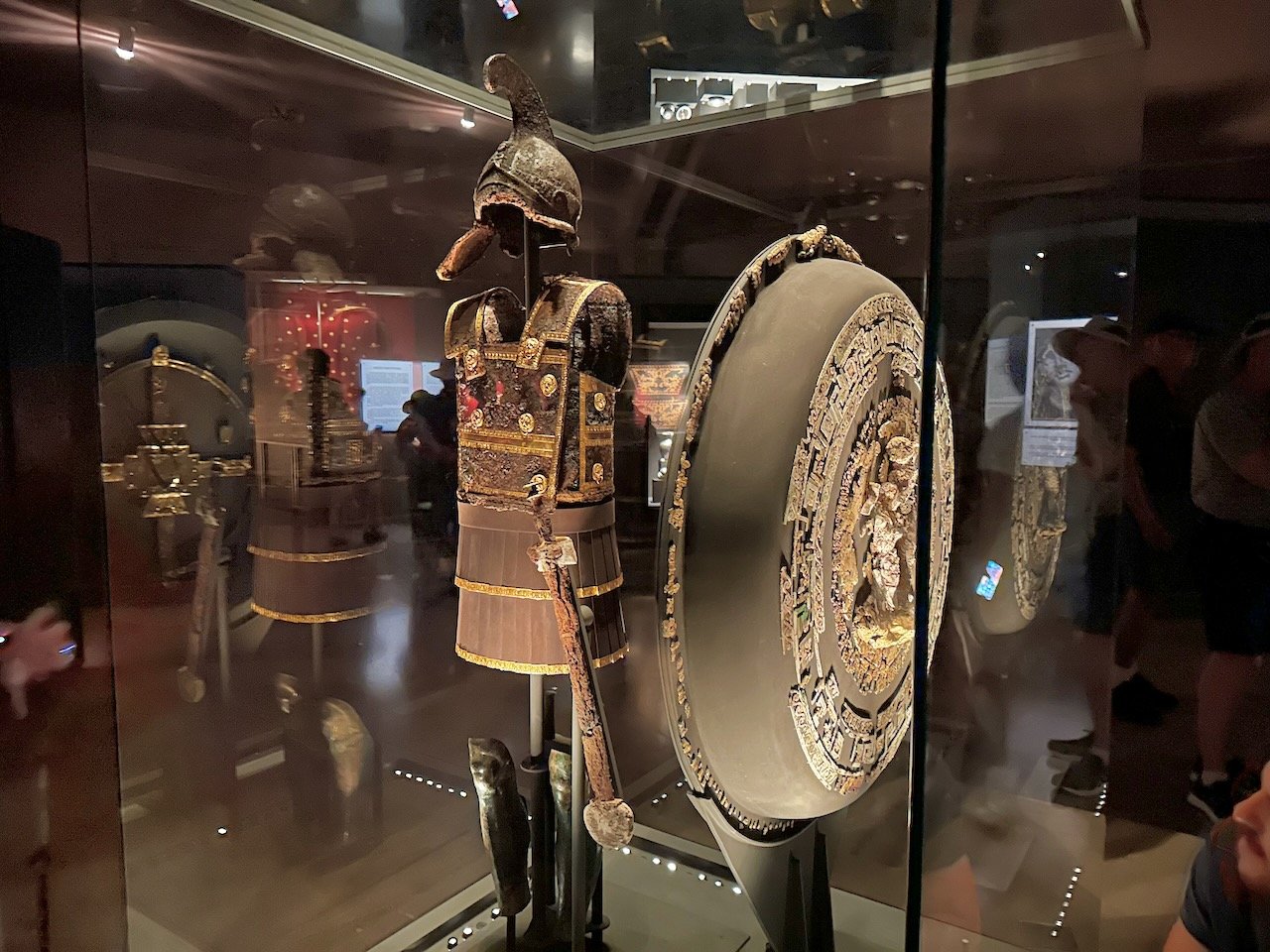
About 20 minutes away is Vergina (Aigai in ancient times). We first walked to the incredible archaeological ruins of the royal tombs of Macedonians. Discovered in 1977, these tombs were quite impressive! While there are actually four tombs to see here, the tombs of Philip II (the father of Alexander the Great) and Alexander IV (or the “Prince”) are amazingly well preserved even after more than 2,300 years! These two tombs were found intact. In the museum we also saw many of the items found in these tombs, including many incredible gold pieces, armory and weaponry of Philip II, among other personal items.
After our visit to the museum, we enjoyed a very typical Greek lunch that included choices of traditional dishes such as moussaka, lamb, and Greek salad. It was a great meal!
Meteora/Kalambaka
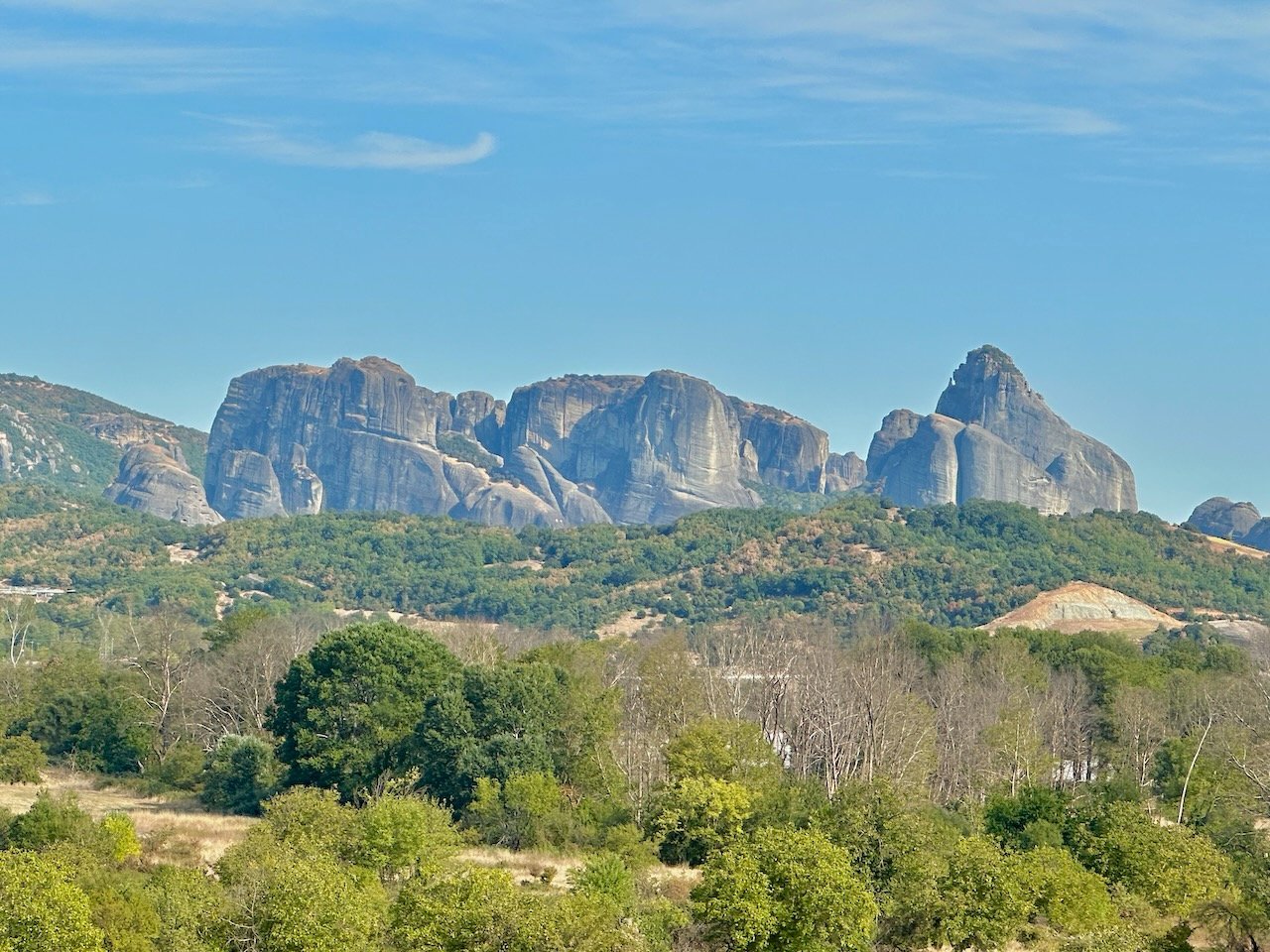
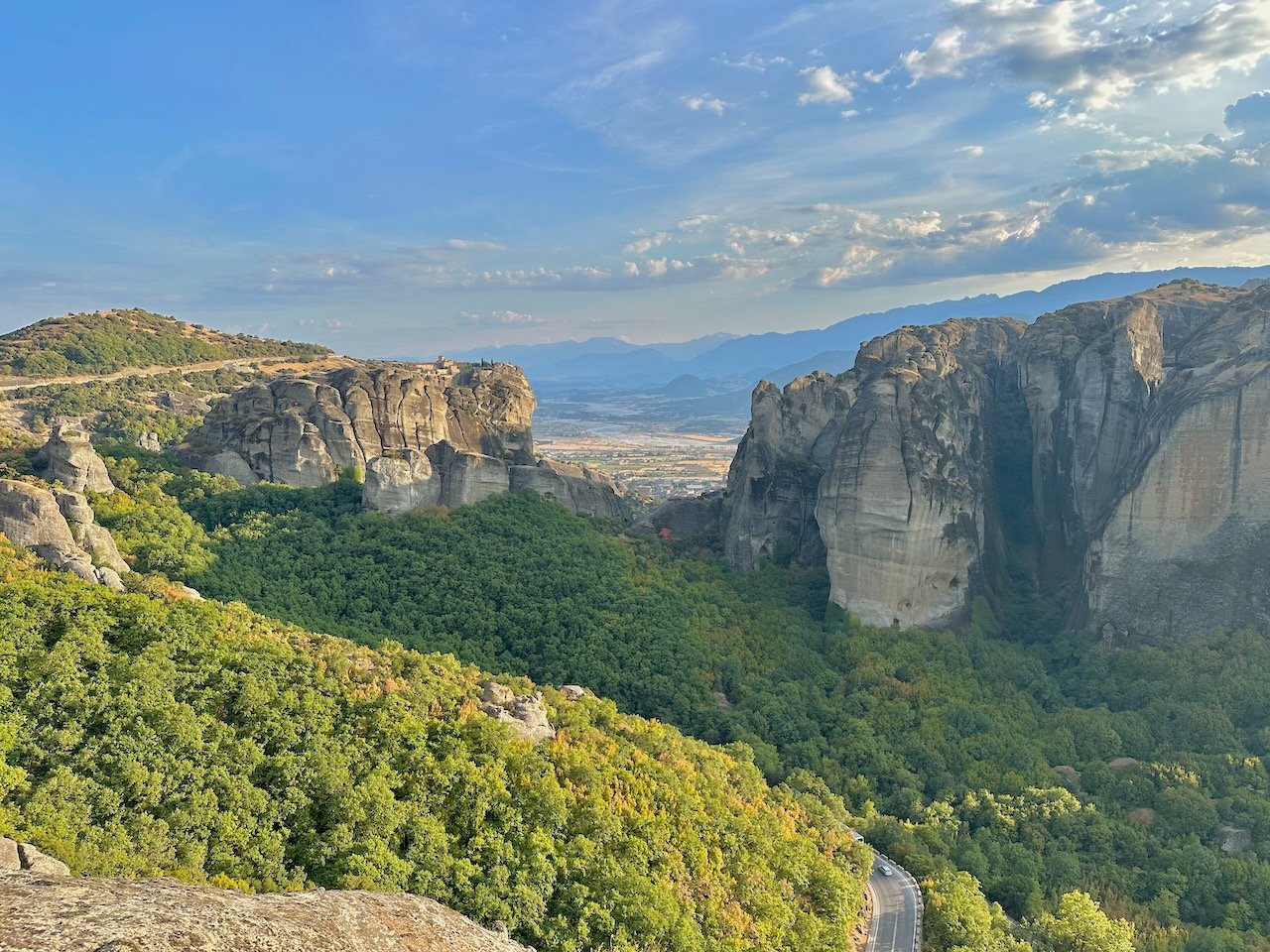
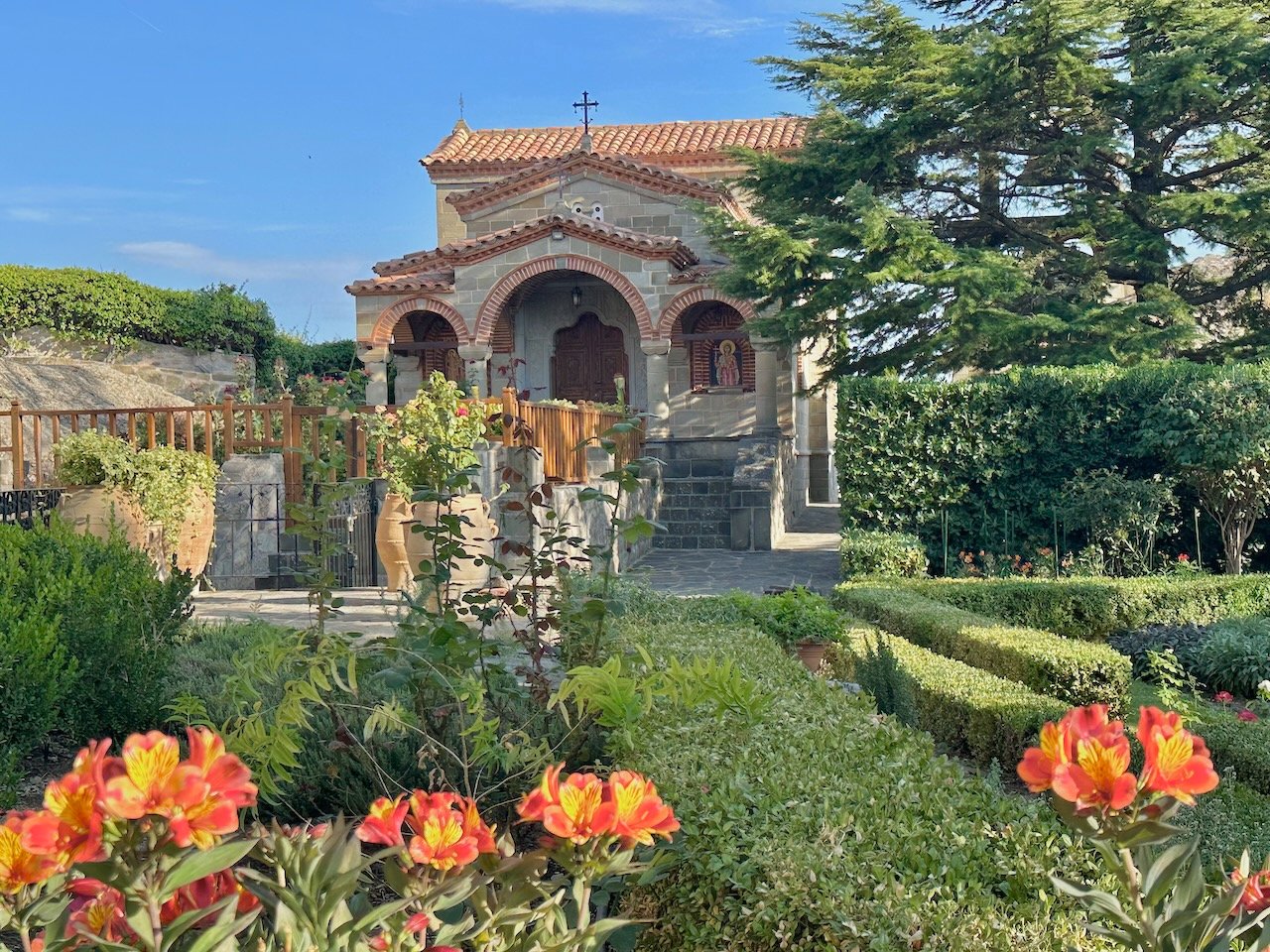
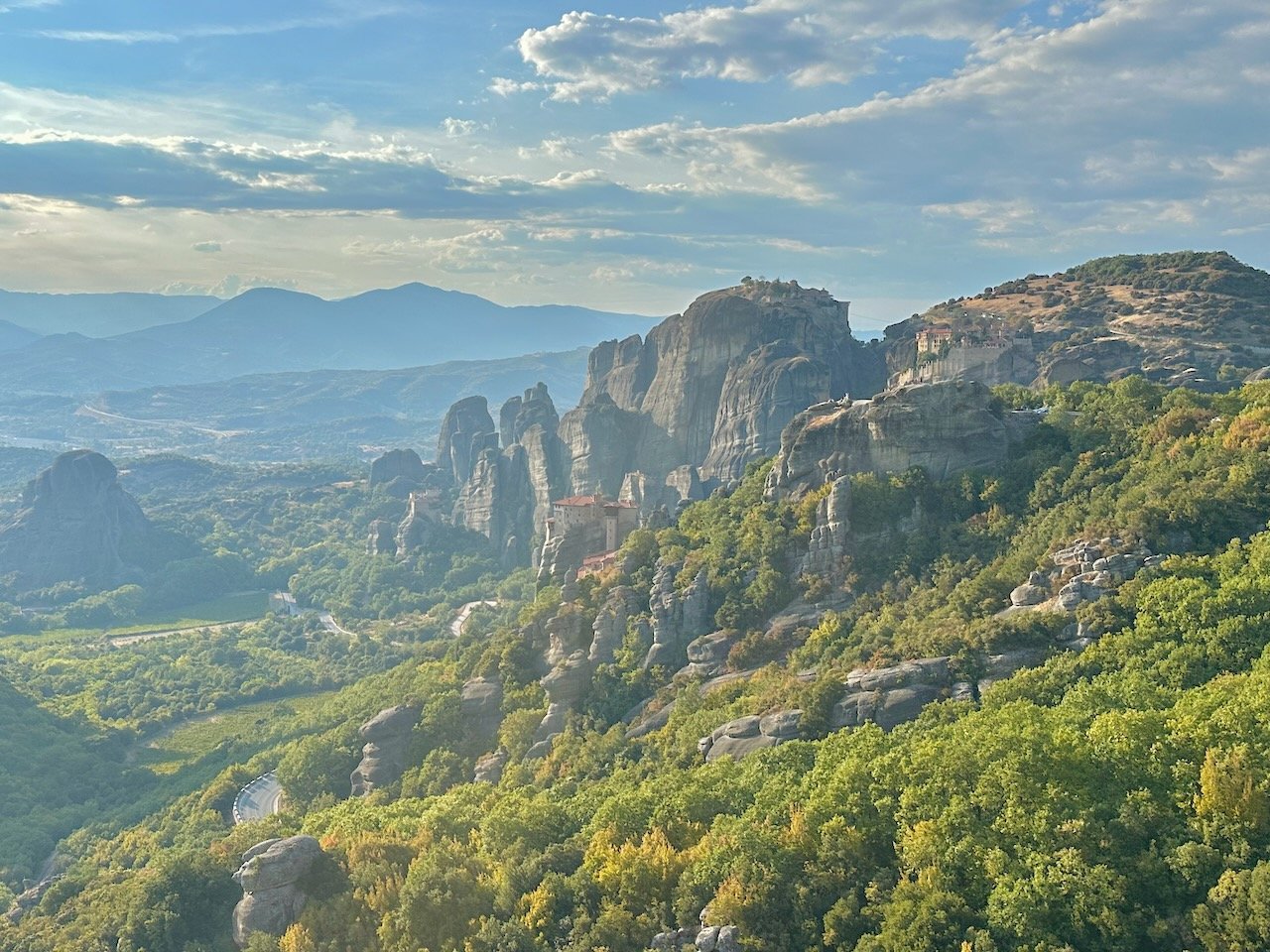
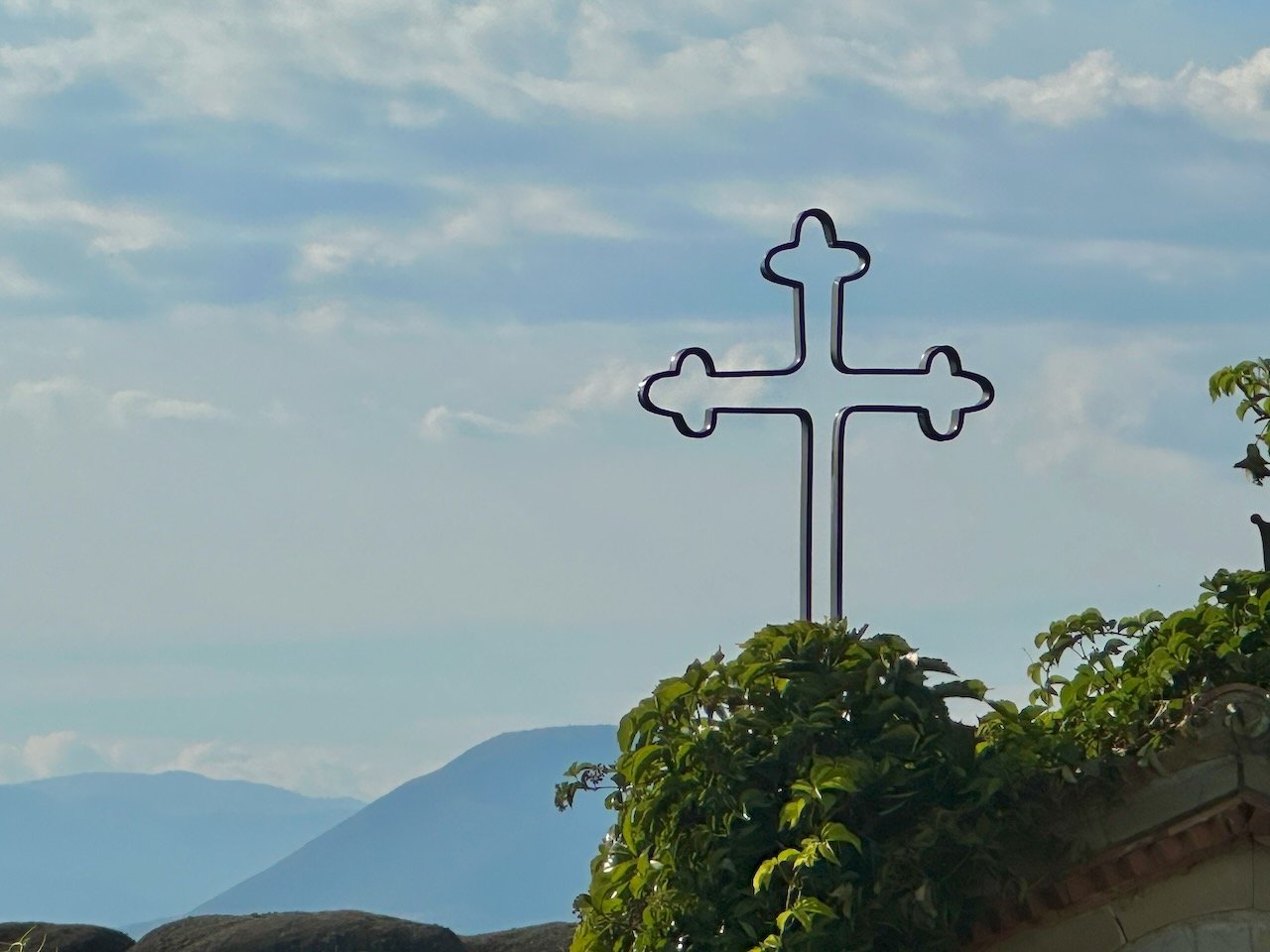
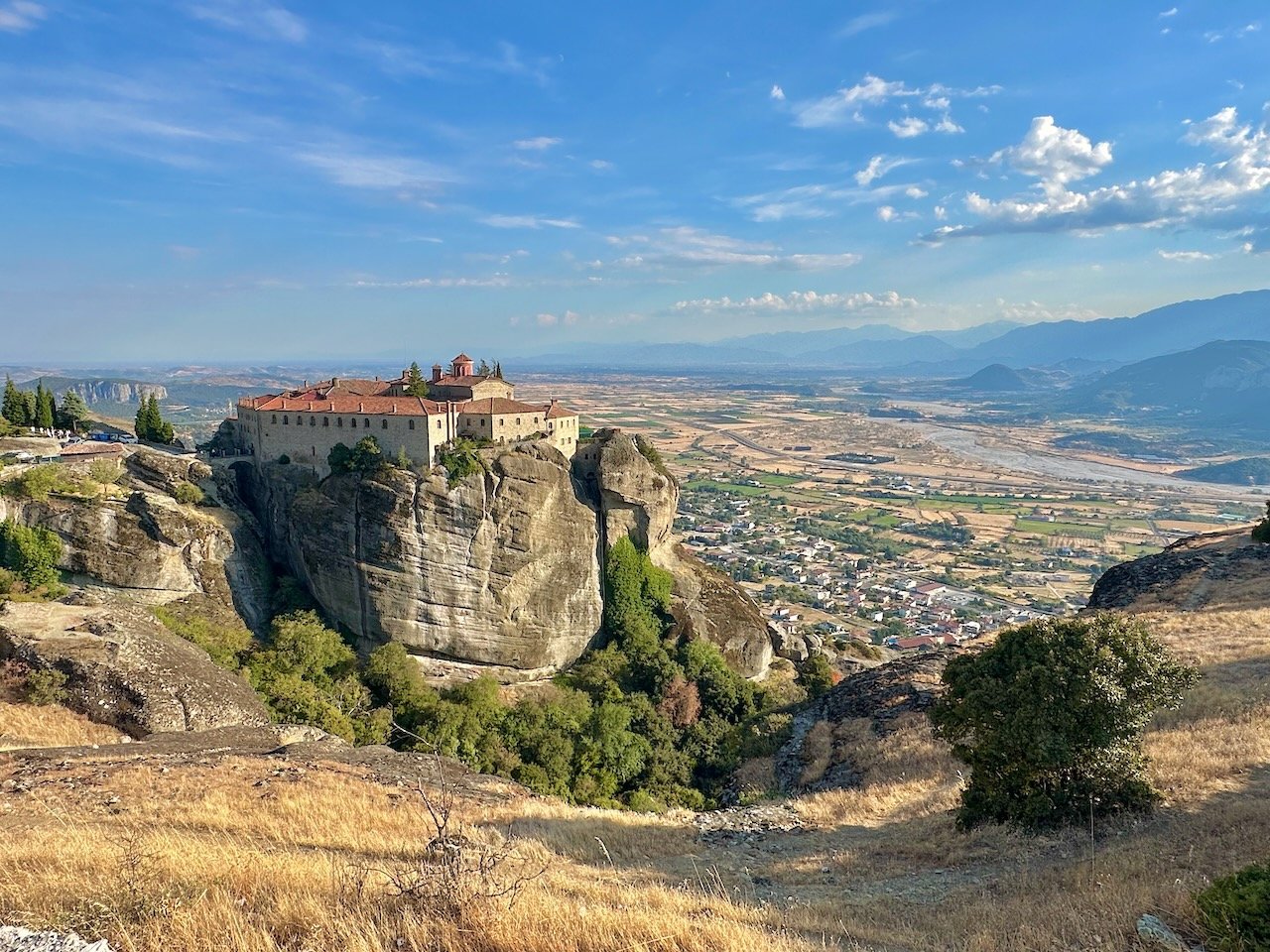
Following lunch, we continued our scenic drive south to Kalambaka. This is the heart of the country of Greece. We traversed up and over the Pindos mountain range. At about 5 p.m., we arrived to the area of Meteora. Six Greek monasteries are still active here (of a total of 24), the earliest dating back to the 14th century AD. We entered the monastery of St. Stephen’s. Aliki took us into the chapel area. Monks (and Sisters) for 100s of years have dedicated their lives in carefully building these with such precision. The view from the area and these monasteries was stunning. Upon leaving the one called St. Stephen’s, we drove to various panoramic views of the area and Kalambaka far below (the location of our hotel). After checking in to our hotel, we enjoyed a great buffet dinner once again and a free evening!

Day 5 – Saturday, September 19: Thermopylae, Delphi, Athens
Today we drove south through more of the mountains of Greece, with a final destination in Athens. Again, the beauty of the high mountains (80% of Greece is mountainous), valleys, and plains of inland Greece was incredible to behold. The weather was about the same as yesterday, with sun and high clouds, and temps in the upper 70s. We read from portions of Paul’s “words” (preserved in his letters) as we left the hotel at 7:50.
Thermopylae
The morning drive took us on a section of another beautiful “newish” highway to the area of Thermopylae. It was here in the famous battle that took place in 480 BC where King Leonidas, along with 300 Spartans (and incidentally along with 700 Thespian greeks) were defeated by the Persians. The battle field could be clearly seen in the narrow pass defined by the shoreline of the Aegean and the cliffs. These same Persians would be later defeated in a sea battle at Salamis shortly after. Today, only a monument stands in honor of Leonidas and the courage of these brave greek warriors.
Delphi
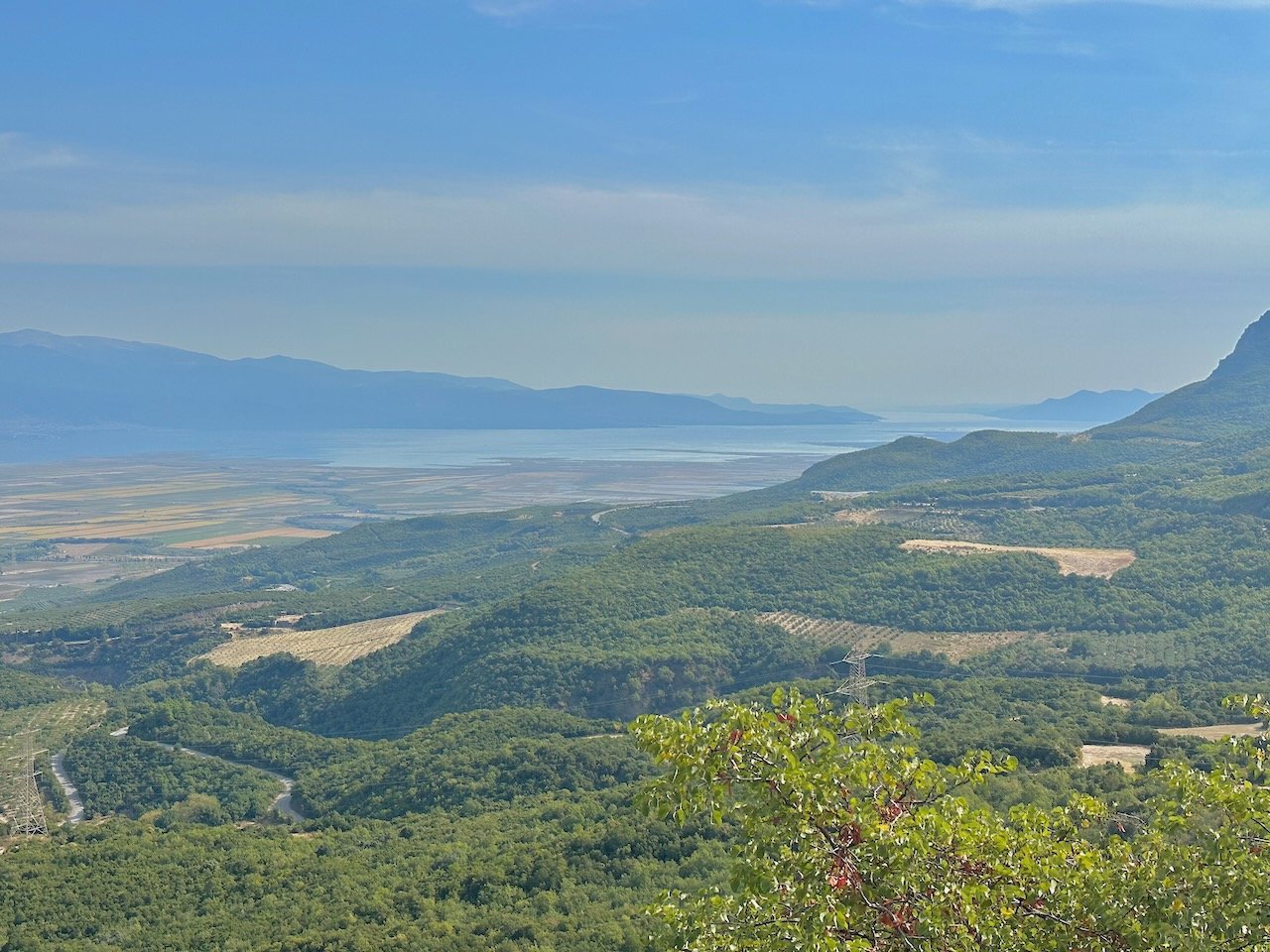
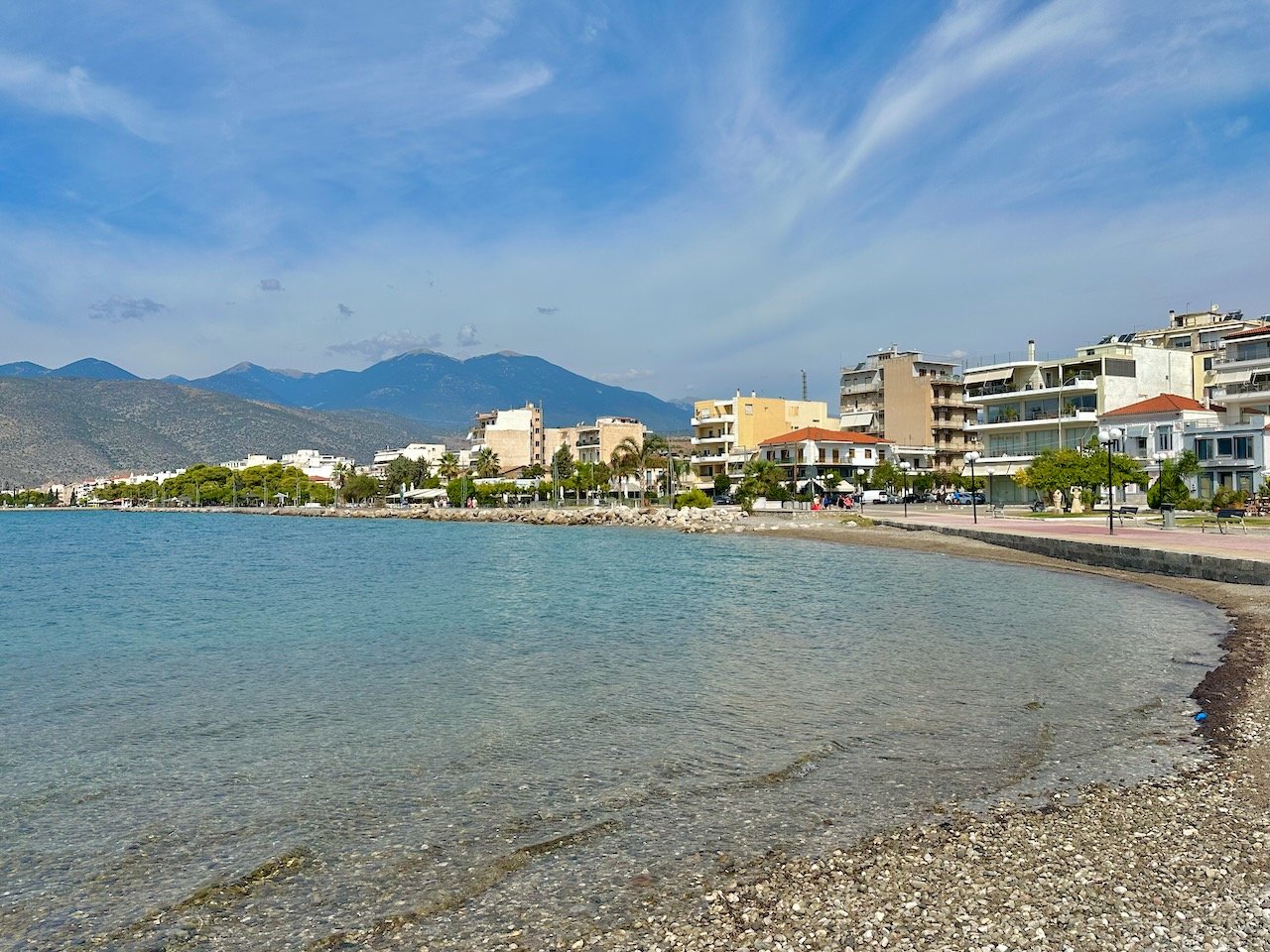
Continuing southward, we drove towards Delphi. Before climbing the final stretch of mountains, we first enjoyed lunch at Itea, a small quaint town along the Ionian (Adriatic) Sea coastline.
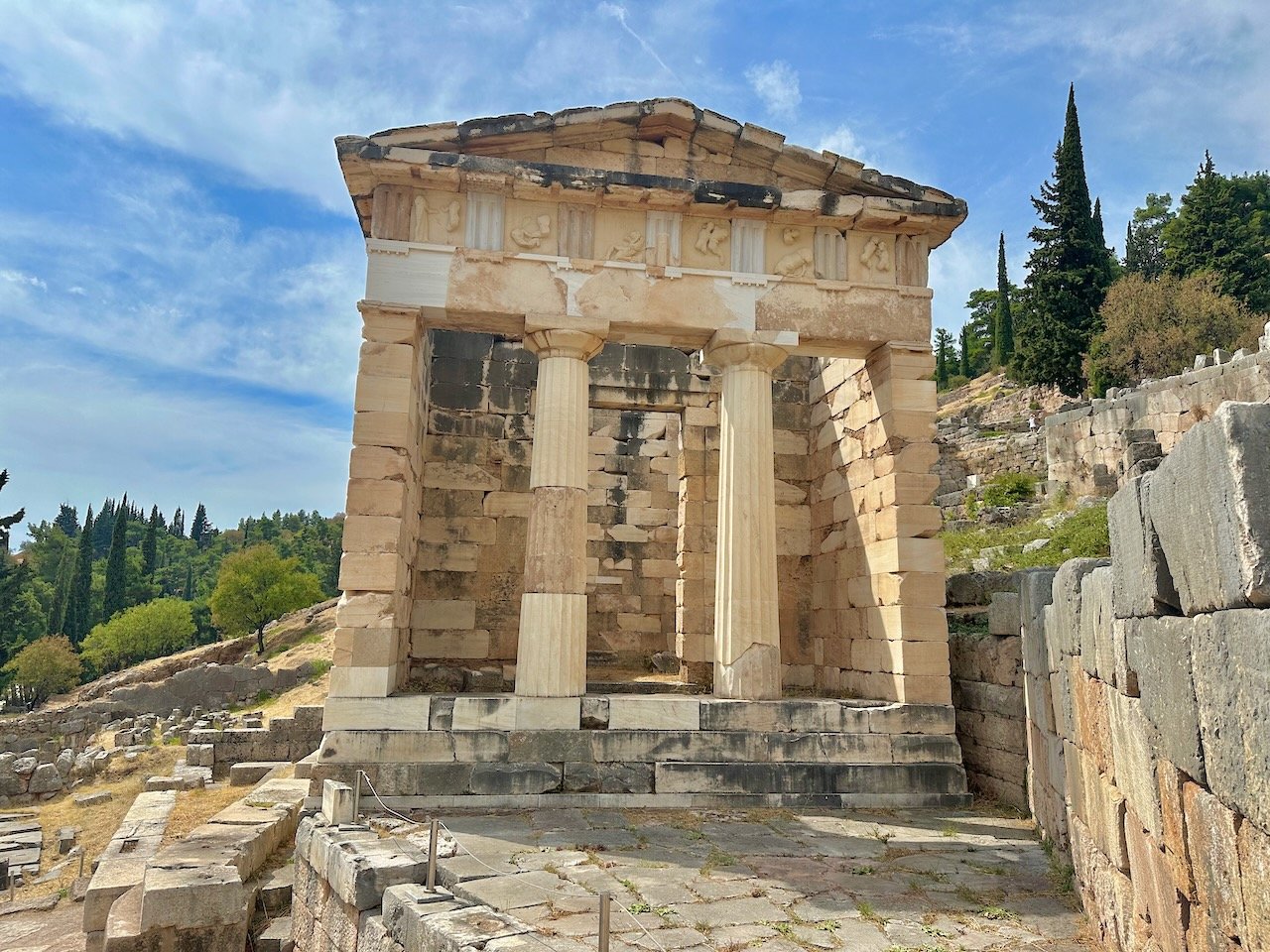
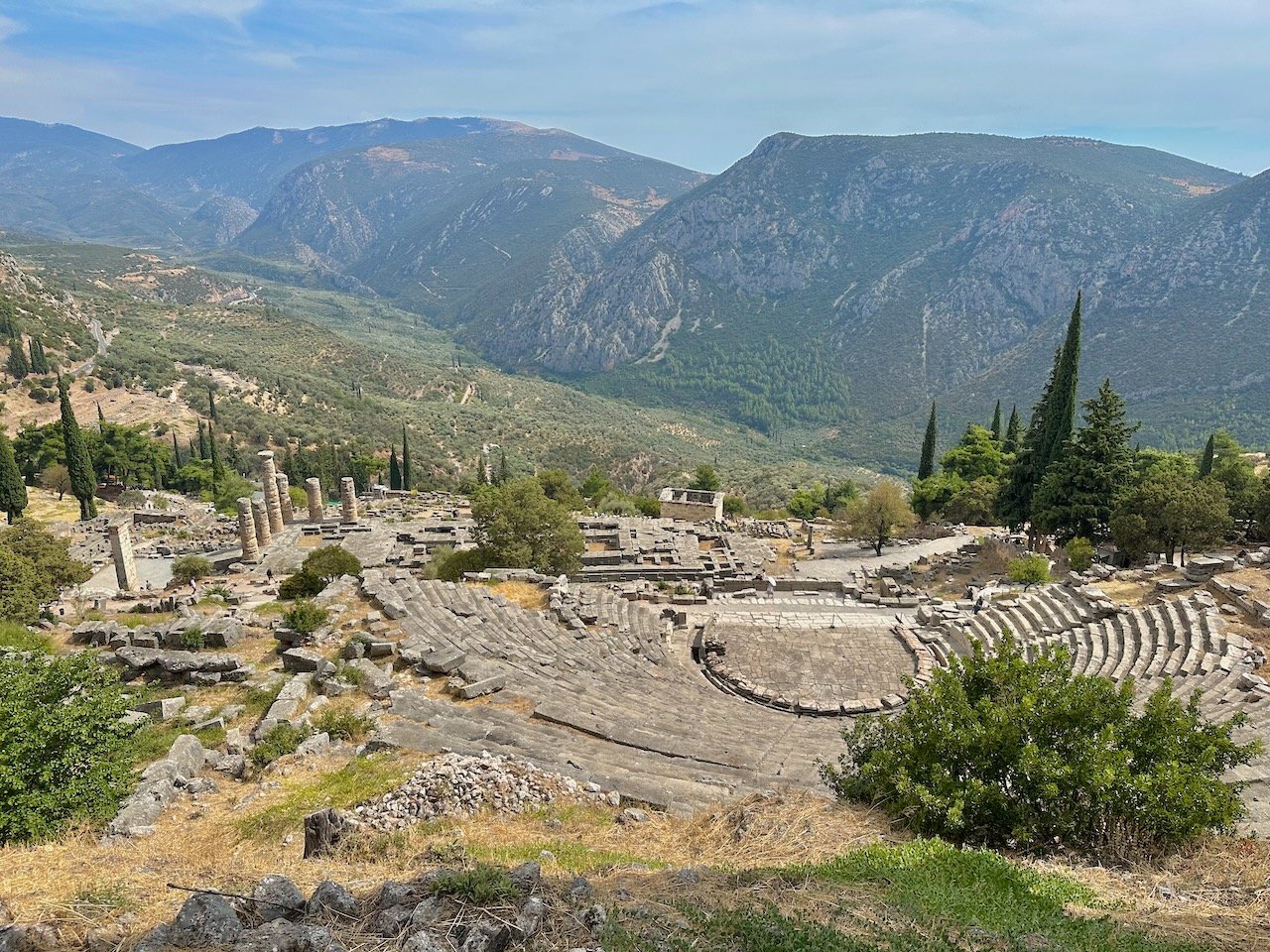
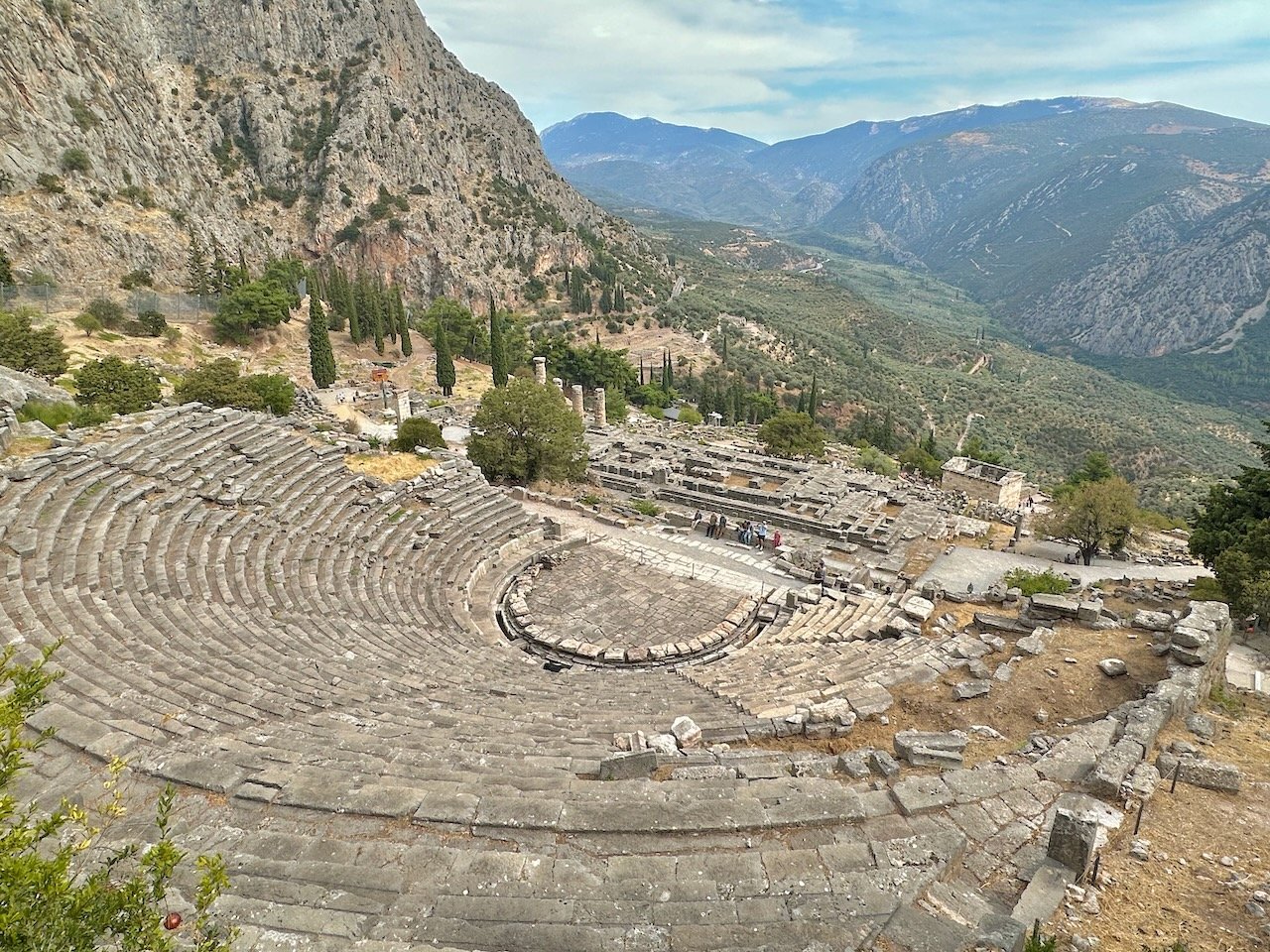
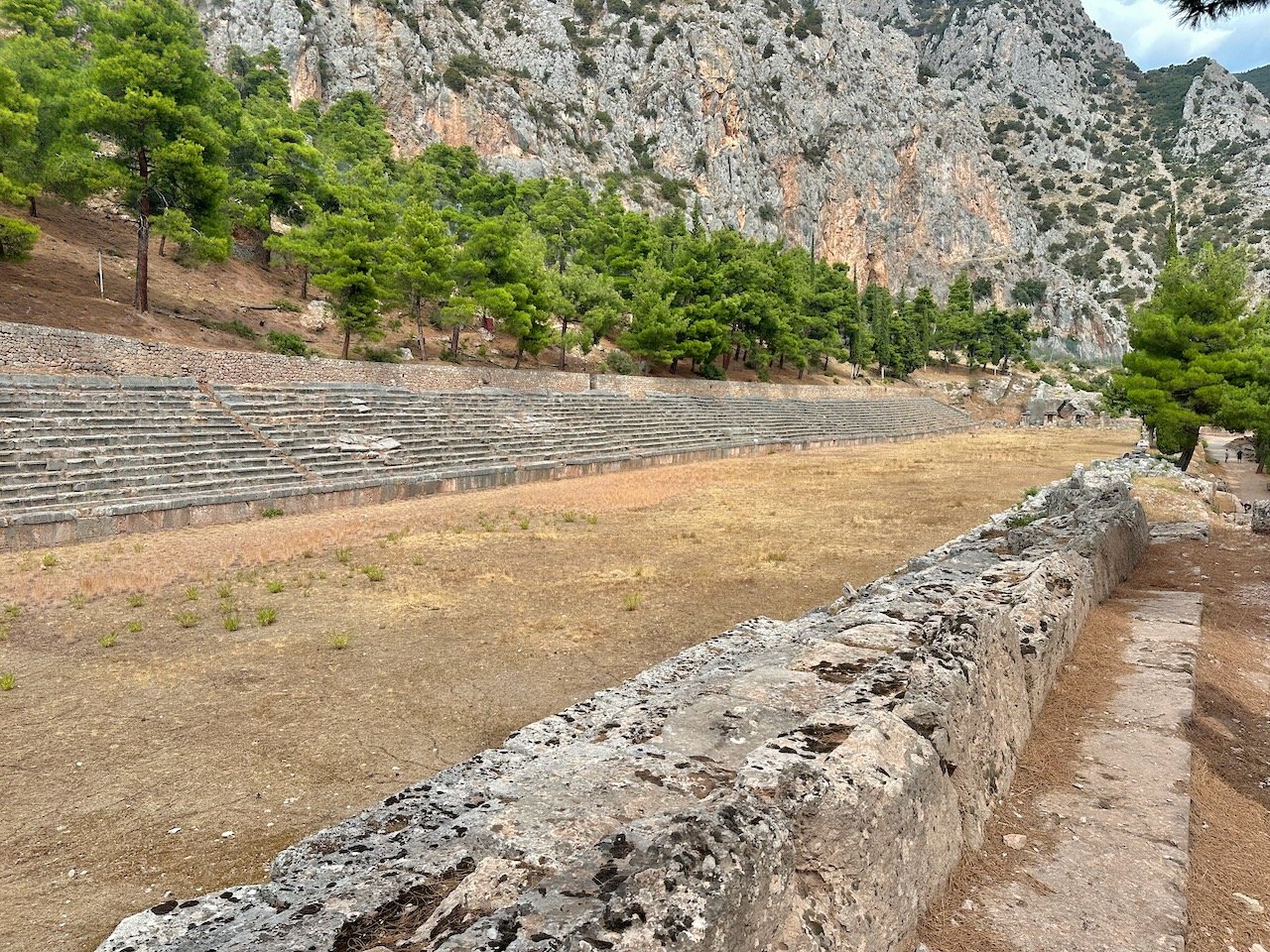
Following lunch, we arrived in Delphi. First, we entered the impressive archaeological site. We ascended through the site, complete with the famous Athenian Treasury, Temple of Apollo, and the theater. The Pythian Games were held at the stadium here in Delphi every four years in honor of Apollo. Many also climbed beyond the well-preserved stadium to the stadium. Paul used the image of “running the race” often (i.e. 1 Corinthians 9, Philippians 3, 2 Timothy 2, etc…).
Delphi was known in this classical period of Greece as the place of oracles. The women who shared oracles were call Pythia. Acts 16:16 uses the same word. Paul and Silas preached that accepting Christ as spoken in the very Word (e.g. oracle) of God and trusting in God’s Spirit is what gives purpose and direction for our lives! Paul would also say that we are the “temple of God” with God’s Spirit indwelling within us (1 Corinthians 3:16f).
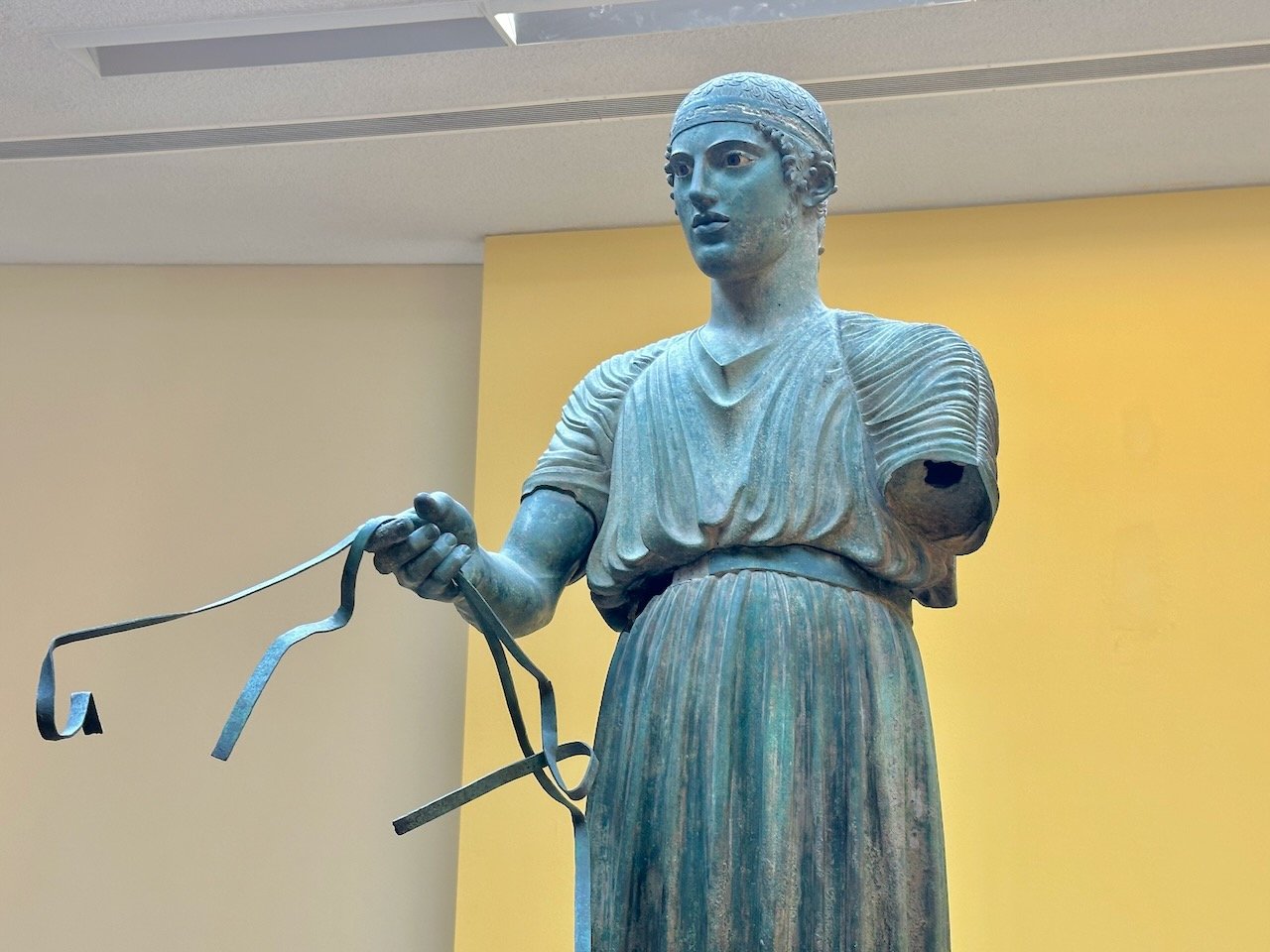
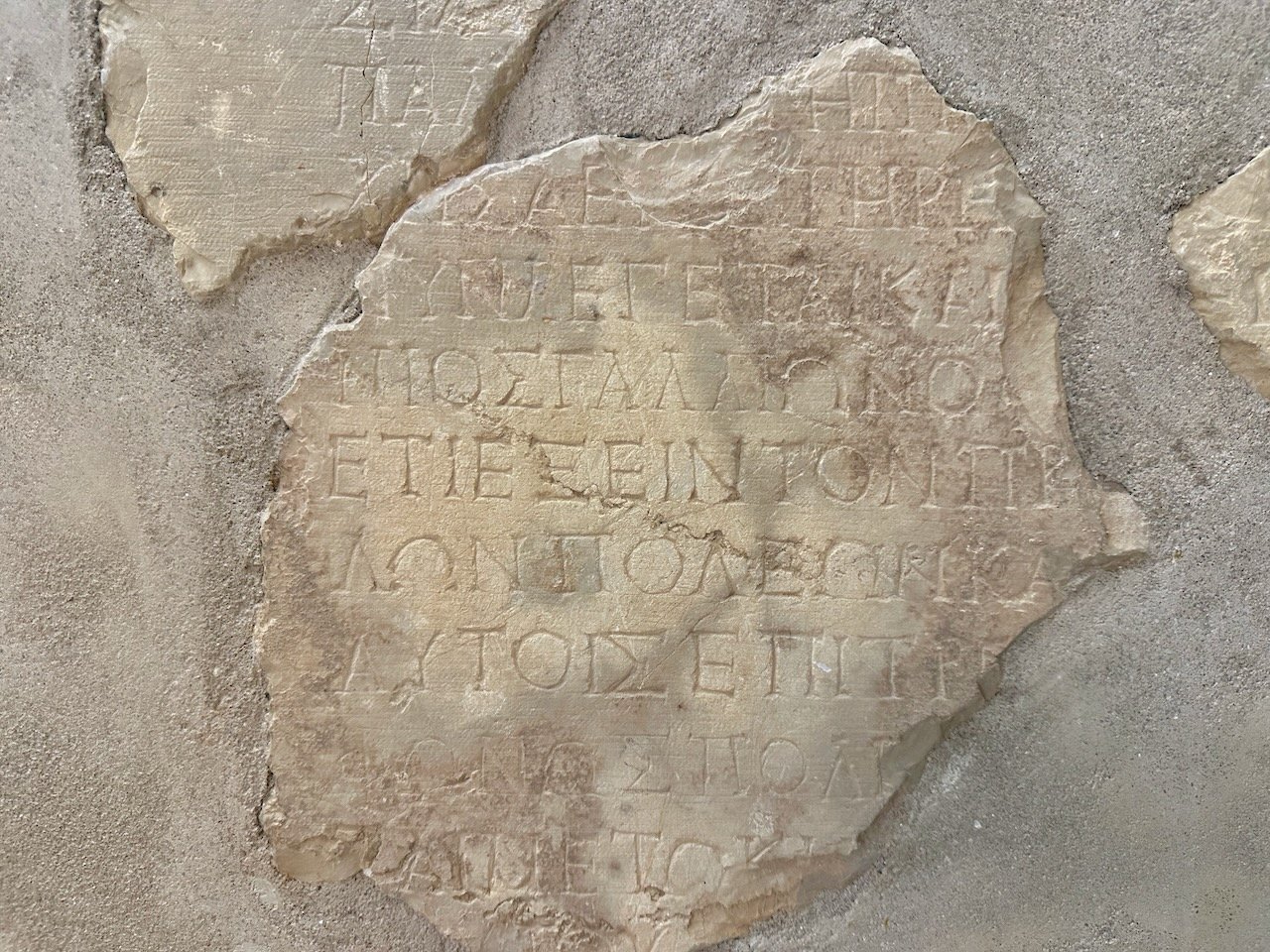
Finally, we walked through the museum. Many impressive artifacts are displayed here, including the famous bronze charioteer (dating to 476 BC), and the Gallio Inscription. This was written by Claudius who mentioned “my friend Gallio the proconsul of Achaia.” Luke mentions him as well as the one who listened to Paul at Corinth (Acts 18). Gallio served as the Proconsul between 51-52 AD. It was discovered here in 1905.
As we left the site, we saw the gymnasium, the Temple/Sanctuary of Athena (the Tholos, a unique rounded structure) below us amidst the ruins.
Athens
Following the visit of this incredible classic Greek site, we drove to Athens. We arrived about 2.5 hours later. We checked into our hotel and enjoyed a late dinner together. After dinner, Many of us walked to Constitution Square to see the changing of the guard at the Tomb of the Unknown Soldiers.

Day 6 – Sunday: September 20: Corinth, Mycenae, Cenchreae, Athens
Today we traveled to the Peloponnese of Greece. We left the hotel at 7:30 again following a wonderful breakfast at our hotel. The weather was perfect, with mostly sunny skies, and temps in the low 80s. We read portions of 1 & 2 Corinthians as well left the hotel.
Corinthian Canal
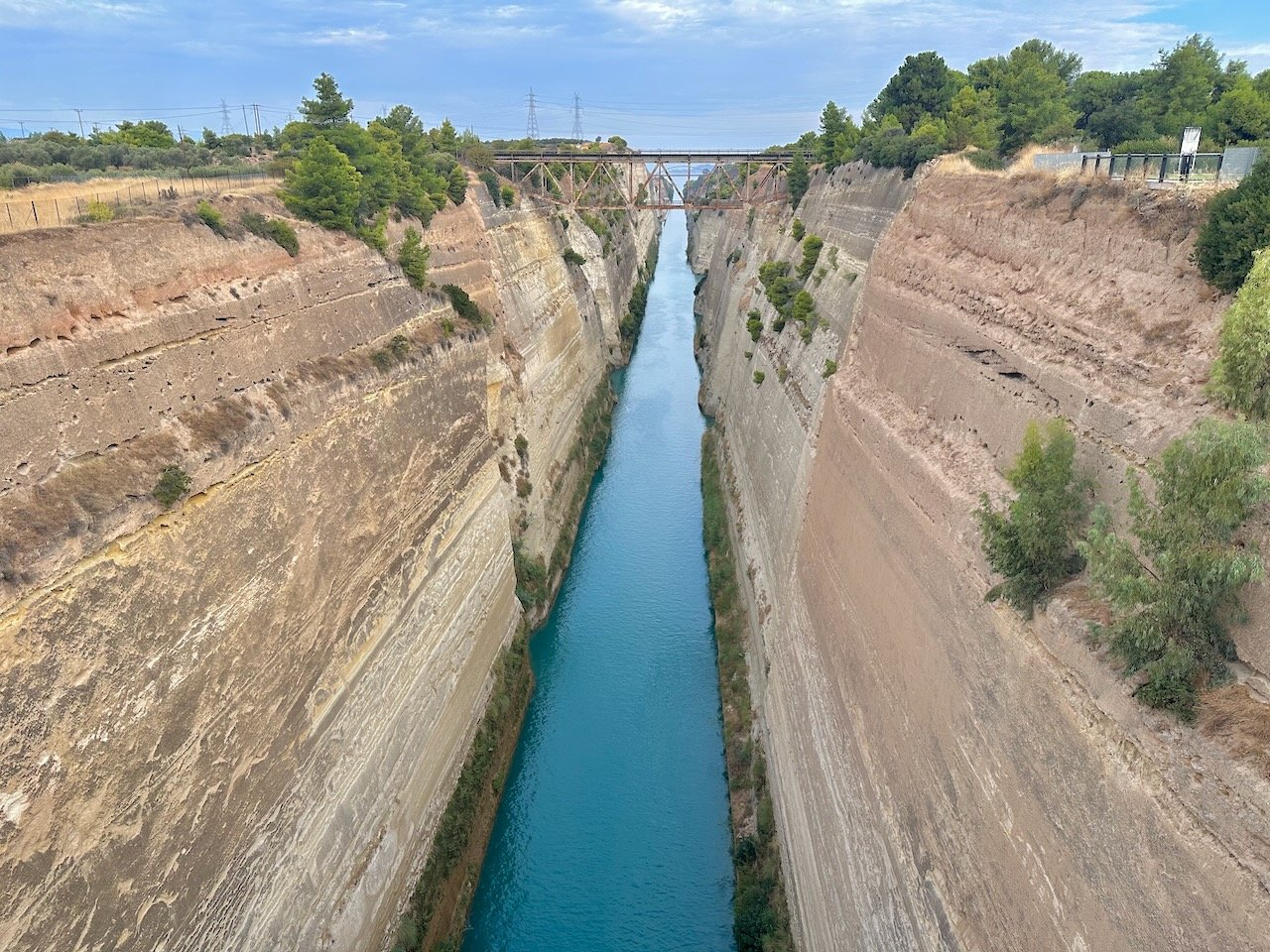
We drove south from the hotel to the Peloponnese of Greece. Our first stop was at the famous Corinthian Canel. It was built over a 11 year span (1882-1893) and is almost 4 miles long, 75-85 feet wide (the width varies at each ends), 280 feet deep, with the water level around 26 feet. It is really a quite incredible engineering feat!
Ancient Corinth
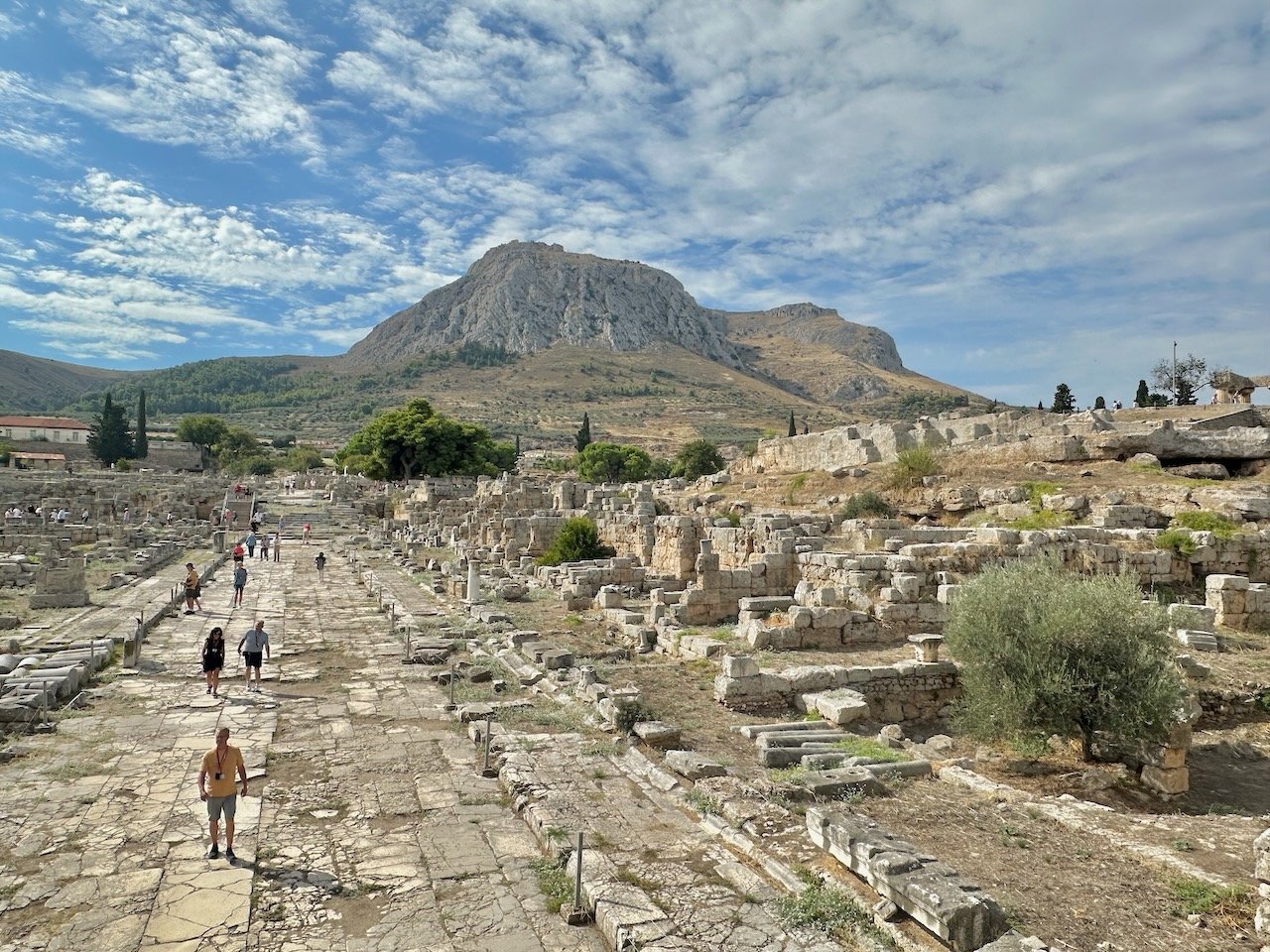
We then traveled another 20 minutes to the ancient site of ancient Corinth. We first visited the archaeological site. We began with a quick visit of the area of the theater. Here, the Erastus Inscription can be seen. He was one who not only financed perhaps the building to the theater here in Corinth, but also Paul’s ministry. He is mentioned in 2 Timothy 4 and Romans 16.
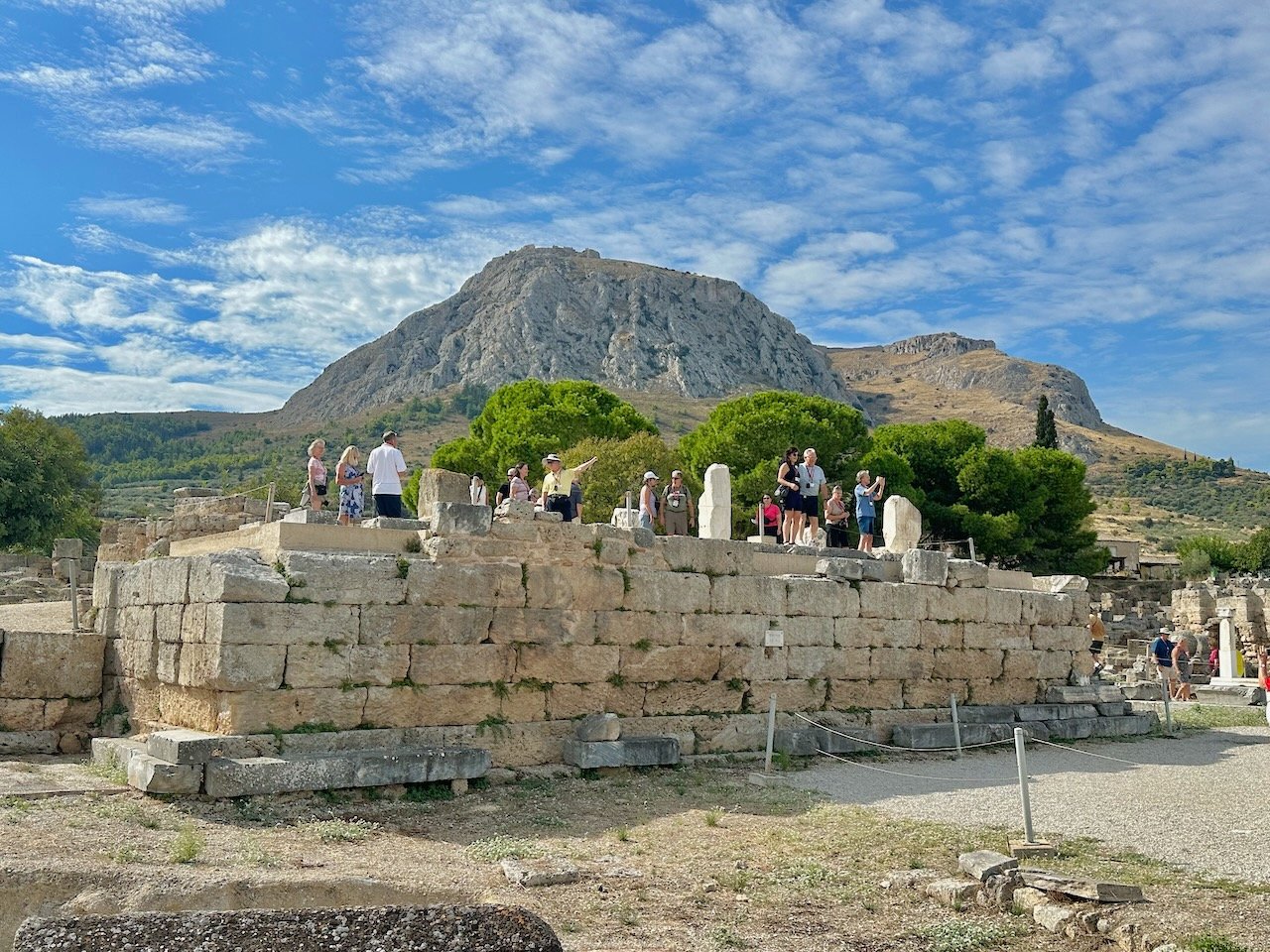
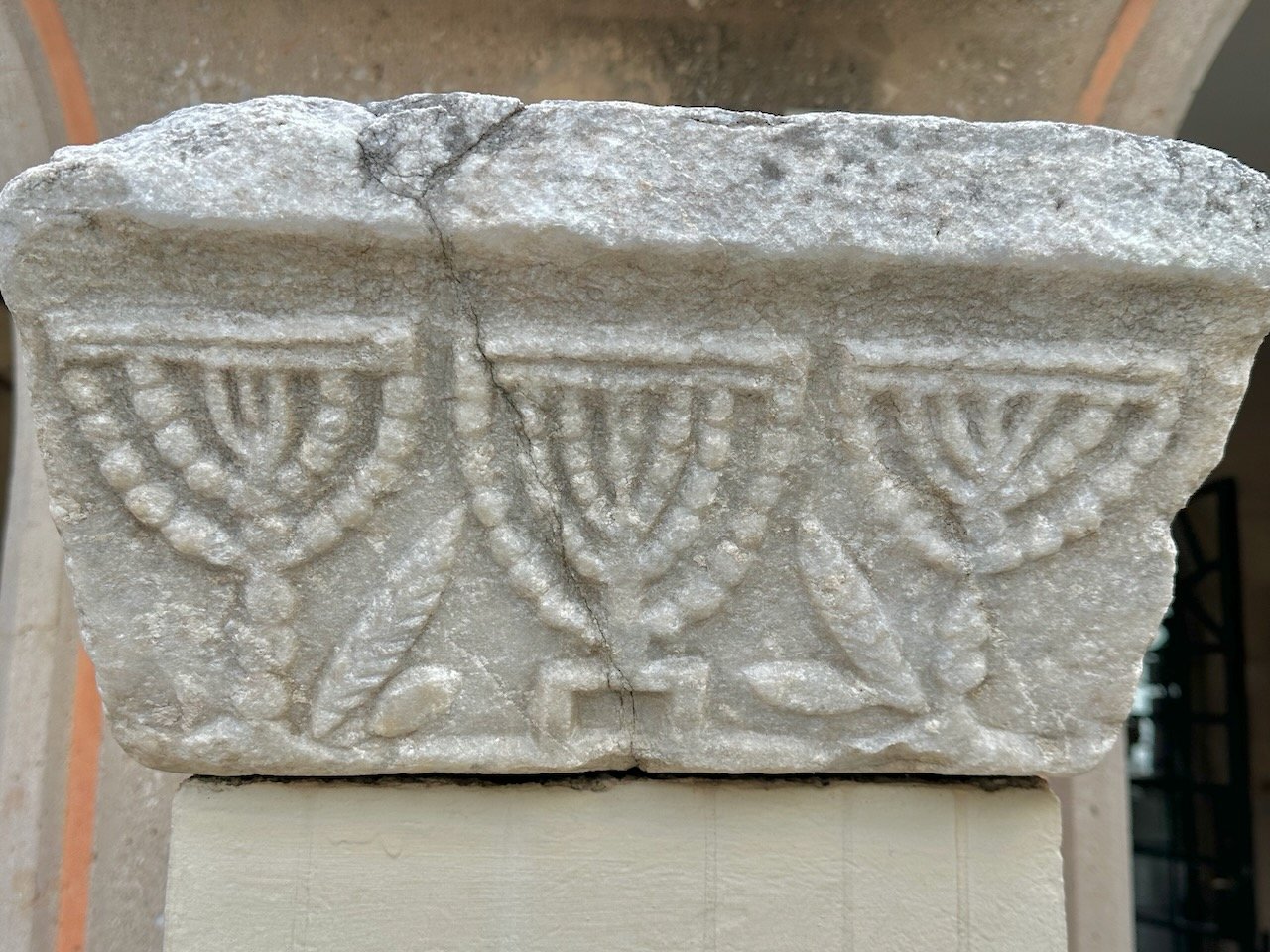
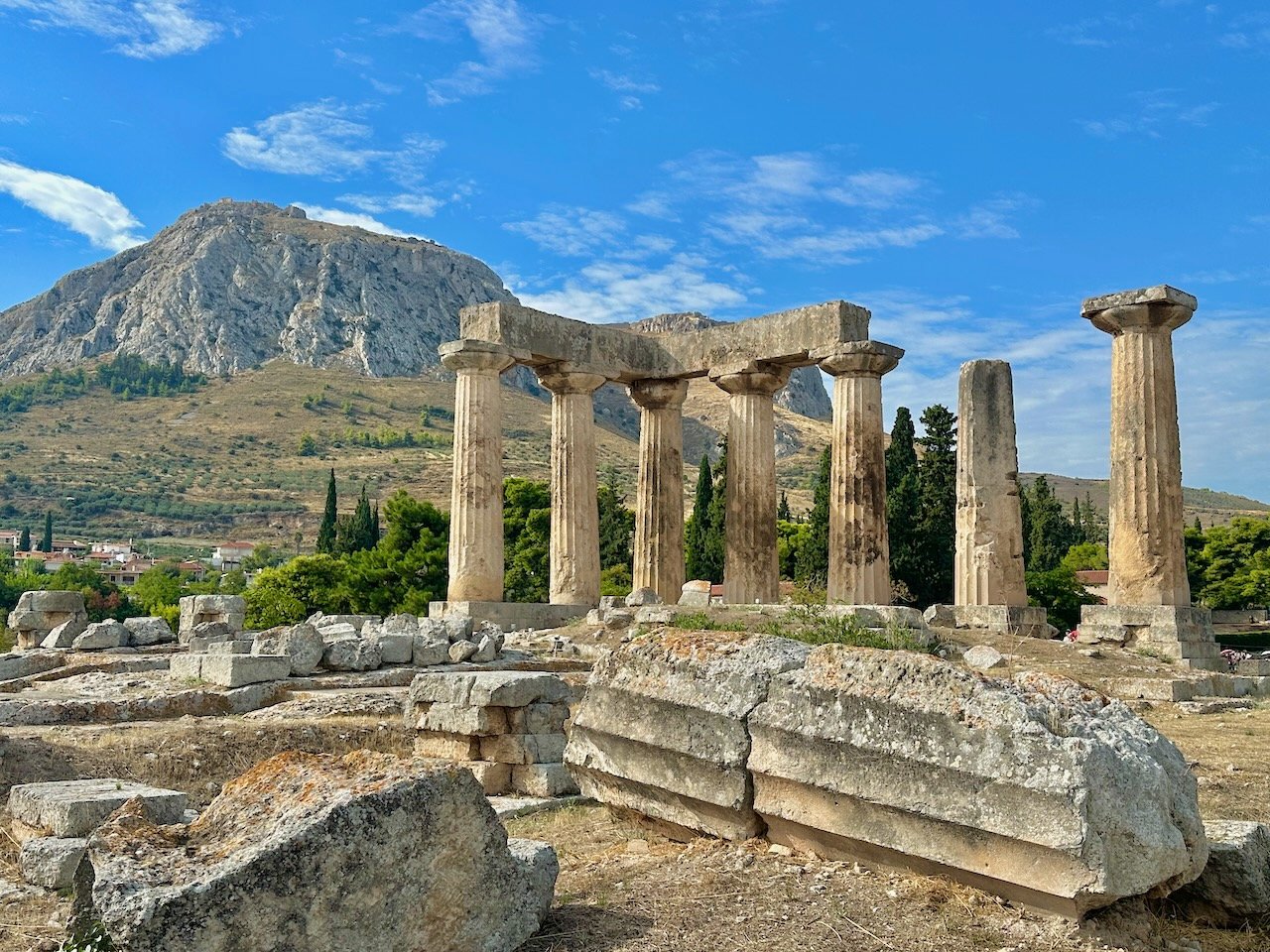
We then entered the small museum inside the archaeological site of Corinth. Here, we saw an image of the Menorah and many clay sculptures of the body parts represented (dedicated to Asclepius, also see 1 Corinthians 12). Among the ruins we saw the Temple of Apollo (one of 14 total pagan temples), the forum (agora in Greek), and the bema (or judgement seat) where Paul shared his defense/testimony before Gallio, (see Acts 18). Paul was here for a year and a half during his 2nd mission journey. From here he wrote letters to the Thessalonica church in the north. During his brief stay here at the end of his 3rd mission journey, we wrote Romans. It was delivered by Phoebe (Romans 16).
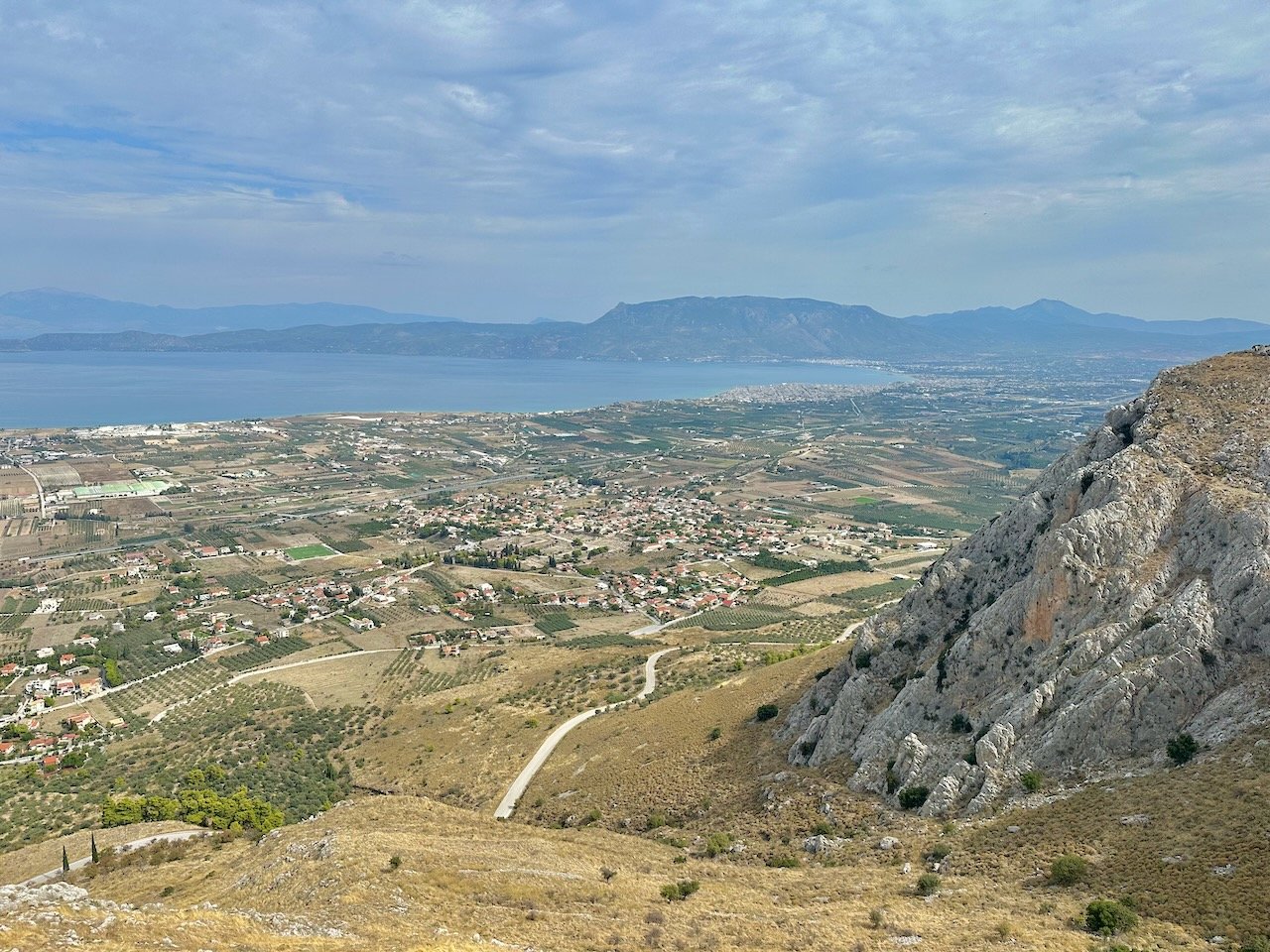
Next, we drove up to the acropolis of Corinth. Many enjoyed jounce here while almost 30 climbed up through the ruins to gain a spectacular view of the plain of Corinth 1800 feet below. On the acropolis there once was the Temple of Aphrodite The massive walls and gates date from between the the time of the Greeks, Romans, Crusaders, Ottomans, and Venetians..
Mycenae
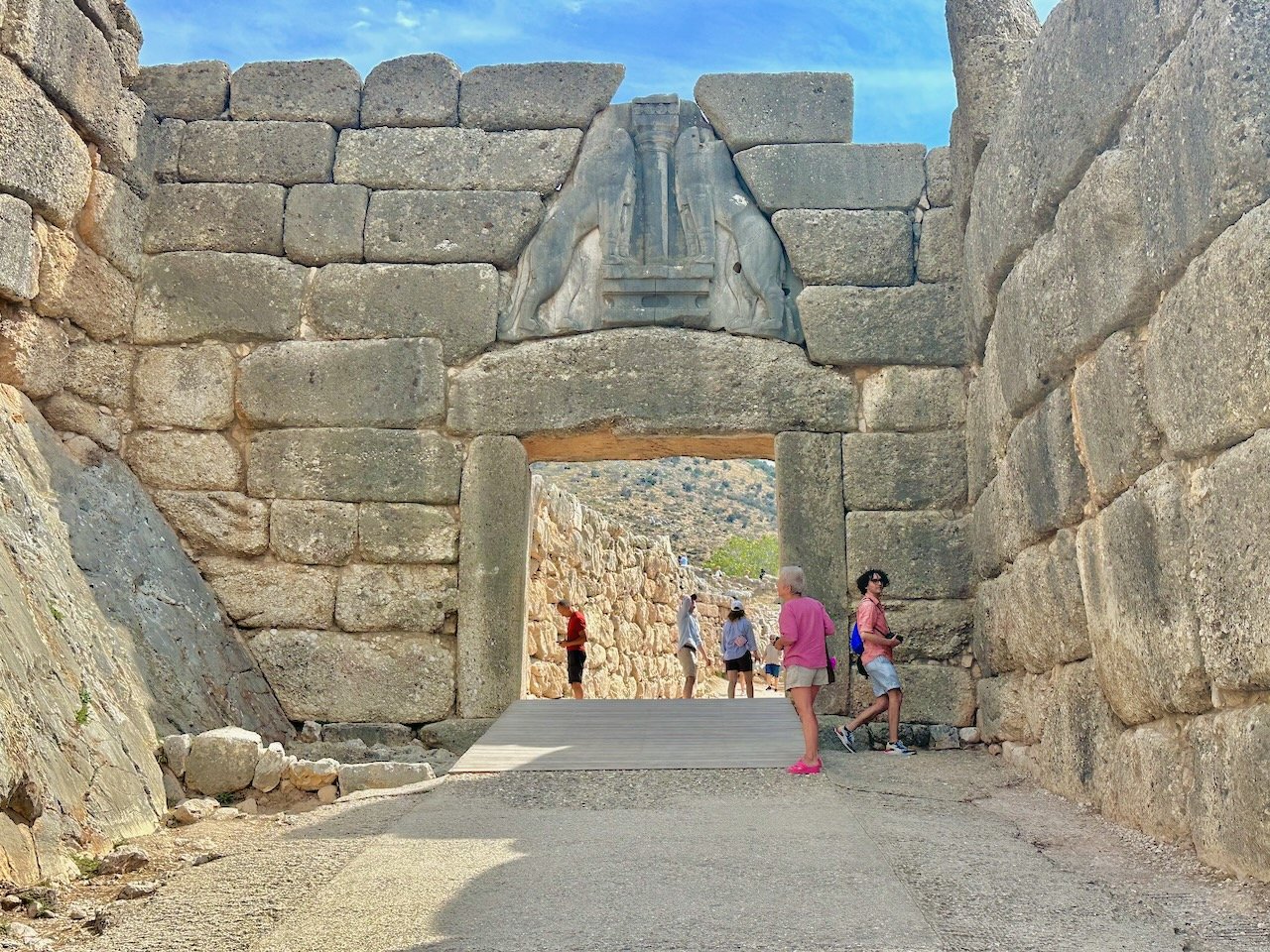
From here we drove about 30 minutes to Mycenae. Much of what we saw dates from 1,350 – 1,200 BC. We walked under the famous Lion’s Gate (1,200 BC). We also saw the shaft tombs (where over 30 pounds of gold was found in the 1870s excavations), the palace area, and the cistern. We also saw the Bee Hive tomb of Atreus, the father of King Agamemnon (also called the Treasury of Atreus). We enjoyed singing a number of songs. With the wonderful acoustics, we sounded like a heavenly choir. 🙂
Cenchrea
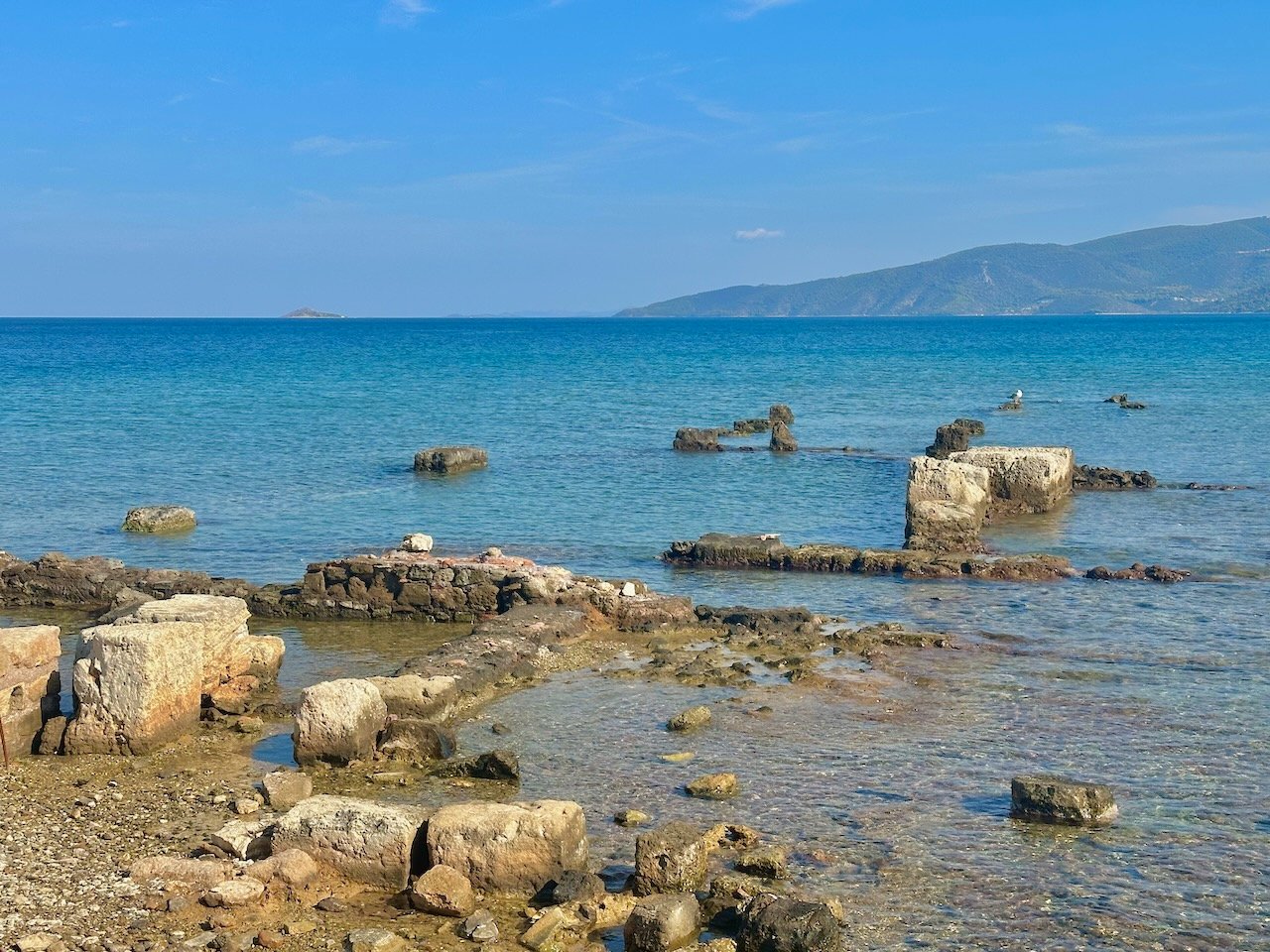
Leaving Mycenae, we started our way back to our hotel in Athens for a late dinner. But before leaving the area of Corinth we made a brief stop at Cenchreae (Acts 18) on the way. This was the harbor Paul used to sail to Ephesus and eventually back to Caesarea. Here Paul cut his hair because of the Nazarite vow he had made (Numbers 6:18). Phoebe also served the church established here (Romans 16:1). Led by Pastors Jenn and Greg, we enjoyed Communion here on there shoreline of the Aegean Sea. It was a special time!
We drove back to the hotel, arriving for dinner at 7 p.m.
Mt. Lycabetus
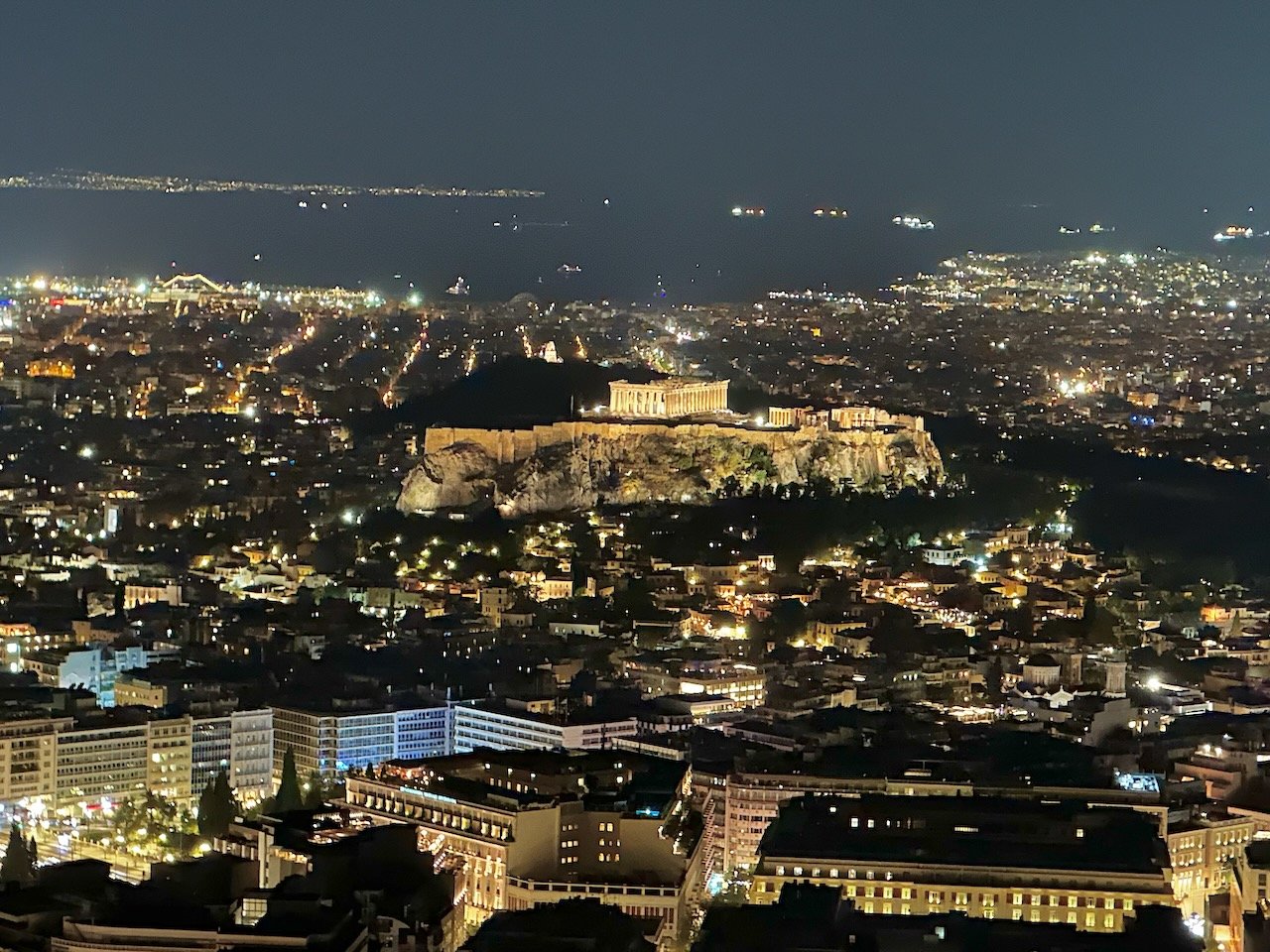
Following dinner at the hotel, many in the group joined an optional walk/hike to the top of the highest hill in Athens called Lycabetus. The view was incredible from here offering a panoramic view at night of all of Athens. This includes seeing the Acropolis and the port of Piraeus!
We all walked back to the hotel and back to our rooms to retire for the evening. We are all looking forward to the start of our 4-day cruise tomorrow morning.
Day 7 – Monday, September 21: Athens, Embark on 4-Night Cruise, Mykonos
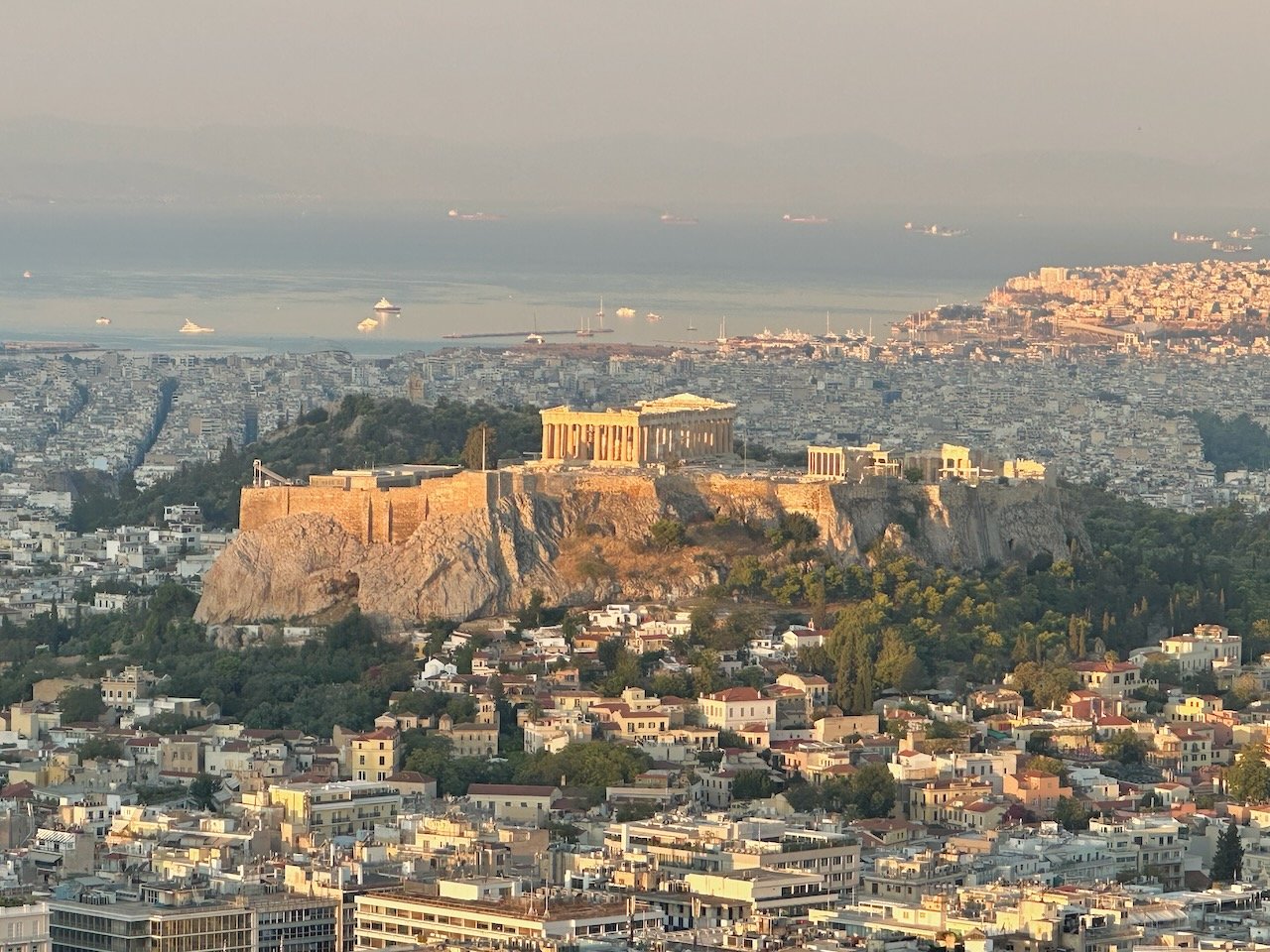
This morning we enjoyed a late departure (9:00) although John got up to capture an early-sunrise photo from Lycabetus of the Acropolis. This allowed us to enjoy a relaxing breakfast once again, Tasos (our Greek agent with us for the 4 day cruise) gave us tags for our bags for the cruise boat. We loaded the bus for the drive to the Laurion Port of Athens (not the usual port of Piraeus). The drive to the port took a little over an hour. We read from Ephesians 1 and 2 as we began the drive (we visit Ephesus tomorrow!).
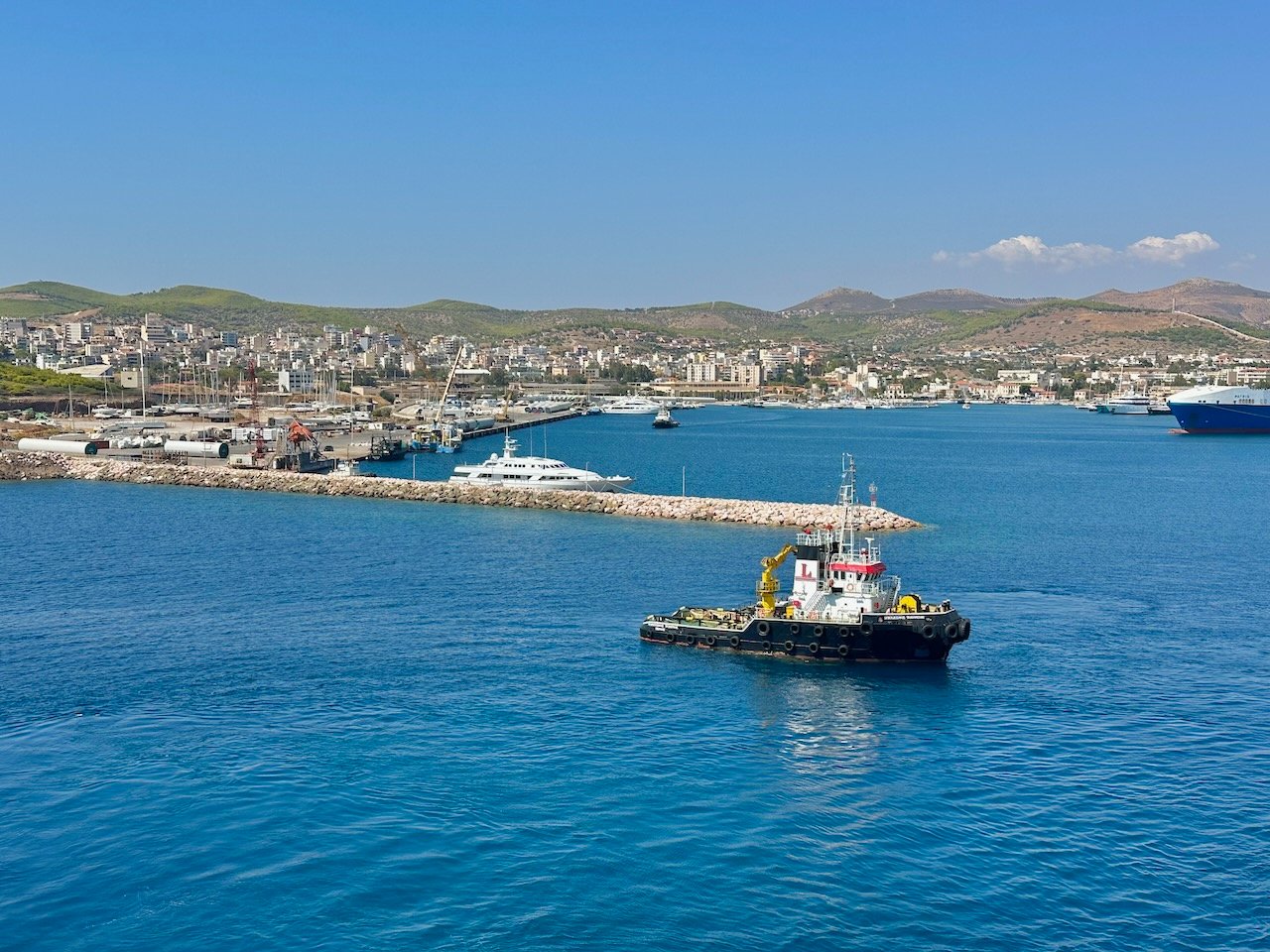
Following the standard procedures of boarding the ship, the ship pulled out of the port in the early afternoon. We enjoyed the standard life-jacket drill and lunch on the ship. The rest of the afternoon was a leisurely one as we sailed about 66 miles to our first Greek island, Mykonos. The deep blue waters of the Aegean was beautiful! Today’s weather also made it perfect, with full sun once again and highs in the low 80s.
Mykonos
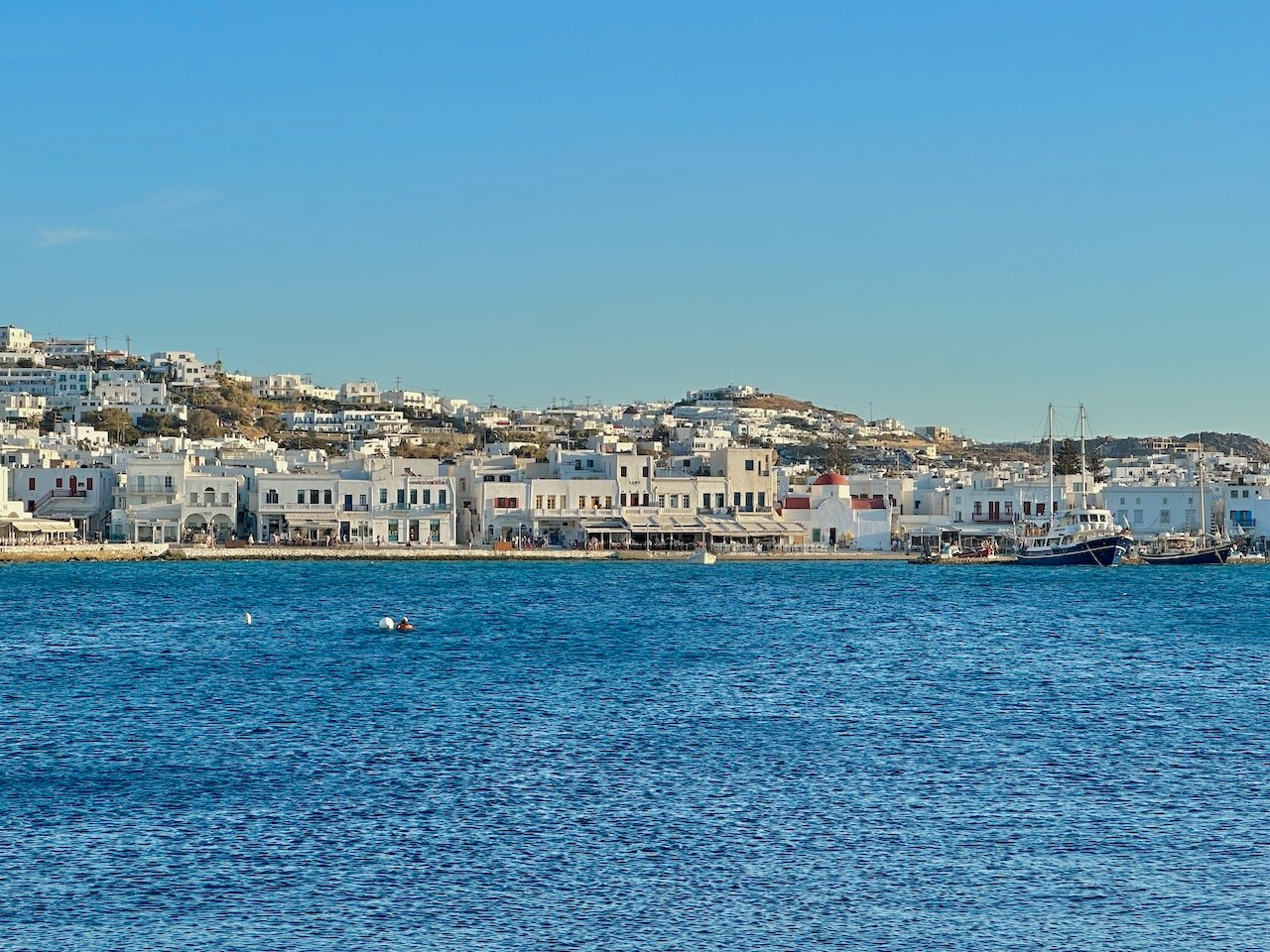
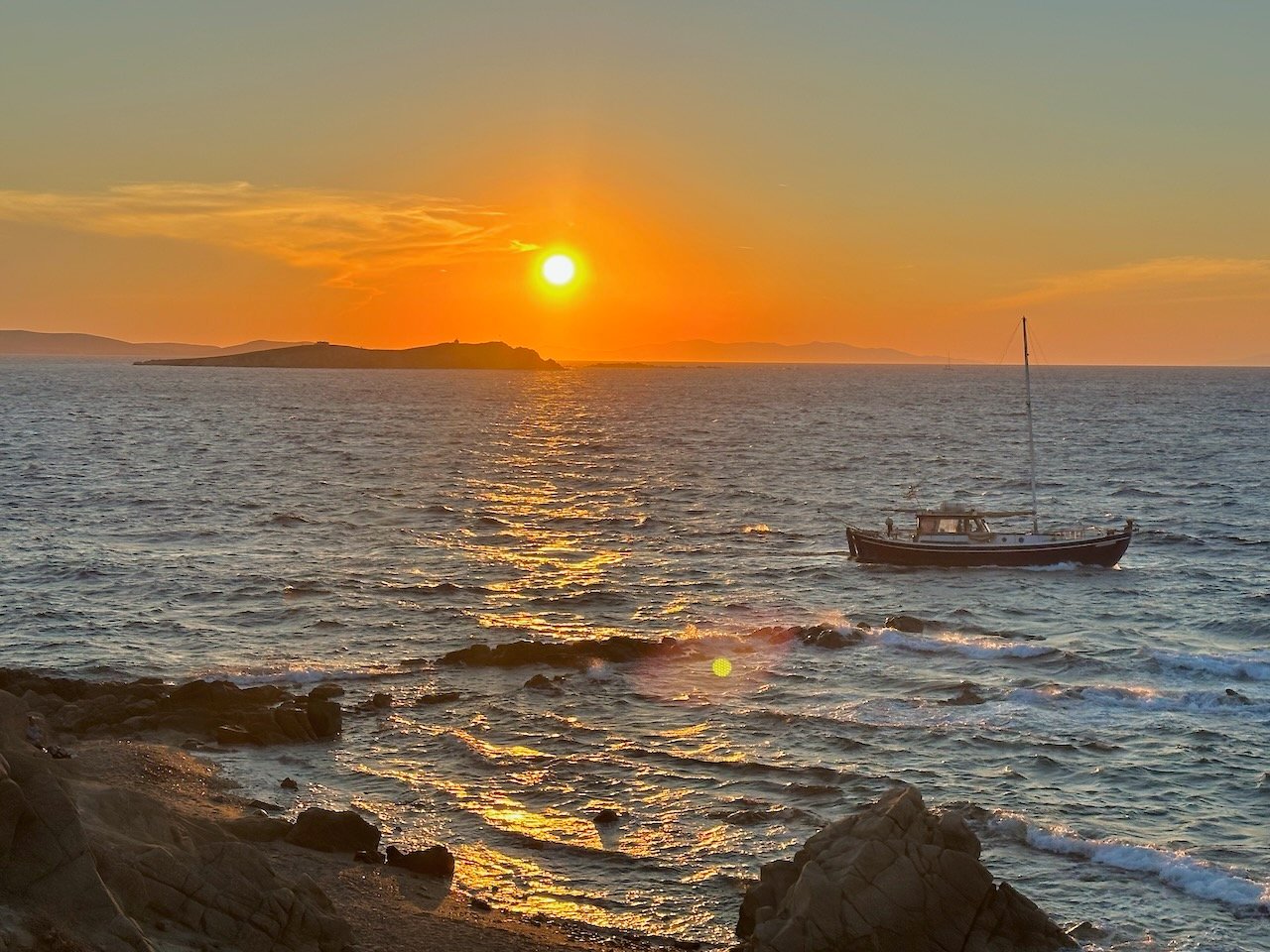
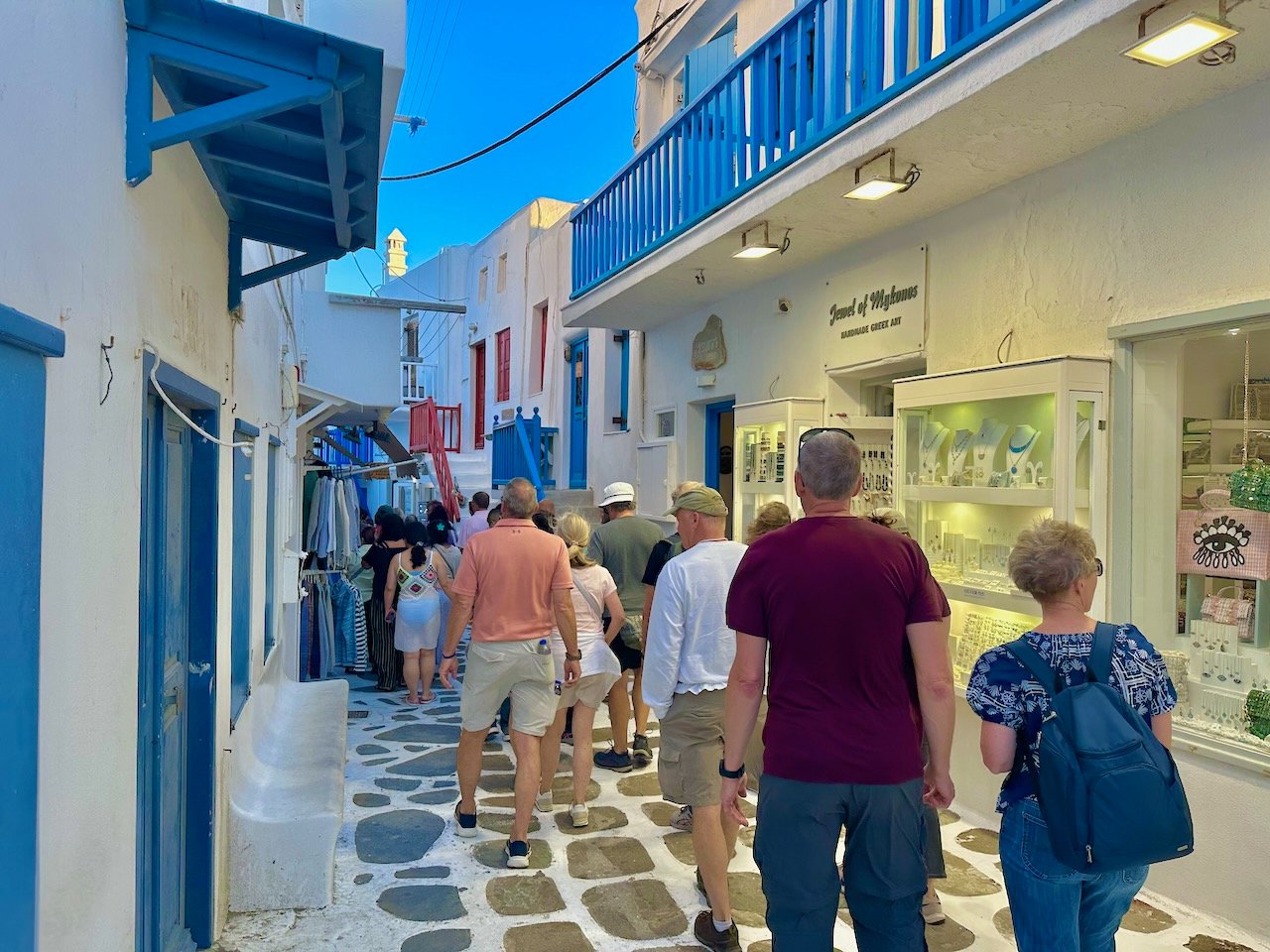
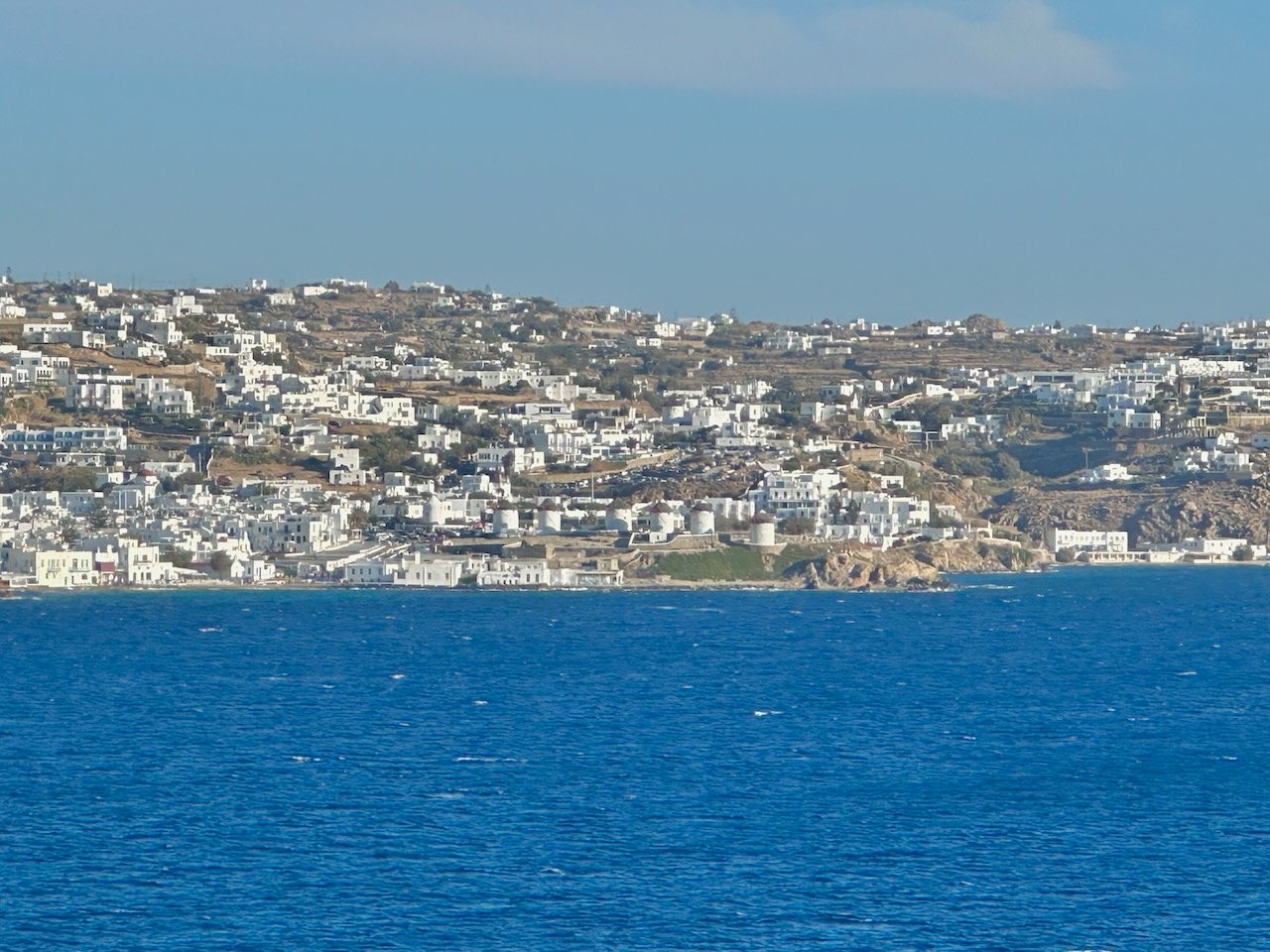
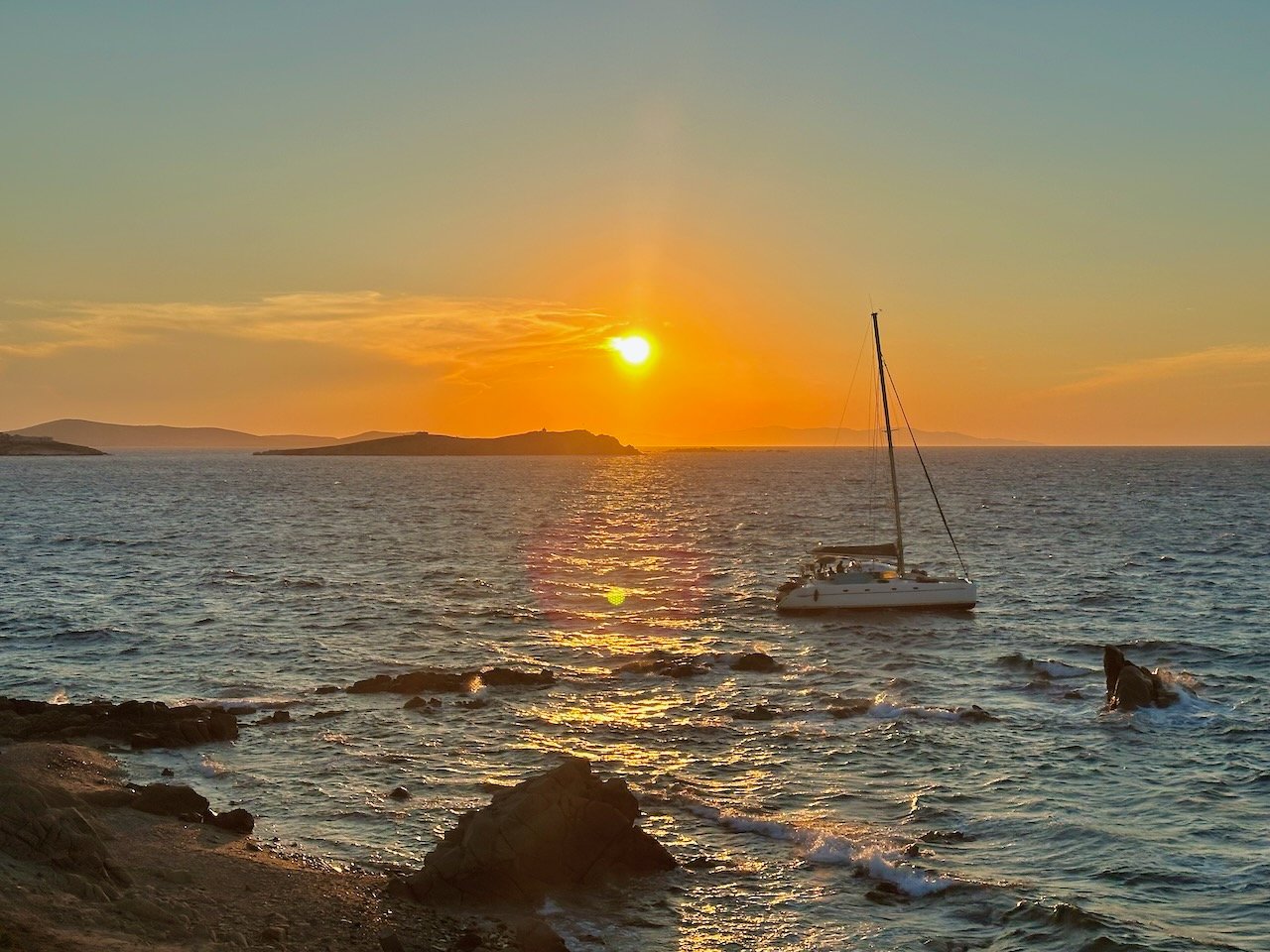
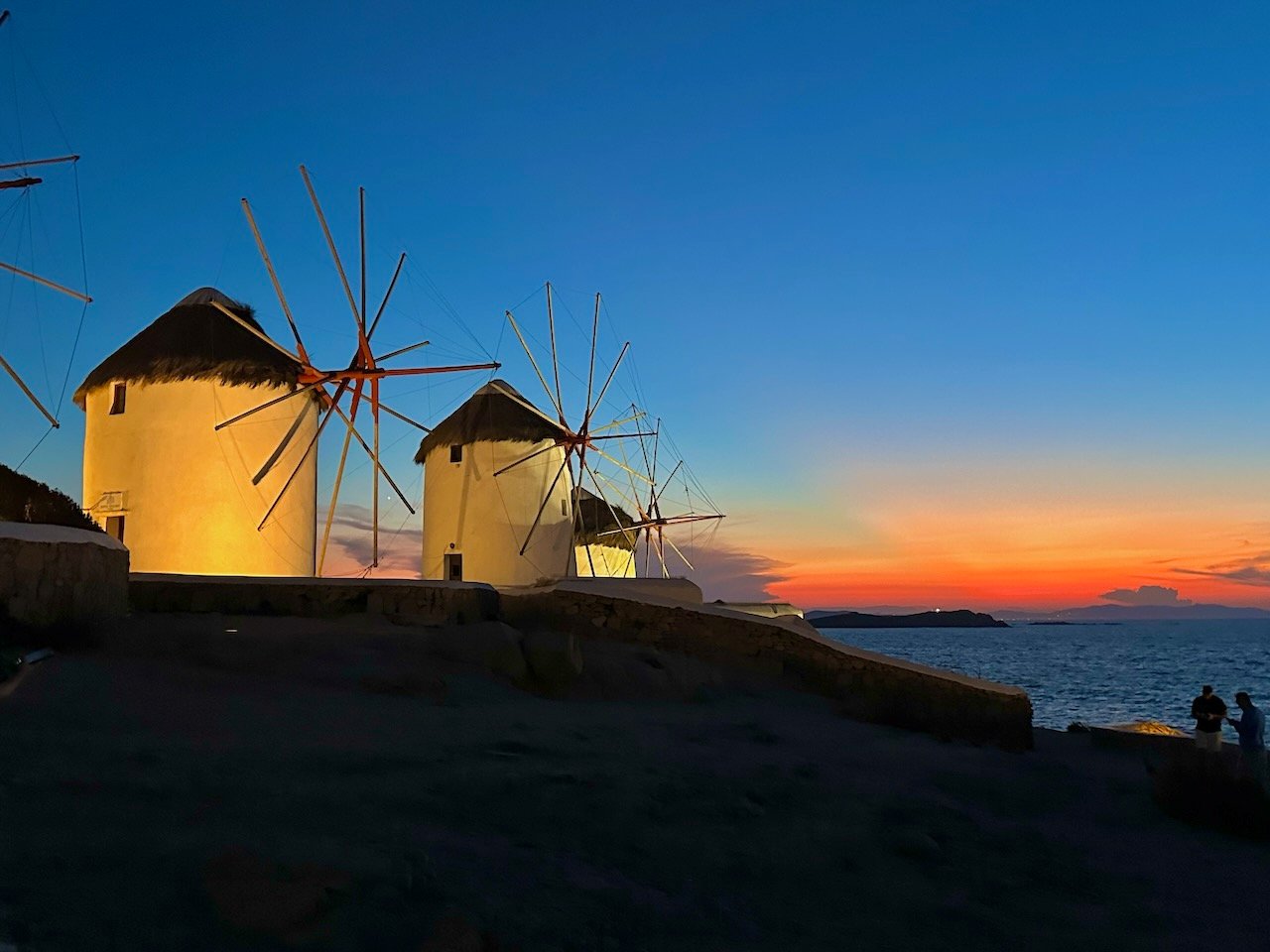
We arrive at the island of Mykonos about 5:30 p.m. We disembarked the ship around 6:30, using tender boats to take us to the new port of the island. We then took shuttle buses to the old harbor. We then strolled through the maze of walkways and white-washed buildings before arriving at the famous windmill area. We enjoyed the waterfront (called Little Venus) lined with shops and cafes. The sunset was beyond spectacular too! After time walking around on our own, we returned to the ship on our own for a late dinner (although some grabbed a bite on the island). While we sleep tonight we will travel to Kusadasi on the western coastline of Turkey.

Day 8 – Tuesday, September 22: Kusadasi (Ephesus) & Patmos
Following sailing through the night we arrived at Kusadasi (on the western coastline of Turkey). Today was another perfect weather day, with bright sunny day, blue skies and highs around 75. It was a day of connecting to Paul’s ministry once again (at Ephesus), but also John’s ministry as he authored Revelation from Patmos. The day started early, with a 6:45 a.m departure from the ship following breakfast. We read from Revelation 2 (about Ephesus losing their “first love).
Kusadasi
Here at Kusadasi (it means “bird island” in Turkish) is where we met our bus and local guide, Isa. Located on the western coastline of Turkey, this port city is a vacation and retirement locations for many Brits and Europeans. From here we drove directly to Ephesus.
Ephesus
We arrived in Ephesus at about 7:45 a.m. This was a massive port city back in the days of Paul. Today the water’s edge is about 4 miles away! Paul spent about 2.5 – 3 years here during his 3rd mission journey.
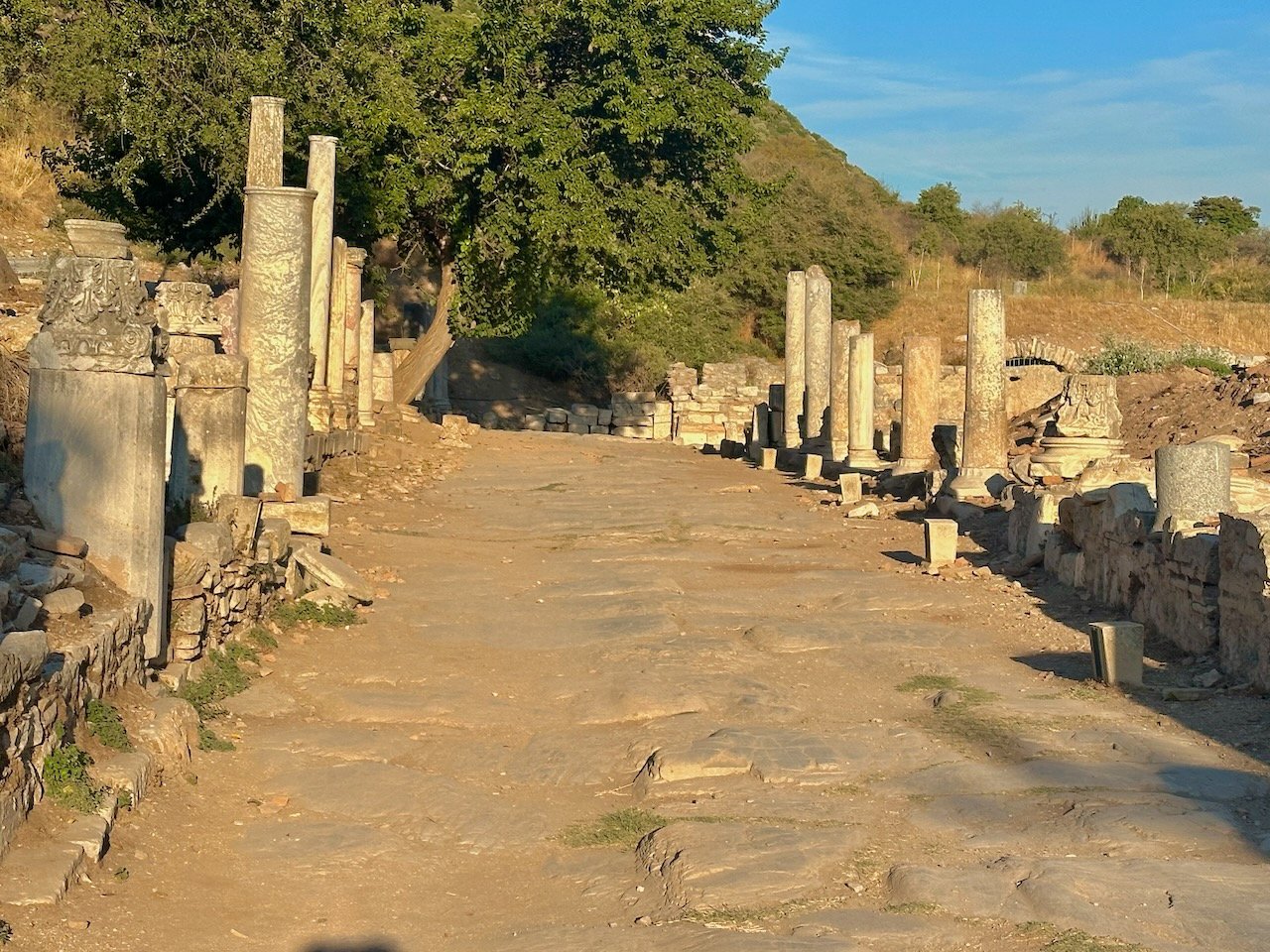
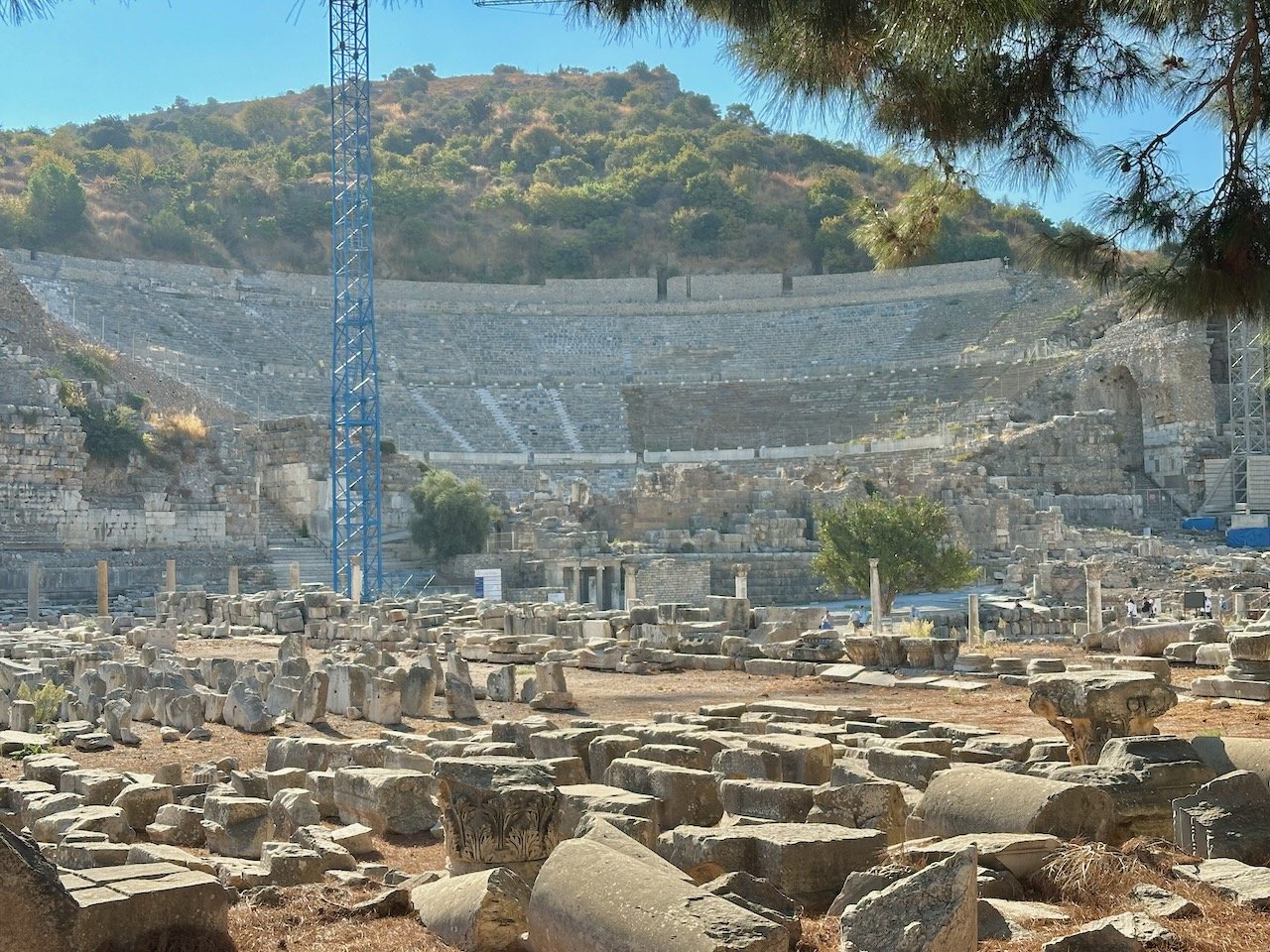
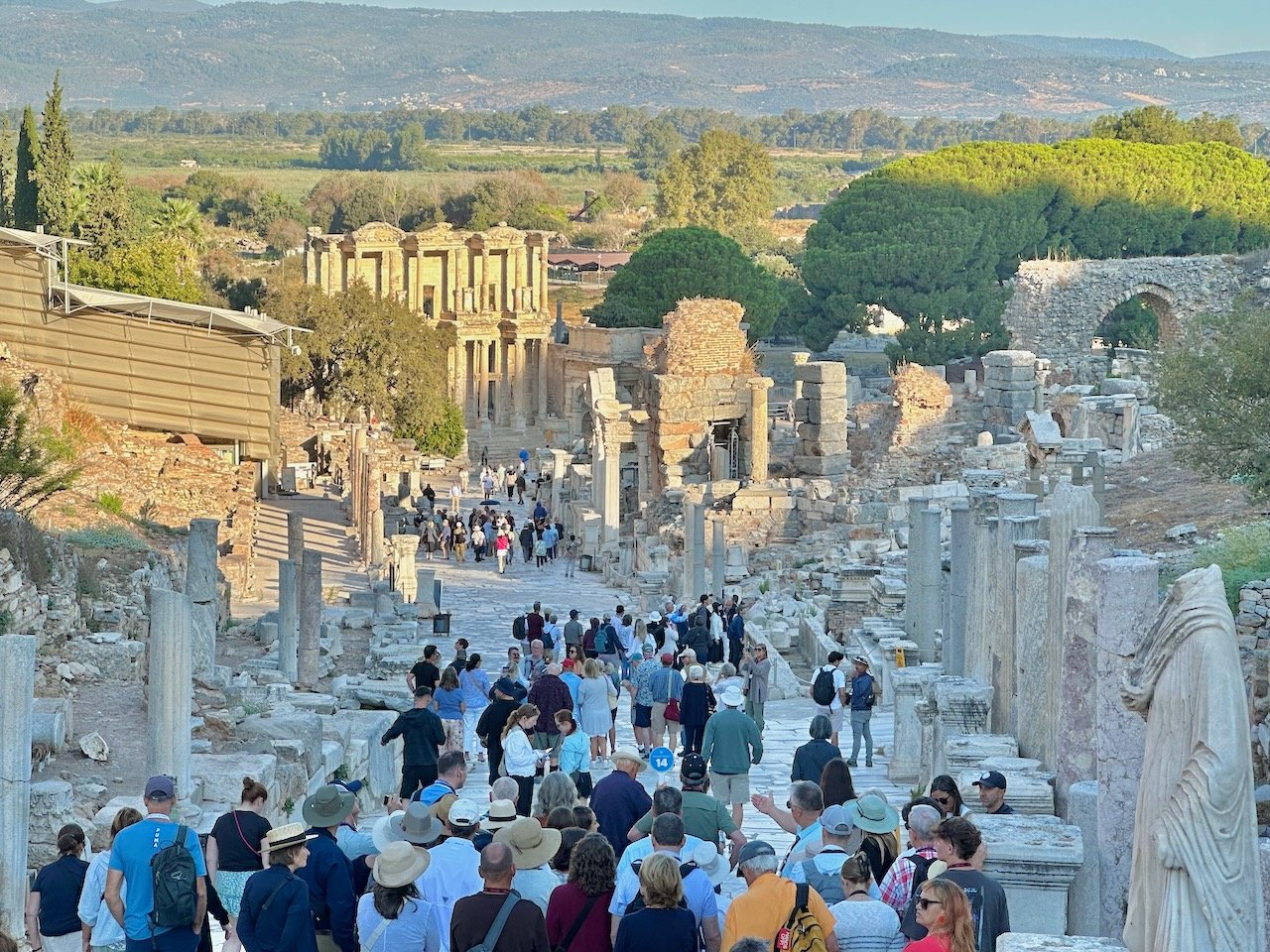
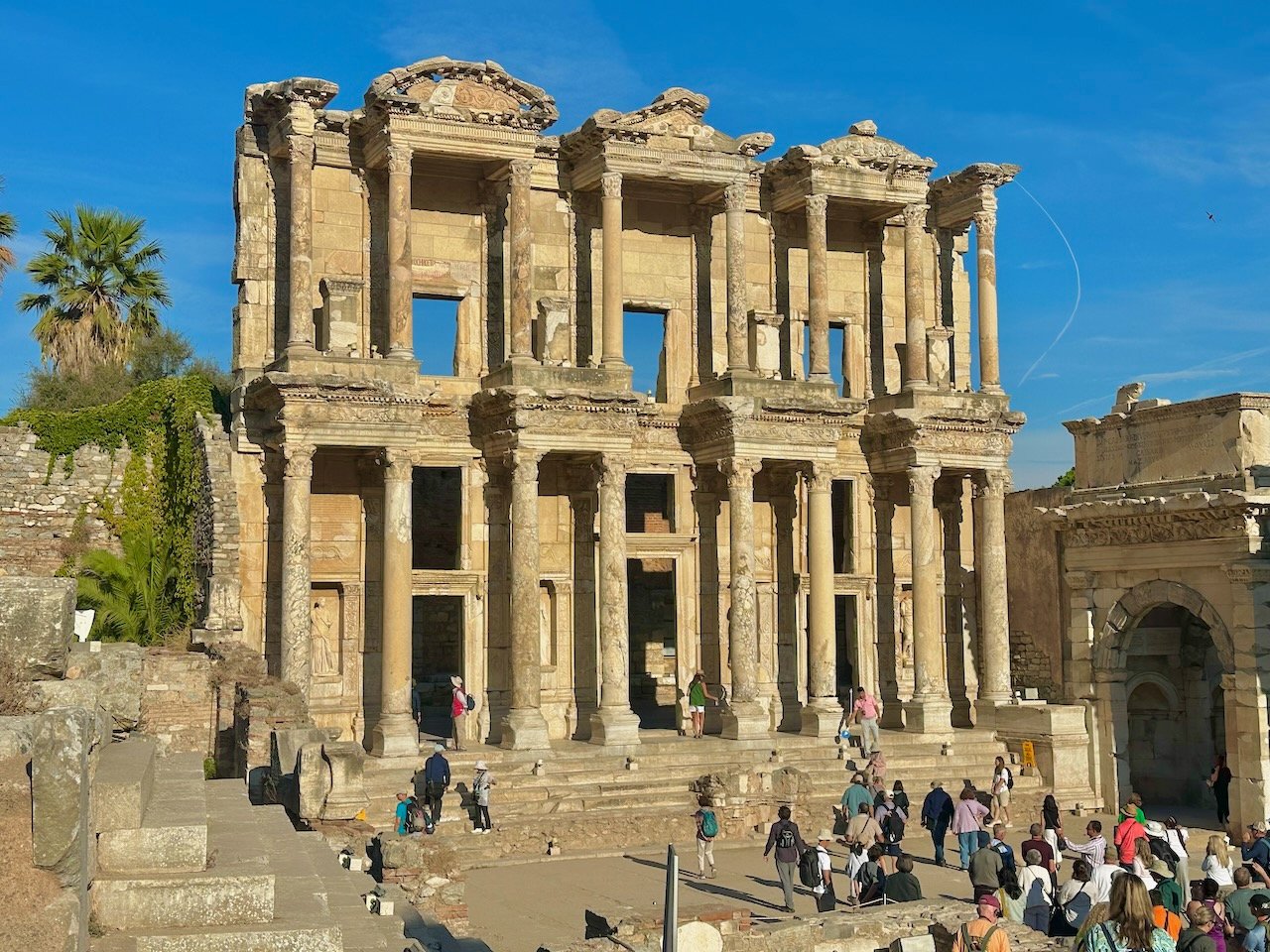
Starting from the upper part of the city and walking on the ancient 2nd century BC stone pavement (used by Paul later) towards the port, we past by a vast number of archaeological ruins. This included the odeon (small theater), statues, pillars, arches, inscriptions, public latrenes, and the Celsus Library (which dates to the early 2nd century AD). Sitting together in the agora, we read portions of Acts 19 about the dramatic event that took place in the grand theater. It held about 22,000 people! Seeing the city and knowing about the Temple of Artemis (Diana) that once stood here helped us understand the challenges Paul faced in sharing the kingdom message.
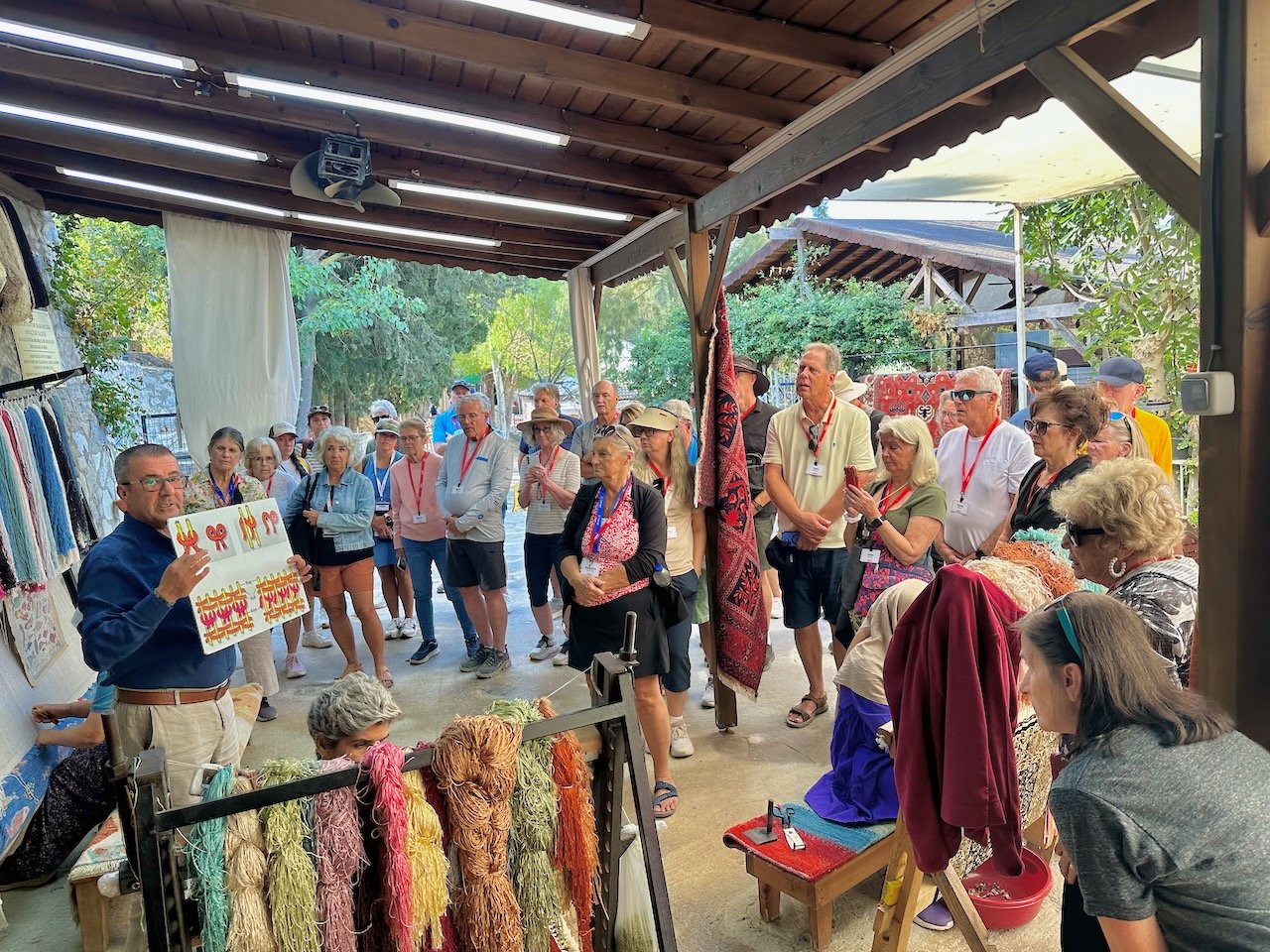
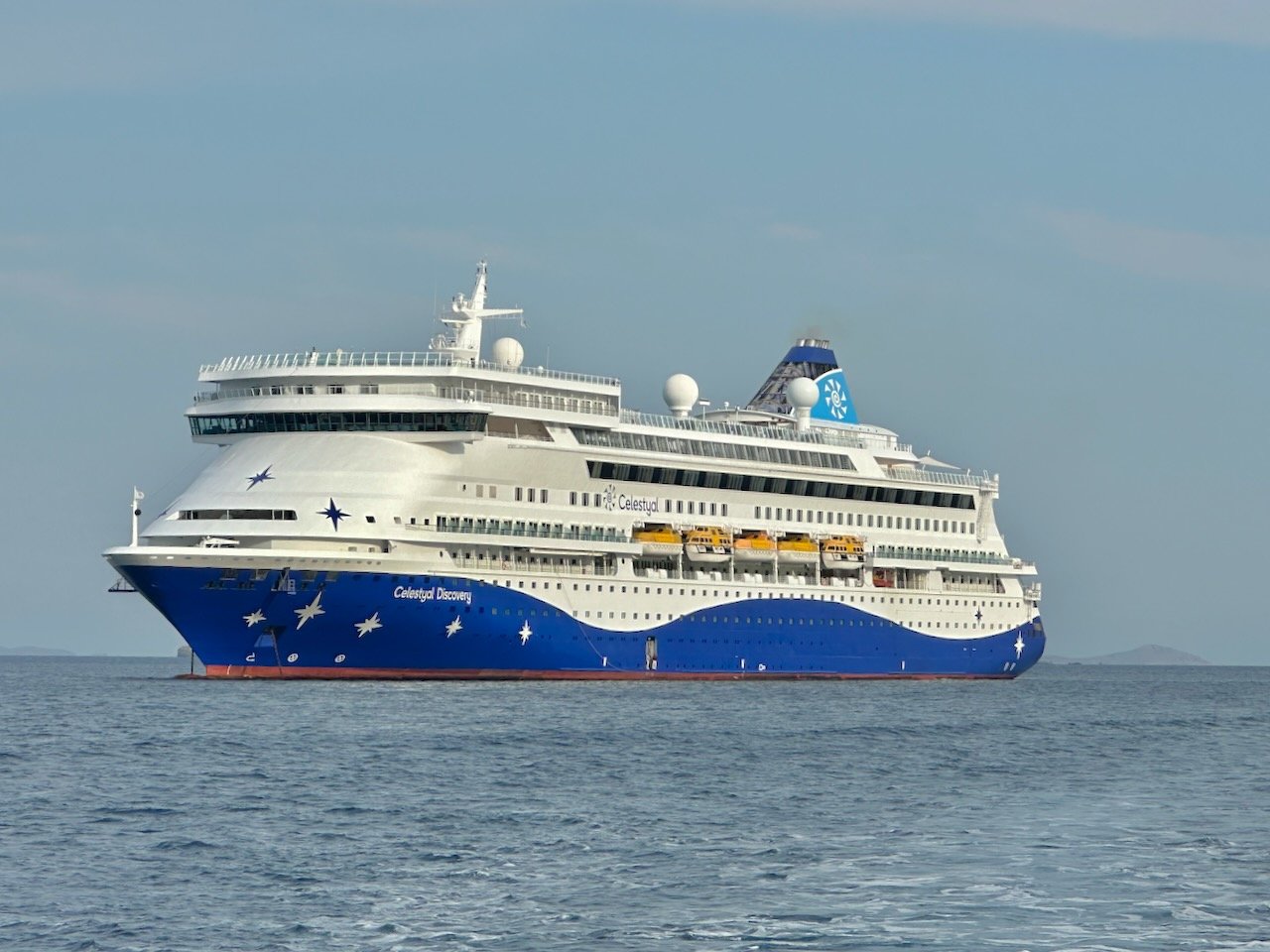
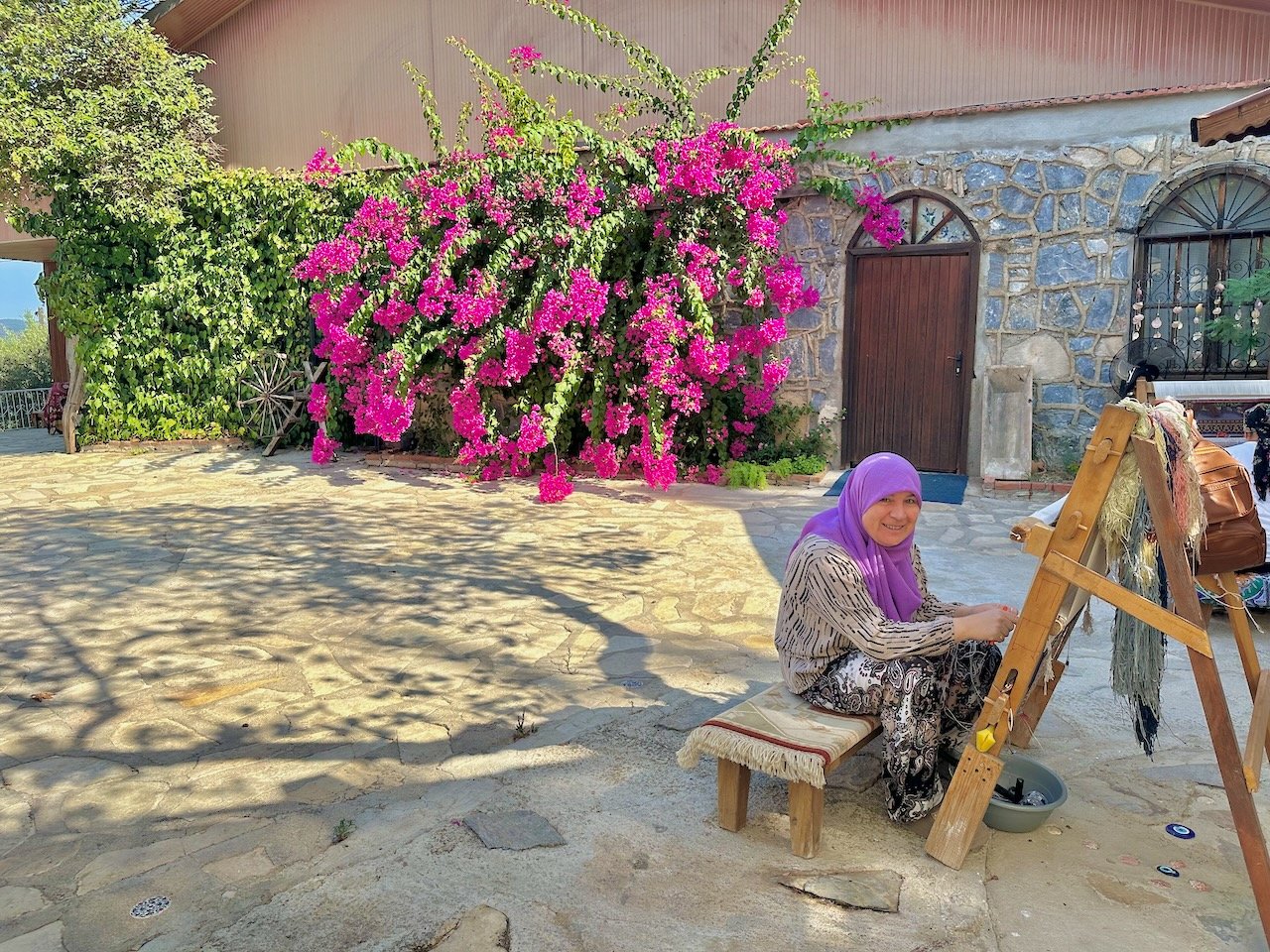
On the way back to the ship we made a stop at a local rug shop/store (it’s an unavoidable part of the excursion deal). It was very interesting to learn how Turkish rugs are made, whether from cotton, wool, or silk. Shortly after noon we re-boarded the ship and enjoyed lunch and some free time. It was fun being on the deck as the islands past by.
Patmos
As we set sail out of Kusadasi for the southwest, we past by the narrowest opening, with the coastline of Turkey on our left and the island of Samos on our right (Acts 20:15). Paul stopped here on this mountainous island at the end of his 3rd mission journey en route back to Jerusalem. Following passing Samos, we gathered for a brief teaching on the “world of Paul.”
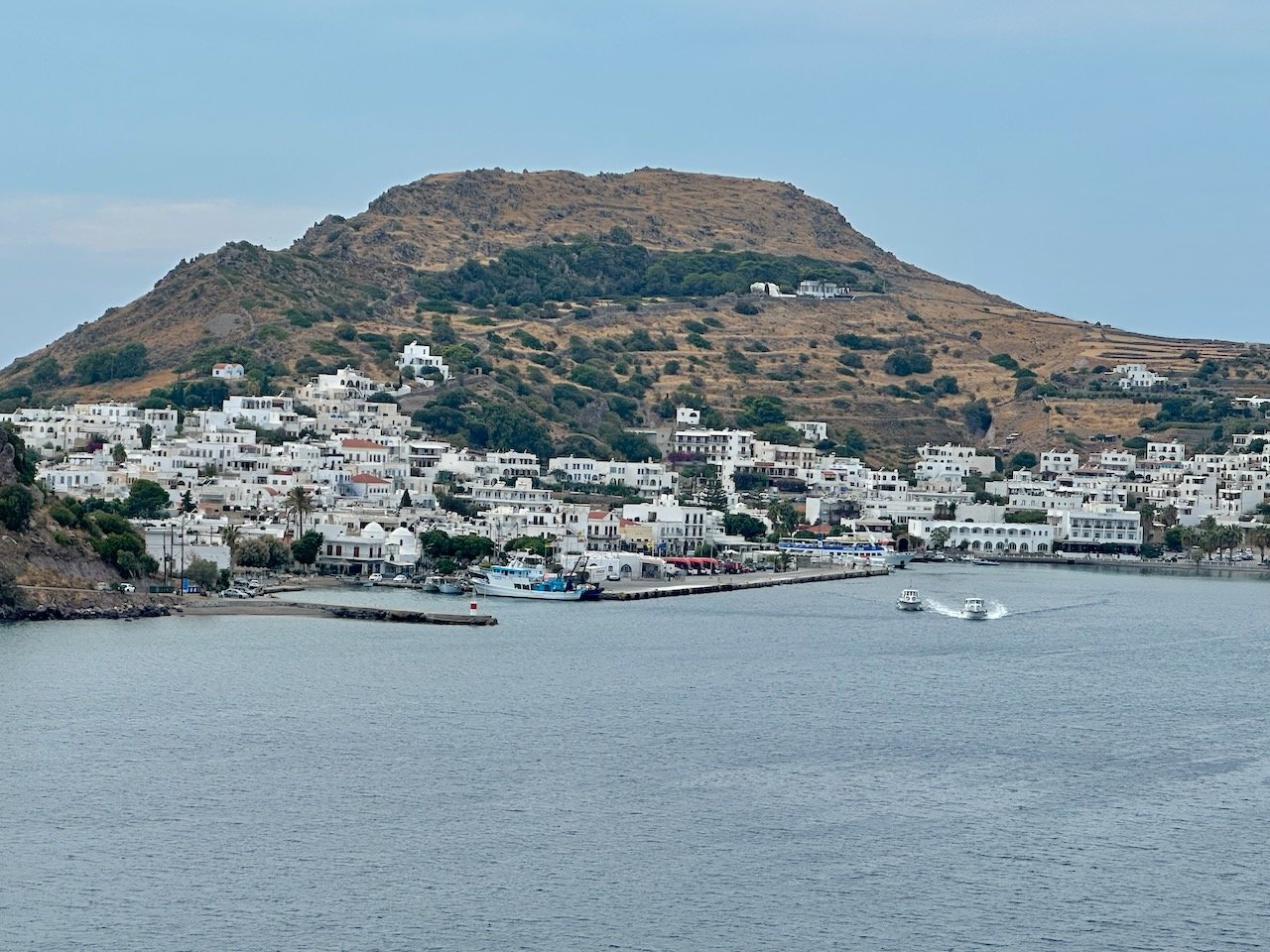
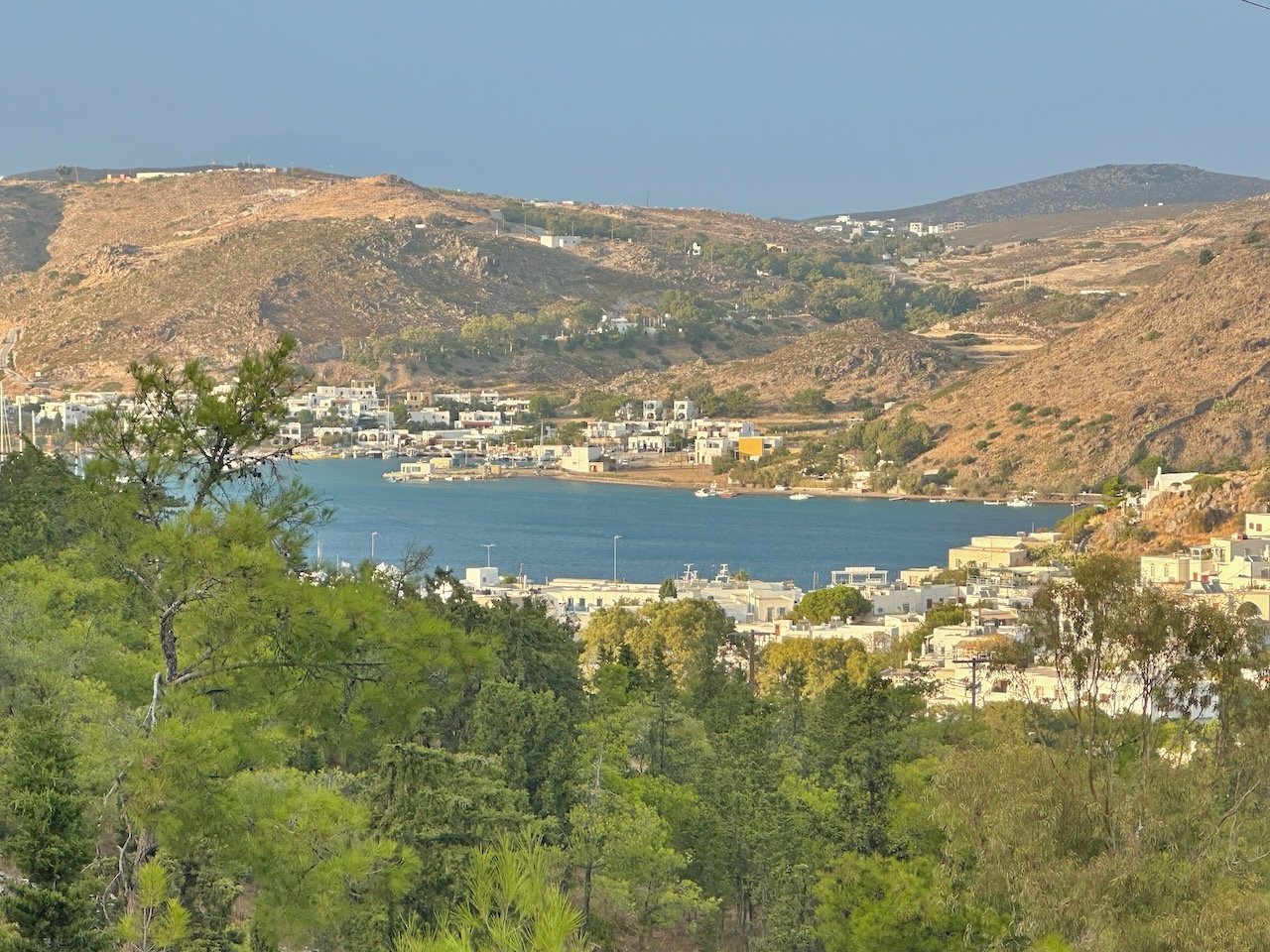
Later in the afternoon we gathered on the top deck as we approached the island of Patmos. This island is another one of the picturesque Greek islands. While imprisoned on this island, the Apostle John wrote the Book of Revelation from here (Dr. John believes prior to 70 AD, not in 90 AD). To get to the island, we had to use tender boats. Upon arriving on the island, we gathered a short distance away from the port to read portions of Revelation 4 and 5. We celebrated the promise of Christ’s redemption and victory over evil, His Second Coming, and the establishment of a new (renewed) heaven and earth!
After the gathering, many walked up the hiking trail towards the Grotto of the Apocalypse (a very traditional stop where John supposedly was imprisoned and received his vision). The view from here is spectacular! While some continued higher, most returned to the port to enjoy walking around and shopping. We all took the tender boats back to the ship for dinner on our own. During the night hours while we sleep we sail to the island of Rhodes.
This visit to Patmos reminded us that Revelation is a victory book written by John who was exiled here, that gives praise and honor to Jesus Christ!

Day 9 – Wednesday: September 23: Rhodes: Lindos & Old City
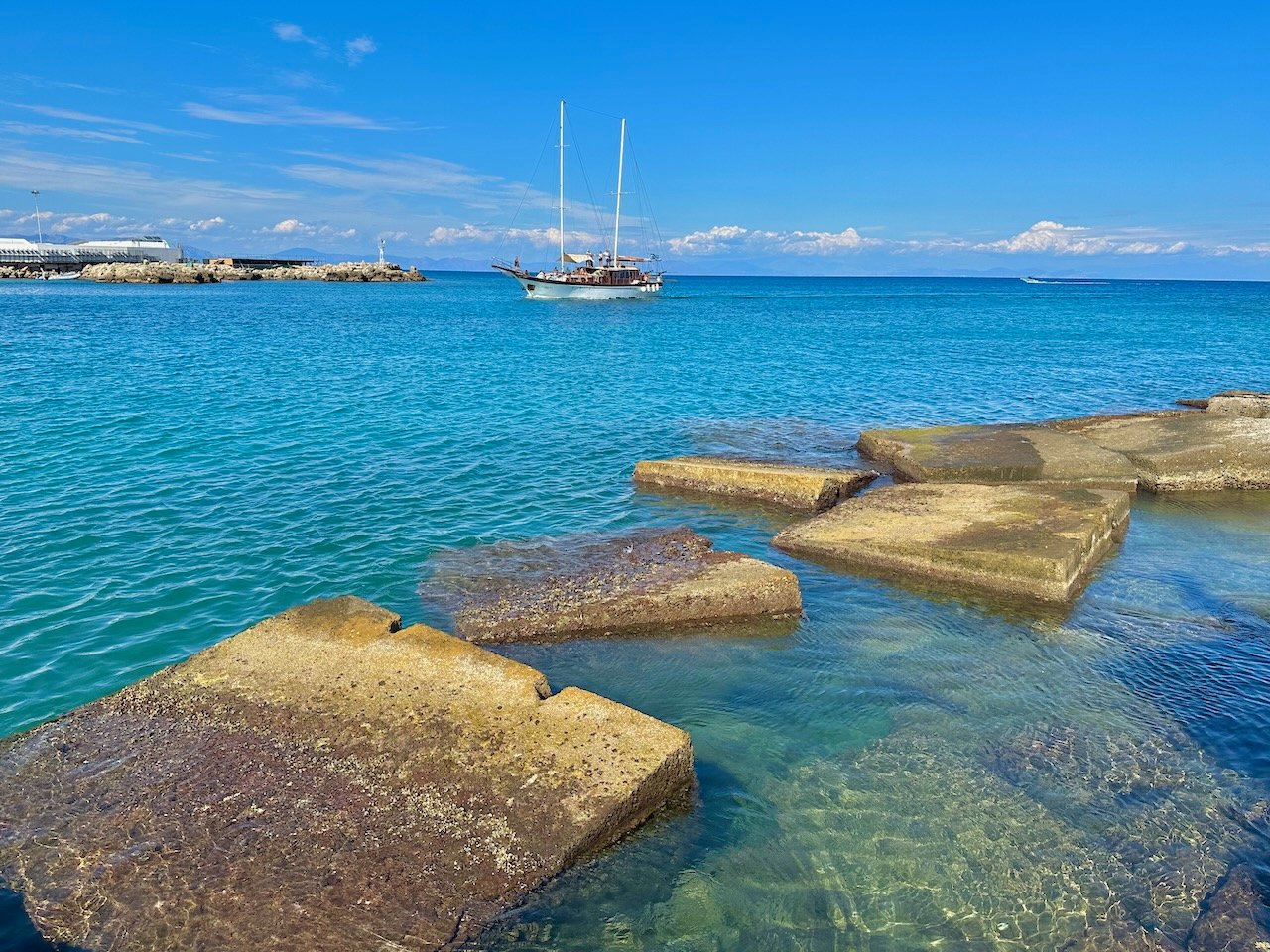
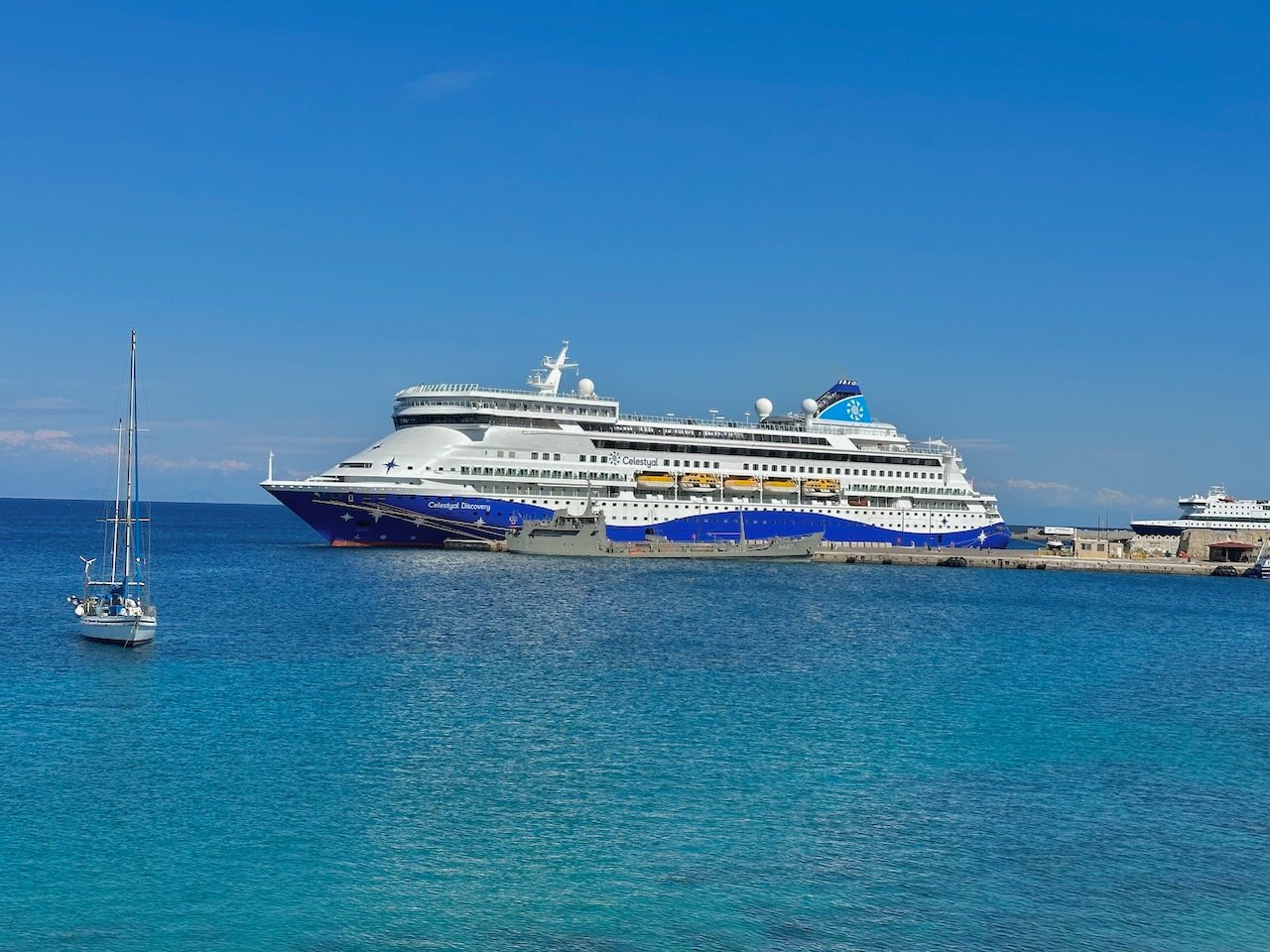
Today we spent the entire day on the Island of Rhodes. Wow, what a great day and a beautiful island! During last night, we sailed to the side of the island where in ancient times was a Colossus statue that stood 110 feet tall (it was built in 304 BC over a 12 year period). The weather was amazing again, with full sun, and highs around 80. Following breakfast, we gathered on the ship at 8:30 a.m. for a time of Scripture. We read from Acts 20 and 21 as we began the day.
Lindos
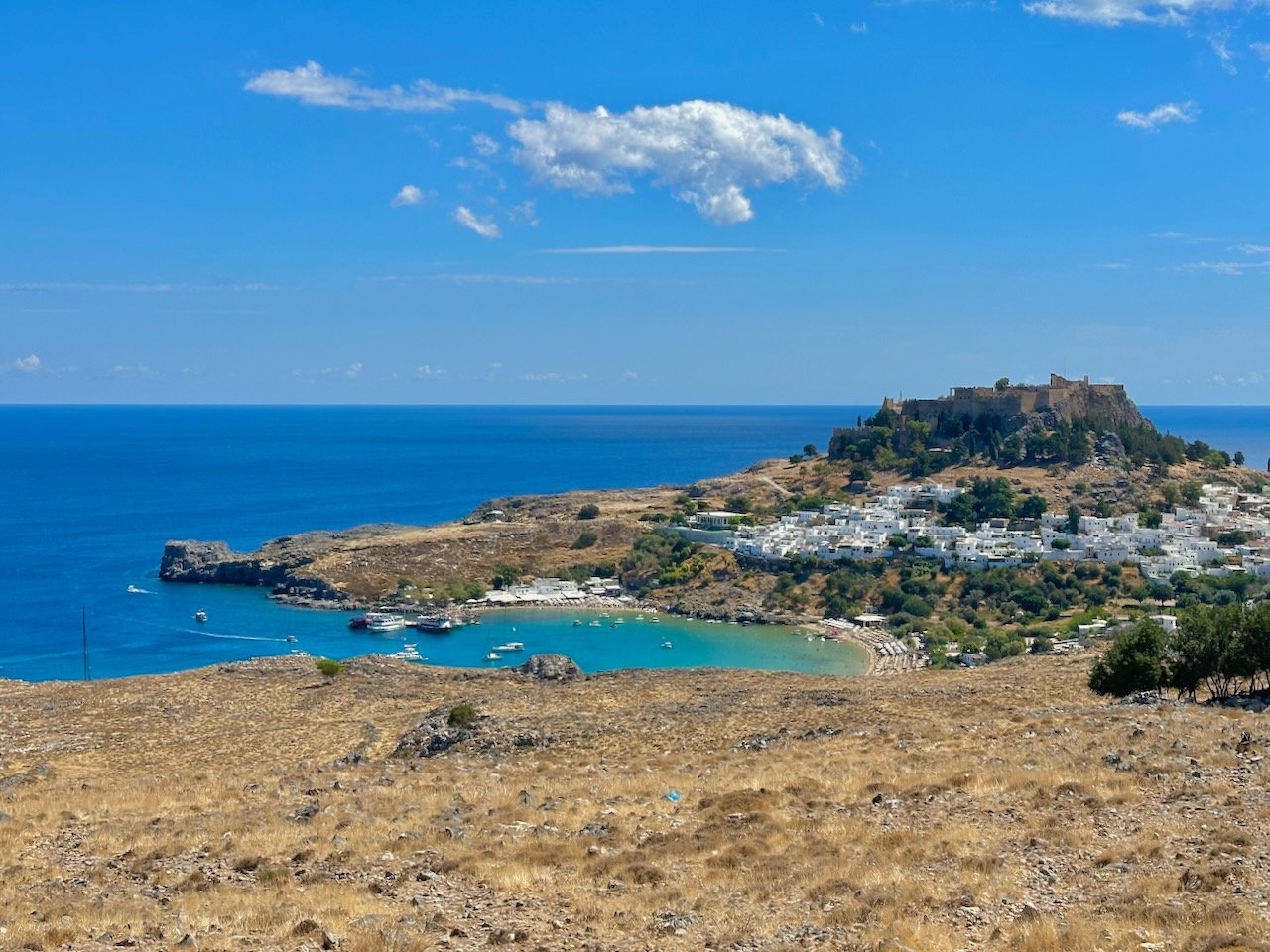
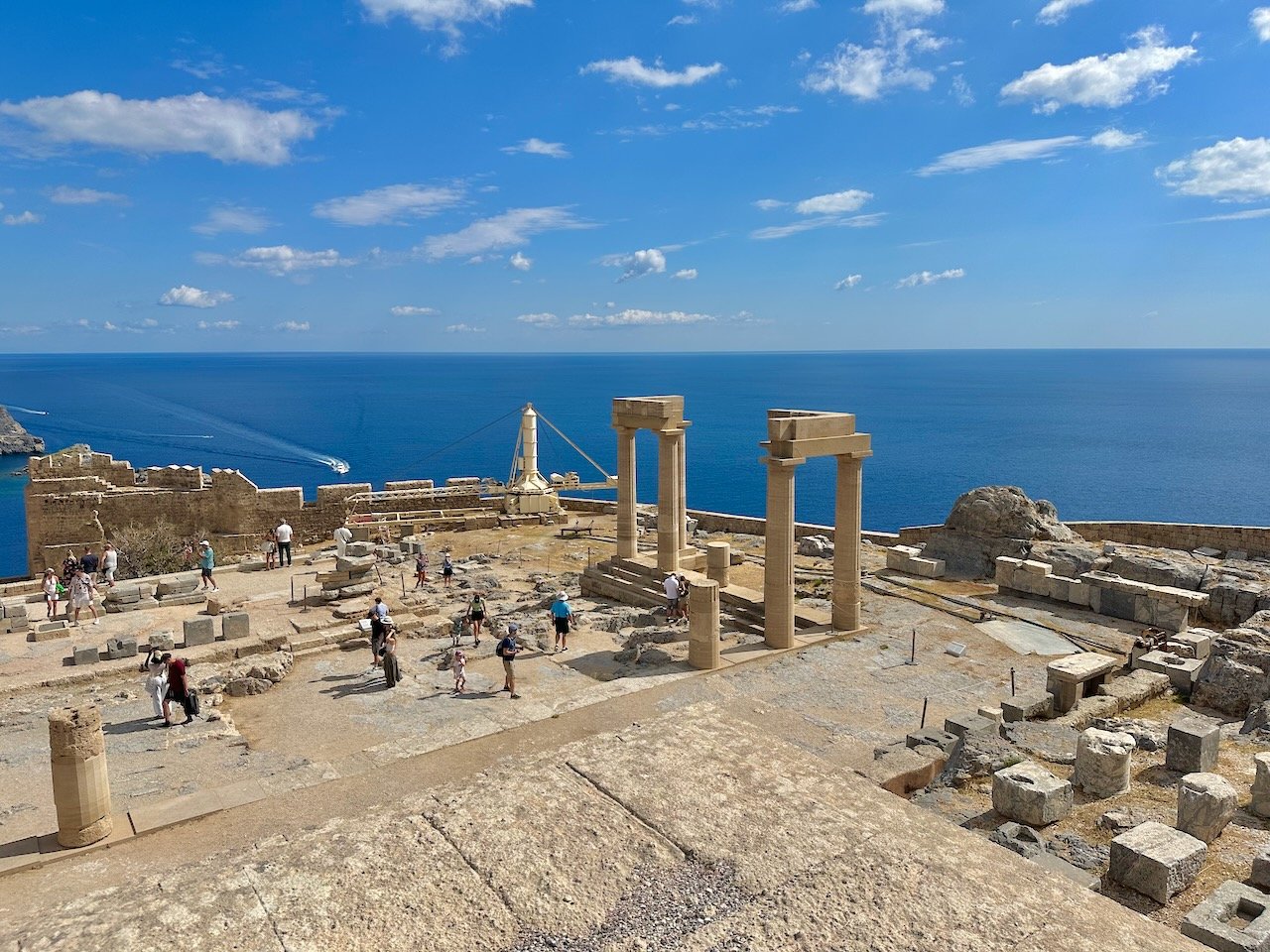
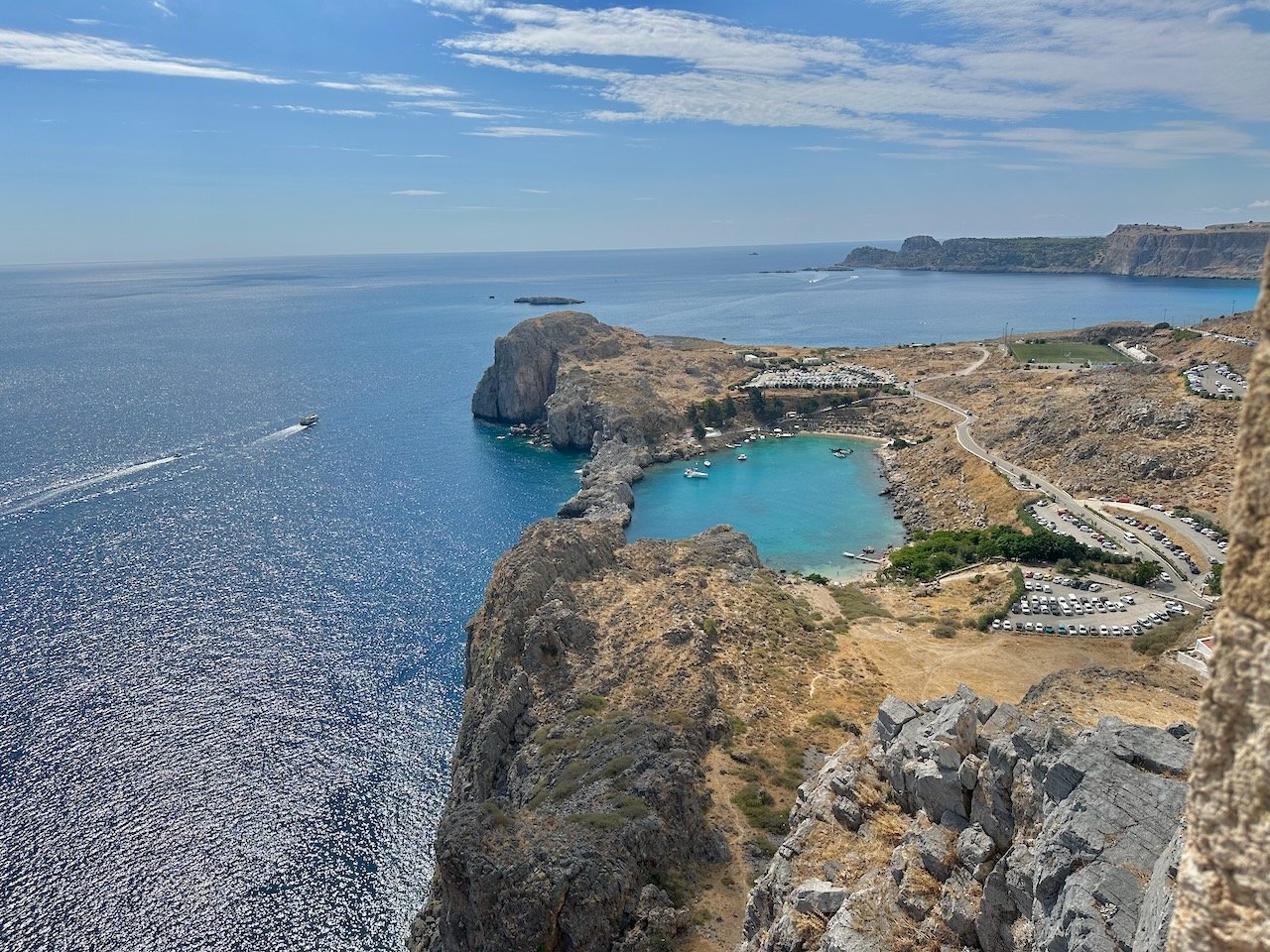
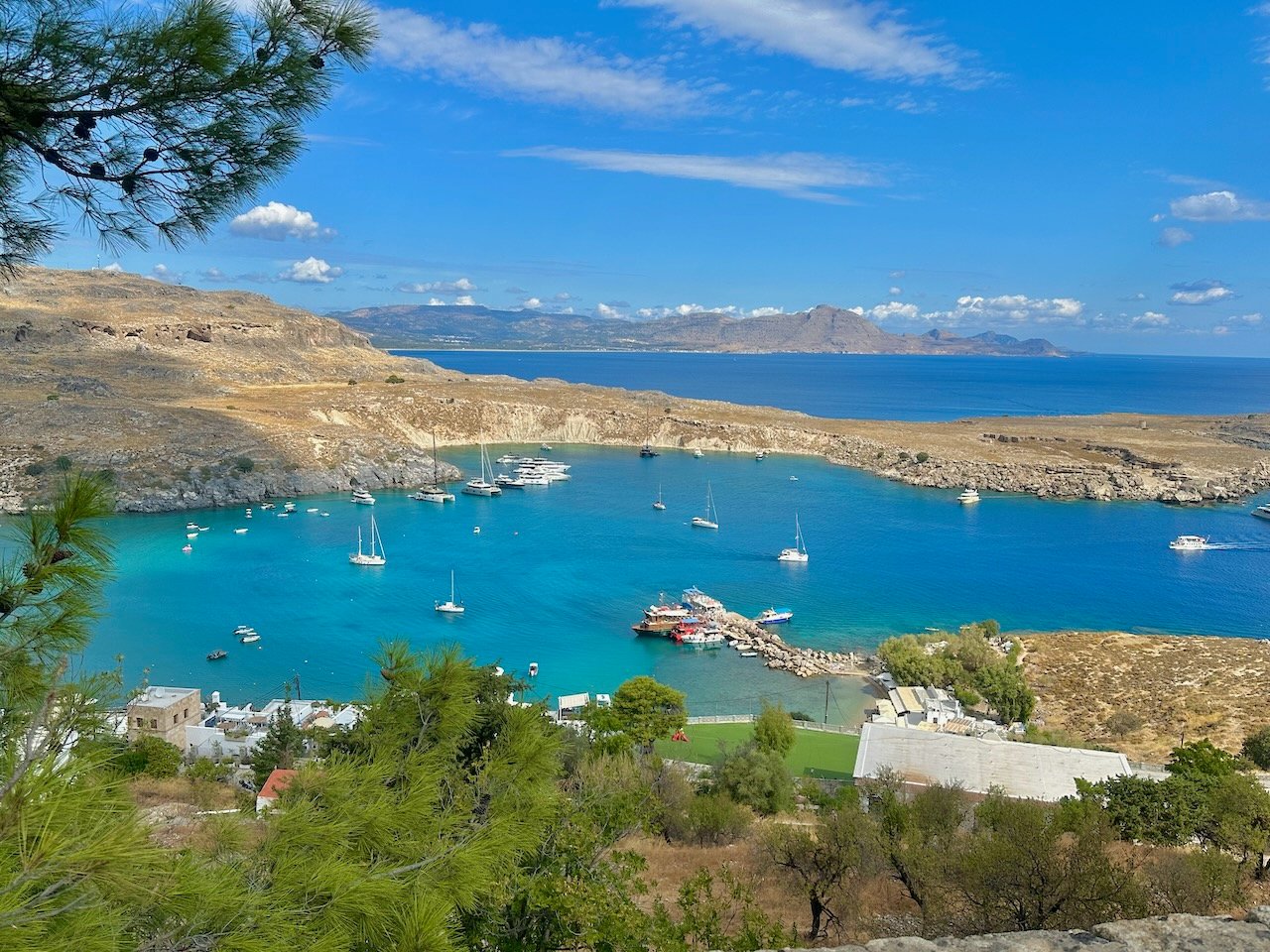
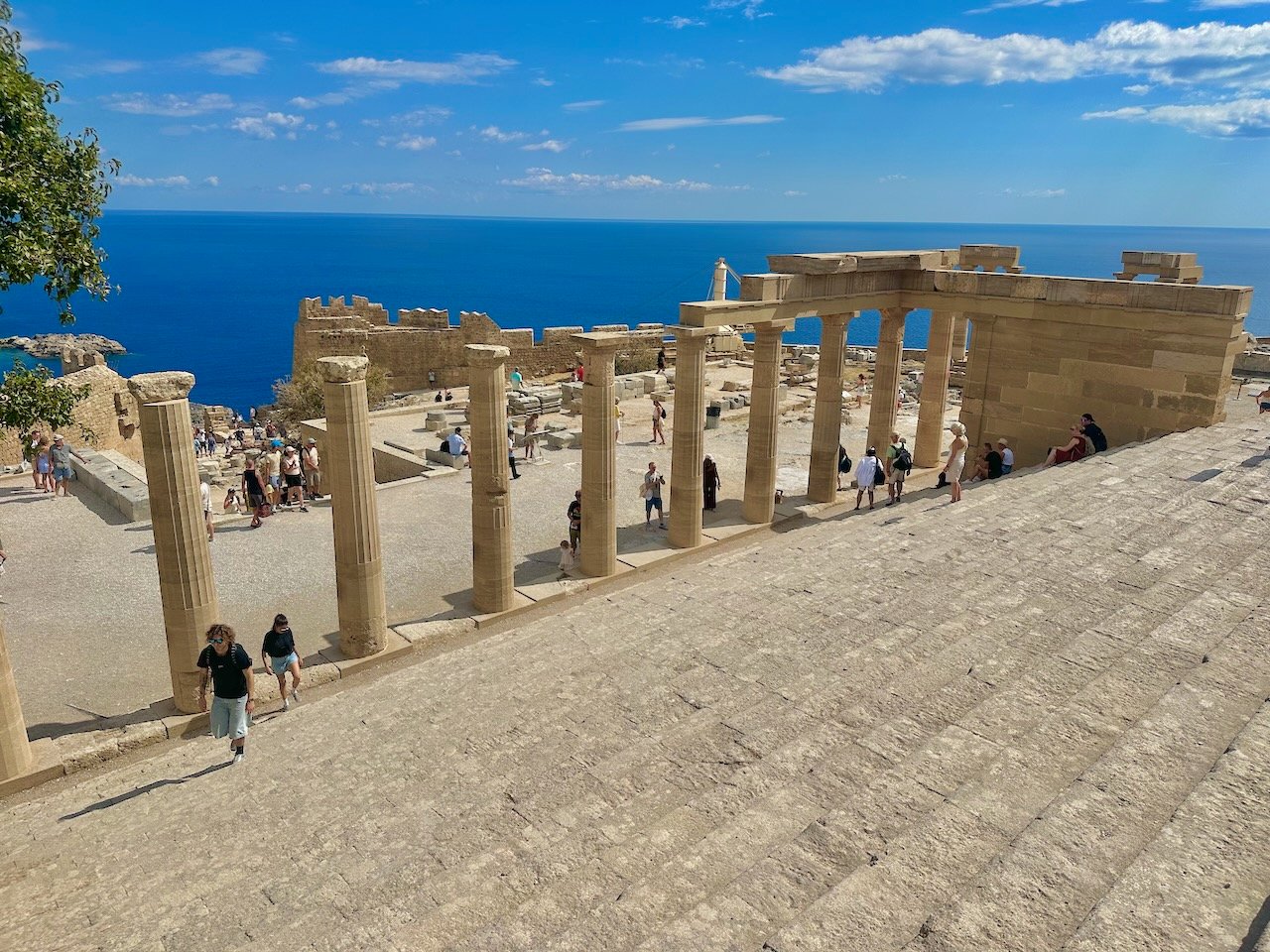
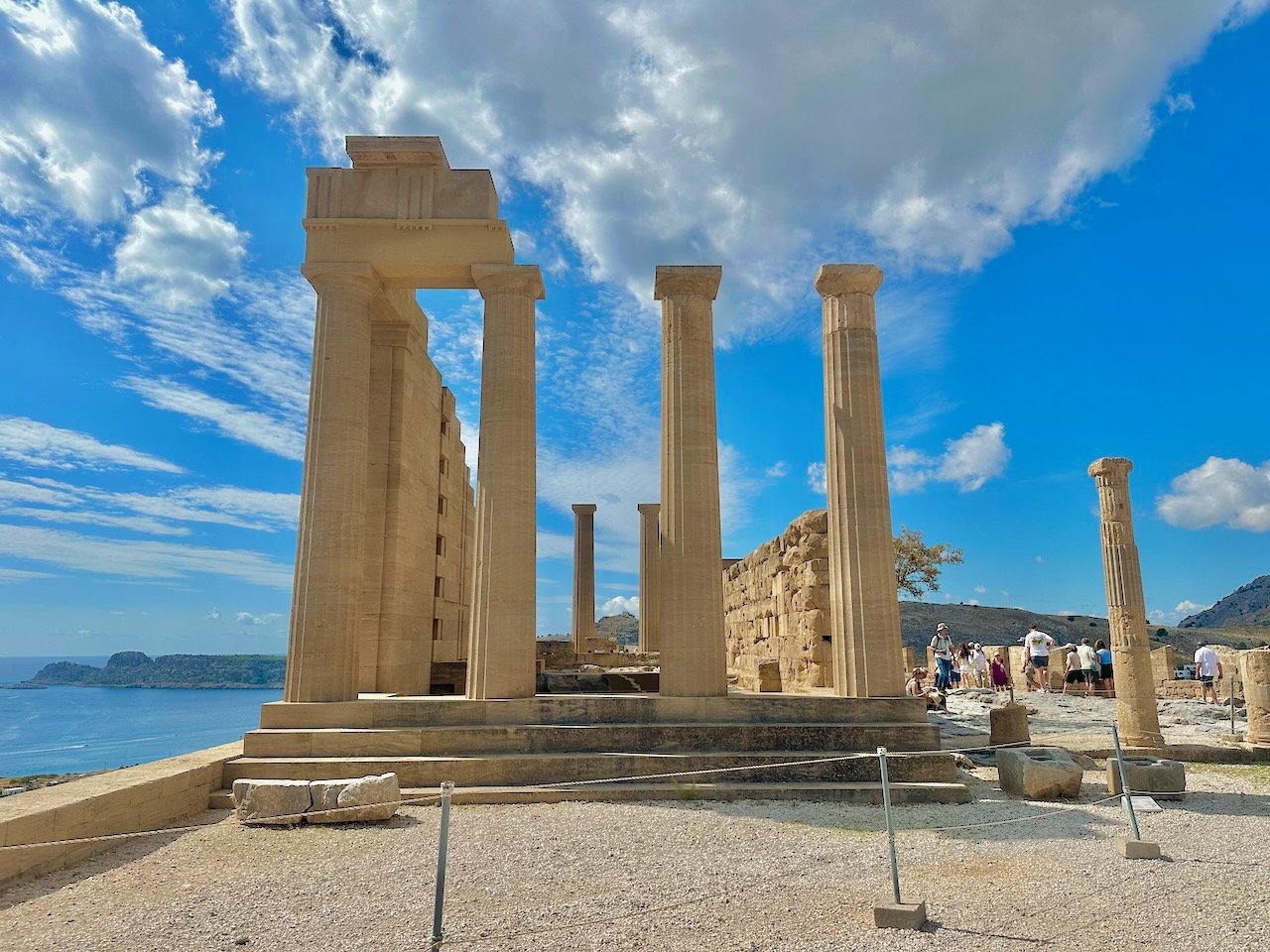
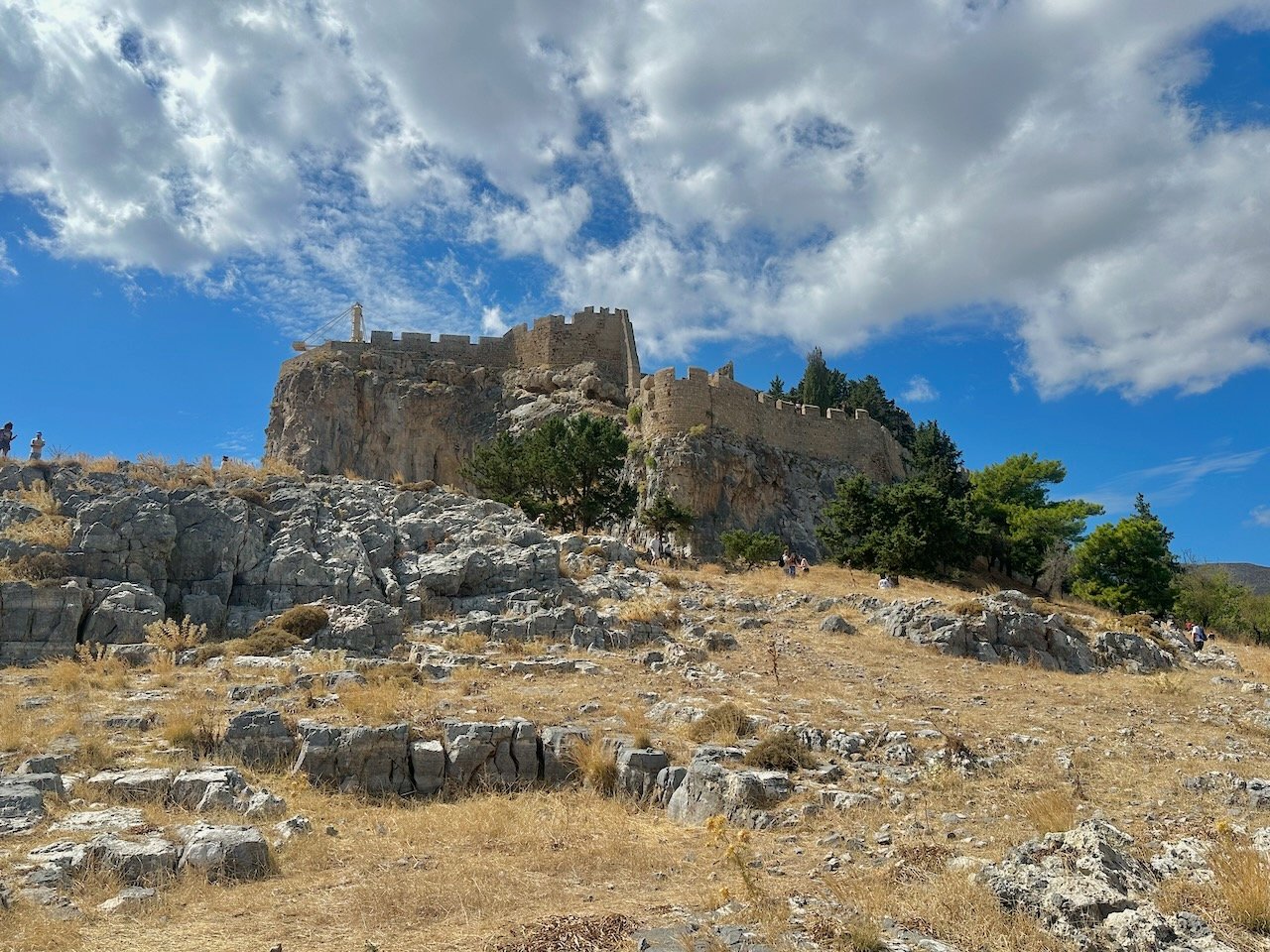
Following our gathering and debriefing, we left the ship and boarded our “rented” bus to Lindos. Located on the other side of the island, it took about 50 minute to get there. Once we arrived, we climbed to the top of the impressive Acropolis of Lindos. The Temple of Athena – Lindia (as it is called) was here among other ruins from the Greek and Roman period. The view from the top of the acropolis was stunning in all directions! The “blue” of the water was stunning to behold! After see the acropolis, some walked along the cliff line well below while others enjoyed gyros and ice cream.
Paul stopped at Rhodes (and perhaps this side of the island, although as can’t be sure) on his way back to Jerusalem at the end of his 3rd journey (see Acts 21). He also would have sailed past Rhodes at the start of his voyage to Rome.
Rhodes Port/Harbor
We drove back to the harbor (where the Colossus was), arriving about 3 p.m. Today in this area of the harbor there is a large enclosed walled city (three miles in total distance!). This 14-15th century AD castle was built by the Knights of St. John. Some in our group explored the “old city” on their own while others headed back to the ship. Some saw where the famous 110-foot high Colossal of Rhodes supposedly stood! We all boarded back on the ship by 5:30. We will sail to Crete during the night and arrive there tomorrow morning.
PS. Tonight at 8:30 (following dinner) we plan to enjoy an optional gathering of karaoke singing. It should be really fun!
Day 10 – Thursday, September 24: Crete & Santorini
Today was our last day of the cruise and it was another wonderful one! It was also another perfectly sunny day, with temps around 80. The Greek islands are known for its blue skies and beautiful islands. The morning began with a full buffet breakfast once again. We then all met on the 9th deck where we read from Acts 27 as we prepared to leave the ship at 7:30.
Crete
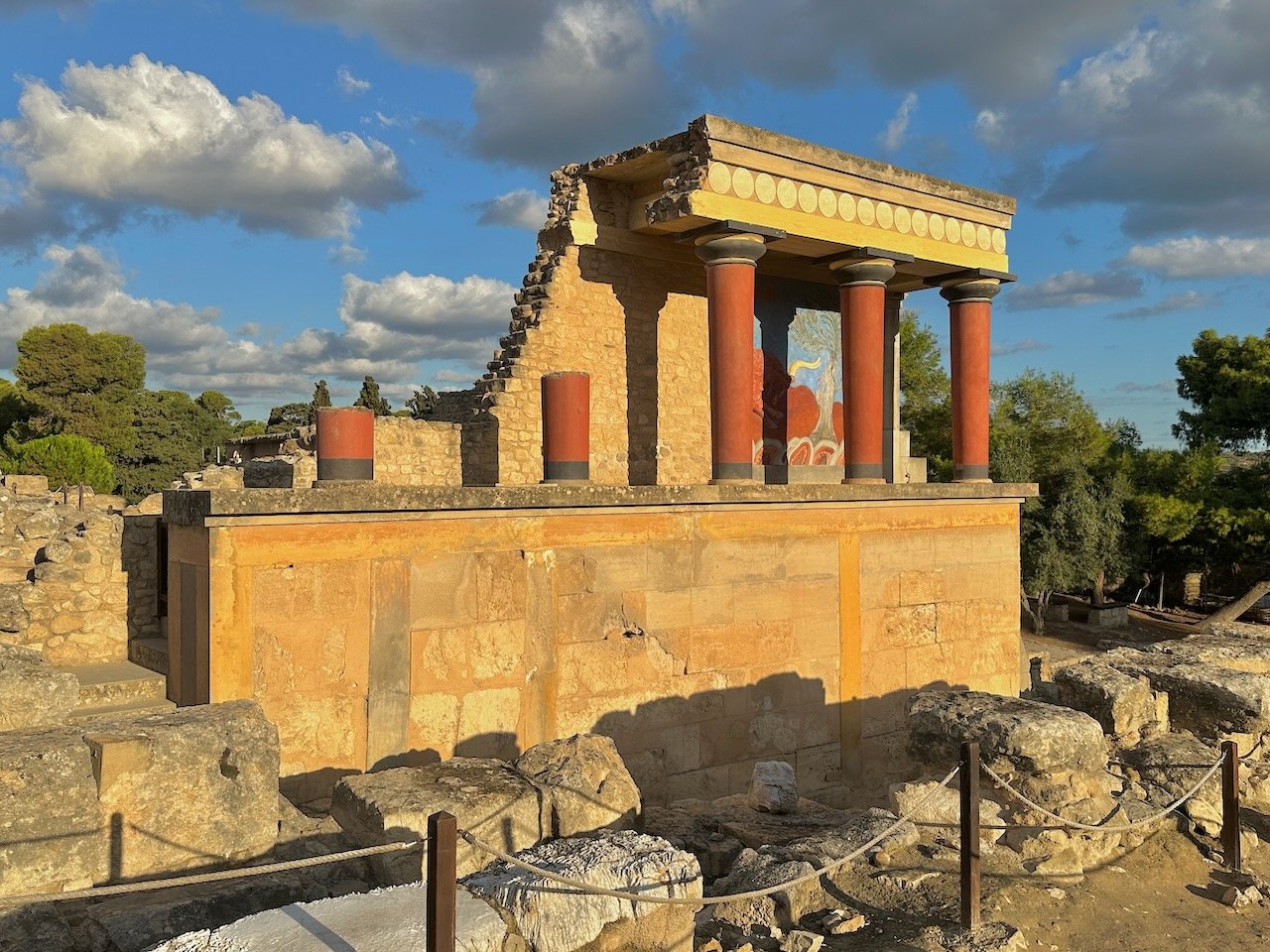
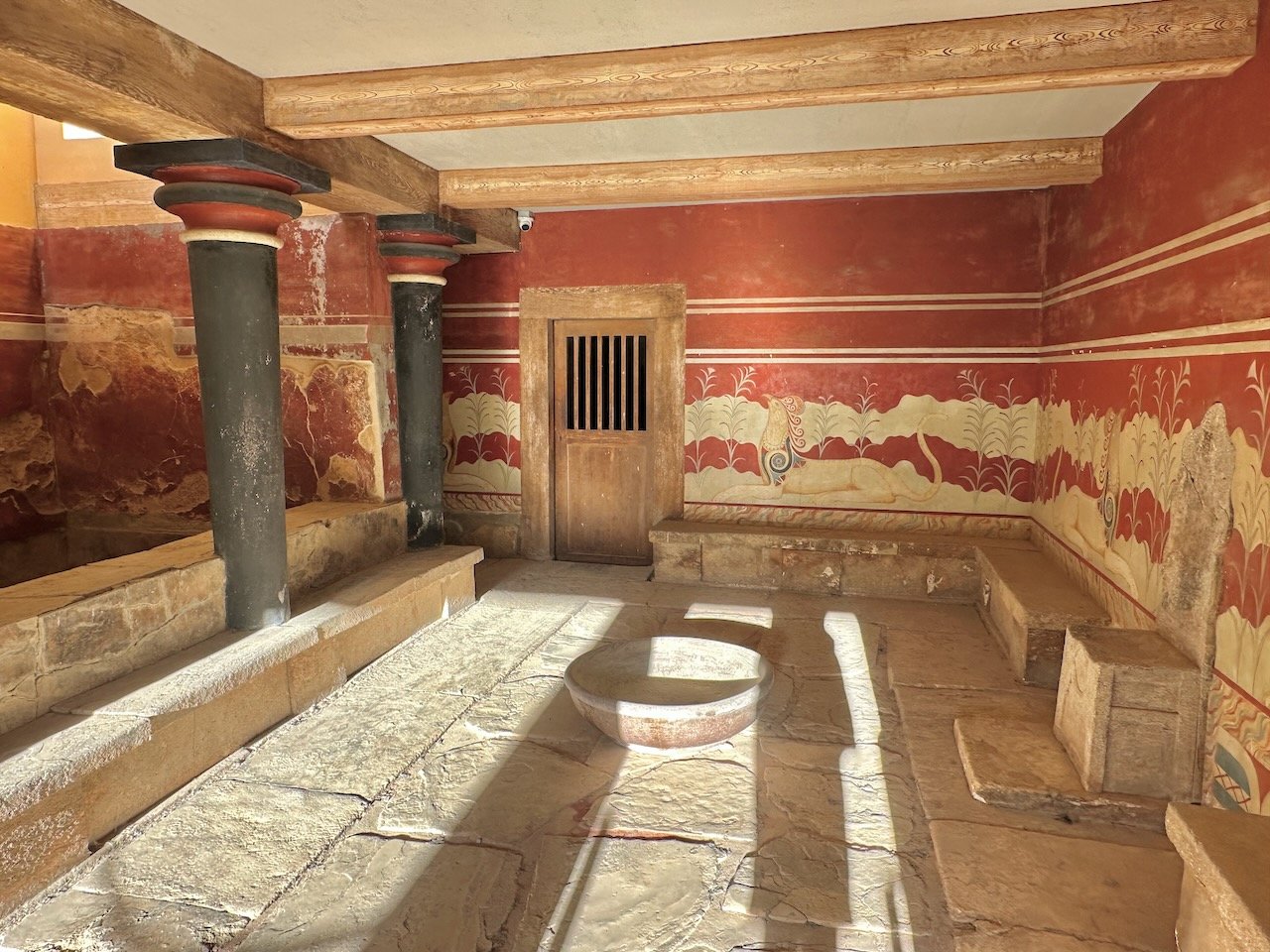
Once we disembarked the ship, we met our local guide and boarded our bus. The excursion here on the island of Crete first took to the Knossos excavations. Here we saw the archaeological discoveries of the Minoan civilization. They were probably one of the forerunners of the Philistines. Most suggest Caphtor (in Jeremiah 47:4, Amos 9:7) is the ancient island of Crete, while they were called the Sea Peoples by the Egyptian Pharoah, Ramses III in the late 13th-12th century BC.
As for the Minoans, this people group dates back to about 2,000 BC (about the time of Abraham). At Knossos we saw the restored palace area, with many frescoes and other ruins. Biblically in the New Testament, it was Paul who left Titus here on this island, giving instructions on appointing church leaders in the towns (Titus 1:5ff). Also, Paul himself would have sailed around the lee of Crete (Acts 27:7) on his way to Rome. They found refuge from the wind in the port called Fair Havens (which we did not see) on the southern side of the island.
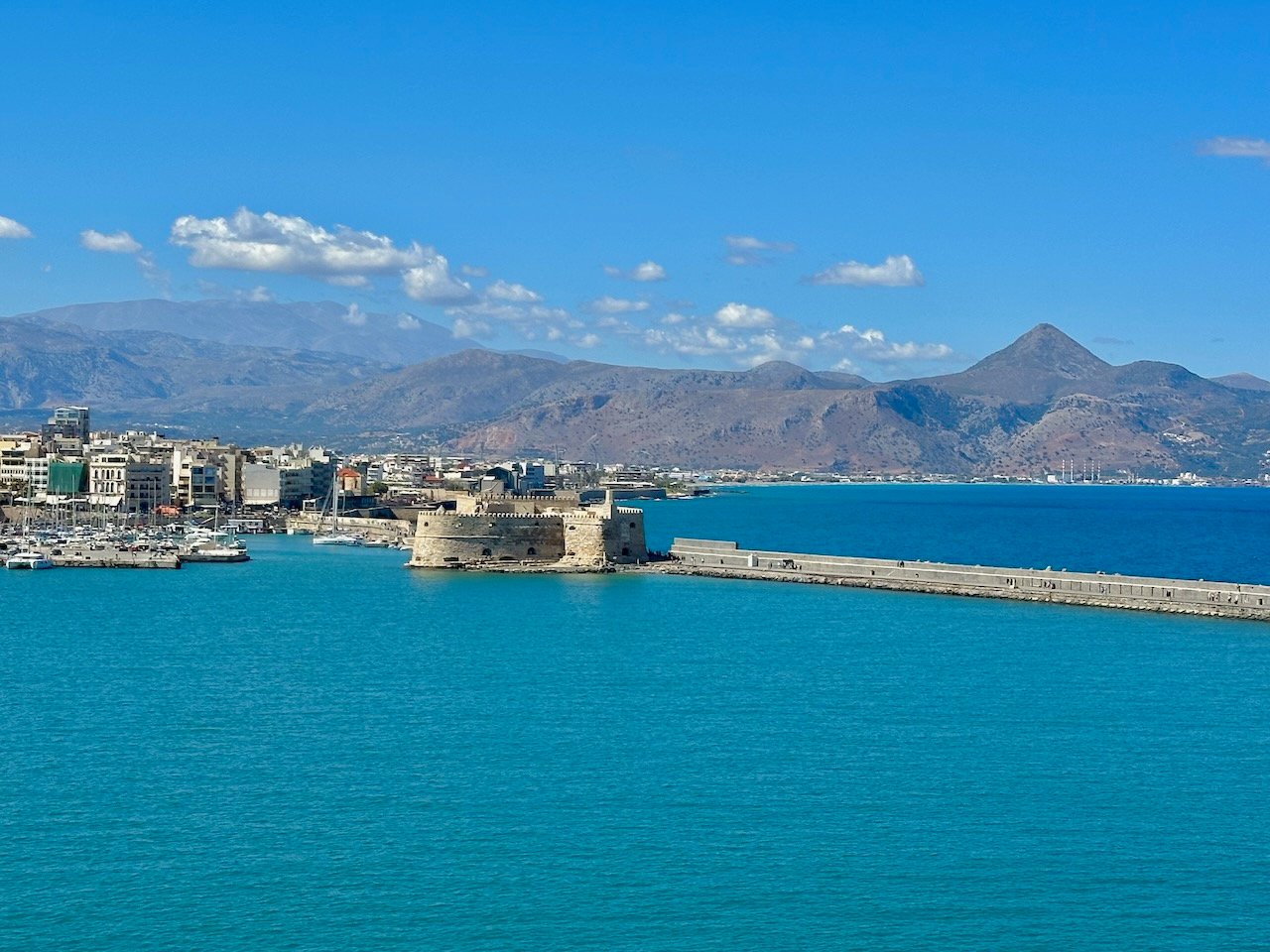
Before leaving the island we enjoyed some free time walking around the shops and stores at the town square of Heraklion. A few of the ruins from the Venetians can be sen here as well. Many of us bought olive oil, since Crete is well known for having the best! Many also walked down to the water’s edge and take in the beautiful blue waters down at the port area. We boarded back on the bus that took us back to our ship.
Santorini
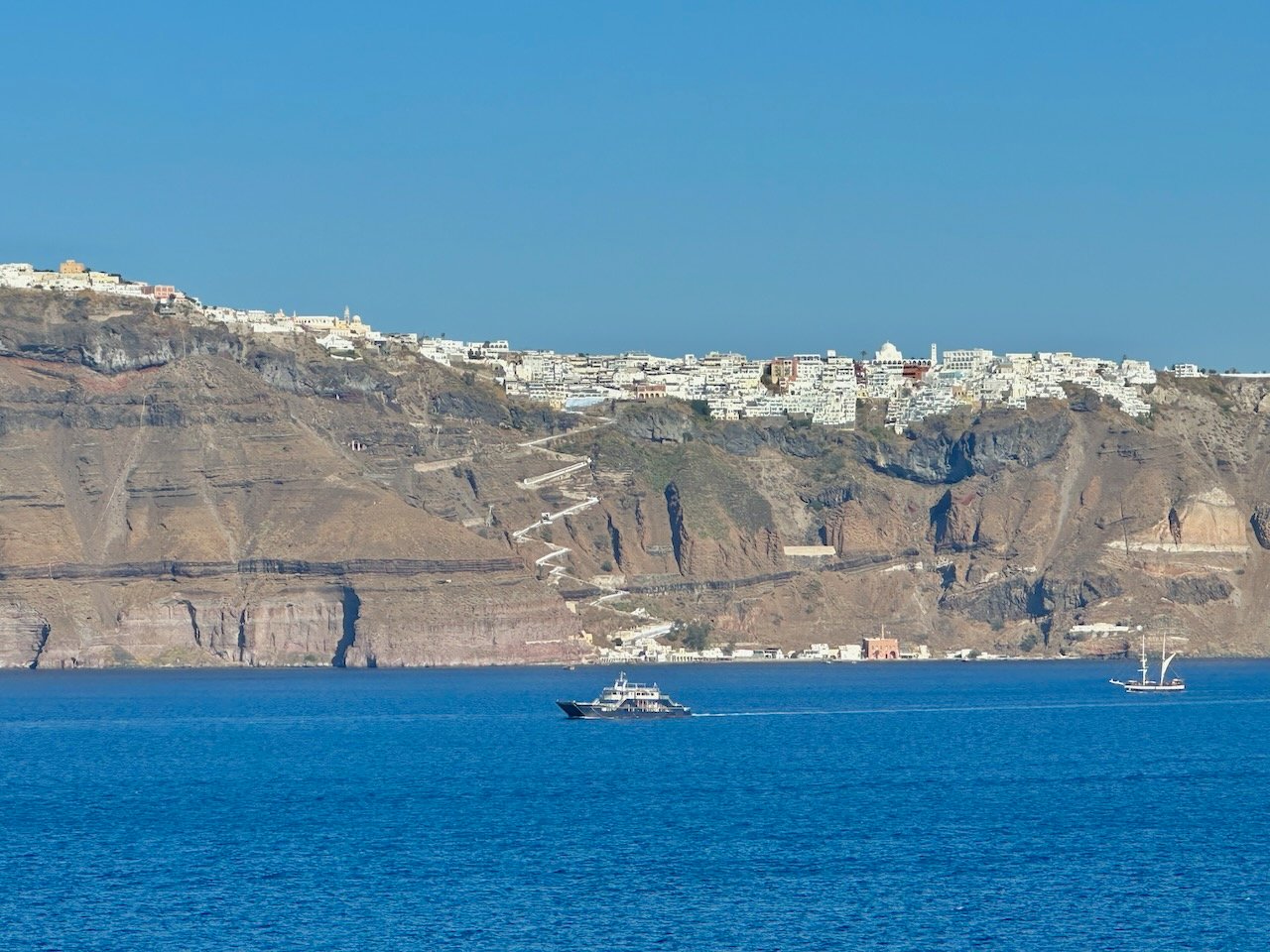
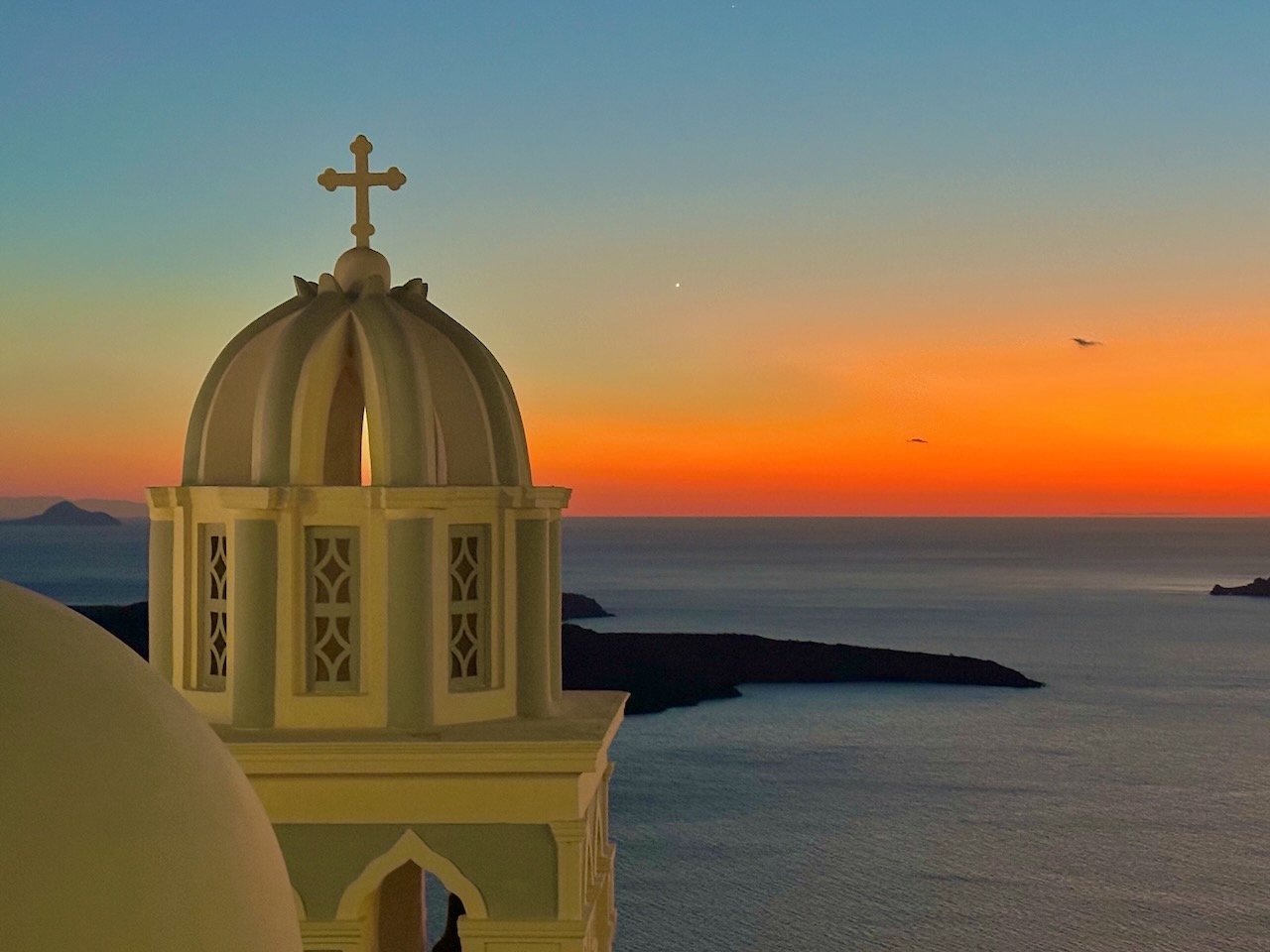
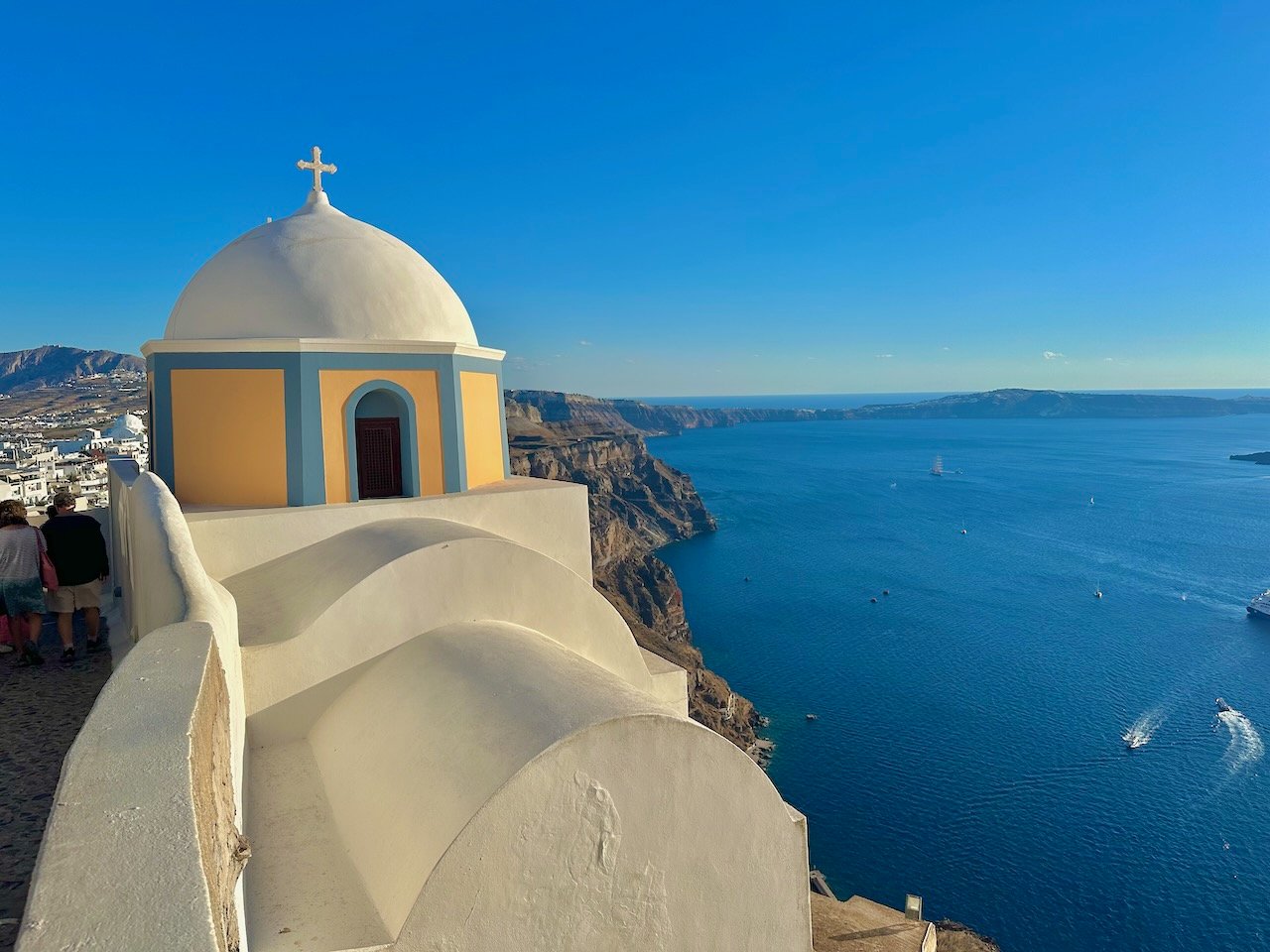
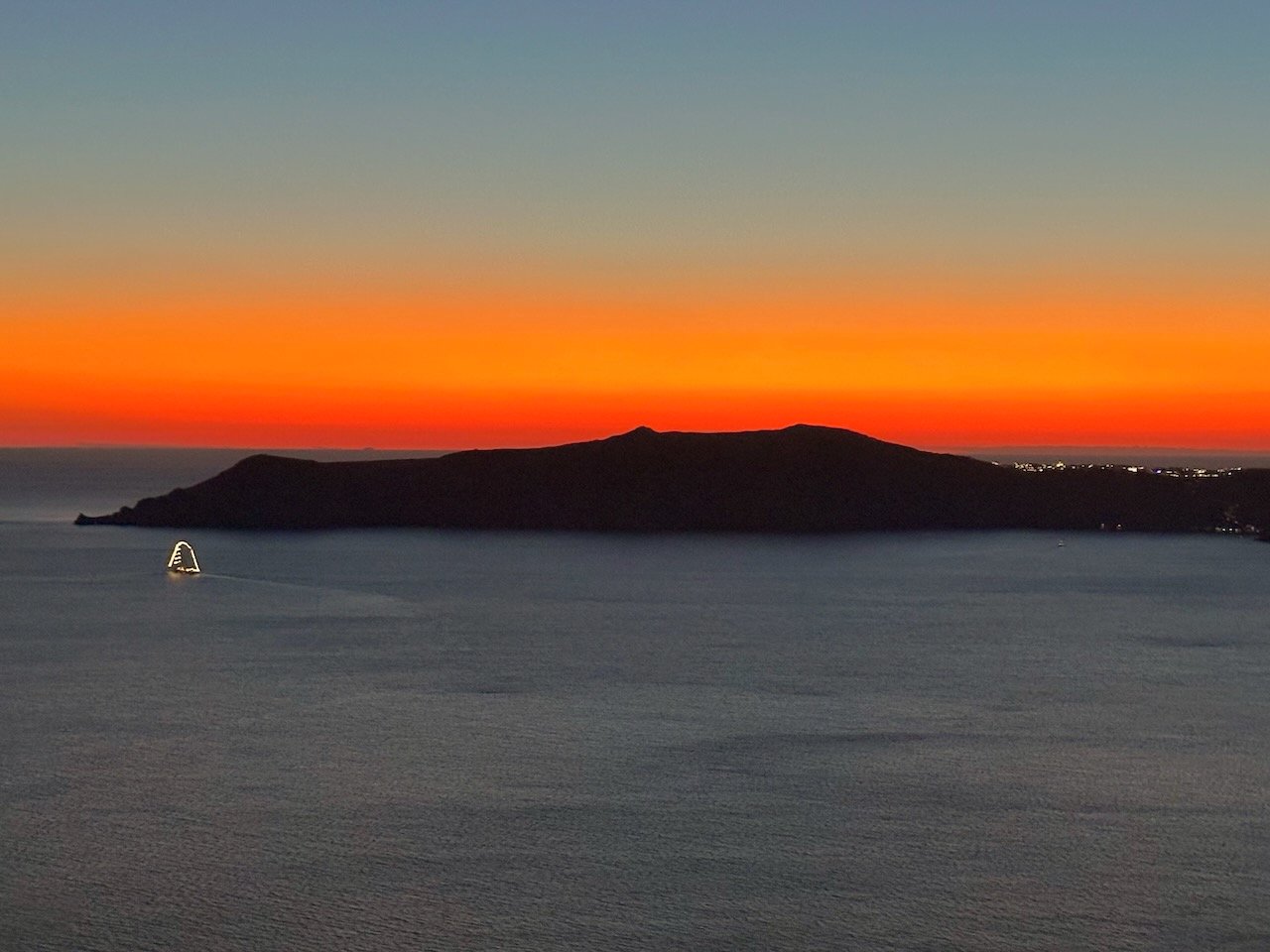
After re-boarding the ship, we enjoyed lunch, some free time, and a brief teaching again about the world of Paul before gathering once again on the top deck at 4:00. The approach into the port of Santorini was incredible. Most of the city is perched high on the edge of this ancient volcano. It most likely erupted around 1550 BC (some suggest specifically 1453 BC) and brought an end to the Minoans living here and in the region (i.e. Crete, Rhodes).
After taking our turn taking the tender boats once again in order to get to the port, some took the cable car to the top of Thira while others walked up the steep donkey path. It is about a 750 foot climb.
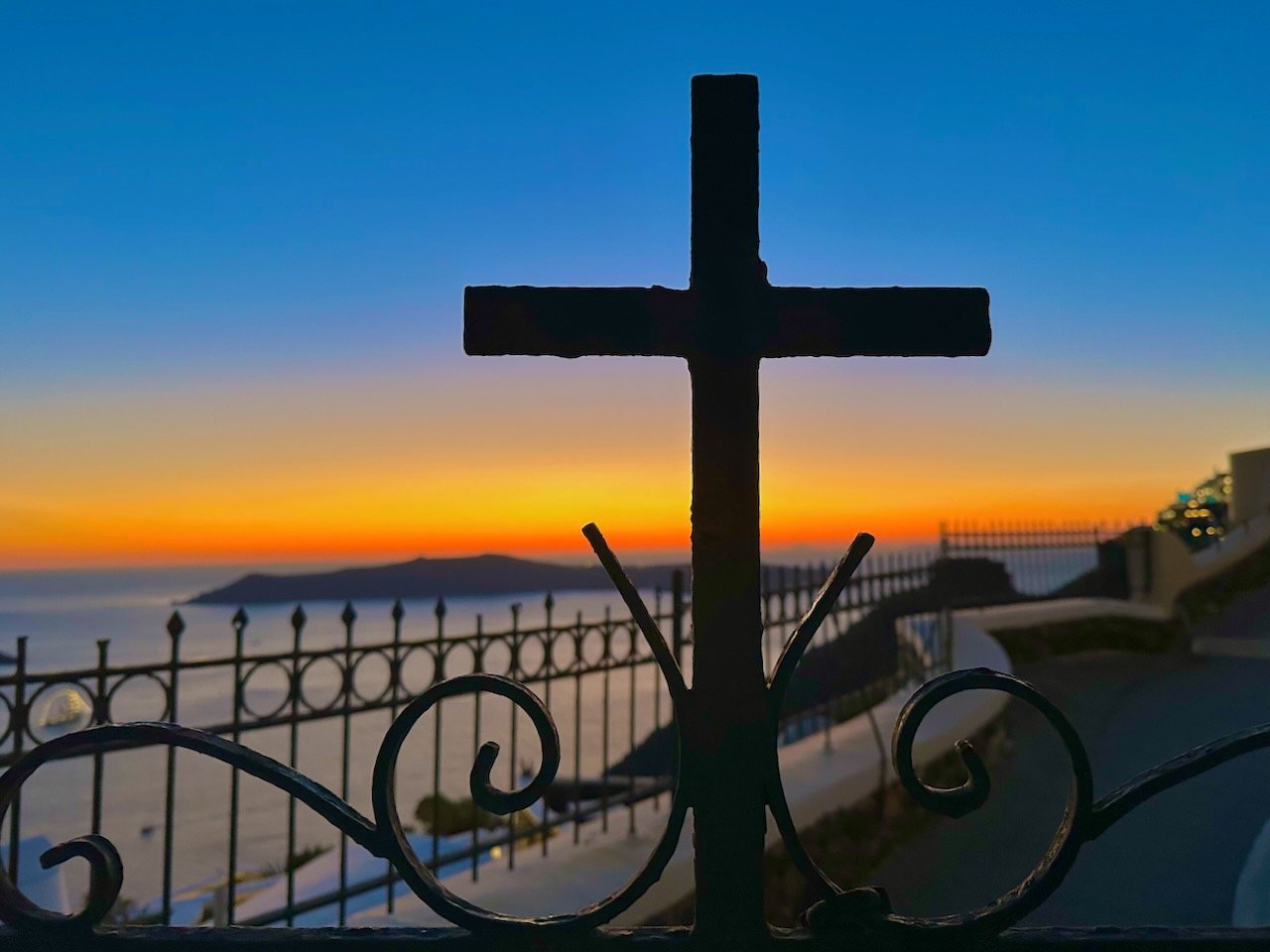
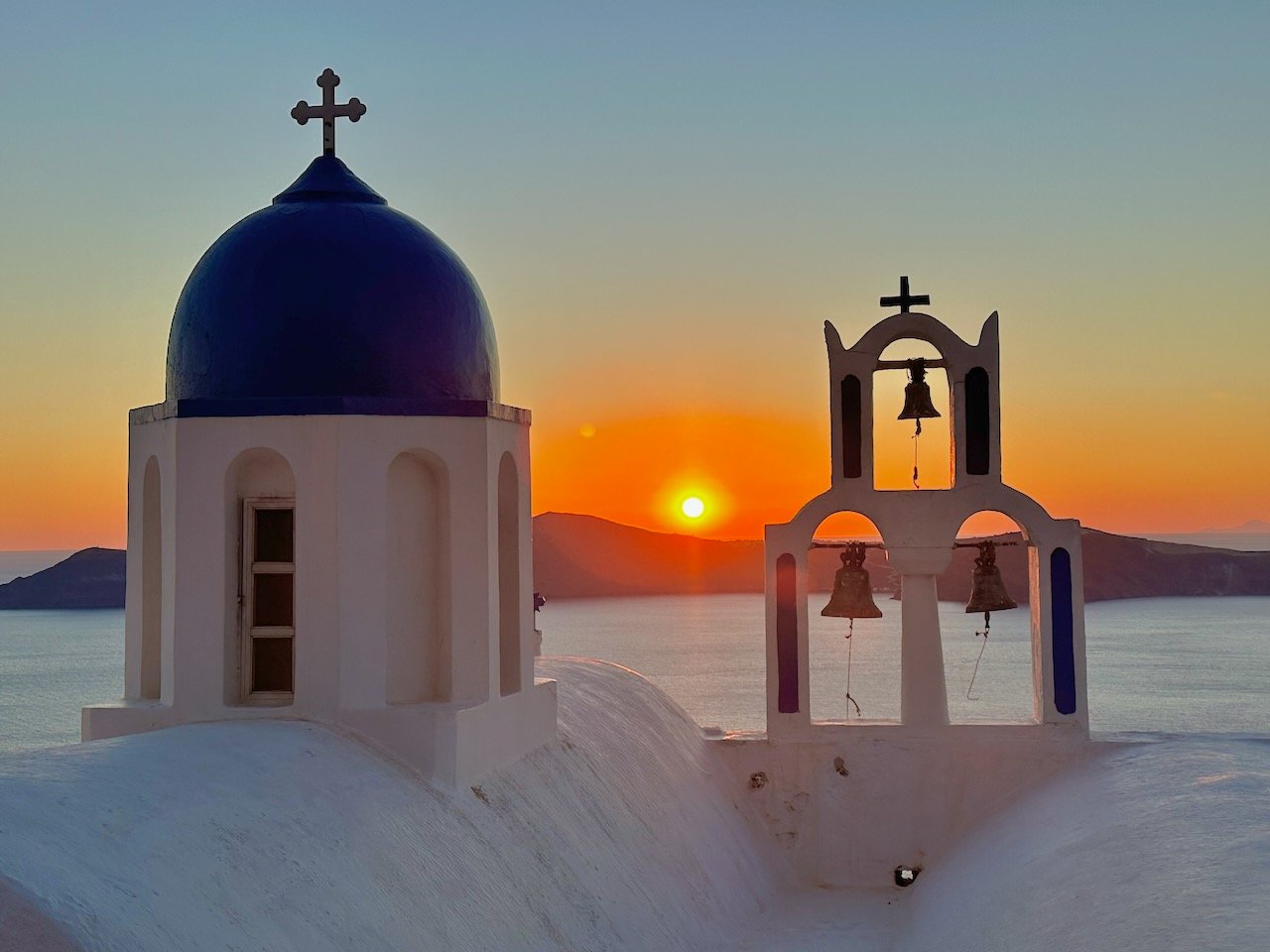
The view from the top was breathtaking! No words can adequately describe it! Santorini is the most picturesque islands! At the top of Thira, we all took the time to explore on their own, with many enjoyed dinner as the sun set to the west over the “bowl” of what was the volcano below (now all water).
We returned back to our tender boats on our own by 9 p.m. Once back on board the ship, during the night we set sail back to the Laurion Port of Athens. We anticipate docking tomorrow morning by the time we wake up.
Day 11 – Friday, September 25: Athens, Acropolis, Mars Hill, Free Time in the Plaka
Today was our last full day in Greece and and our last day together as a group of 53. Following breakfast on the ship, we disembarked about 7:30 and loaded up our buses for our tour of Athens. Once again, we enjoyed sunny blue skies, with perfect temps in the low 70s. We read from 2 Corinthians 11 as we left the port.
Athens City Tour
It was little over an hour drive that took us to downtown Athens. First, we enjoyed a drive around the city, seeing the Olympic stadium (made of all marble and restored for the 1896 Olympic Games), Temple of Zeus, Constitution Square, and Hadrian’s Arch.
Acropolis
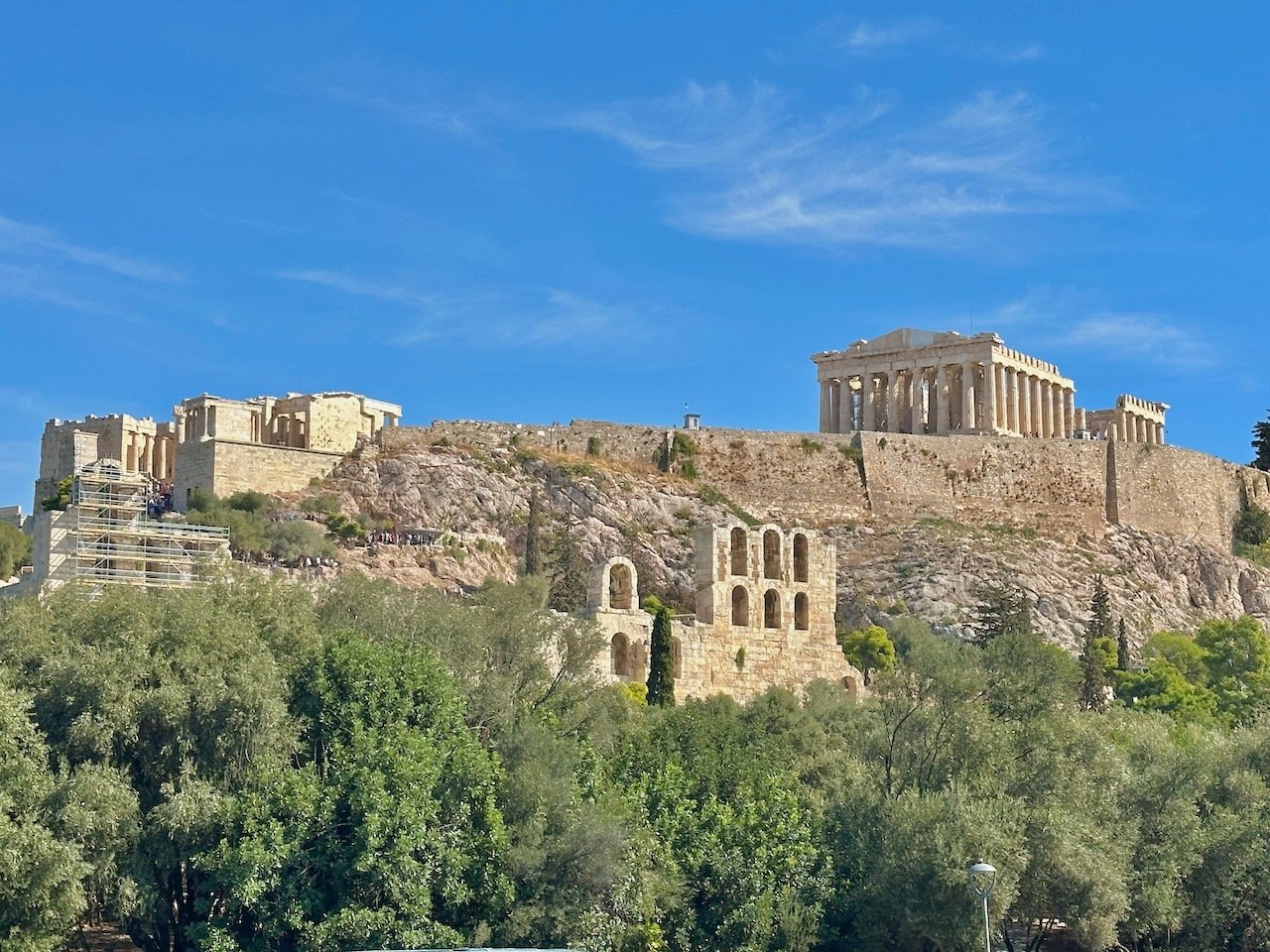
We then drove to the base of the Acropolis. Unfortunately, one in the group tripped over an uneven sidewalk and fell. Upon transporting her to a private hospital by ambulance, it turns out that she fractured her hip and is in need of surgery. We pray for our sister in Christ!
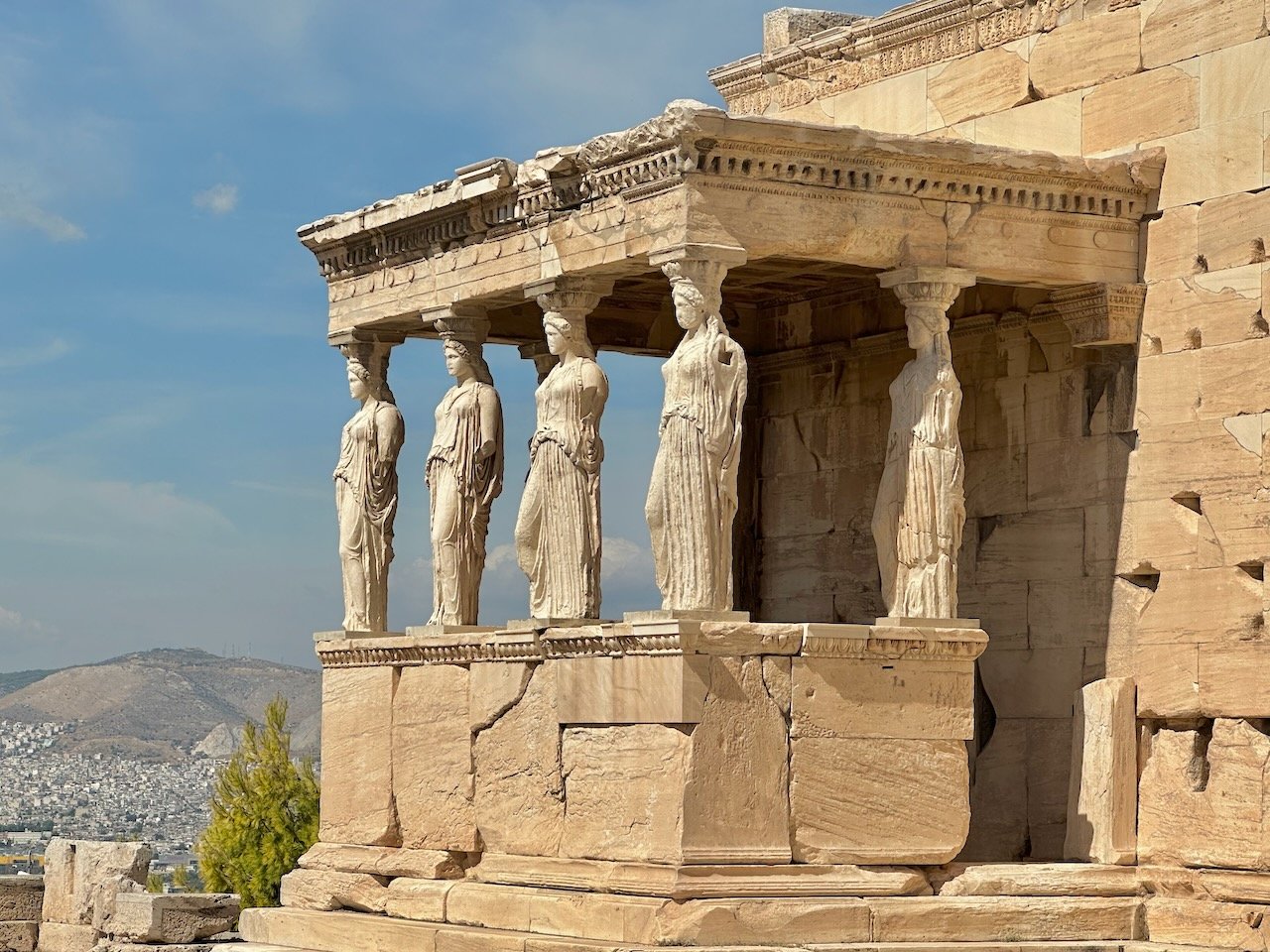
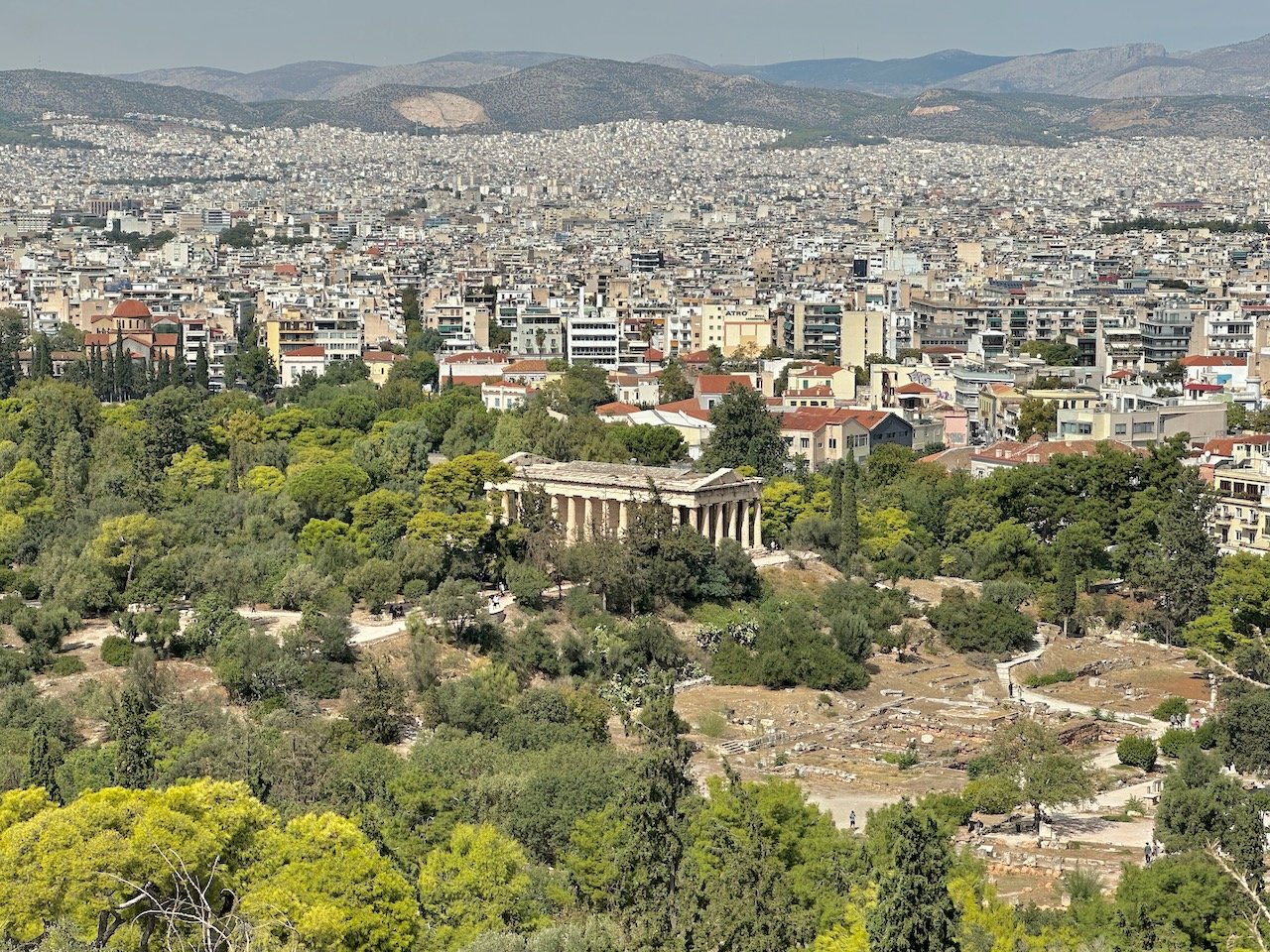
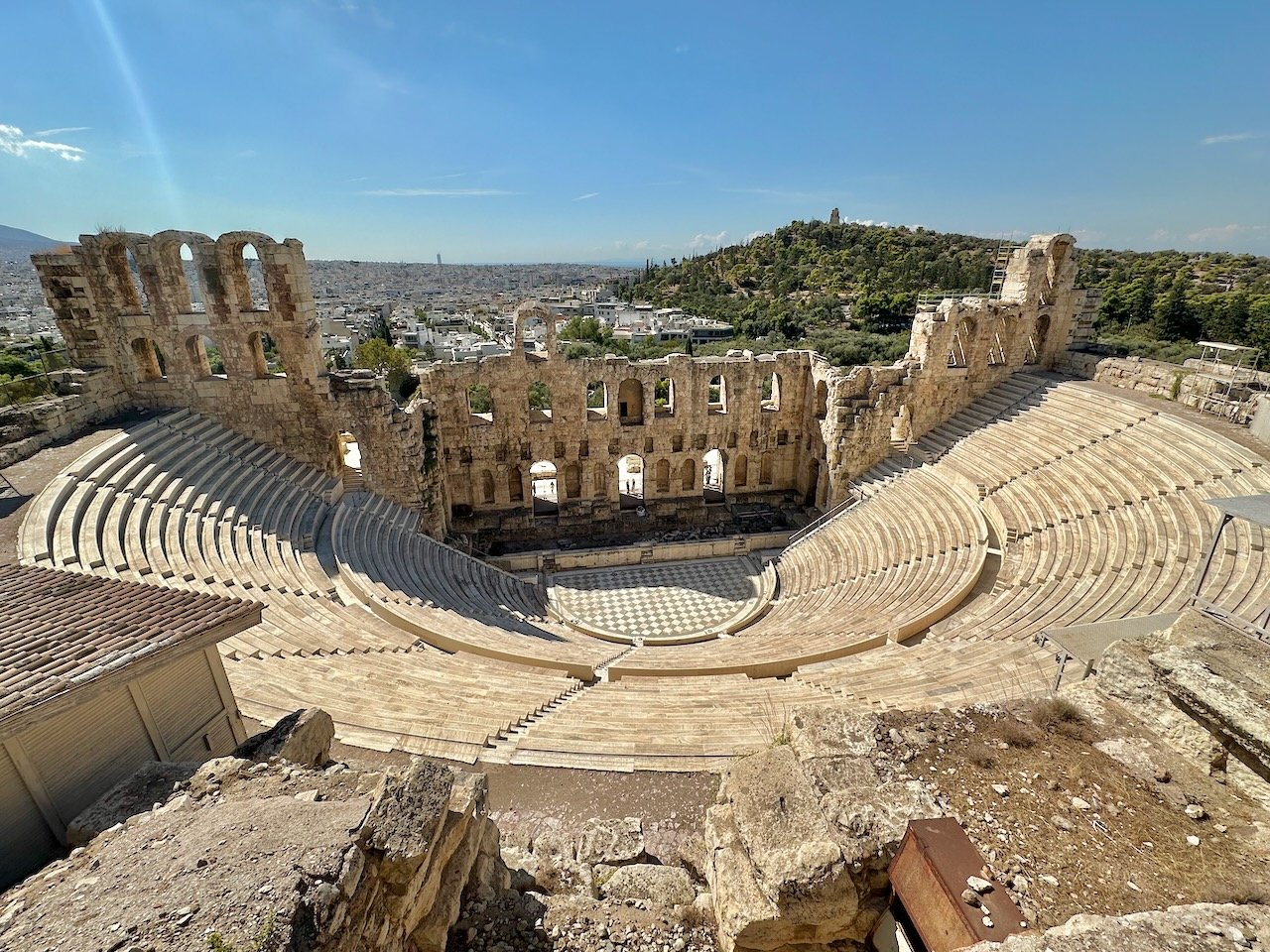
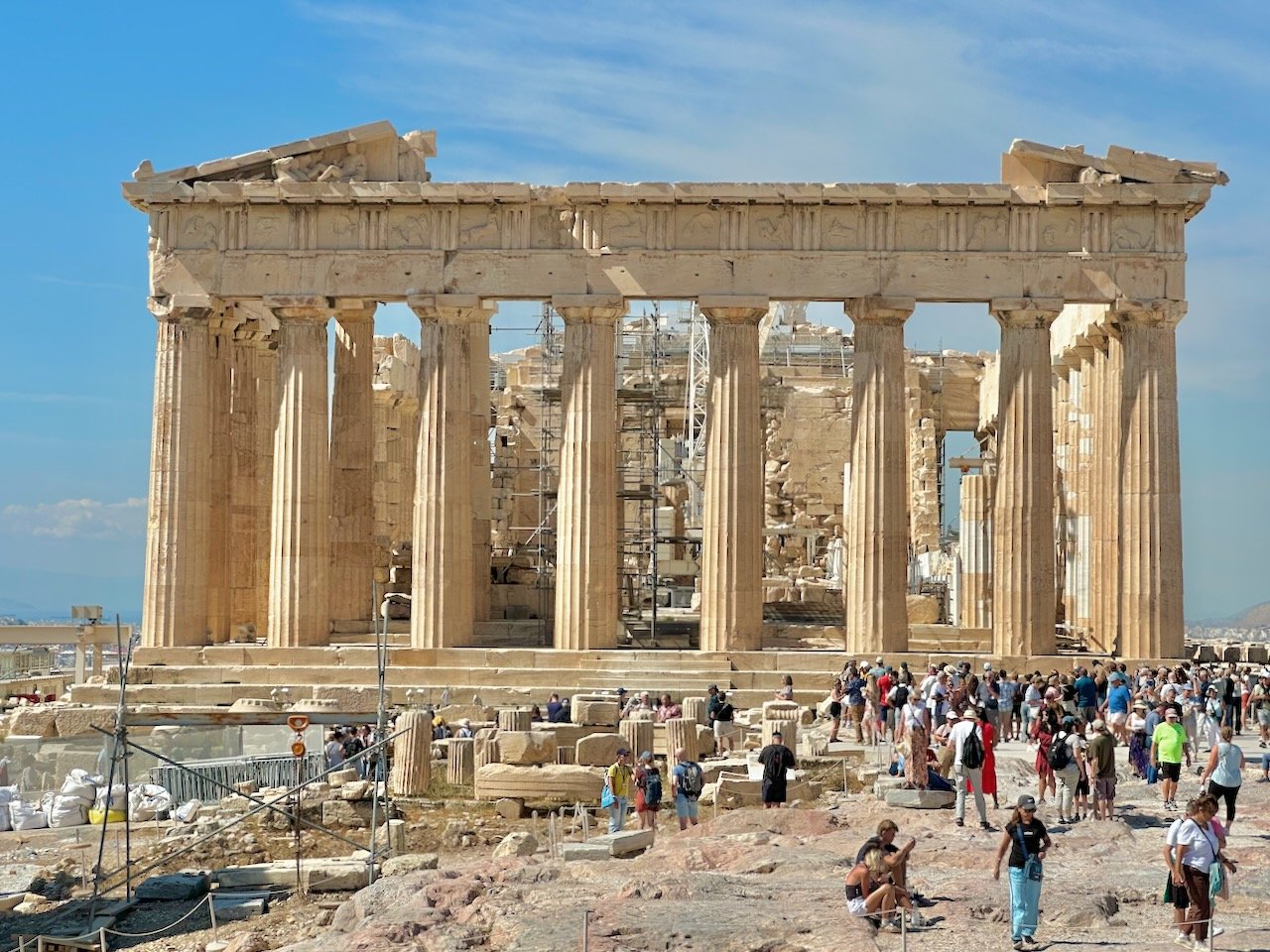
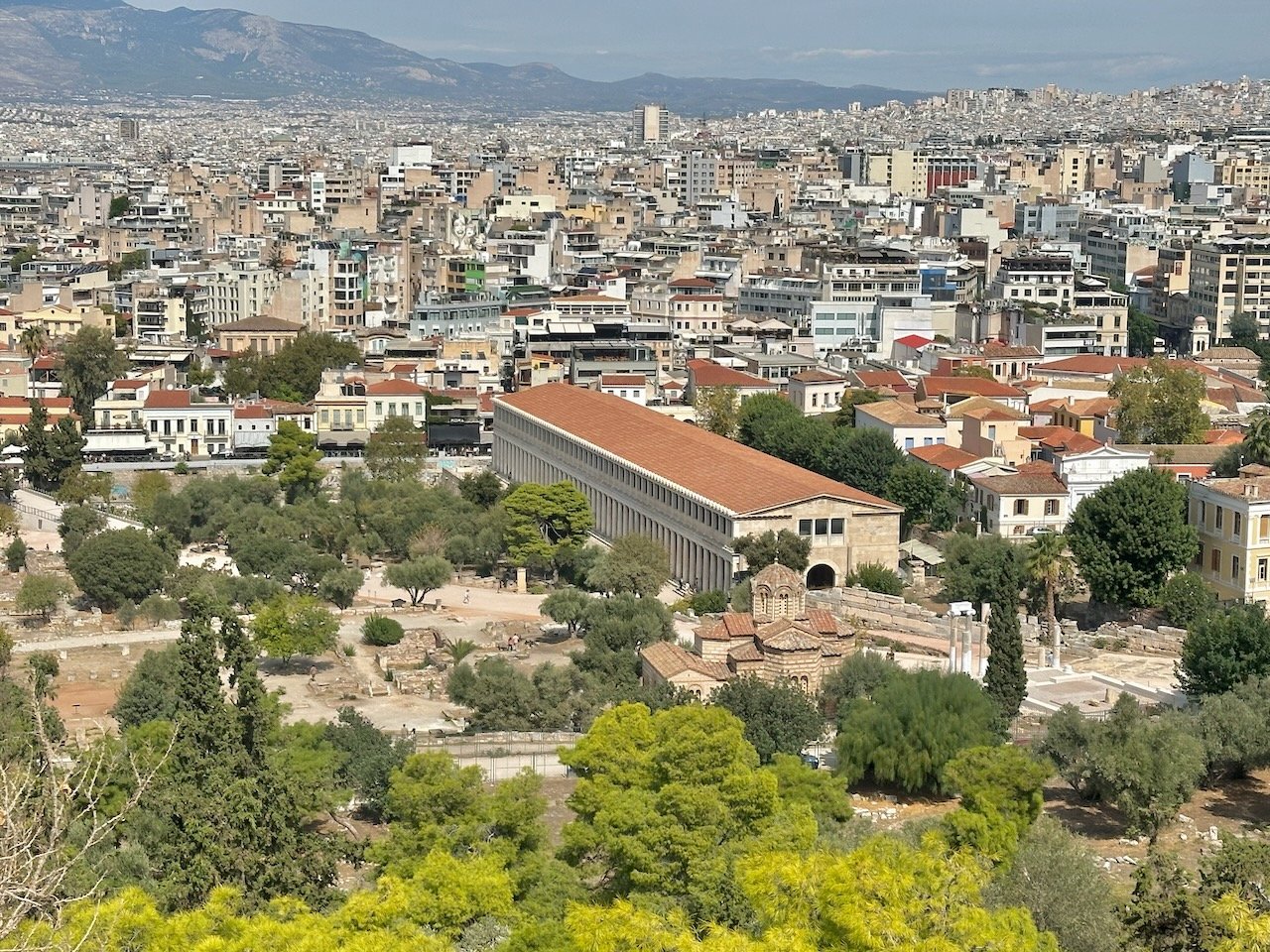
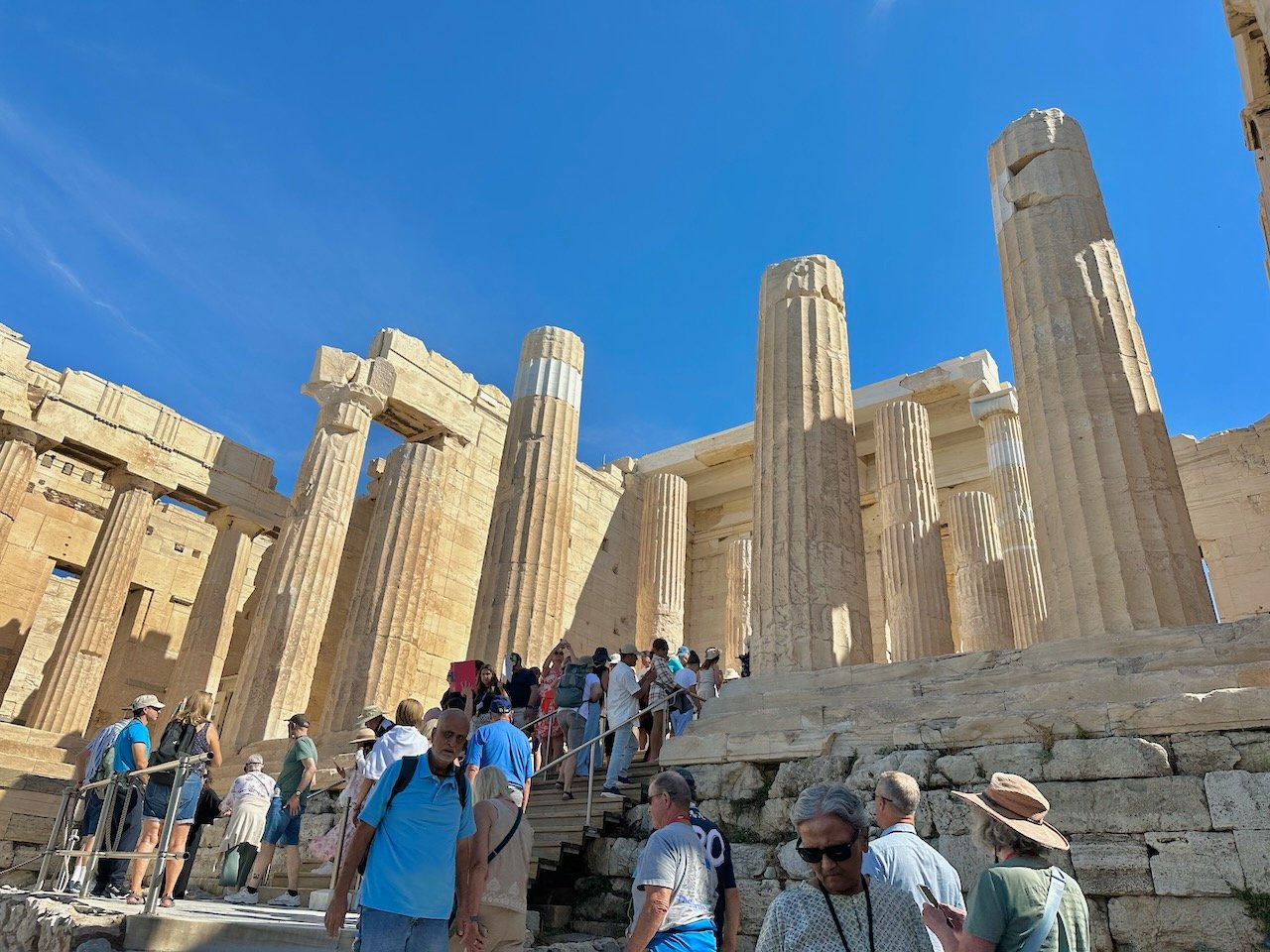
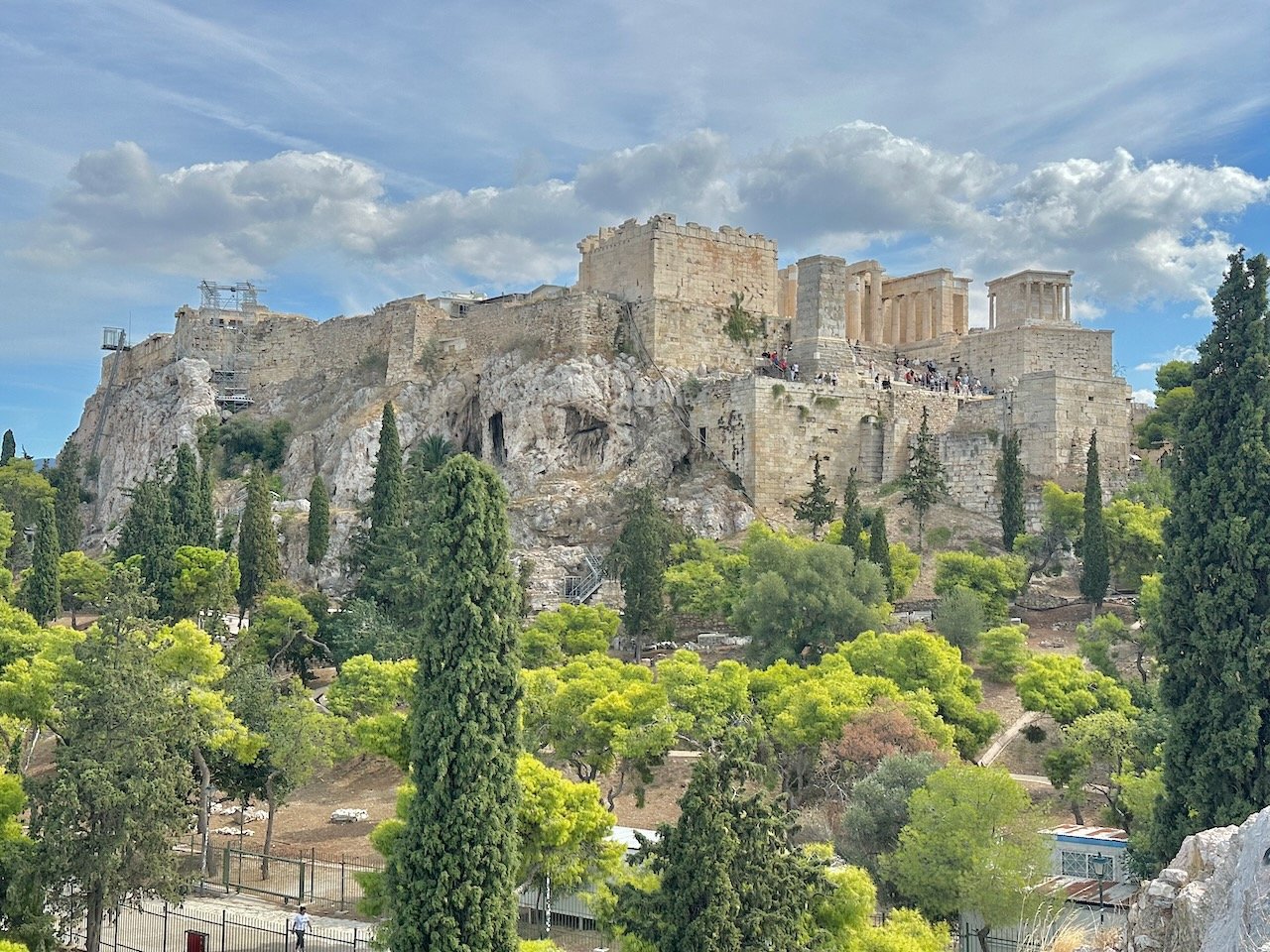
Next, we began our climb to the top of the Acropolis. We past the odeon (small theater that held 5,000) and the Temple of Nike, and then through the Propylea (“gate-way” marked with huge pillars today). Reaching the top we saw the Erechtheum (a temple built in 421-406 BC honoring Athena, Poseidon, Zeus, and Erechtheus a local goddess) and the Parthenon (built between 447-432 BC). Looking down on the top from the Acropolis in all directions we could see the Temple of Zeus, the Agora (the center of economic and public life) the Stoa of Attilos, and Mt. Lycabetus (that some in the group climbed earlier this week at night). To see the Parthenon that close was incredible! It is so large!
Mar’s Hill
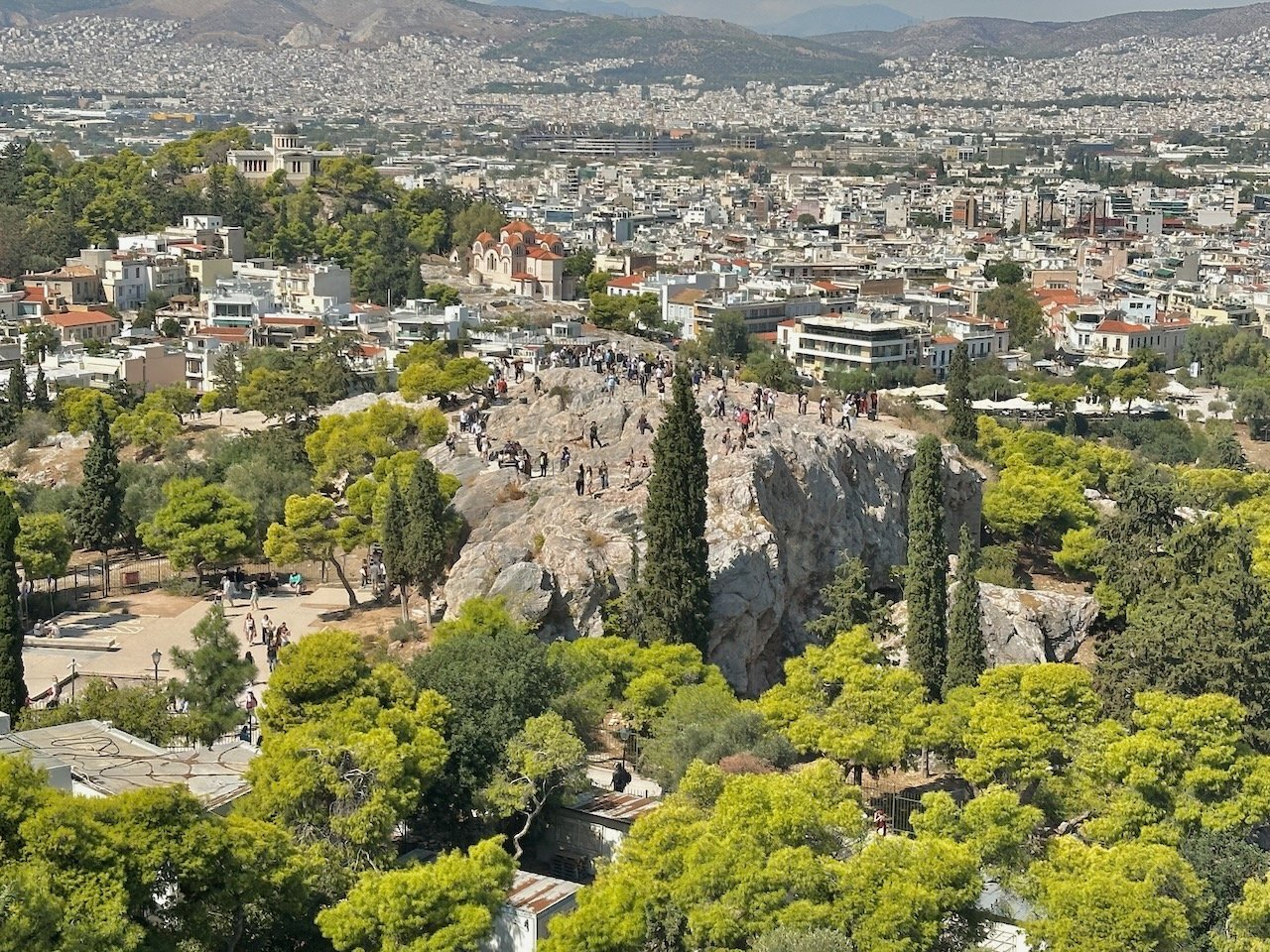
After walking down form the Acropolis, we then climbed to the top of the Rock of Areopagus (“Mar’s Hill) where Paul delivered his testimony. From here we could see the Agora a bit closer-up, which included the Temple of Hephaestus and the Stoa. We read Paul’s “defense” he gave (recorded in Acts 17). Paul was literally seized (epi-lambano in Greek), arrested and dragged before this legal court. In the context of the pagan customs and culture of the day, Paul was quite bold in proclaiming Christ here. Praise God for those who heard and responded to Paul’s message that day (including two by name)!
Leaving the Acropolis, we walked towards the Plaka. We enjoyed grabbing our last Greek lunch here and last-minute shopping. We retuned to Hadrian’s Arch to be picked up by our bus. We drove to the Titania Hotel where we enjoyed dinner together and overnight in Athens. The majority of the group leave at 3:30 a.m. tomorrow either for Rome (27 of us) or back to the States. What a wonderful group God brought together!
Day 12 – Saturday, September 26: Flight to U.S. or Extension to Rome: Ostia Antica, Catacombs, St. Paul’s Church Outside the Walls, Appian Way
The day began early for most of us (all except 7 who are flying home later). It was 3:20 a.m. that we left the hotel for the Athens Airport. Twenty seven of us are flying to Rome while the rest are flying home. It was a great Greece trip, with a great group of brothers and sisters in Christ. Praise God! We read from Colossians 1 as we began the day. The weather in Rome today was perfect, with full sun and highs around 80.
Rome
We landed in Rome about 8:45 a.m. We were greeted by Maurizio, our land agent who will take care of our group the next three days. Rome is a very large city, with about 6 million residents (3 million living inside the city limits, with 3 million living around the city). This means a LOT of traffic, everywhere (although it wasn’t bad today being that it is a Saturday!). There are a total of 453 churches in Rome. Generally, the ancient Roman walls that still can be seen date from 269-275 AD are 13-14 miles long. 380 towers were incorporated into the wall as well as 14 gates.
Ostia Antica
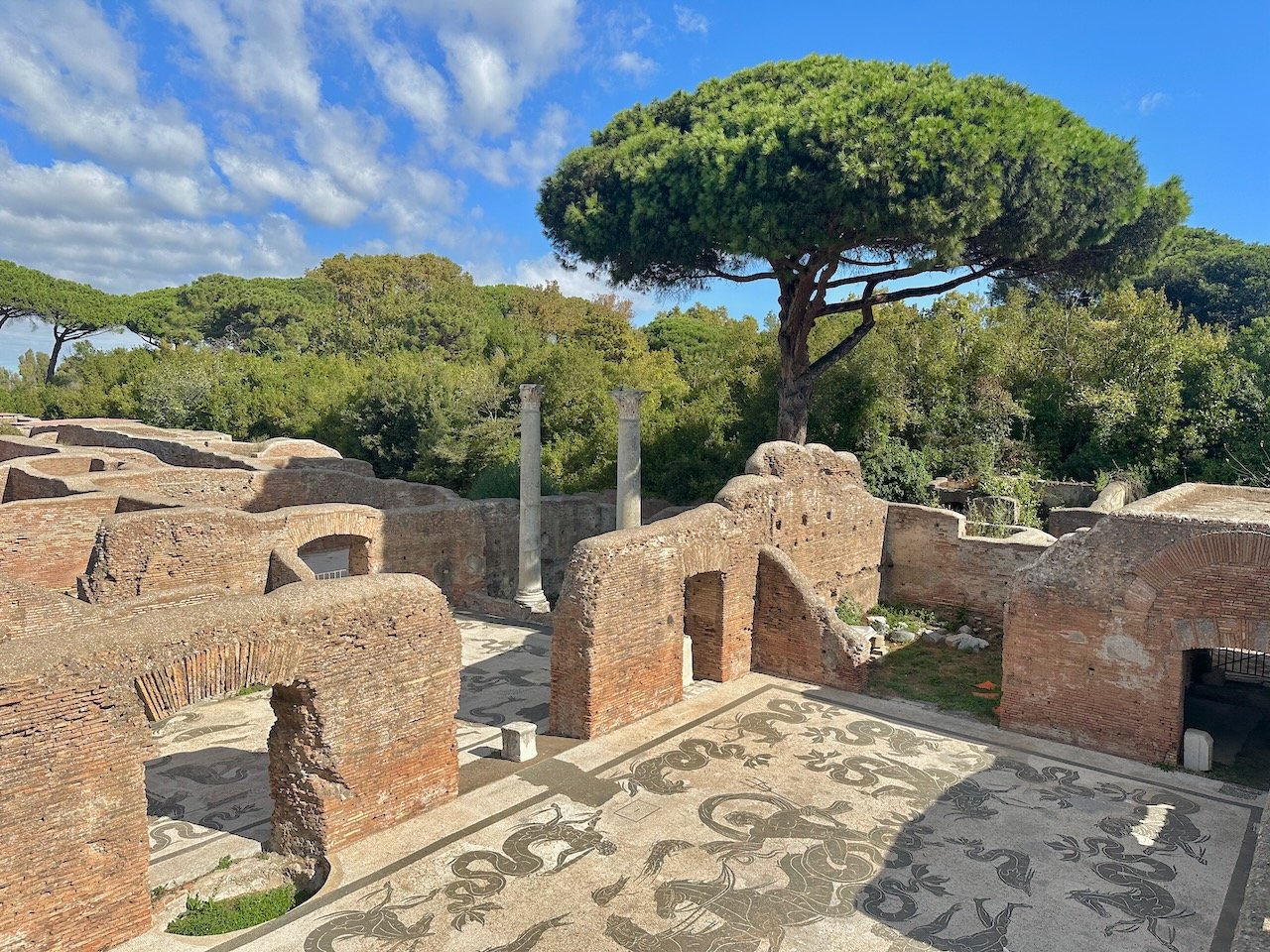
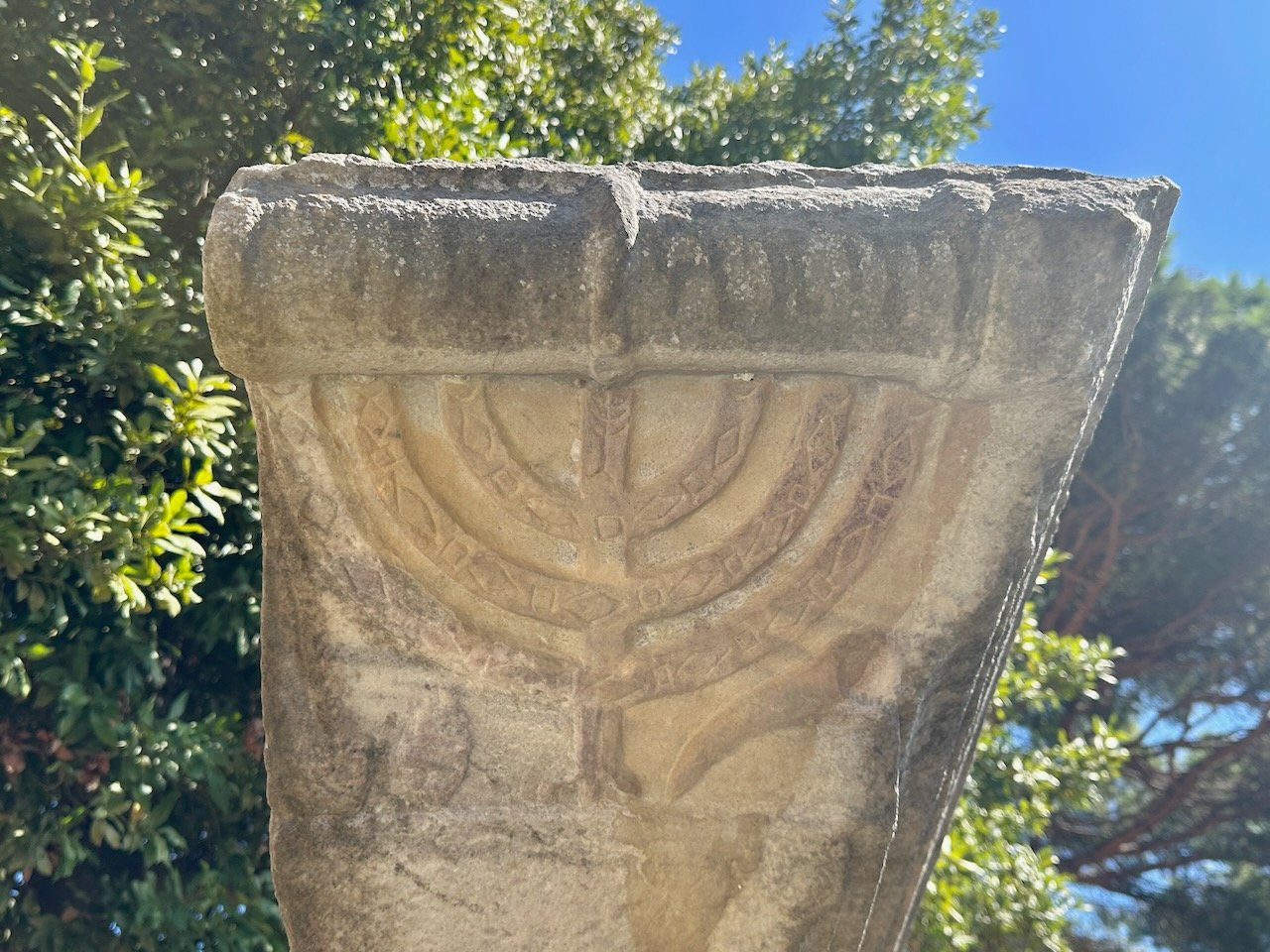
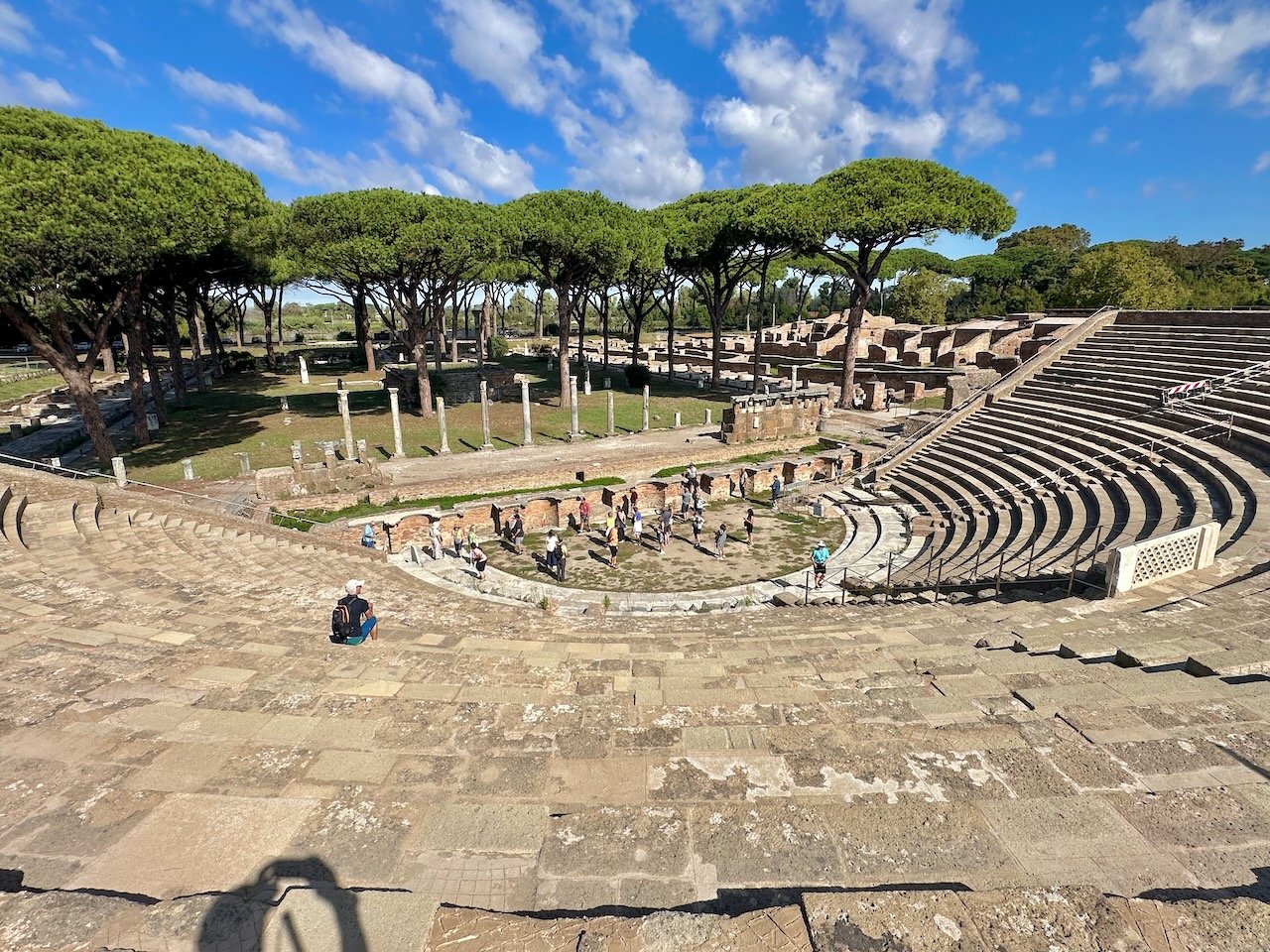
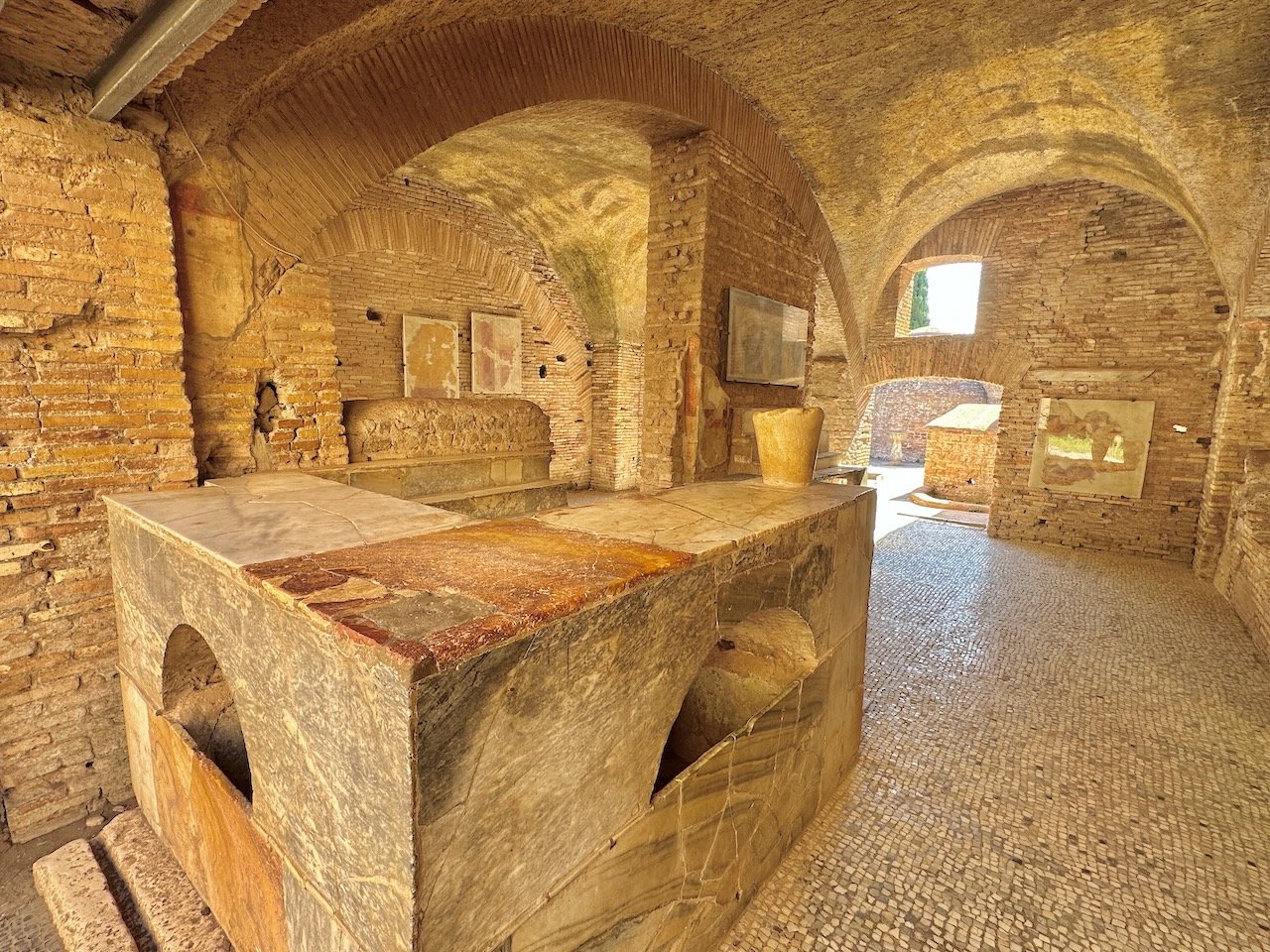
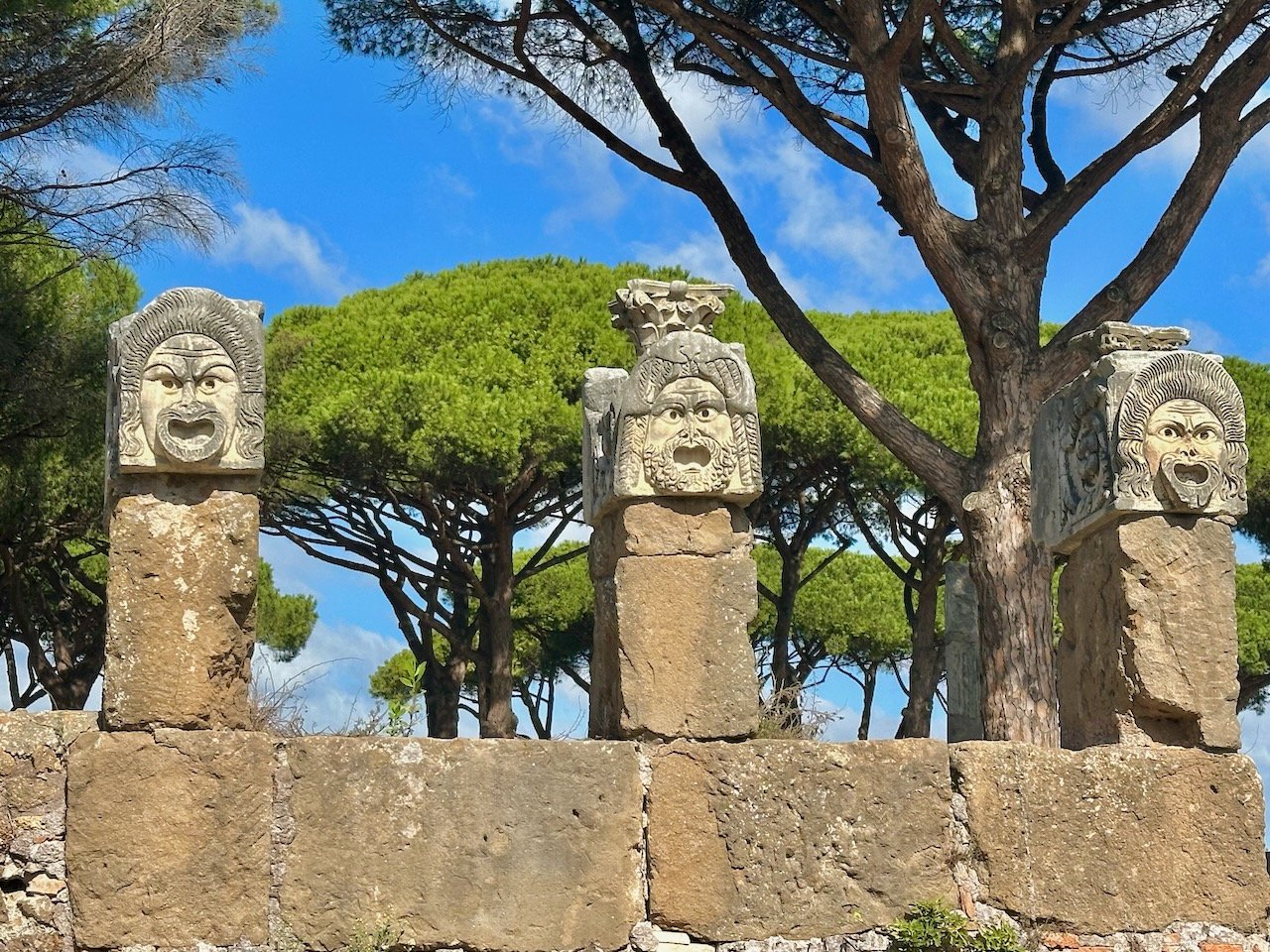
Once we boarded the bus, we drove towards the coast of Rome to the ancient port of Rome, Ostia Antica. The site was massive (it had a population of about 200,000), with ruins from the 1st century BC (although some as early as the 7th century BC) through the Byzantine Period. The city is like a mini “Pompeii” in many ways! Among the ruins we saw numerous houses, the theater (built in 12 BC), bathhouses, the Forum (Capitalium), and the Thermopolium. We even saw a Menorah here on one of the marbles. It’s very possible that Paul knew this Jewish community here (and perhaps visited this group of Jews?) when he was in Rome. Following the site to the site, we enjoyed an extended time in the small village of Ostia for lunch – pizza and other Italian goodies! 🙂
Appian Way
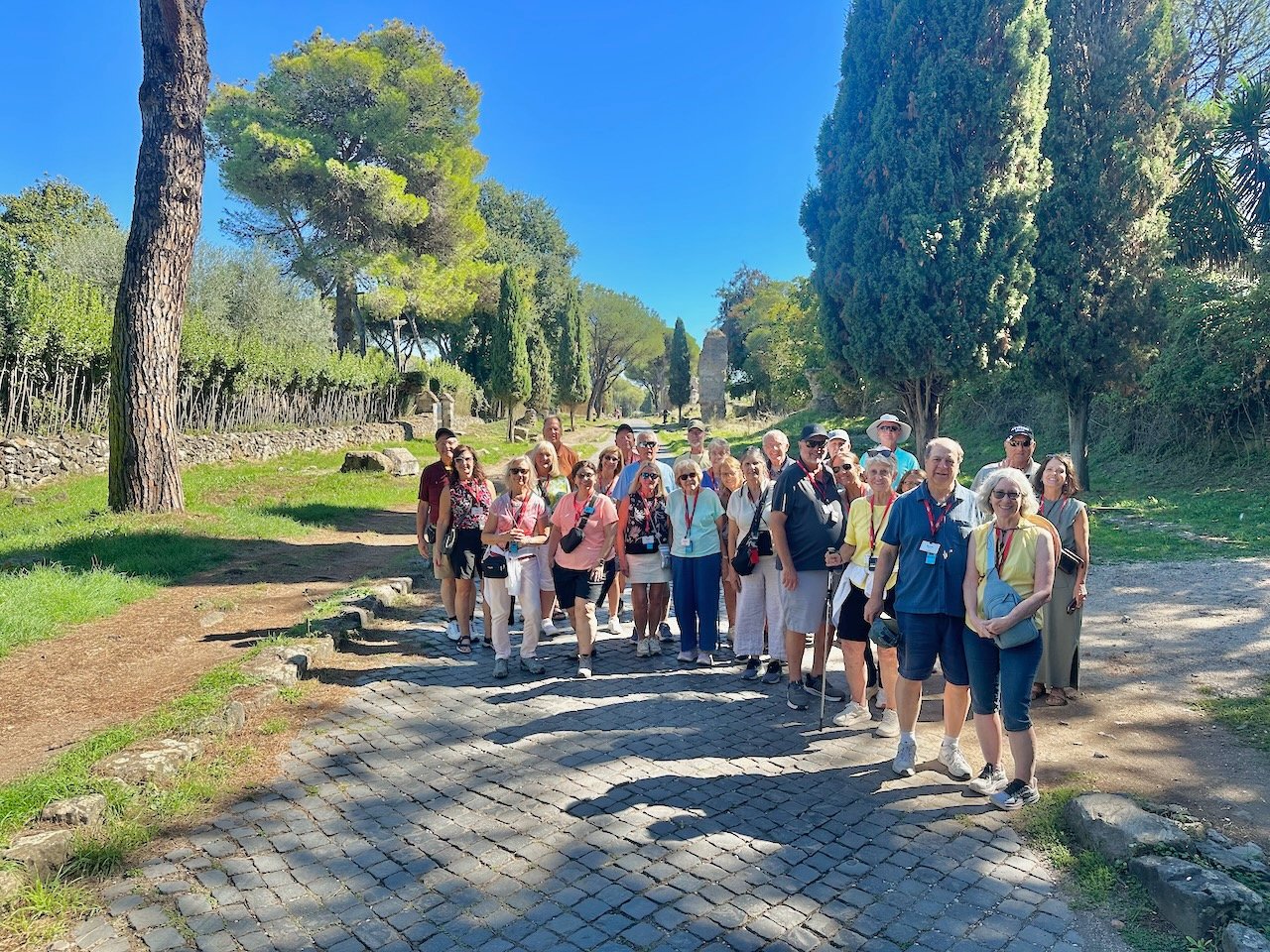
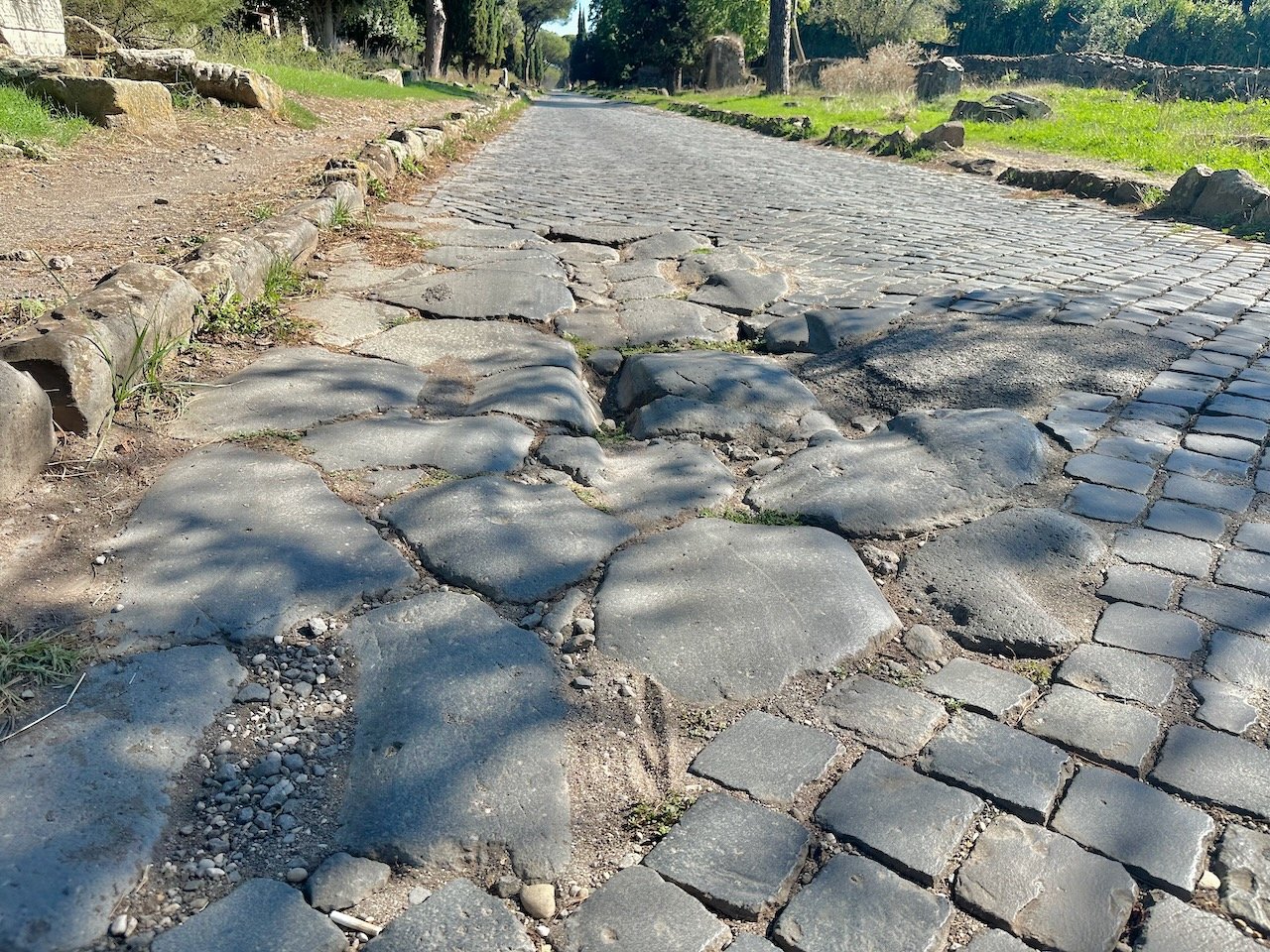
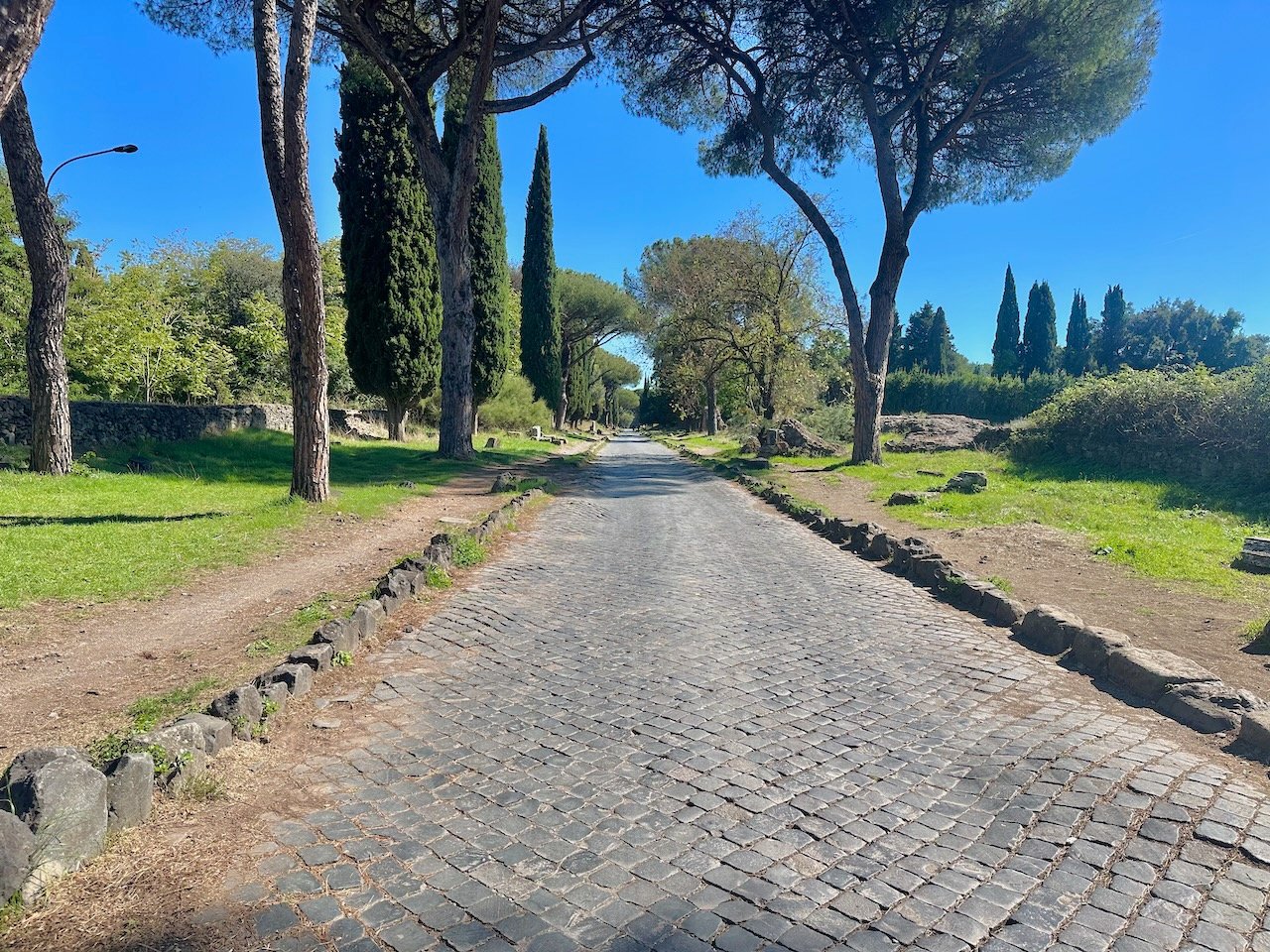
Following lunch, we boarded our bus and drove about 20 minutes to a small section of the Appian Way. Paul would have used this ancient road that dates back to as early as 312 BC. Paul walked 170 miles of this road into Rome, beginning at Puteoli (where his ship landed after the shipwreck at Malta). We walked about 10 minutes on this ancient pavement.
Catacombs
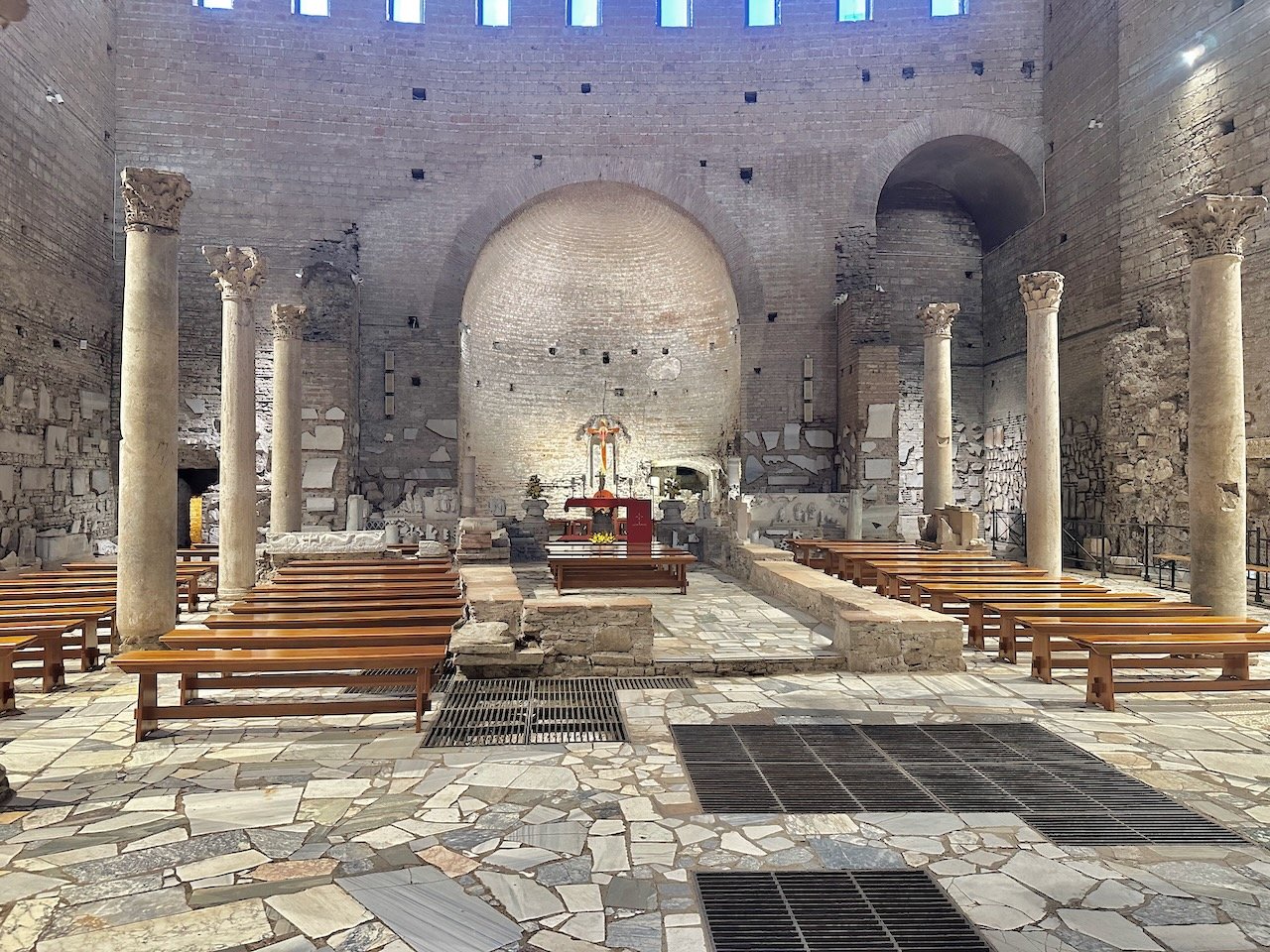
Next, we drove back towards Rome to the Catacomb of Domitilla. This is one of the five or six of the largest underground cemeteries in Rome (a total of 62 catacombs have been discovered). This one was a Christian graveyard and it dates from about 150-450 AD. This catacomb here consist of 4 labyrinth layers of graves spanning about 8 miles. It is believed that there were 27,000 tombs here (2,000 of them have are still untouched). It was incredible to see so many of them. It was a cool 17 degrees Celsius down below (64 degrees).
St. Paul’s Church Outside the Walls
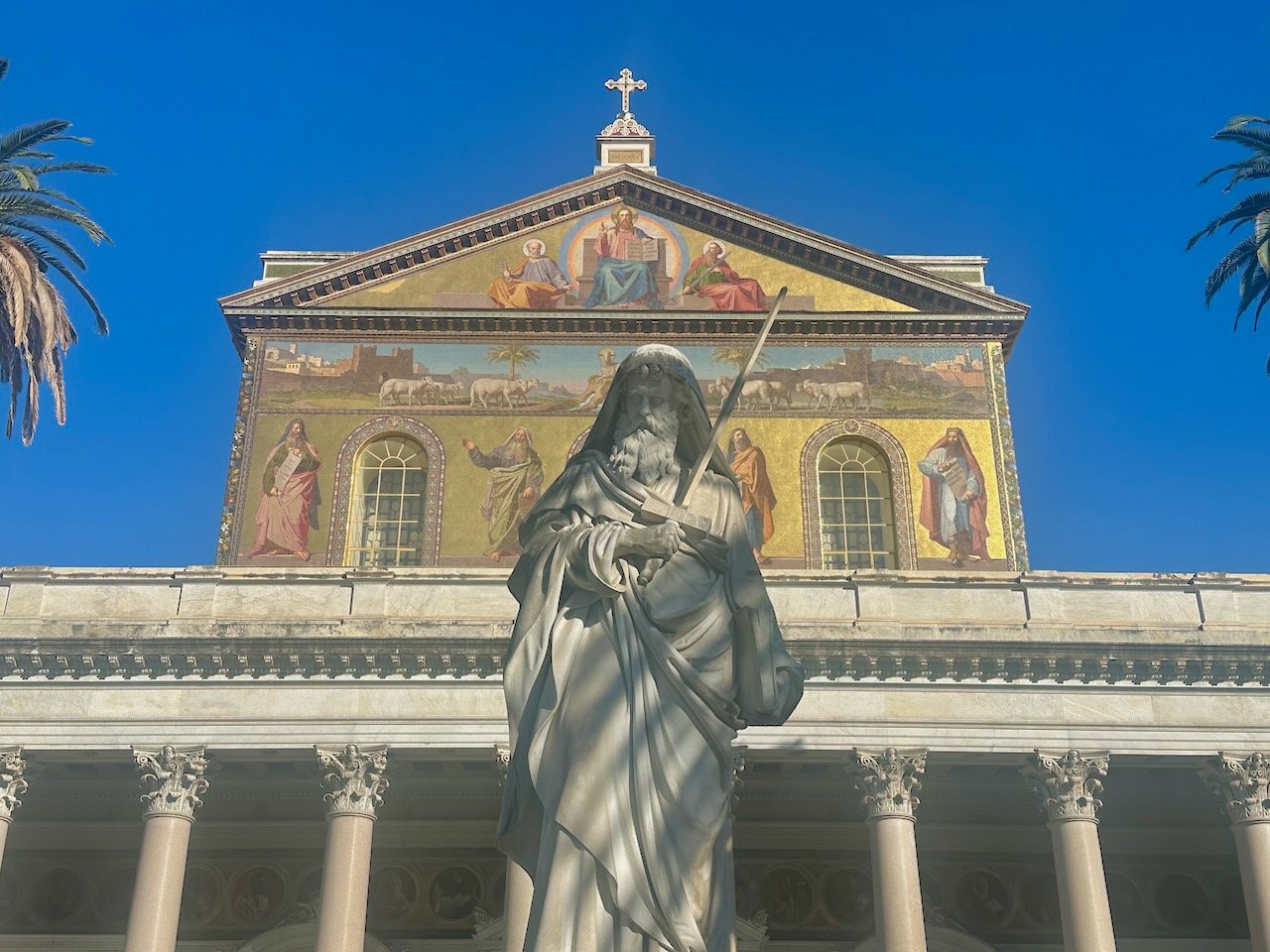
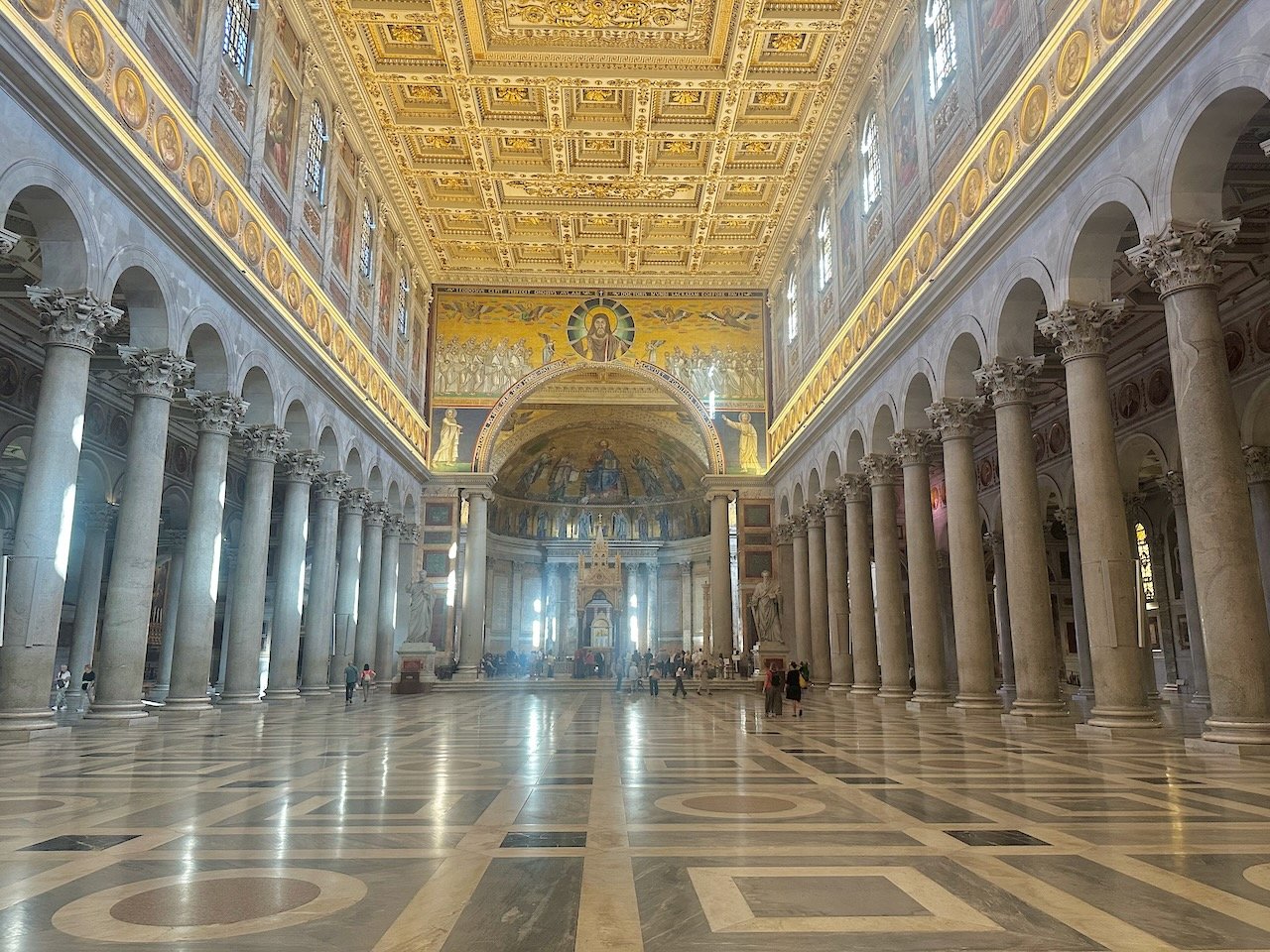
We ended our day with a visit to the St. Paul’s Church Outside the Walls. The church originally goes back to 330 AD. It was rebuilt many times. A fire in 1823 destroyed it, but it was rebuilt shortly later in 1827. By tradition, Paul was buried here. The traditional hand cuffs that bound Paul are also displayed here. 267 Popes are also displayed here all around the sanctuary. The church is owned and maintained by Vatican City. Truly, the structure is huge and very impressive.
We drove to our hotel and checked in to the Metroplo, a very nice hotel within the Star Hotel chain! We enjoyed a sit-down dinner at 7 p.m. followed by an optional walk to the Colosseum. It was incredible to see it at night. On the way back some enjoyed a gelato! 🙂

Day 13 – Sunday, September 27: St. Peter’s in Chains, Trevi Fountain, Pantheon, Mamertine Prison, Roman Forum, Constantine’s and Titus’ Arches, Colosseum
Today was another great day here in Rome. This second full day of this extension once again took us to both religious and archaeological sites. The weather was great again, with little warmer temps (low 80s), and full sun once again! We left the hotel at 9 a.m. today, giving us a leisurely morning and breakfast time.
St. Peter in Chains
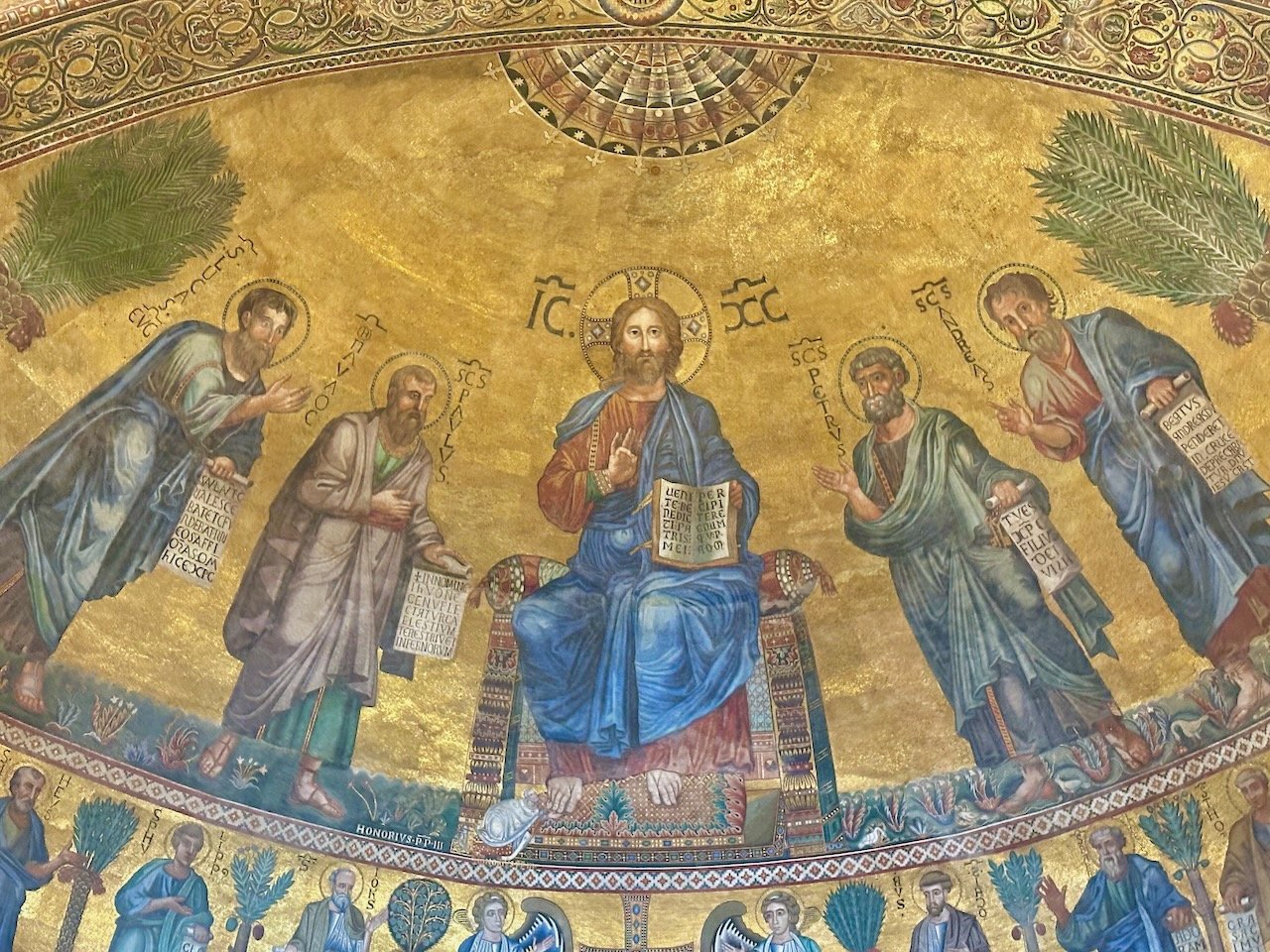
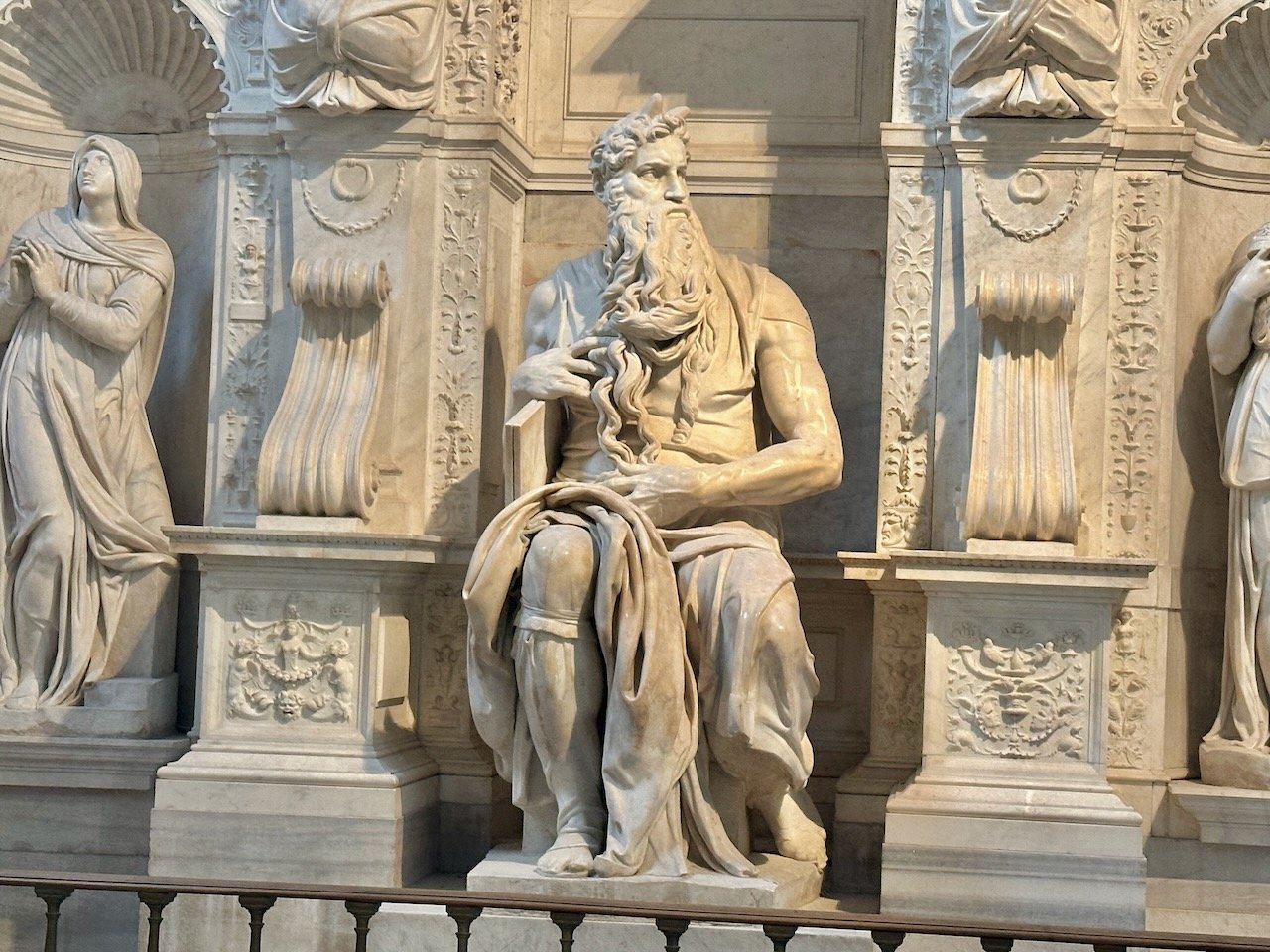
It was only a short bus ride to church called St. Peter’s in Chains. This church is where (traditionally, of course) Peter was held in chains here. For some, 1 Peter 5:13 suggests that Peter was in Rome. Others do not support this through the absence of archaeological and historical records. It seems the early church fathers were mixed in their views. According to the Catholic tradition, the 1st century chains that are on display in the front of this church were given to the Pope in the 5th century. This began the tradition. Also inside the church, a Moses Sculpture by Michelangelo is displayed. He began this project when he was 30 years ago.
Pantheon & Trevi Fountain
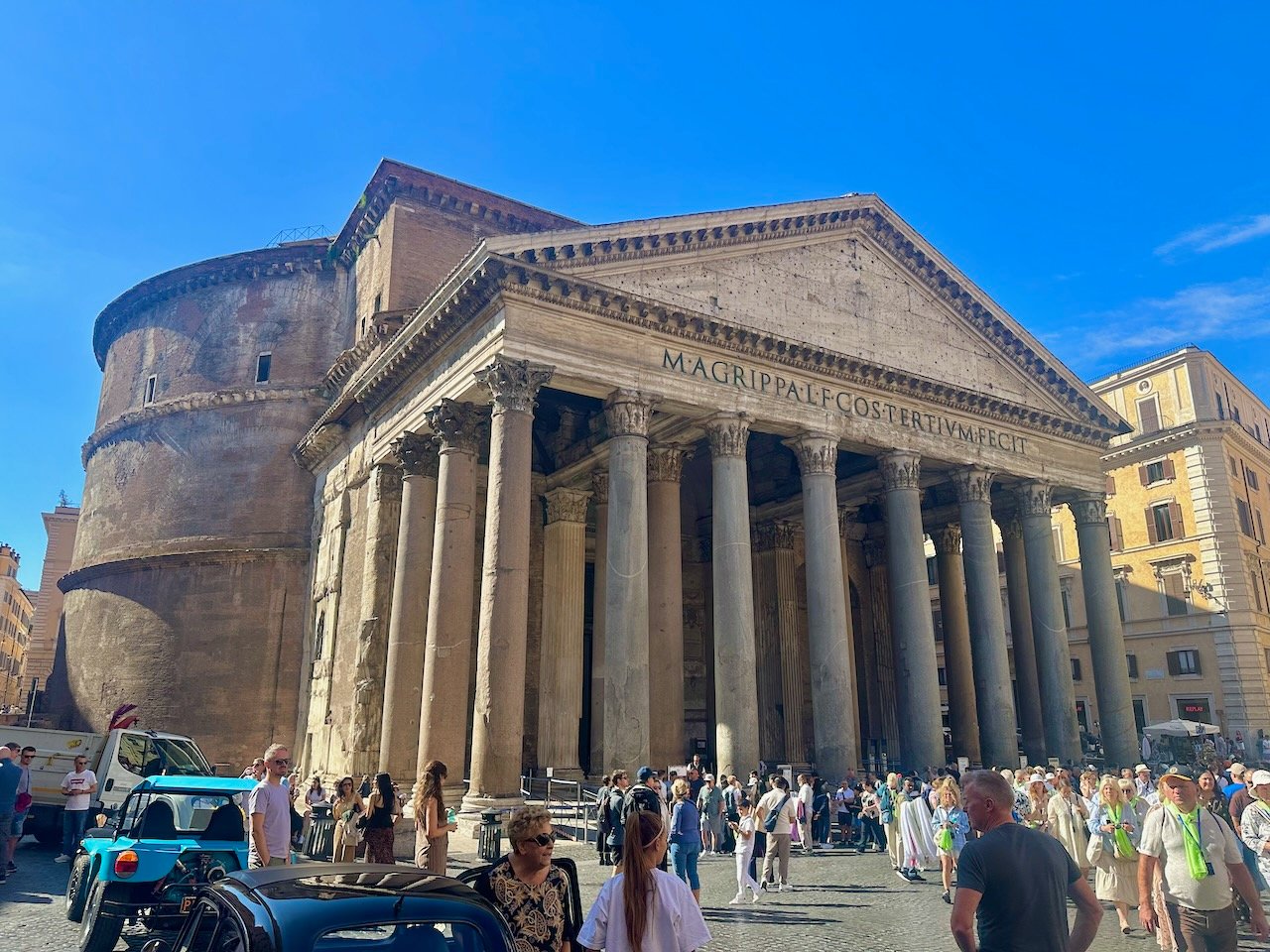
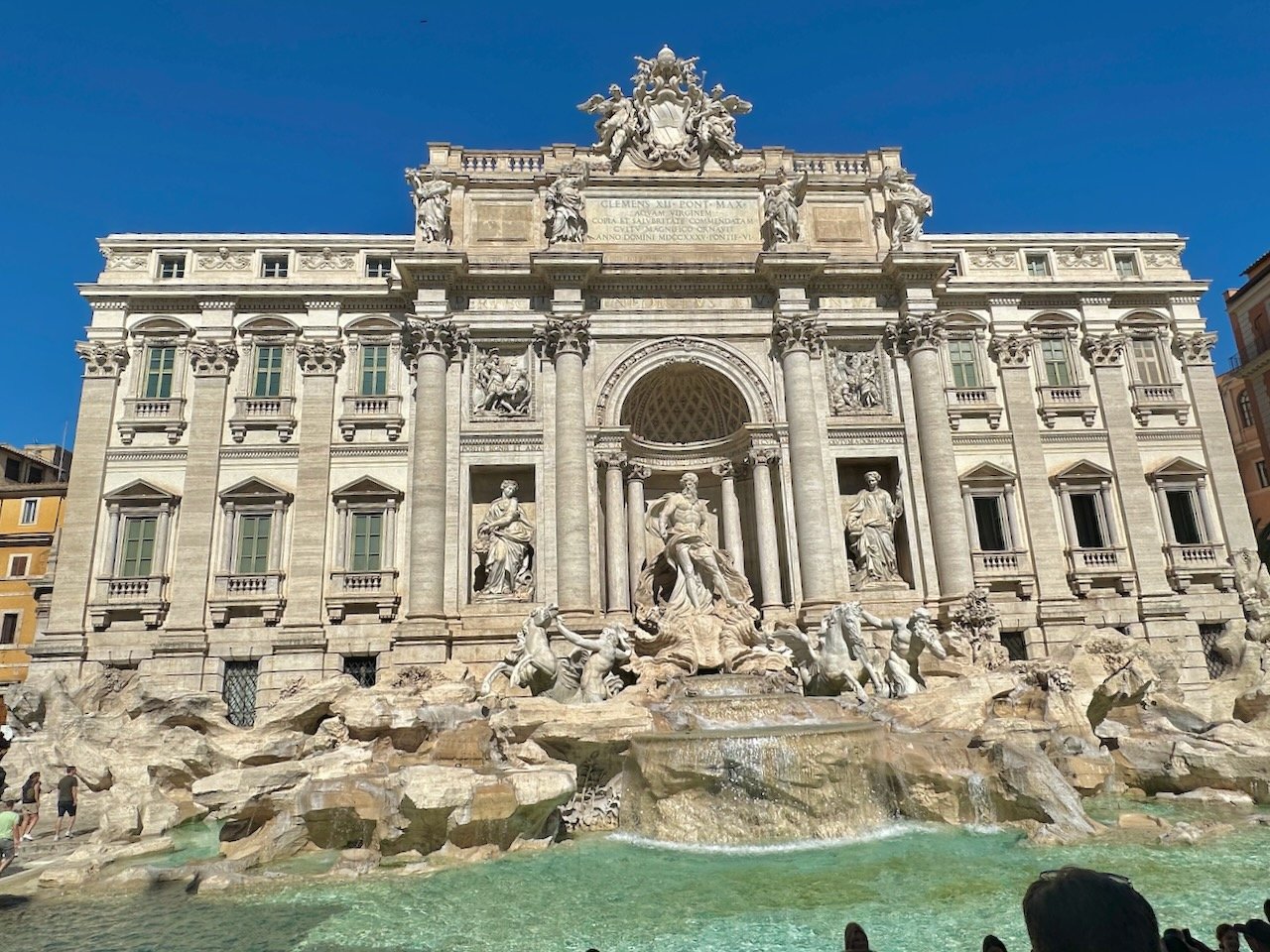
From here we boarded back on the bus to get to the Pantheon, the largest dome built in the ancient world. We first walked through the Piazza Navona (originally the Stadium of Domitian, built by Emperor Titus Flavius Domitianus in 80 AD) in order to get to the Pantheon. Until modern times, the dome of this temple was the largest built, measuring about 140 feet in diameter and rising to a height of 71 feet. It was Marcus Vipsanius Agrippa (in 27 BC) who first built it as an ordinary classic temple, However, it was rebuilt by Hadrian in the 2nd century (between 118 and 128 AD). It was later converted to a church. Because it was Sunday, we could not go inside (note: there is a 360 photo from inside). From here we walked 10 minutes to the famous Trevi Fountain. The place was packed with people. We enjoyed some free time here to grab lunch and a gelato (of course). Trevi Fountain dates to the 18th century AD.
Mamertine Prison
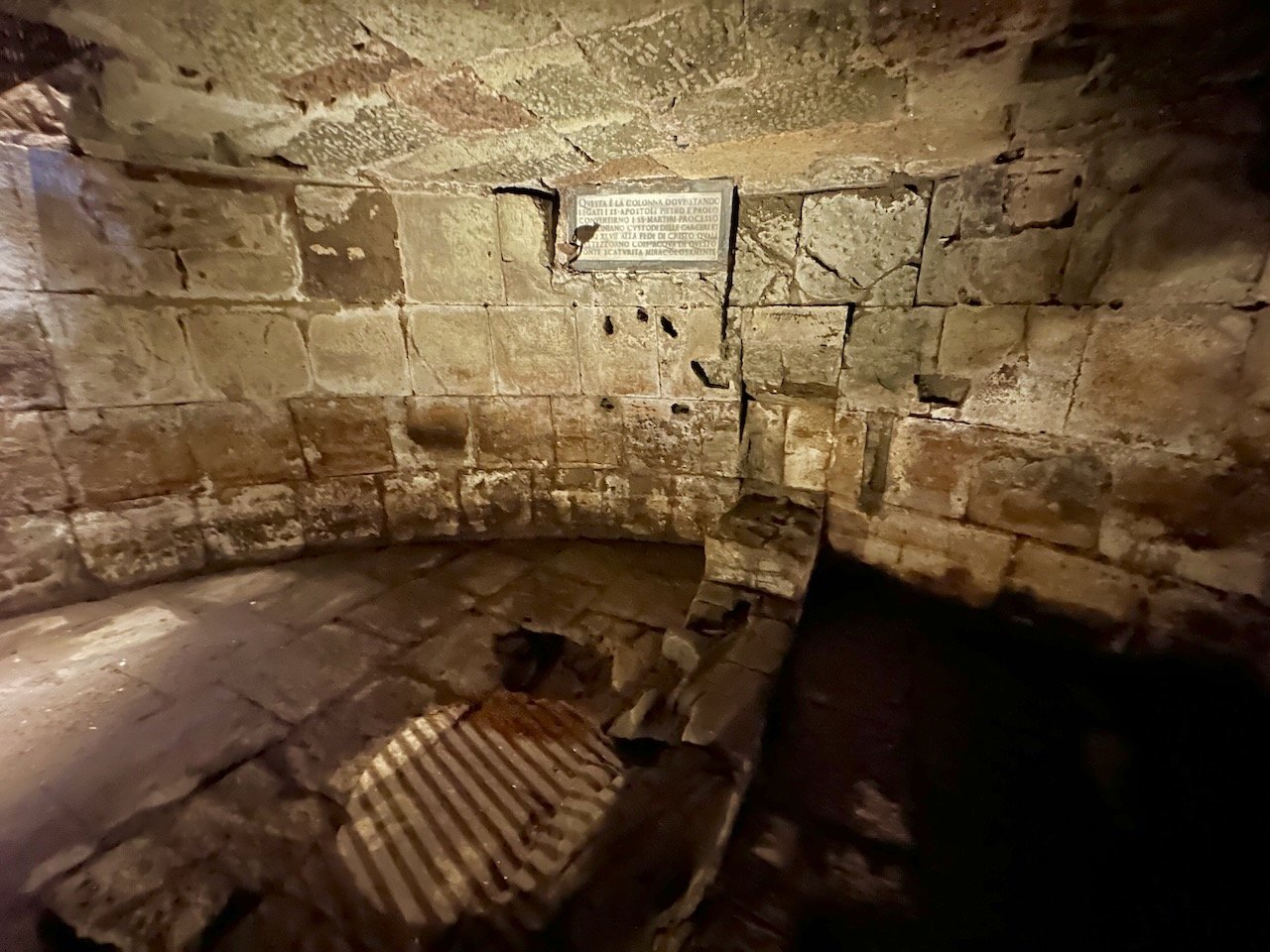
We continue our walk towards the Forum. On the way, we passed by the very large Victorinio Emmanuel Venezia monument. This was built between 1871-1911. At the north end of the Forum we visited the Mamertine Prison. Here stands a Catholic Church called St. Joseph’s of the Carpenters. Beneath this structure are the remains of the traditional site of the imprisonments of the Apostle Paul and the Apostle Peter in Rome. This prison was simply known as “Carcer” (“prison”) in Paul’s day. The term “Mamertine” was attributed to the prison in the Medieval Period.
The Carcer was the only prison in ancient Rome. When someone was sentenced to death, they were brought here to await execution. Below the upper chamber is a circular room called the Tullianum. Prisoners entered the Tullianum from the Carcer by being lowered through a hole in the Carcer’s floor. According to tradition, the apostle Peter caused the well-water to spring up so that he might baptize his jailors.
The state rarely incarcerated common criminals, but kept the Mamertine Prison for political prisoners doomed for execution by being thrown off the Tarpeian Rock. Enemies of the State were often strangled in the Tullianum. Others were beheaded after being sentenced to death in the Basilica of Julia. Since the 7th century AD, the Mamertine Prison has been used as a place of worship. We read from 2 Timothy 4 (about Paul’s final days) before leaving. Paul endured a lot for the sake of the Gospel. Praise be to God for his faithfulness and perseverance to the end!
Roman Forum
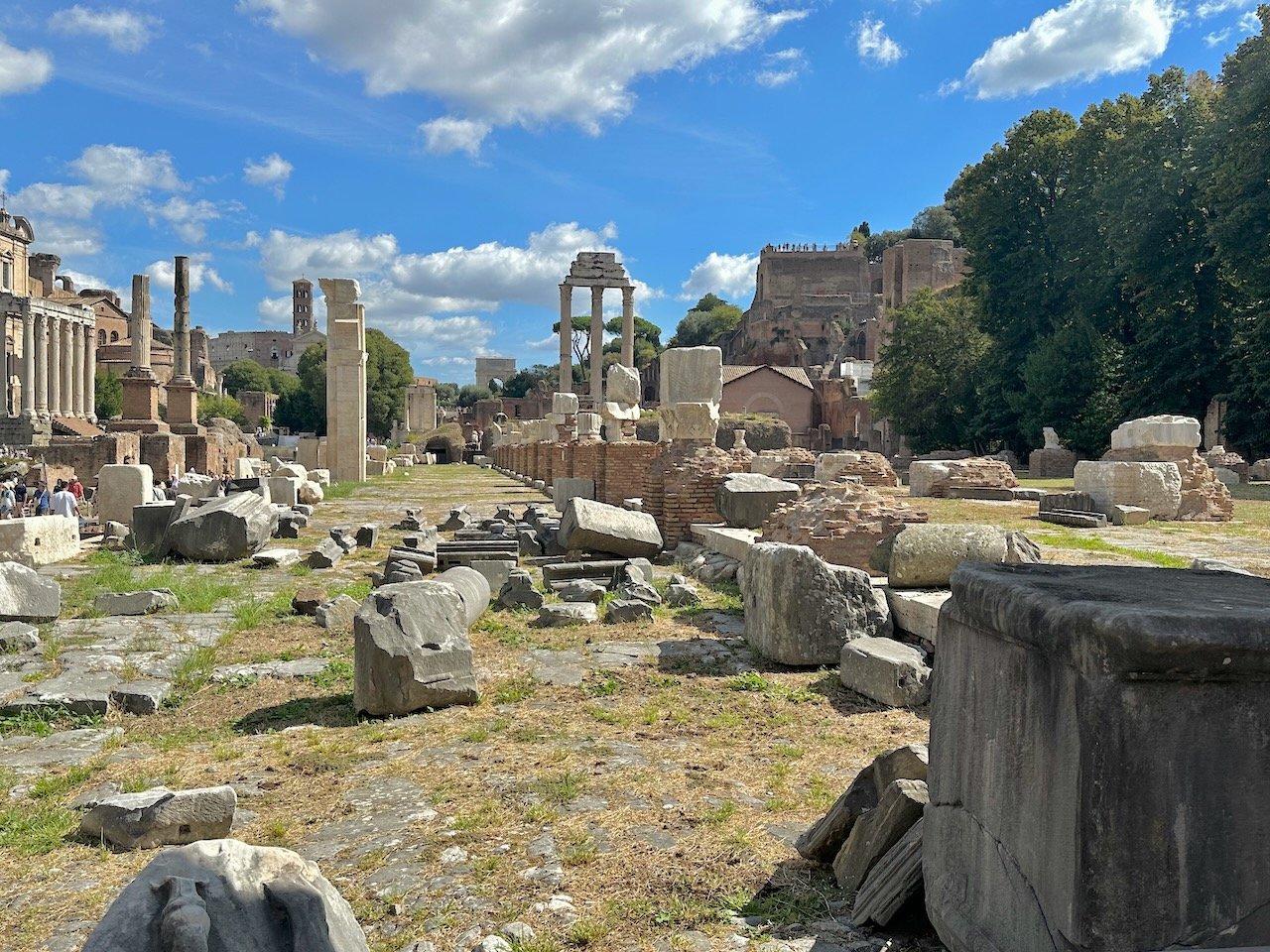
From the prison we entered the Roman Forum. We past by all kinds of Roman structures, pillars, and the open area of this ancient marketplace. In this area of the forum is the Basilica of Julia and the Temple of Castor & Pollux (mentioned in Acts 28:11. These two “twin gods” of Jupiter, gods of protection for sea-farers and warriors). It is most likely Paul was condemned to death in the Basilica of Julia in 67 AD at the hands of Nero. God used him in amazing ways to spread the Gospel to so many! He gave his life for the cause of Christ!
Titus’ & Constantine’s Arches
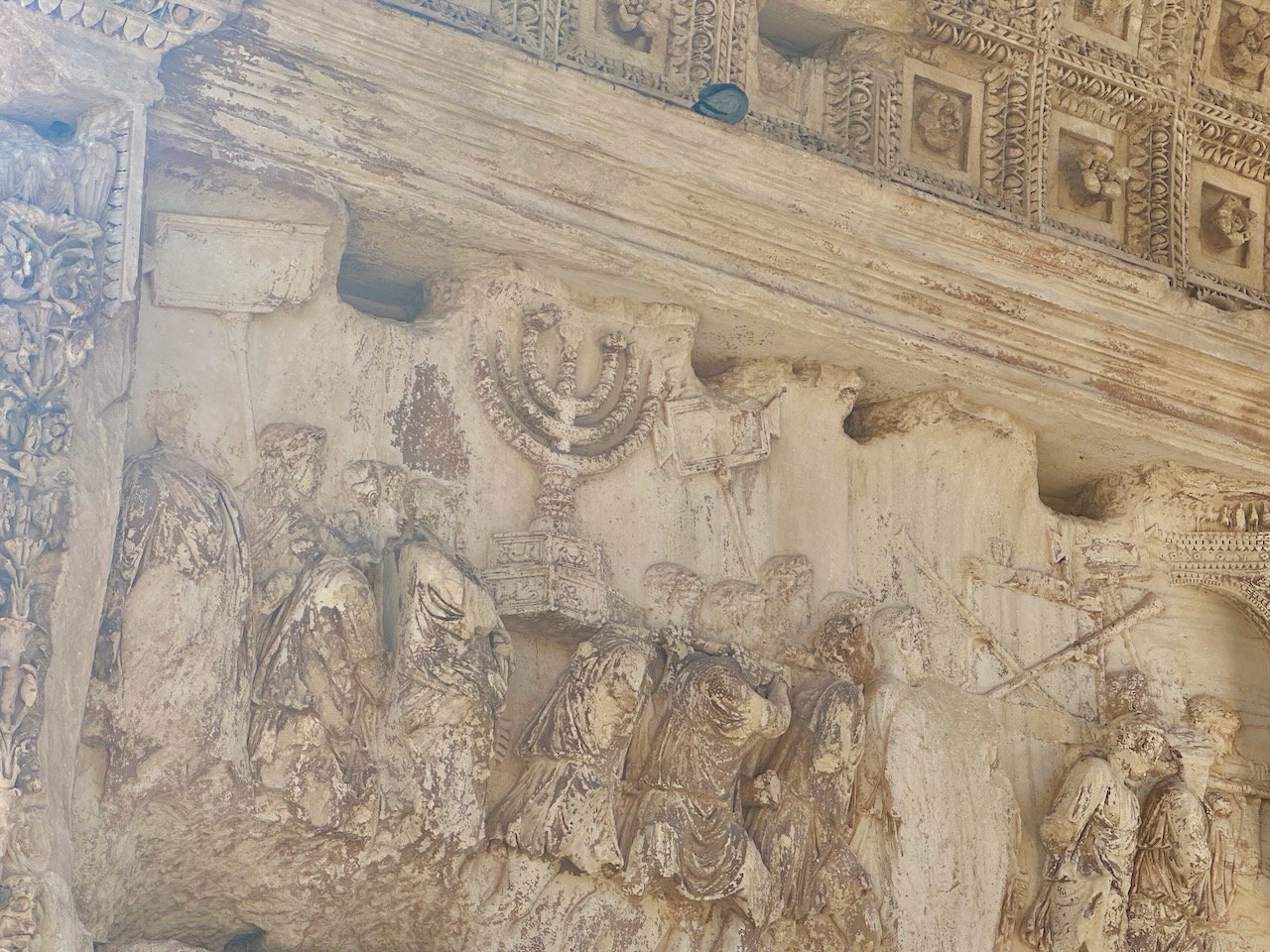
As we walked in the Forum, we also soon passed by Titus’ Arch.This arch was built shortly after the Jerusalem campaign in 70 AD. Inside the arch is a display of the Menorah taken from the Temple in Jerusalem. Exiting the Colosseum we next past by Constantine’s Arch. This was built in 315 AD. It is one of seven arches still standing today.
The Colosseum
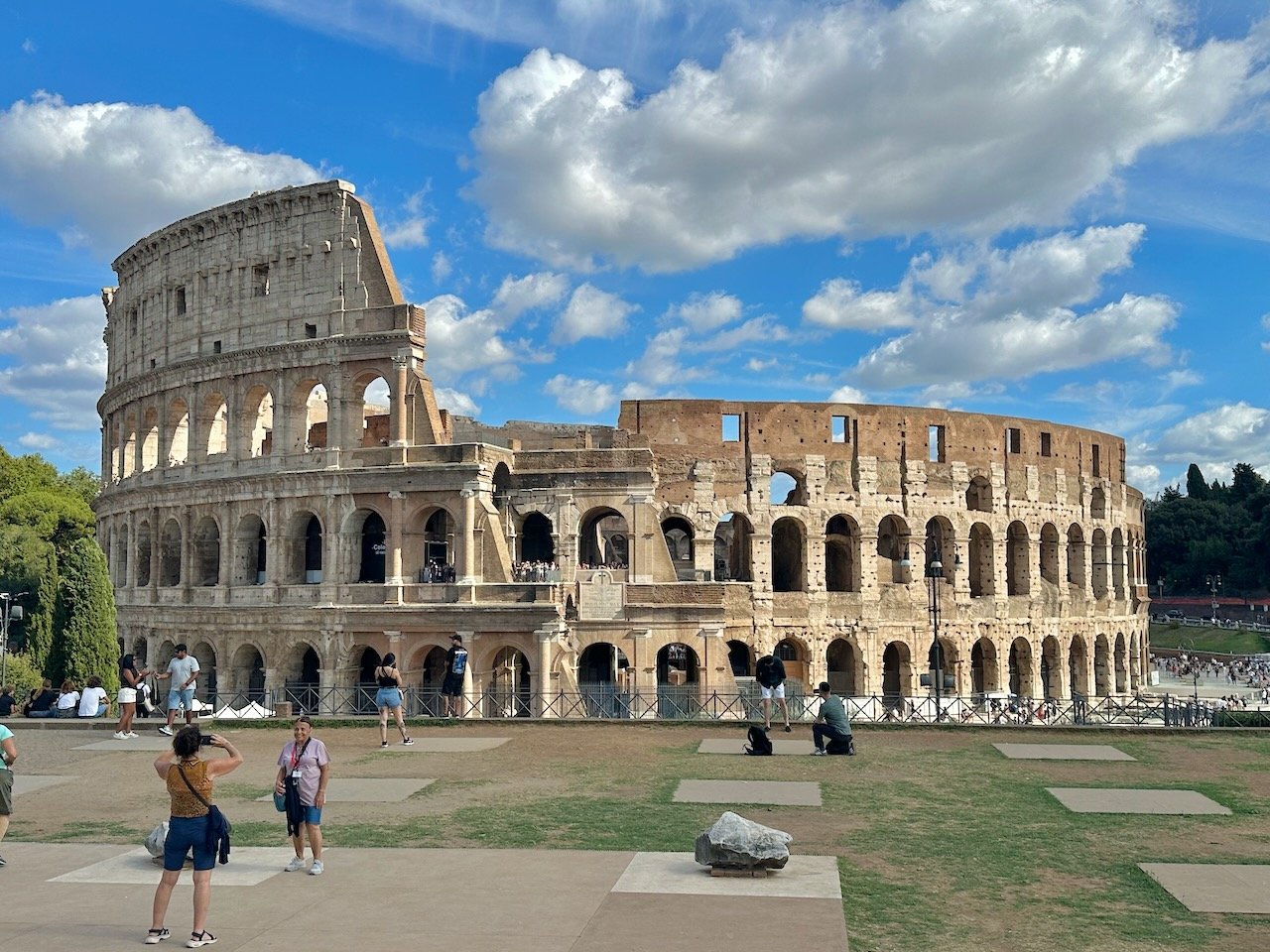
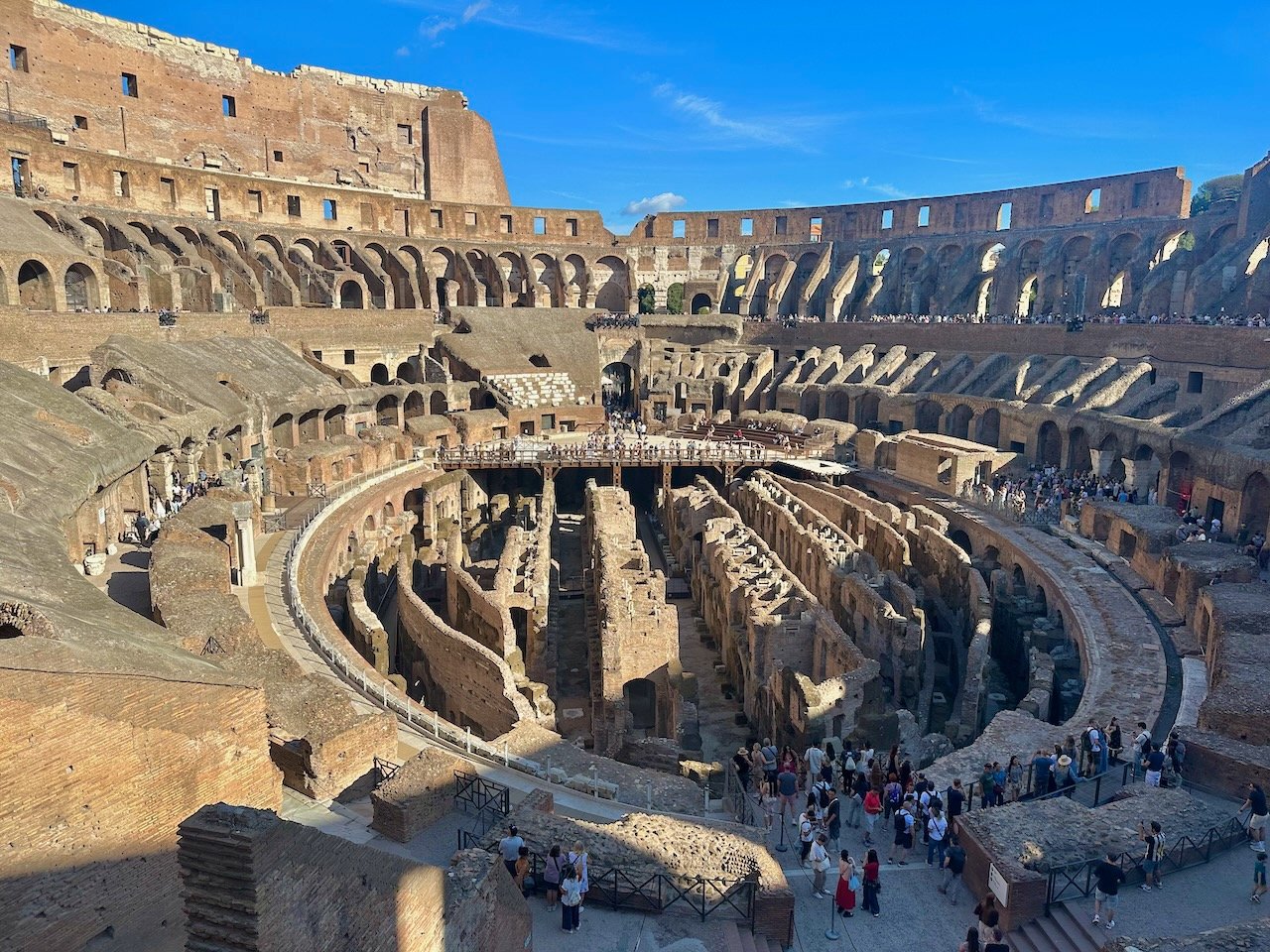
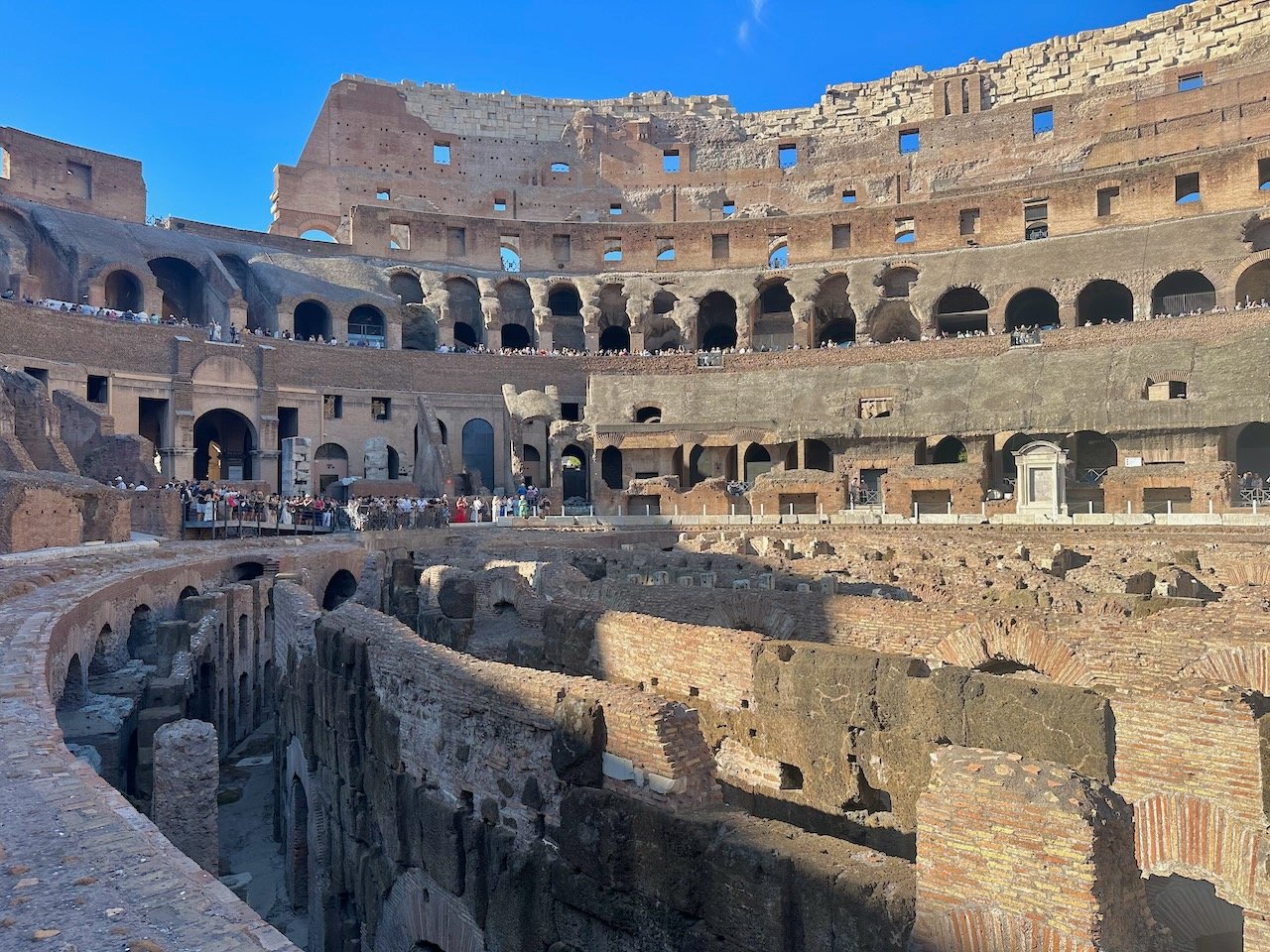
The last stop of the day was the Colosseum. This massive amphitheater built between 72-80 AD (started by Vespasian, and completed by Titus). The first eight years was just to prepare the foundation and lower levels. Over 300 tons of iron (e.g. pins) was used to hold the structure together. The Colosseum held up to 70,000 people (at its maximum capacity).
Gladiators fought here for 450 years against both animals and other men. The last use of the Colosseum was 523 AD. Later, two earthquakes destroyed about half of this structure. Going inside the Colosseum was amazing! We first went to the top for a panoramic view. We then descended down to the lower level. 54 lifts or trap doors were used to lift both animals and gladiators.
As we left the Colosseum, we walked about 10 minutes to our bus. We drove back to the hotel, arriving about 5 p.m. Dinner followed at 7 p.m., with a free evening. We walked a lot today (some track 5 miles while other 6.5) and saw many things. We are thankful for the experiences. We have one more day here in Rome.
Day 14 – Monday, September 28: Sacred Steps & St. John’s Lateran Church, Circus Maximus, Vatican & Sistine Chapel, Basilica of St. Peter’s
Today was our last full day here on the Rome extension. We began the day with with a few more religious sites/churches before ending the day in the Vatican and St. Peter’s Cathedral. The weather was absolutely perfect once again, with a cooler morning but later sunny skies and highs around 80. For the last time, we left the hotel (at 9 a.m. once again) singing “Oh, the sun’s coming up….” (HA)
Sacred Steps & St. John’s Lateran Church
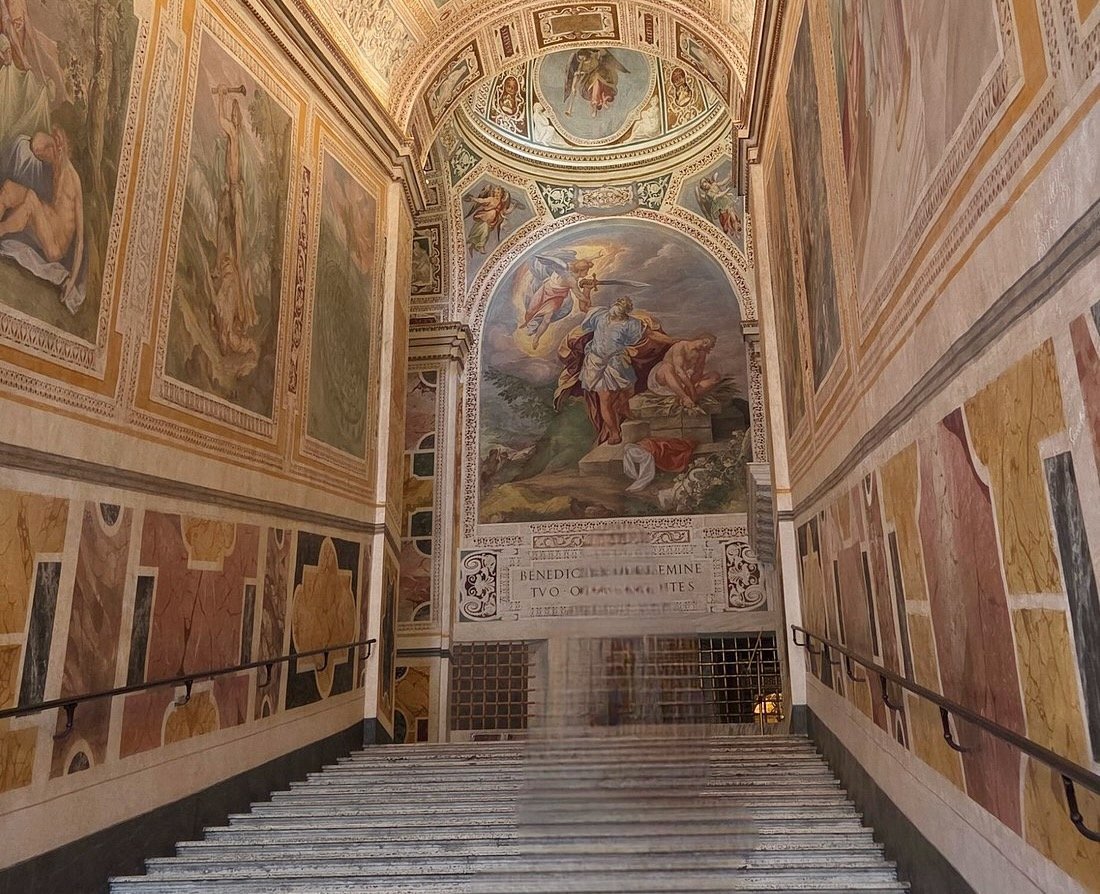
Our first stop of the day was to the Sacred Steps. As a monk, Martin Luther climbed these steps on his knees, trying to merit forgiveness. It is believed that Helena brought the 28 steps from Jerusalem. The steps are to believed to be used by Jesus went brought before Pontius Pilate (the photo of the steps included is from a previous trip since photos are no longer allowed).
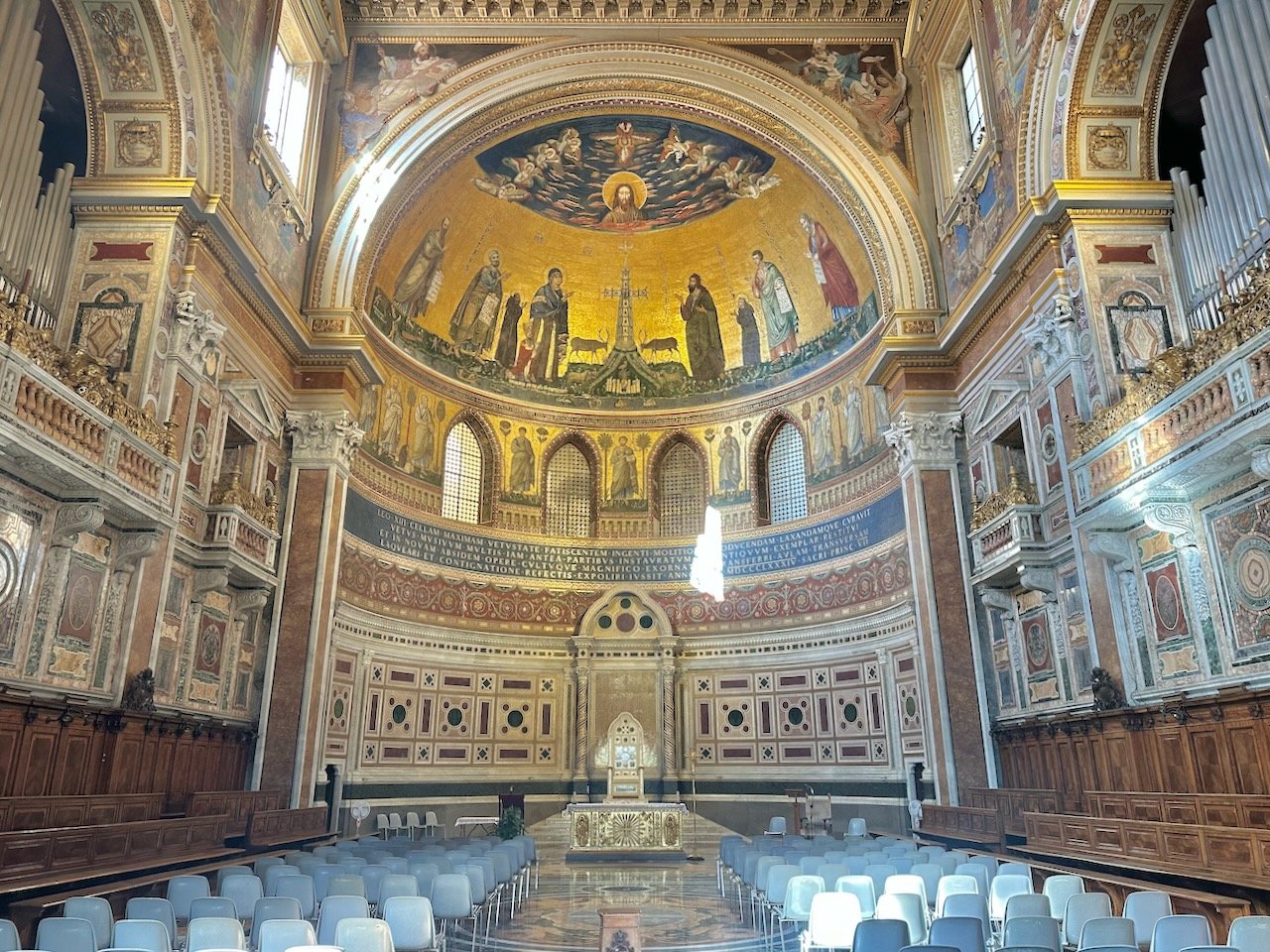
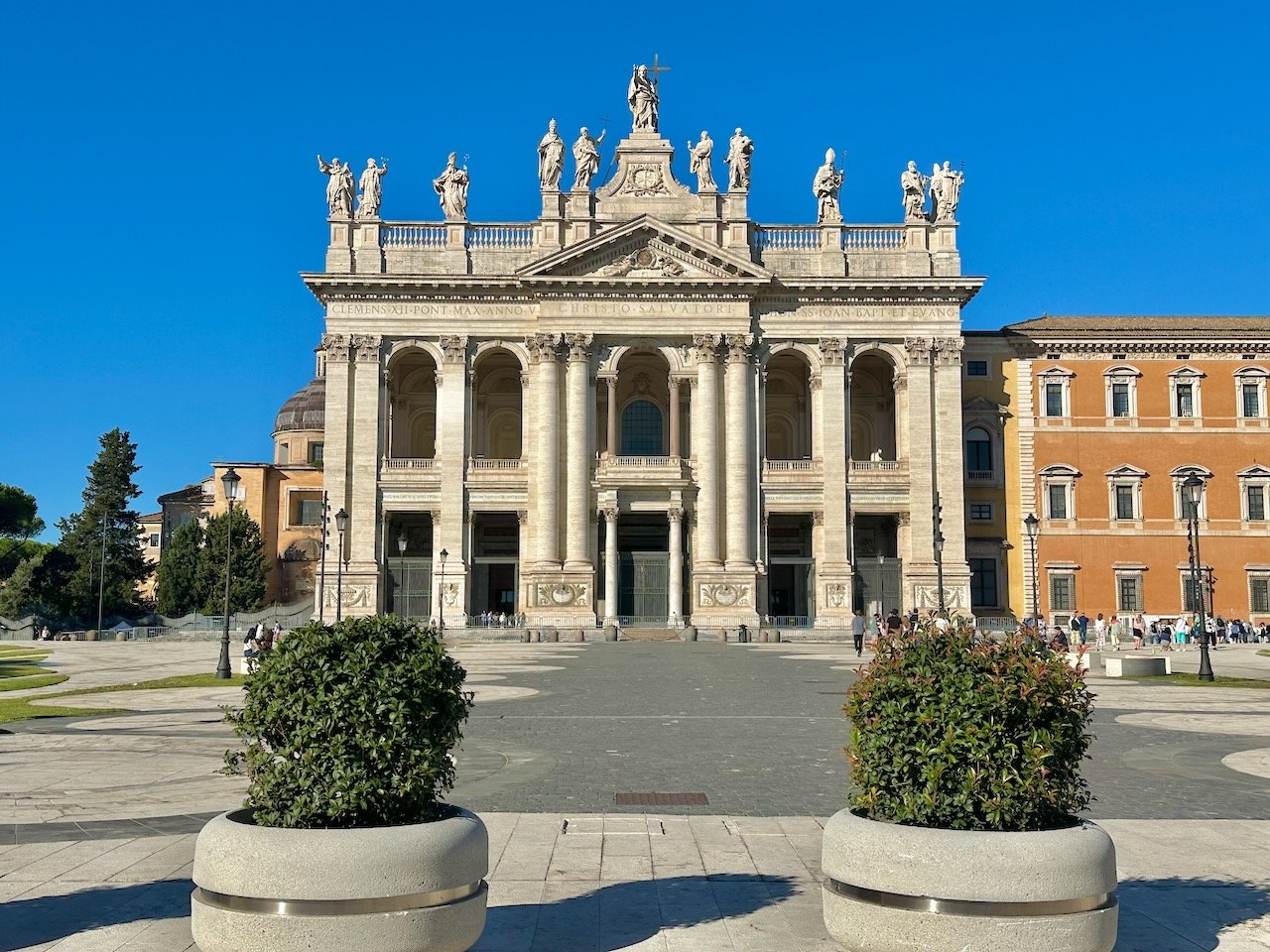
Across the street is the St. John’s Lateran Church (formerly called Church of our Savior). This was the very first official church, built in 313 AD (St. Peter’s Cathedral was built in 319-326 AD). Up through the 14th century AD, all the Popes lived in the adjacent building next to the church. The church was later redone in the 1500s. The new Pope always comes here and is appointed the Bishop of Rome here. Because of the church being the bishop center, it is viewed as the most sacred of all Catholic Churches around the world. Twenty two Popes are buried here.
Circus Maximus
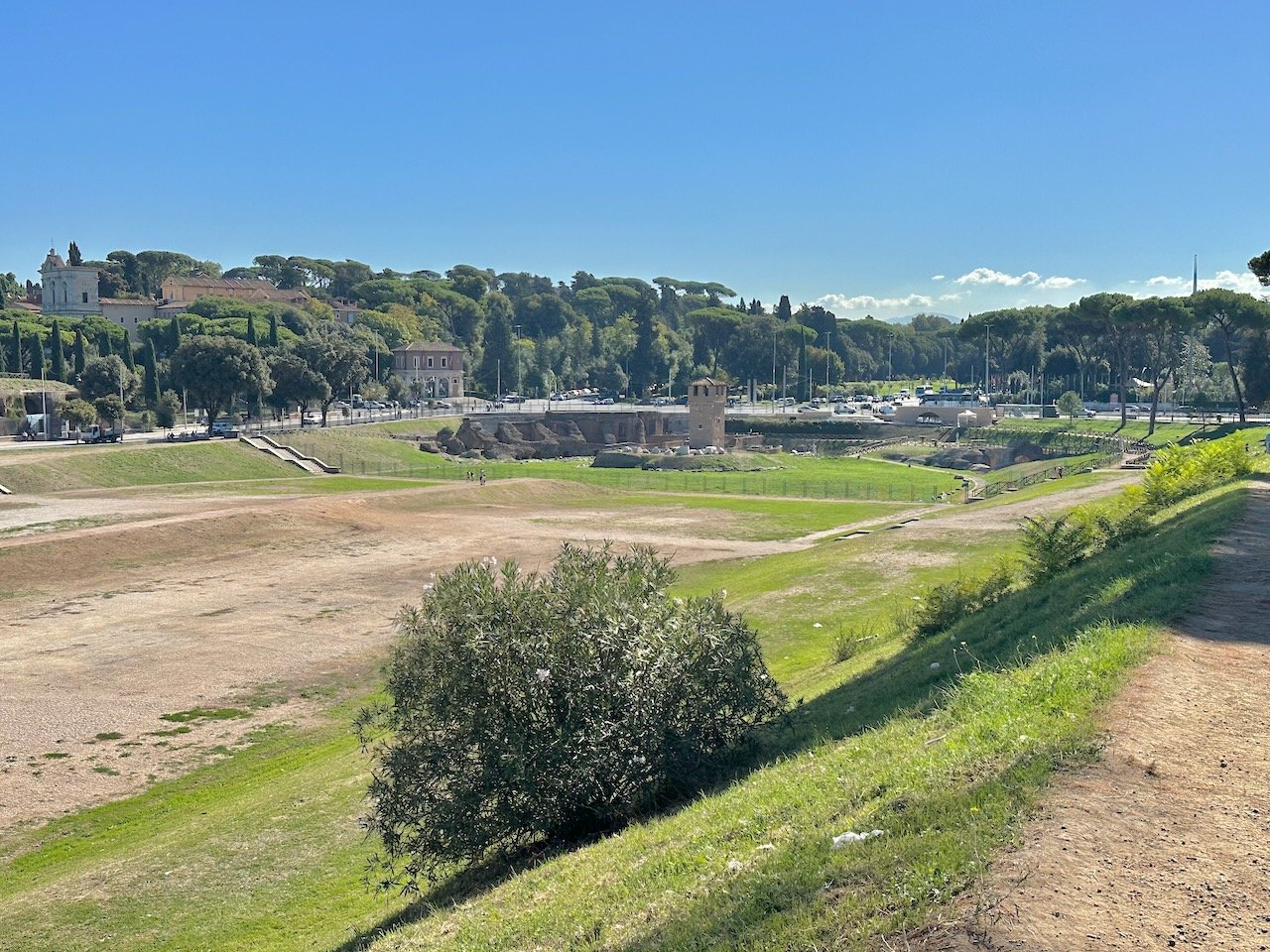
Next, we drove back to the area just outside the Roman Forum to the Circus Maximus. On the way, we passed by Hadrian’s mosoleum called Castle Sant’Angelo where he and his family were buried). The Circus Maximus was the largest of the Roman hippodromes and one of the largest sports arenas ever built. It was built in a U-shaped structure (about 2000 feet long) with seats on three sides and a low wall running down the middle of the arena around which the chariots raced. It was built in the time of Julius Caesar (1st century BC) to seat an estimated 150,000 spectators. Enlarged by later emperors, it reached a maximum size under Constantine (4th century AD) of about 250,000-350,000. Nothing but the site (between the Palatine and Aventine hills) remains today other than the one end. We read portions of Romans 12 and following as we recalled Paul’s words written to the church here.
Vatican City
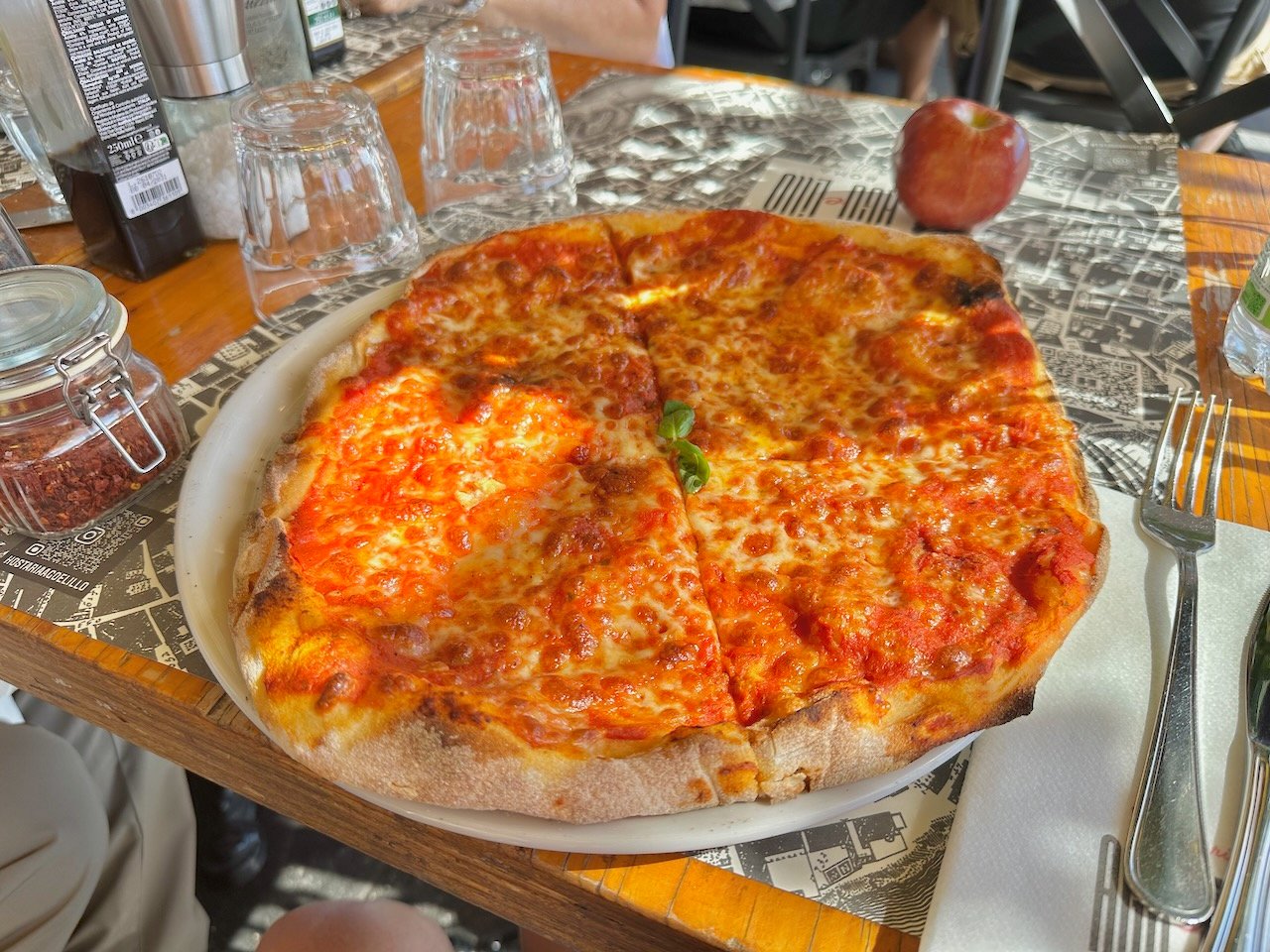
Following an hour for our last Italian lunch (pizza or pasta), we walked to the Vatican where we visited the museum and Sistine Chapel. About 850 people live in the “Vatican” today, the world’s smallest official “state.” Getting into the Vatican with special “VIP” status helped us avoid the hours-long lines. We divided into two smaller groups to walk through the museum and church with our two guides (Gloria and Alexandra). Upon entering, we got our first glimpse of St. Peter’s Church.
Vatican Museum/Sistine Chapel
Walking through the museum was packed with people. However, it was also filled with ancient artifacts, tapestries, and maps was breath-taking. Even the ceiling of the hallway is amazing! Finally we arrived at the Sistine Chapel. The uncle of Pope Julius II built the Chapel in 1483 when Michelangelo was only five years old. So many of his teachers began painting the images in the chapel. The ceiling was left blue, with golden stars until Michelangelo began his masterwork in 1508. He was 37-38 years old at this time. It took him four years of painting the ceiling. Much later, we also spent another five years to complete the Last Judgment scene on the front wall of the chapel. The chapel is simply stunning! Michelangelo was 89 when he died in 1564. About 35,000 enter the Sistine Chapel every day (note: the photo from the Sistine chapel is borrowed).
St. Peter’s Basilica
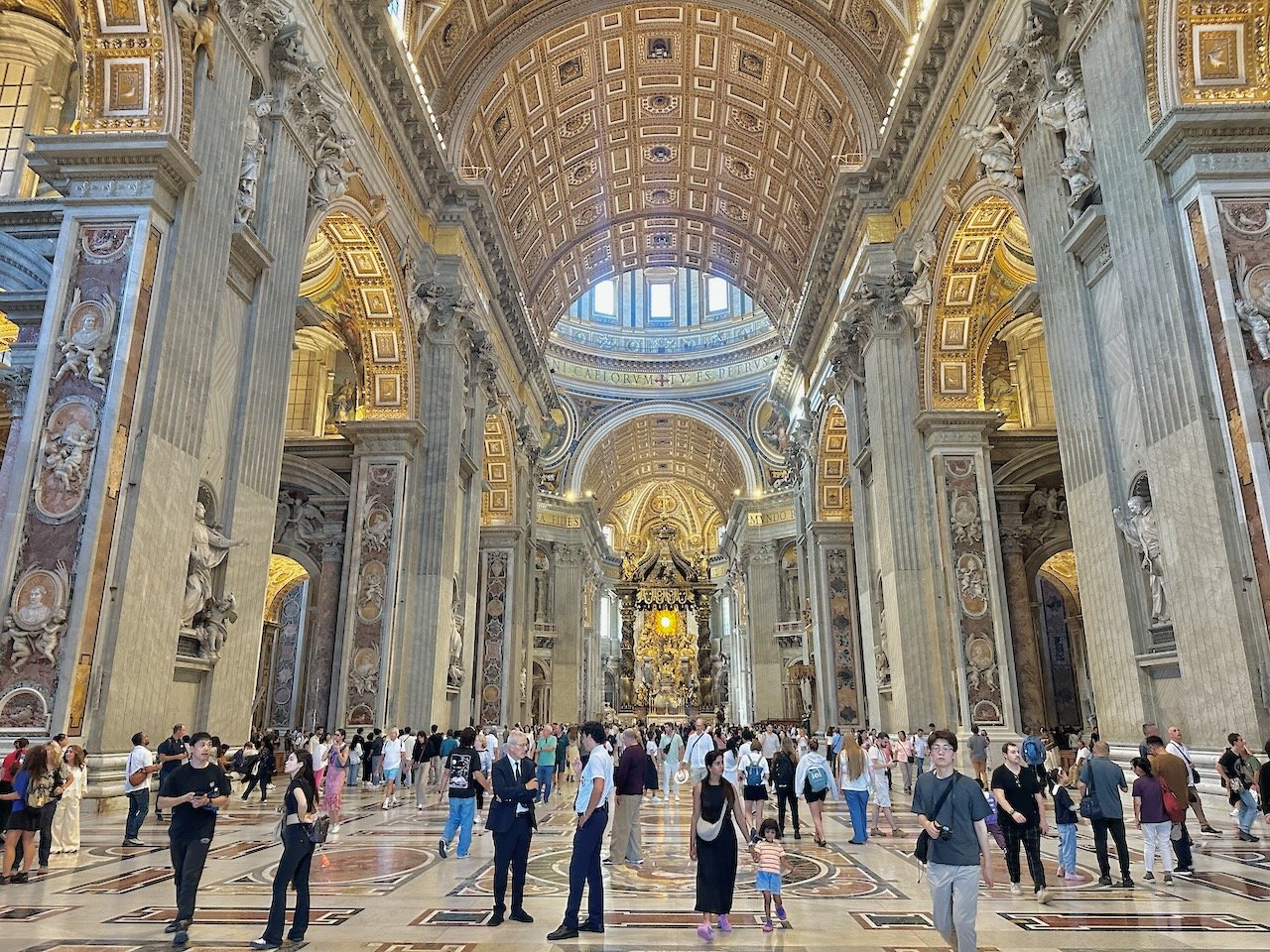
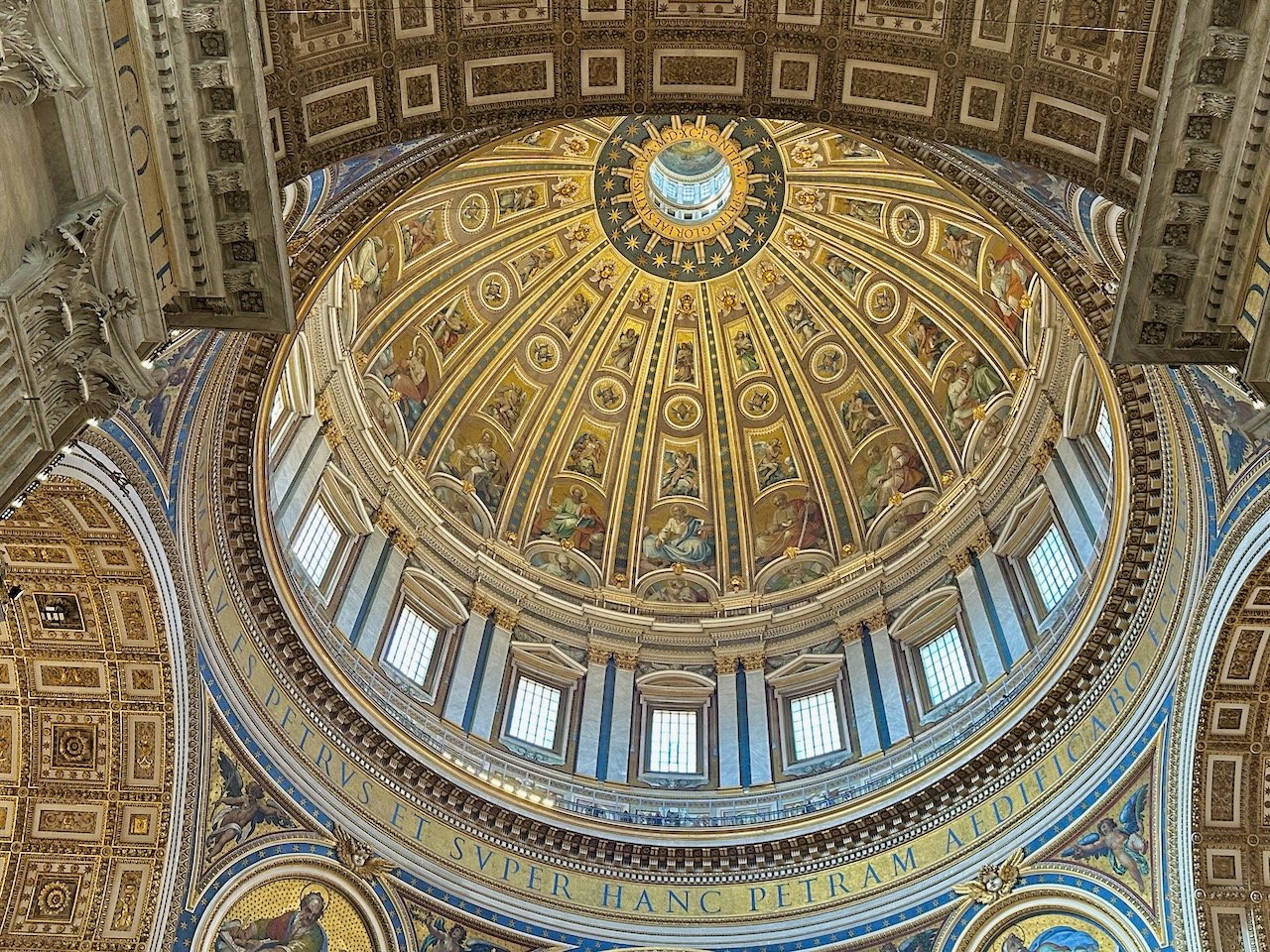
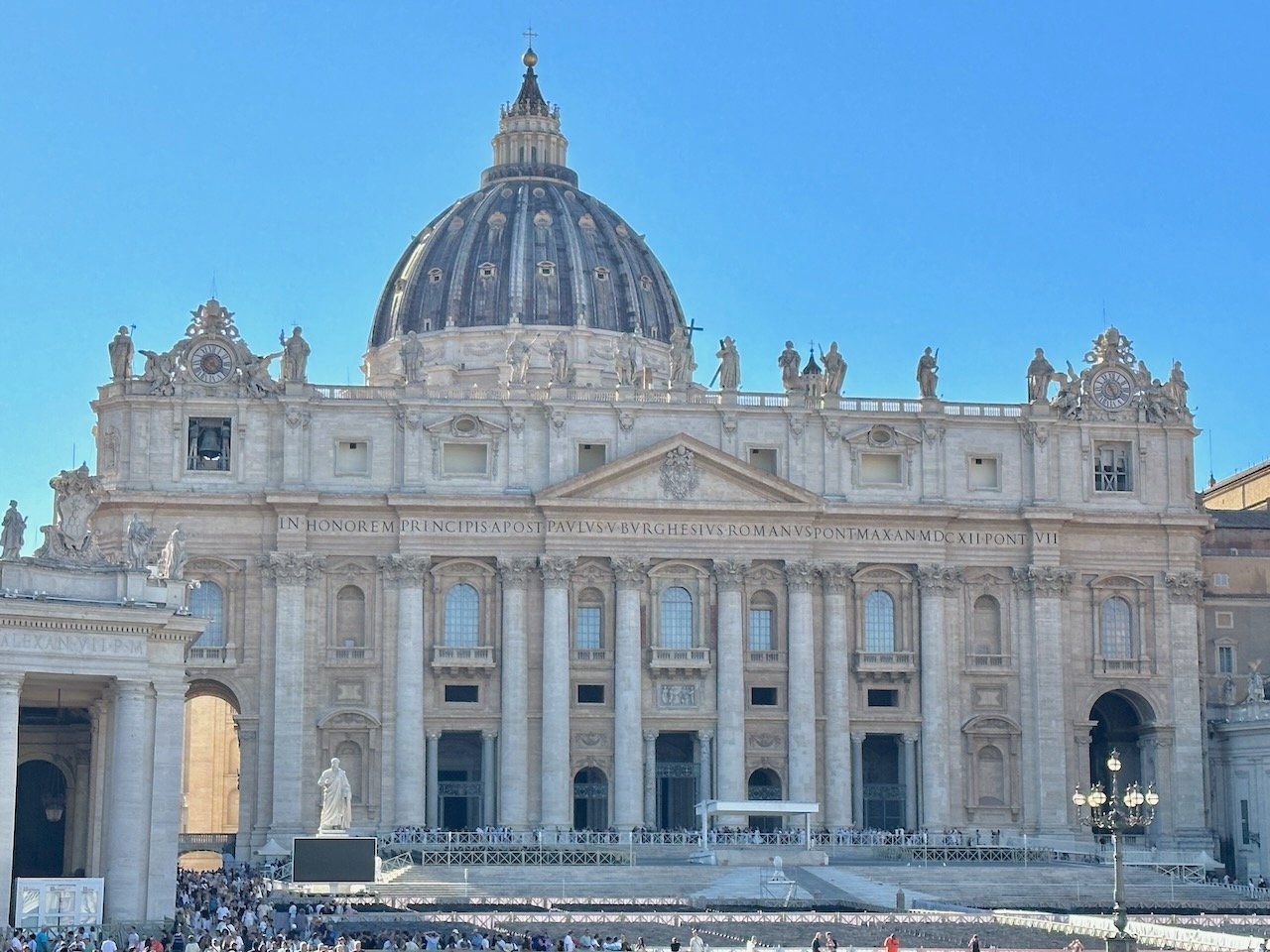
Leaving the chapel we entered St. Peter’s Basilica. It is the largest in the world. The original church was built in 319-326 AD, but the present church was built in 1504. It took 120 years to complete! When Michelangelo was 73, he started designing the dome of the church, the largest in the world. As we walked through the church, we saw a replica of the famous Pieta sculpture of Mary holding the crucified Jesus (the room housing the real Pieta was under construction). We also saw the remains of a few Popes who earned “sainthood” after their deaths. Leaving the church we entered Vatican Square. It is a large gathering place in front of the church itself. We enjoyed a brief time in the area of the Square before walking to the bus that took us back to the hotel.
Following dinner, some of us went out for our last gelato before retiring for the night. All but four of us (they are extending their visit to other parts of Italy) fly home tomorrow on various flights.
Day 15 – Tuesday, September 29: Flight Home from Rome, Arrival in U.S.
Most of us flew home today on either morning or early afternoon flights. We all got home safe and sound. Four in the group extended their journey in Italy for six days. Praise God for a great trip with an amazing group!
Mars Hill – Athens
Dr. John shares a live devotional video from Mars Hill. Also called the Rock of Areopagus, this was where Paul shared his bold testimony among the philosophers of the day (Acts 17). Mars Hill is located just below the Acropolis of Athens.