Day 7 – Friday, September 16: Masada, Ein Gedi, Qumran, Wilderness of Judah/Wadi Qelt, Jerusalem, Western Wall
Today was the hottest so far (sunny and in the high 90s), but this is to be expected here in the area of the Dead Sea this time of year. We first loaded the bus with our luggage and then enjoyed breakfast in preparation for the day.
Masada
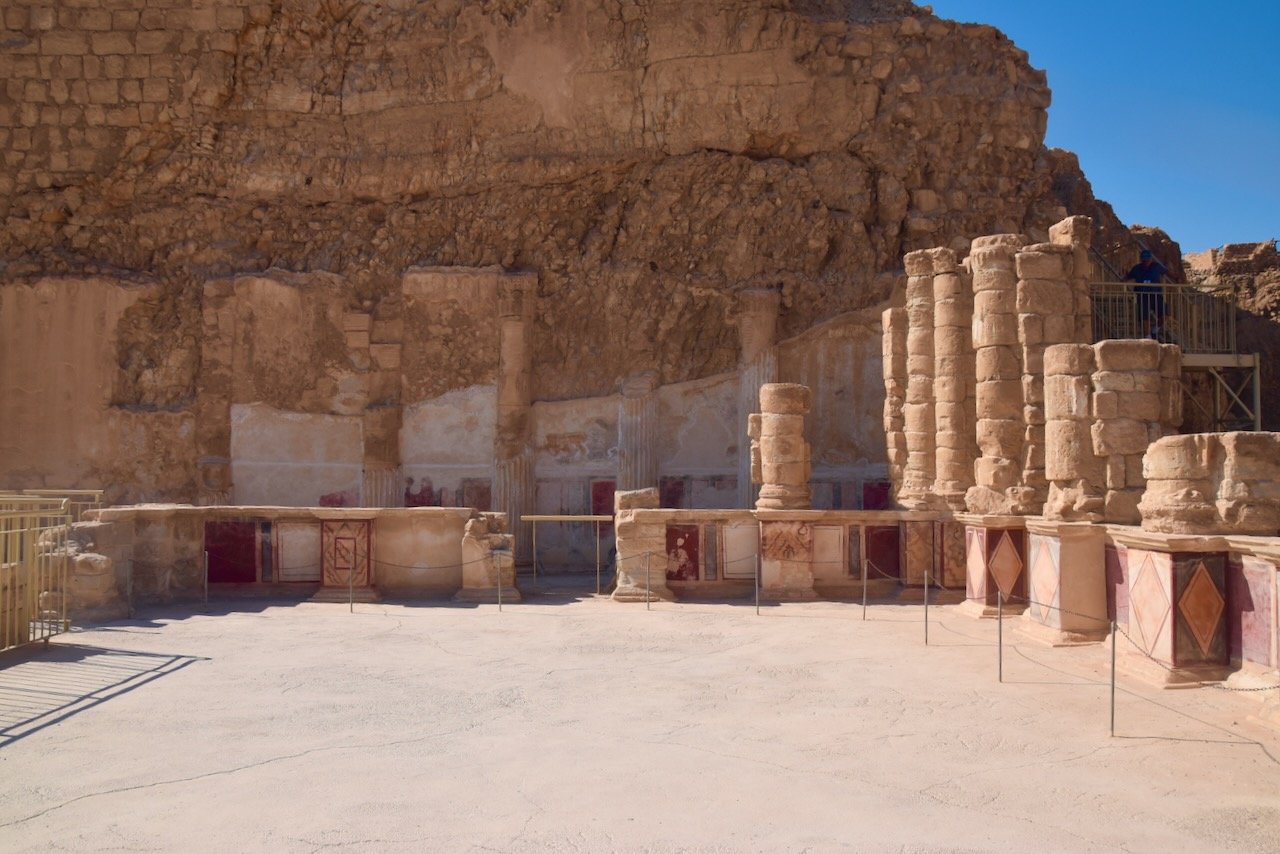
Following breakfast, we drove north along the Dead Sea to Masada (metzada, in Hebrew, from Psalm 18:1-2). This was built in the 30s BC as a palace-fortress by Herod the Great. We took the cable car to the top and began seeing the ruins from the 1st century. We saw huge cisterns, the western and northern palaces, the Roman Ramp, the synagogue, and the bathhouse. In 70 AD, this was the location where 967 Jews found refuge from the Romans following the destruction of the Temple. The holdout lasted about three years until all by five of these Jews (a few women and children) took their own lives. It is a story of bravery and courage! Due to the hot temps, we all took the cable car back down.
Ein Gedi
We drove about 15 minutes north of Masada to get to Ein Gedi, one of only a few oasis here in the edge of the Judean Desert. We walked back to the first water falls. We read from Song of Songs 1, 2 Chronicles 20 (the “Ascent of Ziz”) and 1 Samuel 24 (David hid from Saul here). A number in the group hiked back to the end of the canyon. Some even got wet under some of the lower water falls! It was so refreshing! It was amazing to see so much water here in the desert! No wonder David was here!
“The Judean Desert is a remarkable region of Israel. While it is so dry and desolate, it was incredible to see all the water at Ein Gedi! We enjoyed visiting and getting wet at this site where David and Saul met in a cave. What a refreshing experience!”

Qumran
Continuing about 30 minutes north we arrived at Qumran. We enjoyed lunch here before seeing this most important site. A few in the group chose to hike to the cliff area during lunch time. It was here at Qumran where the Dead Sea Scrolls were found! The discovery began in 1947, while the excavation took place through 1956. We saw the ruins where a small community of Essenes lived (or retreated to from Jerusalem, as the new theory suggests). To date, over 900 scrolls and fragments of texts scrolls have been discovered in 12 caves. The scrolls/texts date primarily from the 3rd century BC – 1st century AD. At the small archaeological site we saw cisterns, ritual baths (mikvot), and the scriptorium. In front of “Cave 4” (where the majority of texts were found), we read from “Psalm 151,” and Psalm 19. We celebrated the perseverance and accuracy of God’s Word!
Wadi Qelt
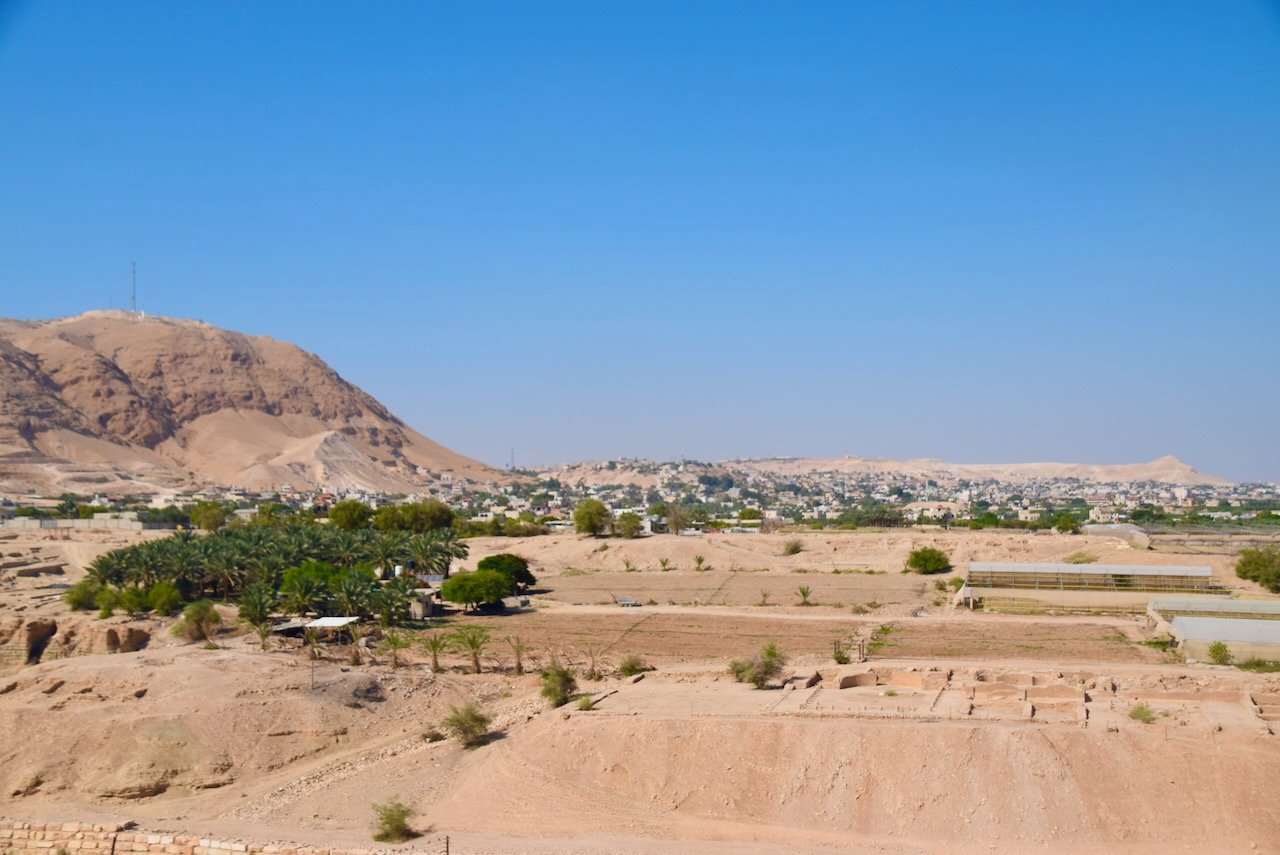
En route to Jerusalem, we took a narrow road newly opened from Jericho to the eastern part of the Judean Desert called Wadi Qelt. Here we saw the St. George Monastery built right into the side of the cliff! Driving further west we made another stop overlooking the heart of the Judean Desert! We enjoyed hearing “Isaiah, the prophet” proclaim the words, “Prepare the way for the Lord…” (from Isaiah 40; John the Baptist would proclaim the same words in the same desert!), and Psalm 23 sung by Shlomo. The view was breathtaking!
Jerusalem
We continued ascending to Jerusalem, passing Bethany and Bethpage on the way! We checked in to our hotel, enjoyed a wonderful “Shabbat” dinner, and an optional walk to the Western Wall to end the evening! We are looking forward to our first full day in Jerusalem tomorrow!
Day 8 – Saturday, September 17: Jerusalem, Mt. of Olives, Old City, Holy Sepulcher Church, Herodium, Bethlehem