Day 5 – Wednesday, January 14: Masada, Drive Through Southern Judean Hill Country, Herodium, Shepherds’ Fields, Bethlehem, Kalya Hotel (near Qumran)
Due to the closed road along the Dead Sea (because of more flash floods), we had to change our program today. Our final destination would stay the same (our hotel near Qumran on the NW corner of the Dead Sea), but we would head through the Hill Country of Judah after our first visit at Masada. The morning was windy but rain free as we up and down Masada, but we had off and on rain and showers in the afternoon. Temps reached only in the low 50s.
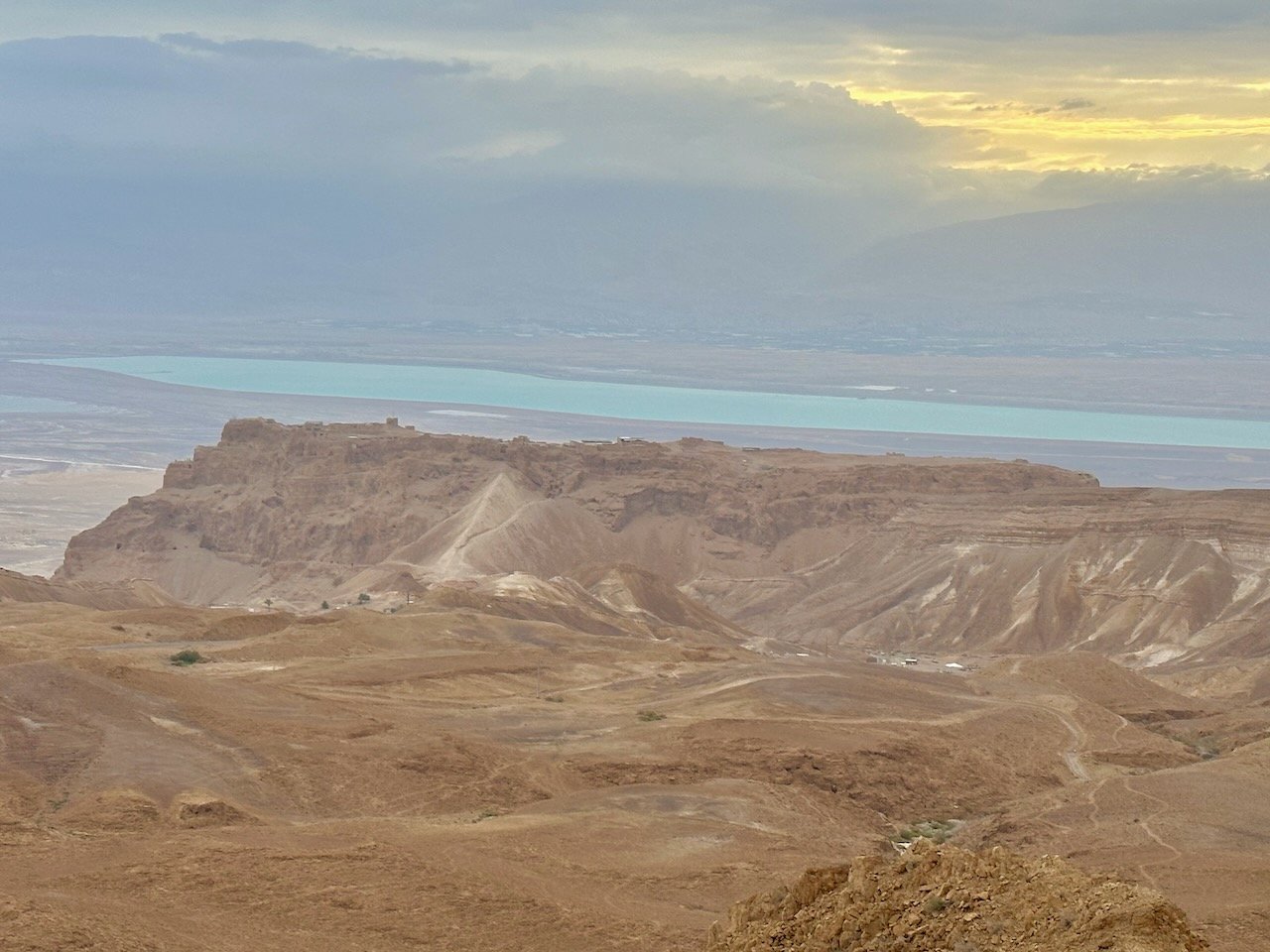
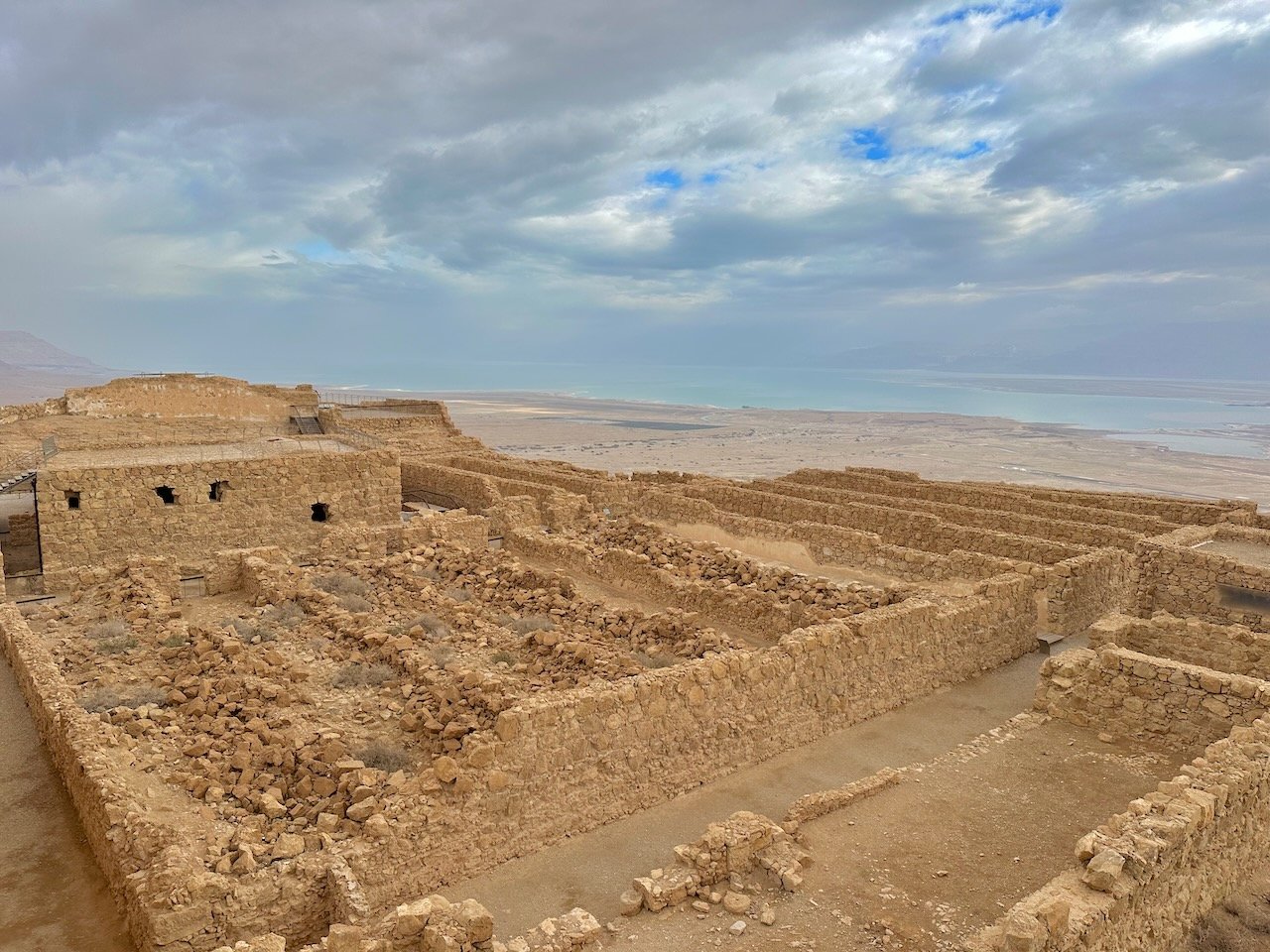
Masada
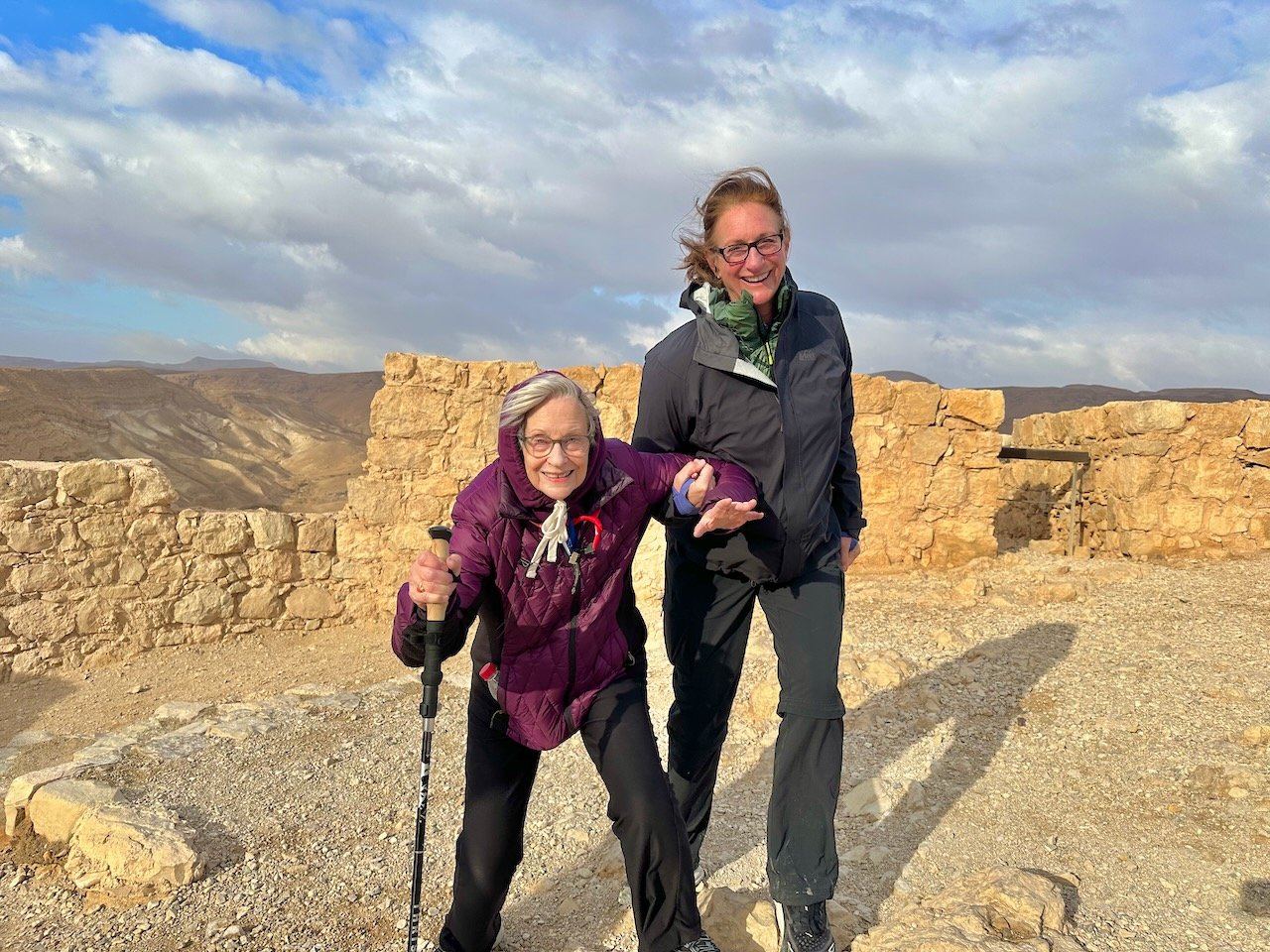
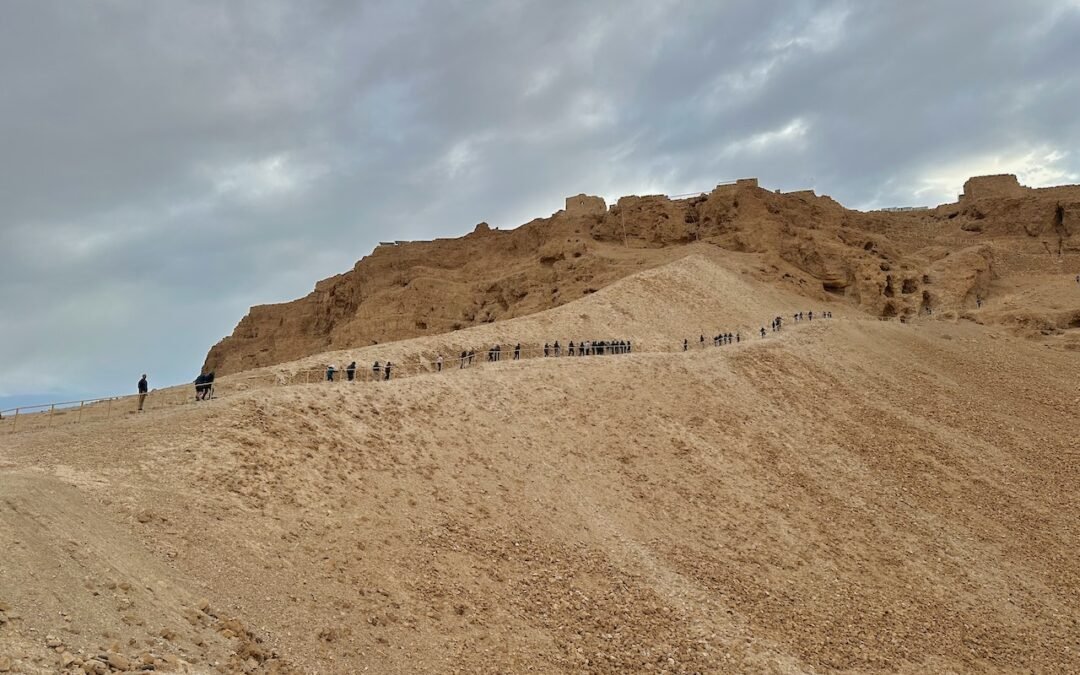
We drove east about 8 miles to get to the western side of Masada, a palace-fortress built by King Herod in the 30s BC. Everyone in the group hiked up the Roman ramp. Upon cresting the site we saw the casemate wall, huge cisterns, the synagogue, the western and northern palace, storehouses, and the bathhouse. The courageous story of Masada (with 967 using the site as a place of refuge) is both incredible and inspiring! Leaving the site, about half the group walked down the steep Snake Path while others took the cable car down.
Drive North Through Southern Judean Hill Country
Because of Route 90 (the road along the western coastline of the Dead Sea) was still closed due to flash floods, we took a unique road past Tel Arad and up into the southern Hill Country of Judah. The road took us past such places as Maon and Carmel (2 Samuel 25) and Ziph (2 Samuel 23). Also, the 12 Israelite spies came up through this region to Hebron. Speaking of Hebron, as we passed by this ancient city, we recalled that the Patriarchs (except Rachel) were all buried here in the Cave of Machpelah.
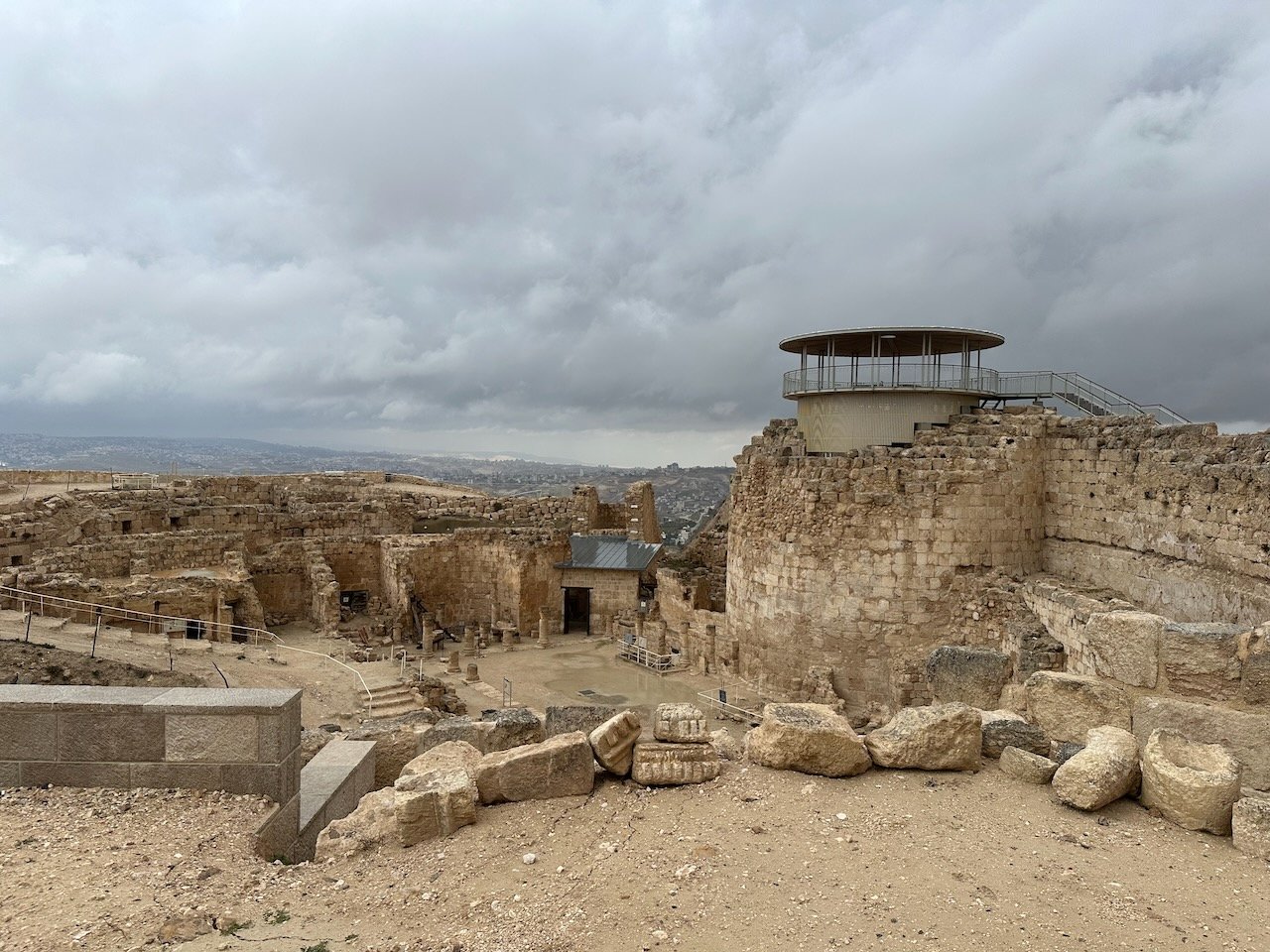
Herodium
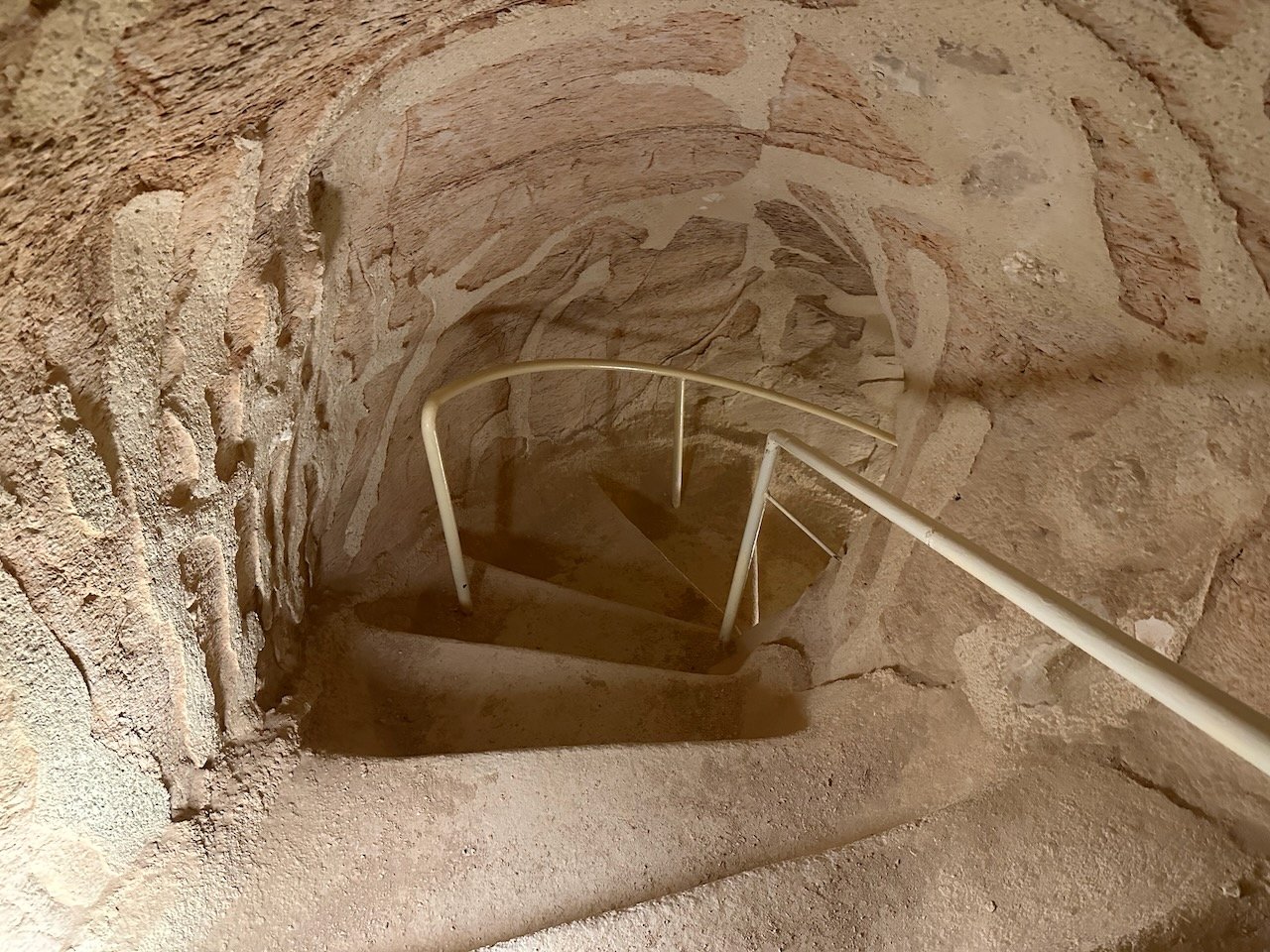
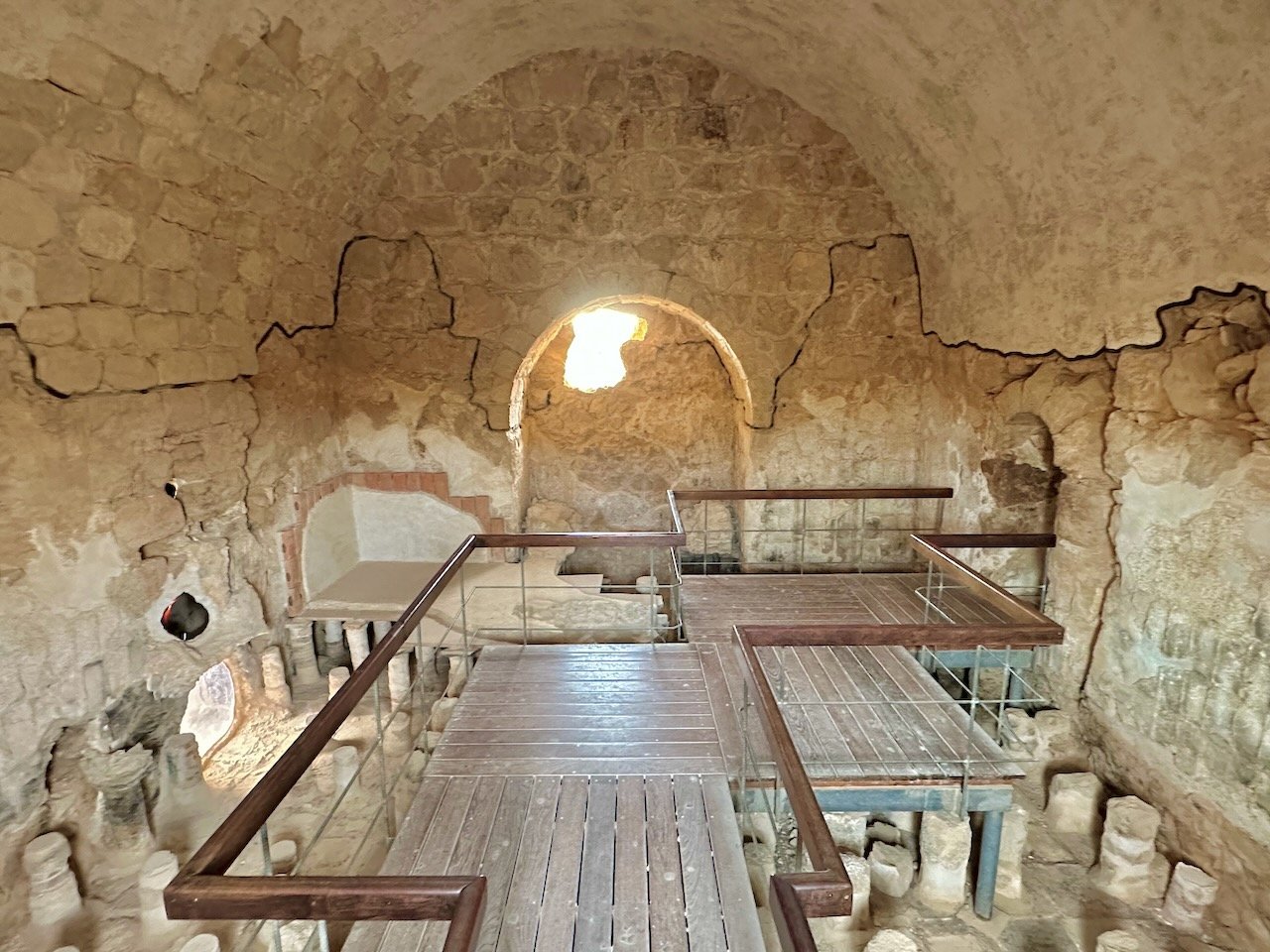
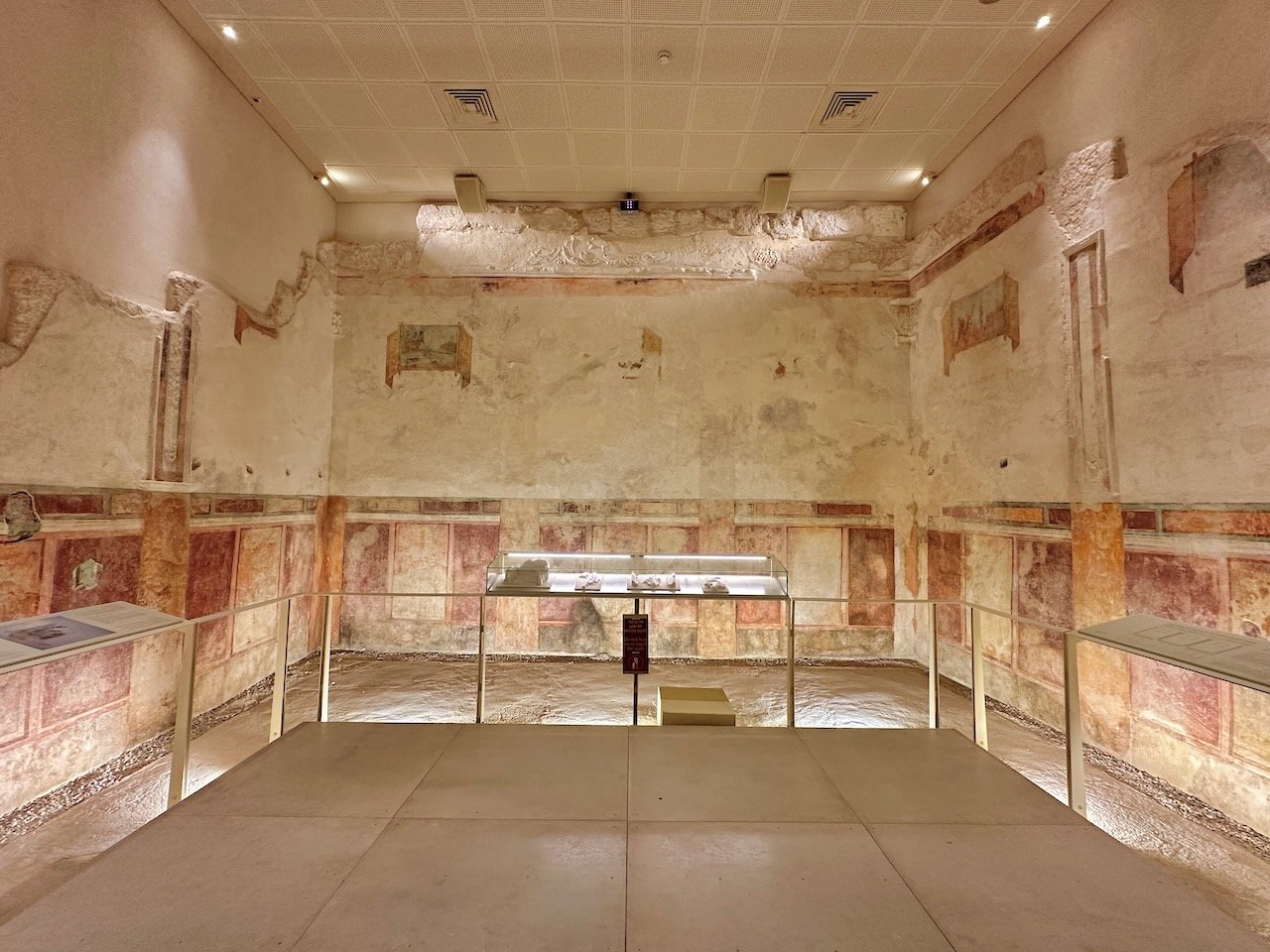
The road passed Hebron eventually took us further north and east to Herodium. This was a palace-fortress built by Herod the Great. He was also buried in 4 BC. The site was incredible, with many new renovations and displays. Inside the well-preserved official’s chamber (i.e. reception hall) we saw a wonderful presentation. Then many in the group walked up 150 steps through the royal arches to the top where we saw the bathhouse, synagogue, impressive frescoes, and a great view of Jerusalem from the highest of the four towers. We left the site by walked down through the cistern system.
“We needed to tweak our program today because of the road closure along the Dead Sea. Yet, it was still a wonderful day. We started with Masada (up and down the Roman ramp) before driving north through the Hill Country of Judah. We ended with Herodium and Bethlehem!”
Bethlehem/Shepherds’ Fields
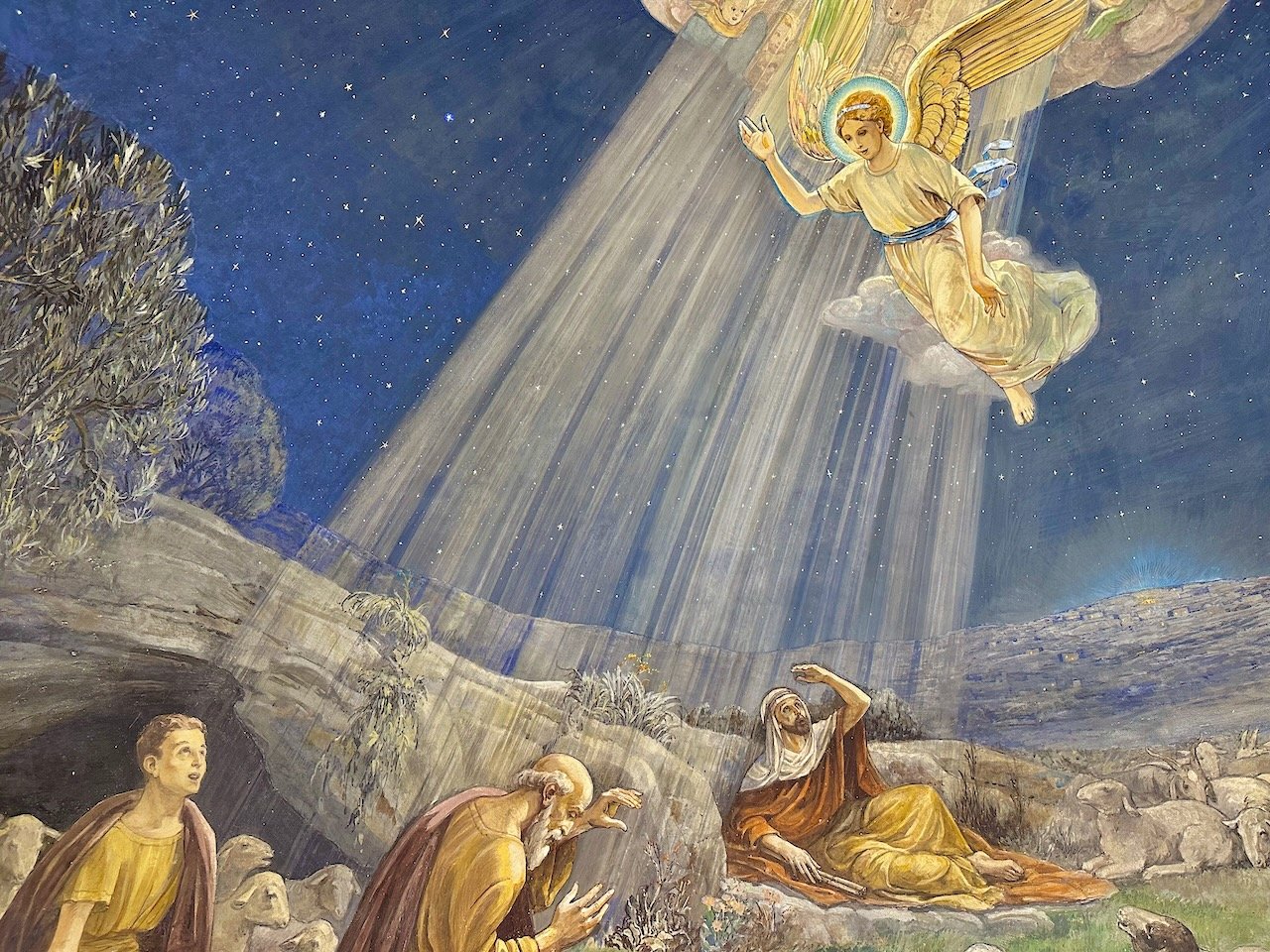
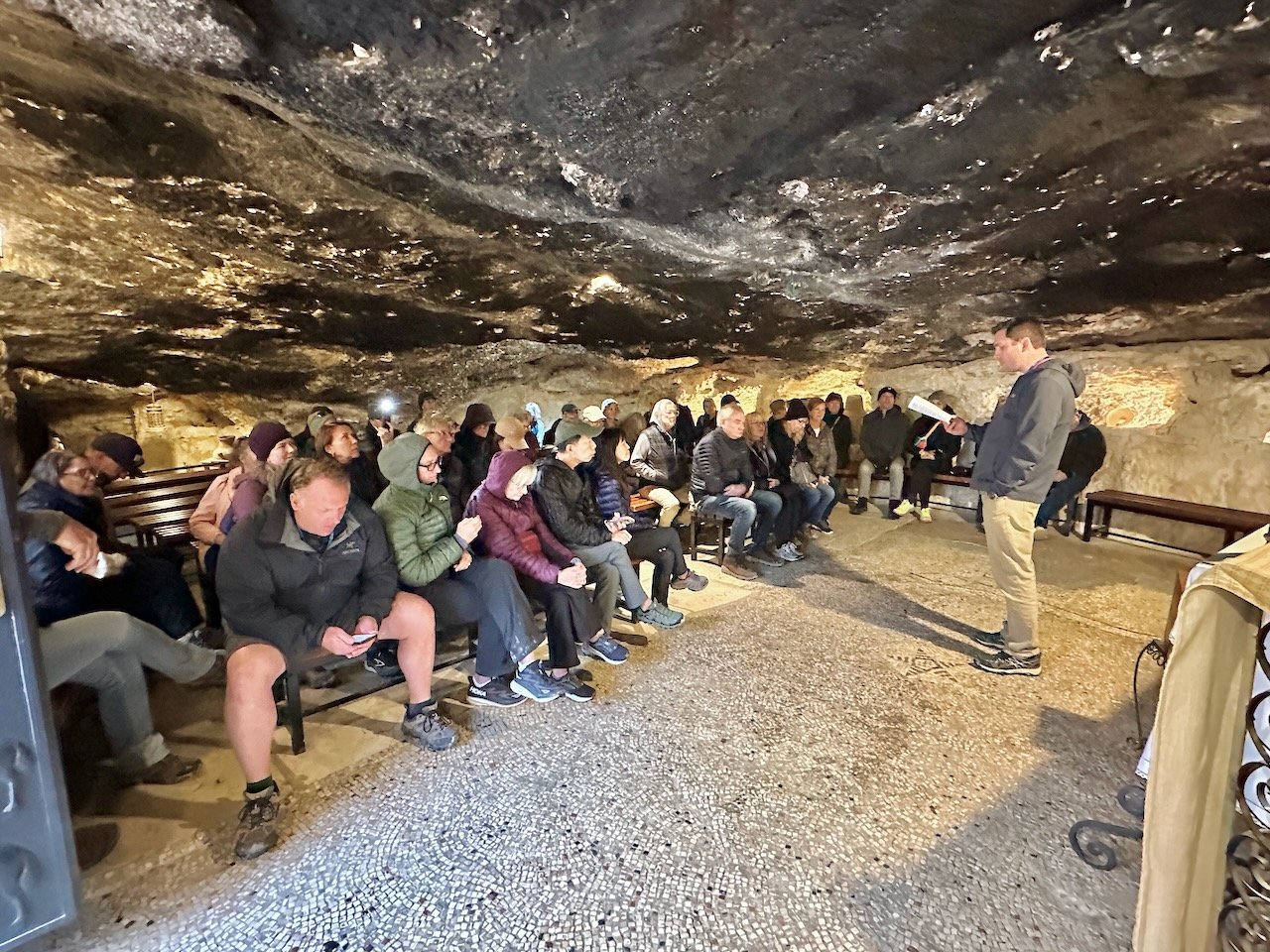
Just to the west of Herodium is Bethlehem. On the way we first made a stop in Beit Sahour (an eastern adjacent Arab town). Following a quick but great falafel lunch, we enjoyed singing Christmas carols in the Shepherds’ Fields. We read from Luke 2 about the birth of Jesus. It was “just at the right time God sent His Son” (Galatians 4:4). The shepherds were probably tending their sheep at Migdal Eder (between Bethlehem and Jerusalem, Micah 4) before the angelic host informed them of the birth of Jesus as prophesied (Micah 5). From here we drove into Bethlehem where we visited an olive wood factory and story. These olive wood products were impressive.
Dead Sea/Kalya
To end the day we drove out of Bethlehem through Beit Jala to Jerusalem before descending down through the Judean Desert to the Dead Sea. We arrived at Kalya, our “kibbitz-hotel” located near Qumran. We expect to get back on our scheduled program tomorrow (we will visit Jericho and Ein Gedi next week).
Day 6 – Thursday, January 15: Qumran, Shiloh, Beth Shean, Mt. Gilboa, Tiberias