Day 9 – Sunday, January 18: Gamla, Qatzrin, Syrian Border, Caesarea Philippi, Dan, Metula (Lebanon Border)
Today we spent the day in the Golan Heights. This region extends 38 miles east from the southern end of the Sea of Galilee up to the slopes of Mt. Hermon and the Syrian border. We encountered cloudy and rainy skies all day long (with heavy fog in some places). Temps were in the high 50s. We left the hotel after another hearty breakfast at 7:35, reading Matthew 5.
Gamla
We drove around the northern part of the lake and began our ascent to the Golan Heights. As we climbed we stopped briefly to look down to the Plain of Bethsaida where the Feeding of the 5,000 took place (Luke 9). The view was very limited because of the fog. We also read Mark 8 (the Bethsaida blind man healed by Jesus).
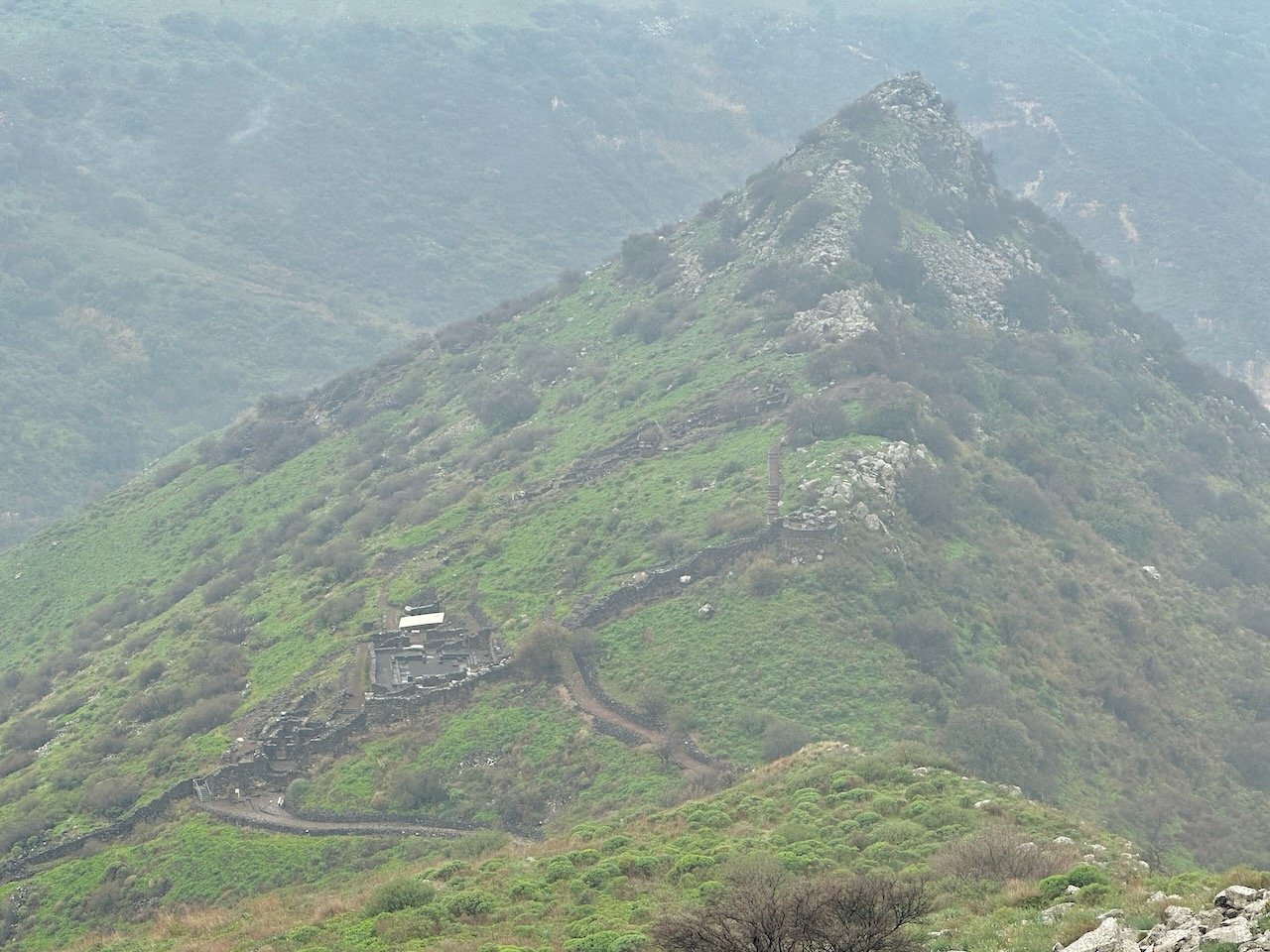
Once we arrived at Gamla, we walked to the overlook of this camel-hump shaped city. Even with the cloudy skies, we could see down to the 1st century synagogue. There is a high probability that Jesus taught here (Matthew 4 & 9). This was a city that was destroyed in 67 AD in the 1st Revolt against the Romans in 67 AD.
Syrian Border
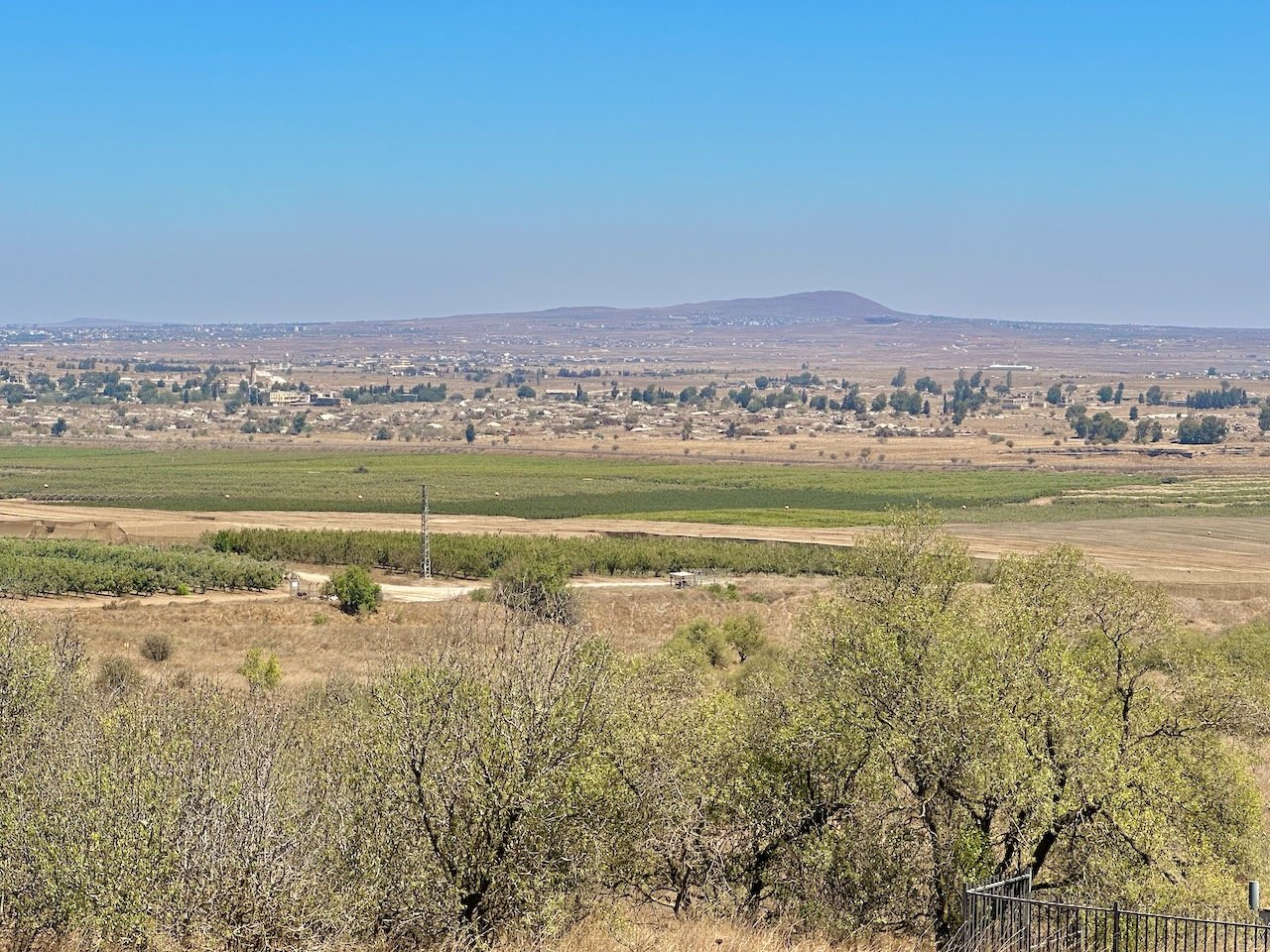
Continuing northward, we stopped for a brief stop to look over into Syria. In the bus Shlomo shared with us some of the recent history with Syria. The heavy fog prevented us from seeing the actual border. As of last year, Israel now controls more of the buffer area, including the outskirts of Quneitra as well as the highest peak of Mt. Hermon (9,200 feet). NOTE: The photo below of the Syrian border is from another tour when the visibility was good.
Saar Falls / Caesarea Philippi
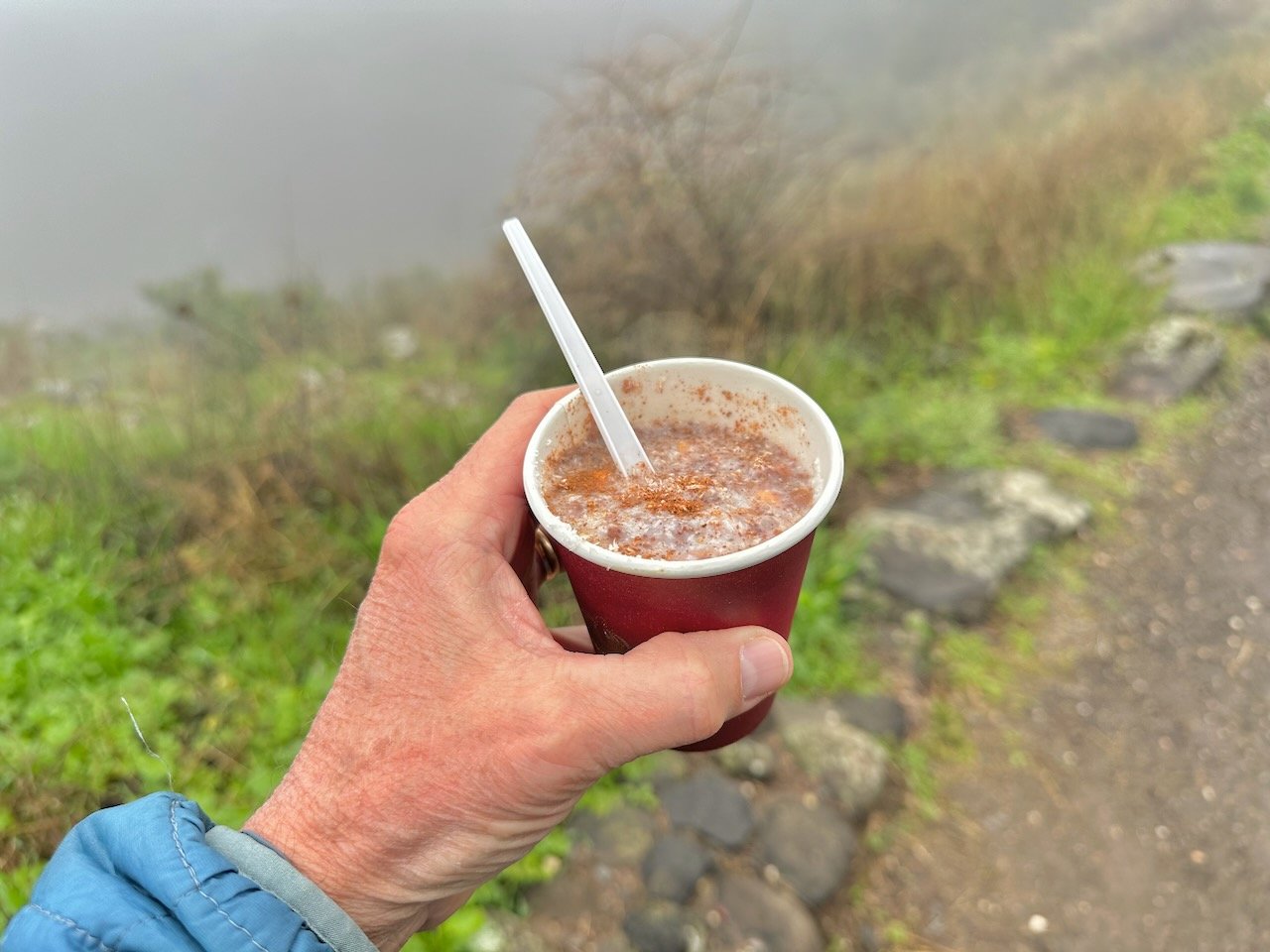
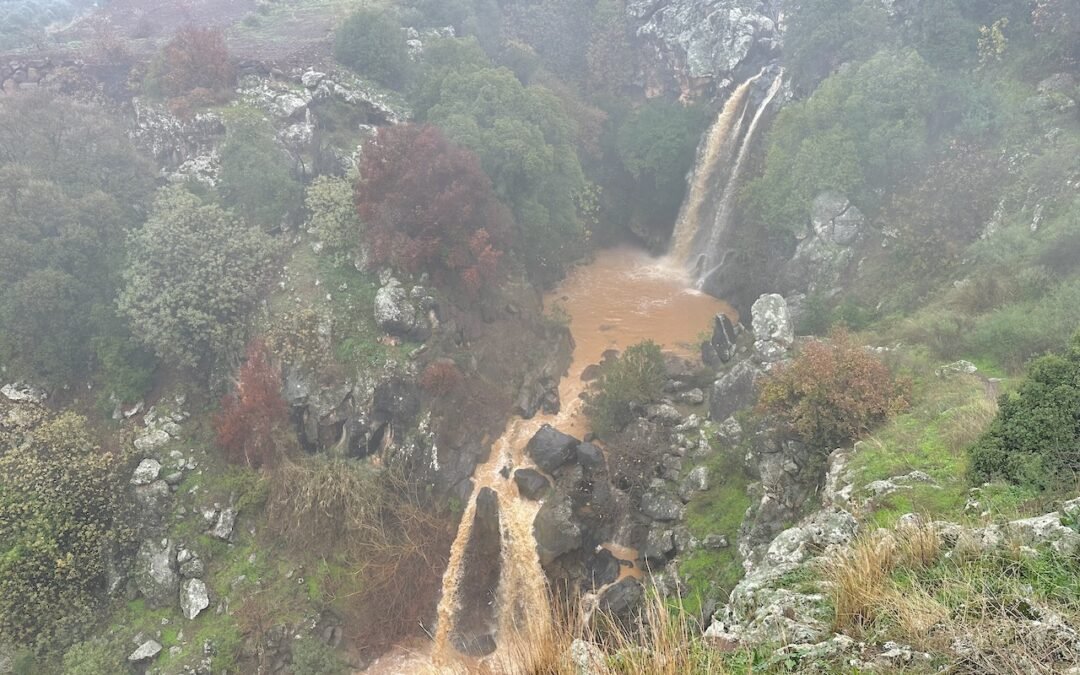
Driving past the snow-capped Mt. Hermon (not visible because the clouds) we drove down off the Golan Heights to the Saar Falls. There was an abundance of water flowing here. We also enjoyed saklab, a unique warm drink of the Druze.
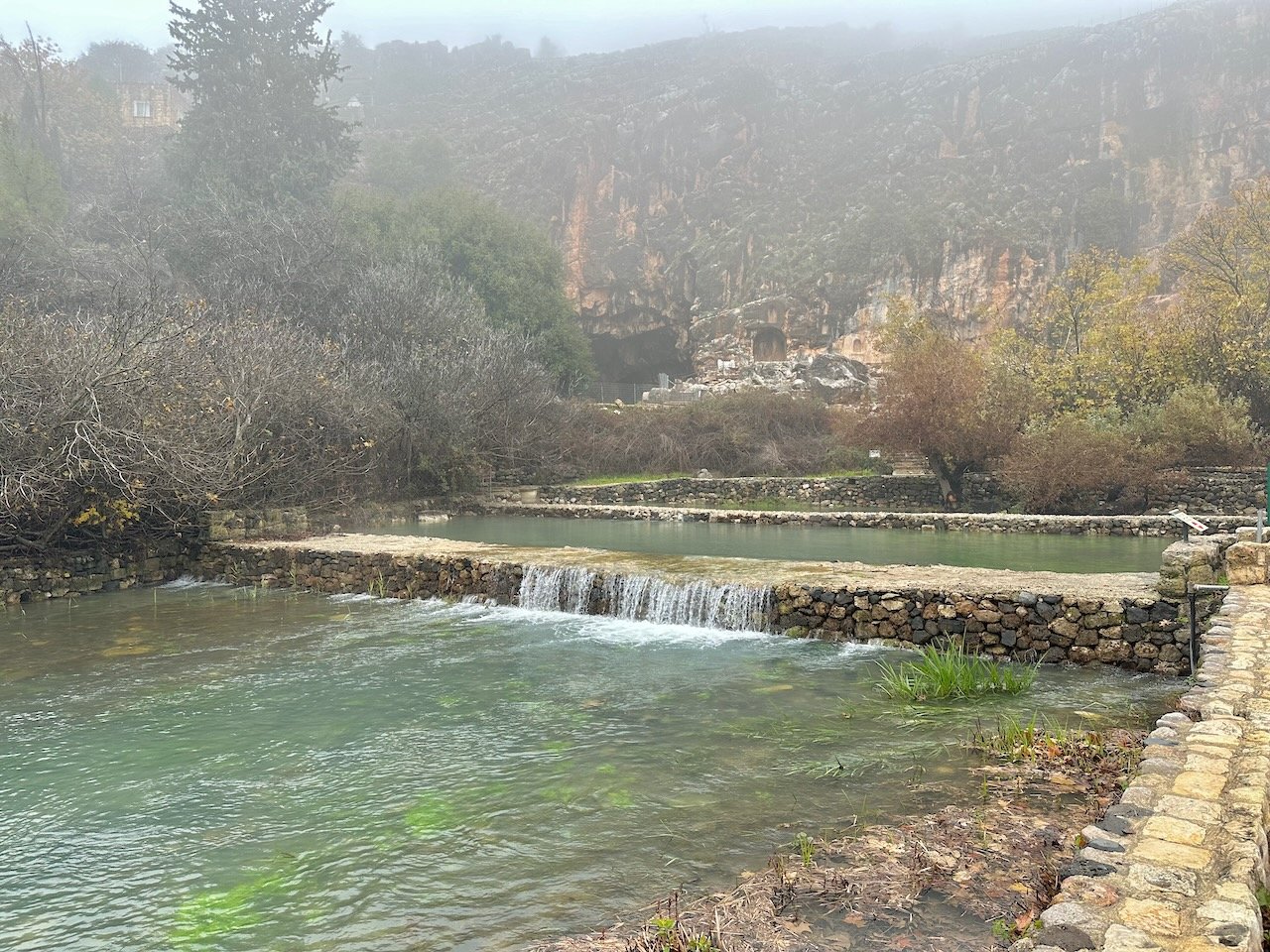
We then continued to Caesarea Philippi. This was a pagan city in the days of Jesus that included temples to Augustus, Zeus (Jupiter), and Nemesis. The Pan deity was especially honored here. It was good to see that recent excavations of the Augustus Temple revealed amazing mosaics and other structures. The Banias Spring begins here, one of the three tributaries of the Upper Jordan River. It was in the region of this city that Jesus asked, “Who do you say I am?” (Matthew 16). We also recalled the Transfiguration of Jesus (Matthew 17) that took place perhaps on the slopes of Mt. Hermon, or further south (on Nimrod? Arbel?).
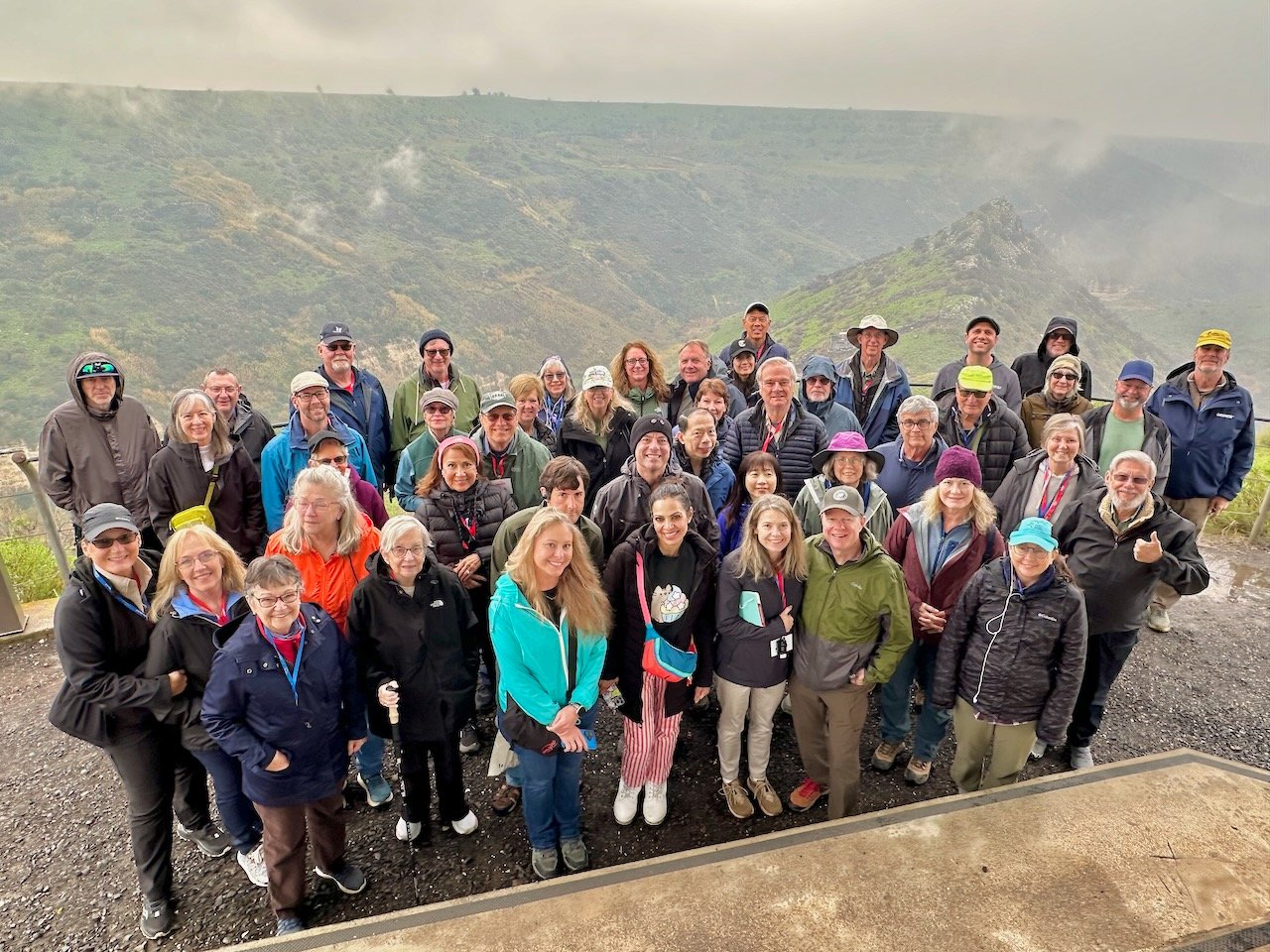
“Despite the cloudy and rainy day, we had a good time up in the Golan Heights. We spent the entire day here in northern Israel, visiting Gamla, Katzrin, Syrian border, Caesarea Philippi, Dan, and Metula. This was our last full day here in the north.”
Tel Dan
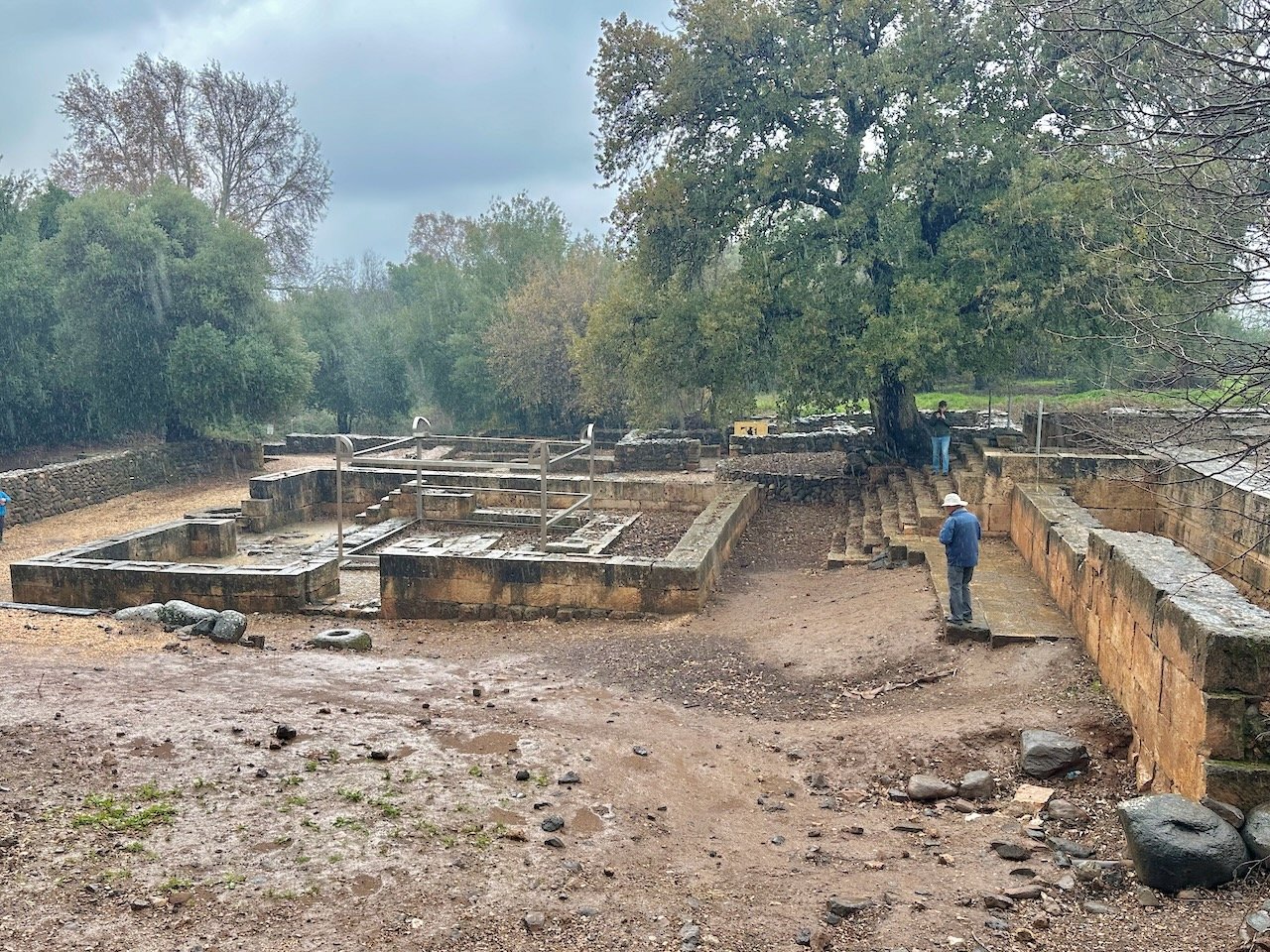
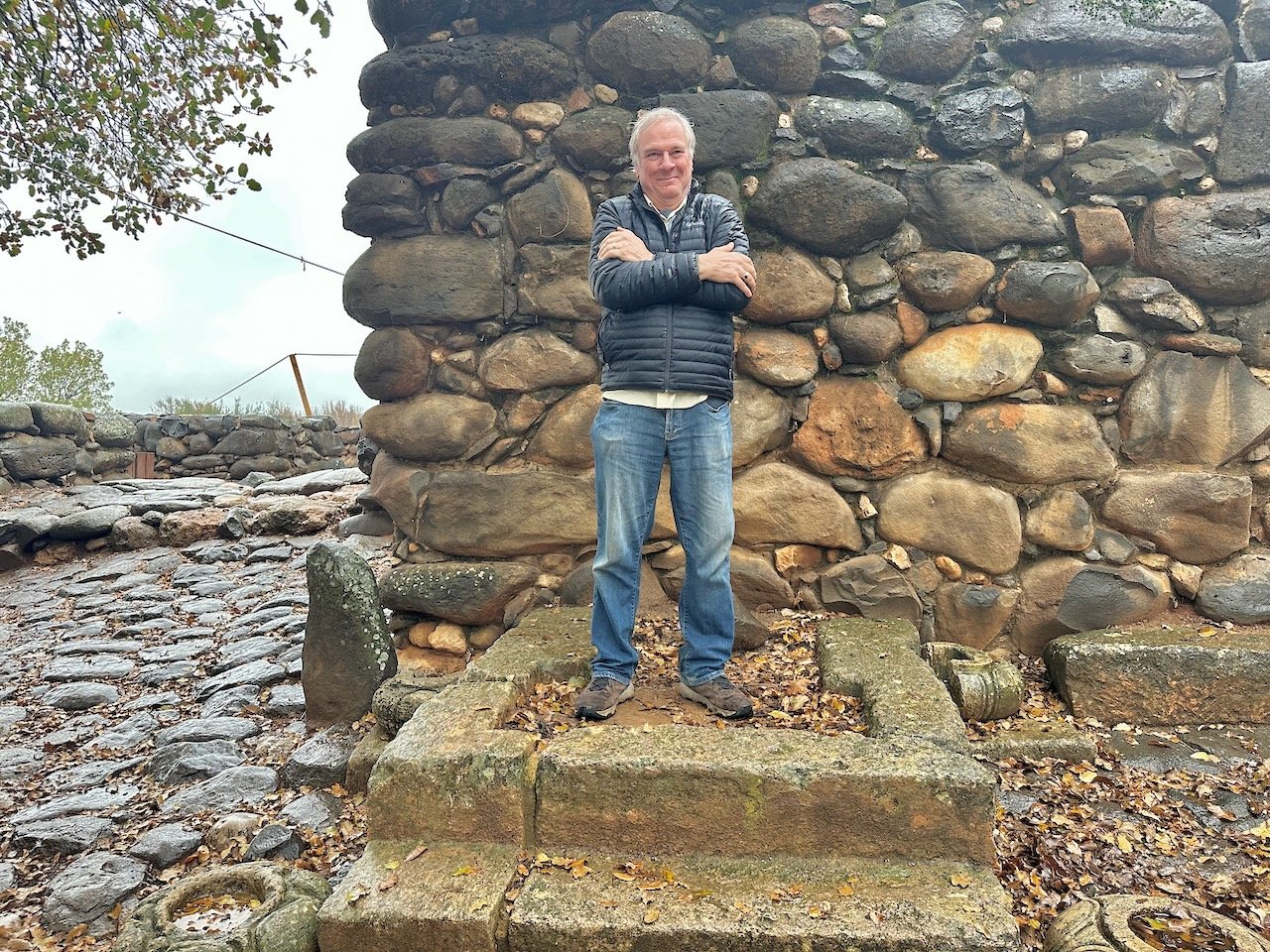
Our last site of the day was Tel Dan. It was not raining when we started the walk, but it was at the end of our visit. First, we walked through the beautiful nature preserve along the Dan Spring. A lot of water was flowing here! The trail led us to the archaeological ruins of the site. Here, Jeroboam built an altar and set a golden calf on the high place. We read from both Judges 18 and 1 Kings 12. A pattern of disobedience here led to the end of Dan in 734 BC. Before leaving, we saw the Canaanite mud brick gate (that was most likely a ceremonial gate built after the time of Abraham) and the Israelite gate complex (9th century BC) where the famous “Dan Inscription” was found in July, 1993.
Metula/Lebanon Border
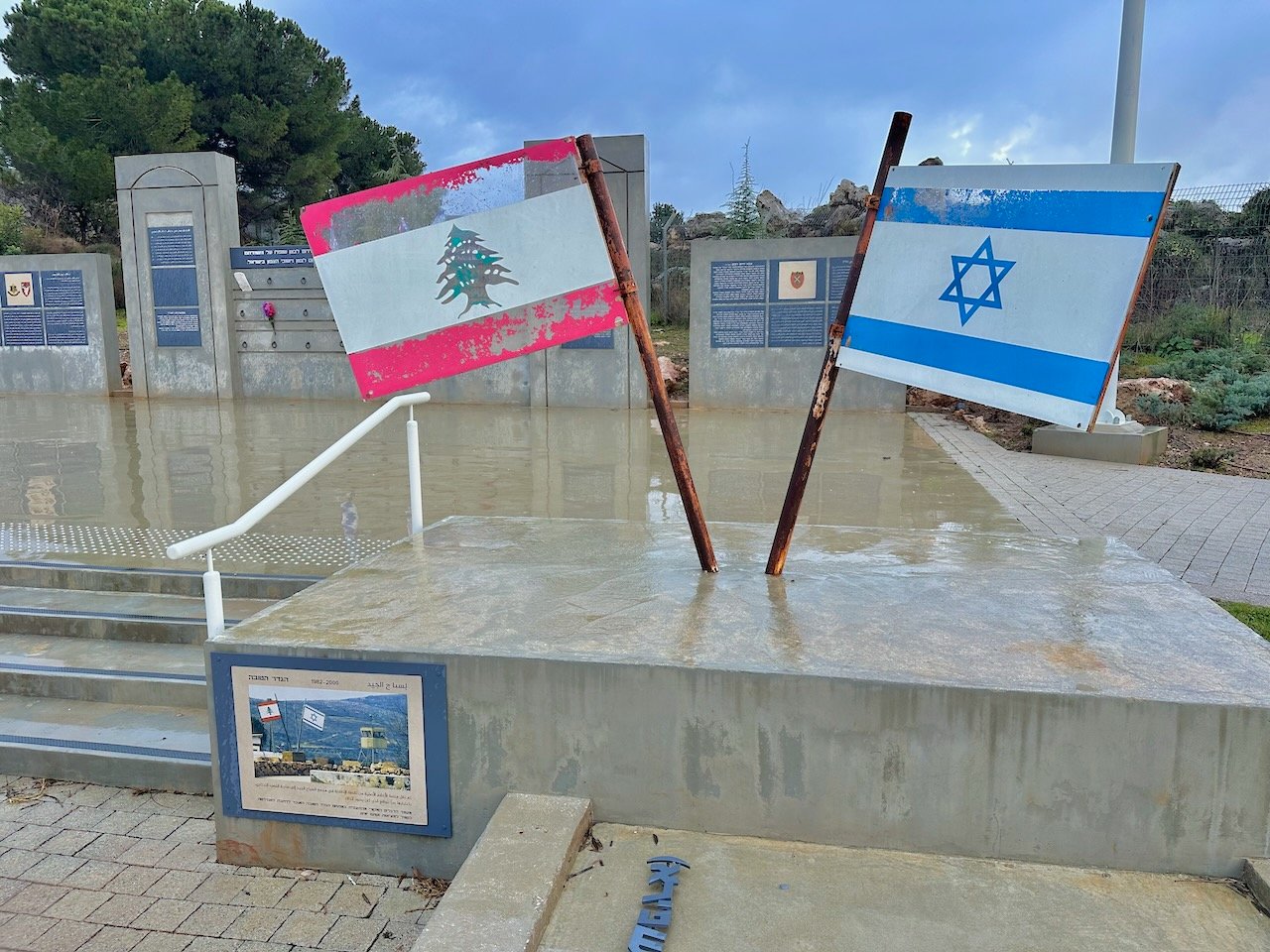
Because of the cloud cover, we decided to forego our visit to Misgav Am (high on the hills of the Naphtali range) and instead drover to the very northern Israeli town of Metula. Shlomo shared both the past history and the current situation with Lebanon. We saw the border and a Memorial here.
We drove back south along the Huleh Valley back to our hotel, passing the Canaanite city of Hazor on the way. Once again, we enjoyed a huge dinner and a free evening. Despite the weather, we still saw a lot!
Day 10 – Monday, January 19: Precipice of Nazareth, Megiddo, Mt. Carmel, Caesarea, Jerusalem, Western Wall