Day 5 – Wednesday, February 25: Temples of Horus at Edfu, Temple of Sobek & Horus at Kom Ombo
Today was a day on there Nile River while making stops at two Egyptian temples. Following another great breakfast (at 7 a.m.), we departed for the first temple (the Temple of Horus at Edfu) at 8 a.m. The weather was perfect, with morning temps in the mid 50s, and afternoon highs around 80, with full sun (it never rains here year-around).
Temple of Horus at Edfu
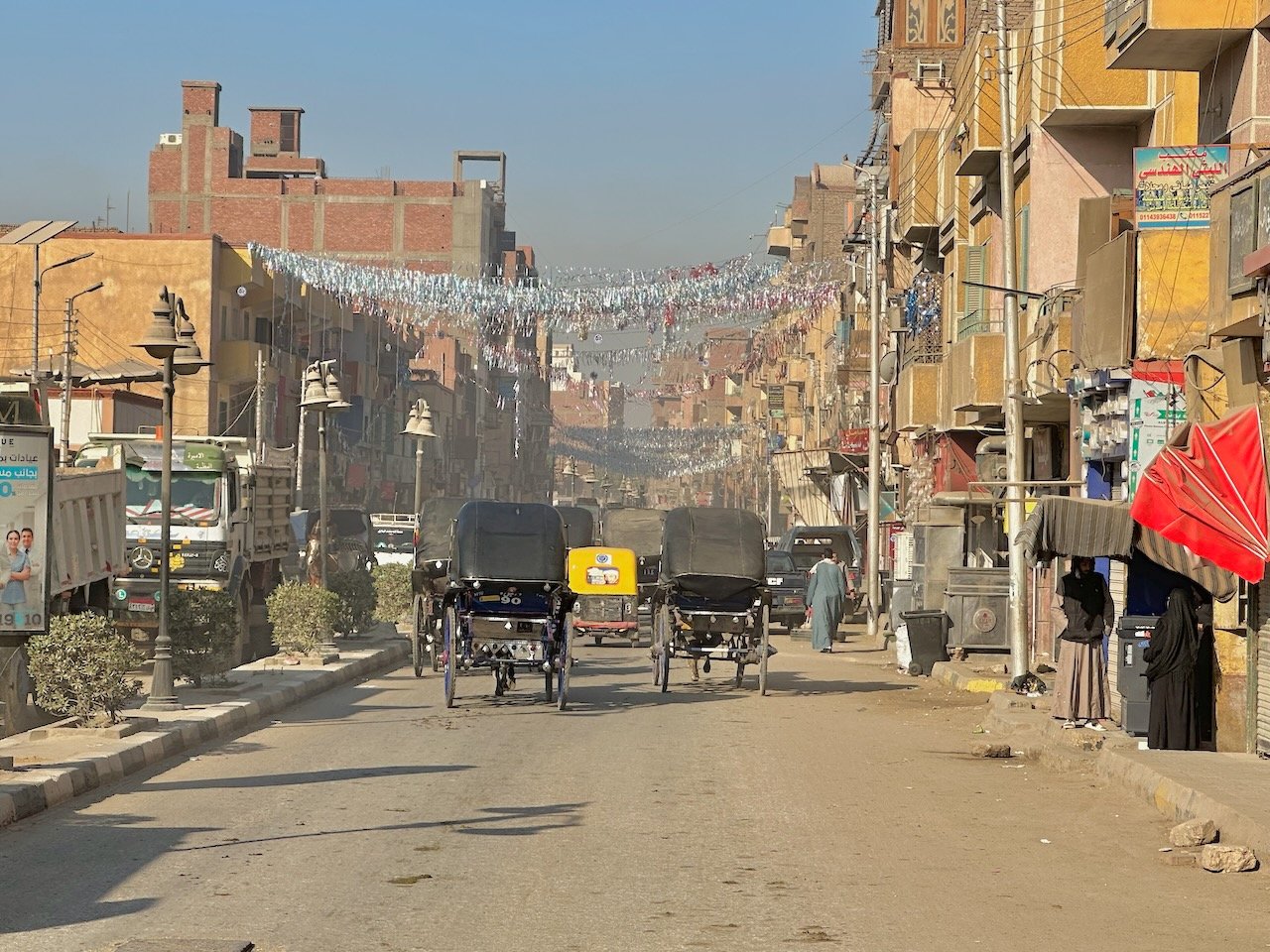
Directly leaving the boat, we boarded on horse-drawn carriages en route to the Temple of Edfu. This was both a fun and “cultural” experience as we rode with hundreds of other carriages to Edfu.
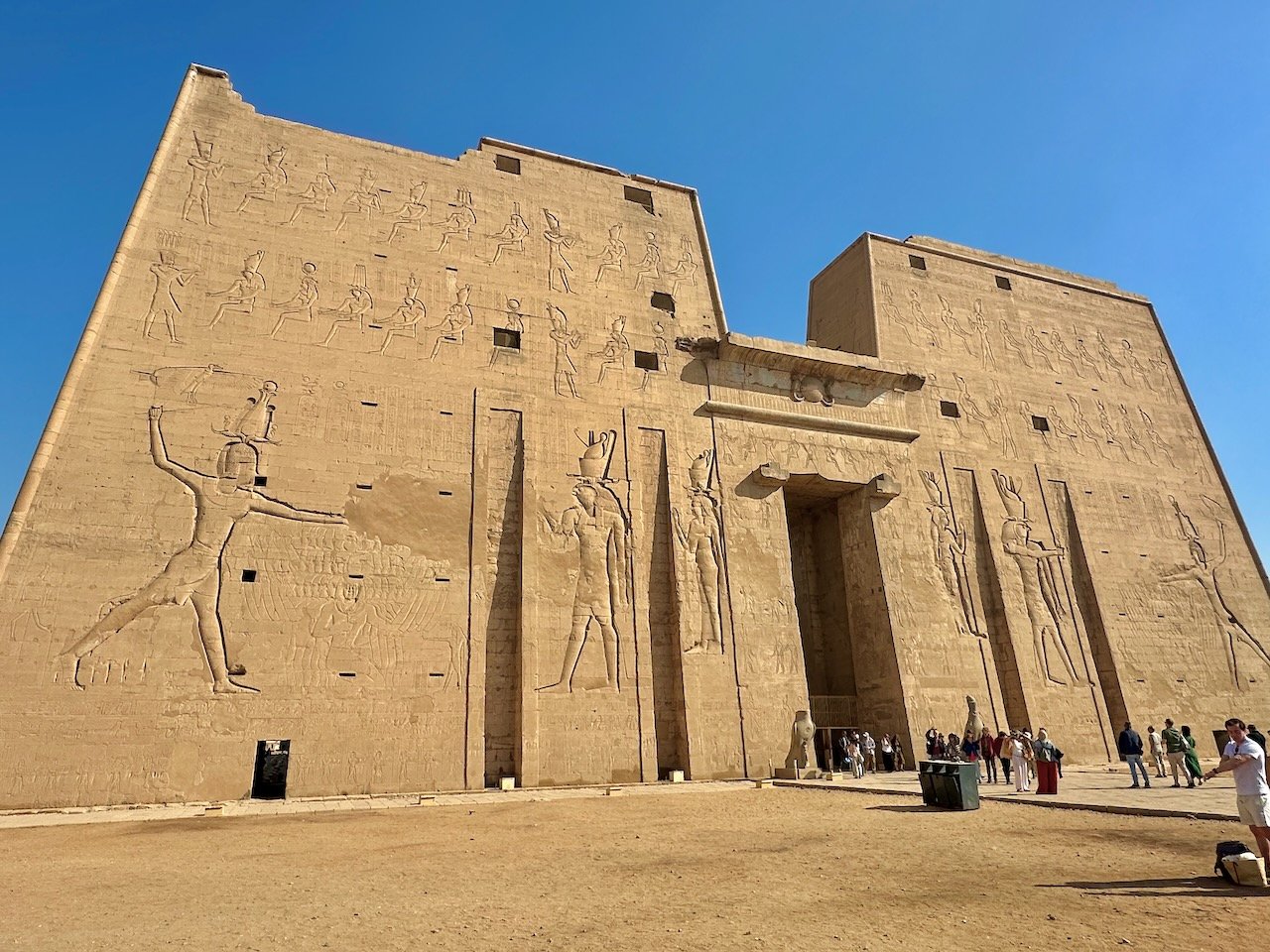
Once we arrived at Edfu, we gathered together to read from Exodus 6, a passage that reminded us that the Lord is God above all the Egyptian gods represented within the pagan religious system an ancient Egypt. It is the God of Abraham, Isaac, and Jacob who trumps all other gods, even Horus, the god of “kingship” and the “sky,” honored in this temple!
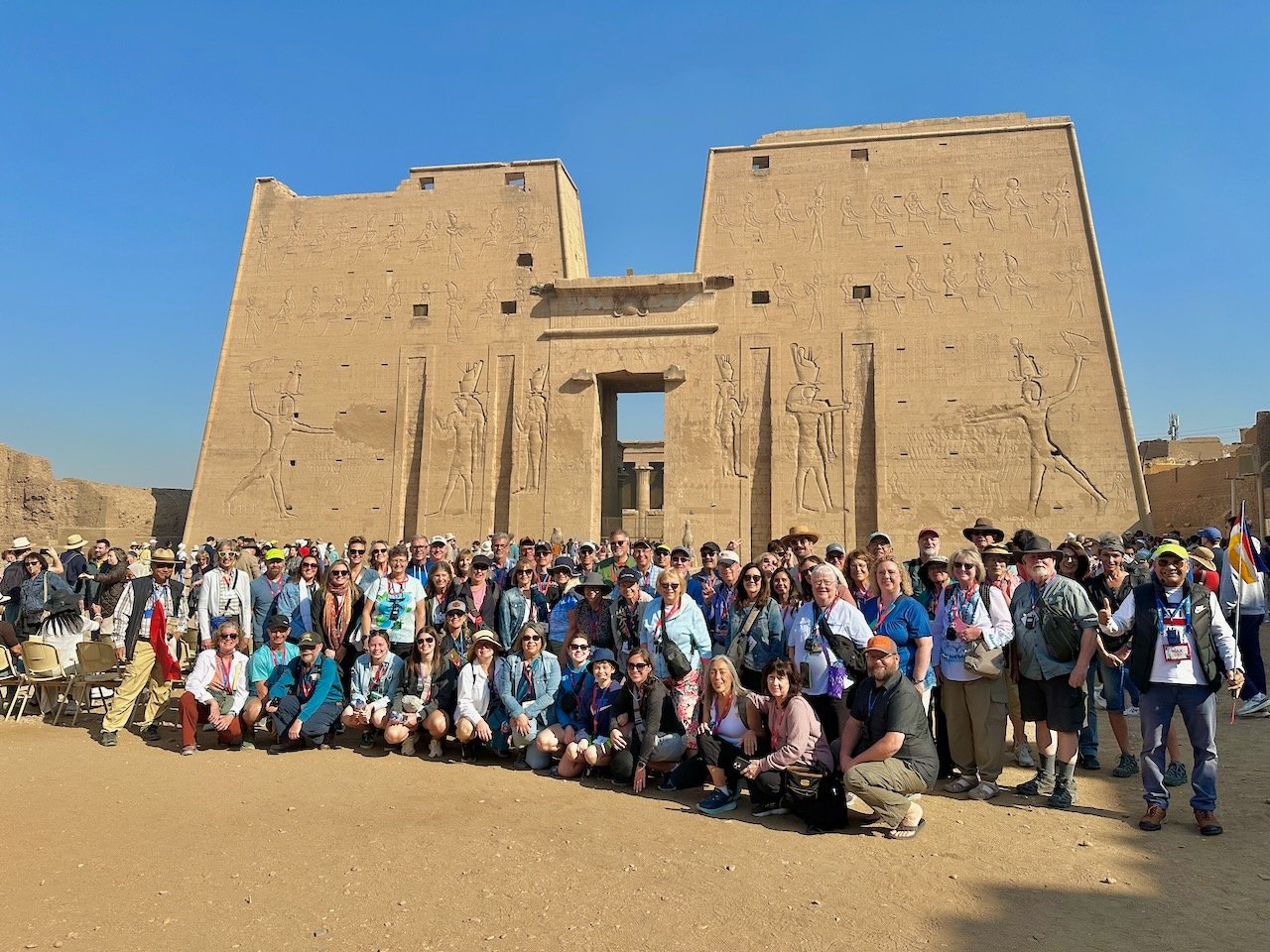
The temple of Edfu is best example of Ptolemaic temple buildings in all of Egypt. The Temple was dedicated to Horus, the falcon god of the Egyptians. Although there are mentions of a first sanctuary at Edfu since at least the Third Dynasty, the Temple of Horus, as it currently stands, was started much later by Ptolemy III Euergetes I in 237 BCE. It was continued by Ptolemy VIII who (95 years later in 142 BCE) inaugurated the temple. Ptolemy XII Neos Dionysos finalized the work on the enclosure wall, the main courtyard, and the pylon. He then inaugurated the temple for the second and last time in 70 BC.
The temple was officially finished in 57 BC with the installation of the main entrance wooden doors between the two pylons. In total, it took 180 years to complete the building and decoration of the Temple of Horus at Edfu.
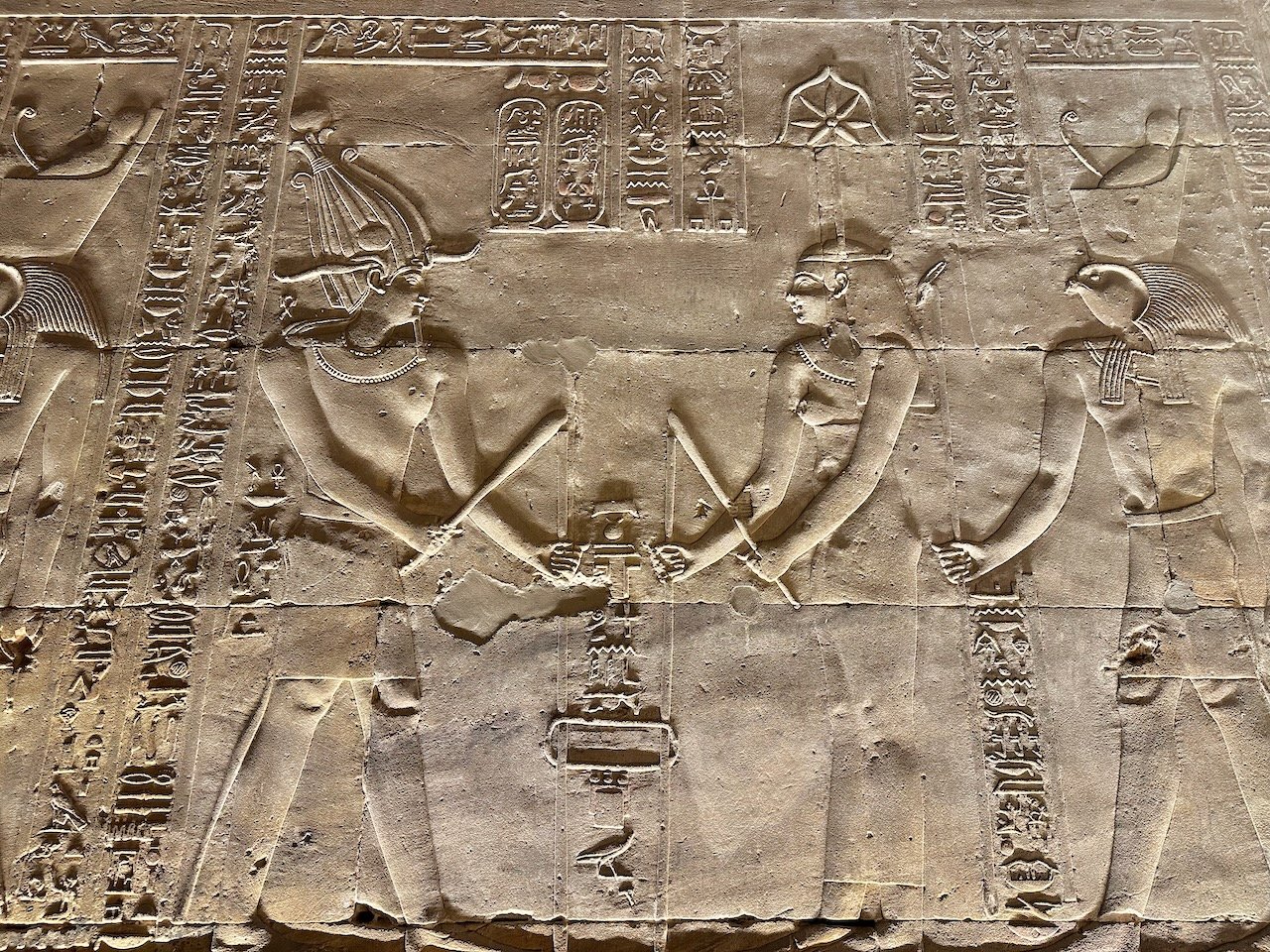
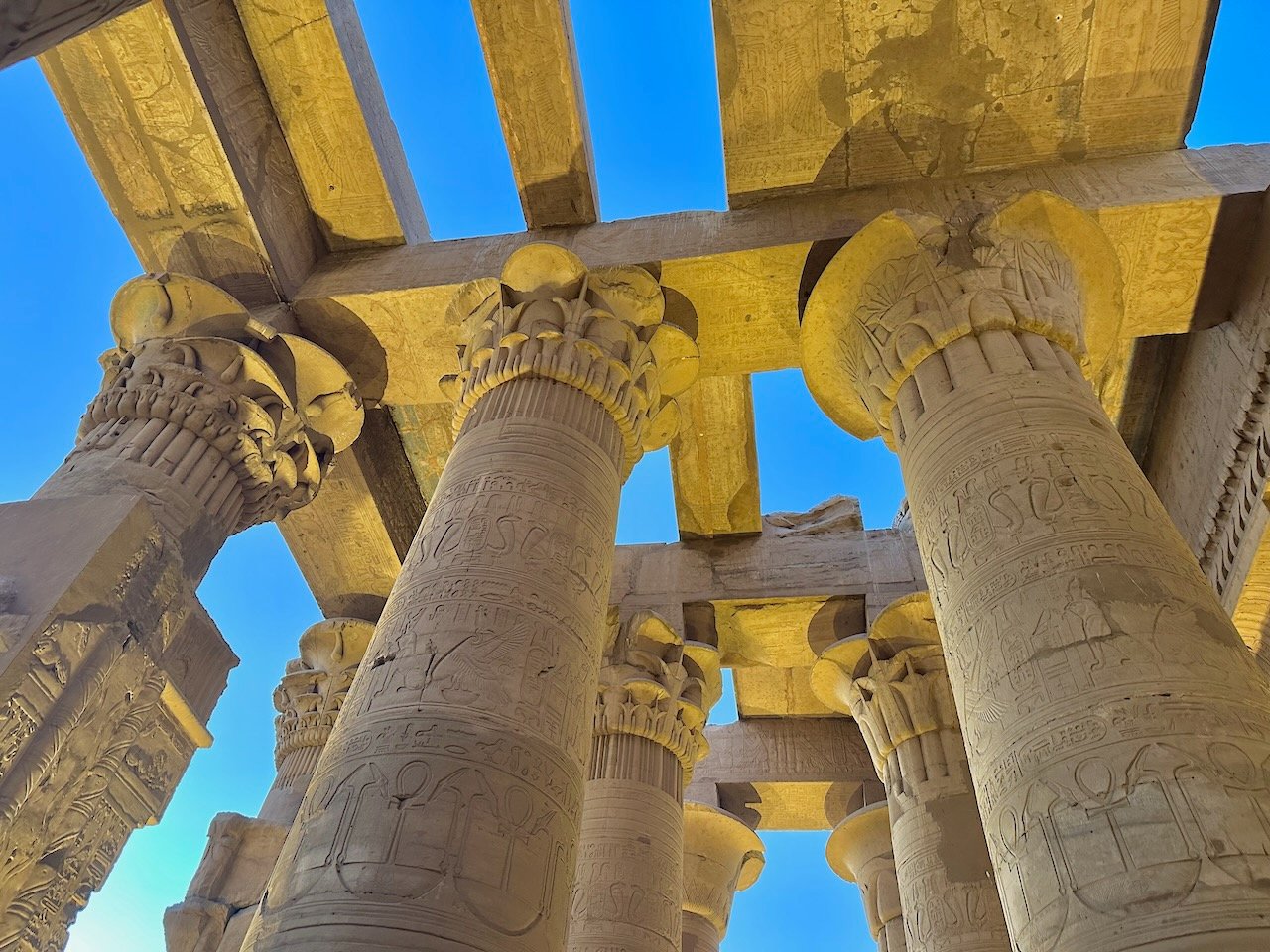
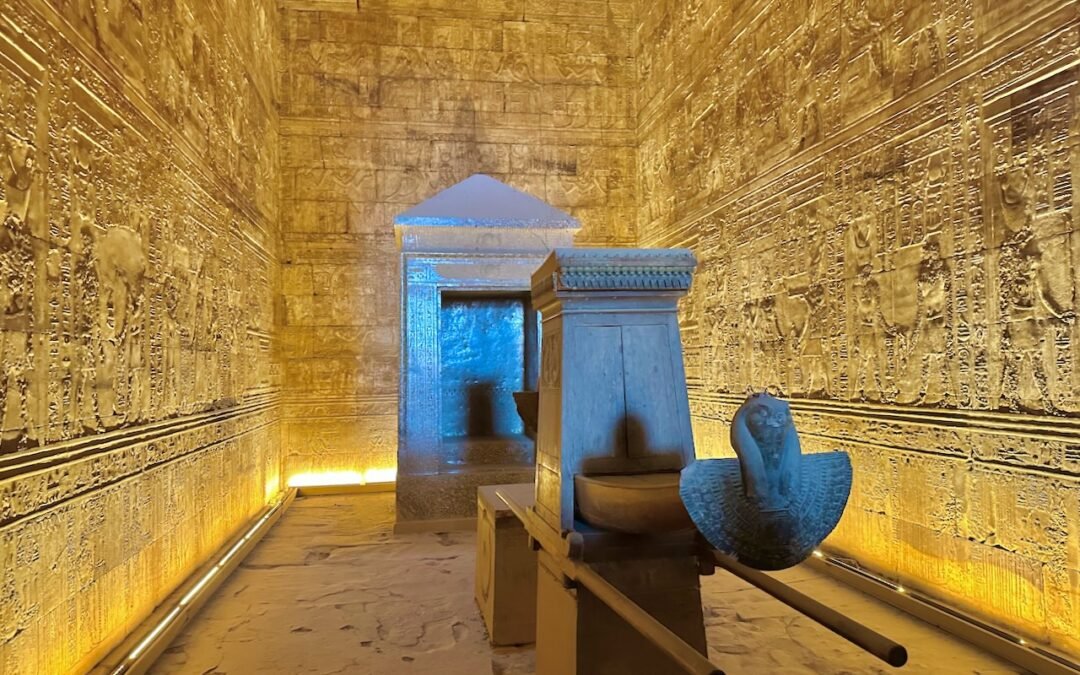
At Edfu, we saw many pylon and wall reliefs, hieroglyphs, and pillars in there shape of papyrus. The deepest of the inner courts (called the “sanctuary”) served as what we would call the “Holy of holies.” It is an interesting topic about the structure orientation of all of these Egyptian temples (i.e. outer courtyard, inner chambers, and a “Sanctuary”) with the structural dimensions of the portable Mishkan (i.e. Tabernacle) and later the First Temple in Jerusalem built by Solomon in 967 BC. “Who borrowed from whom?” – this is the question. It seems as though God’s instructions to Moses was to build the Tabernacle in the Sinai Desert in similar fashion, with the major difference being this – the presence of the Only True God resided in this Tabernacle vs. the many gods honored at various pagan Egyptian temples.
Following the visit of the temple, we road back to the ship in the same horse-drawn carriages. Despite all the chaos and confusion at the “buggy station,” we all made it back to the ship with smiles on our faces. (Ha). Upon our return to the boat, we enjoyed a marvelous lunch on the top deck as we continued to sail south to the next temple.
“It was a “temple day” today as we continued our sail ‘up’ (south) the Nile River. We saw the Temples of Edfu and Kom Ombo. Our focus throughout the day was that God is greater than all the Egyptian gods (Exodus 6… ‘The Lord is God…’). The weather was again perfect too!”
Temple of Sobek and Horus at Kom Ombo
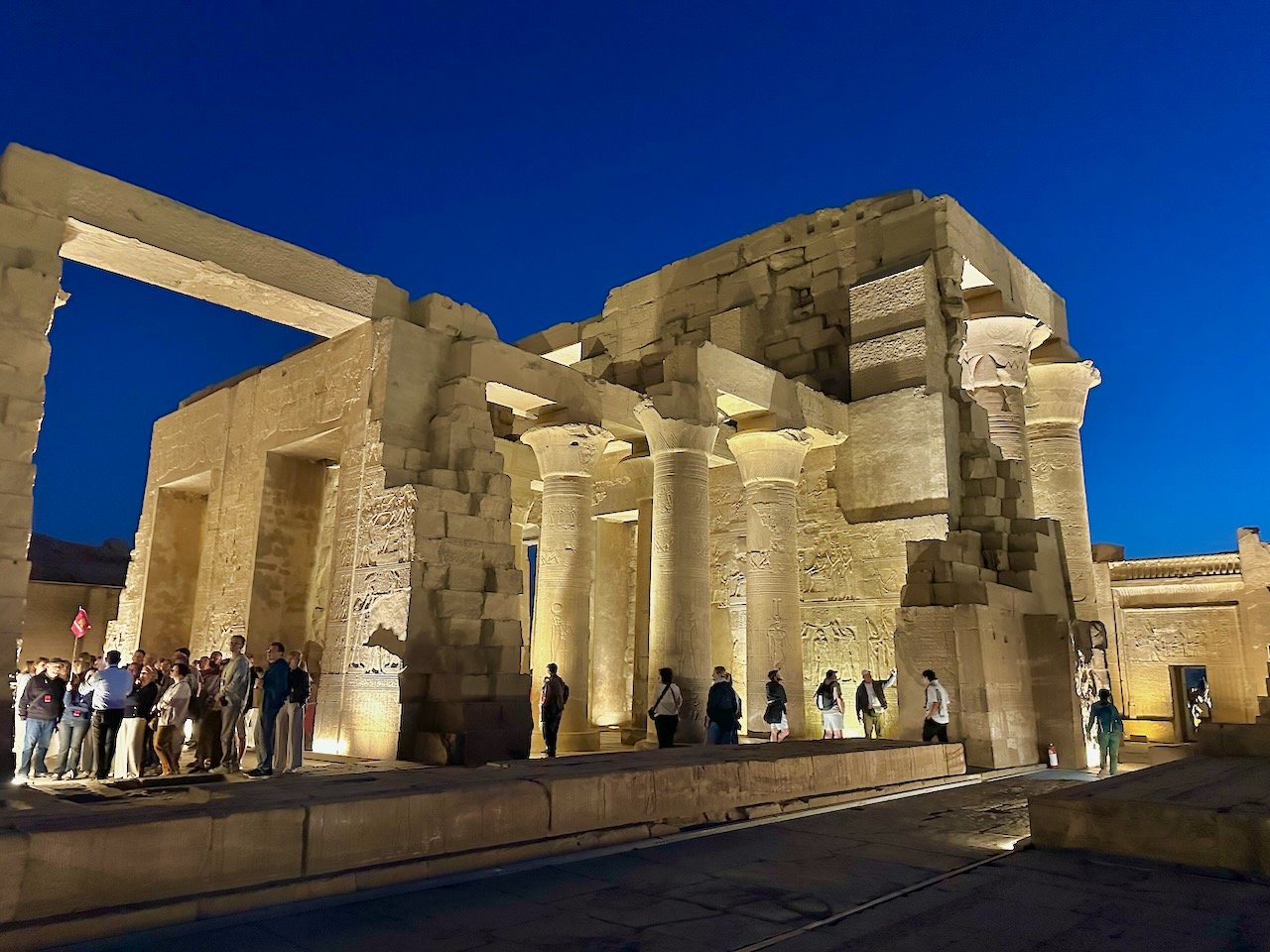
As we continued our “sail” up the Nile (the river flows south to north), we docked by the the Temple of Sobek at Kom Ombo. Here, no “buggies” were needed since we could walk right to the ship to the temple.
This temple is located about 30 miles north of Aswan and was built during the later Ptolemaic Period/Graeco-Roman period (332 BC AD 395). An earlier structure from the 18th dynasty exists, but only fragments remain.
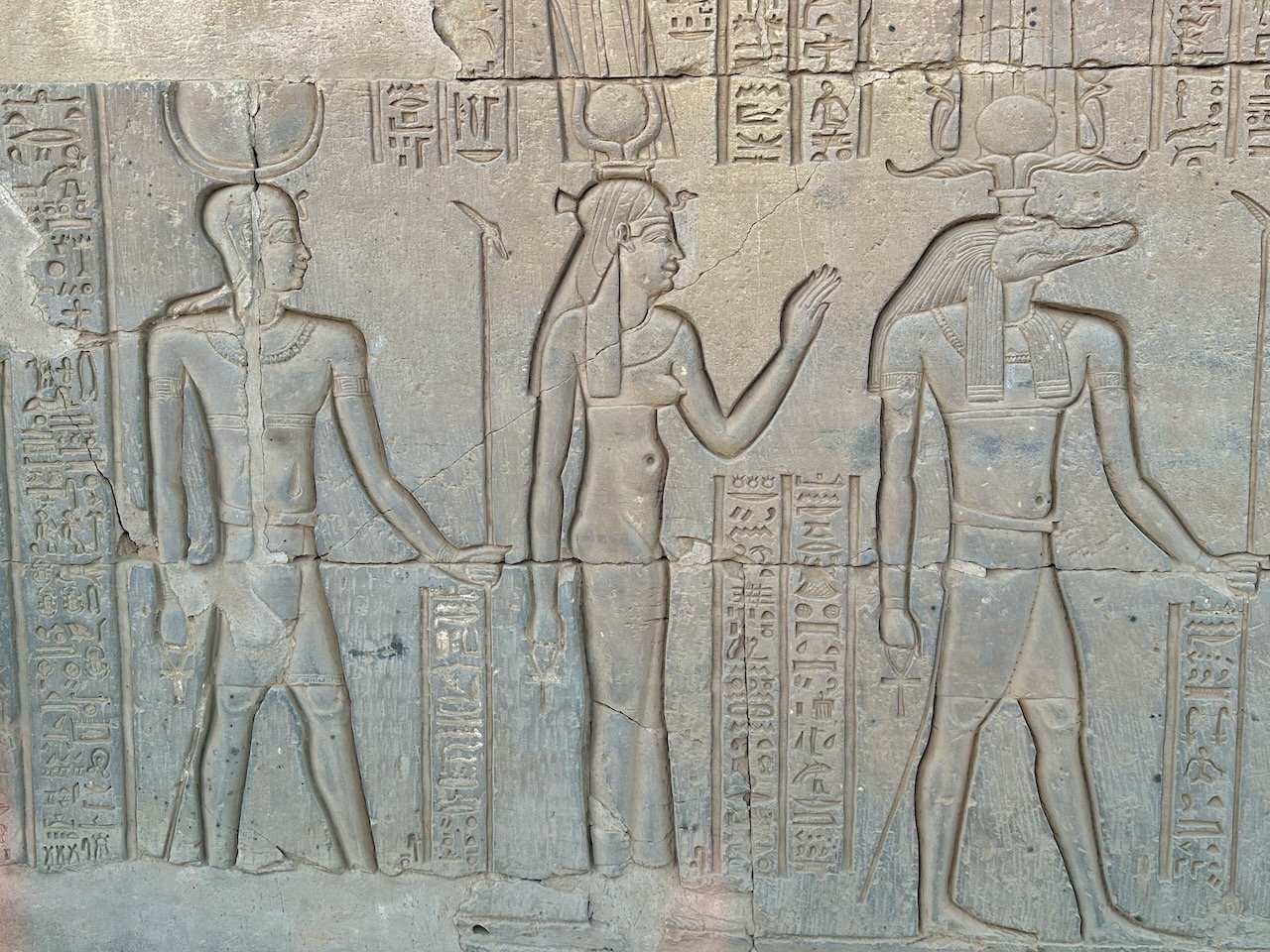
The temple is unique because it is in fact a double temple, dedicated primarily to Sobek the crocodile god, but also to Horus the falcon-headed god. The layout combines two temples in one with each side having its own gateways and chapels.
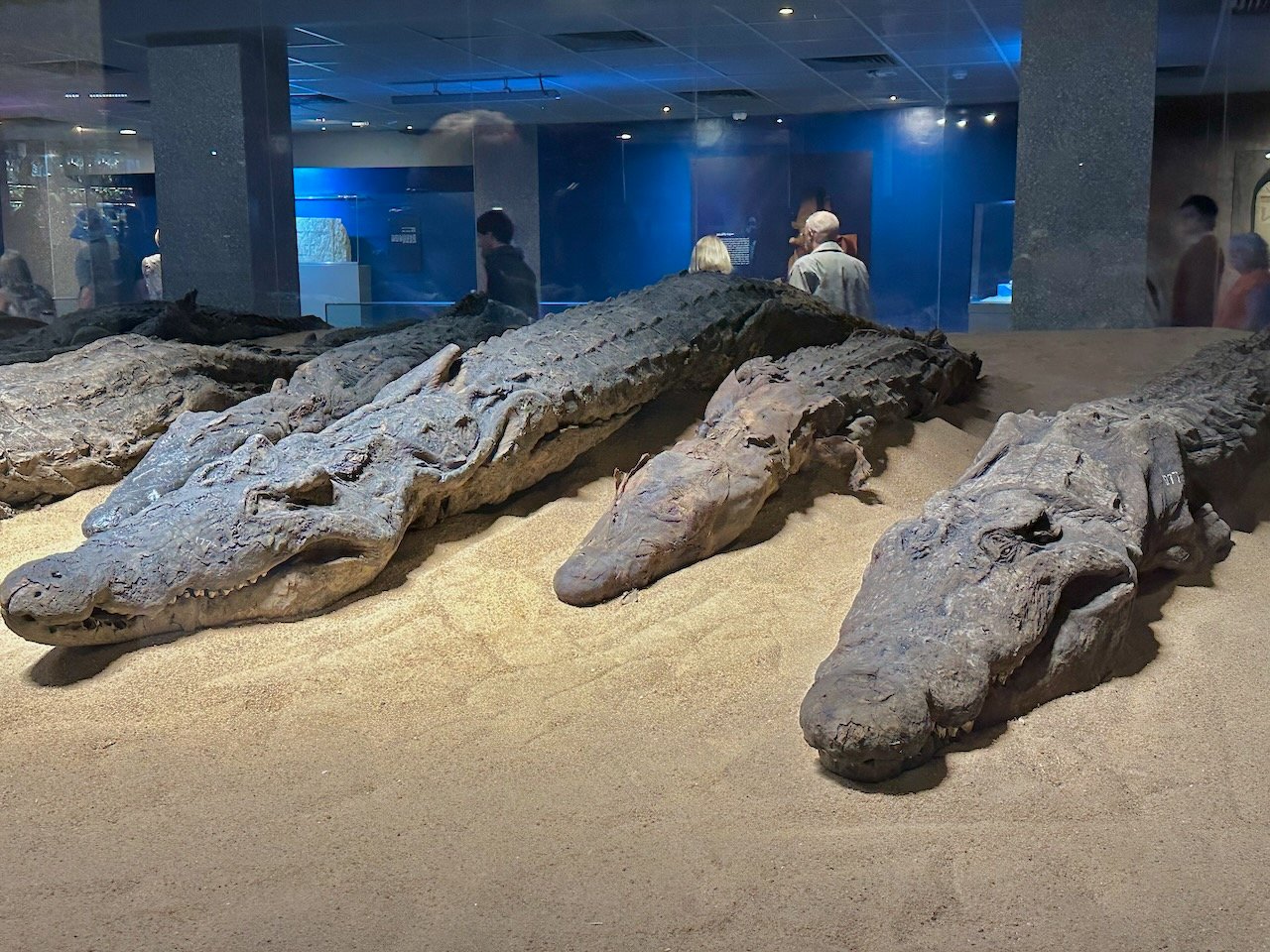
Kom Ombo housed Sobek’s primary sanctuary, which was once teeming with an abundance of crocodiles. Until recent times the Egyptian Nile was infested with crocodiles, who would lie on the riverbank and devour animals and humans alike.
The ancient Egyptians believed, however, that the crocodile was to be an object of worship so that they would not attack them. Captured crocodiles were kept within the temple and many mummified crocodiles have been found in cemeteries, some of which can be seen in the temple sanctuary today.
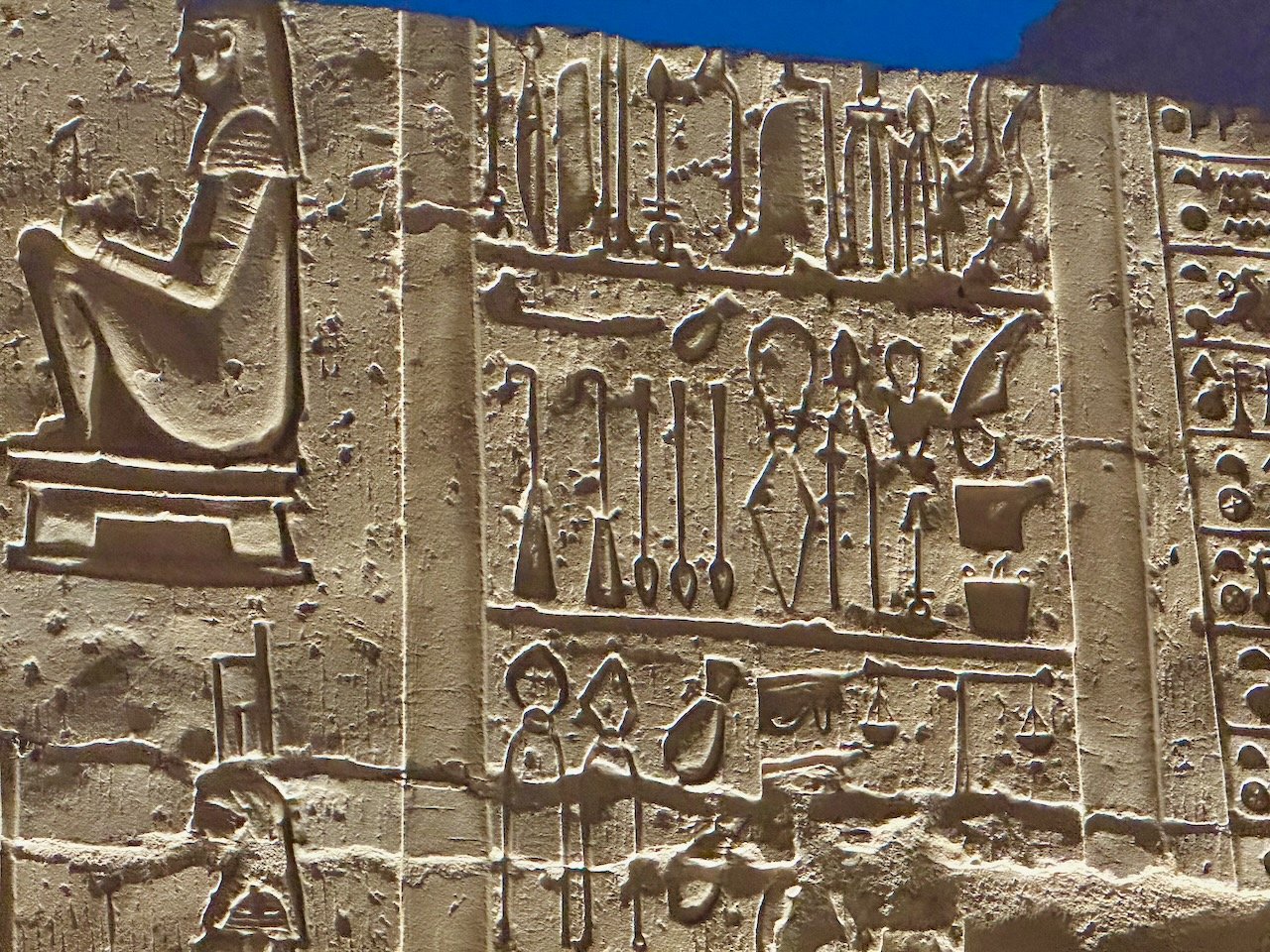
Within the temple we saw interesting hieroglyphs and images depicting the ancient calendar as well as medical themes. This included the “eye” of Horus (the originality of the latter Latin “RX” pharmaceutic symbol), the medical instrumentation. Before leaving we saw the “Nileometer” and a number of mummified crocodiles.
We returned back to the ship around 7 p.m., with dinner at 7:30 followed by a restful evening. The view from the top deck while sailing down the Nile River at night is unique.
Day 6 – Thursday, February 26: Abu Simbel, Aswan