Day 13 – Sunday, September 27: St. Peter’s in Chains, Trevi Fountain, Pantheon, Mamertine Prison, Roman Forum, Constantine’s and Titus’ Arches, Colosseum
Today was another great day here in Rome. This second full day of this extension once again took us to both religious and archaeological sites. The weather was great again, with little warmer temps (low 80s), and full sun once again! We left the hotel at 9 a.m. today, giving us a leisurely morning and breakfast time.
St. Peter in Chains
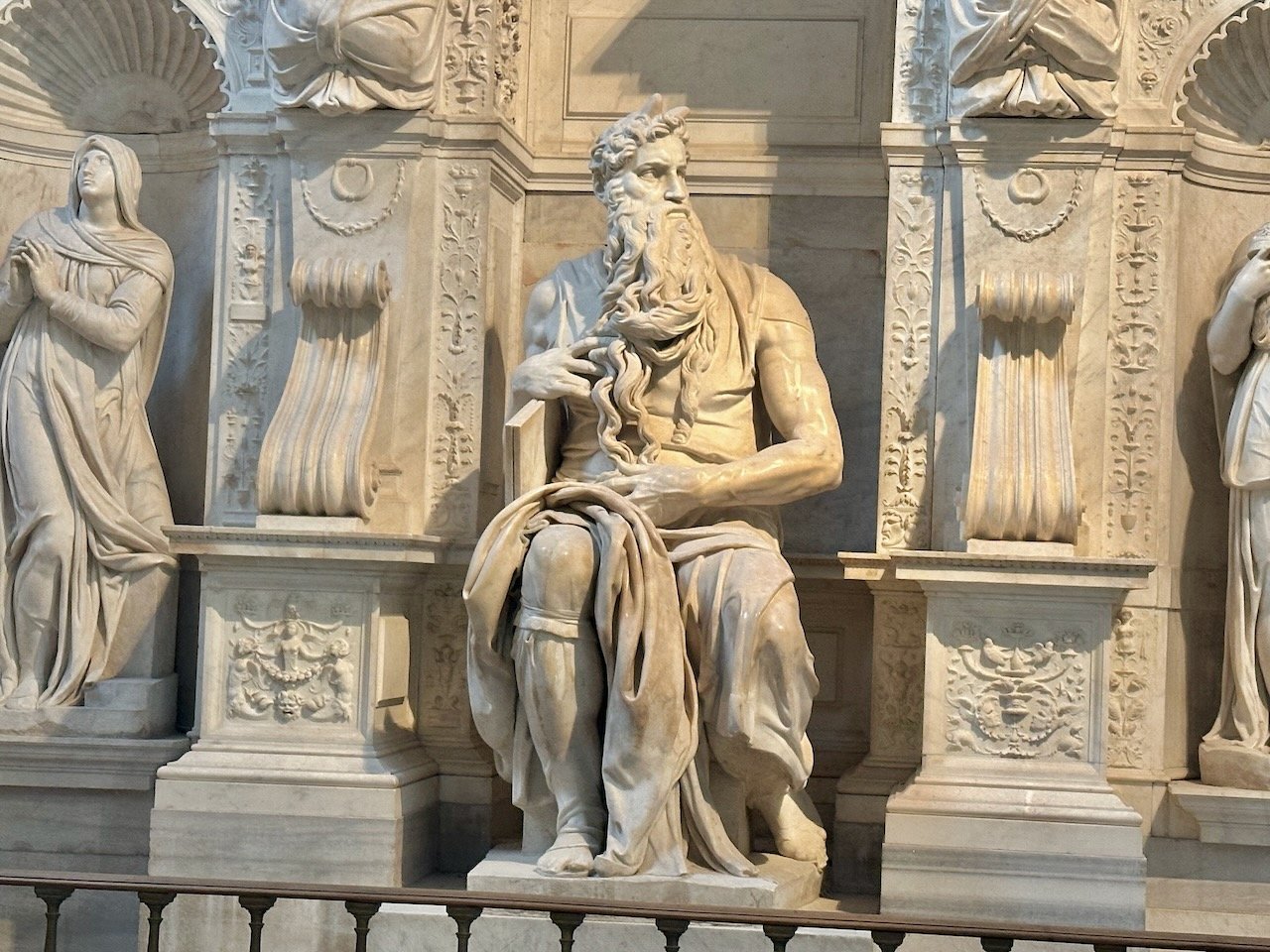
It was only a short bus ride to church called St. Peter’s in Chains. This church is where (traditionally, of course) Peter was held in chains here. For some, 1 Peter 5:13 suggests that Peter was in Rome. Others do not support this through the absence of archaeological and historical records. It seems the early church fathers were mixed in their views. According to the Catholic tradition, the 1st century chains that are on display in the front of this church were given to the Pope in the 5th century. This began the tradition. Also inside the church, a Moses Sculpture by Michelangelo is displayed. He began this project when he was 30 years ago.
Pantheon & Trevi Fountain
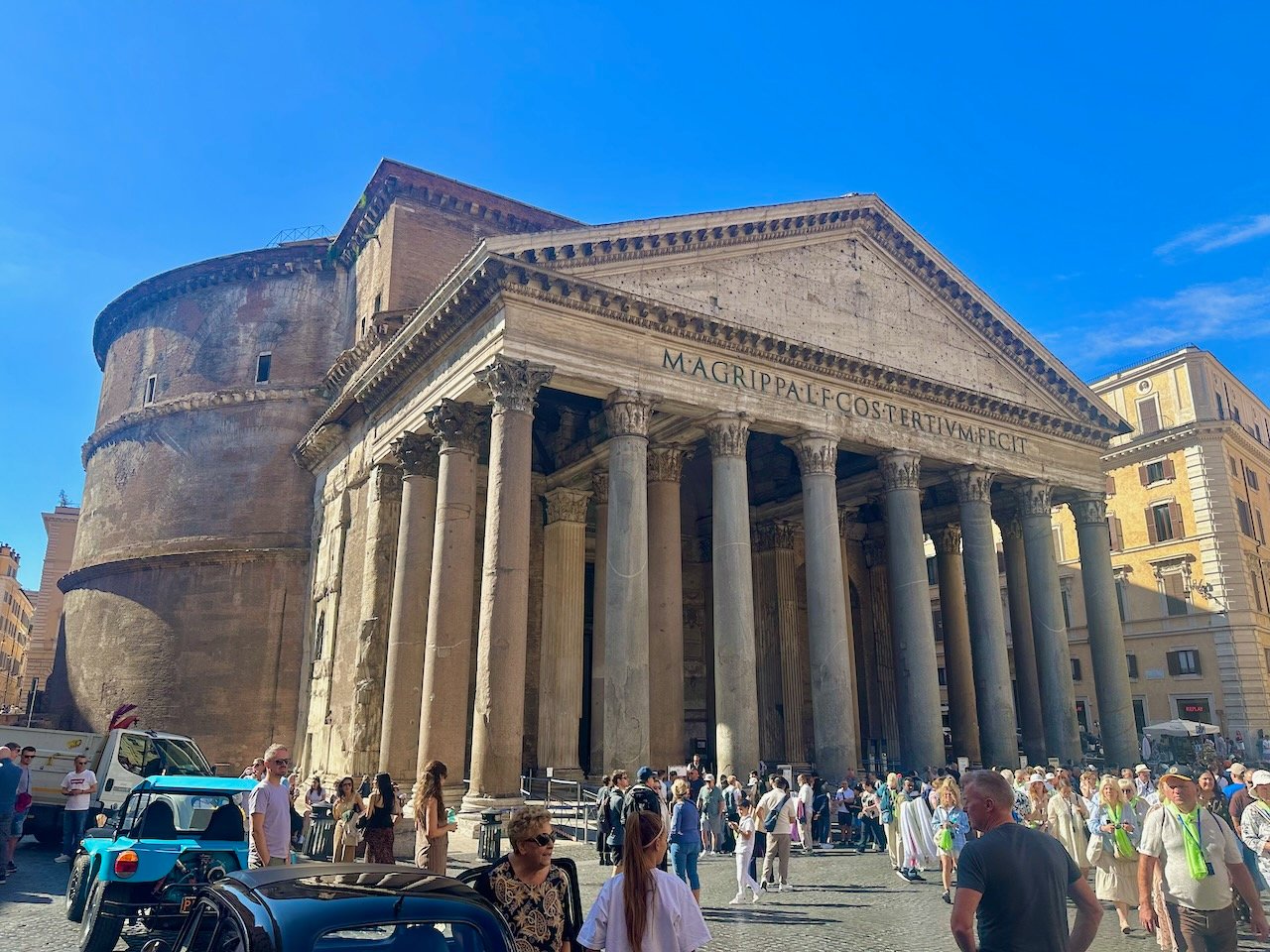
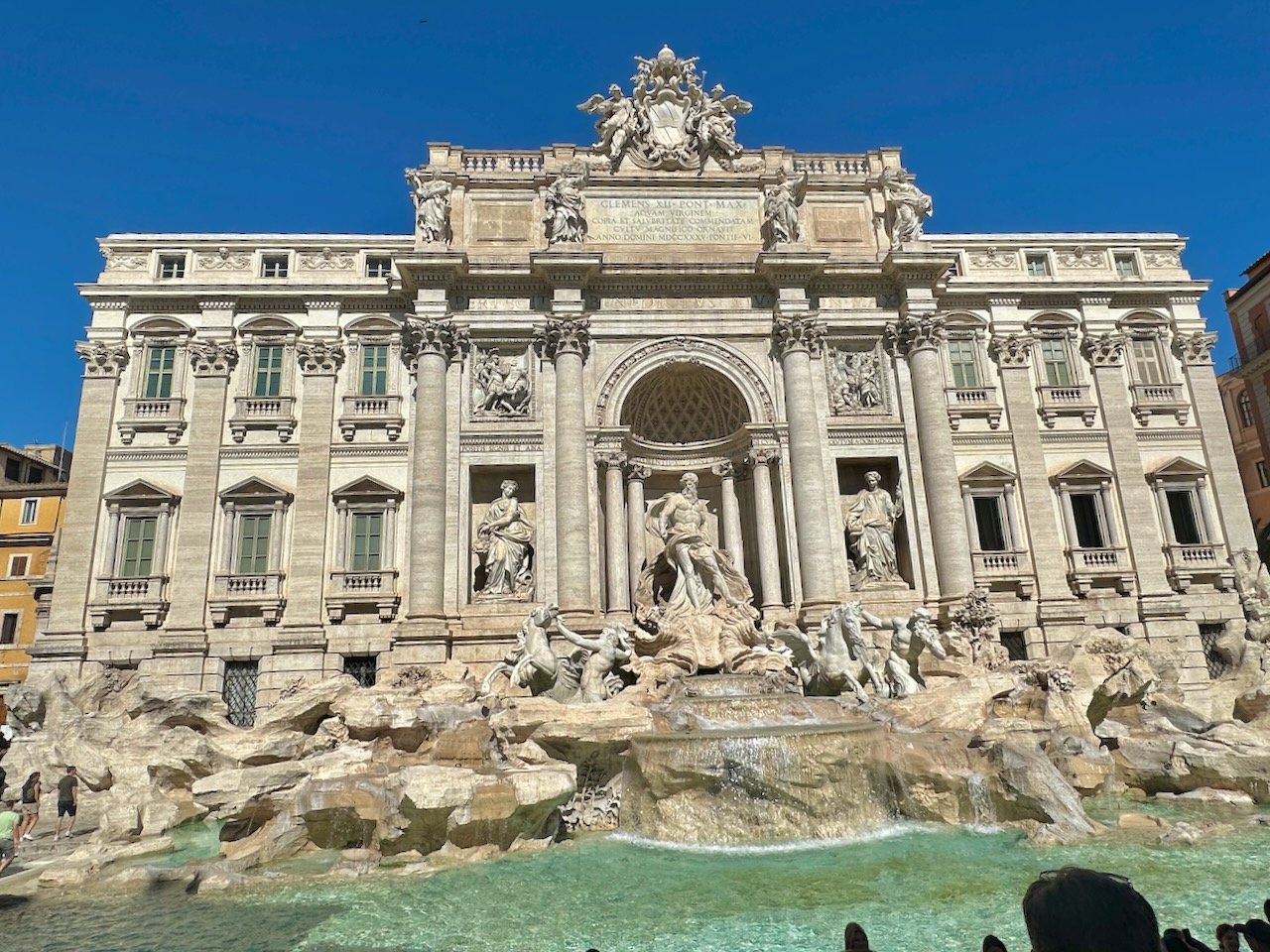
From here we boarded back on the bus to get to the Pantheon, the largest dome built in the ancient world. We first walked through the Piazza Navona (originally the Stadium of Domitian, built by Emperor Titus Flavius Domitianus in 80 AD) in order to get to the Pantheon. Until modern times, the dome of this temple was the largest built, measuring about 140 feet in diameter and rising to a height of 71 feet. It was Marcus Vipsanius Agrippa (in 27 BC) who first built it as an ordinary classic temple, However, it was rebuilt by Hadrian in the 2nd century (between 118 and 128 AD). It was later converted to a church. Because it was Sunday, we could not go inside (note: there is a 360 photo from inside). From here we walked 10 minutes to the famous Trevi Fountain. The place was packed with people. We enjoyed some free time here to grab lunch and a gelato (of course). Trevi Fountain dates to the 18th century AD.
Mamertine Prison
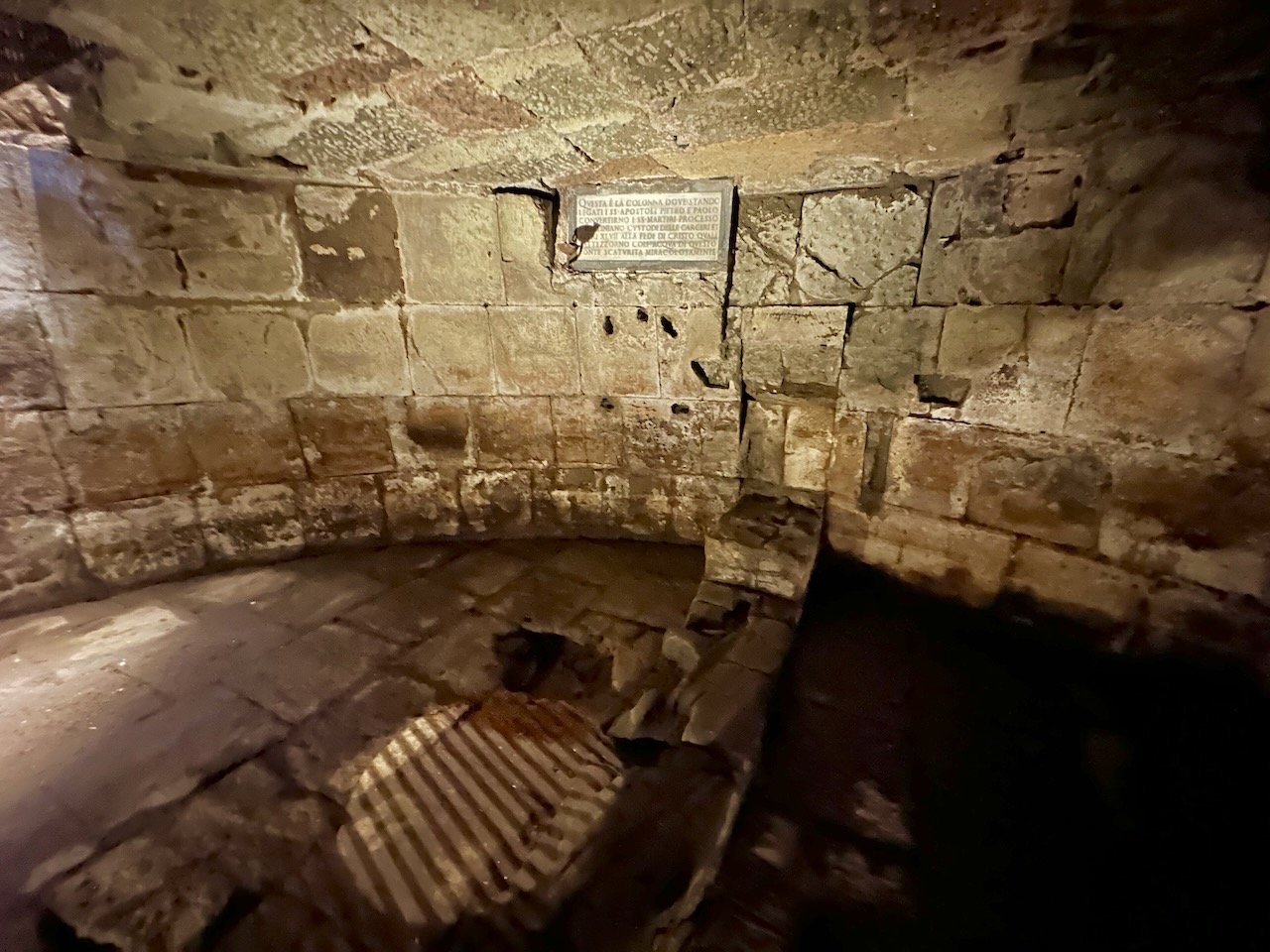
We continue our walk towards the Forum. On the way, we passed by the very large Victorinio Emmanuel Venezia monument. This was built between 1871-1911. At the north end of the Forum we visited the Mamertine Prison. Here stands a Catholic Church called St. Joseph’s of the Carpenters. Beneath this structure are the remains of the traditional site of the imprisonments of the Apostle Paul and the Apostle Peter in Rome. This prison was simply known as “Carcer” (“prison”) in Paul’s day. The term “Mamertine” was attributed to the prison in the Medieval Period.
The Carcer was the only prison in ancient Rome. When someone was sentenced to death, they were brought here to await execution. Below the upper chamber is a circular room called the Tullianum. Prisoners entered the Tullianum from the Carcer by being lowered through a hole in the Carcer’s floor. According to tradition, the apostle Peter caused the well-water to spring up so that he might baptize his jailors.
The state rarely incarcerated common criminals, but kept the Mamertine Prison for political prisoners doomed for execution by being thrown off the Tarpeian Rock. Enemies of the State were often strangled in the Tullianum. Others were beheaded after being sentenced to death in the Basilica of Julia. Since the 7th century AD, the Mamertine Prison has been used as a place of worship. We read from 2 Timothy 4 (about Paul’s final days) before leaving. Paul endured a lot for the sake of the Gospel. Praise be to God for his faithfulness and perseverance to the end!
Roman Forum
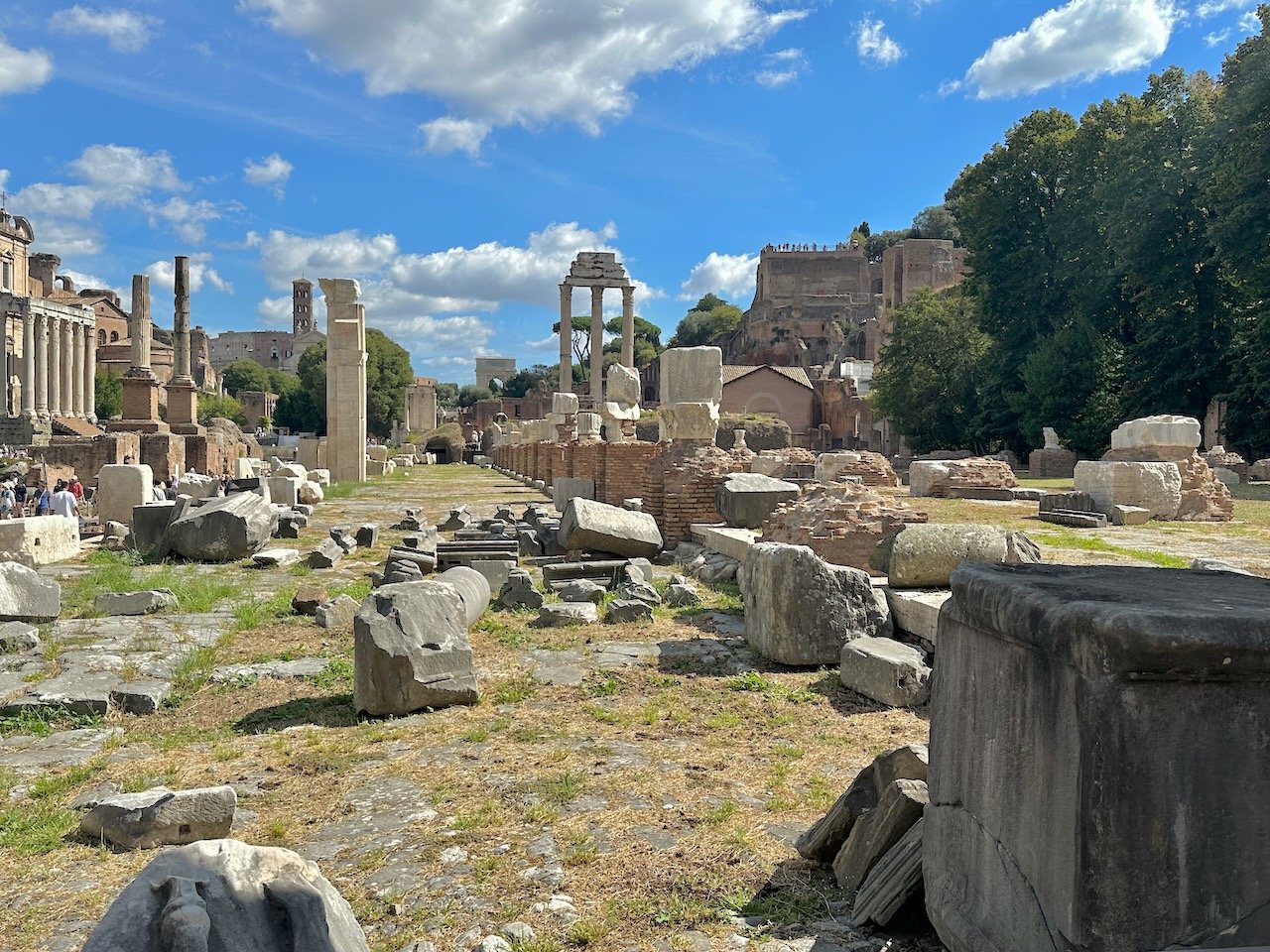
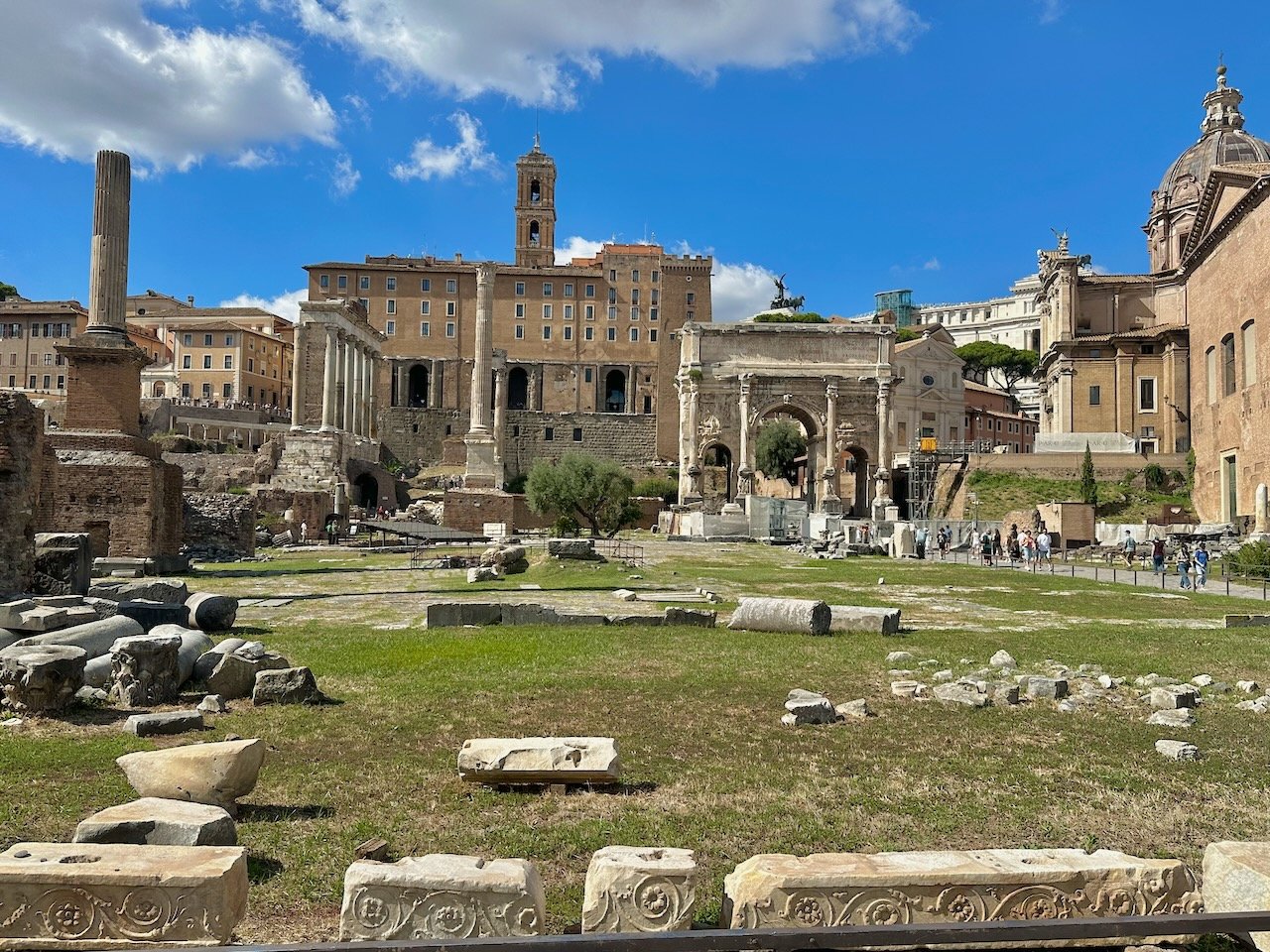
From the prison we entered the Roman Forum. We past by all kinds of Roman structures, pillars, and the open area of this ancient marketplace. In this area of the forum is the Basilica of Julia and the Temple of Castor & Pollux (mentioned in Acts 28:11. These two “twin gods” of Jupiter, gods of protection for sea-farers and warriors). It is most likely Paul was condemned to death in the Basilica of Julia in 67 AD at the hands of Nero. God used him in amazing ways to spread the Gospel to so many! He gave his life for the cause of Christ!
“Day two of our Rome extension was another great one! While we walked a lot (5-6 miles?), we saw so many sites, including the likely location of where Paul spent his last days before dying for the sake of the Gospel.”
Titus’ & Constantine’s Arches
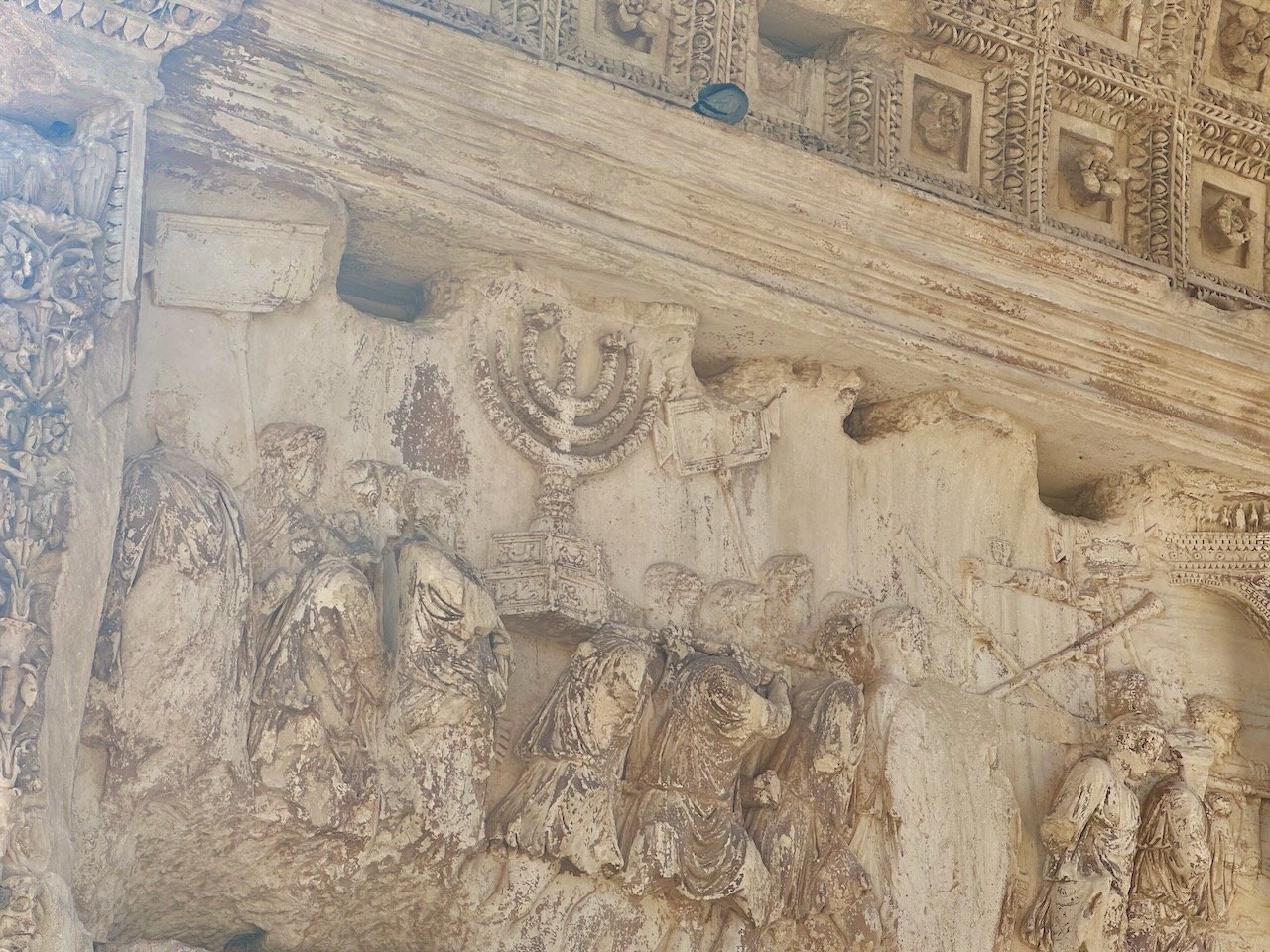
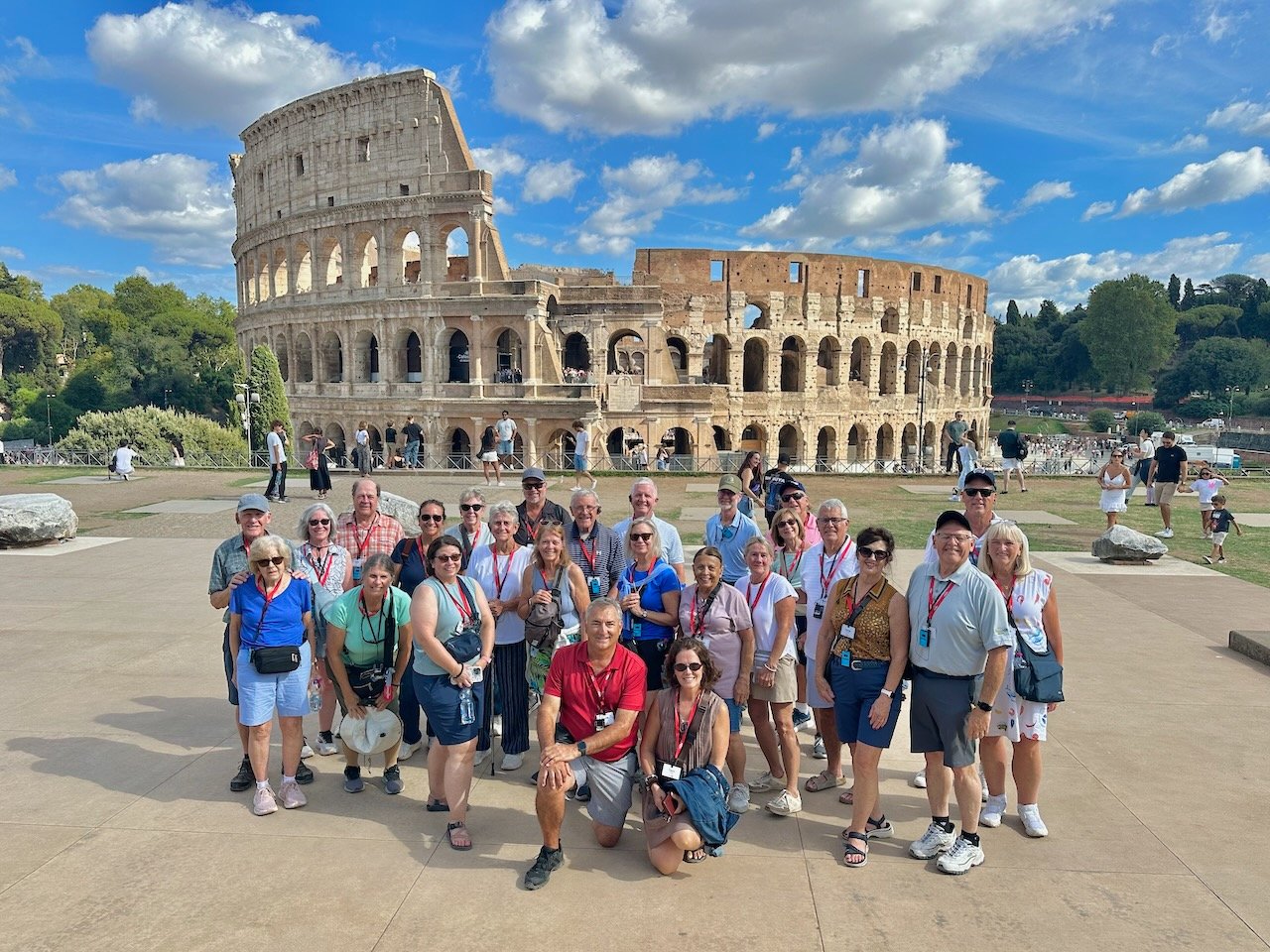
As we walked in the Forum, we also soon passed by Titus’ Arch.This arch was built shortly after the Jerusalem campaign in 70 AD. Inside the arch is a display of the Menorah taken from the Temple in Jerusalem. Exiting the Colosseum we next past by Constantine’s Arch. This was built in 315 AD. It is one of seven arches still standing today.
The Colosseum
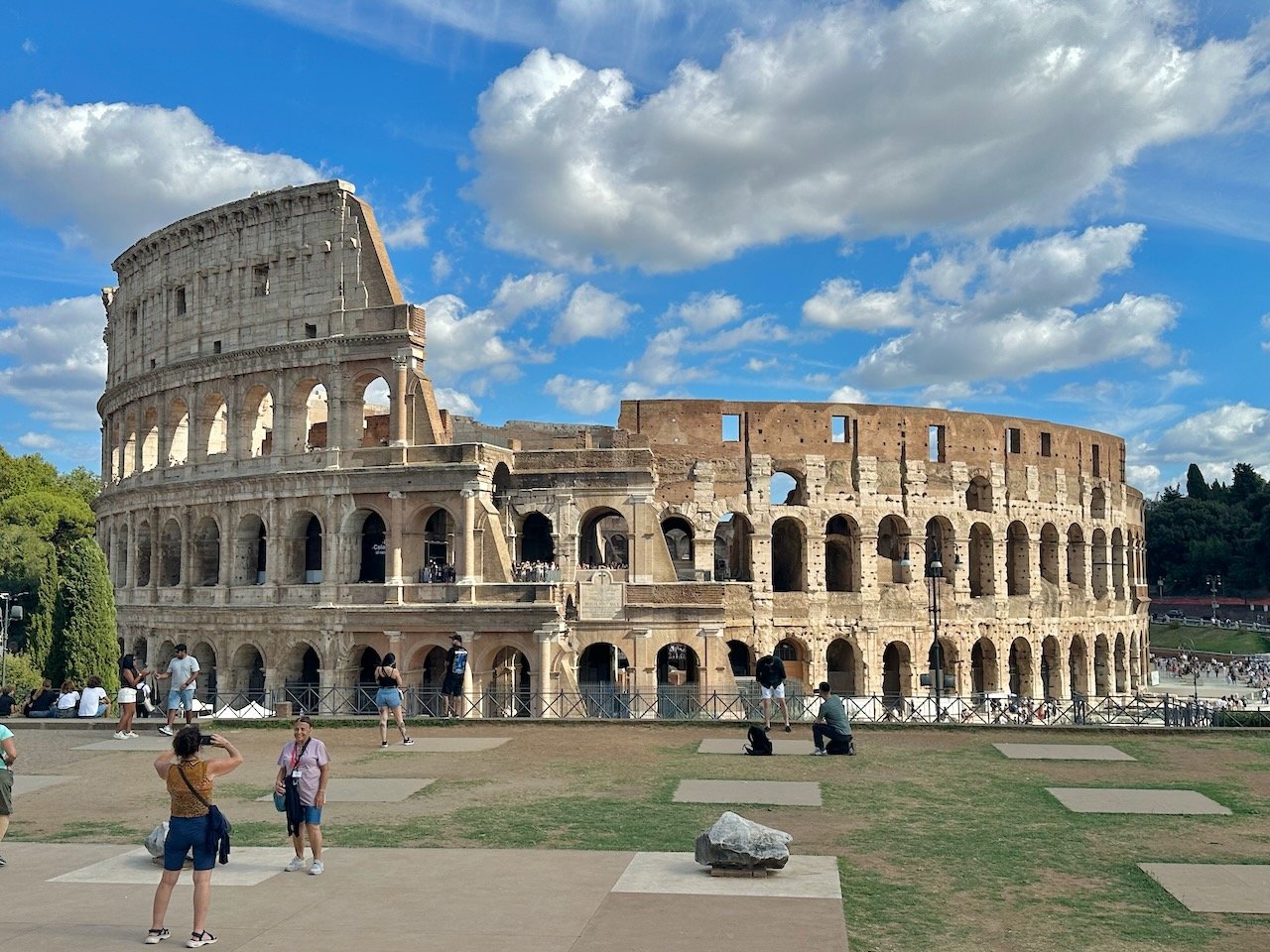
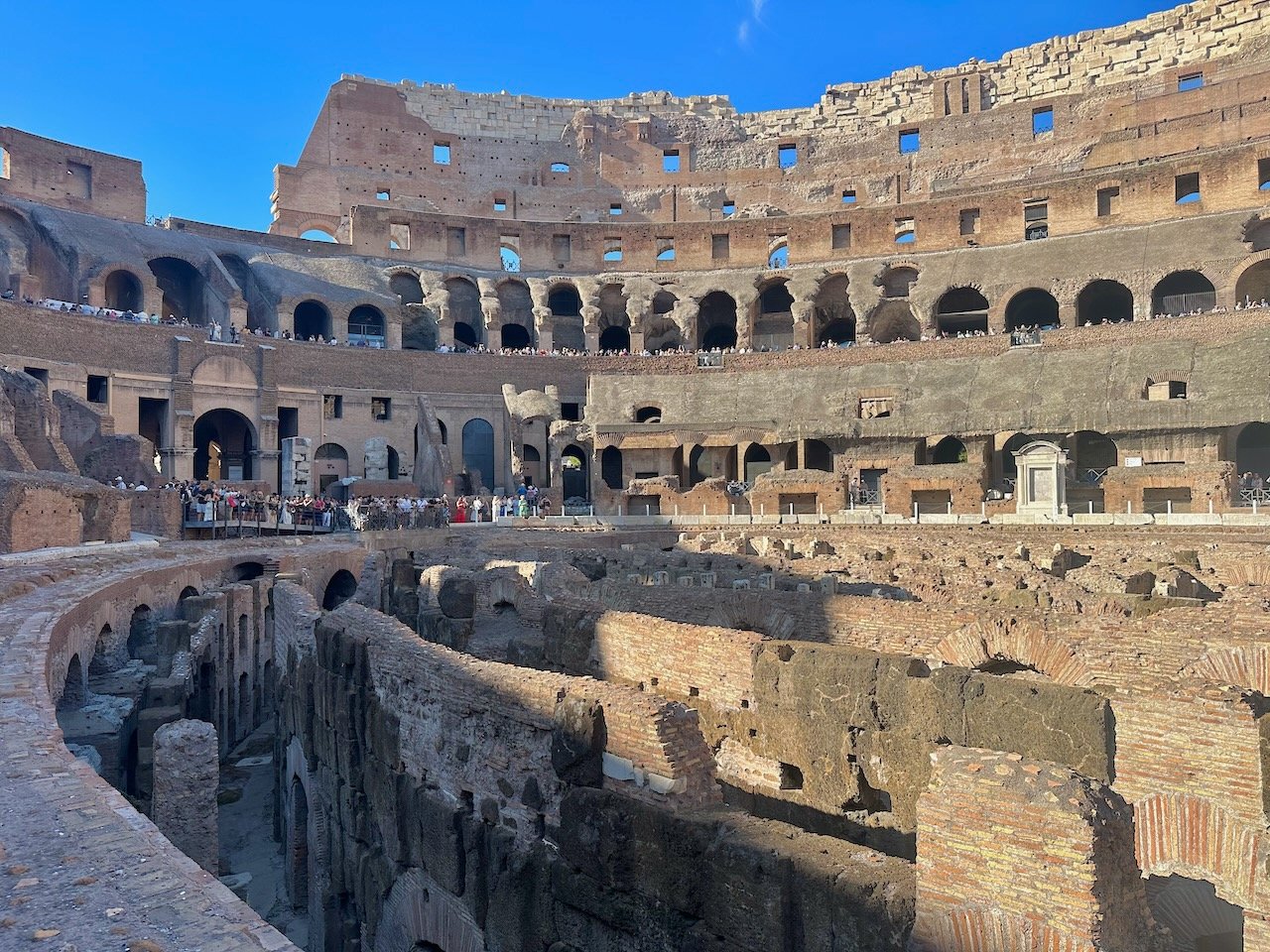
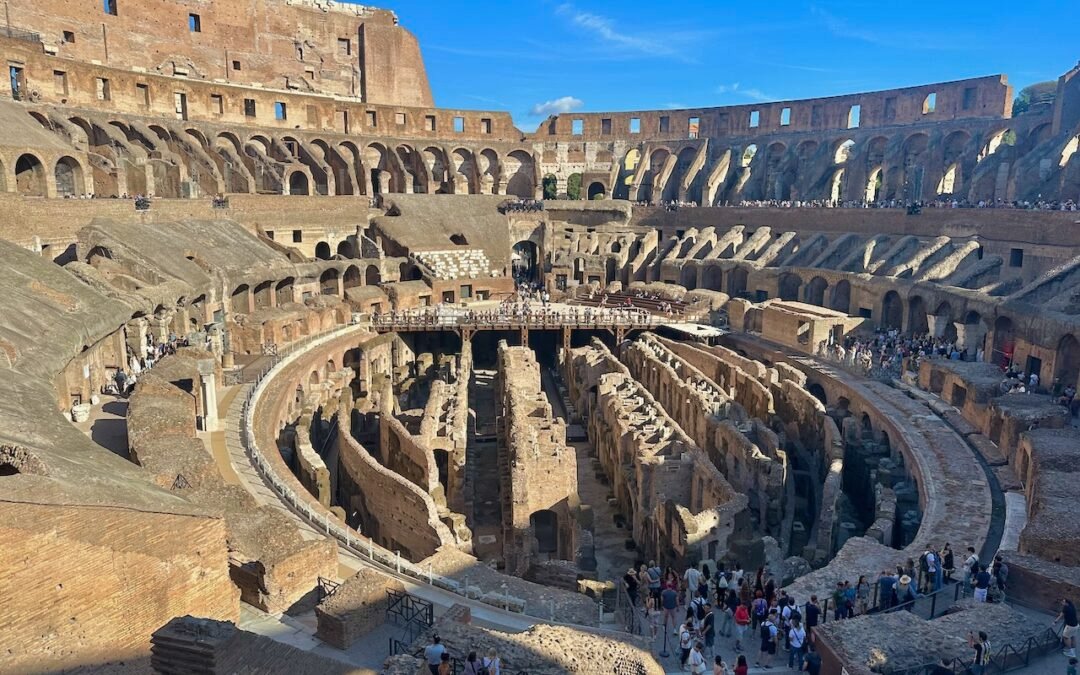
The last stop of the day was the Colosseum. This massive amphitheater built between 72-80 AD (started by Vespasian, and completed by Titus). The first eight years was just to prepare the foundation and lower levels. Over 300 tons of iron (e.g. pins) was used to hold the structure together. The Colosseum held up to 70,000 people (at its maximum capacity).
Gladiators fought here for 450 years against both animals and other men. The last use of the Colosseum was 523 AD. Later, two earthquakes destroyed about half of this structure. Going inside the Colosseum was amazing! We first went to the top for a panoramic view. We then descended down to the lower level. 54 lifts or trap doors were used to lift both animals and gladiators.
As we left the Colosseum, we walked about 10 minutes to our bus. We drove back to the hotel, arriving about 5 p.m. Dinner followed at 7 p.m., with a free evening. We walked a lot today (some track 5 miles while other 6.5) and saw many things. We are thankful for the experiences. We have one more day here in Rome.
Day 14 – Monday, September 28: St. John’s Lateran Church & Sacred Steps, Circus Maximus, Vatican & Sistine Chapel, Basilica of St. Peter’s