Day 3 – Thursday, September 17: Amphipolis, Philippi, Kavala, Thessaloniki
Today was our first full day here in Greece and all of us are excited to be traveling together. Already new friendships are being made among the group. Our fellowship is sweet! Today’s weather perfect, with full sun and highs around 80. We left the hotel shortly after 7:45 a.m. following a great breakfast. We read from portions of Philippians 1 and 2 as we headed north and east for the day towards Philippi.
Kavala/Neopolis
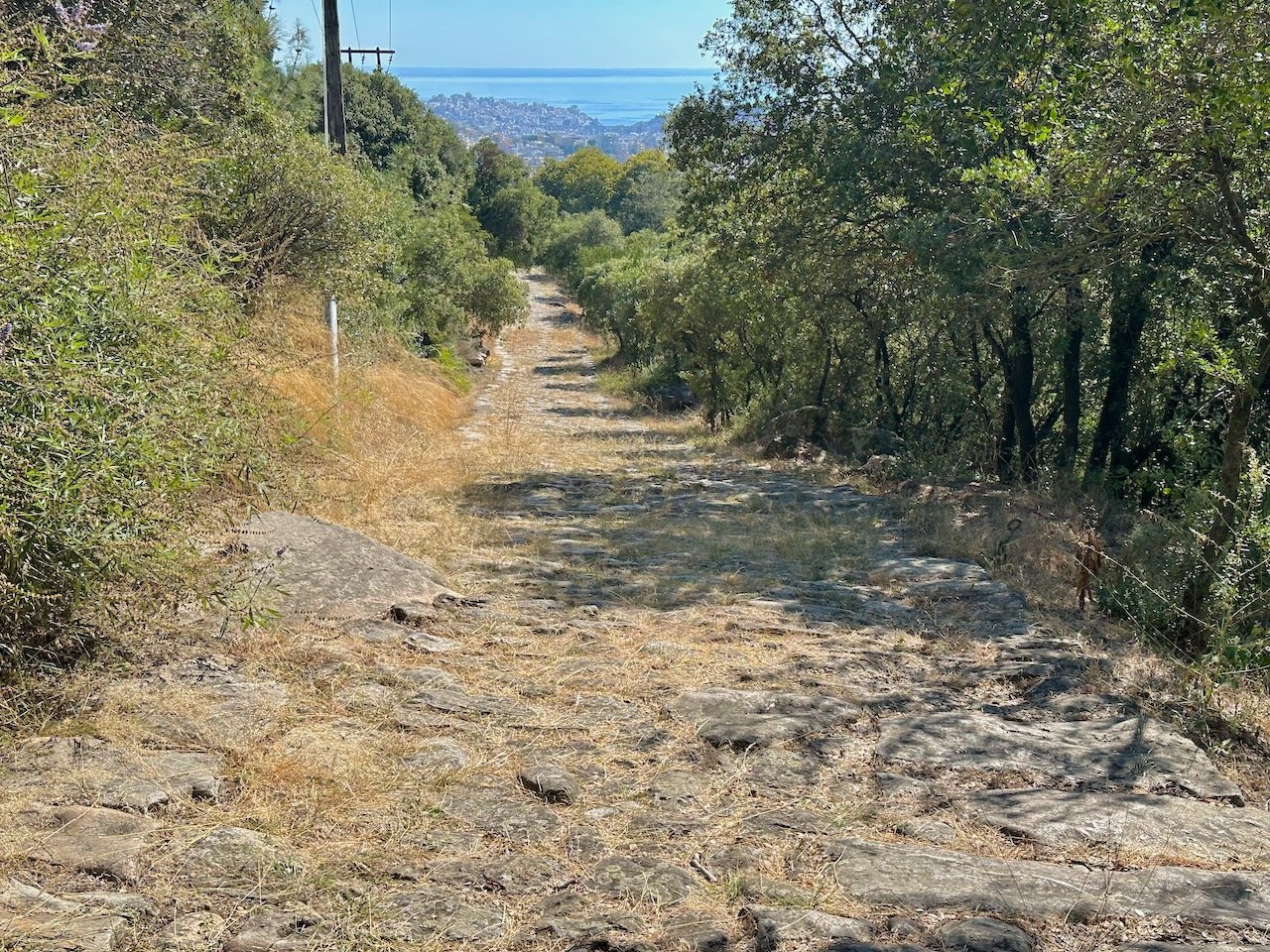
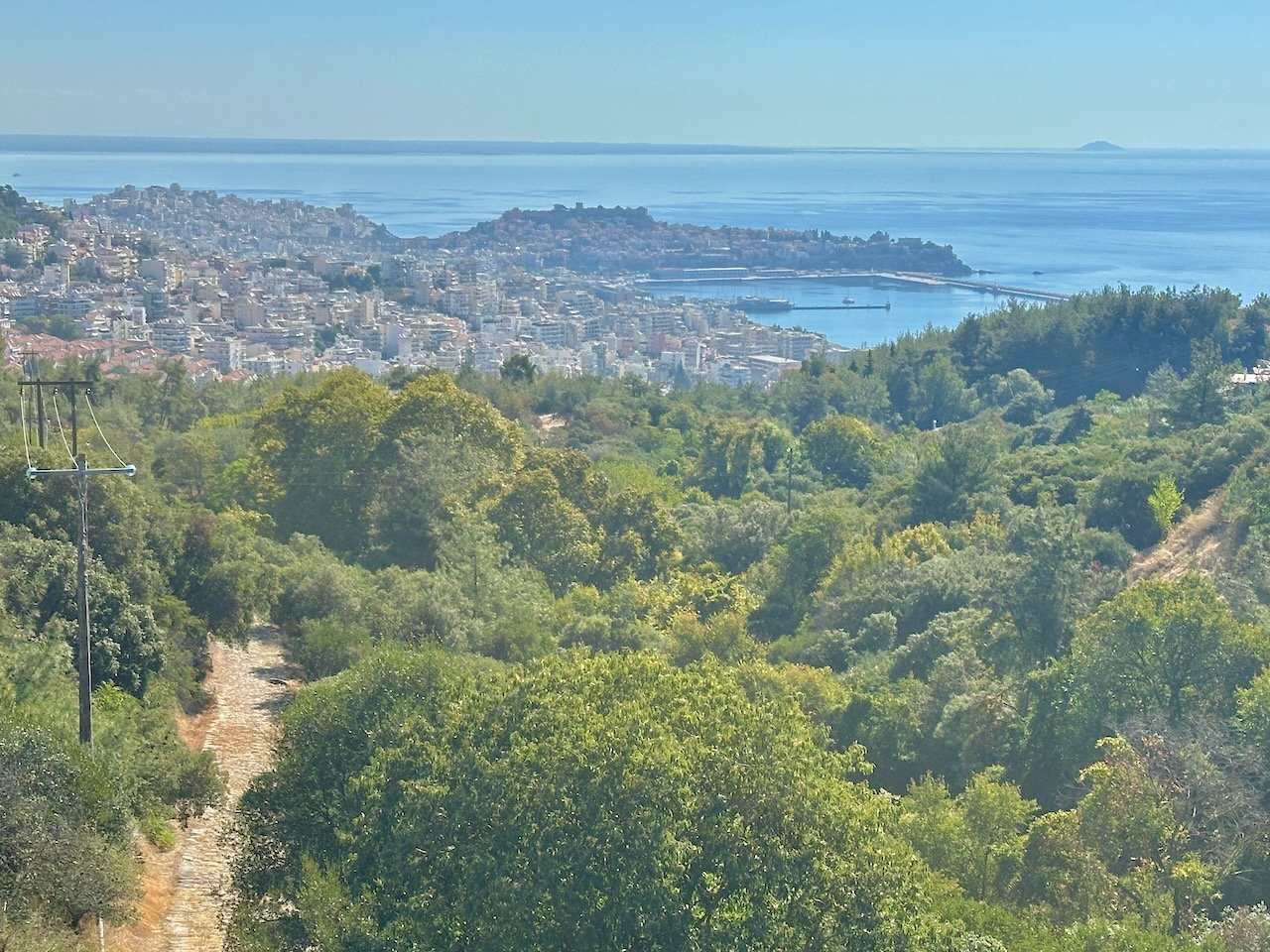
Using the ring road around Thessaloniki, we drove north and east on one of Greece’s many great highways. Our first stop of the day was Kavala. This was called Neopolis in Paul’s day. In the upper part of the city we got off the bus to walk on the Via Egnatia road. This is a section of a 700-mile pavement probably used by Paul. We then drove to the harbor of Kavala. Paul sailed into this port following his Macedonian vision at Troas (Acts 16). Today, only the Byzantine (and later Turkish-Ottoman) aqueduct and fortress can been seen archaeologically. Outside a Greek Orthodox Church a modern monument is erected honoring Paul’s journey here as he stepped into “Europe” for the first time for the sake of the kingdom!
Philippi
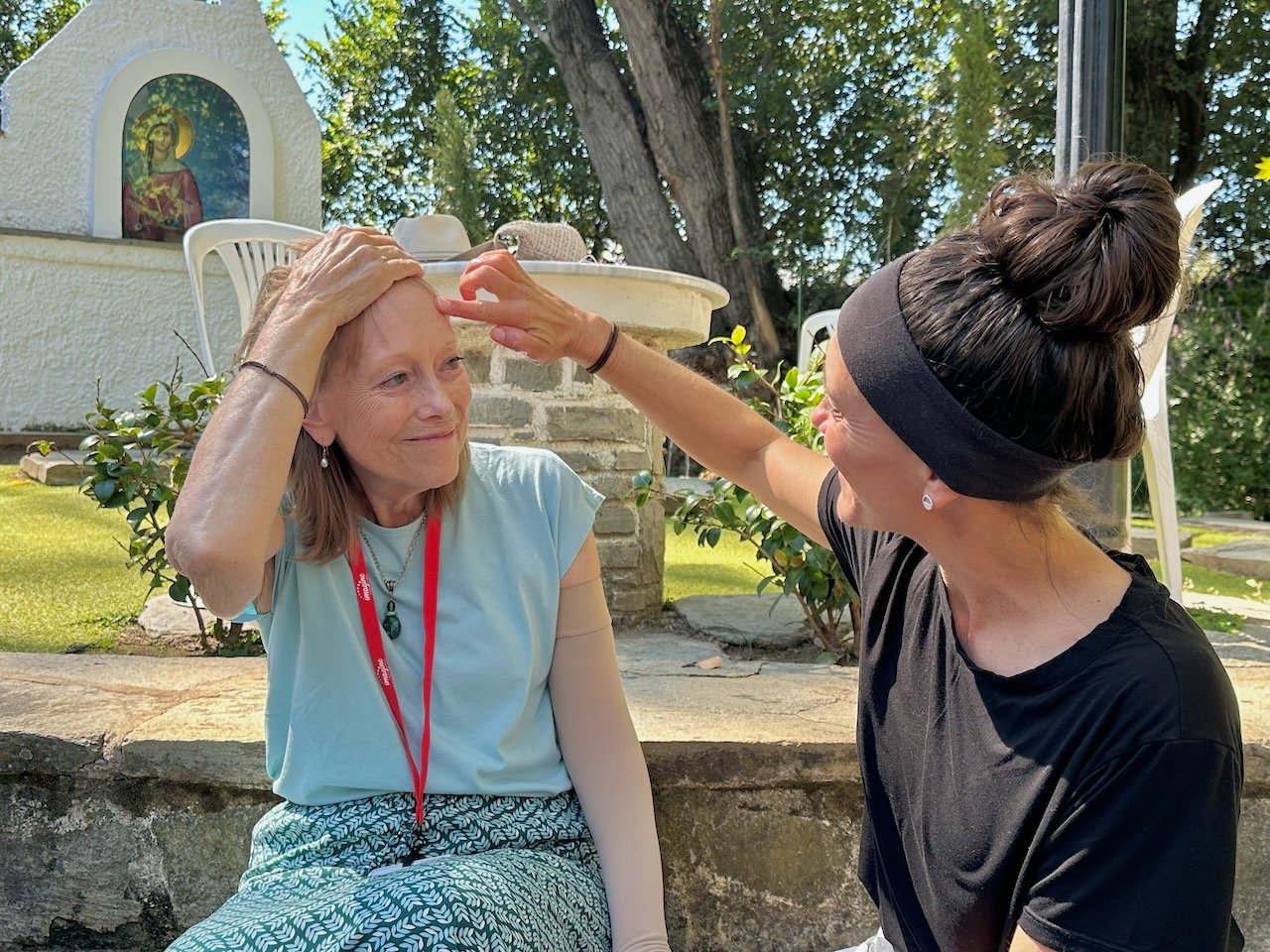
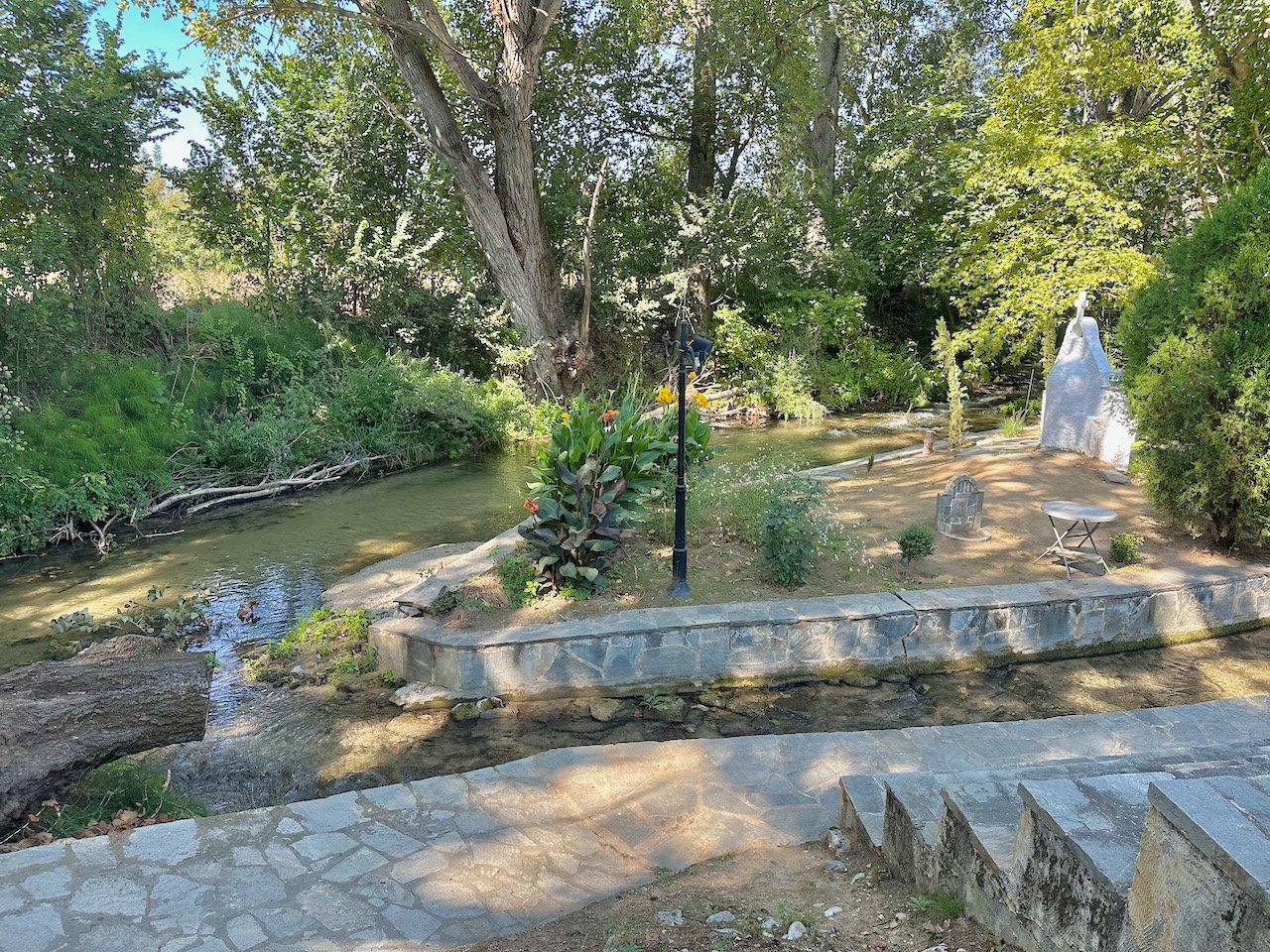
Next, we drove about nine miles to the Plain of Philippi. Outside of the site of ancient Philippi we first visited the Zygotes River. It was somewhere along this river is where Lydia (from Thyatira) heard and received the kingdom message of Christ from Paul and Silas (Acts 16). She and her household also received Christ and were baptized. Paul also confronted a Pythia, or fortune teller. She may have been one who gave oracles at Delphi (we will visit this site in two days). We also celebrated the faith of many who came forward to reaffirmation their baptism using the water of this river. Pastor Jennifer led this special experience!
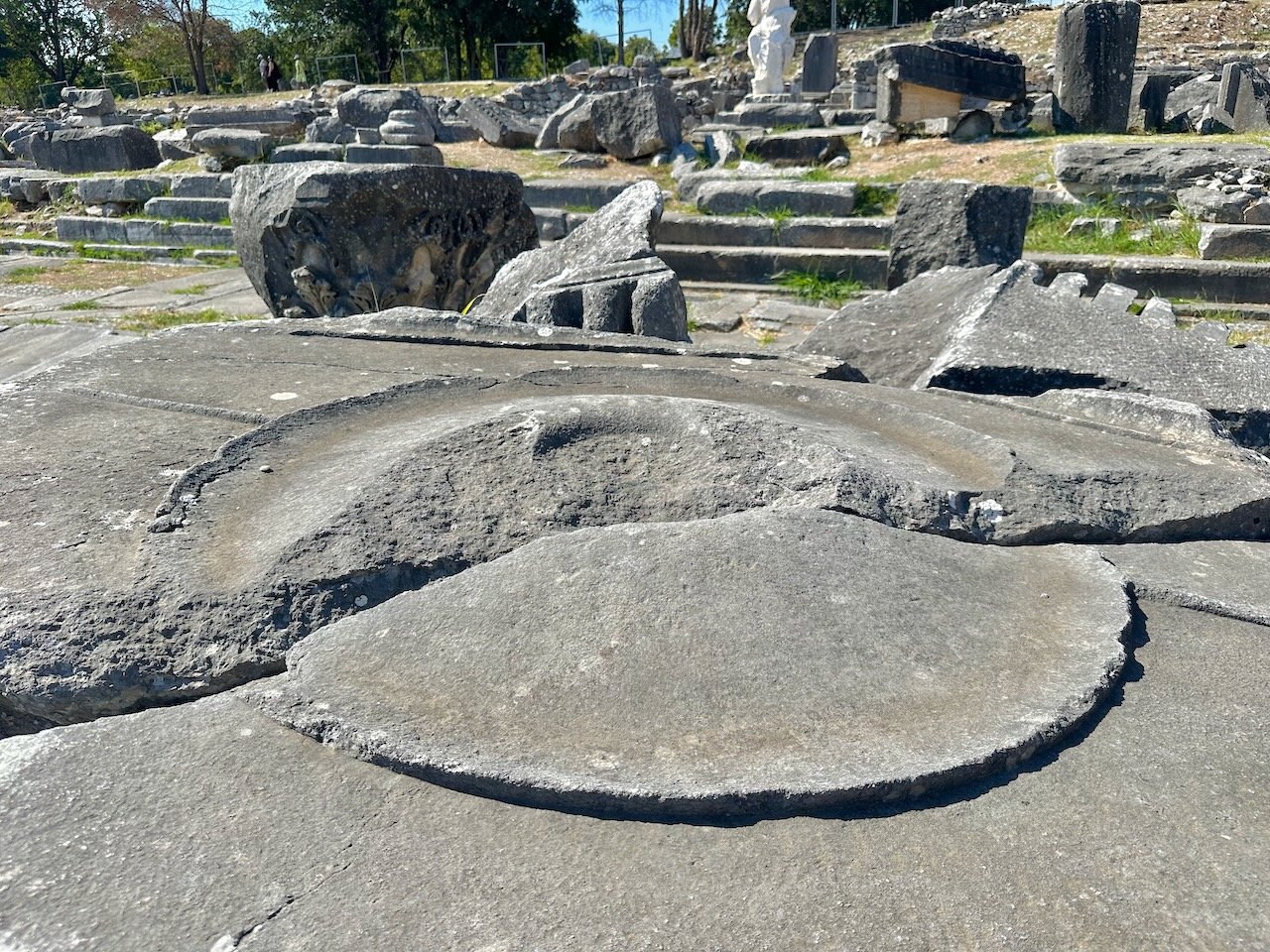
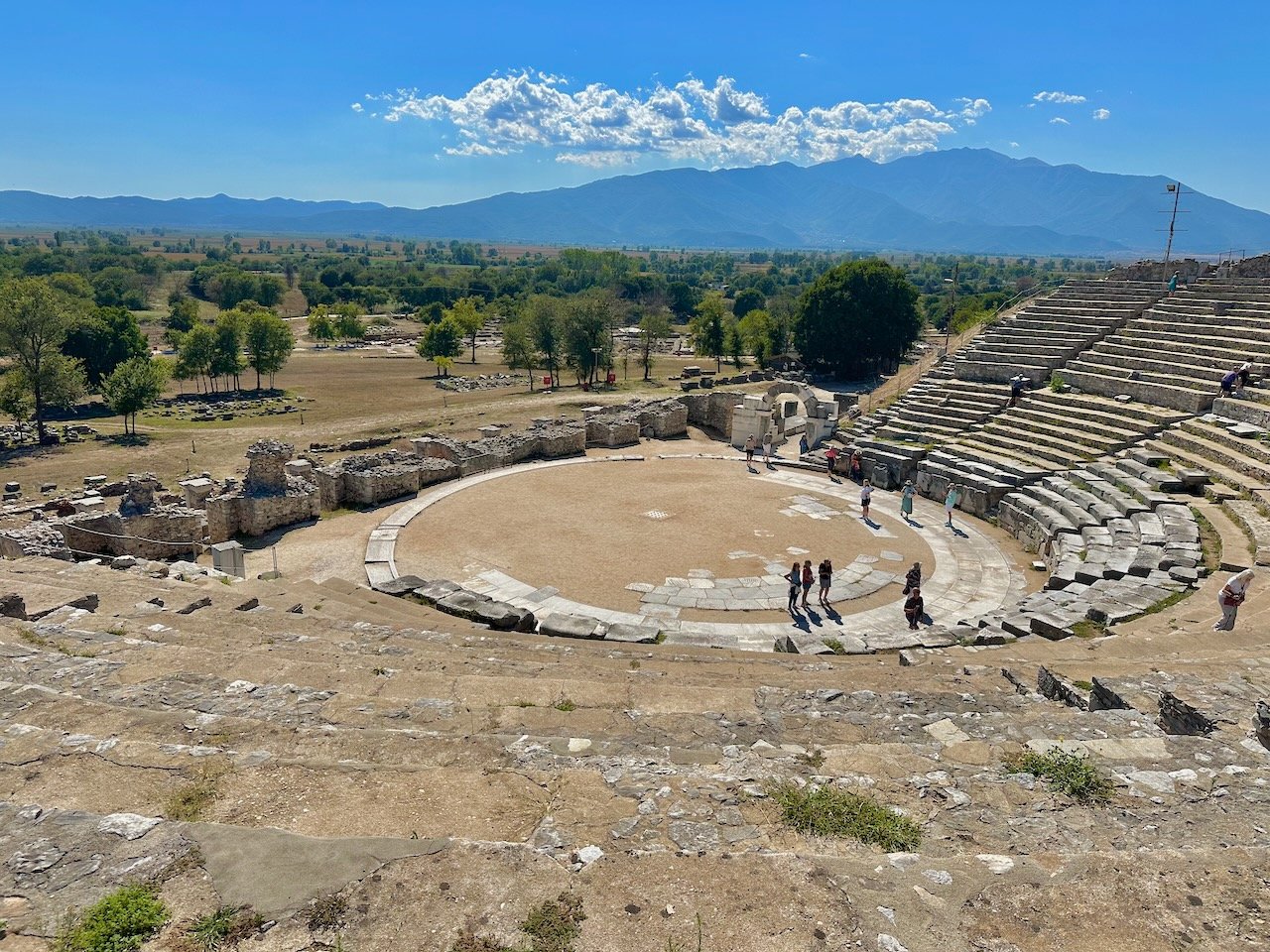
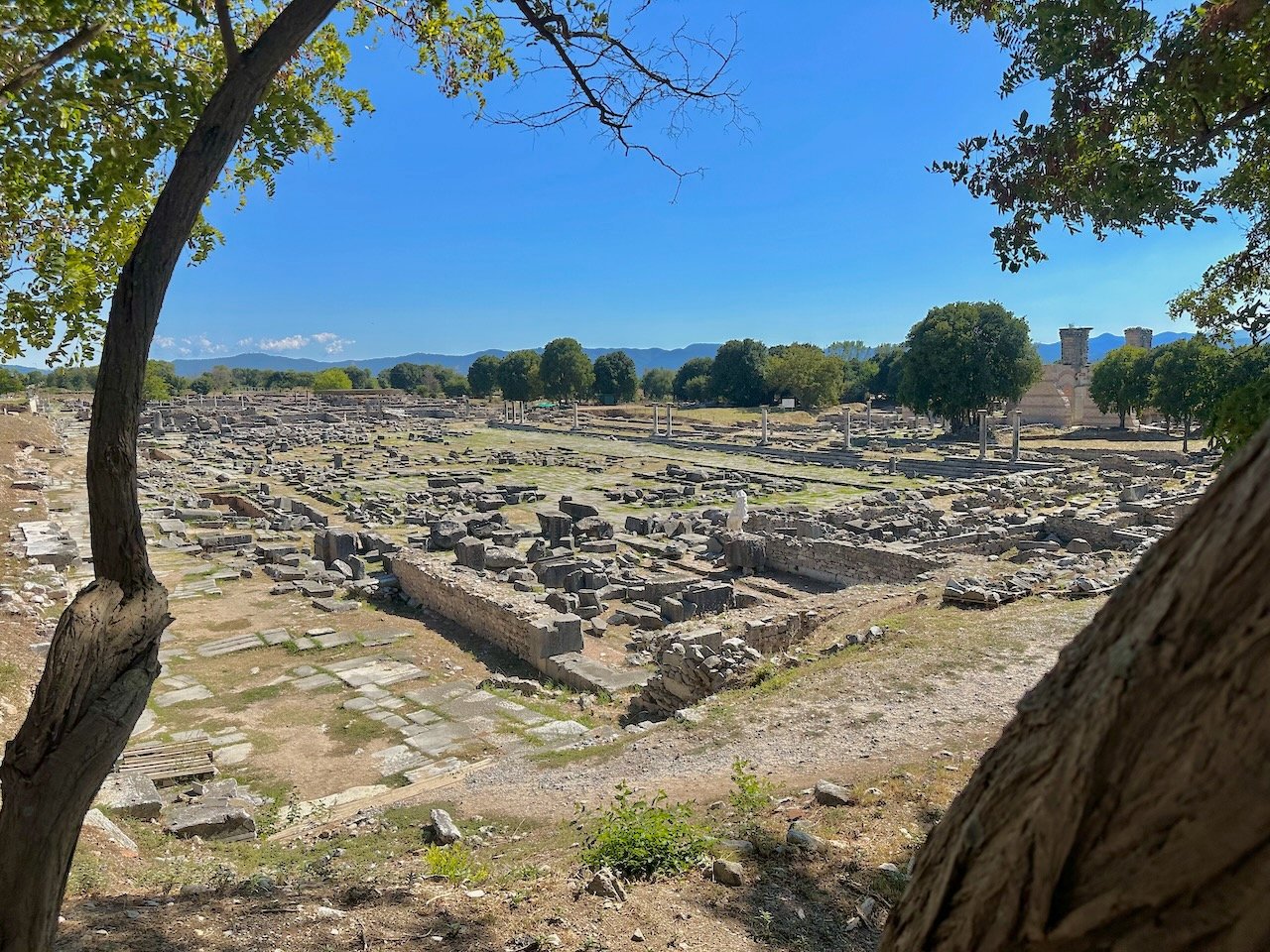
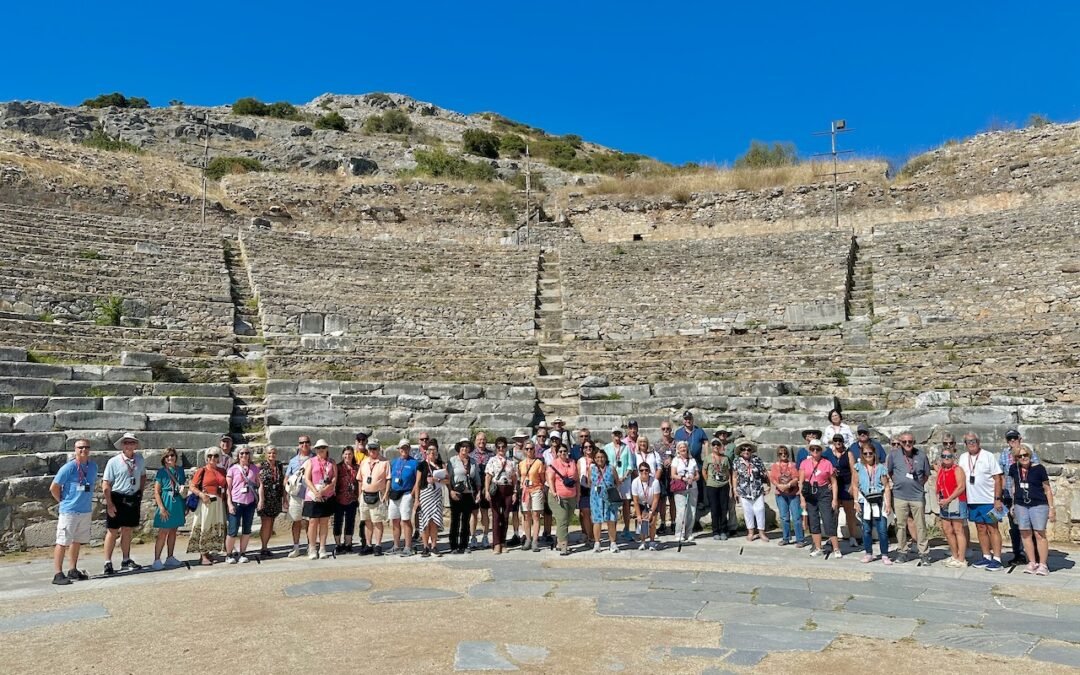
After a wonderful lunch outside the archaeological site of Philippi, we visited the ruins of the city connected with Paul. We saw the theater (the oldest structure here, dating to 356 BC and built by Philip II), the Late Roman basilicas, the agora/forum (marketplace), and the Praetorium – Bouleuteriun. This area located at the end of the forum served as the seat of the magistrates, the location of the judgement hall, and most likely the place of Paul and Silas’ imprisonment. Pastor Greg read from Acts 16 about God’s miraculous intervention on behalf of Paul and Silas. The jailor placed his faith in Christ that night too. The so-called “traditional prison” of Paul is most likely a later 2nd century structure and used only as a cistern.
“Today was our first full day here in Greece! It was a great way in every way… wonderful weather, inspiring connections already with Paul, and new friendships among the group.”
Amphipolis
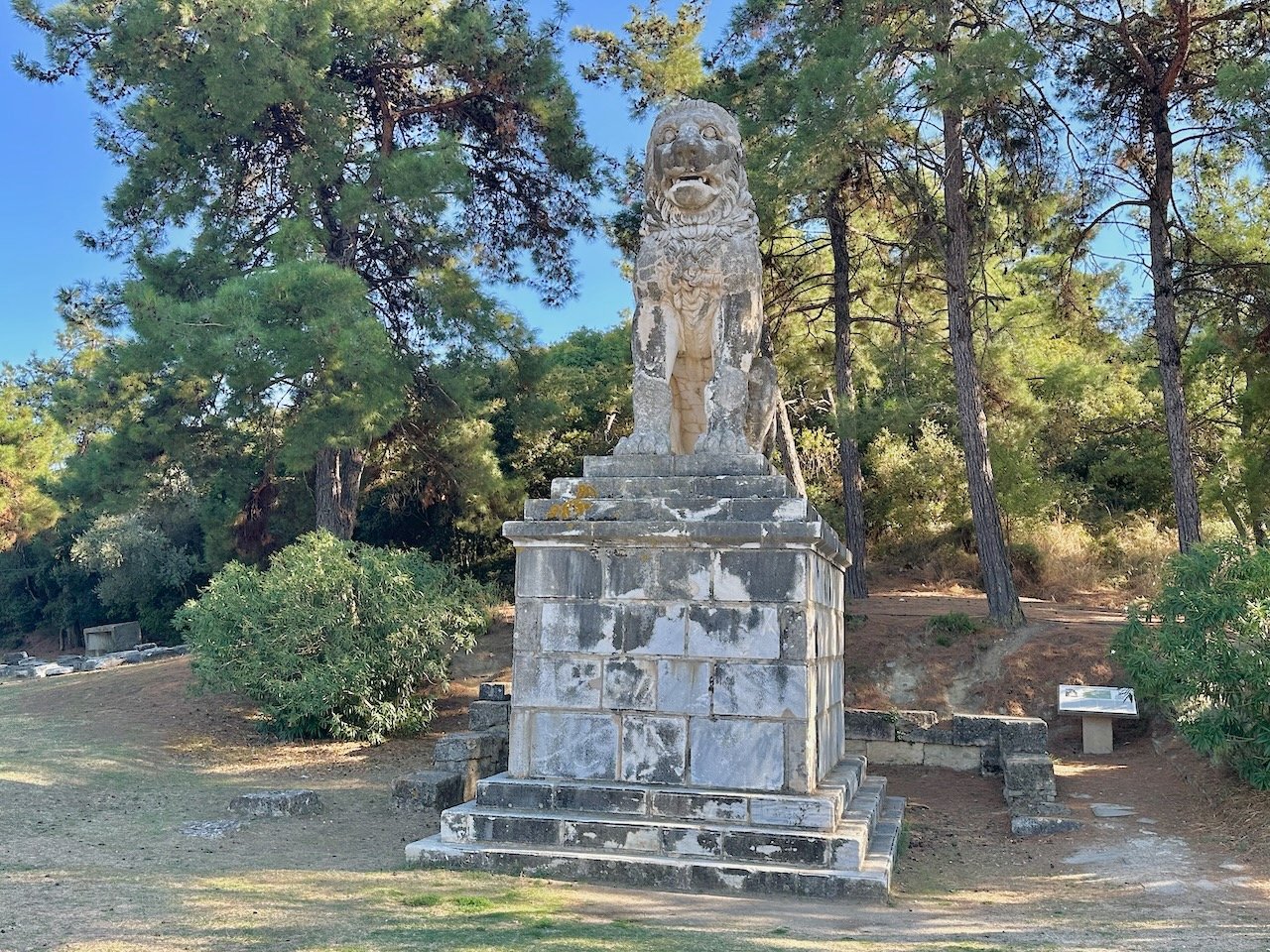
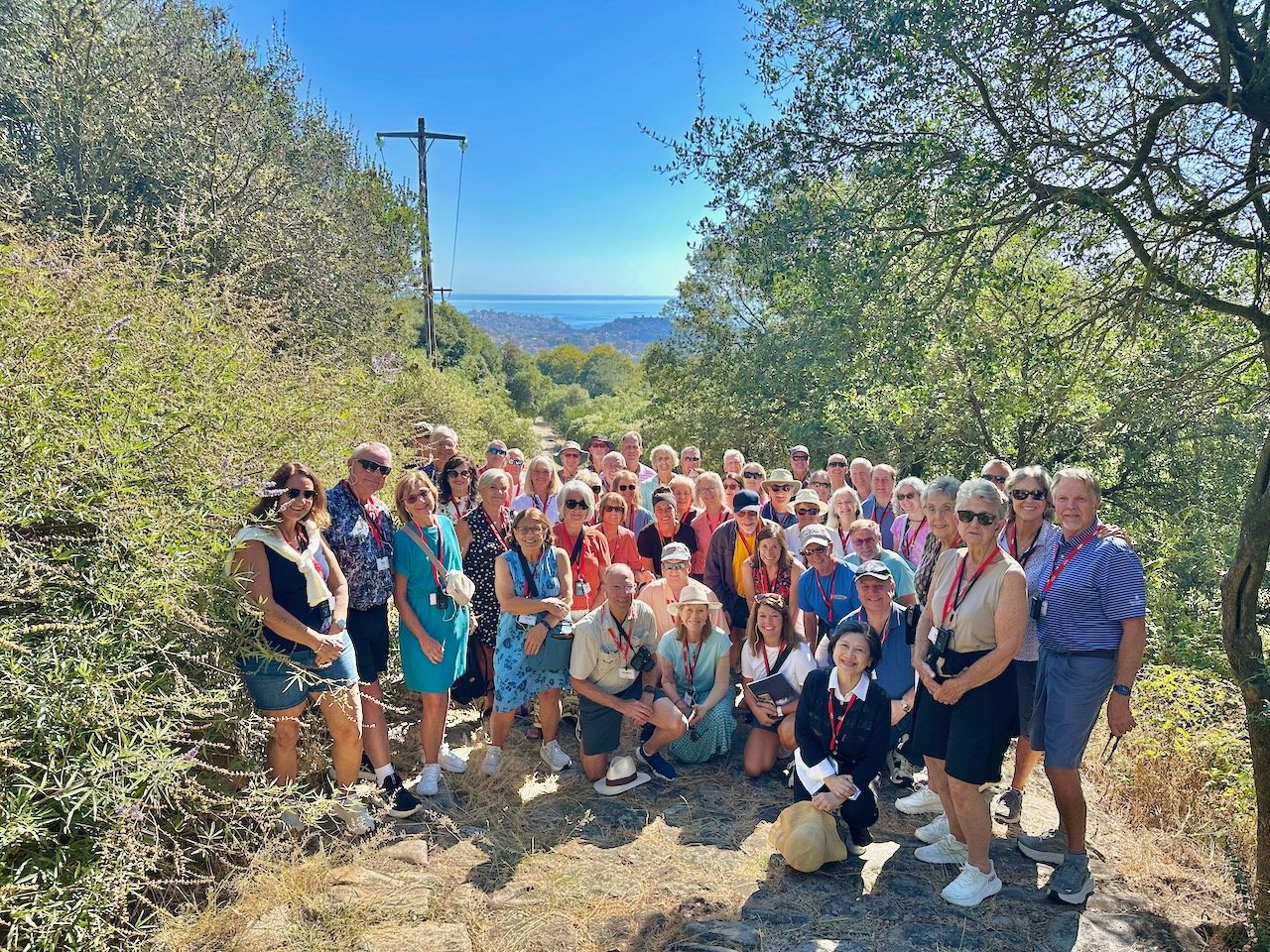
On our way back towards Thessaloniki, we made a brief stop in Amphipolis. The city was established in the 4th century BC and was visited by Paul (Acts 17). Here we saw the famous lion statue here from the 4th century BC.
Downtown Thessaloniki
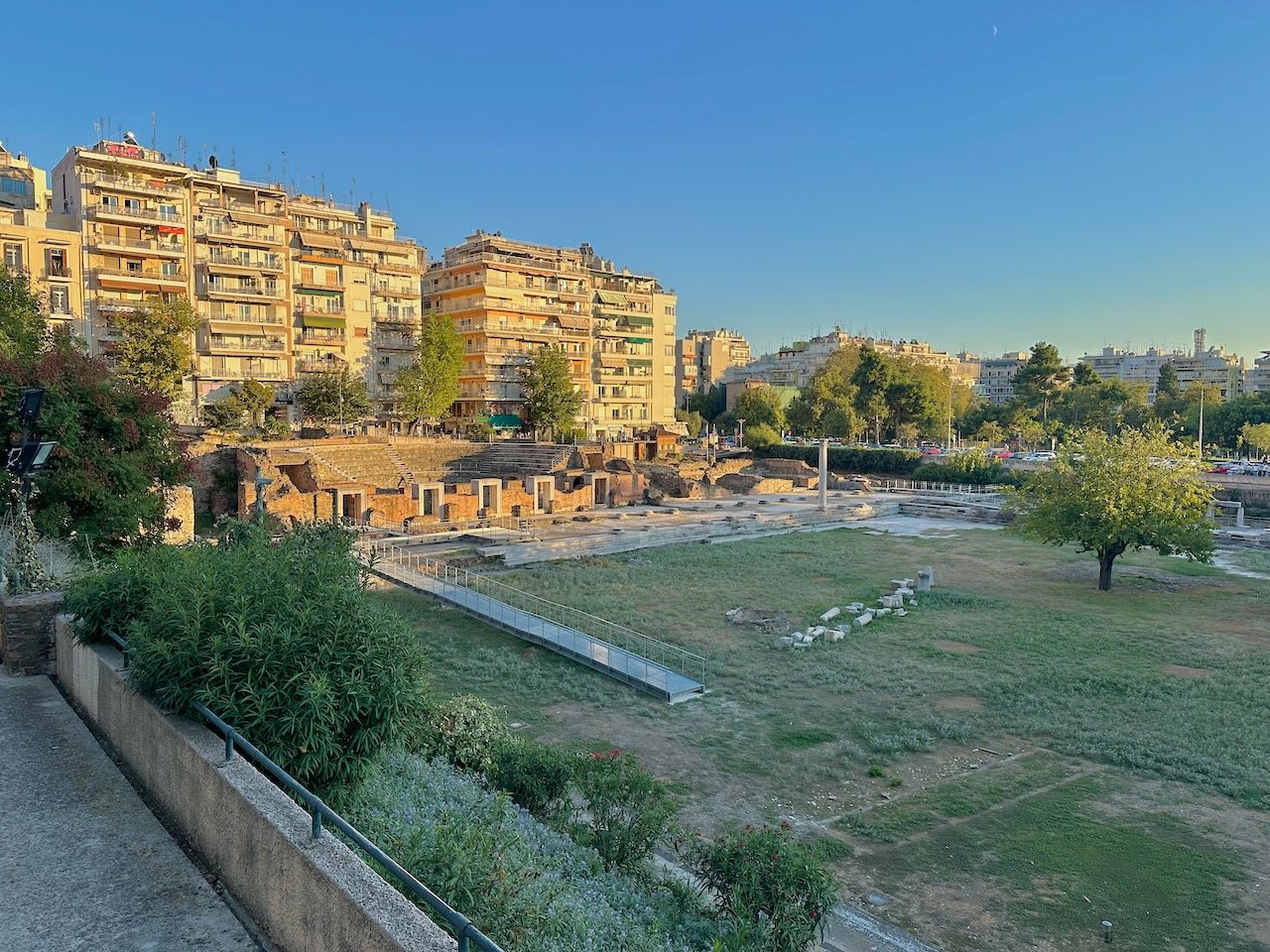
About 6:30 we arrived back back to Thessaloniki. Before returning back at the hotel, we drove to the Roman Forum (Agora, marketplace) in the heart of the city. This was the marketplace mentioned in Acts 17 where Paul was. The text mentions a man named Jason who helped Paul and Silas. The text also mentioned the “city officials” (in Greek, Politarchs, as found on an inscription discovered here from the 2nd century AD). We also remembered certain believers mentioned by name (Aristarchus and Secundus) who were from this city (Acts 20:4, Romans 16). They served as later companion travelers with Paul. About one block away we made a brief stop to the Church of St. Demetrius. This was an ancient church dedicated after Demetrius, a martyr who died in 303 AD. Today this well-used Greek Orthodox Church is a landmark in the city.
We returned to our hotel nearby for a late dinner (7:35) and a good night’s rest. It was a blessed first day!
Day 4 – Friday, September 18: Berea, Vergina, Meteora, Kalambaka