Day 5 – Saturday, September 19: Thermopylae, Delphi, Athens
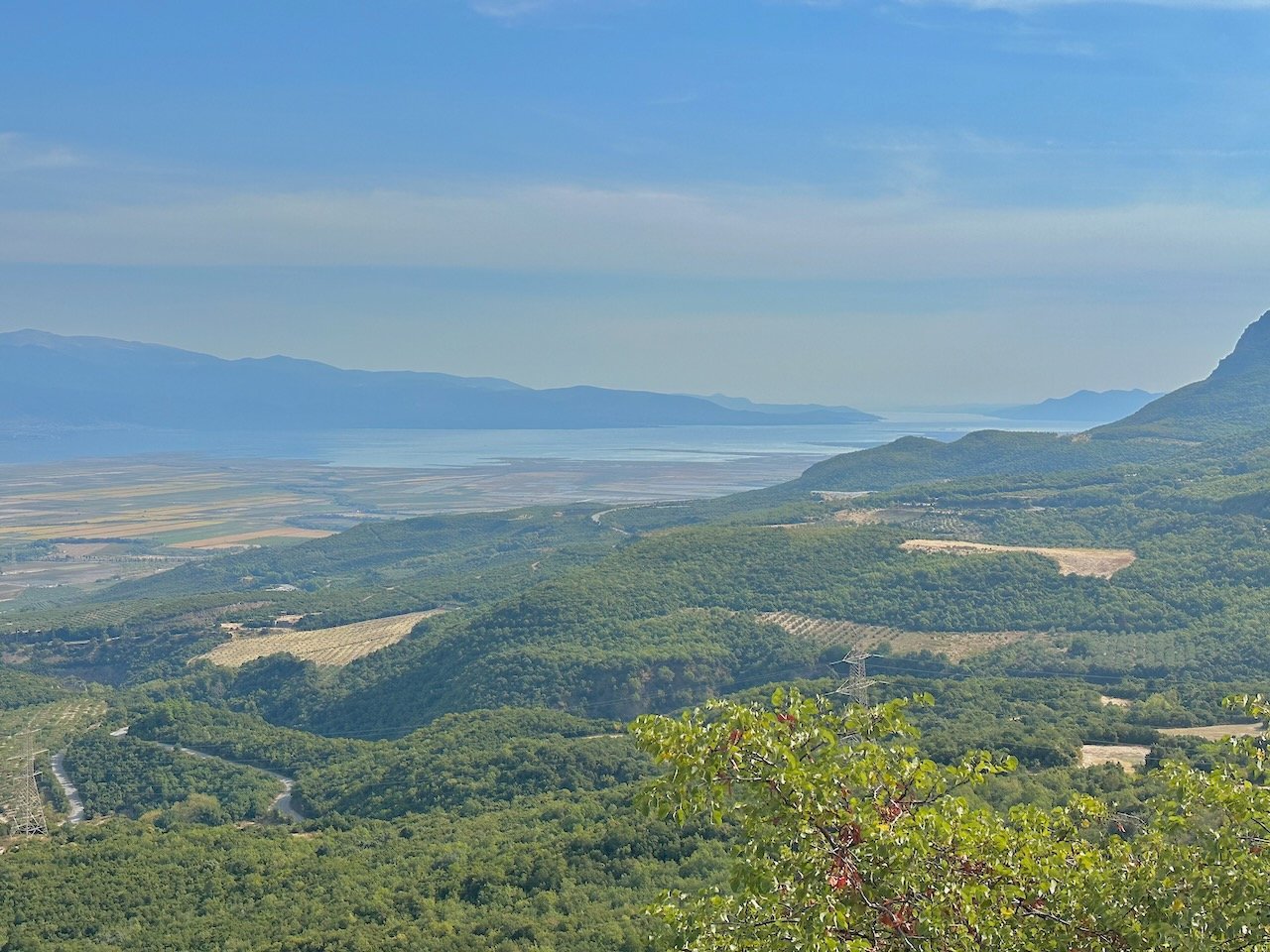
Today we drove south through more of the mountains of Greece, with a final destination in Athens. Again, the beauty of the high mountains (80% of Greece is mountainous), valleys, and plains of inland Greece was incredible to behold. The weather was about the same as yesterday, with sun and high clouds, and temps in the upper 70s. We read from portions of Paul’s “words” (preserved in his letters) as we left the hotel at 7:50.
Thermopylae
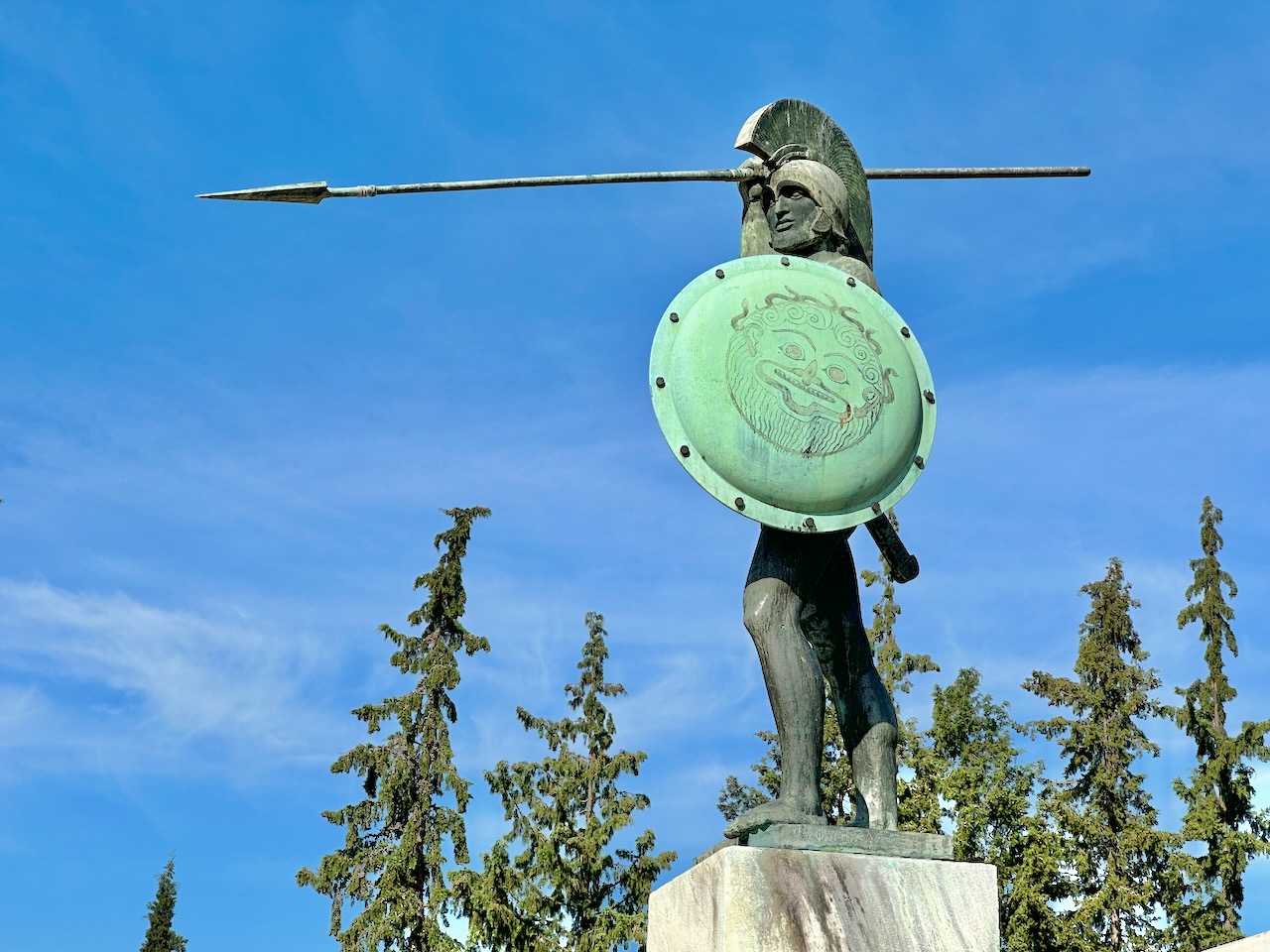
The morning drive took us on a section of another beautiful “newish” highway to the area of Thermopylae. It was here in the famous battle that took place in 480 BC where King Leonidas, along with 300 Spartans (and incidentally along with 700 Thespian greeks) were defeated by the Persians. The battle field could be clearly seen in the narrow pass defined by the shoreline of the Aegean and the cliffs. These same Persians would be later defeated in a sea battle at Salamis shortly after. Today, only a monument stands in honor of Leonidas and the courage of these brave greek warriors.
“Today we traveled to Athens, The highlight was see Delphi on the way. This is a classical site known for the Temple of Apollo and the “oracle” from the “Pythia.” The mountainous region around Delphi is so impressive.”
Delphi
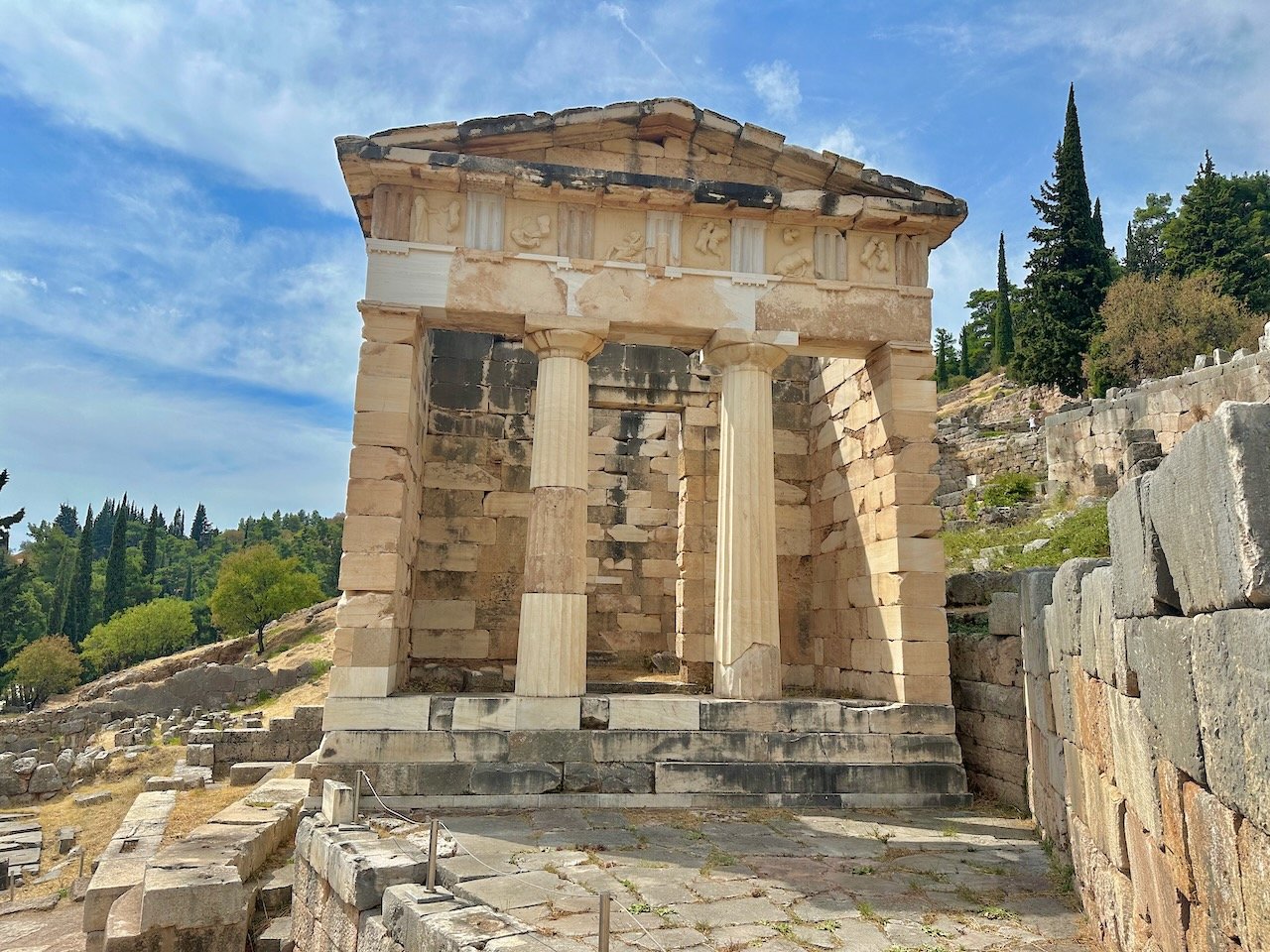
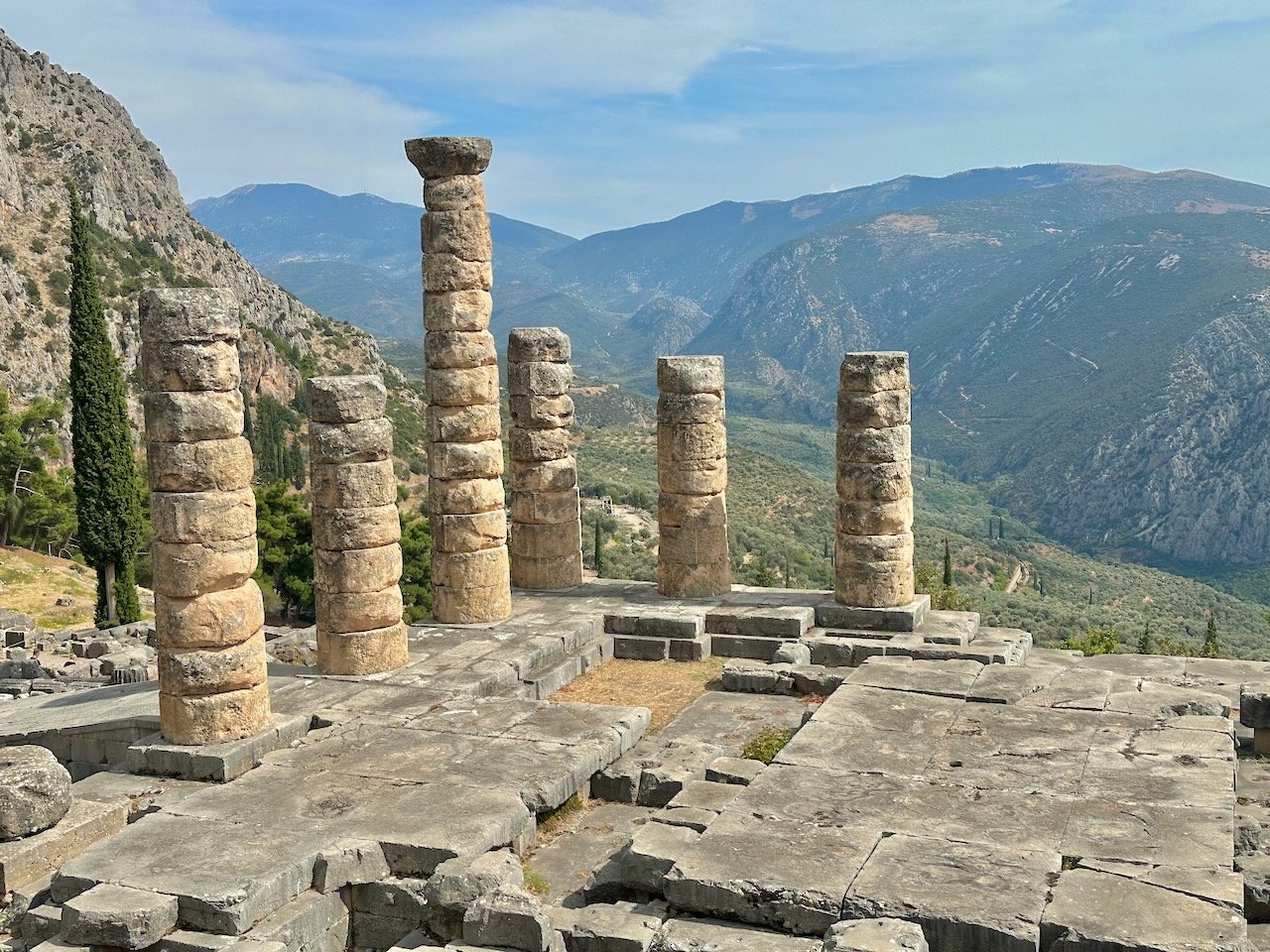
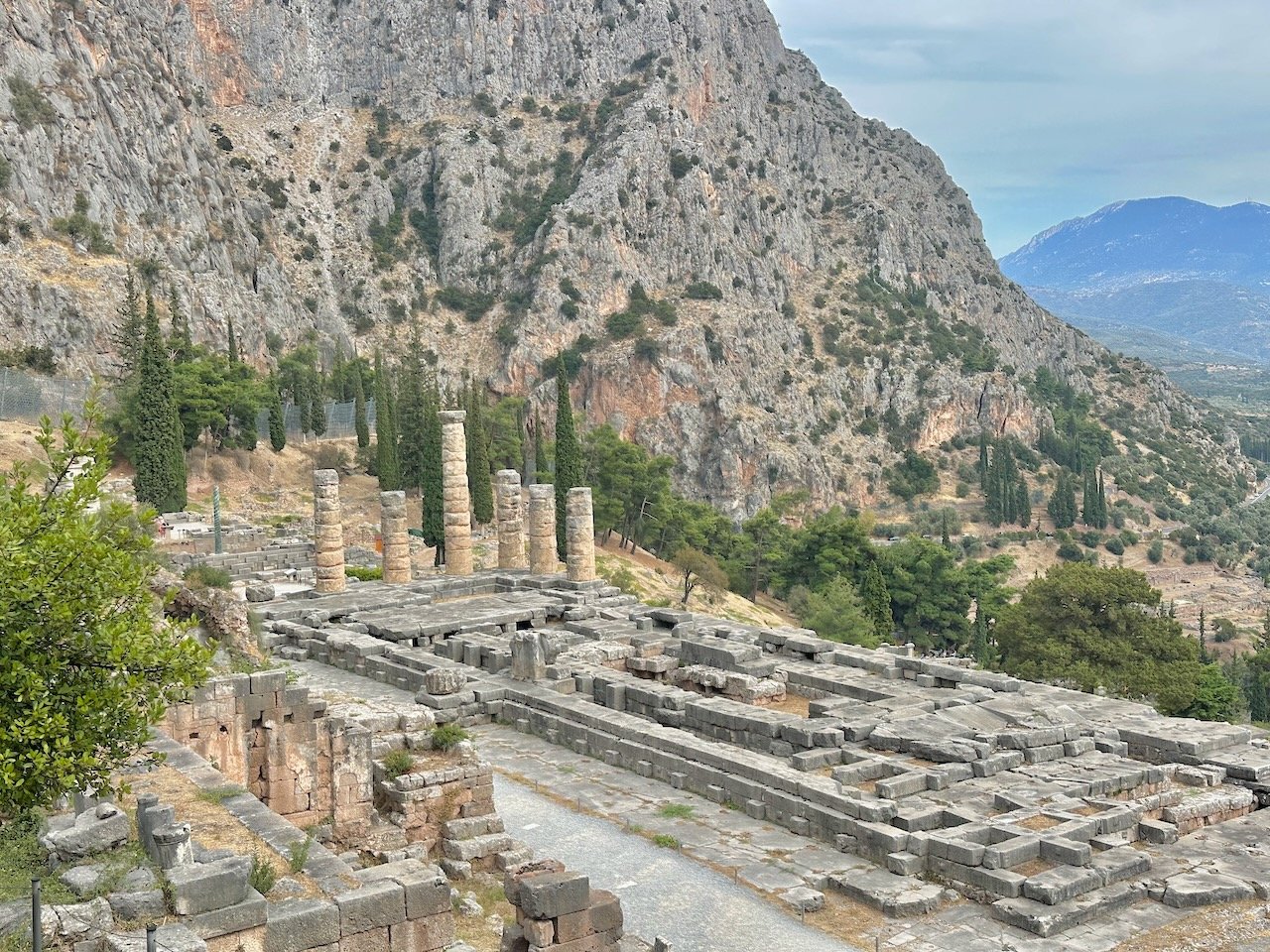
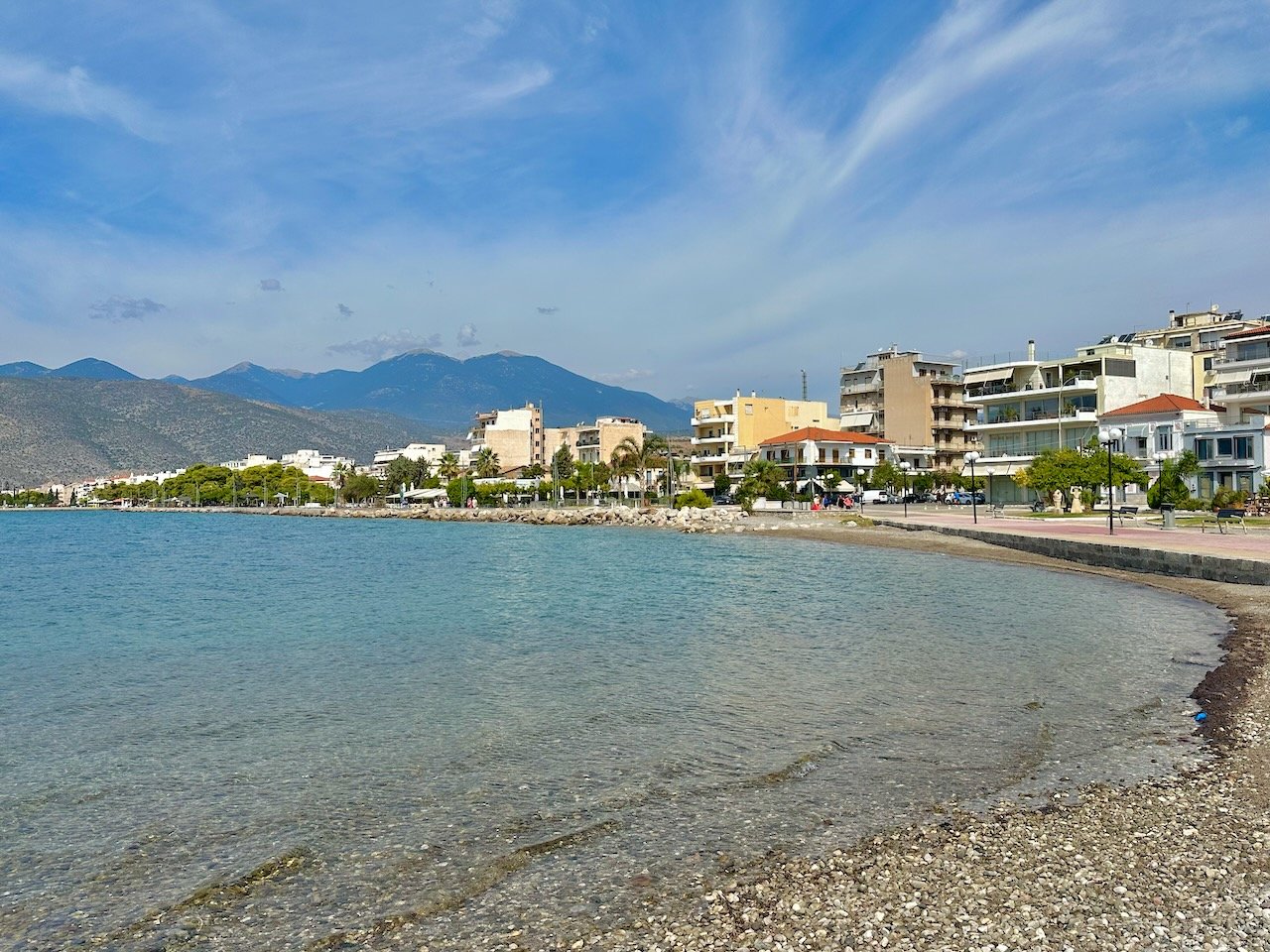
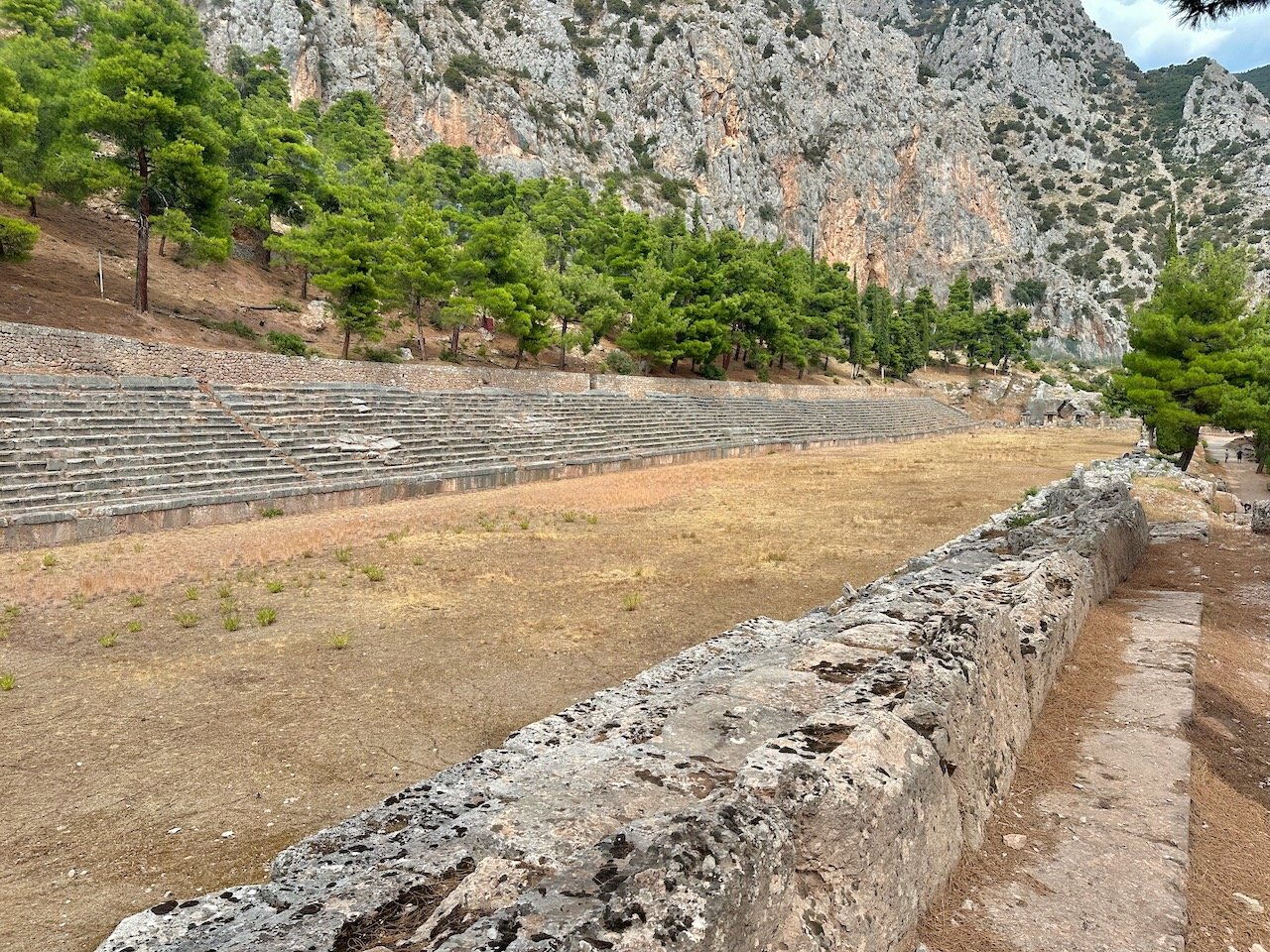
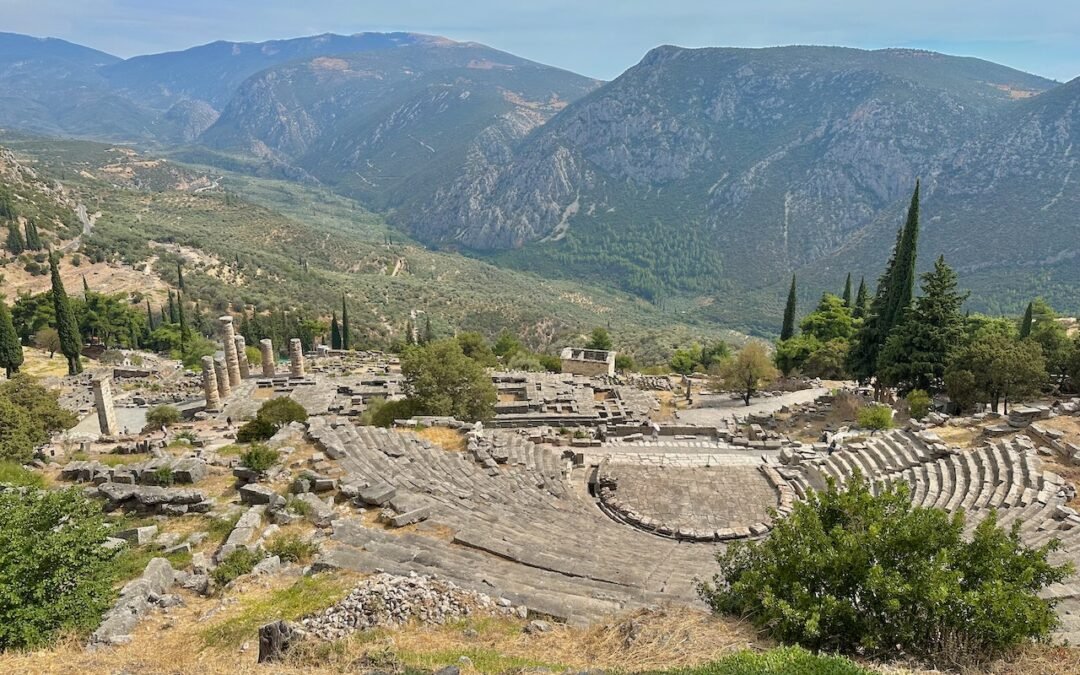
Continuing southward, we drove towards Delphi. Before climbing the final stretch of mountains, we first enjoyed lunch at Itea, a small quaint town along the Ionian (Adriatic) Sea coastline. Following lunch, we arrived in Delphi. First, we entered the impressive archaeological site. We ascended through the site, complete with the famous Athenian Treasury, Temple of Apollo, and the theater. The Pythian Games were held at the stadium here in Delphi every four years in honor of Apollo. Many also climbed beyond the well-preserved stadium to the stadium. Paul used the image of “running the race” often (i.e. 1 Corinthians 9, Philippians 3, 2 Timothy 2, etc…).
Delphi was known in this classical period of Greece as the place of oracles. The women who shared oracles were call Pythia. Acts 16:16 uses the same word. Paul and Silas preached that accepting Christ as spoken in the very Word (e.g. oracle) of God and trusting in God’s Spirit is what gives purpose and direction for our lives! Paul would also say that we are the “temple of God” with God’s Spirit indwelling within us (1 Corinthians 3:16f).
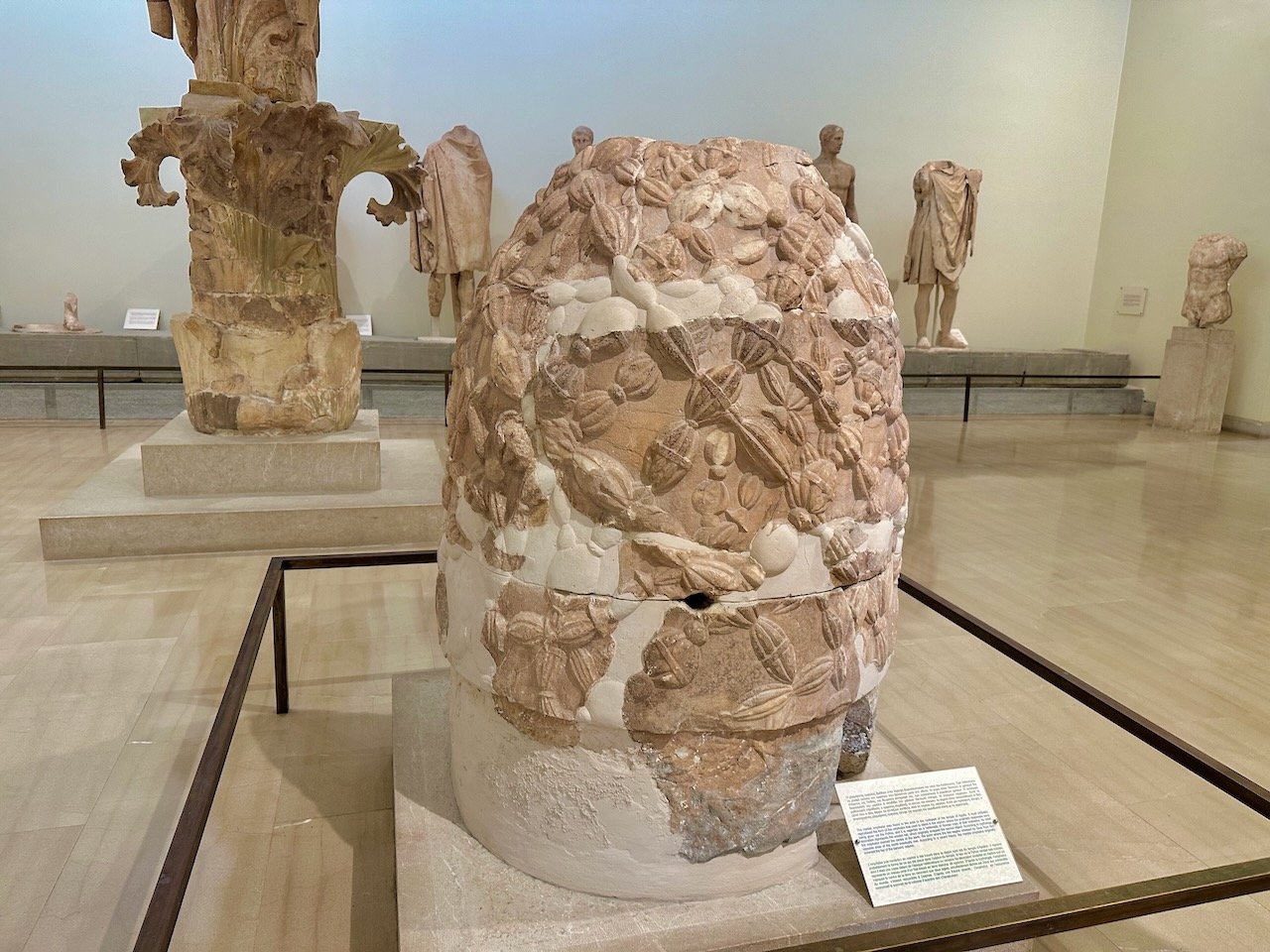
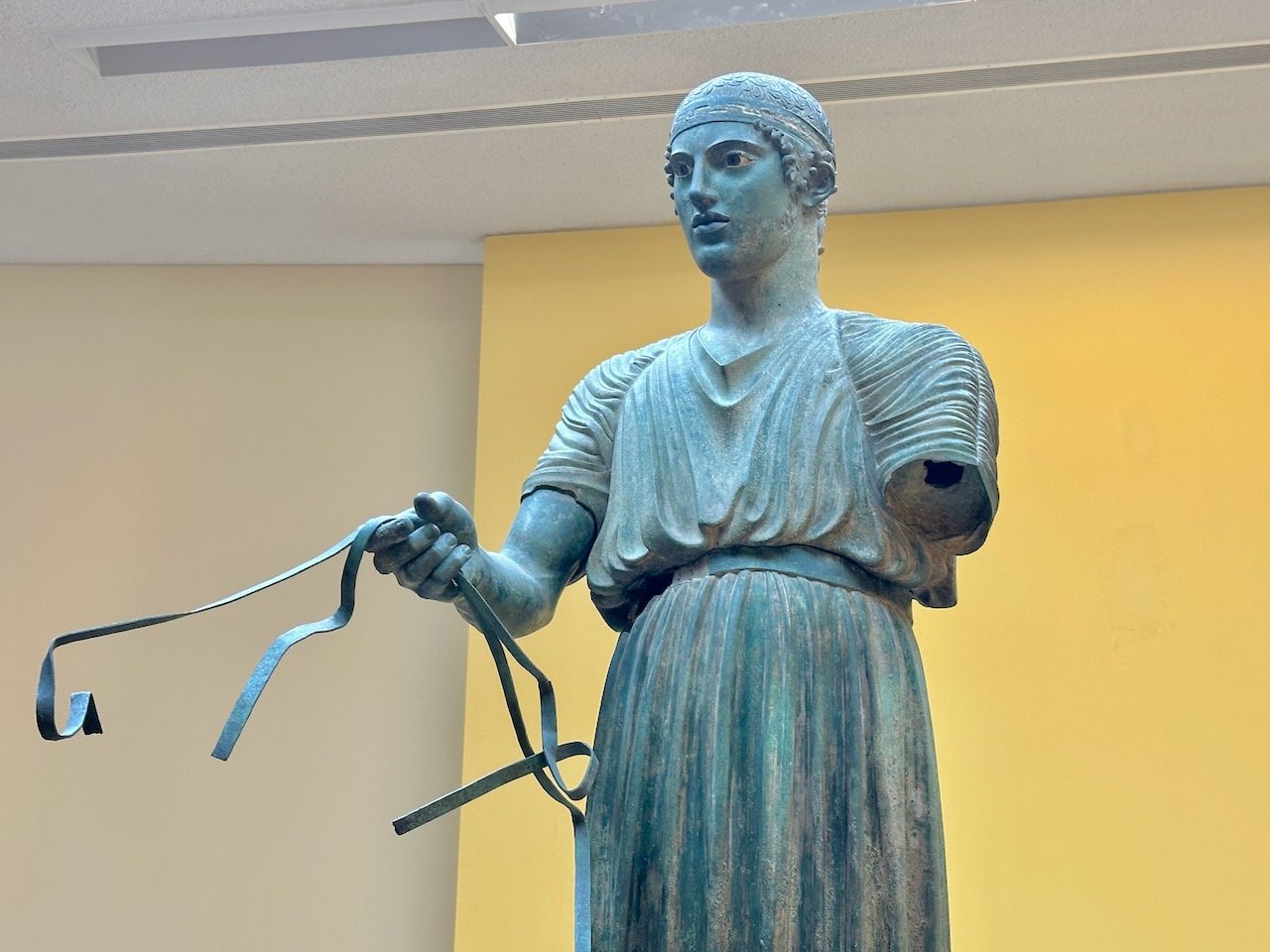
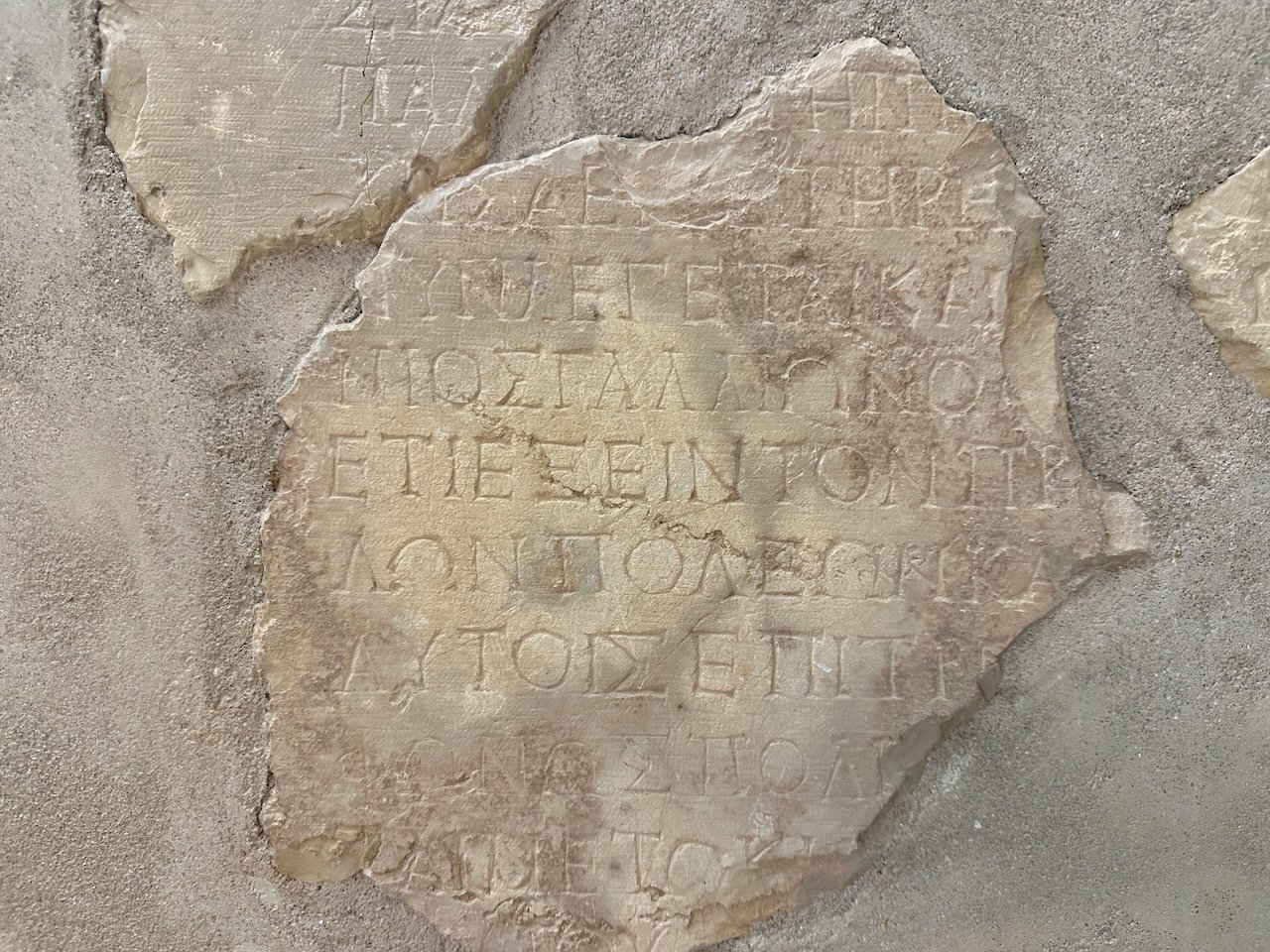
Finally, we walked through the museum. Many impressive artifacts are displayed here, including the famous bronze charioteer (dating to 476 BC), and the Gallio Inscription. This was written by Claudius who mentioned “my friend Gallio the proconsul of Achaia.” Luke mentions him as well as the one who listened to Paul at Corinth (Acts 18). Gallio served as the Proconsul between 51-52 AD. It was discovered here in 1905.
As we left the site, we saw the gymnasium, the Temple/Sanctuary of Athena (the Tholos, a unique rounded structure) below us amidst the ruins.
Athens
Following the visit of this incredible classic Greek site, we drove to Athens. We arrived about 2.5 hours later. We checked into our hotel and enjoyed a late dinner together. After dinner, Many of us walked to Constitution Square to see the changing of the guard at the Tomb of the Unknown Soldiers.
Day 6 – Sunday: September 20: Corinth, Mycenae, Cenchreae, Athens