Day 7 – Friday, October 16: Masada, Ein Gedi, Qumran, Wilderness of Judah – Wadi Qelt, Jerusalem, Western Wall
We left the hotel just shy of 8 a.m. this morning following breakfast. Today was “desert day” here in the Judean Desert. The weather was actually overcast and hazy (once again) most of the day (unique for the Dead Sea area), with breaks of sun throughout the day. We read Psalm 18:1-2 as we left the hotel, focusing on the word the Hebrew word metzada (“fortress”).
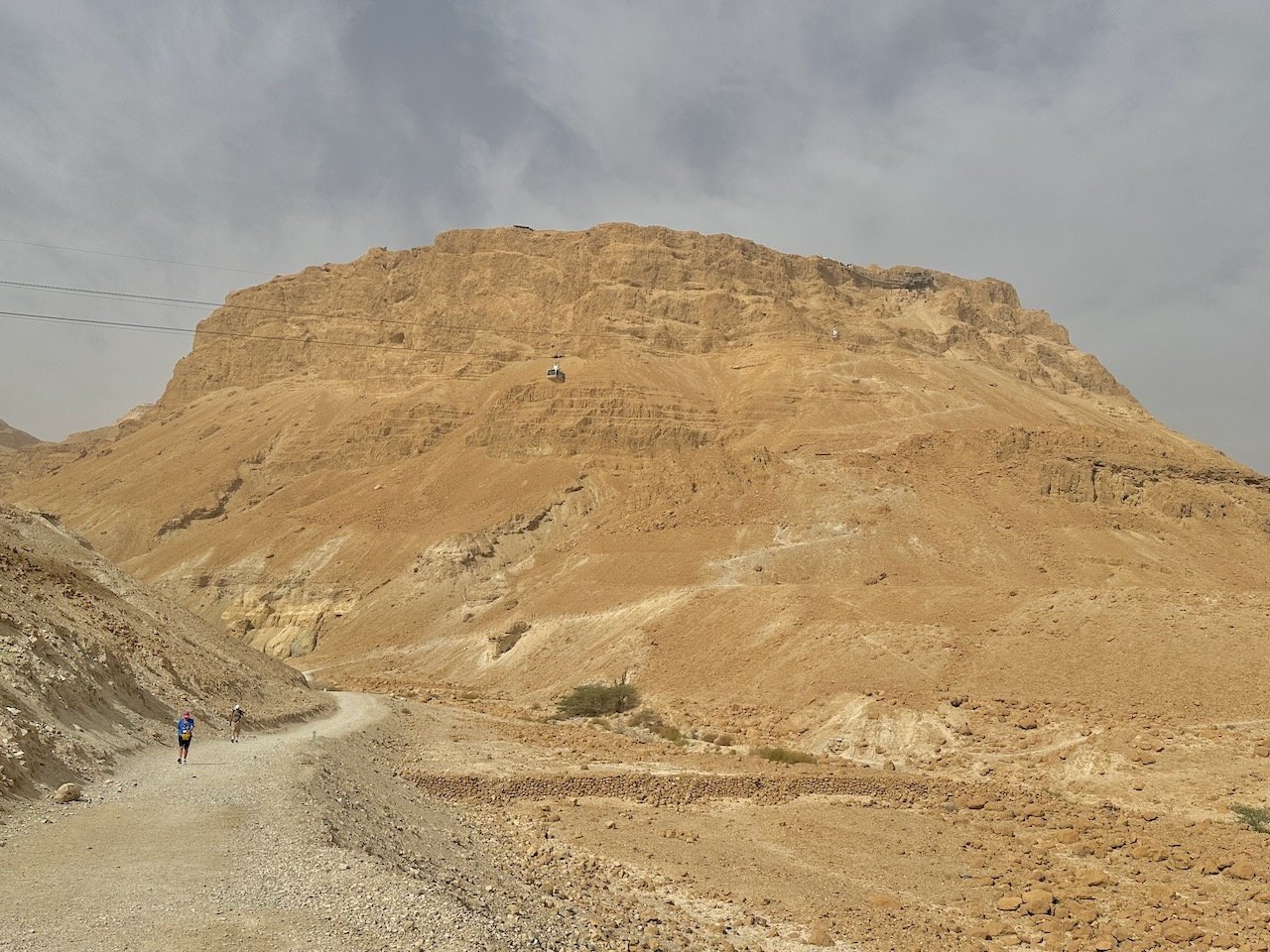
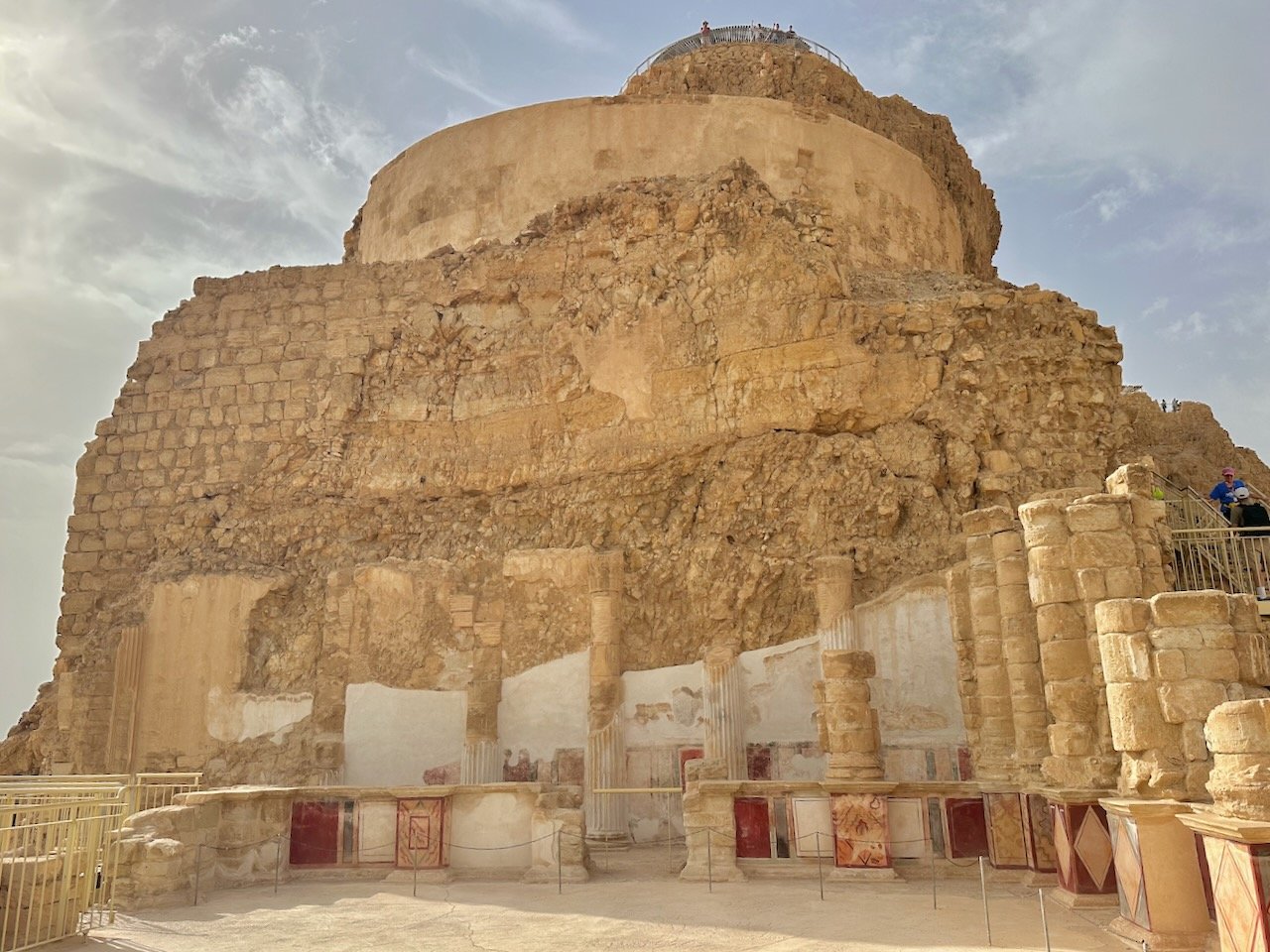
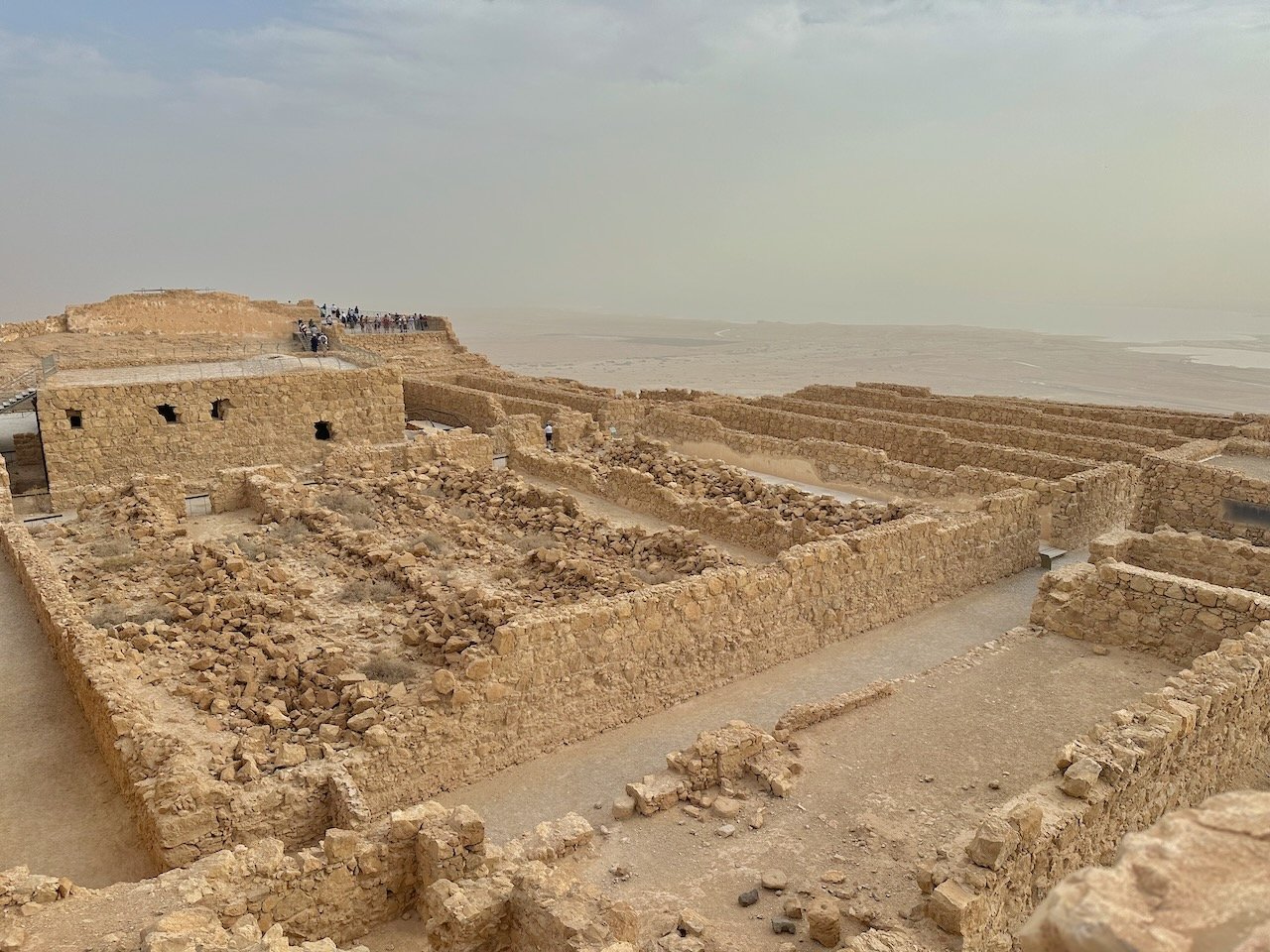
Masada
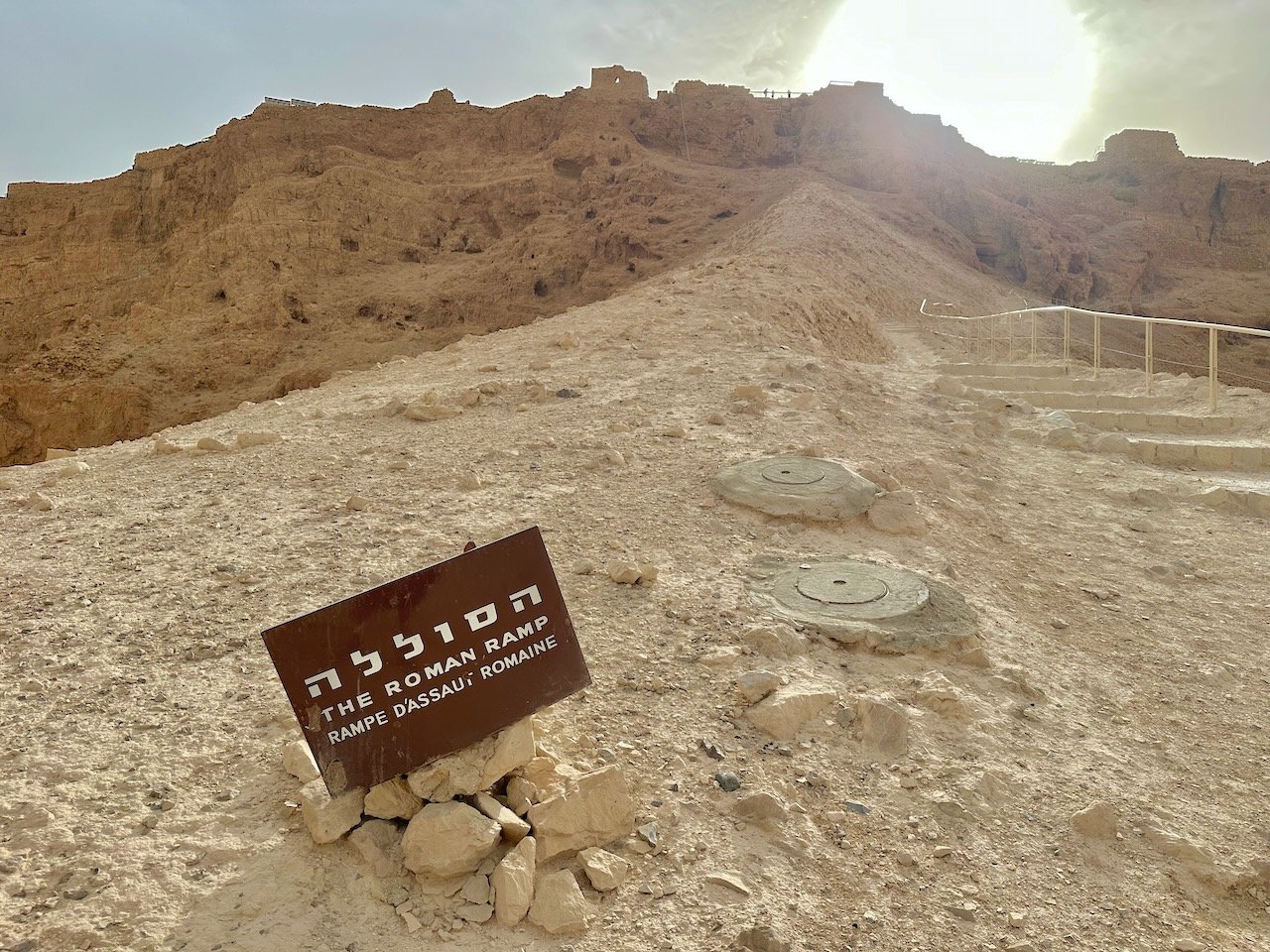
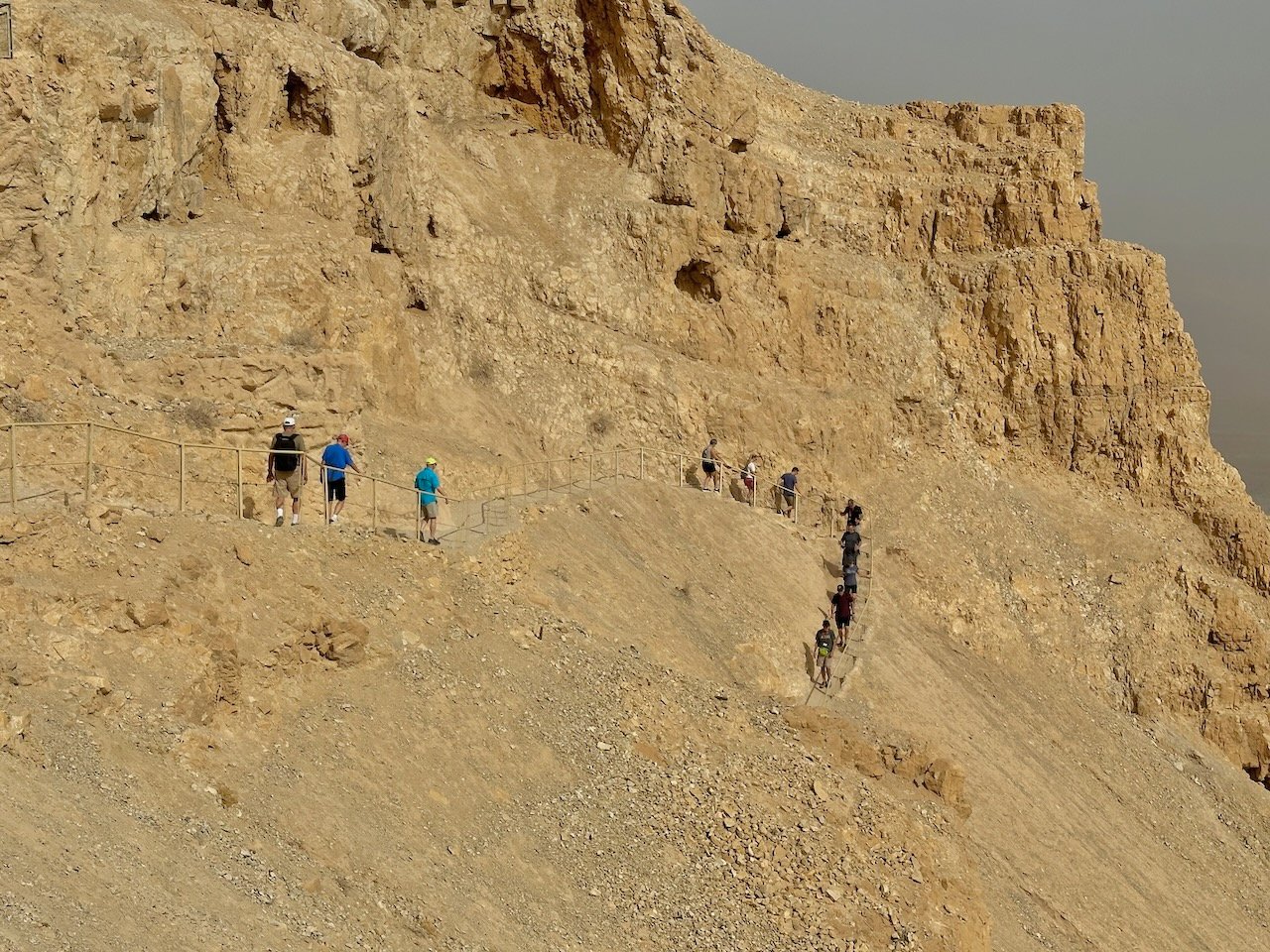
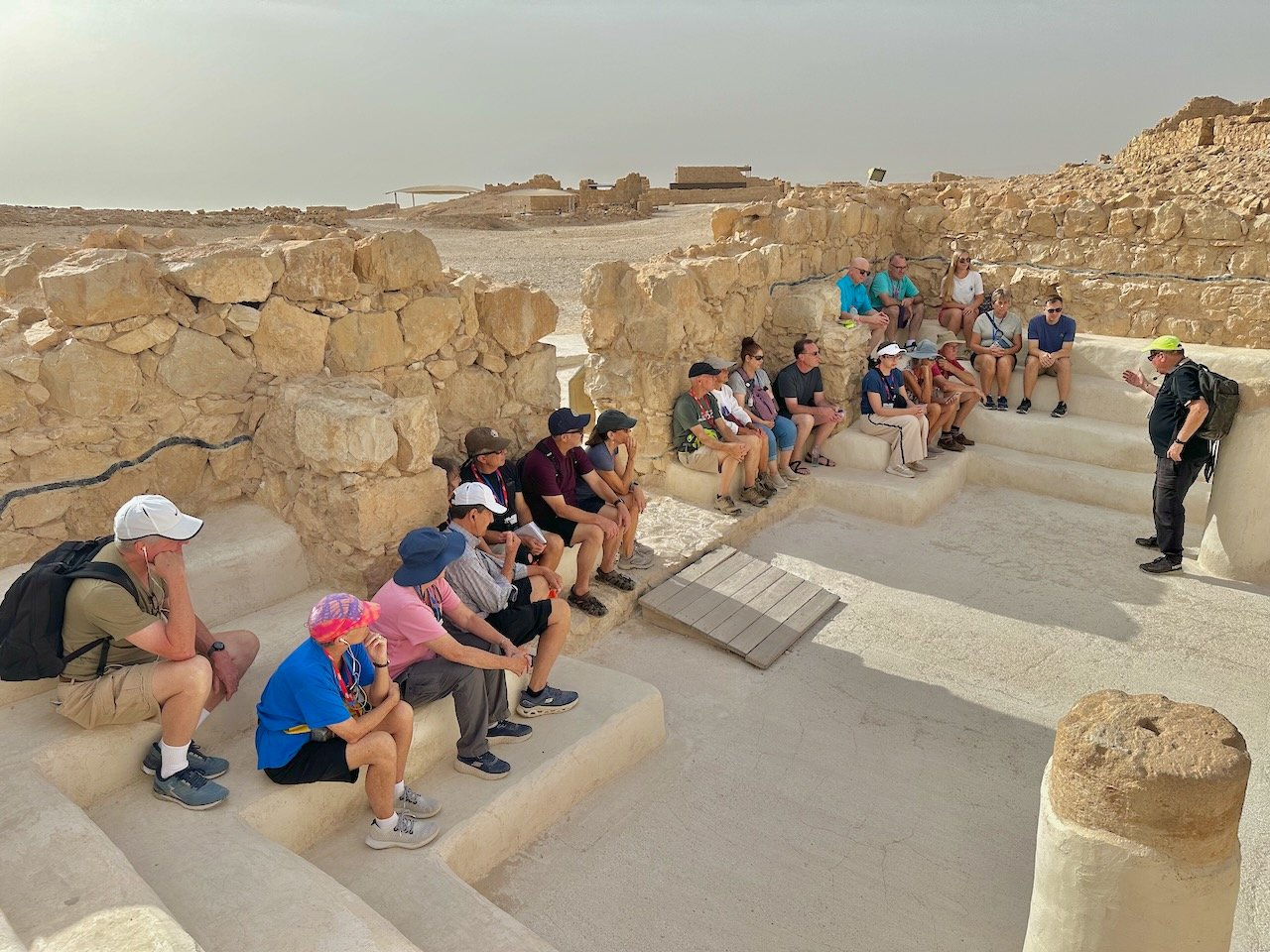
The site of Masada (metzada, in Hebrew) was our first site and only a 15 minute drive from our hotel in Ein Bokek. This was built in the early 30s BC as a palace-fortress by Herod the Great. We took the cable car to the top and began seeing the ruins from the 1st century. We saw huge cisterns, the western and northern palaces, the Roman Ramp, the synagogue, and the bathhouse. In 70 AD, this was the location where 967 Jews (according to Joseph’s) found refuge from the Romans following the destruction of the Temple. The holdout lasted about three years until all by five of these Jews (a few women and children) took their own lives. It is a story of bravery and courage! A good number in the group walked down the Snake Path. It took a little over 35 minutes.
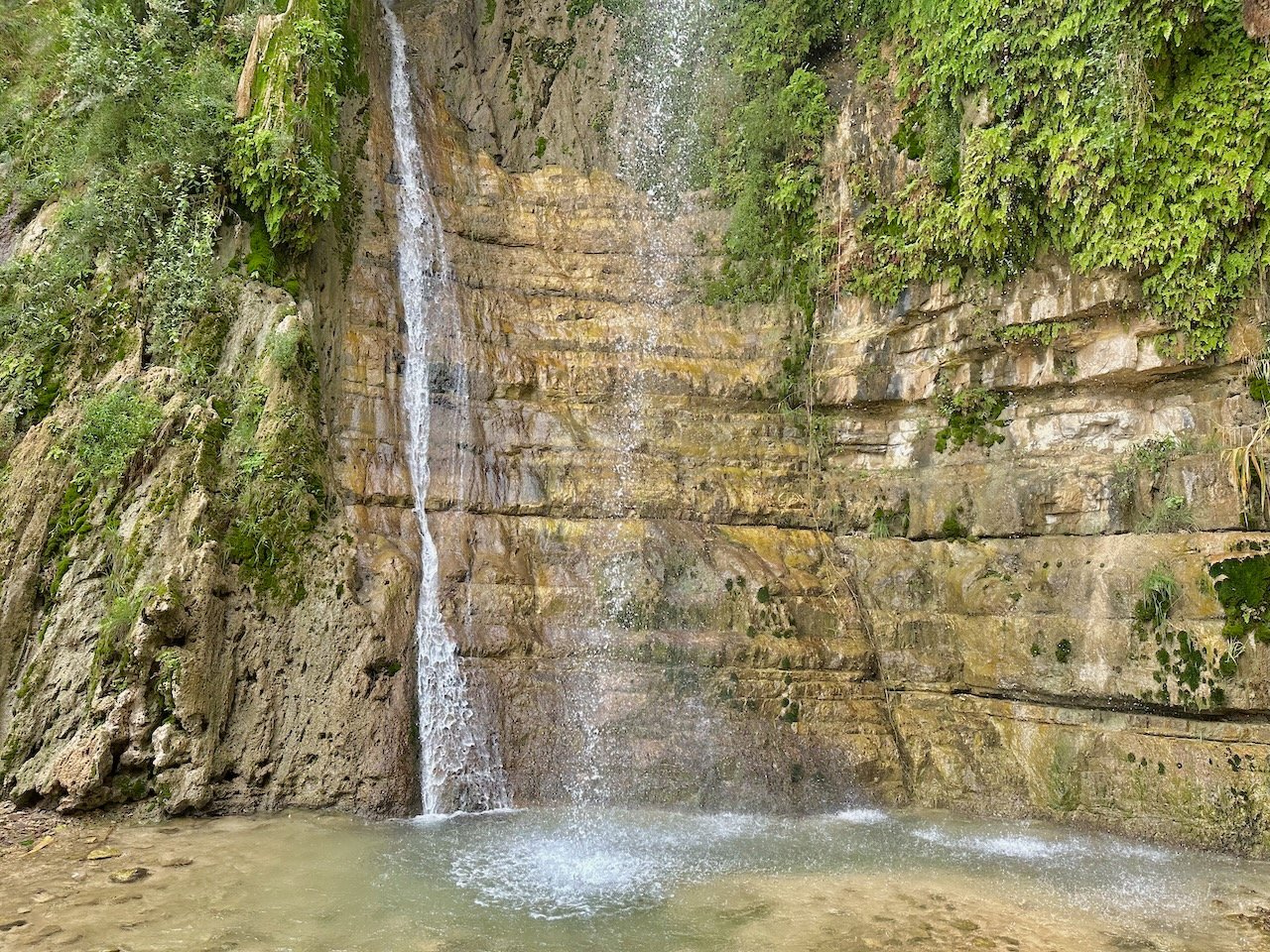
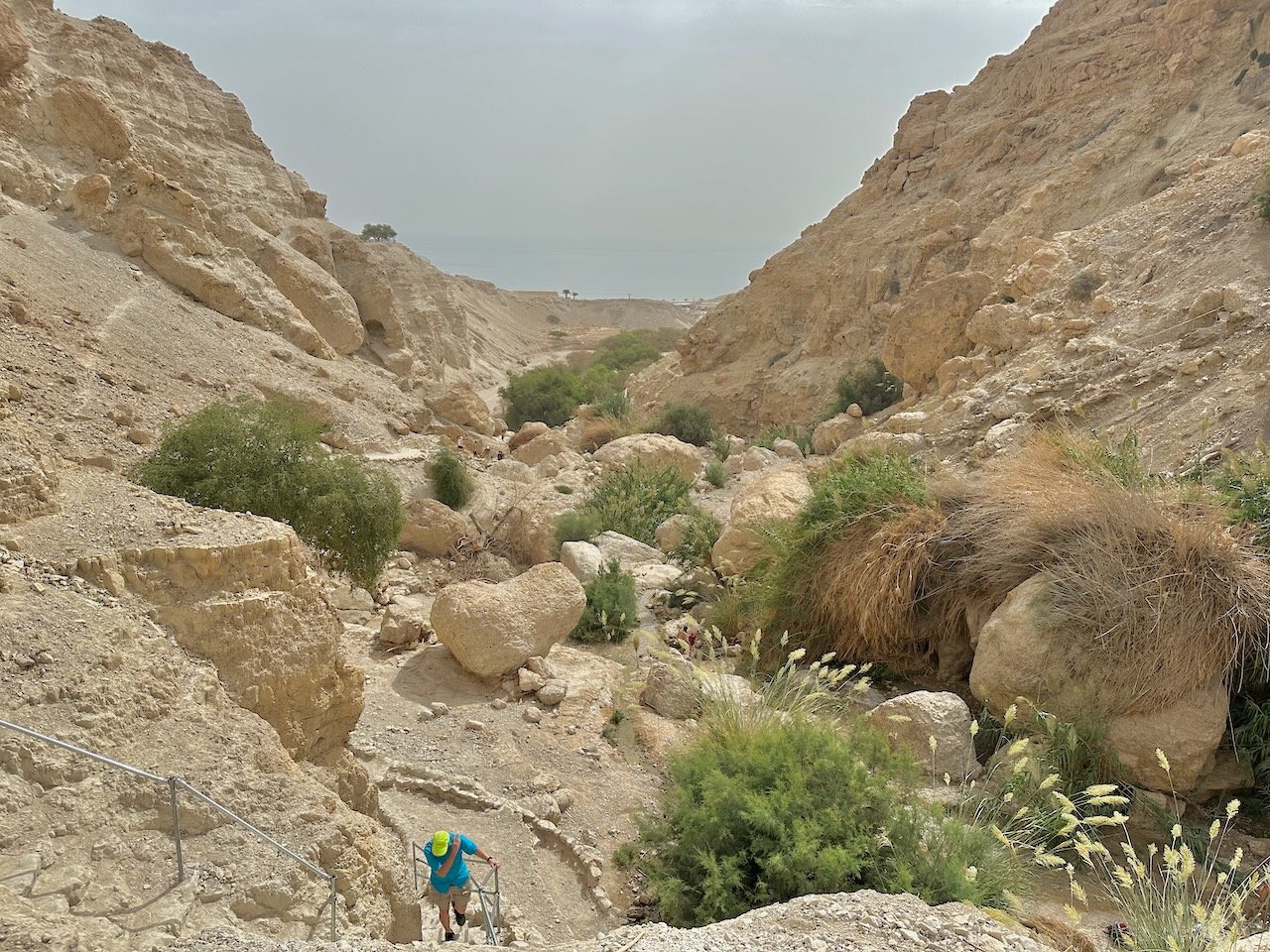
Ein Gedi
From here we drove about 20 minutes north of Masada to get to Ein Gedi, one of only a few oasis here in the edge of the Judean Desert. We read from Song of Songs 1, 2 Chronicles 20 (the “Ascent of Ziz”) and 1 Samuel 24 (David hid from Saul here). Since the flash flood last spring causing the trail to be unsafe, we could only walk back to the first water falls. It was still beautiful to see this and the canyon beyond.
Qumran
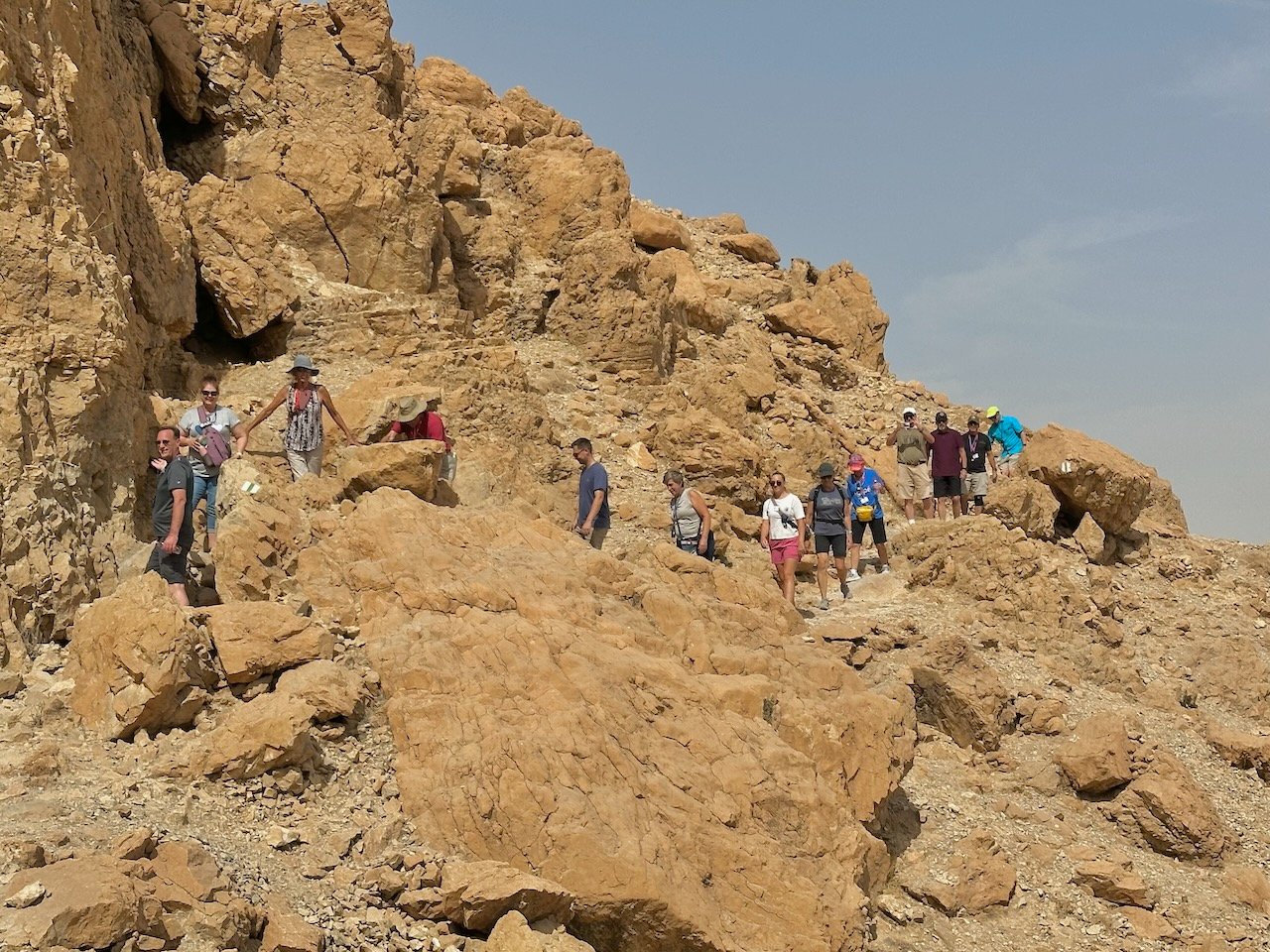
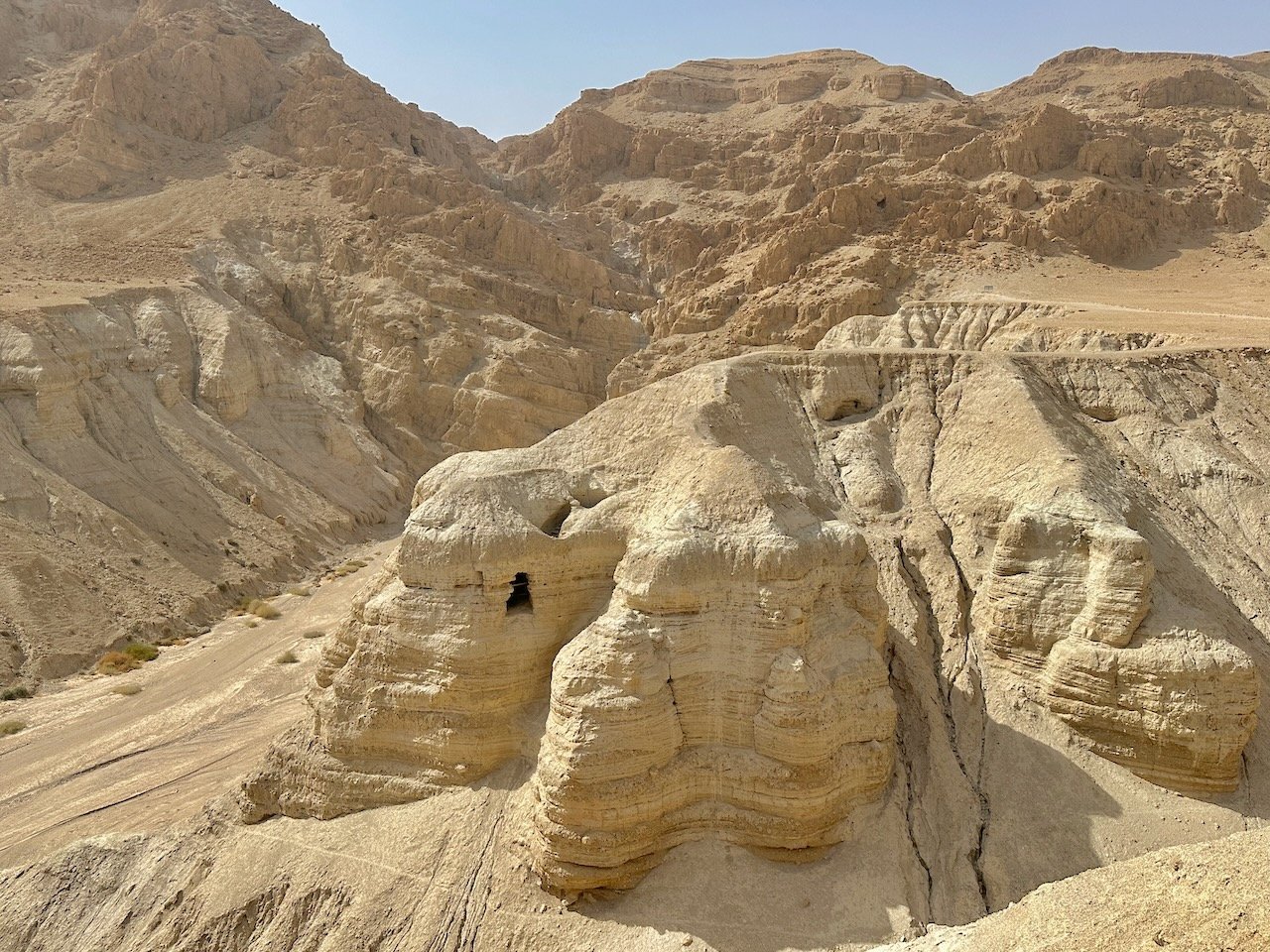
Qumran is the most important site in Israel because of what was discovered here! When we arrived, we walked directly to the cliff area of the desert to get a glimpse of Cave 6 (one of 12 caves in which fragments of ancient scrolls were discovered). We also saw the beginning of the aqueduct system that brought rain/flood water into the site.
It was here at Qumran where the Dead Sea Scrolls were found! The discovery began in 1947, while the excavation took place through 1956. We walked through the limited ruins where a small community of Essenes lived (or retreated here from Jerusalem, as a new theory suggests). To date, about 930 scrolls and fragments of texts scrolls have been discovered. The scrolls/texts date primarily from the late 3rd century BC – 1st century AD. At the small archaeological site we saw cisterns, ritual baths (mikvot), and the scriptorium. We read from the Essenes’ “Nine Beatitudes” text (“Blessed are you …” it sounds very similar to Jesus’ “Nine Beatitudes.” In front of “Cave 4” (where the majority of texts were found), we read from “Psalm 151,” and Psalm 19. We celebrated the perseverance of God’s Word! We were invited to take joy in God’s Word.
“It was ‘Desert Day’ today as we explored Masada, Ein Gedi, Qumran, and the Wadi Qelt! It was another day of connecting with the land and the Bible! We did a lot of walking today (some of it optional). We ended the day with a walk to the Western Wall!”
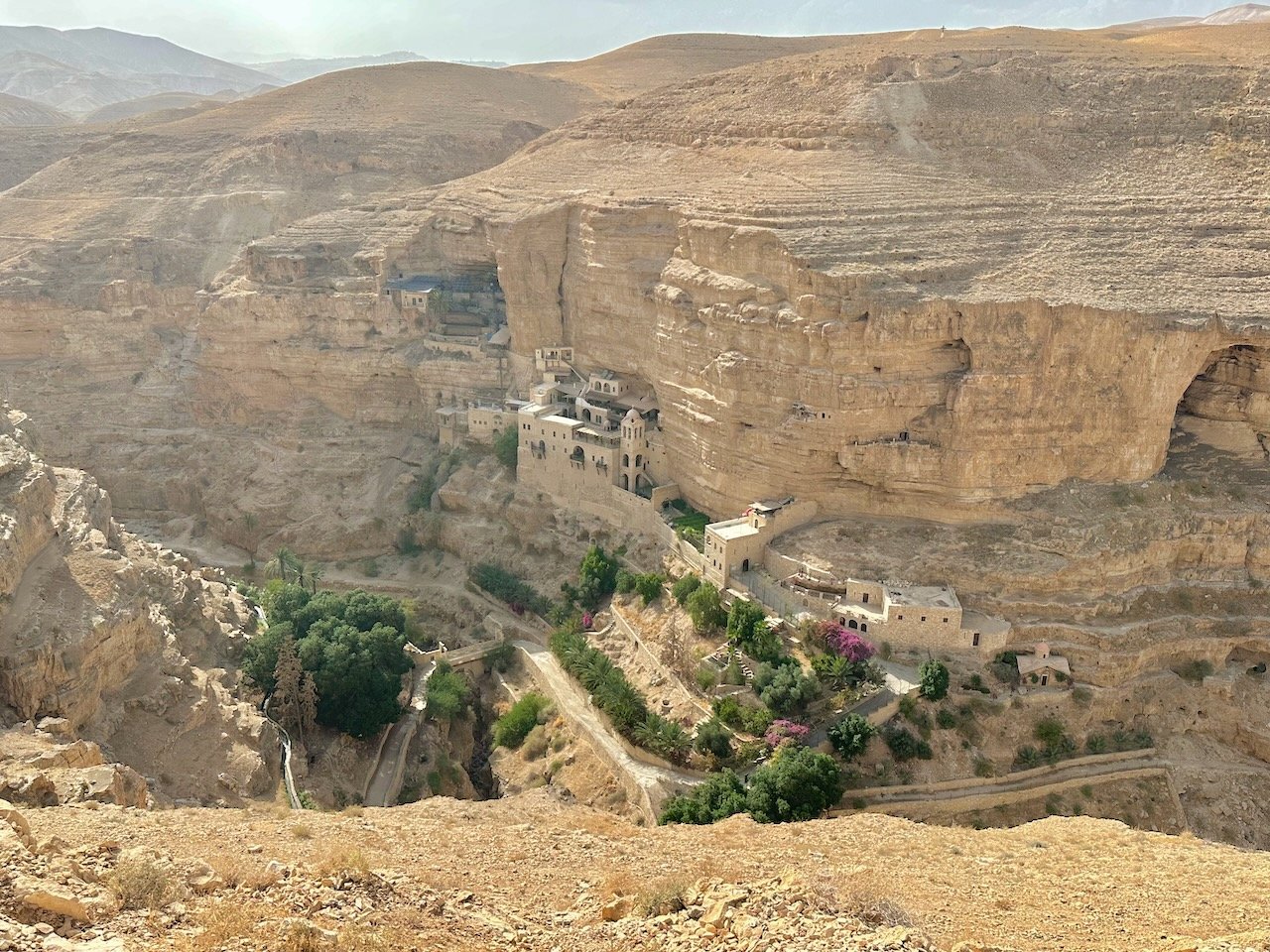
Judean Desert/Wadi Qelt/St. George
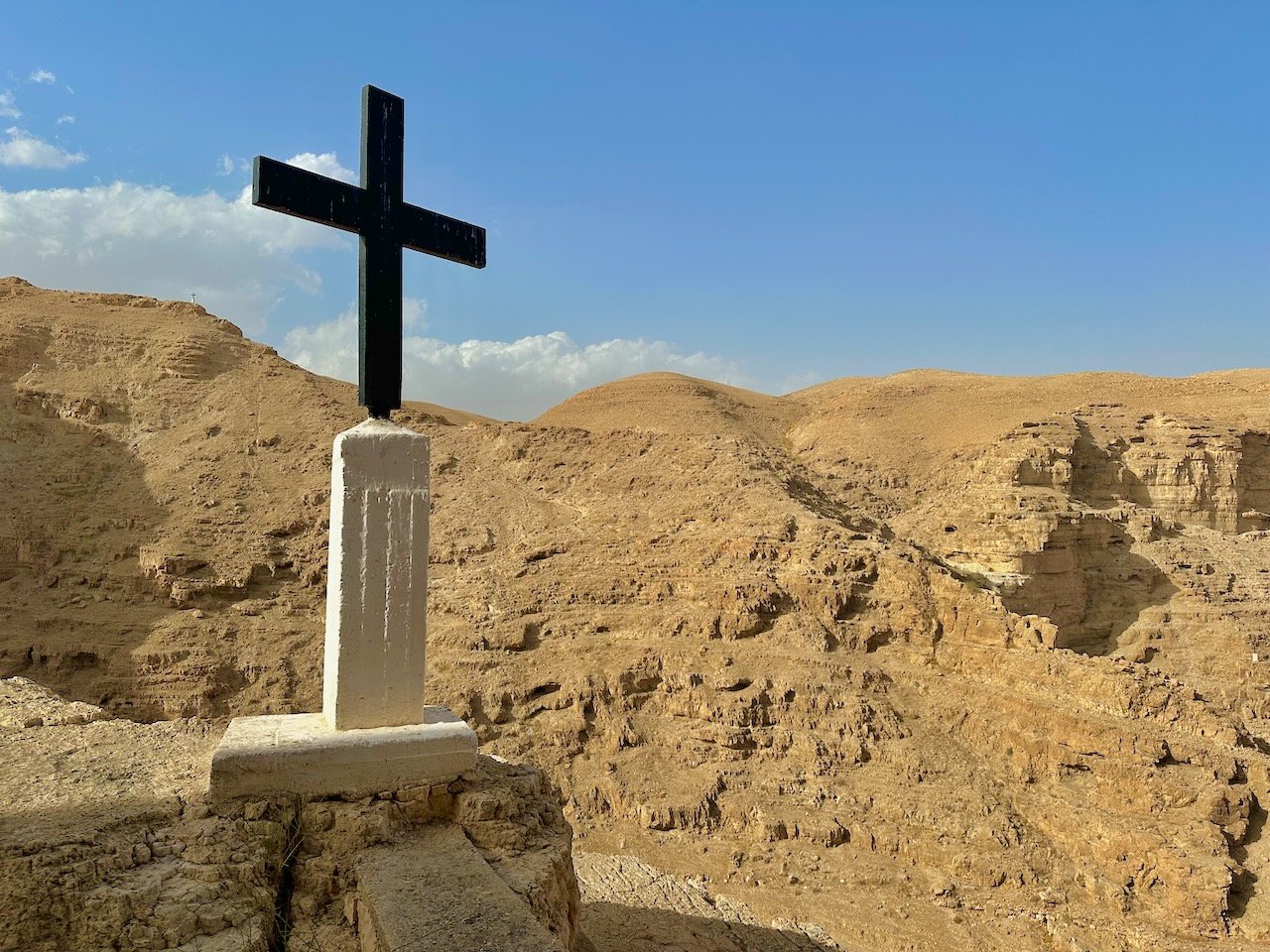
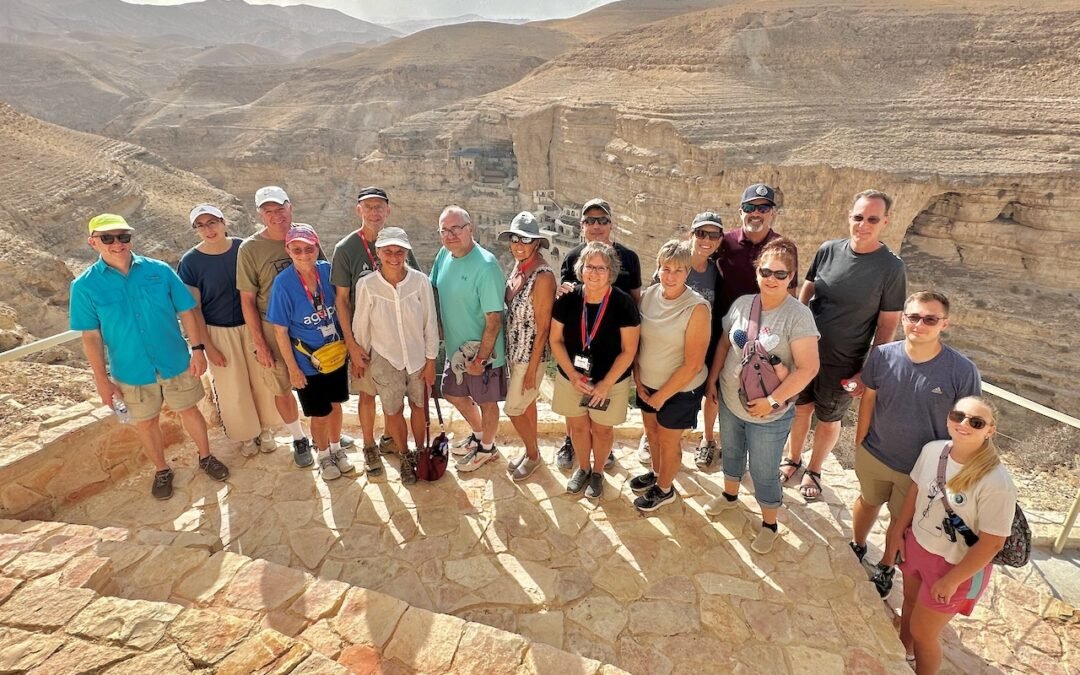
On our way to Jerusalem, we enjoyed an extra and special stop overlooking the Judean Desert’s most-scenic area, Wadi Qelt! First, we got special permission (from Shlomo’s nephew) to drive to an amazing area overlooking the St. George Monastery built literally into the side of the cliff. This monastery was first built in the Byzantine Period and monks still live here today! Then we heard the voice of “Isaiah” (dressed in his garment and beard HA) as he shared the words given to him by God as recorded in Isaiah 40. Then Shlomo sang Psalm 23 for us, a fitting setting for this psalm. The experience here was special. Then most in the group walked down (and back up!) to the bottom of the canyon, a descent of about 500 feet. While the hike uphill was challenging, it was worth the effort.
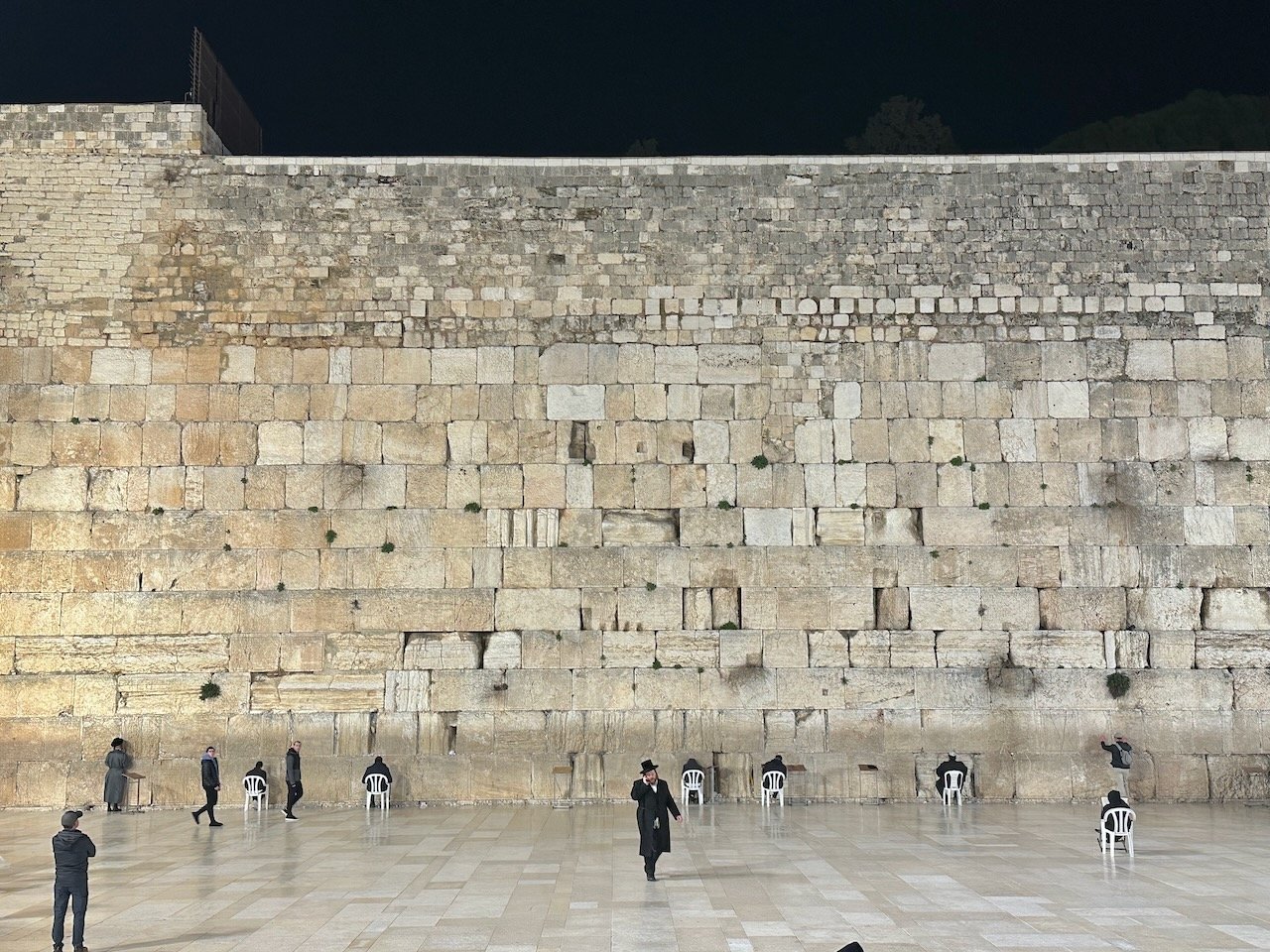
Jerusalem/Western Wall
From here we continued our drive as we ascended to Jerusalem. We entered this magnificent city and saw our first glimpse of the Old City. We checked into our hotel and enjoyed a wonderful Shabbat dinner. Following dinner, almost everyone walked to the Western Wall, the most holy place for Jews today! We are looking forward to our first full day in Jerusalem tomorrow, Israel’s capital!
Day 8 – Saturday, October 17: Mt. of Olives, Garden of Gethsemane, Pool of Bethesda, St. Anne’s Church, Herodium, Bethlehem