Day 4 – Tuesday, November 10: Gamla, Katzrin, Syrian Border, Caesarea Philippi, Dan, Misgav Am/Lebanon Border
Today we traveled north to the Golan Heights. It was another perfect weather day, with cooler morning temps, incredible visibilities, and high afternoon temps near 70. Everywhere we went today we had every site to ourselves. We left the hotel at 7:35. We are all saddened to hear the doctor’s report that Ellen fractured two bones in her ankle last night on our walk to the water’s edge. She and David will be flying home later tonight, with surgery scheduled as soon as possible. We will miss them and we pray for their safe arrival back home tomorrow.
Gamla
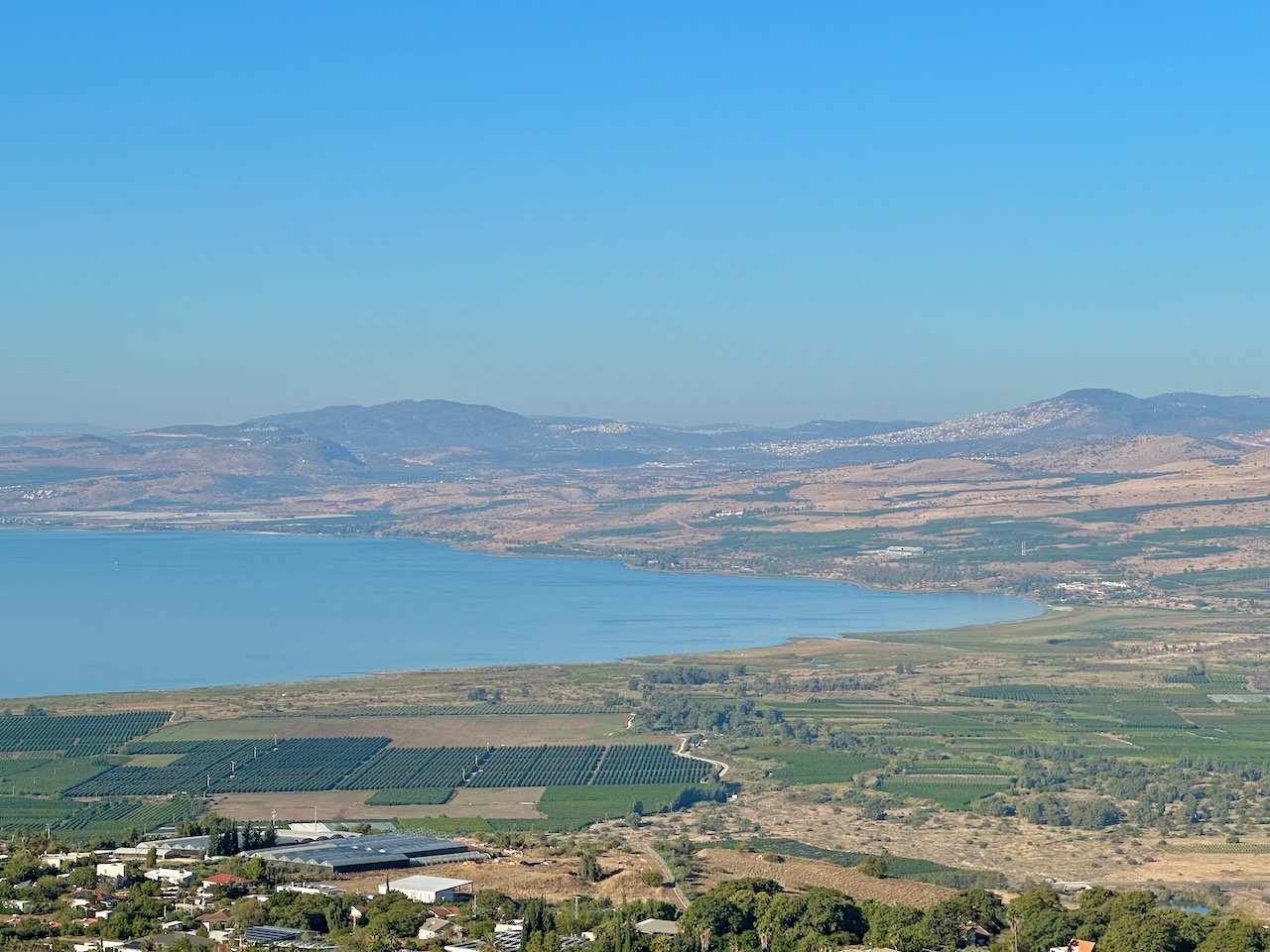
We began the day by driving around the northern part of the lake, passing by Bethsaida (the home of Peter, Andrew, and Philip, John 1) on there way. We then began our ascent to the Golan Heights. As we climbed we stopped briefly to look down to the Plain of Bethsaida where the Feeding of the 5,000 took place (Luke 9). The view was was remarkable! We could see Mt. Hermon to the north, the mountain of Lebanon, Mt. Meron and the Upper Galilee, the entire western shoreline of the lake, and Mt. Tabor in the Jezreel Valley! We also recalled the story of Mark 8 (the Bethsaida blind man healed by Jesus)
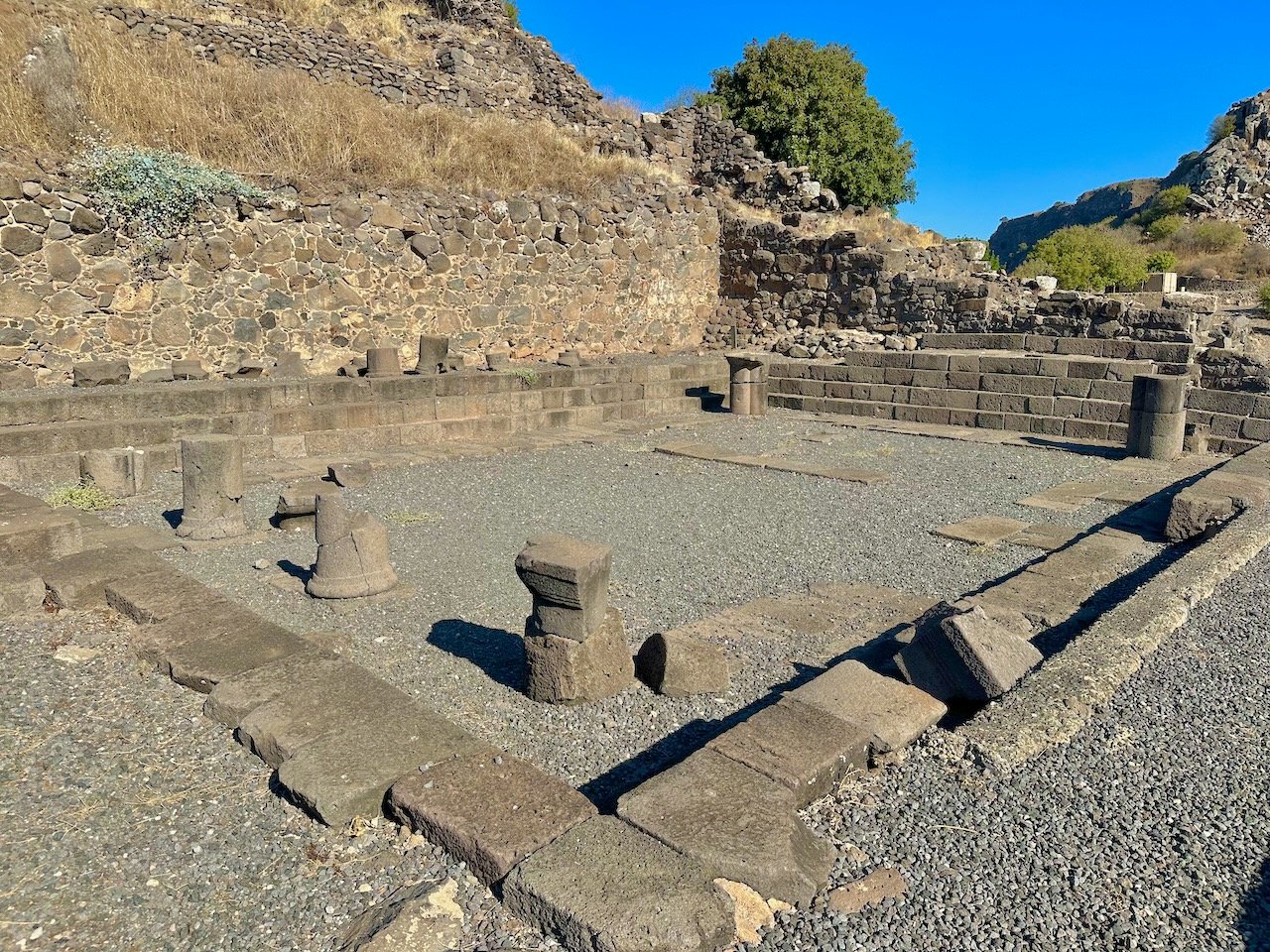
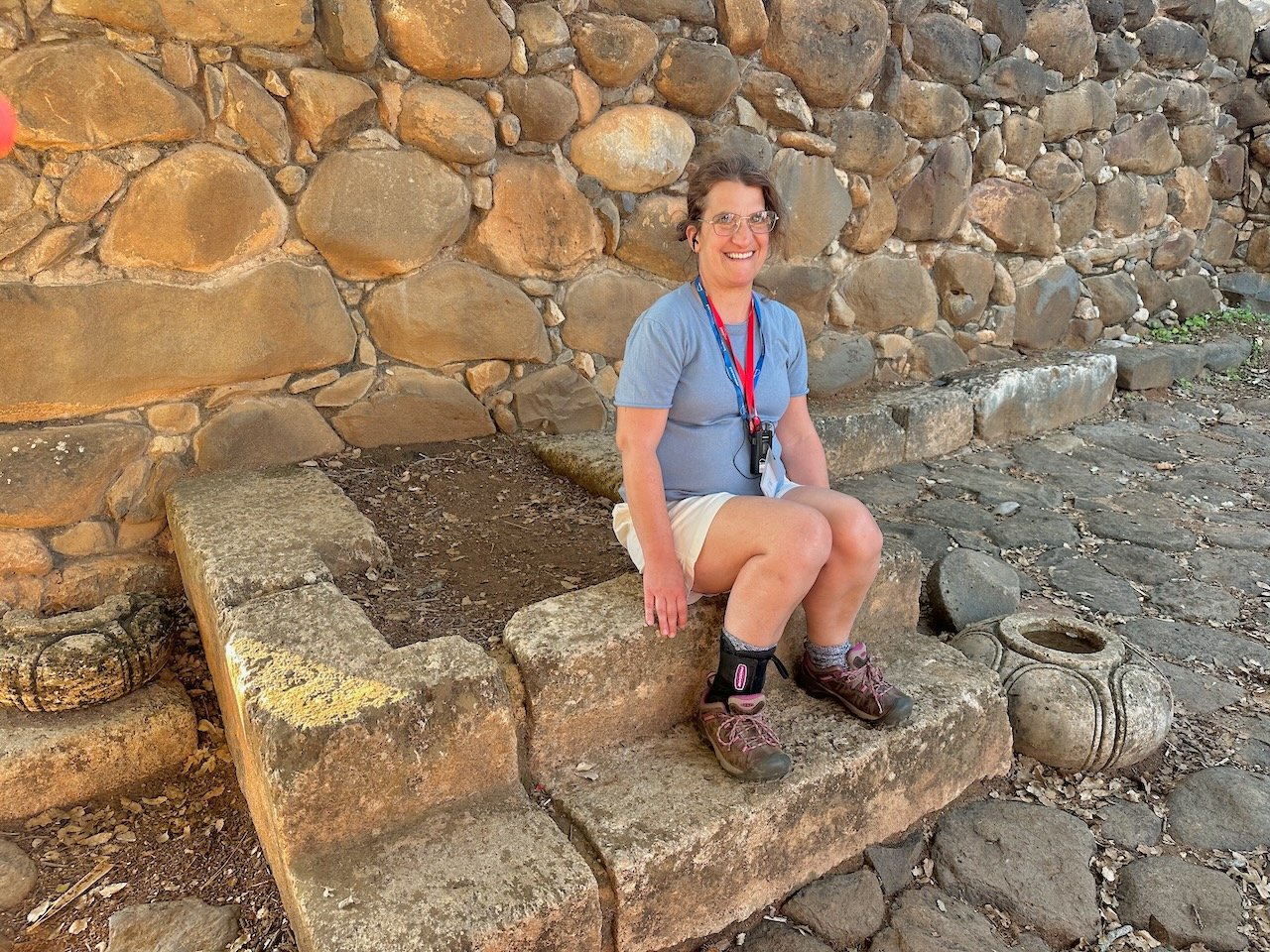
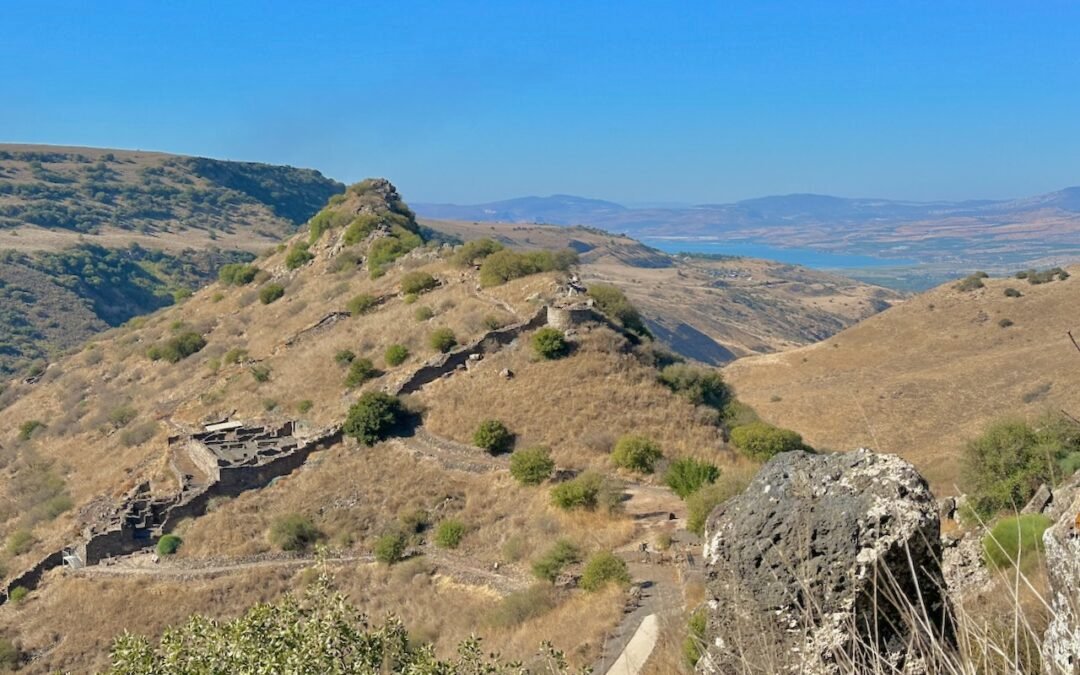
Once we arrived at Gamla, we walked to the overlook of this camel-hump shaped city. The great visibility still allowed us to clearly see the northern end of the lake! Many in the group hiked down the steep trail to the 1st century synagogue.There is a high probability that Jesus taught here (Matthew 4 & 9). This was a city that was destroyed in 67 AD in the 1st Revolt against the Romans.
Katzrin
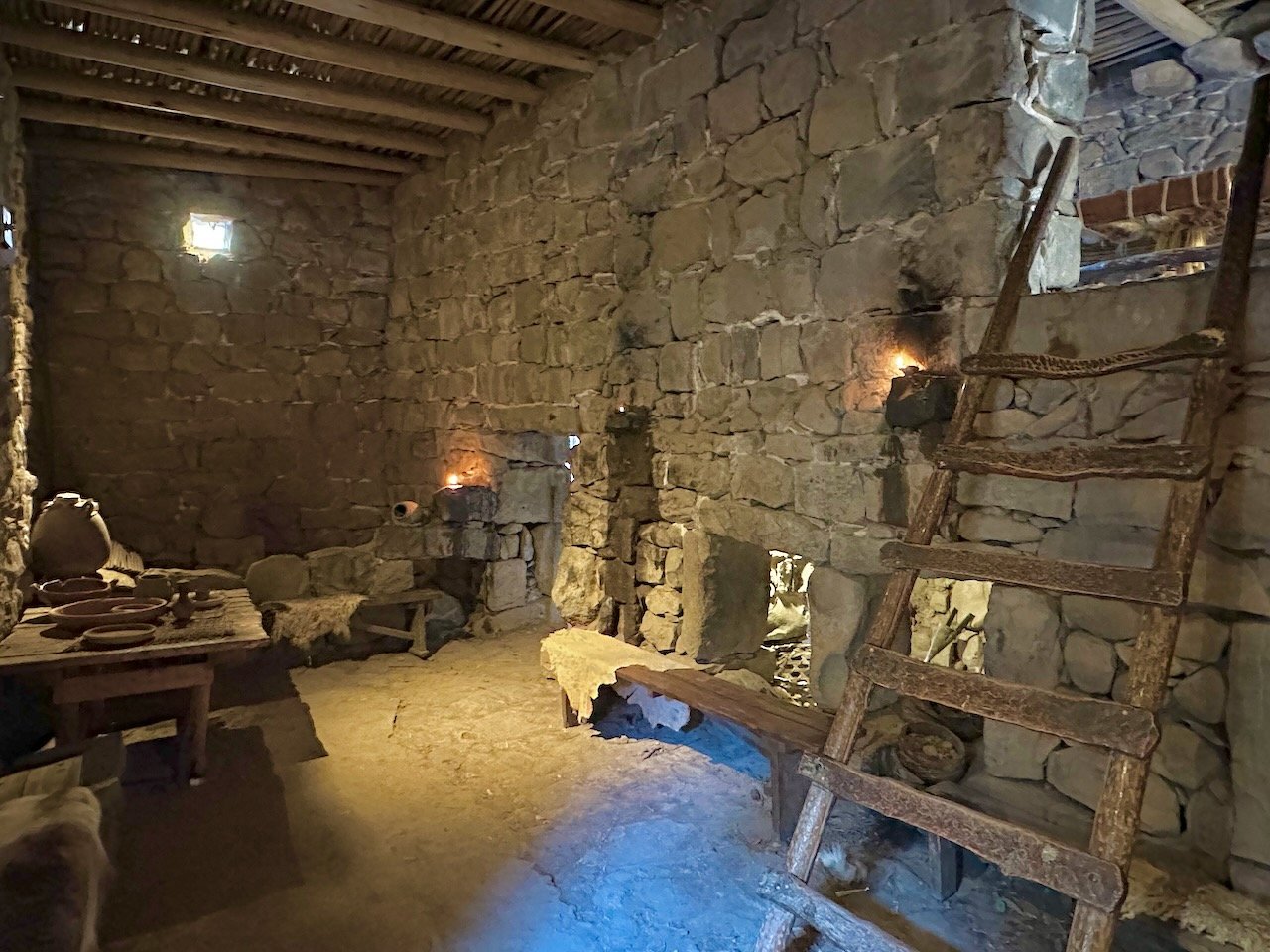
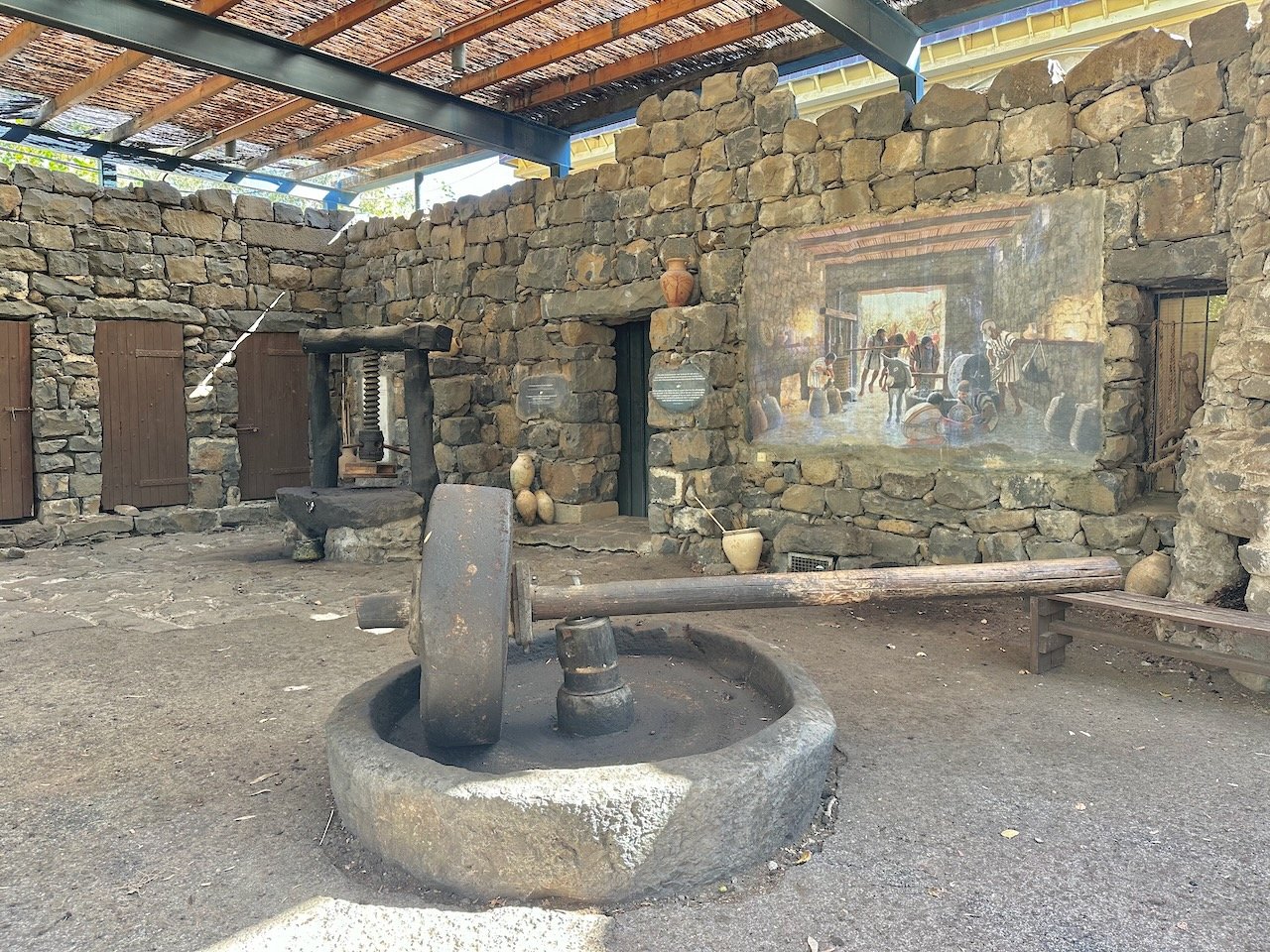
Next, we drove further north to Katzrin, the largest city in the Golan Heights. We visited the Talmudic Village that is here (from about the 3rd-7th centuries AD). We saw good examples of olive presses, the synagogue, and other house structures. We then gathered in a completely-restored stone house where we read from Mark 2. We could see the story unfolding before our eyes! Jesus demonstrated His authority (s’mekah) in not only healing the man, but also forgiving His sins!
Syrian Border/Qunetra
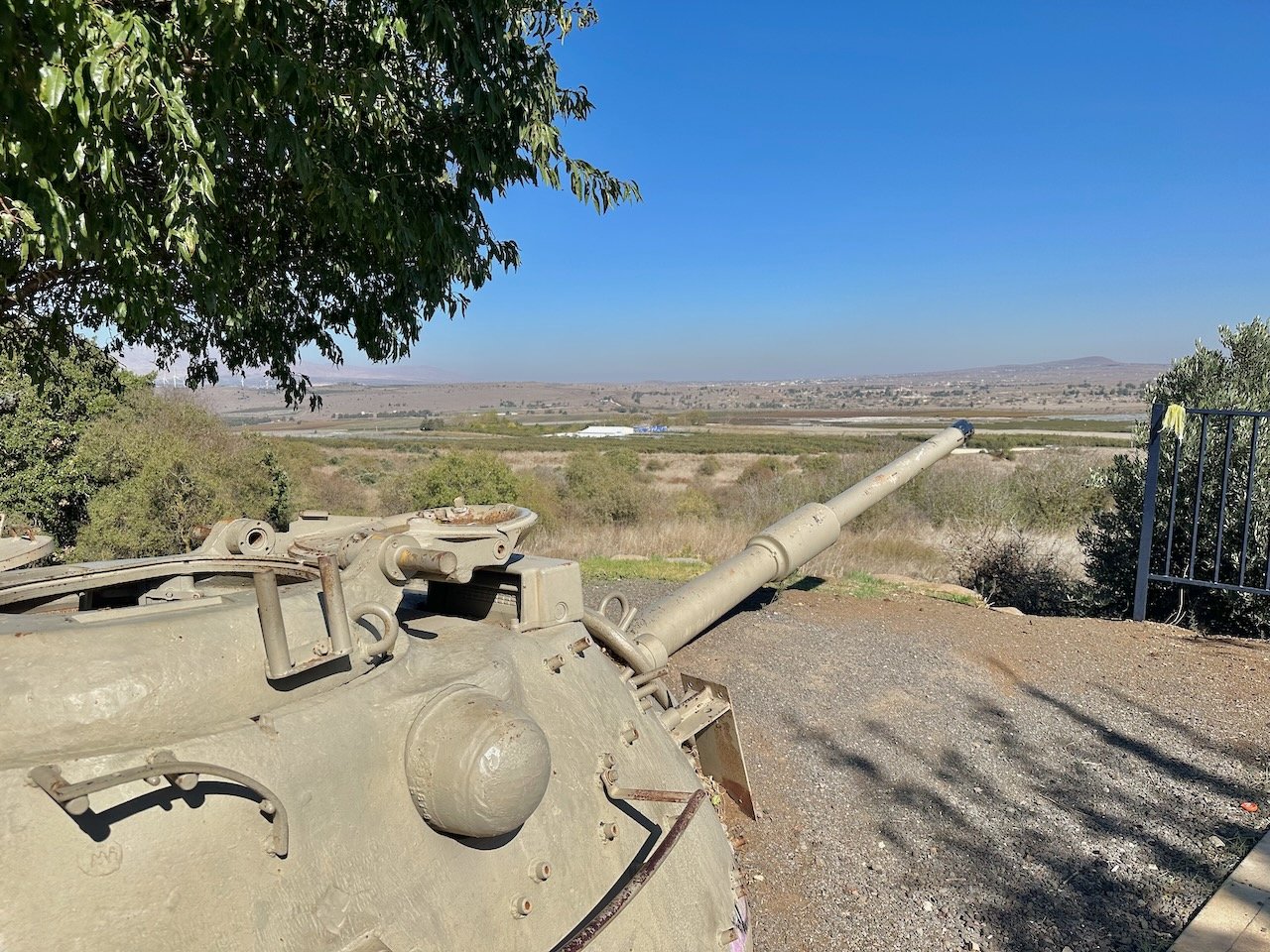
Next, we drove to the base of a IDF military establishment located on the border with Syria. Here, Shlomo shared with us some of the modern history between Israel and Syria (ie. 1967 and 1973 wars). We looked across to see Qunetra, once a Syrian town. Since the recent wars, Israel has maintained partial control of the areas across the border within Syria.
Caesarea Philippi/Banias
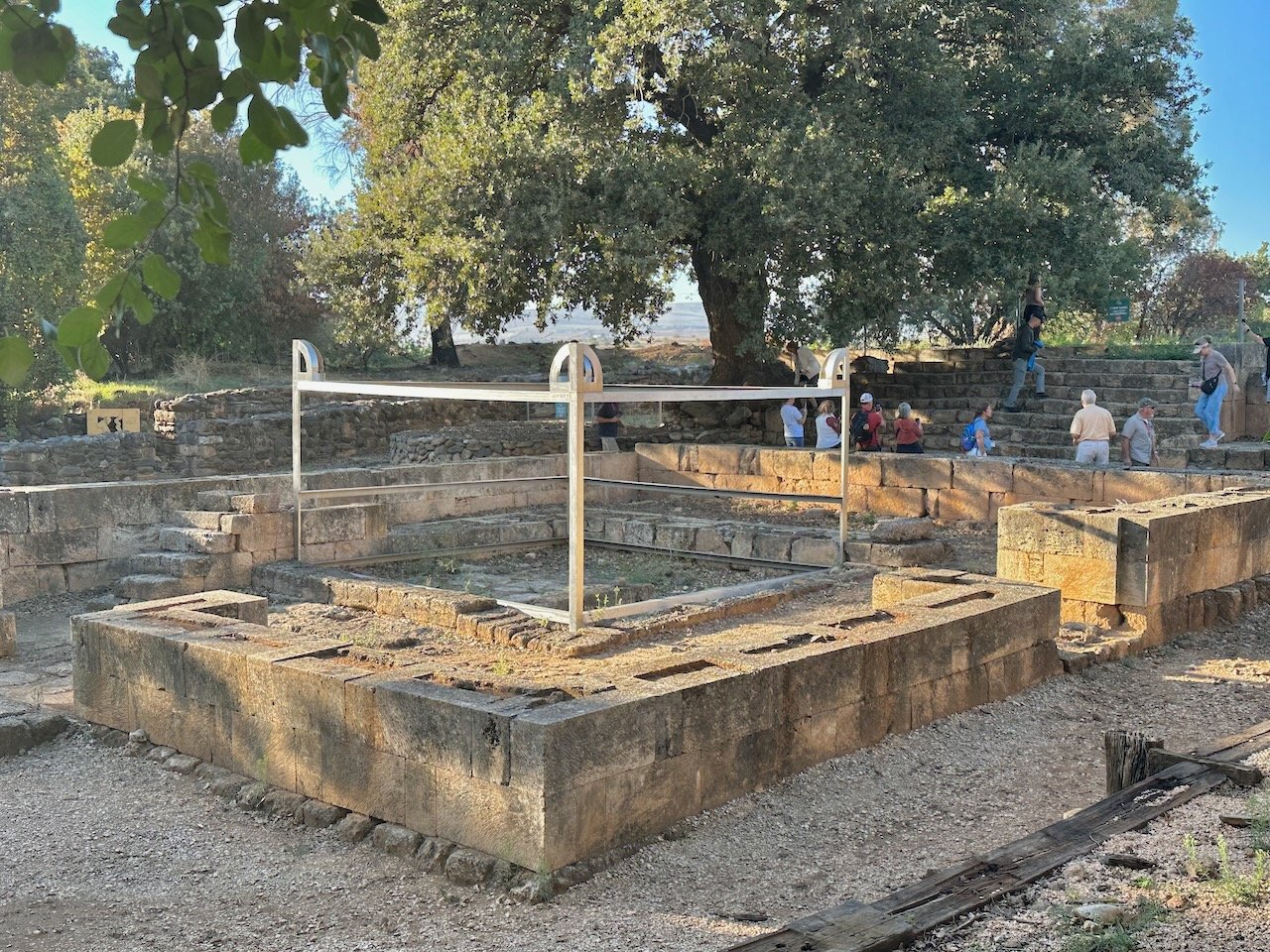
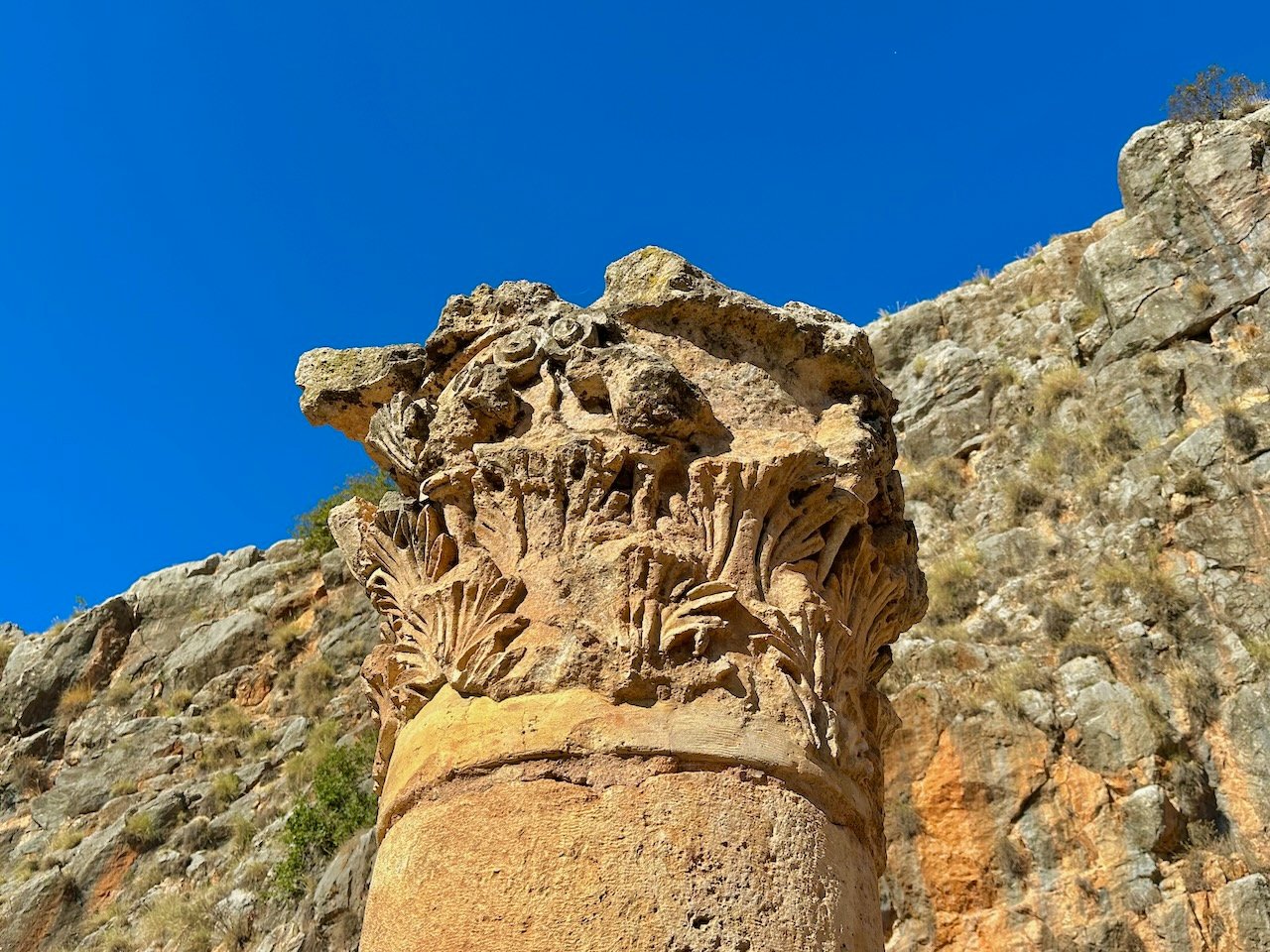
Driving through a few Druze towns and passing by the newly snow-capped mountain called Mt. Hermon, we then descended down off the Golan Heights to Caesarea Philippi. This was a very pagan city in the days of Jesus and through the Roman Period. The city enjoyed the waters of the Banias Spring, one of the three tributaries of the Jordan. We read from Matthew 16 where Jesus asked His disciples the “final exam” question, “Who do you say I am?” Among the ruins at the Grotto once stood the Temples of Augustus, Zeus/Jupiter, Nemesis, the Shrine of the Dancing Goats, and the niches dedicated to Pan, the promiscuous shepherding god of the Greeks and Romans. Jesus promised the unstoppable force and forward advancement of the kingdom (i.e. “and the Gates of Hades will not prevail…”) as the message of the kingdom would eventually reach even people living in Gentile cities! Six days later, Jesus was transfigured (perhaps somewhere on the lower slopes of Mt. Hermon (Matthew 17).
“The visibility was incredible today, allowing us to see far distances. The blue color of the sky and water of the Sea of Galilee was amazing. We spent the day in the Golan Heights, connecting once again all day long to the Bible!”
Dan Nature Preserve & Archaeological Site
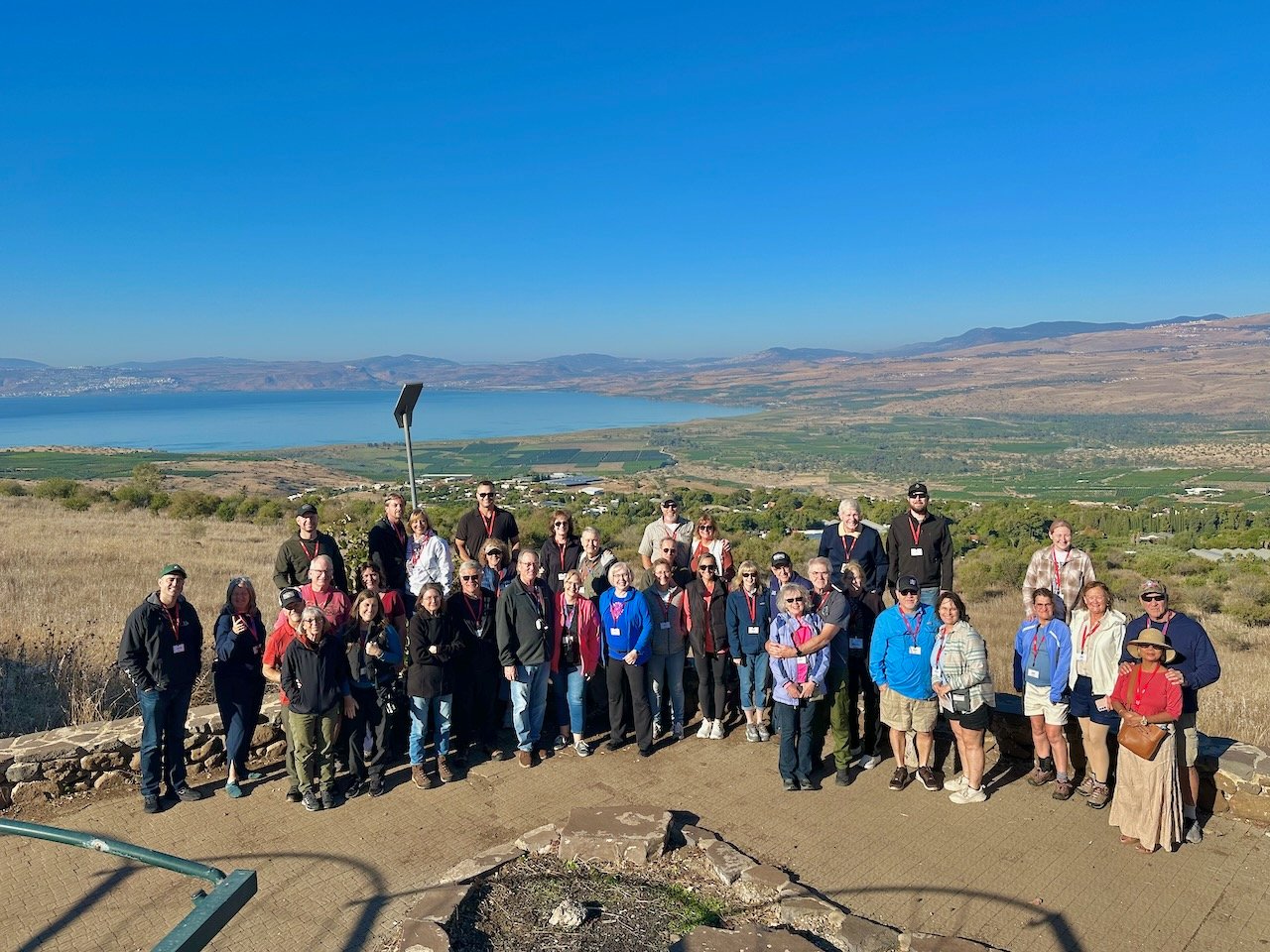
Nearby a short distance to the west is the Nature Preserve and archaeological site of Tel Dan. The Dan Spring served this ancient city originally called Laish. We walked along the river before the trail detoured us to another trail. This trail was very nice as it led us to the ruins to the cultic area of the altar and high place. We read from Judges 18 and 1 Kings 12 about the patterns of disobedience displayed here, starting with the Danites and continuing through Jereboam until Israel’s end in 722 BC. In the area of the cultic place, we looked into Lebanon, only a few miles to the north.
We continued our walk to the mud-brick Middle Bronze gate. However, this gate was probably used only as a ceremonial gate and dates seemingly too late (1700 BC) to be a gate used by Abraham (even though the sign mentions Genesis 14:14). Before leaving the site, we saw the impressive Iron Age/9th century BC Israelite wall and gate complex where the famous Dan Inscription was found in July, 1993.
Misgav Am / Lebanon Border
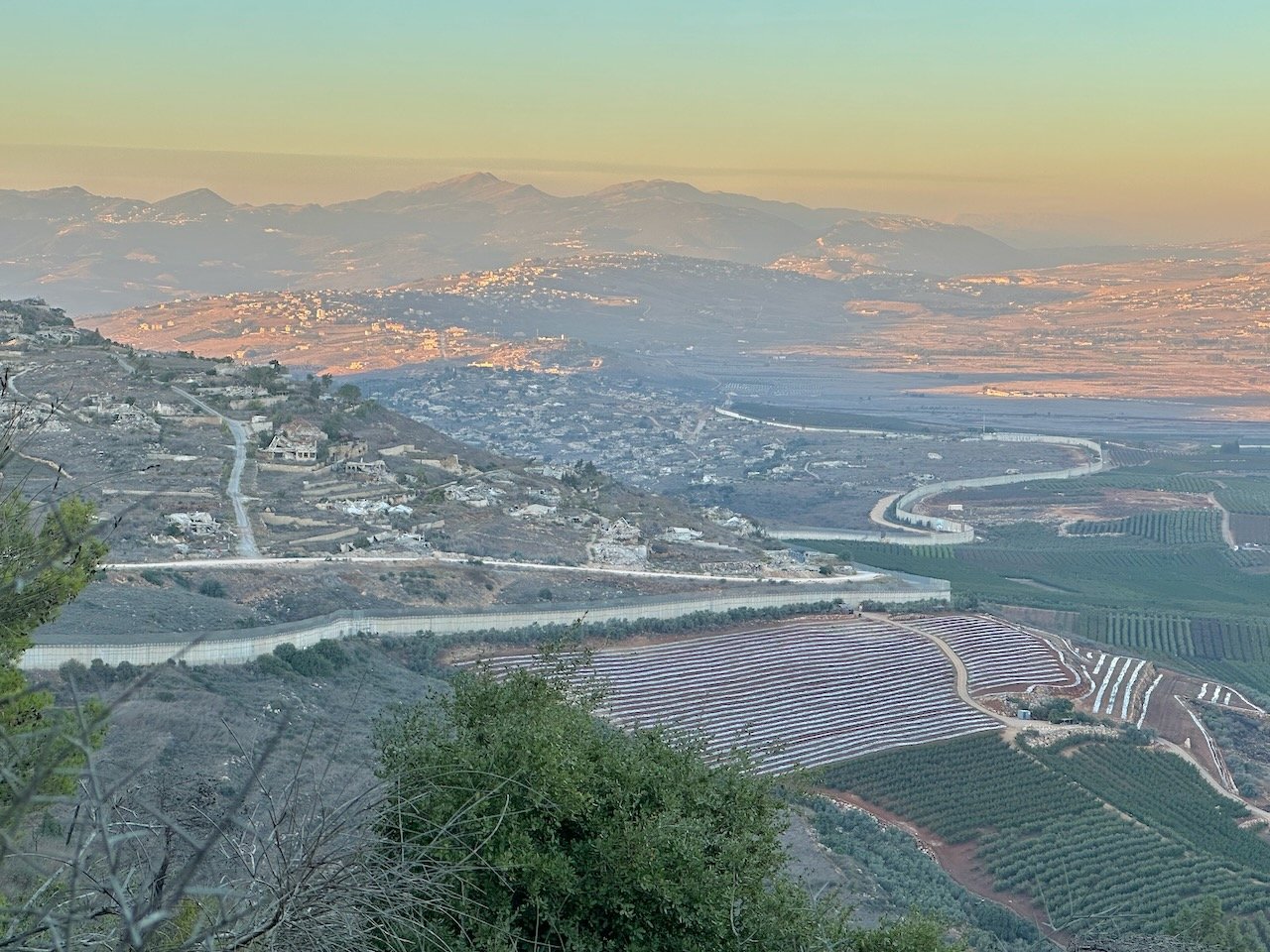
On our way back towards Tiberias, we added an extra stop to Misgav Am, a kibbutz located on the Lebanon border. It is located high on the hills of the Naphtali range and it looks over not the border with Lebanon but also the furthest Israeli city, Metula. Before Shlomo shared about Lebanon, we read from 2 Samuel 20. We could see the site (Abel Beit Macaah) below us at the northern edge of the Huleh Valley. Shlomo then shared the past history and current situation with Lebanon as the sun began to set. Again, the clear view of this region was amazing!
We drove back to our hotel, passing the Canaanite city of Hazor on the way (Joshua 11). At 6:45, we gathered around Ellen and David for a time of prayer before they took an ambulance to the airport for their night flight. Again, we extend our prayers for them both!
Day 5 – Wednesday, November 11: Arbel, Jordan River (Optional Baptism), Magdala, Capernaum, Sea of Galilee Boat Ride